Counseling and Psychological Services Dissertations
Department of Counseling and Psychological Services
Spring 5-12-2017
A REVIEW OF HUMILITY MEASURES AND
A TEST OF THE SOCIAL BONDS AND
SOCIAL OIL HYPOTHESES
Stacey McElroyFollow this and additional works at:https://scholarworks.gsu.edu/cps_diss
This Dissertation is brought to you for free and open access by the Department of Counseling and Psychological Services at ScholarWorks @ Georgia State University. It has been accepted for inclusion in Counseling and Psychological Services Dissertations by an authorized administrator of ScholarWorks @ Georgia State University. For more information, please [email protected].
Recommended Citation
McElroy, Stacey, "A REVIEW OF HUMILITY MEASURES AND A TEST OF THE SOCIAL BONDS AND SOCIAL OIL HYPOTHESES." Dissertation, Georgia State University, 2017.
ACCEPTANCE
This dissertation, A REVIEW OF HUMILITY MEASURES AND A TEST OF THE SOCIAL BONDS AND SOCIAL OIL HYPOTHESES, by STACEY MCELROY, was prepared under the direction of the candidates Dissertation Advisory Committee. It is accepted by the committee members in partial fulfillment of requirements for the degree, Doctor of Philosophy, in the College of Education and Human Development, Georgia State University.
The Dissertation Advisory Committee and the student’s Department Chairperson, as
representatives of the faculty, certify that this dissertation has met all standards of excellence and scholarship as determined by the faculty.
___________________________ Don Davis, Ph.D.
Committee Chair
___________________________ ___________________________ Jane Brack, Ph.D. Cirleen DeBlaere, Ph.D.
Committee Member Committee Member
___________________________ Chris Oshima, Ph.D.
Committee Member
__________________________ Date
__________________________ Brian Dew, Ph.D.
Chairperson, Department of Counseling and Psychological Services
_________________________ Paul A. Alberto, Ph.D.
Dean
AUTHORS STATEMENT
By presenting this dissertation as a partial fulfillment of the requirements for the advanced degree from Georgia State University, I agree that the library at Georgia State University shall make it available for inspection and circulation in accordance with its regulations governing materials of this type. I agree that permission to quote, copy from, or to publish this dissertation may be granted by professor under whose direction it was written, by the College of Education and Human Development's Director of Graduate Studies, or by me. Such quoting, copying, or publishing must be solely for scholarly purposes and will not involve potential financial gain. It is understood that any copying from or publication of this dissertation which involves potential financial gain will not be allowed without my written permission.
NOTICE TO BORROWERS
All dissertations deposited in the Georgia State University Library must be used in accordance with the stipulations prescribed by the author in the preceding statement. The author of this dissertation is:
Stacey Elizabeth McElroy 117 Buttonwood Loop
Athens, GA 30605 The director of this dissertation is:
Don Davis
Department of Counseling and Psychological Services College of Education and Human Development
Stacey McElroy
117 Buttonwood Loop, Athens, GA 30605 | 706-347-3424 | [email protected]
EDUCATION
Doctor of Philosophy in Counseling Psychology | Anticipated May, 2017| Georgia State University
Master of Science in Mental Health Counseling | May, 2012 | Georgia State University
Bachelor of Science in Psychology | December, 2009 | University of Georgia
Associate of Applied Science in Biotechnology | June, 2007 | Athens Technical College
SUPERVISED CLINICAL EXPERIENCE
Pre-Doctoral Intern | August 2015-August 2016 | Georgia Tech Counseling Center
Practicum Student | September 2014 – May 2015 | Georgia Gwinnett College Counseling Center
Practicum Student | May 2014 – August 2014 | UGARegents Center for Learning Disorders
Practicum Student | August 2013 – May 2014 | Kennesaw State University Counseling Center
Practicum Student | August 2012 – May 2013 | Georgia Institute of Technology Counseling Center
Intern | August 2011 – April 2012 | Advantage Behavioral Health Systems
PUBLICATIONS
Barton, A. W., Hurt, T. R., Futris, T. G., Sheats, K. F., McElroy, S. E., & Landor, A. M. (in press). Being committed: How economically disadvantaged African American adolescents conceptualize romantic relationship commitment. Journal of Black Psychology.
Choe, E., Davis, D.E., McElroy, S., Westbrook, C.J., van Nuenen, M., Van Tongeren, D.R., & Hook, J.N. (in press). Relational spirituality and forgiveness of offenses committed by religious leaders. The International Journal of the Psychology of Religion.
similarly for religious versus non-religious individuals. Psychology of Religion and Spirituality, in press.
Davis, D. E., McElroy, S. E., Choe, E., Westbrook, C., Van Tongeren, D. R., Hook, J. N., & Sandage, S. (in press). Development of the Experiences of Humility Scale. Journal of Psychology and Theology, in press.
Davis, D., McElroy, S., Rice, K., Choe, E., Westbrook, C., Hook, J., Van Tongeren, D., DeBlaere, C., Hill, P., Placares, V., Worthington, E. (in press). Is modesty a subdomain of humility?. Journal of Positive Psychology, In Press.
Davis, D. E., Yang, X., DeBlaere, C., McElroy, S. E., Van Tongeren, D. R., Hook J., & Worthington Jr., E. L. (In press). The injustice gap. Psychology of Religion and Spirituality.
Landor, A. M., Hurt, T. R., Futris, T. G., Barton, A., McElroy, S., & Sheats, K. (in press). Relationship contexts as sources of socialization: An exploration of the intimate partner violence experiences of economically disadvantaged African American adolescents.
Journal of Child and Family Studies.
McElroy, S. E., Davis, D. E., Choe, E., Van Tongeren, D. R. & Hook, J. N. (in press). Relational spirituality and intergroup forgiveness. Journal of Psychology and Theology, in press.
Westbrook, C. J., Davis, D. E., McElroy, S.E., Brubaker, K, Choe, E, Karaga, S., Dooley, M., O’Bryant, B. L., Van Tongeren, D., Hook, J. (in press). Trait Sources of Spirituality Scale: Assessing Trait Spirituality More Inclusively. Measurement and Evaluation in Counseling and Development.
Davis, D. E., Rice, K. G., McElroy, S. E., DeBlaere, C., Choe, E., Van Tongeren, D. R., Hook, J. N. (2016). Distinguishing intellectual humility and general humility. Journal of Positive Psychology, 11, 215-224.
Davis, D. E., Hook, J., Ashby, J. S., & McElroy, S. E. (2014). Religious Coping, Coping Resources, and Depressive Symptoms. Counseling Values, 52, 139-154.
Hurt, T. R., McElroy, S. E., Sheats, K., Landor, A., & Bryant, C. M. (2014). Married Black men’s opinions about the reasons why African American women are disproportionately single. Personal Relationships, 21, 88-109.
A REVIEW OF HUMILITY MEASURES AND A TEST OF THE SOCIAL BONDS AND SOCIAL OIL HYPOTHESES
by
STACEY MCELROY
Under the Direction of Don Davis, Ph.D.
ABSTRACT
Less than ten years ago, the science of humility seemed stuck with intractable measurement problems. However, due to theoretical innovations, measures have proliferated in recent years. In order to avoid fragmentation, humility science faces a critical stage of needing to reconcile and integrate definitions and measures. In Chapter 1, I review 22 measures of humility, including (a) survey measures of general humility, (b) survey measures of humility subdomains, (c) indirect measures of humility, and (d) state measures of humility. For each measure, I describe the scale structure, development of items, evidence of reliability, and evidence of construct validity. I also describe and compare the various content areas covered by each measure, and conclude by making recommendations for advancing research on humility. Then in Chapter 2, I test the social bonds and social oil hypotheses of humility in a sample of 99 interracial couples. In line with the social bonds hypothesis, I predicted that culturally-based ineffective arguing would lead to lower perceptions of one’s partner’s cultural humility, which would lead to lower relationship
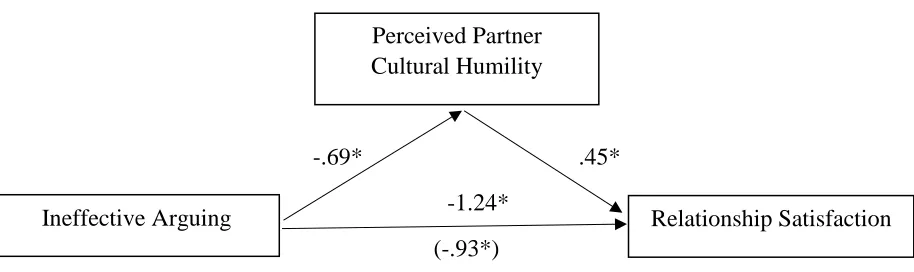
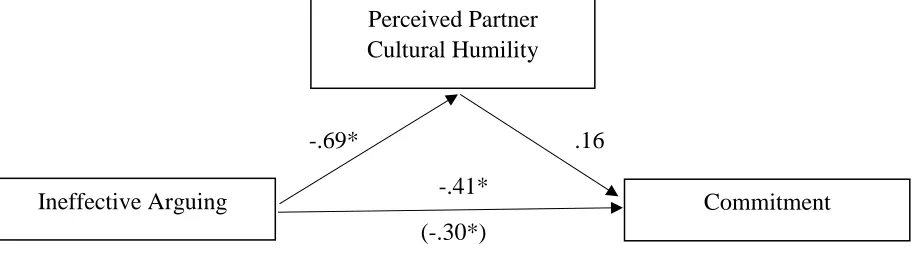
developed for SPSS, and found that approximately 26% of the variance in relationship satisfaction and about 8% of the variance in commitment was explained by the effect of
ineffective arguing through cultural humility. To test the social oil hypothesis, I first attempted to estimate trait cultural humility by creating an aggregate score that combined self-report,
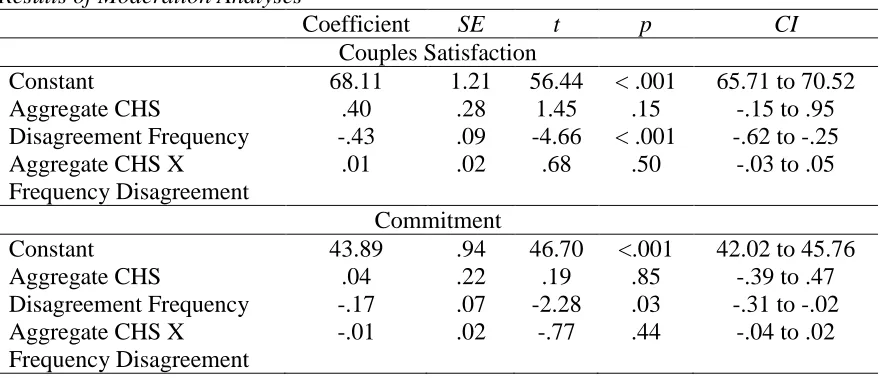
informant-report, and observational coding of cultural humility. I predicted that trait cultural humility would moderate the effect of frequency of culturally-based disagreements on
relationship satisfaction and commitment. Results of a moderation analysis conducted using the PROCESS Macro were not significant. However, the overall frequency of culturally-based disagreements was low, and cultural humility was significantly related to both relationship satisfaction and commitment. Results of this study add to the growing body of evidence for the social bonds hypothesis of humility, and advance the field of research on intercultural couples by providing quantitative support for themes noted in previous qualitative studies on intercultural couples.
A REVIEW OF HUMILITY MEASURES AND A TEST OF THE SOCIAL BONDS AND SOCIAL OIL HYPOTHESES
by
STACEY MCELROY
A Dissertation
Presented in Partial Fulfillment of Requirements for the Degree of
Doctor of Philosophy in
Counseling Psychology in
Counseling and Psychological Services in
The College of Education and Human Development Georgia State University
Copyright by Stacey E. McElroy
DEDICATION
I dedicate this to my Nanny. Thank you for the countless hours you spent helping me do homework. I would have never gotten here without the foundation you provided for me. You never told me what I should be, or anything that I could not be. You gave me the freedom to explore, dream, and find my way, knowing that I had your unending love and support. You always told me to “reach for the stars.” Now, whenever I look up at the beautiful night sky, I see you and am filled with love and gratitude.
ACKNOWLEDGEMENTS
I would like to acknowledge Tiffany Espinosa, Michael Massengale, Kayla Shy, Jennifer Hightower, and Ashley Mangin for their time and thoughtful assistance with coding. I would also like to acknowledge Dr. Everett Worthington Jr. and Dr. Josh Hook for their feedback on
Chapter 1. Their expertise and mentorship was invaluable in developing this manuscript. Additionally, I would like to thank my committee members, Dr. Jane Brack, Dr. Chris Oshima, and Dr. Cirleen DeBlaere. Throughout the years they have each inspired me with their passion and enthusiasm, taken time to mentor me, and helped to make this journey a meaningful and rewarding experience.
TABLE OF CONTENTS
LIST OF TABLES………..iv
LIST OF FIGURES………...v
1 ASSESSING HUMILITY: A CRITICAL REVIEW OF MEASURES……..………1
Method……….………4
Survey Measures of General Humility...………..6
Survey Measures of Humility Subdomains………...24
Indirect Measures of Humility………...30
State Measures of Humility………...35
Discussion………..39
References………..45
2 CULTURAL HUMILITY: TESTING THE SOCIAL BONDS AND SOCIAL OIL HYPOTHESES IN INTERCULTURAL COUPLES………54
Method………...62
Results………66
Discussion………..71
References………..78
LIST OF TABLES
Table 1.1 Humility Content Domains and Predictions for Convergent Validity………....3
Table 1.2 Content of Humility Measures………....4
Table 1.3 Humility Measures Summary Data……….6
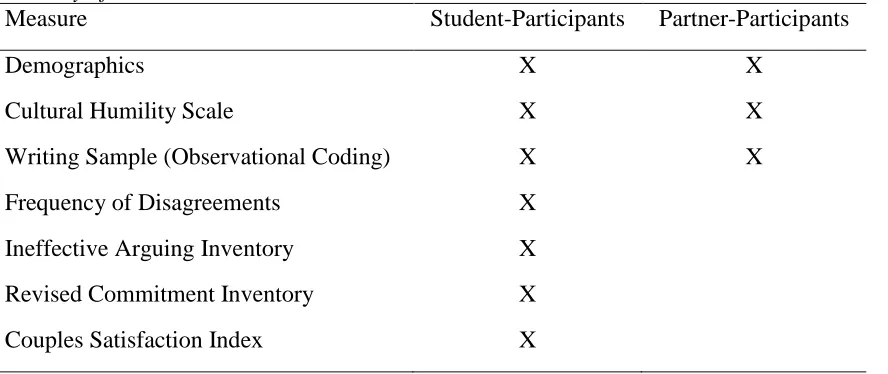
Table 2.1 Summary of Measures………...62
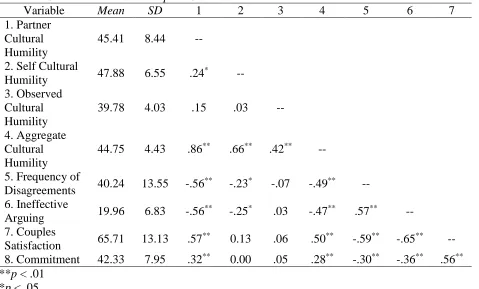
Table 2.2 Bivariate Correlations and Descriptive Statistics………..68
LIST OF FIGURES
CHAPTER 1
ASSESSING HUMILITY: A CRITICAL REVIEW OF MEASURES
The scientific study of humility got off to a slow start due to measurement problems. More specifically, researchers doubted the validity of self-report measures because labeling oneself as very humble seemed akin to bragging (Davis, Worthington, & Hook, 2010). In recent years, however, the scientific study of humility has accelerated (nearly 200 independent samples in a meta-analysis by Davis et al., 2015). Accordingly, a variety of measures have been
developed (Davis & Hook, 2014). The purpose of the present article is to critically assess the evidence of reliability and construct validity of existing humility measures so that I might recommend consolidation of definitions of humility and improve measurement strategies.
Given the proliferation of measures of humility and the conceptual range of these measures, some coherence is needed for the field to advance with purpose. Measures are organized into four sections: (a) survey measures of general humility; (b) survey measures of specific subdomains of humility; (c) indirect measures of general humility; and (d) state
measures of humility. Two previous non-refereed sources have published reviews of measures. Hill et al., (2017) reviewed 16 instruments—eight measures of general humility, two measures of relational humility, three measures of intellectual humility, and three special applications.
Worthington and Allison (2017) reviewed 16 instruments measuring humility and summarized their review under the following headings: Seven self-report measures as disposition, four measures of different types of humility (one measure of cultural humility, three measures of intellectual humility, one measure of spiritual humility), three other-report measures of humility, one implicit measure of humility, and one self-report of humility as a state. The primary
conceptual organization and a few different conclusions about the relative strength of psychometric evidence supporting some instruments.
In my review, I expanded both searches using a more systematic search method than is usually found in edited book chapters. I also analyzed the measures more rigorously using a pre-specified approach and coding aspects of the measures. Additionally, I reviewed 22 measures rather than the 16 in the two previous reviews. Each measure was evaluated based on the following: (a) definition of humility; (b) development of items and evidence of factor structure; (c) evidence of reliability; and (d) evidence of construct validity. Finally, I end my description of each measure with (e) a summary of key themes and practical suggestions for researchers.
There are some relatively straightforward standards within the field regarding best practice for establishing evidence for content validity, the factor structure of a scale, and reliability (e.g., Worthington & Whittaker, 2006). However, given the lack of consensus
regarding definitions of humility, I want to clarify my strategy of evaluating construct validity. A key challenge for humility researchers is the need to advance sharper definitions for evaluating evidence of construct validity, given the range of definitions and content being included on measures of humility. In this regard, I adopted a pragmatic strategy as an initial step towards conceptual consolidation.
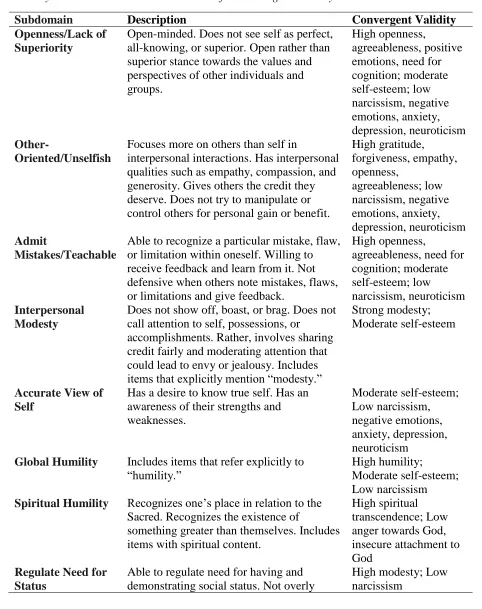
Table 1.1
Humility Content Domains and Predictions for Convergent Validity
Subdomain Description Convergent Validity
Openness/Lack of Superiority
Open-minded. Does not see self as perfect, all-knowing, or superior. Open rather than superior stance towards the values and perspectives of other individuals and groups.
High openness,
agreeableness, positive emotions, need for cognition; moderate self-esteem; low narcissism, negative emotions, anxiety, depression, neuroticism Other-Oriented/Unselfish
Focuses more on others than self in
interpersonal interactions. Has interpersonal qualities such as empathy, compassion, and generosity. Gives others the credit they deserve. Does not try to manipulate or control others for personal gain or benefit.
High gratitude, forgiveness, empathy, openness, agreeableness; low narcissism, negative emotions, anxiety, depression, neuroticism Admit Mistakes/Teachable
Able to recognize a particular mistake, flaw, or limitation within oneself. Willing to receive feedback and learn from it. Not defensive when others note mistakes, flaws, or limitations and give feedback.
High openness,
agreeableness, need for cognition; moderate self-esteem; low
narcissism, neuroticism
Interpersonal Modesty
Does not show off, boast, or brag. Does not call attention to self, possessions, or
accomplishments. Rather, involves sharing credit fairly and moderating attention that could lead to envy or jealousy. Includes items that explicitly mention “modesty.”
Strong modesty; Moderate self-esteem
Accurate View of Self
Has a desire to know true self. Has an awareness of their strengths and weaknesses. Moderate self-esteem; Low narcissism, negative emotions, anxiety, depression, neuroticism
Global Humility Includes items that refer explicitly to “humility.”
High humility;
Moderate self-esteem; Low narcissism
Spiritual Humility Recognizes one’s place in relation to the
Sacred. Recognizes the existence of
something greater than themselves. Includes items with spiritual content.
High spiritual transcendence; Low anger towards God, insecure attachment to God
Regulate Need for Status
Able to regulate need for having and demonstrating social status. Not overly
concerned with others recognizing their status or being impressed by them.
Method
I conducted a literature search, current as of October 19, 2016. First, I consulted existing reviews of humility (e.g. Davis, et al., 2010; Davis & Hook, 2014) and the Handbook of Humility
(Worthington, Davis, & Hook, 2017) to identify measures of humility. Next, I searched PsycINFO using the keyword humility and identified all empirical studies. I reviewed the methods and references sections of these studies to identify any other measures of humility. I included measures from peer-reviewed, empirical articles as well as dissertations and conference presentations. My search initially resulted in 1254 abstracts. In all, I found 22 unique measures, including 11 survey measures of general humility, five survey measures of humility subdomains, three indirect measures, and three state measures.
[image:19.612.69.530.644.717.2]To compare content between the measures and assess content validity, two coders were used following the procedure recommended by Kearns and Fincham (2004). We coded each item from each measure based on content domain. The first author read all items from the humility measures and created a list of content categories based on the eight categories in Davis and Hook (2014). Each item was then independently assigned to a content category by both the first author and a research assistant. Any discrepancies were resolved by a third coder (e.g., Kearns & Fincham, 2004). Results of coding are described in Table 1.2.
Table 1.2
Content of Humility Measures—the Number of Items Reflected in Each of Eight Themes
Measure O OO AM IM AVS H SH RNS
Expressed Humility Scale
Willingness to View Self Accurately 1 2
Appreciation of Others’ Strengths 1 2
H-H HEXACO
Sincerity 4
Fairness 4
Greed Avoidance 3 1
Modesty 3 1
Relational Humility Scale
Global Humility 5
Superiority 6 1
Accurate View of Self 4
Semantic Differentials 4 1 1 1
Humility/Modesty VIA-IS 3 5 2
Rosemead Humility Scale
Worldview 1 2 2
Accurate Assessment of One’s Self 3
Low Self-Focus 1 2 3 1
Appreciation of Limitations 1 1 1
Healthy Humility Inventory 3 3 2 3
Humility Inventory
Other-Esteem 1 4
Systemic Perspective 5 1
Acceptance of Fallibility 1 2 1
Humility AAVS 6
Humility Subscale SLS 5
CEO Humility
Self-Awareness 1 2
Appreciation of Others 1 2
Openness to Feedback 2 1
Low Self-Focus 2 1
Self-Transcendent Pursuit 2 1
Transcendent Self-Concept 2 2
Cultural Humility Scale
Positive 4 2 1
Negative 4 1
Intellectual Humility Scale
Openness 7
Arrogance 6 2 1
Spiritual Humility Scale 4
Comprehensive IHS
Independence of Intellect and Ego 5
Openness to Revising One’s View 5 Respect for Others’ Viewpoint 3 2 1
Lack of Intellectual Overconfidence 6
Specific IHS 9
Dispositional Humility Scale
Humility 4 1 6 1
Implicit Association Test 8 1 2 1
Schwartz Humility Scale 1 1 1
Humility Related Feelings
Appreciative Humility 3 11 2 2 2 1
Self-Abasing Humility 2 2 1
Experiences of Humility Scale
Other-Orientation 3
Transcendent 3
Awareness of Selfishness 3
Awareness of Egoism 3
State Humility Scale 4 2
*Note: O = Openness/Lack of Superiority, OO = Other Oriented/Unselfish, AM = Admit Mistakes/Teachable, IM = Interpersonal Modesty, AVS = Accurate View of Self, H = Global Humility, SH = Spiritual Humility, RNS = Regulate Need for Status; Numbers in the table represent the number of items from the scale/subscale belonging to each category.
Survey Measures of General Humility
I reviewed 11 survey measures of general humility. Many of these were initially
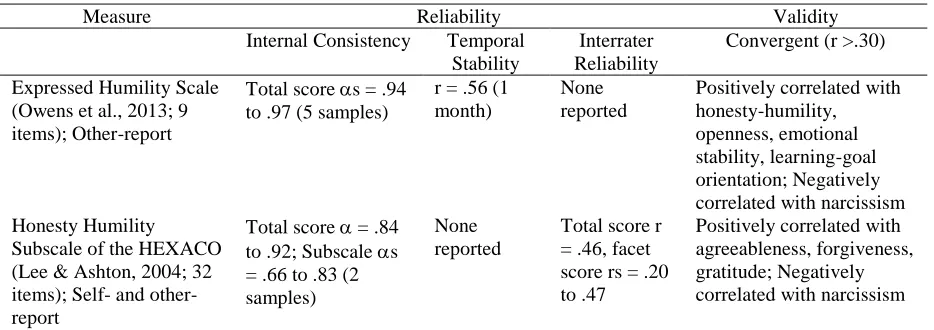
[image:21.612.72.539.533.698.2]developed based on a relational humility perspective that began with other-reports in response to concerns about a modesty effect. This perspective draws on a tradition in which agreement among self-report, other-report, and behavior are integrated to estimate traits (Funder, 1995). In Table 1.3, I summarize evidence of reliability and validity, including information about whether measures have been used for both self-reports and other-reports.
Table 1.3
Humility Measures: Summary Data
Measure Reliability Validity
Internal Consistency Temporal Stability
Interrater Reliability
Convergent (r >.30)
Expressed Humility Scale (Owens et al., 2013; 9 items); Other-report
Total score s = .94 to .97 (5 samples)
r = .56 (1 month)
None reported
Positively correlated with honesty-humility, openness, emotional stability, learning-goal orientation; Negatively correlated with narcissism Honesty Humility
Subscale of the HEXACO (Lee & Ashton, 2004; 32 items); Self- and other-report
Total score = .84 to .92; Subscale s = .66 to .83 (2 samples)
None reported
Total score r = .46, facet score rs = .20 to .47
Relational Humility Scale (Davis et al., 2011; 16 items); Self- and other-report
Total score s = .89 to .95, Subscale s = .79 to .97 (5 samples)
None reported
None reported
Positively correlated with honesty-humility, positive emotions, empathy; Negatively correlated with negative emotions Humility/Modesty
VIA-IS (Park et al., 2004; 10 items); Self-report
Total score > .70 (1 sample)
r > .70 (4 months)
Not available Positively correlated with modesty, humility; Negatively correlated with narcissism
Healthy Humility Inventory (Quiros, 2008; 11 items); Self-report
Total score = .83 (1 samples)
None reported
Not available Positively correlated with spiritual meaning;
Negatively correlated with depression
Humility Inventory (Brown et al., 2013; 15 items); Self-report
Total score = .82; Subscale s = .66 to .68 (2 samples)
rs = .65 to .80 (3 months)
Not available Positively correlated with self-esteem, gratitude; Negatively correlated with anxiety
Humility AAVS (Kim et al., 2005, 6 items); Self-report
Total score = .75 to .81 (2 samples)
r = .81 (2 weeks)
Not available Not significantly correlated with relevant constructs
Humility Semantic Differential (Rowatt et al., 2006; 7 items); Self- and other-report
Total score s = .72 to .79 (2 samples)
None reported
rs= .36 to .40 (self and informant report)
Positively correlated with humility, modesty, agreeableness; Negatively correlated with narcissism Humility Subscale of the
Servant Leadership Survey (van Dierendonck & Nuijten, 2011; 5 items); Other-report
Total score s = .91 to .95 (6 samples)
None reported
Not available Not significantly correlated with relevant constructs
Rosemead Humility Scale (Bollinger et al., 2006; 36 items); Self-report
Total score = .76, Subscale s = .57 to .85 (1 sample)
None reported
Not available Positively correlated with openness, agreeableness, self-esteem; Negatively correlated with narcissism CEO Humility (Ou et al.,
2014; 19 items); Other-report
Total score s = .88 to .90, Subscale s = .78 to .81 (2 samples)
None reported
None reported
Positively correlated with humility
Cultural Humility Scale (Hook et al., 2013; 12 items); Other-report
Total score s = .86 to .93; Subscale s = .84 to .93 (3 samples)
None reported
None reported
Positively correlated with multicultural competence
Intellectual Humility Scale (McElroy et al., 2014; 16 items); Self- and other-report
Total score s = .94 to .96 (4 samples)
None reported
None reported
Positively correlated with openness, agreeableness, need for cognition, and objectivism; Negatively correlated with
neuroticism, religious ethnocentrism Spiritual Humility Scale
(Davis, 2010; 4 items); Other-report
Total score s = .84 to .85 (2 samples)
None reported
None reported
Positively correlated with humility, spiritual similarity Specific Intellectual
Humility Scale (Hoyle et al., 2016; 9 items); Self-report
Subscale s = .88 to .96 (2 samples)
None reported
Comprehensive Intellectual Humility Scale (Krumrei-Mancuso et al., 2016; 22 items); Self-report
Full scale = .88; Subscale s = .70 to .89 (4 samples)
r = .70 (3 months)
Not available Positively correlated with intellectual humility, openness, open-minded thinking
Dispositional Humility Scale (Landrum, 2011; 17 items); Indirect
Subscale s = .57 to .87 (1 sample)
None reported
Not available Weakly correlated with relevant constructs
Implicit Association Test (Rowatt et al., 2006; 40 trials); Indirect
Total score s = .87 to .90 (2 samples)
r = .64 (Time 1 – Time 2), r = .44 to .45 (2 weeks)
Not available Non-significant, weak, or inconsistent relationships with relevant constructs
Schwarz Humility Scale (Schwarz et al., 2012, 2 items); Implicit
Average total score
= .49 (9 samples)
None reported
Not available Not significantly correlated with relevant constructs
Humility Related
Feelings (Weidman et al., 2016, 54 items); Self-report
Subscale score s = .87 to .94 (1 sample)
None reported
Not available Positively correlated with modesty; Negatively correlated with self-esteem
Experiences of Humility Scale (Davis et al., 2016, 12 items); Self-report
Subscale score s = .79 to .85 (3 samples)
None reported
Not available Weakly related to relevant constructs
State Humility Scale (Kruse et al., 2017, 6 items); Self-report
Total score s = .58 to .84 (2 samples)
r = .48 to .70 (2 weeks)
ICC = .35 Positively correlated with honesty-humility;
Negatively correlated with negative affect and narcissism
*Note: Unless indicated, no examination of measurement invariance has occurred.
Expressed Humility Scale
The Expressed Humility Scale (Owens, Johnson, & Mitchell, 2013) is a nine-item other-report scale that yields a total score and three subscale scores: Willingness to View Oneself Accurately (e.g., “This person actively seeks feedback, even if it is critical.”), Appreciation of Others’ Strengths (e.g., “This person takes notice of others’ strengths.”), and Teachability (e.g., “This person is willing to learn from others.”). Respondents assess a target person on each item using a 5-point rating from 1 (strongly disagree) to 5 (strongly agree). The content of the EHS spans the first three subdomains identified by Davis and Hook (2014): open rather than superior stance, other-oriented, and willingness to admit mistakes.
Development of items.Expressed humility is defined as “an interpersonal characteristic
accurately, (b) a displayed appreciation of others’ strengths and contributions, and (c)
teachability” (Owens et al., 2013, p. 1518). This definition was based on qualitative interviews of actual leaders (Owens & Hekman, 2012). Initial items (N = 32) were winnowed using
exploratory factor analysis (EFA) and replicated using confirmatory factor analysis (CFA). CFA supported the interpretation of a higher order factor.
Evidence of reliability.Cronbach’s alpha total scores ranged from .92 to .97 across nine samples (Basford, Offermann, & Behrend, 2014; Owens et al., 2013, Owens & Hekman, 2016; Zhang, Waldman, Han, & Li, 2015). The authors did not report Cronbach’s alphas for the
subscales or interrater reliability. Temporal stability after 1 month was estimated to be .56 for the total score.
Evidence of construct validity. In terms of convergent validity, EHS scores correlated strongly and negatively with narcissism (r = -.63) and positively with the Honesty-Humility subscale of the HEXACO (r = .55), openness (rs = ns to .31), emotional stability (r = .49), and learning goal orientation (r = .63) (Owens et al., 2013). Subsequent studies have shown multiple examples of criterion-related validity. Ratings of a supervisor’s humility were related to
employee job engagement (r = .25), job satisfaction (r = .44 to .75), transformational leadership (r =.53 to .88), and voluntary turnover (r = -.14 to -.26; Basford et al., 2014; Owens et al., 2013; Owens & Hekman 2012; Zhang et al., 2015). In terms of external validity, three samples of undergraduate business students and two samples of employees were used.
Honesty-Humility Subscale
The Honesty-Humility (HH) Subscale of the HEXACO-PI (Lee & Ashton, 2004) is a scale (length varies based on version) that yields a total score and four facet (i.e. subscales of the subscale) scores: (1) Sincerity (e.g., “I wouldn’t pretend to like someone just to get that person to do favors for me.”); (2) Fairness (e.g., “I would never accept a bribe, even if it were very
large.”); (3) Greed Avoidance (e.g., “Having a lot of money is not especially important to me.”), and (4) Modesty (e.g., “I am an ordinary person who is no better than others.”). Respondents assess each item on a 5-point rating from 1 (strongly disagree) to 5 (strongly agree). The measure has been translated into 20 languages and includes self- and other-report versions of varying lengths (60-, 100-, and 200-item versions; hexaco.org). Longer versions of the scale are recommended for interpreting facet scores (Lee & Ashton, 2004). For the purposes of the present article, I review the 100-item version which has been recommended for most research purposes. Results of coding highlight the need to pay close attention to item content for interpreting facets. Fairness and Sincerity subscale items all were coded as related to other-orientedness. Modesty items aligned more with openness rather than superiority towards others; and Greed-Avoidance items aligned more with interpersonal modesty.
Evidence of reliability. Cronbach’s alpha ranged from .82 to .89 for the
Honesty-Humility factor score, and from .66 to .83 for the facet scores in large online and student samples using self-reports (Lee & Ashton, 2016). The alpha was .84 for the Honesty-Humility factor score, and ranged from .68 to .82 for the facet scores in a student sample using observer reports (Lee & Ashton, 2016). Self-other agreement was .46 for the Honesty-Humility subscale, and ranged from .20 to .47 for the facet scores (Lee & Ashton, 2016). Temporal stability over 2 months was .78 (de Vries, 2013).
Evidence of construct validity. Because this is one of the most widely used measures of personality, space limitations preclude me from reporting all relevant correlations with the HH subscale. Regarding evidence of convergent validity, I located positive relationships with
In summary, although many humility researchers initially considered the HH to assess something other than humility, making an empirical case for this distinction is more difficult. The subscale’s relationships with relevant constructs (i.e. agreeableness, narcissism) were in the expected direction and of sufficient strength to support the subdomains we identified. The only notable concerns were the variable relationships with openness and self-esteem, but this scale has demonstrated good evidence of construct validity overall.
Relational Humility Scale
The Relational Humility Scale (RHS; Davis et al., 2011) is a 16-item, other-report, scale that yields a total score and three subscale scores: (1) Global Humility (e.g., “He/she has a
humble character.”), (2) Superiority (e.g. “He/she has a big ego.”), and (3) Accurate View of Self (e.g. “He/she knows his/her weaknesses.”). Respondents assess a target person on each item using a 5-point rating from 1 (strongly disagree) to 5 (strongly agree). Coding results suggest that items align with Davis and Hook (2014) subdomains of global humility, openness rather than superiority, and accurate view of self.
Development of items. Relational humility is defined as “an observer’s judgment that a
target person (a) is interpersonally other-oriented rather than self-focused, marked by a lack of superiority; and (b) has an accurate view of self—not too inflated or too low.” (Davis et al., 2011, p. 226). Items were also winnowed using experts and EFA, which suggested a 3-factor structure and replicated well using CFA in an independent sample.
Evidence of reliability. Cronbach’s alphas ranged from .84 to .95 for the total score
Evidence of construct validity. Regarding evidence of convergent validity, the RHS has demonstrated positive relationships with other measures of humility including the Honesty-Humility Subscale of the HEXACO (r = .56; Davis et al., 2011) and intellectual humility (r = .25; Zhang et al. 2015). It has also produced significant correlations with negative emotions (r = -.41), empathy (r = .49), and positive emotions (r = .57) towards an offender (Davis et al., 2011). Two additional studies have found non-significant to weak positive correlations with trait
forgiveness (r = ns to .26; Van Tongeren et al., 2014; Zhang et al., 2015). Regarding criterion-related validity, the RHS produced moderate negative correlations with unforgiveness of a specific offense (r = -.41 to -.49; Davis et al., 2011; Van Tongeren et al., 2014) and moderate to strong positive correlations with commitment (r = .32), forgiveness (r = .36), and relationship satisfaction (r = .52) in a sample of couples (Farrell et al., 2015). This measure was developed using five samples of undergraduate students.
In summary, the RHS has good evidence of construct validity overall, and the
relationship with intellectual humility provides some support for the Superiority and Accurate View of Self subscales. The pattern of correlations with various interpersonal and emotional constructs supports the authors’ conceptualization of the relational and other-oriented nature of humility. Therefore, this measure has good initial evidence of construct validity.
Humility/Modesty Subscale of the Values in Action Inventory of Strengths
The Humility/Modesty Subscale of the Values in Action-Inventory of Strengths (VIA-IS; Park, Peterson, & Seligman, 2004) has 10-items. Sample items include “I am always humble about the good things that have happened to me.” and “I rarely call attention to myself.”
like me). Coding indicated that VIA-IS items assess openness rather than superiority, interpersonal modesty, and global humility.
Development of items. Humility/Modesty is defined by, “Letting one’s accomplishments
speak for themselves; not seeking the spotlight; not regarding oneself as more special than one is” (Park et al., 2004, p. 606). The authors developed a list of 24 character strengths theorized to load onto six latent factors. This was done over a three-year period by consulting 50 experts, existing lists of virtues, and examining popular media (McGrath, 2016). Items were then developed to assess each virtue. Subsequently, at least eight studies have empirically explored the factor structure using a variety of factor analytic techniques, and consistently found three to five factors (McGrath, 2016): Interpersonal Strengths, Emotional Strengths, Strengths of
Restraint, Theological Strengths, and Intellectual Strengths. The Humility/Modesty subscale fell on the Interpersonal Strengths factor. Recently, McGrath (2016) found evidence of configural and metric invariance in the translated versions of the measure in 16 countries for most of the subscales, but (importantly for the present review) not for the Humility/Modesty subscale.
Evidence of reliability. Cronbach’s alphas ranged from a.68 to.83 for the
Humility/Modesty subscale (MacDonald, Bore, & Munro, 2008; McGrath, 2014). Temporal stability after 4 months was .71 (Steger, Hicks, Kashdan, Krueger, & Bouchard, 2007).
Evidence of construct validity. Regarding evidence of convergent validity, the subscale produced strong positive relationships with modesty (r = .51) and the humility semantic
depression (Rowatt et al., 2006). In terms of external validity, the VIA-IS has been investigated in 54 countries.
Concerns about the VIA-IS as a measure of humility include the varying number of factors supported in factor analysis, and lack of support for measurement invariance for the Humility/Modesty subscale. Given its wide use, it is also surprising that I did not locate more support for construct validity, but most of these studies were not focused on the virtue of
humility per se. The subscale’s relationships with humility, modesty, and narcissism were in the expected direction and of sufficient strength to provide evidence of construct validity for the subdomains identified in coding. However, the weak negative correlation with openness was unexpected. Therefore, I conclude that this scale has initial evidence of construct validity, but warrants additional investigation.
Rosemead Humility Scale
The Rosemead Humility Scale (Bollinger, 2006) is a 36-item, self-report scale that yields a total score and five subscales: (1) Worldview (e.g., “My success is completely due to my own effort and ability.”), (2) Accurate Assessment of One’s Self (e.g., “I can honestly assess my strengths and weaknesses.”), (3) Low Self-Focus (e.g., “I have difficulty accepting advice from other people.”), (4) Appreciation of Limitations (e.g. “I know that I can learn from other people.”), and (5) Personal Finiteness (e.g. “I see myself as a small part of the workings of the world.”). Respondents assess each item on a 5-point rating from 1 (I do not identify at all with this item) to 5 (I fully identify with this item). Results of coding suggested that content included all subdomains of humility except for interpersonal modesty and need for status.
Development of items. The authors based their items on Tangney’s (2000) six-part
weakness of this measure has been the instability of the factor structure across studies. More recently, Jankowski and Sandage (2014) reported a four-factor structure based on a CFA. This version of the measure included only 18 of the original 36 items and did not include the Personal Finiteness subscale. They also provided evidence for interpreting a higher order factor.
Evidence of reliability. Cronbach’s alpha ranged from .53 to .82 for the total score, and
from .51 to .85 for subscale scores (Dwiwardani et al., 2014; Exline & Hill, 2012; Grubbs & Exline, 2014; Jankowski & Sandage, 2014; Powers, Nam, Rowatt, & Hill, 2007; Sandage, Paine, & Hill, 2015). Temporal stability has not been reported.
Evidence of construct validity. Of seven studies I reviewed, all but two (Jankowski, Sandage, & Hill, 2013; Sandage et al., 2015) used the original 36-item version of the scale. Regarding convergent validity, the measure has performed inconsistently. It has shown weak to moderate relationships with measures of narcissism (rs = -.20 to -.42; Exline & Hill, 2012; Grubbs & Exline, 2014). It was only weakly related to the Humility Semantic Differentials (r = .20; Powers et al., 2007) and has shown weak to moderate relationships with some other
humility-related constructs, such as openness (r = .18 to .32), agreeableness (r = .33 to .48), neuroticism (r = -.12 to -.24), and self-esteem (r = .19 to .30; Dwiwardani et al., 2014; Exline & Hill, 2012; Grubbs & Exline, 2014). Regarding discriminant validity, the scale has produced inconsistent correlations with social desirability (r = .16 to .33), spiritual impression
management (r = .17), desirable responding (r = .43), and impression management (r = .56; Exline & Hill, 2012; Grubbs & Exline, 2014; Powers et al., 2007; Sandage et al., 2015). In terms of external validity, the scale was originally developed and later refined with a sample of
coverage of most humility subdomains, I caution against the use of this measure primarily due to the inconsistency of factor structures and weak evidence supporting construct validity.
Humility Semantic Differentials
The Humility Semantic Differentials (Rowatt et al., 2006) is a 7-item scale (i.e.,
“humble/arrogant, intolerant/tolerant, modest/immodest, respectful/disrespectful, egotistical/not self-centered, conceited/not conceited, closed-minded/open-minded”) that yields a total score. Respondents assess each item on a 7-point rating between the two endpoints. The scale was developed using both self and other-reports. Most items were coded as assessing openness rather than superiority, but items also assessed global humility, interpersonal modesty, and other-orientedness.
Development of items.Humility is defined as “a psychological quality characterized by
being more humble, modest, down-to-earth, open-minded, and respectful to others” (Rowatt et al., 2006, pp. 198-199). The authors did not use experts or factor analysis to winnow and refine the items.
Evidence of reliability. Cronbach’s alphas ranged from .72 to .79. Self-other agreement
ranged from .36 to .40 in two samples (Rowatt et al., 2006).
(r = .30) with the BIDR Impression Management Scale (Rowatt et al., 2006). The measure has been primarily used with undergraduates.
In summary, the Humility Semantic Differentials’ is a pragmatic and face-valid way of assessing humility. There is currently no evidence reporting a factor structure of the measure, although initial evidence of estimated reliability and of construct validity suggest it can suffice as a brief measure of humility. However, more psychometric evidence is needed before
recommending this as a strong measure of humility.
Healthy Humility Inventory
The Healthy Humility Inventory (HHI; Quiros, 2008) is an 11-item, self-report scale that yields a total score. Sample items include “I keep my opinions open to change” and “I show gentleness towards others.” Respondents assess each item on a 6-point rating from 1 (not at all like me) to 6 (very much like me). Coding suggested that content aligned with subdomains of openness rather than superiority, other-oriented, accurate view of self, and religion/spirituality.
Development of items.Healthy humility is defined as “an unexaggerated, open
perception of the abilities, achievements, accomplishments, and limitations—of oneself and others—a perception that focuses primarily, but not exclusively, on the value of the non-self” (Quiros, 2008, p. 9). Items were winnowed and refined by evaluations of experts, and then by removing items that strongly correlated with social desirability. The author used EFA and CFA to determine the factor structure, which resulted in four factors with 11 items (i.e. two to three items per factor). However, given the poor stability of CFA, I have strong concerns about the factor structure of the HHI.
Evidence of construct validity. Regarding evidence of convergent validity, the measure produced a non-significant relationship with self-esteem (rs ranged from .01 to .11), a moderate positive relationship with spiritual meaning (r = .33), and moderate negative relationships with anxiety (r = -.24) and depression (r = -.46; Quiros, 2008). In summary, the HHI has very limited evidence of construct validity, and the measure was developed on undergraduate students, limiting external validity as well. While the HHI attempted to addresses concerns about social desirability, it is too limited in evidence of validity for me to recommend.
Humility Inventory
The Humility Inventory (HI; Brown, Chopra, & Schiraldi, 2013) is a 15-item, self-report scale that yields a total score and three subscale scores: (1) Other-Esteem (e.g., “One of my greatest joys is helping others excel.”), (2) Systemic Perspective (e.g., “I recognized I need help from other people.”), and (3) Acceptance of Fallibility (e.g., “I readily admit when I am
wrong.”). Respondents assess each item on a 5-point rating from 1 (strongly disagree) to 5 (strongly agree). Coding suggested that content aligned with subdomains of openness rather than superiority, other-oriented, admitting mistakes, and regulation of the need for status.
Development of items.Humility is defined as “the ability and practice of accurately
recognizing and accepting others’ weaknesses and one’s own strengths without
Evidence of reliability. Cronbach’s alpha was .82 for the total score, and ranged from
.52 to .77 for the subscale scores. Temporal stability after 3 months ranged from .65 to .80 for the subscales.
Evidence of construct validity. Regarding evidence of convergent validity, the Humility Inventory produced moderate correlations with happiness (r = .25), self-esteem (r = .34), anxiety (r = -.37), and gratitude (r = .55; Brown et al., 2013). Discriminant validity was supported by non-significant to weak positive correlations between the Humility Inventory subscales and social desirability (r = .04 to .26). It terms of external validity, this scale was developed using a sample of undergraduates. In summary, the Humility Inventory has several limitations that lead me to caution against its use: low subscale alphas, limited evidence of construct validity, and the decision to drop factors based on CFA results.
Humility Subscale of the Asian American Values Scale
The Humility subscale of the Asian American Values Scale (AAVS; Kim, Li, & Ng, 2005) is a six-item, self-report subscale. Sample items include “One should be able to brag about one’s achievements” (reverse-coded) and “One should not sing one’s own praises.” Respondents assess each item on a 7-point rating from 1 (strongly disagree) to 7 (strongly agree). All six items were coded as assessing interpersonal modesty.
Development of items. The authors did not define or describe their conceptualization of
result was replicated with an independent sample using CFA (Kim et al., 2005). The CFA results suggested adequate fit for a higher order factor measuring Asian American values.
Evidence of reliability.Cronbach’s alpha s for the humility subscale score ranged from .71 to .83 across five samples (Kim et al., 2005; Park & Kim, 2008; Wong et al., 2012; Wong, Wang, & Maffini, 2013). Its temporal stability after two weeks was reported to be .81.
Evidence of construct validity. The article on the measure reported limited evidence of convergent validity (i.e., all subscales were intercorrelated). Other studies have shown the Humility subscale to correlate with values, achievement, help-seeking attitudes, and depression (see Kim et al., 2005; Park & Kim, 2008; Wong et al., 2012, 2013). Regarding discriminant validity, the subscale was weakly correlated with a measure of social desirability (r = .14; Kim et al., 2005). There is no evidence that supports using the measure to assess humility in non-Asian American samples.
In summary, the Humility subscale of the AAVS hones in on the subdomain of
interpersonal modesty, based on results of our coding. As a measure of humility, the measure has limited evidence of construct validity, and so I caution against its use until more psychometric support accumulates.
Humility Subscale of the Servant Leadership Survey
The Humility subscale of the Servant Leadership Survey (van Dierendonck & Nuijten, 2011) is a 5-item, other-report scale that yields a total score. A sample item is, “My manager learns from criticism.” Respondents rate a target person on each item using a six-point scale ranging from 1 (never) to 6 (always). Results of coding suggest that all five items assess one’s
Development of items.Humility was defined as “the ability to put one’s own
accomplishments and talents in a proper perspective…, daring to admit that one is not infallible and does make mistakes…, [and] a proper understanding of one’s strong and weak points” (van Dierendonck & Nuijten, 2011, p. 252). Items were winnowed and refined through critical review by trained research assistants. Results of EFA suggested a 7-factor solution where humility items comprised one factor. CFA results in three samples (Spain, Argentina, and Mexico) suggested good fit for an 8-factor model and evidence of measurement invariance (Rodriguez-Carvajal, de Rivas, Herrero, Moreno-Jiminez, & van Dierendonck, 2014).
Evidence of reliability. Cronbach’s alpha for the Humility subscale ranged from .91 to
.95 across six samples (van Dierendonck & Nuijten, 2011).
Evidence of construct validity. Although the Servant Leadership Survey has been examined in relation to other measures of leadership (see van Dierendonck & Nuijten, 2011), no studies provided evidence of convergent or discriminant validity of the Humility subscale. Regarding criterion-related validity, van Dierendonck and Nuijten (2011) found positive
correlations of Humility with subordinate vitality (r = .23), engagement (r = .33), job satisfaction (r = .48), and organizational commitment (r = .54). In terms of external validity, the measure was developed with employees in the United Kingdom and Netherlands.
I currently caution against use of the Humility subscale. Decisions on the EFA were atypical, and there is no consistent evidence for a stable factor structure. If the goal is to assess one’s willingness to admit mistakes as a subdomain, stronger measures are available.
CEO Humility
universe.”), (2) Low Self-Focus (e.g., “Keeps a low profile.”), (3) Self-Transcendent Pursuit (e.g., “Has a sense of personal mission in life.”), (4) Self-Awareness (e.g. “Actively seeks feedback, even if it is critical.”), (5) Openness to Feedback (e.g. “Is willing to learn from others.”), and (6) Appreciation of Others (e.g. “Takes notice of the strengths of others.”). Respondents assess each item on a 6-point rating from 1 (strongly disagree) to 6 (strongly agree). Results of coding suggested that items included content from all subdomains except accurate view of self and global humility.
Development of items. Humility includes “(1) reflexive consciousness, or understanding
the self in relation to the world, (2) interpersonal being, or appreciating the self in relation to others, and (3) executive function, or experiencing the self by what the individual does.” (Ou et al., 2014, p. 37). The items were winnowed by commentary from 17 leadership experts, EFA, and CFA. An EFA suggested a three-factor structure. Before conducting a CFA, the authors added in eight items from the Owens et al. (2013) Expressed Humility measure, and results suggested a six-factor structure. A second-order CFA to test for a higher-order construct resulted in poorer fit.
Evidence of reliability. Cronbach’s alpha was .88 to .90 for the total score, and ranged
from .78 to .81 for the subscale scores across two samples (Ou et al., 2014). Temporal stability was not reported.
organizational climate (r = .31; Ou et al., 2014). In terms of external validity, the scale was originally developed with a sample of Chinese undergraduate students and business students, and has been investigated with a sample of managers in China. The non-significant relationship with narcissism raises questions about construct validity, and it is not clear how the measure would perform outside of a Chinese business context. The decisions in the factor analysis were also atypical. One advantage, however, is the comprehensive coverage of most subdomains.
Survey Measures of Humility Subdomains
I reviewed five measures specifically designed to target subdomains of humility. All of these measures were published since 2010, so there has been little time to evaluate evidence of construct validity through continued use within the literature. I strongly recommend three based on the strength of the scale development process and initial evidence of construct validity.
Cultural Humility Scale
The Cultural Humility Scale (CHS; Hook, Davis, Owen, Worthington, & Utsey, 2013) is a 12-item, other-report scale that yields two subscale scores: Positive (e.g., “Is open to explore.”) and Negative (e.g., “Makes assumptions about me.”). Respondents assess a target person on each item using a 5-point rating from 1 (strongly disagree) to 5 (strongly agree). Coding suggested that content is primarily focused on openness rather than superiority, although items were also coded as assessing other-orientedness, willingness to admit mistakes, and accurate view of self.
Evidence of reliability. Cronbach’s alpha ranged from .86 to .93 for the subscale scores
across four samples (Hook et al., 2013; Owen et al., 2014).
Evidence of construct validity. Regarding evidence of convergent validity, perceptions of the cultural humility of one's therapist were strongly and positively related to perceptions of multicultural competence (r = .64; Owen et al., 2014). Regarding criterion-related validity, the CHS also correlated with client-rated improvement (r = .33 to .59), and produced strong positive relationships across three samples (Hook et al., 2013; Owen et al., 2014). The very strong
relationships with working alliance (r = .60 to .75) may raise questions about discriminant validity. In terms of external validity, the CHS was developed using three samples of therapy clients, some of which were recruited from an undergraduate research pool. Results of our coding suggest that the content of items is especially focused on openness (rather than superiority). More work is needed to situate this construct among other measures related to multicultural competence and of humility. Overall, I conclude that there is currently moderate evidence for construct validity.
Intellectual Humility Scale
The Intellectual Humility Scale (McElroy et al., 2014) is a 16-item, other-report scale that yields a total score and two subscale scores: Openness (e.g., “Is good at mediating controversial topics.”) and Arrogance (e.g., “Has little patience for others’ beliefs.”). Respondents assess a target person on a 5-point rating from 1 (strongly disagree) to 5 (strongly agree). Results of coding suggest that most items assess openness rather than superiority, although two items assessed other-orientedness and one assessed willingness to admit mistakes.
Development of items.Intellectual humility is defined as “having (a) insight about the
marked by the ability to present one’s ideas in a non-offensive manner and receive contrary ideas without taking offense, even when confronted with alternative viewpoints” (McElroy et al., 2014, p. 20). Items include interpersonal and intrapersonal dimensions. Items were winnowed and refined by EFA and CFA. Results of EFA suggested a two-factor structure, which replicated well in an independent sample using CFA. Although the two factors correlated strongly with one another (r = .73 to .74), the authors did not report evidence to suggest a higher-order factor.
Evidence of reliability. Cronbach’s alpha ranged from .89 to .96 for the total score and .87 to .94 for the subscales across six samples (Davis et al., 2015; McElroy et al., 2014).
Evidence of construct validity. With regard to convergent validity, the scale has
The Comprehensive Intellectual Humility Scale
The Comprehensive Intellectual Humility Scale (Krumrei-Mancuso & Rouse, 2016) is a 22-item, self-report scale with four subscales: (1) Openness to Revising One’s Viewpoint (e.g., “I am willing to change my opinions on the basis of compelling reason.”), (2) Lack of
Intellectual Overconfidence (e.g., “My ideas are usually better than other people’s ideas.”), (3) Respect for Others’ Viewpoints (e.g., “I am willing to hear others out, even if I disagree with them.”), and (4) Independence of Intellect and Ego (e.g., “I feel small when others disagree with me on topics that are close to my heart.”). Respondents assess each item on a 5-point rating from 1 (strongly disagree) to 5 (strongly agree). Coding suggested that most items assess
openness/lack of superiority and admit mistakes/teachable, although two items assess other-oriented/unselfish subdomains.
Development of items. Intellectual humility is defined as, “a nonthreatening awareness
of one’s intellectual fallibility…resulting in openness to revising one’s viewpoints, lack of overconfidence about one’s knowledge, respect for the viewpoints of others, and lack of threat in the face of intellectual disagreements.” (Krumrei-Mancuso & Rouse, 2016, p. 210). Items were winnowed by experts in humility. EFA suggested a four-factor solution, which was replicated by a CFA that also provided evidence for a higher order factor.
Evidence of reliability. Cronbach’s alpha was .88 for the total score, and ranged from
.70 to .89 for the subscale scores across four samples (Krumrei-Mancuso & Rouse, 2016). Temporal stability was .75 after one month and .70 after three months for the full scale, and ranged from .46 to .74 after one month and .50 to .76 after three months for the subscales.
.52), the humility/modesty subscale of the HEXACO (r = .23), tolerance toward other people and ideas (r = .28), openness (r = .40), and open-minded thinking (r = .56 to .57; Krumrei-Mancuso & Rouse, 2016). Regarding discriminant validity, the scale was weakly correlated with social desirability (r = .15 to .22). In terms of external validity, the scale was originally developed and later refined with samples of Mechanical Turk participants and undergraduate students.
Temporal stability for the full scale was acceptable after three months, but it was marginal for some subscales. The primary concern is that the correlation with social desirability was similar to those with existing measures of humility and modesty. Evidence of criterion related validity is needed. However, I conclude that this is promising as a self-report measure of intellectual humility, with moderate initial evidence of construct validity.
Specific Intellectual Humility Scale
The Specific Intellectual Humility Scale (Hoyle, Davisson, Diebels, & Leary, 2016) is a 9-item, self-report scale that yields a total score. Items (e.g. “My views about _____ are just as likely to be wrong as other views.”) are assessed on a 5-point rating from 1 (not at all like me) to 5 (very much like me). The scale authors also developed an abbreviated, three item scale with similar psychometric properties. All nine items were coded as being associated with openness rather than superiority.
Development of items.Specific intellectual humility is defined as “the recognition that a
items which all loaded on a single factor. CFA supported the single-factor structure and showed strong evidence of measurement invariance across different domains (i.e. politics, religion).
Evidence of reliability. Cronbach’s alpha for the full scale ranged from .88 to .96 across
eight different domains and two samples (Hoyle et al., 2016). Alphas ranged from .79 to .88 for the abbreviated scale (Hoyle et al., 2016).
Evidence of construct validity. Regarding evidence of convergent validity, the scale was related to a measure of general intellectual humility (r = .24 to .63), dogmatism (r = .22 to -.53), and openness (rs = .11 to .21; Hoyle et al., 2016) across different domains. Additionally, the scale produced some curvilinear effects such that the more extreme views one held on a specific issue (i.e. physician assisted suicide), the less intellectually humble they were about that issue. Regarding discriminant validity, the scale was weakly and negatively related to social desirability (r = -.06 to -.16; Hoyle et al., 2016) across different domains. In terms of external validity, the Specific Intellectual Humility Scale was developed using three samples of
Mechanical Turk workers, undergraduate students, and community participants. The design of the scale and abbreviated form enhances its utility for a variety of specific research questions. Although this scale shows promise as a measure of specific intellectual humility, more work is needed to establish evidence of criterion-related validity. Overall, I conclude that there is currently limited evidence for construct validity.
Spiritual Humility Scale
The Spiritual Humility Scale (Davis, 2010) is a 4-item, other-report scale that yields a total score. The items include, “He/she accepts his/her place in relation to the sacred.”
disagree) to 5 (strongly agree). All four items were coded as assessing the religious/spiritual subdomain.
Development of items.Spiritual humility is defined as an individual’s perception of a target’s humility “in relation to the Sacred” (Davis, 2010, p. 93). Items were winnowed and refined by factor analyses. Results of EFA suggested a one-factor structure, which in an independent sample using CFA.
Evidence of reliability. Cronbach’s alpha ranged from .84 to .85 for the total score across two samples (Davis et al., 2010).
Evidence of construct validity. Regarding evidence of convergent validity, spiritual humility judgements of an offender produced positive correlations with relational humility judgements of an offender (r = .42), human similarity of an offender (r = .25), spiritual similarity of an offender (r = .46) and trait gratitude (r = .22). Additionally, spiritual humility judgements of an offender produced weak negative correlations with revenge (r = -.22), avoidance (r = - .25), and unforgiveness motivations towards an offender (r = -.26; Davis et al., 2010). Regarding evidence of discriminant validity, the SHS was not correlated with religious commitment (Davis et al., 2010). In terms of external validity, the Spiritual Humility Scale was developed using two samples of undergraduate students. While the measure demonstrates evidence of discriminate validity in relation to relational humility and religious commitment, to situate the construct well more research is needed to determine the correlates of the SHS. Overall, I conclude that there is currently limited evidence for construct validity.
Indirect Measures of Humility
instruct participants to rate how much they like or how similar they are to a hypothetical
individual with characteristics of humility. The third utilizes an implicit association approach. I remain cautious about each of these measures, so this is an important area for future
investigation.
Dispositional Humility Scale
The Dispositional Humility Scale (Landrum, 2011) is a 17-item, scale that yields a total score and two subscale scores: (1) Humility (e.g., “I like people who are open and flexible.”) and (2) Accurate Self-Perspective (e.g., “I like people who are aware of their limitations.”).
Respondents assess each item on a 5-point rating from 1 (strongly disagree) to 5 (strongly agree). Coding results suggest that most items align with willingness to admit mistakes, accurate view of self, and openness.
Development of items.Humility is defined based on Tangney’s (2000) six-part definition which includes “(a) accurate assessment of one’s abilities and achievements, (b) ability to
acknowledge one’s mistakes, imperfections, gaps in knowledge, and limitations, (c) openness to new ideas, contradictory information, and advice, (d) keeping one’s abilities and
accomplishments (one’s place in the world) in perspective, (e) relatively low self-focus, a “forgetting of the self” while recognizing that one is but part of a larger universe, and (f)
appreciation of the value of all things, as well as the many different ways that people and things can contribute to the world (Landrum, 2011, p. 217). The authors had participants rate the type of qualities they like in a person, with the idea that people will like others who are more similar to them (i.e., humble individuals should like humble individuals). Items were winnowed and refined based on pilot testing, feedback from expert reviewers, and factor analyses. EFA
their definition of humility, and this structure has not been examined by CFA in an independent sample.
Evidence of reliability. Cronbach’s alpha ranged from .57 to .87 for the subscale scores
within one sample (Landrum, 2011).
Evidence of construct validity.Regarding convergent validity, the authors reported weak correlations of the subscales with self-esteem and narcissism (r = .17 or less; Landrum, 2011). Regarding discriminant validity, this measure was not related to social desirability (Landrum, 2011). In terms of external validity, the measure was developed using a sample of undergraduate students. I caution against the use of this measure because decisions during factor analysis were atypical and results align poorly with theoretical foundation. Furthermore, there is very limited evidence of construct validity.
Implicit Association Test
The Implicit Association Test of Humility versus Arrogance (Rowatt et al., 2006) is a computer-administered test that consists of 40 trials and yields a total score. The Implicit
Development of items.Humility is defined as “a psychological quality characterized by
being more humble, modest, down-to-earth, open-minded, and respectful to others” (Rowatt et al., 2006, p. 198-199). The authors did not provide details about how items were developed.
Evidence of reliability. Cronbach’s alpha ranged from .87 to .90 for the total score
across three samples (Powers et al., 2007; Rowatt et al., 2006). Temporal stability after two weeks ranged from .44 to .45 (Rowatt et al., 2006).
Evidence of construct validity. This measure has largely demonstrated nonsignificant relationships with other humility constructs including existing measures of humility and personality (i.e. the VIA humility/modesty, NEO modesty, self-esteem, agreeableness; see Powers et al., 2007; Rowatt et al., 2006). Regarding discriminant validity, this measure was not related (Rowatt et al., 2006) or only weakly related to social desirability (r = .17; Powers et al., 2007). Regarding criterion-related validity, this measure was moderately and positively related to students’ course points (r = .30) and letter grade (r = .32; Rowatt et al., 2006). In terms of
external validity, this measure was developed using two samples of undergraduate students. I recommend the Humility IAT as a supplement to other measures but caution strongly against its use as a primary measure of humility. First and foremost, the temporal stability estimates suggest that the measure scores can vary quite a bit over a short time. Furthermore, the measure has weak evidence of construct validity.
Humility Subscale of the Schwartz Values Survey