PLATFORMS FOR PARTNERSHIP:
Emerging good practice to systematically engage
Platforms for Partnership:
Emerging good practice to systematically engage business as a partner in development
Authors: Stuart Reid, John Paul Hayes and Darian Stibbe
With contributions from: Ruth Findlay Brooks, Katie Fry Hester, Julia Gilbert, Aitor Llodio, Dave Prescott, Liv Raphael, Jessica Scholl, Jo Wackrill
The Partnering Initiative, 2015
Citation: Reid, S., Hayes, J.P. and Stibbe, D.T., Platforms for Partnership: Emerging good practice to systematically engage business as a partner in development,
The Partnering Initiative, Oxford, 2015
This report as a whole may be reproduced and freely distributed. Any material contained herein may be reproduced, with attribution, for inclusion in other documents for non-commercial purposes.
Acknowledgements
The Partnering Initiative (TPI) gratefully acknowledges the UK Department for International Development (DFID) for its support in the development of this report which has been funded by UK aid from the UK Government.
TPI also gratefully acknowledges the Swedish International Development Agency (Sida) for its support of a workshop in April 2014 that for the first time brought together practitioners from 14 partnership platforms from around the world. The rich learnings from the workshop have contributed significantly to this report.
Finally, TPI would like to thank all the platform practitioners involved in the development of the report, either as case studies or as participants at the workshop.
Contents
EXECUTIVE SUMMARY
Introduction
12
Platforms within the business and development architecture
13
Platforms for partnership in operation
14
The research case studies and their activities
17
Building a successful platform for partnership
19
Conclusion
36
Annex I: Summary Case Studies
37
Annex II: Bibliography
42
1
2
3
4
5
6
BoP Base of the Pyramid
BPDF Business Partners for Development Facility CBO Community-Based Organisation
CEO Chief Executive Officer
CSR Corporate Social Responsibility GAIN Global Alliance for Improved Nutrition GIZ Deutsche Gesellschaft fur
Internationale Zusammenarbeit GPEDC Global Partnership for Effective Development Cooperation
LDC Less-Developed Country LIC Low-Income Country MIC Middle-Income Country
(I)NGO (International) Non-Governmental Organisation
M & E Monitoring and Evaluation
MDG Millennium Development Goals MNC Multi-National Company/Corporation OECD Organization for Economic Co-operation and Development
PLB Project Laser Beam
PLA Partnership Landscape Analysis PPP Private-Public Partnership RBM Roll Back Malaria
SAGCOT Southern Agricultural Growth Corridor of Tanzania
TPI The Partnering Initiative UN United Nations
UNDP United Nations Development Programme UNGC United Nations Global Compact
PREFACE
Platforms for Partnership: An essential mechanism to engage
business as a partner in development
The question of how countries can systematically scale up the engagement of business as a partner in development was the subject of the ‘Roadmap’ report,1 launched in April 2014
by the UK Secretary of State, Justine Greening, at the GPEDC high-level meeting in Mexico City.
Developed with extensive consultation with business, government and civil society around the world, the Roadmap sets out a series of milestones building up the level of public-private engagement and collaboration, leading to the ultimate goal of business as a ‘full partner’ in delivering the post-2015 development agenda (figure 1).
The Roadmap designates five action areas to be undertaken by all societal sectors in order to complete the journey:
1 Build trust across the sectors and build understanding of their alignment of interest and the benefits of partnering;
2 Ensure open and inclusive planning of development priorities to engage business;
3 Create in-country multi-stakeholder platforms to systematically broker partnerships across the sectors;
4 Ensure partnership good practice and effectiveness and measure results to demonstrate value;
5 Build institutional capability for partnering, including developing strategies, systems and processes and individuals’ partnering skills and understanding.
This report focuses on the in-country multi-stakeholder platforms: ongoing mechanisms that can systemically bring together business, government, the UN, NGOs and communities around issues of both business and societal importance, and catalyse direct innovative partnership action.
Depending on their focus, such platforms can in turn significantly impact several of the other action areas. Through the dialogue that the platforms facilitate and, most importantly, through working together in the partnerships the platforms catalyse, business, government and other development actors will naturally build understanding and trust. By demonstrating the intrinsic alignment of interest between government and business, the platforms can directly
support government in engaging business in the setting of development priorities. And by providing direct support to partnerships, the platforms can help to ensure they are set up to be as robust and effective as possible as well as assisting in measuring their value to all sides.
Multi-stakeholder platforms form an essential part of the ‘infrastructure’ that is necessary to scale up public-private collaboration for post-2015 development. Creating effective, sustainable platforms, however, is a significant challenge. It requires a whole range of skills, support and processes to engage stakeholders from all sectors and ensure they receive sufficient value to remain engaged; to host innovation labs and other creative dialogues to spark collaboration ideas; to provide technical support to facilitate nascent partnerships; and measure the value partnerships are delivering. And, of course, all the time ensuring the platform itself has sufficient resources and a sustainable business plan.
This report sets out emerging good practice on creating effective platforms that can systematically engage business as a partner in development through public private collaboration. While being academically well-grounded, it is a highly pragmatic report, based on the real, on-the-ground experiences of developing and running platforms. As such, it directly acknowledges and tackles the tension between what is theoretically desirable and what is practically feasible under normal, resource-constrained circumstances.
While the report is a significant contribution to the art and science of developing effective platforms, the field is still emerging. The Partnering Initiative, through its Business Partners for Development programme, is supporting the creation of platforms in a range of countries and will continue to draw out learning from these experiences and to mature the platform ‘technology’ as an essential approach to development.
Darian Stibbe, Executive Director, The Partnering Initiative
January 2015
In September 2015, the UN will announce the post-2015 Sustainable Development Goals.
While specific targets and indicators are still being finalised, one aspect is clear: multi-stakeholder
partnerships between business, NGOs, government, the UN and communities will be essential
to achieve the goals and they will be needed at a scale and quality that dwarfs current levels
of collaboration.
PREF
A
CE
THE GOAL
Business is fully engaged as a partner in the post-2015 development agenda
DEVELOPMENT ACTORS
Government starts to invest in business enabling environment; open to public-private policy dialogue; ad hoc responses to industry initiatives Business and development actors systematically collaborate
wherever interests can be aligned
The public sector (using regulation, tax and financing mechanisms) supports sustainable and inclusive business investment; companies adjust
the practice of core business in ways that achieve stronger development benefits, and invest to strengthen the social and environmental fabric
in which they operate; civil society brings its technical expertise and ensures the achievement of societal benefit
Business complies with laws and regulations; pays its taxes; has conventional government relations
BUSINESS ACTORS
Government sets business regulations without consultation; minimal investment in business enabling environment Business engages in
philanthropy; engages in some ‘partnership’ activities on an opportunistic basis; engages with government on business enabling environment
Business adopts voluntary standards and principles, both internally and within its value chain; works with NGOs/others to strengthen local producers and suppliers; social / environmental investment is more strategic
3
2
1
BAS
E
[image:5.660.79.453.203.789.2]Government starts to align development priorities with business needs and resources; donors, international organisations, NGOs and communities begin to engage with business on development
FIGURE 1: SERIES OF MILESTONES ALONG THE JOURNEY TOWARDS BUSINESS AS A ‘FULL’ PARTNER IN THE POST-2015
P
LAT
F
O
R
MS
F
O
R
P
A
R
TN
ER
SHI
P
Executive Summary
Intergovernmental initiatives, such as the Busan Forum on Aid Effectiveness and the resultant Global Partnership for Effective Development Cooperation, have fully recognised business as an essential development actor – both in terms of the benefits it brings through its core business (livelihoods, tax revenues, efficient delivery of goods and services) and through the strategic social investments business must make to ensure its own long term sustainability. The UN’s post-2015 vision explicitly cites partnerships with the private sector – at global, national and local level – as a critical mechanism towards achieving the new Sustainable Development Goals and demands a major scaling up and mainstreaming of public-private collaboration.
Multi-stakeholder platforms are an essential part of the ‘infrastructure’ necessary to achieve the scale of collaboration required for the post-2015 development agenda. These platforms for partnership provide ongoing mechanisms that can systemically bring together business, government, the UN, NGOs and communities around issues of both business and societal importance, and catalyse direct innovative partnership action.
Creating effective, sustainable platforms, however, is a significant challenge, requiring a whole range of skills, support, structure and process to ensure they are set up well, are sustainable and are able to deliver. This report sets out emerging good practice on how to make them successful.
Process for developing and implementing platforms
The figure below shows the range of activities required in the development and implementation of a platform through a lifecycle model which was developed by drawing on the development and implementation of a range of platforms on the ground.
The life-cycle model divides the overall development of the platform into Scoping, Building, Implementing and Consolidating phases. Although having a process to follow is extremely valuable, in practice there will not be such a clear-cut distinction between the stages of development: the growth of a platform is not a direct linear process and will be subject to review and revision as it develops. Growing a multi-stakeholder platform is always an iterative process where learning from experience must continually inform the improvement of practice.
Even where there is well-planned progress towards creating and sustaining a new platform, inherent contradictions can emerge between what might in theory be considered best practice, but in reality may lead to further challenges or simply not be pragmatic. These are explored in the ‘force field’ analysis below.
With a growing appreciation of the interconnection and interdependence of the prosperity of
business and the prosperity of the society, as well as an understanding of the innovation, scale and
sustainability that collaboration across the sectors can bring, partnerships have never been higher up
both the development and business sustainability agendas.
OContext and needs analysis OMap existing initiatives OIdentify key interested parties OIndentify potential resources ORaise awareness
OConsolidate core staff skills OCapture and implement learning ODevelop long-term business model OSustain stakeholder commitment OMove to local ownership and
resourcing
Note: Depending on context, certain activities may take place across multiple phases of the lifecycle
OEngage stakeholders and build
commitment
ODevelop vision and objectives OIdentify host institution OCreate governance and
management structure
OSecure resources
OEstablish communication and
operation structures
OBuild capacity of implementers OIdentify priority projects OPut in place M&E processes OPromote and raise visibility
BUIL
DIN
G
S
CO
PI
NG
C
O
N
SO
LID
ATIN
G
IM
PL
EM
EN
T
IN
G
E
X
EC
UTIV
E
SUMMA
R
Y
FORCE FIELD ANALYSIS OF INHERENT TENSIONS IN BUILDING PLATFORMS
RESTRAINING FORCES
DRIVING FORCES
Inclusivity – value of including wide range of stakeholders
Champions – value of high profile backing and leadership to give credibility and visibility
Credibility – reputation and acknowledged expertise increases support and legitimacy
Strong vision and shared commitment to values of the platform
Government backing – regarded as essential in all cases and integral to ensuring that the platform has legitimacy and can align its output with official targets
Private sector engagement – brings market knowledge, resources and technical expertise
Global support – larger networks offer fund-raising, technical input and learning from previous platform projects
Diversity of competing perspectives – harder to achieve consensus – higher transaction costs
Dependence on limited number of individuals – harder to move from initial phase to more settled institutional management
Lack of track record – new organisations find it hard to produce evidence of impact especially given long lead times
Expectations may be too high and this may lead to disenchantment or withdrawal of support if set-up and development take too long
Red tape – government decision-making can be slow and bureaucratic (especially to the private sector)
Base of the Pyramid operations are often “pre-competitive” and do not offer immediate returns on investment, making it hard for companies to justify long-term engagement, and creating pressure on timescales
Strong global leadership risks undermining local stakeholders and setting up a North-South or donor-recipient divide
POSSIBLE RESOLUTION
T While being open and inclusive, careful selection of partners based on their commitment to action, rather than complete representation
T Clear statement of the platform’s mission and vision
T Strong mechanisms for managing communication and decision-making
T Medium to long-term plan, from start-up, for moving from initiating to consolidating. T Adequate core funding in place to
recruit high calibre individuals to take on management roles
T Strong promotion of expertise within stakeholder group
T Support from global initiative or other allied platforms in different countries/areas
T Focus on a small number of ‘quick wins’ – projects that can be implemented more rapidly and establish credibility
T Manage expectations – clarify likely life-cycle and timings
T Ensure strong commitment from stakeholders, embodied in MoU and/or resource commitment beyond the start-up period
T Establish core funding for 2-4 years rather than 1-2
T Government to allocate sufficient resources, and personnel with experience of cross-sector or private sector work, to supporting the platform and personnel with experience of
cross-sector or private sector work T Establish strong dialogue across platform to
explain process and enable transparency
T Government and multi-laterals to share risk with companies
T Explicit matching of funding and resources to move away from a culture of philanthropy or entitlement
T State agencies to create enabling frameworks for better market operation
T Establish robust local networks with credible reputation and leadership
T Create a strong local presence and high visibility T Plan for a transition of responsibility and
resourcing to local actors
E
X
EC
UTIV
E
SUMMA
R
Y
NINE BUILDING BLOCKS OF HIGH-PERFORMING PARTNERSHIP PLATFORMS
Our research, involving platforms for partnership from all over the world, has identified nine critical elements that constitute the ‘building blocks’ for any platform for partnership. An understanding of these elements – and proper attention to their achievement – will maximise the likelihood of a platform meeting its internal and external goals, establishing a sustainable institution and delivering development impact through cross-sector partnerships. Each of these building blocks represents a summary of factors that are critical in designing, managing and implementing a multi-stakeholder platform for partnership.
1
Sustainable Business Model
Every platform needs a strategy to achieve its purpose. Central to this strategy is the issue of how the platform is going to access and generate sufficient funding both to support its core operation and to enable it to broker and support innovative new partnerships. Initial grant funding may be essential to set up a platform in the first place and allow it time to build up wider knowledge and interest in partnership as well as to demonstrate success. For it to remain sustainable, the platform must be offering sufficient value, through its services and through the impact generated, that organisations wish to continue to support it through grants, fees for service, membership service, or some combination of these.
2
Governance
The actions of those managing the platform, allocating resources or selecting partnerships to support, must be accountable to all stakeholders within a clear system of rules. This is not only a basic requirement to demonstrate transparency but a practical means of monitoring actions and outcomes. An absence of good governance systems will undermine trust between participants and may increase the (already high) transaction costs involved in a multi-stakeholder platform.
At the same time, it is important not to rush into too-rigid governance structures in the early development stages while the platform is engaging its core group of partners and co-developing its activities and approaches. It is also essential that governance structures can adapt and change as the platform itself adapts and iterates its approach when it begins to implement in earnest.
3
Operational management structure
Building an effective platform institution requires the design of an appropriate and effective management structure to implement the platform’s tasks and produce its stated outputs. All platform participants need to understand the structuring of the platform, the roles of respective actors
1
BUSINESS MODEL
GOVERNANCE OPERATIONAL STRUCTURE
COMMUNICATION STRATEGY
VALUE ADDED SERVICES
MEMBERSHIP ENGAGEMENT
MONITORING AND EVALUATION
PARTNERSHIP CULTURE
CORE COMPETENCIES
2
3
and the systems that are in place to achieve realistic outcomes. The operational structure should be in place at an early stage to ensure that participation is purposeful and productive.
4
Communication strategy
Good communication is vital to the success of all cooperation. It is especially critical in platforms where the large number and diversity of stakeholders makes communication potentially complicated or cumbersome, and methods of communication must be carefully chosen to suite the range of organisational or professional cultures. Effective communication is not only about internal information-sharing and trust-building: it must also involve promotion of the platform’s vision and purpose to the wider audience of interested parties and potential partners.
5
Value-added services
Platforms must offer well-defined and relevant services that provide significant value to members, partners and clients. Typically, a platform will offer services including
innovation spaces for engaging stakeholders and identifying partnerships; partnership facilitation and brokering; and
training to build partnering capacity.
Innovation spaces or other forms of facilitated cross-sectoral dialogue have the potential to build understanding of the overlapping interests of organisations from different sectors, to begin to align those interests, and to be creative in identifying the potential for innovative win-win partnerships. Brokering of those nascent partnerships (or scaling up or replication of existing partnerships) then entails taking the partners through an effective partnering process to ensure all are fully engaged and committed and the partnership is set up to be as robust and effective as possible.
6
Core Competencies
Creating and catalysing new development partnerships, and providing services to them, all require a high level of competence in both the theory and practice of cross-sector partnering. Hiring experienced professional partnership brokers and putting in place training and development programmes to develop the necessary knowledge and skill are essential to establishing a viable structure, team and procedures for a new platform.
In addition to the knowledge and skills required to directly support partnerships, the platform secretariat will also require skills around membership management, financial management, and fundraising.
7
Membership engagement and management
Particularly in the early stages, the identification of platform champions can be an effective element in developing and retaining engagement from members and other external stakeholders. Strong public champions of the platform will motivate participants, raise wider awareness of the initiative and engage stakeholders in contributing resources or promoting the added value of the platform to others.
Critical to the longer term success of any platform is the ability of its members to move from engagement driven by initial goodwill to long-term collaboration based on trust, an understanding of a shared movement towards a vision, and an appreciation of received value. The platform has an essential role in facilitating dialogue among its members, in communicating success with excellence, in listening and reacting to its members’ needs, and in helping its members appreciate, and articulate, the value of the platform.
8
Monitoring and Evaluation
Monitoring and evaluation of a platform for partnership should aim to focus on three main areas: the platform
itself; the specific partnerships it brokers or supports; and the overall contribution to business and development goals.
Within each of these areas, monitoring and evaluation might look at process (how are things working?); outputs (are goals being met according to plan?) and impact (is there evidence of improvement in key social and economic indicators?).
Well-integrated review mechanisms will not only support learning and decision-making for the platform but will also provide important reassurance for national and global stakeholders seeking evidence of value and impact.
9
Partnership culture
Just as with any partnership, a complex, multi-stakeholder platform requires a strong overall vision around which diverse sectors can mobilise, acknowledging that they will have different reasons for participation but can still develop common objectives, towards which they can work collectively.
Delivery of the vision has to be supported by strong partnership values of respect, mutual benefit, equity and transparency. Values are not only a key element of the overall vision but a critical contributor to building a demonstrably collaborative culture in the platform.
E
X
EC
UTIV
E
SUMMA
R
Y
Trust between diverse participants of platforms has to be built over time. Platform participants often need to overcome previous prejudices, misconceptions, or bad experiences, before they can collaborate freely. This is often best done through dialogue, shared action and the demonstration of adherence to strong values. Demonstrating commitment, consistency and reliability will all contribute to the creation of trust between diverse collaborators: those driving and managing the platform need to embody these behaviours themselves in order to build an understanding of partnership culture among their wider membership group.
Conclusion
Multi-stakeholder platforms for partnership have been identified as an essential mechanism for increasing the engagement of business in development at the country and regional level. More than any other collaborative model they embody the principles adopted at Busan and enshrined in the UN vision of a post-2015 architecture for development. They offer the potential for intensive, innovative and sustained collaboration from all sectors on issues that are integral both to national development plans and to a flourishing and sustainable private sector.
P
LAT
F
O
R
MS
F
O
R
P
A
R
TN
ER
SHI
P
1
Introduction
This process has been characterised by a shift from a primarily philanthropic approach (business donating funds to communities, NGOs and the UN) to one based on the long term business interests and core resources of companies, working in partnership with government, the UN system, International NGOs, local small producers and community-based organisations. The rise and rise of the multi-stakeholder cross-sector partnership has facilitated a positive transformation in the way that private companies interact with other sectors and in the way they do business with local producers, suppliers and communities.
At the same time, donor governments, UN agencies and international NGOs have recognised that long-term solutions to poverty, disease and food insecurity in developing countries have to include private business – not just through their charitable foundations but also through the impact of their core business activities.
In recent years attention has turned to the challenge of how best to engage the private sector through more innovative partnership arrangements and the pooling of financial, technical and commercial resources. At the global policy level, the Busan High-Level Forum on Aid Effectiveness (2011) confirmed the centrality of cross-sector partnerships to sustainable development and cited public-private co-operation as one of the “building blocks” of aid effectiveness. Busan also marked an important shift of focus towards the national level and the primacy of aligning global development plans with national plans and aspirations. Accordingly, there has been increased interest in the forms of partnership which might deliver optimal results at the country and regional level.
These trends are clearly evident in the current debate over how to organise and accelerate sustainable development after the expiry of the Millennium Development Goals in 2015. The conceptualisation and construction of a post-2015 agenda for global development will depend heavily, at country level, on the closer alignment of national aspirations, international support and the realisation of business interests. Such alignment will require more, and more innovative, forms of collaboration between actors from all sectors.
The active engagement of the private sector – at global, national and local level – is integral to the post-2015 vision, but it is an engagement that will focus more than ever before on the value offered by core business activity: wealth creation, employment, technological progress and investment in human resources.
In order to achieve the necessary scaling up of public-private collaboration, a new ‘infrastructure’ will be required to catalyse and drive partnership action. One key element of that infrastructure is the multi-stakeholder platform at country level. Such platforms are focused on bringing together local actors from the public, private and not-for-profit sectors to foster dialogue and to generate partnerships for development that derive from the compatible aspirations of the different sectors. Platforms of this kind most directly reflect the priorities articulated at Busan – they are at country level; are based on the alignment of interests between participating actors; and are committed to practical, measurable impact on development needs.
The past 20 years have been characterised by increasing levels of private sector engagement
with issues such as poverty, humanitarian crisis, and long-term sustainable development. The
acknowledgement, by leading global companies, of the need to work in the developing world with
sensitivity to local context, local needs and local institutions has resulted in a multitude of initiatives
aimed at reconciling the growth of developing world markets with the improvement of health,
welfare, education and living standards in low and middle income countries.
To date, the number and visibility of such platforms has remained low and there has been limited monitoring and evaluation of their progress. If such collaborative mechanisms are to be an integral part of the post-2015 architecture for delivering social and economic improvement to low and middle-income countries, there needs to be considerably better knowledge available, on which to base future decisions on investment, support and advocacy for multi-stakeholder platforms.
This report presents the main findings of a study, carried out by The Partnering Initiative in early 2014, to identify the key factors which help or hinder the achievement of successful outcomes in multi-stakeholder platforms for development partnerships. The study was based on an extensive review of data from current platform activities, on nine original case studies of in-country platforms and on a two-day facilitated workshop of platform practitioners.
The intended audience for the study comprises national and global policy-makers, donor organisations, humanitarian agencies, private enterprise at international and local levels, and civil society bodies. It is primarily aimed at informing practical decisions on the modes of investment, planning, structuring and management of in-country platforms to ensure that they can deliver the public-private collaboration essential to achieving progress in all fields of sustainability and development.
2
Platforms within the business and development architecture
P
LAT
F
O
R
MS
F
O
R
P
A
R
TN
ER
SHI
P
There have, to date, been a number of influential studies which have identified the characteristics and benefits of a development approach based on diverse, multi-stakeholder platforms that focus on building cross-sector dialogue and acting as a catalyst for new projects and partnerships within a defined geographic area. These include the work by King’s College, London on humanitarian platforms,2 the work of
the CSR Initiative at Harvard Kennedy School3 on “business
ecosystems”, the studies by FSG of “collective impact”,4 and
The Partnering Initiative’s (TPI) experience in establishing and analysing Business Partners for Development Facilities.5
The terminology used to describe these innovative arrangements still varies from study to study and, indeed, from one project to another. Nevertheless, there is a growing consensus around the unique character and benefits of multi-stakeholder platforms established in limited geographic regions with the resource and commitment to catalyse and support new partnerships for development. These are distinct from many existing partnership and platform activities in their membership, structure, scope, location and outputs.
The focus of this report is precisely those in-country platforms which have been established to broker and support new and/ or innovative partnerships for development. This distinguishes our primary interest from the broader category of platform which might include multi-stakeholder platforms at global level established primarily for knowledge exchange, advocacy or investment. Nevertheless, some of those global platforms may have a critical role to play in initiating, nurturing or
replicating locally-focused platforms for partnership. Indeed, the most recent FSG work on “backbone structure” for “collective impact”6 emphasises the role of major global
partnerships such as GAIN and RBM in “defining a high level framework for action towards a common agenda and defining shared metrics while the local backbone organizations coordinate implementing partners on the ground in specific locations.”7
The country-level platforms for partnership that are the subject of this report are defined as:
“An ongoing mechanism to systematically drive the creation of bi-lateral or multi-stakeholder partnerships for development. Platforms undertake activities to convene and align government, business, NGOs, donors and other development actors around a particular issue or geography, facilitate innovative collaborative approaches and directly broker and support new partnership action.”
The drive to create a coherent architecture of business engagement acknowledges the complexity
and diversity of the current development landscape. There is a need for greater co-ordination
and coherence in aid and development activities. There is also a widely-expressed desire for
better mapping, monitoring and evaluation of the impact and value of business engagement in
development. Multi-stakeholder platforms are currently regarded as one effective means both of
responding to this fragmentation of effort and of enhancing the level and impact of business sector
engagement.
2. Oglesby & Burke (2012)
3. Jenkins (2012)
4. Kania, J. and Kramer, M. (2011); Turner, S. et al (2012); Patscheke, S. et al. (2014)
5. Most notably, ‘Creating the Zambia Business Partners for
Development Facility – Scoping Report & Recommendations’ July 2013
6. Patscheke, S. et al (2014)
P
LAT
F
O
R
MS
F
O
R
P
A
R
TN
ER
SHI
P
3
Platforms for partnership in operation
There are already a wide variety of platforms operating across Africa, Asia and Latin America. Although
they have certain key features in common, they will also display differences in their priorities, their
constitutions and their membership profiles. What makes them identifiable as part of a common
phenomenon is the overall commitment to bringing together public, private, not-for-profit and
community actors to create dialogue and partnerships around shared local development goals.
Typically, a platform for partnership might aim to achieve a combination of two, three or more of the following inter-linked objectives:
T Promote, support and enable a range of cross-sector partnerships for development at the local (national) level
T Increase awareness of the role of business in development
T Provide new opportunities for dialogue between business and government
T Increase the impact of public sector and civil society action by leveraging the expertise and resources of the private sector
T Build capacity for partnering among public and private bodies
T Sustain and scale development activities through effective cross-sector partnership
The Partnership Platform Lifecycle
The Partnership Platform Lifecycle sets out the main stages and the typical activities at each stage in the development and management of the platform.
The life-cycle model divides the overall development of the platform into Scoping, Building, Implementing and Consolidating phases. In practice there will not, of course, be such a clear-cut distinction between the stages of development: the growth of a platform is not a direct linear process and will be subject to review and revision as it develops. Sources of funding, membership profile, staffing and many other elements will need to be revisited as the external environment changes and the platform encounters new challenges. Growing a multi-stakeholder platform is always
[image:14.660.55.473.574.766.2]an iterative process where learning from experience must continually inform the improvement of practice.
FIGURE 2: THE PLATFORM LIFE-CYCLE SHOWING TYPICAL ACTIVITIES AT EACH STAGE
OContext and needs analysis OMap existing initiatives OIdentify key interested parties OIndentify potential resources ORaise awareness
OConsolidate core staff skills OCapture and implement learning ODevelop long-term business model OSustain stakeholder commitment OMove to local ownership and
resourcing
Note: Depending on context, certain activities may take place across multiple phases of the lifecycle
OEngage stakeholders and build
commitment
ODevelop vision and objectives OIdentify host institution OCreate governance and
management structure
OSecure resources
OEstablish communication and
operation structures
OBuild capacity of implementers OIdentify priority projects OPut in place M&E processes OPromote and raise visibility
BUIL
DIN
G
S
CO
PI
NG
C
O
N
SO
LID
ATIN
G
IM
PL
Nevertheless, the use of a model enables us to focus on those issues of primary importance at the stage when they are most likely to be encountered. Figure 2 is a visual representation of the platform life-cycle with typical activities that will be carried out at each stage of the cycle. The yellow arrows indicate the typical chronological sequence of development. The blue arrows highlight the iterative nature of the cycle whereby learning will feed back into the development and growth process.
Inherent tensions
In terms of this evolutionary cycle of a platform, an important finding from the research was the prevalence of internal tensions within platforms, which could represent significant challenges to their successful development. Drawing on the insights from our nine case studies of current platforms, it was clear that, even where there was well-planned progress
towards creating and sustaining a new platform, inherent contradictions could emerge between the activities and the intended goals. Thus, despite a platform’s key stakeholders being cognisant of good practice and doing their best to implement it, internal tensions can be created which need to be acknowledged and planned for.
The simplest example of such inherent contradictions appears in the tension between the principle of inclusivity and that of administrative efficiency. There is virtually unanimous agreement, both in the literature and among our case study respondents, that in-country platforms for partnership need a large group of stakeholders representing a full range of relevant sectors and institutions, from central government to local enterprises. Consequently, many of the platforms included in this study had large numbers of formal participants, often totalling forty or more organisations. Although such inclusivity contributes to effective consultation, credibility and alignment of goals, it also generates challenges of managing communication, funding the high transaction costs of co-ordinating the network, and creating mechanisms to reconcile the diversity of opinions and approaches offered by the stakeholders. It also makes more difficult the task of creating a new and shared culture of partnership to bind the stakeholders together over the long haul of developing, maturing and sustaining the platform.
There are similar tensions evident in other aspects of the practice observed in ongoing platforms. For example, the need for high-profile champions in the early stages of development can compete with the need to establish a core administrative team for the platform as it moves into the more settled phase of implementation. At this latter point there is a greater need for institutionalisation of good practice and the creation of a central administrative structure that is adequately resourced and trusted to deliver the facilities required for successful catalysis of new partnership projects. Over-reliance on high-profile individuals, or on leadership intervention, begins to constitute an obstacle to progress or an undermining of the role of the core platform institution.
Similarly, the absolute necessity of engaging state actors in the platform carries with it the risk that conventional modalities of planning and funding will be imposed and that there will be less opportunity to create innovative partnerships. Conversely, an over-emphasis on the staff and processes coordinating the platform can lead to them struggling to get internal commitment and this can inhibit the organisations’ ability to scale-up activities
Although such inherent tensions in the partnership-building process cannot be entirely eliminated, an awareness of the challenges they create will make platform stakeholders better prepared to manage the developmental life-cycle of the platform. This is of particular importance to funders, to the initiators of the platform and to global networks that might be supporting the new initiative. Preparation for the likely challenges to platform success needs to be an integral part of early-stage planning and, in particular, of the allocation of resources to the support and facilitation of the platform.
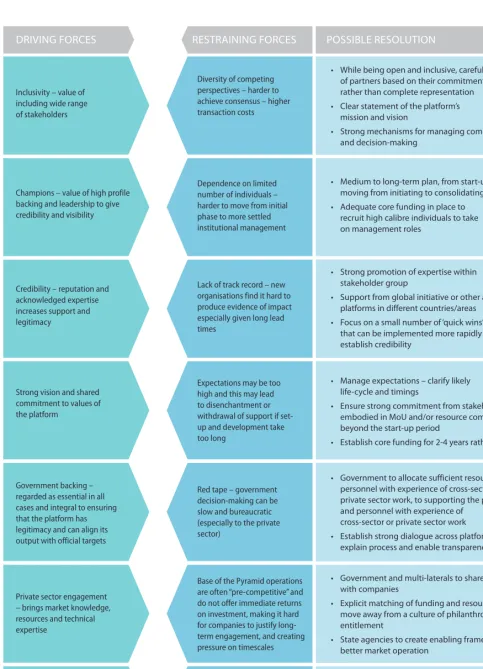
Figure 3 below uses forcefield analysis8 to present a number of
challenges rooted in the tension between good practice and the costs, commitment or contradictions it might create. The table also includes a column of practical recommendations for improving planning and preparation for such challenges.
In Section 5, we present in greater detail our conclusions on the critical activities required to build a successful platform for partnership and how those activities might enable platform stakeholders to avoid or to overcome the most serious challenges at each stage of the platform life-cycle.
P
LAT
F
O
R
MS
F
O
R
P
A
R
TN
ER
SHI
P
IN O
PER
ATION
P
LAT
F
O
R
MS
F
O
R
P
A
R
TN
ER
SHI
P
IN O
PER
ATION
FIGURE 3: FORCE FIELD ANALYSIS OF INHERENT TENSIONS IN BUILDING PLATFORMS
RESTRAINING FORCES
DRIVING FORCES
Inclusivity – value of including wide range of stakeholders
Champions – value of high profile backing and leadership to give credibility and visibility
Credibility – reputation and acknowledged expertise increases support and legitimacy
Strong vision and shared commitment to values of the platform
Government backing – regarded as essential in all cases and integral to ensuring that the platform has legitimacy and can align its output with official targets
Private sector engagement – brings market knowledge, resources and technical expertise
Global support – larger networks offer fund-raising, technical input and learning from previous platform projects
Diversity of competing perspectives – harder to achieve consensus – higher transaction costs
Dependence on limited number of individuals – harder to move from initial phase to more settled institutional management
Lack of track record – new organisations find it hard to produce evidence of impact especially given long lead times
Expectations may be too high and this may lead to disenchantment or withdrawal of support if set-up and development take too long
Red tape – government decision-making can be slow and bureaucratic (especially to the private sector)
Base of the Pyramid operations are often “pre-competitive” and do not offer immediate returns on investment, making it hard for companies to justify long-term engagement, and creating pressure on timescales
Strong global leadership risks undermining local stakeholders and setting up a North-South or donor-recipient divide
POSSIBLE RESOLUTION
T While being open and inclusive, careful selection of partners based on their commitment to action, rather than complete representation
T Clear statement of the platform’s mission and vision
T Strong mechanisms for managing communication and decision-making
T Medium to long-term plan, from start-up, for moving from initiating to consolidating. T Adequate core funding in place to
recruit high calibre individuals to take on management roles
T Strong promotion of expertise within stakeholder group
T Support from global initiative or other allied platforms in different countries/areas
T Focus on a small number of ‘quick wins’ – projects that can be implemented more rapidly and establish credibility
T Manage expectations – clarify likely life-cycle and timings
T Ensure strong commitment from stakeholders, embodied in MoU and/or resource commitment beyond the start-up period
T Establish core funding for 2-4 years rather than 1-2
T Government to allocate sufficient resources, and personnel with experience of cross-sector or private sector work, to supporting the platform and personnel with experience of
cross-sector or private sector work T Establish strong dialogue across platform to
explain process and enable transparency
T Government and multi-laterals to share risk with companies
T Explicit matching of funding and resources to move away from a culture of philanthropy or entitlement
T State agencies to create enabling frameworks for better market operation
T Establish robust local networks with credible reputation and leadership
T Create a strong local presence and high visibility T Plan for a transition of responsibility and
resourcing to local actors
4
The research case studies and their activities
Following an extensive review of the available literature, the research team selected nine current
platforms, all of which conformed to our definition of a country-level platform for partnership,
and undertook a short case study of each. As the brief descriptions below demonstrate, platforms
have been created to address a range of different economic, social and environmental problems in
developing and transitional economies
A number of these in-country platforms have their origins in major global partnerships and represent an extension of the principles of cross-sector co-operation into a local context. Other platforms have emerged from independent initiatives by private companies or civil society bodies seeking to establish national or regional initiatives which might have substantial impact in a well-defined sphere of activity. All require the active endorsement and co-operation of governments and public agencies and all acknowledge that business involvement must go beyond philanthropy and incorporate core commercial interests.
1. Amsterdam Initiative on Malnutrition (AIM)
AIM is a cross-sector group brought together to explore partnerships in 2009. The purpose of AIM is to provide a platform to develop innovative and sustainable solutions to malnutrition through collaboration between NGOs, academia, Dutch businesses and government, with organisations in economically developing countries. AIM brings global partners together to develop links and implement partnerships with in-country partners (e.g. agribusiness, healthcare, civil society) on seven work streams: rural retail hubs; milk fortification; food fortification; vegetable supply; nutrition for employees; water and health kiosks; and farm produce quality assessment. The platform offers collective analysis of business and development challenges, information sharing, facilitated dialogue and learning, on-going partnership support and access to finance. This is primarily carried through group calls on a monthly basis with bi-annual face-to-face meetings.
2. ALIARSE
ALIARSE is a Costa Rican foundation established in 2007. The aim of the ALIARSE is to promote and support private-public partnerships that contribute to sustainable development and to equity, through social responsibility. ALIARSE acts as a catalyser for Public-Private Partnerships (PPP) for sustainable development. This involves developing the capacity for working in partnership focusing on health, education and the environment. ALIARSE provides secretariat services and brokers PPPs, carrying out research, providing training and staff exchanges. It focuses on managing the platform, acting as the initiator, coordinator, broker and catalyser.
3. Business Partners for Development Facility
(BPDF) Hubs in Zambia and Colombia
The BPDF, a programme of Sida, the Dutch Ministry for Foreign Affairs, DFID and The Partnering Initiative, supports the creation of partnership ‘Hubs’ in-country, including in Zambia and Colombia. The Hubs help to drive the engagement of business in development by systematically promoting and supporting the development of ‘win-win’ partnerships between companies, international agencies, government and NGOs to tackle business sustainability or development challenges. In Colombia, the Hub hosted by Andi, the national association of business, and supports a range of collaborations mainly involving its members. In Zambia, AMSCO, an
independent host iwth a number of dedicated brokers, supports the creation of partnerships in a number of areas including job creation and agriculture.
4. Musika
Musika is a Zambian non-profit organisation established in 2011. The aim of Musika is to improve the livelihoods of small-holder farmers across Zambia. They aim to achieve this through supporting the development of the agricultural private sector via technical services and subsidies to change the practices of existing agriculture companies who want to work with small-holder farmers. Thus, they support the creation of private-private partnerships. Musika provides three broad services: i) technical assistance to private sector organisations; ii) access to resources to catalyse change in private sector practices; and iii) brokering between the private sector and communities.
5. Partners Forum for Action on Chronic
Non-Communicable Diseases
The Partners’ Forum is a Trinidad and Tobago group
established in 2011 for an initial period of 2 years. The aim of the Forum is to act as both a catalyst and a mechanism for multi-sector action to promote health and reduce chronic non-communicable diseases (NCDs) in Trinidad and Tobago. The partners build and develop a cross-sector approach to reducing non-communicable diseases. This involves establishing joint planning and coordinated implementation across public and private sectors, identifying and sharing
4
The research case studies and their activities
Following an extensive review of the available literature, the research team selected nine current
platforms, all of which conformed to our definition of a country-level platform for partnership,
and undertook a short case study of each. As the brief descriptions below demonstrate, platforms
have been created to address a range of different economic, social and environmental problems in
developing and transitional economies
TH
E
RE
S
E
A
RC
H
C
AS
E
STUDI
E
S AND TH
E
I
R
A
C
TIVITI
E
S
best practice, and mobilising resources (political will, finance, community involvement etc.) to support joint actions. They also are building a repository of evidence on reducing non-communicable diseases and are developing standards/ policies for government and industry.
6.The Niger Delta Partnership Initiative (NDPI)
The Niger Delta Partnership Initiative is a partnership established in 2010 by Chevron Corporation through the creation of a strategic foundation in the USA (NDPI Foundation) and an implementation foundation in Nigeria (PIND Foundation). The aim of NDPI is to establish innovative multi-stakeholder partnerships that empower communities to achieve a peaceful and enabling environment for equitable economic growth in the Niger Delta. NDPI provides access to finance, dialogue between public and private sectors and civil society, and acts as an information hub. It focuses on four key programme areas: Economic Development, Capacity Building, Peace Building, and Analysis and Advocacy.
In particular, PIND supports partnership activity through its two Economic Development Centers (EDC). The EDCs act as resource and coordination hubs for development programs and partners in the Niger Delta. They provide a broad range of support for PIND’s programs and other development partners (including USAID, DFID, U.S. African Development Foundation [USADF] and Chevron Nigeria Ltd).
7. Project Laser Beam (PLB)
Project Laser Beam is a global and local public-private partnership launched in 2009. The aim of Project Laser Beam is to reach 500,000 malnourished children and create a scaleable, replicable and sustainable model to significantly reduce child under-nutrition. PLB plans and implements public-private partnerships in Bangladesh and Indonesia on four nutrition-related themes (food, water, health and hygiene, women and employment). This covers a variety of programmes e.g. providing high nutrient school food, home gardening, hand-washing, supporting women to continue education. Research and planning of interventions is carried out at the global level, with coordination of activities carried out by a lead global partner in-country. Interventions build on existing nutritional solutions drawing partners together to provide a holistic response to child under-nutrition in-country.
8. The Southern Agriculture Growth Corridor of
Tanzania (SAGCOT)
SAGCOT is a Tanzanian public-private platform initiated in 2010. The aim of SAGCOT is to coordinate government, donor and corporate investments and interventions in agribusiness value-chains and supporting infrastructure. The purpose is to remove bottlenecks and improve the overall agriculture system to kick-start environmentally sustainable and socially beneficial commercial agricultural development in the Southern Agricultural Corridor of Tanzania. SAGCOT is a long-term platform with targets for 2030. SAGOT provides a dedicated secretariat and forum to facilitate dialogue and catalyse new public and private sector investments in the corridor.
9. The National Platform for Responsible
Production and Trade of Pineapples
P
LAT
F
O
R
MS
F
O
R
P
A
R
TN
ER
SHI
P
5
Building a successful platform for partnership
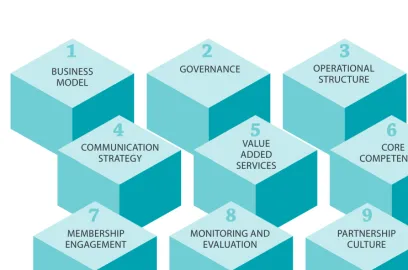
[image:19.660.64.472.324.594.2]Our research has identified nine critical elements that constitute the ‘building blocks’ for any
platform for partnership (see figure 4). An understanding of these elements – and proper attention
to their achievement – will maximise the likelihood of a platform meeting its internal and external
goals, establishing a sustainable institution and delivering development impact through cross-sector
partnerships.
FIGURE 4: BUILDING BLOCKS FOR HIGH-PERFORMING PLATFORMS
1
BUSINESS MODEL
GOVERNANCE OPERATIONAL STRUCTURE
COMMUNICATION STRATEGY
VALUE ADDED SERVICES
MEMBERSHIP ENGAGEMENT
MONITORING AND EVALUATION
PARTNERSHIP CULTURE
CORE COMPETENCIES
2
3
Platform practitioners have highlighted the need to undertake an initial review of the suitability of the environment for partnership activity, analysing the local infrastructure, the availability of resources and the maturity of markets for goods and services. An effective business model for a platform has to be fit-for-purpose: it must demonstrate that any proposed funding streams are realistic and sustainable within this local context. Expert input can be of value – to do cost modelling, create budgets and build financial projections.
There is no single model for funding the creation of platforms but there is a recognised need for secure funding to be in place in order to underwrite activities for a specified time-period at the outset of the platform initiative. This might be provided by donor governments, by international agencies or by a combination of private and public sources. The initial time period needs to be sufficiently long for the platform to achieve success and demonstrate its value to its ‘clients’ and partners.
Donors also need to consider whether the platform itself will provide funding for the partnerships it helps to create and support: a clear distinction has to be made between central funding provided to finance the platform administration itself and any subsequent ‘catalytic’ fund established to support local partnerships.
Most platforms have been established as facilitators of dialogue and partnerships rather than as funding mechanisms so it is important that the overall strategic model clearly demonstrates how the platform will access
funding to support its core administrative and management functions while creating a sustainable financial relationship with those institutions and projects that it helps to broker, establish or support with guidance, training, or other services.
This raises the possibility of a number of different long-term funding models depending on where and for whom value is being created. Such models may include donor funding, membership charges, fees for services, in-kind contributions and social investment.
Any charging for membership or services will need a clear pricing structure and a persuasive statement of the value proposition offered by the platform to potential donors, members or clients. Platform stakeholders will also need to build in a degree of flexibility so that the financial model can be changed over time as priorities change from start-up to capacity-building and to implementation.
As the platform develops, consideration needs to be given to the challenge of moving towards greater local ownership. Research shows that establishing a strong sense of local responsibility and ownership for the operations of the platform (and its associated partnerships) increases the likelihood of long-term sustainability. Any partnership projects need to be closely aligned with the needs of local actors, with local communities and organisations taking a leading role in such initiatives. Too great a dependence on external ‘top-down’ funding can endanger the credibility and viability of the platform at national and local level.
BUILDING BLOCK 1:
Sustainable Business Model
Every platform needs a strategy to achieve its purpose. Central to this strategy is the issue of
how the platform is going to access and generate sufficient funding both to support its core
operation and to enable it to broker and support innovative new partnerships. Platforms are
themselves complex forms of co-operation which involve significant transaction costs.
There is little value in allocating substantial resources to establishing platforms in an
environment that is inappropriate. Thorough preparatory research is needed into the
suitability of any local environment for investment in a new platform.
How do we mobilise resources in a sustainable way?
As the platform-building process develops,
participants need to address the issue of how its activities will be sustainable in the longer term: raising start-up funding may be a lot easier than creating medium and long-term revenue streams. The platform also has to establish its own identity and credibility independent of the institutions that originally created it.
Constituent elements within this challenge include:
1 How to retain stakeholder commitment after the initial ‘honeymoon’ phase;
2 How to cope with periods of transition and change as the platform develops;
3 How to establish the platform’s credibility;
4 How to secure access to long-term resources.
Practical steps to be taken to meet this challenge will include:
T Consider establishing a membership model which requires members to demonstrate long-term commitment through cash or in-kind contributions
T Encourage high-level champions who can endorse the platform and act as ambassadors and conflict resolvers;
T Research external trends so that the platform can offer relevant, income-generating services;
T Build capacity through selecting skilled staff and through sharing learning with regional and global bodies;
T Build membership trust through good
communication and attention to members’ needs;
T Maintain neutrality by establishing clear terms of reference and demonstrating the platform’s independence from any specific sector or institution;
T Respond immediately to challenges and demonstrate ‘quick wins’ and added value.
CHALLENGE
CASE STUDY
AIM
C
AS
E
STUDY : AIM
At the same time, it is important not to rush into too-rigid governance structures in the early development stages while the platform is engaging its core group of partners and co-developing its activities and approaches. It is also essential that governance structures can adapt and change as the platform itself adapts and iterates its approach as it begins to implement in earnest.
In order to support good governance, the platform should espouse and embody clear values, around which participants can mobilise. Values are not only a key element of the overall vision but a critical contributor to building a demonstrably collaborative culture in the platform. The values most frequently cited in our research were neutrality (the platform is neither political nor partial); equity (all members have equal status regardless of size or resources); and transparency (the work of the platform is undertaken in an open and accountable way).
Good governance means setting out the duties and responsibilities of all those involved in the platform. It means operating with universally accepted rules, principles and procedures that offer confidentiality where appropriate but transparency in the critical areas such as decision-making and funding. Power must be seen to be shared in a fair and equitable way to address possible imbalances; communication channels must be accessible to all.
To enable good governance to be established, key values and principles must be agreed and communicated to all participants. If values and principles are unclear, it will be hard to achieve consensus on issues of accountability and harder still to establish trust. At a practical level, there is a need to embody good governance in an appropriate committee structure underpinned by standard operating procedures (SOPs). A number of our case study platforms had to dedicate considerable time and resource to ensure that both the principles and the practice of good governance were in place.
BUILDING BLOCK 2:
Governance
The actions of those managing the platform, allocating resources or
selecting partnerships to support must be accountable to all stakeholders
within a clear system of rules. This is not only a basic requirement to
demonstrate transparency but a practical means of monitoring actions and
outcomes. An absence of good governance systems will undermine trust
between participants and may increase the (already high) transaction costs
involved in a multi-stakeholder platform.
How do we formalise commitment and find out who really means business?
As the platform structure and goals begin to come together and governance is put in place, it is essential to understand which stakeholders can, and will, show long-term commitment to the initiative.
Constituent elements within this challenge include:
1 Ambiguity over whether stakeholders contribute towards the objective;
2 People say they are committed but when it comes to investing resources they are absent;
3 Commitment at mid-management level is not taken up by or communicated to senior levels;
4 Poor commitment by one actor: you can have high commitment from an organisation but the person at the table doesn’t fulfil it.
Practical steps to be taken to meet this challenge will include:
T Address non-commitment quickly;
T Start with small group of committed members who can demonstrate they can achieve targets;
T Formalise commitment as soon as possible through: – Defining clear objectives and expected results – Defining clear added value of partnership
and payback
– Working together in a participatory way – Gaining commitment of resources when
action plan is defined;
T Check each organisation has the ability to partner.
CHALLENGE
CASE STUDY
MUSIKA
Central to an effective structure is the recruitment and funding of a professional central administrative team. Establishing a central secretariat to operate the platform on behalf of stakeholders is a key element in moving from the initial scoping phase into actual implementation of the partnership catalysis process. The relationship between the secretariat and the board or committee representing the main stakeholders should be appropriate, transparent and embodied within a framework of operational guidelines. The secretariat must have access to the financial, human and technical resources required to carry out its remit. Research has highlighted that platforms have been weakened when secretariats were underfunded and thus unable to adequately carry through decisions taken at a strategic level.
As the platform develops its activities so the core management team will have an increasing role in interacting with those in the partnerships it supports. Thus the secretariat will perform not only a central administrative function but also an active role in intermediation – facilitating information flows among the players involved, giving them the confidence to act when their success depends on what others are doing. In the medium to long-term the platform must establish operational systems that permit it to survive beyond the initial “honeymoon” phase and the first round of resourcing: the platform must achieve sufficient permanence so that what began as innovation becomes “business as usual”.
In creating an effective and appropriate operational management structure the platform stakeholders have to identify and recruit high-calibre staff, secure adequate funding to maintain the core team, and clearly define the relationship between the executive staff, the leadership and the governance system. From the outset, the core management team will need to be able to communicate a shared vision of the platform’s objectives and develop an action plan with timelines, budgets and realistic outputs.
BUILDING BLOCK 3:
Operational management structure
Creating a strategy for the platform and ensuring clear values and good
governance will provide a sound basis for development. Building an
effective platform institution requires the design of an appropriate and
effective management structure to implement the platform’s tasks and
produce its stated outputs. All platform participants need to understand
the structuring of the platform, the respective roles of actors and the
systems that are in place to achieve realistic outcomes. The operational
structure should be in place at an early stage to ensure that participation is
purposeful and productive.
How should we structure the platform for success?
As the platform starts to identify its objectives, vision and strategy there is a need to systematically structure and organise how the participants will work together. This involves identifying what is shared, what is available, and what can be done.
Constituent elements within this challenge include:
1 Building a shared vision and defining common objectives that can be operationalized in