ORIGINAL RESEARCH ARTICLE
DEVELOPMENT AND VALIDATION OF STRATEGIC INTERVENTION MATERIALS (SIMS)
IN TEACHING ELEMENTARY ENGLISH 4-CONTENT VALIDATION
*
Trixie E. Cubillas
College of Education, Caraga State University, Ampayon, Butuan City, Philippines, 8600
ARTICLE INFO ABSTRACT
The primary objective of the study is to develop Strategic Intervention Material (SIMs) in teaching Elementary English 4 as a teacher support material in mastering the competencies in the Elementary English 4. It is considered developmental since it underwent three phases namely: planning, development and validation. The respondents of the study were the content experts. They validated the developed SIMs through a researcher –made instrument. The content experts rated the developed SIMs “very satisfactory”. This showed that the five (5) experts viewed the suitable and appropriate to enhance the mastery of the eight (8) Elementary English 4 competencies in the first and second grading period. It is then recommended that the aspects of the materials that were rated “satisfactory” by the experts should be improved. Teachers may also develop more strategic intervention materials for other subject areas to address the pupils’ least learned skills and a similar study may be conducted covering a bigger number of respondents in another location.
Copyright © 2018,Trixie E. Cubillas. This is an open access article distributed under the Creative Commons Attribution License, which permits unrestricted use, distribution, and reproduction in any medium, provided the original work is properly cited.
INTRODUCTION
The Philippine Educational System undergoes major changes brought about by the Kindergarten to Grade 12 or K-12 Basic Education Curriculum. Challenges come along with these changes. One of the issues faced by the present curriculum is the dearth of learning materials. This issue became an inevitable problem that haunts the country’s new curriculum in the three years of its implementation. Admittedly, the Department of Education agreed that there have been delays in the delivery of learning materials such as activity sheets and modules for the pupils (Legaspi, 2014).Even before the change of the curriculum, elementary public school teachers had already several complaints on the shortage of learning materials particularly textbooks which is a predicament that still exists at present. The unavailability of instructional materials and also teachers’ lack of knowledge on material development become prevalent and lingering problems among educational institutions.
*Corresponding author: Trixie E. Cubillas,
College of Education, Caraga State University, Ampayon, Butuan City, Philippines, 8600.
Although DepEd boldly declared that all learning material shortages will be wiped out before the end of 2013 and even promised to have a one is to one or 1:1 ratio for student to textbook within school year 2012 – 2013,but in the actual classroom setting, one textbook is shared by two to three and even more pupils. The same issue resonates in several elementary public schools in Caraga Region. The Basic Education Information System (BEIS) revealed that a few schools in Caraga have1: 3 ratio of learner to textbook (Dios, 2014 ). This means that the pupils who are assigned to keep the books have a greater advantage over those who go home without something with them. Facing this issue, teachers must have the ingenuity in devising and providing the necessary, attractive, and interesting materials which will be made available to pupils for use in classes. The use of sufficient, and strategically designed instructional materials suited for the type of learners is greatly encouraged for learning materials in teaching especially English play an integral role in the teaching – learning process. Its use greatly affects student’s academic performance particularly in the English subject as mentioned in Dahar, (2011 as cited in Salviejo, 2014).
ISSN: 2230-9926
International Journal of Development Research
Vol. 08, Issue, 06, pp.21252-21259, June, 2018
Article History: Received 23rd March, 2018
Received in revised form 27th April, 2018
Accepted 20th May, 2018
Published online 30th June, 2018
Key Words:
Content Validation Least-learned Skills. Development, Strategic Intervention Materials, Validation.
Citation: Trixie E. Cubillas. 2018. “Development and Validation of Strategic Intervention Materials (SIMs) in Teaching Elementary English 4-Content Validation”, International Journal of Development Research, 8, (06), 21252-21259.
Moreover, instructional materials (IMs) such as textbooks, workbooks, modules, et cetera are essential learning tools for they allow learners to interact with words, images and ideas in ways that develop their abilities in multiple skills such as reading, listening, speaking, writing and viewing. In teaching, specifically language, IMs are considered the primary source of convenience and confidence for English language teachers. They find it easy to impart knowledge to pupils if there are IMs available for them to use. This is basically the reason why the accessibility and availability of IMs is a necessity in every classroom (National Council of Teachers of English, 2014).
SIMs are instructional materials designed for remediation purposes and are considered one of the solutions employed by DepEd to enhance academic achievements of pupils performing low in class. SIMs are commonly used instructional materials in teaching Science but not that common in the language arts. They are carefully made and thought of in order to stimulate the pupil’s interest on the certain skill and thereby increasing their level of understanding and master the concept of the subject matter. It has been noted that there are already several SIMs in Science that can be viewed in the internet and are available in public elementary schools like in however, SIMs in English are considered rare. The researcher on this matter developed SIMs for the Grade Four pupils who failed to master the competencies in listening, reading, speaking and writing in the English IV–first and second grading period. The SIMs made are considered prototype SIMs in English 4 since they are the first of their kind. With the colors used in the intervention material, involvement of popular cartoon characters and simplicity of the activities, mastery of the macro skills in English is bound to be possible.
Theoretical / conceptual framework: The study is anchored on Vygotsky’s Scaffolding which stated that students are particularly dependent on teacher’s or peer’s support .Scaffolding is the term given to the provision of appropriate assistance to students in order for them to achieve what alone would have been too difficult for them. Scaffolding is a support that includes images and words that can be seen as well as heard. It is an excellent way to provide comprehensible input to language learners so that not only will they learn the essential subject content but also they will make progress in their acquisition of knowledge of the English language. This means that in designing learning materials, pupils should be able to see an image of what the teacher is describing or see the key words that the teacher is explaining for this not only serves to make the input considerably more comprehensible, but serves to remove the affective filter which results from the fear or boredom that comes of understanding very little in class. The support given to the language learner is removed, stopped or discontinued if the pupil has already mastered the skill that he or she ought to learn (A Guide to Learning English, 2011). Similarly, Keller’s Personalized System of Instruction (PSI) mentioned that a learner must be given enough time and appropriate instructional materials for him or her to cope up with his fellow learners (Motamedi and Sumrall, 2000).PSI was originally designed as a classroom-based method of instruction with the intention of improving student achievement and, at the same time, replacing the long tradition in education with the use of positive consequences for learning. A system of individualized student pacing follows from PSI’s use of a unit mastery requirement. Because some students take more time to master individual units thus once
PSI has begun, students will work on different units depending on their rate of progress. Unlike the lock-step model of traditional instruction, a self-paced model recognizes and accounts for differences among students in the rate at which they learn the material (Motamedi & Sumrall, 2000). Moreover, Renner (1982) in his Curriculum Model of Instruction (CMI) cited the Curriculum Development Theory (CDT) of John Dewey about the use of support material development in which “pupils must be exposed in a meaningful and relevant activities that will allow them to apply the concept they are struggling to learn”, a concept which is also parallel to Keller’s PSI. Renner proposed a three-stage learning cycle .The first three-stage is informing or telling in which the material to be taught can be given to the learner as information. Learners are provided with suitable experiences in order to create for themselves what is to be learned. The second stage is introducing. The learner is introduced to some appropriate- specific terminology in relation to the phenomenon being investigated. The teacher uses this to assist the learner to interpret what has been found. Finally, the third stage is applying the knowledge. This usually involves answering questions and solving problems in progress through PSI at different rates. As such, preparation for a test of some kind. This view of learning may be summarized as telling, confirming and practicing.
In addition, Sweller, the proponent of Cognitive Load Theory, suggested that effective instructional material facilitates learning by directing cognitive resources towards activities that are relevant to schema acquisition. Instructional material that requires learners to schema acquisition may thus be viewed as effective (Cooper, 1998). Instructional materials therefore must serve as guide to learning, personalised, self-paced if possible, contain meaningful and relevant activities and something which encourages learners to activate or use their prior knowledge or schema. The development of self – learning material in English was rooted on the different viewpoints or ideas of the abovementioned theories on learning and material development. Basically, the Strategic Intervention Materials focused on the least-learned skills in each of the macro skills specifically listening, reading, speaking and writing in elementary English 4. The SIMs underwent three different phases in development namely the planning, the development and the validation. Each SIM was validated by the Elementary English Specialist teacher – experts or content experts. They looked into the content of each material. Each expert’s suggestions and recommendations were considered in order to point out the strengths and weaknesses of the developed materials.
MATERIALS AND METHODS
City. All of them are teaching English for at least three years and have attended various trainings on language material making.The least- learned skills which were made as bases in the development of the SIMs were taken from the consolidated item analysis of the four (4) low performing classes among the eighteen (18) grade four classes. A researcher –made instrument was utilized to gather the data of the study .Some of the parts of the Content Expert Material Evaluation Form were adapted from the Instructional Material Evaluation Rubric Form of the Nevada Department of Education (2013).The revisions made were based on the suggestions of the thesis
adviser, SIM experts, collegues and instrument validators.
The study underwent three phases that include; planning phase, development phase and validation phase. In planning phase, the item analyses of the first and second periodical tests of the four (4)grade four classes were examined. This was made in order to identify the least mastered competency in each macro skill namely; listening, reading, speaking and writing. The least learned skills were used as bases for the construction of the intervention materials. The data were made as foundation in selecting the topics and drafting of the activities that were included in each intervention material. The development phase was the actual making of the intervention materials which included the identification of the skills or topics specified in the Basic Education Curriculum or BEC, the selection of the activities and the adoption of the format, theories, approaches and the curriculum model of instruction. The format that was used in the materials was adopted from Soposo (2012) which was originally based from the papers of Olayta- Dy (2005) wherein each material must consist of five parts or better known as cards.
The cards were properly sequenced as follow: guide card; activity card; assessment card; enrichment card; and reference card. However, some changes were made that included the additions of the introduction card after the guide card that were added in order for the pupils to help answer the activities in the preceding cards by presenting first the discussion or explanation of the concept, the answer card which was placed in the last portion of the material in order for the learner to check his or her own work and the exit card which was included in order for the learner to identify the skills or ideas that he or she had learned after answering the material. The first drafts of the SIM underwent informal validation. Each developed SIM was tried and tested to pupils in one English class in order for the researcher to pre-assess each one of them. Subsequently, they were presented to the adviser and colleagues. After which, the insights of the SIM experts were sought in order to determine the strong and weak points of the developed SIMs. Comments and suggestions were considered for the improvement. There were eight (8) SIMs that were made and all of them were based on Vygotsky’s Scaffolding, Keller’s Personalized System of Instruction, Renner’s Curriculum Model of Instruction, Curriculum Development Theory (CDT) of Dewey and Sweller’s Cognitive Load
Theory. In validation phase, the SIMs were evaluated through
formal validation of the five (5) content experts who looked into the content of the SIMs. The final drafts were done after the experts validated the materials. Their suggestions, comments and recommendations were considered in writing the final drafts. The data that were acquired from the evaluation of the content experts Butuan Central Elementary School, use public central school. The mean rating per item and overall mean ratings were included in the computation.
The content experts used the content material evaluation form which contained the following criteria namely: objectives;
technical quality; instructional quality; organization; language
art content; and alignment.
RESULTS AND DISCUSSION
The least-learned skills of the grade 4 pupils in English:
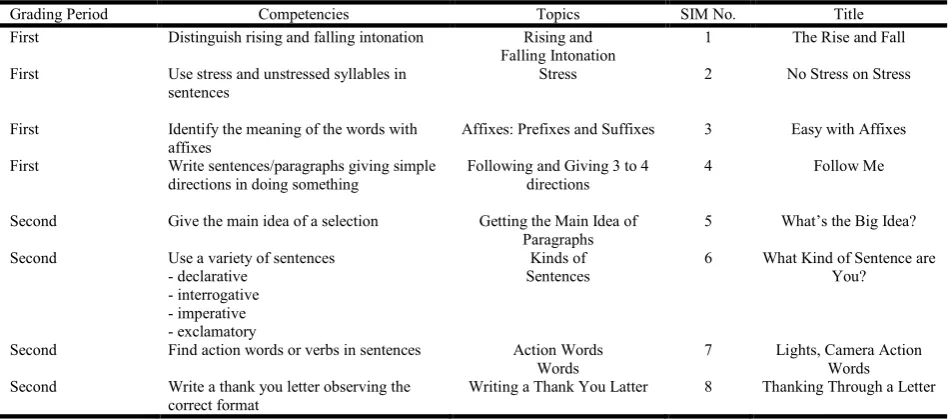
The least-learned skills were identified based on the item analysis in the first grading and second grading period of the four (4) low performing grade four classes in Butuan Central Elementary School. The identification of the least-learned skills were made by pointing out the skills which obtained the lowest percentage of correct responses per macro-skill namely listening, speaking, reading and writing in the first and second grading periodic tests. Table 4.1.shows the consolidated item analysis of four (4) low-performing grade four classes in the first and second grading period in English in which the least learned skills in the four macro-skills were obtained. It can be gleaned from table that in the first and second grading period there were eight (8) least learned skills identified. From them, there eight (8) strategic intervention materials (SIMs) developed and they were named The Rise and Fall for SIM No.1, No Stress on Stress for SIM No.2, Easy with Affixes for SIM No. 3, Follow Me for SIM No.4, What’s the Big Idea? For SIM No.5, What Kind of Sentence Are You? for SIM No.6, Lights, Camera Action for SIM No.7 and Thanking Through a Letter for SIM No. 8. Comments and suggestions of the researcher’s adviser, colleagues and SIM experts in the first draft were taken into consideration. The content experts validated the SIMs. Their recommendations were sought and followed.
Validity of the content of the strategic intervention materials (SIMs) by the content experts: The content evaluation of the developed SIMs was based on different criteria. The mean distribution on the validation of Strategic
Intervention Material No.1 titled The Rise and Fall is
illustrated in Table 4.2.1. As presented in Table 4.2.1, the alignment got 4.90, the highest mean rating given by the content experts which is interpreted as very satisfactory. The rating connotes that SIM no.1 has texts/words which are printed clearly, legibly, and written in size that is suitable for the pupils, its instructions are integrated with the pupils’ prior knowledge or schema, its parts provide varied activities for the learners, its activity cards include in the lessons are congruent to the objectives listed in the guide card ,it is a useful resource in preparing students to meet the requirements of the curriculum standards and its activities have purpose, and are aligned to a skill or concept of the grade level. The lowest mean rating of the content experts is 4.73under the indicator objectives which is interpreted as very satisfactory. The grand mean presented in Table 4.2.1 was 4.79 which was interpreted as very satisfactory. The mean distribution on the validation of
SIM No. 2 titled No Stress on Stress can be gleaned on Table
Table 4.2 Blueprints of the Strategic Intervention Material in Teaching English 4
Grading Period Competencies Topics SIM No. Title
First Distinguish rising and falling intonation Rising and Falling Intonation
1 The Rise and Fall First Use stress and unstressed syllables in
sentences
Stress 2 No Stress on Stress
First Identify the meaning of the words with affixes
Affixes: Prefixes and Suffixes 3 Easy with Affixes First Write sentences/paragraphs giving simple
directions in doing something
Following and Giving 3 to 4 directions
4 Follow Me
Second Give the main idea of a selection Getting the Main Idea of Paragraphs
5 What’s the Big Idea? Second Use a variety of sentences
- declarative - interrogative - imperative - exclamatory
Kinds of Sentences
6 What Kind of Sentence are You?
Second Find action words or verbs in sentences Action Words Words
7 Lights, Camera Action Words Second Write a thank you letter observing the
correct format
[image:4.595.125.461.630.786.2]Writing a Thank You Latter 8 Thanking Through a Letter
Table 4.2.1 Content Validation of SIM No. 1
INDICATORS RESPONDENTS Mean INTERPRETATION
1 2 3 4 5
I. Objectives
5.0 5.0 4.3 4.7 4.7 4.73 Very Satisfactory II. Technical Quality
5.0 5.0 4.3 5.0 5.0 4.85 Very Satisfactory III. Instructional Quality
4.8 4.8 4.5 5.0 4.7 4.77 Very Satisfactory
IV. Organization
5.0 5.0 3.9 4.9 5.0 4.77 Very Satisfactory V. Language Arts Content
5.0 5.0 4.0 4.9 4.9 4.74 Very Satisfactory
VI. Alignment
The grand mean presented in Table 4.2.2was 4.80 which means that SIM no.2 was rated by the content experts as very satisfactory. The mean distribution on the validation of SIM
no. 3titled Easy with Affixes can be gleaned on Table 4.2.3. As
presented in Table 4.2.3, the highest mean rating given by the content experts is 4.93 which is interpreted as very satisfactory for the objectives.
[image:5.595.110.493.84.260.2]This means that the objectives in SIM no.3 are specific, measurable, attainable, realistic and time bounded and they suit the competency specified in the curriculum. Another is that the directions in the materials are properly laid out and the material is adequate to master the competencies and reinforce learning.
Table 4.2.2Content Validation of SIM No. 2
INDICATORS RESPONDENTS Mean Interpretation
1 2 3 4 5
I. Objectives
5.0 5.0 5.0 4.7 5.0 4.93 Very Satisfactory II. Technical Quality
4.8 5.0 4.0 5.0 5.0 4.75 Very Satisfactory III. Instructional Quality
4.8 4.8 4.0 5.0 4.8 4.70 Very Satisfactory IV. Organization
4.8 5.0 4.3 4.9 5.0 4.82 Very Satisfactory V. Language Arts Content
5.0 5.0 4.0 4.9 5.0 4.77 Very Satisfactory VI. Alignment
[image:5.595.126.479.306.473.2]5.0 5.0 4.0 5.0 5.0 4.80 Very Satisfactory GRAND MEAN 4.90 4.97 4.22 4.91 4.97 4.80 Very Satisfactory
Table 4.2.3 Content Validation of SIM No. 3 Conte Validation of SIM No. 3able 4.3.3ttt
INDICATORS RESPONDENTS Mean Interpretation
1 2 3 4 5
I. Objectives
5.0 5.0 4.7 5.0 5.0 4.93 Very Satisfactory
II. Technical Quality
5.0 5.0 4.0 5.0 5.0 4.80 Very Satisfactory
III. Instructional Quality
4.8 4.5 4.5 5.0 4.8 4.73 Very Satisfactory
IV. Organization
5.0 5.0 4.5 4.9 4.9 4.87 Very Satisfactory
V. Language Arts Content
5.0 5.0 4.1 4.9 4.9 4.80 Very Satisfactory
VI. Alignment
5.0 5.0 4.0 5.0 5.0 4.80 Very Satisfactory
GRAND MEAN 4.97 4.92 4.30 4.96 4.93 4.82 Very Satisfactory
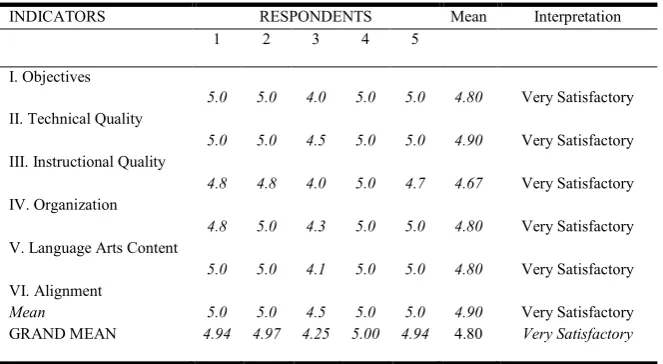
Table 4.2.4 Content Validation of SIM No. 4
INDICATORS RESPONDENTS Mean Interpretation
1 2 3 4 5
I. Objectives
5.0 5.0 4.0 5.0 5.0 4.80 Very Satisfactory
II. Technical Quality
5.0 5.0 4.5 5.0 5.0 4.90 Very Satisfactory
III. Instructional Quality
4.8 4.8 4.0 5.0 4.7 4.67 Very Satisfactory
IV. Organization
4.8 5.0 4.3 5.0 5.0 4.80 Very Satisfactory
V. Language Arts Content
5.0 5.0 4.1 5.0 5.0 4.80 Very Satisfactory
VI. Alignment
Mean 5.0 5.0 4.5 5.0 5.0 4.90 Very Satisfactory
[image:5.595.137.469.517.699.2]Moreover, the sequence of the activities in the material achieves its defined purpose and that the exit card/s help/s the pupil evaluate the ideas or concepts he or she learned. The level of difficulty is also appropriate for the pupils and that the activities in the material are enjoyable, stimulating, challenging and engaging. Finally, the activities in the material are meaningful and substantial. The lowest mean rating of the content experts is instructional quality with the mean of 4.73 which was interpreted as very satisfactory.
The grand mean presented in Table 4.2.3 was 4.80 which means that SIM no.3 was rated by the content experts as very satisfactory. The mean distribution on the validation of SIM
no. 4titled Follow Me can be viewed on Table 4.2.4. As
[image:6.595.124.470.88.262.2]reflected in Table 4.2.4, the highest mean rating given by the content experts was 4.90 for technical quality and the alignment which is interpreted as very satisfactory. This high rating shows that the paper material used in SIM no.4 is clean and free from blots and other mess. The material also has
Table 4.2.6 Content Validation of SIM No.6
INDICATORS RESPONDENTS Mean Interpretation
1 2 3 4 5
I. Objectives
4.7 5.0 4.3 5.0 5.0 4.80 Very Satisfactory
II. Technical Quality
4.8 5.0 4.8 4.5 5.0 4.80 Very Satisfactory
III. Instructional Quality
4.0 4.8 4.2 4.8 5.0 4.57 Very Satisfactory
IV. Organization
4.1 5.0 4.3 4.9 5.0 4.67 Very Satisfactory
V. Language Arts Content
4.1 5.0 4.0 4.6 4.7 4.49 Very Satisfactory
VI. Alignment
5.0 5.0 4.0 5.0 5.0 4.80 Very Satisfactory
[image:6.595.124.473.305.470.2]GRAND MEAN 4.44 4.97 4.26 4.80 4.95 4.69 Very Satisfactory
Table 4.2.7 Content Validation of SIM No.7
INDICATORS RESPONDENTS Mean Interpretation
1 2 3 4 5
I. Objectives
5.0 5.0 4.0 5.0 4.7 4.73 Very Satisfactory
II. Technical Quality
5.0 5.0 4.3 5.0 5.0 4.85 Very Satisfactory
III. Instructional Quality
4.8 4.8 4.0 4.5 4.8 4.60 Very Satisfactory
IV. Organization
5.0 5.0 4.0 4.9 4.9 4.77 Very Satisfactory
V. Language Arts Content
5.0 5.0 4.1 4.4 5.0 4.71 Very Satisfactory
VI. Alignment
5.0 5.0 4.0 5.0 5.0 4.80 Very Satisfactory
GRAND MEAN 4.97 4.97 4.07 4.81 4.90 4.74 Very Satisfactory
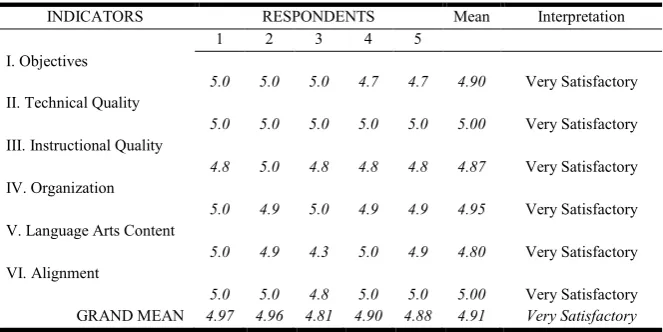
Table 4.2.8. Content Validation of SIM No. 8
INDICATORS RESPONDENTS Mean Interpretation
1 2 3 4 5
I. Objectives
5.0 5.0 5.0 4.7 4.7 4.90 Very Satisfactory
II. Technical Quality
5.0 5.0 5.0 5.0 5.0 5.00 Very Satisfactory
III. Instructional Quality
4.8 5.0 4.8 4.8 4.8 4.87 Very Satisfactory
IV. Organization
5.0 4.9 5.0 4.9 4.9 4.95 Very Satisfactory
V. Language Arts Content
5.0 4.9 4.3 5.0 4.9 4.80 Very Satisfactory
VI. Alignment
5.0 5.0 4.8 5.0 5.0 5.00 Very Satisfactory
[image:6.595.132.464.511.677.2]enough space provided for the pupil to write their answers/responses. Another is that the sequence of the activities in the material achieves its defined purpose and the activity cards aid the pupil’s understanding about the topic or lesson. Furthermore, the level of difficulty of the activities in the material is appropriate for the pupils and there is a balanced assessment type questions in the material. The activities also in the material are meaningful and substantial and the material content aligns to the curriculum. Lastly, the material can be a useful resource in preparing students to meet the requirements of the curriculum standards. The lowest mean rating of the content experts on the other hand, is 4.67 which is interpreted as very satisfactory. The grand mean presented in Table 4.2.4was 4.80 which means that SIM no.4 is rated by the content experts as very satisfactory. The mean distribution on
the validation of SIM No. 5titled What’s the Big Idea? is
presented on Table 4.2.5. As displayed in Table 4.2.5, the highest mean rating given by the content experts is 4.90 which is interpreted as very satisfactory for the alignment. This suggests that the objectives in SIM no.5 suit the competency specified in the curriculum. The material also follows the suggested parts or cards of SIM. Another is that the activity cards include the lessons which are congruent to the objectives listed in the guide card. In addition, the assessment card/s gauge/s pupil’s understanding about the topic or lesson and the exit card/s help/s the pupil evaluate the ideas or concepts he or she learned. Furthermore, the activities in the material are meaningful and substantial, designed for a purpose and are aligned to a skill or concept of the grade level. The data also shows that the material can be a useful resource in preparing students to meet the requirements of the curriculum standards. The lowest mean rating of the content experts is 4.63 which is interpreted as very satisfactory. The grand mean presented in Table 4.2.5 is 4.79 which means that SIM no.5 was rated by the content experts as very satisfactory.
The mean distribution on the validation of SIM no.6titled
What’s the Big Idea ?is presented on Table 4.2.6. As shown in
Table 4.2.6, the highest mean rating given by the content experts was 4.80 which is interpreted as very satisfactory for the objectives, technical quality, and alignment. The data show that the objectives in SIM no.6 are specific, measurable, attainable, realistic and time-bounded or SMART and the paper used in the material is clean and free from blots and other mess. On the other hand, the lowest mean rating of the content experts is 4.49 which means very satisfactory under language art content. This means that the material does not contain all macro skills in English. The grand mean presented in Table 4.2.6was 4.69 which means that SIM no.6 was rated by the content experts as very satisfactory. The mean
distribution on the validation of SIM no.7 titled What Kind of
Sentence are You? is presented on Table 4.2.7. As seen in
Table 4.2.7, the highest mean rating given by the content experts is 4.85 which is interpreted as very satisfactory for the technical quality. The result shows that the material has enough space provided for the pupil to write the
answers/responses. The lowest mean rating of the content
experts is 4.60 which was interpreted as very satisfactory. This means that pupils can answer the activities with the help of the teacher. The grand mean presented in Table 4.2.7 is 4.74 which means that SIM no.7 was viewed by the content experts as very satisfactory. The mean distribution on the validation of
SIM no.8titled Thanking Through a Letter is presented on
Table 4.2.8. As perceived in Table 4.2.8, the highest mean rating given by the content experts was 5.00 which was
interpreted as very satisfactory for the technical quality. With this data, it can be understood that the learning objectives of the material suit the competency specified in the curriculum. Also, the learning objectives are sound and based on actual needs. The graphics and colors are appropriately used, the texts/words in the material are printed clearly, legibly, and written in size that is suitable for the pupils. Also, the paper material used is clean and free from blots and other mess, the material has enough space provided for the pupil to write the answers/responses, the directions in the material are clear and properly laid out and the material is adequate to master the
competencies and reinforce learning. Moreover, the
instructions in the material are integrated with the pupils’ prior knowledge or schema and the different parts of the material provide varied activities for the learners.
Each activity in the material encourages pupils to proceed to the next task. Furthermore, the sequence of the activities in the material achieves its defined purpose the material follows the suggested parts or cards of SIM, the guide card gives the overview of the topic or lesson, the activity cards include the lessons which are congruent to the objectives listed in the guide card and the assessment card/s gauge/s pupil’s understanding about the topic or lesson. In addition, the enrichment card/s supplement/s pupil’s understanding about the topic or lesson. The exit card/s help/s the pupil evaluate the ideas or concepts he or she learned. The level of difficulty is appropriate for the pupils. The activities in the material are enjoyable, stimulating, challenging and engaging. The material includes application of skills and concepts in English and is a useful resource in preparing students to meet the requirements of the curriculum standards. Finally, the activities in the material have purpose, they are aligned to a skill or concept of the grade level and they are also aligned to the anchor standards in teaching English. The lowest mean rating of the content experts is 4.80 which is interpreted as very satisfactory. This means that pupils can answer the activities with the help of the teacher. The grand mean presented on Table 4.2.8 was 4.91 which means that SIM no.8 was viewed by the content experts as very satisfactory.
Conclusion
REFERENCES
Constructivist teaching model, 2002. Retrieve December 5,
2014 from http://en.wikipedia.org/wiki/ Constructivist_ teaching_methods
Cooper, G. and Sweller, J. 1998. The effects of schema
acquisition and rule automation on mathematical
problem-solving transfer. Journal of Educational Psychology,
79,347-362. Retrieve December 10, 2014
fromhttp://dwb4.unl.edu/Diss/Cooper/UNSW.htm.
Dewey, 2010. Curriculum development theory. Retrieve
February 17,2012 from http://www. Encarta. Org/ Curriculum theory
Dios, A. 2014. Philippine basic education :philippines’deped ,
six months into school year , # Textbooks. Retrieved
http://philbasiceducation.blogspot.com/2014/12/philippine- deped-six-months-into-school.html on January 3, 2015.
Guidelines for selection of materials in english language arts
programs. 2014. Retrieve http://www.ncte.org/positions/
statements/ material-selection-ela on January 3, 2015. Instructional Material Evaluation Rubric Form. 2013.
Retrieved December 5, 2014 from www.doe.nv.gov.
Legaspi, A. 2014. GMA News :Lack of materials, facilities
still hound K to 12 implementation. Retrieve December 10,
2014 from http:// www. gmanetwork.com/
news/story/363734/news/ special reports/lack-of-
materials- facilities-still-hound-k-to-12-implementation.
Motamedi, V. & Sumrall, W. J. 2000. Mastery learning and
contemporary issues in Education. Action in Teacher
Education, 22(1), 32-42.
National Council of Teachers of English. 2014. Standards on
judging instructional materials. Retrieve December 5,
2014 from www.ncte.org.
Renner’s Model, 1982. The learning cycle, comparison of
model strategies for conceptual reconstruction. Retrieve
February 18, 2012 from astlc. ua.edu/ Science In Elem &
Middle School/565LearningCycle
ComparingModels.htm..
Salviejo, E .Aranes I., Fidela, Q. Espinosa, A. 2014. Strategic
intervention material-based instruction, learning
approach and students‘ performance in chemistry.
International Journal of Learning, Teaching and
Educational Research .Manila, Philippines.
Sweller, J. 1999. Instructional design in technical areas.
Camberwell, Victoria, Australia: Australian Council for Educational Research.
United Nations Development Group, Thematic papers on the
millennium development goal achievement, UNDG Policy
Network for Millennium Development Goals, United Nations, New York, 2008.
Vygotsky, L. 1978. Interaction between learning and
development. mind and society. Cambridge, MA. Harvard
University Press.