Georgia State University Georgia State University
ScholarWorks @ Georgia State University
ScholarWorks @ Georgia State University
Public Health Theses School of Public Health
5-11-2012
Maternal Medication Use and Risk of Hypospadias- An Exposure
Maternal Medication Use and Risk of Hypospadias- An Exposure
Spectrum Approach
Spectrum Approach
Jennifer N. Lind
Georgia State University
Follow this and additional works at: https://scholarworks.gsu.edu/iph_theses
Recommended Citation Recommended Citation
Lind, Jennifer N., "Maternal Medication Use and Risk of Hypospadias- An Exposure Spectrum Approach." Thesis, Georgia State University, 2012.
https://scholarworks.gsu.edu/iph_theses/207
MATERNAL MEDICATION USE AND RISK OF HYPOSPADIAS- AN
EXPOSURE SPECTRUM APPROACH
by
Jennifer N. Lind
Pharm.D., FLORIDA A&M UNIVERSITY
A Thesis Submitted to the Graduate Faculty of Georgia State University in Partial Fulfillment of the Requirements for the Degree
Master of Public Health
APPROVAL PAGE
Maternal Medication Use and Risk of Hypospadias- An Exposure Spectrum Approach
by
Jennifer N. Lind
Approved:
________________________________________ Committee Chair
________________________________________ Committee Member
________________________________________ Committee Member
iii
Acknowledgements
I would first like to give honor and thanks to God for His goodness, blessings, and mercy and for guiding every step I take through life. I would like to thank my family for their constant love and support and for always believing in me. Thank you to my thesis committee, Dr. Bruce Perry, MD, MPH and Dr. Sarah Tinker, PhD, MPH for your time, efforts, guidance, and support throughout this process. I would like to thank the National Birth Defects Prevention Study (NBDPS) for allowing me to use their data for my thesis. And a special thank you to the entire Birth Defects Branch team at the Centers for Disease Control and Prevention (CDC) for all of your encouragement, guidance, and support and for providing me with the amazing experience of being able to work with all of you; it has truly been an honor.
ABSTRACT
Purpose To investigate associations between maternal use of selected medications during early
pregnancy and the risk of hypospadias in male infants.
Methods We used data from the National Birth Defects Prevention Study, a multi-site,
population-based, case-control study. We analyzed data from 1,537 case infants with second or third degree isolated hypospadias and 4,314 male control infants born from 1997-2007. Exposure was based on reported use of any prescription or over-the-counter medication or herbal product, for which there were at least 5 exposed cases, from 1 month before to 4 months after conception, excluding topicals, vitamins, minerals, and products for which the components were unknown. Adjusted odds ratios (aORs) and 95% confidence intervals (CI) were estimated using
multivariable logistic regression, adjusting for several confounders.
Results Of the 195 medication components with at least 5 exposed cases, 89 components met the
inclusion criteria and were assessed-28 herbal and 61 non-herbal components. Hypospadias was associated with reported use of cephalexin (aOR 3.06; 95% CI 1.02, 9.18), phenylpropanolamine HCl (aOR 2.68; 95% CI 1.06, 6.80), and ibuprofen (aOR 1.16; 95% CI 1.00, 1.34), in primary analyses.
Conclusions We replicated a previously observed association between maternal exposure to
phenylpropanolamine HCl and hypospadias. The associations with cephalexin and ibuprofen have not previously been reported. Given the exploratory nature of the analyses, these results should be considered hypothesis-generating. Better understanding of the potential fetal effects will allow clinicians and women of childbearing age to make more informed decisions regarding the use of medications during pregnancy.
Authors’ Statement
In presenting this thesis as a partial fulfillment of the requirements for an advanced degree from Georgia State University, I agree that the Library of the University shall make it available for inspection and circulation in accordance with its regulations governing materials of this type. I agree that permission to quote from, to copy from, or to publish this thesis may be granted by the author or, in her absence, by the professor under whose direction it was written, or in his
absence, by the Associate Dean, College of Health and Human Sciences. Such quoting, copying, or publishing must be solely for scholarly purposes and will not involve any potential financial gain. It is understood that any copying from or publication of this dissertation which involves potential financial gain will not be allowed without written permission of the author.
Notice to Borrowers
All these deposited in the Georgia State University Library must be used in accordance with the stipulations described by the author in the preceding statement.
The author of this thesis is:
Jennifer N. Lind P.O. Box 361383 Decatur, GA 30036
The Chair of the committee for this thesis is:
Bruce C. Perry, MD, MPH Institute of Public Health Georgia State University P.O. Box 3995
Atlanta, Georgia 30302-3995
Users of this thesis who not regularly enrolled as student as Georgia State University are
required to attest acceptance of the preceding stipulation by signing below. Libraries borrowing this thesis for the use of their patrons are required to see that each user records here the
information requested.
NAME OF USER ADDRESS DATE TYPE OF USE
Curriculum Vitae
JENNIFER N. LIND
P.O. Box 361383 Decatur, GA 30036 Email: [email protected]
EDUCATION
GEORGIA STATE UNIVERSITY Atlanta, GA
Institute of Public Health, Master of Public Health in Prevention Sciences Cumulative GPA: 4.00, Expected graduation term, Spring 2012
FLORIDA A&M UNIVERSITY Tallahassee, FL
College of Pharmacy and Pharmaceutical Sciences, Doctor of Pharmacy Degree (Pharm.D.), 2007 Cumulative GPA: 3.66, Magna Cum Laude
EXPERIENCE
CENTERS FOR DISEASE CONTROL AND PREVENTION (CDC) Atlanta, GA
Guest Researcher September 2011 – Present
Birth Defects Branch, National Center on Birth Defects and Developmental Disabilities
THE GEORGIA PHARMACY JOURNAL Atlanta, GA
Volunteer Peer Reviewer January 2011 – Present
LIVE HEALTHY DEKALB COALITION: MAPP PROCESS DeKalb County, GA
Coalition Member March 2010 – Present
TARGET PHARMACY Conyers, GA
Relief Pharmacist November 2009 – January 2012
CENTERS FOR DISEASE CONTROL AND PREVENTION (CDC) Atlanta, GA
Epidemiological Assistant June 2011 – September 2011
Birth Defects Branch, National Center on Birth Defects and Developmental Disabilities
TARGET PHARMACY Conyers, GA
Pharmacy Manager January 2009 – November 2009
TARGET PHARMACY Conyers, GA
Staff Pharmacist July 2007 – January 2009
PUBLICATIONS
Lind J, Lennard J, Ghazvini P, Honeywell M, Treadwell P. Oxymorphone HCl (Opana) for the relief of moderate-to-severe pain. P&T Journal. 2007 Jun;32(6):316-21.
Lennard J, Lind J, Honeywell M. Advanced technology for fertility prediction. US Pharmacist. 2006 Dec;31(12):49-54.
PRESENTATIONS
Lind J, Lennard J, Ghazvini P, Treadwell P. Analysis of antihypertensive therapy according to current guidelines in a clinical setting. Poster session presented at: Optimum care. 41st Annual American Society of Health-System Pharmacists (ASHP) Midyear Clinical Meeting;2006 Dec 3- 7;Anaheim, CA.
PROFESSIONAL ASSOCIATIONS
American Pharmacists Association (APhA), Gamma Zeta Chapter of Rho Chi Pharmaceutical Honor Society, Georgia Pharmacy Association (GPhA), Live Healthy DeKalb Coalition, Public Health Institute Student Association (PHISA)
HONORS
TABLE OF CONTENTS
ACKNOWLEDGEMENTS ... iii
LIST OF TABLES ... ix
INTRODUCTION ...1
1.1 Background ...1
1.2 Purpose of Study ...2
1.3 Research Questions ...3
REVIEW OF THE LITERATURE ...4
2.1 Description of Hypospadias ...4
2.2 Penile Embryology ...6
2.3 Hypospadias Epidemiology ...7
2.4 Etiology and Risk Factors for Hypospadias ...8
2.5 Medication Use during Pregnancy and Risk of Hypospadias ...11
METHODS ...13
3.1 Data Source and Study Population ...13
3.2 Statistical Analysis ...15
RESULTS ...17
DISCUSSION AND CONCLUSION ...29
5.1 Discussion ...29
5.2 Study Strengths and Limitations ...33
5.3 Conclusion and Recommendations ...34
ix
LIST OF TABLES
Table 1 ...18
Table 2 ...22
Table 3 ...25
Table 4 ...26
1 CHAPTER I INTRODUCTION
1.1 Background
Birth defects are structural or functional abnormalities that are present at birth and cause
physical or mental disability.1 A structural birth defect results when some part of the body,
internal or external, is missing or malformed.2 Functional birth defects are related to a problem
with how a body part or body system works and often lead to developmental disabilities.1
Birth defects affect approximately 3% of all live births in the United States and are an
important public health issue.3 Birth defects are a leading cause of infant mortality; in 2008 birth
defects contributed to more than 5,600 infant deaths in the U.S., accounting for 20.1% of all
infant deaths.4 Furthermore, birth defects substantially impact health care costs. The cost of
lifetime care for infants born in 1992, with one or more of 17 of the most clinically significant
structural birth defects in the United States, was an estimated $6 billion.5
The causes of approximately 60-70% of birth defects are currently unknown; however
genetic and environmental factors have been identified as potential risk factors for some birth
defects.2 Risk factors that have been identified for having a child with a birth defect include
maternal age, certain medical conditions, and maternal use of certain medications, illicit drugs,
cigarettes, or alcohol during pregnancy.6
Some medications are known or strongly suspected teratogens, including thalidomide,
isotretinoin, valproic acid, and mycophenolate mofetil. Use of medications that are known to
cause birth defects is at times necessary in the treatment of women of childbearing age, for
conditions such as epilepsy and immune suppression after organ transplantation.7 In the United
States alone, women of childbearing age receive 11.7 million prescriptions for potentially
2
In the United States, medication use is highly prevalent in women of childbearing age,
with more than 80% of pregnant women taking over-the-counter (OTC) or prescription drugs
during pregnancy, 9 despite the fact that little data exist on risks or safety of most medications
used by pregnant women.10–13 The overall prevalence of herbal use anytime during pregnancy
was recently estimated at 9.4%.14 Unlike prescription and newer OTC medications, herbal
products are usually marketed without the benefit of clinical trials to demonstrate either efficacy
or safety because under the Dietary Supplement Health and Education Act of 1994, the
responsibility for ensuring safety before marketing belongs to manufacturers.15
Many pregnant women require drug therapy due to pregnancy-induced conditions such as
nausea and vomiting, chronic conditions diagnosed before pregnancy, or acute conditions that
develop during pregnancy. However, medication use during pregnancy poses a potential risk to
both the mother and the fetus. Pregnancy is associated with physiologic and pharmacokinetic
changes that potentially alter the dosing, effectiveness, and ultimately, the safety of many
drugs.11 Use of medications during pregnancy has been associated with an increased risk of
many different types of birth defects, including hypospadias, a common birth defect in male
offspring.16–19
1.2 Purpose of Study
The main objective of this study was to investigate associations between maternal use of
selected medications, including prescription, over-the-counter, and herbal preparations, during
the periconceptional period and early pregnancy and the risk of second- or third-degree
hypospadias in male infants. This analysis will help to identify medications that may increase the
3
with hypospadias will give researchers a better idea of what causes this birth defect and
subsequently, findings may help inform directions for future preventive efforts.
1.3 Research Questions
1. Are there associations between maternal use of selected prescription, over-the-counter,
and herbal preparations, during the periconceptional period and early pregnancy, and the
risk of second- or third-degree hypospadias in male infants?
2. Are there associations between maternal use of prescription, over-the-counter, and herbal
preparations, during the periconceptional period and early pregnancy, and the risk of
second- or third-degree hypospadias in male infants, after adjusting for potential
confounding factors?
3. Are there associations between maternal use of prescription, over-the-counter, and herbal
preparations, during the periconceptional period and early pregnancy, and the risk of
second- or third-degree hypospadias in male infants, after excluding infants with a
positive family history of hypospadias?
4. Are there associations between maternal use of prescription, over-the-counter, and herbal
preparations, during the periconceptional period and early pregnancy, and the risk of
second- or third-degree hypospadias in male infants, after excluding low birth weight and
multiple births?
5. Are there associations between maternal use of prescription, over-the-counter, and herbal
preparations, during the periconceptional period and early pregnancy, and the risk of
second- or third-degree hypospadias in male infants, after excluding mothers who
4 CHAPTER II
REVIEW OF THE LITERATURE
In this chapter, support of this study’s research questions and variables of interest are
synthesized from the scientific literature. The literature review examines hypospadias, including
a description of the condition, penile embryology, epidemiology, risk factors and etiology, and
medication use during pregnancy and risk of hypospadias.
2.1 Description of Hypospadias
Hypospadias is the result of abnormal development of the penis that leaves the urethral
meatus proximal to its normal glanular position anywhere along the penile shaft, scrotum, or
perineum.20 Abnormalities commonly associated with hypospadias include ventral curvature of
the penis known as chordee, a “hooded” incomplete prepuce, and an abortive corpora
spongiosum.21
The term hypospadias stems from the Greek words hypo, which means “below,” and
spadon, which means “hole.”22 Hypospadias, as a congenital anomaly, was first documented in
the medical literature by Heliodurus, Antyllus, and Galen in the 1st and 2nd centuries AD. Greek,
Roman, and Egyptian texts from this time period have been found to contain references to
hypospadias and hypospadias repairs, with the early writers documenting the abnormal urethral
meatus below the corona of the glans and exhibiting concern regarding proper voiding and the
ability to procreate.23
Hypospadias is classified by the location of the urethral meatus. Meatal position may be
classified as anterior or distal, middle, and posterior or proximal, with more anatomically
specific subgroups being applied further.24 Anterior hypospadias is described as glandular,
coronal, or distal. Glandular hypospadias is when the meatus is on the ventral surface of the
5
in the distal third of the penile shaft. Middle hypospadias is along the middle third of the penile
shaft and posterior hypospadias extends through the proximal third of the penile shaft to the
perineum and is described as posterior penile, penoscrotal, scrotal, or perineal. Posterior penile
hypospadias is when the meatus is at the base of the shaft, in penoscrotal it is at the base of the
shaft in front of the scrotum, in scrotal it is on the scrotum or between the genital swellings, and
in perineal it is behind the scrotum or behind the genital swellings.25
Hypospadias classification in terms of degrees was described by CK Smith in 1938, in
which the first degree locates the meatus from the corona to the distal shaft, the second degree
from the distal shaft to the penoscrotal junction, and the third degree is from the penoscrotal
junction to the perineum.26 Classification systems do not take into account the degree of penile
curvature or other individual features or anomalies; therefore, they do not always correlate
directly with the severity of the condition or extent of surgical repair that might be required.27
Treatment of hypospadias consists of surgical repair of the defect to construct a
functional and cosmetically sound sexual organ, without penile curvature, and with a
repositioned meatus to allow voiding while standing.20,25,28 Repair can be performed in otherwise
healthy infants between 4 -8 months of age as an outpatient procedure.27 The majority of
hypospadias cases can be repaired successfully in one-stage, however in some challenging cases
with severe chordee and a proximal meatus, a two-stage repair is required.20 Ultimately though,
the technique used in the treatment of hypospadias is based upon glanular size, degree of
chordee, and location of the meatus and must be tailored to the child.23 Fistula formation,
urethral stricture, a proximal meatus, residual curvature, and cosmetic abnormalities are all
6 2.2 Penile Embryology
The human penis goes through a natural state of hypospadias during its development
from a primitive, undifferentiated structure into a fully differentiated penile urethra.27 Penile and
urethral development is a complex developmental process involving genetic programming, cell
differentiation, hormonal signaling, enzyme activity, and tissue remodeling.25
The hindgut and future urogenital system reach the surface of the embryo at the cloacal
membrane on the ventral surface by the end of the first month of gestation. The urorectal septum
divides the cloacal membrane into two halves, a posterior or anal half and an anterior half called
the urogenital membrane. Three protuberances appear around the urogenital membrane, with the
most cephalad protruberance being the genital tubercle and the other two protruberances are the
genital swellings that are located on each side of the urogenital membrane.29
At 8 weeks gestation, the external genitalia of both male and female embryos are
indistinguishable, with both having the midline genital tubercle just above a urogenital
membrane, flanked on each side by outer genital swellings and inner urethral folds. The male
embryo urogenital system develops during weeks 8 to 14 following ovulation.27 Masculinization
of the external genitalia occurs under the influence of testosterone in response to a surge of
luteinizing hormone from the pituitary gland and is signified by an increase in the distance
between the anus and genital structures, followed by elongation of the genital tubercle which will
become the penile shaft and glans, formation of the penile urethra from the urethral groove, and
development of the prepuce.29 The scrotum is formed when the genital swellings, also known as
the labioscrotal folds, migrate caudally and fuse.27 Fusion of the medial edges of the endodermal
urethral folds forms the penile urethra 29 and creates an epithelial seam that is subsequently
7
Two possible mechanisms have been proposed for the development of the distal, or
glanular, urethra.29 The standard theory is that the distal portion of the urethra develops as an
ingrowth from the tip of the penis until it joins the proximal tubular urethra; however, recent
evidence suggests that the entire urethra is formed from base to tip by continuous extension and
fusion of the endodermal urethral groove.27
Proper formation of the urethral groove, urethral folds, and fusion of the folds with seam
formation and seam removal is required in the development of a normal penile urethra with a
meatus at the tip of the glans. Hypospadias results from failed seam formation during the fusion
of the urethral folds and the final position of the urethral meatus is dictated by the site of
failure.27
2.3 Hypospadias Epidemiology
Hypospadias is one of the most common birth defects in the United States. It is estimated
that each year hypospadias occurs in approximately 1 in 250 newborns or about 1 out of 125 live
male births.25,30 Non-Hispanic whites appear to be at a higher risk than other racial-ethnic groups
for most subgroups of hypospadias,27 with hypospadias occurring at a reported incidence of 0.3%
to 0.8% for white male live births and 0.05% to 0.4% for minority male live births.31
In previous years there were reports of increasing rates of hypospadias in industrialized
countries. Congenital anomaly surveillance systems in Norway, Sweden, Denmark, England, and
Hungary reported upward trends in the birth prevalence of hypospadias in the 1970s and 1980s.
In 1997, Paulozzi and colleagues published a study examining data from the Metropolitan
Atlanta Congenital Defects Program (MACDP) and the nationwide Birth Defects Monitoring
Program (BDMP), to determine whether an increase in the birth prevalence of hypospadias had
8
doubling of hypospadias rates in the 1970s and 1980s, compared with immediately preceding
decades.30
The reason that the hypospadias rates doubled over previous years is not known, but
recent evidence suggests that the birth prevalence of hypospadias has stabilized in recent years.27
A retrospective review of data from the New York State Congenital Malformations Registry,
from 1992-2005, found no statistical change in hypospadias rates in New York State.32 And no
increase in prevalence of hypospadias was found in California in an analysis of data from the
California Birth Defects Monitoring Program (CBDMP) from 1989-1997.33 Similarly, a
retrospective review of discharge records between 1990 and 1998 from 15 military treatment
facilities reported no increase in overall incidence of hypospadias.31
2.4 Etiology and Risk Factors for Hypospadias
Hypospadias appears to be governed by a wide range of known and unknown endocrine,
genetic, and environmental factors, however in the vast majority of individual cases, the specific
etiology of hypospadias cannot be determined.27
Androgens are essential for normal urogenital development in males. Synthesized by the
Leydig cells, androgenic steroids are first seen just before the onset of androgen-induced genital
differentiation.34 Human chorionic gonadotropin (hCG) stimulates the Leydig cells of the fetal
testes to produce testosterone, which is then converted to the more active dihydrotestosterone
(DHT) by the enzyme 5-α reductase type II.27 Normal urethral closure is dependent on
conversion of testosterone to DHT and proper androgen receptor signaling.35 Even a partial
deficiency of 5-α reductase type II can result in inadequate levels of DHT.27 Hypospadias
anatomy appears to be consistent with incomplete embryologic development due to abnormal
9
developing genitalia, or premature cessation of androgenic stimulation due to early atrophy of
the Leydig cells of the testes.21 Fifty percent of boys with severe forms of hypospadias have
defects in one or more of the enzymes required for the biosynthesis of testosterone and 9.7% of
boys with isolated hypospadias have been found to have 5-α reductase type II mutations.27
However, despite these finding, less than 5% of all patients with hypospadias can be explained
by androgen metabolism abnormalities such as 5-α reductase type II deficiency, androgen
receptor defects, or genetic defects, implying that other factors are responsible for
hypospadias.25,28
Hypospadias is believed to have a complex genetic background in which gene expression
acts along with environmental factors, suggesting a possible mechanism for the well-recognized
familial tendency.21,27 The exact mode of inheritance has not been well defined.36 Familial
clustering is seen in 4-25% of cases and the more severe the malformation of the index patient,
the higher the recurrence risk for the next male sibling.37 About 9% of fathers and 14% of
brothers of boys with hypospadias have the condition, as well.27 An increased incidence of
hypospadias has also been seen in both monozygotic and dizygotic twins.37
Birth weight has also been found to be significantly associated with hypospadias when
genetic effects are controlled.38 Several epidemiological investigations from different countries
have found that low birth weight is associated with approximately twice the risk of
hypospadias.39 In a study by Fredell and colleagues, published in 1998, results showed that in 16
out of 18 discordant monozygotic pairs, the twin with the lowest birth weight had hypospadias.
The authors surmised that because hypospadias manifested or was worse in the smaller twin of
discordant pairs that it suggests placental inadequacy to provide nutrients for both fetuses or
10
smaller and more sensitive of the two male fetuses.38 Additionally, hypospadias is 10 times more
common among small-for-gestational-age infants in neonatal intensive care than in the general
neonatal population27 Hypospadias is significantly more common in infants with uniformly poor
intrauterine growth (<10th percentiles), as measured by birth weight, length, or head
circumference.40
There also appears to be an association between some maternal reproductive and
demographic characteristics and hypospadias risk. Carmichael et al. found that maternal
primiparity, age 35 years or older, and a pre-pregnancy BMI greater than 26 are associated with
increased risk of hypospadias among offspring, especially when present in combination. It has
been hypothesized that increased maternal estrogen levels may be associated with increased
hypospadias risk and that maternal age, parity, and BMI may be predictive of the production and
action of maternal estrogens.35
In addition, sub-fertility, both maternal and paternal, has been proposed to contribute to
higher risk of hypospadias.25,35 Low sperm motility and abnormal sperm morphology have been
found to a greater degree in fathers of boys with hypospadias and it is speculated that
hypospadias in some boys after intracytoplasmic sperm injection (ICSI) might reflect inheritance
of the mutant genes that caused the paternal subfertility.27 Likewise, assisted reproductive
technology, such as in vitro fertilization (IVF), may contribute to the higher prevalence of
hypospadias through a higher rate of twinning.39
Finally, there is growing concern that exposure to endocrine disruptors might be
contributing to declining reproductive health in humans, particularly, males.21,24,25,27–29 Endocrine
disruptors are hormonally active agents in the environment that are synthetic or natural
11
altering the normal action of hormones during critical periods of embryonic or fetal
development.27 Humans and wild animals are constantly exposed to endocrine disruptors through
insecticides used in crop production, natural plant estrogens, byproducts of plastic production,
internal plastic coating used in the canned food industry inside metal cans, and
pharmaceuticals.29 It is theorized that exposure to anti-androgens, which are endocrine disruptors
that inhibit androgen binding, androgen synthesis, and androgen-induced gene expression, during
development of the urogenital tract can impede normal male differentiation and result in
hypospadias.27
2.5 Medication Use during Pregnancy and Risk of Hypospadias
Statistically significant positive associations have been observed between maternal use of
oral nystatin, valproic acid, progestins, proton pump inhibitors (PPIs), and steroids during
pregnancy and hypospadias.16–19
In the population-based data set of the Hungarian Case-Control Surveillance of
Congenital Abnormalities between 1980 and 1996, a teratogenic potential of nystatin was seen in
the hypospadias case group for exposures during the critical period for the development of
hypospadias. Results from the study indicated a higher maternal nystatin use during the third and
fourth months of gestation among hypospadias cases, resulting in an adjusted odds ratio (aOR) of
4.0 with a 95% confidence interval (CI) of 1.1-14.2.17
Hypospadias is one of the most frequently described genital anomalies observed in
infants prenatally exposed to valproic acid. Results from a case-control study, by
Rodriguez-Pinilla et al., using data derived from the Spanish Collaborative Study of Congenital
Malformations showed that the adjusted risk of hypospadias in infants prenatally exposed to
12
National Birth Defects Prevention Study (NBDPS) by Werler and colleagues, evaluating the use
of specific antiepileptic drugs in pregnancy in relation to specific birth defects, an elevated
adjusted odds ratio for hypospadias was observed for infants born to valproic acid-exposed
mothers, although the lower confidence bounds were below 1.0 (aOR 2.4; 95% CI 0.62-9.0).41
In light of previous studies that have suggested that maternal intake of progestins during
early pregnancy may be associated with an increased risk of hypospadias, Carmichael and
colleagues examined the risk of hypospadias associated with periconceptional progestin intake
using data from NBDPS. Case mothers in the study were 3.7 times more likely to be exposed to
progestins during early pregnancy than control mothers (95% CI 2.3-6.0).16
Anderka et al. used NBDPS data to examine whether nausea and vomiting due to
pregnancy or its treatment (i.e. antihistamine antiemetics, other antihistamines, prokinetics,
5HT3 antagonists, Emetrol (coke syrup), antacids, H2 blockers, proton pump inhibitors,
pyridoxine, steroids, and herbal or natural products) was associated with the most common
cardiac defects in the NBDPS, including hypospadias, compared with randomly selected
non-malformed live births. Regarding treatments for nausea and vomiting due to pregnancy, the study
found statistically significant positive associations with first-trimester use of PPIs and
hypospadias (aOR 4.36, 95% CI 1.21-15.81) and steroids and hypospadias (aOR 2.87, 95% CI
1.03-7.97).19
In the current analysis, recently collected data from the National Birth Defects Prevention
Study (NBDPS) was used to examine the relationship between maternal medication use during
the periconceptional period and early pregnancy and the risk of severe hypospadias in male
infants.
13 Chapter III METHODOLOGY
3.1 Data Source and Study Population
The data used in this analysis were collected as part of the National Birth Defects
Prevention Study (NBDPS). NBDPS is an ongoing, multi-site, population-based, case-control
study which seeks to identify risk factors associated with more than 30 selected categories of
major birth defects. The study is the result of a collaborative effort by the Centers for Birth
Defects Research and Prevention (CBDRP), coordinated by the Centers for Disease Control and
Prevention (CDC), and is the largest population-based U.S. study looking at the risk factors for
and potential causes of birth defects. Annually, each study site contributes maternal interviews of
approximately 300 case subjects with any of the selected birth defects and 100 liveborn control
subjects without birth defects. Case infants are identified through population-based surveillance
and all case records are reviewed by a clinical geneticist to ensure they meet the case definition,
while control infants are randomly selected from either birth hospital or birth certificate records
from the same geographic area and time period as the cases. Data have been contributed by 10
states (Arkansas, California, Georgia, Iowa, Massachusetts, New Jersey, New York, North
Carolina, Texas, and Utah), all of which use a standardized protocol that was developed by the
NBDPS collaborative. The study design was approved by the institutional review boards of the
participating study centers and by the CDC, and study participants provided informed consent.
Detailed study methods42 and description of case classification methods43 have been published
elsewhere.
NBDPS uses computer-assisted telephone interviews to collect information from women.
Mothers were contacted by telephone and interviewed 6 weeks to 24 months after their estimated
14
Spanish. The interview covers a wide range of exposures, selected based on hypotheses about
what causes birth defects and were broadly defined to include maternal health and reproductive
characteristics, environmental exposures, and nutritional and behavioral factors.
NBDPS included only cases of second- or third-degree hypospadias, which was defined
as the urethral opening at the penile shaft, scrotum, or perineum and included the modified
British Pediatric Association codes 752.606, 752.607, 752.626, and 752.627. A clinical geneticist
at each study center reviewed medical record information with anatomic descriptions or
diagrams by pediatricians, urologists, geneticists, pathologists, or other health care providers to
determine whether to include or exclude cases in the NBDPS database. A clinical geneticist
further classified eligible cases of hypospadias into isolated, if there was no concurrent major
anomaly or only a minor anomaly, or multiple, if there was at least one unrelated accompanying
major anomaly in another organ system.
This study included data on deliveries with estimated dates of delivery (EDD) between
October 1997 and December 2007. The analysis is restricted to all male controls and isolated
hypospadias cases, as isolated cases represented 90.6% of all hypospadias cases and are
considered a more etiologically homogeneous group of defects than those defects associated with
additional anomalies.43–46
We considered maternal medication exposures from 1 month before to 4 months after
conception, with the date of conception estimated by subtracting 266 days from the EDD. This
window of exposure was defined to capture the periconceptional period and weeks 8-14
postconception, the latter of which is the period of development for the male embryo urogenital
system.27 Medications were broadly defined to include reported use of any prescription,
15
coding facility to assign codes for each reported product and for the components of which these
products were comprised. In this analysis only medication components for which there were at
least 5 exposed cases were assessed. Topicals, vitamins, minerals, and not otherwise specified
(NOS) components were excluded from the analysis. Equivalent medications, such as
amoxicillin and amoxicillin trihydrate, were combined.
3.2 Statistical Analysis
The analysis assessed whether medication exposures differed among mothers of isolated
hypospadias cases and mothers of male controls. Crude odds ratios (ORs) were estimated for
each medication component exposure. Potential confounders for the adjusted analyses were
selected a priori based on previous knowledge, and were maternal age (<35 yr/≥35 yr),
race/ethnicity (Non-Hispanic White/Non-Hispanic Black/Hispanic/Other), education (<high
school/high school/1-3 yr of college/≥4 yr of college), pre-pregnancy body mass index (BMI)
(underweight/normal/overweight/obese; defined below), parity (0 births/1 birth/≥2 births),
maternal sub-fertility (any fertility-related treatments and procedures/none), study site, and year
of due date in two year increments. The maternal sub-fertility variable was based on a positive
response to any of the following 3 questions: 1) “Did you have any surgical procedures [to help
you become pregnant]?”; 2) “In the 2 months before you became pregnant with [baby’s name],
did you take any medications to help you become pregnant?”; and 3) “Did you have any other
procedures to help you become pregnant?” Pre-pregnancy BMI was based on standard BMI
categories, with <18.5 for underweight, 18.5-24.9 for normal weight, 25.0-29.9 for overweight,
and ≥30.0 for obese.47
Adjusted odds ratios (aORs) and their corresponding 95% confidence
intervals (CIs) were estimated using multivariable logistic regression. Sub-analyses were
16
adjusted OR estimates >1 or the upper bound was ≤1.05 for crude or adjusted OR estimates <1 in
the primary analyses (i.e. at least borderline statistically significant). Separate sub-analyses were
conducted in which infants with a positive family history were excluded, low birth weight infants
and multiple births were excluded, and mothers reporting illicit drug use were excluded, to
evaluate whether these factors would make a difference in results. Data management and
analysis were performed using the Statistical Package for the Social Sciences (SPSS) software,
version 17.0. Throughout all analyses performed, a P-value less than 0.05 was considered
17 Chapter IV
RESULTS
Among infants in the NBDPS with an EDD from October 1997 through December 2007,
1,697 cases of second- or third-degree hypospadias were identified. Of the cases identified, 1,537
(90.6%) infants had isolated hypospadias. The control group consisted of 4,314 non-malformed
male infants. One hundred and ninety-five medication components were identified for which
there were at least 5 exposed cases. Of the 195 medication components, 104 components
(topicals; vitamins; minerals; NOS components) were excluded and 2 equivalent component
pairs (amoxicillin and amoxicillin trihydrate; albuterol and albuterol sulfate) were combined.
Thus, 89 medication components were assessed for their association with hypospadias.
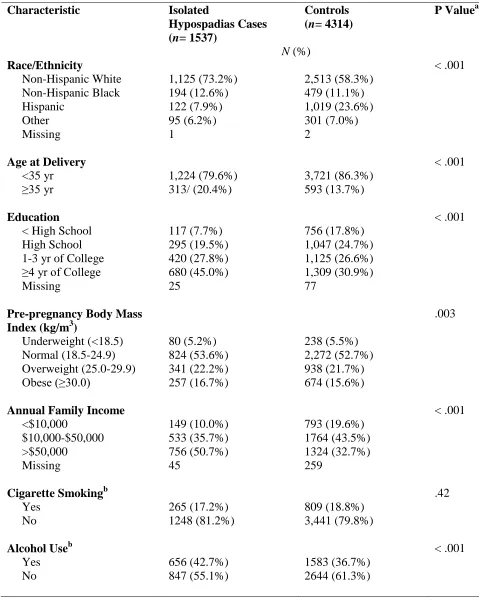
Table 1 gives the maternal and infant characteristics of the hypospadias cases and
controls. Case mothers were significantly more likely than control mothers to be Non-Hispanic
White, 35 years of age or older at delivery, to have 4 or more years of college, to be obese, to
have an annual family income >$50,000, to have used alcohol during the periconceptional
period, to have used folic acid during the periconceptional period, to be nulliparous, to have
given birth to multiples, and to have used treatments or procedures for sub-fertility. Control
mothers were significantly more likely than case mothers to be Hispanic and to have used illicit
drugs during the periconceptional period. Case infants were significantly more likely than
control infants to be delivered preterm, to have a low birth weight, and to have a family history
of hypospadias. There were also differences in the distribution of cases and controls by study site
18
Table 1: Descriptive Characteristics of Mothers of Case and Control Infants: National Birth Defects Prevention Study, October 1997 to December 2007
Characteristic Isolated
Hypospadias Cases
(n= 1537)
Controls
(n= 4314)
P Valuea
N (%)
Race/Ethnicity < .001
Non-Hispanic White 1,125 (73.2%) 2,513 (58.3%) Non-Hispanic Black 194 (12.6%) 479 (11.1%)
Hispanic 122 (7.9%) 1,019 (23.6%)
Other 95 (6.2%) 301 (7.0%)
Missing 1 2
Age at Delivery < .001
<35 yr 1,224 (79.6%) 3,721 (86.3%)
≥35 yr 313/ (20.4%) 593 (13.7%)
Education < .001
< High School 117 (7.7%) 756 (17.8%)
High School 295 (19.5%) 1,047 (24.7%)
1-3 yr of College 420 (27.8%) 1,125 (26.6%) ≥4 yr of College 680 (45.0%) 1,309 (30.9%)
Missing 25 77
Pre-pregnancy Body Mass
Index (kg/m3)
.003
Underweight (<18.5) 80 (5.2%) 238 (5.5%) Normal (18.5-24.9) 824 (53.6%) 2,272 (52.7%) Overweight (25.0-29.9) 341 (22.2%) 938 (21.7%)
Obese (≥30.0) 257 (16.7%) 674 (15.6%)
Annual Family Income < .001
<$10,000 149 (10.0%) 793 (19.6%)
$10,000-$50,000 533 (35.7%) 1764 (43.5%)
>$50,000 756 (50.7%) 1324 (32.7%)
Missing 45 259
Cigarette Smokingb .42
Yes 265 (17.2%) 809 (18.8%)
No 1248 (81.2%) 3,441 (79.8%)
Alcohol Useb < .001
Yes 656 (42.7%) 1583 (36.7%)
19
Maternal Illicit Drug Useb .02
Yes 50 (3.3%) 202 (4.7%)
No 1487 (96.7%) 4,112 (95.3%)
Folic Acid Usec .002
Yes 1,400 (91.6%) 3,813 (88.7%)
No 129 (8.4%) 485 (11.3%)
Missing 8 16
Parity < .001
0 births 816 (53.3%) 1,729 (40.2%)
1 birth 454 (29.7%) 1,419 (33.0%)
≥2 births 260 (17.0%) 1,157 (26.9%)
Missing 7 9
Plurality < .001
Singleton 1,416 (92.2%) 4,182 (97.1%)
Multiple 119 (7.8%) 123 (2.9%)
Missing 2 9
Maternal Subfertility Treatments and Procedures
< .001
None 1,373 (89.7%) 4,121 (95.8%)
Any 157 (10.3%) 180 (4.2%)
Missing 7 13
Study Site < .001
Arkansas 209 (13.6%) 539 (12.5%)
California 68 (4.4%) 523 (12.1%)
Georgia 212 (13.8%) 459 (10.6%)
Iowa 84 (5.5%) 473 (11.0%)
Massachusetts 335 (21.8%) 534 (12.4%)
New Jersey 286 (18.6%) 258 (6.0%)
New York 92 (6.0%) 383 (8.9%)
North Carolina 124 (8.1%) 312 (7.2%)
Texas 28 (1.8%) 530 (12.3%)
Utah 99 (6.4%) 303 (7.0%)
Year of Due Date .01
1997-1999 280 (18.3%) 839 (19.5%)
2000-2001 348 (22.7%) 853 (19.8%)
2002-2003 250 (16.3%) 855 (19.8%)
2004-2005 346 (22.6%) 894 (20.7%)
2006-2007 310 (20.2%) 872 (20.2%)
20 Infant Characteristics
Preterm Birth (<37 weeks)
< .001
Yes 375 (24.7%) 407 (9.4%)
No 1141 (75.3%) 3,906 (90.6%)
Missing 21 1
Low Birthweight (<2,500 g)
< .001
Yes 380 (25.0%) 241 (5.6%)
No 1,137 (75.0%) 4,055 (94.4%)
Missing 20 18
Family History of
Hypospadiasd
< .001
Yes 74/1537 (4.8%) 9/4314 (0.2%)
No 1463/1537 (95.2%) 4305/4314 (99.8%)
a
P values were calculated by Pearson’s chi-square test.
b
Any time 1 month preconception through month 3 postconception.
c
Any time 1 month preconception through month 4 postconception.
d
Family history of hypospadias in a first degree relative (mother, father, full sibling) or previous pregnancy.
Unadjusted (OR) and adjusted (aOR) odds ratios were estimated for 89 medication
exposures (Table 2). Statistically significant positive associations with isolated hypospadias were
observed for maternal use of phenylpropanolamine HCl (OR 2.82; 95% CI 1.17, 6.80), labetalol
(OR 4.24; 95% CI 1.51, 11.93), acetaminophen (OR 1.19; 95% CI 1.05, 1.35), ibuprofen (OR
1.36; 95% CI 1.19, 1.55), aspirin (OR 1.42; 95% CI 1.10, 1.84), butalbital (OR 2.82; 95% CI
1.06, 7.53), lutein (OR 1.48; 95% CI 1.06, 2.07), lycopene (OR 1.65; 95% CI 1.00, 2.71), barley
grass (OR 2.82; 95% CI 1.17, 6.80), progesterone (OR 2.62; 95% CI 1.97, 3.48), iodine (OR
1.34; 95% CI 1.16, 1.54), and levothyroxine sodium (OR 1.81; 95% CI 1.24, 2.64), in the
21
In analyses adjusted for maternal age, race/ethnicity, education, pre-pregnancy BMI,
parity, maternal sub-fertility, study site, and year of due date, statistically significant associations
with isolated hypospadias were observed only for maternal use of phenylpropanolamine HCl
(aOR 2.68; 95% CI 1.06, 6.80), ibuprofen (aOR 1.16; 95% CI 1.00, 1.34), and cephalexin (aOR
22
Table 2: Association of Isolated Hypospadias with Maternal Medication Use,a National Birth Defects Prevention Study, October 1997 to December 2007.
Medication Exposure Exposed
Cases
Exposed Controls
OR (95% CI) Adjusted ORb
(95% CI) Antihistamines, First
Generation
Diphenhydramine HCl 38 98 1.09 (0.75, 1.60) 1.01 (0.67, 1.51) Doxylamine Succinate 27 68 1.12 (0.71, 1.75) 0.98 (0.61, 1.60) Chlorpheniramine
Maleate
37 78 1.35 (0.91, 2.00) 1.35 (0.88, 2.09)
Promethazine 8 23 0.98 (0.44, 2.19) 0.97 (0.40, 2.36) Promethazine HCl 38 126 0.84 (0.58, 1.22) 0.77 (0.52, 1.13) Antihistamines, Second
Generation
Cetirizine HCl 21 46 1.29 (0.77, 2.17) 0.99 (0.57, 1.71) Fexofenadine HCl 22 39 1.60 (0.94, 2.70) 1.13 (0.65, 1.97) Loratadine 46 98 1.33 (0.93, 1.90) 1.11 (0.76, 1.62) Antibiotics
Cephalexin 6 8 2.11 (0.73, 6.10) 3.06 (1.02, 9.18) Azithromycin 19 70 0.76 (0.46, 1.27) 0.61 (0.35, 1.05) Amoxicillin Trihydrate 85 233 1.03 (0.80, 1.33) 1.01 (0.77, 1.33) Sulfamethoxazole 15 38 1.11 (0.61, 2.03) 1.06 (0.55, 2.02) Antibiotics, Urinary
Nitrofurantoin 28 67 1.18 (0.76, 1.84) 1.27 (0.79, 2.06) Nitrofurantoin
Monohydrate
25 58 1.22 (0.76, 1.95) 1.24 (0.74, 2.08)
Trimethoprim 15 38 1.11 (0.61, 2.03) 1.06 (0.55, 2.02) Alpha/Beta Agonists
Ephedra 8 28 0.80 (0.37, 1.76) 1.03 (0.45, 2.35)
Phenylpropanolamine HCl
10 10 2.82 (1.17, 6.80) 2.68 (1.06, 6.80)
Pseudoephedrine HCl 144 380 1.07 (0.88, 1.31) 0.92 (0.73, 1.14) Pseudoephedrine Sulfate 6 13 1.30 (0.49, 3.43) 1.18 (0.42, 3.33) Alpha-Adrenergic Agonists
Phenylephrine HCl 7 13 1.52 (0.60, 3.81) 1.70 (0.64, 4.52)
Beta2-Adrenergic Agonists
Albuterol Sulfate 49 122 1.13 (0.81, 1.59) 1.13 (0.78, 1.62) Salmeterol Xinafoate 12 20 1.69 (0.83, 3.47) 1.66 (0.77, 3.62) Antilipemics
Niacin 158 432 1.03 (0.85, 1.25) 0.85 (0.69, 1.05) Cardiovascular Agents
Labetalol 9 6 4.24 (1.51, 11.93) 2.58 (0.86, 7.74)
Atenolol 5 10 1.41 (0.48, 4.12) 1.01 (0.31, 3.27)
23 Analgesics
Acetaminophen 956 2514 1.19 (1.05, 1.35) 0.96 (0.84, 1.10) Ibuprofen 423 945 1.36 (1.19, 1.55) 1.16 (1.00, 1.34) Naproxen Sodium 76 176 1.23 (0.93, 1.62) 0.99 (0.74, 1.33) Aspirin 93 187 1.42 (1.10, 1.84) 1.25 (0.94, 1.66) Codeine Phosphate 14 39 1.01 (0.55, 1.87) 0.86 (0.45, 1.68) Meperidine HCl 8 21 1.07 (0.47, 2.42) 1.05 (0.45, 2.45) Oxycodone HCl 11 17 1.83 (0.85, 3.91) 1.13 (0.50, 2.57) CNS Stimulants
Caffeine 27 52 1.47 (0.92, 2.35) 1.08 (0.66, 1.78) Barbiturates
Butalbital 8 8 2.82 (1.06, 7.53) 2.07 (0.74, 5.77) Antidepressants
Bupropion HCl 12 26 1.30 (0.65, 2.58) 1.32 (0.65, 2.70) Venlafaxine 9 11 2.31 (0.96, 5.58) 2.38 (0.95, 5.96) Fluoxetine HCl 13 42 0.87 (0.47, 1.63) 0.88 (0.45, 1.74) Paroxetine HCl 9 29 0.87 (0.41, 1.85) 1.00 (0.45, 2.20) Sertraline HCl 22 48 1.29 (0.78, 2.15) 1.22 (0.71, 2.10) GI, Antiemetics
Ondansetron HCl 23 45 1.44 (0.87, 2.39) 0.97 (0.57, 1.65) GI, Antiflatulants
Simethicone 12 33 1.02 (0.53, 1.99) 0.68 (0.33, 1.39) GI, Antiulcer Agents and
Acid Suppressants
Ranitidine HCl 11 27 1.15 (0.57, 2.32) 0.91 (0.43, 1.92) Lansoprazole 6 6 2.82 (0.91, 8.76) 2.81 (0.80, 9.83) Omeprazole 5 5 2.82 (0.82, 9.75) 2.87 (0.73, 11.29) GI, Cathartics and
Laxatives
Docusate Sodium 190 516 1.04 (0.87, 1.24) 0.94 (0.78, 1.14) GI, Digestants
Betaine HCl 5 20 0.70 (0.26, 1.87) 0.65 (0.23, 1.80) GI, Prokinetic Agents
Metoclopramide HCl 9 17 1.49 (0.66, 3.35) 1.06 (0.45, 2.49) Herbals
Bioflavonoid Compound 19 47 1.14 (0.67, 1.95) 0.84 (0.47, 1.48) Hesperidin Complex 5 6 2.35 (0.72, 7.70) 2.06 (0.60, 7.09)
Rutin 9 30 0.84 (0.40, 1.78) 0.66 (0.30, 1.42)
Spirulina 11 26 1.19 (0.59, 2.42) 0.87 (0.41, 1.83) Lutein 54 104 1.48 (1.06, 2.07) 1.16 (0.81, 1.66) Lycopene 25 43 1.65 (1.00, 2.71) 1.31 (0.77, 2.22)
Alfalfa 7 22 0.89 (0.38, 2.10) 0.67 (0.27, 1.62)
24
Bee Pollen 11 29 1.07 (0.53, 2.14) 1.05 (0.50, 2.17) Cranberry Concentrate 6 9 1.88 (0.67, 5.29) 1.58 (0.55, 4.58) Echinacea 11 22 1.41 (0.68, 2.91) 1.23 (0.57, 2.65)
Ginger 17 43 1.11 (0.63, 1.96) 1.02 (0.56, 1.86)
Ginkgo Biloba Extract 8 13 1.73 (0.72, 4.19) 1.60 (0.59, 4.36)
Ginseng 10 20 1.41 (0.66, 3.02) 1.42 (0.64, 3.19)
Herbal Tea 17 35 1.37 (0.77, 2.45) 1.84 (0.96, 3.52) Hydrastis Canadensis 6 12 1.41 (0.53, 3.76) 1.61 (0.57, 4.53) Hypericum Perforatum 5 6 2.35 (0.72, 7.71) 1.70 (0.49, 5.87) Peppermint 5 13 1.08 (0.39, 3.04) 0.75 (0.25, 2.25) Raspberry Leaf 18 33 1.54 (0.87, 2.74) 0.94 (0.51, 1.75) Sarsaparilla Root 5 8 1.76 (0.58, 5.39) 2.25 (0.67, 7.57) Siberian Ginseng 5 13 1.08 (0.39, 3.04) 1.17 (0.39, 3.51) Thea Sinesis 12 32 1.06 (0.54, 2.05) 0.85 (0.42, 1.75) Vitis Vinifera 8 10 2.26 (0.89, 5.73) 1.94 (0.70, 5.34)
Glucosamine 6 0 --- ---
Royal Jelly 10 31 0.91 (0.44, 1.85) 0.81 (0.38, 1.72) Lactobacillus
Acidophilus
5 14 1.00 (0.36, 2.79) 0.70 (0.24, 2.02)
Steroids, Glucocorticoids
Budesonide 6 8 2.11 (0.73, 6.10) 1.23 (0.41, 3.73) Fluticasone Propionate 21 39 1.52 (0.89, 2.59) 1.13 (0.64, 2.01) Prednisone 5 15 0.94 (0.34, 2.59) 0.59 (0.20, 1.72) Triamcinolone Acetonide 5 8 1.76 (0.58, 5.39) 1.88 (0.57, 6.22) Antidiabetic Agents,
Biguanide
Metformin HCl 7 12 1.64 (0.65, 4.18) 0.92 (0.34, 2.52) Progestins
Progesterone 93 104 2.62 (1.97, 3.48) 1.25 (0.89, 1.76)
Progesterone Gel 8 1 --- ---
Thyroid and Antithyroid Agents
Iodine 363 813 1.34 (1.16, 1.54) 1.17 (1.00, 1.37) Levothyroxine Sodium 45 71 1.81 (1.24, 2.64) 1.33 (0.88, 2.01) Potassium Iodide 67 176 1.07 (0.81, 1.43) 0.81 (0.59, 1.11) Respiratory Agents
Dextromethorphan HBR 50 113 1.25 (0.89, 1.76) 1.02 (0.71, 1.47) Guaifenesin 41 120 0.96 (0.67, 1.37) 0.82 (0.55, 1.21) Miscellaneous Therapeutic
Agents
Potassium Clavulanate 8 18 1.25 (0.54-2.88) 1.16 (0.48, 2.79)
Abbreviations: OR, odds ratio; CI, confidence interval; BMI, body mass index.
a
25
b
Odds ratios are adjusted for maternal age, race/ethnicity, education, pre-pregnancy BMI, parity, sub-fertility, study site, and year of due date.
--- Odds ratios were not estimated for medication components with fewer than 5 exposed controls.
Of the 89 medication components considered in the primary analyses, 17 had at least
borderline statistically significant crude or adjusted OR estimates for their association with
isolated hypospadias. Overall, the results of sub-analyses in which infants with a positive family
history of hypospadias were excluded did not change adjusted OR estimates appreciably (Table
3). Associations of isolated hypospadias with cephalexin (aOR 3.29; 95% CI 1.10, 9.87) and
venlafaxine (aOR 2.52; 95% CI 1.01, 6.31) were stronger when infants with a positive family
history were excluded. The association of phenylpropanolamine HCl with isolated hypospadias
was slightly attenuated when infants with a positive family history were excluded (aOR 2.58;
[image:35.612.76.537.485.709.2]95% CI 0.99, 6.73).
Table 3: Association of Isolated Hypospadias with Maternal Use of Specific Medications, Excluding Infants with a Positive Family History, National Birth Defects Prevention Study, October 1997 to December 2007.a,b
Medication Exposure Exposed
Cases
Exposed Controls
aORc (95% CI)
Sub-Analysis
aOR (95% CI) Primary Analysis
Cephalexin 6 8 3.29 (1.10, 9.87) 3.06 (1.02, 9.18)
Azithromycin 19 70 0.65 (0.37, 1.11) 0.61 (0.35, 1.05) Phenylpropanolamine
HCl
9 10 2.58 (0.99, 6.73) 2.68 (1.06, 6.80)
Niacin 143 430 0.81 (0.65, 1.01) 0.85 (0.69, 1.05)
Labetalol 9 6 2.65 (0.88, 7.96) 2.58 (0.86, 7.74)
Acetaminophen 895 2507 0.93 (0.81, 1.07) 0.96 (0.84, 1.10) Ibuprofen 403 942 1.16 (1.00, 1.35) 1.16 (1.00, 1.34) Aspirin 90 186 1.27 (0.95, 1.68) 1.25 (0.94, 1.66) Butalbital 8 8 2.20 (0.79, 6.13) 2.07 (0.74, 5.77) Venlafaxine 9 11 2.52 (1.01, 6.31) 2.38 (0.95, 5.96)
Lutein 50 104 1.12 (0.77, 1.62) 1.16 (0.81, 1.66)
26
Barley Grass 8 10 1.65 (0.62, 4.41) 2.13 (0.84, 5.38) Herbal Tea 16 35 1.81 (0.94, 3.51) 1.84 (0.96, 3.52) Progesterone 89 104 1.26 (0.90, 1.78) 1.25 (0.89, 1.76) Iodine 334 813 1.12 (0.95, 1.31) 1.17 (1.00, 1.37) Levothyroxine Sodium 43 71 1.34 (0.88, 2.03) 1.33 (0.88, 2.01)
Abbreviations: aOR, adjusted odds ratio; CI, confidence interval
a
Medication exposure is reported for the period from 1 month before to 4 months after conception.
b
Family history of hypospadias in a first degree relative (mother, father, full sibling) or previous pregnancy.
c
Odds ratios were adjusted for maternal age, race/ethnicity, education, pre-pregnancy BMI, parity, sub-fertility, study site, and year of due date.
Sub-analyses in which low birth weight infants and multiple births were excluded
demonstrated attenuated results relative to the primary analysis for several of the medications,
including cephalexin (aOR 1.37; 0.27, 6.95) (Table 4). However, in this sub-analysis, the
association of isolated hypospadias was much stronger with maternal use of venlafaxine (aOR
3.67; 95% CI 1.39, 9.70) and slightly stronger with phenylpropanolamine HCl, although only
[image:36.612.70.543.537.721.2]marginally significant (aOR 2.83; 95% CI 0.98, 8.16).
Table 4: Association of Isolated Hypospadias with Maternal Use of Specific Medications, Excluding Low Birth Weight Infants and Multiple Births, National Birth Defects Prevention Study, October 1997 to December 2007.a
Medication Exposure Exposed
Cases
Exposed Controls
aORb (95% CI)
Sub-Analysis
aOR (95% CI) Primary Analysis
Cephalexin 2 7 1.37 (0.27, 6.95) 3.06 (1.02, 9.18)
Azithromycin 18 66 0.73 (0.42, 1.28) 0.61 (0.35, 1.05) Phenylpropanolamine
HCl
7 9 2.83 (0.98, 8.16) 2.68 (1.06, 6.80)
Niacin 122 408 0.87 (0.69, 1.10) 0.85 (0.69, 1.05)
Labetalol 4 5 1.63 (0.40, 6.61) 2.58 (0.86, 7.74)
Acetaminophen 701 2318 0.97 (0.83, 1.14) 0.96 (0.84, 1.10) Ibuprofen 309 873 1.16 (0.98, 1.37) 1.16 (1.00, 1.34)
Aspirin 61 164 1.21 (0.87, 1.69) 1.25 (0.94, 1.66)
27
Venlafaxine 9 9 3.67 (1.39, 9.70) 2.38 (0.95, 5.96)
Lutein 40 93 1.21 (0.81, 1.82) 1.16 (0.81, 1.66)
Lycopene 22 38 1.72 (0.98, 3.05) 1.31 (0.77, 2.22)
Barley Grass 6 10 1.65 (0.56, 4.84) 2.13 (0.84, 5.38)
Herbal Tea 10 32 1.69 (0.77, 3.73) 1.84 (0.96, 3.52)
Progesterone 51 76 1.44 (0.95, 2.18) 1.25 (0.89, 1.76)
Iodine 258 753 1.14 (0.95, 1.37) 1.17 (1.00, 1.37)
Levothyroxine Sodium 31 61 1.38 (0.86, 2.23) 1.33 (0.88, 2.01)
Abbreviations: OR, odds ratio; CI, confidence interval.
a
Medication exposure is reported for the period from 1 month before to 4 months after conception.
b
Odds ratios are adjusted for maternal age, race/ethnicity, education, pre-pregnancy BMI, parity, sub-fertility, study site, and year of due date.
In the final sub-analysis the association between isolated hypospadias and maternal use of
specific medications, excluding mothers who reported illicit drug use was evaluated (Table 5).
Overall, results from the sub-analysis were similar to the aORs from the primary analysis,
presented in Table 2. The aORs for cephalexin (aOR 3.50; 95% CI 1.13, 10.87),
phenylpropanolamine HCl (aOR 2.85; 95% CI 1.10, 7.38), and ibuprofen (aOR 1.20; 95% CI
[image:37.612.76.528.71.193.2]1.03, 1.39) were stronger in the sub-analysis than the primary analysis.
Table 5: Association of Isolated Hypospadias with Maternal Use of Specific Medications,
Excluding Mothers Reporting Illicit Drug Use, National Birth Defects Prevention Study, October 1997 to December 2007.a,b
Medication Exposure Exposed
Cases
Exposed Controls
aORc (95% CI)
Sub-Analysis
aOR (95% CI) Primary Analysis
Cephalexin 6 7 3.50 (1.13, 10.87) 3.06 (1.02, 9.18)
Azithromycin 18 66 0.61 (0.35, 1.07) 0.61 (0.35, 1.05)
Phenylpropanolamine HCl
10 9 2.85 (1.10, 7.38) 2.68 (1.06, 6.80)
Niacin 154 414 0.86 (0.69, 1.06) 0.85 (0.69, 1.05)
Labetalol 8 5 2.51 (0.76, 8.25) 2.58 (0.86, 7.74)
28
Ibuprofen 406 870 1.20 (1.03, 1.39) 1.16 (1.00, 1.34)
Aspirin 90 177 1.23 (0.92, 1.64) 1.25 (0.94, 1.66)
Butalbital 8 8 2.06 (0.74, 5.75) 2.07 (0.74, 5.77)
Venlafaxine 9 10 2.51 (0.99, 6.37) 2.38 (0.95, 5.96)
Lutein 52 103 1.10 (0.76, 1.58) 1.16 (0.81, 1.66)
Lycopene 24 43 1.23 (0.72, 2.10) 1.31 (0.77, 2.22)
Barley Grass 9 10 1.93 (0.74, 5.00) 2.13 (0.84, 5.38)
Herbal Tea 16 31 1.91 (0.97, 3.77) 1.84 (0.96, 3.52)
Progesterone 93 103 1.26 (0.90, 1.77) 1.25 (0.89, 1.76)
Iodine 354 773 1.17 (1.00, 1.37) 1.17 (1.00, 1.37)
Levothyroxine Sodium 44 71 1.30 (0.86, 1.98) 1.33 (0.88, 2.01)
Abbreviations: OR, odds ratio; CI, confidence interval.
a
Medication exposure is reported for the period from 1 month before to 4 months after conception.
b
Mothers reporting illicit drug use any time 1 month preconception through month 3 postconception were excluded.
c
29 Chapter V
DISCUSSION AND CONCLUSION
5.1 Discussion
After adjusting for potential confounders, the results of this analysis suggested an
increased risk of second- or third-degree hypospadias among infants delivered to women who
took cephalexin, phenylpropanolamine HCl, ibuprofen, and venlafaxine during the period of 1
month before to 4 months after conception.
This analysis illustrates that the association between isolated hypospadias and medication
exposure during the periconceptional period and early pregnancy is sensitive to confounding by
the factors we considered. The majority of the 89 odds ratios estimated in the crude analysis
were attenuated in the adjusted analysis. Restricting analyses based on a potentially confounding
factor is an alternative method to multivariable models for controlling confounding. Relative to
the primary analysis, associations between hypospadias and maternal use of cephalexin and
venlafaxine became stronger, and for phenylpropanolamine HCl were attenuated, in sub-analyses
in which infants with a positive family history of hypospadias were excluded, though overall,
estimates did not change appreciably. In sub-analyses excluding low birth weight infants and
multiple births, the associations with venlafaxine and phenylpropanolamine HCl were stronger;
attenuated results were observed for several of the medications including cephalexin. Excluding
mothers who reported illicit drug use resulted in aOR estimates similar overall to those observed
in the primary analysis, although stronger associations were observed for cephalexin,
phenylpropanolamine HCl, and ibuprofen.
Cephalexin, a first generation cephalosporin antibiotic used frequently during pregnancy,
is indicated for the treatment of susceptible bacterial infections including respiratory tract
30
tract infections.48,49 The observation of a statistically significant association between cephalexin
and hypospadias risk in this study differs from several older published reports which found no
association between use of cephalexin and congenital defects or toxicity in newborns.50 More
recently published studies have reported an association between cephalexin and cephalosporin
use and risk of certain birth defects.48,50,51 However, an association with hypospadias has not
been previously reported.
Phenylpropanolamine HCl, also known as PPA, is a synthetic sympathomimetic amine
that was historically used frequently in many OTC weight loss products and as a decongestant in
cough and cold medications. Since November 2000, the United States Food and Drug
Administration (FDA) has been working to remove PPA from all drug products and requested
that all drug companies discontinue marketing products containing PPA, as a result of the FDA
Nonprescription Drugs Advisory Committee’s determination of an association between PPA and
hemorrhagic stroke.52,53 Heinonen et al. evaluated the association between prenatal PPA
exposure and congenital malformations in the Collaborative Perinatal Project, which monitored
50,282 mother-child pairs. There were 4 observed hypospadias cases among 726 pregnant
women who had PPA exposure during their first trimester, resulting in a standardized relative
risk of 1.63 (95% CI 0.44-4.13).54 Blood vessels of the uterus, which are normally fully dilated,
contain alpha-adrenergic receptors.50 It is possible then that use of PPA, which stimulates alpha-
and beta-adrenergic receptors, could cause constriction of uterine vessels and reduce uterine
blood flow, potentially resulting in poor intrauterine growth, a risk factor for hypospadias.27,40,50
Ibuprofen, a non-steroidal anti-inflammatory drug (NSAID), works by decreasing the
activity of the enzyme cyclooxygenase (COX), which results in the inhibition of prostaglandin
31
involves prostaglandins and that prenatal exposure to COX inhibitors inhibits masculinization of
male genitalia.55 Additionally, COX inhibitors, including ibuprofen, have been found to be
endocrine disruptors, as well as to affect steroid hormone synthesis in rainbow trout.56 Studies
have also shown that another COX inhibitor, aspirin, inhibits androgen response to hCG
stimulation in normal human adult males.57 Therefore, exposure to COX inhibitors during critical
periods of gestation could affect normal urogenital development in males.58 In another study
utilizing NBDPS data from 1997-2004,59 NSAID use during the first trimester and the risk of
birth defects was evaluated, and they found no association between first trimester ibuprofen use
and hypospadias. There were, however, fewer cases classified as exposed to ibuprofen in that
study (n=99) compared to this one (n=423), due to them having fewer years of data, an exposure
window defined as the estimated day of conception through 3 months afterward, their exclusion
of mothers with preexisting diabetes mellitus, and their separation of women who could not
characterize their frequency of NSAID use in the first trimester into a separate “as needed”
category. While an association between hypospadias and maternal use of ibuprofen has not been
previously reported, an association has been observed between prenatal use of the mild
analgesics acetaminophen, aspirin, and ibuprofen and risk of congenital cryptorchidism, 60 a
genital abnormality commonly observed with hypospadias.27
Venlafaxine is a serotonin-norepinephrine reuptake inhibitor used in the treatment of
depression and anxiety.49 Despite evidence that there is substantial transfer of venlafaxine across
the placenta,61 there are very few published reports describing the use of venlafaxine during
human pregnancy.50 In a review by Salvatore Gentile, no malformations were observed in data
obtained from the UK Drug Safety Research Unit that reported the outcomes of 39 women who
32
cases exposed to venlafaxine during pregnancy, all obstetrical findings were normal during each
of the pregnancies and no congenital abnormalities were diagnosed in the infants in their first 12
months.63 Yet, concurring with the association between venlafaxine exposure and hypospadias
found here, in a study by Einarson and colleagues, in which data on 150 women exposed to
venlafaxine during pregnancy in seven pregnancy counseling centers were compared with data
from studies of pregnant women who were exposed to selective serotonin-reuptake inhibitors
(SSRIs) and to women who received non-teratogenic drugs, it was observed that among the
women exposed to venlafaxine during pregnancy, two babies were born with major
malformations, one of which was hypospadias; drug-specific ORs were not estimated in the
study.64
Several analyses using NBDPS data have been published on the association of a specific
medication and the spectrum of birth defects included in the NBDPS. The findings in this
analysis coincide with several of these other studies that observed no significant association
between risk of hypospadias and exposure to loratadine, 65 certain SSRIs,66 ephedra,67 certain
antihistamines,68 acetaminophen,69 bupropion,70 certain opioid analgesics,71 certain
corticosteroids,72 or certain antihypertensives.73
This analysis did not replicate the findings reported by Anderka and colleagues regarding
an association of hypospadias with proton pump inhibitors (PPIs) or steroids used in the
treatment of nausea and vomiting in pregnancy. It should be noted, however, that in their study,
PPIs and steroids were analyzed as combined medication groups and drug-specific ORs were not
calculated.19
33 5.2 Study Strengths and Limitations
This study had numerous strengths. The data came from a large, population-based study
that allowed for sufficient statistical power to analyze numerous medication exposures during the
critical period for male urethral development. The multi-center study design also provided
geographic diversity. In addition, there was consistent and detailed case ascertainment, with
cases reviewed and classified by clinical geneticists, and differentiation of isolated and multiple
hypospadias cases.
However, the study is not without potential limitations. Maternal medication use in the
analyses was not exclusive and mothers may have been using multiple medications at the same
time. Therefore, there is potential for confounding from concurrent medication use. Inability to
examine the dose of medications is another limitation. Also, while overall this was a large study,
there were a relatively small number of exposed infants for some of the medication components,
which could potentially affect analyses results. Medication exposures were determined by
maternal report during the interview; hence recall bias is another potential limitation of the study.
However, to improve recall NBDPS mothers were provided with a pregnancy calendar before the
interview to help them respond to questions about the timing of exposure more accurately, in the
way that they best remember, such as by date, month of pregnancy, or trimester. Some
medications were specifically queried, while others were reported in response to treatment for
reported maternal medical conditions. With 89 different medication components examined in this
analysis, another limitation is multiple testing. Therefore, these results should be considered
hypothesis-generating rather than hypothesis-testing, with the aim to help generate justification
for future analyses. Furthermore, while numerous medications were examined in this analysis,