R E S E A R C H
Open Access
Synchronization control of stochastic
delayed Lotka–Volterra systems with
hardware simulation
Lan Wang
1,2, Yiping Dong
3*, Da Xie
3and Hao Zhang
4*Correspondence:
3China Key System & Integrated
Circuit Co., Ldt., Wuxi, P.R. China Full list of author information is available at the end of the article
Abstract
In this paper, the synchronization control of a non-autonomous Lotka–Volterra system with time delay and stochastic effects is studied. The purpose is to firstly establish sufficient conditions for the existence of global positive solution by constructing a suitable Lyapunov function. Some synchronization criteria are then derived by designing an appropriate full controller and a pinning controller, respectively. Finally, an example is presented to illustrate the feasibility and validity of the main theoretical results based on the Field-Programmable Gate Array hardware simulation tool.
Keywords: Synchronization control; Lotka–Volterra system; Stochastic effects; Lyapunov function; Field-Programmable Gate Array
1 Introduction
The Lotka–Voltera (LV) system is one of the famous biological models which describe the interaction of a predator–prey model and consist of nonlinear ordinary differential equa-tions, developed by Lotka and Volterra [1]. Over the past 20 years, the LV system has been extensively investigated from different aspects such as stability, control, evolutionary dy-namics [2–7]. Reference [2] investigated the existence of a spatially steady state solution by applying a Lyapunov–Schmidt reduction. Based on many natural predator–prey inter-actions which sometimes exhibit stability, Ref. [3] checked the effect of small immigration and the inclusion of a nonlinear interaction term to the stability of the LV system. Lya-punov stability theory has been used to investigate the attractivity and synchronization of the LV system with mutual interference and with unknown parameters [4,5]. The global dynamics of a classical LV system was investigated with the effects of competition ability and impulsive periodic disturbance in Refs. [6,7]. Besides, time delays are ubiquitous in the processing of information transmission because of the limited resource and environ-mental disturbance, which may cause undesired dynamics like oscillation, bifurcation and instability. Until now, the dynamical problem of a hybrid system with time delays has be-come a significant issue [8–11]. Moreover, a classical stochastic delayed LV model can be
described as follows [11]:
dxi(t) =xi(t)
ri– n
j=1
aijxj(t) + n
j=1
bijxj(t–τ)
dt+σi(t)xi(t) dωi(t), (1)
wherexi(t)(> 0) denotes the density of theith species at timet,ωi(t), 1≤i≤nare inde-pendent standard Brownian motions, andri,aij,bij,σiare nonnegative. In mathematical ecology, Eq. (1) describes ann-species predator–prey system in which individuals com-pete with each other.
Some related work on the dynamical of predator–prey system has been presented based on the model (1). In Ref. [11], a global positive solution, stochastic permanence and ex-tinction were discussed. In Ref. [12], the sufficient conditions for the existence of global positive solutions were obtained based on the LV model with random perturbation. Suffi-cient and necessary conditions were established for persistence and extinction of the sys-tems under the condition of Lévy noise [13]. Reference [14] studied the positivity and the global stability of nontrivial solutions based on the Euler–Maruyama scheme for a two-dimensional model of stochastic predator–prey interactions. Reference [15] discussed a novel LV system with infinite delay and feedback control through Lyapunov functionals and a new analysis technique.
Up till now, a great deal of research effort has focused on the LV model (such as Refs. [16–
19]). To the best of our knowledge, the synchronization control problems for the stochastic LV system have not yet been studied much. In fact, synchronization control problems can be found in almost everywhere in the real world. For example, in order to protect endan-gered species, we can design a reasonable optimal control strategy and adopt synchronous control to achieve effective animal protection. As is well known, a linear feedback control technique was used to control the LV model, and the Lyapunov direct method is used to synchronize two models [20]. In Ref. [21], a predator–prey model was established with Allee effect and seasonally forcing, and was controlled to follow a reference model by a synchronization approach.
However, it still remains a big challenge to deal with the LV system with delay and stochasticity. In the past few years, the synchronization control problems for complex net-works have drawn much attention of researchers on the neural network, genetic regulatory networks and social networks [22–25]. This helps us to study the synchronization control problem for population systems based on LV models. At the same time, we will present a calculation example based on the Field-Programmable Gate Array (FPGA) hardware tool, which can work with the data faster and more efficiently.
In this paper, we study a stochastic delayed LV system with a control term. The structure of this paper is as follows. The model description and preliminaries are formally presented in Sect.2. Some synchronization criteria are derived by the full controller and pinning controller, respectively, in Sect.3. An example is presented to demonstrate the validity of the proposed methods based on the FPGA hardware tool which can deal with the data faster and more efficiently in Sect.4. Finally, the conclusion is drawn in Sect.5.
Notations: Throughout this letter, let (Ω,F,{Ft}t≥0,P) be a complete probability space
with a filtration{Ft}t≥0satisfying the usual conditions (i.e., it is increasing and right
con-tinuous whileF0contains allP-null sets);ωi(t) stands for the independent standard Brow-nian motions defined on this probability space;Rn
Rn
+={x∈Rn:xi> 0 for all 1≤i≤n};τ> 0 andC([–τ, 0];Rn+) denotes the family of
contin-uous functions from [–τ, 0] toRn
+.
2 Model formulation and preliminaries
The stochastic LV model with time delay studied in this paper can be given by
dxi(t) =xi(t) bounded nonnegative functions on [0,∞).
Let the target model and the designed control law be
dyi(t) =yi(t)
wherekiis a constant.
Substituting (4) into (2), Eq. (3) becomes
The aim of this paper is to show that synchronization between model (2) and the tar-get model (3) in Sect.2by designing effective controllers. Different from some existing results, we discuss the synchronization problem. When model (3) gets stochastic persis-tence, model (2) will also reach stochastic permanence. These results may certainly help to protect endangered animals and plants. As another innovation, we give a control variable, which precisely provides optimal control strategies.
Similarly, apply Itô’s formula to (3)
Throughout this paper, the following assumptions and lemmas will be used.
Assumption 2.1 Fori,j= 1, 2, . . . ,n,inft∈[0,+∞)aii(t) > 0,inft∈[0,+∞)aij(t)≥0.
Proof Since the coefficients of the equation are locally Lipschitz continuous, for any given initial value{x(t) : –τ ≤t≤0} ∈C([–τ, 0];Rn
+) there is a unique maximal local solution x(t) ont∈[–τ,τe], whereτeis the explosion time. To show this solution is global, we need
ThenV(x(t))≥0 for everyx(t)∈Rn
whereKis a positive constant.
Based on the above analysis, note that, sinceλii> 0 for eachi, the function –λiix2i(t) +
Taking the mathematical expectation of both sides of (10) yields
EVx(τk∧T)
Combining (11) with (12), the following inequality holds:
Definition 2.1 The systems (2) and (3) are said to reach synchronization if, for any given initial conditions, the solutions of Eqs. (2) and (3) satisfylimt→∞|xi(t) –yi(t)|= 0, for all 1≤i≤n.
Definition 2.2 The systems (2) and (3) are said to reach partial synchronization if, for any given initial conditions, the solutions of systems (2) and (3) satisfylimt→∞|xi(t) –yi(t)|= 0, for all 1≤i≤l<n.
Consider then-dimensional stochastic differential equation
dx(t) =fx(t),tdt+gx(t),tdB(t), (13)
whereB(t) = (B1(t),B2(t), . . . ,Bn(t)),f :Rn× ¯R+→Rn,g:Rn× ¯R+→Rn×mandR+¯ ={x(t)∈
R:xi(t)≥0 for 1≤i≤n}.
To proceed with the analysis, the nonlinear functions are assumed to satisfy the condi-tion given below, which is presented in [9]:
(A) For any initial value, Eq. (13) has a unique solution. Moreover, for everyh> 0, there is aKh> 0 such that|f(x(t),t)| ∨ |g(x(t),t)| ≤Kh, for allt≥0 andx∈Rnwith|x(t)| ≤h.
Lemma 2.3([12]) Let condition(A)hold.Assume that there exist three functions V(t)∈
C2,1(Rn× ¯R+;R+¯ ),γ(t)∈L1(R+¯ ;R+¯ ),andϕ(t)∈C(Rn;R+¯ )such that
LVx(t),t≤γ(t) –ϕx(t), x(t),t∈Rn× ¯R+,
and
lim
|x(t)|→∞t∈[0,+inf∞)V
x(t),t=∞.
ThenKer(ϕ)=φandlimt→∞d(x(t,x(0)),Ker(ϕ)) = 0a.s.for every x(0)∈Rn.
3 Main results
In this section, we derive some synchronization schemes by using the full controller and pinning controller, respectively.
Theorem 3.1 Under Assumption2.3and control law(4),for any given initial conditions,
system(2)synchronizes with the target model(3).
Proof The proof is divided into two steps. Step 1. According to Eq. (7), we can obtain
dlogxi(t) –logyi(t)
=
ki
xi(t) –yi(t)
– n
j=1 aij(t)
xj(t) –yj(t)
dt. (14)
Consider the Lyapunov functionV¯(t) defined by
¯ V(t) =
n
i=1
A direct differential ofV¯(t) along the ordinary differential equation (8) leads to
Lett→ ∞, the following inequality is obtained:
t
The following proof is similar to Theorem 6.2 in [12], so it is omitted.
To study the synchronization problem of extinction, let us impose one more hypothesis.
Assumption 3.1 ni=10∞[ri(t) –12(1 –ki)σi2(t)]+dt<∞for all 0 <ki1,i= 1, 2, . . . ,n.
Corollary 3.1 Under Assumptions2.3and3.1,for any given initial value,if the population becomes extinct in the target model(3),then the solution xi(t)of model(5)has the property
lim
t→∞xi(t)= 0 a.s. (20)
Proof It is obvious that model (5) satisfies (A). By the Itô formula, one has
With the help of Lemma2.3, (20) is obtained.
To achieve partial synchronization, the control inputui(t) can be designed as ⎧
Accordingly, the model (2) can be rewritten in the following form: ⎧
For Eq. (24), it is difficult to achieve synchronous control. At this point, we can only guar-antee partial synchronization, and Assumption2.3is modified as
inf
Then, using the same idea as in Theorem3.1, we obtain the following theorem. Theorem 3.2 Under(25)and control law(23),for any given initial conditions,model(2)
partially synchronizes the target model(3).
Remark2 It is natural to consider the pinning control method to realize synchronization of systems (3) and (24) via control of partial species instead of all species, which can ef-fectively reduce control cost, especially in limited energy systems. In addition, it shows practical significance.
4 An illustrative example
In order to verify the effectiveness of the theoretical results, we will present one numerical example in this section. Consider the stochastic model (2) with three populations (n= 3), where the system is described by
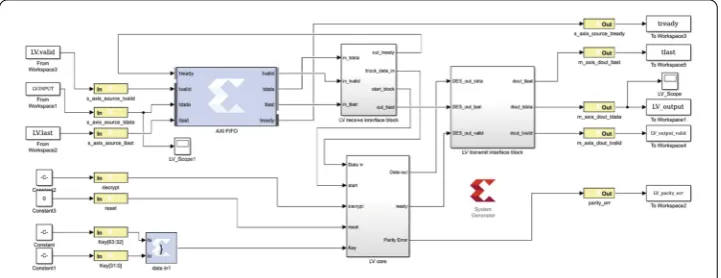
Figure 1The system of the LV model-based FPGA
Figure 2(a) Sample paths ofx1(t) in Eq. (2) andy1(t) in Eq. (3) withu1(t) in Eq. (4); (b) the control error ofx1(t)
andy1(t); (c) Sample paths ofx1(t) in Eq. (2) andy1(t) in Eq. (3) withu1(t) = 0
Based on the current mainstream Xilinx ZYNQ series of FPGA chips, we have built our system in a hardware way. The hardware system diagram is shown in Fig.1. The input and output data signals of the module are named in the format which is compatible with AXI-Stream Interface specifications. Therefore, this module is capable of being generated and selected as an IP core in Vivado, and supporting AXI-Stream interface. Besides the data IOs, all other IOs are in the format of the AXI-Lite interface. As shown in Fig.1, constant parameter matrices are transmitted to the LV_core through data in1 module. At the same time, input data from work spaces are transmitted to the LV_core through AXI FIFO and LV receive interface block. The LV_core will calculate the result, and then the calculated
result will be outputted through the LV transmit interface block.
Figures2(a), (b),3(a), (b), and4(a), (b) show that the three populations have good syn-chronization under control. Figures2(c),2(c), and4(c) show that the three populations cannot synchronize without control. These figures imply that the three populations par-tially synchronize with pinning control.
Figure 3(a) Sample paths ofx2(t) in Eq. (2) andy2(t) in Eq. (3) withu2(t) in Eq. (4); (b) the control error ofx2(t)
andy2(t); (c) Sample paths ofx2(t) in Eq. (2) andy2(t) in Eq. (3) withu2(t) = 0
Figure 4(a) Sample paths ofx3(t) in Eq. (2) andy3(t) in Eq. (3) withu3(t) in Eq. (4); (b) the control error ofx3(t)
andy3(t); (c) Sample paths ofx3(t) in Eq. (2) andy3(t) in Eq. (3) withu3(t) = 0
Table 1 Results for resource consumption
Resource Utilization Available Utilization
LUT 1061 53,200 1.994
LUTRAM 65 17,400 0.374
FF 1334 106,400 1.254
BRAM 1.5 140 1.071
BUFG 1 32 3.125
5 Conclusions
the speed of simulation processing was improved to meet the needs of the real-time world with massive data in the era of big data. This will be a challenging task in the next work.
Acknowledgements
The authors would like to thank the editor and the anonymous reviewers for their valuable comments and constructive suggestions.
Funding
This work was jointly supported by Academic Leader High-end Research and Study Project for Jiangsu Higher Vocational Colleges Teachers of China (No. 2019GRGDYX129), Natural Science Research of Jiangsu Higher Education Institutions of China (No. 19KJB120013), Qinglan Project of Jiangsu Province of China (No. 014000773/2018-00376), Program for International Science and Technology Cooperation Projects of Jiangsu Province of China (No. BZ2018031) and Program for International Science and Technology Cooperation Projects of Wuxi City of China (No. WX0303B010518180009PB).
Availability of data and materials
Data sharing is not applicable to this article as no data sets were generated or analyzed during the current study.
Competing interests
The authors declare that they have no competing interests.
Authors’ contributions
All authors read and approved the final manuscript.
Author details
1Department of Fundamental Courses, Wuxi Insitute of Technology, Wuxi, P.R. China.2School of Mathematics, Southeast
University, Nanjing, P.R. China. 3China Key System & Integrated Circuit Co., Ldt., Wuxi, P.R. China.4School of Life Sciences,
Sun Yat-sen University, Guangzhou, P.R. China.
Publisher’s Note
Springer Nature remains neutral with regard to jurisdictional claims in published maps and institutional affiliations.
Received: 4 October 2019 Accepted: 18 December 2019
References
1. Freedman, H.I.: Deterministic Mathematical Models in Population Ecology. Dekker, New York (1980) 2. Tahara, T., Gavina, M.K.A., Kawano, T., et al.: Asymptotic stability of a modified Lotka–Volterra model with small
immigrations. Sci. Rep.8(1), 7029 (2018)
3. Ma, L., Guo, S.: Stability and bifurcation in a diffusive Lotka–Volterra system with delay. Comput. Math. Appl.72(1), 147–177 (2016)
4. Wang, X., Du, Z., Liang, J.: Existence and global attractivity of positive periodic solution to a Lotka–Volterra model. Nonlinear Anal., Real World Appl.11(5), 4054–4061 (2010)
5. Vaidyanathan, S.: Adaptive synchronization of generalized Lotka–Volterra three-species biological systems. Int. J. PharmTech Res.8(5), 928–937 (2015)
6. He, X., Ni, W.M.: Global dynamics of the Lotka–Volterra competition-diffusion system: diffusion and spatial heterogeneity I. Commun. Pure Appl. Math.69(5), 981–1014 (2016)
7. Meng, X., Zhang, L.: Evolutionary dynamics in a Lotka–Volterra competition model with impulsive periodic disturbance. Math. Methods Appl. Sci.39(2), 177–188 (2016)
8. Cao, J., Guerrini, L., Cheng, Z.: Stability and Hopf bifurcation of controlled complex networks model with two delays. Appl. Math. Comput.343, 21–29 (2019)
9. Cao, Y.: Bifurcations in an Internet congestion control system with distributed delay. Appl. Math. Comput.347, 54–63 (2019)
10. Li, Q., Liang, J., Gong, W.: Stability and synchronization for impulsive Markovian switching CVNNs: matrix measure approach. Commun. Nonlinear Sci. Numer. Simul.77, 126–140 (2019)
11. Bahar, A., Mao, X.: Stochastic delay population dynamics. Int. J. Pure Appl. Math.11, 377–400 (2004)
12. Li, X., Mao, X.: Population dynamical behavior of non-autonomous Lotka–Volterra competitive system with random perturbation. Discrete Contin. Dyn. Syst., Ser. A24(2), 523–593 (2009)
13. Liu, M., Wang, K.: Persistence and extinction in stochastic non-autonomous logistic systems. J. Math. Anal. Appl.375, 443–457 (2011)
14. Choo, S.M., Kim, Y.H.: Global stability inn-dimensional stochastic difference equations for predator–prey models. J. Comput. Anal. Appl.24(1), 136 (2018) 116
15. Shi, C., Li, Z., Chen, F.: Extinction in a nonautonomous Lotka–Volterra competitive system with infinite delay and feedback controls. Nonlinear Anal., Real World Appl.13(5), 2214–2226 (2012)
16. Liu, M., Wang, K.: Stochastic Lotka–Volterra systems with Lévy noise. J. Math. Anal. Appl.410(2), 750–763 (2014) 17. Wang, S., Hu, G., Wang, L.: Stability in distribution of a stochastic competitive Lotka–Volterra system with S-type
distributed time delays. Methodol. Comput. Appl. Probab.20(4), 1241–1257 (2018)
18. Lu, C., Ding, X.: Persistence and extinction of an impulsive stochastic logistic model with infinite delay. Osaka J. Math. 53(1), 1–31 (2016)
20. Elsadany, A.A., Matouk, A.E., Abdelwahab, A.G., et al.: Dynamical analysis, linear feedback control and synchronization of a generalized Lotka–Volterra system. Int. J. Dyn. Control6(1), 328–338 (2018)
21. Saad, A.B., Boubaker, O.: Bifurcations, chaos and synchronization of a predator–prey system with Allee effect and seasonally forcing in prey’s growth rate. Eur. Phys. J. Spec. Top.227(7–9), 971–981 (2018)
22. Lu, J., Kurths, J., Cao, J., et al.: Synchronization control for nonlinear stochastic dynamical networks: pinning impulsive strategy. IEEE Trans. Neural Netw. Learn. Syst.23(2), 285–292 (2015)
23. Guan, Z.H., Yue, D., Hu, B., et al.: Cluster synchronization of coupled genetic regulatory networks with delays via aperiodically adaptive intermittent control. IEEE Trans. Nanobiosci.16(7), 585–599 (2017)
24. Shi, L., Zhu, H., Zhong, S., et al.: Synchronization for time-varying complex networks based on control. J. Comput. Appl. Math.301, 178–187 (2016)
25. Peng, H., Wei, N., Li, L., et al.: Models and synchronization of time-delayed complex dynamical networks with multi-links based on adaptive control. Phys. Lett. A374, 2335–2339 (2010)
26. Lian, B., Hu, S.: Asymptotic behaviour of the stochastic Gilpin–Ayala competition models. J. Math. Anal. Appl.339(1), 419–428 (2008)
27. Li, Q., Zhang, Q., Cao, B.: Mean-square stability of stochastic age-dependent delay population systems with jumps. Acta Math. Appl. Sin.34(1), 145–154 (2018)
28. Valenti, D., Fiasconaro, A., Spagnolo, B.: Stochastic resonance and noise delayed extinction in a model of two competing species. Physica A331(3–4), 477–486 (2004)
29. Vasilova, M., Jovanovi´c, M.: Stochastic Gilpin–Ayala competition model with infinite delay. Appl. Math. Comput. 217(10), 4944–4959 (2011)
30. Liu, M., Zhu, Y.: Stationary distribution and ergodicity of a stochastic hybrid competition model with Lévy jumps. Nonlinear Anal. Hybrid Syst.30, 225–239 (2018)
31. Liu, M., Wang, K.: Global asymptotic stability of a stochastic Lotka–Volterra model with infinite delays. Commun. Nonlinear Sci. Numer. Simul.17(8), 3115–3123 (2012)
32. Tran, K., Yin, G.: Optimal harvesting strategies for stochastic competitive Lotka–Volterra ecosystems. Automatica55, 236–246 (2015)
33. Xiong, J., Li, X., Wang, H.: Global asymptotic stability of a Lotka–Volterra competition model with stochasticity in inter-specific competition. Appl. Math. Lett.89, 58–63 (2019)
34. Wang, S., Hu, G., Wang, L.: Stability in distribution of a stochastic competitive Lotka–Volterra system with S-type distributed time delays. Methodol. Comput. Appl. Probab.20(4), 1241–1257 (2018)