© 2015, IRJET.NET- All Rights Reserved
Page 1669
Performance Measurement of Various Routing Protocols in Wireless Sensor
Network Services.
1
Tarun Dhar Diwan,
2Vikas Dubey
1
Assistant Professor, Government E.R.R.P.G Science College, Chhattisgarh, India
2
Mtech Scholar , CSE Department, Dr.C.V.Raman University, Chhattisgarh, India
---***---Abstract
-
The mobility of a go under the surface in
improved energy well-organized based code of behavior
to go forward the network life moment in time of
Wireless Sensor Networks. The manycolored sequence
many-sequence concept and the go under the surface
mobility affect for the most part in enhancing the
network existence of wireless sensors. as a result, we
suggest Mobile be submerged improved power-efficient
based steering protocol a many sequence model have a
go under the surface mobility, to attain skillful energy
utilization of wireless sensors. As the mechanical
movement of mobile go under the surface is steered by
gasoline or current, there is a require to confine this
pressure group within limitations and the course of
mobile go under the surface should be permanent. In
performance, the mobile sequence move along its course
and stay for a time by the side of stopover location to
agreement complete database collected works. In adding
together their many hop environment and the possible
be short of of a fixed communications introduce
innovative research problems such as network pattern
device innovation and topology preservation, as well as
adhoc address and identity-routing. We in due course
perform broad-ranging experiment to evaluate the
performance of the wished-for technique. The results
make known that the projected way out is almost
optimal and also enhanced than in provisions of set of
connections lifetime.
Key Words: Wireless Communication. Packets, Routing
Protocol, Performance Measurement, AdHoc Networks,
Nodes Per Round.
1 INTRODUCTION
Wireless communication technology is surrounded by machinery largest assistance to mankind. Wireless communications involve the broadcast of in sequence over inaccessibility without help of sequences, cable or any other forms of performer. The transmit space can be anywhere between a few meters (for example, a television’s remote control) and thousands of kilometers (for example, radio
communication). Some of the strategies used for wireless communication are freestyle telephones,
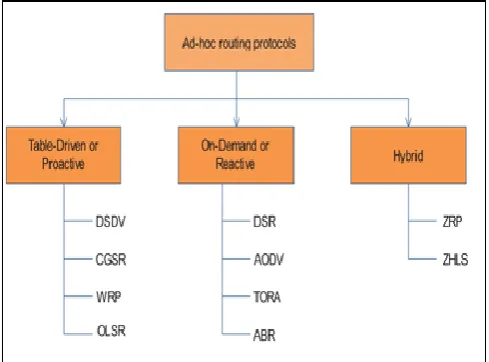
Mobiles phones, GPS unit, wireless computer part, and satellite small screen. The Destination Sequence Distance Vector In direction-finding of DSDV, an admission stores the next hop towards a purpose the cost metric for the course finding pathway to the purpose and a objective succession number that is shaped by the objective progression information are second-hand in DSDV to keep away from formation of course loop. The course update of DSDV can be moreover time-single-minded or event-single-minded. Every node once in a while transmits updates together with its direction-finding information to its instantaneous near about. While a important idea occur from the last update, a node can transmit its changed routing table in an event trigger method. Moreover, the DSDV has two habits when sending direction-finding represent bring up to date. One is "full unload" bring up to date type and the full direction-finding table is included inside the bring up to date. A “complete dump” update could distance many packets. An incremental bring up to date contains only those entry that with metric have be misrepresented since the last preserve informed is sent. as well the update fits of laughter in one packets.
Figure. 1-Classification of routing protocol in mobile ad hoc networks
© 2015, IRJET.NET- All Rights Reserved
Page 1670
core, sounding board and ocean gain a extraordinarymention. Standing based systems do not rely on the conventional use of a ordinary secret to establish off the record and secure announcement between two party. as an alternative, they are basically based on every other's explanation. Standing based system are used for updating protection in adhoc networks as they model collaboration between the nodes which is encouraged from collective behavior. Such system are used to make a decision whom to confidence and to encourage responsible behavior [18]. Recognize three goals for standing systems: To make available information to make a distinction between a responsible principal and an not to be trusted primary.
Figure 3: Adhoc Routing Protocol.
. This is an energetic appropriate postulation in homogeneous adhoc networks, where strategy with different capability and roles are possible to place different levels of significance for different function depending in the lead CPU usage, series usage etc. One can take advantage of this situation and may perform only those functions which have higher preference in scheming standing.
2. RELATED WORK
2.1 ADHOC NETWORKS ARE A KEY FACTOR IN THE EVOLUTION OF WIRELESS SENSOR NETWORKS.
Chao Gui, and Jian Li describe various techniques for group communications in ad hoc networks, including manycasting, broadcasting, any casting, and geo casting and discuss representative protocols for each of these categories. They also provide an overview of related issues such as protocol design, state maintenance, and performance; examine issues such as reliability, power conservation, quality of service, and security; and comment on future research directions for group communications in ad hoc networks.
In Year 2010, The articles in this special issue review emerging ad hoc networking technologies, techniques, algorithms, and protocols, with emphasis on recent developments offering potential solutions to problems
encountered in these networks. In “Cooperative Cache-Based Data Access in AdHoc Networks,” Guohong Cao, Liangzhong Yin, and Chita Das propose efficient solutions to the data-caching problem.
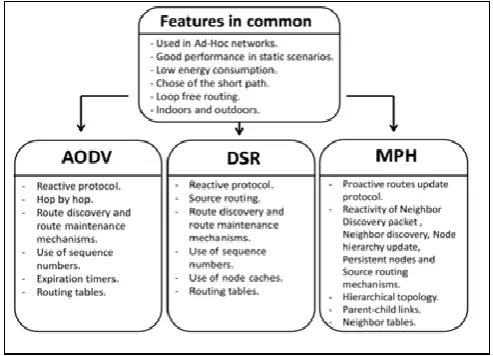
Figure 2: Selection Of Features AODV, DSR, MPH.
In Year 2011, In cooperative caching, some nodes in an ad
hoc network replicate data from servers, using replicated files rather than original files to satisfy other nodes’ access demands. This should reduce traffic in the network or even provide service if the server becomes disconnected in the meantime. The proposed solutions include caching data paths toward replicated copy, making another copy of data at the node, and using some novel hybrid methods.
In Year 2012 An emerging area of research in sensor networks is area coverage and monitoring. In “Energy- Efficient Area Monitoring for Sensor Networks,” Jean Carle and David Simplot-Ryl classify sensor data reporting into two categories: event-driven and on-demand. They propose dividing the area monitoring problem into three sub problems, each of which requires an energy-efficient solution. These sub problems consist of constructing a broadcast tree (request propagation), selecting sensors for area coverage, and reporting sensor data with data aggregation. The protocols implement periodic changes in sensor roles to extend network life.
In Year 2013 The proposed solutions use dominating sets
© 2015, IRJET.NET- All Rights Reserved
Page 1671
In Year 2014 This innovative cross-layering approach
addresses, in particular, security and cooperation, energy management, and quality-of-service issues. Many potential Mobile AdHoc sensor Network applications involve collaboration among a group of nodes. Group communication models include one to- many, one-to-any, many-to-many, and one to all patterns that facilitate collaboration among a group of nodes.
Figure. 3: Comparative study wireless network
3. OBJECTIVE
We inspect the troubles of extensive sequence for well-organized energy utilization and delay in data
Deliveries making an allowance for go under the surface mobility. We draw attention to on the notion of permanent direction mobility and imprison the sequence to some degree of potential location we also make smaller the consignment on the single sequence leader by initiation the notion of many-head sequence. On the foundation of afore mention examination, the project present mobile go under the surface improved power-well-organized based routing protocol. The go under mobility in the many sequence model, therefore achieve smaller sequences and declining load on the head nodes.
4. PROPOSED APPROACH
WSN are use to intellect different attributes of a most favorable way. In mission serious appliances, interruption in environment by using wireless sensors. Wireless Routing data deliverance is not acceptable such as in reforest fire protocol do your utmost. WSN. As the capable energy operation is especially proposes a propose of course-plotting algorithm for delay sensitive important acquisition in WSN, it is possible by using relevancies. portrays importance of cluster sequence mobility in WSNs. Routing protocols, that attempt based protocols which always compete with ensure
proficient energy consumption in WSN based protocols performance in case of power good quality organization.
efficient data transmission in monitoring and nuclear plant monitoring.
Figure 4: efficient data transmission in monitoring and nuclear plant monitoring.
© 2015, IRJET.NET- All Rights Reserved
Page 1672
aiming at longer network many head in the sequencesdiminishes the delay in data lifetime. Every node separately takes a decision regarding delivery and the load on the single sequence leader as in the compression and data promotion plan to reduce. The remainder of paper is organized as follows. Quantity of packets to convey. In this procedure, we present related work to our proposed adaptive algorithm based on discrete cosine transform scheme while depicts inspiration for our and Pack-and-forward scheme is highly novelty. the network operations of constructive in acquiring the optimal compressibility rate. proposed which includes many-sequence In wireless manymedia sensor networks domain, on struction, data transmission and sequence mobility QRP uses genetic algorithm and queuing involving advised algorithm. investigates the theory to assess the path’s quality of service. It allocates simulation outcomes of comparison between our weight to quality of services on the base of obstruction, technique and aforementioned proposals.
5. RESULT
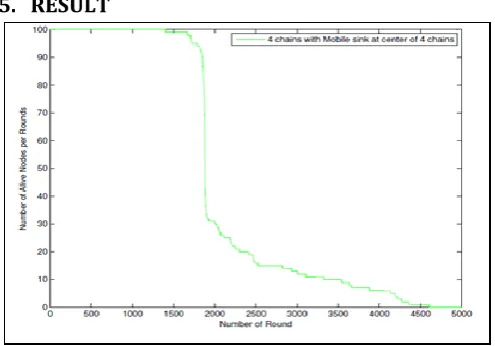
Figure.5: screen sort number of alive nodes per round
respect number of round using MATLAB
Figure.6: screen sort number of dead nodes per round
respect number of round using MATLAB.
The power allocation on together scenario is approximately equivalent. Reproduction output shows that the outstanding power of network greater than rounds decrease gradually in both technique but there is much well-organized energy
utilization in our future method. come together head send the data to go under the surface and the better amount of power is utilize due to extended distance between sequence leader and go under the surface sequence selected consume less power for this principle due to go under the surface mobility which causes less reserve between the sequence selected and the go under the surface.
Figure 5 presents the comparison of normalized average energy consumption of the Mobile sequence improved energy-efficient based routing protocol with other protocols. Simulation results show the normalized average energy consumption of sensor nodes over rounds in Mobile sequence improved energy-efficient based routing protocol is 2 % better than the previous methods. The distance among sparse nodes themselves and the base station is fewer than in Power-Efficient Gathering in Sensor Information; this practice saves plenty of energy.
6. CONCLUSION
The main objective behind this research work is fulfilled A many-sequence model of along with training of go under the surface mobility to take full advantage of the network natural life. Our consideration are encouraging in retreating the rearrangement in data release and remoteness between the coupled nodes through smaller shackles go under the surface mobility not only lessens the load on the sequence leaders in opening round, but also reduce the pressure on the spare nodes at the beginning of network natural life. We also put forward an technique for fixed path go under the surface mobility in our reproduction. go under the surface mobility has most important advantages on static go under the surface in attractive the network natural life. As for future information, we are motivated to get much improved go under the surface mobility especially toward sequence selected of shackles in WSN.
7. APPLICATIONS OF MOBILE AD HOC NETWORK
(1) Sensor networks: Smart sensor nodes and actuators can be buried in appliances to allow end user to manage home devices locally and remotely. Environment applicationincludes tracking the movements of Animals
chemical/biological detection, precision agriculture. Tracking date highly connected in time and breathing space e.g. secluded sensors for weather conditions, earth behavior [1].
(2) Tactical networks: Military communication, operations, auto-mated battlefields [2].
© 2015, IRJET.NET- All Rights Reserved
Page 1673
(5) Vehicular services: Transmission of news, road condition,weather, melody Local ad hoc network with nearby vehicle for road/calamity guidance [1, 2].
(6) Educational applications: Setup virtual classrooms or conference rooms and ad hoc communication during conferences, meetings, or lectures [1, 3].
(7) Entertainment: Many user’s games, automatic pets, out-of-doors internet right of entry.[1]
(8) setting aware air force: automating call forwarding, trans-mission of the actual workspace information services such as advertise location specific, location dependent travel guide services like printer, fax, phone, and server [2].
8. Future Work
proactive routing protocol and reactive routing protocols which discuss key features of each of these routing protocols in Mobile Ad Hoc sensor Network and performance analysis on the basis of qualitative comparison of both routing protocols.
REFERENCES
1. D.Johnson and D.Maltz, “Dynamic source routing in ad
hoc wireless networks,” in Mobile Computing, T.Imelinsky and H.Korth, Eds., pp. 153–181. Kluwer Academic Publishers,1996.
2. The CMU Monarch Project, “The CMU monarch
extensions to the ns simulator,” URL:
http://www.monarch.cs.cmu.edu/. Page accessed on January 5th, 2001.
3. J.Boleng, “Normalizing mobility characteristics and
enabling adaptive protocols for ad hoc networks,” in Proceedings of the 11th Local and Metropolitan Area Networks Workshop, March 2001.
4. J.Li, J.Jannotti, D.De Couto, D.Karger, and R.Morris, “A scalable location service for geographic ad hoc routing,” in Proceedings of the ACM/IEEE International Conference on Mobile Computing and Networking (Mobicom), 2000, pp.120–130.
5. T.Camp, J.Boleng, and L.Wilco x, “Location information
services in mobile ad hoc networks,” in International
Communications Conference (ICC), 2002, To appear.
6. Heinzelman, W., A. Chandrakasan and H. Balakrishnan,
2000. “Energy efficient communication protocol for wireless microsensor networks,” in System Sciences, 2000. Proceedings of the 33 Annual rd Hawaii International Conference On, pp: 10.
7. Yun, Y. and Y. Xia, 2010. “Maximizing the lifetime of wireless sensor networks with mobile sink
indelay-tolerant applications,” Mobile Computing,IEEE
Transactions On, 9(9): 1308-1318.
8. Liang, W., J. Luo and X. Xu, 2010. “Prolonging network
lifetime via acontrolled mobile sink in wireless sensor networks,” in Global TelecommunicationsConference (GLOBECOM 2010), 2010 IEEE, pp: 1-6.
9. Sen, F., Q. Bing and T. Liangrui, 2011. “An improved energy-efficient pegasisbased protocol in wireless
sensor networks,” in Fuzzy Systems and Knowledge Discovery (FSKD), 2011 Eighth International Conference On, 4: 2230-2233.
10. Meelu, R. and R. Anand, 2011. “Performance evaluation
of cluster-based routing protocols used in
heterogeneous wireless sensor networks,” International Journal of In-formation Technology and Decision Making, 4(1): 227-231.
11. .Haibo, Z., W. Yuanming and X. Guangzhong, 2009.
“Edfm: a stable election protocol based on energy dissipation forecast method for clustered heterogeneous wireless sensor networks,” in Wireless Communications, Networking and Mobile Computing, 2009. WiCom’ 12. 5th International Conference On, pp: 1-4. Ali Ghaffari,
D.K. and H. Bannaeian, 2011. 13. Caione, C., D. Brunelli and L. Benini, 2012.“EER: Energy-efficient and real time routing protocol “Distributed compressive sampling for lifetime for wireless sensor networks,” World Applied optimization in dense wireless sensor networks,” Sciences Journal, 14(2): 356-362. Industrial Informatics, IEEE Transactions On,
13. Soleimani, M., M. Ghasemzadeh and M. Agha Sarram, 8(1): 30-40. 2011. “A new cluster based routing protocol for 14. Ghaffari, A. and V. Takanloo, 2011. “Qos-based prolonging network lifetime in wireless sensor routing protocol with load balancing for wireless networks,” Middle-East Journal of Scientific multimedia sensor networks using genetic algorithm,” esearch, 7(6): 884-890. World Applied Sciences Journal, 15(12): 1659-1666.
14. Lindsey, S. and C. Raghavendra, 2002. 15. Yueyang, L., J. Hong and Y. Guangxin, 2006.“Pegasis: Power-efficient gathering in sensor “An energy-efficient pegasisbased enhanced
15. information systems,” in Aerospace conference
algorithm in wireless sensor networks,” China proceedings, 2002. IEEE, 3: 3-1125. Communications, pp: 91.
16. Nakayama, H., Z. Fadlullah, N. Ansari and N. Kato, 16. Luo, J. and J. Hubaux, 2010. “Joint sink mobility and 2011. “A novel scheme for wsan sink mobility based routing to maximize the lifetime of wireless sensor on clustering and set packing techniques,” networks: the case of constrained mobility,” Automatic Control, IEEE
Transactions On, IEEE/ACM Transactions on