Licensed under Creative Common Page 98 http://ijecm.co.uk/
EXAMINING THE EFFECT OF HR PRACTICES ON JOB
PERFORMANCE IN NIGERIAN POLYTECHNICS
Umar Abdullahi Abboh
School of Business Management, College of Business,
Universiti Utara Malaysia, 06010 UUM Sintok, Kedah, Malaysia [email protected]
Abdul Halim Abdul Majid
School of Business Management, College of Business, Universiti Utara Malaysia, 06010 UUM Sintok, Kedah, Malaysia
Hafeez Fareed
School of Business Management, College of Business, Universiti Utara Malaysia, 06010 UUM Sintok, Kedah, Malaysia
Abstract
Evidences from the literature have established that HR practices are significant predictors of
job performance. Likewise, AMO model postulates that performance of the firm can be
expedited through AMO model-based HR practices. Therefore, this research tested AMO
model by examining the effects of recruitment & selection, training & development,
performance appraisal, compensation, and employee involvement on job performance in the
context of Nigerian Polytechnics. Data were collected from 702 academics of th e North-west
Nigerian polytechnics and then analyzed via the partial least squares method (PLS)
algorithm and bootstrapping techniques. The overall results indicate that the extant literature
and AMO model have established that HR practices are significant ly related to job
performance, but the relationship is contingent on organizational factors or environmental
factors, and functionality of HR practices is context-dependent, because the failure or
success of HR systems can hinge on boundary conditions. Thus, future research should
Licensed under Creative Common Page 99 Also, managements of the organizations could adopt different kinds of HR practices to
enhance job performance in the organization, but the findings of this research indicate that
caution should be taken in selecting the type of HR practices to be adopted, because
functionality of HR practices is context-dependent.
Keywords: HR practices, HRM, job performance, AMO model, Nigeria
INTRODUCTION
Drawn upon the extant literature (e.g., Jibrin-Bida, Abdul-Majid, & Ismail, 2017; Ismail, Abdul
Majid, & Joarder, 2017; Fu, 2013; Koshy & Suguna, 2014), it is undoubtedly an established fact that success of the contemporary organizations depends on productive employees, because employees are instrumental to the accomplishment of organizational objective, and
organizational feat is contingent upon employees. Organizational strategies and plans are
turned into reality via the efforts, productivity, and performance of skillful employees. Therefore, it is imperative for the organizations to improve the performance by adopting performance-enhancing strategies and practices that will enhance competitive advantage of the
organizations.
There have been a mushrooming number of studies on the determinants of job
performance. The extant literature on job performance cuts across many fields of research, but the studies such as Fu (2013); Ismail, Abdul Majid, and Joarder (2017); Deleryand Doty (1996);
Sivapragasam and Raya (2018) have established and accentuated the fact that human resource (HR) practices are significant and indispensable determinants or predictors of job
performance. This gives support to Ability-Motivation-Opportunity (AMO) model, which postulates that performance of the firm can be expedited through three factors which are ability,
motivation and opportunity. AMO model highlights that empowered and motivated employee with boosted KSAs would remain in the organization and record higher performance which consequently enhance higher performance (Appelbaum & Kamal, 2000; Boxall & Macky, 2009;
Browning, 2006; Gyensare & Asare, 2012).
The first factor of AMO model, which is ability, can be achieved through recruiting and
selecting quality personnel. Jiang Lepak, Hu, and Baer (2012) assert that ability of the firm‟s human capital can be enhanced through all-inclusive recruitment, rigorous selection, and broad
Licensed under Creative Common Page 100 employee involvement constitutes what can be used to empower employees and give them opportunity which is the third factor.
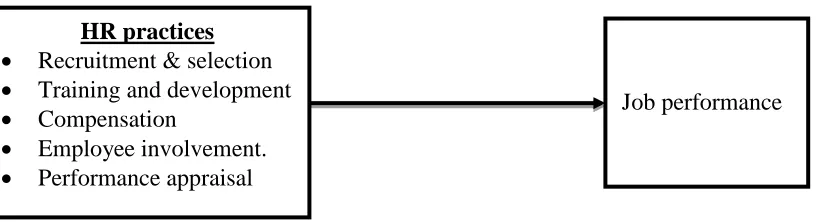
Taking this into cognizance, this research endeavors to test AMO model by examining the effects of recruitment and selection, training and development, performance appraisal,
compensation, and employee involvement on job performance in the context of Nigerian Polytechnic as this will provide more insights and solidify the existing body of knowledge in the
performance research fields.
LITERATURE REVIEW AND HYPOTHESES DEVELOPMENT
Job performance which is an offshoot of connections between employee ability, discretionary
effort, and performance opportunities and team performance, is a crucial factor that influences organizational performance. Behaviors of an individual (employee) who contributes to the organizational goal accomplishment constitute what is called job performance. This indicated
that job performance is the expected value of what people do in organizations which are
relevant towards enhancing organizational effectiveness. Job performance also refers to the ability of employees to carry out responsibility, at a given time by using the appropriate procedure and available resources (see Borman & Motowidlo, 1993).
Moreover, enhanced performance of the firm hinges on three factors of AMO model. The three factors are ability, motivation and opportunity. AMO model postulates that empowered and
motivated employee with boosted KSAs would remain in the organization and record higher performance which consequently enhance higher performance (Appelbaum & Kamal, 2000;
Boxall & Macky, 2009; Browning, 2006; Gyensare & Asare, 2012). HR with knowledge and competencies are the key assets in assisting firms to survive and sustain their competitive
advantage (see Fu, 2013; Ismail et al., 2015a). Performance is enhanced through HR practices that can build-up employee capability, commitment and productivity (Posthuma et al., 2013). It
has been recognized that compensation, training and development, and performance are considered HR „best practices‟ which have consistently influence performance positively (see
Ismail, Abdul-Majid & Joarder, 2017; Posthuma et al., 2013).
Consistent with AMO model, Jiang Lepak, Hu, and Baer (2012) mentioned that ability of the firm‟s human capital can be enhanced through all-inclusive recruitment, rigorous selection,
and broad training. Thus, the first factor of AMO model, which is ability, can be achieved through recruiting and selecting quality personnel, and training. The second factor can be
accomplished through motivation-enhancing HR practices such as performance appraisal and competitive compensation. The HR practices such as employee involvement constitutes what
Licensed under Creative Common Page 101 Thus, this study adopts AMO model-based HR practices which involve recruitment & selection, training and development, compensation, performance appraisal, and employee involvement. In addition, some of these practices are considered „best practices‟ and „cross cultural HR practices‟ (Posthuma et al., 2013) and „tested and trusted‟, which can be applied across all
industries and countries. In addition, scholars have suggested further studies concerning the selected HR practices (see Jibrin-Bida & Abdul-Majid, 2017; Cobblah & Walt, 2017; Bonsu &
Kusi, 2014; Tabiu, Pangil & Othman, 2016; Fasasi & Oyeniran, 2016).
Furthermore, while recruitment is the act of producing competent employees to apply for
employment in an organization (French & Rumbles, 2010), selection is the process in which the numbers of the job applicants are reduced, and applicants with the best qualifications are
chosen (Bohlander & Snell, 2007). A few numbers of empirical studies have link recruitment and selection with job performance. For instance, Tabiu and Nura (2013) found that recruitment and selection variable is positively related to job performance. Also, Kepha Mukulu, and Waititu
(2014) conducted a study in five government-owned research institutes in Kenya on the link
between recruitment and selection and job performance. They distributed a total number of 256 questionnaires, and only 184 were returned representing 71.9% rate of return. The study employed descriptive and correlation research design. The findings of the study indicated that
correlation between recruitment and selection and job performance was highly significant. In addition, Saleem and Khurshid (2014) conducted a study on the effect of recruitment
and selection, training and development, organization commitment and compensation and job performance in the banking sector of Pakistan. The result of correlation analysis indicates
strong positive connexion among recruitment and selection and job performance. Also, Babagana (2014) studies the impact of recruitment and selection on polytechnics in Nigeria.
The findings of the studies show a positive relationship between recruitment, and selection and job performance.
Training and development have been acknowledged to be one of the essential segments of HR practices in the field of human resource management (Joarder, Sharif, & Ahmmed, 2011). Training as special activities is intended to help to learn of skills, attitude and knowledge
between the employees in the organization to improve their specific work performances as well as achieving organizational goals (Edralin, 2004). Conversely, development activities are aimed
at the long-term by preparing future work responsibilities and the current work as well. Training and development focus on technical training, skills, counseling and other developmental
programs (Truss, Mankin, & Kelliher, 2012).
Numerous research findings (see Amin, Saeed, & Lodhi, 2013; Hassan, 2016; Asfaw,
Licensed under Creative Common Page 102 &Othman, 2016 etc.) have indicated a significant positive relationship between training and development and job performance. For instance, Tabiu, Pangil, and Othman (2016) examined
the contribution of training and development in improving the job performance in some northern Nigerian public sector organizations. The findings of the study showed that training and
development is positively related to job performance. Additionally, in the context of employment relationship, when the management of an organization provides employees with sufficient
training and development opportunities, this will send a message to employees that the organization cares for them (Aguinis & Kurt Kraiger, 2009), and such employees will tend to
reciprocate to perform the job in the most effective and efficient ways towards the achievement of organizational goals and objectives.
Compensation is also regarded to be among the essential HR practices. Odunlami and Matthew (2014) define compensation as all kind of fiscal returns and physical benefits that an employee received as part of his/her contract. However, this definition is deficient as it does not
consider other elements of compensation like non-financial aspects. Therefore, Anitha (2014)
defined compensation as an essential feature of employee engagement which involves non-financial and non-financial that motivate employees to achieve and focus more on work and personal development. Similarly, compensation can be seen as HRM practice that involve with all type of
rewards obtain by workers in organizations for exchange of what they performed towards achieving organizational goals (John & Qian, 2003). Also, social exchange theory (SET)
postulates that, in a social relation, the reciprocity and good gesture between two parties govern the entire relationship (Blau, 1964). Therefore, in a situation whereby, a good gesture from one
party (employer through HR practices) is returned with a similar good gesture (employee through performance). In this regard, if the employee perceived that the organization provided
him with appropriate compensation, then such employee will tend to reciprocate with good performance.
The extant studies (e.g., Tabiu, 2016; Rizal et al. 2014; Hassan, 2016; Quartey & Attiogbe, 2013; Subekti & Setyadi, 2016; Odunlami & Matthew, 2014; Oluigbo & Anyiam, 2014) found that compensation has a significant positive on job performance. These studies supported
that adequate compensation package encourages employees towards the higher task, contextual and adaptive performance. Furthermore, Calvin (2017) studied the impact of two
dimensions of compensation (salaries & wages and bonuses & incentives) on job performance in two selected institutions in Zamfara State, Nigeria. The findings of the study indicate a
significant positive relationship between compensation and employee job performance.
Besides, performance appraisal can be defined as an assessment of employees on how
Licensed under Creative Common Page 103 2013). Also, performance appraisal is believed to be a key that provide an encouragement to the talented employees to be satisfied with the organization (Joarder & Ashraf, 2012).
Performance appraisal is seen as a continuous process, not just a year of exercise. In general, performance appraisal is a process in which organizations evaluate the employees to find out
their performance level as well as using it as an instrument for organizational decision making, firing and upgrading of the employees in the organizations. Additionally, through performance
appraisal, which is a vital means for evaluating employees in the organizations, individual employee‟s strengths and opportunities are measured for the future improvements, and the level of organizational goals attainment is assessed to guide the organizations‟ future planning
and development (Daoanis, 2012). Several empirical studies have established that performance
appraisal is positively related to job performance in organizations (Ojokuku, 2013; Mir & Ahmed, 2014; Hassan, 2016; Owoyemi & George, 2013; Arabia, et. al., 2014; Kuvaa‟s, 2010; Singh, et.
al., 2010; Daoanis, 2012). Similarly, studies conducted by Akhtar et al. (2013) and Nadarasa
(2013) revealed the significant positive influence of performance appraisal on job performance.
As for employee involvement, it refers to the process through which information is exchanged in an organization (Posthuma et al., 2013). The practice had been found to affect creativity climate Heffernan, Harney, Cafferkey and Dundon (2016), and organizational performance
(Gittell, Seidner, & Wimbush, 2010). Also, Demo et al. (2012) defined employee involvement as an organizationally expressed proposal, with practical and theoretical constructions, to have an effective connection and contribution with the employee‟s well-being at work,
regarding relationship, acknowledgment, participation, and communication. Expecting the
employee to perform a task, the instruction must be given to the concerned employee. In the same manner, if the performance of the organization is to be accomplished, there is a need
for communication of organizational goals and strategy to the employees. Workers should be equipped with financial and strategic information of the firm to improve and enrich workers‟
job-related knowledge.
Evidence from the literature indicated a positive relationship between employee involvement and job performance (Hassan, 2016; Ali & Rizwan, 2013; Cho & Yoon, 2009;
Nadarasa, 2013). Also, Hassan (2016) investigated the impact of employee involvement on job performance in the Textile industry of Pakistan. Using a sample of 68 employees, the data were
analyzed through Pearson correlation statistical and regression technique, and the result revealed that employee involvement has a positive impact on job performance. Also, the
Licensed under Creative Common Page 104 Based on the discussion above, the current study formulates the following hypotheses:
i. Recruitment and Selection would have a significant positive effect on employee job
performance.
ii. Training and development would have a significant positive effect on employee job
performance.
iii. Compensation would have a significant positive effect on employee job performance.
iv. Performance appraisal would have a significant positive effect on employee job
performance.
v. Employee involvement would have a significant positive effect on employee job
performance.
Figure 1: Research framework
METHODOLOGY
Drawn on cross-sectional survey approach, data were obtained from the academics of the
North-West Nigerian polytechnics and analyzed using SPSS version 21 and Smart PLS 3 software packages, and the two-step approach, as suggested by Chin (1998), was adopted to obtain valid and reliable results. Based on Hair, Ringle, and Sarstedt‟s (2011)‟s proposition, the
two-stage approach which includes the measurement model and structural model was undertaken. Sample size was determined using Krejcie and Morgan‟s (1970) benchmarks and
the supposition of Hair, Hult, Ringle, and Sarstedt (2014), given the fact that the level of confidence and precision is been taken care of, and minimized sampling error is guaranteed by
the approaches. Thus, from a population of 4441, a sample size of 702 was chosen to stand in for the entire population of the study. In sampling the respondents from the entire population,
the study used the disproportionate sampling technique, given that it is considered appropriate for a population that is large in number (Sekaran & Bougie, 2010).
The items of job performance were adapted from Tsui et al., (1997); Motowildo and Van Scotter (1994), while the instruments of HR practices were adapted from Demo, Neiva, Nunes,
and Rozzett (2012). The items constituting working condition were adapted from Uline and
HR practices
Recruitment & selection
Training and development
Compensation
Employee involvement.
Performance appraisal
Licensed under Creative Common Page 105 Tschannen-Moran (2008). All items were scaled with 5-Likert scale. In this study, a total of 702 questionnaires were distributed to the respondents (the academic staff of 7 North Western
polytechnic of Nigeria), but only 546 questionnaires were returned. Out of 546 returned questionnaires, only 539 questionnaires were usable, but 7 questionnaires were rejected
because they were incomplete. This shows that 546 out of 722 questionnaires represent overall response rate of 75.6 per cent, but 539 questionnaires, representing a valid response rate of
74.7 per cent were used in the analysis.
RESULTS AND DISCUSSION
Demographic information of the respondents of the current study indicates that majority of the
respondents participated in the survey are males as 467 respondents, representing 85.5% are males, but the remaining 79 respondents, indicating 14.5%, are females. As for the marital status of the respondents, 489 respondents representing 89.6% are single while 57 respondents
representing 10.4% are married. Moreover, 10 respondents representing 1.8% of the
participants were between 20-25 years of age while 27 respondents accounting for 4.9% fell within the age bracket 26-30 years. 114 respondents which represents 20.9% of the sample were between 31-35 years of age, but 198 respondents representing 36.3% fall within the age
range 36-40 years. The remaining 195 respondents, representing 36.1% are 40 years of age or above.
Furthermore, the respondents with PGD/Master‟s degree certificates constitute the
highest number of response rate as they represent 57.7% response rate while HND/degree
holders represent 24.4% response rate. Only 98 of the respondents, representing 17.9%, hold PhD degree certificates. With regards to the designations of the respondents, majority of the
respondents, representing 23.6%, are in the category of lecturer 2. The second highest category are senior lecturers with 22.2% response rate. 18.7% of the respondents are in the lecturer 1
category, but 94 respondents (17.2%) are in the lecturer 3 category. While 53 respondents representing 9.7% are chief lecturers, 47 respondents (8.6%) are principal lecturers. Finally, 188 respondents representing 34.4% have between 6-10 years of service while 109 respondents
representing 20.0% have between 11-15 years of service. 107 respondents representing 19.6% have between 2-5 years of service, 60 respondents representing 11% have between 16-20
years of service, 50 respondents representing 9.2% have between 21-25 years of service, and 32 respondents representing 5.9% have 26 or above years of service.
In summary, the above discussion indicates that respondents varied substantially in terms of their backgrounds, which indicates that the data used were from the respondents of
Licensed under Creative Common Page 106 Measurement Model (Outer Model) Evaluation
Measurement model evaluation is for validation of the indicator reliability, internal consistency
reliability, convergent validity, and discriminant validity of the constructs (Hair, Hult, Ringle, &Sarstedt, 2014).
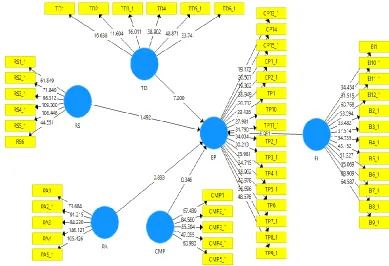
Figure 2: Measurement Model Evaluation Result
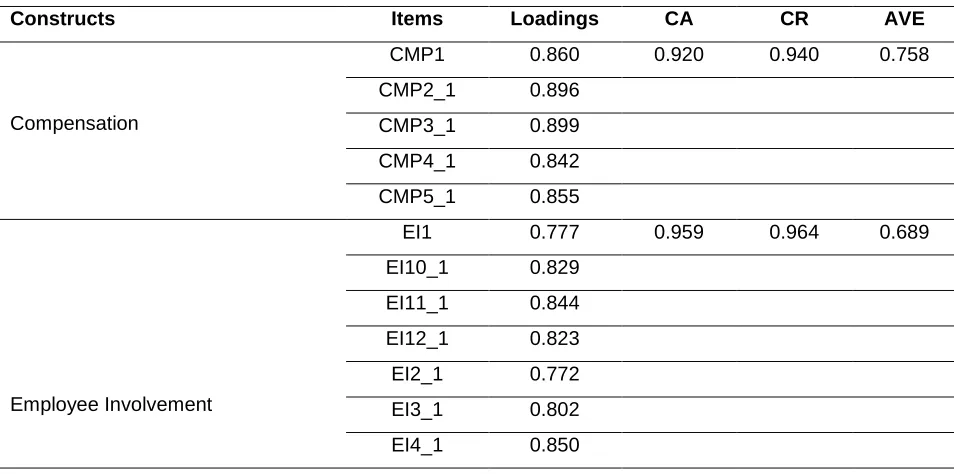
Table 1: Indicator Reliability, Internal Consistency, and Convergent Validity
Constructs Items Loadings CA CR AVE
Compensation
CMP1 0.860 0.920 0.940 0.758
CMP2_1 0.896 CMP3_1 0.899 CMP4_1 0.842 CMP5_1 0.855
Employee Involvement
EI1 0.777 0.959 0.964 0.689
Licensed under Creative Common Page 107 EI5_1 0.816
EI6_1 0.850 EI7_1 0.851 EI8_1 0.881 EI9_1 0.861
Performance Appraisal
PA1 0.891 0.954 0.965 0.846
PA2_1 0.920
PA3 0.924
PA4 0.943
PA5_1 0.918
Recruitment & Selection
RS1_1 0.859 0.946 0.957 0.789
RS2_1 0.895 RS3_1 0.922 RS4_1 0.926 RS5_1 0.906
RS6 0.818
Training & Development
TD1 0.626 0.828 0.870 0.531
TD2 0.596
TD3_1 0.699
TD4 0.795
TD5_1 0.843 TD6_1 0.778
Job performance
TP1 0.710 0.936 0.944 0.514
TP10 0.726
TP11_1 0.756 TP2_1 0.749 TP3_1 0.729 TP4_1 0.683 TP5_1 0.750
TP6 0.771
TP7_1 0.792 TP8_1 0.759 TP9_1 0.801 CP13_1 0.614
CP14 0.635
CP15_1 0.624 CP1_1 0.712 CP2_1 0.622
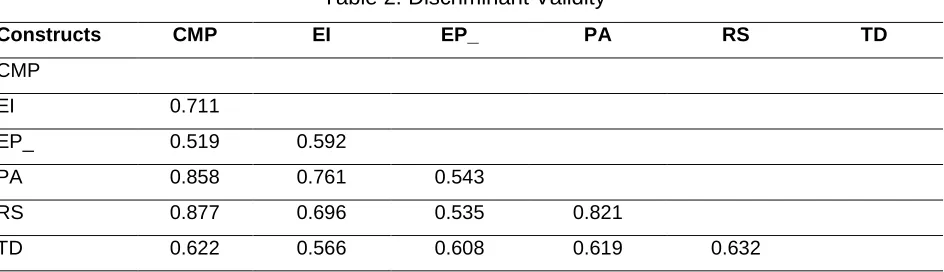
Licensed under Creative Common Page 108 Table 2: Discriminant Validity
Constructs CMP EI EP_ PA RS TD
CMP
EI 0.711
EP_ 0.519 0.592
PA 0.858 0.761 0.543
RS 0.877 0.696 0.535 0.821
TD 0.622 0.566 0.608 0.619 0.632
Note: CMP=Compensation; JP=Job performance; PA=Performance Appraisal; TD=Training and Development; RS= Recruitment & Selection; EI=Employee Involvement.
Regarding the indicator reliability, it indicates the suitability and capability of items (i.e. indicators) spawned for a particular construct in measuring the main concept in a given research
(Hair, Black, Babin, & Anderson, 2010). According to Hair, Hult, Ringle, and Sarstedt (2017), the items with loadings above 0.5 have fulfilled the threshold for indicator reliability (Hair et al.,
2014). With the result depicted in Table 1 and Figure 2, the outer loadings of individual items, which range between 0.596 to 0.943, show higher value on their respective constructs, and thus signifying sufficient levels of indicator reliability. However, 11 items from employee job
performance fell below the threshold value of 0.5 (Hair et al., 2011), did not fulfil the required levels of indicator reliability, and were all removed from the subsequent analysis, because an
indicator whose outer loading falls below the threshold value of 0.5 should be removed to avoid distortion of result at structural model estimation stage.
In Table 1, the estimation of internal consistency reliability is presented. Internal consistency reliability is a form of reliability used to judge the consistency of results across items
on the same test. It determines whether the items measuring a construct are similar in their scores (i.e., if the correlations between the items are large) (Hair et al., 2017). To check for internal consistency reliability, composite reliability value and Cronbach‟s alpha value should be
vetted, composite reliability should be higher than 0.70, but composite reliability values below
0.60 indicate a lack of internal consistency reliability (Hair et al., 2017). Also, the minimum threshold for the value of Cronbach‟s Alpha is put at 0.6 by Sekaran (2003). The result in the in
Table 1 indicates that all the constructs of the study have high levels of internal consistency reliability, as the composite reliability and Cronbach‟s alpha values of all the constructs are well
above the threshold values of 0.7 and 0.6 respectively.
With regards to convergent validity assessment, it refers to the extent to which a measure correlates positively with alternative measures of the same construct (Hair et al.,
Licensed under Creative Common Page 109 AVE, which should be 0.5 or above, refers to the grand mean value of the squared loadings of the indicators associated with the construct (i.e., the sum of the squared loadings divided by the
number of indicators) (Hair et al., 2017). Thus, the AVE is equivalent to the communality of a construct. AVE values of the constructs of the current study ranged between 0.506 and 0.846,
and thus well above the minimum requirements of 0.5 (Hair et al., 2011). This informs that all the constructs of the study have the highest levels of convergent validity.
The last aspect of the measurement model involves discriminant validity which denotes the extent to which a construct is truly distinct from other constructs by empirical standards.
Heterotrait-monotrait ratio (HTMT) of the correlations was adopted in this study for discriminant validity evaluation (Hair et al., 2017). HTMT is the ratio of the between-trait correlations to the
within-trait correlations (Hair et al., 2017). The result in Table 2 confirms the discriminant validity of this study‟s constructs, as the HTMT values for all pairs of constructs in a matrix fell below the
threshold value of 0.90. In sum, having confirmed the content validity, convergent validity, and
discriminant validity of the constructs of this research, it can then be claimed that the construct
validity and reliability have been established in this study.
Structural Model
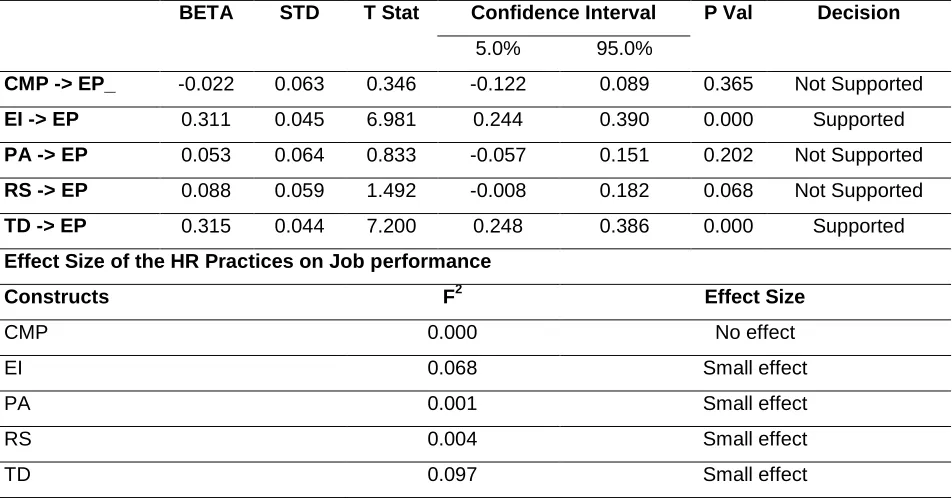
The purpose of running the model with all variables was to establish the results of direct effect of HR practices on job performance (Figure 3, Table 3 and Table 4).
Licensed under Creative Common Page 110 Table 3: Hypotheses Testing and Effect Size
BETA STD T Stat Confidence Interval P Val Decision
5.0% 95.0%
CMP -> EP_ -0.022 0.063 0.346 -0.122 0.089 0.365 Not Supported
EI -> EP 0.311 0.045 6.981 0.244 0.390 0.000 Supported
PA -> EP 0.053 0.064 0.833 -0.057 0.151 0.202 Not Supported
RS -> EP 0.088 0.059 1.492 -0.008 0.182 0.068 Not Supported
TD -> EP 0.315 0.044 7.200 0.248 0.386 0.000 Supported
Effect Size of the HR Practices on Job performance
Constructs F2 Effect Size
CMP 0.000 No effect
EI 0.068 Small effect
PA 0.001 Small effect
RS 0.004 Small effect
TD 0.097 Small effect
Considering Table 3, Figure 2, and Figure 3, R square value of 0.419 (See Figure 2) signifies
that, in the model, recruitment & selection, training & development, compensation, performance appraisal and employee involvement explain 42% of the variance in employee job performance. Moreover, the result (β = 0.311, t=6.981, p< 0.01; β = 0.315, t=7.200, p< 0.01) indicates positive
effect of employee involvement and training & development on job performance. However, the
direct path regarding the relationship between recruitment & selection, compensation, performance appraisal and job performance, respectively representing β = 0.088, t = 1.492, p> 0.05; β = -0.022, t = 0.346, p> 0.10; β = 0.053, t = 0.833, p> 0.10, are non-significant. This result
indicates that recruitment & selection, compensation, and performance appraisal have
non-significant effect on job performance.
As for the effect size in the structural model evaluation, job performance is explained by employee involvement, performance appraisal, recruitment & selection, and training &
development with effect size (f2) of 0.068, 0.001, 0.004, and 0.097 respectively, indicating that
employee involvement, performance appraisal, recruitment & selection, and training & development have small effect size on job performance respectively, but compensation, with effect size (f2) of 0.000, has no effect on job performance. Moreover, predictive relevance (Q2)
Licensed under Creative Common Page 111 values must be larger than zero before predictive relevance of a research model can be established.
Summing up the result, training & development and employee involvement are significant drivers of enhanced job performance. This result is consistent with the existing
literature such as Ismail, Abdul Majid, Jibrin-Bida and Joarder (2019); Hassan (2016); etc. This finding indicates that training and development can be designed to improve worker‟s skills, and
competencies required for the performance of present and future tasks, which will in turn improve job performance of the employees. Because an enhanced performance is possible, if
training and development are given due priority in the organization so that employees would have the opportunity to acquire new skills (Ulrich, 1997). Extensive training can foster the
development of creativity-relevant skills (e.g., ability to generate alternative solutions), as well as the development of domain-relevant skills (e.g., product knowledge and customer service skills), which are necessary to demonstrate creativity in the work process. In addition, training and
development, which are aligned with digital technology, can be designed to improve domain- and creativity-relevant skills. Training workers can enhance creativity by boosting employees‟
feeling of competence and consequently giving rise to enhanced intrinsic motivation (Ryan & Deci, 2000).
Also, the result signifies that employee involvement, whichcan enrich worker‟s
job-related knowledge and inspire employees to use their domain-relevant and creativity-relevant
skills to propose developments and create new ideas, can motivate employee and in turn translate to employee task performance. This also indicates that if the performance of the
organization is to be accomplished, there is a need for employee involvement in the organizational strategic planning and the strategies designed to accomplish the organizational
goals and objectives. Workers should be equipped with financial and strategic information of the firm to improve and enrich workers‟ job-related knowledge.
Nevertheless, performance appraisal, compensation, and recruitment & selection do not significantly predict job performance, despite that the existing literature have established that recruitment and selection can induce increased levels of employee commitment and
consequently would result in higher performance; that performance appraisal that are tied to organizational strategies could improve individual job performance; and that fair compensation
can improve performance. Probable reason for this result could be linked to the fact that environment, as postulated by contingency theory, within which organizations operates matters
Licensed under Creative Common Page 112 CONCLUSION
Evidences from the literature have established that HR practices are significant predictors of job
performance. Likewise, AMO model postulates that performance of the firm can be expedited through AMO model-based HR practices. Yet, the HR practices-performance relationship is
contingent on organizational factors or environmental factors, because the environment within which a firm operates has influence on firm‟s strategies and policies, and it can consequently
impact the application of HR practices and its attendant effect on performance (Teo, Le Clerc, & Galang, 2011).Thus, future research should endeavor to investigate the boundary condition in
HR practices-performance connection, as this will yield thoughtful implications to research and offer a deeper perspective on what can represent generalizable findings and commonly-held
views in HRM research field, and thus enrich the theories (Goldsby, Knemeyer, Miller, & Wallenburg, 2013).
Practically, managements of the organizations could adopt different kinds of HR
practices to enhance job performance in the organization, but the findings of this research
indicate that caution should be taken in selecting the type of HR practices to be adopted, because functionality of HR practices is context-dependent, because the failure or success of HR systems can hinge on boundary conditions (Chadwick, Way, Kerr, & Thacker, 2013).
REFERENCES
Aguinis, H., & Kurt Kraiger. (2009). Benefits of Training and Development for Individuals, Teams, Organization and Society. Annual Review of Psychology, 60, 451–474.
Akinbowale, M. A., Jinabhai, D. C., & Lourens, M. E. (2013). The impact of performance appraisal policy on employee performance. Mediterranean Journal of Social Science, 4(114).
Ali, W., & Rizwan, M. (2013). Factors influencing corporate social and environmental disclosure (csed) practice in the developing countries: an institutional theoretical perspective. International Journal of Asian Social Science, 3(3), 590– 609.
Amin, A., Saeed, R., & Lodhi, R. N. (2013). The Impact of Employees Training on the Job Performance in Education Sector of Pakistan. Middle-East Journal of Scientific Research, 17(9), 1273–1278. https://doi.org/10.5829/idosi.mejsr.2013.17.09.12289
Anitha, J. (2014). Determinants of employee engagement and their impact on employee performance. International Journal of Productivity and Performance Management, 63(3), 308–323. https://doi.org/10.1108/IJPPM-01-2013-0008 Appelbaum, S. H., & Kamal, R. (2000). An analysis of the utilization and effectiveness of non-financial incentives in small business. Journal of Management Development, 19(9), 733-763.
Asfaw, A. M., Argaw, M. D., & Bayissa, L. (2015). The Impact of Training and Development on Employee Performance and Effectiveness: A Case Study of District Five Administration. Journal of Human Resource and Sustainability Studies, 3(04), 188–202.
Babagana, S. A. (2014) Effects of Selected Human Resource (HR) Practices on Nigerian Polytechnics Lecturers‟ Performances, IOSR Journal of Humanities and Social Science (IOSR-JHSS) Volume 19, Issue 5, Ver. III (May. 2014), PP 72-81
Blau, P. M. (1964). Exchange and power in social life. Transaction Publishers.
Licensed under Creative Common Page 113 Bonsu, C. A., & Kusi, A. (2014). Effects of motivation on job performance of local government workers in Ghana: A case study of Atwima Nwabiagya District Assembly in the Ashanti Region. International Journal of Management Sciences, 2(8), 337–350.
Borman, W. C., & Motowidlo, S. M. (1993). Expanding the criterion domain to include elements of contextual performance. Personnel Selection in Organizations; San Francisco: Jossey-Bass, 71.
Boxall, P. & Macky, K. (2009). Research and theory on performance work systems: progressing the high-involvement stream. Human Resource Management Journal, 19(1), 3-23.
Browning, V. (2006). The relationship between HRM practices and service behavior in South African service organizations. Journal of Human Resource Management, 17, 1321–1338.
Calvin, O. Y. (2017). The Impact of Remuneration on Employees‟ Performance (a Study of Abdul Gusau Polytechnic, Talata-Mafara and State College of Education Maru, Zamfara State). Arabian Journal of Business and Management Review (Nigerian Chapter), 4(2), 34–43. https://doi.org/10.12816/0037554
Chadwick, C., Way, S. A., Kerr, G., & Thacker, J. W. (2013). Boundary conditions of the high‐investment human resource systems‐small‐firm labor productivity relationship. Personnel Psychology, 66(2), 311-343.
Chin, W. W. (1998). The partial least squares approach to structural equation modeling. Modern Methods for Business Research, 295(2), 295-336.
Cho, T., & Yoon, S. (2009). Human Resource Management, Individualism-Collectivism, and Individual Performance among Public Employees: A Test of the Main and Moderating Effects*. The Korean Journal of Policy Studies, 23(2), 57–78. Retrieved from http://s-space.snu.ac.kr/bitstream/10371/69824/1/kjps_23_2_57-78.pdf
Cobblah, M. A., & van der Walt, T. B. (2017). Staff training and development programmes and work performance in the university libraries in Ghana. Information Development, 33(4), 375-392.
Daoanis, L. E. (2012). Performance Appraisal System: It‟s Implication to Employee Performance Management, 2(3), 55-62.
Delery, J. E., & Doty, D. H. (1996). Modes of theorizing in strategic human resource management: Tests of universalistic, contingency, and configurational performance predictions. Academy of Management Journal, 39(4), 802–835.
Demo, G., Neiva, E. R., Nunes, I., & Rozzett, K. K. (2012). Human Resources Management Policies and Practices Scale (HRMPPS): Exploratory and Confirmatory Factor Analysis. Brazilian Administration Review, 9(4), 395–420. https://doi.org/10.1590/S1807-76922012005000006
Edralin, D. (2004). Training A strategic HRM function. Notes on Business Education, 7(4), 1–5.
Falola, H. O., Osibanjo, A. O., &Ojo, S. I. (2014). Effectiveness of training and development on employees‟ performance and organization competitiveness in the Nigeria Banking industry. Bulletin of the Transilvania University of Brason Series; Economic Science, 9(1), 161-170.
Fasasi, Y. A., P.A.O., E., & Oyeniran, S. (2016). Malaysian Online Journal of Maximum Job Performance in Nigerian Higher. Malaysian Online Journal Of Educational Management, 4(1), 32–43.
Fornell, C., & Cha, J. (1994). Partial least squares. Advanced methods of marketing research, 407(3), 52-78. French, R., & Rumbles, S. (2010). Recruitment and selection. Chichester: John Wiley & Sons.
Fu, N. (2013). Exploring the Impact of High Performance Work Systems in Professional Service Firms: Consulting Psychology Journal: Practice and Research, 65(3), 240–257. https://doi.org/10.1037/1065-9293.65.3.240
Gittell, J. H., Seidner, R., & Wimbush, J. (2010). A relational model of how high-performance work systems work. Organization Science, 21, 490-506.
Goldsby, T. J., Knemeyer, A. M., Miller, J. W., & Wallenburg, C. M. (2013). Measurement and Moderation: Finding the Boundary Conditions in Logistics and Supply Chain Research. Journal of Business Logistics, 34(2), 106–116. Guest, D. E. (2011). Human resource management and performance: still searching for some answers. Human resource management journal, 21(1), 3-13.
Gyensare, M. A., & Asare, J. (2012). Relationship between human resource (HR) practices and perceived performance of psychiatry nurses in Ghana. African Journal of Business Management, 6, 2137–2142.
Licensed under Creative Common Page 114 Hair, J. F., Hult, G. T. M., Ringle, C. M., & Sarstedt, M. (2014). A primer on partial least squares structural equation modeling (PLS-SEM). Thousand Oaks: Sage Publications.
Hair, J. F., Hult, G. T. M., Ringle, C., & Sarstedt, M. (2017). A primer on partial least squares structural equation modeling (PLS-SEM). Sage Publications.
Hair, J. F., Ringle, C. M., & Sarstedt, M. (2011). PLS-SEM: Indeed, a silver bullet. Journal of Marketing Theory and Practice, 19(2), 139-152.
Hair, J.F., Black, W.C., Babin, B.J., & Anderson, R.E. (2010). Multivariate data analysis: a global perspective, (7th ed.). Upper Saddle River, NJ: Pearson.
Hassan, S. (2016). Impact of HRM Practices on Perceived Organizational Performance. International Journal of Academic Research in Accounting, Finance and Management Sciences, 6(1), 15–22. https://doi.org/10.7813/2075-4124.2014/6-5/B.3
Heffernan, M., Harney, B., Cafferkey, K., & Dundon, T. (2016). Exploring the HRM-performance relationship: the role of creativity climate and strategy. Employee Relation, 38(3), 438–462. https://doi.org/http://dx.doi.org/10.1108/MRR-09-2015-0216
Ismail, A. I., Abdul-Majid, A.-H., & Joarder, M.-H. (2017). Filling up the HRM „Black Box‟; do creativity and management philosophy matter? Management Science Letters, 7, 163–176. https://doi.org/10.5267/j.msl.2017.1.003 Ismail, A.I., Abdul-Halim, A.M., & Joarder, M. H. R. (2015). Mediating role of distributive justice in the relationship between career incentives and employee performance. Journal of Economics, Business and Management, 3, (10), 929-935
Ismail, A.I., Abdul-Majid, A.H., Jibrin-Bida, M., & Joarder, M.H. (2019). Moderating Effect of Management Support on the Relationship Between HR Practices and Employee Performance in Nigeria, Global Business Review, 1–19. Jiang, K., Lepak, D. P., Hu, J., & Baer, J. C. (2012). How does human resource management influence organizational outcomes? A meta-analytic investigation of mediating mechanisms. Academy of Management Journal, 55(6), 1264-1294.
Jibrin-Bida, M., Abdul-Majid, A. H., & Ismail, A. (2017). Management support as a moderator in the HR practices-employee performance relationship. International Journal of Management Research and Reviews, 7(1), 13.
Joarder, M. H. & Ashraf, M. A. (2012). Work Satisfaction and Employee Intentions: An Empirical Study. East West Journal of Business & Social Studies, 3, 19–35.
Joarder, M. H. R., Sharif, M. Y., & Ahmmed, K. (2011). Mediating Role of Affective Commitment in HRM Practices and Turnover Intention Relationship: A Study in a Developing Context. Business and Economics Research Journal, 2(4), 135–158.
John, K., & Qian, Y. (2003). Incentive features in CEO compensation in the banking industry. In Economic Policy Review (pp. 109–121).
Kepha, O., Mukulu, E., & Waititu, G. A. (2014). The influence of recruitment and selection on the performance of employees in research institutes in Kenya. International Journal of Science and Research, 3 (5), 132, 138.
Koshy, E. R., & Suguna, P. (2014). Performance Appraisal in the Contemporary World. International journal of Advance Research in Computer science and Management studies, 2(9), 1-9.
Krejcie, R. V., & Morgan, D. W. (1970). Determining sample size for research activities. Educational and Psychological Measurement 30, 607-610.
Motowidlo, S. J., & Scotter, J. R. Van. (1994). Evidence That Task Performance Should Be Distinguished from Contextual Performance Evidence That Task Performance Should Be Distinguished from Contextual Performance. Journal of Applied Psychology, 79(4), 475–480. https://doi.org/10.1037/0021-9010.79.4.475
Nadarasa, T. (2013). The impact of perceived human resource practices on performance of the employees‟ special reference to the telecommunication industry in Jaffna district. Global journal of commerce & management perspectives, 2(6), 72-77.
Odunlami, I. B., & Matthew, A. O. (2014). Compensation Management and Employees Performance in the Manufacturing Sector; A Case Study of a Reputable Organization in the Food and Beverage Industry, International Journal of Managerial Studies and Research, 2(9), 108-117.
Licensed under Creative Common Page 115 Posthuma, R. A., Campion, M. C., Masimova, M., & Campion, M. A. (2013). A high-performance work practices taxonomy: integrating the literature and directing future research. Journal of Management, 39(5), 1184-1220.
Quartey, S. H., & Attiogbe, E. J. (2013). Is there a link between compensation packages and job performance in the Ghana police service? African Journal of Business Management, 7(44), 4398–4406. https://doi.org/10.5897/AJBM2013.7201
Rizal, M., Idrus, M. S., & Djumahir, M. R. (2014). Effect of compensation on motivation, organizational commitment and employee performance (studies at local revenue management in Kendari city). International Journal of Business and Management Invention, 3(2), 64-79.
Ryan, R. M., & Deci, E. L. (2000). Self-determination theory and the facilitation of intrinsic motivation, social development, and well-being. American psychologist, 55(1), 68.
Saleem, I., & Khurshid, A. (2014). Do Human Resource Practices Affect Employee Performance? Pakistan business review,15(4), 669-688.
Sekaran, U. (2003). Research methods for business: A skill building approach. (4th ed.). New York: John Wiley & Sons, Inc.
Sivapragasam, P., & Raya, R. P. (2018). HRM and employee engagement link: Mediating role of employee well-being. Global Business Review, 19(1), 147-161.
Subekti, A., & Setyadi, D. (2016). The Implication of Financial Compensation and Performance Appraisal System to Job Satisfaction and Motivation also Employee Performance in PT Pupuk Kalimantan Timur Indonesia. International Journal of Business and Management Invention, 5(2), 16–27. https://doi.org/2319-8028
Tabiu, A., & Nura (2013). Assessing the effect of human resource management (HRM) Practices on employee job performance: A study of Usmanu Danfodiyo University Sokoto, Journal of Business Studies Quarterly, 5(2), 247-259. Tabiu, A., Pangil, F., & Othman, S. Z. (2016). Examining the link between HRM Practices and Employees‟ performance in Nigerian public sector. Management Science Letters, 6, 395–408.
Teo, S. T., Le Clerc, M., & Galang, M. C. (2011). Human capital enhancing HRM systems and frontline employees in Australian manufacturing SMEs. The International Journal of Human Resource Management, 22(12), 2522-2538. Truss, C., Mankin, D., & Kelliher, C. (2012). Strategic human resource management. Oxford University Press. Tsui, A. S., Pearce, J. I., & Tripoli, A. M. (1997). Alternative Approaches to the Employee-Organization Relationship: Does Investment in Employees Pay off? Academy of Management Journal, 40(5), 1089–1121.
Uline, C., & Tschannen-Moran, M. (2008). The walls speak: The interplay of quality facilities, school climate, and student achievement. Journal of educational administration, 46(1), 55-73.