PAPR Reduction in OFDM System Using
Hybridization Techniques
Deepti Bala, Gurpreet Singh Saini
M. Tech, Dept. of Electrical and Electronics Engineering, Arni University,Indora Kathgarh, India
HOD, Dept. of Electronics Communication Engineering, Arni University, Indora Kathgarh, India
ABSTRACT: Due to the advancement in wireless communication, multimedia based applications are growing and these applications require high speed data transmission. Accordingly, OFDM abbreviated as orthogonal frequency division multiplexing provides orthogonal subcarriers as well as uses bandwidth efficiently. With the number of increment of subcarriers in OFDM will increase Peak–to-Average Power Ratio which will cause distortion at the time of passing from non-linear amplifier [1]. There are several techniques that have been proposed to reduce Peak–to-Average Power Ratio (PAPR) but still there is lot to work on it. Thus, proposed techniques are mentioned in this paper for the reduction of PAPR with the increment in the efficiency of the system. Experiments have been performed on the signal and results ensure that the performance of the proposed techniques is better than the existing one.
KEYWORDS: PAPR, OFDM systems, Power Amplifier, Clipping and filtering , Modulation
I. INTRODUCTION
PAPR (Peak-to-Average Power Ratio) is the one of the challenging issue in the multi carrier systems i.e. OFDM systems. PAPR should be reduced so that Performance of these systems can increase. In comparison with single carrier systems PAPR is high in multi carrier system. High PAPR reduces the efficiency of the Power amplifier (Transmitter) [3]. PAPR effects on the transmitted signal in large quantity as low PAPR can make the power amplifier efficient in terms of work whereas high PAPR works opposite.
PAPR of a signal can be expressed in decibels shown below. It will also express the need of resolving the problem of PAPR.
Equation [3] for PAPR as:
PAPRdb= 10 log (max[x (t) x * (t)] / E[x (t) x * (t)])
Thus, PAPR defined as the ratio of maximum peak power which will be dividing by average power of OFDM signal. In the above equation, E shows expected value.
OFDM
Now, PAPR for a single complex tone
Max[x (t) x * (t)] = max [e2πft e -2πft] = max [e0] =1
As a result, calculate mean square value of the signal:
E[x (t) x * (t)] = E [e2πft e -2πft] =1
Generated output from the a.bove equation is 0db i.e. shows the value of PAPR. Now, consider OFDM time signal which is made up of k complex tones. These tones are known as subcarriers. Therefore, the above signal representation will be like:
X (t) = ∑ ke j2 π k t / T
Consequently, PAPR reduction can be possible by increasing the probability of getting low PAPR values.
II.RELATED WORK
In OFDM modulation, the high peak-to-average power ratio (PAPR) of transmitted signal due to the superposition of many subcarriers is one of the major problems. Due to the rise of PAPR in the signal the quality of the signal is degraded, also the complexity is increased in the analog to digital and digital to analog converter. So there is a need to reduce the effect of Peak-to-Average Power Ratio, Many techniques have been suggested for this reduction, with different levels of success and complexity. By studying previous PAPR reduction techniques, a new technique is proposed in this paper.
In this paper, work is done on the basis of hybridization of reduction techniques. Tone injection technique can be combined with clipping concept so that can be modified along with this the filtering will be done and finally Peak-to-Average Power Ratio (PAPR) will be removed as per the concept of it.
III. METHODOLOGY
Clipping and filtering technique has been proposed to reduce the PAPR effect in the OFDM systems. Methodology of the work done is given below:
1. First step will be the generation of the random signals that will be used for the modulation purpose.
2. After generation of the signals, perform modulation operation on the generated signals and send it for the further process.
3. Now, add zero bits in modulation signal for the padding of the generated signal.
4. After the padding, perform Inverse Fast Fourier Transform operation on the modulated along with padded signal.
5. Now signal has been generated and applied tone injection technique on the obtained signal.
6. At last, clipping and filtering technique will be applied on the acquired signal from the preceding stage. 7. Output from the earlier stage has obtained to calculate PAPR ratio of signal.
VI.SIMULATION RESULTS
In this section of the paper, results are evaluated by taking signal and modulation has been performed on the signal. As a result, comparison has also been performed to show the performance of the system with the existing system. Thus, proposed work results have shown below.
Figure 1: original signal has been taken for the modulation operation
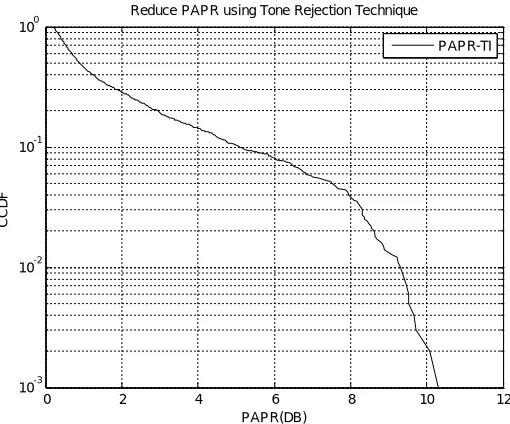
Figure 2: graph shows the result of PAPR after the application of tone injection technique
4 6 8 10 12 14 16
10-3 10-2 10-1 100
PAPR(DB)
C
C
D
F
PAPR of Normal OFDM System Algorithm
OFDM-PAPR
0 2 4 6 8 10 12
10-3
10-2
10-1
100
PAPR(DB)
C
C
D
F
Reduce PAPR using Tone Rejection Technique
Figure 3 : shows application of Clipping and filterating technique for PAPR reduction
Figure 5: shows clipping and filtering along with tone injection technique to reduce PAPR in the signal.
2 3 4 5 6 7 8 9 10 11
10-3 10-2 10-1 100
PAPR(DB)
C
C
D
F
Reduce PAPR using Tone Rejection an Clipping Technique
PAPR-CP
0 2 4 6 8 10 12 14 16
10-3 10-2 10-1 100
PAPR(DB)
C
C
D
F
PAPR Reduction Using Hybird technique
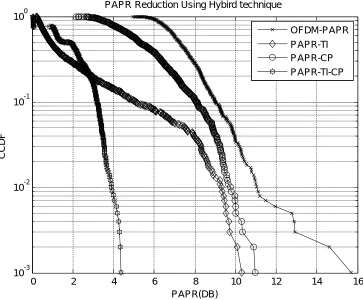
Fig 5: shows the comparison of proposed technique with other technique and results shows that proposed technique performs better.
STEP 1
First step is generation of original signal with the PAPR using MATLAB on which further techniques will be applied and presents effects of different techniques. This signal is taken as a referred signal on which modulations has been performed.
STEP 2
After generation of a signal, next step will be application of techniques one by one. In this step tone rejection technique is applied on the modulated signal which helps to reduce the PAPR ratio. Below a figure shown defines a graph of PAPR after reduction by using tone injection technique.
STEP 3
Previously TR technique is applied on the resultant signal now in this step clipping performs on the signal acquired from the above technique. Thus this method has been applied on the signal and resultant signal is free from PAPR not completely but partially. Clipping is the simplest technique that can be used in PAPR reduction. After application of clipping on the signal, below figure has been generated that shows graph of reduced PAPR.
STEP 4
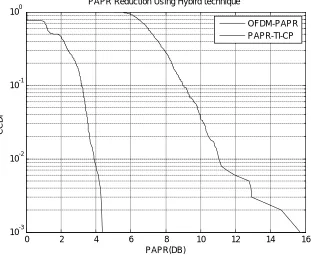
In this step last technique will be applied on the signal known as filtering. As clipping only is not strong enough for reduction of PAPR thus filtering has been applied on the clipping resultant signal for clearly removal of PAPR. Thus after performing clipping; filtering has been applied to the signal shown below. Graph presented shows hybrid technique combined with Tone injjection, clipping and filtering and resultant signal produced less PAPR as compared to original signal in OFDM.
0 2 4 6 8 10 12 14 16
10-3 10-2 10-1 100
PAPR(DB)
C
C
D
F
PAPR Reduction Using Hybird technique
STEP 5
To finish this section, comparison has been done in given step. OFDM PAPR, Clipping filtering and tone injection PAPR and combination of these techniques PAPR has been obtained to perform comparative analysis on the given techniques. Below graph shows that after application of proposed technique PAPR is reduced admirably. Rather than applying individual technique jointly (hybrid technique) they can perform better as resultant graph shows the concept.
V. CONCLUSION AND FUTURE WORK
Due to the number of subcarriers on the multi carrier system, OFDM lead to high peak-to- average power ratio. To reduce this ratio, numbers of techniques are proposed in this paper. It is observed that after implementing the proposed technique, it is far better than existing techniques as these provides reduction in OFDM system but performance degrades despite the fact that proposed techniques reduce PAPR although performance of the system is increased. In the proposed technique, PAPR is decreased but BER is increasing. Therefore, in future, proposed techniques can improve and modified to obtain low PAPR as well as low BER.
REFERENCES
[1] Shilpa Bavi et al, “PAPR Reduction in OFDM System Using Clipping and Filtering Method”, IJARCSSE, Vol. 5, No. 2, Pp. 690-694, February 2015. [2] Kavita Mhatrea,” Efficient Selective Mapping PAPR Reduction Technique ”, International Conference on Advanced Computing Technologies and
Applications ,2015, Pp 620 – 627
[3] Suverna Sengar, , “Performance improvement in OFDM system by PAPR reduction” Signal & Image Processing : An International Journal (SIPIJ) Vol.3, No.2, April 2012,Pp 157-169
[4] Md. Ibrahim Abdullah, “Comparative Study of PAPR Reduction Techniques in OFDM” Journal of Systems and Software, VOL. 1, NO. 8, November 2011,Pp 263-269
[5] Zhongpeng Wang, “Reduction PAPR of OFDM Signals by Combining SLM with DCT Transform” Int. J. Communications, Network and System Sciences, 2010, Vol 3, Pp 888-892
[6] Reshma Elizabeth. Regi, Haris P.A, “Performance of PAPR Reduction in OFDM System with Complex Hadamard Sequence using SLM and Clipping , International Journal of Engineering and Advanced Technology (IJEAT), Volume-3, Issue-4, April 2014, Pp 381-384
[7] Kuang Xu, “Beam forming MISO-OFDM PAPR Reduction”
[8] V.B.MALODE, B.P.PATIL, “Performance of Linear Block Coded OFDM system”, International Journal of Applied Information Systems, IJAIS Journal, Vol 3, issues-4,2012
[9] Suverna Sengar, Partha Pratim Bhattacharya, April 2012, “PERFORMANCE IMPROVEMENT IN OFDM SYSTEM BY PAPR REDUCTION” , SIPIJ Vol.3, No. 2, Pp. 157-169.
[10] Md. Ibrahim Abdullah, Md. Zulfiker Mahmud, Md. Shamim Hossain, Md. Nurul Islam, November 2011, “Comparative Study of PAPR Reduction Techniques in OFDM”, ARPN journal of Systems and software Vol. 1, No. 8, Pp. 263-269.
[11] Zhongpeng Wang, 2010, “Reduction PAPR of OFDM Signals by Combining SLM with DCT Transform”, IJCNS Vol. 3, No. 11, Pp. 888-892. [12] K Srinivasarao, Dr B Prabhakararao, and Dr M V S Sairam, May 2012, “Peak-to-average power reduction in mimo ofdm systems using sub-optimal
algorithm”, IJDPS Vol.3, No. 3, Pp.261-273.
[13] Maan Singh, Vijay Kumar, Jan 2013, “Signal Scrambling Techniques for PAPR Reduction in OFDM Systems” IJECS Vol. 2, No. 1, Pp. 311-317. [14] Seung Hee Han, SEPTEMBER 2004, “Modified Selected Mapping Technique for PAPR Reduction of Coded OFDM Signal” , IEEE Transactions On
Broadcasting Vol. 50, No. 3, Pp.335-341.
[15] Peyali Choudhury, Achala Deshmukh, Feb. 2013, “Comparison and analysis of PAPR reduction techniques in OFDM”, IOSR- JECE Vol. 4, No. 5, Pp. 01-06.
[16] Leman Dewangan, Mangal Singh, Neelam Dewangan, November 2012, “A Survey of PAPR Reduction Techniques in LTE-OFDM System”, IJRTE Vol. 1, No. 5, Pp. 10-13
[17] R. Divya Kanti and R.V. Ch. Sekhar Rao, “Systematic Comparison of Different PAPR Reduction Methods in OFDM Systems” , IJECE Vol. 7, No. 1, Pp. 21-30.
[18] Mr.Jobin Raj, Mr.M.Malleswaran, June-2012, “DCT Based Modified SLM Technique for PAPR Reduction in OFDM Transmission”, IJSER Vol. 3, No. 6, Pp. 1-6.
[19] Pawan Sharma, Seema Verma, November 2010, “Performance Analysis of Peak-to-Average Power Ratio Reduction Techniques for Wireless Communication Using OFDM Signals”, IJCSI Vol. 7, No. 6, Pp.261-268.
[20] Reshma Elizabeth Regi, Haris P.A, April 2014, “Performance of PAPR Reduction in OFDM System with Complex Hadamard Sequence using SLM and Clipping”, IJEAT Vol. 3, No. 4, Pp.381-384.
[21] Kuang Xu, Timothy A. Thomas, Douglas L. Jones, “ Beam forming MISO-OFDM PAPR Reduction: A Space-User Perspective”. [22] Guangyue Lu, Ping Wu and Catharina Carlemalm-Logothetis, “PAPR reduction for real baseband OFDM signals”.
[23] V.B.MALODE, B.P.PATIL, July 2012, “Performance of Linear Block Coded OFDM system in BER and PAPR under different channels”, IJAIS Vol. 3, No. 4, Pp.6-12.
[24] Komal Gupta, Monika Kushwaha, Abhay Pratap Sharma & Arvind Singh Panwar, “PAPR Reduction of OFDM Using a New Phase Sequence in SLM Technique”, IJAEEE Vol. 2, No. 2, Pp.125-129.
[25] Tao Jiang, and Yiyan Wu, JUNE 2008, “An Overview: Peak-to-Average Power Ratio Reduction Techniques for OFDM Signals”, IEEE Transactions On Broadcasting Vol. 54, No. 2, Pp.257-268.