Large Scale Production of Syntactic Annotations to Move Forward
Patrick Paroubek, Anne Vilnat, Sylvain LoiseauLIMSI-CNRS BP 133 91403 Orsay Cedex
France
Gil Francopoulo Tagmatica
126 rue de Picpus 75012 Paris France
Olivier Hamon ELDA and LIPN-P13
55-57 rue Brillat-Savarin 75013 Paris, France
Eric Villemonte de la Clergerie Alpage-INRIA
Dom. de Voluceau Rocquencourt, B.P. 105, 78153 Le Chesnay, France
Eric.De La [email protected]
Abstract
This article presents the methodology of the PASSAGE project, aiming at syntacti-cally annotating large corpora by compos-ing annotations. It introduces the anno-tation format and the syntactic annoanno-tation specifications. It describes an important component of the methodolgy, namely an WEB-based evaluation service, deployed in the context of the first PASSAGE parser evaluation campaign.
1 Introduction
The last decade has seen, at the international level, the emergence of a very strong trend of researches on statistical methods in Natural Language Pro-cessing. In our opinion, one of its origins, in particular for English, is the availability of large annotated corpora, such as the Penn Treebank (1M words extracted from the Wall Street journal, with syntactic annotations; 2nd release in 19951, the British National Corpus (100M words cover-ing various styles annotated with parts of speech2), or the Brown Corpus (1M words with morpho-syntactic annotations). Such annotated corpora were very valuable to extract stochastic grammars or to parametrize disambiguation algorithms. For instance (Miyao et al., 2004) report an experiment where an HPSG grammar is semi-automatically aquired from the Penn Treebank, by first annotat-ing the treebank with partially specified derivation
c
2008. Licensed under the Creative Commons Attribution-Noncommercial-Share Alike 3.0 Unported li-cense (http://creativecommons.org/licenses/by-nc-sa/3.0/). Some rights reserved.
1http://www.cis.upenn.edu/∼treebank/
2http://www.natcorp.ox.ac.uk/
trees using heuristic rules , then by extracting lex-ical entries with the application of inverse gram-mar rules. (Cahill et al., 2004) managed to ex-tract LFG subcategorisation frames and paths link-ing long distance dependencies reentrancies from f-structures generated automatically for the Penn-II treebank trees and used them in an long distance dependency resolution algorithm to parse new text. They achieved around 80% f-score for fstructures parsing on the WSJ part of the Penn-II treebank, a score comparable to the ones of the state-of-the-art hand-crafted grammars. With similar re-sults, (Hockenmaier and Steedman, 2007) trans-lated the Penn Treebank into a corpus of Combina-tory Categorial Grammar (CCG) derivations aug-mented with local and long-range word to word dependencies and used it to train wide-coverage statistical parsers. The development of the Penn Treebank have led to many similar proposals of corpus annotations3. However, the development of such treebanks is very costly from an human point of view and represents a long standing effort, in particular for getting of rid of the annotation errors or inconsistencies, unavoidable for any kind of hu-man annotation. Despite the growing number of annotated corpora, the volume of data that can be manually annotated remains limited thus restrict-ing the experiments that can be tried on automatic grammar acquisition. Furthermore, designing an annotated corpus involves choices that may block future experiments from acquiring new kinds of linguistic knowledge because they necessitate an-notation incompatible or difficult to produce from the existing ones.
With PASSAGE (de la Clergerie et al., 2008b), we believe that a new option becomes possible.
3http://www.ims.uni-stuttgart.de/ projekte/TIGER/related/links.shtml
Funded by the French ANR program on Data Warehouses and Knowledge, PASSAGE is a 3-year project (2007–2009), coordinated by INRIA project-team Alpage. It builds up on the re-sults of the EASy French parsing evaluation cam-paign, funded by the French Technolangue pro-gram, which has shown that French parsing sys-tems are now available, ranging from shallow to deep parsing. Some of these systems were nei-ther based on statistics, nor extracted from a tree-bank. While needing to be improved in robustness, coverage, and accuracy, these systems has nev-ertheless proved the feasibility to parse medium amount of data (1M words). Preliminary experi-ments made by some of the participants with deep parsers (Sagot and Boullier, 2006) indicate that processing more than 10 M words is not a prob-lem, especially by relying on clusters of machines. These figures can even be increased for shallow parsers. In other words, there now exists sev-eral French parsing systems that could parse (and re-parse if needed) large corpora between 10 to 100 M words.
Passage aims at pursuing and extending the line of research initiated by the EASy campaign by using jointly 10 of the parsing systems that have participated to EASy. They will be used to parse and re-parse a French corpus of more than 100 M words along the following feedback loop between parsing and resource creation as follows (de la Clergerie et al., 2008a):
1. Parsing creates syntactic annotations;
2. Syntactic annotations create or enrich linguis-tic resources such as lexicons, grammars or annotated corpora;
3. Linguistic resources created or enriched on the basis of the syntactic annotations are then integrated into the existing parsers;
4. The enriched parsers are used to create richer (e.g., syntactico-semantic) annotations;
5. etc. going back to step 1
In order to improve the set of parameters of the parse combination algorithm (inspired from the Recognizer Output Voting Error Reduction, i.e. ROVER, experiments), two parsing evalu-ation campaigns are planned during PASSAGE, the first of these already took place at the end of
2007 (de la Clergerie et al., 2008b). In the follow-ing, we present the annotation format specification and the syntactic annotation specifications of PAS-SAGE, then give an account of how the syntactic annotations were compared in the first evaluation campaign, by first describing the evaluation met-rics and the web server infrastructure that was de-ployed to process them. We conclude by showing how the results so far achieved in PASSAGE will contribute to the second part of the project, extract-ing and refinextract-ing enriched lextract-inguistic annotations.
2 PASSAGE Annotation Format
The aim is to allow an explicit representation of syntactic annotations for French, whether such an-notations come from human annotators or parsers. The representation format is intended to be used both in the evaluation of different parsers, so the parses’ representations should be easily compara-ble, and in the construction of a large scale anno-tation treebank which requires that all French con-structions can be represented with enough details.
The format is based on three distinct specifica-tions and requirements:
1. MAF (ISO 24611)4and SynAF (ISO 24615)5 which are the ISO TC37 specifications for morpho-syntactic and syntactic annotation (Ide and Romary, 2002) (Declerck, 2006) (Francopoulo, 2008). Let us note that these specifications cannot be called ”standards” because they are work in progress and these documents do not yet have the status Pub-lished Standard. Currently, their official sta-tus is only Committee Draft.
2. The format used during the previous TECH-NOLANGUE/EASY evaluation campaign in order to minimize porting effort for the ex-isting tools and corpora.
3. The degree of legibility of the XML tagging.
From a technical point of view, the format is a compromise between “standoff” and “embedded” notation. The fine grain level of tokens and words is standoff (wrt the primary document) but higher levels use embedded annotations. A standoff nota-tion is usually considered more powerful but less
4http://lirics.loria.fr/doc pub/maf.pdf 5http://lirics.loria.fr/doc pub/
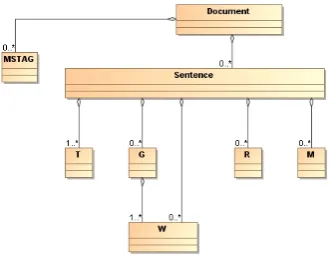
Figure 1: UML diagram of the structure of an an-notated document
readable and not needed when the annotations fol-low a (unambiguous) tree-like structure. Let us add that, at all levels, great care has been taken to ensure that the format is mappable onto MAF and SynAF, which are basically standoff notations.
The structure of a PASSAGE annotated docu-ment may be summarized with the UML diagram in Figure1. The document begins by the declara-tion of all the morpho-syntactic tagsets (MSTAG) that will be used within the document. These dec-larations respect the ISO Standard Feature Struc-ture Representation (ISO 24610-1). Then, tokens are declared. They are the smallest unit address-able by other annotations. A token is unsplittaddress-able and holds an identifier, a character range, and a content made of the original character string. A word form is an element referencing one or sev-eral tokens. It has has two mandatory attributes: an identifier and a list of tokens. Some optional at-tributes are allowed like a part of speech, a lemma, an inflected form (possibly after spelling correc-tion or case normalizacorrec-tion) and morpho-syntactic tags. The following XML fragment shows how the original fragment”Les chaises”can be repre-sented with all the optional attributes offered by the PASSAGE annotation format :
<T id="t0" start="0" end="3"> Les
</T>
<W id="w0" tokens="t0" pos="definiteArticle" lemma="le"
form="les" mstag="nP"/>
<T id="t1" start="4" end="11"> chaises
</T>
<W id="w1" tokens="t1" pos="commonNoun" lemma="chaise" form="chaises" mstag="nP gF"/>
Note that all parts of speech are taken from the ISO registry 6 (Francopoulo et al., 2008). As in MAF, a word may refer to several tokens in or-der to represent multi-word units like”pomme de terre”. Conversely, a unique token may be refered by two different words in order to represent results of split based spelling correction like when ”un-etable”is smartly separated into the words”une”
and”table”. The same configuration is required to represent correctly agglutination in fused preposi-tions like the token”au”that may be rewritten into the sequence of two words”`a” ”le”. On the con-trary of MAF, cross-reference in token-word links for discontiguous spans is not allowed for the sake of simplicity. Let us add that one of our require-ment is to have PASSAGE annotations mappable onto the MAF model and not to map all MAF an-notations onto PASSAGE model. AGelement de-notes a syntactic group or a constituent (see details in section 3). It may be recursive or non-recursive and has an identifier, a type, and a content made of word forms or groups, if recursive. All group type values are taken from the ISO registry. Here is an example :
<T id="t0" start="0" end="3"> Les
</T>
<T id="t1" start="4" end="11"> chaises
</T>
<G id="g0" type="GN">
<W id="w0" tokens="t0"/> <W id="w1" tokens="t1"/> </G>
A group may also hold optional attributes like syn-tactic tagsets of MSTAG type. The synsyn-tactic re-lations are represented with a standoff annotations which refer to groups and word forms. A relation is defined by an identifier, a type, a source, and a target (see details in section 3. All relation types, like ”subject” or ”direct object” are mappable onto the ISO registry. An unrestricted number of com-ments may be added to any element by means of the mark element (i.e. M). Finally, a “Sentence”
element gathers tokens, word forms, groups, rela-tions and marks and all sentences are included in-side a “Document” element.
3 PASSAGE Syntactic Annotation Specification
3.1 Introduction
The annotation formalism used in PASSAGE7 is based on the EASY one(Vilnat et al., 2004) which whose first version was crafted in an experimental project PEAS (Gendner et al., 2003), with inspira-tion taken from the proposiinspira-tions of (Carroll et al., 2002). The definition has been completed with the input of all the actors involved in the EASY evalu-ation campaign (both parsers’ developers and cor-pus providers) and refined with the input of PAS-SAGE participants. This formalism aims at mak-ing possible the comparison of all kinds of syn-tactic annotation (shallow or deep parsing, com-plete or partial analysis), without giving any ad-vantage to any particular approach. It has six kinds of syntactic “chunks”, we call constituents and 14 kinds of relations The annotation formal-ism allows the annotation of minimal, continuous and non recursive constituents, as well as the en-coding of relations wich represent syntactic func-tions. These relations (all of them being binary, ex-cept for the ternary coordination) have sources and targets which may be either forms or constituents (grouping several forms). Note that the PASSAGE annotation formalism does not postulate any ex-plicit lexicalhead.
3.2 Constituent annotations
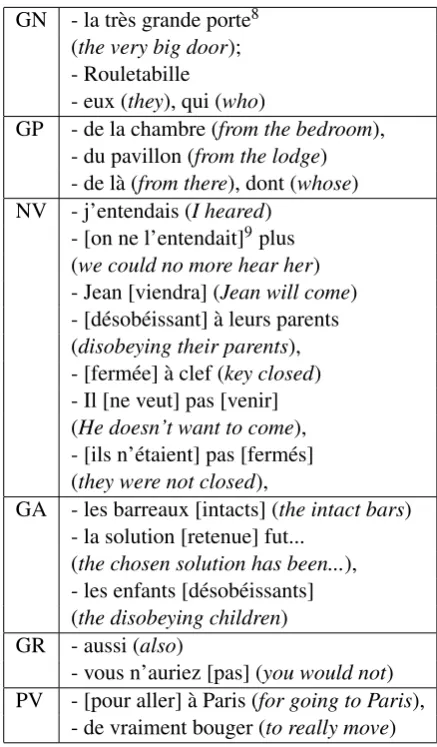
For the PASSAGE campaigns, 6 kinds of con-stituents (syntactic “chunks”) have been consid-ered and are illustrated in Table 3.2:
• the Noun Phrase (GN for Groupe Nominal) may be made of a noun preceded by a de-terminer and/or by an adjective with its own modifiers, a proper noun or a pronoun; • the prepositional phrase (GP, for groupe
pr´epositionnel) may be made of a preposi-tion and the GN it introduces, a contracted determiner and preposition, followed by the introduced GN, a preposition followed by an adverb or a relative pronoun replacing a GP;
7Annotation guide: http://www.limsi.fr/ Recherche/CORVAL/PASSAGE/eval 1/2007 10 05PEAS reference annotations v11.12.html
• the verb kernel (NV for noyau verbal ) in-cludes a verb, the clitic pronouns and possible particles attached to it. Verb kernels may have different forms: conjugated tense, present or past participle, or infinitive. When the con-jugation produces compound forms, distinct NVs are identified;
• the adjective phrase (GA for groupe adjec-tival) contains an adjective when it is not placed before the noun, or past or present par-ticiples when they are used as adjectives;
• the adverb phrase (GRforgroupe adverbial) contains an adverb;
• the verb phrase introduced by a preposition (PV) is a verb kernel with a verb not inflected (infinitive, present participle,...), introduced by a preposition. Some modifiers or adverbs may also be included in PVs.
GN - la tr`es grande porte8 (the very big door); - Rouletabille
- eux (they), qui (who)
GP - de la chambre (from the bedroom), - du pavillon (from the lodge) - de l`a (from there), dont (whose) NV - j’entendais (I heared)
- [on ne l’entendait]9plus (we could no more hear her) - Jean [viendra] (Jean will come) - [d´esob´eissant] `a leurs parents (disobeying their parents), - [ferm´ee] `a clef (key closed) - Il [ne veut] pas [venir] (He doesn’t want to come), - [ils n’´etaient] pas [ferm´es] (they were not closed),
GA - les barreaux [intacts] (the intact bars) - la solution [retenue] fut...
(the chosen solution has been...), - les enfants [d´esob´eissants] (the disobeying children) GR - aussi (also)
- vous n’auriez [pas] (you would not) PV - [pour aller] `a Paris (for going to Paris),
[image:4.595.304.523.367.741.2]- de vraiment bouger (to really move)
3.2.1 Syntactic Relation annotations
The dependencies establish all the links between the minimal constituents described above. All par-ticipants, corpus providers and campaign organiz-ers agreed on a list of 14 kinds of dependencies listed below:
1. subject-verb (SUJ V): may be inside the same NV as between elle and ´etait in elle ´etait(she was), or between a GN and a NV as betweenmademoiselleandappelaitin Made-moiselle appelait(Miss was calling);
2. auxiliary-verb (AUX V), between two NVs as betweenaandconstruitin: on a construit une maison(we have built a house);
3. direct object-verb (COD V): the relation is annotated between a main verb (NV) and a noun phrase (GN), as betweenconstruit and
la premi`ere automobilein: on a construit la premi`ere automobile (we have built the first car);
4. complement-verb (CPL V): to link to the verb the complements expressed as GP or PV which may be adjuncts or indirect objects, as betweenen quelle ann´eeandconstruit inen quelle ann´ee a-t on construit la premi`ere au-tomobile(In which year did we build the first car);
5. modifier-verb (MOD V): concerns the con-stituants which certainly modify the verb, and are not mandatory, as adverbs or adjunct clauses, as between profond´ement or quand la nuit tombe and dort in Jean dort pro-fond´ement quand la nuit tombe(Jean deeply sleeps when the night falls);
6. complementor (COMP): to link the intro-ducer and the verb kernel of a subordinate clause, as between qu’ and viendra in Je pense qu’il viendra (I think that he will come); it is also used to link a preposition and a noun phrase when they are not contiguous, preventing us to annotate them as GP; 7. attribute-subject/object (ATB SO): between
the attribute and the verb kernel, and precis-ing that the attribute is relative to (a) the sub-ject as betweengrand andest inil est grand
), or (b) the object as between ´etrange and
trouveinil trouve cette explication ´etrange;
8. modifier-noun (MOD N): to link to the noun all the constituents which modify it, as the ad-jective, the genitive, the relative clause... This dependency is annotated betweenuniqueand
fenˆetre in l’unique fenˆetre (the unique win-dow) or betweende la chambreandla porte
inla porte de la chambre(the bedroom door); 9. modifier-adjective (MOD A): to relate to the adjective the constituents which modify it, as betweentr`esetbellein ¡la tr`es belle collec-tion (the very impressive collection) or be-tweende son filsandfi`ere inelle est fi`ere de son fils(she is proud of her son);
10. modifier-adverb (MOD R): the same kind of dependency than MOD A for the adverbs, as betweentr`esandgentiment inelle vient tr`es gentiment(she comes very kindly);
11. modifier-preposition (MOD P): to relate to a preposition what modifies it, as between
peuandavantinelle vient peu avant lui(she comes just before him);
12. coordination (COORD): to relate the coor-dinate and the coorcoor-dinated elements, as be-tween Pierre, Paul and et in Pierre et Paul arrivent(Paul and Pierre are arriving); 13. apposition (APP): to link the elements which
are placed side by side, when they refer to the same object, as between le d´eput´e andYves TavernierinLe d´eput´e Yves Tavernier ...(the Deputy Yves Tavernier...);
14. juxtaposition (JUXT): to link constituents which are neither coordinate nor in an appo-sition relation, as in enumeration. It also links clauses as on ne l’entendait et elle ´etait in
on ne l’ entendait plus ... elle ´etait peut-ˆetre morte(we did not hear her any more... per-haps she was dead).
Some dependencies are illustrated in the two an-notated sentences illutrated in figure . These anno-tations have been made using EasyRef, a specific Web annotation tool developed by INRIA.
4 PASSAGE First Evaluation Campaign
4.1 Evalution Service
Figure 2: Example of two sentences annotations
parsers. This development corpus from the TECH-NOLANGUE/EASY is composed of 40,000 sen-tences, out of which 4,000 sentences have been manually annotated for the gold standard. Based on these annotated sentences, an automatic WEB-based evaluation server provides fast performance feedback to the parsers’ developers. At the end of this first phase, each participant indicated what he thought was his best parser run and got evalu-ated on a new set of 400 sentences selected from another part of the developement corpus which meanwhile had been manually annotated for the purpose and kept undisclosed.
[image:6.595.74.282.72.204.2]The two phases represent a strong effort for the evaluators. To avoid adding the cost of managing the distribution and installation of the evaluation package at each developer’s site, the solution of the WEB evaluation service was chosen. A few infras-tructures have been already experimented in NLP, like GATE (Cunningham et al., 2002) infrastruc-tures, but to our knowledge none has been used to provide an WEB-based evaluation service as PAS-SAGE did. The server was designed to manage two categories of users: parser developers and or-ganizers. To the developers, it provides, almost in real time, confidential and secure access to the au-tomatic evaluation of their submitted parses. To the organizers, it give access to statistics enabling them to follow the progress made by the develop-ers, and easy management of the test phase. The evaluation server provides, through a simple WEB browser, access to both coarse and fine grain statis-tics to a developer’s performance evaluation, glob-ally for the whole corpus, at the level of a partic-ular syntactic annotation or of a particpartic-ular genre specific subcorpus, and also at the level of a single annotation for a particular word form.
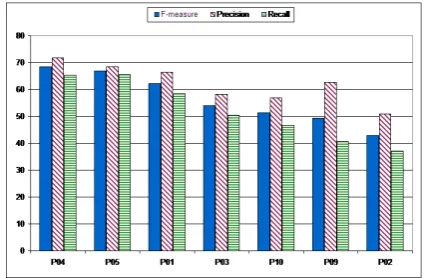
Figure 3: Overall functional relations results
4.2 Performance Results
Ten systems participated to the constituents anno-tation task. For most of the systems, F-measure is up to 90% and only three systems are between 80% and 90%. The trend is quite the same for Recall and Precision. Around 96.5% of the constituents returned by the best system are correct and it found 95.5% of the constituents present in gold standard. Figure 3 shows the results of the seven systems that participated to the functional relations annotation task. Performance is lower than for constituents and differences between systems are larger, an evi-dence that the task remains more difficult. No sys-tems gets a performance above 70% in F-measure, three are above 60% and two above 50%. The last two systems are above 40%.
4.3 Systems Improvements
The higher system gets increasing results from the beginning of the development phase to the test phase for both constituents and relations. How-ever, although the increase for relations is rather continuous, constituents results grow during the first few development evaluations, then reach a threshold from which results do not vary. This can be explained by the fact that the constituent scores are rather high, while for relations, scores are lower and starting from low scores.
5 Parser’s outputs combination
The idea to combine the output of systems partic-ipating to an evalauation campaign in order to ob-tain a combination with better performance than the best one was invented to our knowledge by J. Fiscus (Fiscus, 1997) in a DARPA/NIST speech recognition evaluation (ROVER/Reduced Output Voting Error Reduction). By aligning the out-put of the participating speech transcription sys-tems and by selecting the hypothesis which was proposed by the majority of the systems, he ob-tained better performances than these of the best system. The idea gained support in the speech pro-cessing community(L¨o¨of et al., 2007) and in gen-eral better results are obtained with keeping only the output of the two or three best performing sys-tems, in which case the relative improvement can go up to 20% with respect to the best performance (Schwenk and Gauvain, 2000). For text process-ing, the ROVER procedure was applied to POS tagging (Paroubek, 2000) and machine translation (Matusov et al., 2006).
In our case, we will use the text itself to realign the annotations provided by the various parser be-fore computing their combination, as we did for our first experiments with the EASY evaluation campaign data (Paroubek et al., 2008). Since it is very likely taht the different parsers do not use the same word and sentence segmentation, we will realign all the data along a common word and sen-tence segmentation obtained by majority vote from the different outputs.
But our motivation for using such procedure is not only concerned with performance improve-ment but also with the obtention of a confidence measure for the annotation since if all systems agree on a particular annotation, then it is very likely to be true.
At this stage many options are open for the way we want to apply the ROVER algorithm, since we have both constituents and relations in our anno-tations. We could vary the selection order (be-tween constituents and relations), or use differ-ent comparison functions for the sources/targets of constituents/relations(Patrick Paroubek, 2006), or perform incremental/global merging of the annoa-tions, or explore different weightings/thresholding strategies etc. In passage, ROVER experiments are only beginning and we have yet to determine which is the best strategy before applying it to word and sentence free segmentation data. In the
early experiment we did with the “EASy classic” PASSAGE track which uses a fixed word and sen-tence segmentation, we measured an improvement in precision for some specific subcorpora and an-notations but improvement in recall was harder to get.
6 Conclusion
The definition of a common interchange syntactic annotation format is an essential element of any methodology aiming at the creation of large an-notated corpora from the cooperation of parsing systems to acquire new linguistic knowledge. But the formalism aquires all of its value when backed-up by the deployment of a WEB-based evaluation service as the PASSAGE examples shows. 167 experiments were carried out during the develop-ment phase (around 17 experidevelop-ments per participant in one month). The results of the test phase were available less than one hour after the end of the de-velopment phase. The service proved so success-ful that the participants asked after the evaluation, that the evaluation service be extended to support evaluation as a perennial service
References
Cahill, Aoife, Michael Burke, Ruth O’Donovan, Josef Van Genabith, and Andy Way. 2004. Long-distance dependency resolution in automatically acquired wide-coverage pcfg-based lfg approximations. In
Proceedings of the 42nd Meeting of the Association for Computational Linguistics (ACL’04), Main Vol-ume, pages 319–326, Barcelona, Spain, July. Carroll, J., D. Lin, D. Prescher, and H. Uszkoreit.
2002. Proceedings of the workshop beyond parse-val - toward improved eparse-valuation measures for pars-ing systems. InProceedings of the 3rd International Conference on Language Resources and Evaluation (LREC), Las Palmas, Spain.
Cunningham, Hamish, Diana Maynard, Kalina Bontcheva, and Valentin Tablan. 2002. Gate: an architecture for development of robust hlt ap-plications. In ACL ’02: Proceedings of the 40th Annual Meeting on Association for Computational Linguistics, pages 168–175, Morristown, NJ, USA. Association for Computational Linguistics.
the IEEE Workshop on Automatic Speech Recogni-tion and Understanding, pages 347–357, Santa Bar-bara, CA.
Francopoulo, G., T. Declerck, V. Sornlertlamvanich, E. de la Clergerie, and M. Monachini. 2008. Data category registry: Morpho-syntactic and syntactic profiles. Marrakech. LREC.
Francopoulo, Gil. 2008. Tagparser: Well on the way to iso-tc37 conformance. In In proceedings of the International Conference on Global Interoperability for Language Resources (ICGL), pages 82–88, Hong Kong, January.
Gendner, V´eronique, Gabriel Illouz, Mich`ele Jardino, Laura Monceaux, Patrick Paroubek, Isabelle Robba, and Anne Vilnat. 2003. Peas the first instanciation of a comparative framework for evaluating parsers of french. InProceedings of the 10th Conference of the European Chapter fo the Association for Computa-tional Linguistics, pages 95–98, Budapest, Hungary, April. ACL. Companion Volume.
Hockenmaier, Julia and Mark Steedman. 2007. Ccg-bank: A corpus of ccg derivations and dependency structures extracted from the penn treebank. Com-putational Linguistics, 33(3):355–396.
Ide, N. and L. Romary. 2002. Standards for language ressources. Las Palmas. LREC.
L¨o¨of, J., C. Gollan, S. Hahn, G. Heigold, B. Hoffmeis-ter, C. Plahl, D. Rybach, R. Schl¨uHoffmeis-ter, , and H. Ney. 2007. The rwth 2007 tc-star evaluation system for european english and spanish. InIn proceedings of the Interspeech Conference, pages 2145–2148. Matusov, Evgeny, N. Ueffing, and Herman Ney. 2006.
Automatic sentence segmentation and punctuation prediction for spoken language translation. In Pro-ceedings of the International Workshop on Spo-ken Language Translation (IWSLT), pages 158–165, Trento, Italy.
de la Clergerie, Eric, Christelle Ayache, Ga¨el de Chal-endar, Gil Francopoulo, Claire Gardent, and Patrick Paroubek. 2008a. Large scale production of syntac-tic annotations for french. InIn proceedings of the First Workshop on Automated Syntactic Annotations for Interoperable Language Resources at IGCL’08, pages 45–52, Hong Kong, January.
de la Clergerie, Eric, Olivier Hamon, Djamel Mostefa, Christelle Ayache, Patrick Paroubek, and Anne Vil-nat. 2008b. Passage: from french parser evalua-tion to large sized treebank. In ELRA, editor, In proceedings of the sixth international conference on Language Resources and Evaluation (LREC), Mar-rakech, Morroco, May. ELRA.
Miyao, Yusuke, Takashi Ninomiya, and Jun’ichi Tsu-jii. 2004. Corpus-oriented grammar development for acquiring a head-driven phrase structure gram-mar from the penn treebank. In In Proceedings of the First International Joint Conference on Natural Language Processing (IJCNLP-04).
Paroubek, Patrick, Isabelle Robba, Anne Vilnat, and Christelle Ayache. 2008. Easy, evaluation of parsers of french: what are the results? In Proceedings of the 6th International Conference on Language Re-sources and Evaluation (LREC), Marrakech, Mor-roco.
Paroubek, Patrick. 2000. Language resources as by-product of evaluation: the multitag example. In
In proceedings of the Second International Con-ference on Language Resources and Evaluation (LREC2000), volume 1, pages 151–154.
Patrick Paroubek, Isabelle Robba, Anne Vilnat Chris-telle Ayache. 2006. Data, annotations and mea-sures in easy - the evaluation campaign for parsers of french. In ELRA, editor, In proceedings of the fifth international conference on Language Re-sources and Evaluation (LREC 2006), pages 315– 320, Genoa, Italy, May. ELRA.
Sagot, Benoˆıt and Pierre Boullier. 2006. Efficient parsing of large corpora with a deep lfg parser. In
In proceedings of the sixth international conference on Language Resources and Evaluation (LREC), Genoa, Italy, May. ELDA.
Schwenk, Holger and Jean-Luc Gauvain. 2000. Im-proved rover using language model information. In
In proceedings of the ISCA ITRW Workshop on Au-tomatic Speech Recognition: Challenges for the new Millenium, pages 47–52, Paris, September.