Clinical Interventions in Aging 2017:12 1371–1378
Clinical Interventions in Aging
Dove
press
submit your manuscript | www.dovepress.com 1371
O r I g I n A l r e s e A r C h
open access to scientific and medical research
Open Access Full Text Article
Analysis of the dynamics of venous blood flow
in the context of lower limb temperature
distribution and tissue composition in the elderly
Aleksandra skomudek1,2
Iwona gilowska1,3
Ryszard Jasiński4
Krystyna Rożek-Piechura4
1Department of Physical Education and Physiotherapy, Opole
University of Technology, Opolskie, 2Department of Clinical Physiotherapy, 3Department of Biochemistry and Physiology, 4Department of Physiotherapy and Occupational Therapy in Conservative and Interventional Medicine, University of Physical Education in Wroclaw, Wroclaw, Poland
Objective: The elderly are particularly vulnerable to degenerative diseases, such as circulatory and respiratory system and vascular system diseases. The objective of this study was therefore to evaluate the distribution of temperature and the dynamics of venous blood flow in the lower limbs (LLs) and to assess the interdependence of these parameters in terms of the somatic com-ponents in males and females participating in activities at the University of the Third Age.
Materials and methods: The study included 60 females (mean age 67.4 years) and 40 males (mean age 67.5 years). A body composition assessment was performed using the bioimpedance technique – Tanita BC-418MA. The following parameters were examined: fat%, fat mass, fat-free mass, and total body water. The minimal, maximal, and mean temperature values and their distributions were examined using infrared thermographic camera VarioCAM Head. Measure-ments of the venous refilling time and the work of the LL venous pump were examined using a Rheo Dopplex II PPG.
Results: In males, the mean value of the right LL temperature was 30.58 and the mean value of the left LL was 30.28; the P-value was 0.805769. In females, the mean value of the right LL temperature was 29.58 and the mean value of the left limb was 29.52; the P-value was 0.864773. In males, the right limb blood flow was 34.17 and the left limb blood flow was 34.67; the P-value was 0.359137. In females, the right limb blood flow was 26.89 and the left limb blood flow was 26.09; the P-value was 0.796348.
Conclusion: Research results showed that the temperature distribution and the dynamics of blood flow are not significantly different between the right and left extremities in both males and females. However, significant temperature differences were found between the gender groups. Significantly higher temperature values in both the right and left extremities were recorded in males than in females.
Keywords: thermovision, lower limb, blood circulation
Introduction
The elderly are particularly vulnerable to degenerative diseases, such as circulatory and respiratory system and vascular system diseases. Many researchers have drawn attention to the problem concerning the venous system, which is manifested in the form of dysfunctions of the work of venous valves.1–4 Based on the studies, the risk
factors for cardiovascular diseases include heredity, age, female gender, obesity, pregnancy, and height.5–9
Bagvathiappan et al (2009) confirmed the potential of using thermal imaging for medical diagnosis, in cases related to vascular disorders. The temperature in limb regions affected by vascular disorders was lower because of artery occlusion; however, Correspondence: Aleksandra skomudek
Faculty of Physical Education and Physiotherapy, Opole University of Technology, ulica Proszkowska 76, 45-758 Opole, Opolskie, Poland email [email protected]
Journal name: Clinical Interventions in Aging Article Designation: Original Research Year: 2017
Volume: 12
Running head verso: Skomudek et al
Running head recto: Venous blood flow and temperature distribution of lower limbs in the elderly DOI: http://dx.doi.org/10.2147/CIA.S137707
Clinical Interventions in Aging downloaded from https://www.dovepress.com/ by 118.70.13.36 on 20-Aug-2020
For personal use only.
Number of times this article has been viewed
This article was published in the following Dove Press journal: Clinical Interventions in Aging
Dovepress skomudek et al
in some areas, a temperature increase was recorded, which was due to inflammatory changes and vein inflammation.10
The difference in temperature is associated with an impaired blood supply to the examined area of the body, indicating blood flow impairment.10–12 Superficial
tempera-ture changes may provide information on the efficacy of the system, endogenously removing heat generated during exercise, as well as metabolic changes associated with body homeostasis after the exercise. Efficiency of the thermo-regulatory system is an important element reflecting the adaptation capacity for physical activity, exercise tolerance, as well as fitness.13
Many researchers attempted to assess the dynamics of venous blood flow in the extremities. A noninvasive test known as reography can evaluate the quality of venous blood flow in the veins as well as the work of the venous pump (VP). It uses infrared light emission to the dermis, acting by reflecting off the cellular components and returning to the sensor.14–17 The aforementioned studies report the use of
reography in venous diseases, specifically venous reflux. The work of the VP in lower extremities is extremely important in assisting drainage of venous blood from the lower extremi-ties, thus preventing blood retention and reflux. The dysfunc-tion or impaired working of the valves or muscle weakness in the calf can cause chronic venous disorders (CVD).3,18–21
The quest for relationships between the distribution of temperature and the dynamics of venous blood flow in lower extremities and the somatic features of elderly people is therefore of interest. The objective of this study was therefore to evaluate the distribution of temperature and the dynamics of venous blood flow in the lower limbs (LLs) and to assess the interdependence of these parameters in terms of the somatic components in males and females participating in the University of Third Age activities.
The following research questions were presented: 1. Do the distribution of temperature and the dynamics
of blood flow differ between the right and left limbs in gender groups?
2. Is there a correlation between the temperature distribution in the lower legs and the work of the LL VP and venous refilling time (RT)?
3. Do somatic parameters have a relationship with mean temperature of the area and the dynamics of blood flow in patients?
Hypothesis: The distribution of temperature and the dynamics of venous blood flow do not differ between the right and left limbs in male and female groups. The temperature value depends on the work of the VP and the venous RT as well as the somatic parameters.
Materials and methods
study population
The study group consisted of 60 females (mean age 67.4 years) and 40 males (mean age 67.5 years), who were students of the University of Third Age in Opole, Poland. All patients gave informed consent to take part in the research. The most common comorbidities in the examined group were hypertension, osteoarthritis, and osteoporosis. The study was conducted between February and March 2015. The research protocol was approved by the Senate Ethics Committee for Scientific Research of the University of Physical Education in Wroclaw. The following data were collected: age, height, weight, and body mass index (BMI), ie, body mass (kg)/ body height (m2).
The following measurements were assessed: body com-position analysis using the bioimpedance technique, the distribution of temperature, and the dynamics of venous blood flow in lower extremities. Tests were performed before noon by the same person. All subjects were familiarized with test procedures and methods in advance. Information was kept confidential, and participants had the right to withdraw at any stage of the research.
Body composition analysis
The Tanita BC-418MA was used for segmental body composition analysis. This device was equipped with eight electrodes allowing a very accurate calculation of fat and muscle tissue in specific segments of the body (left leg, left arm, right leg, right arm, and torso). The four electrodes were mounted to the platform on which the test person was standing. The next four electrodes were in the holders held by the participant in his hands. The upper limbs were loosely hanging down the trunk.
The following parameters were put to analyses:
• Total body weight% (fat%)
• Total weight of fat mass in kilograms (fat mass)
• Fat-free mass (FFM)
• Total body water (TBW)
Furthermore, the following parameters have been deter-mined for the body segments, ie, the LLs: fat%, fat mass, and FFM.
study of temperature distribution in lls
Thermography tests were carried out in a separate room where constant temperature and humidity were maintained, respectively, at 25°C and 45%. The measuring position was equipped with the following devices:
• Infrared thermographic VarioCAM Head camera with a 320 × 240 pixel resolution,
Clinical Interventions in Aging downloaded from https://www.dovepress.com/ by 118.70.13.36 on 20-Aug-2020
Dovepress Venous blood flow and temperature distribution of lower limbs in the elderly
• Portable computer with IRBIS 3 Professional thermogra-phy software from Intra Tec GmbH (Dresden, Germany)
• Thermometer for measuring the temperature in the room
• Hygrometer to measure the humidity in the room In order to ensure proper working conditions of the thermal imaging camera, we turned it on ~30 minutes before the first measurement. During tests, the camera was positioned at a fixed distance from the subject (150 cm). The measurement of temperature distribution entailed the right and left medial LLs from medial ankle to the knee joint.
The minimum, maximum, and mean temperature values were determined based on the thermal images obtained (Figure 1A and B).
Dynamics of venous blood flow in
lower extremities
A venous photoplethysmography (PPG) of the LLs was also performed as a part of the research. Measurements of the RF and VP of the LL were taken during an examination of venous blood flow of the LLs (reography) using a Rheo Dopplex II PPG device from Huntleigh Diagnostics (Cardiff, UK). Mea-surements of the venous RT and the work of the LL VP were
taken. The irregularities in venous circulation were shown by the RF parameter, which for lower extremities should have a value of .45 seconds, while the value of the VP parameter of a healthy individual should be $40 seconds. Measurements were made three times separately for the right (R RT and R VP) and left (L RT and L VP) LLs (Figure 2A and B). The participant was sitting on a chair, and LLs bent at the knee joint at ~110°, with feet flat on the floor. A photoplethysmographic sensor was attached 10 cm above the medial ankle. The partici-pant made 10 rhythmic dorsiflexions of the foot (blood outflow occurring), followed by 45 seconds of remaining motionless (veins filling up with blood). The apparatus registered the VP and RT parameters from the first dorsiflexion of the foot. In the first place, a curve was obtained showing blood pumped out from the foot area and lower leg and then a slow blood fall, indicating its return to the LL venous system.
The results were analyzed using the Statistica Version 10 package from StatSoft (Krakow, Poland). The normality of distribution of examined parameters was analyzed using a Shapiro–Wilk test. Descriptive statistics were presented as mean and standard deviation. The differences between gender groups were analyzed using Student’s t-test for independent samples. Statistical significance was determined at P,0.05.
Figure 1 Thermal imaging equipment and temperature distribution in the lower limb.
Notes: (A) Measuring station. (B) Obtained thermogram.
Figure 2 Study of venous blood flow of lower limbs.
Note: (A and B) Positioning of the sensor and dorsiflexion of the ankle joint.
Clinical Interventions in Aging downloaded from https://www.dovepress.com/ by 118.70.13.36 on 20-Aug-2020
Dovepress skomudek et al
A Brown–Forsyth test was used for the comparison of results between the right and left limbs. Spearman’s rank correlations were used to demonstrate correlation between parameters.
Results
Participants
It was found that the treatment groups were homogeneous with respect to age and BMI (Table 1).
Body fat analysis based on BMI showed a similar dis-tribution of overweight and obesity in both groups, and the difference is that more women are overweight compared to more obese men (Figure 3).
Thermographic and reographic
parameters in the examined groups
The results of the dynamics of venous blood flow in LLs in the study group revealed that the value of venous RT (seconds) for the right and left limbs in females was higher than in males. In contrast, the values of VP parameters for both the left and right limbs were higher in males (Table 2).
Correlation for males and females for the
thermal imaging study
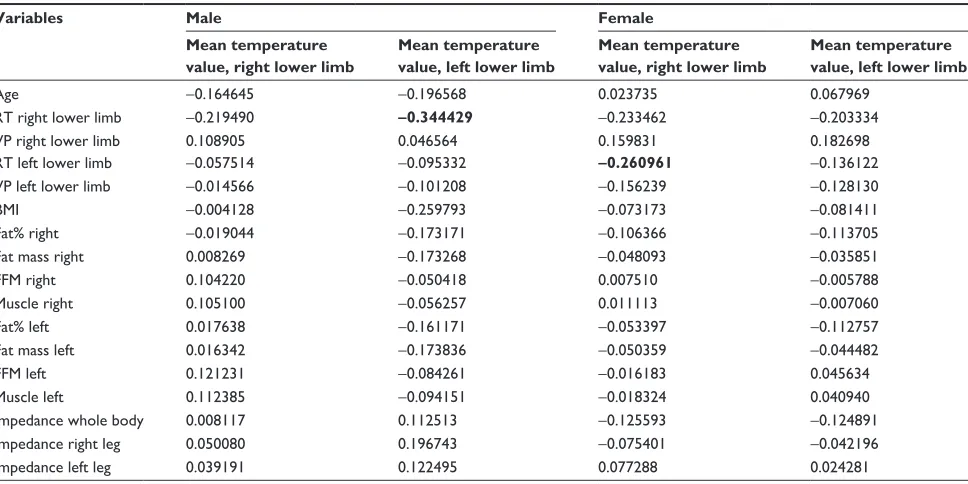
Table 3 shows the Spearman’s rank correlation coefficient (ρ) of the group for the thermal imaging study of extremities with venous blood flow results. The data reveal that in the case of males, the mean temperature value indicated in the left limb correlates significantly with the RT parameter specified for the right limb, whereas in the case of females, the situation is
reversed, ie, the value of mean temperature in the right limb also correlates significantly with the RT parameter.
Correlation for males and female for the
reographic study
Tables 4 and 5 present data illustrating the degree of inter-relationship between the dynamics of venous blood flow in LLs with respect to the groups’ somatic characteristics. In evaluating the RT and VP parameters determining the dynamics of blood flow in LLs, with somatic characteristics, an observation was made in the group of males, showing that the VP parameter of the right LL only correlates significantly with the whole-body impedance parameter and the right LL impedance parameter.
Table 1 Detailed characteristics of the examined groups
Variables Female Male P-value
Mean ± SD Mean ± SD
Age (years) 67.4±5.00 67.53±5.91 0.963966
Body height (cm) 161±5.79 172±4.46 0.000000
Body mass (kg) 71.77±10.78 85.39±12.1 0.000000
BMI (kg/m2) 27.56±3.24 28.9±4.25 0.076755
TBW (%) 33.39±3.12 45.64±4.43 0.000000
Body fat (%) 35.67±5.56 26.38±6.03 0.000000
FFM (%) 45.61±4.26 62.34±6.04 0.000000
Impedance right leg 242.15±28.34 217.35±32.63 0.000103
Impedance left leg 241.16±26.69 223.13±31.48 0.002585
FFM right leg (%) 7.56±0.79 10.32±1.14 0.000000
FFM left leg (%) 7.47±0.76 10.16±1.17 0.000000
Fat right leg (%) 40.62±4.50 23.57±5.74 0.000000
Fat left leg (%) 40.95±3.86 23.81±5.61 0.000000
Notes: Data in bold indicates statistical significance at P,0.05.
Abbreviations: BCM, body cell mass; BMI, body mass index; FFM, fat-free mass; SD, standard deviation; TBW, total body water.
)HPDOH 0DOH
*HQGHU
3HUFHQWDJHYDOXH
1RUPDO 2YHUZHLJKW 2EHVLW\
Figure 3 Characteristics of BMI in males and females.
Abbreviation: BMI, body mass index.
Table 2 Characteristics of thermographic and reographic
para-meters in the examined groups
Variables Male Female P-value
between groups
Mean ± SD Mean ± SD
Temperature right lower limb 30.58±0.86 29.58±1.26 0.000028
Temperature left lower limb 30.28±0.83 29.52±1.18 0.000771 P-value within groups 0.805769 0.864773
rT right lower limb 31.04±13.07 33.68±10.71 0.270773 rT left lower limb 30.04±11.5 31.16±11.59 0.634242
P-value within groups 0.979446 0.149010
VP right lower limb 34.17±11.29 26.89±8.06 0.000170
VP left lower limb 34.67±10.33 26.09±8.41 0.000014 P-value within groups 0.359137 0.796348
Note: Data in bold indicates statistical significance at P,0.05.
Abbreviations: RT, refilling time; SD, standard deviation; VP, venous pump.
Clinical Interventions in Aging downloaded from https://www.dovepress.com/ by 118.70.13.36 on 20-Aug-2020
Dovepress Venous blood flow and temperature distribution of lower limbs in the elderly
In females, the RT parameter of the right LL showed significant correlation with the impedance parameter of the left LL. The work of the VP in the lower right limb signifi-cantly correlated with the total weight of fat mass right LL, FFM right LL, and muscle mass of the right LL. Moreover, the investigated parameter correlated with the total weight of fat mass left LL, FFM left LL, and muscle mass of the left LL. In the case of VP for the left lower extremity, there was a correlation with FFM right LL, muscle mass of the right LL, as well as FFM and muscle mass of the left lower extremity.
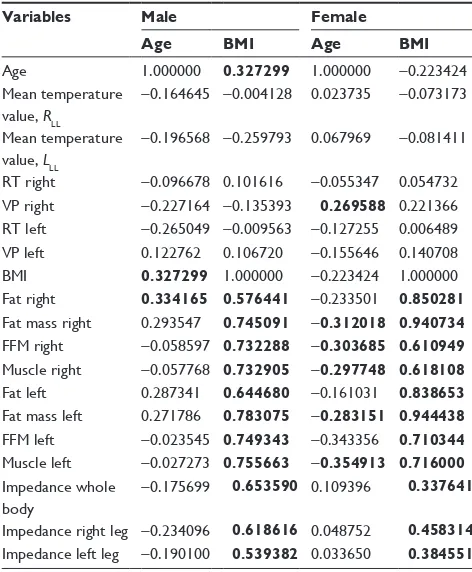
A statistically significant correlation of age with the work of the VP of the LL was only observed in the group of females. The other significant correlations concerned BMI with the majority of body composition parameters in both females and males (Table 6).
When analyzing the results of the male and female groups, it has been observed that the differences in mean of all the variables in the left and right LL groups were not statistically significant. Theoretical implications of the lack of differences in the distribution of temperature and quality of blood flow in lower extremities in elderly males and females are confirmed Table 3 Spearman’s rank correlation coefficient (ρ) for males and females for the thermal imaging study
Variables Male Female
Mean temperature value, right lower limb
Mean temperature value, left lower limb
Mean temperature value, right lower limb
Mean temperature value, left lower limb
Age −0.164645 −0.196568 0.023735 0.067969
rT right lower limb −0.219490 −0.344429 −0.233462 −0.203334
VP right lower limb 0.108905 0.046564 0.159831 0.182698
rT left lower limb −0.057514 −0.095332 −0.260961 −0.136122
VP left lower limb −0.014566 −0.101208 −0.156239 −0.128130
BMI −0.004128 −0.259793 −0.073173 −0.081411
Fat% right −0.019044 −0.173171 −0.106366 −0.113705
Fat mass right 0.008269 −0.173268 −0.048093 −0.035851
FFM right 0.104220 −0.050418 0.007510 −0.005788
Muscle right 0.105100 −0.056257 0.011113 −0.007060
Fat% left 0.017638 −0.161171 −0.053397 −0.112757
Fat mass left 0.016342 −0.173836 −0.050359 −0.044482
FFM left 0.121231 −0.084261 −0.016183 0.045634
Muscle left 0.112385 −0.094151 −0.018324 0.040940
Impedance whole body 0.008117 0.112513 −0.125593 −0.124891
Impedance right leg 0.050080 0.196743 −0.075401 −0.042196
Impedance left leg 0.039191 0.122495 0.077288 0.024281
Note: Data in bold indicates statistical significance at P,0.05.
Abbreviations: BMI, body mass index; FFM, fat-free mass; RT, refilling time; VP, venous pump.
Table 4 Spearman’s rank correlation coefficient (ρ) for males for the reographic study
Variables RT right
lower limb
VP right lower limb
RT left lower limb
VP left lower limb
BMI 0.101616 −0.135393 −0.009563 0.106720
Fat right lower limb 0.048309 0.064307 −0.212722 0.085326
Fat mass right lower limb 0.054901 0.047957 −0.187090 0.155450
FFM right lower limb 0.109999 −0.129851 0.077553 0.047073
Muscle right lower limb 0.112411 −0.132102 0.072270 0.047747
Fat% left lower limb −0.007071 0.061728 −0.189585 0.122780
Fat mass left lower limb 0.045133 0.023167 −0.189173 0.163366
FFM left lower limb 0.165416 −0.054336 0.108260 0.089724
Muscle left lower limb 0.172545 −0.048474 0.103170 0.091491
Impedance whole body 0.039021 0.401136 −0.087598 0.156045
Impedance right leg 0.003799 0.341271 −0.086533 0.115985
Impedance left leg −0.069279 0.305669 −0.129587 0.169488
Note: Data in bold indicates statistical significance at P,0.05.
Abbreviations: BMI, body mass index; FFM, fat-free mass; RT, refilling time; VP, venous pump.
Clinical Interventions in Aging downloaded from https://www.dovepress.com/ by 118.70.13.36 on 20-Aug-2020
Dovepress skomudek et al
by the results comparing the two groups in terms of the body’s individual somatic components (Table 7).
There are no grounds to reject the hypothesis of equal population mean at the significance level (α=0.05).
Discussion
Based on own research results, a significant difference was found in the temperature values of both LLs between females
and males. This difference also concerned the work of the VP. Males displayed significantly higher values in the parameters mentioned earlier.
No relationships between somatic features and tempera-ture distribution were demonstrated in the sample. Studies examining these parameters in standard conditions have not been found, but tests confirming a reduction in the risks of cardiovascular diseases or diseases associated with body composition disorders as a result of physical exercise are available.20,22
A venous PPG is a sensitive, objective test providing information about venous pressure (AVG). Beraldo et al14
described the possibility of using PPG in assessing the vas-cular bed. Similar studies were performed by Jasinski et al2
in females with a diagnosed peripheral arterial disease. The authors observed that, after 8 weeks of physical activities, the quality of venous blood flow in the vessels had improved. According to the subject literature, this test has been fully approved as a noninvasive method in clinical trials in the evaluation of venous vessels of the lower extremities.23
Table 5 Spearman’s rank correlation coefficient (ρ) for females for the reographic study
Variables RT right
lower limb
VP right lower limb
RT left lower limb
VP left lower limb
BMI 0.054732 0.221366 0.006489 0.140708
Fat right lower limb −0.031260 0.207146 0.026062 0.074055
Fat mass right lower limb 0.052343 0.282565 0.058747 0.154510
FFM right lower limb 0.226050 0.286794 0.104604 0.320101
Muscle right lower limb 0.220325 0.267608 0.095331 0.316404
Fat left lower limb −0.052757 0.162654 −0.068407 0.056808
Fat mass left lower limb 0.075379 0.282474 0.042835 0.176770
FFM left lower limb 0.205147 0.332785 0.130106 0.262835
Muscle left lower limb 0.205933 0.343621 0.111236 0.260047
Impedance whole body −0.132584 −0.030655 −0.051625 −0.156857
Impedance right leg −0.117617 0.058017 0.088257 −0.067242
Impedance left leg −0.282516 −0.088446 −0.126351 −0.151201
Note: Data in bold indicates statistical significance at P,0.05.
Abbreviations: BMI, body mass index; FFM, fat-free mass; RT, refilling time; VP, venous pump.
Table 6 Spearman’s rank correlation coefficient (ρ) for males and females
Variables Male Female
Age BMI Age BMI
Age 1.000000 0.327299 1.000000 −0.223424
Mean temperature value, Rll
−0.164645 −0.004128 0.023735 −0.073173
Mean temperature value, Lll
−0.196568 −0.259793 0.067969 −0.081411
rT right −0.096678 0.101616 −0.055347 0.054732 VP right −0.227164 −0.135393 −0.269588 0.221366 rT left −0.265049 −0.009563 −0.127255 0.006489 VP left 0.122762 0.106720 −0.155646 0.140708
BMI 0.327299 1.000000 −0.223424 1.000000
Fat right 0.334165 0.576441 −0.233501 0.850281
Fat mass right 0.293547 0.745091 −0.312018 0.940734
FFM right −0.058597 0.732288 −0.303685 0.610949
Muscle right −0.057768 0.732905 −0.297748 0.618108
Fat left 0.287341 0.644680 −0.161031 0.838653
Fat mass left 0.271786 0.783075 −0.283151 0.944438
FFM left −0.023545 0.749343 −0.343356 0.710344
Muscle left −0.027273 0.755663 −0.354913 0.716000
Impedance whole body
−0.175699 −0.653590 0.109396 −0.337641
Impedance right leg −0.234096 −0.618616 0.048752 −0.458314
Impedance left leg −0.190100 −0.539382 0.033650 −0.384551
Note: Data in bold indicates statistical significance at P,0.05.
Abbreviations: BMI, body mass index; FFM, fat-free mass; LL, lower limb; RT, refilling time; VP, venous pump.
Table 7 AnOVA of the right and left extremities within gender groups
Variables Male Female
F P-value F P-value
Thermovision 2.596911 0.111112 0.065508 0.798431
rT 0.449248 0.504672 2.108351 0.149107
VP 0.887459 0.349076 0.092310 0.761787
Fat 0.033573 0.855094 0.199841 0.655655
Fat mass 0.000088 0.992521 0.007957 0.929072
FFM 0.368853 0.545394 0.483952 0.487983
Muscle 0.314175 0.576736 0.596890 0.441286
Impedance 0.648784 0.422996 0.038925 0.843932
Abbreviations: ANOVA, analysis of variance; FFM, fat-free mass; RT, refilling time; VP, venous pump.
Clinical Interventions in Aging downloaded from https://www.dovepress.com/ by 118.70.13.36 on 20-Aug-2020
Dovepress Venous blood flow and temperature distribution of lower limbs in the elderly
Analyzing the results of our own research in terms of the distribution of temperature, the dynamics of venous blood flow in lower extremities, and the relationship of these parameters with somatic features in males and females of the University of Third Age, it has been observed that the mean temperature values and the RT and VP values of both males and females did not differ significantly. In assessing particular parameters, it was found that their values were comparable with regard to the right and left LLs. The RT parameter measurements in both males and females showed significant discrepancies from the generally accepted popu-lation standards, which is 45 seconds. A reduced value of VP, below the accepted norm of ~40, was also recorded. The reduced RT results in LLs, obtained from the examined group of males and females, may indicate a malfunction of the working of venous valve compared to the norms, and likewise, the decreased values in the VP parameters may indicate a low efficiency of the VP work.
In the existing literature, one can find research on the assessment of venous system in patients undertaking various forms of physical activity. Studies by Jasinski et al (2015) also looked at the aforementioned issues, assessing LL venous blood flow and body composition in females aged .50 years, who performed regular physical activity. After 8 weeks of physical activity, they observed an improved quality of venous blood flow in the vessels.2
Jasinski et al (2014) investigated the impact of Nordic walking on the dynamics of venous blood flow in the lower extremities of females using the same test method. They divided the examined females into two groups (15 respon-dents). The first group was females who practiced Nordic walking, and the second group was females who did not exercise. They found that the dynamics of blood flow in LLs was significantly more favorable in females practic-ing Nordic walkpractic-ing, while the RT parameters did not change in either group.24 The assessment of the dynamics
of venous blood flow in lower extremities in our study showed that the RT of venous vessels was similar in males and females and did not differ statistically. There were significant differences in the VP parameters between male and female groups.
Conclusion
1. The temperature value between the right and left LLs did not differ significantly in males, and it was the same results for females. However, significant temperature differences in both legs were found between the gen-ders. Higher temperature values were recorded in men than in women.
2. There were no relationships established between the dynamics of venous blood flow and the temperature distribution in LLs in both males and females.
3. A positive relationship has been demonstrated between VP and the tissue composition in the lower extremities in females.
Limitations
The limitations of this study may be the absence of accu-rate enough assessment of the clinical condition of partici-pant’s veins, for example, the Doppler ultrasound test. It is worth continuing the study on a wider group of patients to include the Doppler test. Conducted studies may be useful for the functional diagnosis of LLs in patients with established venous system disorders as well as for monitoring progres-sive changes in venous vessels.
Disclosure
The authors report no conflicts of interest in this work.
References
1. Moura RM, Gomes H, Silva SL, Britto RR, Dias RC. Analysis of the physical and functional parameters of older adults with chronic venous disease. Arch Gerontol Geriatr. 2012;55(3):696–701.
2. Jasinski R, Socha M, Sitko L, Kubicka K, Wozniewski M, Sobiech K. Effect of nordic walking and water aerobics training on body composition and the blood flow in lower extremities in elderly women.
J Hum Kinet. 2015;45:113–122.
3. Kugler C, Strunk M, Rudofsky GJ. Venous pressure dynamics of the healthy human leg: role of muscle activity, joint mobility and anthro-pometric factors. J Vasc Res. 2001;38(1):20–29.
4. Beebe-Dimmer JL, Pfeifer JR, Engle JS, Schottenfeld D. The epidemiol-ogy of chronic venous insufficiency and varicose veins. Ann Epidemiol. 2005;15(3):175–184.
5. Callejas JM, Manasanch J; ETIC Group. Epidemiology of chronic venous insufficiency of the lower limbs in the primary care setting.
Int Angiol. 2004;23(2):154–163.
6. Robertson L, Evans C, Fowkes FG. Epidemiology of chronic venous disease. Phlebology. 2008;23(3):103–111.
7. Fowkes FG, Evans CJ, Lee AJ. Prevalence and risk factors of chronic venous insufficiency. Angiology. 2001;52(1):5–15.
8. Musil D, Kaletova M, Herman J. Age, body mass index and severity of primary chronic venous disease. Biomed Pap Med Fac Univ Palacky
Olomouc Czech Repub. 2011;155(4):367–371.
9. Oganov RG, Savel’ev VS, Shal’nova SA, Kirienko AI, Zolotukhin IA. Risk factors of chronic venous insufficiency of the lower extremities and possibilities of its medication in therapeutic practice. Ter Ark. 2006;78:68–72.
10. Bagvathiappan S, Saravanan T, Philip J, et al. Infrared thermal imag-ing for detection of peripheral vascular disorders. J Med Phys. 2009; 34(1):43–47.
11. Szentkuti A, Kavanagh H, Grazio S. Infrared thermography and image analysis for biomedical use. Period Biol. 2011;113(4):385–392. 12. Debiec-Bak A, Skrzek A, Podbielska H. Application of thermovision
for estimation of the optimal and safe parameters of the whole body cryotherapy. J Therm Anal Calorim. 2013;111(3):1853–1859. 13. Chudecka M, Lubkowka A. Temperature changes of selected body’s
surfaces of handball players in the course of training estimated by ther-movision and the study of the impact of physiological and morphologi-cal factors on the skin temperature. J Therm Biol. 2010;35:379–385.
Clinical Interventions in Aging downloaded from https://www.dovepress.com/ by 118.70.13.36 on 20-Aug-2020
Clinical Interventions in Aging
Publish your work in this journal
Submit your manuscript here:http://www.dovepress.com/clinical-interventions-in-aging-journal
Clinical Interventions in Aging is an international, peer-reviewed journal focusing on evidence-based reports on the value or lack thereof of treatments intended to prevent or delay the onset of maladaptive correlates of aging in human beings. This journal is indexed on PubMed Central, MedLine,
CAS, Scopus and the Elsevier Bibliographic databases. The manuscript management system is completely online and includes a very quick and fair peer-review system, which is all easy to use. Visit http://www.dovepress. com/testimonials.php to read real quotes from published authors.
Dovepress
Dove
press
skomudek et al
14. Beraldo S, Satpathy A, Dodds SR. A study of the routine use of venous photoplethysmography in a one-stop vascular surgery clinic. Ann R Coll
Surg Engl. 2007;89(4):379–383.
15. Kelechi TJ, McNeil RB. A pilot study of venous photoplethysmography screening of patients with chronic venous disorders. Appl Nurs Res. 2010;23(3):178–183.
16. Marston WA. PPG, APG, duplex: which noninvasive tests are most appropriate for the management of patients with chronic venous insuf-ficiency? Semin Vasc Surg. 2002;15(1):13–20.
17. Sam RC, Darvall KA, Adam DJ, Silverman SH, Bradbury AW. Digital venous photoplethysmography in the seated position is a reproducible noninvasive measure of lower limb venous function in patients with isolated superficial venous reflux. J Vasc Surg. 2006;43(2):335–341. 18. Dix FP, Brooke R, McCollum CN. Venous disease is associated with
an impaired range of ankle movement. Eur J Vasc Endovasc Surg. 2003; 25(6):556–561.
19. Eberhardt RT, Raffetto JD. Chronic venous insufficiency. Circulation. 2005;111:2398–2409.
20. Padberg FT, Johnston MV, Sisto SA. Structured exercise improves calf muscle pump function in chronic venous insufficiency: a randomized trial. J Vasc Surg. 2004;39(1):79–87.
21. Williams KJ, Ayekoloye O, Moore HM, Davies AH. The calf muscle pump revisited. J Vasc Surg Venous Lymphat Disord. 2014;2(3): 329–334.
22. Lee AJ, Evans CJ, Allan PL, Ruckley CV, Fowkes FG. Lifestyle factors and the risk of varicose veins: Edinburgh Vein Study. J Clin Epidemiol. 2003;56(2):171–179.
23. Kelechi TJ, Bonham PA. Measuring venous insufficiency objectively in the clinical setting. J Vasc Nurs. 2008;26(3):67–73.
24. Jasinski R, Turek J, Rudzińska E, Dabrowska G, Skrzek A. Effects of nordic walking on the lower-limb venous system in Third Age University students. Acta Bio Optica et Informatica Medica. 2014;20(1):39–49.
Clinical Interventions in Aging downloaded from https://www.dovepress.com/ by 118.70.13.36 on 20-Aug-2020