Infection and Drug Resistance
Dove
press
O R I G I N A L R E S E A R C H
open access to scientific and medical research
Open Access Full Text Article
Novel single-nucleotide variations associated
with vancomycin resistance in
vancomycin-intermediate
Staphylococcus aureus
Lee-Chung Lin1 Shih-Cheng Chang1,2 Mao-Cheng Ge1 Tsui-Ping Liu1 Jang-Jih Lu1–3
1Department of Laboratory Medicine,
Chang Gung Memorial Hospital, Linkou, Taoyuan, Taiwan; 2Department
of Medical Biotechnology and Laboratory Science, College of Medicine, Chang Gung University, Taoyuan, Taiwan; 3Department of
Medicine, College of Medicine, Chang Gung University, Taoyuan, Taiwan
Abstract: Prolonged vancomycin usage may cause methicillin-resistant Staphylococcus aureus to become vancomycin-intermediate S. aureus (VISA) and heterogeneous VISA (hVISA). Mechanisms of vancomycin resistance of VISA and hVISA are still unclear. In this study, analyses of nucleotide sequence variations in 30 vancomycin-sensitive S. aureus (VSSA), 41 hVISA and 16 VISA isolates revealed 29 single-nucleotide variations in 12 genes (fmtC, graR, graS, htrA, mecA, pbp2, pbp4, srtA, tcaA, upps, vicK and vraR) that are related to cell wall synthesis or the two-component system. Six of these 29 single-nucleotide variations were novel and resulted in the following amino acid changes: Q692E in FmtC; T278I, P306L and I311T in HtrA; and I63V and K101E in Upps. Since P306L and I311T in HtrA and I63V in Upps were present in the majority (76.7%–86.7%) of VSSA isolates, these three amino acid variations may not be associated with vancomycin resistance. The other three amino acid variations (T278I in HtrA, K101E in Upps and Q692E in FmtC) were present in the majority (87.5%–93.8%) of hVISA and VISA isolates, but only in a small number (22.9%–25.7%) of VSSA isolates, suggesting that they are associated with vancomycin resistance.
Keywords: MRSA, VSSA, hVISA, VISA
Introduction
Methicillin-resistant Staphylococcus aureus (MRSA) is a leading cause of nosoco-mial infection.1 Vancomycin is usually used to treat MRSA infections, but high-level vancomycin-resistant S. aureus (VRSA) has emerged mainly due to the acquisition of the vanA operon from Enterococci.2 There are also VRSA isolates with lower levels of vancomycin resistance, including vancomycin-intermediate S. aureus (VISA) and heterogeneous VISA (hVISA).3 The causes for the different levels of vancomycin resistance in MRSA are not completely clear.4,5
Identification of VISA and hVISA is conventionally done by determination of population analysis profile and area under the curve ratio (PAP/AUC). However, PAP/ AUC is very labor-intensive and not practical for clinical diagnosis. Transcriptome and proteome analyses of MRSA isolates have revealed a link between nucleotide sequence variations of several genes and vancomycin resistance.6,7 These genes include those of the two-component systems, such as vraRS, graRS or walRK,6,8,9 and those involved in cell wall synthesis, such as upps, fmtC and srtA.9–11 Single-nucleotide variations (SNVs) of genes related to antibiotic resistance have also been described.8,9,12,13 These SNVs may allow differentiation between vancomycin-sensitive
S. aureus (VSSA) and VISA. Correspondence: Jang-Jih Lu
Department of Laboratory Medicine, Chang Gung Memorial Hospital, Linkou, No. 5, Fu-Shin Street, Kweishan 333, Taoyuan, Taiwan
Email [email protected]
Journal name: Infection and Drug Resistance Article Designation: ORIGINAL RESEARCH Year: 2018
Volume: 11
Running head verso: Lin et al
Running head recto: SNVs associated with vancomycin resistance in VISA DOI: http://dx.doi.org/10.2147/IDR.S148335
Infection and Drug Resistance downloaded from https://www.dovepress.com/ by 118.70.13.36 on 22-Aug-2020
For personal use only.
Dovepress Lin et al
Previous studies on hVISA and VISA strains have revealed 60 genes that may be associated with vancomycin resistance.4,9,10,14–23 We hypothesized that some nucleotide sequence variations in these genes correlate with the differ-ence in vancomycin susceptibility of VSSA and VISA iso-lates. To test this hypothesis, we investigated the prevalence of SNVs of these 60 genes and found 29 SNVs (in 12 genes) that were more common in hVISA and VISA than in VSSA isolates. Among them, three novel amino acid sequence varia-tions including Q692E in FmtC, T287I in HtrA and K101E in Upps proteins were found to be significantly associated with vancomycin resistance.
Materials and methods
Bacteria strains and growth conditions
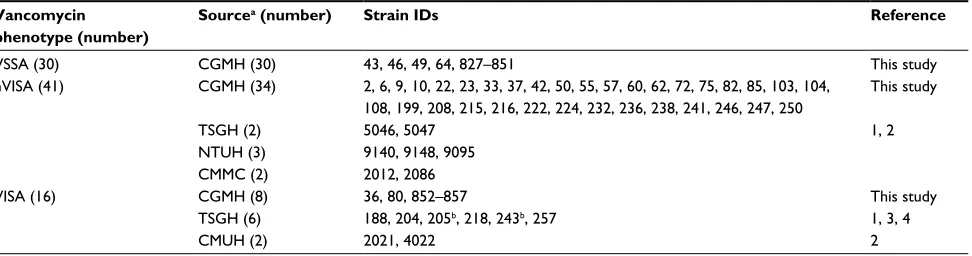
In total, 87 MRSA isolates were used in this study, including 72 from Chang Gung Memorial Hospital, 3 from National Tai-wan University Hospital, 8 from Tri-Service General hospital (TSGH) and 2 each from Chi Mei Medical Center and China Medical University Hospital. These isolates were collected from 2009 to 2014. Detailed information of these isolates is pre-sented in Table 1. All isolates were stored at −80°C and grown on tryptic soy agar plates at 37°C for 16 hours for the studies.Whole-genome sequencing and
polymerase chain reaction (PCR)
The whole genome of two VISA isolates (TSGH205 and TSGH243) was sequenced. Genomic DNA of each iso-late was isoiso-lated and sonicated to generate fragments of 300–500 bp for construction of a DNA library, which was then subjected to Illumina next-generation sequencing. Raw sequence data generated were filtered and assembled for analysis using the CLC Genomics Workbench (QIAGEN, Venlo, the Netherlands). Genes selected for investigation
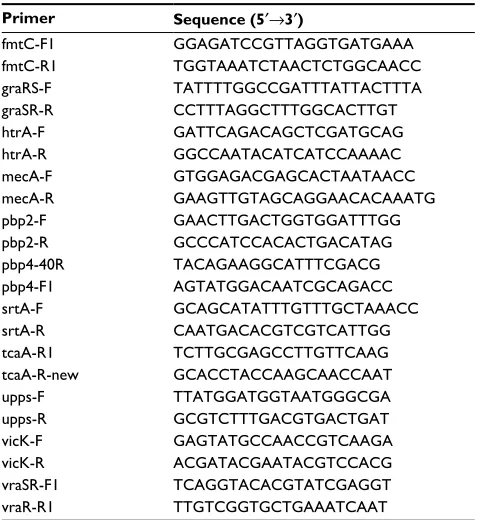
of vancomycin resistance and PCR primers used to amplify these genes are shown in Table 2. PCRs were performed in a buffer containing 10 mM Tris-HCl (pH 8.0), 1.5 mM MgCl2 and 50 mM KCl under the following conditions: 5 minutes at 95°C, followed by 35 cycles of 30 seconds at 95°C for denaturation, 30 seconds at 55°C for primer annealing and 1 minute at 72°C for extension, and 5 minutes at 72°C for final extension. PCR products were verified by sequencing.
Minimum inhibition concentration (MIC)
E-tests
E-test was performed to determine the vancomycin MIC of VSSA, hVISA and VISA isolates. Cells of an overnight culture of each isolate were suspended in 0.9% NaCl solu-tion, adjusted to 0.5 McFarland unit and spread evenly on a Mueller–Hinton agar plate. An E-test strip (bioMérieux, Durham, NC, USA) was placed on the agar plate, which was then incubated at 35°C overnight to determine MIC values.
Population analysis profile/area under the
curve
PAP/AUC was performed to identify hVISA and VISA isolates as previously described.24,25 Briefly, serial dilutions of the overnight culture of an isolate were plated on brain heart infusion agar plates containing different concentrations of vancomycin (0, 0.5, 1, 1.5, 2, 3, 4, 6 and 8 μg/mL). After incubation at 35°C for 48 hours, colony-forming units (CFUs) of the isolate were determined and graphed as log10CFU/ mL value versus vancomycin concentration to calculate the AUC. Reference strains Mu3 and Mu50 were analyzed in an identical manner to serve as hVISA and VISA controls, respectively. To distinguish VSSA, hVISA and VISA, the ratio (PAP/AUC value) of the AUC of an isolate to the AUC of Mu3 was calculated. The following ratios were used for
Table 1 MRSA strains used in this study
Vancomycin phenotype (number)
Sourcea (number) Strain IDs Reference
VSSA (30) CGMH (30) 43, 46, 49, 64, 827–851 This study
hVISA (41) CGMH (34) 2, 6, 9, 10, 22, 23, 33, 37, 42, 50, 55, 57, 60, 62, 72, 75, 82, 85, 103, 104, 108, 199, 208, 215, 216, 222, 224, 232, 236, 238, 241, 246, 247, 250
This study
TSGH (2) 5046, 5047 1, 2
NTUH (3) 9140, 9148, 9095
CMMC (2) 2012, 2086
VISA (16) CGMH (8) 36, 80, 852–857 This study
TSGH (6) 188, 204, 205b, 218, 243b, 257 1, 3, 4
CMUH (2) 2021, 4022 2
Notes:aAll strains were collected from blood cultures at different times. bWhole-genome sequenced strains.
Abbreviations: CGMH, Chang Gung Memorial Hospital; CMMC, Chi Mei Medical Center; CMUH, China Medical University Hospital; hVISA, heterogeneous vancomycin-intermediate Staphylococcus aureus; MRSA, methicillin-resistant Staphylococcus aureus; NTUH, National Taiwan University Hospital; TSGH, Tri-Service General hospital; VISA, vancomycin-intermediate Staphylococcus aureus; VSSA, vancomycin-sensitive Staphylococcus aureus.
Infection and Drug Resistance downloaded from https://www.dovepress.com/ by 118.70.13.36 on 22-Aug-2020
Dovepress SNVs associated with vancomycin resistance in VISA
identification of VSSA, hVISA and VISA populations: VSSA, <0.9; hVISA, 0.9–1.3; VISA, >1.3.
Results
Nucleotide sequence variations in genes
related to vancomycin resistance
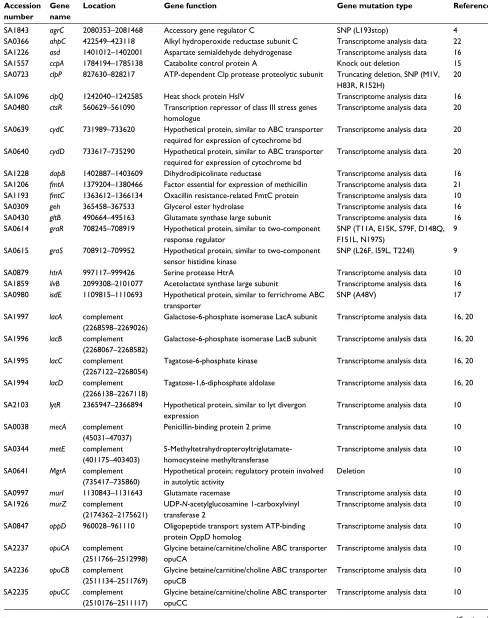
The 87 MRSA isolates used in this study included 30 VSSA, 41 hVISA and 16 VISA isolates (Table 1). To test the hypothesis that some SNVs in the previously identified 60 genes (Table S1) correlate with the difference in vancomycin susceptibility of VSSA and VISA isolates, the nucleotide sequences of these 60 genes in these MRSA isolates were examined. To simplify the bioinformatics work, this exami-nation was performed in a stepwise manner to gradually narrow down the scope of analysis. Genes with SNVs were first identified, followed by determination of the prevalence of the SNVs in the MRSA isolates, identification of novel SNVs and then correlation of these novel SNVs with van-comycin resistance.
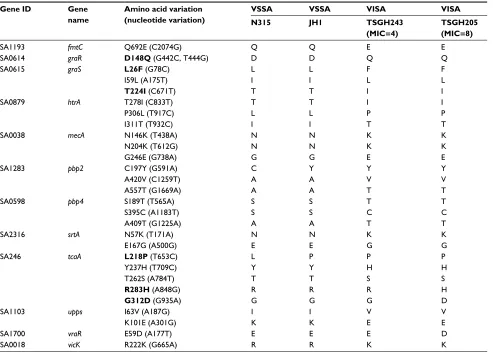
For the first step of analysis, the sequences of the 60 genes in two each of VSSA (N315 and JH1) and VISA (TSGH205 and TSGH243) isolates were aligned and compared. These four strains were selected because their entire genome had been sequenced. The two VSSA strains (N315 and JH1) were found to differ in nucleotide sequences in 13 genes, whereas the two VISA strains (TSGH205 and TSGH243) differed in
nucleotide sequences in 25 genes, indicating that genes in the VISA isolates are more variable. Most of these sequence variations are SNVs. After excluding SNVs that were com-mon in the two VSSA and two VISA strains, 29 SNVs in the following 12 genes were found in both VISA strains (TSGH205 and TSGH243): fmtC, graR, graS, htrA, mecA, pbp2, pbp4, srtA, tcaA, upps, vraR and vicK (Table 3). These genes have been shown to be related to the two-component system (graR, graS, vicK and vraR), cell membrane synthesis (tcaA), cell wall synthesis (mecA, pbp2, pbp4 and srtA) or vancomycin resistance (htrA, fmtC and upps).10,11
Prevalence of the 29 SNVs in VSSA,
hVISA and VISA isolates
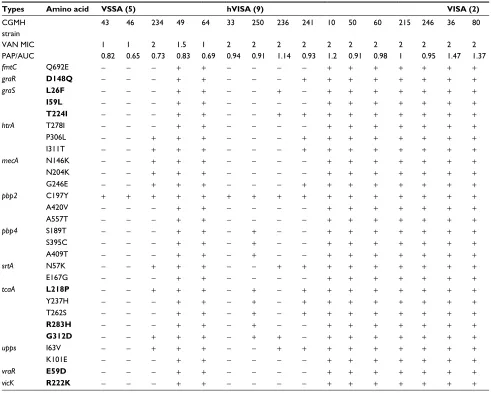
In the second step of analysis, the association of these 29 SNVs with vancomycin resistance was determined. To achieve the goal, the nucleotide sequences of the afore-mentioned 12 genes of 16 additional clinical isolates were compared, including five VSSA, nine hVIS and two VISA strains. Results showed that two VSSA, five hVISA and all VISA isolates had the same 29 SNVs. Six of these SNVs were novel and resulted in the following amino acid changes: Q692E in FmtC; T278I, P306L and I311T in HtrA; and I63V and K101E in Upps (Table 4).
Amino acid sequence variations in
HtrA, FmtC and Upps associated with
vancomycin resistance
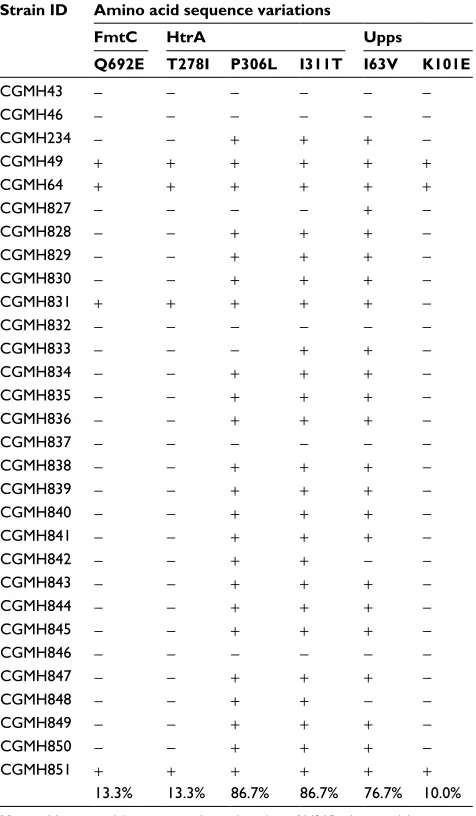
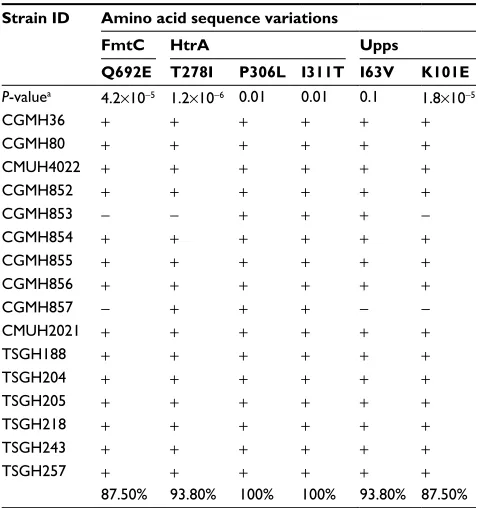
In the third step of analysis, the role of these six novel SNVs in vancomycin resistance was then investigated by detecting their presence in 69 additional MRSA isolates. These iso-lates included 25 VSSA, 32 hVISA and 12 VISA isoiso-lates. Among the six amino acid variations, P306L and I311T in HtrA and I63V in Upps were present in the majority of VSSA isolates (P306L, 86.7%; I311T, 86.7%; I63V, 76.7%), as shown in Table 5, suggesting that these three amino acid variations are not associated with vancomycin resistance. The other three amino acid variations (T278I in HtrA, K101E in Upps and Q692E in FmtC) were found to be present in the majority of hVISA and VISA isolates, but only in a small number of VSSA isolates. The percentages of isolates with these sequence variations were the following: HtrA T278I: 87.8% hVISA, 93.8% VISA and 25.7% VSSA isolates; Upps K101E: 87.8% hVISA, 87.5% VISA and 22.9% VSSA isolates; and FmtC Q692E: 87.8% hVISA, 87.5% VISA and 25.7% VSSA isolates (Tables 5–7).
Table 2 Primers used in this study
Primer Sequence (5′→3′)
fmtC-F1 GGAGATCCGTTAGGTGATGAAA
fmtC-R1 TGGTAAATCTAACTCTGGCAACC
graRS-F TATTTTGGCCGATTTATTACTTTA
graSR-R CCTTTAGGCTTTGGCACTTGT
htrA-F GATTCAGACAGCTCGATGCAG
htrA-R GGCCAATACATCATCCAAAAC
mecA-F GTGGAGACGAGCACTAATAACC
mecA-R GAAGTTGTAGCAGGAACACAAATG
pbp2-F GAACTTGACTGGTGGATTTGG
pbp2-R GCCCATCCACACTGACATAG
pbp4-40R TACAGAAGGCATTTCGACG
pbp4-F1 AGTATGGACAATCGCAGACC
srtA-F GCAGCATATTTGTTTGCTAAACC
srtA-R CAATGACACGTCGTCATTGG
tcaA-R1 TCTTGCGAGCCTTGTTCAAG
tcaA-R-new GCACCTACCAAGCAACCAAT
upps-F TTATGGATGGTAATGGGCGA
upps-R GCGTCTTTGACGTGACTGAT
vicK-F GAGTATGCCAACCGTCAAGA
vicK-R ACGATACGAATACGTCCACG
vraSR-F1 TCAGGTACACGTATCGAGGT
vraR-R1 TTGTCGGTGCTGAAATCAAT
Infection and Drug Resistance downloaded from https://www.dovepress.com/ by 118.70.13.36 on 22-Aug-2020
Dovepress Lin et al
Discussion
Previous studies have revealed 60 genes that may be related to vancomycin resistance,6,9 suggesting that vancomycin resistance is a complex phenomenon and is mediated not by a single gene but by a group of genes. Among these 60 genes, 41 were found to be associated with vancomycin resistance by expression analysis;10,14,16,20–23 8 were found by overexpres-sion, deletion or insertion mutations;10,15,18,19 11 were found by analysis of SNVs.4,9,11,17,20 In this study, we found 29 SNVs in the following 12 genes: fmtC, graR, graS, htrA, mecA,
pbp2, pbp4, srtA, tcaA, upps, vraR and vicK (Table 3). Six of these 29 SNVs in fmtC, htrA and upps are novel. Since we only examined the sequences of these 12 genes in a limited number (87) of MRSA isolates, it is conceivable that other isolates may have other important sequence variations that were not detected in this study.
Of the 12 genes with SNVs, graR, graS, vicK and vraR
are related to the two-component system.9 The others (mecA,
pbp2, pbp4, srtA, tcaA, fmtC, htrA and upps) are more
closely associated with vancomycin resistance. The mecA
gene encodes the penicillin-binding protein 2a (PBP2a), which plays a role in resistance to beta-lactam antibiotics. Previous studies have shown that vancomycin treatment triggers deletions in the mecA gene.26,27 The N146K, N204K and G246E mutations in the MecA protein that we found in this study are located near or in the dimerization domain of PBP2a (KEGG database; http://www.kegg.jp/ssdb-bin/ ssdb_motif?kid=sav:SAV0041) and would cause conforma-tional changes of PBP2a. A recent study showed that these mutations (N146K, N204K and G246E) are highly associated with ceftaroline resistance,28 suggesting that they are also related to vancomycin susceptibility.
The pbp2 and pbp4 genes encode other penicillin-binding proteins (PBPs), which are also major components of the cell wall. The N-terminal domain of these PBPs encodes a glycosyltransferase, which catalyzes glycan chain polym-erization from lipid II. Their C-terminal domain encodes a transpeptidase, which cross-links glycan chains.29 In addition Table 3 Sequence variations in VSSA and VISA strains
Gene ID Gene name
Amino acid variation (nucleotide variation)
VSSA VSSA VISA VISA
N315 JH1 TSGH243 (MIC=4)
TSGH205 (MIC=8)
SA1193 fmtC Q692E (C2074G) Q Q E E
SA0614 graR D148Q (G442C, T444G) D D Q Q
SA0615 graS L26F (G78C) L L F F
I59L (A175T) I I L L
T224I (C671T) T T I I
SA0879 htrA T278I (C833T) T T I I
P306L (T917C) L L P P
I311T (T932C) I I T T
SA0038 mecA N146K (T438A) N N K K
N204K (T612G) N N K K
G246E (G738A) G G E E
SA1283 pbp2 C197Y (G591A) C Y Y Y
A420V (C1259T) A A V V
A557T (G1669A) A A T T
SA0598 pbp4 S189T (T565A) S S T T
S395C (A1183T) S S C C
A409T (G1225A) A A T T
SA2316 srtA N57K (T171A) N N K K
E167G (A500G) E E G G
SA246 tcaA L218P (T653C) L P P P
Y237H (T709C) Y Y H H
T262S (A784T) T T S S
R283H (A848G) R R R H
G312D (G935A) G G G D
SA1103 upps I63V (A187G) I I V V
K101E (A301G) K K E E
SA1700 vraR E59D (A177T) E E E D
SA0018 vicK R222K (G665A) R R K K
Note: Sequences in bold typeface have been reported in previous studies.
Abbreviations: TSGH, Tri-Service General hospital; VISA, vancomycin-intermediate Staphylococcus aureus; VSSA, vancomycin-sensitive S. aureus.
Infection and Drug Resistance downloaded from https://www.dovepress.com/ by 118.70.13.36 on 22-Aug-2020
Dovepress SNVs associated with vancomycin resistance in VISA
to the glycosyltransferase and transpeptidase domains, PBP4
also has a domain encoding a carboxypeptidase, which hydrolyzes the C-terminal d-Ala-D-Ala peptide bond of the
precursor of peptidoglycan.30 Previous studies have shown that vancomycin treatment increases the expression of pbp2, but decreases the expression of pbp4 in S. aureus.31 It has been shown that pbp4 mutations result in a decrease in its carboxypeptidase activity, leading to increased production of D-Ala-D-Ala termini in peptidoglycan and decreased vancomycin-binding affinity.31 The sequence variation S189T in PBP4, we found in this study, is located in its carboxy-peptidase domain (KEGG database; http://www.kegg.jp/ ssdb-bin/ssdb_motif?kid=sav:SAV0642) and conceivably would reduce its activity.
Previous studies on PBP2 have found that mutations in the transpeptidase domain of PBP2 increase the susceptibility of S. aureus to ceftizoxime.32 The C197Y, A420V and A557T mutations in PBP2 found in this study are located in its trans-peptidase and transglycosylase domains (KEGG database; http://www.kegg.jp/ssdb-bin/ssdb_motif?kid=sav:SAV1450). The C197Y mutation has been shown to be associated with the susceptibility of S. aureus to ceftaroline,33 which is effec-tive for treatment of hVISA or VISA infections.34 Although the other two mutations have not been investigated, it is conceivable that they will alter the activity of PBP2.
The srtA gene encodes sortase A, which is involved in the modification of cell surface proteins.35 Transcriptome analy-sis revealed a decreased expression of srtA by vancomycin Table 4 Amino acid sequence variations in 16 MRSA isolates
Types Amino acid VSSA (5) hVISA (9) VISA (2)
CGMH strain
43 46 234 49 64 33 250 236 241 10 50 60 215 246 36 80
VAN MIC 1 1 2 1.5 1 2 2 2 2 2 2 2 2 2 2 2
PAP/AUC 0.82 0.65 0.73 0.83 0.69 0.94 0.91 1.14 0.93 1.2 0.91 0.98 1 0.95 1.47 1.37
fmtC Q692E − − − + + − − − − + + + + + + +
graR D148Q − − − + + − − − + + + + + + + +
graS L26F − − − + + − − + − + + + + + + +
I59L − − − + + − − − − + + + + + + +
T224I − − − + + − − + + + + + + + + +
htrA T278I − − − + + − − − − + + + + + + +
P306L − − + + + − − − + + + + + + + +
I311T − − + + + − − − + + + + + + + +
mecA N146K − − + + + − − − − + + + + + + +
N204K − − + + + − − − − + + + + + + +
G246E − − + + + − − − + + + + + + + +
pbp2 C197Y + + + + + + + + + + + + + + + +
A420V − − − + + − − − − + + + + + + +
A557T − − − + + − − − − + + + + + + +
pbp4 S189T − − − + + − + − − + + + + + + +
S395C − − − + + − + − − + + + + + + +
A409T − − − + + − + − − + + + + + + +
srtA N57K − − + + + − − + + + + + + + + +
E167G − − − + + − − − − + + + + + + +
tcaA L218P − − + + + − + − + + + + + + + +
Y237H − − − + + − + − + + + + + + + +
T262S − − − + + − + − + + + + + + + +
R283H − − − + + − + − − + + + + + + +
G312D − − + + + − + + − + + + + + + +
upps I63V − − + + + − − + + + + + + + + +
K101E − − − + + − − − − + + + + + + +
vraR E59D − − − + + − − − − + + + + + + +
vicK R222K − − − + + − − − − + + + + + + +
Notes: Sequences in bold typeface have been reported in previous studies. Minus sign (−): sequence identical to that of N315; plus sign (+): sequence different from that of N315.
Abbreviations: CGMH, Chang Gung Memorial Hospital; hVISA, heterogeneous vancomycin-intermediate Staphylococcus aureus; MRSA, methicillin-resistant S. aureus; PAP/
AUC, population analysis profile and area under the curve ratio; VISA, vancomycin-intermediate S. aureus; VSSA, vancomycin-sensitive S. aureus.
Infection and Drug Resistance downloaded from https://www.dovepress.com/ by 118.70.13.36 on 22-Aug-2020
Dovepress Lin et al
treatment.10 The N167K mutation identified in this study is located in the sortase domain (KEGG database; http://www. kegg.jp/ssdb-bin/ssdb_motif?kid=sav:SAV2528) and, thus, would decrease its activity.
The tcaA gene encodes a membrane protein that has been shown to be associated with glycopeptide resis-tance.36 Structural analysis showed that amino acid resi-dues 195–322 of the TcaA protein contain an OprB porin domain (http://www.kegg.jp/ssdb-bin/ssdb_motif?kid =sauf:X998_2340) of the ABC transporter, which plays a major role in carbohydrate uptake. Previous studies have shown that the ABC transporter is also involved in bacterial multidrug resistance.37 Since the five amino acid variations (L218P, Y237H, T262S, R283H and G312D) in the TcaA
protein we found are all located in its OprB porin domain, it is conceivable that these mutations will affect vancomycin resistance.
Table 5 Amino acid sequence variations in 30 VSSA isolates
Strain ID Amino acid sequence variations
FmtC HtrA Upps
Q692E T278I P306L I311T I63V K101E
CGMH43 − − − − − −
CGMH46 − − − − − −
CGMH234 − − + + + −
CGMH49 + + + + + +
CGMH64 + + + + + +
CGMH827 − − − − + −
CGMH828 − − + + + −
CGMH829 − − + + + −
CGMH830 − − + + + −
CGMH831 + + + + + −
CGMH832 − − − − − −
CGMH833 − − − + + −
CGMH834 − − + + + −
CGMH835 − − + + + −
CGMH836 − − + + + −
CGMH837 − − − − − −
CGMH838 − − + + + −
CGMH839 − − + + + −
CGMH840 − − + + + −
CGMH841 − − + + + −
CGMH842 − − + + − −
CGMH843 − − + + + −
CGMH844 − − + + + −
CGMH845 − − + + + −
CGMH846 − − − − − −
CGMH847 − − + + + −
CGMH848 − − + + − −
CGMH849 − − + + + −
CGMH850 − − + + + −
CGMH851 + + + + + +
13.3% 13.3% 86.7% 86.7% 76.7% 10.0%
Notes: Minus sign (−): sequence identical to that of N315; plus sign (+): sequence different from that of N315.
Abbreviations: CGMH, Chang Gung Memorial Hospital; S. aureus, Staphylococcus aureus; VSSA, vancomycin-sensitive S. aureus.
Table 6 Amino acid sequence variations in 41 hVISA isolates
Strain ID Amino acid sequence variations
FmtC HtrA Upps
Q692E T278I P306L I311T I63V K101E
P-valuea 4.4×10⁻⁹ 4.4×10⁻⁹ 0.01 0.2 0.05 5.1×10⁻¹⁰
CGMH33 − − − − − −
CGMH250 − − − − − −
NTUH9148 − − + + + −
CGMH2 + + + + + +
CGMH6 + + + + + +
CGMH9 + + + + + +
CGMH10 + + + + + +
CGMH22 + + + + + +
CGMH23 + + + + + +
CGMH37 + + + + + +
CGMH42 + + + + + +
CGMH50 + + + + + +
CGMH55 + + + + + +
CGMH57 + + + + + +
CGMH62 + + + + + +
CGMH75 + + + + + +
CGMH82 + + + + + +
CGMH85 + + + + + +
CGMH103 + + + + + +
CGMH104 + + + + + +
CGMH108 + + + + + +
CGMH199 + + + + + +
CGMH208 + + + + + +
CGMH215 + + + + + +
CGMH216 + + + + + +
CGMH222 + + + + + +
CGMH224 + + + + + +
CGMH232 + + + + + +
CGMH238 + + + + + +
CGMH246 + + + + + +
CGMH247 + + + + + +
NTUH9095 + + + + + +
TSGH5046 + + + + + +
TSGH5047 + + + + + +
CMMC2012 + + + + + +
CMMC2086 + + + + + +
NTUH9140 + + + + + +
CGMH236 − − − − + −
CGMH60 + + + + + +
CGMH72 + + + + + +
CGMH241 − − + + + −
87.8% 87.8% 92.7% 92.7% 95.1% 87.8%
Notes: Minus sign (−): sequence identical to that of N315; plus sign (+): sequence different from that of N315. aP values were generated by the Student’s t-test by comparing the data from VISA and hVISA isolates.
Abbreviations: CGMH, Chang Gung Memorial Hospital; CMMC, Chi Mei Medical Center; hVISA, heterogeneous vancomycin-intermediate Staphylococcus aureus; NTUH, National Taiwan University Hospital; TSGH, Tri-Service General hospital; VISA, vancomycin-intermediate S. aureus.
Infection and Drug Resistance downloaded from https://www.dovepress.com/ by 118.70.13.36 on 22-Aug-2020
Dovepress SNVs associated with vancomycin resistance in VISA
In this study, six novel SNVs were found in fmtC, htrA
and upps genes that have not been shown to be associated with vancomycin resistance. Three of them (Q692E in FmtC, T287I in HtrA and K101E in Upps) were correlated with vancomycin resistance (Tables 5–7). The htrA gene encodes a serine protease of the DegP family.38 Previous studies have shown that HtrA can suppress the production and secretion of bacteriocin by Streptococcus pneumonia.39 Bacteriocin-producing enterococci and staphylococci also have been described.40–42 There have been no reports on the relationship between bacteriocin production and vancomycin resistance. Bacteriocin production has been shown to augment niche competition by enterococci in the gastrointestinal tract.43 It is unknown whether any of the MRSA isolates examined in this study produces bacteriocin. Therefore, the mechanisms by which HtrA mediates vancomycin resistance remain to be investigated. The T278I mutation is predicted to be located in the coil structure of HtrA (http://www.ebi.ac.uk/interpro/ protein/Q5HH63). It is possible that this mutation alters the secondary structure and thus the enzymatic activity of HtrA, leading to vancomycin resistance.
The upps gene encodes undecaprenyl pyrophosphate synthase, which catalyzes the formation of undecaprenyl pyrophosphate (UPP) by condensing farnesyl pyrophosphate Table 7 Amino acid sequence variations in 16 VISA isolates
Strain ID Amino acid sequence variations
FmtC HtrA Upps
Q692E T278I P306L I311T I63V K101E
P-valuea 4.2×10⁻⁵ 1.2×10⁻⁶ 0.01 0.01 0.1 1.8×10⁻⁵
CGMH36 + + + + + +
CGMH80 + + + + + +
CMUH4022 + + + + + +
CGMH852 + + + + + +
CGMH853 − − + + + −
CGMH854 + + + + + +
CGMH855 + + + + + +
CGMH856 + + + + + +
CGMH857 − + + + − −
CMUH2021 + + + + + +
TSGH188 + + + + + +
TSGH204 + + + + + +
TSGH205 + + + + + +
TSGH218 + + + + + +
TSGH243 + + + + + +
TSGH257 + + + + + +
87.50% 93.80% 100% 100% 93.80% 87.50%
Notes: Minus sign (−): sequence identical to that of N315; plus sign (+): sequence different from that of N315. aP values were generated by the Student’s t-test by comparing the data from VSSA and VISA isolates.
Abbreviations: CGMH, Chang Gung Memorial Hospital; CMUH, China Medical University Hospital; TSGH, Tri-Service General Hospital; VISA, vancomycin-intermediate Staphylococcus aureus; VSSA, vancomycin-sensitive S. aureus.
with eight molecules of isopentenyl pyrophosphate.44 UPP is a lipid carrier during peptidoglycan synthesis. Inhibition of Upps has been shown to suppress cell wall synthesis and decrease the susceptibility of bacteria to vancomycin.11 Structural prediction (EMBL-EBL; http://www.ebi.ac.uk/ interpro/protein/A0A1D4QTF1) revealed that Upps has a dimer interface residue at amino acid position 101. Thus, the K101E variation discovered in this study very likely would destabilize Upps, leading to vancomycin resistance.
The fmtC (also called mprF) gene encodes phosphati-dylglycerol lysyltransferase that mediates lysinylation of phosphatidylglycerol.45 Mutations in fmtC in S. aureus and
Bacillus subtilis have been shown to cause a decrease in the production of lysyl-peptidoglycan, thus increasing negative charges of the cell membrane and reducing the suscepti-bility of bacteria to vancomycin and daptomycin.46,47 The Q692E mutation, that we found in this study, is located in the IPR02430 domain (EMBL-EBL; http://www.ebi.ac.uk/ interpro/entry/IPR024320), which is involved in the transfer of the lysyl group from l-lysyl-tRNA to membrane-bound peptidoglycan. This mutation very likely will disrupt this process, resulting in vancomycin resistance.
Limitations of this study include limited number of MRSA isolates examined and lack of detailed information of infections caused by the isolates, correlation between gene expression levels and vancomycin resistance, and functional studies of the SNVs. Therefore, the possibility that the SNVs discovered in this study may not completely correlate with vancomycin resistance of MRSA isolates still exists.
Conclusion
We have identified 29 SNVs that are more prevalent in hVISA and VISA than in VSSA isolates. Through sequence compari-son of 87 isolates, we demonstrated that three novel SNVs in
htrA, upps and fmtC genes are associated with vancomycin resistance. Since other environmental factors such as coin-fections and patient’s conditions may also affect vancomycin resistance, allelic replacement or complementation of these SNVs needs to be performed to confirm the roles of these mutations in vancomycin resistance.
Acknowledgments
We thank Dr Chao-Hung Lee for editing the manuscript. This work was supported by grants from Chang Gung Memorial Hospital (CMRPG3D1382 and CMRPG3F1721) and the Ministry of Science and Technology, Taiwan (MOST-104-2320-B-182A-005-MY3 and MOST 105-2811-B-182A-004).
Infection and Drug Resistance downloaded from https://www.dovepress.com/ by 118.70.13.36 on 22-Aug-2020
Dovepress Lin et al
Disclosure
The authors report no conflicts of interest in this work.
References
1. Deresinski S. Methicillin-resistant Staphylococcus aureus: an evo-lutionary, epidemiologic, and therapeutic odyssey. Clin Infect Dis. 2005;40(4):562–573.
2. Weigel LM, Clewell DB, Gill SR, et al. Genetic analysis of a high-level vancomycin-resistant isolate of Staphylococcus aureus. Science. 2003;302(5650):1569–1571.
3. Limbago BM, Kallen AJ, Zhu W, Eggers P, McDougal LK, Albrecht VS. Report of the 13th vancomycin-resistant Staphylococcus aureus
isolate from the United States. J Clin Microbiol. 2014;52(3):998–1002. 4. Chen CJ, Lin MH, Shu JC, Lu JJ. Reduced susceptibility to vancomycin
in isogenic Staphylococcus aureus strains of sequence type 59: track-ing evolution and identifytrack-ing mutations by whole-genome sequenctrack-ing.
J Antimicrob Chemother. 2014;69(2):349–354.
5. Wang WY, Lee SY, Chiueh TS, Lu JJ. Molecular and phenotypic characteristics of methicillin-resistant and vancomycin-intermediate Staphylococcus aureus isolates from patients with septic arthritis. J Clin Microbiol. 2009;47(11):3617–3623.
6. Hafer C, Lin Y, Kornblum J, Lowy FD, Uhlemann AC. Contribution of selected gene mutations to resistance in clinical isolates of vancomycin-intermediate Staphylococcus aureus. Antimicrob Agents Chemother.
2012;56(11):5845–5851.
7. Peleg AY, Miyakis S, Ward DV, et al. Whole genome characterization of the mechanisms of daptomycin resistance in clinical and laboratory derived isolates of Staphylococcus aureus. PLoS One. 2012;7(1):e28316. 8. Cui L, Neoh HM, Shoji M, Hiramatsu K. Contribution of vraSR and graSR
point mutations to vancomycin resistance in vancomycin-intermediate Staph-ylococcus aureus. Antimicrob Agents Chemother. 2009;53(3):1231–1234. 9. Yoo JI, Kim JW, Kang GS, Kim HS, Yoo JS, Lee YS. Prevalence of
amino acid changes in the yvqF, vraSR, graSR, and tcaRAB genes from vancomycin intermediate resistant Staphylococcus aureus. J Microbiol. 2013;51(2):160–165.
10. McAleese F, Wu SW, Sieradzki K, et al. Overexpression of genes of the cell wall stimulon in clinical isolates of Staphylococcus aureus exhibit-ing vancomycin-intermediate-S. aureus-type resistance to vancomycin.
J Bacteriol. 2006;188(3):1120–1133.
11. Lee YH, Helmann JD. Reducing the level of undecaprenyl pyrophos-phate synthase has complex effects on susceptibility to cell wall anti-biotics. Antimicrob Agents Chemother.2013;57(9):4267–4275. 12. Gardete S, Kim C, Hartmann BM, et al. Genetic pathway in acquisition
and loss of vancomycin resistance in a methicillin resistant Staphylo-coccus aureus (MRSA) strain of clonal type USA300. PLoS Pathog. 2012;8(2):e1002505.
13. Howden BP, Stinear TP, Allen DL, Johnson PD, Ward PB, Davies JK. Genomic analysis reveals a point mutation in the two-component sensor gene graS that leads to intermediate vancomycin resistance in clinical Staphylococcus aureus. Antimicrob Agents Chemother. 2008;52(10):3755–3762.
14. Cui L, Lian JQ, Neoh HM, Reyes E, Hiramatsu K. DNA microarray-based identification of genes associated with glycopeptide resis-tance in Staphylococcus aureus. Antimicrob Agents Chemother. 2005;49(8):3404–3413.
15. Seidl K, Stucki M, Ruegg M, et al. Staphylococcus aureus CcpA affects virulence determinant production and antibiotic resistance. Antimicrob Agents Chemother. 2006;50(4):1183–1194.
16. Jansen A, Turck M, Szekat C, Nagel M, Clever I, Bierbaum G. Role of insertion elements and yycFG in the development of decreased suscep-tibility to vancomycin in Staphylococcus aureus. Int J Med Microbiol. 2007;297(4):205–215.
17. Mwangi MM, Wu SW, Zhou Y, et al. Tracking the in vivo evolution of multidrug resistance in Staphylococcus aureus by whole-genome sequencing. Proc Natl Acad Sci U S A. 2007;104(22):9451–9456.
18. Renzoni A, Kelley WL, Barras C, et al. Identification by genomic and genetic analysis of two new genes playing a key role in intermediate glycopeptide resistance in Staphylococcus aureus. Antimicrob Agents Chemother. 2009;53(3):903–911.
19. Schulthess B, Meier S, Homerova D, et al. Functional characterization of the sigmaB-dependent yabJ-spoVG operon in Staphylococcus aureus: role in methicillin and glycopeptide resistance. Antimicrob Agents Chemother. 2009;53(5):1832–1839.
20. Shoji M, Cui L, Iizuka R, et al. WalK and clpP mutations confer reduced vancomycin susceptibility in Staphylococcus aureus. Antimicrob Agents Chemother. 2011;55(8):3870–3881.
21. Zhao Y, Verma V, Belcheva A, Singh A, Fridman M, Golemi-Kotra D.
Staphylococcus aureus methicillin-resistance factor fmtA is regulated by the global regulator SarA. PLoS One. 2012;7(8):e43998.
22. Chen H, Liu Y, Zhao C, et al. Comparative proteomics-based identi-fication of genes associated with glycopeptide resistance in clinically derived heterogeneous vancomycin-intermediate Staphylococcus aureus
strains. PLoS One. 2013;8(6):e66880.
23. Sun H, Yang Y, Xue T, Sun B. Modulation of cell wall synthesis and susceptibility to vancomycin by the two-component system AirSR in
Staphylococcus aureus NCTC8325. BMC Microbiol. 2013;13:286. 24. Lu JJ, Lee SY, Hwa SY, Yang AH. Septic arthritis caused by
vancomycin-intermediate Staphylococcus aureus. J Clin Microbiol. 2005;43(8):4156–4158.
25. Ho CM, Hsueh PR, Liu CY, et al. Prevalence and accessory gene regula-tor (agr) analysis of vancomycin-intermediate Staphylococcus aureus
among methicillin-resistant isolates in Taiwan SMART program, 2003.
Eur J Clin Microbiol Infect Dis.2010;29(4):383–389.
26. Adhikari RP, Scales GC, Kobayashi K, Smith JM, Berger-Bachi B, Cook GM. Vancomycin-induced deletion of the methicillin resistance gene mecA in Staphylococcus aureus. J Antimicrob Chemother. 2004;54(2):360–363. 27. Noto MJ, Fox PM, Archer GL. Spontaneous deletion of the methicillin resistance determinant, mecA, partially compensates for the fitness cost associated with high-level vancomycin resistance in Staphylococcus aureus. Antimicrob Agents Chemother. 2008;52(4):1221–1229. 28. Schaumburg F, Peters G, Alabi A, Becker K, Idelevich EA. Missense
mutations of PBP2a are associated with reduced susceptibility to cef-taroline and ceftobiprole in African MRSA. J Antimicrob Chemother. 2016;71(1):41–44.
29. Sauvage E, Kerff F, Terrak M, Ayala JA, Charlier P. The penicillin-binding proteins: structure and role in peptidoglycan biosynthesis.
FEMS Microbiol Rev. 2008;32(2):234–258.
30. Lavollay M, Arthur M, Fourgeaud M, et al. The beta-lactam-sensitive D,D-carboxypeptidase activity of Pbp4 controls the L,D and D,D trans-peptidation pathways in Corynebacterium jeikeium. Mol Microbiol. 2009;74(3):650–661.
31. Boyle-Vavra S, Yin S, Challapalli M, Daum RS. Transcriptional induc-tion of the penicillin-binding protein 2 gene in Staphylococcus aureus
by cell wall-active antibiotics oxacillin and vancomycin. Antimicrob Agents Chemother. 2003;47(3):1028–1036.
32. Leski TA, Tomasz A. Role of penicillin-binding protein 2 (PBP2) in the antibiotic susceptibility and cell wall cross-linking of Staphylococcus aureus: evidence for the cooperative functioning of PBP2, PBP4, and PBP2A. J Bacteriol. 2005;187(5):1815–1824.
33. Fernandez R, Paz LI, Rosato RR, Rosato AE. Ceftaroline is active against heteroresistant methicillin-resistant Staphylococcus aureus clinical strains despite associated mutational mechanisms and interme-diate levels of resistance. Antimicrob Agents Chemother. 2014;58(10): 5736–5746.
34. Werth BJ, Steed ME, Kaatz GW, Rybak MJ. Evaluation of ceftaroline activity against heteroresistant vancomycin-intermediate Staphylococcus aureus and vancomycin-intermediate methicillin-resistant S. aureus strains in an in vitro pharmacokinetic/pharmacodynamic model: exploring the “seesaw effect”. Antimicrob Agents Chemother. 2013;57(6):2664–2668. 35. Becker S, Frankel MB, Schneewind O, Missiakas D. Release of protein A
from the cell wall of Staphylococcus aureus. Proc Natl Acad Sci U S A. 2014;111(4):1574–1579.
Infection and Drug Resistance downloaded from https://www.dovepress.com/ by 118.70.13.36 on 22-Aug-2020
Dovepress SNVs associated with vancomycin resistance in VISA
36. Maki H, McCallum N, Bischoff M, Wada A, Berger-Bachi B. tcaA inactivation increases glycopeptide resistance in Staphylococcus aureus.
Antimicrob Agents Chemother. 2004;48(6):1953–1959.
37. Wilson DN. The ABC of ribosome-related antibiotic resistance. MBio. 2016;7(3):e00598-16.
38. Ibrahim YM, Kerr AR, McCluskey J, Mitchell TJ. Control of viru-lence by the two-component system CiaR/H is mediated via HtrA, a major virulence factor of Streptococcus pneumoniae. J Bacteriol. 2004;186(16):5258–5266.
39. Kochan TJ, Dawid S. The HtrA protease of Streptococcus pneumoniae controls density-dependent stimulation of the bacteriocin blp locus via disruption of pheromone secretion. J Bacteriol. 2013;195(7):1561–1572. 40. del Campo R, Tenorio C, Jimenez-Diaz R, et al. Bacteriocin produc-tion in vancomycin-resistant and vancomycin-susceptible Entero-coccus isolates of different origins. Antimicrob Agents Chemother. 2001;45(3):905–912.
41. dos Santos Nascimento J, dos Santos KR, Gentilini E, Sordelli D, de Freire Bastos Mdo C. Phenotypic and genetic characterisation of bacteriocin-producing strains of Staphylococcus aureus involved in bovine mastitis. Vet Microbiol. 2002;85(2):133–144.
42. Ceotto H, Nascimento Jdos S, Brito MA, Bastos Mdo C. Bacteriocin production by Staphylococcus aureus involved in bovine mastitis in Brazil. Res Microbiol. 2009;160(8):592–599.
43. Kommineni S, Bretl DJ, Lam V, et al. Bacteriocin production augments niche competition by enterococci in the mammalian gastrointestinal tract. Nature. 2015;526(7575):719–722.
44. Oldfield E. Targeting isoprenoid biosynthesis for drug discovery: bench to bedside. Acc Chem Res. 2010;43(9):1216–1226.
45. Peschel A, Jack RW, Otto M, et al. Staphylococcus aureus resistance to human defensins and evasion of neutrophil killing via the novel virulence factor MprF is based on modification of membrane lipids with l-lysine. J Exp Med. 2001;193(9):1067–1076.
46. Mishra NN, Yang SJ, Sawa A, et al. Analysis of cell membrane char-acteristics of in vitro-selected daptomycin-resistant strains of methi-cillin-resistant Staphylococcus aureus. Antimicrob Agents Chemother. 2009;53(6):2312–2318.
47. Hachmann AB, Sevim E, Gaballa A, Popham DL, Antelmann H, Helmann JD. Reduction in membrane phosphatidylglycerol content leads to daptomycin resistance in Bacillus subtilis. Antimicrob Agents Chemother. 2011;55(9):4326–4337.
Infection and Drug Resistance downloaded from https://www.dovepress.com/ by 118.70.13.36 on 22-Aug-2020
Dovepress Lin et al
Supplementary material
Table S1 Comparative analysis gene list
Accession number
Gene name
Location Gene function Gene mutation type Reference
SA1843 agrC 2080353–2081468 Accessory gene regulator C SNP (L193stop) 4
SA0366 ahpC 422549–423118 Alkyl hydroperoxide reductase subunit C Transcriptome analysis data 22 SA1226 asd 1401012–1402001 Aspartate semialdehyde dehydrogenase Transcriptome analysis data 16
SA1557 ccpA 1784194–1785138 Catabolite control protein A Knock out deletion 15
SA0723 clpP 827630–828217 ATP-dependent Clp protease proteolytic subunit Truncating deletion, SNP (M1V, H83R, R152H)
20
SA1096 clpQ 1242040–1242585 Heat shock protein HslV Transcriptome analysis data 16
SA0480 ctsR 560629–561090 Transcription repressor of class III stress genes homologue
Transcriptome analysis data 20
SA0639 cydC 731989–733620 Hypothetical protein, similar to ABC transporter required for expression of cytochrome bd
Transcriptome analysis data 20
SA0640 cydD 733617–735290 Hypothetical protein, similar to ABC transporter required for expression of cytochrome bd
Transcriptome analysis data 20
SA1228 dapB 1402887–1403609 Dihydrodipicolinate reductase Transcriptome analysis data 16
SA1206 fmtA 1379204–1380466 Factor essential for expression of methicillin Transcriptome analysis data 21 SA1193 fmtC 1363612–1366134 Oxacillin resistance-related FmtC protein Transcriptome analysis data 10
SA0309 geh 365458–367533 Glycerol ester hydrolase Transcriptome analysis data 16
SA0430 gltB 490664–495163 Glutamate synthase large subunit Transcriptome analysis data 16
SA0614 graR 708245–708919 Hypothetical protein, similar to two-component response regulator
SNP (T11A, E15K, S79F, D148Q, F151L, N197S)
9
SA0615 graS 708912–709952 Hypothetical protein, similar to two-component sensor histidine kinase
SNP (L26F, I59L, T224I) 9
SA0879 htrA 997117–999426 Serine protease HtrA Transcriptome analysis data 10
SA1859 ilvB 2099308–2101077 Acetolactate synthase large subunit Transcriptome analysis data 16 SA0980 isdE 1109815–1110693 Hypothetical protein, similar to ferrichrome ABC
transporter
SNP (A48V) 17
SA1997 lacA complement
(2268598–2269026)
Galactose-6-phosphate isomerase LacA subunit Transcriptome analysis data 16, 20
SA1996 lacB complement
(2268067–2268582)
Galactose-6-phosphate isomerase LacB subunit Transcriptome analysis data 16, 20
SA1995 lacC complement
(2267122–2268054)
Tagatose-6-phosphate kinase Transcriptome analysis data 16, 20
SA1994 lacD complement
(2266138–2267118)
Tagatose-1,6-diphosphate aldolase Transcriptome analysis data 16, 20
SA2103 lytR 2365947–2366894 Hypothetical protein, similar to lyt divergon expression
Transcriptome analysis data 10
SA0038 mecA complement
(45031–47037)
Penicillin-binding protein 2 prime Transcriptome analysis data 10
SA0344 metE complement
(401175–403403)
5-Methyltetrahydropteroyltriglutamate-homocysteine methyltransferase
Transcriptome analysis data 10
SA0641 MgrA complement
(735417–735860)
Hypothetical protein; regulatory protein involved in autolytic activity
Deletion 10
SA0997 murI 1130843–1131643 Glutamate racemase Transcriptome analysis data 10
SA1926 murZ complement
(2174362–2175621)
UDP-N-acetylglucosamine 1-carboxylvinyl transferase 2
Transcriptome analysis data 10
SA0847 oppD 960028–961110 Oligopeptide transport system ATP-binding protein OppD homolog
Transcriptome analysis data 10
SA2237 opuCA complement
(2511766–2512998)
Glycine betaine/carnitine/choline ABC transporter
opuCA
Transcriptome analysis data 10
SA2236 opuCB complement
(2511134–2511769)
Glycine betaine/carnitine/choline ABC transporter
opuCB
Transcriptome analysis data 10
SA2235 opuCC complement
(2510176–2511117)
Glycine betaine/carnitine/choline ABC transporter
opuCC
Transcriptome analysis data 10
(Continued)
Infection and Drug Resistance downloaded from https://www.dovepress.com/ by 118.70.13.36 on 22-Aug-2020
Dovepress
Infection and Drug Resistance
Publish your work in this journal
Submit your manuscript here: https://www.dovepress.com/infection-and-drug-resistance-journal
Infection and Drug Resistance is an international, peer-reviewed open-access journal that focuses on the optimal treatment of infection (bacte-rial, fungal and viral) and the development and institution of preventive strategies to minimize the development and spread of resistance. The journal is specifically concerned with the epidemiology of antibiotic
resistance and the mechanisms of resistance development and diffusion in both hospitals and the community. The manuscript management system is completely online and includes a very quick and fair peer-review system, which is all easy to use. Visit http://www.dovepress.com/ testimonials.php to read real quotes from published authors.
Dove
press
SNVs associated with vancomycin resistance in VISA
Accession number
Gene name
Location Gene function Gene mutation type Reference
SA2234 opuCD complement
(2509481–2510176)
Glycine betaine/carnitine/choline ABC transporter
opuCD
Transcriptome analysis data 10
SA1283 pbp2 1486656–1488839 Penicillin-binding protein 2 Overexpression 10
SA0598 pbp4 complement
(690688–691983)
Penicillin binding protein 4 Overexpression/allelic
replacement inactivation
10
SA1024 pbpA 1158054–1160288 Penicillin-binding protein 1 Transcriptome analysis data 10
SA1659 prsA 1892718–1893680 Peptidyl-prolyl cis/trans isomerase homolog Deletion frameshift mutation 10
SA0963 pycA 1091242–1094694 Pyruvate carboxylase Transcriptome analysis data 10
SA0500 rpoB 579620–583171 RNA polymerase beta chain SNP (G171D, A447V, D471Y,
H481Y)
4
SA1872 rsbU complement
(2119821–2120822)
SigmaB regulation protein RsbU Transcriptome analysis data 14
SA2094 SA2094 complement (2353833–2355233)
Hypothetical protein, similar to Na+/H+ antiporter SNP (A94T) 17
SA0573 SarA 666347–666721 Staphylococcal accessory regulator A Transcriptome analysis data 10
SA1691 sgtB complement
(1938571–1939380)
Hypothetical protein, similar to penicillin-binding
protein 1A/1B
Transcriptome analysis data 10
SA0111 sirA complement
(127549–128541)
Iron-regulated ABC transporter Transcriptome analysis data 20
SA0110 sirB complement
(126538–127533)
Iron-regulated ABC transporter siderophore permease protein SirB
Transcriptome analysis data 20
SA0109 sirC complement
(125543–126460)
Iron-regulated ABC transporter siderophore permease protein SirC
Transcriptome analysis data 20
SA0456 SpoVG 526376–526702 Stage V sporulation protein G homolog Deletion 19
SA2316 srtA complement
(2600886–2601506)
Sortase Transcriptome analysis data 10
SA0592 tagA 685072–685836 Teichoic acid biosynthesis protein Transcriptome analysis data 23
SA2146 tcaA complement
(2411587–2412969)
TcaA protein SNP (M202T, L218P, T279I,
R283H, G312D)
9
SA0857 trfA 971601–972320 Hypothetical protein, similar to negative regulator of genetic competence MecA
Insertion inactivation 18
SA0858 trfB 972441–973427 Hypothetical protein, similar to transcription factor
Insertion inactivation 18
SA1103 upps 1248834–1249604 Undecaprenyl pyrophosphate synthetase Point mutation on ribosome binding site
11
SA0018 vicK 25648–27474 Two-component response regulator SNP (L10F, N48K, R222K/I,
G275V, R282C, F330S, V380I, S437F, A468T, T492K, D496N, V494L, A567D)
20
SA0017 vicR 24928–25635 Two-component response regulator Transcriptome analysis data 16
SA1700 vraR complement
(1946742–1947371)
Two-component response regulator SNP (E59D, A113V, S164P, S329L)
9, 20
SA1701 vraS complement
(1947361–1948404)
Two-component response regulator SNP (I5N, G9V, G88D, T104A, L123H, S167N, F243S, A260V, K272I, A314V, L315M, I317T, F321L, P327S)
9, 20
SA1095 xerC 1241147–1242043 Site-specific recombinase XerC homolog Transcriptome analysis data 16
SA1702 SA1702 1948401–1949102 Conserved hypothetical protein SNP (E56G, L86I, Q136H) 9
Table S1 (Continued)
Infection and Drug Resistance downloaded from https://www.dovepress.com/ by 118.70.13.36 on 22-Aug-2020