CONSTRUCTIVE ENGAGEMENT:
SECOND LIFE IN THE COMPOSITION CLASSROOM
By
Richard Nathan Samuelson
A thesis
submitted in partial fulfillment of the requirements for the degree of
Master of Arts in English, Rhetoric and Composition Boise State University
© 2011
DEFENSE COMMITTEE AND FINAL READING APPROVALS
of the thesis submitted by
Richard Nathan Samuelson
Thesis Title: Constructive Engagement: Second Life in the Composition Classroom Date of Final Oral Examination: 28 June 2011
The following individuals read and discussed the thesis submitted by student Richard Nathan Samuelson, and they evaluated his presentation and response to questions during the final oral examination. They found that the student passed the final oral examination. Thomas Peele, Ph.D. Chair, Supervisory Committee
Heidi Estrem, Ph.D. Member, Supervisory Committee
Devan Cook, Ph.D. Member, Supervisory Committee
iv DEDICATION
v
ACKNOWLEDGMENTS
vi ABSTRACT
The recent development of digital tools has spurred educators to think differently about how they teach and how they can use computers in their classrooms. The use of virtual worlds, in particular Second Life, in higher education has been the focus of quite a few studies, although few if any researchers have evaluated the value of Second Life in a hybrid implementation of a first year composition course. This thesis is based on such an experiment—in the fall of 2010, I taught 23 students in a hybrid English 101 course that included Second Life in the first three assignments. The findings are based on data collected from two student surveys, five student interviews, course work, emails, screenshots, and observations collected over the course of the semester. While the majority of the students experienced difficulties getting the program to work and became resistant to it as a result, they also acknowledged its value and demonstrated improved engagement and learning in many instances. In this account, I detail the specific
vii
TABLE OF CONTENTS
DEDICATION ... iv
ACKNOWLEDGMENTS ... v
ABSTRACT ... vi
LIST OF FIGURES ... x
CHAPTER ONE: INTRODUCTION ... 1
A “Net Generation” ... 3
Engagement and “Engagement Theory” ... 5
Second Life and Constructivism ... 10
Second Life and Composition ... 14
Methodology ... 16
Thesis Organization ... 19
CHAPTER TWO: COURSE STRUCTURE AND GOALS ... 22
Course Features ... 23
Course Assignments ... 26
The Avatar Creation Assignment ... 27
The Interview Assignment ... 30
The Organization Analysis Assignment ... 33
CHAPTER THREE: CONSTRUCTIVE ENGAGEMENT ... 39
viii
The Avatar Creation Assignment ... 43
The Interview Assignment ... 46
The Organization Analysis Assignment ... 52
CHAPTER FOUR: REFLECTIONS AND REDESIGN ... 56
Shifts in Methodology ... 57
Challenges Getting Started ... 58
The Avatar Creation Assignment ... 61
The Interview Assignment ... 62
The Organization Analysis Assignment ... 69
Additional Redesign Recommendations ... 72
Evening Meetings ... 72
Computer Labs ... 73
Unit One Pacing ... 74
CHAPTER FIVE: CONCLUSIONS AND FUTURE RESEARCH ... 76
Overview ... 76
Survey Results ... 79
Best Practices ... 85
Future Research ... 86
WORKS CITED ... 88
APPENDIX A ... 92
ix
Interview Questions
APPENDIX C ... 101 First Survey Questions
x
LIST OF FIGURES
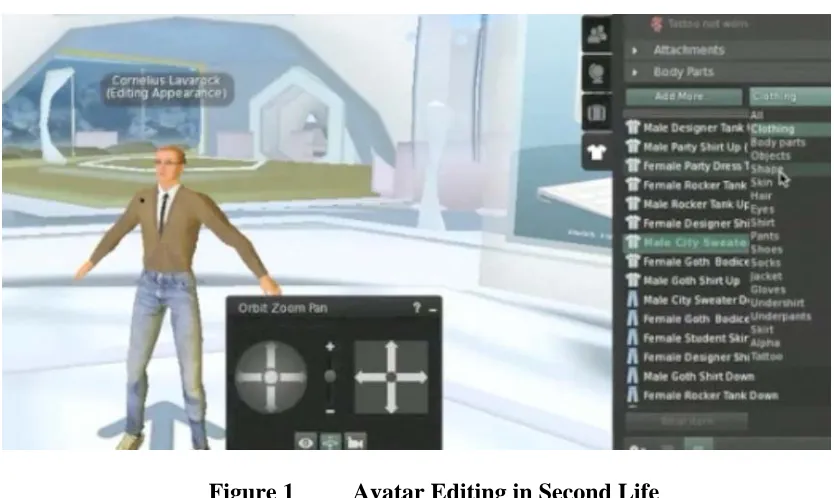
Figure 1 Avatar Editing in Second Life ... 29
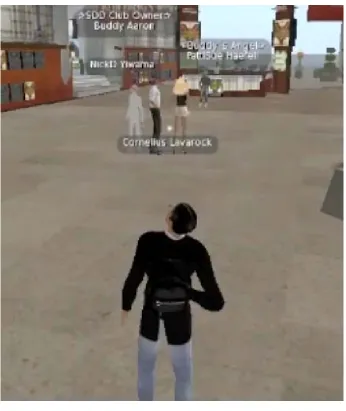
Figure 2 Approaching a Group of Second Life Residents ... 32
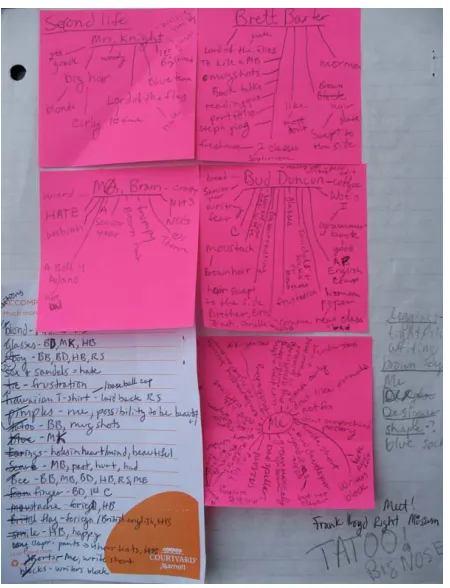
Figure 3 Miriam’s Avatar Creation Notes ... 44
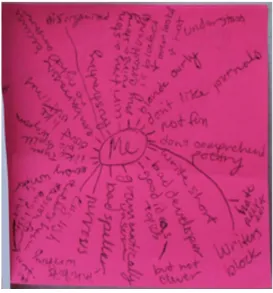
Figure 4 Enlargement of Miriam’s Avatar Creation Notes ... 45
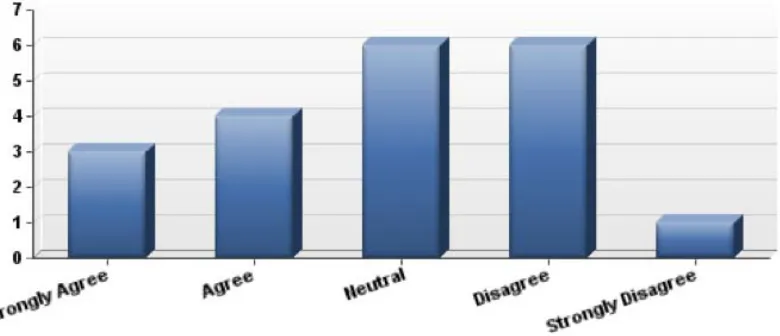
Figure 5 Survey Results—“I Was Concerned that the Second Life Experience Would Distract from Learning How To Write” ... 58
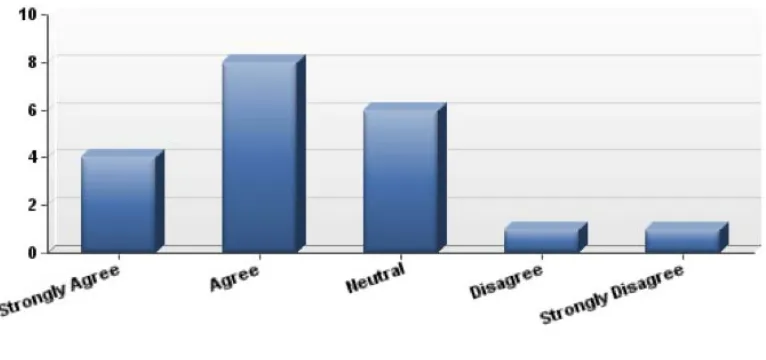
Figure 6 Survey Results—“I Feel Confident in My Abilities to Use Technology Effectively” ... 59
Figure 7 Survey Results— “I Feel Confident in My Writing Skills” ... 59
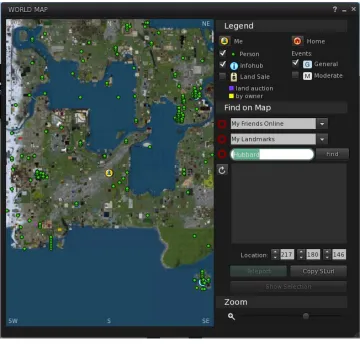
Figure 8 The Second Life Map and Navigation Feature ... 64
Figure 9 An Email to the Class on September 10th, 2010 ... 65
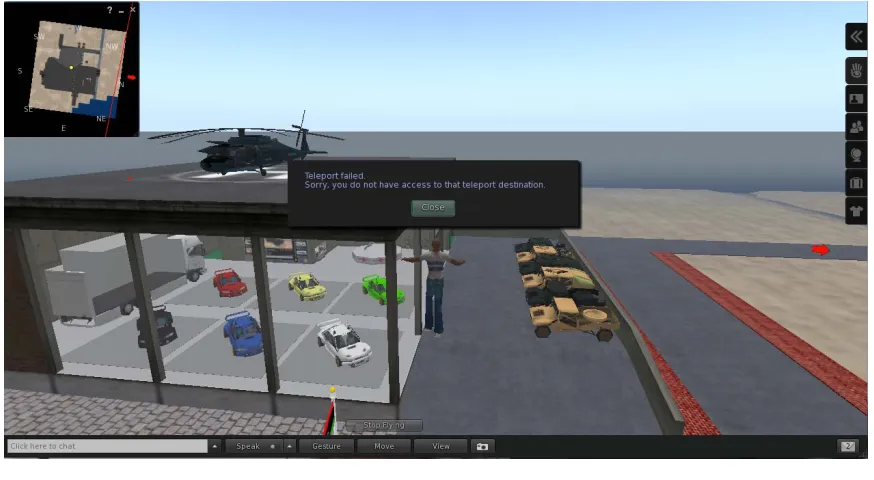
Figure 10 The Error Message when Attempting to Teleport to a Private Island . 70 Figure 11 The Error Message Enlargement ... 70
Figure 12 Survey Results—“I Had a Positive Experience Using Second Life” ... 80
Figure 13 Survey Results—“I Think Using Second Life Wasn’t Effective” ... 80
Figure 14 Survey Results—“I Felt More Motivated Because We Used Second Life” ... 81
Figure 15 Survey Results—“I Felt Less Engaged Because We Used Second Life” ... 82
xi
CHAPTER ONE: INTRODUCTION
The week before the Fall 2010 semester started, Dr. Robert Kustra, the President of Boise State University, addressed the faculty about the direction of higher education and the need for innovation. In his remarks, he cited national and state educational goals, and then he said, “We cannot reach these goals if we continue on our present course with our dependence on traditional delivery systems” (10). He continued by discussing how technology provides new delivery systems—he cited Curtis J. Bonk’s book The World is Open: How Web Technology is Revolutionizing Education. Bonk specifically discusses Second Life, the most popular and fully-featured virtual world and the subject of this thesis. Kustra said that Bonk “helps us understand how … Second Life communities offer new learning strategies, giving examples that come from the halls of the most venerable academic institutions,” including Harvard, Stanford, and MIT (10). Later in his address, President Kustra gave this invitation: “[Let us] scan the changing landscape in higher education, see what we can learn from those who are blazing new trails, consider how Boise State expands on the innovative behaviors that are flourishing on our campus and others and apply that thinking to teaching and learning” (11). President Kustra invited the faculty at Boise State to explore new teaching tools, including Second Life, and
theory, as described later. I view my primary audience as those who are curious about virtual world education, but unsure of how they would implement it in a beginning composition course.
Not only are educators at Boise State interested in the pedagogical value of virtual world education, but it is clear that the popularity of virtual worlds in teaching is growing dramatically worldwide. While no clear record exists of exactly how many universities use virtual worlds in their courses, some parts of the world are adopting them much more quickly than others. Countries with an online, Second Life university include the
following: Australia, Brazil, Canada, Denmark, Finland, France, Germany, Mexico, Portugal, Scotland, Spain, and Sweden (“Institutions and Organizations in Second Life”). Even more have used Second Life in less formal ways—without buying land and
operating a Second Life location called an island. Conservative estimates indicate that over three fourths of the universities in the United Kingdom use virtual worlds in one capacity or another (“Universities Running in Second Life”). The United States does not have that high of a percentage of universities using Second Life, although definite interest exists, as demonstrated by President Kustra’s speech.
Concomitant with such interest, virtual world studies documenting reactions, theorizing approaches, and analyzing results have begun to dot journals, newspapers, and bookshelves with increasing frequency. A few education or composition journals that have published articles about virtual world education from February 2010 to February 2011 include Computers and Education (Cheryan), The Journal of Distance Education (Stoerger), and College Composition and Communication (Wohlwend). Books
years include the following: A Practical Guide to Using Second Life in Higher Education by Maggi Savin-Baden (published Oct. 1, 2010), Learning and Teaching in the Virtual World of Second Life by Judith Molka-Danielsen and Mats Deutschmann (published Feb. 17, 2009), and Higher Education in Virtual Worlds: Teaching and Learning in Second Life (International Perspectives on Education and Society) by Charles Wankel and Jan Kingsley (published Nov. 23, 2009). Numerous articles and books about virtual worlds precede these, but the frequency with which material is now appearing indicates that there are some very interesting things happening in education with Second Life.
In August 2010, I joined those researching Second Life for its pedagogical value by implementing my own study. There were many key ideas that shaped my work—a foundational concept was that students today are part of a “net generation.”
A “Net Generation”
A common argument in favor of using digital games in higher education is that the current generation of students are “digital natives,” a “net generation” that are inherently more capable of—and prone to—using technology. In their book, Educating the Net Generation, Diana Oblinger and James Oblinger describe characteristics of college students who were around 18 to 22 years old and were part of the net generation: 20 percent began using computers between the ages of 5 and 8 (2.2), during teen years virtually all of them were using the internet (2.2), and “by the teenage years, students use the Web extensively for school research (94 percent) and believe it helps with
However, not all researchers agree on the value of grouping and generalizing about generations. Whitton calls such attempts “flawed,” stating that “I very strongly feel that labeling whole generational groups in this way is not helpful and, indeed,
self-limiting” (6). She continues: “We cannot make sweeping assumptions about a particular generation, or any group of learners. Instead we should cater for all degrees of technical competence and confidence, and accept that many people (of all ages) will simply prefer to communicate, play and learn in ways that are not associated with technology” (7). While acknowledging that technology and games are not a golden bullet that will single-handedly engage an entire population of students, she also believes firmly that they can be appropriately used in the university: “I think it is important that digital games are seen as simply another tool available to lecturers and teachers, which, when considered and implemented with regard to the constraints of the higher education system and
appropriate pedagogic models, can provide an effective and engaging way to learn” (7-8). While many agree with Oblinger and Oblinger about the value of characterizing
generational groups (for example, Roberts; Hartman, Moskal, and Dziuban; Wager), many educators share examples of when such characterizations break down (Gee; Jarmon et al.).
Oblinger and Oblinger do parallel Whitton’s thinking, however, when they caution against the “almost instinctive assumption to believe that Net Gen students will want to use IT heavily in their education” (2.10). Oblinger and Oblinger define
they are comfortable using technology without an instruction manual, their understanding of the technology or source quality may be shallow” (2.5). Whitton echoes this concern in her own work, similarly describing this inaccurate perception of younger students:
“Although young people show an apparent ease with computers, they rely heavily on search engines and lack critical and analytical skills” (7).
During this research, I have noticed general student trends towards familiarity (occasionally only superficially) with technology and excitement about using it and therefore see the value of thinking in terms of the “net generation.” However, I agree that the concept of the net generation often breaks down on a case-by-case basis,
notwithstanding the pew surveys upon which Oblinger and Oblinger build their arguments. It seems that at times students who would logically be the most adept and comfortable with technology were far from it.
Engagement and “Engagement Theory”
The basic premise behind the net generation hypothesis is that younger students have a predisposition towards technology and that education can be more effective if it uses technology. While this generalization can be problematic when applied to every individual born between certain years, the recent fascination with the use of technology in education—especially virtual worlds—indicates that there is something to it in a more general sense. This idea, that virtual worlds used in particular ways can engage students in course material, was one of my greatest interests in exploring this project.
when reading a good book, or a challenge one feels when playing a good game, or the fascinating unfolding of a radio drama” (qtd. in Whitton 41). In other words, an engaging pedagogical tool has attributes that provide a sense of immersion, which ultimately lead to a positive, memorable experience. As a research participant in the study by Edwin Love, Steven C. Ross, and Wendy Wilhelm said, engagement is “deeper memory creation through [a] rich-media experience” (Love 67). According to these sources, education that is engaging is immersive (through a media-rich experience, for example) and therefore leads to deeper memory creation.
Jarmon et al. mention some very similar descriptions of engagement. They say that three key elements of engagement are interactivity, connectivity, and access. When an educational environment has these three elements, they claim that it “enhances student engagement through a sense of shared experiences, offers opportunities for collaboration, and provides access to the virtual environment and user-created content ” (225). Each of these points adds to the immersive and memorable aspects of the activity—in particular working with others in collaborative or shared experience is constructive.
designed to enhance getting themselves learned—learned well and quickly so people can play and enjoy them even when they are long and hard?” () He attempts to answer this question throughout the book, so I won’t try to summarize his response here; however, if those who play video games can be motivated and taught to complete complex functions, couldn’t educators use some of those same principles of engagement to increase the effectiveness of their educational techniques?
However, researchers caution against using games simply because they’re engaging. For example, Whitton stated, “A rationale for the use of games simply as motivational tools is not appropriate in higher education and is an oversimplification of the motivations that surround adult engagement in learning” (6). She later continues:
it is an oversimplification to assume that any game is motivational simply because it is a game. Different people are motivated by different types of games, and not all types are necessarily suitable in the context of higher education. Even if learners consider themselves to be game players in general, the motivational potential of a particular game will depend upon the individuals concerned and the type of game used. (Whitton 39)
She concludes that the purposes and rationale behind the game must be very clear—to the students as well as the teacher—before they be considered for class use: “It is . . . crucial to consider the context in which games for learning are used, their role in the curriculum and the activities that precede and follow any game for learning” (Whitton 47). Similarly, citing Whitton, Dudeney and Ramsay state, “it is essential to have a clear educational purpose for their use, not simply because they are thought to be motivational” (17). This attention to purpose was something I tried to keep in mind as I developed my course, as you’ll see in the next chapter.
classroom is so compelling. Not only do digital games, including virtual worlds, provide engagement in teaching situations, but they also tap into a relevant and personal part of the students’ lives. Using virtual worlds in educational settings is an act of meeting the students where they are. For example, Oblinger and Oblinger start their book by describing a typical student, Eric, and his use of technology. They conclude that “information technology is woven throughout Eric’s life. . . . Computers, the Internet, online resources, and instantaneous access are simply the way things are done” (2.1-2.2). Virtual worlds in the classroom can be another of the many “online resources” already integral to student life, both inside and outside the classroom.
Concerning more specifically about what this might look like in the classroom, I turned to engagement theory, developed by Greg Kearsley and Ben Shneiderman in 1998. While I’ve used it as a lens with which to view my work rather than a guiding force with which to shape it, I have been impressed and proud at how many features of this theory do show up in my work. Also, because this theory is relatively new, I view using it as a valuable contribution to the field.
In a 1998 issue of the journal Educational Technology, Kearsley and Shneiderman describe their theory, and what technology has to do with it:
The fundamental idea underlying engagement theory is that students must be meaningfully engaged in learning activities through interaction with others and worthwhile tasks. While, in principle, such engagement could occur without the use of technology, we believe that technology can facilitate engagement in ways which are difficult to achieve otherwise. So engagement theory is intended to be a conceptual framework for technology-based learning and teaching. (20)
learning, problem-based learning, and service-learning (20). For my purposes, rather than focus on how this theory overlaps with others, my main concern in this thesis is to
analyze the three components that they mention, and how they relate to the work that I’ve done. According to the authors, approaches that use engagement theory “occur in a group context (i.e., collaborative teams),” “are project-based,” and “have an outside (authentic) focus” (20). So the most engaging approaches to education, according to this theory, organize the students to work in groups, allow the students to design and implement their own creative projects, and focus the products on outside audiences. The features of engagement I discussed earlier are clearly at work here: the groups, student-chosen projects, and applicable focus are all designed to immerse the students in their experience and motivate them to perform high-quality work. These features are also compatible with the description of the general preferences of net generation learners discussed earlier. In future chapters I will mention more specifics concerning these three components.
Kearsley and Shneiderman discuss how the technological aspect of the theory is essential to strengthen student communication and creativity (23), although they don’t specifically mention virtual worlds. However, they do invite researchers to help them answer a number of questions related to engagement theory, including “What kind of groupware (collaborative software tools) would best support engagement theory?” (22) This thesis is meant to do just that—to use these three components (group work, creative projects, and authentic focus), and the concepts of engagement upon which they are built, to gauge the effectiveness of my work and the suitability of Second Life to support engagement theory.
theoretical soundness, as discussed by those researching it, and its specific relationship with composition.
Second Life and Constructivism
Constructivism is a common theme in the conversation about Second Life— Whitton even states that “the design of student-centred online learning environments has been very much influenced by the constructivist perspective” (46). As educators
considering the use of new pedagogical tools (like Second Life), it can be beneficial to contemplate the nature of knowledge and ways in which we can help students make meaning. However, Constructivism is not a unified, easily described theory; rather, it has a rich history, with many fascinating, off-branching, and intersecting theories. Social Constructivism is traditionally attributed to Vygotsky, while Piaget is considered to have founded Constructivism. Both hinge on explaining the nature and origin of knowledge. While social constructivism examines the socially constructed nature of knowledge, constructivism emphasizes that our personal actions and perspective lead to our construction of knowledge. Thomas Duffy and David Jonassen describe this central concept of constructivism—the relationship between an idea, the experience from which that idea springs, and the potential learning that can take place between the two:
Meaning is seen as rooted in, and indexted by, experience . . . Each experience with an idea—and the environment of which idea is a part—becomes part of the meaning of that idea. The experience in which an idea is embedded is critical to the individual’s understanding of and ability to use that idea. Therefore, that experience must be examined to understand the learning that occurs. (4)
meaning-making process as significant for my use of Second Life. Duffy and Jonassen later describe their beliefs about the role instructors should play: “Instruction, we believe, should not focus on transmitting plans to the learner but rather on developing the skills of the learner to construct (and reconstruct) plans in response to situational demands and opportunities” (4). They put particular emphasis on skills of re-evaluation and
reconstructing plans because in future jobs (and life in general) it’s more valuable to be able to cope with non-textbook, realistic examples that don’t fit neatly into pre-set plans.
Such an emphasis—providing students with tools and direction over set formulas to be rigidly followed—is not only more effective, but students tend to react more positively to such an approach. In terms of net generation students, Oblinger and
Oblinger affirm that younger students react better to this kind of education: “Rather than being told, Net Geners would rather construct their own learning, assemble information, tools, and frameworks from a variety of sources” (2.12). They later describe how digital games tie into this approach: “Simulations and visualizations allow students to explore and draw their own conclusions. . . . Games and role playing provide students with the opportunity to assume another persona and learn by ‘being there’ rather than by being told” (Oblinger 2.12-2.13). Allowing students to explore a virtual world to complete a project can be an ideal format for them to develop and rework their own plans. Perhaps that’s why virtual worlds fit a constructivist framework so well.
Whitton provides another perspective on the ways in which we construct
Jonassen’s plan-making—plans are patterns of action meant to resolve problems. However, her use of the term “personal discovery” implies a reflective, meta-aware approach to a successful constructivist paradigm. Reflection works well in constructivist learning environments because of the personally constructed nature of knowledge and the importance of not just learning, but of realizing what is learned.
Not only does Second Life support these general functions of constructivism, but virtual world researchers also maintain that Second Life supports features of cognitive and social constructivism specifically. Steff Broadribb et al. discuss this usefulness— their use of cognitive constructivism is very similar to my description of constructivism earlier:
In social constructivism, the focus emphasizes interaction with people and co-construction of knowledge . . . whereas in cognitive constructivism, the focus is on interaction with content and individual construction of knowledge . . . [our Second Life project] community readily demonstrates both: individuals in the community work together, and it is this collaboration . . . that enables
individual reflection and learning. (206-07)
Collaborative work (supported by projects using Second Life) helps provide a framework within which students can individually create and reflect on their knowledge. In other words, the social scaffolding and an individual’s cognitive processes can both develop from/through the authentic contexts of Second Life and will be more apparent and usable to students who reflect about their experiences.
Goals for the Design of Constructivist Learning Environments.” Not only do his goals for constructivist learning environments contain social and cognitive aspects, but many of them, the following three in particular, dovetail nicely with the components of
engagement theory that I’ve brought up previously:
1. “Provide experience in and appreciation for multiple perspectives” (11). While this goal is similar to the collaborative “group context” component, I view this mainly as dealing with outside perspectives that students encounter while not in the classroom. The worldwide nature of Second Life presented some great opportunities for the students to experience multiple perspectives.
2. “Encourage the use of multiple modes of representation” (12). Honebein clarifies that “Oral and written communication are the two most common forms of
transmitted knowledge in educational settings. However, learning with only these forms of communication limits how students see the world. Curricula should adopt additional media, such as video, computer, photographs, and sound, to provide richer experiences.” The visual/auditory nature of Second Life encouraged this type of learning.
Implicit in these items is a value judgment about what kinds of things are important from a constructivist perspective and an approval of tools that can facilitate such goals. These three constructivist goals—appreciating multiple perspectives, using multiple modes of representation, and being self-aware of the knowledge construction process—mirror my own values and goals for the course and provide a useful lens through which to analyze the effectiveness of my implementation of Second Life.
Second Life and Composition
A large percentage of the research that champions Second Life is focused on fields other than composition. For example, Second Life provides construction and models for the sciences, role playing and conversation practice for language learning, commerce and markets for business education, etc. While one of the things I value in Second Life is its diverse appeal and adaptability, there are still uses and research that are specifically composition focused. I discuss how others have implemented Second Life into their composition classes in more depth in chapter two, where I compare and contrast others’ course and assignment design to my own. To give a sense of its value to
composition pedagogies, I give a brief overview of some of the ways researchers have said Second Life could potentially benefit composition.
provide students with a rich set of resources from which to draw in their writing. In addition to providing material that students can write about, Second Life can help create a more nuanced way of thinking about meaning and understanding, an important ability in writers. Jennifer deWinter and Stephanie Vie, after specifically referring to Second Life, quote James Paul Gee as saying “games are potentially particularly good places where people can learn to situate meanings through embodied experiences in a complex semiotic domain and meditate on the process.” Writers in particular can benefit from meditating on the meaning created by the way people and places are represented on Second Life.
Concerning the specific kind of meaning composition students can make while analyzing Second Life, deWinter et al. argue that “participating in virtual online
communities and cultivating player avatars are particularly fruitful activities for students’ analyses and production of media in the writing classroom because they often make explicit the ambivalences of new media.” They say that games “are imbued with numerous ideologies that are both purposefully and accidentally made invisible for the sake of compelling play,” and, therefore, by participating in Second Life’s community and avatar creation, students can begin to uncover—and even write about—the
divergence between the intended purposes and the potential uses of Second Life.
The use of Second Life as an educational tool to effectively engage students, and thus establish its usefulness to engagement theory, has a solid base in both constructivist theory and composition education. What now follows are the methods I developed to gauge and catalogue student reactions to my implementation. The plan I describe below is the initial plan, in theory, as I developed it before I started the project—I relate it here to clarify my original perceptions and ideas. I intend to establish a baseline of how I intended the plan to go, then contextualize (in chapters three and four) the ways the methodology changed in practice. By contrasting which methods yielded more insight than suspected and which methods were more difficult than anticipated, my audience will have a clearer understanding of the value and difficulty of using Second Life.
Methodology
I wanted to accurately measure student reactions to the use of Second Life in a composition classroom. I felt that by studying students that I was personally teaching would give me a more personal, nuanced understanding than if I studied another teacher’s students. I also was uncertain about the difficulties and outcomes of the project and felt unconfident in asking another teacher to experiment with Second Life on my behalf. I decided to use methods that would allow me to receive a large scope of feedback: general feedback from each student—surveys, course work, and field notes—but also more personalized, in-depth responses via interviews (see Ann Blakeslee and Cathy Fleischer’s Becoming a Writing Researcher). What follows is a more in-depth description of each of these methods.
each individual student of the specific aspect of Second Life that may have led to empowerment or disaffection by asking questions about their confidence with
technology, attitudes towards Second Life at the beginning and end of the semester, and engagement during the use of Second Life. Because I wasn’t using the research I
currently am, my questions (especially concerning engagement) lacked specificity; still, the questions demonstrate my interest in establishing whether my students fit the “net generation” hypothesis, whether they reported improved engagement, a sense of community, and the ability to collaborate effectively. I followed a customized mixed format—certain statements are followed by multiple-choice options, some by a range of “strongly agree” to “strongly disagree,” some with “true/false,” and one with a “yes/no” option. I chose to implement different kinds of questions to give variety, to get a more nuanced set of answers, and to make the survey as easy to fill out as possible. The most common kind of question is the “strongly agree” to “strongly disagree”—since students often take university surveys which use this format, I hoped to gain a sense of authority by formatting by surveys in the same way as the official university ones. I also didn’t want students to be distracted by a new survey format. I varied the positive and negative aspect of the questions to give the student the feeling that I was not leading them to answer in a certain way.
students in directions that were most productive and context-specific to their interests and personalities. Many of the questions addressed the same issues as the surveys, only the interview questions were more flexible and detailed—as part of my IRB approval, I submitted interview questions, concluding with the following explanation about how I view the difficulties and potentials inherent to the interviews: “Student answers to these questions are unpredictable, so I may ask them to follow up on particular points or discuss a particular area in more depth. For example, if a student indicated that they had a particularly strong connection with another student because of Second Life, I might ask why that was.” I enjoy talking with my students, so this was naturally the part of my methodology that I felt most comfortable with and excited about.
My emphasis in this study was mainly focused on feedback generated by the students themselves; however, another resource I decided to use to analyze student
Thesis Organization
The following chapters detail my rationale in setting up the class, the ways in which my study effectively or ineffectively follows the components of engagement theory and the goals of the constructivist framework, and the findings of my surveys, interviews, and observations. Chapter two begins by comparing and contrasting my course and assignment design with others’ and with my previous assignments and courses. I describe in much more detail each feature of the course, starting with my overall learning goals for the students in the class. I also mention the goals that my implementation of Second Life be zero-cost, hybrid, and only function for half the
semester. I also describe each assignment in more depth—the avatar creation assignment, the interview assignment, and the organization analysis assignment—and show how their structure enables (or does not enable) a collaborative group environment, creative
project-based learning, or an authentic focus. I quote from my assignment sheets, cite previous iterations of assignments, and refer to course outcomes that I wanted the assignments to still address.
Miriam’s avatar notes, Katelyn’s interview struggles and eventual breakthrough,
Matthew’s enthusiasm about Second Life’s worldwide audience, Karen’s impressions of Harvard’s Second Life island, and the overall improved class dynamic as demonstrated through the interview assignment. I compare my successful experiences with other researchers and discuss the similarities and differences in our approaches. I also analyze the ways in which the assignments—and Second Life as an educational tool—support an appreciation for multiple perspectives, the use of multiple modes of communication, and a self-awareness of the knowledge creation process.
In chapter four, I draw on student accounts of frustration and apathy to detail how my pedagogy didn’t affect student engagement or awareness in ways that I anticipated. The most common thread is one of frustration with technology. I show how each assignment had its own technological difficulty: I illustrate how the avatar creation assignment was limited by students’ lack of time preparing to use Second Life, how the internet connection in our classroom hampered students’ in-class work in the interview assignment, and how Second Life’s privacy settings decreased the effectiveness of the organization analysis to challenge students’ critical thinking. In this chapter I also trace the less favorable reactions to the work—how some students were apathetic about or openly frustrated by the assignments themselves. I compare my experiences with other researchers who had similar frustrations in their Second Life implementations.
Throughout chapter four I focus on how the class and each assignment could be redesigned to more effectively reach its goals.
four together by examining the complex survey results. I show that the survey results, while not clearly positive, reveal a divergence around student frustration with the technology and approval of the underlying potential of Second Life. I show how these results are similar and different than the results of another composition teacher, Jerome Bump, and his student surveys. I conclude this reflective portion of this concluding chapter by providing a concise list of best practices, a distillation of the lessons learned as described in chapters three and four. I then describe where the borders of my work are and where future researchers can extend those borders. I list variations in assignments, course structure, and tools (including thoughts about the pedagogical possibilities of a future update to Second Life), and give thoughts about how those variations can help us better understand and assist student learning. I conclude that notwithstanding
CHAPTER TWO: COURSE STRUCTURE AND GOALS
“Gaming, viewed from multi-disciplinary perspectives, has the potential to highlight for students (and faculty) both the importance of rhetorically-based approaches to
communication and the diversity of literacies that students are confronted with—and asked to develop—in their college careers. That is, the multi-disciplinary study of gaming offered a rhetorically robust and engaging way for many students to develop a meta-cognitive awareness of the complexities of literacy and literate performance, particularly across and through disciplinary boundaries; such meta-cognition, we argue, should serve students well as they approach other discipline-based ways of knowing and
communicating, both inside and outside the academy.”
Jonathan Alexander and Elizabeth Losh The overall goals for this section of English 101 were much the same as they were for any other section or teacher of English 101: to facilitate high-quality student learning experiences that resulted in them being better-prepared to effectively write in their future classes and careers. The premise under which I designed this course was that such a high-quality educational experience was possible using Second Life with these particular students at this particular institution. I was comforted by assurances that games in general and Second Life in particular had the potential to offer such experiences (such as the quote by Alexander and Losh cited above) but the initial decision to use it in this course felt like a step into uncharted territory. In this chapter I describe the specific assignments and course structure that I hoped would provide the students and me with the best
and uses of Second Life sets the stage for my account and interpretation of student reaction in subsequent chapters.
Course Features
Designing three specific assignments for this course meant choosing between countless possible and viable options. In his article, “Four Ways to Teach with Video Games,” Max Lieberman overviews four general uses of video games in education: 1) games that teach content, 2) games as texts, 3) students making games, and 4) game-like motivation systems. Here are some examples of how teachers could use Second Life in each of these ways: Second Life’s ability to teach content is described by Simon Ball and Rob Pearce—they recount how literature teachers created an interactive recreation of Dante’s Inferno in Second Life they could use to teach about the book (54). Certain games can be used as texts to be analyzed—specifically, games in which “the plot and its presentation (through such elements as writing, voice acting and animation) merit
Even within Second Life there are a number of ways to effectively design
assignments that use Second Life as a text: Maggi Savin-Baden, in her book, A Practical Guide to Using Second Life in Higher Education, describes 12 practical uses of Second Life—lectures, seminars, problem-based learning, demonstrations, film and video, simulations, visual performance, virtual debates, identity reassignment activities, replayable podcasts and debates, and non-player character interactions (50-61). While some of these might fall more under Lieberman’s “games that teach content” category, each provided potential benefits and drawbacks that I would need to choose between.
Each approach—games that teach content, games as texts, students making
games, and game-like motivation systems—could potentially have supported engagement theory’s three components (a group context, a project base, and an authentic focus) and the constructivist framework with which they operate. However, I choose to use Second Life as a text which students would construct and analyze for several reasons. In the following section I detail the most significant of them—my desire to have a zero-cost implementation, a hybrid/half-semester structure, and a basis in previous assignments.
The zero-cost implementation makes adopting Second Life as a teaching medium easier for both students and teachers. Trevor Hoag and Tekla Schell claim, “The
Kustra’s request for cost-effectiveness as given in his address to the faculty: “The private and proprietary sectors of higher education are not standing still and their use of new learning technologies both to reach new students and to teach existing students more cost-effectively suggests to me that life in public higher education will get more competitive” (10). I wanted this use of Second Life to push the limits of the competitiveness, both in terms of cost-effectiveness as well as accessibility.
Unfortunately this meant not having a dedicated space or customizable construction options, which I acknowledge may have negatively affected student learning and my understanding of Second Life’s full potential as a tool for engagement theory.
research findings accordingly” (223). The idea that many of these sources seem to be indicating is that the more students use Second Life, the more comfortable they are with it and the more effective it will be. I was therefore as careful and intentional about my use of Second Life as I could be. The class Jarmon et al. used as a positive example in their study only lasted for six weeks, which was shorter than my use of Second Life.
My hybrid design was meant to bridge two extreme patterns: exclusively using Second Life in place of face-to-face meetings or using Second Life in addition to normal face-to-face classes. I wanted to keep engagement theory’s group atmosphere by
developing student/student and student/teacher relationships through meeting face-to-face. Students would be able to ask questions, share reactions verbally, and get to know people in the class in person in addition to working with them online. I also wanted to keep the workload practical for a first-year writing class. Meeting face-to-face three times a week as well as meeting online would be more of a commitment than I thought was reasonable for the students to handle. To mitigate the workload, I planned to cancel one day out of the week while we were working on Second Life.
Course Assignments
While the above factors limited the ways in which I would use Second Life, I felt strongly that I needed to have a writing component in conjunction with each assignment. Because I was using Second Life as a text, I viewed the writing assignments as a
necessity for students to decode meaning and become more self-aware in their knowledge construction process. This idea is powerfully expressed by Nicola Whitton and Paul Hollins:
learned knowledge and skills to the real world. Activities such as debriefing and structured reflection are essential to ensure appropriate mastery of specified learning outcomes, and these activities can be structured outside the virtual world. (Whitton and Hollins 224)
While throughout the following descriptions of my assignments I focus on Second Life’s experiential learning spaces, the assignments from which I’ve adapted the Second Life versions provide the reflective backbone with which I hoped to encourage student self-awareness, a key aspect of the constructivist framework on which engagement theory rests.
The Avatar Creation Assignment
counteract one of Gavin Dudeney and Howard Ramsey’s complaints about the program: “New users to Second Life are led through a time-consuming induction, which, although a useful exercise for self-motivated students, is often ignored by a significant number of users motivated more by attendance at a seminar than by the novelty of the medium” (17). Dudeney and Ramsey acknowledge that the avatar creation process can be beneficial in itself, yet they don’t appear to make room for approaches that make a creative project out of the process. In contrast to their complaint, Trevor Hoag and Tekla Schell use a similar assignment in their class. They say that “because one cannot visit SL without building an avatar, our ideal syllabus began by including activities that involved making modifications to avatars well beyond the initial options provided by Linden Labs” (Hoag and Schell). Their version involved finding free third-party modifications that students would explore, but still uses this initial process constructively. Both of our versions of this assignment overcome Dudeney and Ramsey’s indictment against the initial process of Second Life, though they do it in different ways. Because this assignment focuses on customizing avatars, I call it the “avatar creation assignment.”
Figure 1 Avatar Editing in Second Life
would need to make: their writing experiences, their writing habits, and their writing goals. By “writing experiences” I meant that they could pick an influential person, book, or project from their past and symbolically represent that on their avatar. In their
customizations that they would have to make, so I assigned six customizations, two from each category.
The avatar creation assignment is meant to fit into the project-based component of engagement theory by being a creative, purposeful, and open project. By including a purpose to the signing-up process and a creative visual element starts I hoped to fulfill Kearsley and Shneiderman’s description of this component as a “creative, purposeful activity” (20). However, they continue their description by pointing out the more direct role students play:
Students have to define the project . . . and focus their efforts on application of ideas to a specific context. Conducting their own projects is much more interesting to students than answering sterile textbook problems. And because they get to define the nature of the project (even if they don’t choose the topic), they have a sense of control over their learning which is absent in traditional classroom instruction. (20)
While I don’t necessarily agree with their condemnation of the “traditional classroom instruction,” their general point—that students will be more interested in and have a sense of control over projects they define and focus—seems to be a valid one. The avatar creation assignment may not have fit into their description because students aren’t able to completely “define” the project, but the freedom the students had to customize their avatars in a wide variety of ways was meant as a step in that direction.
The Interview Assignment
of English 101 where they send their students in pairs around campus to interview strangers about perceptions of writing. The real-world praise and criticism the strangers give about writing seemed to ground, and occasionally surprise, the students. I thought this assignment would complement the avatar creation assignment nicely—the students would first look at their own perceptions of writing, then compare them to the opinions of others. The benefit of the interview assignment in Second Life, though, was the much broader audience: the interview participants for my new version of the assignment would be people from all over the world, with a huge variety of experience with English and writing.
I initially wanted the students to go out in pairs, for a few reasons: that is how the in-person variety of this assignment is conducted, and it didn’t occur to me that it might be more effective to do it differently in an online environment. Also, I didn’t want students to be irresponsible and do something else (or nothing at all). I was hoping that the “buddy system” would ease their nervousness, keep them on track, and help them avoid unsafe or awkward situations. Finally, the benefit of interviewing complete strangers in an online environment is that there are no physical safety concerns–there may be dark alleyways and questionable characters, but it’s not possible to get mugged or murdered like it is in real life. I expected that this increased safety would make the
Figure 2 Approaching a Group of Second Life Residents
Ideally each project has an outside ‘customer’ that the project is being conducted for” (20). Their use of the word “ideally” indicates that the outside “customer” isn’t essential to every successful assignment; however, the interview assignment (as well as the other two Second Life assignments) may have been more effective if they could have been directed towards an outside audience. Additionally, Second Life definitely has the potential to provide an out-of-classroom final audience.
Also, this assignment’s collaborative aspect relates to the “group context”
engagement theory component. I hoped that by accompanying each other, even digitally, that students would be able to rely on each other to work through some of the interview difficulties, just like I had done in the real-life version of this assignment.
The Organization Analysis Assignment
The avatar creation assignment and the interview assignment comprise unit one, which is entitled, “Writers Writing about Writing.” In the first two assignments students analyze writing on an individual level. They start with their perceptions of writing (the avatar creation assignment), then move outward to look at Second Life residents’ perceptions of writing (the interview assignment). The third assignment is a further step outward—students analyze how groups of people rhetorically situate themselves in a virtual world’s discourse community, which is why I entitled the unit “Rhetorical
classes using the “Communication Practices Beyond the University” option, students have analyzed the rhetorical choices of organizations they’re involved in: a movie theater, martial arts studio, yoga group, etc. The goal of this unit is to get students to think critically about how individuals and organizations have communicative goals and present themselves rhetorically to achieve them. In this assignment students customarily look at and record word choice, location features, and images the community uses to communicate. Essentially, the students’ main task in this community examination assignment is to analyze the organization’s social construction of ideas. I designed the second unit to accomplish this same type of analysis, only to also take advantage of another feature of Second Life: organizations that operate a Second Life island. Even though the assignment takes place online, students still use the same kind of observations as the real-life equivalent—word choice, location features, and images.
financial barriers. For example, a university may have a small hill running through the southern end of its campus. It may be possible for them to remove it, but the costs would greatly outweigh the benefits of doing so. In Second Life, a university can remove or add mountains, rivers, and other geological features to their island that wouldn’t be practical in real life. Similarly, structures in Second Life have nearly unlimited possibilities: because the laws of physics don’t apply in this digital space, companies could design buildings that are composed entirely of glass, hovering in the air, or covered in glitter. There are difficulties in designing Second Life islands, just like designing in real life; however, as long as the programming works, the cost of programming isn’t too steep, and the island has a reasonable load-time, there is a huge array of options for organizations. The constructed nature of Second Life resembles the constructed nature of knowledge described in the constructivist framework I’m using. In the words of Trevor Hoag and Tekla Schell, the goal of this assignment is that “students come closer to that moment when it hits them that the ‘digital’ is, in fact, already part of the ‘actual’—that Second Life is part of the so-called ‘real world.’” This realization hopefully also works the other way, that students realize that the “real world” is also constructed—and interpretable.
While this assignment could be related to any of the components of engagement theory, it’s most compelling connections are to the three constructivist goals mentioned in chapter one. Firstly, it increases the appreciation for multiple perspectives by allowing them to evaluate why an organization constructed their island in the way they did.
assignment and in the real-world component of this assignment, stems from the question why are the organizations portraying themselves in this way, rather than another?
Thinking about the alternative solutions organizations have will enrich students’ understanding of communication practices at the university. Secondly, the organization analysis assignment encourages the use of multiple modes of representation. Honebein writes that “learning with only [oral and written communication] limits how students see the world. Curricula should adopt additional media, such as video, computer,
photographs, and sound, to provide richer experiences” (12). While I agree with this assessment and feel that Second Life does add to the students’ richer experiences and view of the world, I also need to acknowledge that many of these outcomes are also applicable to the real-world equivalents of this assignment. Students go out into the real world, viewing the organizations they’re analyzing. Also, even in the Second Life version of this assignment, students still need to write their analyses in paper format. Finally, the organization assignment helps to instill more self-awareness in the students. Honebein describes this self-awareness as a “key outcome in constructivist learning.” The
organization analysis assignment hopefully helps students “to analyze their construction of knowledge and processes” (12) by the analogy between the constructed nature of Second Life and the constructed nature of reality, as mentioned earlier. This assignment is perhaps the weakest when it comes to directly supporting the components of
assignment and Second Life in general.
In addition to designing assignments for my class, there were two more physical preparations that influenced my plans. One was applying for a new classroom, ILC 313. This classroom featured advanced and flexible educational technology–including a laptop for each student, movable seating, and a variety of display options. The other major thing I did was change the class description the students would see when they registered (see chapter four). I wanted students to understand what the class would involve, and I wanted the classroom to be the best it could be when we actually got into it. With this rationale in mind, I contacted the students a few weeks before the class in order to, as I wrote in my email, “welcome [them], and to give [them] some heads-up about what to expect while schedules [were] still fairly fluid.” I included the phrase, “while schedules [were] still fairly fluid,” as a subtle request: “feel free to drop this class if you don’t think you’ll like it.” In my email, I described the classroom as a reflection of the work I hoped to do with them: “the cutting-edge technology of this classroom really reflects my interest in working together as a group to share, demonstrate, and practice important writing principles.” I also described the virtual world nature of the class. By describing the classroom and the nature of the class, I hoped to start the class off as clearly and positively as possible.
As demonstrated in this chapter, the implementation of Second Life adds an interesting layer to the existing structure of English 101. The same unit goals are
addressed, but include an additional dimension: in the avatar creation assignment students still think reflectively about themselves as a writer, but have the ability to express
engagement theory component. The interview assignment still allows the students to broaden their view of how audiences outside the classroom view writing, yet they get to interact with a safer, worldwide audience to do so. This assignment addresses the authentic focus and group context components. In the organization analysis assignment, the students still look at a community and how it presents itself, but the Second Life version allows more varied organizations and more obviously constructed
representations. While all the assignments are supported by the constructivist framework, this assignment in particular matched all three. This chapter details the choices I made about the class in theory–the rest of this thesis will analyze how this implementation worked in practice. In chapter three I detail how it played out in expected—and
CHAPTER THREE—CONSTRUCTIVE ENGAGEMENT
The constructivist perspective . . . holds the idea that students learn better by undertaking an active role in the learning process, by exploring and experiencing authentic contexts for themselves and discovering their own meanings from the experience.
Nicola Whitton We argue that engagement with virtual worlds in a course setting: (1) contributes to the facilitation of life-long learning that extends beyond the confines of the classroom, (2) has the potential to generate feelings of co-presence and connection among participants in and outside of virtual worlds, and (3) provides a context for considering how new technologies have the potential to enrich the lives of older adults. (221)
Leslie Jarmon et al. As I described in the previous chapter, designing three specific assignments that would use Second Life meant discarding countless other possibilities. I designed the three assignments intentionally, basing my decisions off a desire to re-design previous
example to example without detailing each assignment. I do not intend to give the impression that these learning experiences were universal in or unique to the class. I recognize that experiences like the ones I showcase in this chapter happen in composition classes worldwide and are due in large part to the exceptional students that I interviewed. However, this chapter explores the ways in which Second Life supported and challenged students in their English 101 assignments.
Shifts in Methodology
As described in the previous chapter, I began the semester with specific plans for recording student reactions during my study. While many of my plans were altered due to unforeseen difficulties (as described in chapter four), there were a number of unexpected positive outcomes that I will briefly recount here. If the rest of the chapter is about student reactions, this is a brief section that will provide a few insights into a teacher’s positive reactions to the use of Second Life in the composition classroom.
The most effective method I used to gather information about the students’ attitudes and opinions, and the most revealing of their positivity, were the interviews. I was impressed during the interviews by how honest and positive the students were—there were frustrations about Second Life and technology (again, see chapter four) but the students were definitely more positive about Second Life and their experience than the students of one English class that used Second Life, described by Jerome Bump as nearly universally disagreeing that “it is a good idea to use SL in a literature and writing
Another method I used to gauge student response that I hadn’t originally planned on were in-class discussions and personal conversations. I hadn’t realized how much information I would be able to get from the students and how clear a picture I would be able to get about how they were reacting to an assignment. Were I to redo this project, class discussions, questionnaires based on the difficulty at the time, and personal
conversations would have played a more prominent role in my gathering of information. Pre-Semester Interest
For the most part, students were intrigued by the prospect of an introductory writing class that used a virtual world—the students’ interest in a class that uses this kind of technology demonstrates one of Second Life’s advantages as a tool for engagement theory. Many students later reported that they were excited about the class before they even knew what it was about. As I mention in chapter two, I changed the class
description to more accurately reflect the course content. Here is the descriptive
addendum that students saw as they signed up for the class: “Please note: This is a pilot hybrid course; 20-40% of class time will be spent in an online 3-D environment. Basic computer literacy and an interest in digital writing is expected.” Students reacted to this note in a variety of ways: most of the students did not really know what a “pilot hybrid course” was, or what spending time “in an online 3-D environment” entailed, but many of them were interested to find out. For example, Katelyn enjoyed English and was good at writing, but her last few years of English courses had “plateaued” in challenging her. Her scores were good enough that she could have tested out of English 101 and moved straight on to English 102, but she decided to take the class anyway:
get through it. Because I could have. I could have just taken that test and they said my scores would have been fine, but I kind of wanted that challenge of learning a different way.
For Katelyn, at least, the prospect of learning to write in a new way shifted the trajectory of her college career. Not only did her decision change which classes she took, but later she revealed that her decision went against some perceived peer-pressure—she said that she originally did not want to take the class because “everyone tests out and goes to 102.” For her, signing up for this class was choosing to leave “everyone”—the popular
crowd—and pursue a worthy educational goal: an engaging challenge.
I do not think she was the only student who craved a challenge and something engaging when signing up for the class. Karen described her reaction to the class
description simply: “I thought it was really cool. I showed it to my mom and she thought it was cool too.” Karen later admitted “not really” knowing what the description meant until the name Second Life came up on the first day of class. Her father and brother were in the military, which uses Second Life for communication purposes. She had heard about Second Life from her dad and brother, but she did not know what the program entailed. She did not say whether she connected the description of an “online 3-D
The Avatar Creation Assignment
After the first few weeks in the class, students had positive reactions to the avatar creation assignment. The creative nature of the assignment puzzled some students at first, but, besides the frustrations due to technological difficulties (see chapter four), students were challenged by being forced to negotiate between the visual creation on the program and the composition of their essay. Savin-Baden gives a reason that might explain both the puzzlement and the positivity: “‘being’ in Second Life prompts us and our students to engage with issues of embodiment and questions about positioning and power” (16). The issues of embodiment that students grappled with (“how can I create an avatar that metaphorically embodies who I am as a writer?”) were unsettling and stimulating for many students. For example, when I asked Katelyn whether the assignment would have turned out differently without the avatar creation portion, she said, emphatically, “Yeah! Because I’m not an artistic or creative person, so having to put it on an avatar and say ‘this short hair represented this,’ my mind wouldn’t normally work like that if I were to write a paper about my writing. So, it was definitely challenging, but it changed it, to think outside my little box.” Her high school writing, which frustrated her by not being challenging, apparently required analyses of a particular format and purpose—the
After interviewing students, I discovered that they took one of two general approaches to complete this assignment (although some students employed a
combination): students either created an avatar taking inspiration from the program while thinking about how each of the customizations related to their writing history, habits, and goals; or they brainstormed a list and considered how they would represent those
qualities on their avatar; they then went and executed their plan. Both approaches require creative and independent thinking and problem solving, the impetus behind engagement theory’s project-based component. Miriam is a great example of creating a complete outline before even starting the customization process on Second Life (see Figure 3—her creation notes). When she started to customize her avatar, she worked hard on every
Figure 4 Enlargement of Miriam’s Avatar Creation Notes
feature of the clothing, rather than just selecting pre-formed clothing. She said she enjoyed the process of, as she said it, “modifying the pants to your mind” rather than “modifying your mind to the pants.”
Karen described the other approach—creating the avatar while making
connections to the writing self: “As I was creating I would think of other things and then I’d have too many things, and I’d have to categorize into what we needed.” She was in the “creativity mode,” as she described it earlier, making connections, getting ideas, and eventually categorizing and reigning back. She claimed to find the assignment “mostly frustrating,” although later she admitted, “as frustrating as it was it was still kind of cool.” She was frustrated by being forced to make rhetorical decisions between different
Regardless of which approach students used to complete the assignment, they generally demonstrated an increased engagement in the form of a willingness to work collaboratively, which was one of the engagement theory components that I feel, unfortunately, was least well incorporated into the course design. On a few occasions I gave students class time to work on customizing their avatar. While much of the work that went on was simply trying to figure out the program, some students learned from decisions others were making. Miriam, for example, appreciated the feedback of her class mates: “Hearing other people’s experiences helped you get to know what you need to watch out for or what you needed to look for. Even with the characteristics, it was like ‘Oh, you’re doing that? Well that’s a good idea. Maybe I could do this.’” This comment is especially interesting in light of her characterization of herself—“hate peer edit” (figure 3). While this wasn’t quite a edit, teachers hope students will approach peer-editing with a collaborative mind set, as Miriam learned to do. A handful of students were intrigued (or frustrated) enough by the nature of the assignment to turn to their neighbors for feedback and inspiration. Even those disaffected by the program were still engaged by it through a group context.
The Interview Assignment
Part of the reason students turned to each other for support was that they had developed a bond through the shared experience of learning Second Life—the group context engagement theory component was particularly strong in the interview
experience.” Students cited the lack of expression in the avatars and difficulty in typing, as disrupting the sense of community. However, about 85% of the students surveyed thought that “the face-to-face classes made the Second Life experience more enjoyable” to some degree. The significant number of students that felt the face-to-face classes added to their Second Life experience indicates that the online nature of the class worked
together with the Second Life assignments to increase their engagement—the enjoyment they describe suggests they were more engaged than they might have been without the online portion of the class, as demonstrated by their willingness to stretch their comfort zones and talk about aspects of the assignment with their classmates.
Not only did the face-to-face interaction of the students increase their enjoyment (and likely investment and engagement), but John C. Sherblom, Lesley A. Withers, and Lynnette G. Leonard describe features of Second Life that might add to the advantages of the hybrid format by contributing to easier “group communication processes”—they claim that
The characteristics of interpersonal uncertainty reduction, communication
apprehension, interpersonal expression, and group conversational participation are influenced by the medium. Much of this influence can be perceived as positive as the medium facilitates a degree of anonymity, reduces some types of
apprehension, and increases the possibilities for collaborative learning and participation. (Sherblom, Withers, and Leonard 33)