359 | P a g e
AUTOMATIC RATIONING DISTRIBUTION SYSTEM
Dr. Jillella Venkateswara Rao
Professor, Department of ECE, Vignan Institute of Technology and Science, Hyderabad, TS, (India)
ABSTRACT
Corruption has been around for a very long time and will remain in the future unless governments can figure out effective ways to combat it. E-government is increasingly used to improve transparency in the government sector and to combat against corruption. E-government is being implemented in more areas of government administration for both the local and national levels worldwide. E-government system developed to reduce corruption. This automatic ration system proposed in this paper replaces the conventional ration card system by smart card. The aim of this paper is to distribute the ration using finger print of any one or the entire family members. The dealer in that area cannot sell the ration to black market. In this way the dealers’ corruption can be reduced or avoided.
Keywords:
E-government, Corruption, PDS, Microcontroller and Aadhar.
I. INTRODUCTION
The ration distribution system is one of the largest Govt. economic policies in India. Its main motto is to provide
food grains (sugar, wheat, rice, kerosene, etc.) to the people at affordable rates. The network of the ration shop is
spread all over in India to provide food security to people. This distribution of ration is controlled and monitored by
Central Govt. But it has so many limitations. Most of the ration shopkeeper s to keep fake rations cards with them.
Due to the fake ration cards, the dealer receives the extra ration from higher authority and he sales it into the open
market. The may not provide sufficient amount of food to consumers. Most of the time people are not aware of the
availability of ration in ration shop. The dealer may sales ration at higher rates than recommended rates by
Government or may do wrong entries in register. In this way, in current situation we are facing problems of
corruption in PDS. There is no such effective system through which Government gets acknowledgement of
consumption of food grains by people.
Now, we need arise to make the system automated so that human intervention and manual work avoided and create
the transparency in system. In our project we propose the concept about to replace manual work in public
distribution system (rationing distribution system) by automated system which will be install at the ration shop. In
this automated system we replace the convectional ration card by smart card in which all the details about users are
360 | P a g e
smart card reader (RFID Based) to the microcontroller and PC hyper-terminal via USB and UART. Governmentshould have control over all transaction happen at ration shop, to involve government in the process we connected
the system which is at ration shop to the government database. There will be a Smart card based ration card which
will be used to identify the user by machine placed at ration shop. There are two main objective of this project one is
to create the transparency in public distribution system and second is to inform the people about new scheme launch
by government. In urban areas, kerosene is supplied to ration card holders in the first week of every month and the
ration shop keepers are taking keen steps to distribute kerosene to cardholders a minimum of three or four days a
week. But strangely, in rural areas, the general public is complaining that kerosene is not supplied to them properly.
They vehemently leveled charges against the ration shop keepers for delay. In an effort to make the public
distribution system (PDS) more efficient, various state government in India has decided to introduce smart cards for
the consumers. In the initial phase of the project, imputers or hand-held computers would be installed Special
training in operating these imputers is being given to ration dealers in the state. In the existing system, normally the
system will use man power to distribute the Ration materials like sugar, Rice, Wheat Etc. It will take more time to
give the people. And also the authorized person sell individual also.
In this system we will reduce labor work to distribute the Ration material like sugar, Rice, Wheat Etc. It will take
less time to give the people and respective person can took any time like ATM machine. The Concept is to automate
Ration Distribution System, A Govt. Of India initiative Process in which a fixed amount of ration is provided
monthly to the people by the distributor. The apparatus we are designing is cost effective and can prove helpful to
Government of India Ration Distribution System and to various other disciplines. In terms of feasibility it is a vast
concept and an interesting task to perform and totally feasible in all aspects technical as well as other. . In this
automated system we replace the convectional ration card by smart card in which all the details about users are
provided including their "AADHAR" number which is used for user authentication. This prompted us to interface
smart card reader (RFID Based) to the microcontroller and PC hyper-terminal via USB and UART.
Government should have control over all transaction happen at ration shop, to involve government in the process we
connected the system which is at ration shop to the government database. There will be a Smart card based ration
card which will be used to identify the user by machine placed at ration shop. There are two main objective of this
project one is to create the transparency in public distribution system and second is to inform the people about new
scheme launch by government. In urban areas, kerosene is supplied to ration card holders in the first week of every
month and the ration shop keepers are taking keen steps to distribute kerosene to card holders a minimum of three or
four days a week. But strangely, in rural areas, the general public is complaining that kerosene is not supplied to
them properly. They vehemently leveled charges against the ration shop keepers for delay. In an effort to make the
public distribution system (PDS) more efficient, various state government in India has decided to introduce
smartcards for the consumers. In the initial phase of the project, imputers or hand-held computers would be installed
361 | P a g e
normally the system will use man power to distribute the Ration materials like sugar, Rice, Wheat Etc. It will takemore time to give the people. And also the authorized person sell individual also.
II. LITERATURE SURVEY
A.N. Madur, Sham Nayse [1] “Automation in Rationing System using Arm 7”, this system is based on radio
frequency identification of customer. Here each customer is provided with RFID cards. In this system, by using
RFID and by entering the password we can access. First user is authenticated, then system shows the balance of
person. User have to enter the amount of Kg he want to withdraw. System checks his account. If the user will have
sufficient balance to withdraw the current amount, system will open the valve. Through valve grain will come and it
will get weighted by weight sensor. Once the count reached the entered amount controller automatically shut down
the valve and update the account of the customer. The updated account information is send to the customer’s mobile
using GSM module. In this system the data base of customers can be made with their account details, password etc.
Rajesh C. Pingle, P. B. Borole [2] “Automatic Rationing for Public Distribution System (PDS) using RFID and GSM Module to Prevent Irregularities”, In this automated system conventional ration card is replaced by smartcard
in which all the details about users are provided including their AADHAR (social security) number which is used
for user authentication. This prompted us to interface smart card reader (RFID Based) to the microcontroller
(AT89C51) and PC via RS232 to develop such a system. Using such a system, Government would have all required
control/monitoring over the transactions at ration shop. To involve government in the process we proposed
connecting the system at ration shop to a central database (provided by government.) via GSM module (SIM900D)
and RS232. Hence it is possible to prevent the corruption and irregularities at ration shop. This would bring the
transparency in public distribution system and there will be a direct communication between people and
Government through this. S.Valarmathy,R.Ramani [3] ”Automatic Ration Material Distributions Based on GSM and RFID Technology”, proposed to use RFID and GSM technology based Ration cards by showing the RFID tag into
the RFID reader. Then the controller checks the customer codes and details of amounts in the card. After
verification, these systems show the amount details. The customer need to entered the required materials by using
the keyboard, after receiving the materials controller send the information to government office and customer
through GSM technology. In this system microcontroller is used for executing the process. K.Balakarthik ,[4]”
Cloud-Based Ration Card System using RFID and GSM Technology”, Presents an efficient method for the user to
buy the products in the ration shop by just flashing the card at the RFID reader at the ration store. The user
authentication is done by sending a random password text to the user mobile which has to be entered in a keypad.
The purchase is validated by the employee only after the details are entered in a windows application which stores
the user’s personal and purchase information. Here the user can check their purchase details in a dedicated website. Dhanojmohan,Rathikarani,Gopukumar [5], ”Automation in ration shop using PLC’’,proposed a methodology for
ration shop automation using embedded PLC. Further the updation to the government database about the stock
362 | P a g e
III. PROPOSED SYSTEM HARDWARE AND IMPLEMENTATION
In this system we will remove man power to distribute the Ration material like sugar, Rice, Wheat Etc. It will take
less time to give the people and respective person can took any time like ATM machine. And also the authorized
person cannot sell. Here, we are designing a system where a person displays his/her Aadhar-card or valid identity
and our system gives the Ration to that user. The Concept is to automate Ration Distribution System, A Govt. Of
India initiative Process in which a fixed amount of ration is provided monthly to the people by the distributor. The
apparatus we are designing is cost effective and can prove helpful to Government of India Ration Distribution
System and to various other disciplines. In terms of feasibility it is a vast concept and an interesting task to perform
and totally feasible in all aspects technical as well as other.
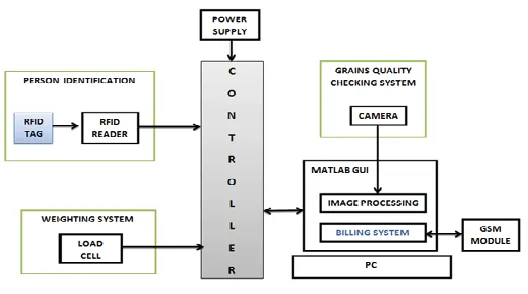
Fig. 1. Block Diagram of Automatic Ration System
All customers have to register for the ration card. The registration is done at each ration shop. For registration all
customers have to provide their personnel details about their family. After this head of family is provided with RFID
card which is used to buy their monthly ration. At ration shop we are using RFID card and RFID reader for
identification. After reading RFID card the reader transmit the unique RFID no to the controller through UART at
this time all other interrupts are disabled. Then controller will scan the database to check that the RFID card is valid
or not. If it is valid then it asks for password from the customer. Keyboard is provided to enter the password. Again
controller matches the password with database if valid member then the weighing machine is activated, the name
and the amount of ration allotted is displayed on the LCD. Using keypad customer has to enter the product’s
corresponding serial number they want to buy along with quantity. After getting the input from the keyboard
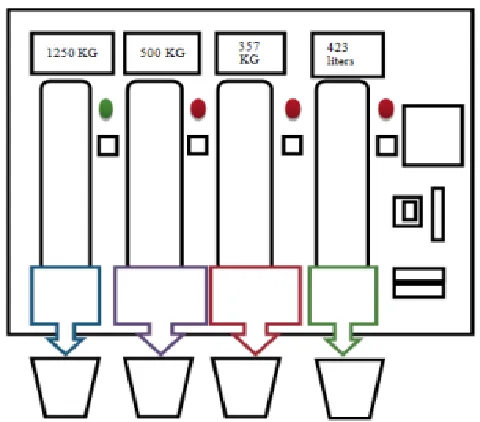
controller open the valve of particular container containing the products whose serial number is entered by the user.
The grain will directly fall into the container placed on weighing machine. Controller continuously monitor the
weight in weighing machine if the weight of grains and the quantity entered by the customer is matched then the
controller will close the valve of container. The system has a one pump and one valve for the purpose of giving oil
363 | P a g e
bill is deducted from his account balance and displayed on screen. Thus the system works for automatic rationing.This system will remove man power to distribute the Ration materials like sugar, Rice, Wheat Etc. It will take less
time to give the people and respective person can took any time like ATM machine. And also the authorized person
cannot sell. Here, we are designing a system where a person displays his/her Aadhar card and our system gives the
Ration to that user.
Replacement for existing Ration Distribution System
It can replace the existing Government of India’s Ration Distribution System which is responsible for
distributing essential commodities to a large number of people through a network of FPS (Fair Price Shops) on
a recurring basis. Our system also performs the same functions in an automated way.
Retail Market Sector
It can be used in retail market sector such as in Shopping Complexes, Supermarkets, and Ration Shops to
automate the process and to sell items without human intervention.
Large Scale implementation
If implemented on large scale it can be used in ration processing factories and organizations for simultaneously
weighing and packaging of items which are intended for selling.
IV. PROPOSED METHODOLOGY
In this system we will remove man power to distribute the Ration material like sugar, Rice, Wheat Etc. It will take
less time to give the people and respective person can took any time like ATM machine.
364 | P a g e
V. RESULTS ANALYSIS
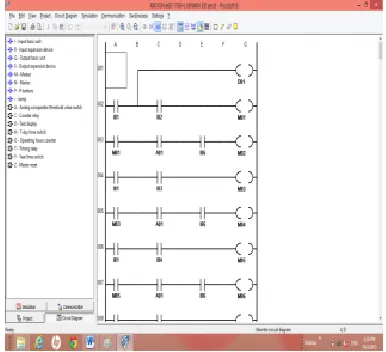
Fig. 3. Ladder diagram of Automatic Ration System
V. CONCLUSION
This proposed Automatic Rationing System can provide a safe, secure and efficient way of public distribution
system. By using this technique ration shops solves the problem of too much manual process in Public Distribution
System (PDS). This proposed project definitely paves way for a corruption reduced India in the future. This new
technology gives solution and this work will make a great change in Public distribution system and provides benefit
to the government about current stock information and reduce the manpower.
REFERENCES
[1]. A.N.Madur, Sham Nayse, ”Automation in Rationing System Using Arm 7,” International journal of innovative
research in electrical, electronics, instrumentation and control engineering ,vol.1, Issue 4, Jul 2013.
[2]. Rajesh C. Pingle and P. B. Borole,“Automatic Rationing for Public Distribution System (PDS) using RFID and
GSM Module to Prevent Irregularities,” HCTL Open International Journal of Technology Innovations and
Research, vol 2,pp.102-111,Mar 2013.
[3] S.Valarmathy,R.Ramani,”Automatic Ration Material distributions Based on GSM and RFID Technology,”
International Journal of Intelligent Systems and Applications, vol 5,pp.47-54, Oct 2013.
[4] K.Balakarthik,”Closed-Based Ration Card System using RFID and GSM Technology,’’ vol.2, Issue 4, Apr 2013. [5] Dhanojmohan,Rathikarani,Gopukumar,”Automation in ration shop using PLC,” International Journal of Modern
Engineering Research, vol.3,Issue 5,Sep-oct 2013, pp 2291-2977,ISSN:2249-6645.
365 | P a g e
[6] Neha Pardeshi, Trupti Desale, Prajakta Bhagwat, Ruchali Ahire, “Web-Enabled Ration Distribution andControlling” ISSN: 2277- 9477, March 2012.
[7] T.R.Sreenivas,”A case of supply chain management of Public Distribution System operations in the Chhattisgarh state of India”, 3 – 7 September 2012. [8] Rajnish Mahajan; “Bar-coded Ration card and Public Distribution System,” 13th July 2012.
[8] Rajnish Mahajan; “Bar-coded Ration card and Public Distribution System,” 13th July 2012.
[9] Ministry of Consumer Affairs, Food and Public Distribution Department of Food and Public Distribution,
Annual Plan 2011-12.
[10] Umang Sharma, Vaibhav Kumar, Vikalp Chauhan,”Electronic Ratio Distribution system,”.