49 | P a g e
Online Resource Scheduling under
Concave Pricing for Cloud Computing
1
M.Chandana,
2A.Mahesh.
1
Pursuing M.Tech (CSE),
2Working as an Assistant Professor, Department of CSE,
Visvesvaraya College of Engineering & Technology, Affiliated to JNTUH, Telangana, (India)
ABSTRACT
With the blasting development of distributed computing industry, computational assets are promptly and
flexibly accessible to the clients. Keeping in mind the end goal to pull in clients with different requests, most
Infrastructure-as-a-benefit (IaaS) cloud specialist organizations offer a few evaluating systems, for example, pay
as you go, pay less per unit when you utilize all the more (supposed volume rebate), and pay even less when you
save. The assorted estimating plans among various IaaS specialist organizations or even in a similar supplier
frame a complex monetary scene that sustains the market of cloud merchants. By deliberately planning
numerous clients' asset asks for, a cloud specialist can completely exploit the rebates offered by cloud specialist
co-ops. In this paper, we concentrate on how an intermediary may enable a gathering of clients to completely
use the volume to markdown estimating procedure offered by cloud specialist organizations through
cost-effective online asset planning. We introduce a randomized online stack-driven booking calculation (ROSA)
and hypothetically demonstrate the lower bound of its focused proportion. Our recreation demonstrates that
ROSA accomplishes a focused proportion near the hypothetical lower bound under a unique case cost work.
Follow driven reenactment utilizing Google group information shows that ROSA is better than the ordinary web
based planning calculations as far as cost sparing.
I. INTRODUCTION
In the previous couple of years, we have seen the huge improvement of distributed computing, with more cloud
specialist organizations hopping on the cloud fleeting trend. Alongside the steady development of vast scale
open cloud suppliers like Amazon EC, Windows Azure and Rack space, little scale cloud suppliers, for
example, Ready Space and Go Grid have overwhelmingly risen. Regardless of the buildup about distributed
computing, in any case, the genuine appropriation rate of distributed computing is still behind desire,
particularly outside the United States. Obviously, to the whole cloud industry, it is essential to invigorate end
clients' investment in distributed computing. From an individual cloud specialist co-op's viewpoint, it is vital to
keep its aggressiveness among peer cloud specialist co-ops. As dissected in, the best way to distributed
computing achievement is to create satisfactory estimating methods. In an Infrastructure-as-a-Service (IaaS)
cloud, the cloud supplier powerfully fragments the physical machines, utilizing virtualization advancements, to
oblige different virtual machine (VM) asks for from its clients. On a fundamental level, the clients just need to
pay for the asset they really devoured.In any case, the compensation as-you-utilize valuing model is by and by
50 | P a g e
arrange data transmission, virtual CPU time, memory space, et cetera. Subsequently, genuine charging plans inIaaS cloud have turned out to be ludicrously confounded. For example, cloud suppliers as a rule embrace a
hourly charging plan, regardless of the possibility that the clients don't really use the distributed assets in the
entire charging skyline. In the present cloud showcase, many cloud suppliers over huge markdown for held and
long haul demands. Also, cloud suppliers for the most part give volume markdown to clients with solicitations
of expansive amount, e.g., Amazon EC2 cloud gives 10% rebate for clients burning through $25; 000 or above
on held cases and 20% rebate for clients burning through $200; 000 or above. The different evaluating plans and
different rebate over among deferent IaaS specialist organizations or even inside a similar supplier shape a
complex monetary scene route outside the ability to control of individual end clients. This leaves open doors for
the cloud agents to rise as go betweens between the clients and the suppliers. Following the above pattern,
committed cloud intermediaries are rising to enable clients to settle on better buy choices. Late work
demonstrates that cloud agents who intervene the exchanging procedure between the clients and the cloud
suppliers can altogether lessen the cost for the clients while assisting the cloud suppliers with reshaping or
smooth out the burst in the approaching VM ask. Late market contemplate expects that the worldwide cloud
administrations financier market will be worth $10:5 billion US dollars by 2018. A cloud specialist can help
diminish the cost of clients through worldly multiplexing and spatial multiplexing of assets. By worldly
multiplexing, the representative exploits suppliers' hourly charging cycles to utilize a client's unused asset for
executing other clients' assignments. The objective is to boost asset usage so more clients can be suited and
consequently each can pay less. By spatial multiplexing, the specialist exploits volume rebate by pressing
various clients' asset solicitations to meet the suppliers' high limit for mass asset buy, along these lines, the
aggregate cost can be decreased and each can pay less thusly. While the upsides of transient multiplexing have
been completely examined some time recently, the advantage of spatial multiplexing stays less investigated.
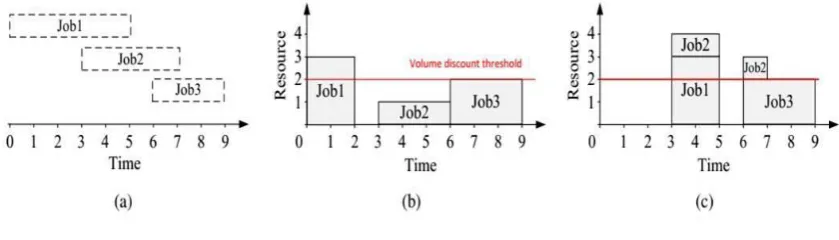
Fig. 1: Example of regular scheduler not delivering the timetable with ideal cost. While being overloaded with
volume rebate from a cloud specialist co-op, end clients may belling to alter the execution speed of their
employments, particularly those time-adaptable and interference tolerant
assignments, with the goal that a higher volume rebate can be appreciated because of the higher measure of
aggregate asked for asset of the occupations from a gathering of clients. We utilize a case to outline that regular
booking may not prompt the ideal cost under volume markdown. As appeared in Fig. 1 (a), we have three
51 | P a g e
measured by the measure of asked for asset) of 6 and a most extreme handling speed1 of 3. Occupation 2touches base at time 3 with a due date of 7, a workload of 3 and a most extreme preparing velocity of 1.
Occupation 3 touches base at time 6 with a due date of 9, a workload of 6 and a greatest preparing pace of 2.
Assume that the limit for volume rebate is 2, a traditional scheduler may plan a vocation with its greatest
handling speed beginning from the moment when the activity is submitted, as appeared in Fig. 1 (b). Under this
calendar, two units of workload from work 1 can appreciate the volume markdown. We can watch that putting
off the beginning time for handling work 1 to time 3 and partitioning the execution of occupation 2 into two
sections give better open door in getting a charge out of volume rebate, as appeared in Fig. 1 (c). Despite the
fact that deferent cloud specialist co-ops may over deferent valuing systems with volume rebate, an evaluating
technique with volume markdown can be demonstrated as an inward capacity when all is said in done, i.e., the
aggregate cost of two separate buys for asset sums r1 and r2, individually, ought to be no not as much as the cost
of a solitary buy of a similar aggregate asset sum r1 + r2. To find cost antiquated web based planning calculation
under an inward cost work.
this paper makes the following contributions:
_ Under a non specific inward cost work, we explore the fundamental highlights that a cost ideal planning ought
to have.
_ Three unique instances of the sunken cost booking issue are presented, to be specific, planning under a straight
capacity with a settled actuation cost, laminar-organized employment solicitations, and unit work demands with
pleasing due dates. We demonstrate that every uncommon case can be settled ovine utilizing a polynomial
calculation.
_ We propose an online demand reshaping calculation, called randomized online stack-driven booking
calculation (ROSA), under a bland sunken cost work. We hypothetically demonstrate the lower bound of its
aggressive proportion and assess its execution with follow driven reenactment
1. In this illustration, the preparing pace of an occupation is thought to be equivalent to its immediate asset
utilization which is charged in like manner. utilizing Google group information. Test comes about demonstrate
that ROSA accomplishes a focused proportion near the hypothetical lower bound under the extraordinary case
cost work and is better than the traditional web based planning calculation regarding cost sparing.
Whatever remains of the paper is sorted out as takes after. In Section 2, we detail the sunken cost work planning
issue. In Section 3, we break down the properties that an ideal calendar ought to have. In Section 4, Section 5,
and Section 6, we think about three unique instances of the sunken cost planning issue, booking under a direct
capacity with a settled enactment cost, laminar-organized employment solicitations, and unit work demands
with pleasing due dates, separately. In Section 7, we propose and think about a randomized online calculation,
ROSA, which accomplishes low aggressive proportion with a direct multifaceted nature. Area 8 shows our test
52 | P a g e
II. PROBLEM FORMULATION
This paper considers the asset booking issue for IaaS mists, where different clients may submit work asks for at
arbitrary moments with irregular workload that ought to be satisfied some time recently determined due date to
an intermediary. We expect that the between entry times for work demands are subjective. We accept that the
handling time for each activity is deterministic and known to the merchant given the asset apportioned to the
activity. The representative is in charge of acquiring computational asset from IaaS mists, apportioning asset to
and executing employments, and meeting work due dates. The due dates determined by the clients are adaptable.
Deferent from PaaS cloud, where the clients straightforwardly submit work solicitations to cloud specialist
co-ops, agents intercede the procedure by sorting out the activity asks for in a way which benefits the most from the
volume rebates gave by the cloud supplier. Both the cloud supplier and the clients advantage from this
intervention. Singular clients can appreciate volume rebates which frequently require a vast volume of
employment demands. The cloud supplier profits by the income supported by the business. To ease
investigation, we expect that time is opened, and occupations touch base toward the start of a vacancy. In any
unit availability, a vocation either is designated with no asset or utilizations dispensed asset in the entire
schedule opening, unless generally expressed. For accommodation, an arrangement of images recorded in Table
1 are utilized. Accept that n work demands, J1; J2; : ; Jn, are submitted amid the time interim [0; t], where t is a
discretionary time occasion. Separately, let tai ;tdi ;wi mean the entry time, due date, and the workload of
employment ask for Ji. We set a maximum point of confinement on the asset that could be distributed to
assignment Ji whenever moment, indicated by ui where ui _ wi. We acquaint ui with mirror the case that the
execution of an assignment can't be additionally quickened given extra asset. An assignment Ji can be meant by
a tulle <tai ;tdi ;wi; ui>.
We accept that the cloud supplier has plenteous figuring limit whenever moment t. The representative isn't
confined to give rise to measure of asset to each running activity. The intermediary can alter the registering asset
distributed to each errand Ji at time t, meant by ri(t). Normally, ri(t) = 0 demonstrates that no asset is doled out
to Ji at time t. On the off chance that Jihas just been mostly handled, it is stopped at t. This suspicion is
hypothetically sensible and essentially possible. Hypothetically, as long as each assignment meets its due date,
the scheduler ought to have the flexibility to allot the assets to diminish the cost. Basically, there are many
methodologies of powerfully altering the assets dispensed to a running occupation. For instance, the asset
allotment for undertakings actualized in Apache Hardtop can be controlled by powerfully changing the quantity
of guide peers. Formally, we require that ri(t) be piecewise consistent with limitedly numerous discontinuities.
We characterize R(t) as the aggregate designated asset at time t.
i.e., R(t) = P I ri(t).
The structure is nonexclusive since ui, ri(t), and R(t) can speak to an asset, for example, CPU, memory, organize
data transfer capacity, and circle. The specialist buys computational asset from IaaS mists and needs to pay for
the asset cost. The agent means to meet all employment due dates while lessening the aggregate asset cost. We
display the asset cost as takes after. Related with the allotted asset at time t, R(t), is an asset cost, which can be
53 | P a g e
Immediate asset cost at time t = f (R(t)): (1) The clients assess the agent in view of two elements: Whether theactivity due dates are met and the value they have to pay for their occupations. On the off chance that the
specialist can get markdown for the aggregate asset cost of all employments. It can redistribute the rebate to
each and every activity so all clients can profit by it. An insignificant illustration would utilize a corresponding
cost sharing plan, i.e., the cost to pay for a vocation is relative to the measure of asset the activity employments.
Accordingly, the cost for work Ji at time t is figured as: ri(t) R(t) f (R(t)). An achievable activity plan comprises
of asset capacities ri(t); I =1; : ; n, characterized over the whole time pivot that fulfill:
R tditai
ri(t)dt _ wi; i = 1; : : : ; n; (2)
0 _ ri(t) _ ui; t 2 [tai ; tdi ]; i = 1; : : : ; n; (3)
ri(t) = 0; t < [tai ; tdi ]; i = 1; : : : ; n: (4)
The optimal resource scheduling problem is to find a feasibleschedule that minimizes the total cost:min
ri(t)C =Z 10
f (R(t))dt (5)
Essentially deferent from past work on speed scaling, the cost work isn't thought to be raised for our situation.
Rather, it is approximated as a sunken capacity. The ideal undertaking planning issue ends up being limiting a
sunken capacity, which is difficult to understand. The absence of convexity in the cost work refutes every single
existing arrangement, for example, those in. Note that straight programming (LP) with adjusting guess is usually
utilized for compelled ideal occupation booking issues. In Section 4, we show that by demonstrating properties
of ideal arrangements, exquisite planning calculation can be discovered when finding a fitting LP arrangement is
hard.
III. OFLINE RESOURCE SCHEDULING:
Minimization with an inward cost work as a rule falls into the class of NP-difficult issues, for instance, the
curved system stream issue. This incompletely recommends the hardness of our booking issue. In spite of the
fact that we have not formally demonstrated its NP-saddle, we have found the properties of ideal booking with a
general sunken cost work. These properties furnish us with important bits of knowledge on settling on cost-old
choices in ovine and online asset booking. Moreover, these properties have enlivened us to locate an ideal ovine
booking calculation for an exceptional sunken cost work. In this area, we introduce the properties that an ideal
timetable ought to have and call attention to why it is difficult to concoct an ideal planning calculation with
polynomial multifaceted nature. Extra images utilized are recorded.
The useful importance of Lemma 1 is as per the following. We expect that the cost work is sure,
non-diminishing, and piecewise curved. The asset cost of work plan is processed utilizing. The cost ideal approach to
plan work Ji in an interim where no different employments are planned is to dispense the most extreme
conceivable asset, ui, to Ji for lessening its handling time. With Lemma 1, it is anything but difficult to
54 | P a g e
Shockingly, the opposite of Corollary 1 isn't valid. We have the accompanying counter case. Let J1 =< 0; 1; 1; 1>, J2 =< 0; 2; 5; 5 >, J3 =< 1; 3; 5; 5 > and J4 =< 2; 3; 1; 1 > be four occupations
to be planned. We expect that the cost work is f (x) = px. Fig. 2 (a) demonstrates an all inclusive ideal calendar
with the ideal cost 2p 6 _ 4:90 which fulfills the property of Corollary 1. Fig. 2 (b) demonstrates a non-ideal
calendar which additionally fulfills the condition of Corollary 1 with a cost of 2 +p 10 _ 5:16.
IV. LAMINAR STRUCTURED JOB REQUESTS
In this area, we ponder a unique example of occupation asks for under general inward cost capacities. The
condition for this exceptional example can be depicted as takes after. For any match of jobs,J1 =< ta1; td1 ;w1;
u1 > and J2 =< ta 2; td2 ;w2; u2 >, with the end goal that ta1 _ ta2,exactly one of the accompanying conditions
hold: (1). td 1 _ ta 2 or (2).td1 _ td2 . In other word, interim [ta1; td1 ] either contains interval[ta2; td2 ], or the
two interims are totally unrelated to each other. A straightforward illustration is shown in Fig. 3. In Fig. 4, the
time interims, in which the occupations can be designated, are spoken to utilizing circles. We check the circles
utilizing their relating occupations, Ji; I 2 N. We draw a bolt from hover Ji to circle Jj if and just if ta I _ taj and
tdi _ tdj. Give us a chance to call this a laminar structure since the circles not pointed by any bolts frame the best
lamina, the circles just pointed by one bolt shape the second lamina, et cetera.
On the off chance that the laminar structure of an arrangement of occupation demands, S J , is made out of a few
disjoint trees, we can join them as a solitary tree by including a spurious activity ask for which has the soonest
landing time and the most recent due date. A sub tree of S J is a subset of S J which is likewise a sub tree of the
tree structure portrayal of S J . For instance, J2, J3, and J4 shape a sub tree of the laminar organized activity
demands appeared in Fig. 4. Before presenting the ideal planning calculation, we initially think about the
55 | P a g e
V. EXPERIMENTAL EVALUATION
In this area, we do four arrangements of analyses. The primary, second, and third arrangements of investigations
go for assessing the snugness of the aggressive proportion examination presented in Theorem 2 for the three
unique cases, straight capacity with a settled actuation cost, laminar-organized employment solicitations, and
unit work demands with pleasant due dates. The fourth arrangement of examinations goes for assessing the
execution of ROSA under a nonexclusive inward cost work in contrast with other customary web based booking
calculations utilizing the Google group follow information.
VI. CONCLUSION
Cloud is a rising processing market where cloud suppliers, dealers, and clients share, intercede, and expend
registering asset. With the development of distributed computing, Pay-as-you-go valuing model has been
enhanced with volume rebates to fortify the clients' selection of distributed computing. This paper thinks about
how a dealer can plan the employments of clients to use the evaluating model with volume rebates so the
greatest cost sparing can be accomplished for its clients. We have dissected the properties that an ideal
arrangement ought to have and examined three uncommon instances of the curved cost booking issue. We built
up a web based planning calculation and determined its focused proportion. Reenactment comes about on a
Google information follow have demonstrated that the proposed web based booking calculation beats other
ordinary planning calculations. Albeit constant sunken cost capacities and piece-wise straight cost capacities are
used to lead the assessment, the properties demonstrated and the online calculation proposed apply to all
piecewise curved cost capacities. The work is the underlying advance towards concentrate the practices and
systems of cloud specialist organizations, dealers, and end clients when opening or confronting a valuing model
with volume rebates. It opens an entryway for some fascinating issues along the line. For instance, how a cloud
specialist organization could decide its valuing plans (with volume rebates) given the objective client conduct of
cost sparing alongside different contenders to expand its income. To appreciate volume rebates, the clients are
urged to give free due dates, since tight due dates leave a little window for cost sparing.
REFERENCE:
[1] C. Fu, Y. Zhao, M. Li, and C. J. Due.Expanding normal sit out of gear time on multi-center processors with
shared memory. Submitted to International Conference on Embedded Software (EMSOFT'14), 2014.
[2] Amazon. Amazon versatile register cloud (amazons ec2). http://aws.amazon.com/cn/ec2/.
[3] L. Andrew, A. Wireman, and A. Tang. Ideal speed scaling under discretionary power capacities. ACM
SIGMETRICS Performance Evaluation Review, 37(2):39– 41, 2009.
[4] A. Antoniadis and C.- C. Huang. Non-preemptive speed scaling. Diary of Scheduling, 16(4):385– 394, 2013.
[5] Apache. Apache hardtop. http://hadoop.apache.org/.
[6] N. Trite, H. Chan, and K. Push. Speed scaling with a self-assertive power work. In Proceedings of the
56 | P a g e
[7] A. Borodin and R. El-Yana.Online Computation and Competitive Analysis.Cambridge University Press,New York, NY, USA, 1998.
[8] J. Chang, H. Gabo, and S. Huller.A model for limiting dynamic processor time.In Algorithms ESA 2012,
volume 7501 of Lecture Notes in Computer Science, pages 289– 300.Springer Berlin Heidelberg, 2012.
[9] P. Chapala mopes. Expanding the selection rates of distributed computing.
http://www.academia.edu/3400195/Increasing the reception rates of distributed computing.
[10] N. Gutting. Affirmed: Cloud framework evaluating is silly. http://www.itworld.com/distributed
computing/387149/affirmed cloud-iaas-valuing crazy.
[11] P. Parasol. Calculations for the single-source debilitated least sunken cost organize stream issue. Diary of
Global Optimization, 1(3):245– 265, 1991.
[12] T. Hen humdinger, A. Singh, V. Singh, T. Insightful, and D. Zu_erey. Flex cost: Flexible provisioning of
assets in a cloud situation. In Cloud Computing (CLOUD), 2010 IEEE third International Conference on,
pages 83– 90, 2010.
AUTHOR DETAILS
M.ChandanaPursuing M.Tech (CSE),(15BT1D5822) from Visvesvaraya College of Engineering &
Technology, M.P. Patelguda, Ibrahimpatnam, Hyderabad. Telangana , Affiliated toJNTUH, India.
Mr. Mahesh Akuthota:Working as Asst. Professor (CSE) in Visvesvaraya College of Engineering and