O R I G I N A L R E S E A R C H
In vitro effect of fosfomycin on multi-drug
resistant gram-negative bacteria causing urinary
tract infections
This article was published in the following Dove Press journal: Infection and Drug Resistance
Pallam Gopichand1
Girija Agarwal2
Mailan Natarajan1
Jharna Mandal1
Surendran Deepanjali3
Sreejith Parameswaran4
LN Dorairajan5
1Department of Microbiology, Jawaharlal
Institute of Postgraduate Medical Education & Research (JIPMER),
Pondicherry, India;2Jawaharlal Institute of
Postgraduate Medical Education & Research (JIPMER), Pondicherry, India;
3Department of Medicine, Jawaharlal
Institute of Postgraduate Medical Education & Research (JIPMER),
Pondicherry, India;4Department of
Nephrology, Jawaharlal Institute of Postgraduate Medical Education & Research (JIPMER), Pondicherry, India;
5Department of Urology, Jawaharlal
Institute of Postgraduate Medical Education & Research (JIPMER), Pondicherry, India
Background:Rising rates of resistance to antimicrobial drugs amongEnterobacteriaceaelimit the choice of therapeutic agents to treat urinary tract infections. In this context we assessed the in-vitro effect of fosfomycin against extended-spectrum beta-lactamases, AmpC beta-lactamases
and carbapenemase-producing strains ofEscherichia coli, Klebsiella pneumoniae, Enterobacter
spp, andPseudomonas aeruginosaisolated from the patients with urinary tract infection (UTI)
and also studied the effect of fosfomycin on their biofilm formation.
Materials and methods: A total of 326 multidrug-resistant (MDR) isolates comprising of Escherichia coli, Klebsiella pneumoniae, Enterobacterspp, andPseudomonas aeruginosafrom the urine samples of the patients with a diagnosis of UTI were included in the study. MIC 50 and
MIC 90 were detected by agar dilution method and the capacity to form biofilm in the presence of
fosfomycin by these MDR isolates was assessed by the tissue culture plate method.
Results: The MIC50 for meropenem (0.5 µgm/mL) and nitrofurantoin (32 µgm/mL) was
within the susceptible range only for E. coli. Fosfomycin was the only antibiotic that
inhibited 100% E.coli, 70% Klebsiella spp, and 50% Pseudomonas spp and 40%
Enterobacter spp which included the extended-spectrum beta-lactamases producers. It showed a similar effect on carbapenemase producers and AmpC producers. Fosfomycin
disrupted biofilm in 67% (n=141) E.coli, 74% (n=50) Klebsiella spp, 88% (n=27)
Pseudomonas spp and 36% (n=23) Enterobacterspp at 24 hrs of incubation with a con-centration of 2 fold dilution lower than that of the MIC.
Conclusion :Fosfomycin showed a good inhibitory effect on the biofilms produced by the MDR organisms studied here.
Keywords:fosfomycin, MDR, UTI, MIC, biofilm
Introduction
The most common cause of all forms of UTIs is Escherichia coli(uropathogenic
Escherichia coli), followed by other members of Enterobacteriaceae like
Klebsiella, Proteus, Enterobacter spp and other gram positives like Enterococci
andStaphylococcusspp.1
Urinary tract infections caused by drug-resistantEnterobacteriaceaehave been on the rise.2The emergence of the multidrug-resistant (MDR) strains with either inherited or transmissible resistance, is resistant to most of the commonly used antibiotics has become a concern for treating UTI, both in the community as well as the hospital.2
The most disconcerting events are the UTIs caused by Carbapenemase-produ-cing Enterobacteriaceae which are difficult-to-treat and are usually characterized Correspondence: Jharna Mandal
Department of Microbiology, Jawaharlal Institute of Postgraduate Medical Education & Research (JIPMER), Pondicherry, India
Tel +91 967 745 1239 Email [email protected]
Infection and Drug Resistance
Dove
press
open access to scientific and medical research
Open Access Full Text Article
Infection and Drug Resistance downloaded from https://www.dovepress.com/ by 118.70.13.36 on 22-Aug-2020
by high mortality.3Many MDR pathogens are also known
to produce biofilms in catheterized patients which are
extremely difficult to treat.4In this era of increasing anti-microbial resistance, there is definitely a need for a newer drug that is orally active, has low levels of existing resis-tance and also has an effect on biofilms. Fosfomycin is a relatively old drug and the present study was conducted to determine the effect of fosfomycin on MDR pathogens as well as its effect on biofilm formation by these isolates.
Oral single-dose fosfomycin is considerably effective for the treatment of uncomplicated urinary tract infection.5 Other traditional empirical antibiotic regimens which are commonly used for treating uncomplicated urinary tract infections, such as fluoroquinolones and co-trimoxazole, might be not active against these pathogens that produce ESBL and can lead to suboptimum outcomes and treatment failure.6 Apart from fosfomycin, nitrofurantoin, and co-amoxiclav could be other options for oral antimicrobial treatment of ESBL-associated but otherwise uncomplicated urinary tract infections. Furthermore, because of its unique chemical structure and mechanism of action, fosfomycin seems to be spared from the effect of various mechanisms of resistance to antimicrobial drugs. Apart from the
Enterobacteriaceaethat produce ESBL, the very good anti-microbial effect of fosfomycin has also been reported in
Enterobacteriaceae that are resistant to fluoroquinolones. Due to its improved pharmacokinetics, fosfomycin is increasingly used for UTIs and has been approved as an oral single-dose treatment for acute uncomplicated cystitis with mean peak urinary concentration of an oral single dose of 3 g fosfomycin tromethamine, while concentrations suf-ficient to inhibit the majority of the urinary pathogens can be maintained for 1 to 2 days. Though this easy dosage schedule ensures compliance but the chance of clinical cure
may be compromised.7
Materials and methods
Study design
The study was conducted in Jawaharlal Institute of Postgraduate Medical Education & Research (JIPMER) which is a tertiary care referral center, an Institute of National Importance under the Ministry of Health and Family Welfare, Government of India. Urinary isolates from the in-patients with clinically diagnosed UTI (dysuria, frequency, urgency, suprapubic tenderness, the presence of pus cells in urine/high powerfield) admitted in the depart-ments of Medicine, Nephrology, and Urology were included.
Inclusion criteria
Allfirstfifty consecutive, nonrepetitive MDR isolates in a month for a period of one year (2016–2017) from the urine obtained from these patients admitted in the respective departments were included in the study. Only a single isolate from the first sample submitted in the laboratory was included from the patient. The demographic details and comorbid conditions of the respective patients were collected prospectively in a prescribed proforma.
Exclusion criteria
Pediatric patients (upto 13 yrs) were not included in the study.
Microbiological methods
The specimens were processed using the standard semi-quantitative culture method and isolates were biochemically characterized by using indole production, citrate utilization, urease production, kligler iron agar, mannitol fermentation and motility test medium, lysine and ornithine decarboxy-lases, arginine hydrolysis tests were used as described elsewhere.8,9 Standard American type culture collection (ATCC) control strains (E. coliATCC 25922, andP. aeru-ginosaATCC 27853) within acceptable limits were used as quality control strains for the drugs tested. Susceptibility testing for amikacin, gentamicin, nitrofurantoin, ceftriaxone, ceftazidime, meropenem, andfosfomycin were performed as per the Clinical Laboratory Standards Institute.10 All the isolates identified as multi-drug resistant based on the cri-teria of the European Centre for Disease Control (non-susceptible to ≥1 agent in ≥3 antimicrobial categories) were tested with fosfomycin.10The MIC of all isolates to the drugs included in the study was determined by the agar dilution method. For susceptibility testing by the agar tion method, Mueller-Hinton agar with serial two-fold dilu-tion of the drug was prepared from the stock antibiotic solution as described by CLSI.10 For fosfomycin suscept-ibility testing by the agar dilution method, Mueller-Hinton agarsupplemented with 25 µg/mL of glucose-6-phosphate was used. The MIC of each antimicrobial agent was defined as the lowest concentration that inhibited the visible growth of the organism. Control strains, including E. coli ATCC 25922, and P. aeruginosa ATCC 27853, were included in each set of tests. The MIC of the fosfomycin were noted based on both CLSI (S 64, I =128. R> 256) guidelines forEscherichia colisince, CLSI do not prescribe any criteria for Pseudomonas aeruginosa and Enterobacteriaceae
Infection and Drug Resistance downloaded from https://www.dovepress.com/ by 118.70.13.36 on 22-Aug-2020
other thanEscherichia coli, EUCAST interpretative criteria (S 32, R>32) for all isolates ofEnterobacteriaceaeand
Pseudomonas aeruginosa other than Escherichia colim
were used.10,11 The various beta-lactamases namely, the ESBL, AmpC, and MBL were screened using the combina-tion discs. ESBL producers were detected by using combi-nation discs of ceftriaxone, ceftazidime and clavulanic acid. AmpC producers were detected by cefoxitin-EDTA disk diffusion test while MBL producers were detected by Double-disk synergy test (DDST).10
Biofilm formation of this MDR isolates wasperformed by tissue culture plate method described by Christensen et al12. Briefly, the isolates from fresh agar plates were inoculated in Trypticasesoya broth (TSB) media and incubated for 18 hrs at 37 °C in a stationary condition and diluted 1 in 100 with fresh TSB medium. Individual wells of sterile, polystyrene, 96 well-flat bottom tissue culture plate were filled with 0.2 mL aliquots of the diluted cultures and only broth without culture is used as a control to check sterility and non-specific binding of media. The tissue culture plates were incubated for 16 hrs and 24 hrs at 37 °Cseperately. After incubation, the content of each well was gently removed by tapping the plates. The wells were washed four times with 0.2 mL of phosphate buffer saline (PBS pH 7.2) to remove free-floating
“planktonic”bacteria. Biofilms formed by adherent“sessile” organisms in the plate werefixed with sodium acetate (2%) and stained with crystal violet (0.1% w/v). The excess stain was rinsed off by thorough washing with deionized water and plates were kept for drying. Optical density (OD) of stained adherent bacteria was determined with a micro ELISA auto reader at a wavelength of 570 nm (OD 570 nm). These OD values were considered as an index of bacteria adhering to
surface and forming biofilms. The experiment was
per-formed in triplicate and the data were averaged and the standard deviation was calculated. To compensate for back-ground absorbance, OD readings from sterile medium,fi xa-tive, and dye were averaged and subtracted from all test values. Then the values obtained from with and without fosfomycin were compared. The mean OD value obtained from media control well was deducted from all the test OD values. This was done in the presence of fosfomycin and without fosfomycin. Fosfomycin was used at a concentration below twofold the level of MIC of different isolates.
Statistical analysis
The stastical analysis was performed using SPSS software 19.0 version. The distribution of categorical data such as gender, clinical characteristics, antibiotic resistance profile,
MDR isolates, and biofilm inhibition status was expressed as frequency and percentage. The association of the isolates on biofilm inhibition status at different time periods was carried out by using a chi-square test. The change in the biofilm inhibition status over time was carried out by using McNemar’s test. All statistical analyses were carried out at 5% level of significance and p-value<0.05 was considered significant.
Results
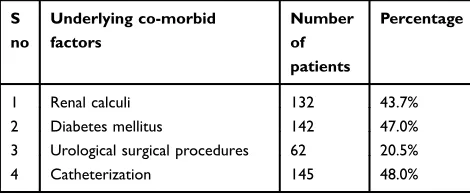
Among these MDR organisms isolated from the patients, catheterization was the most common risk factor followed by diabetes mellitus, renal calculi and Urological surgical procedures (Table 1). MIC50 for meropenem (0.5 µgm/mL) and nitrofurantoin (32 µgm/mL) was within the susceptible range only forE. coli(Table 2). On the other hand, fosfo-mycin was the only antibiotic that good inhibitory effect on
E.coli, Klebsiella, andamoderate effect on Pseudomonas
spp and Enterobacter spp which included the
extended-spectrum beta-lactamases producers, carbapenemase produ-cers and AmpC produprodu-cers with (Tables 3,4). Fosfomycin disrupted biofilm better at 24 hrs of incubation inE.coliat a
concentration of 0.5 µgm/mL and in Klebsiella spp,
Pseudomonasspp andEnterobacterspp at a concentration of 8 µgm/mL. The difference of inhibition of biofilm
for-mation in Escherichia coli and K.pneumoniae, and
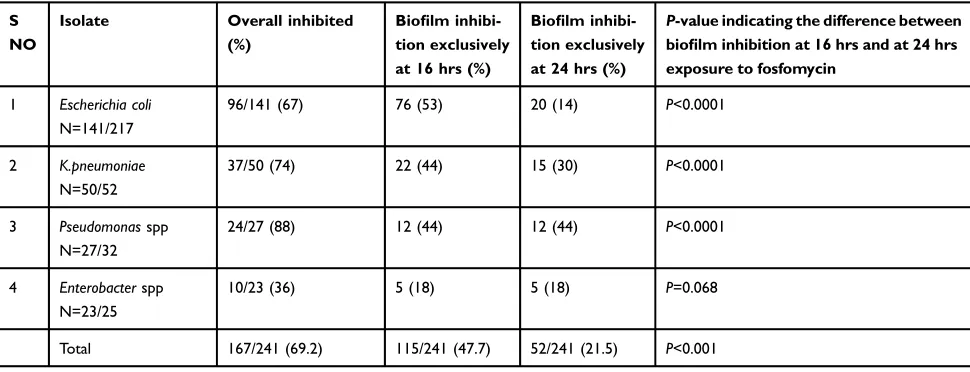
Pseudomonasspp at 16 hrs and at 24 hrs was statistically significant (P-value <0.0001) (Table 5).
Discussion
A sum total of 326 non-repetitive MDR isolates was collected and subjected to MIC. Out of 326 isolates, 231 (73.4%) were from patients admitted under Medicine, 73 (21%) were from Urology and 22 (6%) were from Nephrology.
In the present study, we assessed the effect of
fosfo-mycin in gram-negative MDR urinary isolates.E.coliwas
the most common isolate among all the MDR isolates
Table 1The underlying comorbid conditions in the study group
S no
Underlying co-morbid factors
Number of patients
Percentage
1 Renal calculi 132 43.7%
2 Diabetes mellitus 142 47.0%
3 Urological surgical procedures 62 20.5%
4 Catheterization 145 48.0%
Infection and Drug Resistance downloaded from https://www.dovepress.com/ by 118.70.13.36 on 22-Aug-2020
T able 2 Antibiotic resistance pr o fi le of differ ent isolates in the study gr oup V arious departments included in the study Amikacin Gentamicin Mer openem Ceftazidime Ceftriaxone Cipr o fl o xacin Nitr ofurantoin F osfom ycin Escher ichia coli (% resistance) T otal N=217 Medicine N=158 53 (33.5%) 155 (98.1%) 30 (18.9%) 154 (97.4%) 158 (100%) 158 (100%) 19 (12%) 0 Ur ology N=52 21 (40.3%) 49 (94.2%) 13 (25.1%) 43 (82.6%) 52 (100%) 52 (100%) 9 (16%) 0 Nephr ology N=7 4 (57.1%) 3 (42.8%) 1 (14.2%) 5 (71.4%) 6 (85.7%) 7 (100%) 1 (17%) 0 K.pneumoniae (% resistance) T otal N=52 Medicine N=44 40 (90.9%) 43 (97.7%) 33 (75%) 42 (95.4%) 44 (100%) 44 (100%) 20 (45%) 0 Ur ology N=5 5 (100%) 4 (80%) 3 (60%) 3 (60%) 4 (80%) 4 (80%) 2 (40%) 2 (40%) Nephr ology N=3 2 (66.6%) 3 (100%) 2 (66.6%) 2 (66.6%) 3 (100%) 3 (100%) 2 (66%) 1 (30%) Pseudomonas spp (% re sistance) T otal N=32 Medicine N=15 15 (100%) 15 (100%) 12 (80%) 12 (80%) NA 15 (100%) NA 0 Ur ology N=10 10 (100%) 10 (100%) 8 (80%) 8 (80%) NA 10 (100%) NA 5 (50%) Nephr ology N=7 6 (85.7%) 6 (85.7%) 6 (85.7%) 6 (85.7%) NA 6 (85.7%) NA 4 (57%) Enterobacter spp (% re sistance) T otal N=25 Medicine N=8 8 (100%) 8 (100%) 6 (75%) 6 (75%) 8 (100%) 8 (100%) 4 (50%) (0%) Ur ology N=10 10 (100%) 10 (100%) 8 (80%) 8 (80%) 10 (100%) 10 (100%) 8 (80%) 5 (50%) Nephr ology N=7 6 (85.7%) 6 (85.7%) 6 (85.7%) 6 (85.7%) 6 (85.7%) 6 (85.7%) 6 (85.7%) 4 (57%)
Infection and Drug Resistance downloaded from https://www.dovepress.com/ by 118.70.13.36 on 22-Aug-2020
identified from different wards included in the study. Most of the MDR isolates included in the study were from patients with complicated UTI in the form of catheteriza-tion or associated diabetes mellitus, renal calculi or
post-urological procedures (Table 1). In this context, MDR
isolates being more commonly isolated from catheterized individuals could be a reflection of colonization and some may be due to catheter-associated UTI, though this was not determined in the study.
We observed that almost all the isolates which were obtained from patients admitted in the various departments included in the study showed variable but high resistance to most of the antibiotics while most remained sensitive to fosfomycin (Table 2). Among all isolates,Escherichia coli
(100%) seemed to be the most susceptible to fosfomycin
followed by Klebsiella spp (70%), and Enterobacter spp
(60%). Other UTI pathogens like Pseudomonas spp also
showed moderate (50–60%) susceptibility to fosfomycin
Table 3 Mechanism of beta-lactam resistance detected by phenotypic methods and effect of fosfomycin on different beta-lactam resistant isolates
Mechanism of beta-lactams resistance detected phenotypically
Isolates with visible growth at different concentration of fosfomycin and (%) resistance of isolates to fosfomycin
MIC of fosfomycin [µgm/mL] 16 32 64 128 256 512 1026
ESBL producers N=319 Escherichia coli* N=216
0 0 0 0 0 0 0
K.pneumoniae# N=49
14 (30) 14 (30) 14 (30) 14 (30) 10 (20) 6 (12.2) 2 (4)
Pseudomonassppα N=32
16 (50) 16 (50) 16 (50) 16 (50) 16 (50) 12 (38.4) 3 (9)
Enterobactersppδ N=22
15 (68) 10 (45) 10(45) 9 (40) 9 (40) 5 (22.7) 1 (4)
MBL producers N=138 Escherichia coli* N=44
0 0 0 0 0 0 0
K.pneumoniae# N=38
19 (50) 19 (50) 19 (50) 19 (50) 19 (50) 18 (47.3) 4 (10)
Pseudomonassppα N=32
16 (50) 16 (50) 16 (50) 16 (50) 16 (50) 12 (37.5) 3 (9)
Enterobactersppδ N=20
9 (45) 9 (45) 9 (45) 9 (45) 8 (40) 8 (40) 2 (10)
AmpC BL Producers N=158 Escherichia coli* N=64
0 0 0 0 0 0 0
K.pneumoniae# N=38
16 (42) 16 (42) 16 (42) 15 (39) 10 (26) 10 (26) 3 (8)
Pseudomonassppα N=32
16 (50) 16 (50) 16 (50) 16 (50) 16 (50) 12 (37.5) 3 (9)
Enterobactersppδ N=20
8 (40) 8 (40) 8 (40) 8 (40) 6 (30) 4 (20) 1 (5)
Notes:*ForEscherichia colithe MIC of fosfomycin according to CLSI (S64 µgm/mL, I=128 µgm/mL. R>256 µgm/mL).The MIC 50 and MIC 90 of fosfomycin inEscherichia coli was 1 µgm/mL and 2 µgm/mL respectively.#
ForKlebsiella pneumoniaethe MIC of fosfomycin according to EUCAST interpretative criteria (S≤32, R>32). The MIC50 and MIC 90 of fosfomycin inKlebsiella pneumoniaewas 32 µgm/mL and 1026 µgm/mL respectively.αForPseudomonas aeruginosathe MIC of fosfomycin according to EUCAST interpretative criteria (S≤32, R>32). The MIC50 and MIC 90 of fosfomycin inPseudomonas aeruginosawas 32 µgm/mL and 1026 µgm/mL respectively.δForEnterobacterspp the MIC of fosfomycin according to EUCAST interpretative criteria (S≤32, R>32). The MIC50 and MIC 90 of fosfomycin inEnterobacterspp was 32 µgm/mL and 1026 µgm/mL respectively.
Infection and Drug Resistance downloaded from https://www.dovepress.com/ by 118.70.13.36 on 22-Aug-2020
(Table 2). In a study done by Falagas et al and Maraki et al, in Greece have also shown very encouraging suscept-ibility results similar to this study. In the study by Maraki et al, reported fosfomycin was active in vitro against a majority percentage of urinary isolates, which showed high antimicrobial resistance against the most commonly used agents for the treatment of UTIs.13In another study by Mittal et al, all uropathogenic Escherichia colistrains were found to be sensitive to fosfomycin. According to Rajendran et al, fosfomycin was the only antibiotic that effectively inhibited 90% of the strains ofEscherichia coli
andKlebsiellaspp .14
Of the 326 isolates, 319 (97.8%) were resistant to the third generation cephalosporins and were also
extended-spectrum beta-lactamases (ESBL) producers (Table 3). All these isolates were sensitive to fosfomycin (Table 3). In an earlier study done by Gupta et al from Chandigarh, among 150 uropathogenic strains of Escherichia coli, 52.6% of isolates were ESBL producers, and all strains were
sus-ceptible to fosfomycin.15 An increasing trend of ESBL
producers has been observed from India, which is attribu-table to the irrational use and ease of availability of anti-biotics over the counter and such isolates are prevalent among hospitals as well as in the community.16In a study done by Cueto et al, also demonstrated 428 ESBL produ-cing Escherichia coli andKlebsiella pneumoniae strains-were exposed to fosfomycin and it showed high in vitro activity against all these strains.17
Table 4Effect of fosfomycin on different multidrug resistant isolates
MDR isolates Total N=326
MIC of Fosfomycin [µgm/mL] (%)
16 32 64 128 256 512
Escherichia coli* N=217
0 0 0 0 0 0
K.pneumoniae# N=52
18 (35) 18 (35) 18 (35) 18 (35) 11 (20) 6 (12.2)
Pseudomonassppα N=32
16 (50) 16 (50) 16 (50) 16 (50) 16 (50) 12 (38.4)
Enterobactersppδ N=25
15 (59.5) 10 (40) 10 (40) 10 (40) 9 (36) 9 (36)
Notes:*ForEscherichia colithe MIC of fosfomycin according to CLSI (S 64 µgm/mL, I=128 µgm/mL. R>256 µgm/mL).The MIC 50 and MIC 90 of fosfomycin inEscherichia coliwas 1 µgm/mL and 2 µgm/mL respectively.#
ForKlebsiella pneumoniaethe MIC of fosfomycin according to EUCAST interpretative criteria (S 32, R>32). The MIC50 and MIC 90 of fosfomycin inKlebsiella pneumoniaewas 32 µgm/mL and 1026 µgm/mL respectively.αForPseudomonas aeruginosathe MIC of fosfomycin according to EUCAST interpretative criteria (S 32, R>32). The MIC50 and MIC 90 of fosfomycin in Pseudomonas aeruginosa was 32 µgm/mL and 1026 µgm/mL respectively.
δForEnterobactersppthe MIC of fosfomycin according to EUCAST interpretative criteria (S 32, R>32). The MIC50 and MIC 90 of fosfomycin inEnterobacterspp was 32 µgm/mL and 1026 µgm/mL respectively.
Table 5Effect of fosfomycin on biofilm produced by different isolates
S NO
Isolate Overall inhibited
(%)
Biofilm
inhibi-tion exclusively at 16 hrs (%)
Biofilm
inhibi-tion exclusively at 24 hrs (%)
P-value indicating the difference between
biofilm inhibition at 16 hrs and at 24 hrs
exposure to fosfomycin
1 Escherichia coli N=141/217
96/141 (67) 76 (53) 20 (14) P<0.0001
2 K.pneumoniae N=50/52
37/50 (74) 22 (44) 15 (30) P<0.0001
3 Pseudomonasspp N=27/32
24/27 (88) 12 (44) 12 (44) P<0.0001
4 Enterobacterspp N=23/25
10/23 (36) 5 (18) 5 (18) P=0.068
Total 167/241 (69.2) 115/241 (47.7) 52/241 (21.5) P<0.001
Infection and Drug Resistance downloaded from https://www.dovepress.com/ by 118.70.13.36 on 22-Aug-2020
In comparison to the ESBLs, AmpC beta-lactamases are known to be notorious, as they hydrolyze not only the third generation cephalosporins (3GCs) but also beta-lactamase inhibitor plus beta-lactam combinations. Though carbapenems are the drug of choice against these organisms fosfomycin has been found to be effective in vitro in earlier studies.13,18 Fosfomycin showed a similar effect on AmpC BL producing
Escherichia coli (100%), (57%) in Enterobacter spp, and (38%) inKlebsiella pneumoniae. It also inhibited AmpCBL
Pseudomonas spp (30%) (Table 3). Karlowsky et al too reported 99.4% fosfomycin susceptibility against urinary iso-lates ofEscherichia coli, collected from 2010 to 2013 as a part of the Canadian national surveillance study.19 Beta-lactamase-producing isolates and AmpC-Beta-lactamase-producing isolates of E. coli
showed 94.9% and 96.6% susceptibility respectively.19
Carbapenemase-producingEnterobacteriaceae(CRE) is
a major threat across the globe.20In vitro effect of fosfomy-cin has been documented on some CRE isolates in an earlier study.21In our study, fosfomycin showed a similar inhibitory effect on carbapenemase producingEscherichia coli(100%),
50% each inKlebsiella pneumoniae andEnterobacterspp,
while it inhibited 30% of the isolates ofPseudomonasspp
(Table 3). In a study done by Banerjee et al in a 380 bedded
tertiary care hospital in Kolkata, similar results with 89% inhibition with fosfomycin on CRE isolates were observed.22 Of 217 Escherichia coli MDR isolates included in the study, 78 (35.9%) and 207 (95.4%) were resistant to amika-cin and gentamiamika-cin respectively, while fosfomyamika-cin showed 100% inhibition in vitro against these isolates (Table 4). On the other hand, fosfomycin inhibited 60% of MDRKlebsiella pneumoniaeandEnterobacterspp which were (94%) resis-tant to both aminoglycosides while fosfomycin inhibited 50% of Pseudomonasspp that are resistant to aminoglyco-sides (Table 4). Fosfomycin showed a similar inhibitory effect on Escherichia coli (100%), 60% each inKlebsiella pneumoniaeandEnterobacterspp, while it inhibited 50% of the isolates ofPseudomonasspp that were (98%) resistant to fluoroquinolones (Table 4).
In contrary to a study done elsewhere,23our observation showed good in vitro susceptibility to fosfomycin and nitro-furantoin against ESBL producing Escherichia coli, ESBL producingKlebsiella pneumoniae, similar to studies published earlier.23–27Out of the total of 326 MDR isolates which were resistant to at least three (or more) groups of antibiotics thatar-eaminoglycosides, fluoroquinolones, and third-generationce-phalosporins, 264 (87.3%) were susceptible to fosfomycin which suggests that this could be the drug of choice against such resistant isolates (Table 3). In the present study, we
observed fosfomycin at a concentration of 32 µgm/mL could inhibit the 2% of isolates and 20% of isolates at 12 hrs and 24 hrs respectively, while 64 µgm/mL of fosfomycin was able to inhibit 24% of isolates and 36% of isolates at 12 hrs and 24 hrs respectively. The difference between the inhibition at 12 hrs and at 24 hrs by fosfomycin at both these concentrations (32 µgm/mL and 64 µgm/mL) was found to be statistically significant with (P=0.001) and (P=0.03) respectively. This in vitro observation supports the fact that prolonged duration of exposure to fosfomycin at 32 µgm/mL in urine can enhance the bactericidal effect thereby, further aiding clinical cure.
As a result of increased incidence and chronicity of biofilm infections, newer strategies are being developed which has a capability to reduce the incidence of biofilm infections and effectively helps in treating this chronic conditions related to the establishment of these difficult-to-eradicate bacterial struc-tures. In this regard, the effect of fosfomycin on biofilm was studied. Due to its good renal excretion, fosfomycin getscon-centrated in urine which enhances its ability to break up biofilms.28 In this present study, out of 326 isolates, 218 (66.87%) isolates produced biofilm which was detected by tissue culture plate method. Similar to the study by Christensen et al29 fosfomycin could disrupt biofilms at a concentration below the MIC. In the present study, we observed a similar inhibition of biofilm formation (Table 5). Fosfomycin disrupted biofilm produced by 115 (38%) strains exclusively at 16 hrs of incubation and 167 (69.2%) strains at 24 hrs of incubation. The difference of inhibition of biofilm
formation in Escherichia coli and K.pneumoniae, and
Pseudomonas spp at 16 hrs and at 24 hrs was statistically significant (P-value <0.0001), unlike that ofEnterobacterspp. (Table 5). In a study done by Anna Marchese et al, it was found that fosfomycin alone and in combination with N-acetylcys-teine showed a decrease in biofilm formation up to 60–73%
Escherichia coli.30Further, a study was done by Cai et al with fosfomycinina combination of aminoglycosides showed a
decrease in biofilm formation in vitro and in vivo.28
Fosfomycin also has antimicrobial action against gram-posi-tive bacteria and decrease biofilm inStaphylococcus aureus.31 They also suggested that bacterial biofilms that are formed in vivo appear to be more easily destroyed by antibiotics than biofilms established on the surface of catheters.31Fosfomycin
was capable of inhibiting biofilm formation in 88%
Pseudomonas isolates, in 74% Klebsiella pneumoniae, in 68%Escherichia coliand 43% Enterobacter spp (Table 5). The basis of this inhibition is still not very clear and in-depth analysis at the molecular level needs to be undertaken to unravel the mechanisms involved.
Infection and Drug Resistance downloaded from https://www.dovepress.com/ by 118.70.13.36 on 22-Aug-2020
In recent years, multidrug resistance has emerged rapidly among diverse bacterial types as a consequence of irrational antibiotic use in agriculture and human and veterinary medicine. Risk factors like catheterization, dia-betes mellitus, renal calculi and urological procedures with structural and functional abnormalities increase the risk of acquiring urinary tract infections with multidrug resistance strains which further increases morbidity and mortality.32 Treatment of such infections relies on the use of broad-spectrum antibiotics like carbapenems, tigecycline, beta-lactam/beta-lactamase inhibitor combinations. The use of such antibioticsis weakened by various factors such as their parenteral route of administration which is not fea-sible in an outdoor setting, high cost and their added effect on the selective pressure to develop resistance. Thus, there is definitely a need for a newer drug that is orally active, has low levels of existing multi drug resistance and also doesn’t encourage the emergenceof antimicrobial resis-tance in the future. Fosfomycin is an old antibiotic with good in vitro activity against the common pathogens caus-ing UTI, particularly toward the Enterobacteriaceae acts by inactivating the enzyme that is required for peptide portion of peptidoglycan, thus disrupting bacterial cell-wall synthesis. This antibiotic has the potential to be used as an agent to treat uncomplicated UTIs. There are increasing reports of its resistance in countries where it has been used extensively such as Spain and Hong Kong,
hence, caution needs to be exercised over its use.33
Resistance to fosfomycinin Enterobacteriaceae is more
commonly chromosomally encoded than by plasmids. However, co-transmission of resistance to fosfomycin and resistance to other antimicrobials through plasmids has been shown but are very rare.34 Nevertheless, mono-therapy of fosfomycin is not recommended as the devel-opment of resistance during therapy is a serious concern.35
Limitations of the present study
Most of the MDR isolates were from Enterobacteriaceae
with a limited number ofPseudomonas aeruginosa. We did not study the clinical outcome with the antibiotic therapy and also, the genetic mechanism of resistance of these MDR isolates was not studied since these were not a focus of this study. The exact molecular basis of this biofilm reduction contributed by fosfomycin needs to be studied in detail.
Conclusion
In this study, we observed that fosfomycin has a good in vitro effect on most of the MDR gram-negativebacteria. It showed
significantly goodactivity against ESBL, AmpC BL produ-cing Escherichia coli, MBL producers like Pseudomonas aeruginosa and Klebsiella pneumoniae. Fosfomycin also had good activity on biofilm producing strains studied here. Further clinical studies using fosfomycin will add data to support fosfomycin its use in the treatment of urinary tract infections due to MDR pathogens which have the capacity to form a biofilm. Also, in-depth studies to understand the mechanism of biofilm inhibition are required.
Ethics clearance
Study was approved by the scientific advisory committee and the ethicscommittee of the Institute (NO. JIP/IEC/SC/2015/ 23/831). Written Informed consent was obtained from the patients prior to the collection of clinical and demographic details as per the ethicscommittee of the Institute.
Disclosure
This study is not submitted to any government departments or granting bodies. The authors do not own any stocks or shares in a company from which we procured the drug. The authors did not accept any reimbursement for preparing this article. The authors report no conflicts of interest in this work.
References
1. Levison ME, Kaye D. Treatment of complicated urinary tract infections with an emphasis on drug-resistant gram-negative uropathogens.Curr Infect Dis Rep.2013;15(2):109–115. doi:10.1007/s11908-013-0315-7 2. Falagas ME, Polemis M, Alexiou VG, Marini-Mastrogiannaki A,
Kremastinou J, Vatopoulos AC. Antimicrobial resistance of Esherichiacoliurinary isolates from primary care patients in Greece. Med Sci Monit.2008;14(2):CR75–79.
3. Gupta N, Limbago BM, Patel JB, Kallen AJ. Carbapenem-resistant Enterobacteriaceae: epidemiology and prevention. Clin Infect Dis.
2011;53(1):60–67. doi:10.1093/cid/cir202
4. Prigent-Combaret C, Brombacher E, Vidal O, et al. Complex regula-tory network controls initial adhesion and biofilm formation in Escherichia coli via regulation of the csgDGene. J Bacteriol.
2001;183(24):7213–7223. doi:10.1128/JB.183.24.7213-7223.2001 5. Keating GM. Fosfomycintrometamol: a review of its use as a
single-dose oral treatment for patients with acute lower urinary tract infec-tions and pregnant women with asymptomatic bacteriuria. Drugs.
2013;73(17):1951–1966. doi:10.1007/s40265-013-0143-y
6. Auer S, Wojna A. Oral treatment options for ambulatory patients with urinary tract infections caused by extended-spectrum-beta-lactamase-producing Escherichia coli. Antimicrob Agents Chemother. 2010:54 (9):4006–4008. Epub 2010 Jun 28. doi:10.1128/AAC.01760-09 7. Huttner A, Kowalczyk A, Turjeman A, et al. Effect of 5-day Nitrofurantoin
vs Single-dose fosfomycin on clinicalResolution of uncomplicated lower urinary tract infection in women: a randomized clinical trial. JAMA.
2018;319(17):1781–1789. doi:10.1001/jama.2018.3627
8. Winn W, et al.Koneman’s Color Atlas and Textbook of Diagnostic Microbiology. 6th ed. Baltimore, USA: Lippincot Williams & Winkins;2006:213–293.
Infection and Drug Resistance downloaded from https://www.dovepress.com/ by 118.70.13.36 on 22-Aug-2020
9. Winn W, et al.Koneman’s Color Atlas and Textbook of Diagnostic Microbiology. 6th ed. Baltimore, USA: Lippincot Williams & Winkins;2006:309–355.
10.Performance Standards for Antimicrobial Susceptibility Testing; Twenty-Fourth Informational Supplement. Wayne, USA: CLSI;2014. 11. European Committee on Antimicrobial Susceptibility Testing. 2015.
Breakpoint tables for interpretation of MICs and zone diameter, ver-sion5.0. Avalible from: http://www.eucast.org/.last. Accessed September 5, 2018.
12. Schadow KH, Simpson WA, Christensen GD. Characteristics of adherence to plastic tissue culture plates of coagulase-negative sta-phylococci exposed to sub-inhibitory concentrations of antimicrobial agents.J Infect Dis.1988;157(1):71–77. doi:10.1093/infdis/157.1.71 13. Maraki S, Samonis G, Rafailidis P, et al. Susceptibility of urinary tract bacteria to fosfomycin.Antimicrob Agents Chemother.2009;53 (10):4508–4510. doi:10.1128/AAC.00721-09
14. Rajenderan S, Balaji V, Anandan S, Sahni RD, Tansarli GS, Falagas ME. Determination of MIC distribution of arbekacin, cefminox, fosfomycin, biapenem and other antibiotics against gram-negative clinical isolates in South India: a prospective study. PLoS One.
2014;9(7):e103253. doi:10.1371/journal.pone.0103253
15. Gupta V, Rani H, Singla N, Kaistha N, Chander J. Determination of extended-spectrum β-lactamases and ampcproduction in uropatho-genicisolates of escherichiacoli and susceptibility to fosfomycin.J Lab Physicians.2013;5(2):90–93. doi:10.4103/0974-2727.119849 16. Bradford PA. Extended-spectrum beta-lactamases in the 21st century:
characterization, epidemiology, and detection of this important resis-tance threat.Clin Microbiol Rev.2001;14(4):933–951. doi:10.1128/ CMR.14.4.933-951.2001
17. De Cueto M, Lopez L, Hernandez JR, Morillo C, Pascual A. In vitro activity of fosfomycin against extended-spectrum-β-lactamase produ-cing Escherichia coli and Klebsiellapneumoniae: comparison of sus-ceptibility testing procedures.Antimicrob Agents Chemother.2006;50 (1):368–370. doi:10.1128/AAC.50.1.368-370.2006
18. Gladstone P, Rajendran P, Brahmadathan KN. Incidence of carbape-nem resistantnonfermentinggram negative bacilli from patients with respiratory infections in the intensive care units. Indian J Med Microbiol.2005;23(3):189–191.
19. Karlowsky JA, Denisuik AJ, Lagacé-Wiens PR, et al. In vitro activity of fosfomycin against Escherichia coli isolated from patients with urinary tract infections in Canada as part of the CANWARD surveil-lance study.Antimicrob Agents Chemother.2014;58(2):1252–1256. doi:10.1128/AAC.02399-13
20. Rodríguez-Baño J, Gutiérrez-Gutiérrez B, Machuca I, Pascual A. Treatment of infections caused by extended-spectrum-beta-lacta-mase-, AmpC-, and carbapenemase-producing enterobacteriaceae. Clin Microbiol Rev. 2018;31(2):e00079–e000717. doi:10.1128/ CMR.00079-17
21. Livermore DM, Warner M, Mushtaq S, Doumith M, Zhang J, Woodford N. What remains against carbapenem-resistant Enterobacteriaceae? Evaluation of chloramphenicol, ciprofloxacin, colistin, fosfomycin, min-ocycline, nitrofurantoin, temocillinandtigecycline. Int J Antimicrob Agents.2011;37(5):415–419. doi:10.1016/j.ijantimicag.2011.01.012
22. Banerjee S, Sengupta M, Sarker TK. Fosfomycin susceptibility among multidrug-resistant, extended-spectrum beta-lactamase-produ-cing, carbapenem-resistant uropathogens. Indian J Urol. 2017;33 (2):149–154. doi:10.4103/iju.IJU_285_16
23. Shakti L, Veeraraghavan B. Advantage and limitations of nitrofur-antoin in multi-drugresistantIndianscenario.Indian J Med Microbiol.
2015;33(4):477–481. doi:10.4103/0255-0857.167350
24. Meier S, Weber R, Zbinden R, Ruef C, Hasse B. Extended-spectrum β-lactamase-producing Gram-negative pathogens in community-acquired urinary tract infections: an increasing challenge for antimi-crobial therapy.Infection.2011;39(4):333–340. doi:10.1007/s15010-011-0132-6
25. Tulara NK. Nitrofurantoin and Fosfomycin for extended spectrumbeta-lactamases producingEscherichia coliandKlebsiellapneumoniae.J Glob Infect Dis.2018;10(1):19–21. doi:10.4103/jgid.jgid_72_17
26. Fransen F, Melchers MJ, Meletiadis J, Mouton JW. Pharmacodynamics and differential activity of nitrofurantoin against ESBL-positive pathogens involved in urinary tract infections.J Antimicrob Chemother.2016;71 (10):2883–2889. doi:10.1093/jac/dkw212
27. Huttner A, Verhaegh EM, Harbarth S, Muller AE, Theuretzbacher U, Mouton JW. Nitrofurantoin revisited: a systematicreview and meta-analysis of controlledtrials. J Antimicrob Chemother. 2015;70 (9):2456–2464. doi:10.1093/jac/dkv147
28. Cai Y, Fan Y, Wang R, An MM, Liang BB. Synergistic effects of aminoglycosides and fosfomycin on Pseudomonas aeruginosa in vitro and biofilm infections in a rat model. J Antimicrob Chemother.
2009;64(3):563–566. doi:10.1093/jac/dkp224
29. Christensen GD, Simpson WA, Younger JJ, et al. Adherence of coagulase-negative staphylococci to plastic tissue culture plates: a quantitative model for the adherence of staphylococci to medical devices.J.Clin.Microbiol.1985;22:996–1006.
30. Marchese A, Bozzolasco M, Gualco L, Debbia EA, Schito GC, Schito AM. Effect of fosfomycin alone and in combination with N-acetylcysteine on E. coli biofilms.Int J Antimicrob Agents.2003;22(Suppl 2):95–100. 31. Chai D, Liu X, Wang R, Bai Y, Cai Y. Efficacy of linezolid and
fosfomycin in catheter-related biofilm infection caused by methi-cillin-resistant staphylococcus aureus. Biomed Res Int.
2016;2016:6413982. doi:10.1155/2016/6413982
32. Johnson JR, Delavari P, Azar M. Activities of a nitrofurazone-containing urinary catheter and a silver hydrogel catheter against multidrug-resistant bacteria characteristic of catheter-associated urinary tract infection. Antimicrob Agents Chemother.1999;43(12):2990–2995.
33. Giske CG. Contemporaryresistancetrends and mechanisms for the oldantibioticscolistin, temocillin, fosfomycin, mecillinam and nitro-furantoin.Clin Microbiol Infect.2015;21(10):899–905. doi:10.1016/j. cmi.2015.05.022
34. Li Y, Zheng B, Li Y, Zhu S, Xue F, Liu J. Antimicrobial susceptibility and molecular mechanisms of fosfomycin resistance in clinical escherichia coli isolates in mainland China.PLoS One.2015;10(8): e0135269. doi:10.1371/journal.pone.0135269
35. Hardisson C, Villar CJ, Llaneza J, Mendoza MC. Prevalence and dispersion of plasmidsconferringfosfomycinresistance in enterobac-teria.Pathol Biol (Paris).1984;32(7):755–758.
Infection and Drug Resistance
Dove
press
Publish your work in this journal
Infection and Drug Resistance is an international, peer-reviewed open-access journal that focuses on the optimal treatment of infection (bacterial, fungal and viral) and the development and institution of preventive strategies to minimize the development and spread of resis-tance. The journal is specifically concerned with the epidemiology of
antibiotic resistance and the mechanisms of resistance development and diffusion in both hospitals and the community. The manuscript manage-ment system is completely online and includes a very quick and fair peer-review system, which is all easy to use. Visit http://www.dovepress.com/ testimonials.php to read real quotes from published authors.
Submit your manuscript here:https://www.dovepress.com/infection-and-drug-resistance-journal
Infection and Drug Resistance downloaded from https://www.dovepress.com/ by 118.70.13.36 on 22-Aug-2020