DEVELOPING A KNOWLEDGE SHARING MODEL FOR
THE IMPLEMENTATION OF THE LEARNING ORGANIZATION
IN THAILAND
A thesis submitted in fulfillment of the requirement fo
.
r the degree of
Doctor of philosophy
by
Chokchai Suwetwattanakul
Faculty of business
an~law
Victoria University
Melbourne, Australia
Declaration
"I, Chokchai Suwetwattanakul, declare that the PhD thesis entitled 'Developing a Knowledge Sharing Model for the Implementation of the Learning Organization in Thailand' is no more than 100,000 words in length including quotes and exclusive of tables, figures, appendices, bibliography, references and footnotes. This thesis contains no material that has been submitted previously, in whole or in part, for the award of any other academic degree or diploma. Except where otherwise indicated, this thesis is my own work".
ABSTRACT
After the economic crisis in Thailand, many management concepts, theories and practices were adopted by Thai organizations to help them meet their ultimate purpose of sustainable development and longevity. The theory and concept of the learning organization has become popular among Thai organizations. Much research has shown that for-profit organizations and state enterprises are coping with current challenges by becoming learning organizations. However, in order to succeed in implementing learning organization t'heory in Thailand, more complex and culturally specific ideas need to be adapted to mach the new cultural context rather than attempt to simply impose a western context.
The purpose of this study was to develop a knowledge sharing model for the implementation of the learning organization in Thailand. The objectives of this study are: first, to analyze learning organization theories to specify the knowledge sharing process in Thailand; second, to provide justifications for how Thai organizations adapt the knowledge sharing process within the Thai context; third, to investigate factors, especially Thai cultural factors, influencing knowledge sharing in Thai organizations; fourth to develop a knowledge sharing model for the implementation of the learning organization in the Thai context; fifth, to test the model by collecting data from a sample survey of Thai organizations; and finally, to suggest some policy implications of the empirical findings for implementing in current practices.
Both qualitative and quantitative methods were employed. Firstly, a qualitative method was used to explore and identify knowledge sharing in Thai organizations and appropriate factors for the development of a quantitative questionnaire. Secondly, the quantitative method was applied to develop a normative model. The qualitative method encompassed a literature review inclusive of past research on the topic, events and issues on sharing knowledge in Thailand. Following this, six in-depth interviews were carried out with Thai managers responsible for learning organization development in six Thai organizations where learning organization theory and knowledge sharing processes have been adopted.
based on the normative model proposed in this study. The general managers or human resource managers in 503 Thai organizations, which have adopted learning organization theory and knowledge sharing processes, were asked to rate the importance of each factor in the normative model for the achievement of knowledge sharing. A total number of 386 usable questionnaires were received, giving a response rate of 64.33%.
The findings suggest the strong significant predictors, based on the highest factor loading were organization structure (loading
=
0.82), management practices (loading=
0.81 ), mission and strategy (loading=
0.79), systems (loading=
0.78) and organizational climate (loading=
0.70). In the structural model, the relationships between the knowledge sharing variance, learning outcomes and performance was shown to be statistically significant. The relationship between knowledge sharing variance and tacit and explicit knowledge was also shown to be statistically significant. In the measurement model organization structure, management practices, mission and strategy, systems, organizational climate, experiential learning, team learning, generative learning, documentation, dissemination, financial performance and knowledge performance were shown to be statistically significant indicators of their respective latent constructs.Acknowledgements
The pursuit of a doctoral degree is not an easy task, and its successful attainment was facilitated through the assistance and support of many people. I would like to express my sincerest gratitude to my supervisor, Assoc Prof. Bernadine VanGramberg and Professor Sardar M. N. Islam and my Co-supervisor, Dr. Himanshu Shee for their guidance and support of me in all aspects of this research effort. Without their confidence and support, I could not have achieved this goal.
I wish to extend many thanks to my informal academic advisor, Professor Dr. Suwimon Wongwanich, Department of Educational Research and Psychology, Chulalongkorn University, for her helpful and supportive input with ideas and suggestions of my work. In addition, I would like to acknowledge Assistant Prof. Dr. Jirayut Poomontre, Assumption University, for his invaluable suggestions on the research methodology, especially assistance with the data analysis by Amos.
With respect to my dissertation, this dissertation would not have materialized without the cooperation and willing participation of the chief executives, middle administrators, and staff of the Thai organizations who facilitated this study.
I would like to acknowledge Mahasarakham University and the Faculty of Accountancy and Management for providing me with the good opportunity and scholarship for my PhD studies.
Table of Contents
Declaration ... i
ABSTRACT ... ii
Acknowledgements ... iv
Table of Contents ... v
List of Tables ... ix
List of Figures ... xii
CHAPTER 1 INTRODUCTION ... 1
1.1 Introduction to the Context of Research ... 1
1.2 Objective of the study ... 1
1.3 Research Questions ... 3
1.4 Research Methodology ... 5
1.5 Contribution of Research ... 6
1.6 Outline of the thesis ... 6
1.7 Summary ... 7
CHAPTER 2 LEARNING ORGANIZATION THEORY ... 9
2.1 Introduction ... 9
2.2 Introduction to Learning Organizations and Organization Learning ... 9
2.2.1 The Importance of the Learning Organization ... 1 O 2.2.2 The Learning Organization ... 10
2.2.3 Organizational Learning ... 12
2.3 Learning Processes ... 15
2.3.1 Information Acquisition ... 15
2.3.2 Information Distribution and Interpretation ... 16
2.3.3 Organizational Memory ... 16
2.4 Learning Organization Models and Characteristics ... 17
2.4.1 Early Thoughts on Organizational Learning ... 17
2.4.2 Learning Organization: Senge's Foundation Theory ... 18
2.4.3 Action Imperatives of the Learning Organization ... 23
2.4.4 Characteristics of a Learning Company ... 29
2.4.5 Summary of Models of the Learning Organization ... 31
2.5 Towards a Set of Core Variables in a Learning Organization ... 33
2.6 Performance of the Learning Organization ... 37
2.6.1 Defining Performance in Organizations ... 39
2.6.3 Explaining Learning and Performance ... 42
2.7 Tacit and Explicit Knowledge ... 43
2.8 Definition of Knowledge Sharing ... 46
2.9 The Importance of Knowledge Sharing ... 47
2.1 O Summery ... 48
CHAPTER 3 CULTURAL CONTEXT, MANAGEMENT PRACTICES AND KNOWLEDGE SHARING ... 49
3.1 Introduction ... 49
3.2 Culture and Management ... 49
3.3 Organizational Culture Studies ... 55
3.4 Management Perspectives ... 56
3.5 Thai Characteristic Model ... 58
3.6 Possible Impacts of Cultures and Religions on Knowledge Sharing ... 62
3.7 Thai Organization characteristics and knowledge sharing ... 66
3.8 New Framework/Model and its Elements/Characteristics ... 65
3.9 Hypothesis Development.. ... 76
3.10 Summary ... 78
CHAPTER 4 METHODOLOGY ... 79
4.1 Introduction ... 79
4.2 Research Aims ... 79
4.3 Research Ethics Approval and Confidentiality ... 80
4.5 Research Method: Quantitative and Qualitative Research ... 80
4.5.1 Qualitative Research for this Study ... 81
4.5.2 Quantitative Research for this Study ... 81 ·
4. 7 Data Preparation and Screening ... 92
4.8 Statistics Analysis and Definitions ... 93
4.8.1 Level of Significance ... 93
4.8.2 Descriptive Statistics ... 93
4.8.3 Reliability Analysis ... 93
4.8.4 Pearson Correlation Coefficient ... 94
4.8.5 ANOVA ... 94
4.8.6 Multiple Regress1ions Analysis ... 94
4.8. 7 Structural Equation Modeling (SEM) ... 94
4.9 Summary ... 95
CHAPTER 5 PRIMARILY DATA ANALYSIS ... 96
5.1 Introduction ... 96
5.2.1 Sample Selection ... 96
5.2.2 Qualitative In-depth Interviews: The Results ... 97
5.3 Quantitative Survey Data Analysis ... 123
5.3.1 Sample Characteristics ... 124
5.3.2 The Correlation matrix and Multicollinearity ... 127
5.3.3 The Factor Analysis of knowledge sharing variance ... 129
5.3.4 Test of Reliability ... 130
5.3.5 Hypotheses Testing ... 131
5.4 Summary ... 190
CHAPTER 6 MODEL DEVELOPMENT AND ANALYSES ... 191
6.1 Discussion of Structural Equation Modeling ... 191
6.2 Statistical Packages Used in the Analyses ... 192
6.3 Structural Equation Modeling Analysis of the Hypotheses ... 192
6.3.1 Normality and Bollen-stine's Bootstrap ... 194
6.3.2 Full model testing ... 196
6.3.3 Refined Structural Equation Model. ... 200
6.4 Summary ... 205
CHAPTER 7 IMPLICATION FOR MANAGEMENT PRACTICES, ORGANIZATIONAL LEARNING AND KNOWLEDGE SHARING IN THAILAND ... 207
7.1 Introduction ... 207
7 .2 Knowledge Sharing and Experiential Learning ... 207
7.3 Knowledge Sharing and Team Learning ... 209
7.4 Knowledge Sharing and Generative Learning ... 210
7.5 Knowledge Sharing and Documentation ... 212
7.6 Knowledge Sharing and Dissemination ... 215
7. 7 Knowledge Sharing and Financial Performance ... 217
7 .8 Knowledge Sharing and Knowledge Performance ... 218
7.9 Summary and Findings ... 220
7.9.1 Summary of the Regression Models ... 220
7.9.2 Summary of Structural Equation Modeling (SEM) for Knowledge Sharing in Thai Organizations ... 220
7.9.3 Implications for efficient knowledge sharing model for the implementation of learning organization in Thailand ... 223
7.10 Summary ... 226
CHAPTER 8 SUMMARY, FINDINGS AND CONCLUSION ... 227
8.1 Introduction ... 227
8.3 Research Methodology ... 228
8.4 Hypothesis Development and Model Building ... 229
8.5 Strategies for Building Knowledge Sharing in Thai Organizations ... 233
8.6 Significance of the Research ... 235
8. 7 Conclus'ion ... 236
REFERENCES ... 238
APPENDIX 1 QUALITATIVE METHOD: INTERVIEW ... 271
List of Tables
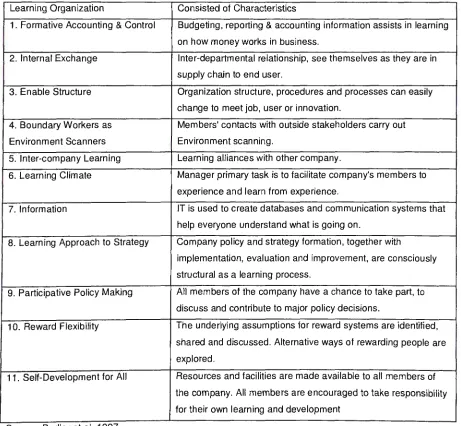
Table 2.1 Learning Company Characteristics ... 30
Table 2.2 Summary of Models of the Learning Organization ... 32
Table 2.3 Learning Organization Factors Discussed in the Literature ... 34
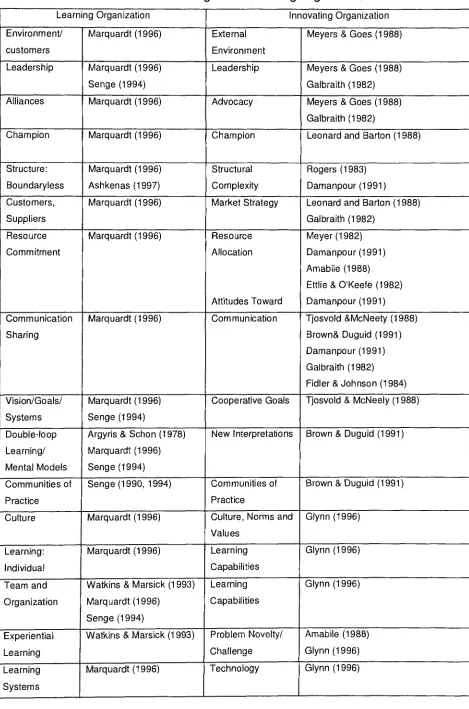
Table 2.4 Characteristics of Learning and Innovating Organizations ... 41
Table 3.1 Cultural Divides Between the "East" and the "West" ... 50
Table 3.2: Comparison of Thai and Western Characteristics Effecting on Knowledge Sharing ... 60
Table 4.1: The Strengths of Qualitative and Quantitative Research ... 80
Table 4.2 Pilot Study Response Condition ... 87
Table 4.3 Instrument Reliability ... 89
Table 4.4 Sample Size ... 90
Table 5.1 Profile of Respondents from the Qualitative In-depth Interviews ... 97
Table 5.2 Factors about leadership ... 99
Table 5.3 Factors about Learning Latitude (risk-taking) ... 100
Table 5.4 Factors about Organizational Unity ... 100
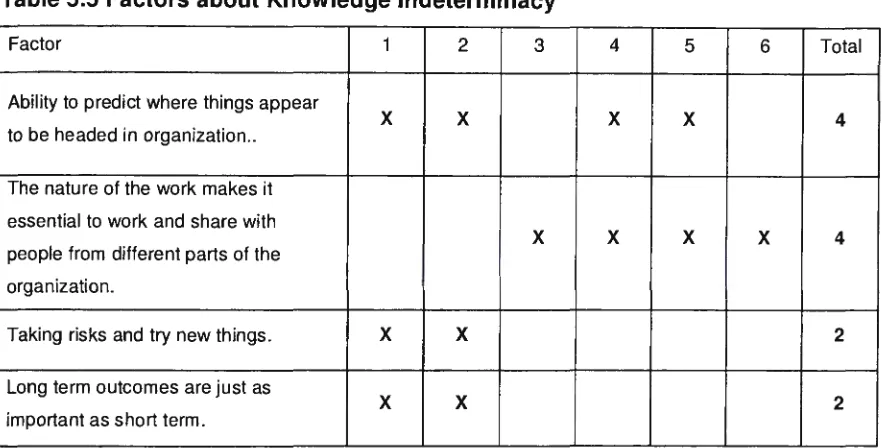
Table 5.5 Factors about Knowledge Indeterminacy ... 101
Table 5.6 Factors about System Thinking ... 103
Table 5.7 Factors about External Monitoring ... 104
Table 5.8 Factors about Knowledge Creation ... 105
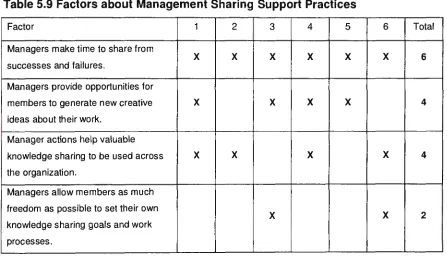
Table 5.9 Factors about Management Sharing Support Practices ... 106
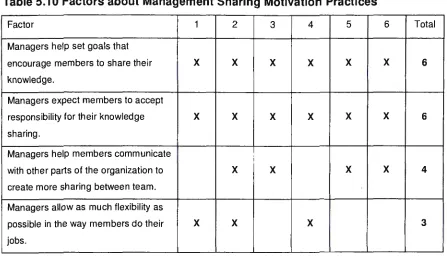
Table 5.10 Factors about Management Sharing Motivation Practices ... 107
Table 5.11 Factors about Management Performance Effectiveness Practices ... 108
Table 5.12 Factors about Management Sharing Advice Practices ... 109
Table 5.13 Factors about Internal Alignment ... 11 O Table 5.14 Factors about Facilitative Structures ... 111
Table 5.15 Factors about the Systems ... 112
Table 5.16 Factors about Generative Sharing ... 113
Table 5.17 Factors about Promotive Interaction ... 114
Table 5.18 Factors about Motivation ... 115
Table 5.19 Factors about Documentation ... 116
Table 5.20 Factors about Dissemination ... 117
Table 5.21 Results about Experimental Learning ... 118
Table 5.22 Results about Team Learning ... 119
Table 5.24 Results about Finance Performance ... 122
Table 5.25 Results about Knowledge Performance ... 123
Table 5.26 Frequency and Percentage of Respondents by Gender ... 124
Table 5.27 Frequency and Percentage of Respondent by Education Level. ... 124
Table 5.28 Frequency and Percentage of Respondents by Age ... 125
Table 5.29 Frequency and Percentage of Respondents by Number of Working Years in the Organization ... 126
Table 5.30 Frequency and Percentage of Respondent by Position ... 126
Table 5.31 Correlation Matrix Analysis and Variance-inflation factor (VIF) for variables ... 128
Table 5.32 Total Variance Explained for knowledge sharing ... 129
Table 5.33 Principle Component Analysis (PCA), no rotated for knowledge sharing ... 130
Table 5.34 Instrument Reliability ... 131
Table 5.35 Correlation between Knowledge Sharing Variables and Experimental Learning ... 134
Table 5.36 Standardized Coefficients for Independent Variables in Multiple Regression for Experimental Learning ... 135
Table 5.37 Summary for Hypothesis 1: Results for Hypothesized Variables Explaining Experimental Learning ... 140
Table 5.38 Correlation between Knowledge Sharing Variables and Team Learning ... 142
Table 5.39 Standardized Coefficients for Independent Variables in Multiple Regression for Team Learning ... 143
Table 5.40 Summary for Hypothesis 2: Results for Hypothesized Variables Explaining Team Learning ... 148
Table 5.41 Correlation between Knowledge Sharing Variables and Generative Learning ... 150
Table 5.42 Standardized Coefficients for Independent Variables in Multiple Regression for Generative Learning ... 151
Table 5.43 Summary for Hypothesis 3: Results for Hypothesized Variables Explaining Generative Learning ... 156
Table 5.44 Correlation between Knowledge Sharing Variables and Documentation ··· 158
Explaining Documentation ... 164 Table 5.47 Correlation between Knowledge Sharing Variables and Dissemination 166 Table 5.48 Standardized Coefficients for Independent Variables in Multiple
Regression for Dissemination ... 167 Table 5.49 Summary for Hypothesis 5: Results for Hypothesized Variables
Explaining Dissemination ... 172 Table 5.50 Correlation between Knowledge Sharing Variables and Finance Performance ... 17 4 Table 5.51 Standardized Coefficients for Independent Variables in Multiple Regression for Finance Performance ... 175 Table 5.52 Summary for Hypothesis 6: Results for Hypothesized Variables Explaining Financial Performance ... 180 Table 5.53 Correlation between Knowledge Sharing Variables and Knowledge Performance ... 182 Table 5.54 Standardized Coefficients for 'Independent Variables in Multiple Regressions for Knowledge Performance ... 183 Table 5.55 Summary for Hypothesis 7 : Results for Hypothesized Variables Explaining Knowledge Performance ... 189 Table 6.1 Normality Distribution ... 195
Table 6.2 AMOS Standardized Estimates for Independent (Bollen-stine's bootstrap) Factor Loadings ... 197
Table 6.3 AMOS Structural Relationship Coefficients ... 198 Table 6.4 Goodness of Fit Statistics: Conceptual Framework Model ... 199
List of Figures
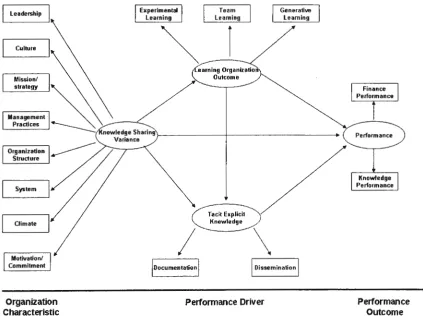
Figure 3.1 Conceptual Framework and Subcomponents ... 68
Figure 6.1 Conceptual Framework Structural Equation Model. ... 200
Figure 6.2 Refined Structural Equation Model ... 205
CHAPTER 1
INTRODUCTION
1.1 Introduction to the Context of Research
In recent years several factors have led to the current "knowledge boom". Knowledge has been increasingly seen as the key competitive resource in organizations (Awad
& Ghaziri 2004; Dalkir 2005). Davenport and Prusak (1998, p. 43) state that
"companies hire for experience more often than for intelligence or education because they understand the value of knowledge that has been developed and proven over time". They believe that the power of knowledge can create sustainable competitive advantages for organizations. Davenport (1994) confirmed that organizational knowledge comes from individuals. According to Nonaka's (1991) study the new knowledge of businesses depends on individuals; especially front'line employees. This is because in contemporary society, the commitment of frontline workers is decreasing. Employees often can find and change their job easily for higher wages (Bennett, H. & Durkin 1999; Foote et al. 2005). As a result of increasing employee mobility, organizations may lose valuable knowledge.
Nonaka and Takeuchi (1995) questioned whether investigated the extent to which strategy and organizational structure promote knowledge creation. They analyzed the knowledge creation process in two classical organizational types. In addition, they stated that the success of knowledge conversion is difficult in a strongly hierarchical society because the main characteristic such as society is seniority. The lower or the frontline workers must show respect to the1ir managers and obey their instructions
which is at odds with our understanding that new knowledge, being tacit knowledge, always begins with frontline employees. Limiting the transference of tacit knowledge acquired by individuals into organizationally explicit knowledge will decrease the quantity of new knowledge in a business (Nonaka, I 1991 ). The answer in the main to this dilemma is to increase knowledge sharing in organ,izations.
However, knowledge sharing is still a major problem to implement because it
requires: a sharing mindset; a sharing of vision; a sharing of values; a sharing of
knowledge; a sharing of communication and information; and of openness and trust
(Addleson 2000; DiBella, A. 1997; Porth, McCall & Bausch 1999). In addition, a
sense of ownership, responsibility and a leadership commitment along with localized
decision making and teamwork are important factors contributing to knowledge
sharing (Elliott, Smith & MaGuinness 2000; Hitt 1996).
The means of knowledge sharing in each country is different. It depends on the 1local culture. Thailand, the location of this study, has a long independent history where the
first "Thai kingdom" was established during the first half of the 13th century (Van
1995). But Thai culture has also been influenced by many external sources as well
(Hofstede, 1980). As a result Thailand has created a specific style of knowledge
sharing and this forms the context of the present study. For instance, Thais believe
that the power of a person is related to their tacit knowledge or their expertise.
Ponpai (2005) confirmed that employees in Thai businesses resist the conversion of
their tacit knowledge to expHcit knowledge because they th1ink that their importance will diminish if they pass on their expertise to others. A greater understanding of
learning organization theory may reduce the impact of the gap between tacit and
explicit knowledge by developing the knowledge sharing process (Crossan, Lame &
White 1999; Dibella, A.J., Nevis & Gould 1996; Huber 1991 ). This research will clarify
the understanding of the knowledge sharing process. Moreover, the research will
examine the ways to encourage employees to convert their tacit knowledge to explicit
knowledge in Thai businesses currently implementing learning organization theory.
The findings will contribute towards filling a gap in understanding of the conversion
process; improving ways to encourage employees to share their knowledge; and will
enable the development of a knowledge sharing model for implementing the learning
organization in the Thai context.
1.2 Objectives of the Study
A common theme in business literature is that knowledge is critical to business
success and essential for business survival. Learning organization theory, which is
one of the most well-known business tools, was developed in order to support
developing the learning organization: knowledge acquisition, knowledge sharing and knowledge utilization. In particular knowledge sharing has been identified as a key element in developing the learning organization. Using learning organization theory, this study focuses on the impact of Thai culture on the knowledge sharing process.
The aims of this study are: to develop an understanding of the process of knowledge sharing in Thailand; to develop a model for the knowledge sharing process in Thai organizations; and to test the model by qualitative analysis and quantitative methods. To support the main aims, the specific objectives of the study are:
1) to analyze learning organization theories in order to specify the knowledge sharing process in Thailand;
2) to provide justifications for how Thai organizations adapt the knowledge sharing process within the Thai context;
3) to investigate factors, especially Thai cultural factors, influencing knowledge sharing in Thai organizations;
4) to develop a knowledge sharing model for the implementation of the learning organization in the Thai context;
5) to test the model by collecting data from a sample survey of Thai Organizations; and
6) to suggest some policy implications of the empirical findings about implementing in the current practices.
1.3 Research Questions
In order to complete the specific aims and objectives of this study, the following research questions are investigated.
Research Question #1
H 1 The know1
ledge sharing variables explain a significant portion of the variance in experiential learning.
H2 The knowledge sharing variables explain a significant portion of the variance in team learning.
H3 The knowledge sharing variables explain a significant portion of the variance in generative learning.
Research Question #2
To what extent do the knowledge sharing variables and learning outcomes explain a significant portion of the variance in tacit and explicit knowledge of Thai organizations?
H4 The knowledge sharing variables and learning organization outcomes explain a significant portion of the variance in documentation.
HS The knowledge sharing variables and outcomes explain a significant portion of the variance in dissemination.
Research Question #3
To what extent do the knowledge sharing variables, learning outcomes and tacit and explicit knowledge explain a significant portion of the variance in finance and knowledge performance improvement as financial and competitive advantage of Thai organizations?
H6 The knowledge sharing variables, learning organization outcomes and tacit and explicit knowledge will explain a significant portion of the variance in finance performance improvement.
H7 The knowledge sharing variables, outcomes and tacit and explicit knowledge will explain a significant portion of the variance in knowledge performance improvement.
Research Question #4
To what extent are the learning outcomes and tacit and explicit knowledge influenced by knowledge sharing variables and to what extent does this process in turn influence performance improvement as depicted in the conceptual model?
1.4 Research Methodology
Both qualitative and quantitative methods were employed. Firstly, a qualitative method was used to explore and identify knowledge sharing in Thai organizations and the appropriate factors for the development of the quantitative questionnaire.
Secondly, a quantitative method was applied to test a normative model. The purpose of using a qualitative methodology were to support research objectives 1, 2 and 3 and to develop the quantitative questionnaire. The research commenced with a literature review on past events and issues in sharing knowledge and this is reported in Chapters 2 and 3.
In-depth interviews were conducted with six senior managers of organizations identified as learning organizations. This has been acknowledged as a key way of obtaining detailed situational data. For instance, Gill and Johnson (2002, p. 75) argued that:
interviews can yield a great deal of useful information. The researcher can ask questions related to: 1) facts; 2) people's beliefs about the facts; 3) feelings; 4) motives; 5) present and past behaviors; 6) standards for behaviors (Le., what people think should be done in certain situations); and 7) conscious reasons for actions or feelings.
Following the interviews, coding technique (selective coding, axial coding and opening coding) were applied to analyze and interpret data (Strauss & Corbin 1990).
The purpose of the quantitative part of the research was to develop a knowledge sharing model for the implementation of the learning organization in the Thai context. (As see objectives 4-6). A survey questionnaire was developed to examine the influencing factors of knowledge sharing based on the normative model. Participants were asked to rate the importance of each factor in the normative model for the achievement of knowledge sharing and to suggest additional critical factors which they believed to be significant in knowledge sharing practice.
SPSS (Statistical Package for the Social Science) and AMOS software were employed to analyze data obtained from the survey questionnaires. The Cronbach alpha test was applied to assess reliability of the scale items. Descriptive statistics,
summarize characteristics of the sample. Multiple regression was conducted to analyze the influence of the independent organizational variable on each of seven predicted knowledge sharing variables (see Chapter 4). The independent variables were entered in sets to predict each variable. Structural equation modeling (SEM), a statistical technique for building and testing statistical models, was applied to develop a knowledge sharing model for the implementation of the learning organization in the Thai context. The results are reported in Chapters 5, 6 and 7.
1.5 Contribution of Research
This work builds on knowledge sharing and learning organization studies to date. Nonaka (1991) developed the theory of a knowledge creating company and divided company knowledge into two main forms: tacit knowledge and explicit knowledge. He explained that tacit knowledge represents the new knowledge of business, but that there are difficulties facing the transference of tacit knowledge acquired by individuals into organizationally explicit knowledge. Later, Davenport and Prusak (1998) suggested that the knowledge sharing process depends on national and organizational culture. Several theorists have endorsed this concept and compared the differences in each culture, particularly in Japanese and Western studies (Urabe, Child and Kagono (1998). In Thailand, according to the library websites of 20 state universities which teach business administrative programs, there are only 9 research study programs relating to the theory of knowledge. The relationship between knowledge sharing and the Thai context has been neglected. Most Thai studies focus on the overall process of the knowledge management approach (Anongkhanatrakul 2004; Arschana 2004; Karnmanakitkul & Sukontavaree 2004; Muthikul 2004; Nanthamaitri 2003; Tangmesang & Emuri 2003; Thnarudee 2005), and only one research study is about the knowledge sharing process in terms of the method of knowledge sharing (Dechanont 2004). In order to succeed in implementing the learning organization theory this study makes a major contribution towards understanding the complex, culturally specific knowledge sharing process in ideas of the cultural context in Thailand.
1.6 Outline of the thesis
Chapter 1. Introduction: describes the research background, research problem,
and the justification for conducting the research.
Chapter 2. Learning Organization Theory: reviews the literature pertaining to
learning organizations and knowledge sharing, to develop the propositions,
definitions and questions used to answer the overall objective of the study.
Chapter 3. Cultural Context, Management Practices and Knowledge Sharing:
reviews the literature relating to cultural context, management practices and knowledge sharing, to develop the propositions, definitions and research questions.
Chapter 4. Methodology and Research Design: provides a description of the
qualitative and quantitative research methodology, including sampling techniques, as well as the instruments and procedures used to collect and analyze data.
Chapter 5. Primarily Data Analysis: reports the results of the quantitative data
analysis including descriptive statistics and reliability test.
Chapter 6. Structural Equation Modeling Development and Analysis: presents
the results of a structural equation modeling and discussion.
Chapter 7. Implications for Management Practices: discusses the implications of
the study along with recommendations for a knowledge sharing model for the implementation of the learning organization in Thailand.
Chapter 8. Conclusion and Limitations: describes the conclusions and the
limitations of this study; recommendations for future research also are discussed.
1.7 Summary
CHAPTER 2
LEARN
1ING ORGANIZATION THEORY
2.1 Introduction
The previous chapter set the scene for the thes'is, outlining the importance of tapping into the knowledge of individual workers and creating a mindset in order to develop a learning organization. This chapter reviews the literature pertaining to learning organizations and knowledge sharing to develop the propositions, definitions and questions used to answer the overall objective of the study: "to develop a knowledge sharing model for the implementation of the learning organization in the Thai context'
This chapter is divided into 8 parts covering learning organizations and knowledge sharing. It opens with a discussion of the definitions and concepts of learning organizations before moving on to consider the types of organization which become learning organizations and the behaviors of staff in those organizations.
2.2 Introduction to Learning Organizations and Organization
Learning
Historically, research on learning organizations focused on individual knowledge.
However, beginning in the 1980s the focus shifted to the collective knowledge that adapts and changes with the acquisition of knowledge by individuals within the organization (Horvath et al. 1996; Marquardt 1996). Bruffee (1999) claimed that knowledge and learning are not the same. Knowledge is socially constructed while learning not only requires social interaction between people, but also "must take place almost as a by product of people doing their work" (Bruffee 1999, p. xvii). According to Fial and Lyles (1985, p. 804):
but organizations [sic] memories preserve certain behaviors, mental maps, norms and values over time."
2.2.1 The Importance of the Learning Organization
The establishment of a learning organization or the implementation of organizational learning within an organization is paramount to the ability of an organization to survive in the competitive environment of today (El Savvy & Bowles 1997; Eskildsen, Dahlgaard & Anders 1999; Ireland, D.R. et al. 2001 ). Ireland et al. (2001) stated that organizational learning is a prerequisite to innovation. In a competitive environment, innovation brings additional ideas and concepts to the marketplace. Globalization in the world of today requires organizations to quickly adapt to changing technologies in order to survive (El Sawy & Bowles 1997; Marquardt 1996). If excellence is to be achieved, organizations must engage employees and create environments where learning is nurtured (Eskildsen, Dahlgaard & Anders 1999; Ireland, D.R. et al. 2001 ).
2.2.2 The Learning Organization
Learning organizations have been defined in several ways (Marquardt 1996; Nonaka, I. & Takeuchi 1995; Senge 1990; Watkins, K.E. et al. 1997). Watkins and Marsick (1993, p. 8) defined a learning organization as "one that learns continuously and transforms itself". Additionally, Watkins and Marsick (1993, p. 9) stated, "the learning organization has embedded systems to capture and share learning". Senge (1990) defined a learning organization as an organization in which people have the freedom to continuously create ways to produce preferred results where innovation and creativity are fostered, where management does not constrict collective learning, and where people understand the value of collaboration. Yet a third definition of a learning organization was provided by Pool (2000, p. 374) who defined a learning organization as "an organization where through learning, individuals are continually re-perceiving and reinterpreting their world and their relationship to it. A 'learning organization incorporates the practice of continually challenging its paradigms and accepted ways of doing things".
and Malone (1997) suggested that organizational value should be placed on two factors: human capital and structural capital. They believed that organizational priority should be placed on the knowledge, skills, innovativeness and ability of employees. In addition, priority is placed on the hardware, software, databases, organizational structure, and anything else that supports employee and organizational productivity. The productivity potential of an organization today is located in its intellectual and systems capabilities and not in its hard or tangible resources and assets (Quinn, Anderson & Finkelstein 1996). Perhaps Dixon (1999, p. 29) expressed it best as: "Learning is the critical competency of the 1990s".
Marquardt (1996) said that in order to be competitive and to secure their own viability, organizations must be able to learn effectively, especially from mistakes. They must be able to anticipate and adapt to environmental changes; create knowledge systems; learn from all constituents, whether employees, customers or competitors; and be competent at developing and innovating processes, services, and products. Quinn, Anderson and Finkelstein (1996) predicted that by the year 2000, 85% of all jobs in America would be knowledge-based.
These facts represent the realities for organizations in today's business arena. In response to these growing needs, Preskill (1994) wrote that most organizations have experienced some kind of reorganization in their recent history. It is reported that organizations, in an effort to improve effectiveness, have turned to development strategies such as total quality management and continuous process improvement (Ayupp & Anandan 2008; Bersin 2008; Garvin, David A., Edmondson & Gino 2008; Kelly et al. 2007; Korth 2007; Teresa & Adelina 2008).
In referring to the continuous improvement mandate, Preskill (1994) stated that organizations have changed structures and processes, and rewritten mission statements. According to Garvin (1993, p. 78), most continuous improvement efforts have had limited effects because they do not include a "commitment to learning". In fact, learning is given such importance that DeGeus (1988, p. 74) noted: "Learning is not a luxury. It's how companies discover their future".
2.2.3 Organizational Learning
Organizational learning has also been defined in various ways (Swieringa &
Wierdsma 1992; Tsang 1997). Tsang (1997) alleged that the variation in the
definition of organizational learning lies in the utilization of the writings in which the
concept is discussed. Prescriptive researchers are action-oriented: they focus on
behavioral changes within organizations and target practitioners. Swiennga and
Wierdsma (1992) defined organizational learning as changes in organizational
behavior. Convernely, descriptive writers focus on whether or not learning has
occurred within the organization. Tsang (1997, p. 84) described organizational
learning as "the acquiring sustaining or changing of inter-subjective meanings
through the art factual vehicles of their expression and transmission and [through] the
collective actions of the group". Thus the literature refers to both organizational
learning and to learning organizations. A learning organization is a prescribed set of
strategies that can be enacted to enable organizational learning. However, these two
terms sometimes lead to confusion. It is important to recognize that organizational learning is different and that the terms are not interchangeable.
Easterly and Smith (1997, p. 1085) distinguished between organizational learning
and the learning organization by stating that organizational learning is "disciplined
based and analytic whereas a learning organization is multi-disciplinary and
emphasizes action and creation of an 'ideal type' of organization". Tsang (1997, p.
74) further differentiated between the two concepts when he wrote that organizational
learning is a concept used to describe certain types of activity that take place in an
organization while the learning organization refers to a particular type of organization
in and of itself. Nevertheless, there is a simple relationship between the two - a
learning organization is one which is good at organizational learning. Although
authors have differentiated between organizational learning and the learning
organization, they are very similar concepts (Barker & Camarata 1998; Senge 1994; Tsang 1997).
Numerous researchers have studied learning organizations and organizational
learning. Tsang (1997) found that there is minimal empirical data supporting
concepts associated with learning organizations and organizational learning. In the
quest to discover how organizations learn, research has been conducted to identify
identified organizations in several ways such as learning organizations or knowledge-creating organizations, characteristics have been recognized that are very similar.
Learning, as a general construct, is defined as "an experiential process resulting in a relatively permanent change in behavior that cannot be explained by temporary states, maturation or innate response tendencies" (Kline, Peter & Saunders 1993, p. 322). As Kolb (1984, quoted in Kim (1993) described, learning is the creation of knowledge through the transformation of experience. For example, Nonaka and Takeuchi (1995) described knowledge-creating organizations and identified five enabling conditions that must be present in an organization for knowledge creation to occur. These conditions are: intention, autonomy, fluctuation/creative chaos, redundancy and requisite variety. Senge (1990) described the learning organization and distinguished five disciplines: system thinking, personal mastery, mental models, team learning and shared vision. Swieringa and Wierdsma (1992) described four distinct features of the learning organization as: a strategy of continuous development, an organic network structure, a task oriented structure and supportive systems.
According to Dixon(Dixon 1999), organizational learning is learning occurring at the system level rather than at the individual level. It does not exclude the learning that occurs at the individual level. It is, however, greater than the sum of the learning at the individual level (Fiol & Lyles 1985; Kim 1993; Lundberg 1989). Organizational learning is defined as "the intentional use of learning processes at the individual, group and system level to continuously transform the organization in a direction that is increasingly satisfying to its stakeholders"(Dixon 1999). It is learning keenly perceived at the system level and it arises from processes surrounding the sharing of insights, knowledge and mental models (Stata 1989). According to Kim (1993), the key element differentiating individual and organizational learning revolves around mental models.
perspective, is referred to as double-loop learning (Argyris, Chris 1999; Argyris, C & Schon 1996) or generative learning (Senge 1990).
This learning process is also referred to as frame-breaking and is a typical prerequisite to creative thinking and innovation (Redmann, Kaiser & Holton 1997), Learning organization strategies attempt to create more double-loop learning in organizations. In contrast to double-loop learning, a second type of organizational learning is single-loop or adaptive learning (Argyris, Chris 1999; Argyris, C & Schon 1996; Senge 1990). Single-loop learning occurs when an action leads to expected outcomes, or when the error is corrected to enable or allow the pattern of action to lead to the expected outcome. Single-loop learning does not require a change in the theories or values underlying the governing of the action-outcome relationship (Argyris, Chris 1999; Argyris, C & Schon 1996). It also does not lead to change and innovation. Most learning in organizations falls into this category,
The opportunities for learning in an organization come from multiple sources including: formal training, from other individuals such as team members, customers, vendors or competitors; experimentation; from one's own experience; and vicariously from the experience of others, be they individuals, groups or organizations. However, it is important to remember that:
although learning occurs through individuals, it would be a mistake to conclude that organizational learning is nothing but the cumulative sum of members learning ... as individuals develop their personalities, personal habits and beliefs over time, organizations develop world views and ideologies, ,,, , (and) organizations' memories preserve certain behaviors, mental maps, norms and values overtime (Hedberg 1981, p. 6).
Huber 1991; Kuchinke 1995; Slater & Narver 1995).
2.3 Learning Processes
Having considered the key definitions of learning organizations and organizational learning this chapter now moves on to consider in more detail the elements which constitute the learning process. This section covers information acquisition, information distribution and interpretation, and organizational memory.
2.3.1 Information Acquisition
The first process which organizations engage in for learning purposes is information acquisition. According to Daft and Huber (1987), the literature approaches this process from both a macro and a micro level. It is reported that the macro level focuses on the behaviors of the organization or a department, while the micro level of analysis examines the behaviors of individuals procuring information. Organizations must be cognizant of the activities occurring in their relevant environments. Individuals who occupy organizational positions responsible for this scanning task are referred to as boundary-spanning personnel (West Daft & Huber 1987).
Organizations may acquire information through internal and external environmental monitoring or through environmental probing (Daft & Huber 1987). Monitoring or scanning is described as a routine behavior through which information is gathered from available sources, such as professional conferences, industry reports and trade journals. Probing, on the other hand, involves a more intense and deliberate search typically initiated for the purposes of obtaining additional or specific information.
Information is also acquired from other persons, such as experts, consultants,
2.3.2 Information Distribution and Interpretation
The next stages in processing information include distribution and interpretation. Interpretation is simp'ly the process through which information is given meaning (Dixon 1992; Huber 1991; Kuchinke 1995; Teresa & Adelina 2008). The most central aspect of creating meaning is the reduction of equivocally and ambiguity (Daft & Huber 1987). According to Daft and Huber (1987, p. 9), the core of "organizational learning is the reduction of equivocally, not data gathering". This places prominent importance on the organization's abiUty to create shared meaning among the membership (Dixon 1992).
The process of information interpretation leading to organizationally accepted meaning requires that some organizationa'I members may have to change or alter their cognitive maps or mental models (Dixon 1999.; Huber 1991 ). As previously reported, these mental maps or models represent how individuals interpret reality, and this includes new information (Huber 1991 ). Sims and Gioia (1986) pointed out that social construction of interpretation is important in gaining organization-wide acceptance and commitment to the shared meaning. The process involves communication in the form of discussion and exchange (Slater & Narver 1995).
Attributes of the communication process itself influence the interpretation of information. These include: the consistency of the framing of the information; the richness of the selected communication medium; the information load presented to individuals; and the unlearning which individuals may have to negotiate before new interpretations are created and accepted (Huber 1991; Kuchinke 1995).
Organizational factors also affect the communication and interpretation process. These include trust, respect, openness, and cohesiveness (Kuchinke 1995). Once interpretation of 1information is complete the information must be stored and made accessible for organizational use.
2.3.3 Organizational Memory
individuals, culture, transformation or processes, structure, and the ecology, or the physical environment. Organizational memory also resides in norms and codes of behavior, in scripts, in history and myths, in members' 'long-term memory, and organizational records and computer files (Huber 1991; Kuchinke 1995). Organizational memory acts as a reservoir for lessons learned, for discovering what has been organizationally beneficial and what has not (Dixon 1992).
The importance of organizational memory cannot be overemphasized. Huber (1991) points out that organizational memory is essential to the process of organizational learning. In addition, Kuchinke (1995, p. 315) declared that "organizational memory is the key to successful learning". However, he issued a caution regarding the four learning processes, stating that organizations must manage them for performance and the attainment of organizational goals.
2.4 Learning Organization Models and Characteristics
The field of organizational learning preceded the development of the concept of Learning Organizations and it is not surprising that a range of (often competing) models and characteristics have been described by researchers over this time. This section addresses the key models and their characteristics of learning organizations commencing with a historical overview of the field before progressing to Senge's (1994) key theory, Marsick and Watkins' (1993) imperative model and finally to a summary of the characteristics of Learning Organizations.
2.4.1 Early Thoughts on Organizational Learning
Theorists began addressing the importance of organizational 1
strategy and the 'fit' between organizational structure and the environment. They discussed at length the design of the decentralized organization.
Hedberg (1981) examined organizational learning and the impact of the environment on the process. He noted the importance of unlearning as a means to discovering new responses and mental maps and prescribed experimentation as a strategy as well as using the reward system to encourage creativity and learning. Shrivastava (1983) reviewed the literature on organizational learning and developed a typology of learning systems. He examined the types of learning and the levels at which learning occurs. The typology he developed was based on two dimensions: the individual/organizational orientation dimension, and the evolutionary/designed learning system dimension. Levitt and March (1988, p. 336) also reviewed the organizational learning literature and discussed the meaning of intelligence in organizational learning and they concluded by referring to learning organizations as follows: "the design of learning organizations must recognize the difficulties of the process". Lundberg (1989) discussed organizational learning as organizational development.
Daft and Huber (1987) suggested that organizations need to create systems to both process information and to provide for the interpretation of information, Additionally, they suggested that organizations can be developed to maintain the organizationa,I characteristics needed to strengthen the capacity to attain an organizational learning goal. The model known as the learning organization has been described as purposely acquiring, processing, and disseminating information and knowledge throughout the organization in order to create a shared interpretation which allows the organization to behave decisively (Slater & Narver 1995). The learning organization is an organizational conceptualization created to understand a system developed to promote and sustain organizational learning.
2.4.2 Learning Organization: Senge's Foundation Theory
work processes, while in the learning movement the focus is on improving how employees work, and this includes a change in management. He stated that this includes thinking and interacting., and learning about the dynamics that affect system wide performance. This shift requires a different kind of organization.
In laying out the foundation for his model of the learning organization, Senge (1992 1994) suggested three levels of work required of organizations. The first level focused on th,e development, production, and marketing of products and services. The second level of work is the designing and development of the systems and processes for production. The final task is undertaken by organizations focusing on thinking and interacting. Senge (1992) claimed that the first two levels of organizational work are affected by the quality of this third level. That is, the quality of organizational thinking and interacting affects organizational systems and processes, and the production and delivery of products and services. This belief places organizational thinking in a pivotal position affecting the ability of an organization to accomplish goals and perform effectively.
The mission, vision and goals of an organization establish and define the course taken for the production determination level of work. Regarding processes and systems, Senge (1994) went on to remark that the quality movement focused on this second level of organizational work. That is, the quality movement, with its statistical control and learning and motivation advocacy, sought to bring about process
, performance improvement.
2.4.2.1) Personal Mastery
The first core discip'line outlined by Senge (1990), personal mastery, emphasizes the importance of the individual learner's role in organizational learning. The individual is the linking pin; for without individual learning, teams and organizations cannot learn. Personal mastery evokes personal growth and learning that requires two underlying activities. The first is continual clarification of what is really important. The second revolves around the ability to see and interpret reality. Underlying this discipline is the enactment of a personal vision for the individual.
Senge acknowledged that while the concept of a personal vision is daunting to many individuals, the ability to formulate ultimate intrinsic desires is integral to personal mastery. In order to develop this discipline, Senge (1990) concluded that: the organizational climate should support the creation of visions; that individuals should be free to inquire and challenge the status quote that the norms include commitment to the truth; and 'leader's act as models of commitment to personal mastery. Visions are viewed as the engine behind motivation, commitment and involvement in both learning and growth.
2.4.2.2) Mental Models
The second discipline outlined by Senge (1990) is mental models. Individual's mental models or cognitive maps are defined as mental representations of reality; they enable persons to make sense of their world. Mental mode'ls are active, they possess a predisposition for action, and they mold how individuals act. In addition, Senge points out that mental modeils can either impede or accelerate learning.
The development of functional mental models requires two important activities. According to Senge (1990), 1
key implicit assumptions must be examined and reflected
Senge (1990) talked about four skills that enable individuals to examine their mental models. The first is the recognizing "leaps of abstraction" or the ability of individuals to move from observations of situations and behaviors to generalizations about cause or reality. The second skill to recognizing mental models is to pay attention to what he calls the "left-hand column" or to what is not normally verbalized, but is being thought. This makes sub-conscious thoughts conscious, and makes individuals aware of unspoken assumptions. The third skill is the ability to "balance advocacy and inquiry". Individuals are at some level limited in their expertise and ability to solve problems. It is important to recognize the limits of knowledge and experience, and to balance this with the ability to tap into the expertise of others, and to learn from it.
Senge (1990) pointed out that pure advocacy seeks to win an argument, while a balance of inquiry and advocacy seeks to find the best answer. The fourth skill associated with mental models is the ability to recognize the "differences between espoused theory and theories-in-use". Saying the right words or adopting a new language may not be consistent with the behaviors exercised. A gap between the two suggests that learning cannot occur.
2.4.2.3) Shared Vision
The third discipline outlined by Senge (1990) is shared vision. A shared vision is a "picture of the future". It is a reflection of personal visions, and therefore it elicits commitment rather than compliance from organizational members (Senge 1990). This commitment begins with having a personal vision. If an organizational member subscribes to a vision presented by the organization, the result is reported to be compliance and not commitment. The essence of a shared vision, according to Senge, is the commitment of all organizational members having the same vision; this differs from the commitment of the individual having the vision. He concluded that shared visions emerge over time from the interaction of personal visions as individuals listen and share.
Senge (1990) suggested that a shared vision drives the other disciplines. A vision provides a purpose. Senge (1994) stated it is the basis for shared meaning in organizational reaHty. A basic cornerstone for developing a shared vision is to develop the organization as a community. Senge believed that each sub-unit of the organization should be encouraged to develop its own meaning of reality, which it contributes to the creation of an organizationally shared meaning,
2.4.2.4) Team Learning
The fourth discipline discussed by Senge (1990) as essential in a learning organization is team learning. In defining team learning, Senge was careful to insist that it is more than individuals acting together. Team learning is a microcosm of organizational learning. It is the alignment of individual actions and the development of the capacity of the team to attain desired results based on the strength of a shared vision. He described three dimensions important to team learning. The first is the need for the team to think critically about organizational issues. The second is the need tor innovative and coordinated action based on trust within the team. The third is the need to recognize and foster cooperative and interactive relationships with other organizational teams. These skills developed by teams and the learning accomplishments attained can set the standard for learning at the organizational level. Senge (1990) believed that individuals can learn without affecting organizational learning. However, he contended that team learning is the model for organizational learning.
The competencies which teams need to accomplish successful team learning goals include discussion, dialogue, inquiry and reflection. Senge (1990) continued stating that the opportunity to practice these skills is ,essential. Otherwise, the potential danger that exists is that team intelligence may be short-circuited by the effects of group-think and the interfaith conformity that stifles creativity. Senge suggested that ·dialogue and discussion, the two primary types of discourse, enable team-level
generative learning by exposing differences among members.
2.4.2.5) System thinking
organizational reality. Senge (1990) claimed that system thinking consolidates and links the other disciplines into a unified theory for practice. System thinking is a shift away from a myopic view of behavior and reality. The claim is made that individuals typically attack problems by examining parts. System thinking, on the other hand, is about examining the whole entity and understanding the interrelatedness of the parts, and the influence that one part has on the other components. It leads to the perception of the interconnectedness of individuals, teams and organizations. This recognition leads to the realization that decisions, behaviors and activities have an effect not only on the actor, but also on all the interrelated components.
The goal of system thinking, according to Senge (1990), is to allow organizational members to see the complete pattern of their organization and the influential sphere of their decisions and behaviors. It is the process of understanding complexity by gaining insight into the patterns of causality. It enables organizational members to better understand both the causes and solutions for problems. Senge (1990) reported that system thinking involves two activities: the first is seeing interrelationships and the second is recognizing that change is a process. According to Senge, the key to systems is the ability to see patterns, and not just events that often lead to reactive behavior with short-term results. Senge (1990; 1994) subscribed to the idea that architypes can be described which explain the complexity of the problems and issues that confront organizational management. He suggested that as more of these systems architypes are revealed, they help leaders understand the events in their organizational systems.
This system thinking ability to see both patterns and the whole is an important competency which Senge (1990 1994) believed has an impact on the operational integrity of the other four principles. Additionally, to be effective entity the capabilities which arn the basic competendes of a learning organization need to be developed simultaneously (Senge 1994) because they also work as a system. In his theory of the learning organization, Senge (1990 1994) did more than describe the needed competencies; he also prescribed how organizations might develop them. It may be concluded that these suggested activities form the strategies which are characteristic of an organization that is endeavoring to promote its organizational learning.
2.4.3 Action Imperatives of the Learning Organization
the purpose of sustaining learning. Their six imperatives form the basis for the organizational strategies recommended to promote learning. These comprise:
(1) ·Create continuous learning opportunities. (2) Promote inquiry and dialogue.
(3) Encourage collaboration and team learning. (4) Establish systems to capture and share learning. (5) Empower people toward a collective vision. (6) Connect the organization to its environment.
These six imperatives are similar to the disciplines and the inherent strategies suggested by Senge (1990 1994). Marquardt (1996) similarly focused on a learning system composed of five linked and interrelated subsystems related to learning: the organization, people, knowledge, technology and learning. Most theories of a learning organization focus on the importance of continuous learning, knowledge creation and sharing, systemic thinking, a culture of learning, flexibility and experimentation, and finally a people-centered view (Gephart, M.A. & Marsick 1996). Using Watkins and Marsick (1993) imperatives as a basis for comparison, similarities can be seen in the different theories on the learning organization. The six imperative are presented below.
2.4.3.1) Continuous Learning
Senge's theory also (Senge 1990).
The implication of continuous learning described by Watkins and Marsick (1993) for the learning organization include: linking learning to the organizational goals, developing managerial support for learning initiatives, providing exp'lanations of learning to organizational members which they can pursue to better their learning experiences. The success of a continuous learning imperative necessitates support provided by work design, the environment, the climate, technology and systems, rewards, structures, and policies. It requires allowance for risk taking and mistakes, for inquiry and challenges. It requires a new set of theories-in-use for all employees, management and workers alike. Mai and Mcadams (1996) suggested that in addition to a facilitative structure, learning systems need the support provided by active communications, workforce preparation, management commitment, operational support, and both rewards and recognition.
2.4.3.2) Inquiry and Dialogue
The second imperative suggested by Watkins and Marsick (1993) is the use of both inquiry and dialogue. These were also suggested by Senge (1990; 1994). These learning theorists subscribed to the strategy that people explore ideas and questions, with each other. This interaction effect is the key to better learning and is a core strategy in team learning. These behaviors give learning a social context. Inquiry is demanding on all parties who are required to share and listen while being willing to suspend adherence to personal mental models of reality. It requires an environment of trust.
Marquardt (1996) claimed that dialogue is important in the organizational learning process becaus,e it is central to and enhances team learning. He claimed that dialogue allows members to review organizational assumptions about the world. Dialogue is referred to as divergent conversation because it allows participants to "expand what is being communicated by opening up many different perspectives" (Ellinor & Gerard 1998, p. 22). These experts list the characteristics of dialogue as:
(1) See the whole among the parts.
(2) See the connections between the parts. (3) Inquire into assumptions.