Scholarship@Western
Scholarship@Western
Electronic Thesis and Dissertation Repository
8-1-2018 2:00 PM
Examining geographic variation in children's perceived barriers to
Examining geographic variation in children's perceived barriers to
physical activity and the implications on behaviour
physical activity and the implications on behaviour
Leah Gabrielle TaylorThe University of Western Ontario
Supervisor Gilliland, Jason
The University of Western Ontario Graduate Program in Geography
A thesis submitted in partial fulfillment of the requirements for the degree in Master of Science © Leah Gabrielle Taylor 2018
Follow this and additional works at: https://ir.lib.uwo.ca/etd
Part of the Human Geography Commons, and the Public Health Education and Promotion Commons Recommended Citation
Recommended Citation
Taylor, Leah Gabrielle, "Examining geographic variation in children's perceived barriers to physical activity and the implications on behaviour" (2018). Electronic Thesis and Dissertation Repository. 5489.
https://ir.lib.uwo.ca/etd/5489
This Dissertation/Thesis is brought to you for free and open access by Scholarship@Western. It has been accepted for inclusion in Electronic Thesis and Dissertation Repository by an authorized administrator of
i
Abstract
Low levels of physical activity among Canadian children has become a national public
health issue. Recent research has suggested that children’s physical activity levels are
associated with their perceptions of their everyday environments. A better understanding
of the formation of these perceptions within different contexts is needed to explain the
extent of the relationship. Using a multi-tool quantitative protocol, this thesis examines
geographic variation in socio-ecological factors influencing children’s perceptions of
barriers to PA, and the extent to which perceptions mediate the relationship of the
environment and PA. Results indicate that perceptions form within contexts, and have an
influence on PA. The studies take place in Northwestern and Southwestern Ontario. This
research provides a starting point for future research, policy, and practice to consider how
structures of children’s environments determine experiences of PA, suggesting a new way
to conceptualize behaviour to determine effective strategies for improving children’s PA
and overall health.
Keywords
Children; physical activity; urbanicity; rural; accelerometer; socio-ecological model;
ii
Co-Authorship Statement
Each integrated article within this thesis will be submitted for publication in
peer-reviewed journals. Chapters 4 and 5 were written by Leah Taylor as the primary author in
both cases, performing data collection in Northwestern Ontario, statistical analysis, and
writing in each article. In both cases, Dr. Jason Gilliland designed the original STEAM
study. In Chapter 4, Dr. Jason Gilliland and Dr. Andrew Clark are co-authors and were
involved in the development of analysis procedures. In Chapter 5, Dr. Jason Gilliland, Dr.
Andrew Clark, Dr. Piotr Wilk, and Brenton Button are co-authors. Dr. Jason Gilliland and
Dr. Andrew Clark were involved in the development and implementation of analysis
procedures. Dr. Piotr Wilk was involved in the development and implementation of the
structural equation modeling for this paper. Brenton Button was the team leader on data
collection in Northwestern Ontario for the 2016 STEAM project and provided expertise
on accelerometer data analysis methods and literature for this paper. Below are the
journal targets for both integrated articles.
Chapter 4: Taylor, L.G., Clark, A.F., & Gilliland, J.A. Context Matters: Examining
children’s perceived barriers to physical activity across varying Canadian environments.
Submitted to Health and Place.
Chapter 5: Taylor, L.G., Clark, A.F., Wilk, P., Button, B., & Gilliland, J.A. Exploring
the effect of perceptions on children’s physical activity in varying geographic contexts: a
iii
Acknowledgments
This research would not have been possible without the financial support provided by the
HEAL, the Department of Geography, the Children’s Health Research Institute, and
Children’s Health Foundation. I would also like to extend my gratitude to the residents of
Northern Ontario, for welcoming us into your homes and communities.
To Dr. Jason Gilliland, I am so grateful our paths converged, leading me to become a
geographer. The opportunities I have been afforded, and everything I have learned over
the past two years would not have been possible without your hard work, community
involvement, positivity, and ongoing encouragement.
To Dr. Andrew Clark, this thesis would not be what it is without your hard work,
countless late nights with our data, and answers to my endless questions. I cannot express
how thankful I am for your patience, knowledge and guidance.
My friends at the HEAL, you have all been instrumental in my success, and I will always
cherish the memories of our time together. Thank you to Dr. Piotr Wilk, Dr. Stephanie
Coen, and Brenton Button, who shared their wealth of knowledge, providing me with
direction and assistance throughout my thesis. Bridget, I’m so glad I found an amazing
friendship with you. Thank you for our laughs, lunch dates, and all your help with stats.
To my friends, especially Jenna, Emily, Brandon, Taylor, Sam, and Shannen. You have
all been there for me every step of the way. I couldn’t have done this without each of you.
Mum and Dad (my #1 cheerleaders), Rachiepants, A$, and E-Dog. If not for you
unending love and encouragement, I would never have reached this achievement. Karen
and Al Roos, thank you for your ongoing support and always making time to listen. I am
so lucky to call all of you my family.
Rob: I owe all my success over the last two years to the love and support of my best
friend. I can’t express how thankful I am for everything you do for me. Little did I know
on my first day of school 6 years ago, I’d encounter the most important person in my life
iv
Table of Contents
Abstract ... i
Co-Authorship Statement ... ii
Acknowledgments ... iii
Table of Contents ... iv
List of Tables ... viii
List of Figures ... ix
List of Appendices ... x
Chapter 1 ... 1
1 Introduction ... 1
1.1 Research Context ... 1
1.2 Theoretical Context ... 3
1.3 Research Objectives and Questions ... 6
1.4 Thesis Format ... 7
1.5 References ... 9
Chapter 2 ... 13
2 Literature Review ... 13
2.1 Search Strategy ... 13
2.2 Physical Activity and the 24-Hour Movement Guidelines... 14
2.2.1 Total Physical Activity... 17
2.2.2 Light Intensity Physical Activity ... 17
2.2.3 Moderate to Vigorous Physical Activity ... 18
2.2.4 Sedentary Behaviour ... 18
2.2.5 Outdoor Time ... 19
v
2.4 Defining Environments ... 20
2.4.1 Understanding “Rural” ... 20
2.4.2 Defining Urbanicity and the Population Density Spectrum... 21
2.5 Factors Influencing Physical Activity across Environments ... 25
2.5.1 Barriers and Facilitators to Physical Activity ... 25
2.6 Evidence found within the Socio-ecological Framework of Recreational Physical Activity ... 28
2.6.1 Individual Environment ... 28
2.6.2 Social Environment ... 29
2.6.3 Physical Environment ... 29
2.7 Gaps Filled and Conclusions... 32
2.8 References ... 34
Chapter 3 ... 45
3 Data Collection; Tools and Measurement ... 45
3.1 Research Setting ... 45
3.1.1 Sample ... 46
3.2 Data Collection ... 47
3.2.1 Survey Tools ... 47
3.2.2 Accelerometers... 48
3.2.3 GPS Devices ... 49
3.2.4 Median Household Income ... 50
3.3 Justification for Analysis of Variables ... 50
3.3.1 Procedure for Analyzing Children’s Perceptions... 50
3.3.2 Changes in Analysis of Activity ... 51
3.3.3 Measuring Urbanicity and the Spectrum Tools ... 52
vi
3.5 References ... 55
Chapter 4 ... 59
4 Context Matters: Measuring children’s perceived barriers to physical activity across varying Canadian environments ... 59
4.1 Introduction ... 59
4.1.1 Literature Review ... 59
4.2 Methods ... 61
4.2.1 Data Source and Population ... 61
4.2.2 Dependent Variables ... 62
4.2.3 Independent Variables... 62
4.2.4 Data Analysis ... 63
4.3 Results ... 64
4.3.1 Intrapersonal Factors ... 67
4.3.2 Interpersonal Factors ... 67
4.3.3 Physical Environment ... 68
4.4 Discussion ... 72
4.4.1 Strengths and Limitations ... 75
4.5 Conclusion ... 76
4.6 References ... 77
Chapter 5 ... 81
5 Exploring the effect of perceptions on children’s physical activity in varying geographic contexts: a structural equation modelling approach. ... 81
5.1 Background ... 81
5.2 Methods ... 85
5.2.1 Measurement Instruments ... 86
vii
5.3 Results ... 91
5.3.1 Girls ... 94
5.3.2 Boys ... 95
5.4 Discussion ... 96
5.4.1 Strengths and Limitations ... 99
5.5 Conclusions ... 99
5.6 References ... 101
Chapter 6 ... 110
6 Synthesis ... 110
6.1 Summary of Studies ... 110
6.2 Research Contributions ... 113
6.3 Limitations ... 115
6.4 Implications for Practice ... 117
6.4.1 Neighbourhood Environment Barriers to Physical Activity ... 119
6.4.2 Social Barriers to Physical Activity ... 121
6.4.3 Safety Barriers to Physical Activity ... 122
6.5 Recommendations for Future Research ... 123
6.6 Conclusion and Implications ... 125
6.7 References ... 127
Appendices ... 134
viii
List of Tables
Table 2.1 Number of findings demonstrating barriers and facilitators discussed by
urbanicity, available in the literature... 26
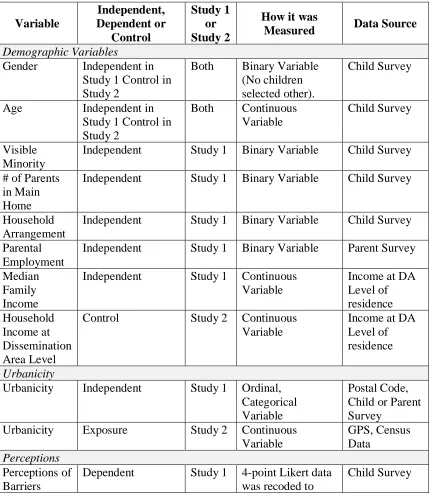
Table 3.1 Measuring Variables ... 54
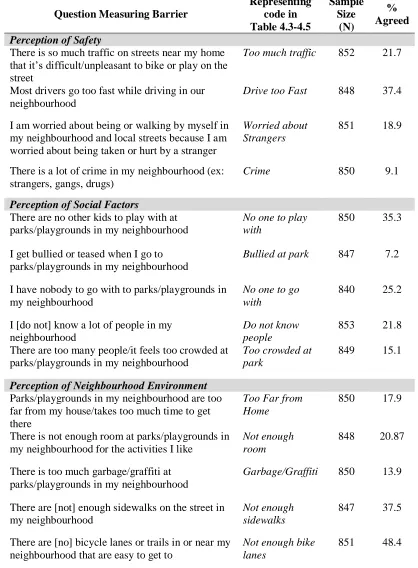
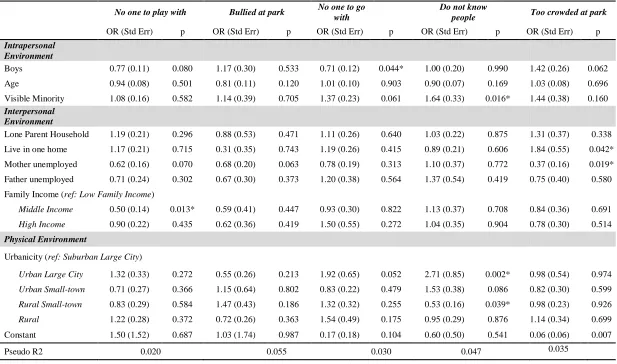
Table 4.1 Survey questions measuring barriers, and sample distribution of responses. .... 65
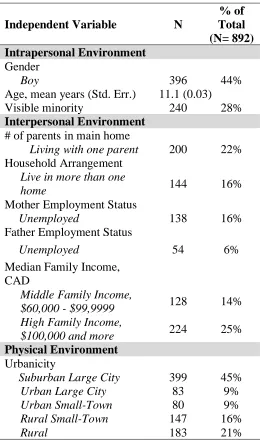
Table 4.2 Descriptive characteristics of independent variables ... 66
Table 4.3 Logistic regression models examining factors related to children perceiving
safety barriers to physical activity. ... 69
Table 4.4 Logistic regression models examining factors related to children perceiving
social barriers to physical activity. ... 70
Table 4.5 Logistic regression models examining factors related to children perceiving
neighbourhood environment barriers to physical activity... 71
Table 5.1 Survey questions measuring barriers, and the corresponding themed groups. .. 88
Table 5.2 Results of the relationship between all variables within the model. ... 92
Table 5.3 Results of the mediating effect and direct relationships of urbanicity and
ix
List of Figures
Figure 1.1 Socio-ecological model of influences on children’s physical activity levels in
rural areas. ... 4
Figure 1.2 Socio-Ecological Model of Recreational Physical Activity, Adapted from
Giles-Corti and Donovan (2002)... 5
Figure 2.1 Activity Continuum adapted from Tremblay et al. (2010). ... 16
Figure 3.1 Map of STEAM Study Areas in Northwestern and Southwestern Ontario
including levels of urbanicity. ... 47
Figure 5.1 Conceptual model. ... 90
Figure 5.2 Significant positive/negative association results for model, grouped by girls. 94
x
List of Appendices
Appendix A: Literature Review Documents with Corresponding Number Assigned (3
pages) ... 134
Appendix B: Literature Review Results Demonstrating Similarities and Differences
Children’s Perceptions of Barriers and Facilitators to PA between the Urban and Rural
Children (2 pages) ... 138
Appendix C: Research Ethics Approval Forms for Use of Human Participants STEAM
Southwestern Ontario (Redacted) ... 140
Appendix D: Research Ethics Approval Forms for Use of Human Participants STEAM
Northwestern Ontario (Redacted) ... 141
Appendix E Research Ethics Letter of Information for Parents (3 pages) and Research
Ethics Parent Consent Form (1 page) ... 142
Appendix F: Research Ethics Child Assent Form ... 146
Appendix G: Relevant Survey Questions from STEAM Project Assessing Perceptions
Chapter 1
1
Introduction
1.1
Research Context
The benefits of physical activity, especially moderate to vigorous physical activity
(MVPA), and the physical, mental, cognitive and social health contributions for children
and youth are well established (Poitras et al., 2016). Despite these known benefits of
physical activity, most Canadian children are not active enough to reap the health,
well-being and development benefits of participation (Colley et al., 2017). The overall physical
activity levels of Canadian children were issued a grade of D+ by the 2018 Participaction
Report Card on Physical Activity for Children and Youth, because less than 39% of
Canadian children and youth aged 3-17 are meeting the recommendation of an average of
60 minutes of MVPA each day (Colley et al., 2017; Larouche, Garriguet, & Tremblay,
2017; ParticipACTION, 2018).
This is of further concern because physical inactivity in childhood has been associated
with long lasting chronic health risks that track into adulthood. Warburton, Nicol, and
Bredin (2006) have described the available research as “irrefutable evidence of the
effectiveness of regular physical activity in the prevention of chronic diseases” (p.801).
These associated health risks include decreases in overall health status, cardiovascular
fitness, strength and bone density; and increased risk of health concerns including chronic
diseases (such as some cancers, Type 2 Diabetes, and heart disease), premature death, and
all-cause mortality (Bauman, 2003; Bruner, Lawson, Pickett, Boyce, & Janssen, 2008;
Galloway, 2006; Pate et al., 1999; Smith, Troped, McDonough, & DeFreese, 2015;
Warburton et al., 2006). Janssen (2012) has estimated a total cost of physical inactivity in
Canada at $6.2 Billion, or 3.7% of the total national health care costs in 2009. Krueger,
Turner, Krueger, and Ready (2014) suggest that a modest decrease of 1% in the number
of Canadians who are inactive, can have a substantial economic ($20.3 cumulative
of this issue, however, has led to the need for an important change in the way we must
conceptualize physical activity and the health of Canadians.
The recently released Report on the State of Public Health in Canada 2017 has drawn attention to this change. In her opening statement, Canada’s Chief Public Health Officer
Dr. Theresa Tam states: “Without being aware of it, our neighbourhoods and how they are built influence how healthy we are” (P.III). This report sought to encourage dialogue
in community planning and health promotion for many reasons related to the health of
Canadians, one of them being physical activity. Canadian public health leaders are
identifying the importance of considering the environmental determinants of health, and
the opportunities related to exposure and engagement with the environment for children’s
physical activity (Tremblay et al., 2015). Associations between children’s physical
activity and their surrounding physical environments have been widely discussed.
Systematic reviews examining the relationship between the physical environment and
children’s physical activity, indicate relationships with physical environment factors such
as residential density, access to recreation facilities, land-use mix, walkability, safety
structures, and neighbourhood aesthetics (Ding, Sallis, Kerr, Lee, & Rosenberg, 2011;
Oliveira, Moreira, Abreu, Mota, & Santos, 2014; Martins et al., 2017).
Research suggests, however, that physical activity behaviour may not be only based on
the objective environment measures, but also depends on differentiating between the
individual’s cognitive representation, or perception, of their environment (Giles-Corti &
Donovan, 2002; Hume, Salmon, & Ball, 2004; Orstad, McDonough, Stapleton,
Altincekic, & Troped, 2017). Perceptions are defined as “an awareness through the
senses”, and “the way in which something is regarded, understood or interpreted” (Oxford
Dictionary, 2018). A child’s perception of their everyday environments is formed through
the experience of their context: the interplay of the physical, social, cultural and structural
forces they are exposed to, and develop through a cyclical process that is interactive with
social, cognitive and affective experiences (Orton et al., 2017; Williams, 2003). One way
to conceptualize contexts is through the use of the socio-ecological model.
Giles-Corti and Donovan (2002) have suggested a socio-ecological model of recreational
level determinants of physical activity behaviour. These different levels of environment
operate through reciprocal relationship whereby the individual’s physical activity
behaviour is affected by multiple levels of environmental influences, and physical activity
behaviour shapes the surrounding social environment (Townsend & Foster, 2013). Using
this theoretical framework, the present thesis will investigate geographic variation in the
determinants of children’s physical activity and the influence their environments will
have on perceiving barriers to activity. This research will then assess the influence of
these perceptions as a mitigating factor in achievement of MVPA guidelines. This thesis
argues that context of physical activity environments vary across Ontario, and the
importance of understanding these differences for changing behaviour. This research
provides insight for future research, policy, and practice to consider how structures of
children’s environments determine their experiences of physical activity for health. This
thesis suggests a new way to conceptualize behaviour to determine effective strategies for
affecting children’s health.
1.2
Theoretical Context
To meet a gap identified in the literature review, the epistemological approach that will
guide the primary stage of my research is the conceptualization of the socio-ecological
model. The socio-ecological model suggests individual health is shaped in two ways: “(i)
behaviour affects and is affected by multiple levels of influence; and (ii) individual
behaviour shapes and is shaped by the social environment (reciprocal causation)”
(Townsend & Foster, 2013, p. 1101). This approach theorizes that social and physical
environments are interdependent; therefore, health is an outcome of the quality of the
person-environment fit (Grzywacz & Fuqua, 2000). There are five levels of influences on
health in the socio-ecological model, which have both individual and interrelated effects.
The conceptualizing model suggests that an individual’s health is shaped by (i) intra- and
(ii) interpersonal factors, (iii) community and (iv) organizational factors (or institutional),
and (v) public policies (Robinson, 2008) (see Figure 1). The socio-ecological model
differs from other epistemologies for dealing with public health issues because of the use
of more comprehensive multilevel analyses rather than single level (Robinson, 2008).
health challenges. This view will be applied to understand variations in geographic
influences of residence in rural communities on the perceived barriers and facilitators to
physical activity
Figure 1.1 Socio-ecological model of influences on children’s physical activity levels
in rural areas.
Adapted from Townsend and Foster (2013), and Public Health Ontario, (2013), this is an example of how the socio-ecologic epistemology can be utilized to consider the potential influences on children’s physical activity in their communities. Sherar et al.'s (2009)
categories of influence can be aligned with the intra-personal through community levels within the socio-ecological model.
Giles-Corti and Donovan (2002) suggested a more specific socio-ecological model of
recreational physical activity (an adaptation of the above socio-ecological model), which
is relevant to this thesis. This model considers three levels of influence: intrapersonal,
interpersonal and physical environment, that work within reciprocal causation to form
determinants of physical activity behaviour. This model is a more appropriate method of
measurement for the children’s environments in this study because of the varying policy
environments across and within the study areas. Based on an individual’s environment
level and how they experience the interpersonal and physical environment, their
Figure 1.2 Socio-Ecological Model of Recreational Physical Activity, Adapted from
Giles-Corti and Donovan (2002).
This chart demonstrates some examples of features that fall within each level, which research has demonstrated to have influence on children’s physical activity.
The socio-ecological perspective is the most appropriate epistemology for guiding my
research because of the need to consider how individual behaviours and interactions are
formed within the larger social and environmental context, when considering the
determinants of children’s physical activity (PHO, 2013). This strategy for understanding
health influencing factors has been used in a variety of similar children’s health topics,
including fruit and vegetable intake in marginalized groups (Robinson, 2008), children’s
sport participation (Eime et al., 2013), healthy eating in schools (Townsend & Foster,
2013), and addressing childhood obesity (PHO, 2013). However, this perspective’s
epistemology of health shaping influences has not yet been applied to understand the
influence of, and differences in, barriers to children’s physical activity in different rural
and urban areas in Ontario, Canada. Therefore, this approach will help to increase the
understanding of environmental determinants on the experiences of children, allowing for
advocacy and implementation of policy and infrastructure within the communities
1.3
Research Objectives and Questions
The overarching objective of this research is to contribute to the understanding of
children’s physical activity levels and the relationships with their environment. This
thesis was completed using data generated through research projects conducted by Dr.
Jason Gilliland and his associates within the Human Environments Analysis Laboratory
(HEAL). An overall goal of this work is to encourage acknowledgement of children’s
voices in physical activity research that seeks to improve their health. Furthermore, this
thesis seeks to provide a new perspective for examining children’s voices with a health
equity lens, by considering unique factors that make up a child’s context for health. This
includes a definition of rurality that exists as more than a dichotomy of rural versus urban.
Guided by a socio-ecological framework, the primary research question this thesis
addresses is: what role do children’s perception of their geographic environments play in
engaging in physical activity? Establishing a better understanding of the formation and
effect of perceptions related to geographic variation and physical activity has important
implications for health research, policy and programming related to health care,
infrastructure, and social programs.
In order to meet these objectives, this thesis will answer the following research questions:
1) How do factors of children’s intrapersonal, interpersonal, and physical
environments influence their perceptions of barriers to physical activity?
2) What are the similarities and differences in children’s perceptions of barriers to
physical activity in relation to the level of urbanicity and geographic variation of
their home location?
3) Do children’s perceptions of barriers to physical activity mediate the relationship
between their physical environment (urbanicity) and their MVPA levels?
For the purposes of this thesis, I define urbanicity using Vlahov and Galea's (2002)
definition which is the “impact of living in an urban area at a given time”, and more
specifically “the conditions present in urban areas to a much greater extent than
from the Spatial Temporal Environment and Activity Monitoring (STEAM) project. This
project took place in 2010-2013 in 33 schools in Southwestern Ontario, and in 2016 in 4
schools in Northwestern Ontario. Examining how and why children hold perceptions of
their environment is complex, however this research seeks to form a starting point for
future work to consider determinants within the socio-ecological model, and the impact
they will have on how children perceive and engage with their environments in pursuit of
physical activity. This research provides a starting point for future work to consider how
structures of children’s environments determine their experiences of physical activity for health by providing objective evidence of behaviour and subjective evidence of children’s
perceptions. This will help to support development of policy, programs, and practices that
incorporate, encourage, and facilitate the use of children’s perspectives to determine in
practice effective strategies for impacting children’s health.
1.4
Thesis Format
This thesis follows an integrated article format and includes two separate but related
studies. Each of the two studies aim to understand how children’s environments
influences their physical activity perceptions and behaviour. Each study has the same
objective to examine barriers to children’s physical activity in their daily environments, in
order to suggest methods for alleviating these barriers to promote activity. The first study
does this by examining what children perceive as barriers to gain their point of view. The
second study examines the mediating effect of these perceptions in the relationship
between the physical environment and objective measures of activity. Through these
studies, this thesis aims to suggest the importance of considering geography when
conducting research on children’s physical activity. The main theme present across both
studies is the importance of the environmental context in which children experience and
engage in physical activity in their everyday lives. The thesis outline is as follows:
Chapter 2 reviews the existing literature on physical activity and outdoor play in
children’s various environments to identify gaps, methodological limitations and justifies
Chapter 3 discusses the data collection strategies, tools and analysis rationale to provide
the reader with a comprehensive understanding of the research methods.
Chapter 4 examines children’s perceived barriers to physical activity across varying
Canadian environments in Northwestern and Southwestern Ontario, through a
socio-ecological model.
Chapter 5 investigates the relative influence of barriers mediating the relationship
between environments and moderate-to-vigorous physical activity levels of Northwestern
and Southwestern Ontario children.
Chapter 6 summarizes the findings and relates the integrated articles to critically analyze
how future policy and practice can benefit from this work. This chapter will discuss
1.5
References
Bauman, A. (2003). Updating the evidence that physical activity is good for health: an
epidemiological review 2000-2003. Journal of Science and Medicine in Sport, 7(1), 6–19.
Bruner, M. W., Lawson, J., Pickett, W., Boyce, W., & Janssen, I. (2008). Rural Canadian
adolescents are more likely to be obese compared with urban adolescents.
International Journal of Pediatric Obesity, 3(4), 205–211.
https://doi.org/10.1080/17477160802158477
Colley, R. C., Carson, V., Garriguet, D., Janssen, I., Roberts, K. C., & Tremblay, M. S.
(2017). Physical activity of Canadian children and youth. Health Reports, 28(10), 8– 16. https://doi.org/October 2017
Ding, D., Sallis, J. F., Kerr, J., Lee, S., & Rosenberg, D. E. (2011). Neighborhood
environment and physical activity among youth: a review. American journal of
preventive medicine, 41(4), 442-455.
Eime, R. M., Young, J. A., Harvey, J. T., Charity, M. J., & Payne, W. R. (2013). A
systematic review of the psychological and social benefits of participation in sport
for children and adolescents: informing development of a conceptual model of health
through sport. International Journal of Behavioral Nutrition and Physical
Activity, 10(1), 98.
Galloway, T. (2006). Obesity rates among rural Ontario schoolchildren. Canadian
Journal of Public Health, 353-356. https://doi.org/10.2307/41995739
Giles-Corti, B., & Donovan, R. J. (2002). The relative influence of individual, social and
physical environment determinants of physical activity. Social Science & Medicine,
54(12), 1793–1812.
Government of Canada (2017). The Chief Public Health Officer’s Report on the State of
Public Health in Canada 2017 – Designing Healthy Living. Ottawa. Retrieved from
https://www.canada.ca/content/dam/phac-
aspc/documents/services/publications/chief-public-health-officer-reports-state-
public-health-canada/2017-designing-healthy-living/2017-designing-healthy-living-eng.pdf
Grzywacz, J. G., & Fuqua, J. (2000). The Social Ecology of Health: Leverage Points and
Linkages. Behavioral Medicine, 26(3), 101–115. https://doi.org/10.1080/08964280009595758
Hume, C., Salmon, J., & Ball, K. (2004). Children’s perceptions of their home and
neighborhood environments, and their association with objectively measured
physical activity: a qualitative and quantitative study. Health Education Research,
20(1). https://doi.org/10.1093/her/cyg095
Janssen, I. (2012). Health care costs of physical inactivity in Canadian adults. Applied
Physiology, Nutrition, and Metabolism, 37(4), 803–806.
https://doi.org/10.1139/h2012-061
Krueger, H., Turner, D., Krueger, J., & Ready, A. E. (2014). The economic benefits of
risk factor reduction in Canada: tobacco smoking, excess weight and physical
inactivity. Can J Public Health, 105(1), e69-e78. https://doi.org/10.2307/canajpublheal.105.1.0e69
Larouche, R., Garriguet, D., & Tremblay, M. S. (2017). Outdoor time, physical activity
and sedentary time among young children: The 2012–2013 Canadian Health
Measures Survey. Can J Public Health, 107(6), 500. https://doi.org/10.17269/cjph.107.5700
Martins, J., Marques, A., Peralta, M., Palmeira, A., & Carreiro da Costa, F. (2017).
Correlates of physical activity in young people: A narrative review of reviews.
Implications for physical education based on a socio-ecological approach. Retos,
Nuevas tendencias en Educación Física, Deporte y Recreación, 31, 292-299.
Oliveira, A. F., Moreira, C., Abreu, S., Mota, J., & Santos, R. (2013). Environmental
Exercise in Health and Disease, 4(2), 254-261.
Orstad, S. L., McDonough, M. H., Stapleton, S., Altincekic, C., & Troped, P. J. (2017). A
Systematic Review of Agreement Between Perceived and Objective Neighborhood
Environment Measures and Associations With Physical Activity Outcomes.
Environment and Behavior, 49(8), 904–932.
https://doi.org/10.1177/0013916516670982
Orton, L., Halliday, E., Collins, M., Egan, M., Lewis, S., Ponsford, R., … Popay, J.
(2017). Putting context centre stage: evidence from a systems evaluation of an area
based empowerment initiative in England. Critical Public Health, 27(4), 477–489. https://doi.org/10.1080/09581596.2016.1250868
Oxford Dictionary. (2018). Definition of perception in English by Oxford Dictionaries.
Retrieved June 14, 2018, from
https://en.oxforddictionaries.com/definition/perception
ParticipACTION. (2018). The Brain + Body Equation: Canadian kids need active bodies to build their best brains. The 2018 ParticipACTION Report Card on Physical
Activity for Children and Youth. Toronto, ON. Retrieved from
https://www.participaction.com/en-ca/thought-leadership/report-card/2018
Pate, R. R., Trost, S. G., Dowda, M., Ott, A. E., Ward, D. S., Saunders, R., & Felton, G.
(1999). Tracking of Physical Activity, Physical Inactivity, and Health-Related
Physical Fitness in Rural Youth. Pediatric Exercise Science, 11, 364–376.
Poitras, V. J., Gray, C. E., Borghese, M. M., Carson, V., Chaput, J. P., Janssen, I., ... &
Sampson, M. (2016). Systematic review of the relationships between objectively
measured physical activity and health indicators in school-aged children and
youth. Applied Physiology, Nutrition, and Metabolism, 41(6), S197-S239. https://doi.org/10.1139/apnm-2015-0663
Public Health Ontario. (2013). Addressing obesity obesity in children and youth:
Robinson, T. (2008). Applying the Socio-ecological Model to Improving Fruit and
Vegetable Intake Among Low-Income African Americans. Journal of Community
Health, 33(6), 395–406. https://doi.org/10.1007/s10900-008-9109-5
Sherar, L. B., Gyurcsik, N. C., Humbert, M. L., Dyck, R. F., Fowler-Kerry, S.,
Baxter-Jones, A. D. G., … Baxter-Baxter-Jones, A. D. G. (2009). Activity and Barriers in Girls (8–
16 yr) Based on Grade and Maturity Status. Med. Sci. Sports Exerc, 41(1), 87–95. https://doi.org/10.1249/MSS.0b013e31818457e6
Smith, A. L., Troped, P. J., McDonough, M. H., & DeFreese, J. D. (2015). Youth
perceptions of how neighborhood physical environment and peers affect physical
activity: a focus group study. International Journal of Behavioral Nutrition and
Physical Activity, 12(1), 80. https://doi.org/10.1186/s12966-015-0246-9
Townsend, N., & Foster, C. (2013). Developing and applying a socio-ecological model to
the promotion of healthy eating in the school. Public Health Nutrition, 16(6), 1101– 1108. https://doi.org/10.1017/S1368980011002655
Tremblay, M., Gray, C., Babcock, S., Barnes, J., Bradstreet, C., Carr, D., … Brussoni, M.
(2015). Position Statement on Active Outdoor Play. International Journal of
Environmental Research and Public Health, 12(6), 6475–6505.
https://doi.org/10.3390/ijerph120606475
Vlahov, D., & Galea, S. (2002). Urbanization, Urbanicity, and Health. Journal of Urban
Health: Bulletin of the New York Academy of Medicine, 79(90001), 1S–12.
https://doi.org/10.1093/jurban/79.suppl_1.S1
Warburton, D. E. R., Nicol, C. W., & Bredin, S. S. D. (2006). Health benefits of physical
activity: the evidence. Canadian Medical Association Journal, 174(6), 801–809. https://doi.org/10.1503/cmaj.051351
Williams, G. H. (2003). The determinants of health: structure, context and agency.
Sociology of Health & Illness, 25, 131–154.
Chapter 2
2
Literature Review
The chapter is divided into eight main sections. Section 2.1 provides the reader with
context on the search strategy for the literature review to ensure a comprehensive
background. Section 2.2 examines the literature on physical activity, and the current
Canadian policy on children’s physical activity levels. Section 2.3 discusses the
ecological perspective for physical activity research. Section 2.4 provides definitions of
the environments analyzed within this thesis, as well as the rationale behind them. Section
2.5 provides results of a comprehensive review of the current literature surrounding
children’s perceptions of barriers and facilitators to physical activity in their
environments. Section 2.6 summarizes the evidence regarding previous interpretation of
the barriers within the socio-ecological framework of recreational physical activity.
Section 2.7 reviews the gaps in the literature that this thesis fills and provides a brief
conclusion. Section 2.8 lists the references used within this section.
2.1
Search Strategy
To undergo the literature review, the main search terms used were perceptions, children,
physical activity and urbanicity. To obtain a variety of articles related to these terms,
synonyms were used throughout the search strings. Additional terms used to locate
research were related to methods used by the researchers, including systematic, scoping,
and literature reviews, as well as meta-analyses. These types of studies are important
because they synthesize large bodies of literature into manageable reading and identify
good starting points for mapping out areas of research uncertainty (Petticrew & Roberts,
2006). Quantitative and qualitative studies were used to gain a comprehensive
understanding of how children’s physical activity patterns are formed in relation to
barriers in their communities.
The literature review took place over three main data bases: Web of Science, Scopus, and
Google Scholar. Additional literature was collected from the Western University
Electronic Thesis and Dissertation Repository, and through searching the reference pages
available in English and focused on children’s physical activity. Many studies were
excluded due to a focus on nutrition, obesity, or adult’s physical activity.
Approximately sixty papers were collected for the pre-literature review. Studies
eliminated from the literature review had a lack of relevance after reading through the
abstract and methods. Initially, fifteen articles were drawn on for the pre-literature review
for two main reasons: (1) the articles were systematic, scoping, and literature reviews, and
synthesized a large majority of the additional articles, and (2) the studies offered specific
answers to the research question for children in other settings, and were therefore similar
to the proposed study. These studies were used to steer research for the present literature
review to ensure comprehensiveness. The following sections present the findings of the
complete literature review, based on the initial search.
2.2
Physical Activity and the
24-Hour Movement Guidelines
Physical activity (PA) is defined by the Canadian Society for Exercise Physiology
[CSEP] (2017) as “bodily movement produced by skeletal muscles that requires energy
expenditure,” and this activity “increases heart rate and breathing” (p.1). Researchers
have widely examined the benefit of physical activity for children’s health (Janssen &
LeBlanc, 2010; Poitras et al., 2016). Broadly, physical activity is associated with
physical, mental and social health indicators (Poitras et al., 2016). Due to the negative
health risks and associated economic health burden of not being physically active
(Krueger et al., 2014), policy makers have emphasized the importance of developing
these behaviours from a young age. The Canadian Physical Activity Guidelines were
developed to help families and caregivers ensure children are meeting the necessary
requirements of physical activity to achieve health benefits.
In the past ten years researchers in Canada have produced a number of physical activity
guidelines, that have grown to include recommendations on sedentary behaviour, outdoor
time, and sleep (Tremblay et al., 2007, 2011a, 2011b, 2012, 2016). The most recent 2016
update to these guidelines is called the 24-Hour Movement Guidelines for Children and
Youth. These guidelines integrate movement across the whole day, with a shift in thinking
the new guidelines is not the behaviour components, but rather the integration of activity
over a 24-hour period. The new guidelines also incorporated recommendations related to
light-intensity physical activity (LPA), sleep, and play-based activity (Tremblay et al.,
2016). These changes were informed by more recent evidence related to the potential
health benefits of incorporating the new recommendations, though more research is
needed (Tremblay et al., 2016).
One significant development in conceptualizing physical activity behaviour in the
24-Hour Guidelines, is using a movement continuum to consider levels of activity and their
impact on health, based on time spent engaging. This is a way to implement the concept
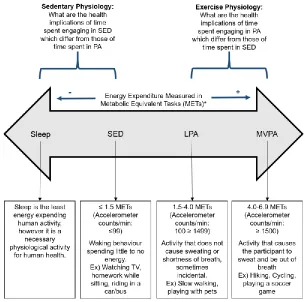
of the whole day matters (Tremblay et al., 2016). According to the CSEP (2017), the continuum (Figure 3) helps to conceptualize that there are distinct differences between
physiological systems involved in sedentary behaviour and physical activity, and the two
should not be considered opposite. For example, a synthesis of the literature by Tremblay,
Colley, Saunders, Healy, and Owen (2010), indicates sedentary behaviour is associated
with deleterious health outcomes related to metabolism and physical functioning, that
differ from those that can be attributed to a lack of being physically active. This
perspective suggests that movement and non-movement behaviours should be considered
together when assessing healthy living. As explained by Tremblay et al. (2010), achieving
high levels of intense physical activity does not necessarily displace minutes spent being
sedentary. As a result, we must consider each item’s impact in a total activity
achievement throughout the course of a day. This was identified as an important
consideration by Tremblay et al. (2010) because this could lead to new approaches for
minimizing, surveilling and analyzing sedentary behaviour that are different than those
*One metabolic equivalent (MET) is defined as the amount of oxygen consumed while sitting at rest and is
equal to 3.5 ml O2 per kg body weight per min.
Figure 2.1 Activity Continuum adapted from Tremblay et al. (2010).
As children's activity behaviour is measured on the continuum, there are different
physiological resoponses. As such, sedentary behaviour is not synonomous with physical inactivity
Based on this conception then, it is important we draw a distinction between sedentary
behaviour and physical inactivity. Sedentary behaviour is classified by little movement
and low energy expenditure (≤1.5 METs) (Tremblay et al., 2010). Examples in children
include watching television on a couch, travel via car or bus, and sitting at the computer
for homework or browsing. Tremblay et al. (2010) define physical inactivity as the
absence of participating in physical activity (at any intensity), and insufficient activity
behaviour to meet activity recommendations. This is reflected as the total time or amount
achieving 60 minutes of MVPA each day (CSEP, 2017). This draws attention to the
concept of total physical activity (TPA), as indicated in the 24-Hour Guidelines.
2.2.1
Total Physical Activity
The 24-Hour Guidelines were the first physical activity guidelines in Canada to include
recommendations related to total physical activity (TPA). TPA is the overall amount of
minutes engaging in physical activity at all intensities (light, moderate,
moderate-to-vigorous, vigorous) added together. The goal is to address time spent in physical activity
and inactivity across the whole day. This is because research demonstrated evidence of a
variety of physiological benefits with total daily physical activity levels. A systematic
review conducted by Poitras et al. (2016) synthesized strong positive associations
between children’s TPA and adiposity levels, several cardio-metabolic biomarkers,
physical fitness, and bone health. Furthermore, there was associations locating favourable
relationships between TPA and quality of life, motor skill development, and
psychological distress. Evidence related to other health indicators such as fat free mass,
pro-social behaviour, academic achievement, and self-esteem, were positive but limited
(Poitras et al., 2016).
While there is no specific indicator in the 24-Hour Guidelines recommending children achieve high levels of TPA, this recommendation is phrased within a practical and
applicable recommendation. The Guidelines suggest specific indicators of moderate-to-vigorous physical activity (MVPA) and moderate-to-vigorous physical activity, “Several hours of a
variety of structured and unstructured light physical activities” and “Limited sitting for
extended periods”. Changing the language of the current Guidelines to incorporate TPA
throughout the day, will encourage more research related to understanding the impact of
total accumulation time of physical activity, rather than the importance of MVPA bouts
alone.
2.2.2
Light Intensity Physical Activity
The evidence based decision making by Tremblay et al. (2016) in the formation of the
24-Hour Guidelines also points to the benefits of encouraging light physical activity (LPA)
result in sweat production or shortness of breath, including incidental activities. Some
examples in children and youth include slow walking/walking a dog, household chores,
and light games such as hopscotch or croquet (CSEP, 2017). The new 24-Hour
Guidelines recommend children and youth age 5-17 achieve several hours of a variety of
structured and unstructured LPA each day (Tremblay et al., 2016). The benefit of
encouraging additional minutes of LPA was found to be positively associated with
cardio-metabolic biomarkers in the review by Poitras et al. (2016). While there is limited
evidence available on the overall health impact of accumulating LPA minutes throughout
the day, Tremblay et al. (2016) reiterate the potential benefits of LPA and TPA. While
these levels require more research into their positive effects, Tremblay et al. (2016)
recommend they should continue to be considered in future work to elucidate the
potential health benefits, rather than MVPA alone.
2.2.3
Moderate to Vigorous Physical Activity
The 24-Hour Movement Guidelines recommend children and youth age 5-17 should
accumulate on average a minimum of 60 minutes of moderate-to-vigorous physical
activity (MVPA) each day (Tremblay et al., 2016). This is the recommended level of
intensity required to achieve the maximum health benefits of physical activity. MVPA is
considered activity that causes the participant to sweat, elevate the heart rate and be out of
breath (CSEP, 2017). Regular participation in MVPA has been associated with a variety
of known health benefits in children and youth including improved body composition,
cardiovascular and metabolic health, musculoskeletal health, mental health, and academic
achievement (Carson, Tremblay, Chaput, & Chastin, 2016; Janssen & LeBlanc, 2010;
Poitras et al., 2016; Strong et al., 2005). This recommendation has remained as an
important indicator for disease prevention and health promotion (Tremblay et al., 2016).
2.2.4
Sedentary Behaviour
Sedentary behaviour (SED) has been included in the 24-Hour Guidelines in order to demonstrate recommendations among the movement continuum, that sedentary time is
day and replacing sedentary behaviours with physical activity in order to achieve greater
health benefits. There is substantial evidence related to the negative implications of SED
on children’s health. For example, in a systematic review conducted by Carson et al.
(2016), they found a gradient can be observed across health behaviours in school aged
children and youth. The results demonstrate that as SED time decreases, there are positive
associations with health. Research has indicated links between SED and
overweight/obesity status in children and increased risks of cardiovascular disease,
cancer, and diabetes into adulthood (Carson et al., 2016; Lewis, Napolitano, Buman,
Williams, & Nigg, 2017). These effects are distinct from those attributed to physical
inactivity. This further supports the notion that movement and non-movement behaviours
should be considered together when assessing children’s healthy living behaviours.
2.2.5
Outdoor Time
Researchers are now leaning toward a recommendation of increasing outdoor time as a
tool for improving physical activity guideline compliance (Larouche, Garriguet, Gunnell,
Goldfield, & Tremblay, 2016; Larouche, Garriguet, & Tremblay, 2017; Tremblay et al.,
2015). Evidence suggests increasing time outdoors significantly increases activity and
steps achieved per day (Larouche et al., 2017). For example, sixty additional minutes of
outdoor times increases a child’s average daily TPA by 7 minutes (Larouche et al., 2016). This is the first time in Canada’s use of the guidelines that this recommendation has been
made, and is related to the recent PositionStatementon Active Outdoor Play for improving children’s health (Tremblay et al., 2015).
2.3
Socio-Ecological Perspective to Physical Activity
Environments
A growing body of research on physical activity takes a socio-ecological approach to
understanding how children’s health is shaped by their surrounding environments.
According to this framework, interpersonal and physical environments are
interdependent, whereby an individual’s experience of health and factors impacting
physical activity are nested as the innermost level within a variety of influence structures
physical activity levels, researchers must consider how determinants form an integrated
effect on behaviour and health (Humpel, 2002). As explained by Mitchell, Clark, and
Gilliland (2016) neighbourhoods and the community environment both limit and facilitate
physical activity in children, based on the opportunities available and restrictions
impeding activity. For example, Smith et al. (2015) highlighted how aspects of the built
environment (streets, buildings, park availability) influence adolescent’s ability to move
freely through their communities as they cannot drive and lack financial resources. This is
a result of the structures both deliberately created (i.e., the built environment) and
unintended consequences on the intrapersonal level (characteristics/factors within
individual that determine physical activity) of influence.
Giles-Corti and Donovan (2002) suggested a socio-ecological model of recreational
physical activity that considered individual, social and physical environment determinants
of physical activity behaviour. Giles-Corti and Donovan (2002) propose the importance
of such a model is access to supportive physical environment alone is not sufficient for
increasing physical activity behaviours. Rather, individual and social environment factors
that form environmental perceptions of barriers to physical activity may be equally as
important for predicting behaviour as the objectively measured physical environment
(Hume et al., 2004). By considering the environmental influences on physical activity
through a socio-ecological lens, we can begin to consider how children’s physical activity
levels are influenced by external, modifiable larger social and environmental contexts
(Public Health Ontario, 2013). In order to better understand how these perceptions
influence activity in different environments, it is first important to understand how to
define varying levels of urbanicity.
2.4
Defining Environments
2.4.1
Understanding “Rural”
The literature review determined that there is a lack of clarity surrounding the definitions
of terms used to describe different environments, such as rural and suburban. There are a
variety of definitions that tend to emphasize many different indicators for these (and
to density (Abraham, Sommerhalder, & Abel, 2010; Davison & Lawson, 2006; Lofshult,
2004; Markey, B., Lauzon, G., & Ryser, 2015; Sandercock, Angus, & Barton, 2010).
Statistics Canada’s definition indicated rural areas have less than 1000 residents, and may
contain agricultural lands, and remote and wilderness areas (Statistics Canada, 2015).
Any areas with over 1000 people are instead considered population centres, that vary in
size between small, medium and large population centres (Statistics Canada, 2015).
However, this definition is inadequate for determining the experience of individuals
because it neglects communities that fall in between these categories but still consider
their lifestyle to fit within a rural category, especially when compared to the largest
census metropolitan areas. This can create a variety of implications for health research
and programming, such as inappropriate blanketing policies applying to population
centres, which neglect to consider the history, geography, socio-economic status, and
development trajectories of small communities. These “one-size-fits-all” policies can
cause insufficient availability health care, infrastructure, and social programs. Therefore,
in order to better operationalize the concept of urbanicity to include a variety of
experiences of rurality, a population density spectrum approach will be utilized in this
thesis.
2.4.2
Defining Urbanicity and the Population Density Spectrum
Urbanicity was previously defined by Vlahov & Galea (2002) as the “impact of living in
an urban area at a given time”, more specifically “the conditions present in urban areas to
a much greater extent than non-urban areas” (p.55). This definition highlights the contrast
between cities and the surrounding areas, and these differences have been shown to have
an association with health (Cyril, Oldroyd, & Renzaho, 2013; Jones-Smith & Popkin,
2010). Rather than using the dichotomous definition, as explained by Jones-Smith &
Popkin (2010) a spectrum approach enables both an inter- and intra-urban and rural
comparison.
A population density and built form spectrum to measure indicators of urbanicity allows
for a definition that considers heterogeneity of different land uses, while providing an
objective method to operationalize data (Babey, Tan, Wolstein, & Diamant, 2015). This
form and population density, with five categories to provide greater insight into
differences in physical activity versus a more simplistic rural versus urban, or trilateral
(including suburban) division as recommended by Sandercock et al. (2010). Therefore,
urban large-cities areas are characterized by grid-like road networks, high population
density, and high land use mix within settlements greater than 100,000 people. Suburban
large-cities are areas that are characterized by cul-de-sac road networks, lower population
density, and low land use mix within settlements greater than 100,000 people. Urban
small-towns in this definition accounts for settlement areas with a population between
10,000 and 100,000 people. Rural small-towns are settlements with a population between 1,000 and 10,000. Areas defined as simply rural are all other areas of our study area mostly characterized by agricultural land and natural areas.
When considering levels of urbanicity in communities, research has demonstrated mixed
results on the influence on children’s physical activity patterns. Sandercock et al. (2010)
conducted a systematic review on the differences in physical activity levels living in
different built environments, classified by land use. The majority of studies indicated
either no differences, or that urban children were less likely to be active than rural
children. This included two studies which compared urban and rural children in Canada,
and in both groups no significant differences in MVPA presented (Plotnikoff, Bercovitz,
& Loucaides, 2004; Tremblay et al., 2005). Contrary to the results of this systematic
review, Moore, Brinkley, Crawford, Evenson, and Brownson (2013) found daily MVPA
was significantly lower in rural youth versus urban youth. This group of authors reference
their work to be consistent with Davis et al. (2008) who indicated rural children expend
less energy in physical activity than urban children each week.
What Moore et al. (2013) neglect to highlight, however, is that Davis et al. (2008) also
found that urban children had higher rates of sedentary behaviour than rural counterparts.
Davis et al. (2008) attribute this to the possibility that rural children participated in more
activities not covered by traditional self-report physical activity assessments, such as farm
chores. This conclusion draws attention back to findings of the systematic review by
simple urban versus rural division of groups. This is problematic because a dichotomous
division between urban and rural neglects to highlight heterogeneity of land uses.
In five of the articles authors found by Sandercock et al. (2010) (Joens-Matre et al., 2008;
Kristjansdottir & Vilhjalmsson, 2007; Nelson, Gordon-Larsen, Song, & Popkin, 2006;
Springer, Hoelscher, Castrucci, Perez, & Kelder, 2009; Springer, Hoelscher, & Kelder,
2006), when using a spectrum approach (i.e., considering more than a dichotomous rural
versus urban relationship) to explaining the built environment, that includes suburban or
small city populations, rural and urban children were less active than children in suburban areas or small cities. The authors of this work hypothesize that suburban children are the
most active because suburban areas have a mixture of urban (access) and rural (openness)
characteristics of the environment, but also because of the typically higher levels of
socio-economic status, and low populations of ethnic minorities in suburban areas (Sandercock
et al., 2010). This is an important mediating factor to consider because both minority
status low socio-economic status are significantly associated with decreased levels of
physical activity (Felton et al., 2002; Nelson et al., 2006; Sandercock et al., 2010). This
demonstrates the need to utilize an approach such as the socio-ecological framework,
which accounts for social and geographic determinants of health.
Sandercock et al. (2010) go so far as to say that because the articles they examined
oversimplified environments by splitting them into rural or urban, this may have led to a misinterpretation of the results. Therefore, a comprehensive understanding of urbanicity’s
effect on physical activity is still unknown, as current research has been limited by
heterogeneous definitions of urbanicity and rurality, and methodologies for measuring
environment types (Sandercock et al., 2010; Davidson & Lawson, 2006). However,
researchers do agree that characteristics within a child’s neighbourhood environment,
specifically the presence of environmental supports (including the social, physical and
political environment) such as social cohesion, local infrastructure, and accessibility to
green areas for playing, influence their physical activity (Moore et al., 2013). Current
work recommends researchers conduct work using larger studies, objective measures of
physical activity, a less simplified comparison for classifying urbanicities, and attempt to
(Sandercock et al., 2010; Hume et al., 2004), a contribution which my research seeks to
make.
A number of assumptions exist surrounding the similarities and differences in
environmental barriers influencing physical activity. For example, research indicates
children are impacted by overarching social characteristics of their communities including
socioeconomic status, infrastructure (quality and quantity), presence of nature, and safety
(Loebach & Gilliland, 2010; Walia & Liepert, 2012; Yousefian, Ziller, Swartz, & Hartley,
2009), as well as geographic factors such as accessibility to physical activity
opportunities especially based on community size (i.e., population less than 10,000 versus
250,000 or more demonstrated a greater lack of accessibility to physical activity
opportunities) (Canadian Fitness and Lifestyle Research Institute, 2013). Despite the
threats to population health in Canada presented by physical inactivity, there is a paucity
of research on the opportunities for physical activity and aspects of the built environment
across the spectrum of urbanicity (Yousefian et al., 2009). The majority of literature
regarding environment-activity links focuses on larger cities, neglecting areas outside of
larger metropolitan areas, and little research has been conducted to examine opportunities
for physical activity in built environment across rural and urban settings (Yousefian et al.,
2009; Moore et al., 2013). This is a gap which my research seeks to fill.
Furthermore, research highlights the need to study variation between different rural
communities (DesMeules et al., 2006; Markey, Lauzon & Ryser, 2015; Walia & Liepert,
2012). In Ontario alone, there are five general types of rural (and northern or remote)
communities: urban fringe communities, agriculture communities, cottage country
communities, Northern Ontario communities, and Indigenous communities (Markey et
al., 2015). In Canada this can extend further to include prairie and maritime communities
(Walia & Leipert, 2012). This demonstrates the importance of considering heterogeneity
between rural communities (DesMeules et al., 2006), especially when attempting to form
health-influencing policy. Walia and Leipert (2012), who conducted qualitative research
on barriers to physical activity in Southwestern Ontario, suggest research in different
types of rural communities would allow for insights on “issues common and unique to
2.5
Factors Influencing Physical Activity across
Environments
When considering issues or opportunities that hinder/encourage physical activity, a
valuable way to consider the environmental influences on children’s perceptions is
through recognition of barriers and facilitators to physical activity in different
urbanicities. Researchers recognize the value in understanding the personal and
situational influences on physical activity engagement of children (Loebach & Gilliland,
2010). These perspectives demonstrate the importance of understanding influences and
how future interventions will best enhance facilitators, while mitigating barriers to
physical activity (Sherar et al., 2009). Sherar et al. (2009) offered useful categories for
classifying barriers that have been adapted to define both barriers and facilitators in local
outdoor spaces for participating in physical activity in rural communities. Barriers are factors that make physical activity difficult or completely inhibit it in outdoor spaces.
Facilitators are factors that make physical activity possible and promote the behaviour in
outdoor spaces.
2.5.1
Barriers and Facilitators to Physical Activity
Table 1 was developed based on 49 studies, to demonstrate similarities and differences
between the urban (including suburban), and rural areas in children’s perceptions of
barriers and facilitators to physical activity. This table provides a summary of the number
of articles located within each subheading that presented significant findings. Two
additional tables are available in the appendices. Appendix A provides all titles included
with a corresponding number, and Appendix B uses these numbers to demonstrate which
Table 2.1 Number of findings demonstrating barriers and facilitators discussed by
urbanicity, available in the literature.
Individual Social Physical
Level of
Urbanicity Identified
Facilita
tor (F)
or
Barrie
r (B) to
PA Perce ived Safety /Unsaf e Pref. for W eathe r Perce ived Aesthetics/ Quality Pref. for A ctivitie s Social Factor s Accessibility (transportati on) Paren t perc eptions / rules Socio -economic circumst ance Planned / structured ac tivities Facilitie s & Amenities City Planning / Design Access (proximity/ availabil ity)
Rural F 1 1 1 1 1 1 2 1 1 1
B 3 1 1 2 4 4 2 2 2 3 4
Urban F 3 2 1 5 2 1 3 1 1
B 4 1 1 1 2 1 1 2 3 3
Not Stated
F 2 2 2 1 1 1 1
B 4 2 1 1 1 1 1 3
* Only significant findings represented
Access to physical activity facilities at the community level was both a barrier, and
somewhat a facilitator in rural and urban populations studied; however, it is important to
provide further context within this level to understand how researchers categorized
access. In the urban populations, access was usually determined by ability to walk or bike
to locations for physical activity (Loebach & Gilliland, 2010; Grow et al., 2008). Whereas
in rural populations, lack of access was usually determined as a barrier if use depended on
the need to drive to locations because of a lack of activities close to home (Grow et al.,
2008; Loebach & Gilliland, 2010). This example can be expanded upon further in the city
planning and design category. Although three barriers to physical activity and one
facilitator to physical activity were found in both the urban and rural study populations,
there is a difference in the context of what city planning and design means for the
communities. For example, in urban communities the layout of streets (i.e., lack of
connectivity, intersecting train tracks, and traffic volume) acted as a barrier to physical
activity (Loebach & Gilliland, 2010). In rural populations, however, street planning
presented as a barrier within the built environment due to underdeveloped centers,
dispersed residential patterns, and lack of public open space (Yousefian et al., 2009).
Interpersonal barriers to physical activity are much higher for rural populations, whereas
strong facilitator of physical activity in urban areas was neighbourhood social cohesion
and social factors, including social relationships with neighbours and nearby community
centres that promote social interaction (Aarts, Wendel-Vos, Van Oers, Van De Goor, &
Schuit, 2010). Walia and Liepert (2012) indicated that as a result of distance in rural
communities, and the reliance on parents for transportation to visit friends, it is difficult
for youth in rural communities to engage in spontaneous group social activities. These
researchers suggest rural communities must facilitate social cohesion by allowing for
gathering spaces to promote physical activity through social opportunities. By identifying
the impact of factors of rural residence that create perceived barriers to interpersonal
forces influencing physical activity, this could help researchers to understand one way to
adapt the environments of children in an effort to promote physical activity. Considering
the positive impact of social factors on children’s physical activity in urban areas, more
research is needed to understand the influence of such factors in rural populations.
The number of findings for individual barriers and facilitators in rural and urban
populations are similar. This may indicate that individual perceptions have a similar level
of influence between rural and urban communities (Loebach & Gilliland, 2010).
However, it is important to note differences in the types of examples given in the
populations for these barriers. For example, perceived lack of safety in an urban area may
be due to poor lighting, crime, or traffic volume and speed (Hume et al., 2004; Grow et
al., 2008; Loebach & Gilliland, 2010); whereas in rural areas, lack of safety extended to
include lack of adult supervision in the neighbourhood, a fear of hunters, and wild
animals or loose dogs (Holt et al., 2016). Another example of similarities between the two
urbanicities in this theme was perceived aesthetics. Researchers working with rural
populations often encouraged greening/street beautification in rural areas to improve
children’s physical activity (Smith et al., 2015), something that was proven to be a
facilitator in urban areas (Abraham et al., 2010, Loebach & Gilliland, 2010).
Suburban was often grouped in the definition of urban in all except one study (Babey et
al., 2015), rather than standing alone as a level of urbanicity. This is important to note
because children living in suburban areas have demonstrated higher levels of physical