i
EFFECT OF INTERNAL CONTROL SYSTEMS ON FINANCIAL PERFORMANCE OF PUBLIC INSTITUTIONS OF HIGHER LEARNING IN NAIROBI CITY COUNTY,
KENYA
BENSON MUGI MUHUNYO
D53/OL/CTY/26873/15
A RESEARCH PROJECT SUBMITTED TO THE SCHOOL OF BUSINESS IN PARTIAL FULFILLMENT OF THE REQUIREMENTS FOR THE AWARD OF DEGREE OF MASTER OF BUSINESS ADMINISTRATION (FINANCE OPTION) OF
KENYATTA UNIVERSITY
ii
DECLARATION
This research project is my original work and has not been presented for the award of a degree in any other University
Signature ………. Date………
BENSON MUGI MUHUNYO D53/OL/CTY/26873/15
This research project has been submitted for examination with my approval as the University supervisor
Signature ……….. Date……… Dr. JAGONGO, A. O.
iii DEDICATION
iv
ACKNOWLEDGEMENT
v
TABLE OF CONTENT
DECLARATION ... ii
DEDICATION ... iii
ACKNOWLEDGEMENT ... iv
TABLE OF CONTENT ...v
LIST OF TABLES ... viii
LIST OF FIGURES ... ix
ABBREVIATIONS AND ACRONYMS ...x
OPERATIONAL DEFINITION OF TERMS ... xi
ABSTRACT... xiii
CHAPTER ONE: INTRODUCTION ...1
1.1 Background to the Study...1
1.1.1 Internal Control Systems ...3
1.1.2 Financial Performance ...5
1.1.3 Internal Control and Financial Performance ...6
1.2 Statement of the problem ...7
1.3 Research Objectives ...9
1.3.1 General Objective ...9
1.3.2 Specific Objectives ...9
1.4 Research Questions ... 10
1.5 Scope of the Study ... 11
1.6 Significance of Study... 11
1.7 Limitation of the Study ... 11
1.8 Organization of the study ... 12
CHAPTER TWO : LITERATURE REVIEW ... 13
2.1 Introduction ... 13
2.2 Theoretical review ... 13
2.2.1 Agency theory ... 13
2.2.2 Stewardship Theory ... 15
2.2.3 Positive Accounting Theory ... 16
2.2.4 Attribution Theory ... 17
2.3 Empirical Review ... 19
vi
2.4 Summary of Literature and Research gaps ... 23
2.5 Conceptual framework... 23
CHAPTER THREE : RESEARCH METHODOLOGY ... 25
3.1 Introduction ... 25
3.2 Research design ... 25
3.3 Target Population ... 25
3.4 Sampling Design ... 26
3.5 Data Collection Procedure ... 27
3.6 Validity and Reliability of Research Instruments ... 27
3.6.1 Reliability ... 27
3.6.2 Validity... 28
3.7 Data Analysis and Presentation ... 28
3.8 Ethical Considerations ... 29
CHAPTER FOUR : DATA ANALYSIS, PRESENTATION AND INTERPRETATION ... 30
4.1 Introduction ... 30
4.1.1 Questionnaire Response Rate ... 30
4.1.2 Validity and Reliability of Research Instruments ... 31
4.2 Background Information ... 31
4.2.1 Period of existence of the Institution ... 32
4.2.2 Level of staffing of Accounts/Finance Departments ... 32
4.2.3 Existence of adequate segregation of duties in the finance and accounts department . 33 4.2.4 Effectiveness of Internal Control System ... 34
4.3 Control Environment ... 34
4.4 Risk Assessment ... 35
4.5 Control Activities ... 37
4.6 Information and Communication ... 38
4.7 Financial Performance ... 39
4.8 Regression Analysis ... 41
CHAPTER FIVE : SUMMARY, CONCLUSIONS AND RECOMMENDATIONS ... 44
5.1 Introduction ... 44
5.2 Summary of the Findings ... 44
5.2.1 Control environment and financial performance ... 44
5.2.2 Risk assessment and financial performance ... 44
vii
5.2.4 Information and Communication and financial performance ... 46
5.3 Conclusions ... 46
5.4 Recommendations ... 47
5.5 Suggestions for Further Study ... 47
REFERENCES ... 48
APPENDICES ... 53
APPENDIX I: LETTER OF INTRODUCTION ... 53
APPENDIC II: QUESTIONNAIRE ... 54
APPENDIX III: BUDGET ... 60
viii
LIST OF TABLES
Table 3.1 Staff Population ... 26
Table 3.2 Sample size... 26
Table 4.1Validity and Reliability of Research Instruments ... 31
Table 4.2 Influence of control environment on financial performance ... 35
Table 4.3 Influence of Risk assessment on financial performance of institutions of higher learning ... 36
Table 4.4 Influence of control activities on financial performance of institutions of higher learning ... 37
Table 4.5 Influence of information and communication on financial performance of institutions of higher learning ... 39
Table 4.6 Change in financial performance between 2011 and 2015 ... 40
Table 4.7 Model Summary ... 41
Table 4.8 ANOVA ... 41
ix
LIST OF FIGURES
Figure 2.1Conceptual framework ... 24
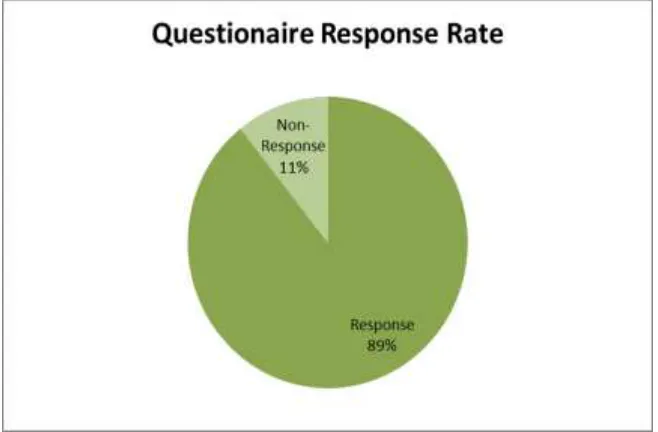
Figure 4.1 Response rate ... 30
Figure 4.2 Period of existence of the Institutions ... 32
x
ABBREVIATIONS AND ACRONYMS ACCA Association of Chartered Certified Accountants
IFRS International Financial Reporting Standards CPD Continuing Professional Development ERP Enterprise Resource Planning
COSO Committee of Sponsoring Organizations SAS Statement of Auditing Standards
MVA Market Value Added
ROA Return on assets
ROE Return on equity
xi
OPERATIONAL DEFINITION OF TERMS
Communication This is the transmission or exchange of information between two or more persons. The message emanates from the source to the receiver and back to the source as feedback.
Decision making Relates to the act of making up your mind about a position or opinion or judgment reached after consideration.
Financial Performance Is a subjective measure of how well a firm can use assets from its primary mode of business and generate revenues.
Internal control is refers to the measures instituted by an organization so as to ensure attainment of the entity’s objectives, goals and missions
Internal Control Systems Is a process for assuring achievement of an organization's objectives in operational effectiveness and efficiency, reliable financial reporting, and compliance with laws, regulations and policies.
Management This is the process of planning, controlling, directing, coordinating and evaluating ideas, activities and programmes in order to achieve the aims and objectives of an organization.
Monitoring This is a process that assesses the efficiency and effectiveness of internal controls over time.
Planning This is the process of setting goals, developing strategies, and outlining tasks and schedules to accomplish the goals.
xii consideration for quality.
xiii ABSTRACT
1
CHAPTER ONE INTRODUCTION 1.1 Background to the Study
Financial performance is the ability to operate efficiently, profitability, survive, grow and react to the environmental opportunities and threats Sebbowa (2009). For purposes of the study I adopted Ray and Kurt’s definition of internal control systems. In as much as Internal control Systems are wide and numerous, for the sake of this study, Internal control systems will be limited to; the Control Environment, Internal Audit, and Control activities whereas financial performance will be looked at basically from the three perspectives of Liquidity, Accountability and Reporting (Donald and Delno 2009). Organizations have invested heavily in improving the quality of their internal control systems over the past decade arguing that a good internal control yields good business. Many organizations are required to report on the quality of internal control over financial reporting, compelling them to develop specific support for their certifications and assertions. The following five objectives help management in designing effective internal controls: maintaining reliable systems, ensuring timely preparation of reliable information, safeguarding assets, optimizing the use of resources, preventing and detecting error and fraud (Alvin et al, 1993).
2
performance. It is also a general belief that properly instituted systems of internal control improve the reporting process and also give rise to reliable reports which enhances the accountability function of management of an entity. According to Dixon et al (1990), appropriate performance measures are those which enable organizations to direct their actions towards achieving their strategic objectives.
Internal control ensures effectiveness and efficiency of operations, reliability of financial reporting and compliance with applicable laws and regulations to which the company is subject. According to Mawanda (2008), a sound internal control system helps the firm to prevent frauds, errors and minimize wastage. The increase of business units has encouraged the use of internal control as it ensures orderly and efficient conduct of business including adherence to internal policies. The completeness and accuracy of accounting records, timely preparation of financial information, can only be achieved if the proper internal control system is in place. The institution’s ability to maximize its profit depends in part on the design and effectiveness of the processes and safeguards it has put in place over accounting and financial reporting (Ndungu, 2013). While no practical control system can absolutely assure financial reports will never contain material errors or misstatements, an effective system of internal control over financial reporting can substantially reduce the risk of such misstatements and inaccuracies in company’s financial statements (Kaplan, 2008).
Institutions of higher learning are where people go to further their knowledge in a specific area, and/or to acquire a diploma, degree, master’s degree and PhD. These involve college, universities
3
research, outreach and extension constitute the basis on which research goals are set and measures by which fulfilment of these goals are established (Onsongo, 2007).
1.1.1 Internal Control Systems
Saleemi (2008) defines internal control as the whole system of controls, financial and otherwise established by the management in order to carry the business of the enterprise in an orderly and efficient manner, safeguard the assets and secure as far as possible the completeness and accuracy of the records. The components discussed below must be present and functioning effectively for any internal control system to achieve organizational objectives (COSO 1994).
Control environment is the major aspect of managing an organization. This is because it is a reflection of the attitude and the policies of management in regard with the importance of internal audit in the economic unit, Theofanis, et al (2011). However, it is the foundation for the other components of internal control and providing structure, Sudsomboon and Ussahawanitchakit, (2009). Control environment assist toward reducing the level fraudulent activities within organizational operation also the quality of an entity’s internal controls system depend on the function and quality of their control environment, Amudo and Inanga (2009). Therefore, providing a proper control environment for a public institution is very essential to the effectiveness of their operation.
4
determine the level of risk carefully to be accepted, and should try to maintain such risk within determined levels. Therefore, public institutions are required to frequently assess the level of risk they are experiencing in order to take necessary actions.
Control activities are policies, procedures and mechanisms that ensure management’s directives are properly carried out (Aikins, 2011; Rezaee, Elam & Sharbatoghlie, 2001). Proper documentation of policies and procedural guidelines in these aspects help to determine not only how the control activities are to be executed but also provide adequate information for auditors examination of the overall adequacy of control design over financial management practices (Aikins, 2011). These control activities ensure that all necessary actions should be taken with the aim to address risks so that organizational objectives are achieved. Example of control activities include; segregation of duties, daily deposit of cash receipts, bank reconciliations and limiting access to check stock.
5
It is usually accepted that internal control systems need to be adequately monitored in order to assess the quality and the effectiveness of the system’s performance over time. Monitoring provides assurance that the findings of audits and other reviews are promptly determined. (Theofanis et al, 2011), also notes monitoring of operations ensures effective functioning of internal controls system (Amudo & Inanga, 2009). Hence, monitoring determines whether or not policies and procedures designed and implemented by management are being carried out effectively by employees.
1.1.2 Financial Performance
According to Gerrit and Abdolmohammadi, (2010), Organizational performance encompasses accumulated end results of all the organization’s work processes and activities. Financial Performance measures in public institutions of higher learning can be financial or non-financial. The most effective way to improve financial performance is by reducing the level of irregularity and fraud through improvements in the firm’s systems of internal financial control. Shareholders need to be assured that their resources are being used efficiently and effectively in providing the right service at the least cost.
Donald and Delno (2009) noted that appropriate performance measures are those which enable organizations to direct their actions towards achieving their strategic objectives Brennan and Soloman (2008) contends that, performance is measured by either subjective or objective criteria; arguments for subjective measures include difficulties with collecting qualitative performance data from small firms and with reliability of such data arising from differences in accounting methods used by firms.
6
maximization) and effectiveness (full attainment of the intended results. Sustained profitability can simply be seen as a continuous financial benefit that is realized when the amount of revenue gained from a business activity exceeds the expenses, costs and taxes needed to sustain the activity. The most effective way to improve net income is by reducing the level of irregularity and fraud through improvements in the firm’s systems of internal financial control (Wainaina, 2014). Management should on a regular basis review all aspects of their company and ensure internal controls that will strengthen the company and increase profitability are in place, (Kamau, 2014). Every business decision contains risk; avoiding or mitigating this risk is achieved through strong internal controls. In this study, Return on Assets will be used to measure performance.
1.1.3 Internal Control and Financial Performance
Internal control systems including internal audits are intended primarily to enhance the reliability of financial performance, either directly or indirectly by increasing accountability among information providers in an organization (Jenning et al., 2008). Internal control therefore has a much broader purpose in the organization level. Internal controls provide an independent appraisal of the quality of managerial performance in carrying out assigned responsibilities for better revenue generation (Donald & Delno, 2009).
7
Effective internal control system prevents waste and inefficiency in the production line and processes of goods and services. Effective internal control systems assist in the formulation and implementation of quality procurement procedures that helps to factor justification for requisition at proper lead-time, quantity and at lowest prices (Ngechu 2004). This will boost profitability than blind ordering which result to loss and waste. It is very important for every section and department of an organization to have an effective internal control system which is involved in blocking the organization’s income leakages and loop holes thereby supporting a sustained profitability, growth and other general corporate goals and objectives.
1.2 Statement of the problem
8
Kenya in which the results indicated that the private sector compared to the public sector had a strong internal control system.
In Kenya, a number of important trends have recently emerged within the manufacturing sector. It is worth noting that manufacturing sector is a major contributor to the economic development of the country. According to the Economic Survey 2015, Kenya National Bureau of Statistics established that manufacturing sector contribution to Gross. Effectiveness of internal control on financial performance is very important in every organization, because the task of IC is to prevent and detect fraud in the organization. Internal controls help in achieving efficiency and effectiveness of operations.
Several studies have been carried out on internal controls globally, regionally and locally on the effect on internal control system on profitability of diverse firms. For example; globally studies by Abu-Musa (2004); Chunlan (2009); Wittayapoom (2011); and regionally Kakucha (2009) and Nyakundi & Nyamita (2014) have established there exist a relationship between effective internal control and financial performance of the firm. However, majority of these studies have concentrated on different industries, while others have concentrated on a mix of listed firms in their localities. In addition, the studies employed different methodologies hence such studies may not be generalized to the study context.
9
investigate the effects of internal controls on financial performance of institutions of higher learning in Kenya. Therefore, this study sought to investigate the relationship between internal control systems and financial performance of Institutions of higher learning in Kenya, a case of Nairobi City County, Kenya.
Mohammed, (2003) researched effect of the internal controls of Ethiopian Airlines Branch office in Nairobi and a case study of internal controls of Nyayo Bus Service Corporations in Nairobi (Esmailjee, 1993). Chira (2009) researched on the analysis of internal controls systems in financial institution. The findings were that though various internal controls systems do exist in the banking industry more weight had been given to operational controls compared to other types of controls. There has been no research done on effects of internal control on performance of public Institutions of Higher Learning in Kenya. This study therefore sought to answer the question “what is the effect of internal control system on financial performance of public institutions of higher learning in Nairobi City County, Kenya?
1.3 Research Objectives 1.3.1 General Objective
The main objective of the study was to establish the effect of Internal Control Systems on Financial Performance of Institutions of higher learning in Nairobi City, County, Kenya.
1.3.2 Specific Objectives
The specific objectives included;
(i)To determine the effect of control activities on financial performance of institutions of higher learning in Nairobi City, County, Kenya.
10
higher learning in Nairobi City, County, Kenya.
(iii) To evaluate the effect of control environment on financial performance of institutions of higher learning in Nairobi City, County, Kenya.
(iv) To establish the effect of information and communication on financial performance of institutions of higher learning in Nairobi City, County, Kenya.
(v) To establish the effect of monitoring on financial performance of institutions of higher learning in Nairobi City, County, Kenya.
1.4 Research Questions
This study sought to answer the following research questions in view of the specific objectives (i)What is the effect of control activities on financial performance of institutions of higher
learning in Nairobi City, County, Kenya?
(ii) What is the effect of risk assessment on financial performance of institutions of higher learning in Nairobi City, County, Kenya?
(iii) What is the effect of control environment on financial performance of institutions of higher learning in Nairobi City, County, Kenya?
(iv) What is the effect of information and communication on financial performance of institutions of higher learning in Nairobi City, County, Kenya?
11 1.5 Scope of the Study
The conceptual scope of this study lies on the effect of internal control systems on the financial performance of Institutions of higher learning in Kenya. The specific context of interest was institutions of higher learning in Nairobi City, County. The management staffs of the institutions in the department of finance were involved since they have knowledge and would provide information on finance reports in relation to internal control system of institutions of higher learning in Kenya. It is believed that this would provide adequate information for the study and therefore give reliable results and findings. The study covered a period of five years, thus from the year 2011 to the year 2015.
1.6 Significance of Study
This research study is intended to establish whether there exists a relationship between internal control system and financial performance of Institutions of higher learning in Kenya. Thus, the findings of this study will be useful in identifying gaps within the systems of internal control in higher Institutions of learning in Kenya. It is also the researcher’s belief that invaluable benefits to management and those charged with governance and training institutions will emerge on how to streamline the systems of internal controls thus ensuring improved financial performance and ultimately ensure attainment of the institutional objectives.
1.7 Limitation of the Study
12
The researcher also encountered problems in eliciting information from the respondents as the information required was subject to areas of feelings, emotions, attitudes and perceptions, which could not be accurately quantified and/or verified objectively. The researcher encouraged the respondents to participate without holding back the information they had since the research instruments would not bear their names.
1.8 Organization of the study
13
CHAPTER TWO
LITERATURE REVIEW 2.1 Introduction
The study has provided theoretical literature as well as empirical literature. The chapter has provided a summary and critique of literature received with aim of bringing out the research gaps to be addressed by the proposed study. A conceptual framework captures the variables and clearly shows the relationships among the research variables.
2.2 Theoretical review
A theory is a set of statements or principles devised to explain a group of facts or phenomena, especially one that has been repeatedly tested or is widely accepted and can be used to make predictions about natural phenomena (Creswell,2006). This study used four theories to explain the influence of the independent variables on the dependent variable. The theories are the Agency theory, Stewardship theory, Positive Accounting Theory and the Attribution Theory.
2.2.1 Agency theory
14
resources. The theory posits that agents have more information than principals and that this information asymmetry adversely affects the principals ability to monitor whether or not their interests are being properly served by agents.
As such, the theory describes firms as necessary structures to maintain contracts, and through firms, it is possible to exercise control which minimizes opportunistic behavior of agents (Mwangi, 2012). According to the theory, in order to harmonize the interests of the agent and the principal, a comprehensive contract is written to address the interest of both the agent and the principal. The agent-principal relationship is strengthened more by the principal employing an expert and systems (auditors and control systems) to monitor the agent (Jussi & Petri, 2004).
15
This theory is applicable to this study simply because internal control is one of many mechanisms used in business to address the agency problem by reducing agency costs that affects the overall performance of the relationship as well as the benefits of the principal (Payne, 2003; Abdel-Khalik, 1993). Internal control enhances the provision of additional information to the principal (shareholder) about the behavior of the agent (management) reduces information asymmetry and lowers investor risk and low revenue.
2.2.2 Stewardship Theory
16
Meckling and Jensen (1994) further state the cost incurred to curb agency problems (reducing information asymmetries and accompanying moral hazards) is less when owners directly participate in the management of the firm as there is a natural alignment of owner managers’ interest with growth opportunities and risk. It follows from the above that stewardship theory unlike agency theory is a complete contrast and doesn’t emphasize on the need to incur monitoring or agency cost which includes establishing an internal audit function. Nevertheless Donaldson and Davis (1991) further note that returns are improved by having both of these theories combined rather than separated which implies that management must strike a balance. In this study the steward theory supports the study by the fact that managers of institutions of higher learning act as stewards of shareholders, suppliers, creditors, consumers and employees of these institutions.
2.2.3 Positive Accounting Theory
17
The positive accounting theory itself was developed by Watts and Zimmerman (1986), who states that positive accounting theory is concerned with explaining accounting practice. It is designed to explain and predict which firms will and which firms will not use a particular accounting method but says nothing about which method a firm should use.” The theory is based on “the assumption that all individual actions is driven by self-interest and that individuals will always act in an opportunistic manner to the extent that the actions will increase their wealth” (Deegan and Unerman, (2006). From this perspective, the positive accounting theory predicts that organizations will seek to put mechanisms in place to limit actions that are driven by self-interest. This is needed to align the interest of managers of the firm (agents) with that off the owners of the firm (the principles). The costs of dealing with problems concerning the agency relationship and installing appropriate mechanisms are referred to as ‘monitoring cost’.
2.2.4 Attribution Theory
18
Earlier literature shows that people are inclined to attribute others behavior to dispositional tendencies and to attribute their own behavior to situational circumstances (Wilks and Zimbelman, 2004; Schroth and Shah, 2000). Often, this is when the observed behavior is negative. Consequently, evaluators are expected to infer the failure to detect internal control on revenue generation as a dispositional tendency on the auditor‟s part which concludes that auditors are negligent. Bonner et al. (1998) found that auditors are more likely to be sued when they fail to detect common misappropriations that would result to decreased revenues, and the evaluators believe that the fraud could have been detected by other auditors. The auditor’s accountability for detecting fraud is extended by Reffett’s (2007) study which predicted that auditors are more likely to be held accountable by evaluators when the auditors fail to detect fraud after they had identified the fraud occurrence as a fraud risk. The result of Reffett’s study shows an increase in auditors‟ liability when an audit fails, after the auditors had identified the perpetrated fraud as a fraud risk and performed procedures to investigate the identified fraud risk. The findings support Reffett’s prediction.
19
accountable and auditors, being the “public watch dogs” are most likely to be held accountable if evaluators determine substandard audit services were provided.
2.3 Empirical Review
2.3.1 Internal Control System and Financial Performance in public Institutions
Ndiwa (2014) studied the assessment of Internal Control System on Financial Performance in tertiary training institutions in Kenya. Many public institutions in Kenya are faced with poor financial performance which in extreme cases has led to the closure of some of them, despite having the necessary resources to run them. The study, therefore, endeavoured to investigate the persistent poor financial performance from the perspective of internal controls which had hitherto been ignored. The general objective of the study was to establish the relationship between internal control and financial performance in tertiary institutions in Kenya. The study was limited to the African Institute of Research and Development Studies. The findings indicated that most respondents were of the view that indeed there was a relationship between internal control and financial management.
20
the institution’s finance and accounts department and that superior officer in the College supervised regularly work done by their subordinate.
Also, the Ndifon (2014) study found that the institution financial statements are audited annually by external auditors. The study results further show that there is no significant relationship between internal control activities and financial performance of Cross River State College of Education. The investigation recommends proper checks and balances in all financial transactions. There should be effective and efficient security network to reduce frequent theft, threat to life and property. The study also recommends that management of the institution should organize regular training for staff on control mechanism.
21
J. Morris (2011) believes that Enterprise Resource Planning systems provide a mechanism to deliver fast, accurate financial reporting with built-in controls that are designed to ensure the accuracy and reliability of the financial information being reported to shareholders.
Mwakimasinde, Odhiambo and Byaruhanga (2014) analyzed the effect of internal control systems on the financial performance of sugarcane out grower companies in Kenya. The specific objective of the study was to determine the effect of internal control system components on the financial performance of the sugarcane out grower companies. Internal control system was characterized by control environment, risk assessment process, information system and control activities while financial performance was characterized by cost per unit, goal attainment and profitability or surplus. The regression results also show that internal control system helps increase financial performance of sugarcane out grower companies percent. Based on the findings and conclusions of the study, the following recommendations were made; Internal control system has been found to have a statistically positive effect on performance of sugarcane out grower companies hence there is need for the sugarcane out grower companies to improve on their internal control system. Despite the fact that the study produced meaningful results it was subject to some limitations which provide avenues for further research.
22
therefore, recommends that internal control environment should be enhanced to further improve the financial performance of companies quoted in Nairobi securities exchange.
Kamau, (2014) investigated the effect of internal controls on the financial performance of manufacturing firms in Kenya. The findings revealed that most manufacturing firms had a control environment as one of the functionality of internal controls of the organization that greatly impacts on the financial performance of the firms. The results also revealed that the staffs were trained to implement the accounting and financial management systems, the security system identified and safeguarded organizational assets. The statistical result from the regression analysis shows that there is a positive relationship between internal control and financial performance of manufacturing firms in Kenya. The study recommends that both internal and external auditor should be constantly updated and well-grounded on international financial reporting standards (IFRS) and principles in order to enhance their knowledge and skills in application of accounting practices and to keep them updated on the contemporary issues.
23 2.4 Summary of Literature and Research gaps
The reviewed literate showed mixed results on the relationship between the internal control systems and financial performance of organizations. Most of the researches done on internal controls are case studies and focus on specific institutions/companies that exhibit particular characteristics or material weakness in the internal control systems. Since most of the studies failed to show the contribution of control activities, control environment and monitoring, therefore this research address to fill those gaps.
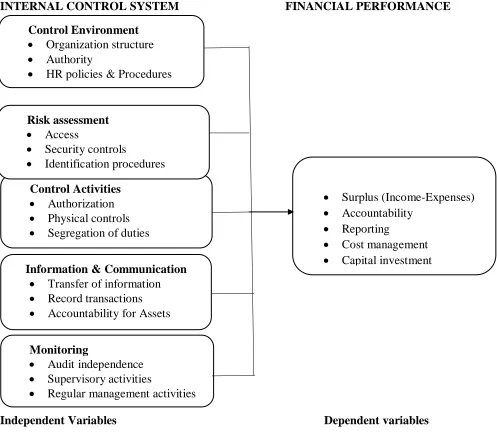
2.5 Conceptual framework
24
INTERNAL CONTROL SYSTEM FINANCIAL PERFORMANCE Ris
Independent Variables Dependent variables
Figure 2.1Conceptual framework Source: Researcher (2017)
Monitoring
Audit independence Supervisory activities
Regular management activities Control Environment
Organization structure Authority
HR policies & Procedures
Information & Communication Transfer of information Record transactions Accountability for Assets Control Activities
Authorization Physical controls Segregation of duties
Surplus (Income-Expenses) Accountability
Reporting
Cost management Capital investment Risk assessment
Access
Security controls
25
CHAPTER THREE RESEARCH METHODOLOGY 3.1 Introduction
This chapter provides a description of the research design and methodology that was employed in the study. It looks at the various sources of data for the study, sampling design and its procedures. The chapter also included the methods that were used in data collection, the instruments used in data collection and the limitations of the study.
3.2 Research design
According to Kothari (2007), research design is defined as a framework that shows how problems under investigation will be solved. This study adopted a cross sectional descriptive survey design because it provides a clear outcome and the characteristics associated with it at a specific point in time. Descriptive design was relevant for this study since it focuses at one point in time and does not require several rounds of monitoring. The descriptive survey attempted to document current conditions to describe what exists at the moment (Mouser and Katton 1989). The study employed both qualitative and quantitative methods of data analysis most of the findings were quantitatively analyzed.
3.3 Target Population
26 Table 3.1 Staff Population
Department UON COUK TUK KTTI TOTAL
Accounts/Finance 5 3 3 4 15
Administration 12 10 3 12 36
Operations 10 10 11 9 40
Grand Total 27 23 16 25 91
Source: Administration the various institutions (2017)
3.4 Sampling Design
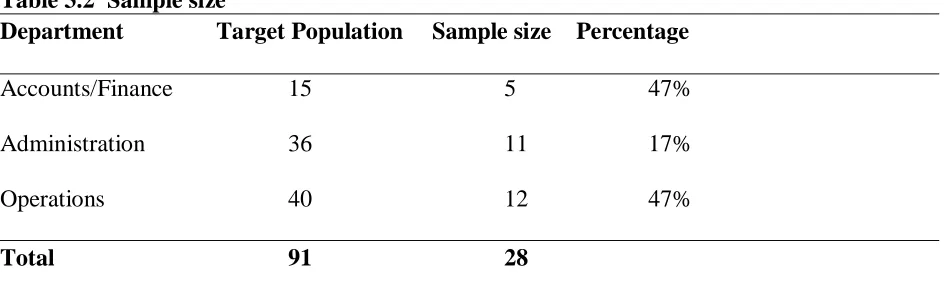
According to Mugenda and Mugenda, (2003), a sample of at least 10% to 30% of the entire population is a valid sample size for a considerably small size. A purposive sampling approach was used in this study to allow the research to pick concerned staff especially from the accounts/finance, administration and operations department within Institutions of higher learning in Nairobi. Therefore the sample was 28 staff at the Institutions of higher learning in Nairobi County as shown in the table 3.2
Table 3.2 Sample size
Department Target Population Sample size Percentage
Accounts/Finance 15 5 47%
Administration 36 11 17%
Operations 40 12 47%
Total 91 28
27 3.5 Data Collection Procedure
The study relied mostly on primary data sources. Primary data was collected using semi-structured questionnaires with both close-ended and open-ended questions. Drop and Pick later method of data collection was employed by the researcher to give respondents sufficient time to respond to the questions of the study. Secondary data was obtained from the analysis of company’s audited annual reports. This secondary data collected, was used to support the findings on the primary data and provide more information that may have not been captured by the respondents.
3.6 Validity and Reliability of Research Instruments 3.6.1 Reliability
To establish the reliability and validity of the research instrument the study sought for opinions of experts in the field of study especially the study’s supervisor and lecturers in the school of business administration and strategic management. This facilitated the necessary revision and modification of the research instrument thereby enhancing validity.
28 3.6.2 Validity
Validity is a measure of the degree to which data obtained from the instrument accurately and meaningfully represents the theoretical concept and in particular how the data represents the variables. Where validity has been established, any inferences made from such data was accurate and meaningful (Mugenda & Mugenda, 2003). The validity of a study increases by using various sources of evidence (Yin, 2003).
3.7 Data Analysis and Presentation
The process of data analysis involved several stages namely; data clean up, editing and codding. Descriptive statistics (means and standard deviation) and multiple regression analysis were used to analyze the data. Data was then coded and checked for any errors and omissions (Kothari, 2007). Frequency tables, percentages and means were used to present the findings. Responses in the questionnaires were tabulated, coded and processed by the use of a computer Statistical Package for Social Science (SPSS) program to analyze data. The relationship between the dependent variable (Y) and the independent variable (X) was tested using multiple linear regression model captured below.
Y= α + β1x1 + β2x2 + β3x3 + β4x4 + β5x5 + ɛ where: Y = Financial Performance
x1 = Control environment x2 = Risk assessment x3 = Control Activities
x4 = Information and Communication x5 = Monitoring
29 ɛ = Error term
3.8 Ethical Considerations
30
CHAPTER FOUR
DATA ANALYSIS, PRESENTATION AND INTERPRETATION 4.1 Introduction
This chapter presents the analysis of the collected data, the results and finally the interpretation of the findings. Percentages, frequencies, frequency tables and pie charts are presented to illustrate the analysis and interpretation of the data.
4.1.1 Questionnaire Response Rate
As mentioned earlier, out of the selected sample of 28 respondents, 3 (10.71%) did not respond to the questionnaires accordingly, hence only 25(89.29%) questionnaires were used in the subsequent analysis. This correlates with Mugenda and Mugenda (2003) recommendation that a response rate of 50% is adequate for analysis and reporting; a rate of 60% is good and a response rate of 70% and over is excellent. This clearly shows that the response rate in this study was excellent.
31
4.1.2 Validity and Reliability of Research Instruments
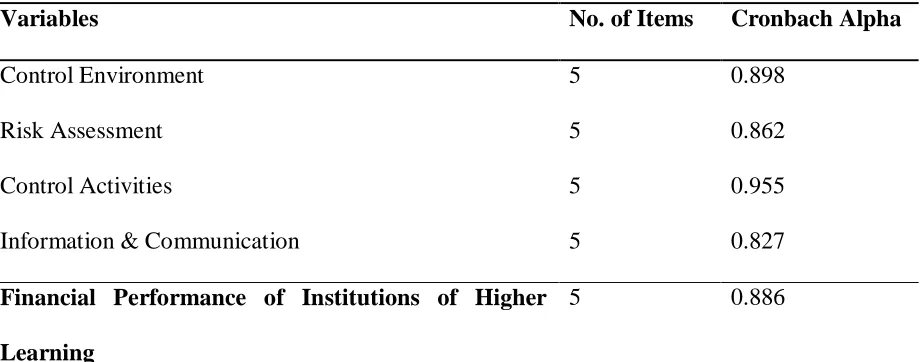
In order to determine the reliability of the research instruments, a pretesting was conducted by the researcher. A Cronbach Alpha was used to determine reliability where a coefficient of 0.7 or more indicated that the research instruments were reliable. The findings are indicated in table 4.1.
Table 4.1Validity and Reliability of Research Instruments
Variables No. of Items Cronbach Alpha
Control Environment 5 0.898
Risk Assessment 5 0.862
Control Activities 5 0.955
Information & Communication 5 0.827
Financial Performance of Institutions of Higher Learning
5 0.886
Source: Researcher, 2017
From Table 4.1 above, the Cronbach Alpha for performance is 0.886, control environment is 0.898, risk assessment is 0.862, control activities is 0.955 while for information and communication it was 0.827. All the coefficients of Cronbach Alpha were above 0.7, this indicates that the research instruments were reliable.
4.2 Background Information
32 Kenya.
4.2.1 Period of existence of the Institution
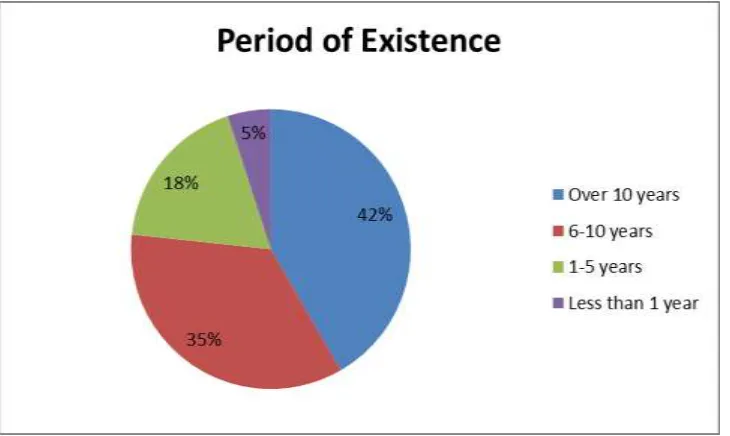
The study sought to find out how long the sampled institutions of higher learning in Nairobi City County had been in existence. 65% had been in existence over 10 years, 21% for between 6-10 years, 11% were between 1 and 5 years old while only 3% had been in existence for less than one year. This indicates that most of the institutions had been in existence long enough to implement and have a working internal control system for their accounting and finance departments. This is illustrated in figure 4.2 below;
Figure 4.2 Period of existence of the Institutions
4.2.2 Level of staffing of Accounts/Finance Departments
33
Figure 4.3There are well trained staff in the accounts and finance departments
4.2.3 Existence of adequate segregation of duties in the finance and accounts department The study sought to determine whether there is adequate segregation of duties in the finance and acounts department among the sampled institutions of higher learning in Nairobi City County. The findings were as presented below;
34
From the figure above, 26% of the respondents strongly agreed that there exist adequate separation and allocation of duties in the department, 38% agreed, 21% diagreed while 15% strongly disagreed to that effect. This indicates that majority of the institutions of higher learning have adequate segregation of duties although the problem of allocation and description of duties exists.
4.2.4 Effectiveness of Internal Control System
The study sought to establish the degree of effectiness of internal control systems among the sampled instititions of higher learning in Nairobi City County. It was realized that 44% of the institutions have effective internal control systems while 56% of them had porous and weak internal control systems which gave way to wastages, misuse and poor accountability of instituion resources.
The study further sought to determine the existence of financial performance systems among the sampled instituions of higher learning in Nairobi City County. 91% indicated that their institutions had a functioning financial performance system while 9% indicated that there weren’t a financial performance system in place. This indicates that majority of the learning institutions had a financial performance system but its effectiveness and efficiency was in question.
4.3 Control Environment
35
The respondents were further requested to indicate the extent to which they agreed with the following statement regarding the effect of control environment on financial performance of institutions of higher learning on a scale of 1 – 5 where 5(strongly agree), 4 (agree), 3 (neutral), 2 (disagree) while 1 (strongly disagree) respectively. The findings were as tabulated in table 4.2 below;
Table 4.2 Influence of control environment on financial performance
ELEMENTS Mean SDEV
Control environment has affected institution’s revenue for the last five years
4.12 0.855
Control environment has affected institution’s operating costs for the last five years
3.98 0.921
Control environment has affected institution’s fees income on capital for the last five years
3.55 0.877
Source: Field data, 2017
Table 4.2 above indicates that control environment had greatly affected the institutions of higher learning’s revenue, operation costs and fees income on capital for the last five years as indicated by a high mean of 4.12, 3.98 and 3.55 respectively. This indicates control environment has a significant influence on financial performance of the institutions of higher learning. Weak and poor control environment negatively affects financial performance and vice versa.
4.4 Risk Assessment
36
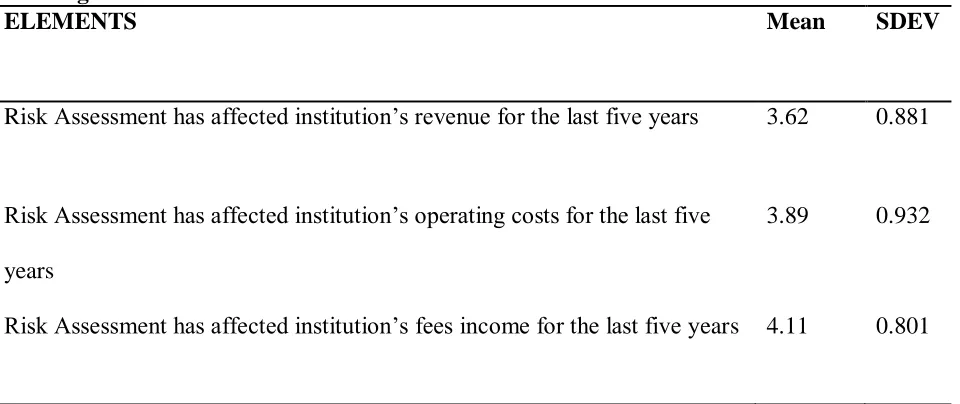
performance while 39% indicated otherwise. This is pegged on effectiveness of risk assessment system. 42% indicated that their risk assessment systems were effective while 58% of them indicated that they are ineffective. This has led to poor risk assessment procedures which weaknesses the internal control mechanisms and systems.
To the same effect, the respondents were to rate the degree of agreement to the following statements regarding the effect of risk assessment on financial performance of the learning institutions on a scale of 1 – 5 where 5(strongly agree), 4 (agree), 3 (neutral), 2 (disagree) while 1 (strongly disagree) respectively. The findings were as tabulated in table 4.3 below;
Table 4.3 Influence of Risk assessment on financial performance of institutions of higher learning
ELEMENTS Mean SDEV
Risk Assessment has affected institution’s revenue for the last five years 3.62 0.881
Risk Assessment has affected institution’s operating costs for the last five years
3.89 0.932
Risk Assessment has affected institution’s fees income for the last five years 4.11 0.801
Source: Field Data, 2017
37 led to poor performance of the institutions.
4.5 Control Activities
The study sought to establish the extent to which control activities have influenced financial performance of the institutions of higher learning in Nairobi City County. 68% indicated that internal control activities have significantly influenced the financial performance of the institutions while 32% of them indicated otherwise. It was also indicated that 75% of the institutions’ control activities are not effective hence have a negative effect on financial performance while only 25% of them are effective. The control activities were found to affect internal control systems either positively or negatively which in turn influences financial performance of the institutions of higher learning.
The respondents were further requested to indicate the extent to which they agreed with the following statement regarding the effect of control activities on financial performance of institutions of higher learning on a scale of 1 – 5 where 5(strongly agree), 4 (agree), 3 (neutral), 2 (disagree) while 1 (strongly disagree) respectively. The findings were as tabulated in Table 4.4 below;
Table 4.4 Influence of control activities on financial performance of institutions of higher learning
ELEMENTS Mean SDEV
Control activities has affected institution’s revenue for the last five years 3.59 0.884 Control activities has affected institution’s operating costs for the last five
years
4.08 0.791
Control activities has affected institution’s fees income for the last five years
3.71 0.906
Source: Field Data, 2017
38
costs and fees income for the last five years as indicated by mean of 3.59, 4.08 and 3.71 respectively. This indicates that control activities have a significant influence on the financial performance of an establishment. Ineffective control activities result in weak internal control systems and poor financial performance and vice versa.
4.6 Information and Communication
The study sought to determine whether information and communication systems had a significant influence on the financial performance of institutions of higher learning in Nairobi City County, Kenya. 77% of the respondents indicated that information and communication had a significant influence on the performance of the institutions while 23% had a dissenting opinion. A further 69% indicated that most of their information and communication systems are ineffective making internal controls weak and hence poor performance. This indicates that an effective information and communication system strengthens internal controls of a firm which leads to prudent use of resources and hence good performance
39
Table 4.5 Influence of information and communication on financial performance of institutions of higher learning
ELEMENTS Mean SDEV
Information & communication has affected institution’s revenue for the last five years
3.27 0.908
Information & communication has affected institution’s operating costs for the last five years
3.88 0.791
Information & communication has affected institution’s fees income for the last five years
4.09 0.888
Source: Field data, 2017
From table 4.5 above, information and communication procedures, systems and mechanisms have had a significant influence on the institutions of higher learning’s revenue, operating costs and fees income over the last five years as indicated by a high mean of 3.27, 3.88 and 4.09 respectively. This indicates that good information and communication systems lead to high institutional revenue, low operating costs and high fees income
4.7 Financial Performance
40
institutions ended up spending more than they could generate. This indicated a negative financial performance of the institutions.
Table 4.6 Change in financial performance between 2011 and 2015 Percentage change (%)
YEAR 2011 2012 2013 2014 2015
Revenue (From IGA) 13 18 24 27 42
Fees Income 14 21 25 29 48
Expenditure 9 15 23 28 52
Operating Costs 7 13 28 31 43
79% of the respondents revealed that the institutions’ accountability had a significant influence on the financial performance of the institutions of higher learning. Weak and low levels of financial accountability for utilization of organizational resources have led to poor financial performance of the institution. Poor cost management has negatively affected financial performance of the institutions. Institutional resources are utilized but management and accountability is wanting. This has led to misappropriation of the funds, corruption and misuse of office for personal gains.
41
Capital investments generate returns regularly and cushion the organization against any financial uncertainties hence making it financially stable.
4.8 Regression Analysis
The researcher conducted multiple regression analysis to establish the influence of internal control systems on financial performance of institutions of higher learning in Nairobi City County. The findings are indicated in subsequent sections;
Table 4.7 Model Summary
Model R R Square Adjusted R Square Std. Error of the Estimate
1 0.991 0.971 0.921 0.785
Source: Field Data, 2017
The table above indicates the model summary. From the findings, R was 0.991, R square was 0.971 and adjusted R squared was 0.921. An R square of 0.991 implies that 99.1% of changes in financial performance of institutions of higher learning in Nairobi City County, Kenya are explained by the independent variables of the study. There are however other factors that influence performance of the institutions of higher learning that are not included in the model which account for 0.9%. An R of 0.991 on the other hand signifies strong positive correlation between the variables of the study.
Table 4.8 ANOVA
Model SS df MS F Significance
Regression 521.04 5 521.4 676.005 0.0942
Residual 261.40 312 0.950 Total 782.44 317
42
From the ANOVA table above, the value of F calculated is 776.005 while F critical is 499.545. Since the value of F calculated is greater than F critical, the overall regression model was significant and therefore a reliable indicator of the study findings. In terms of p values, the study indicated 0.000 which is less than 0.05 and therefore statistically significant.
Table 4.9 Regression Coefficients
Model Unstandardized
coefficients
Standardized Coefficients
T Sig
B Std
Error
Beta
Constant 7.47 0.674 8.012 0.000
Control environment 0.955 0.022 0.811 14.15 0.00
Risk assessment 0.986 0.033 0.120 11.04 0.000
Control activities 0.875 0.029 0.127 1.15 0.000
Information and communication 0.961 0.031 0.384 4.42 0.000
Source: Field data, 2017
The resultant regression equation becomes;
Y = 7.47 + 0.955X1 + 0.986X2 + 0.875X3 + 0.961X4
Where Y is the financial performance of institutions of higher learning in Nairobi City County, Kenya; β0, β1, β2, β3 and β4 are the regression coefficients and X1, X2, X3 and X4 represent control environment, risk assessment, control activities and information and communication respectively.
This implies that when all the variables of the study are held constant, performance of institutions of higher learning in Kenya will be at the intercept which is 7.47. A unit improvement in control environment while all other factors held constant results in 0.955 increase in performance of the institutions, a unit increase in risk assessment with other factors
43
44
CHAPTER FIVE
SUMMARY, CONCLUSIONS AND RECOMMENDATIONS 5.1 Introduction
This chapter presents a summary of the findings of the study, conclusion and suggests some recommendations. At the end of this chapter suggestions for further study and research are suggested. These are areas that in future can be explored to further the knowledge and research on public institutions.
5.2 Summary of the Findings
5.2.1 Control environment and financial performance
79% of the respondents indicated that the internal control environment had a significant influence on financial performance of their respective institutions and it was effective while 21% indicated that it had minimal or no influence on the financial performance of the institutions due to its ineffectiveness. It was revealed that control environment had greatly affected the institutions of higher learning’s revenue, operation costs and fees income on capital for the last five years as indicated by a high mean of 4.12, 3.98 and 3.55 respectively. Control environment was realized to having a significant influence on financial performance of the institutions of higher learning. Weak and poor control environment negatively affects financial performance and vice versa.
5.2.2 Risk assessment and financial performance
45
were effective while 58% of them indicated that they are ineffective. This has led to poor risk assessment procedures which weaken the internal control mechanisms and systems.
There is a high and significant influence that risk assessment mechanisms and systems have on financial performance of institutions of higher learning. Risk assessment has affected the institutions’ revenue, operating costs and fees income for the last five years greatly as indicated by a mean of 3.62, 3.89 and 4.11 respectively. Strong and effective risk management systems have yield strong internal control mechanisms which have resulted to high institution revenue, low operating costs and high fees income while weak and porous ones have led to poor performance of the institutions.
5.2.3 Control Activities and financial performance
68% indicated that internal control activities have significantly influenced the financial performance of the institutions while 32% of them indicated otherwise. It was also indicated that 75% of the institutions’ control activities are not effective hence have a negative effect on financial performance while only 25% of them are effective. The control activities were found to affect internal control systems either positively or negatively which in turn influences financial performance of the institutions of higher learning.
46
5.2.4 Information and Communication and financial performance
77% of the respondents indicated that information and communication had a significant influence on the performance of the institutions while 23% had a dissenting opinion. A further 69% indicated that most of their information and communication systems are ineffective making internal controls weak and hence poor performance. This indicates that an effective information and communication system strengthens internal controls of a firm which leads to prudent use of resources and hence good performance.
Information and communication procedures, systems and mechanisms have had a significant influence on the institutions of higher learning’s revenue, operating costs and fees income over the last five years as indicated by a high mean of 3.27, 3.88 and 4.09 respectively. This indicates that good information and communication systems lead to high institutional revenue, low operating costs and high fees income.
5.3 Conclusions
47
There existed internal control systems, mechanisms and procedures but the environment was not favorable, poor assessment of risks and control activities and also diligent use of information and communication systems to reliably improve accountability and prudent use of organizational resources. This led to poor financial performance of the institutions despite them having massive resource base.
5.4 Recommendations
It was recommended that for the institutions to perform well financially, their internal control systems need to be improved, cultivated and implemented diligently. There is need for the employees responsible for preparation of financial statements and reporting to be transparent and honest and also be held accountable for any misreporting. The officers entitled with the authority to incur and approve expenditure need also to be accountable for every resource utilized and the organization gets value for its investments. The institutions of higher learning also need to improve their capital expenditure to generate income for them and improve their liquidity. There is need to take legal actions for those who have misused organizational funds and recoveries made.
5.5 Suggestions for Further Study
The study recommends that further studies be done in the following areas;
i. The influence of financial reporting on performance of institutions of higher learning in Kenya
ii. The challenges in effecting organizational internal control systems in Kenya
48
REFERENCES
Adams, M. B. (1994), ‘Agency theory and the internal audit’, Managerial Auditing Journal.
Anderson, D., Francis, J. R. & Stokes, D. J. (1993), ‘Auditing, directorships and the demand for monitoring’, Journal of Accounting and Public Policy.
Sebbowa B, (2009), The role of internal audit function in Organizations.
Boakye-Bonsu, V., (1997). Developing internal audit approach, Vol. 5, No. 6, Brennan, N. M., and J. Soloman. (2008). Corporate Governance, Accountability and
Mechanisms of Accountability: An overview. Accounting, Auditing & Accountability
Journal
Committee of Sponsoring Organizations (COSO). (1985). Organization background information. Available at: http://www.coso.org/
Committee of Sponsoring Organizations of Treadway Commission (COSO) (1992), Internal Control- Integrated Framework, 4 vols. COSO, New York, NY. Control— Integrated Framework, Executive Summary, http://www.coso.org/.
Cooper, D. R and Schindler, P.S. (2003). Business Research Methods. New York: Me Review, Vol. 28 No.3, pp.371-82.
Curtis C. Verschoor. (1999) Corporate Performance is closely linked to a strong Ethical
commitment
David M. (2008) “Auditing”
DeAngelo, L. (1981), ‘Auditor size and audit quality’, Journal of Accounting and Economics, Vol.3
49
Donald K. K & Delno L. A. T (2009) Proposal and Thesis Writing, An introduction. Pauline
Publications Africa. Nairobi, Kenya.
Ettredge, M. L., L. Sun, and C. Li. (2006). The Impact of SOX Section 404 internal control quality assessment on audit delay in The SOX Era. Auditing: A Journal of Practice &
Theory
Garcia, B.M. A. (2004). Audit reports on financial statements of Accounting IASB Standards.
Vol.8.
Gerrit S and Mohammad J. A (2010), Monitoring effects of the internal Audit Function: Agency Theory versus other explanatory variables. International Journal of Auditing. Blackwell Publishing Ltd
Goodwin-Stewart, J. & Kent, P. (2006), ‘The Use of internal audit by Australian Companies’,
Managerial Auditing Journal
Hayes, DC (1977). The Contingency Theory of Managerial Accounting, the Accounting Review,
Vol. 52, No. l,pp. 22-39
Haylas, R.E. and Ashton, R.H. (1982) Audit Detection of Financial Statement Errors, the
Accounting Review, October, Vol. 5, No. 4, pp. 751-765
I. M. Pandey (1996). Financial Management. 7th Edition. Vikas Publishing House Pvt Ltd. New Delhi, India.
Internal Control—Integrated Framework: Executive Summary. The Committee of Sponsoring Organizations of the Treadway Commission.
Jensen, M. C. & Meckling,W. H. (1976), ‘Theory of the firm: Managerial Behaviour, agency costs, and ownership Structure’, Journal of Financial Economics.
50 Cambridge, MA,
Jensen, M.C. (2001), Value maximization, stakeholder theory, and the corporate objective function, Journal of Applied Corporate Finance, Vol. 14 No.3, pp.8-21.
Jensen, M.C., Meckling, W.H. (2006), Theory of the firm: managerial behaviour, agency cost and ownership structure , Journal of Financial Economics, Vol. 3 pp.305-60.
John J. Morris .2011). The impact of enterprise resource planning (ERP) Systems on the effectiveness of internal controls over financial reporting.
Kochan, A. (1993). Internal Evaluation: TQM Magazine. Vol. 5.
Krishnan, J. (2005). Audit committee quality and internal control: An Empirical Analysis. The Accounting Review
Maitin, T.P. (1994). Audit Management (1st ed.). South Asia Publication.
Mautz, RK and White, BJ (1976) Internal Control: A Management View, Finance Executive,
June, pp. 12-21
Menon, K. & Williams, J. D. (1994). ‘The use of audit committees for monitoring’, Journal of Accounting and Public Policy.
Michael A. H, Robert E. H, Richard A. J, Douglas D. M. (1996). The Market for corporate control and firm innovation.
Millichamp, A.H. (1993). Auditing (6th Ed.).
Mugenda, O. M and Mugenda A. G (1999). Research Methods: Quantitative and Qualitative
Approaches Nairobi, Acts Press.
O. Ray Whittington & Kurt Pany (2001). Principles of auditing and other assurance services.
51
Ogneva, M., K. R. Subramanyam, and K. Raghunandan. (2007). Internal control weakness and cost of equity: Evidence from SOX Section 404 Disclosures. The Accounting Review.
Olive M. Mugenda and Abel G. Mugenda. (1999). Research Methods. Acts Press. Nairobi Kenya.
Palfi, C. and Muresan, M. (2009) Survey on weaknesses of banks internal control systems,
Journal of International Finance and Economics, Vol. 9,
Pandey I.M. (2002). Financial Management Eight Edition, Viskas Publishing House PVT Ltd. Patton, M. Q. (2002). Qualitative Research and Evaluation Methods, 3rd Edition, Thousand
Oaks, CA: Sage Publications.
Piper J.A. (2000). Determinant of Financial Control Systems, for Multiple, Retailers - some Case Study Evidence. Managerial Finance, Vol, 6 No. 1 2000. pp 53-63.
Reid, K. & Ashelby, D. (2002). The Swansea internal quality audit processes quality assurance in education. Vol. 10,
Rick Hayes et al. (2005). Principles of auditing Pearson Education Limited.
SAP. Enterprise Governance and Sarbanes-Oxley Compliance with SAP ERP Financials 2005.
Available at: http://www.sap.com/usa/solutions/business
Sarens, G. & De Beelde, I. (2006). ‘The Relationship between internal audit and senior management: An analysis of expectations and perceptions’, International Journal of Auditing,
Simiyu O J. (2011). 'Effectiveness of internal control system in Higher Institutions of Learning'
52
Stephen E (2007) Public Financial management – Concepts & Practices Subramaniam, N. (2006). International Journal of Auditing. Vol. 10
The Economic Survey (Kenya)-(2003) vol 3.
The Education for All hand book, (2002) by MOEST vol 4.
The draft Sesional Paper on Education and Training (Kenya), (2004). The National Development Plan 2003 – 2008 Government of Kenya.
Watts, H. (1999). A Conceptual framework to financial reports and internal audits. Vol.20, Willis Y O and David Onen. (2008). A general guide to writing research proposal and report.
Makerere University Printers.