Technical Terminology in Asian Languages:
Different Approaches to Adopting Engineering Terms
Makiko Matsuda
N
agaoka University of Technology 1603-1 Kamitomioka, Nagaoka, Japan[email protected]
Tomoe Takahashi
Nagaoka University of Technology 1603-1 Kamitomioka, Nagaoka, Japan
[email protected]
Hiroki Goto
University of Toyama Gofuku, Toyama, Japan[email protected]
Yoshikazu Hayase
Toyama National College of Maritime Technology 1-2 Ebie-Neriya, Imizu , Japan
[email protected]
Robin Lee Nagano
University of Miskolc Miskolc-Egyetemváros, Hungary[email protected]
Yoshiki Mikami
Nagaoka University of Technology 1603-1 Kamitomioka, Nagaoka, Japan
[email protected]
Abstract
Terminology development in education, science and technology is a key to formu-lating a knowledge society. The authors are developing a multilingual engineering terminology dictionary consisting of more than ten thousand engineering terms each for ten Asian languages and English. The dictionary is primarily designed to support foreign students who are studying engi-neering subjects at Japanese higher educa-tional institutions in the Japanese language. Analysis of the lexical terms could provide useful knowledge for language resource creators. There are two adoption ap-proaches, “phonetic adoption” (translitera-tion of borrowed terms) and “semantic adoption” (where the meaning is expressed using native words). The proportion of the two options found in the terminology set of each country (or language) shows a sub-stantial difference and seems to reflecti language policies of the country and the in-fluence of foreign languages on the host language. This paper presents preliminary results of our investigation on this question based on a comparative study of three lan-guages: Japanese, Vietnamese and Thai.
1
Introduction
1.1 Terminology in Development Context For developing countries there is a strong necessity to establish an appropriate set of terminology to enable local people to learn science and technology in an efficient manner throughout their educational programs using their mother tongues as the instruc-tional medium. Instruction in the mother tongue is beneficial for students to acquire a basic concept in a subject (UNESCO, 2003).
International communities are fully aware of this necessity. The World Summit on the Information Society (WSIS) addressed this issue, saying that terminology development in education, science and culture is a key to developing knowledge societies.
1.2 Two Approaches to Adopting Terms
Unlike the situation with basic vocabulary, scien-tific or technical terms are usually not “home-grown”, but are often imported from the outside world. And when a scientific or technical term is imported from one language (the source language) to another language (the host language), typically two approaches are found.
English word "science" in Malay is "sains", pro-nounced as /sains/, and "computer" in Japanese is written as " " in the Japanese kata-kana1 syllabary and is pronounced /konpju:ta/ . We
call this phonetic adoption in this paper. It is quite similar to transliteration, but not exactly the same due to the difference in phonetic structure between the source and host languages.
The second approach is to create a new word by combining a semantically relevant word-root or word in the host language. For example, "science" in Thai is "วิทยาศาสตร", pronounced /wítthayasà:t/.
This word is derived from the word "vidya" (knowledge) in Sanskrit, a source from which the Thai language has imported many words through-out its history. "Science" in Japanese is "", pronounced /kagaku/. This word was coined more than one hundred years ago as a combination of two Chinese characters, " " and " ", meaning "a section, or a branch of something" and "learning", respectively. As shown in these two cases, it often happens that classical languages like Sanskrit or Chinese, rather than the host language itself, pro-vide root-words in this creation process just as Latin and Greek roots are used in scientific and technical terms in English. We call this approach semantic adoption in this paper.
1.3 Pros and Cons of the Two Approaches When we look back on the historical evolution of scientific terms dating from ancient civilization to modern times, both types of adoption are found. Both approaches to adoption have advantages and disadvantages in terms of ease of creation and ease of understanding, as well as other issues. The pros and cons of semantic adoption, summarized in Ta-ble 1, are in principle the opposites of those of phonetic adoption.
But the choice of adoption approach is not so simple. The phonetic adoption option is easy to implement, but would have the danger of disturb-ing language purity, which also has a high priority in many nations. When the semantic adoption op-tion is chosen, language purity is maintained but the adoption cost is high and it takes time to
1 In Japanese, four scripts are used to write Japanese, e.g.
kanji (i.e., Chinese characters), hiragana, katakana and the Latin alphabet.Katakanascript is conventionally used to represent foreign phonetically translated words.
pare a meaningful number of vocabulary items and to train teachers in their use.
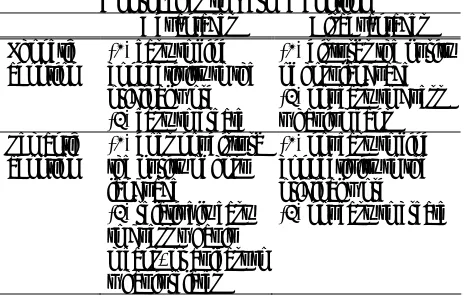
Table 1. Pros and Cons of Phonetic and Semantic Approaches to Term Adoption
Advantages Disadvantages Phonetic
adoption
(1) easy to find connectivity to the original word (2) easy to create
(1) disturbs the purity of host language (2) not easy to guess what it means Semantic
adoption (1) does not disturb the purity of host language
(2) relatively easy to guess what it means, or at least to what it relates
(1) not easy to find connectivity to the original word (2) not easy to create
1.4 Third Approach: Use of foreign language
In addition to this dilemma, a completely different approach can be taken when the necessity is very urgent. This is to design and to implement the whole educational program by means of an estab-lished foreign language. We call this approach the source language approach. In the real world to-day, this third approach is widely adopted in many developing countries, to various extents. The choice of foreign language depends on subject do-mains and the economic and political condition of the country as well as on historical ties.
1.5 Objectives of the study
In summary, there are three basic options. How-ever, little research has been carried out on how a language community can effectively formulate terminology focused on Asian languages. “Guide-lines for Terminology Policy” (Infoterm 2005) talks about various issues relating to this subject, but no mention is found relating to the question of adoption strategy. The authors believe that an analysis of the existing terminology can provide practical and applicable lessons to terminology development practitioners and policy makers. This paper presents preliminary results of our investiga-tion on this quesinvestiga-tion, based on a comparative study of three countries: Japanese, Vietnamese and Thai.
2
Dictionary
tech-nology dictionary for foreign students in Japan2. It is composed of the 11 academic domains given in Table 2 and three languages, English, Japanese and Thai.
Table 2. The Number of Words in the Japanese Lexicon by Subject Domain
Subject Domain (TYPE) Words TOKENWords
architecture 1,314 1,798
chemistry 717 958
civil engineering 766 1,263
telecommunications 650 1,410
computer science 941 1,538
control engineering 1,081 1,545
electronics 681 1,200
maritime science 961 1,403
mathematics 952 1,284
mechanical engineering 1,117 1,186
physics 587 945
others* 1,872
-Total of all words 11,639 14,530
*there is some overlap with other domains
Table 3. A Sample of the Lexicon
English Japanese Chinese Vietnam-ese Thai
discrim-inant Biệt thức
วิธีแบงแยก ระหวางกัน
factor
theorem Địthừnh lý a số ษฎีบทตัวประกอบ
circular measure
Sốđo cung tròn
การวัดเชิงว งกลม
radical
root Căn ราก
limit
value 极
Giá trị
giới hạn คาจํากัด
diver-gence Phát tán การลูออก
natural logarithm
Đối số tự
nhiên
ลอการิทึมธ รรมชาติ
point of
inflection Điểm uốn จุดเปลี่ยนความเวา
To this primary source, we added some terms in mathematics and physics and made a multilingual database such as that shown in Table 3 by adding
2http://www.toyama-cmt.ac.jp/%7Ehayase/Project/Babel/
adoptions into 8 languages: Vietnamese, Chinese, Korean, Filipino, Malay, Sinhalese, Myanmar and Mongolian. The data are coded in Unicode. At pre-sent Vietnamese, Chinese, Korean and Sinhalese language have been translated and other languages will be finished soon. The dictionary will be made in April, 2008. For this paper, we have selected three languages for analysis – Vietnamese, Thai and Japanese – because these languages have rela-tively rich vocabularies.
3
Comparison of Adoption Approaches
The approach to terminology adoption is examined in this section from various angles.3.1 Comparison by Country
In order to investigate the portfolio of two adoption approaches, we surveyed the entire lexicon for all mechanical engineering subjects. In addition, we took a random sampling in our dictionary and chose approximately 25 words from two major subject fields: architecture and computer science. The portfolios of three languages are shown in Ta-ble 4. Compounds such as hybrids of native and loaned word-components were separated from se-mantic adoption.
Table 4. Comparison of Terms in 3 Domains
Rate Subject
Domain terms# of ApproachAdoption
Origin of
words JP VN TH
Semantic 0.68 0.89 0.78
English 0.32 0.09 0.21 mechanical
engineering 1,186 phonetic
others 0.02 0.01
semantic 0.43 0.87 0.78
English 0.57 0.13 0.21 computer
science 23 phonetic
others
semantic 0.69 0.93 0.76
English 0.31 0.03 0.24 architecture 29
phonetic
others 0.03
roughly similar balance between semantic adoption and English-origin terms in all three domains.
The high number of Thai and Vietnamese origin words in computer science is rather remarkable, as it indicates a consistent effort to adapt the Thai language to every emerging technology. Note that over half of the computer science terms for Japa-nese are of English origin. Vietnamese draws on different languages to varying degrees; it is notable that the languages of origin vary by subject field.
3.2 Comparison by Subject Domain: A Case of Japanese Terms
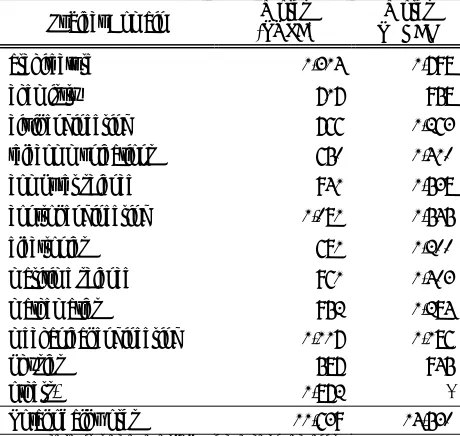
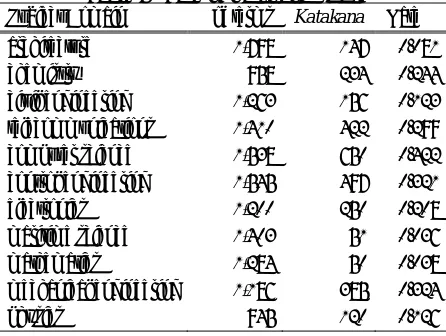
As we saw in Table 4, Japanese technical terms are often phonetically translated, but less so in archi-tecture than in the other two fields. To gain a better idea of the distribution of phonetic adoption, we surveyed the entire Japanese lexicon for all subject domains. Table 5 gives the rate of katakana usage, that is, the rate of words written in the katakana script used for transcribing foreign words.
Table 5. Rate of katakana Usage
Subject Domain # of terms Katakana Rate
architecture 1,798 147 0.081
chemistry 958 234 0.244
civil engineering 1,263 156 0.123
telecommunications 1,410 422 0.299
computer science 1,538 650 0.422
control engineering 1,545 497 0.321
electronics 1,200 250 0.208
maritime science 1,403 51 0.036
mathematics 1,284 50 0.038
mechanical engineering 1,186 385 0.324
physics 945 120 0.126
The domains of computer science, control engi-neering and mechanical engiengi-neering include over 30% of katakana words in their terms. In contrast, the percentage of katakana terms in architecture, mathematics and maritime science domains is less than 10%, indicating that these domains are highly semantically adopted in their terms, or have little need for imported vocabulary. We thus see that academic domain affects the adoption of phoneti-cally translated terms.
3.3 Mathematical Terms at Different Grade Level
We have collected about 1,300 terms in mathemat-ics for our multilingual engineering dictionary. Following the Japanese course of study3 for grades
1-12, we chose 57 terms from our dictionary and compared those terms with their counterparts in Thai and Vietnamese. For university-level mathe-matical terms, following the syllabus of the 1st year
of the Faculty of Mathematics in one Japanese University, we chose 11 terms4. Then we also
sur-veyed those terms in the same way. Table 6 exam-ines the terms used in various grade levels.
Table 6. Comparison of Mathematical Terms by Grade Level
Phonetic 0.09 0.09 0.36
Semantic
Phonetic 0.00 0.00 0.12
Semantic
school 18 Phonetic 0.00 0.00 0.00
Semantic
Phonetic 0.00 0.00 0.00
These data indicate that all languages use either original or semantically adopted from elementary level to junior-high school level. For Japanese al-most all words are Sino-Japanese; in oral instruc-tion native words may be used in Japan but those are not used as keywords. As for high school, some words phonetically translated from English are used in Thai, while at university level all languages use English-origin words. As for the rate of Sino-Vietnamese words in mathematics, it is considera-bly higher than other categories. This suggests that the likelihood that Sino-origin words can be shared
3The Ministry of Education, Culture, Sports, Science
and Technology, Japan (MEXT) determines the national curriculum.
4 We took terms from the 1st year syllabus of the Faculty
effectively in other countries using Chinese charac-ters is generally high in the field of mathematics.
3.4 Web Presence of English Terms and their Adopted Equivalents
We also examined the web presence of pairs of terms, an English word and its equivalent in the host language. This is an attempt to find how widely the source language approach – direct use of foreign language – is used in technological top-ics. Four words from different subject domains were chosen, and a search was carried out for the term (as an exact phrase) using the Google search engine (Table 7).
Table 7. Web Presence of Technical Terms
Search
through Search term(s) # of hits*
EN ionization 121,000
JP 419,000
EN fusion welding 387
JP 12,900
EN automatic lathe 258
JP 56,600
EN operand 32,500
JP (katakana) 138,000
Japanese pages
JP (kanji) 10,700
EN ionization 89
VN Điện ly 13,900
EN fusion welding 6
VN Hàn nóng chảy 66
EN automatic lathe 2
VN Máy tiện tựđộng 48
EN operand 111
Viet-namese pages
VN Số tính toán 810
EN ionization 10,600
TH การแตกประจุ 48
EN fusion welding 692
TH การเชื่อมแบบหลอมละลาย 6
EN automatic lathe 39
TH เครื่องกลึงอัตโนมัติ 195
EN operand 568
Thai pages
TH ตัวถูกดําเนินการ 24
*Accessed on Sept. 18, 2007
While data are limited to just four terms, general trends can be identified. For Japanese pages, while there were many hits for English, the hits for Japa-nese terms were at least three times higher. Inter-estingly, for operand, the one term with two
equivalents, the katakana (i.e., phonetically adopted) term was used far more frequently than the semantically adopted kanji term. In the Viet-namese pages, while far fewer total hits were made, the Vietnamese terms were overwhelmingly more frequent than English terms. For Thai pages the opposite was found, with the exception of auto-matic lathe, a tool that may require marketing in
the local language. These results suggest that the major language of technology for Thailand is Eng-lish, for Vietnam it is the native language, and for Japan there is English use but Japanese dominates.
In order to find if there is a distinction between use in technological fields and in general use, we made a comparison using three non-technical terms (Table 8).
Table 8. Web Presence of Non-technical Terms
Search
through Search term(s) # of hits*
EN water 2,200,000
JP 24,200,000
EN 2,242,000
JP 9,870,000
EN 2,580,000
Japanese pages
JP 2,650,000
EN water 295,000
VN nước 4,310,000
EN novel 68,400
VN tiểu thuyết 2,130,000
EN zoo 41,500
VN vườn bách thú** 615,000
Vietnamese pages
VN sở thú*** 1,750,000
EN water 1,850,000
TH น้ํา 2,610,000
EN novel 269,000
TH วรรณกรรม 1,830,000
EN zoo 272,000
Thai pages
TH สวนสัตว 620,000
*Accessed on Sept. 10, 2007
Again, we find that Japanese pages use the Japanese word far more frequently (although zoo is
nearly equal – perhaps due to the exotic appeal of a foreign word, and one understood by almost every Japanese) but that English words have a sizable presence. For Vietnamese pages, the number of hits is substantially higher than that for the techni-cal terms, but the same trend exists: the native lan-guage dominates. Finally, for Thai pages, the hits for Thai words far exceed those for English words in all three cases, although English words are often used.
A comparison of results for Tables 7 and 8 con-firms that the role of languages differs between daily use and situations that require technical ter-minology, even in a country that has adopted the third approach of using a foreign language for sci-ence and technology.
4
Social and Academic Factors
4.1 High Rate of Semantic Adoption in Asian Countries
As can be imagined, it is not easy for Asian people to understand technical terms in other Asian lan-guages, because semantic adoption is popular among Asian languages. The diversity of scripts in Asia is another reason of this difficulty. In Euro-pean countries, term-sharing by phonetic adoption is easier because almost all languages were derived from the same origin and are sharing the same script. Therefore, in order to achieve mutual com-munication using technical terms in Asian coun-tries, we need to make special efforts to go over the variation and harmonize terms each other.
But we need to discuss why those languages pre-fer semantic adoption. Various social, political, and historical factors influence language use. This applies also to the adoption of technical terminol-ogy. Here, we discuss influences of these factors on the approaches used to adopt technical terms, including the influence of technical domains and academic discipline.
4.2 Language Policies and Historical Back-ground
4.2.1 Vietnam
In Vietnam, adoption is strongly promoted under the strict language policy. The Political Resume of the Socialist Republic of Vietnam states that
“[e]very nationality has the right to use its own language and system of writing, to preserve its na-tional identity, and to promote its fine customs, habits, traditions and culture.” Therefore they sel-dom use phonetically adopted words as such. One example of its limited use is “ôm” from the English
“ohm.” Another example is proper nouns, when foreign words are used in newspapers This politi-cal reason is the primary impetus for the semantic adoption of terms.
Secondly, as in other communist nations, Eng-lish is not taught as an obligatory subject in Viet-nam. This educational policy also brings about a low rate of phonetically adopted words from Eng-lish, because many people cannot grasp the mean-ing.
Thirdly, we need to consider that the Vietnam-ese language has been historically influenced by several foreign languages, as we can induce from Table 4’s results. Vietnam was under the influence of China for approximately 1,000 years. A number of Chinese terms were absorbed into Vietnamese as Sino-Vietnamese words. During the French co-lonial period, the Vietnamese language added French words for the manufacture of specific products such as automobiles and bicycles. Lastly, at the end of the 20th century Russian technical
terms were introduced by people who had studied in or technical advisers who had sent by the Soviet Union or in Russia
4.2.2 Japan
As is the case with Vietnam, Chinese characters and words were imported from China so long ago that the characters and words are regarded as part of the native Japanese language. In the end of the 19th century, a number of Japanese-kango (words that used Chinese characters but were created by Japanese people) were invented as adoptions of western technical terms, and many of these terms were re-imported to China.
Japanese institutions of higher education. Teachers and students know many English loan terms but they use these loan terms not as English but as Japanese, and since they are pronounced according to Japanese phonetic rules, they may not even be intelligible to English speakers.
4.2.2 Thai
Thai has different features from the other two countries in that it is less influenced by Chinese. But the Thai language has been influenced by an-other foreign language, Sanskrit, the classical In-dian language. We did not examine the rate of San-skrit origin words in the Thai language in this study, but it seems likely that a high rate of terms phonetically adopted from Sanskrit will be found in our engineering dictionary. Although Thai has native-language equivalents at the lexical level, English is daily used as an instructional medium in higher education. Students in Thailand start to learn English at 10 years old or earlier. Thus, even though they have native terms they prefer to use terms phonetically adopted from English or to use English.
4.3 Other Factors
4.3.1 When the subject was introduced?
In the Meiji era (1868-1912) in Japan, experts translated technical terms from Western languages semantically, into Japanese-kango. Since World
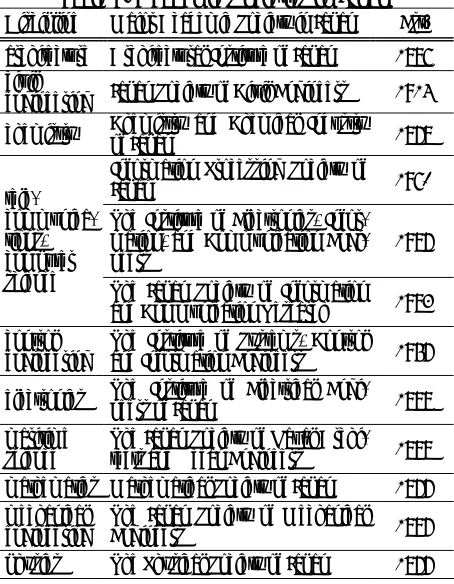
War II, however, it has been the mainstream to transliterate into katakana. Therefore a decisive factor in adoption approach is when the subject was introduced into Japan. Table 9 shows the foundation year for major academic societies and institutes in engineering fields, which roughly in-dicates the time of introduction of the subject.
As shown in Table 5, computer science is the field that uses technical terms in katakana most frequently, while the sampled vocabulary from telecommunications also includes nearly 30% of katakana words. These disciplines are relatively newly developed in Japan; the societies or insti-tutes related to these fields were established in the latter half of the 20th century.
The oldest societies, the Mathematical Society of Japan and The Physical Society of Japan, were established in 1877; our study showed that only 3.8% of mathematical terms and 12.6% of terms in physics are phonetically adopted terms. Therefore,
disciplines with academic societies established relatively early may have developed a great deal of their terminology during the Meiji era, and may still have a preference for Japanese-kango over
katakana. Newer disciplines, on the other hand, may have found it easier to use the imported terms in a relatively direct way.
Table 9. Academic Societies in Japan
Discipline Major Academic Society in Japan Est. architecture Architectural Institute of Japan 1886 civil
engineering Japan Society of Civil Engineers 1914 chemistry Chemistry and Chemical Industry of Japan 1878
Information Processing Society of
Japan 1960
The Institute of Electronics, Infor-mation, and Communication Engi-neers
1987
tele- communica-tions, computer
science The Japan Society of Information and Communication Research 1983 control
engineering The Institute of Systems, Control and Information Engineers 1957
electronics The Institute of Electrical Engi-neers of Japan 1888
maritime science
The Japan Society of Naval
Archi-tects and Ocean Engineers 1898 mathematics Mathematical Society of Japan 1877 mechanical
engineering
The Japan Society of Mechanical
Engineers 1897
physics The Physical Society of Japan 1877
4.3.2. Is it indigenous?
5
Conclusion
This preliminary study looks at the different ap-proaches to adopting technical terms in three Asian languages. The three languages investigated prefer different methods: Vietnamese tends to adopt words into its language semantically, through adoption, while Japanese adopts them phonetically, through transliteration. Thai, to a large extent, has chosen a third approach, that of using a source lan-guage (English).
In Japanese and in Vietnamese, many terms sub-ject to semantic adoption were translated into Chi-nese characters. This suggests that Sino-words may be an effective way of communicating concepts among certain language users in certain disciplines, such as mathematics.
The effect of grade level was also investigated, and it was found that native language terms were used in mathematics almost exclusively until high school or university level.
Subject domain was found to have an effect on the adoption approach and was often influenced by whether the domain had a long tradition, and when established a discipline was (as shown by the foundation of academic societies). A domain effect was seen in Vietnamese, where Russian or French-origin terms appeared in different domains.
While quite limited in scope, this study has re-vealed clear trends that deserve further investiga-tion.
6
Future Research
We plan to investigate more fully the rate of pho-netically translated words and approach to termi-nology adoption. We expect that Chinese and Ko-rean will give us further evidence of widespread use of Sino-words and Mongolian will provide data for phonetic adoption from Russian. Malay and Filipino are likely to be highly influenced by English, while we will find the influence of San-skrit in Myanmar and Sinhalese.
Acknowledgements
The study was made possible by the sponsorship of the Japanese Ministry of Education, Culture, Sports, Science and Technology (MEXT) through the Asian Language Resource Network project. The authors would like to express sincere gratitude to all lexicon contributors for their help.
References
Christian Galinski. 1995. Terminology and Standardiza-tion under a machine adopStandardiza-tion perspective. MT Summit V Proceedings.
Douglas Skuce, Ingrid Meyer. 1990. Concept Analysis and Terminology: A Knowledge-Based Approach to Documentation, International Conference on Compu-tational Linguistics archive Proceedings of the 13th conference on Computational linguistics, Volume 1. Giovanni Battista Varile, Antonio Zampolli. 1997.
Sur-vey of the State of the Art in Human Language Tech-nology. Cambridge University Press.
Hashimoto Waka. 2007. A diachronic transition of pho-netically translated words in Japanese: based on the column of newspaper. Language, 36-6, Taishukan Publishers, Japan. (
36-6 )
Hayase Yoshikazu, Shigeo Kawata. 2002. BABEL: A multilingual dictionary and hypertext formation sys-tem for engineers. Transactions of JSCES, Paper
No.20020023.
Infoterm. 2005. UNESCO Guidelines for Terminology Policies. Fomulating and implementing terminology policy in language communities, Paris.
Kageura Kyo. 2006. The status of borrowed items in Japanese terminology. Studies in Japanese Language Vol2, No.4
2006