Article
Developing a BIM-based framework for supplier
selection in Prefabrication
Linlin Zhao 1, Zhansheng Liu 1* Huirong Zhang 1 and Jasper Mbachu 2,
1 Beijing University of Technology, Beijing, China; [email protected]; [email protected]
2 Bond University, Gold Coast, Australia; [email protected]
* Correspondence: [email protected];
Abstract: Improving the efficiency of the supply process in prefabricated components is challenging and requires accounting for a variety of risks involved in the management of the suppliers. The purpose of this study is to present a method to account for the systematic trade-offs between several supplier alternatives. A novel framework is presented for the whole assessment of supplier alternatives by taking advantage of the information extracted from customized building information modeling (BIM) and a database required for assessment of impacts. A data library related to assessment criteria for supply alternatives is built to facilitate the storage and sharing of information. Analytic hierarchy process (AHP) is used to select the optimal supplier that is able to provide the most satisfaction for the determined criteria. The proposed framework was also illustrated by the implementation in a mega project. The study implication is that BIM-enabled supplier selection can indeed lead to more benefits and higher values for all stakeholders.
Keywords: risk assessment; BIM; supply chain management; prefabricated construction products
1. Introduction
Prefabrication is more like a manufacturing process, usually taking place at a specified plant where various materials are produced to be a component part of a final installation [1]. It is more of a means to increase efficiency where products, either standard or bespoke, are fabricated in a controlled manufacturing environment and assembled on jobsite. Compared with traditional building systems, prefabrication can bring numerous benefits such as lower cost, higher construction speed, reduced dependency on labor, increased productivity, improved quality and safety, and greater control over the construction process [2, 3]. Given the numerous advantages, prefabrication construction has been highly recognized by the global construction industry for 40 years [4]. In China, this technique has attracted wide public attention and has been supported by the “Made in China 2025” policy [5].
In view of its great benefits, industry decision makers have become increasingly interested in prefabrication and the possibility of its practical implementation [6]. Prior to making the decision, many aspects of prefabrication need to be thoroughly examined. The unique nature of prefabs requires effective management through the whole supply chain. Meanwhile, according to the findings of [7], the prefabrication supply chain is frequently impacted by many risks that impede the adoption of this technology. Supply chain management is complex because of the particular context of temporary multiple organization [8], the difficulties in managing the networks of numerous different firms that provide materials and multiple services [9, 10], and the challenges in relationship management [11].
Although the evolution of supply risks management process, the management of the risk is still greatly related with risks arising from improper supplier selection [12]. Project goals cannot be fully achieved without relying on the efficient suppliers working on the project [13]. Therefore, the selection of a suitable supplier is an important step to strengthen the application of prefabrication because the purchase of prefabricated products accounts for nearly 70% of the total project cost [14].
The selection of a supplier has a direct impact on the performance of a prefabrication project. Therefore, investigating the supplier selection problem is a means to mitigate overall risks. The old-style business norm that uses a single, simple criterion for competitive bidding is difficult to apply in this increasingly complex environment. A structured-frame method is required to help decision makers solve the complex selection problem.
Supplier selection is not a punctual act, it is usually a complex process. Various factors are critical to assess available suppliers [15]. If a supply alternative is the best option compared with all other alternatives, then selection is straightforward. However, this is rarely the case, and a number of alternatives usually exist where their relative performance may vary considerably against different criteria. In addition, due to the unique nature of construction projects and client preferences, different criteria may have different levels of importance, which should be accounted for in a real material supply selection process. Improving the efficiency of the selection process demands timely and effective information and a comprehensive analysis of the alternatives. This allow a multi-measure selection method to rank the alternatives depending on their aggregated performance against different criteria.
Criteria and measures were developed to be applicable to all suppliers considered and to reflect the company’s requirements. It may not be easy to convert the requirements into useful criteria because needs are usually expressed as general qualitative concepts, while criteria are supposed to be specific measures that can be quantitatively evaluated. In general, developing criteria and measures should be practical to gather data and information. In this study, a set of criteria was developed to assess the supplier alternatives. The selection criteria and measures fall into one of five categories: final strength, product performance, support services, quality criteria and cost. In order to find the optimal option, the AHP (analytic hierarchy process) method is adopted. AHP was introduced in the 1980s by [16], and it is a powerful method for solving complex decision problems. It has been widely used in decision analysis in many fields, including management, real estate, sociology, economics, and business [17]. A pairwise comparison helps decision makers reach a comprehensive and practical judgment on complex decisions by considering a pair of measures one at a time. AHP is a mathematical method and can decompose the given problem into a goal and prepare the hierarchy of criteria and sub-criteria related to the goal. The bottom level sub-criteria of the hierarchy tend to be measurable, whereas the upper level criteria are rather difficult to measure. The AHP method was used in supplier selection to determine criteria weights and calculate supplier scores along with the criteria.
A proposed framework includes customized BIM and a comprehensive list of selection criteria is developed in this study to facilitate the supplier selection. BIM can be used to store data and information and then form the basis for decision-making [18]. Information plays an important role in decision-making, and poor quality information inevitably results in poor decision-making [19]. Moreover, BIM can also provide more details about the product due to its strength in modeling and visualization [20]. In addition, inputting the data into BIM helps decision makers see through various complexities and uncertainties. Using the innovated tools in the selection process, a comprehensive review of the supply alternatives will assist the design makers to choose the suitable suppliers. Moreover, BIM-enabled supplier selection process can also identify the underlying risks of the project, improve the quality of prefabs, and thus enhance the construction efficiency.
This paper is organized as follows. The following section is the literature review. The third section presents the proposed framework about the supplier selection. In the fourth section, the proposed framework is illustrated using a real mega project case. The fifth section provides the result and discussion. The study then concludes with the findings, contributions, and practical implications.
2. Literature Review
2.1 BIM
at any stage, including planning, design, construction, operation, and maintenance [22]. Moreover, BIM has been used widely for prefabrication-based construction in many countries, such as the United States, the United Kingdom, Japan, South Korea, and Singapore [23, 24].
In performing a through literature review, BIM has been implicated at any stage of the process, from the project beginning to the final demolition stage, to improve information management. A series of studies and case studies have been focused on this area [25-30]. The application of BIM aims to enhance automation, reduce manual works and errors, and thus improve overall industry productivity. Moreover, some novel techniques were integrated into the BIM platform, such as laser scanning [31], RFID [32], GIS [33], VR [34], AR [35], and cloud computing [36], to improve project performance. In addition, to support important business, context ontologies and standard semantics have been adopted in software [37]. Currently, BIM is frequently used for production and cooperation of design information, while the usage of BIM in supply management, especially in supplier selection of prefabs, is not well known.
2.2 AHP
There have been many attempts to solve supplier selection problems consistent in multicriteria ranking of the suppliers. In [38], the study applied a simple additive weighting model to generate scores for each assessed supplier. In [39], the study addressed the benefits of fuzzy principal component analysis because it avoids multicollinearity among the criteria and eliminates errors of subjective weighting. In [40], the study decided to evaluate suppliers using TOPSIS in their integrated model for construction material management due to its computational simplicity, applicability in multicriteria analysis, and long tradition of adoption in construction-related decision-making. In [41], the study used AHP weight assessment criteria to rank the supplier alternatives.
2.3 Selection Criteria
In [42], the study indicated that prefabs can bring many benefits, but the delivery of prefabs is far from satisfactory. A reliable supply of required components plays a pivotal role in the continuity of workflow on construction sites, and projects can be stopped due to supply shortfalls. The late delivery can cause time and money overruns even result in project process stop. On this account it is justifiable to pay more attention to logistics process of prefab.
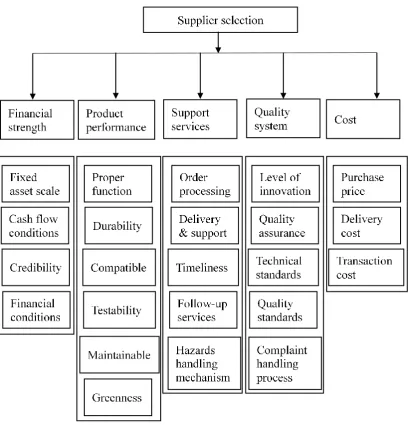
Figure 1. The hierarchy model for selection criteria
3. The Proposed Framework
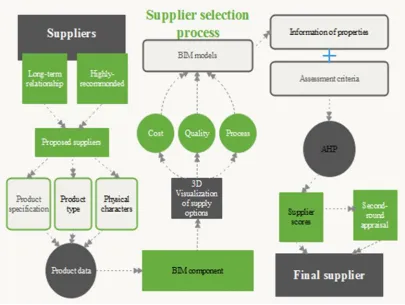
The framework of decision analysis based on BIM for assessing supplier alternatives is shown in Figure 2. In the first step, the study prepared the required data for prefabs in the building sector by interview and accessible data and information from a pilot project (IBQ building in Beijing, China). Based on the required data and pilot project data, this study defined the required properties of prefabs, including geometry information, physical features, and mechanical requirements to assemble them. For the next step, the information is converted into a 3-D model by utilizing a BIM platform. Then, an optimization process is carried out to present the optimal size and location of prefab components. This will contribute to provide visualization of supplier alternatives and increase the attraction of BIM data at the decision process. Because prefabs data are used for evaluating the feasibility and performance, a comprehensive list of criteria was developed to assess supplier alternatives. The AHP method is used to comprehensively compare the characteristics of the suppliers.
Upon the quantify assessment required, BIM is updated to incorporate a series of attributes of the supplier alternative for performance comparison. The attributes include tangible measures such as product specification and properties, intangible measures such as aesthetic described by linguistic terminology, and input parameters for modeling and management of the jobsite. Examples of this include construction equipment and logistic characters.
3.2 Selection of Assessment Criteria and Importance Weights
The function of the criteria database is to stipulate the selection criteria for the assessment of supplier alternatives and assign importance weights associated with each criterion based on client and contract preferences. Moreover, professional insights from project participants, such as architects, engineers, and contractors, should be accommodated into the criteria and selection process. Therefore, the criteria assessment was selected as an appropriate multi-measure method because it can help decision makers to identify potential requirement of the project and unforeseen risks.
The applicable assessment criteria for a project should be chosen based on project-specific requirements. For applicable purpose, each objective needs to be broken down into its constituted measures to better define the requirements. The assessment applies opinion survey to rank the selection criteria for the project to calculate the relative importance of criteria and rank the supply alternative against the criteria to generate the final score of each alternative. An option survey was conducted among the key project professionals, including client and senior managers, with influence on supplier selection.
Figure 2. The framework of the selection process
In addition, the importance rank of the criteria may vary depending on the opinions of the project participants. A combination analysis was adopted to calculate the importance weights. First, the importance of each criterion was ranked by the selected key project professionals. A pairwise comparison—AHP—as an effective method was adopted for comparative analysis [51]. The opinions of the participants were collecting using a 1 to 5 Likert-type scale, where 1 represents “No importance” and 5 represents “Very important.” Then, a pairwise comparison of all criteria generates a matrix used to obtain the criteria’s priority matrix and priority vector. The summary of opinions on criteria is then computed through Equation (1).
𝑅𝐼
𝑖=
∑ 𝑅×𝜔ℎ×𝑛
,
(1)Where RI is relative importance of criterion i, w is rank scale assigned by each respondent, h is the highest scale (5 in this study), and n is the number of respondents. Further, the normalized relative importance was calculated using Equation (2).
𝑁𝑅𝐼
𝑖=
𝑅𝐼𝑖∑ 𝑅𝐼𝑖
,
(2)To calculate the global importance of a criterion, the priority weight (Di) generated from the
pairwise calculation, was incorporated, as shown in Equation (3).
𝐺𝐼
𝑖= 𝐷
𝑖× 𝑁𝑅𝐼
𝑖,
(3)The algorithm gives weight to each supply alternative based on which is the best option selected. In the AHP method, the weights of the criteria and the scores of the alternatives are calculated, which are called local proprieties. Then, the values of weights 𝜔𝑖 and scores 𝛾𝑖𝑗 are aggregated by a
weighted sum of the type, as shown in Equation (4).
𝑆
𝑗= ∑ 𝜔
𝑖 𝑖× 𝛾
𝑖𝑗,
(4)The global priorities 𝑆𝑗 thus generated are then used for ranking the alternatives and selection
of the optimal one.
4. Case Study
The application and benefits of the proposed framework are illustrated using a case study that includes material selection of prefabricated wall panels of a building project, as a representative building component of the project with significant effects on the supplier selection process. In other words, the proposed framework helps to decide on aspects of the procurement system related to identify the suitable products, the optimum supplier, and preferred logistics options.
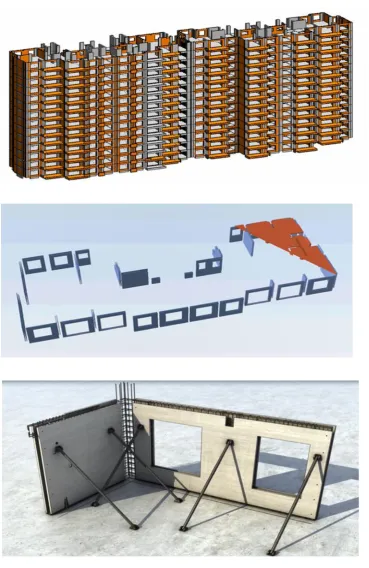
The prefabrication project considered is a mixed-use apartment complex building, located in Beijing, China. This 17-story complex features spacious apartments above a ground floor retail space with a total floor area of 21,580 m2 designed for service life of 100 years. The total surface area of the PC wall is approximately 11,180 m2. The prefabricated wall panel is a load bearing element of the building that serves the primary function of support and transfer the building load, which considerably impact the building performance. The construction of prefabricated wall panels is usually regarded as the most important part of the project, in which a finish-to-start relationship is applied to every building level; thus, any delay encountered may delay the completion of the project. In addition, prefabricated wall panels can be made from a variety of steel and concrete, each with different properties and designs and thus different performance.
marketing. This composition was determined by the involved professional have depth knowledge of project requirements as well as the familiarities to the potential suppliers.
Figure 3. The BIM model for the case project
4.1 The Survey Details
2. The relative importance of the criteria were calculated based on survey results from 28 project-related professionals, as shown in Table 1; the pairwise competition for the selection criteria is displayed in Table 2; and
3. The detailed information of the potential suppliers was investigated and ranked against the criteria by the 28 selected professionals.
The average score for each potential supplier against each criterion was then calculated, as shown in Table 3.
In this case, the project team identified several supply problems for this project. One of the most important issues is the continuous of the project process. If the prefabricated components cannot be timely delivery to the jobsite, then the project may not proceed, and this situation negatively affects project performance.
The AHP algorithm can be applied to a hierarchy model consisting of criteria, sub-criteria, and supply alternatives. The criteria for the supplier selection, the questionnaire results and their relative weights are shown in Table 3. As shown in Table 3, there are five criteria: financial strength, product performance, support services, quality system, and cost. Financial status is determined by fixed asset scale, cash flow conditions, credibility, and tax situation. Product function, durability, compatibility, testability, maintainability, and environmental friendliness provide a measure of product performance. Similarly, order processing, delivery and support, timeliness and effectiveness, follow-up service, and hazards handling mechanism are the sub-criteria to decide sfollow-upport services. Quality system is determined by the level of innovation, quality assurance, technical standards, quality standards, and complaint handling procedures. Finally, the cost is composed of purchase price, delivery cost, and transaction cost.
In the AHP method, decision makers are required to provide their preferences by using Equation (4). The scores thus obtained are finally used for ranking the alternatives and selection of the most suitable one.
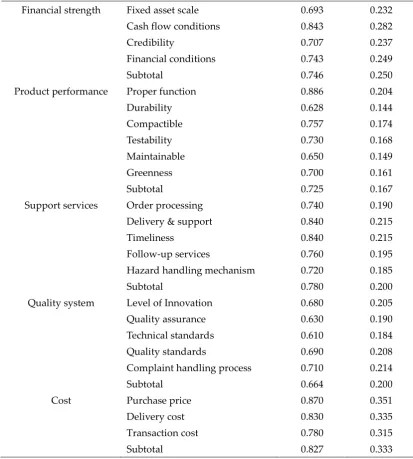
Table 1. The relative importance of criteria
Financial strength Fixed asset scale 0.693 0.232
Cash flow conditions 0.843 0.282
Credibility 0.707 0.237
Financial conditions 0.743 0.249
Subtotal 0.746 0.250
Product performance Proper function 0.886 0.204
Durability 0.628 0.144
Compactible 0.757 0.174
Testability 0.730 0.168
Maintainable 0.650 0.149
Greenness 0.700 0.161
Subtotal 0.725 0.167
Support services Order processing 0.740 0.190
Delivery & support 0.840 0.215
Timeliness 0.840 0.215
Follow-up services 0.760 0.195
Hazard handling mechanism 0.720 0.185
Subtotal 0.780 0.200
Quality system Level of Innovation 0.680 0.205
Quality assurance 0.630 0.190
Technical standards 0.610 0.184
Quality standards 0.690 0.208
Complaint handling process 0.710 0.214
Subtotal 0.664 0.200
Cost Purchase price 0.870 0.351
Delivery cost 0.830 0.335
Transaction cost 0.780 0.315
Subtotal 0.827 0.333
Please compare the level of relative importance between criterion 1 and criterion 2
1/5 1/4 1/3 1/2 1 2 3 4 5
Extremely less important than Equally important to Extremely more important than Financial strength Product performance Support services Quality system Cost
Financial strength 1/3 1/2 3 1/3
Product performance 3 1 4 1
Support services 2 1 4 1
Quality system 1/3 1/4 1/4 4
Cost 3 1 1 1/4
Table 3. The scores of proposed suppliers
Criteria Score
Supplier A Supplier B Supplier C Supplier D
Financial strength 2.993 4.282 3.000 3.282
Product performance 3.268 3.545 2.993 5.000
Support services 2.415 4.246 3.019 2.400
Quality system 2.190 3.587 3.126 2.834
Cost 4.685 3.351 3.119 2.650
Global score 109.9 137.1 111.2 111.7
5. Result and Discussion
A typical prefabrication project may comprise a variety of components with different supply options. However, for illustrative purposes, the focus of the case project is on supply alternatives of the prefabricated wall panel. The supplier alternative for construction of the prefabricated wall panel required by the case project are listed in Table 2. As shown in Table 2, the resulting importance weights vary from 0.664 (for quality) to 0.827 (for cost), highlighting the significantly higher relative importance of cost implication in supply decisions.
The client has attempted to work with its long-term partners. The available prefabricated components and delivery options leads to four feasible alternatives for the supply of prefabricated wall panel. According to the proposed framework, BIM of the case project was modified to include the custom features requested for analysis of supply alternatives. Apart from added parameters, other important parameters, such as delivery details and construction requirements, were gathered and stored in relevant databases or libraries.
The building data about the prefabs required extracted from BIM model are imported to the analysis platform developed in Microsoft Excel. Several alternatives should be included in the platform in order to select the optimal one. As stated in the proposed framework section, the adoption of a pairwise ranking method to determine the relative importance of criteria can minimize the bias caused by the inherent tendency of each party attempting to score high to factors related to their responsibility.
Upon the importance weights of the criteria, the data extracted from BIM models generated for each supplier option were imported to Microsoft Excel. Table 3 shows the resulting ranking of supply alternatives. As shown, the results suggest Supplier 2 is the most suitable option. Moreover, Supplier 4 has been highlighted as the supplier providing the best quality products. Supplier 1 appears to be the choice for lowest cost.
6. Conclusion
The proposed framework provides users with a supplier selection method to choose the most suitable supplier for a project and thus may benefit all parties involved in the project. A framework for assessment of supplier alternatives considers both project-specific factors and suppliers’ characteristics, including financial status, product performance, support services, quality system and cost
A comprehensive list of selection measures was established as evaluation criteria for a hierarchy of considerations in selection process. Moreover, the prefab data of the available suppliers were modeled and organized by the customized BIM.
To better illustrate the method, the framework was applied to a case study that included the supply of a prefabricated wall panel in a project where potential suppliers were evaluated and scored according to the criteria. The presented results of the case study provided users with an insight into the important measures in consideration may have on ranking of the available suppliers. Although customized BIM modeling has been provided for supplier selection, the quality of results can still be improved by adding project-specific criteria.
On the one hand, BIM facilitates the supply selection process, while on the other hand the prefabricated components gain greatly in quality. All in all, the productivity in construction industry has been improved. With the help of BIM, the jobsite processes can be modeled and handed over to the manufacturers. The BIM model provides all the details of the prefabricated components that enables complex elements can be produced.
The proposed framework has two theoretical contributions: First, the method selecting the optimal supplier not only depends on the material type and specification but also other variables, such as financial status, support services, and quality system. Second, supplier selection is usually subjective, while attempts have been made to present a fuzzy method for assessment of the qualitative impacts associated with the supplier selection process. The practical contribution is that the framework and database form the basis for data exchange for different prefabrication projects.
The construction industry is generally regarded as a low information intensity industry compared with the manufacturing, banking, and finance industries. The production of prefabricated components primarily relies on 2-D drawings from designers and engineers. Nevertheless, projects are complex with many components, many often of customized design. The customized BIM incorporates the product attributes that facilitate the prefab production, and thus it improves efficiency in the construction process. Moreover, the BIM model of the prefab products also provides producers with more information by visualizing the detail of the products and identifying the risks.
Author Contributions: Conceptualization, L.Z. and H.Z.; methodology, Z.L.; software, Z.L.; validation, L.Z., Z.L.; resources, L.Z.; writing—original draft preparation, L.Z.; writing—review and editing, J.M.; visualization, Z.L, H.Z.
Funding: This research was funded by National Key Research and Development Program of China, grant number 2018YFF0300300, Beijing University of Technology, grant number 2018JG08704, and The APC was funded by the both grants.
Acknowledgments: The authors would like to thank the Beijing University of Technology for its support through the research project. The authors would like to thank China Communications Construction, China Railway Group Limited, China State Construction Engineering Corporation, and China Association of Technology Entrepreneurs for providing data to conduct this research. In addition, I would like to thank all practitioners who contribute in this project.
Conflicts of Interest: The authors declare no conflict of interest.
References
1. Tatum, C. B.; Vanegas, J. A.; Williams, J. M. Constructability improvement using prefabrication, preassembly,
and modularization; Construction Industry Institute, The University of Texas: Austin, TX., 1987.
2. Chen, Y.; Okudan, G. E.; Riley, D. R., Sustainable performance criteria for construction method selection
in concrete buildings. Automation in Construction 2010, 19 (2), 235-244.
3. Martinez, S.; Jardon, A.; Navarro, J. M.; Gonzalez, P., Building industrialization: robotized assembly of
modular products. Assembly Automation 2008, 28 (2), 134-142.
4. Li, H.; Guo, H. L.; Skitmore, M.; Huang, T.; Chan, K. Y. N.; Chan, G., Rethinking prefabricated
construction management using the VP-based IKEA model in Hong Kong. Construction Management and
Economics 2011, 29 (3), 233-245.
5. Li, C. Z.; Xue, F.; Li, X.; Hong, J.; Shen, G. Q., An internet of things-enabled BIM platform for on-site
assembly services in prefabricated construction. Automation in Construction 2018, 89, 146-161.
6. Said, H., Prefabrication best practices and improvement opportunities for electrical construction. Journal of
Construction Engineering and Management 2015, 141 (12).
7. Huang, W. K.; Xu, X. X.; Chen, K.; Wu, H. Y.; Li, Z. D. In Causal Loop Analysis on the Impact of Schedule
Risks in Prefabrication Housing Production in Hong Kong, 21st International Symposium on Advancement of
Construction Management and Real Estate, Singapore, Chau, K.; Chan, I.; Lu, W.; Webster, C., Eds. Springer:
Singapore, 2018.
8. Cheng, J. C. P.; Law, K. H.; Bjornsson, H.; Jones, A.; Sriram, R. D., A service-oriented framework for
construction supply chain integration. Automation in Construction 2010, 19 (2), 245-260.
9. Briscoe, G.; Dainty, A. R. J.; Millett, S., Construction supply chain partnerships: skills, knowledge and
attitudinal requirements. European Journal of Purchasing & Supply Management 2001, 7, 243-255.
10. Dainty, A. R. J.; Grugulis, I.; Langford, D., Understanding construction employment: the need for a fresh
research agenda. Journal of Personnel Review 2007, 36 (4), 501-508.
11. Saad, M.; Jones, M. J., P., A review of the progress towards the adoption of supply chain management
(SCM) relationships in construction. European Journal of Purchasing & Supply Management 2002, 8, 173-183.
12. Giunipero, L. C.; Eltantawy, R. A., Securing the upstream supply chain: a risk management approach.
International Journal of Physical Distribution & Logistics Management 2004, 34 (9), 698-713.
13. Azambuja, M.; O’Brien, W. J., Construction Supply Chain Modelling: Issues and Perspectives. In
Construction Supply Chain Management Handbook, 1sted.; O’Brien, W. J.; Formoso, C. T.; Vrijhoef, R.; London,
14. Langston, C., The reliability of currency and purchasing power parity conversion for international project
cost benchmarking. Benchmarking: An International Journal 2016, 23 (1), 61-77.
15. Kumar, A.; Pal, A.; Vohra, A.; Gupta, S.; Manchanda, S.; Kumar Dash, M., Construction of capital
procurement decision making model to optimize supplier selection using Fuzzy Delphi and AHP-DEMATEL.
Benchmarking: An International Journal 2018, 25 (5), 1528-1547.
16. Saaty, T., Decision making with the analytic hierarchy process. International Journal ofServices Sciences 2008,
1 (1), 83-98.
17. Vaidya, O.; Kumar, S., Analytic hierarchy process: an overview of applications. European Journal of
Operational Research 2006, 169 (1), 1-29.
18. Ahmadian Fard Fini, A.; Akbarnezhad, A.; Hossein Rashidi, T.; Steven Waller, T., BIM-enabled
sustainability assessment of material supply decisions. Engineering, Construction and Architectural Management
2017, 24 (4), 668-695.
19. Elonen, S.; Artto, K. A., Problems in managing internal development projects in multi-project
environments. International Journal of Project Management 2003, 21 (6), 395-402.
20. Merschbrock, C.; Nordahl-Rolfsen, C., BIM technology acceptance among reinforcement workers—the case
of Oslo airports terminal 2. Journal of Information Technology in Construction 2016, 21, 1-12.
21. Zhong, R. Y.; Peng, Y.; Xue, F.; Fang, J., Prefabricated construction enabled by the Internet-of-Things.
Automation in Construction 2017, 76, 59-70.
22. Azhar, S., Building information modeling (BIM): trends, benefits, risks, and challenges for the AEC
industry. Leadership and Management in Engineering 2011, 11 (3), 241-252.
23. Porwal, A.; Hewage, K. N., Building Information Modeling (BIM) partnering framework for public
construction projects. Automation in Construction 2013, 31, 204-214.
24. Tam, V. W.; Tam, C. M.; Zeng, S.; Ng, W. C., Towards adoption of prefabrication in construction.
Building and Environment 2007, 42 (10), 3642-3654.
25. Davies, R.; Harty, C., Implementing ‘Site BIM’: a case study of ICT innovation on a large hospital project.
Automation in Construction 2013, 30, 15-24.
26. M., C. Y.; Y., C. J., Application of BIM on quantity estimate for reinforced concrete. Applied Mechanics and
Materials 2013, 357, 2402-2405.
27. Ma, Z.; Wei, Z.; Zhang, X., Semi-automatic and specification–compliant cost estimation for tendering of
building projects based on IFC data of design model. . Automation in Construction2013, 30, 126-135.
28. Wang, W. C.; Weng, S. W.; Wang, S. H., Integrating building information models with construction
process simulations for project scheduling support. Automation in Construction 2014, 37, 68-80.
29. Zhang, S.; Teizer, J.; Lee, J. K., Building information modeling (BIM) and safety: automatic safety checking
of construction models and schedules. Automation in Construction 2013, 29, 183-195.
30. Zhang, S.; Teizer, J.; Perez, E., Automated safety-indesign rule-checking for capital facility projects. In 13th
international conference on construction applications of virtual reality, , London, 2013.
31. Barazzetti, L.; Banfi, F.; Brumana, R.; Gusmeroli, G.; Previtali, M.; Schiantarelli, G.,
Cloud-to-BIM-to-FEM: Structural simulation with accurate historic BIM from laser scans. Simulation Modelling Practice and Theory
2015, 57, 71-87.
32. Pradhan, A.; Ergen, E.; Akinci, B., Technological assessment of radio frequency identification technology
for indoor localization. Journal of Computing in Civil Engineering 2009, 23 (4), 230-238.
33. Irizarry, J.; Karan, E. P.; Jalaei, F., Integrating BIM and GIS to improve the visual monitoring of
34. Wang, W.; Lv, Z.; Li, X.; Xu, W.; Zhang, B.; Zhu, Y.; Yan, Y., Spatial query based virtual reality GIS
analysis platform. Neurocomputing 2018, 274, 88-98.
35. Park, C. S.; Kim, H. J., A framework for construction safety management and visualization system.
Automation in Construction 2013, 33, 95-103.
36. Teizer, J.; Cheng, T.; Fang, Y., Location tracking and data visualization technology to advance
construction ironworkers' education and training in safety
and productivity. Automation in Construction 2013, 35, 53-68.
37. NIBS, National BIM standard. National Institute of Building Science: USA, 2012.
38. Jaskowski, P.; Sobotka, A.; Czarnigowska, A., Decision model for planning material supply channels in
construction. Automation in Construction 2018, 90, 235-242.
39. Lam, K. C.; Tao, R.; Lam, C. K., A material supplier selection model for property developers using Fuzzy
Principal Component Analysis. Automation in Construction 2010, 19 (5), 608-618.
40. Mahdi, S.; Arash, S.; Carl, H.; Keith, W. H., Supplier selection process in an integrated construction
materials management model. Automation in Construction 2014.
41. Deng, X.; Hu, Y.; Deng, Y.; Mahadevan, S., Supplier selection using AHP methodology extended by D
numbers. Expert Systems with Applications 2014, 41, 156-167.
42. Xua, G.; Li, M.; Chen, C. H.; Wei, Y., Cloud asset-enabled integrated IoT platform for lean prefabricated
construction. Automation in Construction 2018, 93 (123-134).
43. Frödell, M., Criteria for achieving efficient contractor-supplier relations. Engineering, Construction and
Architectural Management 2011, 18, 381-393.
44. Ku, C.; Chang, C.; Ho, H., Global supplier selection using fuzzy analytic hierarchy process and fuzzy goal
programming. Quality and Quantity 2010, 44, 623-640.
45. Park, J.; Shin, D.; Chang, T. W.; Park, J., An integrative framework for supplier relationship
management. Industrial Management & Data System 2010, 110, 495-515.
46. Wang, W. P., A fuzzy linguistic computing approach to supplier evaluation. Applied Mathematical Modeling
2010, 34, 3130-3141.
47. Wu, C.; Barnes, D., Formulating partner selection criteria for agile supply chains: A Dempster-Shafer belief
acceptability optimization approach. International Journal of Production Economics 2010, 125, 284-293.
48. Jabbour, A. B. L. S.; Jabbour, C. J. C., Are supplier selection criteria going green? Case studies of companies
in Brazil. Industrial Management & Data Systems 2009, 109, 477-495.
49. Kannan, V. R.; Tan, K. C., Supplier selection and assessment: Their impact on business performance. The
Journal of Supply Chain Management 2002, 38, 11-21.
50. Katsikeas, C. C.; Paparoidamis, N. G.; Katsikea, E., Supply source selection criteria: The impact of supplier
performance on distributor performance. Industrial Marketing Management 2004, 33, 755-764.
51. Saaty, T. L., The Analytic Hierarchy Process. McGraw-Hill: New York, NY., 1980.