ISSN(Online): 2320-9801 ISSN (Print): 2320-9798
I
nternational
J
ournal of
I
nnovative
R
esearch in
C
omputer
and
C
ommunication
E
ngineering
(An ISO 3297: 2007 Certified Organization)
Vol. 3, Issue 4, April 2015
Transmission Efficient Data Gathering Using
Compressive Sensing in Wireless Sensor
Network
Vitthal Yenkar, Prof.Dinesh DatarM.E Scholar (Computer Science & Engg) ,G.H. Raisoni College of Engg & Management, Amravati, India
Asst. Professor, Dept. Information Technology, G. H. Raisoni College of Engg & Management, Amravati, India
ABSTRACT: Compressive sensing (CS) can decrease the figure of data transmissions and balance the traffic load throughout networks. However, the overall transmissions for data gathering by using pure CS are still huge. The hybrid method of using CS was projected to decrease the figure of transmissions in sensor networks. However, the preceding works utilize the CS method on routing trees. In this paper, we plan a clustering technique that uses hybrid CS for sensor networks. The sensor nodes are ordered into clusters. Inside a cluster, nodes send out data to cluster head (CH) not including CS. CHs use CS to transmit data to sink. We first suggest an analytical model that studies the correlation between the number of transmissions and size of clusters. In the hybrid CS method, main aim is to finding the most favourable size of clusters that can lead to least number of transmission. Then, we propose a centralized clustering algorithm based on the results obtained from the analytical model. At last, we present a circulated implementation of the clustering method. Extensive simulations confirm that our method can decrease the number of transmissions extensively.
KEYWORDS: Wireless sensor networks, compressive sensing, data collection, clustering.
I. INTRODUCTION
ISSN(Online): 2320-9801 ISSN (Print): 2320-9798
I
nternational
J
ournal of
I
nnovative
R
esearch in
C
omputer
and
C
ommunication
E
ngineering
(An ISO 3297: 2007 Certified Organization)
Vol. 3, Issue 4, April 2015
clusters. In addition, the previous works unobserved the geographic locations and node distribution of the sensor nodes. As in sensor networks, the information of node distribution can help the structure of data gathering method that uses fewer data transmissions
Fig : The hybrid CS data collection method in cluster structure[1]
1.1 Plan of the paper
Many researchers have developed techniques of Data Gathering Using Compressive Sensing In wireless Sensor Network, here, Section II presents literature concerning Compressive Sensing In wireless Sensor network and work done till date, Section III explains the problem statement and related discussion. Section IV shows the Objective of the Paper V concludes the paper.
II. LITERATURE SURVEY
Ruitao Xie and Xiaohua Jia, Fellow, IEEE, Computer Society’ Transmission-Efficient Clustering Method for Wireless Sensor Networks Using Compressive Sensing’in 2014, proposes a clustering method that uses hybrid CS for sensor networks. The sensor nodes are organized into clusters. Within a cluster, nodes transmit data to cluster head (CH) without using CS. CHs use CS to transmit data to sink.
Sheenam1, Navdeep Kaur2 ‘ Improvement of Energy Efficiency of Compressive Sensing in Wireless Sensor Networks’ in 2014 proposes Wireless sensor network used in many applications like electronic commerce, mobile communications and smart cards. This survey paper aims at reporting an overview of WSNs technologies, component, and network throughput.
Vinoda B Dibbad1, C M Parameshwarappa2’ A Secure Data Transmission for Cluster based Wireless Sensor Network Using LEACH Protocol’in 2014 propose a security solution for LEACH (Low-Energy Adaptive Clustering Hierarchy), a protocol where clusters are formed dynamically and periodically. A LEACH protocol effective one to reduce and balance the total energy consumption for CWSNs.
Jiping Xiong and Qinghua Tang ‘1-Bit Compressive Data Gathering for Wireless Sensor Networks’ in 2014 propose a novel blind 1-bit CS reconstruction algorithm which outperforms other state-of-the-art blind 1-bit CS reconstruction algorithms under the settings of WSN. Experimental results on real sensor datasets demonstrate the efficiency of our method.
Menaga.M 1, R.Sudha2’Energy Efficient Approach For Mobile Data Gathering in Wireless Sensor Networks’ in 2013 proposes an extensive simulation study, and the results indicate that CST-BRH method is superior over traditional in-network data compression techniques for practical sensor in-network settings. This analyze the trade-off between energy saving and data gathering latency in mobile data gathering.
ISSN(Online): 2320-9801 ISSN (Print): 2320-9798
I
nternational
J
ournal of
I
nnovative
R
esearch in
C
omputer
and
C
ommunication
E
ngineering
(An ISO 3297: 2007 Certified Organization)
Vol. 3, Issue 4, April 2015
III. OBJECTIVE
Secure data transmission is a critical issue for Wireless Sensor Networks (WSNs). Clustering is an effective and practical way to enhance the system performance of WSNs. In recent years, wireless communication due to rapid hardware cost reduction and providing its devices with portability has become one of the most important communication methods in our everyday life. Many people communicate with others through wireless environment almost every day. However, from privacy viewpoint, wireless security is a crucial challenge since messages are delivered to their destinations through the air so hackers can maliciously intercept the messages and decrypt the messages. A Clustering sensor node is an efficient topology and a crucial issue in Wireless Sensor Network (WSN). Clustering is a technique in which small light weight, low cost, low power sensor nodes are grouped in to some clusters. Wireless sensor networks are networks of tiny, low cost, low energy, and multifunctional sensors that are densely deployed for monitoring environments, tracking objects or controlling industrial operations. In routing protocol transmission of data is the one of the most significant factors that causes a quick drain of energy between nodes and base station. Compression techniques reduce the amount of data which also lead to reduce the energy consumption of the network. The successful method developed in this research is predictable to offer fresh border of mind for research in together compressive sampling applications and large-scale wireless sensor networks. We think about the scenario in which a bulky number of sensor nodes are compactly deployed and sensor readings are spatially interrelated. The planned compressive data gathering is able to decrease global scale communication cost without introducing concentrated computation or complex transmission control. The load balancing attribute is capable of extending the lifetime of the complete sensor network as well as personal sensors. Furthermore, the projected scheme can manage with irregular sensor readings gracefully. We also take out the examination of the network capacity of the planned compressive data gathering and authenticate the analysis through ns-2 simulations.
IV. TRANSMISSION TYPE
There are two levels of transmissions in our clustering method using the hybrid CS: intracluster transmissions that do not use the CS technique and intercluster transmissions that use the CS technique. The data size in intercluster transmissions is the same as the data in intracluster transmissions. Thus, reducing the number of transmissions can effectively reduce the energy consumption of sensor nodes. For intracluster transmissions, we simply let sensor nodes transmit their data to the CH following the shortest path routing (in terms of number of hops). For intercluster transmissions, we construct a minimal cost (in terms of number of hops) backbone tree that connects all CHs to the sink and transmit the data projections along this backbone tree.
ISSN(Online): 2320-9801 ISSN (Print): 2320-9798
I
nternational
J
ournal of
I
nnovative
R
esearch in
C
omputer
and
C
ommunication
E
ngineering
(An ISO 3297: 2007 Certified Organization)
Vol. 3, Issue 4, April 2015
Intracluster transmission Intrecluster Transmission
Fig 5.2 : Intercluster & intracluster Transmission
ISSN(Online): 2320-9801 ISSN (Print): 2320-9798
I
nternational
J
ournal of
I
nnovative
R
esearch in
C
omputer
and
C
ommunication
E
ngineering
(An ISO 3297: 2007 Certified Organization)
Vol. 3, Issue 4, April 2015
VI. DISCRIPTION OF SYSTEM FLOW DIAGRAM
1. After a CH is elected, the CH broadcasts an advertisement message to other sensor nodes in the sensor field, to invite the sensor nodes to join its cluster. An advertisement message carries the information: the identifier and location of the CH, and the number of hop that the message has traveled. The hop count is initialized to be 0. 2. When a sensor node receives an advertisement message, if the hop count of message is smaller than that
recorded from the same CH, it updates the information in its record including the node of previous hop and the number of hop to the CH, and further broadcasts the message to its neighbor nodes; otherwise, the message is discarded. The maximal hop count for the advertisement message is set to D*hops,so that all nodes can receive the advertisement messages from at least one CH.
3. After the advertisement of CH is complete, each non-CH node decides which cluster it joins. The decision is based on the number of hops to each CH. The routing from a sensor node to its CH follows the reverse path in forwarding the advertisement message. The data of sensor nodes within a cluster is collected by this routing tree.
4. A backbone tree is constructed in a distributed fashion to connect all CHs and the sink. Through the broadcasting of the advertisement messages from CHs, each CH receives the advertisement messages from the other CHs that are close to it. Thus, it has the knowledge about the locations of its nearby CHs and the number of hops to them. Since the sink needs to broadcast the central point’s information to all sensor nodes, all sensor nodes know the location of the sink and the hop distance to it. For each CH,
VII. EXPERIMENTAL RESULT ANALYSIS
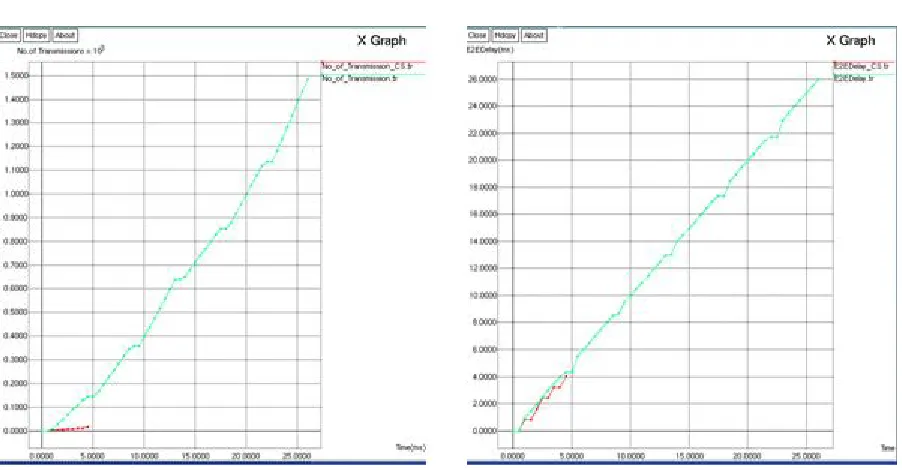
Fig 8.2: Comparison of No. of transmission End to end latency with packet loss
ISSN(Online): 2320-9801 ISSN (Print): 2320-9798
I
nternational
J
ournal of
I
nnovative
R
esearch in
C
omputer
and
C
ommunication
E
ngineering
(An ISO 3297: 2007 Certified Organization)
Vol. 3, Issue 4, April 2015
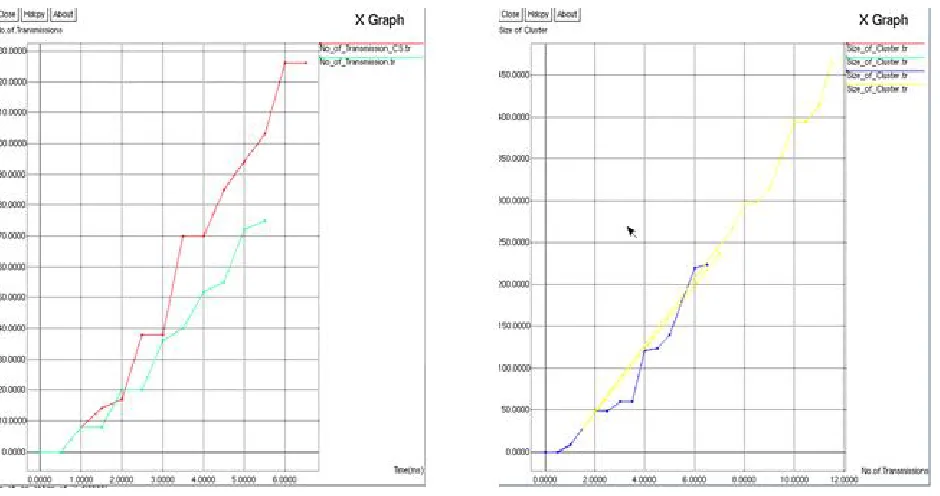
Fig 8.5: Comparison of Size of cluster & consistence End to end latency
Size of cluster: It refers the relationship between size of cluster and no of transmission
The recorded details are stored in the trace file. The trace file is executed by using the X graph to get graph as the output
ISSN(Online): 2320-9801 ISSN (Print): 2320-9798
I
nternational
J
ournal of
I
nnovative
R
esearch in
C
omputer
and
C
ommunication
E
ngineering
(An ISO 3297: 2007 Certified Organization)
Vol. 3, Issue 4, April 2015
VIII. CONCLUSION
The information on locations and distribution of sensor nodes is used to design the data collection method in cluster structure. Sensor nodes are prearranged into clusters. Within a cluster, data are collected to the cluster heads by shortest path routing; at the cluster head, data are compressed to the projections using the CS technique. The projections are forwarded to the sink following a backbone tree. We first proposed an diagnostic model that studies the connection between the number of transmissions and size of clusters in the hybrid CS method, to find the most favorable size of clusters that can lead to least number of transmissions.
REFERENCES
[1]Transmission-Efficient Clustering Method for Wireless Sensor Networks Using Compressive Sensing IEEE TRANSACTIONS ON PARALLEL AND DISTRIBUTED SYSTEMS, VOL. 25, NO. 3, MARCH 2014Ruitao Xie and Xiaohua Jia, Fellow, IEEE, Computer Society
[2].R. Szewczyk, A. Mainwaring, J. Polastre, J. Anderson, and D. Culler, “An Analysis of a Large Scale Habitat Monitoring Application,” Proc. ACM Second Int’l Conf. Embedded Networked Sensor Systems (SenSys ’04), pp. 214-226, Nov. 2004.
[3] E. Candes and M. Wakin, “An Introduction to CompressiveSampling,” IEEE Signal Processing Magazine, vol. 25, no. 2, pp. 21-30, Mar. 2008. [4] D. Donoho, “Compressed Sensing,” IEEE Trans. InformationTheory, vol. 52, no. 4, pp. 1289-1306, Apr. 2006.
[5] J. Haupt, W. Bajwa, M. Rabbat, and R. Nowak, “Compressed Sensing for Networked Data,” IEEE Signal Processing Magazine,vol. 25, no. 2, pp. 92-101, Mar. 2008.
[6] C. Luo, F. Wu, J. Sun, and C.W. Chen, “Compressive Data Gathering for Large-Scale Wireless Sensor Networks,” Proc. ACM MobiCom, pp. 145-156, Sept. 2009.
[7] S. Lee, S. Pattem, M. Sathiamoorthy, B. Krishnamachari, and A. Ortega, “Spatially-Localized Compressed Sensing and Routing in Multi-Hop Sensor Networks,” Proc. Third Int’l Conf. GeoSensor Networks (GSN ’09), pp. 11-20, 2009.
[8] Sheenam, Navdeep Kaur, “ Improvement of Energy Efficiency of Compressive Sensing in Wireless Sensor Networks,” International Journal of Advances in Science and Technology (IJAST) Vol 2 Issue 2 (June 2014)
[9]Vinoda B Dibbad1, C M Parameshwarappa2 A Secure Data Transmission for Cluster based
Wireless Sensor Network Using LEACH Protocol International Journal of Innovative Research in Computer and Communication Engineering (July 2014)
[10] Nandini. S. Patil, Prof. P. R. Patil ‘Data Aggregation in Wireless Sensor Network’, 2010 IEEE International Conference on Computational Intelligence and Computing Research.
[11] Xi Xu, Rashid Ansari “Power-efficient Hierarchical Data Aggregation using
Compressive Sensing in WSN” International Journal of Advances in Science and Technology in 2011
![Fig : The hybrid CS data collection method in cluster structure[1]](https://thumb-us.123doks.com/thumbv2/123dok_us/1491020.1182439/2.595.218.387.208.340/fig-hybrid-cs-data-collection-method-cluster-structure.webp)