TRANSMISSION
RELIABILITY 1
F Current transmission reliability and
planning frameworks
In this appendix, the current and proposed frameworks to develop reliability standards across the National Electricity Market (NEM) are assessed on efficiency grounds (including those detailed in the Commission’s draft report). The conclusions from this analysis have been used to inform the Commission’s proposed framework for setting transmission reliability on a NEM-wide basis detailed in chapter 16. A brief description of the current broader national transmission planning framework is also provided.
F.1 Current frameworks for transmission reliability
Within the NEM, each jurisdiction has a separate planning framework for setting reliability standards for transmission businesses (table F.1). The frameworks vary in the:
• type of standards applied and the level of discretion businesses have when
meeting them
• level of standards, both within jurisdictions where standards in central business
district (CBD) areas are usually higher than elsewhere, and between jurisdictions even for similar types of location and customer
• body responsible for setting standards and the instruments used to specify them,
including codes, licence conditions, legislation and Network Management Plans. Reliability settings for transmission networks apply within a broader framework of network planning, operation and performance (box F.1). These aspects determine the reliability of transmission networks in the short term (within an operational timeframe ranging from the instantaneous through to several months into the future) and in the longer term (within a planning timeframe ranging from a few months to several decades into the future). They also determine how transmission businesses respond once an interruption has occurred (through performance standards).
Each planning framework is a legacy of jurisdictional electricity development prior to the NEM. The final report of the Council of Australian Governments (COAG) Independent Review of Energy Market Directions in 2002 noted that it was ‘very
much aware of community and hence government sensitivity to issues of supply reliability’ (MCE 2002, p. 8), which underpinned the reluctance of jurisdictions to relinquish control of reliability settings in their networks.
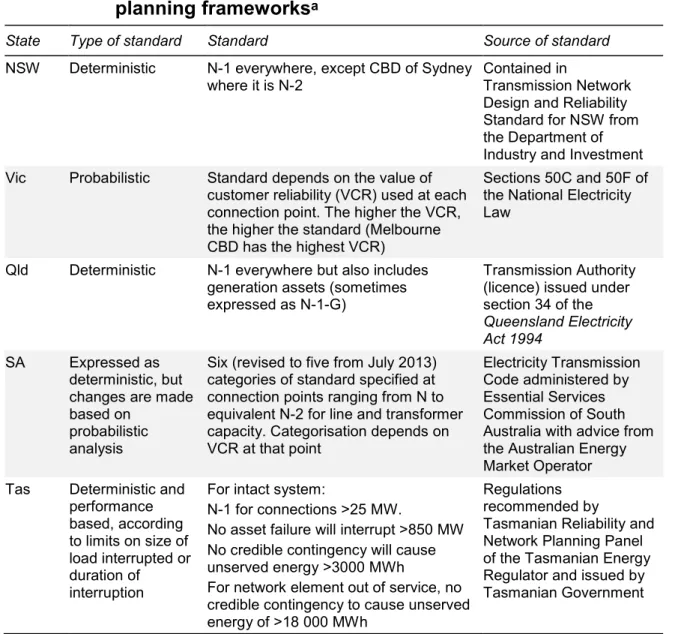
Table F.1 Transmission network reliability standards under existing
planning frameworksa
State Type of standard Standard Source of standard
NSW Deterministic N-1 everywhere, except CBD of Sydney
where it is N-2 Contained in Transmission Network Design and Reliability Standard for NSW from the Department of Industry and Investment Vic Probabilistic Standard depends on the value of
customer reliability (VCR) used at each connection point. The higher the VCR, the higher the standard (Melbourne CBD has the highest VCR)
Sections 50C and 50F of the National Electricity Law
Qld Deterministic N-1 everywhere but also includes generation assets (sometimes expressed as N-1-G)
Transmission Authority (licence) issued under section 34 of the
Queensland Electricity Act 1994
SA Expressed as deterministic, but changes are made based on
probabilistic analysis
Six (revised to five from July 2013) categories of standard specified at connection points ranging from N to equivalent N-2 for line and transformer capacity. Categorisation depends on VCR at that point
Electricity Transmission Code administered by Essential Services Commission of South Australia with advice from the Australian Energy Market Operator Tas Deterministic and
performance based, according to limits on size of load interrupted or duration of interruption
For intact system:
N-1 for connections >25 MW.
No asset failure will interrupt >850 MW No credible contingency will cause unserved energy >3000 MWh
For network element out of service, no credible contingency to cause unserved energy of >18 000 MWh
Regulations recommended by
Tasmanian Reliability and Network Planning Panel of the Tasmanian Energy Regulator and issued by Tasmanian Government
a Deterministic standards and probabilistic planning are described in boxes F.2 and F.4 respectively and
VCRs are discussed in chapter 14.
Source: AEMC (2008a).
While significant variations between jurisdictions exist, it is possible to assign each jurisdiction’s framework into one of three broad planning frameworks for setting transmission network reliability standards:
• the use of deterministic standards in New South Wales, Queensland and Tasmania • probabilistic planning in Victoria
TRANSMISSION
RELIABILITY 3
Box F.1 Reliability settings in transmission networks
Each jurisdiction’s reliability settings are a critical factor in transmission planning, operation and performance. Planning, operational and performance standards are designed to influence the likelihood, size and the duration of an outage.
Reliability of the network in the operational timeframe is largely controlled by transmission businesses. The National Electricity Rules (schedules 5.1a and 5.1) specify that the network must remain in a secure operating state.1
Requirements for reliability beyond those specified in the Rules are mostly set at the jurisdictional level, except the NEM-wide standard that unserved energy per year for each region must not exceed 0.002 per cent of the total energy consumed for that year.
Transmission businesses also set standards for the proportion of line and transformer capacity that can be used at any given time. This can affect congestion on transmission lines and the order of dispatch of generation (chapter 19).
Post-interruption performance standards exist to prompt transmission businesses to respond quickly when an outage occurs. Some elements of performance are captured in standards set by jurisdictions, and performance is also part of the Australian Energy Regulator’s Service Target Performance Incentive Scheme for transmission.
In the planning timeframe, jurisdictional planning standards aim to ensure that as demand changes, networks can continue to operate in a secure state given the contingency events that might arise.2
There has also been considerable debate around a possible national framework for transmission reliability — dating back to 2002 (chapter 21). Of the more recent reviews, the final report of the Australian Energy Market Commission’s (AEMC’s) 2008 Transmission Reliability Standards Review found that most parties agreed with a national framework, but differed in how they envisioned that framework, and most particularly, its scope to allow jurisdictions to set their own standards (AEMC 2008a, p. 13). The debate currently revolves around two models for a national framework for transmission reliability and planning:
1 A secure operating state requires the power system to be in a satisfactory operating state and to be able to return to a satisfactory operating state following the occurrence of any credible contingency. A satisfactory operating state requires all network elements to be loaded within their ratings. The Australian Energy Market Operator (AEMO) considers contingencies to be credible if it is reasonably possible that they might occur (AEMO 2012e, p. 8).
2 A contingency event is an event affecting the power system that the AEMO expects would be likely to involve the failure or removal from operational service of one or more generating units and/or transmission elements (National Electricity Rules, clause 4.2.3(a)).
• an extension of Victoria’s probabilistic planning process undertaken by the
Australian Energy Market Operator (AEMO) to the rest of the NEM (referred to as the ‘AEMO planner model’)
• the AEMC’s preferred model.
Since the Commission’s draft report, Grid Australia has also described another model (referred to as the ‘Grid Australia preferred model’) (sub. DR91).
As such, five broad frameworks either exist or are being considered in the NEM. The remainder of this section describes these frameworks and assesses the efficiency of levels of reliability that are determined within them.
In this appendix, the broad planning frameworks in the NEM are assessed in terms of the following six broad criteria, as established in chapter 16:
• efficiency in investments
• efficiency of standards
• minimising windfall gains
• minimising administrative and compliance burdens
• NEM-wide effects
• auditing compliance to ensure reliability and efficiency in the long run.
F.2 New South Wales, Queensland and Tasmania
Governance
The three state-owned transmission businesses in New South Wales, Queensland and Tasmania — TransGrid, Powerlink and Transend — must comply with planning standards specified in jurisdictional licence conditions or under statute. In New South Wales, the Commission understands that the relevant minister set the standards in 2005, with advice from TransGrid. In Queensland, standards are contained in Powerlink’s Transmission Authority, issued by the relevant minister in 2004 under the Electricity Act (1994). These standards were affirmed by the Somerville report into distribution reliability standards in 2004 (AEMC 2008a, p. 177). In Tasmania, planning standards were set in 2006, based on advice from the Tasmanian Reliability and Network Planning Panel to the Tasmanian regulator. The planning standards in the three States have not been reviewed formally since they were first established.
TRANSMISSION
RELIABILITY 5
In all three jurisdictions, failing to meet reliability standards can result in penalties for the transmission businesses. At a maximum, a transmission business can have its licence revoked for breaching the conditions that it is obliged to meet. To date this has never occurred in the NEM.
Deterministic planning
TransGrid, Powerlink and Transend use deterministic standards as a basis for planning and augmenting their networks to ensure reliability. Deterministic standards build redundancy into the network so that when a contingency occurs, an interruption to power supply can either be reduced or totally avoided (box F.2).
Box F.2 Deterministic standards
Deterministic standards specify how much redundancy needs to be built into a network. Standards are expressed using ‘N-x’ notation, where N refers to the number of elements in a part of the network and x is the number of elements that can fail at the same time without causing an interruption to power supply. For example, a network built to a strict N-1 standard will be able to supply peak load with one element not operating, even if it is the largest element in the network.
For example, in year one, a line in a network has a maximum demand of 800 MW. For this part of the network to be rated at N-1 in year one, two 800 MW lines are required so that if a fault occurs on one, the other line can carry the uninterrupted load. However, demand forecasts predict that by year five, maximum demand will increase to 850 MW. Screening studies by the network business reveal that the growth in maximum demand to 850 MW will mean that the network will no longer meet an N-1 criterion in year five. To meet the criterion, a third line would need to be built on the network, or demand would need to be supplied from another line or reduced (through demand management).
Deterministic standards are referred to as redundancy standards because for most of the time, the extra capacity is not used. If a third line were built in the example above, it would only be used at critical peak demand (which occurs around 40 hours per year (chapter 9)) and only if a contingency occurred on one of the existing lines.
Electricity network businesses generally have different deterministic standards for different parts of their networks. For example, in New South Wales, sub-transmission lines and the CBD of Sydney must be built to an N-2 standard. Urban and non-urban loads above 10 MVA must be reliable to N-1, and smaller loads to N-0.3
3 On average a line with a capacity of 10 MVA would service less than around 4000 customers. This means that all transmission lines, except very small ones, have N-1 redundancy.
The application of deterministic standards by Transend in Tasmania is an example of a more flexible approach to redundancy planning, in which standards are allowed to be breached for short periods. This recognises that the likelihood that peak demand coincides with a contingency is small. In the example in box F.2, this might mean that if peak demand rises to 850 MW, the system will breach the N-1 criteria, but only for around 40 hours a year (chapter 9). If a contingency occurs at these times, the remaining equipment can usually carry extra load, at least for a short period until the problem is fixed or load shedding can be minimised.
Transmission networks link to distribution networks at connection points.4 Distribution businesses provide the transmission business with a demand forecast for the customers connected to each connection point (box F.3). The transmission businesses then run these demand forecasts through screening studies to identify parts of the network (‘identified limitations’) that might not meet standards as maximum demand increases.
Box F.3 Demand forecasts for transmission planning
Transmission businesses use demand forecasts for each connection point (based on information from distribution businesses) when making their planning decisions. Transmission businesses also aggregate these connection point forecasts to publish a region-wide forecast in their Annual Planning Report. Transmission businesses produce these region-wide forecasts for New South Wales, Queensland and Tasmania. AEMO produces the forecasts for Victoria and South Australia.
Concerns have been raised about the incentive that transmission businesses might have to ‘overstate demand and therefore over-invest’ (AEMC 2011f, p. 144).
While demand has often not reached the levels predicted in the forecasts — for example, AEMO found that the actual demands were significantly lower than those forecast by the transmission business for Queensland (and less so for other jurisdictions) for a number of years (AEMO 2011f, p. 31) — this is not necessarily evidence of deliberate over-forecasting of demand.
However, in 2012, and in response to such discrepancies, AEMO began to release independent region-wide demand forecasts for New South Wales, Queensland and Tasmania (as well as a NEM-wide forecast). The AEMC has recently proposed that AEMO should be responsible for informing the demand forecasts used by transmission businesses for planning in the future (AEMC 2012j, p. v).
When the business identifies network limitations, all options are examined for meeting reliability standards into the future. These options might include
4 A connection point is where the transmission network transfers electricity to either a distribution network or a directly-connected large customer.
TRANSMISSION
RELIABILITY 7
augmentation of the network, demand management projects, or re-routing the flows through the network to remove some of the pressure on the constrained elements. Once they have identified their preferred options, TransGrid, Powerlink and Transend include the forecast costs and a brief outline of these options in their revenue proposals to the AER which generally occur every five years.5 Because augmentations can take several years to build, the transmission businesses will typically include proposed expenditure in their revenue proposals for projects to address risks to reliability that are not predicted to emerge for up to six or seven years into the future.
The AER is responsible for determining whether the expenditure required and the options identified by the businesses are efficient. This exercise requires industry expertise and a detailed knowledge of the likely costs of different options, while also keeping in mind the incentives transmission businesses might have to over or under invest or prefer a particular type of option (chapter 5).
Shortly before commencing a project (with a value greater than $5 million), the transmission business has to undertake a Regulatory Investment Test for Transmission (RIT-T) (chapter 17). This process introduces some transparency and requires that the business canvass several different options for addressing a network constraint. However, according to the AER:
… the framework, and particularly the RIT-T, may not result in beneficial investment occurring … [and] current arrangements for network development would not deliver sufficient new augmentations between regions. There are concerns that the existing arrangements may promote reliability-driven region-centric transmission investment and create incentives on transmission businesses to build rather than explore alternatives. (sub. 13, pp. 26, 28)
It is not apparent that the RIT-T currently imposes significant constraint on the choices businesses make regarding options or their costs. While the RIT-T has to be submitted to the AER, which confirms that it has been carried out according to the specified process, by this stage the AER has already approved the capital forecast of the transmission business. Despite the word ‘Regulatory’ being included in the name of the RIT-T, this part of the process does not seem to have much, if any, regulatory ‘force’. Nor does it appear to be possible for a transmission network
5 The AEMC is currently consulting on a potential rule change related to the assessment of capital expenditure and operating expenditures to meet reliability standards put forward by network businesses in their regulatory proposals. The proposed rule change would seek to eliminate the possibility of network businesses having capital expenditure and operating expenditure allowances approved that allow them to maintain reliability levels in circumstances where the required jurisdictional standard is lowered, or the business is performing above the jurisdictional standard (AEMC 2013b).
service provider (TNSP) to put forward an investment that would fail the ‘test’. Chapter 17 discusses this issue in more detail.
Assessment of efficiency
The framework for transmission reliability applying in New South Wales, Queensland and Tasmania can be assessed against the six criteria set out above for possible areas of inefficiency.
Efficiency of investments
It appears that the incentive to identify and install the cheapest solution to address an identified network constraint is low:
• deterministic standards create a bias towards network investment solutions.
Businesses with strict deterministic standards have a strong incentive to build redundancy into the network to meet standards, rather than identify more innovative solutions, including non-network solutions
• the level and nature of scrutiny applied to the options presented in the RIT-T is
probably insufficient to ensure confidence that the business has always identified the most efficient option
• the profit motivation for state-owned enterprises as a driver of behaviour appears
to be low (chapter 5). State owned enterprises might also have objectives other than to maximise profits (chapter 7).
The bias towards network solutions to meet deterministic standards is possibly exacerbated by the potential adverse consequences for Powerlink, TransGrid and Transend of not meeting their standards. Consequences can range from a business losing their licence at one extreme, to being required to report to the Minister about the reasons for missing the standard, and outlining a strategy to rectify the situation, at the other. Regardless, any significant outage can have substantial political and reputational effects for network businesses and government, even if no formal penalty is applied. The AEMC noted that:
... jurisdictional reliability standards reflect the political reality that if the lights go out in a jurisdiction, it is the government of the jurisdiction that faces the economic and political consequences and manages the public safety issues arising from a blackout. (2008a, p. 168)
The greater the penalty — political, reputational or pecuniary — the greater is the likelihood that network businesses will augment their networks to increase reliability and seek to meet their standards within their own networks (that is, there
TRANSMISSION
RELIABILITY 9
will be a bias towards intra-regional investments). State-ownership of network businesses in New South Wales, Queensland and Tasmania is likely to increase political intervention arising from network failures, also contributing to the tendency for excessive and inefficient network expenditure (one reason the Commission has recommended privatisation).
Efficiency of standards
It is likely that reliability standards in New South Wales, Queensland and Tasmania are set at an inefficiently high level. This assessment is based less on the levels at which they are set, and more on the failure of the frameworks in which the standards are set to properly incorporate the value of customer reliability (VCR) (chapter 14).
• The standards are not subject to cost–benefit analysis and do not consider
customers’ willingness to pay for the levels of reliability the standards support. In New South Wales, there have been calls for the State Government to:
… satisfy itself that … current standards for network reliability and security align with customers’ willingness to pay and take steps to ensure that future changes to standards are subject to rigorous cost–benefit analysis. (IPART 2011, p. 14)
• The standards have not changed for at least six years. Given that the efficient
level of reliability is a dynamic concept, depending on shifting demand patterns, customer preferences and business costs, it is unlikely that a static set of standards would remain efficient over time.
• It is not clear that the Queensland, New South Wales or Tasmanian
Governments have invested in the resources or expertise necessary to set efficient reliability standards for a network business. This is a highly technical and specialist area and there is a likely bias by these State Governments to err on the side of wanting to avoid the political consequences from power outages as they are unable to assess the cost implications of their decisions or review the degree to which these accord with the willingness of customers to pay for these reliability standards. There may also be a conflict of interest (real or perceived) when these State Governments set standards for their state owned businesses that influence investments, and the subsequent dividends flow back to the Governments (chapter 5).
Minimising windfall gains
The deterministic standards approach applied in New South Wales, Queensland and Tasmania, coupled with the existing building blocks regulatory approach, is likely to allow TNSPs to capture windfall gains. Concerns over the interaction of these
reliability settings and incentive regulation have been raised by the AER, which stated that:
... significant linkages exist between the standards and the regulatory processes used to set regulated revenues and to assess network performance. Poorly defined reliability requirements make it difficult for the AER to assess whether the capital expenditure proposals of [transmission network service providers] are genuinely required to meet reliability requirements. (AER in AEMC 2008a, p. 16)
TNSPs have the incentive under the current regulatory arrangements to attempt to justify to the regulator costly expenditures in order to meet reliability standards, even if they do not believe they will be ultimately required. And while the AER is aware of this incentive and carefully scrutinises revenue proposals (chapter 5), the information asymmetries and requirement to accept a ‘reasonable proposal’ is likely to create unnecessary costs that are passed onto customers in terms of higher electricity bills. Conversely, should demand rapidly increase beyond forecast levels, TNSPs do not have a mechanism to receive additional funding to bring forward investments from future periods in order to meet reliability standards.
Minimising administrative and compliance burdens
Third, and in contrast to the previous concerns, the administrative and compliance burdens of the frameworks for transmission reliability in New South Wales, Queensland and Tasmania are likely to be low. This reflects the absence of a requirement for comprehensive research into customer preferences as an input into standard setting processes, and the long length of time that standards have remained unchanged. Compliance burdens are also low for transmission businesses as they deal directly with the organisation setting the standards and monitoring compliance. Neither the fifth criterion (NEM-wide effects) nor the sixth criterion (auditing compliance to ensure reliability and efficiency in the long run) is addressed by this type of planning framework.
F.3 Victoria and the Australian Energy Market
Operator’s preferred national model
The Australian Energy Market Operator’s role as planner and procurer Victoria’s planning framework differs considerably from all other jurisdictions in the NEM. AEMO is responsible for planning and directing augmentations to the Victorian network for which it plans and procures services (AEMO 2012e). As
TRANSMISSION
RELIABILITY 11
such, the Victorian transmission business, SP AusNet, does not receive revenue for capital expenditure for augmentations through the AER revenue determination process (AER 2008c, p. 44). SP AusNet, in consultation with AEMO, is responsible for replacement of assets, maintaining assets and responding when a failure occurs. SP AusNet is responsible for ensuring that reliability in the transmission network in Victoria is maintained, subject to the planning decisions made by AEMO. If a planning decision were found to be the cause of significant damage to a third party, it is likely that AEMO could be liable if it had been negligent in carrying out its statutory planning functions.
AEMO’s objective as a planner in Victoria is to ensure that the transmission network allows it to operate the system within security and system performance obligations, set out in schedules 5.1a and 5.1 of the National Electricity Rules. In doing this, AEMO’s objective is to ensure the network minimises the total delivered cost of electricity to consumers over the long term by basing investment decisions on cost–benefit analysis.6 AEMO’s planning documents indicate that its objective is to augment the transmission network only when the economic benefits from avoiding interruptions to power supply or congestion, equal or exceed the costs of implementing the augmentation (AEMO 2011c, p. 4).
AEMO publishes the Victorian Annual Planning Report, which assesses the ability of the network to meet forecast demand under a range of supply and demand scenarios:
• in the next five years at each connection point • across the network in the longer term.
The Victorian distribution businesses jointly publish the Transmission Connection Planning Report that focusses on emerging constraints at each connection point for the next 10 years, using connection point specific demand forecasts. AEMO scales these connection point forecasts to be consistent with the state-wide medium energy growth scenario (AEMO 2012e, p. 7).
Probabilistic cost–benefit analysis
AEMO identifies emerging network limitations by running screening studies that test whether the network can be operated in a satisfactory state (or returned to a satisfactory state within 30 minutes after a contingency) under future possible demand and generation scenarios. To do this, AEMO uses deterministic descriptors
to assess which parts of the network would not be in a satisfactory state under system normal conditions (N), after one contingency (N-1) and after a contingency when one element of the network is already not operating (N-1-1). These are similar to the screening studies that Powerlink, Transend and TransGrid undertake.
Once AEMO identifies an emerging constraint in the network (the exploratory phase in figure F.1), it develops possible (investment and non-investment) options to remove those constraints, taking into account the long-term plans of distribution businesses and SP AusNet’s replacement and refurbishment plans. Preliminary cost estimates and likely lead times are estimated for each option. AEMO assesses the costs and benefits of any substantial expenditure proposal before it is implemented. It considers the probabilities of contingencies and their resultant impacts on consumers, and sets them against the business costs of various options to address these impacts (box F.4). The option with the greatest expected net benefit is the preferred option.
As costs and benefits change over time as demand changes, AEMO conducts pre-feasibility studies to assess whether augmentations might have future net benefits (figure F.1).7 Optimal solutions and their timings are identified and costed in more detail during feasibility studies conducted as part of the RIT-T process. This is a form of a ‘real options’ approach to planning.8
When options to address emerging reliability concerns are separable9 from the rest of the network and are likely to cost at least $10 million, AEMO calls for tenders for the construction, ownership and maintenance of the augmentation or non-network solution. AEMO specifies the limitation in the network, but not the preferred option it has previously identified. This is to ensure that there is
7 The Commission understands that the process outlined in box F.4 is undertaken in some form in each stage of AEMO’s planning process outlined in figure F.1.
8 A real options approach in the context of transmission planning allows investment decisions for reliability, once a potential constraint has been identified, to be delayed past the start of the regulatory period until the time that they are needed. The benefits of this approach are twofold. First, if predictions about the level of reliability that customers value turn out to be incorrect, the required investment path can be altered. For example, if the VCR changes because an industrial estate closes down, the level of reliability that the remaining customers desire would fall. The second benefit arises from being able to take advantage of technology improvements or changing financial conditions or other network augmentations built in neighbouring regions. Delaying the decision about exactly what to build and how much it will cost until closer to the time of the project starting, allows the most recent developments to be taken into account.
9 A separable project is one that can readily be identified as distinct from the rest of the network. Further, while it will require connection to the broader network, to be categorised as ‘separable’, a project must not materially interfere with the incumbent transmission business’s ability to operate the existing network.
TRANSMISSION
RELIABILITY 13
opportunity for parties to submit other, possibly more innovative, options. It allows parts of the network to be contestable, with the advantages that competition brings to incentives for cost minimisation and innovation.
Figure F.1 Australian Energy Market Operator’s annual planning cycle in Victoria
Source: AEMO (2012e, p. 5).
To date, 15 separable projects have gone to tender in Victoria (of which the incumbent transmission business, SP AusNet, has been awarded 13). The outcomes of these tenders are commercial-in-confidence and are not communicated to the AER, and the expenditure is therefore not incorporated in the regulated asset base at the start of the next regulatory period.
Box F.4 Australian Energy Market Operator’s probabilistic cost–benefit analysis
Once a limitation in the network has been identified during the screening studies (which use deterministic indicators), AEMO applies a probabilistic planning approach to reliability that consists of the following four steps.
1. Market analysis involves designing many possible future scenarios using demand
and generation forecasts. AEMO uses hour-by-hour spatial demand forecasts for different possible future peak demands, and hour-by-hour generation dispatch data to create demand and generation scenarios, while also taking into account the different likelihoods of exceeding the forecasts. (10 per cent and 50 per cent likelihoods are usually used.)
2. Network analysis establishes whether the scenarios threaten the stability of the
system in terms of voltages, power flows and equipment ratings.
3. System operation analysis assesses the operational actions required under different
scenarios in different conditions. Operational actions only occur if the system is not in a satisfactory operating state.10 Operational actions can include network switching, generation re-dispatch and load shedding. These actions have costs, including interrupting customers’ power when load shedding occurs or dispatching higher cost generators, making power more expensive. The analysis then examines what, if any, operational actions are required if a contingency occurs. Sometimes, analysis is required for four consecutive contingencies to ensure the network returns to a secure operating state. Contingency data, and their likelihood of occurring, are compiled using historical outage data from the Victorian network.
4. The most likely action value is calculated by multiplying the probabilities of the scenarios and the contingencies by the costs of the operational actions that would be required in each situation and summing them together.
These four steps estimate the cost of a ‘do nothing’ scenario.
Steps two to four are repeated for each of the possible solutions to network constraints (such as augmentations or demand management) and compared with the ‘do nothing’ scenario. An option passes a cost–benefit test if it produces benefits above the do-nothing strategy sufficient to exceed the costs.
Sources: AEMO (2012e, pers. comm., 10 August 2012); VENCorp (2007).
When options are not separable, AEMO negotiates with SP AusNet to carry out the development or project. SP AusNet receives revenue for the capital expenditure11 and operating costs for projects that are embedded in their network or for projects
10 A satisfactory operating state requires all network elements to be loaded within their ratings (as defined in chapter 4 of the Rules) (AEMO 2012e).
11 The revenue is approved by AEMO by changing SP AusNet’s Transmission Use of System charges. In effect, this allows the business to collect more revenue from customers.
TRANSMISSION
RELIABILITY 15
that they have won through the tender process. For non-separable projects, the capital that SP AusNet has spent on these projects is rolled into the regulatory asset base at the end of the five year regulatory period, and is therefore available for any benchmarking exercises undertaken by the AER.
Assessment of efficiency
Efficiency of investments
The Victorian transmission planning framework appears to support efficient options for meeting reliability constraints. The decisions about what, where and when to build are made by AEMO, or are subject to competitive forces through tendering. AEMO, an expert, independent, not-for-profit planner, has little incentive to make inefficient investment decisions12 and all investments must pass a cost–benefit test, the last iteration of which is delivered through the RIT-T process.13 Nevertheless, AEMO does not face the same commercial incentives to cost minimise as faced by privately owned transmission businesses.
AEMO also has no reason to prefer network or non-network solutions since it is not influenced by the need to meet deterministic standards. Further, there is no financial consequence to AEMO from either choice, unlike for a TNSP where future returns may vary depending on whether or not the investment forms part of the regulatory asset base and is influenced by potential errors in the weighted average cost of capital. As a result, it can identify the most efficient option, which may be a network or non-network option, or a combination of both.
A further benefit arises from the probabilistic process identifying the most efficient timing of investments. Indeed, in some cases, the difference in outcomes between probabilistic planning and deterministic standards might be one of timing rather than the type or scope of project (Grid Australia, sub. 44 and AEMO 2012j).
12 It is possible that AEMO has an incentive to ‘make life easier’ as the operator by making inefficient investment decisions, however, there does not appear to be evidence to support this conjecture. It is also possible that synergies exist between planning and operating the network, which AEMO can exploit when it carries out both roles.
13 One in-principle concern is whether the separation of planning functions from ownership, operation and maintenance could forgo the benefits of trade-offs between capital expenditure and operating expenditure in delivering reliability in the network. However, this problem is minimised by AEMO considering a range of solutions as part of its probabilistic cost–benefit test and ongoing consultations with the transmission business (which could raise such alternative solutions).
AEMO’s real options approach, however, has benefits. It outlines a stream of augmentations, each planned to commence at different points in the future according to demand forecasts, and assesses the economic case for each investment as its time for construction approaches, allowing changes in customer values and in relevant costs to be incorporated. The New Zealand Electricity Commission found that adopting a real options approach could result in savings of up to 30 per cent compared with orthodox investment planning methods (Electricity Commission 2006).
The Victorian Department of Primary Industries (DPI) has also argued for a ‘dynamic probabilistic approach’ in their submission to the Transmission Frameworks Review:
DPI considers that a dynamic probabilistic planning approach applied to transmission augmentations is likely to result in more accurate and efficient investment outcomes when compared to the setting of deterministic standards that are applied for a fixed period and which are based on analysis which is likely to become out of date over time as market events evolve. (DPI 2012b, p. 6)
The probabilistic planning undertaken by AEMO, through the use of repeated feasibility studies, incorporates a real options approach and ensures that investments for reliability purposes are not undertaken when the costs (as negotiated between AEMO and the business, or revealed through competitive tender) outweigh the benefits. AEMO only procures or negotiates the investments at the time the projects are due to commence. In contrast to the situation in New South Wales, Queensland and Tasmania, the cost–benefit analysis in Victoria is conducted and all options explored before approval for the revenue attributable to this capital expenditure occurs.
The most commonly cited criticism of this model is that investments for projects (in terms of their type and scope) are not determined by a business motivated by a profit incentive. However, this may have benefits in circumstances where the profit incentives of the relevant transmission businesses are weak, or investment decisions are based on objectives other than profit (chapter 5 and 7) or when the experience of planning across the NEM gives AEMO increased exposure to new and innovative ways to address network constraints.
Costs of non-separable projects are negotiated between the business and AEMO, which then approves the required revenue for the business. This process should reveal reasonably efficient costs, provided AEMO is an informed party at the negotiations, and the transmission business does not attempt to inflate its cost estimates as an ‘ambit’ for negotiation. However, it is not necessarily transparent. In
TRANSMISSION
RELIABILITY 17
Victoria, either party can seek arbitration from the AER if negotiations fail to deliver an agreed cost for a project (although to date this has never occurred).
Efficiency of standards
The efficiency of standards in this model is more difficult to assess because probabilistic planning does not use ‘standards’. However, this criterion is concerned with whether the delivered levels of reliability (either through the use of and compliance with standards or through probabilistic planning) are aligned to the preferences of customers.
So long as the data and variables used in the analysis are accurate, probabilistic planning, as a form of cost–benefit analysis should align levels of reliability with customer preferences, taking account of temporary ‘mismatches’ due to the lumpiness of transmission assets. (Box F.5 explains the difference between probabilistic and deterministic approaches to planning.)
However, there are several concerns about the extent to which AEMO’s probabilistic process currently delivers efficient levels of reliability.
First, there are some concerns about the quality of the modelling, parameters and data.
• Some low probability catastrophic events are difficult to model because there is
insufficient historical data to determine the probabilities. This complexity increases where a set of interdependent effects may lead to catastrophic failure. For example, a hot day may lead to the coincidence of peak demand, a failure of a transmission line due to arcing, inadequate water to feed hydro generators (if the hot day coincides with a prolonged drought), fires that take out interconnectors, and shortages of maintenance crew at parts of the network that need repair. Given their possible lack of independence, the probability of such events cannot be calculated as the multiple of the probabilities of the events occurring separately (which has apparently been AEMO’s approach). Ignoring dependence would underestimate the true likelihood of catastrophic failure. However, AEMO has begun to incorporate hypothetical high impact, low probability events in its planning, rather than only accounting for events captured in the historical data.
• There are uncertainties about the quality of the data (and the methods) used to
estimate the VCR (chapter 14). It is crucial to take account of all the costs imposed on customers from operational actions (such as load shedding or dispatching more costly generators) when making efficient investment decisions,
even if the costs are difficult to measure. If nothing else, a range of VCRs should be used in modelling.
Box F.5 Probabilistic and deterministic planning
A framework that delivers efficient levels of reliability can describe the network and the reliability outcomes in a number of ways: deterministically; using probabilities of interruptions; using maximum interruption durations or occurrence; or using values of lost load.
Across the jurisdictions in the NEM, there are fewer differences in the way levels of reliability are described than there are in how they are set, and by which party sets them. For example, Victoria’s probabilistic framework uses deterministic N-1 indicators for its initial screening of the network. South Australia’s hybrid standards are an example of moving from a probabilistic analysis to deterministic criteria. Augmentations of the Victorian network under a probabilistic framework can be converted into a description of the level of redundancy using deterministic terminology. AEMO also converts the NEM-wide 0.002 per cent unserved energy reliability standard into deterministic standards to identify the level of reserve in each NEM region (AEMC 2007a, p. 30).
However, identifying an efficient level of reliability must incorporate probabilistic analysis. The behaviour of electricity networks is stochastic in nature and therefore system planning should use probabilistic techniques. In contrast, ‘deterministic approaches … do not and cannot recognise the probabilistic or stochastic nature of system behaviour, of customer demands, or of component failures’ (Zhang et al. 2009, p. 121). This is also recognised by Billinton and Allan (1996), who said that:
… there is no need to constrain artificially the inherent probabilistic or stochastic nature of a power system into a deterministic domain despite the fact that such a domain may feel more comfortable and secure. (p. 4)
AEMO’s probabilistic planning might not always be best practice, and neither do all deterministic standards necessarily result in inefficient reliability levels. Joskow and Tirole (2007) asserted that:
… there continues to be a lack of adequate communication and understanding between economists focused on the design and evaluation of alternative market mechanisms and network engineers focused on the physical complexities of electric power networks and the constraints that these physical requirements may place on market mechanisms. (p. 61) Some form of probabilistic planning can reconcile these two agendas. Whether the required communication between economists and network engineers requires translating probabilistic outcomes at the time of investment into deterministic descriptors should be a secondary consideration.
Sources: AEMC (2007a); Billinton and Allan (1996); Joskow and Tirole (2007); Zhang et al. (2009).
Second, some participants have described the planning approach used by AEMO as a ‘black box’ because the process is not transparent or easy to replicate. Some
TRANSMISSION
RELIABILITY 19
stakeholders have also raised concerns about the lack of scrutiny of AEMO’s planning decisions and the difficulty external parties might have in testing them.14 These are legitimate concerns. Introducing mandatory reporting to the AER and making all processes transparent, would make testing the efficiency of AEMO’s planning decisions easier and would ensure that decisions are made as a result of robust cost–benefit analysis. It appears that AEMO has partly recognised the issue, and has recently publicly released more documentation about its planning process, including its database of scenarios and contingencies.
Nonetheless, even with the current limitations of the Victorian standards, the potential efficiency gains over deterministic standards are considerable. While it is difficult to estimate precisely the net economic benefits of moving away from deterministic standards — this would require detailed modelling that is currently not possible because of existing data deficiencies — the following examples suggest that the net economic benefits would be significant.
• Deterministic standards have implicit VCRs and it is possible to assess whether
augmentations to meet deterministic standards are close to efficient by assessing whether the implicit VCR seems reasonable. For example, AEMO cites a proposed investment in New South Wales to meet an N-1 standard that implied a VCR of $9 million per MWh (around 150 times the estimate AEMO uses in Victoria). This does not seem reasonable and indicates room for significant savings.
• Comparing augmentation plans to meet N-1 deterministic standards with plans
that would pass a probabilistic cost–benefit test can reveal differences in costs. In these analyses, the identified savings usually result from deferring investments rather than not augmenting at all. AEMO estimated in 2011 that probabilistic planning in Victoria generated present value savings of around $550 million in investment (of which approximately 30 per cent related to savings from investment deferral, with the remainder related to investment choice) compared with what would have been required under an N-1 deterministic standard (sub. 32, p. 32). For the rest of the NEM, assuming savings are proportional to longer-term investment amounts, the net present value of deferral savings alone could be in the order of $430 million.15 Other
14 One indirect test is whether the VCRs revealed from augmentations made in Victoria are reasonably consistent with the measured survey values.
15 This is not an unreasonable assumption considering that in some regions deterministic standards can include standards that require more redundancy than N-1. Further, of all the regions in the NEM, the comparatively higher customer density of the network in Victoria makes it more likely to be able to justify investments to meet N-1 standards under a cost–benefit analysis, suggesting larger differences might exist in other parts of the NEM.
evidence on savings comes from a high-level review of selected existing projects for 2012-13 (seven in total). Focusing on differences in investment timing between deterministic standards and those based on an economic cost–benefit framework, AEMO found that savings in the order of $250 million could be made — equating to a saving in annual electricity bills for households in 2012-13 of at least $40 per household (sub. DR100, p. 5). Assuming that these identified savings estimates represent the upper and lower bounds of the benefits from shifting to a probabilistic planning framework, over a 30 year period, Commission modelling suggests gains across the NEM could be in the order of $2.2 billion to $3.8 billion (in present value terms).
• In New Zealand, augmentations required to meet deterministic criteria were
found to be required eight years earlier than they would under a probabilistic cost–benefit analysis. Two types of avoided costs might emerge from deferring investments:
– analysis in New Zealand suggested customers save $75 000 per $1 million of investment deferred (or around 7.5 per cent) over eight years
– considering the possible changes in technology, customer preferences, and prices that can occur in eight years, new and cheaper alternatives might be available in the future.
Minimising windfall gains
Unlike other approaches, as reliability augmentations in Victoria are determined by AEMO who then subsequently negotiates with SP AusNet (or a third party if separable and they win the tender) to determine the cost of the project, the scope for TNSPs to accrue any windfall gains is removed. In essence, the augmentation of the network is then purchased for an agreed price (which provides SP AusNet or the third party with strong incentives to manage the project efficiently).
Minimising administrative and compliance burdens
The complexity of AEMO’s planning process and analysis suggests that it is likely to be more costly than the equivalent in New South Wales, Queensland and Tasmania. While the software required is similar to that used in these other States, the additional costs arise from the labour costs to run the simulations; the compilation and upkeep of the required datasets including identifying the probabilities of different contingencies; and the design of the scenarios. The separation of functions between AEMO and SP AusNet also makes constant communication between the organisations a necessity.
TRANSMISSION
RELIABILITY 21
For SP AusNet, and other competing businesses, tendering for a separable project can also be costly.
NEM-wide effects
While the jurisdiction-based focus of planning under this framework rules out investments that capture NEM-wide efficiencies, AEMO’s joint role as Victorian planner and operator of the NEM mean that NEM-wide effects are incorporated into investment decision making to the extent possible. The probabilistic nature of the planning can also more easily integrate NEM-wide solutions.
In considering the extension of this model to the rest of the NEM, incorporating detailed representation of the entire NEM in the models that AEMO uses in its probabilistic planning would effectively take account of NEM-wide effects. AEMO would concurrently, therefore, become responsible for the national grid.
Auditing compliance to ensure reliability and efficiency in the long run
As far as the Commission is aware, AEMO does not carry out independent auditing of facilities or processes in SP AusNet’s network.
Extending the AEMO planner model to the rest of the NEM?
Both AEMO and the Productivity Commission in its draft report recommended extending the AEMO planner model to the rest of the NEM. While the model offers the potential for significant gains for customers, some concerns remain. As noted above, extending the Victorian model to the rest of the NEM would probably increase the administrative and compliance burden compared with alternative models. In regards to AEMO’s role as a ‘procurer’, some participants have expressed concerns about the costs involved for businesses submitting tenders, for the incumbent transmission business, and for AEMO when carrying out the tender process in Victoria. It is not clear whether these costs are mostly due to the specific features of the tendering process in Victoria or to tendering processes in general. Nevertheless, despite the risk that any such costs could increase were the AEMO planner model adopted on a NEM-wide basis, it is likely that introducing contestability for certain separable projects such as new connections would yield net benefits (chapter 16).
The Commission considers that several other improvements would need to be made to address remaining concerns about the implementation of the AEMO planner model, if it were to be extended throughout the NEM.
• The planner should be subject to greater scrutiny, especially considering the
complexity of probabilistic planning processes. Within the NEM governance framework, the AER would be the most appropriate body to enforce transparency and regular reporting of modelling parameters, assumptions and results, and data inputs. Periodic review would also be appropriate to ensure that the planning framework was delivering optimal outcomes in accordance with the National Electricity Objective (NEO).
• Removing network planning from incumbent transmission businesses risks
losing the in-depth and localised knowledge that planners in those businesses have accumulated. AEMO should therefore include incumbent businesses in all steps of their planning process and utilise this specific expert knowledge as much as possible, especially in the option identification stage. This interaction and cooperation would also allow AEMO to identify and choose options that exploit operational capacity in parts of a network and, thereby, make tradeoffs between operational and investment decisions.
• The probabilistic process used should be international best practice, and would
be strengthened by periodic peer review. One of the first steps, however, is to identify the deficiencies in the data collected by transmission businesses and AEMO, and establish the required collection and reporting processes.
• The VCR is one of the most critical parameters of probabilistic planning. For
reliability outcomes to be efficient, VCRs must be identified in the most disaggregated way as possible, including by:
– geographical location – customer type
– interruption duration.
• The consequences of underestimating the VCR might include underinvestment
and, over the longer run, a greater frequency of outages. At the margin, the consequences of overestimating the VCR are likely to be less severe. Given the difficulties with estimating an accurate VCR and that the VCR is an aggregate of the differing preferences of many customers, adopting a VCR that is at the higher end of the reasonable range of possible values would be sensible. The Australian Bureau of Statistics (ABS) would be the most appropriate body to undertake the research required to reveal accurate VCRs (recommendation 14.2).
• The revenue required for projects (separable and non-separable) should be
agreed between AEMO and the incumbent business for projects below an appropriate threshold (or through arbitration with the AER when agreement cannot be reached) and communicated to the AER before the commencement of the project. For projects with costs above the threshold, the business should
TRANSMISSION
RELIABILITY 23
submit detailed costings, based on their own tenders and firm quotes to the AER. AEMO would also submit its own cost estimates to the AER. The final allowed expenditure should then be determined by the AER.
• The AER should include relevant expenditure for both separable and
non-separable projects in the regulated asset base at the commencement of the next regulatory period. This would increase transparency and provide the AER with more information to improve benchmarking practices.
• Revenue approved for inter-regional investments should be collected from
jurisdictions according to their shares of the benefits derived from the investment.
• AEMO would also carry out auditing of transmission networks, including
auditing the performance and operation of critical equipment, to ensure transmission businesses were appropriately augmenting and maintaining their networks for the purposes of reliability. It would report the outcomes of these audits to the AER.
AEMO’s cost–benefit analysis of possible augmentations to transmission networks would be assessed on a NEM-wide basis to take account of possible network effects. AEMO would use the VCRs estimated by the ABS as recommended in chapter 14.
The AER would be responsible for ensuring AEMO’s planning and auditing processes were transparent and consistent with the NEO.
AEMO would carry out these planning functions for the foreseeable future. However, periodic reviews of transmission reliability settings should be undertaken, with the option of removing AEMO from this role if the evolution of transmission pricing and access arrangements ultimately provide an alternative market-based solution. In particular, the AEMC and the Commission have recommended optional firm access to transmission lines by generators (chapter 19 and AEMC 2012j). This would create some market signals for reliability and the relief of some network constraints. However, for the reasons given in chapter 19, it would be premature to discontinue planning for reliability purposes in the NEM until alternatives (such as including the option for market driven transmission investment for both generation and load) were demonstrably effective.
Of course, just how well AEMO would carry out these functions as a planner throughout the NEM, and whether it would always make efficient decisions in line with the NEO, would depend upon adequate resourcing and effective governance. These issues extend to all institutions in the NEM, including AEMO in its current role as market operator. (Chapter 21 sets out principles of good governance in
institutions with regulatory functions — box 21.1.) In considering the details of how this model might be implemented, these issues would need to be given careful thought.
Some stakeholders raised concerns about legal liability and accountability in a model in which AEMO acts as the NEM-wide transmission planner. However, liability costs are likely to be ultimately met by consumers, regardless of the planning model. The most important question is the degree to which alternative models cost-effectively avoid major transmission failures. There are risks associated with the various models considered by the Commission in terms of:
• their cost-effectiveness in the case of models relying on deterministic standards • the potential for adverse network effects in models that have a less
nationally-oriented focus
• any ambiguities about responsibilities for reliability in the case of the
Commission’s preferred model.
On the latter point, the Commission understands that to date, there have not been any reliability problems or ambiguity about responsibilities associated with joint roles of AEMO and SP AusNet in Victoria.
F.4 South Australia
Governance
Transmission planning and operation in South Australia is set out in the Electricity Transmission Code, which is administered by the Essential Services Commission of South Australia.
AEMO plays an important advisory role for planning standards in South Australia.16 It regularly (and publicly) reports on the state of the network and provides advice on the planning and maintenance of transmission equipment in South Australia. AEMO’s advice is wide ranging and includes advice on the setting of reliability standards in South Australia and the appropriate capital expenditure required to meet them for each revenue determination period. (AEMO does not advise on replacement or operating expenditure.) The advice AEMO issues to the Essential Services Commission of South Australia and ElectraNet (the privately
16 Underpinned by provisions in the National Electricity Law (Division 2, Subdivision 2, section 50B).
TRANSMISSION
RELIABILITY 25
owned transmission business) is not binding. However, the Commission understands that the AER takes account of AEMO's capital expenditure recommendations to ElectraNet.
Hybrid reliability standards
The Electricity Transmission Code sets out the requirements for transmission networks and services in South Australia, including planning standards for the network and connection points. The planning standards are specified deterministically according to six categories of redundancy (which will reduce to five categories from July 2013). Each connection point is categorised into one of the six levels of redundancy (ESCOSA 2012). Originally, the categories were determined by assessing the redundancy that existed in the network in the 12 months prior to the establishment of the Electricity Transmission Code in 1999. The intention was that customers would not experience a reduction in reliability after network privatisation.
Every five years, the categorisation of each connection point is reviewed by AEMO at the request of the South Australian Government. The review process uses a probabilistic framework to assess whether changes in the forecast maximum demand at a connection point warrant its reclassification to a higher, but not lower, category of redundancy.
This assessment is made by carrying out a probabilistic analysis of the network, and specifically the connection point, to determine whether the expected costs of interruptions (calculated by multiplying the probability of interruptions occurring by the costs incurred by customers from interruptions) are larger than the cost of reducing the probability of interruptions occurring by investing in the network. If the expected costs to customers are very large (which would most likely be due to increases in demand and therefore larger effects of an interruption at the connection point) several investment options might be justified. If this is the case, the ensuing redundancy in the network as a result of the new investments would correspond to a higher reliability category for that connection point. Connection points cannot currently be reclassified to a lower category.
The probabilities of contingencies used in this analysis are derived from historical observations in South Australia and are supplied by ElectraNet. If AEMO identifies potentially costly constraints, it then assesses the benefits of addressing these against their costs. However, unlike in Victoria, AEMO does not undertake an independent assessment of possible upgrade options and their costs, including
demand management options, but must use the cost estimates of the augmentations specified and determined by ElectraNet.
Assessment of efficiency
Efficiency of investments
The hybrid model is likely to be more efficient than current arrangements in New South Wales, Queensland and Tasmania because the deterministic standards at least initially reflect probabilistic modelling, and because the views of AEMO are factored into the AER’s revenue determinations.17 The private ownership of ElectraNet also increases the likelihood that incentive regulation will function better (chapters 5 and 7).
ElectraNet also undertakes a RIT-T shortly before an augmentation project is due to begin, but this suffers from the same deficiencies as in New South Wales, Queensland and Tasmania.
Efficiency of standards
There are several deficiencies in South Australian reliability standards.
• Reliability standards may be too high. Standards for connection points were set
to the level of reliability that existed when the State Government owned and operated the network. The original reliability standards were not based on customers’ value of reliability. The fact that a connection point cannot be re-classified to a lower level of reliability can entrench inefficient historical standards or fail to respond to new demand patterns.18
• The lumpy nature of the reliability categories creates inefficiencies. There are
only six (soon to be five after July 2013) categories into which connection points can be classified. With a limited number of defined categories, it is not possible to take a more granular approach to reliability standards. Moreover, classifications are rounded up so that there is always a bias to a higher reliability standard.
17 ElectraNet’s planning and augmentation proposals are subject to public scrutiny by AEMO in the lead up to ElectraNet submitting its revenue proposal to the AER. While ElectraNet is not obliged to follow AEMO’s advice in its proposal, AEMO’s advice provides the AER with more information with which to assess the proposal.
18 For example, a large industrial user might move out of an area, causing maximum demand forecasts to fall significantly.
TRANSMISSION
RELIABILITY 27
• The lack of independent analysis of possible options (including non-network
options) for achieving the reliability standard of a connection point calls into question whether the upgrade costs and options are efficient. While AEMO might be able to tell when the options and costs provided by ElectraNet are significantly overestimated, it has no recourse for identifying and recommending alternatives. AEMO recognises this in its review of capital expenditure by emphasising the need for detailed planning and capital assessments through the RIT-T (AEMO 2012d, p. iii). Indeed, AEMO found some issues with investment timing in South Australia. In its review of selected transmission investments, it found for two South Australian projects analysed, both could have been optimally deferred (using the same demand assumption as used by the TNSP) — one by approximately six years, the other by one year (AEMO 2012j, p. iii).
• The VCR used in the cost–benefit analysis does not reflect possible differences
in industry composition or customer preferences specific to South Australia.19
• Ultimately, AEMO’s recommendations about the reliability categorisation of
connection points are only recommendations — the Essential Services Commission of South Australia is under no obligation to accept them.
• There can be a gap of up to seven years between the timing of the reliability
assessments for a connection point and the RIT-T for the relevant investments (AEMO, sub. 32, p. 11). Even if the reliability category applied to a connection point (and the preliminary costings of options used to set it) were efficient and reasonably accurate in the lead up to the revenue determination, this might not remain so by the time the investment was close to commencement. For New South Wales, Queensland and Tasmania, at the time that the RIT-T is carried out the required revenue has already been approved. The RIT-T process therefore appears to be more of a formality rather than being a comprehensive review of the options and their specification, Further, it does not require an update of the estimated of the capital required so as to confirm the efficiency or otherwise of of the augmentation.
Minimising windfall gains
As in New South Wales, Queensland and Tasmania, funding to achieve reliability standards is provided through the AER revenue determination process. As such, it is likely that the ability of TNSPs to receive windfall gains (or potentially incur losses) in South Australia is the same as under the deterministic standards system.
19 The VCR used in the calculations is extrapolated from the Victorian VCR (based on the Victorian survey in 2007) using data on sectoral demands for electricity (AEMO 2010e, p. 15).
Minimising administrative and compliance burden
The administrative and compliance burden of the transmission planning framework in South Australia appears to be moderate. The input of AEMO and the Essential Services Commission of South Australia and their interactions with the transmission business, and the resetting of standards every five years impose some costs. However, in between revenue determinations, only AEMO’s advisory role seems to differentiate the South Australian framework from those in New South Wales, Queensland and Tasmania.
NEM-wide effects
AEMO’s involvement in South Australia through its advice to ElectraNet suggests a consideration of network effects and inter-regional solutions, at least with Victoria.
Auditing compliance to ensure reliability and efficiency in the long run
The Commission is not aware of any independent auditing of the facilities and operation of ElectraNet’s network.
F.5 The AEMC hybrid model
In considering a possible national framework for transmission reliability, the AEMC has developed a preferred model. This is mostly set out in the second interim report of the Transmission Frameworks Review (2012j) and the Transmission Reliability Standards Review (2010a), the latter of which was largely endorsed by the Ministerial Council on Electricity (MCE 2011). Through these reports and others (including the Nationally Consistent Framework for Transmission Reliability Standards Review (AEMC 2008a), the AEMC has mapped out a set of reforms to reliability and planning in transmission networks, that seeks to address many of the concerns that have been discussed above.
For setting reliability standards in the NEM, the AEMC’s preferred model is largely based on the planning framework operating in South Australia, with several amendments to address some concerns (as discussed above).
Briefly, the main features of the model are set out below.
• AEMO would develop a national template of deterministic standards to be