HRD Resource Pack: Part 3 Page 1
Human Resource Development
For the Public Service
Strategic Framework
Vision 2015
FOREWORD
FOREWORD
FOREWORD
HRD Resource Pack: Part 3 Page 5
FOREWORD BY THE MINISTER
The Public Service is the vehicle through which the Government fulfils its promises by “securing
the wellbeing of the people of the Republic”. The effective performance of public officials and the capacity of departments to deliver services, are both critical to all aspects of Government’s agenda for transformation and development . The capacity to deliver lies in the ability of public servants to undertake their assigned responsibilities as public officials, with the necessary level of skill,
knowledge, experience and commitment to serve and perform to the best of their ability. A Human Resource Development (HRD) Strategy is seen as central to developing this capacity, and is embraced as fundamental to the agenda of enhancing service delivery.
The importance of any HRD Strategy is justified, not only by the inherited culture of training in the Public Service, but also by a legacy of historical socio-economic challenges including a disparate education and training system . The urgency of the Government’s development agenda as it is reflected in ASGISA, JIPSA and in the numerous Provincial Growth and Development initiatives are an endeavour to address the historical backlogs in service delivery and removing the red-tape in any complex policy frameworks. In order to build this capacity, our approach to training and development must change. It must be less fragmented and less prescriptive, but more practice-oriented, more logically sequenced and more responsive to the changing structures, needs and requirements within the environment in which we serve and promote a positive workplace learning environment .
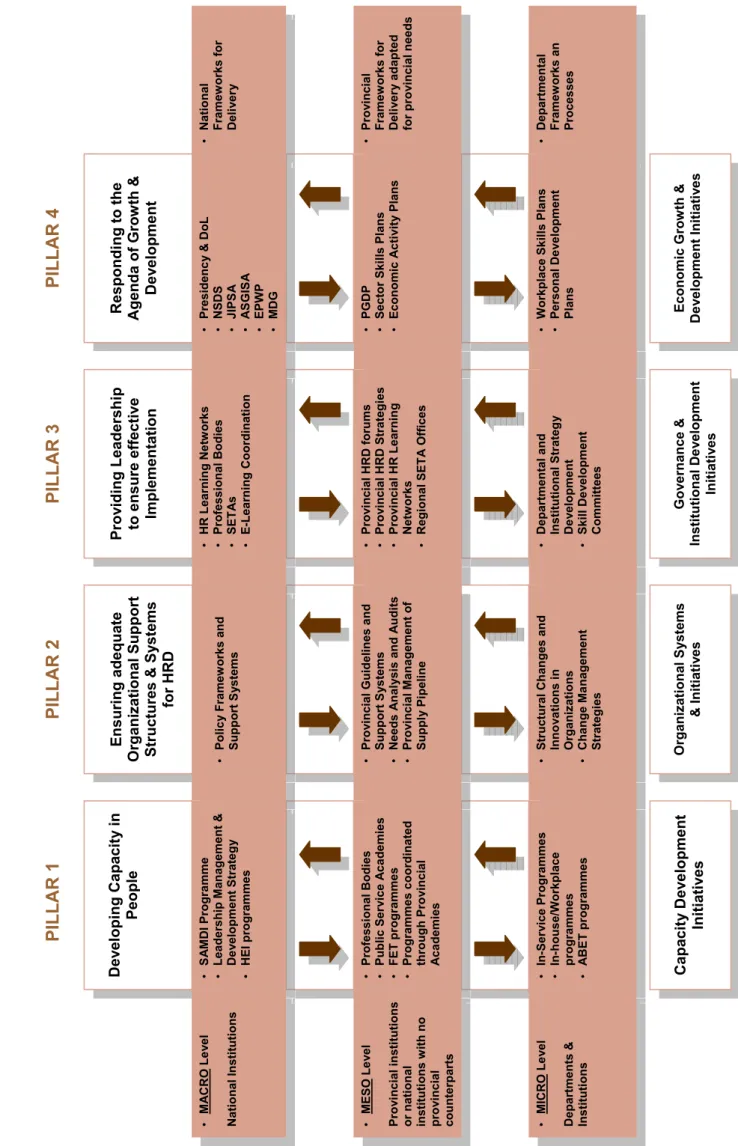
The HRD Strategic Framework Vision 2015 , is presented here as a blue print for action and rests on four distinct pillars relating to the following initiatives :
• Capacity Development
• Organisational Support Systems
• Governance and Institutional Development
• Economic and Growth Development
It represents the human capital development value chain which focuses on the development of the individual, the organisation, the network of organisations both horizontally and vertically and lastly the economic environment locally, regionally, continentally and globally.
This revised HRD strategy is presented to you with the hope that every employee in the Public Service will renew their commitment to serve, restore their motivation to excel, and rekindle their will to consistently develop their own capacity to contribute to our national agenda of ensuring a continuous pipeline of competent and committed, contributing and productive employees.
The Hon. Geraldine Fraser-Moleketi
OVERVIEW
OVERVIEW
OVERVIEW
HRD Resource Pack: Part 3 Page 9
OVERVIEW
The National Human Resource Development Strategy under the auspices of the DoE -
addresses the supply of human capital to meet broader societal & economic needs of South
Africa.
The Strategic Framework for the Development of Human Resources in the Public Service is a sub-system of a larger human resource development framework which addresses the focused demand for human resource development in the Public Service.
Here, human resource development in the Public Service is defined as those efforts
undertaken by organizations to ensure that employees are well prepared to undertake their responsibilities and grow into viable careers, thereby adding value to the productivity and service of their organizations, the motivation and performance of their peers and the
attainment of the overall vision of the developmental state
.
In doing so, organizations seek to ensure that the right people are prepared at the right place, at the right time and for the right positions to which they can readily contribute.The Human Resource Development Strategic Framework for the Public Service represents yet another milestone in the continuing effort of Government to enhance the performance and service delivery of the Public Service through its people. This ongoing process to enhance the capacity of people in the Public Service is set against the significant needs that exist in most of our
communities for basic services which will enable them to live a better life for all. In light of the existing backlogs in every dimension of public responsibility, and because of the persistence of social challenges such as poverty, crime and unemployment, among others, enhanced service delivery has become ever more important on the public policy agenda.
The realisation that enhanced service delivery in the Public Service depends largely on the
capacity and performance of people is not new. It was on this basis that the White Paper on Public Service Training and Education (WPPSTE, 1998) recommended the development of a coherent and coordinated Human Resource Development Strategy for the Public Service, and thereby established the foundation of a new and more vigorous approach to developing the capacity of people to perform. The first HRD Strategy for the Public Service was prepared and launched in April 2002 to cover the period 2002-2006. Its intent was to initiate and support a more holistic approach to HRD, and to establish the foundation for a more responsive and cohesive approach to capacity development in the Public Sector. Since the year 2006 marked the end of this initial effort, it was necessary to initiate yet another phase of strategic interventions in order to enhance HRD in the Public Service. A thorough initiative to revise the existing HRD Strategy was therefore undertaken.
As a result, the process which resulted in the current Strategic Framework for HRD in the Public Service was initiated in November 2006. The process started with a review of the previous HRD Strategy for the Public Service (2002-2006), and, based upon its findings, a new Strategic Framework was formulated to continue the evolving process of building and transforming the Public Service through developing the capacity of its people to perform. This overview seeks to summarise the findings of the research review process, outline the core elements of the Strategic Framework and highlight the plans that are being established to promote successful
WHAT PROGRESS HAS BEEN MADE?
Overall, there is a sense that HRD in the Public Service has moved significantly forward. Practitioners in the field are generally more capable; HRD planning and management are more needs-based and outcomes-oriented, but not sufficiently so; the policy framework is more thorough and facilitative of transformation, and, among others, there is a wider range of training options and more access to training.
The extent to which education and training leads to improved performance and enhanced service delivery is still subject to question. In essence, there is a general view that, in spite of progress in the field, capacity development in the Public Service has only just begun to make in-roads on performance and service delivery. The limited progress observed has resulted from some of the traditional challenges in HRD which still persist. These challenges are reviewed below in terms of the typical areas in which these challenges have traditionally arisen. The review presented here is brief since more details are available in Part 2 of the Resource Pack.
Policy Frameworks
On the whole, the policy framework for HRD in the Public Service is well advanced. There is guidance on the general operational issues which affect performance. However, gaps still exist at a more practical and institutional level. There is lack of uniformity in strategies and plans; training expenditures are not properly monitored; and there is little follow through to link training and performance, for instance. In this sense further policy refinement is needed at the level of institutional operations and performance. But even more critical in this context, is the general feeling that policies and strategies are well prepared but are rarely implemented. There is a sense that our policy focus and sophistication is not properly honoured in terms of service delivery and performance.
Organizational Structures
Organizational structures for HRD differ widely. Most HRD units are still placed low in the organizational hierarchy, and are not given priority in the strategic conversations of many departments. HRD units are still generally under-staffed; HRD operations and finance are still generally fragmented; and, the framework of responsibilities in HRD is still diverse, sometimes unclear, and generally incoherent.
There are, for instance, still gaps between HRD, HRM and PMDS; and the range of responsibilities undertaken by HRD units differs widely across departments nationally.
Quality of Training
The quality of training, overall, has improved because of SAQA unit standards, the initiatives of SAMDI, and the emergence of partnership arrangements with service providers. More
learnerships, internships and bursaries are available, and there is an increased use of mentoring and coaching as a vehicle for workplace and practical learning. But training standards vary. There are still issues in terms of the workplace relevance of training content and the unavailability of a diverse base of qualified trainers. Increasingly, competency frameworks are being used as a
basis for planning training and as a source of input for assessing the competencies of employees.
But even here, these competency frameworks are not yet articulated into clear performance standards, requirements and contracts.
HRD Resource Pack: Part 3 Page 11
Planning and Management
Generally, HRD is more effectively planned and managed. Planning has improved because of the standards, requirements and legal expectations of Workplace Skills Plans (WSPs) and because of the increased scrutiny of the WSPs by the respective SETAs. But the overall accountability requirements of Government have also resulted in progress in this regard. More use is made of skills audits and needs assessments as a basis for planning, and more attention is given to the strategic requirements of the organization in determining the structure and content of HRD interventions. This more objective and rigorous approach, however, is not generally practiced. Training is still not linked to PDPs, and learnerships, though more available, are not always well managed. Again, the issue is not policies and strategies, but the extent to which these are successfully implemented.
Funding and Resources
With the SDA, more funds are generally available for training. But, the full allocation of funding is sometimes not used because of procurement hurdles, among other challenges. Many believe that funds could be more effectively and more strategically utilized for training purposes.
In some jurisdictions, the need is so great, that funding is still not sufficient even with the significant increases in the level of resourcing. In other organizational entities, there are complaints that skills development funds are sometimes utilized for non-training activities.
Status and Priority
The status of HRD and the priority given to HRD initiatives are still generally low. Many managers do not seem to take their HRD responsibilities seriously, and many senior managers are perceived
to be unsupportive of HRD initiatives. Although there is generally an increased sense by all
concerned that HRD is critical to organizational performance, that sentiment and perception are sometimes not reflected in practice and in the level of consideration afforded to the HRD
components of the organization.
Accessibility
Training is generally more accessible to all levels in the organization, although there are a few exceptions. Training is still not as accessible in the rural areas because of the increased cost of delivery, the lack of training providers, and, in some cases, the unavailability of facilities. In many cases, the right people do not attend the training programmes offered. Here, the issue is the extent to which training resources are managed in a manner to meet transformational priorities. Since meeting these critical organizational priorities may pose more challenges in delivery, the course of least resistance is sometimes taken, and training is, as a result, not responsive to the needs and circumstances of the organization.
Governance
Although the appropriate structures are in place, national governance arrangements to drive the HRD strategic agenda have been lacking. While some of this is due to lack of staff in organizations with oversight responsibilities, a larger part of the issue is the lack of well defined and properly communicated governance arrangements.
While the strategic objectives and delivery requirements have been set, sufficient resources have not been made available to drive the HRD agenda through effective support, properly planned monitoring and evaluation and the establishment of clear accountability lines and structures. Governance has not been sufficiently articulated inter-organizationally so that responsibilities are
properly differentiated and undertaken at all levels of government. In this regard, responsibilities have not filtered through the respective national bodies and organizations to the respective points of action provincially, institutionally and locally.
Interpretation of the HRD Function
The meaning and interpretation of HRD differs among HRD professionals and among managers in their respective departments. While some see HRD in a broader and holistic sense as an
investment in human capital to meet the organization’s strategic agenda, others see HRD as merely training that is delinked from its effect on performance and productivity. Unfortunately, the perceptions of HRD are reflected in the manner in which it is organized, orchestrated and
prioritized in public organizations.
One can assert therefore, that while the field of HRD in the Public Service has progressed, and while much benefit has accrued to public organizations through HRD, there is still much room for improvement. Provinces and departments have progressed at different rates depending on the level to which capacity was inherited. This HRD strategy must therefore take account of these inherent differences, and it must respond in a manner that does not further disadvantage those that are lagging behind. The greatest room for improvement is in ensuring continuity between policy provision and strategic prioritization, and in promoting successful implementation and the attainment of tangible outcomes in terms of enhanced performance and service delivery.
CORE ELEMENTS OF THE PROPOSED NEW STRATEGIC FRAMEWORK
The Strategic Framework for HRD in the Public Service stands on four pillars of strategic interventions. Based on the research review, each of these pillars represents a critical set of strategic initiatives which will further strengthen Human Resource Development in the Public Service. Each strategic pillar, and the initiatives they embody, are highlighted and discussed briefly below. The strategic framework also promotes 10 principles of action. These too are highlighted in this section.PILLAR 1: The Capacity Development Initiatives
The capacity development initiatives of the strategy focus on “developing human capital for high
performance and service delivery”. Capacity development is at the centre of HRD as a profession, and, as a result, it is one of the primary areas of focus here. Interventions related to capacity development sought to identify strategic interventions which could add the highest value to the public infrastructure for developing the capacity of people. Adding the highest value here means the interventions must resolve the persistent issues which compromise the process of capacity development. But in addition, interventions were also designed to set the foundation for a new era of capacity development where learning environments are created where people can assume the responsibility for developing themselves. Embodied in the capacity development pillar are eight areas of strategic interventions. These are as follows:
1. Strengthening systems for workplace learning 2. Integrated ABET framework
3. Leadership development management strategies
4. A more strategic role for professional bodies – Norms, Standards & Capacity Development 5. Promoting learnerships, internships & traineeships
HRD Resource Pack: Part 3 Page 13 7. E-learning for the Public Service
8. Fostering HEI and FETC Partnerships
PILLAR 2: The Organizational Support Initiatives
The organizational support pillar of the Strategic Framework is presented in recognition of the fact that the services of HRD in the Public Service depend on the extent to which pertinent
organizational support structures and systems are properly integrated so that they may
complement and support the activities of HRD. The research review process has highlighted that many of the more persistent issues in HRD in the Public Service relate to the inadequacy of organizational support. Among the many possible interventions which could have been selected, therefore, this pillar seeks to embody those interventions which could have the highest impact in transforming the environment in which HRD is undertaken. As a result, the selected strategic interventions are those which could provide a platform to further strengthen and support a transformed HRD function.
The organizational support pillar includes 8 areas of strategic intervention as follows:
1. Human resource planning – supply and demand management 2. Knowledge and information management
3. Performance management development systems
4. Promoting appropriate organizational structures for HRD
5. Ensuring the adequacy of physical and human resources and facilities 6. Managing employee health & wellness
7. Career planning & talent management 8. Mobilization of management support
PILLAR 3: The Governance and Institutional Development Initiatives
Successful implementation of the Strategic Framework is not possible without good governance. Governance here means that the HRD Strategy Framework must be properly driven at all levels so that there is a coordinated and concerted effort in understanding shared responsibilities. Good governance here must be facilitative in its efforts to create an environment that promotes
professionalism and fosters implementation success. But good governance must also promote a level of accountability which will ensure that each party meets its obligations within the strategic framework. This pillar therefore embodies strategic initiatives which add value in terms of oversight, strategic support and the promotion of professionalism in the field. The pillar on governance initiatives embodies 7 areas of strategic intervention as follows:
1. Strengthening and aligning governance roles in HRD (SETAs, DPSA, SAMDI/Public Service Academy)
2. Managing HRD policy and planning frameworks and guidelines 3. Fostering effective monitoring, evaluation and impact analysis 4. Managing the effectiveness of communication
5. Promoting HR learning networks
6. Promoting values, ethics and a professional code of practice 7. Utilization of the strategic role of SETAs
PILLAR 4: Initiatives to Support Government’s Economic Growth & Development
Initiatives
The end result of Government’s efforts is seen in the extent to which its services contribute to the lives and welfare of people. In this light, all public services are focussed on a development agenda that seeks to promote the general welfare. With this more comprehensive view, the HRD Strategic Framework cannot ignore or overlook its responsibility to enable the Public Service to more
adequately contribute to an agenda of development which includes economic growth and
development initiatives. This pillar therefore seeks to craft selected strategic interventions which will strengthen and streamline support for the developmental priorities of Government. This pillar embodies the following 6 strategic initiatives:
1. Promoting ASGISA, JIPSA, EPWP, PGDP, IDPs
2. Integrating NEPAD, AU, regional and global programmes for capacity development 3. Awareness promotion of growth and development initiatives
4. Developing capacity to promote success in implementation
5. Promoting integrated and inter-sectoral approaches to developmental priorities 6. Responsiveness to the millennium development goals
PRINCIPLES OF ACTION
In promoting and implementing the Strategic Framework practitioners will seek to abide by 10 principles of action. These principles are value-based understandings and considerations which are intended to promote unity of focus in guiding our behaviour, streamlining our interactions and informing our strategic choices. The principles are as follows:
1. Ensuring a focus on employees at all occupational levels, and in all occupational classes. 2. Responding to the needs of designated groups.
3. Promoting cohesiveness and integration in structures, systems and practices.
4. Ensuring flexibility and adaptability so that none is constrained by the rigidity of strategic approaches.
5. Recognizing and responding to contextual differences so that each entity develops at a comfortable and sustainable pace.
6. Maintaining a performance focus so that capacity development contributes to performance and service delivery.
7. Responding to sectoral differences so that each sector pursues a course which takes advantage of its inherent strengths.
8. Building learning communities and organizations so that learning becomes a routine event. 9. Promoting the agenda of development so that Public Service efforts respond to the
development challenges of the nation in a coordinated manner.
10. Promoting continuity of action through levels of Government so that the impetus of interventions in HRD is not lost and is duly reflected in the lives of people.
PROMOTING SUCCESSFUL IMPLEMENTATION
The Strategic Framework is without value if it is not properly implemented. In this light, a concerted effort was made to promote and support the successful implementation of the HRD Strategic Framework for the Public Service There are three main features of the
HRD Resource Pack: Part 3 Page 15 an Annual Conference on Progress in Implementation which will be the basis for an Annual Performance Report; and a Quarterly Monitoring System to provide departments with the opportunity to report on progress in implementation. The approach taken in promoting the success of implementation is one that seeks to ensure that there is a balanced application of support from oversight organizations with the promotion of accountability through consistent monitoring and evaluation. In the end, successful implementation is the reward for good governance at all levels. Good governance creates an environment where success can happen.
CONCLUSION
The HRD Strategic Framework for the Public Service as outlined herein is presented as the basis upon which all HRD practitioners at all levels and in various roles can come together with a common vision and a common strategic thrust. It is presented here as a platform for
cohesive and concerted effort, and as a call to action for all those whose role may contribute to the transformation of the Public Service through developing capacity in people.
Ultimately, the framework must make its mark, not in meeting technical targets and building more elaborate delivery systems, but in attaining enhanced performance and service delivery which ensures that people are well served, and that the welfare of individuals and their communities are properly secured.
TABLE OF CONTENTS
TABLE OF CONTENTS
TABLE OF CONTENTS
HRD Resource Pack: Part 3 Page 19
TABLE OF CONTENTS
FOREWORD BY THE MINISTER…………... 5
OVERVIEW……….... 9
LIST OF FIGURES………..... 21
LIST OF TABLES………..... 21
GLOSSARY OF TERMS………..... 22
1. BACKGROUND AND INTRODUCTION... 25
2. PURPOSE AND OBJECTIVES………..... 29
2.1 CORE OBJECTIVES………... 29
3. THE CONTEXT OF HUMAN RESOURCE DEVELOPMENT WITHIN THE PUBLIC SERVICE... 33
3.1 THE POLICY CONTEXT FOR HRD 34 3.2 THE SKILLS CHALLENGE IN THE PUBLIC SERVICE...34
3.2.1 The Effects of History... 36
3.2.2 The Changing Nature of Government... 36
3.2.3 The Supply Pipeline... 36
3.2.4 Developing and Managing People... 37
3.2.5 Impact of HIV and AIDS... 37
3.2.6 Conclusion... 37
3.3 WHY AN HRD STRATEGY FOR THE PUBLIC SERVICE?...38
3.4 WHAT PROGRESS HAS BEEN MADE?...38
3.4.1 Policy Frameworks... 39
3.4.2 Organizational Structures... 39
3.4.3 Quality of Training... 40
3.4.4 Planning and Management... 40
3.4.5 Funding and Resources... 40
3.4.6 Status and Priority... 40
3.4.7 Accessibility... 41
3.4.8 Governance... 41
3.4.9 Interpretation of the HRD Function... 41
4. DEFINING STRATEGIC THRUSTS AND THE STRATEGIC AGENDA... 45
4.1. Standards and Quality... 46
4.2. Strong Workplace Relevant Content... 46
4.3. Opportunities for People to Develop Themselves... 46
4.4. Governance for Promoting Success... 47
4.5. The Sustainability of Supply... 47
4.6. Retention of the Skills Base... 47
4.7. Overcoming Fragmentation... 48
4.8. Strategic Location of HRD... 48
4.9. An Investment Approach to Training... 48
4.10. Partnership Promotion... 49
4.11. A Developmental Perspective... 49
4.12. Continuity and Consistency in Planning... 49
5. A CONCEPTUAL FRAMEWORK FOR HRD... 53
5.1 The Vision for HRD... 54
5.2 Critical Initiatives or Pillars of Action... 54
5.2.1 Capacity Development Initiatives ... 54
5.2.2 Organizational Support Initiatives ... 55
5.2.3 Governance & Institutional Development Initiatives ... 55
5.2.4 Economic Growth and Development Initiatives ... 55
5.3 Core Principles... 55
6. VISION AS A VEHICLE TO MOBILIZE SUPPORT AND FOCUS EFFORTS... 65
7. PILLAR ONE: THE CAPACITY DEVELOPMENT INITIATIVES OF THE STRATEGY... 69
9. PILLAR THREE: GOVERNANCE & INSTITUTIONAL DEVELOPMENT INITIATIVES ...81
10. PILLAR FOUR: GOVERNMENT’S ECONOMIC GROWTH & DEVELOPMENT INITIATIVES...89
11. CORE PRINCIPLES WHICH GUIDE IMPLEMENTATION OF THE STRATEGY... 97
11.1. Focus on all Levels of Employment... 97
11.2. Respond to the Needs of Designated Groups... 99
11.3. Focus on Cohesiveness... 99
11.4. Recognize Contextual Differences... 100
11.5 Flexibility and Adaptability... 101
11.6. Maintain a Performance Focus... 101
11.7. Respond to Sectoral Differences... 102
11.8. Build Learning Networks, Communities and Organizations... 103
11.9. Promote the Agenda of Development... 103
11.10. Continuity through Spheres of Government... 104
12. OUTLINE OF THE HRD STRATEGY... 107
12.1 OBJECTIVES, SUCCESS INDICATORS AND OPERATIONAL ACTIVITIES... 107
13. PROMOTING SUCCESSFUL IMPLEMENTATION... 143
13.1 A Comprehensive Communication Strategy... 144
13.2 A Structure for Facilitating Implementation... 144
13.3 Monitoring Implementation Success... 144
13.4 The HRD Strategy Implementation Guide... 145
13.5 An Annual Report on Progress... 145
14. CONCLUSION ………... 149
HRD Resource Pack: Part 3 Page 21
LIST OF FIGURES
Page
Figure 1 Legal and Policy Framework Governing HRD in the Public Service ……….. 35
Figure 2 Conceptual Framework for the HRDS for the Public Service ……….. 56
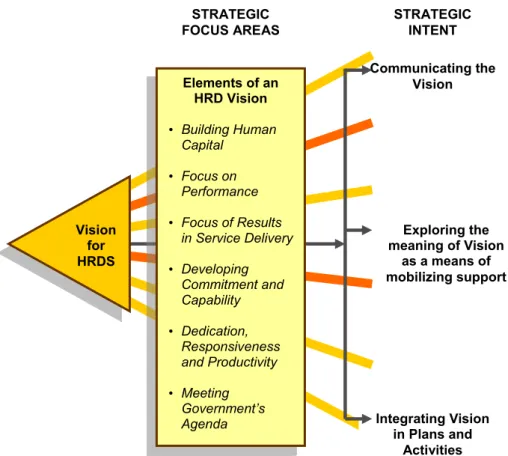
Figure 3 Crafting a Vision for HRDS ……… 65
Figure 4 Strategic Focus on Capacity Development Initiatives ……… 70
Figure 5 Strategic Focus on Organizational Support Initiatives ………. 76
Figure 6 Strategic Focus on Governance & Institutional Development Initiatives ……… 83
Figure 7 Interventions to Integrate Government’s Economic Growth and Development Initiatives 91 Figure 8 Strategic Focus on a Set of Core Principles for Implementation ……….. 98
Figure 9 Conceptual Framework for Facilitating Implementation of the HRD Strategy – Governance ……….. 146
LIST OF TABLES
Table 1 Objectives for the HRD Strategy emerging out of Conceptual Framework for the HRD Strategy 57
Table 2 Areas of Focus for Capacity Development : Summary of Rationale & Outcomes 71
Table 3 Organizational Support Initiatives : Summary of Rationale and Intended Outcomes 77
Table 4 Good Governance and Guidance to Promote Implementation : Summary of Rationale
and Intended Outcomes
84
Table 5
Integrating Government’s Developmental Priorities in Human Resource Development (ASGISA, JIPSA, EPWP, PGDP, IDPs) : Summary of Rationale and Intended
Outcomes
92
GLOSSARY OF TERMS
ABET Adult Basic Education & Training
ASGISA Accelerated and Shared Growth Initiative for South Africa
AU African Union
CDW Community Development Workers
DPSA Department of Public Service & Administration
EAP Employee Assistance Programme
EPWP Expanded Public Works Programme
FET Further Education and Training
HEI Higher Education Institute
HRD Human Resource Development
HRDS Human Resource Development Strategy
HRM Human Resource Management
HRS & P Human Resource Strategy & Planning
JIPSA Joint Initiative on Priority Skills Acquisition
MDG Millennium Development Goals
MOU Memorandum of Understanding
NLRD National Learners' Records Database
PERT Performance Evaluation and Review Technique
PDP Personal Development Plans
PMDS Performance Management & Development System
PSA Public Service Academy
RPL Recognition of Prior learning
SAMDI/PSA South African Management Development Institute / Public Service Academy
SAQA South African Qualifications Authority
SDA Skills Development Act
SADC Southern African Development Community
SETA Sector Education & Training Authority
SMS Senior Management Service
WPPSTE White Paper on Public Service Training and Education
WSP Workplace Skills Plan
BACKGROUND
BACKGROUND
BACKGROUND
HRD Resource Pack: Part 3 Page 25
HRDS was
born out of
the desire to
transform the
Public Service
White Paper
of Education
and Training
in the Public
Service
provided a
framework for
education and
training for
public
servants
In light of
sustained
challenges
and new
policy
initiatives
HRDS 2002
had to be
reviewed
.
1. BACKGROUND AND INTRODUCTION
South Africa is currently in the process of reviewing the National Human
Resource Development Strategy. The National Strategy aims to address the
supply of human capital to meet the broader needs of the South African
economy and democratic order.
Within the Public Sector is the Public Service, which is the country’s largest employer (1.1 million employees). Guided and led by the National Human Resource Development Strategy, a Human Resource Development Strategy for the Public Service (2002-2006) was developed and implemented.
The dpsa has recently undertaken a review of the Human Resource
Development Strategy for the Public Service (2002-2006) and has drafted a Framework for the Development of Human Resources in the Public Service: Vision 2015. The Framework addresses the urgent need for a more structured approach to human resource development (HRD) in the Public Service.
The initial HRD strategy of the Public Service (HRDS 2002-2006) was conceived as an instrument that would lay the foundation for building a competent, efficient and effective Public Service. The HRDS 2002-2006 was born out of a desire to transform the Public Service of our inheritance into the Public Service envisioned in the Constitution; to create a Public Service that will consolidate many systems, cultures, views and visions into one instrument for the effective delivery of services to our people. The HRDS 2002-2006 was conceived with the knowledge that it is people who will make the difference; not systems nor technology alone, and not structures, facilities or policies. Indeed, people were seen as the common denominator of success for the Public Service. But the collective capacity of human resources in the Public Service was no match for the demanding agenda of development that
Government had set out to accomplish. Significant backlogs existed in every dimension of public responsibility. The developmental needs of most
communities became more and more urgent. Set against a backdrop of poverty, unemployment, crime, under-education and a deteriorating social welfare, the Public Service had to gear itself to set up delivery through its people.
It is on this basis that Cabinet, through the White Paper on Public Service Training and Education (WPPSTE, 1998), recommended the development of a coherent and coordinated Human Resource Development Strategy for the Public Service. The WPPSTE, 1998, provided the basic framework for training and education for public servants, and sought to ensure that public servants contribute positively to the goals and objectives of the Public Service. The first HRD Strategy for the Public Service was prepared and launched in April 2002.
It was launched with the theme “Skills Development for Transformation and
Service Delivery 2002-2006”. Its intent was to initiate and support a more holistic approach to HRD, and to establish the foundation for a more responsive and cohesive approach for capacity development in the Public
Sector.
The year 2006 marks the end of the period of implementation for this initial strategy. In light of sustained challenges in both service delivery and human resource development, and because of the new initiatives to which Public Service capacity development must be aligned, it was necessary to review the current HRD Strategy for the Public Service 2002-2006 and develop the basis for a revised edition of the strategy. A process was therefore established to craft a strategy that was responsive to current circumstances, committed to the original intent of transformation in the Public Service and sufficiently innovative to establish the basis for a new future in HRD. In this regard, a series of stakeholder engagements were conducted as the prime vehicle for this review, and as a critical instrument for soliciting input for revising the HRD strategy. On the basis of these stakeholder engagements, a research report was prepared to inform the design and development of the revised edition of the HRD Strategy. This research report presented as Part 2 of the Resource Pack also served as a status check on the evolution of HRD and as an overall documentation on performance in implementing the strategy.
The revised edition of the strategy seeks to take us forward along the same path and with the same desire to transform the Public Service through its people. The revised edition of the strategy also seeks to conceptualize an approach to HRD in the Public Service that would add value to performance in the delivery of public services and create structures and processes which will ensure that its strategic provisions are honoured.
PURPOSE & OBJECTIVES
PURPOSE & OBJECTIVES
PURPOSE & OBJECTIVES
Page 27 Page 27
HRD Resource Pack: Part 3 Page 29
… to build an
efficient and
effective
Public Service
through
policies,
structures
and
operational
processes for
developing
capable and
high
performing
people
…to enable an
adequate
level of
human capital
performance
in Public
Sector
organizations
2. PURPOSE AND OBJECTIVES
The purpose of this document is to present the strategic framework and content of a strategy for HRD in the Public Service. The intent of the strategy is to build an efficient and effective Public Service through the establishment of the policies, structures and operational processes for developing capable and high performing employees. The purpose of this revised edition of the HRD Strategy is to consolidate the gains of the past and respond to the
circumstances which must exist in creating the base of skills and competence in people for realising an effective, efficient and a performance-driven Public Service.
2.1 CORE OBJECTIVES
In presenting the strategic framework, this document seeks to accomplish the following core objectives.
1. To set the HRD strategic framework in its social, economic and legal context.
2. To present and explain the content, structure and principles of the HRD strategic framework.
3. To present a framework and process for the successful implementation of the strategic provisions and requirements of the document.
In meeting these core objectives, the HRD strategic framework seeks to:
1. Promote and support the National Skills Development Agenda.
2. Ensure a continuous supply of specialist skills and promote their absorption into the Public Service.
3. Address the National Skills challenges at all Public Service delivery points within the Developmental State.
4. Ensure that there is a steady flow of appropriate and productive Public Servants in all spheres of Government.
5. Enable an adequate level of human capital performance in Public Service organizations that ensures effective service delivery in meeting
CONTEXT OF
HR DEVEL
OPMENT
CONTEXT OF
HR DEVEL
OPMENT
Page 31CONTEXT OF
HR DEVEL
OPMENT
CONTEXT OF
HR DEVEL
HRD Resource Pack: Part 3 Page 33 “Public Service must discharge its responsibilities to the people of South Africa as a critical player in the process of growth, reconstruction and development” Maintaining the right balance of skills in the Public Service is essential to meet Public Service demands
3. THE CONTEXT OF HUMAN RESOURCE
DEVELOPMENT WITHIN THE PUBLIC SERVICE
There have been ongoing efforts over the last decade to build the Public Service that is envisioned in the Constitution. Over that period, initiatives havebeen undertaken to “ensure that the Public Service discharges its
responsibilities to the people of South Africa as a critical player in the process of growth, reconstruction and development”.
The effort to build an effective Public Service has focused on managerial and technological modernization, the development of effective policy frameworks and systems and the enhancement of the culture and administrative practice of the Public Service. These have always been the mainstay of Public Service transformation. However, the most critical feature of these efforts has always been “raising the skills levels within the Public Service”. Here, the “focus on human resources, their development and management” has been consistently given high priority on the policy agenda; and this, not without reason. People in the Public Service are essential to enhanced service delivery, and the service delivery demands have always been high. These demands have been
high because the agenda to ensure “a better life for all” is extensive, complex
and challenging. Backlogs in service delivery still exist; poverty and
unemployment continue to affect the lives and welfare of a large portion of the population; HIV and AIDS continue to affect families and communities,
undermine organizational performance and reduce the productive potential of the work force. And, while the economy grows to create opportunities for all, this growth is increasingly being constrained by a low and declining skills base. Maintaining the right balance of skills in the Public Service is essential for meeting the service delivery demands of the developmental State.
Building the appropriate infrastructure for maintaining an appropriate supply of capable human capital in and for the Public Service has been a challenge from the outset. This was partly due to the amalgamated nature of the new Public Service, the pre-eminence of old traditions of training, the scope of the
transformation agenda, and the dearth of the appropriate range of skills which were needed to populate a rapidly expanding sector. But in addition to this, it was due to the large gap between what existed and what was desired for HRD in the Public Service. The policies, systems, infrastructure and arrangements for maintaining a steady supply of appropriate skills to the Public Service was not up to the existing and expanding requirements to ensure effective public service performance. A new agenda for HRD had to be established.
Accordingly, the agenda to strengthen the Public Service through a more focused and concerted approach to HRD became formalized with the publication in July 1997 of the White Paper on Public Service Training and Education (WPPSTE).
White Paper sought to address the uncoordinated and fragmented approach to training HRD in the public Service is founded upon the strategic framework for transforming the Public Service; the economic and social policy frameworks which drive Government’s agenda; and the basic development and service delivery imperatives which constitute the basis for a coordinated Public Service response
The White Paper sought to address the uncoordinated and fragmented approach to training and education across the Public Service, and it sought to change the field to a more demand-led, needs-based, outcomes-based and competency-based approach to training.
The Paper essentially initiated the impetus to modernize HRD in the Public Service into a more equitable investment-oriented and performance-focused endeavour. The Paper made several recommendations in this regard. One of its recommendations was the development of an HRD Strategy for the Public Service which would embody this new approach to Public Service education and training. The strategy was developed in 2002 and was set for
implementation between 2002 and 2006. But the strategy came into being within a policy and operational environment that determined its focus, its content and its prospects of success with this initial strategy. A movement began in the larger Public Service which sought to redefine the meaning, structure and requirements for HRD. This movement is best depicted in what has emerged as the legal and policy framework for the field.
3.1 THE POLICY CONTEXT FOR HRD
Figure 1 presents an outline of the legal and policy framework for HRD. This figure seeks to illustrate that the legal and policy basis for HRD in the Public Service is founded on the vision and principles of the Constitution and driven by the developmental imperatives of the State. There are many components of this overall framework, each component seeking to honour constitutional principles and create more precise and focused operational guidelines for addressing development imperatives. Each critical component is specified in
Figure 1 and the sources of policy directives in each are noted. The key components are: the strategic framework for HRD nationally; the conceptual framework for transforming the Public Service; the economic and social policy frameworks which drive Government’s agenda; and the basic development and service delivery imperatives which constitute the basis for a coordinated Public Service response. This policy field defines a broad arena of action, in general; but more so, it defines the essential reference points for effective practice in HRD for the Public Service. Understanding the purpose and meaning of HRD in the context of the Public Service, therefore, depends on the degree to which this broader Public Service agenda is understood. Human capital formation in the Public Service is essentially the effort to build the capacity of public
organizations to mount a coordinated response to this comprehensive agenda of action.
3.2 THE SKILLS CHALLENGE IN THE PUBLIC SECTOR
The Public Service has approximately 1,056,244 employees representing about 9% of total employment in South Africa. As the major employer in most jurisdictions, and as a sector with significant economic impact, the Public Service must compete for the nation’s skills if it must be viable. This
constitutes a major challenge for public organizations as they seek to maintain an adequate skills base, especially in occupations and areas where skills are scarce.
HRD Resource Pack: Part 3 Page 35
Figure 1
THE LEGAL AND POLICY FRAMEWORK GOVERNING HRD IN THE PUBLIC SECTOR
SOUTH AFRICAN CONSTITUTIONAL PRINCIPLES & GUIDELINES FOR THE PUBLIC SERVICE
LEGAL FRAMEWORK FOR HRD IN THE PUBLIC SERVICE
Skills Development Act: Relevant SETAs and PSETA Skills Development Levies Act SAQA Act Public Service Act and Regulations Employment Equity Act Labour Relations Act
STRATEGIC FRAMEWORK FOR HRD IN THE PUBLIC SECTOR
White Paper on Public Service Education and Training White Paper on Human Resource Management in the Public Service National Skills Development Strategy 2 Human Resource Development Strategy for South Africa Human Resource Development Strategy for the
Public Service
Millennium Development
Goals
CONCEPTUAL BASE FOR TRANSFORMING THE PUBLIC SECTOR
Batho Pele White Paper White Paper on Transforming the
Public Service employment policy for the Public White Paper on a new
Service
ECONOMIC AND SOCIAL POLICY FRAMEWORK AND PROGRAMMES
Presidential Pronouncements and
Budget Speech Integrated Development Plans (IDPs)
Medium Term Expenditure Framework (MTEF) National Spatial Development Strategies
Programmes: ASGISA, JIPSA, EPWP DEVELOPMENT IMPERATIVES
Drivers of Special Programmes and Service Delivery Initiatives
• Poverty Alleviation
• Unemployment
• Backlogs in Service Delivery – Housing, Water, Schools, Electricity
• Reducing Crime and Violence
Historical
under-
education
affects the
quality of the
workforce
Government
must compete
with the
market for
scarce skills
Lack of
targeted
training and
development
programmes
There are five dimensions of the skills challenge in the Public Service:
• The effect of history;
• The changing nature of Government;
• The manner in which the supply pipeline for skills is managed;
• The manner in which the organization develops and manages people; and • The impact of HIV and AIDS.
Each of these has its impact on skills acquisition, development and
maintenance in the Public Service. While these areas cannot be accorded the level of attention they deserve in this document, each area is addressed and briefly discussed below.
3.2.1 The Effects of History
The historical legacy of under-educating a large portion of the population has had its effects both in terms of the number of qualified people, the quality of their qualifications and their ability to perform in a manner which meets the demands and expectations of the Public Service. But in addition to this, Government has had to expand its operations to create service delivery points in previously neglected areas. This has increased the need for qualified people in most occupational fields. Backlogs in the availability of qualified people, juxtaposed with the need to rapidly expand the geographic reach of Public Services are the two most critical challenges facing public organizations in meeting service delivery demands. While the expansion of education opportunities has had a positive effect on the quality and performance of the workplace over the years, the availability of skills in the right areas and in sufficient numbers continues to be a problem.
3.2.2 The Changing Nature of Government
The nature of Government has changed. With the increased thoroughness of policy frameworks, with improved accountability and governance requirements, and with organizational structures which have been redesigned and expanded for enhanced service delivery, there is now a higher degree of specialization in Government which requires a greater range of skills to meet the agenda of service delivery. The changing nature of Government in response to
development demands and imperatives creates a dynamic environment for the acquisition, use and retention of labour.
3.2.3 The Supply Pipeline
Government generally recruits in a highly competitive market. With increased globalization and with the expansion of the economy locally, there are diverse and expanding job opportunities outside of the Public Service. In many fields, Government is unable to compete with the conditions of service and the higher remuneration packages offered elsewhere. In addition, in most fields,
HRD Resource Pack: Part 3 Page 37
…the quality
of
management
and
leadership
sometimes
does not
foster
productivity
HIV and AIDS
has affected
the quantity
and
productivity
of the
workforce
The HRD
strategy must
ensure a
steady flow of
contributing
and
productive
Public
Servants.
arrangements or agreements to ensure consistency and continuity in the supply of talent. In fact, the supply of talent is generally not well managed. This is made even worse since increased labour mobility tends to lure people away from Government, and since the experience and strategic positioning acquired by Government employees place them in high demand in the Private Sector.
3.2.4 Developing and Managing People
The manner in which people are developed and managed does not ensure retention and sustainability of skills. Several factors are in play here. There is a lack of targeted training and development programmes; there are no linkages between performance management, personal development plans and the content and choice of training programmes; and finally, there is a general lack of and a general inability to apply proper methods for human resource planning and forecasting. Development of people is generally undertaken without regard to performance consequences, and the quality of management and leadership sometimes does not foster productivity.
In addition to these, RPL is not used to validate informal knowledge and competencies, and there is no centrally validated competency framework which can be used to monitor capacity development in various fields.
3.2.5 Impact of HIV and AIDS
The situation is exacerbated by the challenge of HIV and AIDS which affects the nature of the workforce through its consequences upon the infected and those who are affected. On the one hand, there is a higher attrition of talent through deaths; and, on the other, illness and the general increase in the number of leave days taken by staff has had an overall negative effect on the productivity of the workforce. It is generally perceived that HRD in the Public Service has not adequately responded to the effects of HIV and AIDS because of the fragmented nature in which HIV and AIDS is managed in most
departments of Government.
3.2.6 Conclusion
In the end, the skills challenge for the Public Service is in both the acquisition and the management of talent to ensure that productive ends can be achieved. The challenge is in maintaining a capable, stable and productive skills base in spite of organizational and policy changes, and in spite of the effect of market forces on the nature and level of attrition. An HRD strategy for the Public Service must therefore ensure that, in spite of these circumstances,
Government is able to perform, and public departments and institutions are able to ensure that services are delivered to meet core responsibilities and the imperatives of development.
… must
enable human
capital
performance
for effective
service
delivery …
HRD
progressed
along well
defined lines
of
development
The extent to
which
education and
training leads
to improved
performance
and enhanced
service
delivery is
still subject to
question
3.3 WHY AN HRD STRATEGY FOR THE PUBLIC SERVICE?
An HRD strategy for the Public Service is both a statement of strategicpriorities and an outline of a plan of action for responding to the National Skills challenges now faced at all Public Service delivery points. In light of the circumstances of the various departments of Government in respect to their human resource capacity to deliver, and in light of the market variables which affect the availability of skills to public organizations, the role of the HRD strategy is twofold:
1. To ensure that there is a steady flow of contributing and productive Public Servants in all spheres of Government.
2. To enable an adequate level of human capital performance in Public Service organizations so as to ensure effective service delivery in all spheres of Government.
The HRD strategy is therefore intended as a general guide that will enrich and enhance the capacity of the Public Service to acquire, develop and use their people in order to increase productivity and enhance the effectiveness of service delivery.
An HRD strategy is necessary to consolidate, streamline and give meaning to disparate and uncoordinated Human Resource Development undertakings in HRD; and it must serve the purpose, in the end, of enhancing performance and maximizing the delivery of service. The HRD Strategy is needed to signal the development priorities to which we must be collectively responsive.
3.4 WHAT PROGRESS HAS BEEN MADE?
A strategic framework for improving HRD in the Public Service is but the continuation of a movement which begun in 1997. This movement has always been undertaken along well defined dimensions of development in HRD in an effort to rationalise and organize the HRD initiatives of the Public Service. In addition, the efforts have attempted to overcome the challenges that were faced in transforming cultures and perceptions of training which were not appropriate to the needs and circumstances of a developmental State and a transforming Public Service. It is necessary, therefore, to determine the level of progress in HRD through an assessment of the current status of the field at the end of the first wave of transformation brought about by the initial edition of the HRD strategy for the Public Service, 2002-2006. Indeed, this reflection is necessary as a basis for crafting a revised strategy that would continue the movement forward. Below, therefore, a brief sketch is provided on the perceptions of stakeholders regarding what progress was made. This
assessment is derived from a comprehensive review that was conducted at the end of 2006, the end of the designated period of effect of the initial edition of the HRD Strategy for the Public Service.
HRD Resource Pack: Part 3 Page 39
…capacity development in the Public Service has only just begun to make in-roads on performance and service delivery … Organizational structures for HRD differ widely FINDINGS
Overall, there is a sense that HRD in the Public Sector has moved significantly forward. Practitioners in the field are generally more qualified and competent; HRD planning and management is more needs-based and outcomes-oriented, but not sufficiently so; the policy framework for HRD is more thorough and facilitative of transformation, and, among others, there is a wider range of training options and more access to training. The extent to which education and training leads to improved performance and enhanced service delivery is still subject to question. In essence, there is a general view that, in spite of the progress made in the field, capacity development in the Public Service has only just begun to make in-roads on performance and service delivery. Whatever limited progress has been observed results from some of the traditional challenges in HRD which still persist today. These challenges are reviewed below in terms of the typical areas in which these challenges have traditionally arisen. There are 9 areas in which HRD in the Public Service have always encountered challenges. These are as follows: the viability of policy frameworks; the appropriateness of organizational structures; the quality of courses and training provided; the adequacy and effectiveness of planning and management of HRD; the availability and sufficiency of financial resources; the status and priority given to HRD; the level of accessibility to training; the
adequacy of governance arrangements and the consistency in the overall interpretation and meaning of HRD. Each of these is addressed briefly below.
3.4.1 Policy Frameworks
On the whole, the policy framework for HRD in the Public Service is well advanced. There is guidance on the general operational issues which affect performance. However, gaps still exist at a more practical and institutional level. There is lack of uniformity in strategies and plans; training expenditures are not properly monitored; and there is little follow through to link training and performance, for instance. In this sense further policy refinement is needed at the level of institutional operations and performance. But even more critical in this context, is the general feeling that policies and strategies are well prepared but are rarely implemented. There is a sense that our policy focus and
sophistication is not properly honoured in terms of service delivery and performance.
3.4.2 Organizational Structures
Organizational structures for HRD differ widely. Most HRD units are still placed low in the organizational hierarchy, and are not given priority in the strategic conversations of many departments. HRD units are still generally under-staffed; HRD operations and finance are still generally fragmented; and, the framework of responsibilities in HRD is still diverse, sometimes unclear, and generally incoherent.
There are, for instance, still gaps between HRD, HRM and PMDS; and the range of responsibilities undertaken by HRD units differs widely across
Quality of
training has
improved but
standards
vary …
….workplace
relevant is
still an issue
Training more
accessible
but still not as
accessible in
rural regions
departments nationally.
3.4.3 Quality of Training
The quality of training, overall, has improved because of SAQA unit standards, the initiatives of SAMDI, and the emergence of partnership arrangements with service providers. More learnerships, internships and bursaries are available, and there is an increased use of mentoring and coaching as a vehicle for workplace and practical learning. But training standards vary. There are still issues in terms of the workplace relevance of training content and the
unavailability of a diverse base of qualified trainers. Increasingly, competency frameworks are being used as a basis for planning training and as a source of
input for assessing the competencies of employees. But even here, these
competency frameworks are not yet articulated into clear performance standards, requirements and contracts.
3.4.4 Planning and Management
Generally, HRD is more effectively planned and managed. Planning has improved because of the standards, requirements and legal expectations of Workplace Skills Plans (WSPs) and because of the increased scrutiny of the WSPs by the respective SETAs. But the overall accountability requirements of Government have also resulted in progress in this regard. More use is made of skills audits and needs assessments as a basis for planning, and more attention is given to the strategic requirements of the organization in determining the structure and content of HRD interventions. This more
objective and rigorous approach, however, is not generally practiced. Training is still not linked to PDPs, and learnerships, though more available, are not always well managed. Again, the issue is not policies and strategies, but the extent to which these are successfully implemented.
3.4.5 Funding and Resources
With the SDA, more funds are generally available for training. But, the full allocation of funding is sometimes not used because of procurement hurdles, among other challenges. Many believe that funds could be more effectively and more strategically utilized for training purposes. In some jurisdictions, the need is so great, that funding is still not sufficient even with the significant increases in the level of resourcing. In other organizational entities, there are complaints that skills development funds are sometimes utilized for non-training activities.
3.4.6 Status and Priority
The status of HRD and the priority given to HRD initiatives are still generally low. Many managers do not seem to take their HRD responsibilities seriously, and many senior managers are perceived to be unsupportive of HRD
initiatives. Although there is generally an increased sense by all concerned
that HRD is critical to organizational performance, that sentiment and perception are sometimes not reflected in practice and in the level of consideration afforded to the HRD components of the organization.
HRD Resource Pack: Part 3 Page 41
National
governance
arrangements
to drive HRD
are still
lacking
though
structures are
in place
Meaning of
HRD differs
among
practitioners
and
stakeholders
3.4.7 Accessibility
Training is generally more accessible to all levels in the organization, although there are a few exceptions. Training is still not as accessible in the rural areas because of the increased cost of delivery, the lack of training providers, and, in some cases, the unavailability of facilities. In many cases, the right people do not attend the training programmes offered. Here, the issue is the extent to which training resources are managed in a manner to meet transformational priorities. Since meeting these critical organizational priorities may pose more challenges in delivery, the course of least resistance is sometimes taken, and training is, as a result, not responsive to the needs and circumstances of the organization.
3.4.8 Governance
Although the appropriate structures are in place, national governance arrangements to drive the HRD strategic agenda have been lacking. While some of this is due to lack of staff in organizations with oversight
responsibilities, a larger part of the issue is the lack of well defined and properly communicated governance arrangements.
While the strategic objectives and delivery requirements have been set, sufficient resources have not been made available to drive the HRD agenda through effective support, properly planned monitoring and evaluation and the establishment of clear accountability lines and structures. Governance has not been sufficiently articulated inter-organizationally so that responsibilities are properly differentiated and undertaken at all levels of government. In this regard, responsibilities have not filtered through the respective national bodies and organizations to the respective points of action - provincially, institutionally and locally.
3.4.9 Interpretation of the HRD Function
The meaning and interpretation of HRD differ among HRD professionals and among managers in their respective departments. While some see HRD in a broader and holistic sense as an investment in human capital to meet the organization’s strategic agenda, others see HRD as merely training that is delinked from its effect on performance and productivity. Unfortunately, the perceptions of HRD are reflected in the manner in which it is organized, orchestrated and prioritized in public organizations.
One can assert therefore, that while the field of HRD in the Public Service has progressed, and while much benefit has accrued to public organizations through HRD, there is still much room for improvement. Provinces and departments have progressed at different rates depending on the level to which capacity was inherited. This HRD strategy must therefore take account of these inherent differences, and it must respond in a manner that does not further disadvantage those that are lagging behind. The greatest room for improvement is in ensuring continuity between policy provision and strategic prioritization, and in promoting successful implementation and the attainment of tangible outcomes in terms of enhanced performance and service delivery.
DEFINING
STRA
TEGIC THRUSTS
DEFINING
STRA
TEGIC THRUSTS
Page 43DEFINING
STRA
TEGIC THRUSTS
DEFINING
STRA
TEGIC THRUSTS
HRD Resource Pack: Part 3 Page 45
General
approach to
HRDS is
consolidation,
realignment
and
integration
Innovations of
2002 are now
beginning to
take root …
new phase of
the strategy
must
strengthen
the
foundation
and provide
support to
maintain
momentum
4.
DEFINING STRATEGIC THRUSTS AND THE
STRATEGIC
AGENDA
The general approach to the revised edition of HRDS is consolidation,
realignment and integration. The strategy does not seek to introduce a host of new initiatives and promote desirable innovations, though there are many new ideas that always compete for space on the policy agenda. Rather, it seeks to consolidate gains and to facilitate and support initiatives that are already being undertaken. Innovations of 2002 are now beginning to take root. Many
departments are now coming into their own and are beginning to realise the HRD enterprise that was originally envisioned for the Public Service. The strategy does not wish to break the current development impetus in the field with the imposition of new ideas which may take more time to become
institutionalized. The structure of the strategy, therefore, is intended to promote the alignment and streamlining of a host of worthwhile initiatives that are currently floundering in the field of practice. Its intent is to focus on the issues which could add the highest value in the shortest time. Its intent is to build on the past, strengthen the new foundation for enhanced performance that is emerging, and provide support to maintain the momentum for those who are progressing well.
Although there is general progress in the field, it is recognized that not all provinces and departments have achieved equally in the development of HRD. It is recognized, further, that there are great variances in resource availability, organizational and human resource capacity and the viability of implementing structures. The general approach to the strategy, therefore, is to foster differential status and rates of development in HRD and to enable each entity of Government to consolidate their achievements and build further on their HRD functions from its current status. The essence of the approach is to foster excellence by first ensuring that core initiatives that are already in place are able to work.
It is necessary to foster the essential organizational linkages and to build the core structures for HRD so that the base for excellence is well established. The HRDS, therefore, seeks first to facilitate the fundamentals before seeking to pursue innovative ideas for which some departments may not be ready. But where there is room to excel, and where there is capacity to be innovative, creativity and accelerated progress will be supported and facilitated.
It is within this general sentiment that the focus of the strategy must be further clarified. Accordingly, the strategic intent of the document is outlined in 12 strategic focus areas. These focus areas do not constitute objectives to be attained or initiatives to be undertaken. They are areas in which visible gains must be made if the field must move further forward. Each area may
eventually require a host of activities in order to make a