i
Salford Business School
Competitiveness of Autonomous Ship and
Norwegian maritime shipping industry
Murat Sason
Student ID: @00541366
A dissertation is submitted in partial fulfilment of the requirements
of The University of Salford for the degree of MSc Procurement,
Logistics and Supply Chain Management
iii
ABSTRACT
In 2018, the Norwegian fertilizer company ‘YARA’ announced that they are going to build the world’s first fully-electric autonomous container ship with support of the Norwegian government and the cooperation of a few companies from Norwegian maritime industry. This zero-emission autonomous ship would be operational in 2020. This situation has made the Norwegian maritime shipping industry a pioneer.
The interest of the maritime shipping industry in the autonomous ship (AS) is caused by the consequences of their intense activities on the environment. Being responsible for almost 90% of the world trade has a negative side. The huge amount of fuel consumption by logistics vessels has caused serious pollution and the future predictions are much worse than the current situation. The maritime shipping industry was looking for a solution that could reduce their negative effect on the environment and give competitive advantages against harsh competition within the shipping industry. It did not take a long time for them to realize the benefits of AS.
The aim of this research was to determine the effect of AS on the Norwegian maritime shipping industry by focusing on competitiveness. Until now, the competitiveness of AS was never the main topic for any research. Furthermore, the research was looking for the challenges which AS can experience and the benefits which it can deliver. To be able to do that, this research combined a different kind of research methods such as exploratory, descriptive and explanatory researches. Moreover, the qualitative research design has been chosen for this research because it was the most convenient design to gain an in-depth understanding of AS and gain knowledge about the behaviours of the stakeholders and their shared beliefs about AS. Primary data collection is done by interviewing five key role players within the AS project. Secondary data collection is done by online desk research.
The main findings were that AS will deliver competitiveness on three out of four circumstances which Porter (1985) mentioned in his theory ‘Technology and competitive advantages’. Moreover, AS will provide advantages related to cost, safety, environment, social sustainability and most importantly gender equality within the international maritime shipping industry. The gender equality related to AS was also the first time ever mentioned in this research. Furthermore, the most important issues which AS experiences are the trust issues and international law which both have ‘presence of human factor on the ship’ in common. Finally, huge effort of the Norwegian government to become a competitive country is pointed out.
Recommendations are made for further research related to trust issues, an especially professional survey which is based on quantitative research design and includes all stakeholder’s opinions related to AS. Besides that, recommended that AS includes proactive measurements for gender equality within its future strategy.
Keywords: Autonomous ship, competitiveness, environment, maritime shipping, gender equality.
iv
ACKNOWLEDGEMENTS
I wish to express my sincere gratitude and appreciation to my supervisor, Stuart Wallace, for his most valuable advice and guidance in writing my master thesis. His feedback on my work has been vital in ensuring a positive and structured progress throughout the writing process.
I would also like to thank to Wilhelm Wilhelmsen Holding, Wallenius Wilhelmsen AS, Wilhelmsen Ships Service IT, Massterly, Wilhelmsen Ships Service for their most appreciated help during the process of data gathering and the interviews. Also, I would like to thank my colleague Scott Gibson for proofreading and linguistic assistance.
Furthermore, I would like to thank my family for providing me with support during my master study. Finally, I would like to thank my partner, Franziska, for her understanding, support and help. Her constant encouragement has been truly needed.
v
Table of contents
Declaration ii ABSTRACT iii ACKNOWLEDGEMENTS iv Table of contents vList of tables and Figures vi
List of abbreviations vii
CHAPTER 1: INTRODUCTION 1
1.1. Background 1
1.2. The reason for AS 4
1.3. The aims of the study 5
1.4. Research Question 6
1.5. Outline of the research study 6
CHAPTER 2: LITERATURE REVIEW 7
2.1. The maritime shipping environment 7
2.2. Technology, innovation and competitiveness 11
2.3. Autonomous ship and competitiveness 14
2.4. Autonomous ship issues 18
CHAPTER 3: METHEDOLOGY 24
3.1. Research method 24
3.2. Research design 25
3.3. Qualitative research method 26
3.4. Research philosophy 26
3.5. Data collection method 27
3.6. Reliability and validity 31
CHAPTER 4: RESULTS AND DISCUSSION 33
4.1. Results 33
4.1.1. The Globalization and environmental issues 33 4.1.2. Technology, innovation and competitiveness 35 4.1.3. Competitive advantages of autonomous ship 36 4.1.4. The obstacles in the path of success of AS 36
4.1.5. Results of interviews 37
4.2. Discussion 41
4.2.1. Expectations from the maritime industry 42
4.2.2. Advantages AS 42
4.2.3. AS issues 45
4.2.4. Competitiveness and technology 46
4.2.5. The Norwegian government 48
CHAPTER 5: CONCLUSION AND RECOMMEDATIONS 52
vi
List of tables and Figures
Figure 1 Total Marine Fuel Consumption 2012 3
Figure 2 Porter’s Generic Strategies 5
Figure 3 The effect of globalization on unitized cargoes 8
Figure 4 Fuel consumption in million tonnes 8
Figure 5 Performance table for transport modes 9
Figure 6 The intermodal supply chain process 10
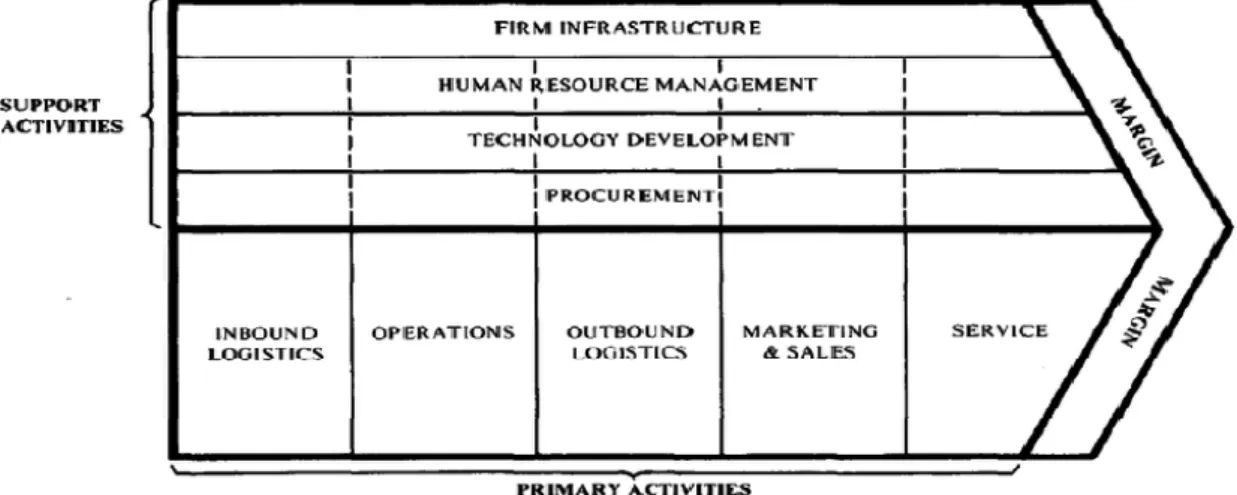
Figure 7 Porter’s Generic Value Chain 12
Figure 8 Technological leadership and followership 13
Figure 9 Terminology related to AS 15
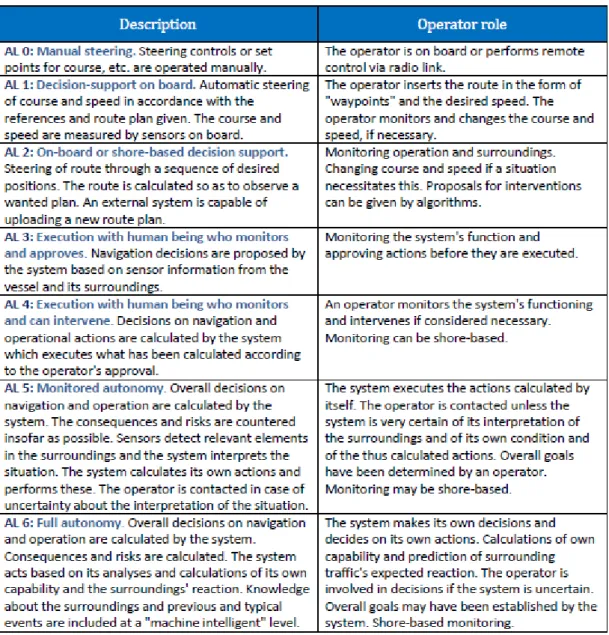
Figure 10 Autonomy levels for ships 16
Figure 11 Percentage of consumers who thing fully autonomous
vehicles will not be safe 21
Figure 12 Percentage of consumers who feel that media reports of accidents involving AVs have made them more cautious
of the technology. 22
Figure 13 Distinctions between quantitative and qualitative data 25
Figure 14 Interpretivism 27
Figure 15 Forms of interview 27
Figure 16 Advantages & disadvantages of audio-recording 29
Figure 17 Sampling techniques 30
Figure 18 Types of secondary data 30
Figure 19 International seaborne trade 34
Figure 20 Anthropogenic SO2 emission 35
Figure 21 World seaborne trade 2017 42
Figure 22 Norway competitiveness index 2018 49
vii
List of abbreviations
AAWA Advanced Autonomous Waterborne Applications AS Autonomous Ship
AV Autonomous Vehicles or Vessels
Concawe Environmental Science for the European Refining Industry CEO Chief Executive Officer
COO Chief Operating Officer
DNV GL Det Norske Veritas and Germanischer Lloyd IMHA The International Maritime Health Association IMO International Maritime Organization
ISWAN International Seafarers’ Welfare and Assistance Network ITF The International Transport Workers' Federation
MASS Maritime Autonomous Surface Ships
MUNIN Maritime Unmanned Navigation through Intelligence in Networks SC Supply Chain
SHS Seafarers Hospital Society SVP Senior Vice President
UNCTAD United Nations Conference on Trade and Development UAV Unmanned Aerial Vehicle
1
Chapter 1: Introduction
In 2018 the Norwegian giant fertiliser company ‘YARA’ revealed that the world’s first fully electric autonomous and zero emission container ship will be operational in 2020 and fully autonomous in 2022 with the cooperation of Norwegian government and a few other Norwegian companies. In the same year two Norwegian companies, Wilhelmsen and Kongsberg, established world’s first autonomous shipping company ‘Massterly’ which will have shore-based command centres (Massterly, 2018).
This chapter of the research provides a complete overview of the conducted study about autonomous ship (AS) and its competitiveness. It starts with shortly mentioning some important happenings from AS history and some research from the past few years. The background information about the effect of globalization on the maritime shipping industry and its role within the world trade will be mentioned afterward. Next, the environmental issues caused by the maritime shipping industry will be mentioned. These issues stimulated intense cooperation of the Norwegian government with the Norwegian maritime cluster. Then, the reasons for the dissertation subject AS will be mentioned. After that, the purpose of the research study along with the research aims and objectives and the proposed methodology will be seen. Finally, an overview of all the chapters which are included in this study will be mentioned at the end of this chapter.
1.1. Background
Although, the history of the autonomous vehicle (AV) goes back to 1920s with ‘Linriccan Wonder’ (Bimbrav, 2015) and the autonomous ship is mentioned first in the 1970s in the book ‘Ships and Shipping of Tomorrow’ by Rolf Schonknecht, during just past few years AS has received a lot of attention and interest. There has been quite a bit research recently, including Johannes and Van Rensburg (2018) who researched the impact of autonomous ships on the containerized shipping. Benson, Sumanth, and Colling (2018) compared the effects of traditional transportation technologies with technologies of AS. Kretschmann, Burmeister and Jahn (2017) analysed the economic benefit of
2
unmanned autonomous ships by comparing the costs with the conventional bulk carrier. Ahvenjärvi (2016) focused on the human element within the AS. Aro and Heiskari (2017) researched the technical and legal challenges of AS which they called an autonomous vessel (AV). Although some of these studies mentioned the competitiveness of AS briefly in their research, up to now there has not been any research focusing just on the competitiveness of AS. To be able to proceed further, an important event for the maritime shipping industry has to be mentioned, which is related to the cause of major interest in to AS; Globalization
Globalization was the turning point for the maritime shipping industry. It has created possibilities to build a large network and enabled the shipping companies to reach customers from all over the world. The world trade grew by high demand, so maritime shipping grew too. Corbett and Winebrake (2008) researched the impact of globalization on international maritime transportation. Their research showed how globalization has significantly increased the demands for maritime shipping and showed increasing by three times for unitized cargoes since the beginning of globalization.
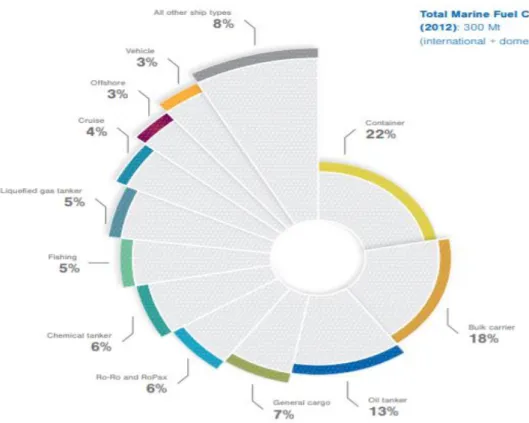
The maritime shipping industry became the lifeblood of global trade and is responsible for around 90% of world trade transportation (Waters 2003 p.314, UNCTAD 2017 p.X and DNV GL 2017 p.3). According to United Nations Conference on Trade and Development (UNCTAD) world seaborne trade was 10.7 billion tons in 2017 and expected to grow with 3.2% until 2022. Parallel to that, the world maritime fleet grew as well, which had a downside. The total fuel used by ships also increased rapidly. Corbett and Winebrake (2008) mentioned that world cargo vessels use approximately 200 million tons of fuel per year. Concawe’s (n.d.) research revealed that 300 million tons of fuel was used in 2012 by ships, figure 1. This causes air pollution and plays a role within global warming by producing emissions such as nitrogen (NOX), Sulphur (SOX) and carbon dioxide (CO2).
3
Figure 1: Total Marine Fuel Consumption 2012. Source: Concawe (n.d.)
Although maritime shipping plays an important role with CO2 emission it was not included under the 1997 Kyoto Protocol. International Maritime Organization ‘IMO’ (2014) estimated that 2,2% CO2 emission was caused by maritime shipping in 2012 and this could increase by 50% and to 250% by 2050. Because of these environmental issues, UNCTAD and IMO regulations were adjusted and the Paris Agreement from 2015 adopted by the maritime industry.
To comply with international aims related to reducing Greenhouse Gas Emissions, the Norwegian government adjusted its strategy. Under its strategy ‘Blue growth for a green future’ (Government.no, 2015), the Norwegian government focused on the development of maritime autonomous vehicles. In addition, the Norwegian government established ‘ENOVA’. Enova SF is owned by the Ministry of Climate and Environment and contributes funds to reduce Greenhouse Gas Emissions, develop energy and climate technology and strengthen the security of supply (ENOVA, 2018). In 2018, ENOVA subsidized a joint AS project of Norwegian maritime companies with $16 million.
4
The Norwegian maritime cluster has become a pioneer in AS with full support and cooperation of the Norwegian government. Although, in 2013 DNV GL (Det Norske Veritas and Germanischer Lloyd) took the initiative with the research project ‘The ReVolt’ for electrical and crewless AS it was not meant to be built (DNV GL, n.d.). It had the intention to inspire others. After that, the biggest Norwegian companies gathered their knowledge and experience together and teamed up to build world first autonomous container ship which will be operational in 2020. According to the International Transport Workers' Federation ‘ITF’ (2018), these companies are:
- YARA, the Norwegian fertilizer giant.
- VARD, the Norwegian global ship designer and shipbuilder.
- KONGSBERG, the Norwegian global technology corporation which delivers high-technology systems and solutions to different industries such as defence, oil and gas industry, merchant marine, and aerospace.
- WILHELMSEN, the Norwegian global maritime industry group.
1.2. The reason for AS
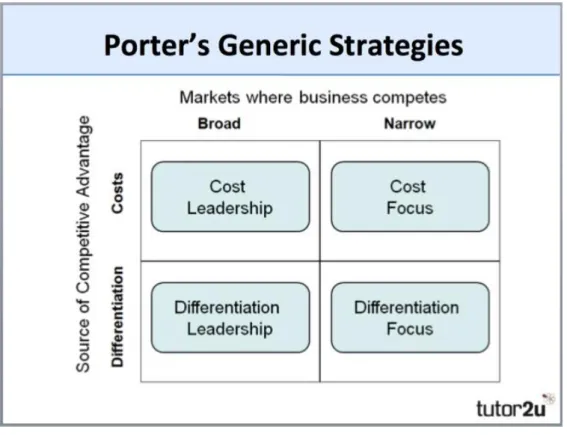
The Norwegian maritime industry interest in AS or also known as Marine Autonomous Surface Ships (MASS) is certainly not just related to environmental benefits. They were looking for other advantages which could give them competitive advantages. As far as back as 1985, Porter mentioned three strategies that would give companies sustainable advantages. These are cost leadership, differentiation and focus. With cost leadership, the companies look for ways to lower their production or service costs. With differentiation, the companies aim for uniqueness by trying to deliver high-quality products or services or other services which customer will value, such as the speed of delivery. The focus strategy has two types; cost focus and differentiation focus. The companies try to reach a certain market either by focusing on costs or focusing on differentiation, figure 2.
5
Figure 2: Porter’s Generic Strategies. Source: tutor2u (n.d.)
With AS, the Norwegian maritime shipping companies expect to gain competitiveness by reducing annual operating costs by 90% by eliminating fuel and crew costs or reducing it dramatically. In addition, they are expecting to reduce human error by 80%. Baker & McCafferty’s (2005) research showed that 80 to 85% of all maritime accidents are related to human error. However, the Norwegian maritime shipping companies also aim to offer unique services and products with AS, such as delivering products with no environmental side effects.
1.3. The aims of the study
The aim of this research is to determine the effect of AS on the Norwegian maritime shipping industry by focusing on competitiveness. Will the Norwegian maritime shipping companies be rewarded for their interest and investments? Will AS deliver competitive advantages to the Norwegian shipping companies which are operating internationally?
6
1.4. Research Question
Based on the research aims and objectives this research study will try to find answers to the next questions:
- Would autonomous ships deliver competitive advantages to Norwegian maritime shipping companies?
- Which factors affect the success of AS?
- What kind of competitive advantages can AS deliver to Norwegian maritime shipping industry?
1.5. Outline of the research study
This thesis is formulated in five chapters which are included as an introduction in the first chapter. The second chapter focusses on literature review by finding published work related to dissertation subject and comparing those findings. The third chapter presents the used methodology for collecting data and the research design. The fourth chapter analyses the results and findings from collected data by contributing discussion on the results. The final chapter presents conclusions and recommendations after the analysis of the results and evaluates the study and provides suggestions for further researches.
7
Chapter 2: Literature Review
“The literature review is the part of the thesis where there is extensive reference to related research and theory in your field; it is where connections are made between the source texts that you draw on and where you position yourself and your research among these sources.” (Ridley, 2012)
The second chapter presents an extensive review of the literature related to the dissertation subject, AS. To help the reader get a better overview of the topic, this chapter will start with literature related to the maritime shipping environment where AS will operate. Then, the connection between the technology and the competitiveness will be mentioned. Next, AS related literature will be used to explain what AS is and the levels of autonomy. Finally, the literature which points out the challenges and issues of the AS will be presented.
2.1. The maritime shipping environment
Globalization is the main factor of world shipping demand (UNCTAD 2018, p.3), which caused rapid growth within the maritime shipping industry and significantly increased maritime shipping activities.
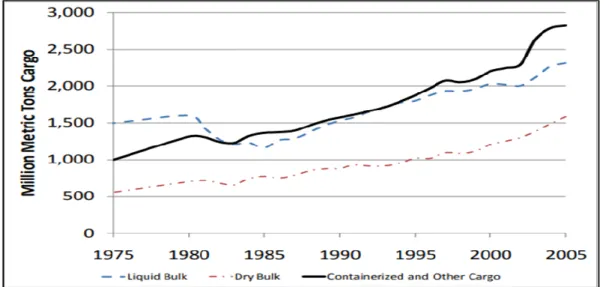
In 2008, Corbett and Winebrake prepared a report for “Global Forum on Transport and Environment in a Globalising World” that was held 10-12 November 2008 in Guadalajara, Mexico. Although, their research focused more on the environmental issues caused by the maritime shipping industry it showed also the significant effect of the globalization on international maritime transportation. Their research showed that transportation of the unitized cargoes, especially containerized cargo and dry bulk, increased impressively because of globalization (figure 3).
8
Figure 3: The effect of globalization on unitized cargoes. Source: Corbett and Winebrake, (2008, p.8)
Unfortunately, parallel to increased maritime activities the fuel consumption increased also significantly (figure 4). Corbett and Winebrake (2008, p.16) found that world cargo vessels use approximately 200 million tonnes of fuel per year. According to IMO (2007) that could be 486 million tonnes in 2020. As mentioned before, Concawe (n.d.) estimated that in 2012 all ships in the world used 300 million tons of fuel. This situation caused and still causes huge environmental issues such as producing nitrogen (NOX), sulphur (SOX) and carbon dioxide (CO2) emissions.
9
To be able to meet the objectives such as customers demand and environmental regulation Corbertt and Winebrake (2008, p.25) recommended sustainable intermodal freight transportation, which will require the cooperation of maritime industry, governments, and academician.
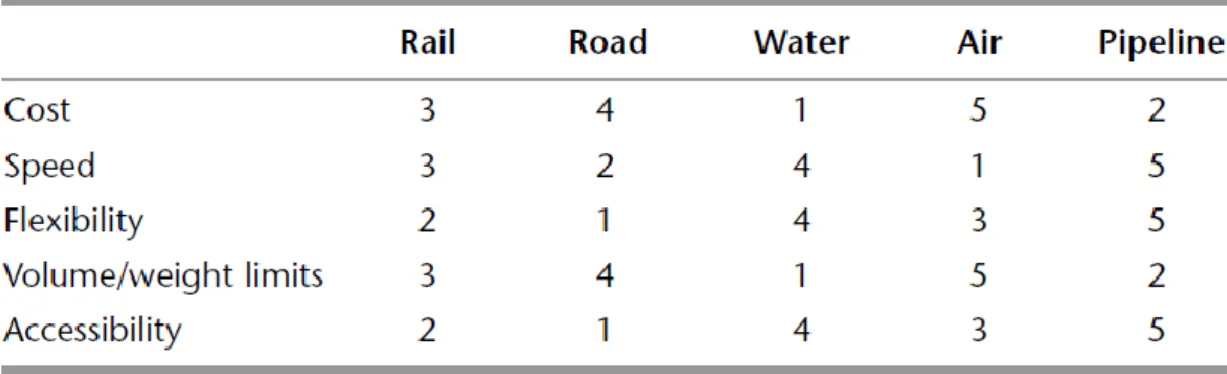
Academicians such as Waters (2003, p.319) supported the idea of intermodal transportation. He mentioned the goal of intermodal transport as using the advantages of different transport modes with the aim to get a competitive advantage. He made a ranking table to show the performance of each model and gave an example of combining low-cost maritime shipping with flexible road transportation (figure 5).
Figure 5: Performance table for transport modes (with 1 being the best performance and 5 being the worst). Source: Waters (2003, p.317)
However, Christiansen, Fagerholt, Nygreen, and Ronen (2007) found that the rapid containerization, the information technology, and the harsh competition changed the maritime shipping’s basic ocean transportation into intermodal transportation. They mentioned that the shipping companies had to become total logistics providers to be able to compete with competitors. What this means is that implementing intermodal transportation into the maritime shipping industry was no more a free choice, but it was a compulsory action.
The intermodal transportation or intermodal supply chain (SC) had and has cost-saving advantages. However, Maslarić, Brnjac, and Bago (2016, p.16) mentioned that intermodal SC requires significant changes in SC infrastructure and high investments in technological solutions. With intermodal transportation mode, the maritime shipping companies have customers, suppliers, materials,
10
partners, etc. all over the world. Figure 6 shows a simple example of intermodal SC. Every link within that chain can create some problems. Having supply chain links scattered all around the world brings challenges within management, communication, inventory, international law, etc.
Figure 6: The intermodal supply chain process for risk identification and analysis Source: Maslarić, Brnjac and Bago (2016, p.16)
The maritime shipping industry is growing. The customer's behaviour and the role of technology within the industry is changing. The customer is getting greedy and expecting more; demanding lower costs, higher quality, shorter delivery time, flexibility, best service and all of those with the lowest impact on the environment. This is affecting the competition within the maritime shipping industry.
The maritime shipping environment is very competitive and dynamic. The customers’ demand changes, supplier expectation vary, competition is fierce, and international regulations are becoming more restrictive. To be able to fulfil these expectations and survive the competition the maritime shipping companies had to and still have to adapt, change, collaborate and innovate.
11
2.2. Technology, innovation and competitiveness
The intermodal transportation gave certain competitive advantages for a while, but it lost its effect when all the competitors start to use the same modal. The maritime shipping industry focused more on innovation and technology to gain competitiveness and they expect to get that from AS. But, what is competitiveness and its relation to technology?
Cambridge dictionary describes competitiveness as;
“the fact of being able to compete successfully with other companies, countries, organizations, etc.” (Cambridge, n.d.)
and competitive advantage as;
“the conditions that make a business more successful than the businesses it is competing with, or a particular thing that makes it more successful” (Cambridge, n.d.)
The best known person for its theories about competitiveness and technology is Michael Eugene Porter, a Professor atprestigious Harvard Business School. The name ‘Porter’ is well known in the world of economy and business strategies. Although Porter wrote his article ‘Technology and Competitive Advantage’ in 1985, his theory is still applicable to present-day businesses. In his theory, Porter explains the relation between technological innovations and competitive advantages.
Porter highlights the importance of technology for competitiveness and its significant role within the structural changes. However, he correctly argues that often the connection between competitiveness and technological changes are incorrectly interpreted. Assuming that, use of high tech will lead to high profitability or high competitiveness is incorrect. As Porter (1985, p.60) pointed out;
“Technological change is not important for its own sake, but is important if it affects competitive advantage and industry structure. Not all technological change is strategically beneficial; it may worsen a firm's competitive position and industry attractiveness.” (Porter, 1995)
Samsung Galaxy Note 7 was a high-tech investment of Samsung which had serious problems, including catching on fire. In the end, it cost Samsung
12
estimated $5.3 billion and its place of being global smartphone market leader (Lee, 2016). Another example of high-tech investment failure is ‘Google Glass’ which had a high price tag and serious privacy issues (Rosman, 2017).
Further, Porter concludes that all businesses use a different kind of technologies and each of those technologies can deliver certain competitiveness. He links those technologies to value chain activities (figure 7) and suggests that technology is integrated into all those activities, which can provide competitiveness by realizing low-cost or differentiation. Achieving competitiveness by low-cost and differentiation is mentioned already during the introduction.
Figure 7: Generic Value Chain. Source: Porter (1985, p.37)
The importance of innovation should not be overlooked. Porter (1990, p.75) believes that organizations realize competitive advantage by innovating. Not just by finding new things but also finding new methods for old things. Moreover, he pointed out that businesses which are not innovating will be taking over by competitors. Innovation is not just essential for the sustainability of an organization but as Porter (1985, p.66) points out it can be also a powerful tool to strike against deep-rooted competitors.
The crucial question that needs to be asked, now, is when the technology and innovation can deliver competitive advantages. Porter (1985, p.64) mentions four circumstances for that:
13
1. When the technology itself reduce the cost or creates differentiation which is durable and difficult to imitate.
2. When the new technology affects the value chain activities in the way that favours the business. In this case, the imitability of new technology by competitors is not relevant, because the change will give the business advantages of being a pioneer.
3. When the innovation or the technological breakthrough is pioneered by business and that leads to “First-mover” advantages, which will be mentioned within the next paragraph. Again, in this case, the imitability of new technology or innovation by competitors is not relevant.
4. When the innovation or technology affects the structure of the industry in a positive way. Even it will be imitated by competitors within the same industry. For example; new technology or innovation might improve the position of sea transportation against road transportation.
Technological leadership and first-mover advantages
Porter (1985, p.68) concludes that there is a powerful relationship between technological strategy and generic strategy, figure 8.
Figure 8: Technological leadership and followership. Source: Porter (1985, p.68)
He points out that generally, the technological leader will focus on differentiation with its innovation while the follower will focus on cost. However, he also implies that the situation can be totally opposite, dependent on the leader’s choice and behaviour. The follower can create differentiation if the
14
technological leader makes mistakes and follower takes advantage of it by improving or solving that problem. Or if the leader prefers to focus on lower cost with its innovation because of more advantages.
A question that needs to be asked, however, is how the organizations decide to be a technological leader or follower. Porter (1985, p.68) impressively calls attention to three factors which are affecting the decision of organizations to establish their position related to certain technological change:
1. Sustainability of the technological lead; in this case, competitors cannot imitate the new technology/ innovation, or the competitors cannot keep it up with the leaders continues changes and updates. The smartphone market is a good example of this situation.
2. First-mover advantages. Porter reveals the next advantages;
- Building a reputation as being the pioneer - Securing a good position within the market - Advantages related to switching costs
- Possibilities to choose the best distribution network
- The learning curve which delivers more knowledge about new technology - Better access to certain facilities
- Having the power to standardize requirements for new technology
- To be able to protect the technology by a patent and better cooperation with governments
- Possibility for high profits at the start phase
3. First-mover disadvantages. Porter mentions next disadvantages;
- Huge costs, such as investment costs, training costs, regularity costs etc. - Unpredictable future demand
- Changes within customer demand - Quick changes within technology - Risks for low costs imitations
2.3. Autonomous ship and competitiveness
“Furthermore, the Member States agreed ad interim to define a Maritime Autonomous Surface Ship as a ship which, to a varying degree, can operate independently of human interaction.” (Danish Maritime Authority, 2018)
15
The quotation from the Danish Maritime Authority which points out the decision of IMO reveals how complex the subject AS is. UNCTAD (2018, p.89) admits that the term AS still has not been clearly described. Different sources try to describe AS in a different way from being operated by artificial intelligence (Rouse, 2019) or by “advanced decision support systems” (Waterborne TP, 2011). However, most of them are agree that full AS do not have human involvement (UNCTAD 2018, Blanke, Henriques and Bang (n.d.), Rolls- Royce 2016).
“The situation is perceived and assessed and a decision on which action to take is made without any intervention by human beings.” (Blanke, Henriques and Bang, n.d.)
Nevertheless, academicians Blanke, Henriques and Bang from the Technical University of Denmark (DTU) and the Danish Maritime Authority wrote the report “A pre-analysis on autonomous ships” for the Danish Maritime Authority to clarify certain matters, issues, challenges and opportunities related to AS. Moreover, they clearly defined some terminology related to AS (figure 9) and the most importantly the autonomy levels configured from Lloyd’s Register (figure 10).
16
Figure 10:Autonomy levels for ships. Source: Blanke, Henriques and Bang (n.d.)
Furthermore, they highlight the results of other known projects such as; - Marine Unmanned Navigation through Intelligence in Networks (MUNIN)
is a collaborative research project and co-funded by the European Commissions.
- Advanced Autonomous Waterborne Applications (AAWA) Finnish project led by Rolls-Royce.
They revealed the benefits of AS as cost, safety, and environmental benefits, which were also the main reasons for the Norwegian maritime industry to invest in AS.
Burmeister, Bruhn, Rødseth and Porathe (2014) came to a similar conclusion with their research. They mentioned how harsh competition and international
17
law related to the environment caught the attention of the maritime industry on AS. They concluded that low operational costs to build efficient International trade, low Greenhouse Gases to reduce environmental impact and high safety were three main reasons for interest in AS.
According to ITF (2018, p.1), with AS the Norwegian maritime shipping companies are expecting to gain competitiveness by reducing annual operating costs by 90% by eliminating fuel and crew costs. However, this impressive but illustrative result is based on electrical AS, which will have human involvement at least until 2022. In addition, the construction of AS ship ‘Yara Birkeland’ will cost about three times more than a conventional ship of a similar size.
The results of the research done by Kretschmann, Burmeister and Jahn (2017) showed that the expected present value (EPV) of the cost of owning and operating the autonomous ship is $4.3 million lower than for a conventionally manned ship over a period of 25-years. They compared the costs of AS with a conventional bulk carrier. The MUNIN (n.d.) project conducted the same test during its research and found potentially with $7 million over a 25-year period. In both cases, both vessels assumed to use fossil fuel, which means full electrical AS might have more lower costs and higher benefits. DNV GL’s electrical and crewless AS project ‘The ReVolt’ estimated that comparing to diesel -run vessels the AS could save more than one million dollar per year.
Among others who were in agreement about AS competitiveness through lower costs are Kobyliński (2018) and Benson, Sumanth and Colling (2018). Kobylinski concluded that with AS not only will the crew cost be eliminated, but also crew accommodation will be removed, and that space will be used as cargo space. Besides that, by removing the deckhouse the air resistance will be reduced. Benson, Sumanth and Colling (2018) research showed significant decreases in costs by using autonomous ships. The comparison an autonomous cargo ship to non-AS showed that the autonomous mode was becoming quickly competitive and offering significantly lower prices.
18
As seen above, the results of MUNIN project have many similarities with the researches referenced. The MUNIN project is formed from eight education, research and maritime institutions or organizations from Germany, Norway, Sweden, Iceland and Ireland. Although, the results of MUNIN project also reveal reduced operational costs, reduced environmental effects and increased safety, the project highlights the fourth essential advantage of AS; social advantages. According to MUNIN the maritime shipping industry experiencing a shortage of seafarers due to the industry being unattractive. The career of being seafarer is not attractive due to long journeys, isolation and being away from family and friends. Remote-controlled AS could create new opportunities in that case by offering seafarers working ashore.
Highlighted advantages of AS such as cost, safety, environment, and social compatibility can strengthen the competitiveness of a company and can even give possibilities to achieve that competitiveness either by cost strategy or differentiation strategy.
2.4. Autonomous ship issues
Besides the mentioned sources there are many others who agree about the benefits of AS. Both UNCTAD (2018) and IMO (n.d.) are mentioning the huge benefits of AS. However, they also mention huge challenges with AS, such as safety and security. The most important issues are international law and trust issues, which will be mentioned in this report.
The reason for not focussing on technological challenges is that the general view of the experts within the autonomous industry is that we do have the technology to build AS already and solve the issues related to safety and security. During the seminar of ‘The London Branch of the Nautical Institute’ in September 2015, the attendees revealed that autonomous and unmanned vessels are already operational on a smaller scale within the oil and gas industry and defence industry (Hetherington, 2016). They referred to Unmanned Aerial Vehicle (UAV) and Unmanned Underwater Vehicle (UUV). The attendees pointing out that the technology of those small-scale autonomous vessels could easily be used for AS. Levander (2017) also shared
19
the same opinion regarding having the technology to build AS. In addition, he reveals that the biggest challenge is the regulations that are uncertain if they will allow AS to be operational. Aro and Heiskari (2017) concluded after their research that AS would be possible to be operational in short time, but the international laws and regulations are the main issues which are blocking the progress of AS. The Kobyliński’s (2018) report mentioned also having the technology for AS;
“According to the general opinion of technicians, the technology needed to construct and operate smart ships is already available or, at least, in the final stages of development.” (Kobyliński, 2018)
Similar opinions were also observed during interview with CEO’s from the Norwegian companies which are involved with AS. The results of these interviews will be mentioned later.
The international maritime law
The current international maritime law and regulations do not allow AS to sail in international waters (UNCTAD, 2018). These rules are related to rights and obligations of the flag states, technical rules related to safety, security and environment, and private rules covering liability. Mainly, the focus of these rules is the human element on the board of the ship, which AS will not have it in the future.
Pietrzykowski and Malujda’s (2018) research focused on responsibility issues within AS. Besides safety and security issues they mentioned also legal aspects. They wrote about the importance of quick changes within international maritime law and recommended that the category of autonomous ships should be recognised at least on the basic level until major changes are done. Although, AS and advanced technology seems to be difficult to be understood by traditional maritime law, Van Hooydonk (2014) believes that maritime law is well-armed against advanced technology. He concluded that maritime law can still be applied for AS, it just must enter a new phase of development.
20
It is indubitable that maritime law will change and include AS within the regulations. However, that can take years. The article written by Cowan (2018) mentions experts’ opinion about the time span. Senior legal counsel at the Japan Association of Marine Safety, Professor Hasebe believes that some rules can be adjusted within three years. However, in case of controversial ones we should not expect any changes within 10 years, according to Hasebe. It is crucial for the competitiveness of the Norwegian maritime shipping industry that AS will be used for international routes. The Norwegian maritime cluster includes large international shipping companies, which would like to reduce their operating costs with AS and gain competitiveness.
Trust issues
“While the development and use of autonomous ships offer numerous benefits, it is still unclear whether this new technology will be fully accepted by Governments, and particularly by the traditionally conservative maritime industry. There are legitimate concerns about the safety and security of operation of autonomous ships and their reliability. The diminishing role of seafarers and ensuing job loss are a particular concern.” (UNCTAD 2018, p. xi)
In addition to the international maritime law issues, the trust issue is one of the biggest challenges that AS has to deal with. The concerns which are mentioned by UNCTAD are recognisable within the maritime industry. The article “Are autonomous ships the future?” written by Cowan (2018) mentions the comment of Maersk CEO Søren Skou about AS. Skou comment the next:
“I don’t expect we will be allowed to sail around with 400-metre-long container ships weighing 200,000 tonnes without any human beings on board,” (Cowan, 2018)
Hetherington (2016) mentions in his article the observations of Craig Eason during “the London International Shipping Week and Lloyds Register's report on technology trends”. Eason observed that the future ships were still pictured with accommodation facilities for crew and his questions about it received the following answer;
21
"the industry, and the public, are not ready for an image of a tanker, gas carrier or large bulk vessel without one." (Hetherington, 2016)
The autonomous car had and still has similar challenges which AS is experiencing. Both have cost, safety and environmental advantages as well as technological issues, safety, law and regulations and trust issues. And while the technology for autonomous self-driving cars is in operation, the same is true for AS.
Dewalska-Opitek’s (2018) research “Young Consumers’ Attitudes Toward Autonomous Vehicles” focusses on autonomous cars but also gives interesting results which can be linked to AS. Her research based on 2017 and 2018 “Deloitte Global Automotive Consumer Study” which shows impressive results. According to Dewalska-Opitek’s research, young consumers are more interested in autonomous vehicles (AV), more enthusiastic and they have more trust in AV than older consumers.
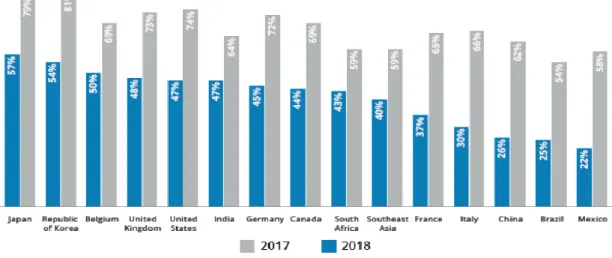
The most ground-breaking result which Dewalska-Opitek mentioned from the results of Deloitte study is that the opinion of the consumer about the safety of AV changing very quickly. Deloitte comparison of the results from 2017 and 2018 for the opinion ‘Fully self-driving cars will not be safe’ is a real eyeopener. Many consumers from different countries looking more positive to AV than one year ago, figure 11.
Figure 11: Percentage of consumers who thing fully autonomous vehicles will not be safe (2017 vs.2018). Source: Dewalska-Opitek (2018)
22
However, Deloitte “2019 Global Automotive Consumer Study” shows also that consumer gets easily affected by media reports about accidents involved with AV, figure 12.
Figure 12: Percentage of consumers who feel that media reports of accidents involving AVs have made them more cautious of the technology. Source; Deloitte 2019 Global Automotive Consumer Study.
Literature research related to trust and AS did not deliver much data. However, Roestad (2016) research “The Validity of an Extended Technology Acceptance Model (TAM) for Assessing the Acceptability of Autonomous Ships” tried to focus on acceptance and trust issues related to AS. He did an online survey among Norwegian seafarers and received 199 responses. However, only 140 of them were usable, according to Roestad. The result of this survey showed that Norwegian seafarers had a negative opinion towards AS, which was not surprising because of poorly prepared survey questions.
Roestad missed the essence of the subject in its report of 105 pages. The findings may have been more applicable, realistic and certainly more positive if he had used correct questions. Although his introduction at “Part 3: Autonomous Ship p.102” was good, the questions seemed written such that the participants had to give feedback and opinion about a product such as a drill or electrical toothbrush which they have been trying for the past 3 weeks. Some examples of those questions are;
23
- I plan to use autonomous ship in the future. - I expect to use autonomous ship in the future
- Using autonomous ship will increase my productivity / my performance / my effectiveness
- Getting autonomous ship to do what I want would be easy
The meaning and the final aim of AS is to operate without any intervention by a human being. It has nothing to do with seafarer personal productivity or performance. That applies also for the phase when AS will be remotely controlled. AS is not a car rental company which individual is going to use in the future based upon his positive experiences from the past. The survey would have more positive results towards AS if Roestad asked the Norwegian seafarer questions such as;
- What would you think about AS, if AS gave you the possibility to practise exactly your profession or similar to that ashore between 9 a.m. and 5 p.m.?
- What would you think about AS if AS gave you the possibility to practise your profession for 8 hours a day, then go to your family and have a nice dinner with them?
- Would you like to control AS remotely from ashore where you even sometimes could leave early to go to the dentist?
These examples might not be very professional questions, but they give a better view of AS than Roestad’s survey questions.
24
Chapter 3: Methodology
To be able to explain the methodology of this research correctly and clear, the 7th edition of the book “Research Methods for Business Students” by Saunders,
Lewis and Thornhill (2015) is used.
3.1. Research method
The aim of this research method is to make an effort to describe what AS is, how is going to work, who are involved with it, why there is so much interest in it, what is done until now, what are the plans for AS, what are expectations, when and where it will be operational, etc. To be able to answer these questions about a very complex subject as an AS, different types of research were needed. Research types which will help to establish knowledge, theories, predictions, explore the prime aspects, explain the issues and consequences of the problem.
Saunders et al. (2015, p.174) concluded four types of research in their book: - Exploratory research intends to explore or clarify the main issues.
Usually, questions start with ‘What’ or ‘How’.
- Descriptive research describes the case or the occasion or the situation. Usually, questions start with ‘Who’, ‘What’, ‘Where’, ‘When’ or ‘How’. - Explanatory research which explains the causes and impacts of certain
problem and links between the factors. Usually, questions start with ‘Why’ or ‘How’.
- Evaluative research which tries to evaluate the effectiveness of a certain thing. That can be an organization or program or initiative or innovation. Usually, questions start with ‘What’, ‘Why’ or ‘How’ and in some cases also with ‘Which’, ‘When’, ‘Who’ or ‘Where’.
However, they also pointed out that the combination of these research types is possible and even in some cases it is wiser to combine them. They gave examples of a combination of exploratory, descriptive and explanatory researches. Doing research about the competitiveness of AS and its effect on the Norwegian maritime shipping industry was very complicated because of its
25
impact on the environment, stakeholders, shareholders, technology and its prospects. As such, it took all research types to clarify all issues regarding AS.
To give an illustration of this complexity; during interviews with experts from the industry exploratory research is used to gain insights information about issues. Descriptive research was applied to describe what AS is and who is involved and how they are involved with it. Explanatory research was used to explain the relationship between international law and the competitiveness of AS or the relationship between high fuel consumption by maritime ships and greenhouse gas. Evaluative research was applied to find out the effect of AS on the cost and safety.
3.2. Research design
“The first methodological choice is whether you follow a quantitative, qualitative or mixed methods research design. Each of these options is likely to call for a different mix of elements to achieve coherence in your research design.” (Saunders et al., 2015, p.164)
The qualitative research design has been chosen for this research as it was the most convenient design to gain an in-depth understanding of AS. One of the most important aims was to gain knowledge about the behaviours of the stakeholders and their shared beliefs about AS. Saunders et al. (2015, p. 569) mentioned three essential differences between quantitative and qualitative data, figure 13.
Figure 13: Distinctions between quantitative and qualitative data. Source: Saunders, Lewis & Thornhill (2015, p. 569)
Although the qualitative research design is used, the data from a few sources based on the quantitative research design are also mentioned within this
26
research. Deloitte Global Automotive Consumer Studies from 2017, 2018 and 2019 were based on quantitative research design. Benson et al. (2018) research “A Quantitative Analysis of Possible Futures of Autonomous Transport” is obviously a quantitative research design. However, the quantitative data from these sources were already analysed by the source itself. In this case, the aim was to find some trends and similarities within those data, which can explain the huge interest in AS and possible competitiveness. The Quantitative method is also not used for interviews with experts from the industry, as the aim was not to come with statistical analyses.
3.3. Qualitative research method
The qualitative research method, contrary to the quantitative research method, is non-numeric data, figure 13. The qualitative research method is applied to gain in-depth insights into the research subject. Generally expressed in words and mainly focusing on examining ideas or theories. The qualitative research method has advantages to gather a significant amount of data within a short time and with fewer costs. However, it is more difficult to analyse qualitative data due to the use of text and images. Qualitative data is usually gathered through interviews, focus groups, case studies, observations and literature review.
3.4. Research philosophy
The qualitative research method is often related to interpretivism according to Saunders et al. (2015). Interpretivism is a philosophy that is used by social science to value human interpretation, opinion, and ideas, figure 14. It prioritizes human perspective and human interaction with its social field. It believes that human beings and their social, behavioural, and cultural variables cannot be studied quantitively. Interpretivism is based on data gathering by observation of certain behaviour or occurrence, such as interviews and observations. The biggest challenges of AS, such as trust issues, are related to the human perspective on AS. The interpretive approach to this situation will deliver more reliable and valid data
27
Figure 14: Interpretivism. Source: Saunders, Lewis & Thornhill (2015, p.136)
3.5. Data collection method
Data collection is a different kind of activity to collect necessary information for research purposes. It is divided into two methods;
- Primary data collection methods - Secondary data collection methods
Primary data
Primary data means the first-hand data gathered by the researcher him- or herself in real-time. During this research just once the primary data collection method in the form of face to face interview is used, figure 15.
Figure 15: Forms of interview. Source:Saunders, Lewis & Thornhill (2015, p.392)
Face to face semi-structured interviews held with five Chief Executive Officers (CEO) or Chief Operating Officers (COO) or Senior Vice President (SVP) or Vice Presidents (VP) from three Norwegian maritime companies, which are direct or indirect involved with autonomous ship project. Although, the number of intervieweeswas a relatively small sample size they all had and still have a
28
key role within the AS project. The choice was made to interview one CEO and one SVP of industrial investments from a Norwegian shipping company which is investing heavily in the AS project. One CEO from the joint venture company which can deliver some necessary technology for AS and operate AS. One CEO and one COO from a merged Norwegian and Swedish international shipping company which can be in the future potential customer for AS or AS’s services.
Interviewees received open-ended questions with a few key questions which all interviewees had to answer or give an opinion about it. The open-ended questions create possibilities to get the real opinion of the interviewees. They reveal reflections, perceptions and real behaviours towards the chosen subject. The questions of the interview focused mostly on AS and its competitiveness. The interviews are analysed to see some similarity within the answers which are connected to expectation from AS’s competitiveness and common opinions about challenges of AS. The aim of the interview was to get a better view of stakeholder’s interest in AS and their expectations from it.
In addition, all interviews are audio-recorded. Audio-recorded interviews have many advantages and some disadvantages, figure 16. To reduce the disadvantages of audio-recorded interviews;
- Before the interview date, the interviewees received an adjusted ‘the participant information sheet’ within important information about the study, the purpose of the study, the interviewee's rights before, during and after the interview, the procedure of analysing and using the data from the interview, etc.
- The interviewees also received ‘Research participant consent form’ which again informed them of their rights, permission to interview them, permission to record the interview, their anonymity and confidentiality, etc.
- For each interview, approximately 30 minutes of time was reserved and was also the time that was used. This time might seem short but considering the busy agenda of each participant approximately 30 minutes was an important element for convincing them to participate.
29
- The audio-recordings are not transcribed because of time, budget and linguistic limitations. The total time which is given for this research was just 12 weeks. The total hours of five interviews were around 2,5 hours. According to Saunders et al. (2015, p.572), for one-hour audio-recording, at least 6 hours of transcription time is needed. While the total number of interviews was just five, the decision was made to not use excessive time with transcription and use the old-style method of listening to the audio records a few times and making notes. These notes then compared with the notes which are made during the interviews to come to a reliable conclusion. In addition, the interviewer and some of the interviewees were not native English speaker which would give many challenges during transcription and increase the necessary time of transcription.
Figure 16: Advantages and disadvantages of audio-recording the interview. Source:Saunders, Lewis & Thornhill (2015, p.392)
The convenience sampling from Non-Probability sampling methods was used in this case, figure 17. The interviewees were selected due to their availability and willingness to participate. In addition, there was no intention to make any statistical assumption from the sample. The effective network of the researcher made it possible to invite five key role players within the AS industry in Norway for the interview and resulted participation of all of them. Therefore there were not any ‘non-response’ case. The opinion of other key role players within the industry gathered by using the secondary data collection method, such as their interviews with newspapers.
30
Figure 17: Sampling techniques. Source:Saunders, Lewis & Thornhill (2015, p.276)
Secondary data
For the rest of the research secondary data collection methods are used in the form of desk research. The desk research was mostly online desk research. Secondary data means the second-hand data which is gathered by other researchers for their primary research purposes in the past. Secondary data has many varieties, figure 18.
31
For example, for this research used article ‘Technology and competitive advantage’ from Porter is a longitudinal multiple sources of secondary data. The publications related to AS from different governments such as the Norwegian and the Danish governments are containing same type of secondary data. The data from global maritime organizations such as UNCTAD, IMO and DNV GL are document type of secondary data. Deloitte Global Automotive Consumer Studies are regular survey of secondary data.
Ethical consideration
During the gathering of secondary data, the ethical concerns were not highly prioritized as gathering primary data. This is due to this data being gathered from appropriate and reliable sources, such as scholarly sources and published sources.
However, ethics was a consideration during primary data gathering since the interviews had a human aspect in it. The ethical guidelines of The University of Salford was consulted in order to be able to conduct interviews within the ethical principles. All interviewees received ‘the participant information sheet’ at least one week before the interview date. During the interview, they received the ‘Research participant consent form’ which clarified the aspects of voluntary participation, right of withdraw, ensuring privacy, anonymity, and confidentiality.
3.6. Reliability and validity
There are two very important criteria to assess the quality of certain research; Reliability and Validity. Reliability is related to the consistency, dependability, and replicability of the research and validity is related to the accuracy, the truthfulness and the suitability of findings (Saunders, Lewis & Thornhill 2015). Data that is used for research purposes has a significant effect on these criteria. Robust and appropriate research design and research method which is executed carefully can minimalize the errors during data collection.
If the interviews to get primary data were not performed carefully it would affect both reliability and validity. Despite the lack of interview experience of the interviewer, some measurements have been taken to ensure that the interview delivers reliable and valid results. These include the following:
32
- All chosen interviewees were experts in their field which was related to AS. They all had extensive and common knowledge about AS, international shipping and the Norwegian maritime industry.
- All interviewees received the same information sheet which is mentioned earlier.
- The interview contained key questions which all interviewees had to comment about it.
- During the interview, the gathered information was summarized several times in order to ensure that the information was not misinterpreted. - After the interview the findings supported by the secondary data. For
instance, the findings ‘trust issues’ and ‘having the technology to build AS already now’ were supported by different secondary data which is mentioned in chapter literature review ‘2.4. Autonomous ship issues’
In the case of collecting secondary data, extra attention was given to find reliable and trustable sources. Most of the time online library of the University of Salford, other scholarly sources and Google scholar is used. Besides that, the websites used were from governmental institutions, international shipping companies, international maritime organization, and multinational professional service networks. In a few cases, known newspaper articles also used to support advised journals.
33
Chapter 4: Results and Discussion
This chapter will be divided primarily into two parts, results and discussion. However, it is wise to restate the aim of this research and describe the structure of this chapter.
The main aim was to see if AS would deliver competitive advantages to the Norwegian maritime shipping industry and its organizations which are involved with the AS project. In order to understand AS the report started with the important events which are related to the maritime shipping industry environments, such as globalization and environmental issues which the maritime shipping industry is causing.
The subparagraph results will present findings based on the literature review and performed interviews. It will follow a similar structure as chapter two ‘Literature review’ with the except that the results of the conducted interviews will be added. The discussion part will be depending on the findings. The discussion part will be used as a base on which to draw conclusions and present recommendations within last chapter ‘Conclusions and Recommendations’.
4.1. Results
This subparagraph will start with the findings of the effect of globalization on the maritime shipping industry and the environmental issues caused by the maritime shipping industry. Next, the findings of the relation between competitiveness and technological innovations will be mentioned. Then, the findings of the reason for AS will be summarized which would deliver competitiveness. After that, the outcomes of the literature review related to the obstacles in the path of success of AS will be presented. Finally, the findings of the performed interviews will be highlighted.
4.1.1. The Globalization and environmental issues
In section 2.1, the effect of globalization on the maritime shipping industry was discussed and the data from different sources mentioned. The results showed
34
that globalization had a significant effect on the global maritime shipping industry. Globalization increased the international trade of goods and that increased the demand for maritime shipping, figure 19.
Figure 19: International seaborn trade (Millions of tons loaded). Source: UNCTAD (2018, p.5)
This chain of events continued by building more ships to respond to high demand and intensifying current journeys. More ships and increased journeys meant significantly increased fuel consumption which caused an increase in the global emissions of greenhouse gases and pollutants.
The results of gathered secondary data, such as from IMO (2014), UNCTAD (2017 & 2018) and Concawe (n.d.), confirmed that the level of pollution caused by international maritime shipping was critically high. Figure 20 gives just an example of SO2 emission with the top of the figure the international shipping as the biggest cause. Moreover, the future predictions were alarming that the international maritime organizations such as IMO and UNCTAD had to put this issue in the spotlight. This situation caused some serious changes within international regulations and customer expectations, which then triggered environmental awareness within the maritime shipping industry. The maritime shipping industry looked for options to reduce fuel consumption and greenhouse gases. They were eager to find some solution which could
35
combine environmental benefits with other advantages such as lower costs and higher safety. It did not take a long time to see that technological innovations such as AS could be a key success criteria to meet these challenges. The support and cooperation of the Norwegian government for environmentally beneficial innovations motivated the Norwegian maritime industry to take more initiatives and risks.
Figure 20: Anthropogenic SO2 emission (mt/y). Source: Concawe (n.d.)
4.1.2. Technology, innovation and competitiveness
Section 2.2 was about technological innovation and competitiveness which focused fully on the theory of professor Porter’s ‘Technology and Competitive Advantage’. The key findings from Porter’s (1985) work were;
- That technology will not always give competitive advantages.
- That the technology is within the value chain activities and can deliver competitive advantages.
- That the technology needs four circumstances to provide competitive advantages, page 18.
- That there are three factors that can influence the organization’s decision to become a technological leader, page 20.
36
These findings will be later used as base for section 4.2.4 under discussion and during conclusion.
4.1.3. Competitive advantages of autonomous ship
The focus area of section 2.3 was AS and possible advantages that can deliver competitiveness. The secondary data which is used for this section showed that there is a lot of interest in AS. Yet not everyone agrees about the definition of AS. Despite that, the results from different sources, such as from MUNIN project, AAWA project, ITF, Burmeister et al. (2014), Kobyliński (2018) etc., showed AS’s advantages as;
- Cost. Low operational costs such as fuel and crew costs. Also, in the future lower costs related to removing crew accommodation and the deckhouse which will create lower air resistance and more cargo space. - Safety. By using high-tech decreasing accidents and increasing safety. - Environmental advantages by reducing or eliminating pollution.
- Social compatibility by creating possibilities for the seafarer to work ashore.
4.1.4. The obstacles in the path of success of AS
The findings of section 2.4 were ground-breaking. It was clear that AS had some technological challenges related to safety and security. However, the results showed that many experts from the maritime industry convinced that we do already have the technology to solve those challenges and build AS. Moreover, the results of section 2.4 provided compelling evidence that the biggest obstacles for the success of AS were trust issues and international maritime law. Many still could not accept the idea of big and heavy vessels with million dollars of goods on international water without any human being on the board. Likewise, international maritime law argues compellingly in favour of this point of view. According to experts, it will take at least 10 years to make serious changes within maritime law. Furthermore, in that section mentioned research results of Deloitte showed that there is hope. The customer’s opinion toward autonomous vehicles changing in the positive sense which can be a good signal for AS.
37
4.1.5. Results of interviews
In sections 3.5 and 3.6 the performed interviews mentioned. Within those sections the style of interview, chosen candidates, types of questions, ethical issues, etc. mentioned.
Five people were interviewed who had a key role within the AS project;
- CEO and SVP of industrial investments from Norwegian international shipping company which was investing in AS project and closely involved with it. To avoid further confusion and continue with the anonymity of interviewees let us rename those as CEO-WH and SVP-WH.
- CEO of joint venture company that is going to design and operate AS remotely. Let’s rename him as CEO-MK.
- CEO and COO from merged Norwegian and Swedish international shipping company which could be in the future potential customer for AS or AS’s services. Let’s rename them as CEO-NS and COO-NS.
The aim of these interviews was to reveal the perception, reflection and real opinion towards AS. However, the interviews did not aim to make any statistical assumption. These face to face and audio-recorded interviews resulted in very valuable information about these important stakeholder’s opinions toward AS.
The first interview was with CEO-MK and revealed interesting results which also helped the interviewer to focus on key points of AS and use that knowledge for the next interviews. CEO-MK pointed out that the interest in AS was not just cost, safety and environmental benefits but also social benefits for seafarers which the MUNIN project mentioned also earlier; “Next generation of people do not want to be away from home” 5:30. He pointed out that their first aim is to use AS’s technology for current ships for increasing safety and efficiency by eliminating or reducing 3Ds jobs; “We believe that we can increase the safety at sea” 5:02. He explained the 3Ds as ‘Dull, Dirty and Dangerous’ work. The results of this aim could be used by all within the maritime industry; “All market will benefit from the technology that we are developing” 10:54. The second aim is to focus on the AS future by following steps to total autonomy. In that case, the important step or phase would be when AS can be operated remotely. Other