I
EVALUATING ENVIRONMENTAL IMPACT
ASSESSMENT PROCEDURES IN THE NIGERIAN
MARITIME OIL AND GAS SECTOR
By
LAWAL AKEEM MOROUNKEJI
A thesis submitted to
The University of Birmingham For the degree
DOCTOR OF PHILOSOPHY
School of Geography, Earth and Environmental Sciences The University of Birmingham June, 2012
University of Birmingham Research Archive
e-theses repository
This unpublished thesis/dissertation is copyright of the author and/or third parties. The intellectual property rights of the author or third parties in respect of this work are as defined by The Copyright Designs and Patents Act 1988 or as modified by any successor legislation.
Any use made of information contained in this thesis/dissertation must be in accordance with that legislation and must be properly acknowledged. Further distribution or reproduction in any format is prohibited without the permission of the copyright holder.
II ABSTRACT
Mitigating maritime pollution linked to the oil and gas sector is increasingly seen as a priority issue in national and international contexts alike. A key policy tool that has been used to address this issue is Environmental Impact Assessment (EIA). It has become the primary means by which potentially adverse environmental impacts can be assessed and mitigated, and in theory, provides a variety of mechanisms for stakeholder engagement in the policy process. However, the governance of EIA in developing countries is embryonic, emergent, and in parts contradictory. This thesis reviews and evaluates EIA procedures as they relate to the Nigerian Maritime Oil and Gas Sector (NMOGS), relying, in particular, on Matland’s work on ambiguity and conflict in policy implementation. I argue that Matland’s scholarship affords valuable new insights into EIA implementation processes, particularly in terms of understanding the complex interactions among policy, business and civil society actors both within and beyond implementing agencies. Thus, the thesis’s broader contribution is to consider how the complex institutional mosaic sorrounding EIA might be conceptualised and understood theoretically by drawing on the rich literature on policy implementation. The empirical analysis utilises semi-structured face-to-face interviews with fifty-six respondents in key government implementing agencies, academia, and civil society. This is supplemented by secondary data on national level environmental policies, as well as surveys of EIA reports of multinational and national oil company projects in two Nigerian states. The thesis has demonstrated that the institutional context of NMOGS is characterised by high levels of inter-agency conflict and policy ambiguity. A key cause of the ambiguity is that two EIA systems operate in parallel at the national scale, thus making it difficult for the country to achieve its stated aim of attaining sustainable development in the domestic oil and gas sector. I have also found ample evidence of conflict over the roles, responsibilities and duties of Government actors across the whole spectrum of EIA implementation activities.
III
TO THE MEMORY OF MY MOTHER Mrs. TAIBAT PINPINLADE LAWAL
1955-2004
IV ACKNOWLEDGEMENTS
This work has become a reality through the support of the ‘Most High God’. The constructive and valuable criticisms of my two supervisors are impressive and highly appreciated. Thanks to Prof. Stefan Bouzarovski and Dr. Julian Clark for supporting me academically. Similarly, I would like to appreciate the kindness and contribution of my former lead supervisor Professor Judith Petts, thank you for putting me through the background to the study and theoretical related issues. I wish to acknowledge the support of my colleagues in Human Geography and the contributions of the supporting staff in the School of Geography, Earth and Environmental Sciences.
I would like to acknowledge the contribution of all research participants, in particular the Government Implementing Agencies for their support during the data gathering in Nigeria. Many thanks to the staff of Federal Ministry of Environment; Department of Petroleum Resources; Nigerian Maritime Administration and Safety Agency; National Oil Spill Detection and Response Agency; National Environmental Standards Regulations and Enforcement Agency; Ministry of Niger Delta Affairs; Nigerian Port Authority; Lagos State Ministry of Environment; Rivers State Ministry of Environment; Lagos State Environmental Protection Agency; and the Nigerian Maritime Oil and Gas Sector’s Certified Consultants.
I also record my thanks to the Non-Governmental Organisations and Academics for sharing their experiences with me. Specifically, the staff of Environmental Rights Action; Social and Environmental Rights Action; Waste Management Society of Nigeria; Nigerian Environmental Society; Green Thinking Environmental Initiatives; Aluko and Oyebode Legal Associates; and the academics that participated in the interview in Nigeria. Many
V
thanks to Professor Nwafor, J. C of University of Nigeria; Professor Osibanjo, O, Coordinator Basel Convention University of Ibadan; Professor Alo, B of University of Lagos; and Professor Olokesusi, F of the Nigerian Institute of Social and Economic Research. My sincere gratitude to friends and relatives for their moral support, first on the list is my beloved wife Mrs Lawal M. B and my daughter Miss Lawal, R. T. Thanks to Mr Remi Babalola, Mr and Mrs Ayorinde, Mr Lawal A. O and Mr Kazeem A. P. I appreciate the support of my parents in the lord for their guidance, Pastor E.A Adeboye, the General Overseer, Redeemed Christians Church of God; Pastor Ranti Oyewale of Covenant Restoration Assembly Birmingham; Pastor and Mrs Amara, and Bishop Olujimade. Thanks to my very close friends for the moral support Anifowose B, David J, Emmanuel K, Demola S, Agbolahan K, Abiola A, Inyam, Adebola, Solalu, Ayodeji, Ibukun, Ayotunde, Akeem, Taofiki, Funmi, Sola and Mrs Biodun K.
Finally, I want to express my deepest appreciation to the management and staff of Petroleum Technology Development Fund (PTDF) for sponsoring this research. Many thanks to Engr. Muttaqha Rabe Darma, Executive Secretary PTDF and the rest of the management team: Mrs
Habiba, Mr Jolomi, Mr Galadima, Mr Olajide, Ms. Jacqueline, Mr Balarebe and Mrs Rabiu.
VI TABLE OF CONTENTS ABSTRACT II DEDICATION III ACKNOWLEDEGEMENTS IV CHAPTER 1 1
INTRODUCTION AND BACKGROUND TO THE STUDY 1
1.1Introduction 1
1.2Rationale for, and relevance of, the thesis 3
1.3Aims and objectives 8
1.4Structure of the thesis 10
CHAPTER 2 13
APPRAISING ENVIRONMENTAL IMPACTS: THE ROLE OF EIA 13
Introduction 13
2.1. Environmental impacts of offshore oil and gas operations 13
2.1.1. The impacts on water, fauna and flora 16
2.1.2. The impacts on atmosphere and human health 17
2.2. The role of EIA and its components 21
2.2.1. EIA around the world: ‘Best practice’ examples from the U.S. and the UK 35 2.2.2. Social Impact Assessment as a component of EIA 39
2.2.3. Monitoring systems as a component of EIA 41
2.3. Practical challenges related to EIA and its components 42 2.4. Evaluating EIA practices: a critical summary of the literature 46
CHAPTER 3 51
POLICY IMPLEMENTATION THEORIES 51
3.1. Introduction 51
3.2. Evaluation research and its relationships with policy theories 51 3.3. A multi-theoretical approach to EIA implementation processes 55 3.3.1. Implementation as seen by the top-down and bottom-up approaches 58
3.3.2. Implementation as social learning 60
3.3.3. Implementation as a process of multi-level bargaining 62
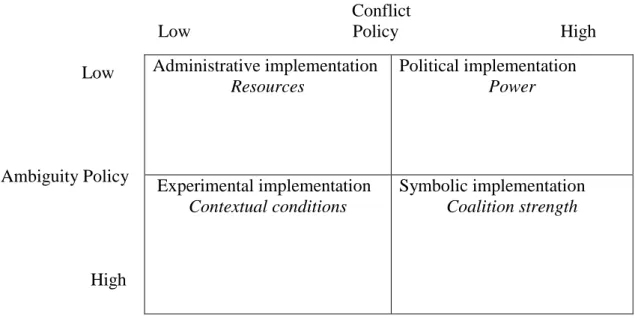
3.3.4. Implementation as a contingency concept 64
3.4. Conclusion 70
CHAPTER 4 72
METHODOLOGY 72
Introduction 72
4.1 Description of the study areas 73
4.2 Data from the secondary sources and theoretical grounding of the primary research 80
4.3 Semi-structured interviews 83
4.4 Data analysis 90
4.5 Positionality of the researchers 93
VII
CHAPTER 5 95
THE NIGERIAN NATIONAL CONTEXT AND NATIONAL SYSTEMS OF EIA 95
5.1. Introduction 95
5.2 Historical development of oil and gas in Nigeria 96 5.3. The environmental impacts of offshore oil and gas operations 101
5.4. The structure of the NMOGS’s EIA systems 111
5.4.1. The DPR EIA system: principles and procedures 114 5.4.2. The FMENV EIA system: principles and procedures 117 5.5. The role of Government actors in designing and implementing EIA 124
5.5.1 The role of DPR 124
5.5.2. The role of FMENV 126
5.5.3. The role of Nigerian Maritime Administration and Safety Agency 128
5.6. Conclusion 131
CHAPTER 6 133
ASSESSING THE NMOGS’s EIA IMPLEMENTATION THROUGH KEY STAGE S
6.1. Introduction 133
6.2The EIA successes 135
6.3Description of the selected EIA reports and their findings 140 6.3.1. Description of the 3 selected multinational oil company projects 141 6.3.2. Description of the 3 selected indigenous oil company projects 149 6.3.3. Main EIA irregularities identified at different periods 152 6.3.4. Main irregularities related to the lack of public participation 154 6.4. EIA failures: a case study of WAGP and tank farm projects 156
6.4.1. Case study of WAGP project 157
6.4.2. Case study of tank farm project 160
6.5. Reasons for the lack of compliance 161
6.5.1. Quasi-participation 165
6.5.2. Oil companies hiring people to support their projects 166 6.5.3. Inadequate ways of making EIA report available to the public 166 6.5.4. Insufficient number of days for public to lodge complaint against project 167
VIII
CHAPTER 7 171
INTER-AGENCY CONFLICTS AND AMBIGUITIES IN THE NMOGS’s EIA
IMPLEMENTATION PROCESS 171
7.1. Introduction 171
7.2.Assessing the DPR and FEMNV EIA systems 172
7.2.1. Oil and gas companies’ sponsorship of national EIA procedures 175 7.2.2. The use of local experts in the EIA process 177
7.2.3. Official encouragement of waiver 179
7.3. Binary EIA as a source of sectoral policy conflict 180 7.3.1. Intervention to ameliorate sectoral conflict 183 7.4.Stakeholders’ views regarding the sector’s binary EIA systems 186
7.5.Conclusion 189
CHAPTER 8 191
INTRA-AGENCY CONFLICTS AND AMBIGUITIES IN THE FEMNV’s EIA
IMPLEMENTATION STYLE 191
8.1. Introduction 191
8.2. The FEMNV’s implementation style 192
8.3. Federal-state level of interactions over EIA procedures 199 8.4. Federal-state level budgetary allocations and patterns of EIA implementation 202 8.5. The effect of available human resources on EIA implementation 205
8.6. Conclusion 210
CHAPTER 9 212
CONCLUSION 212
9.1Summary of principal findings 212
9.2Broader contribution to knowledge 214
9.3Policy recommendations 215
9.3.1 Encouraging synergies and conflict resolution among the Government officials 215
9.3.2 Improving the political economy of the sector 217
9.3.3 EIA implementation: Social interaction and democratic issues 219
9.3.4 Adopting best practice 220
REFERENCES 222
IX
LIST OF FIGURES
Figure 2.1 Fuel Shares of the World’s CO2 Emissions in 1973 20
Figure 2.2 Fuel Shares of the World’s CO2 Emissions in 2007 20
Figure 2.3 The Environmental Impact Assessment Decision-Support System 24 Figure 2.4 The Environmental Impact Assessment Process 25
Figure 2.5 Stages in the Analysis of Alternatives 28
Figure 3.1 Matland’s Ambiguity-Conflict Matrix 68
Figure 4.1Map of Nigeria 73
Figure 4.2 Map of Rivers State, Nigeria 77
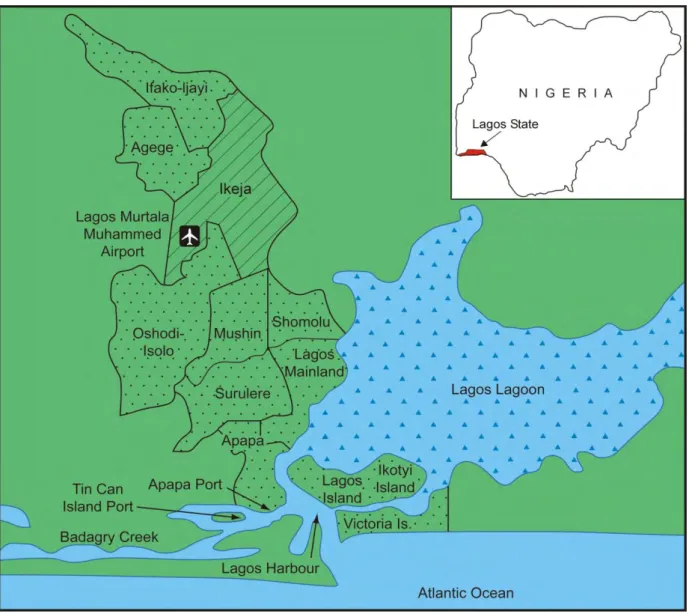
Figure 4.3 Map of Lagos State, Nigeria 79
Figure 4.4 Interview Locations and Number of Interviewees’ 86
4.5 Participants interviewed by professions 88
Figure 5.1 The Nigerian’s Regions and Oil Consumption Rates 98 Figure 5.2 Location of Nigerian Offshore Oil and Gas Fields 99
Figure 5.3 Department of Petroleum EIA procedures 115
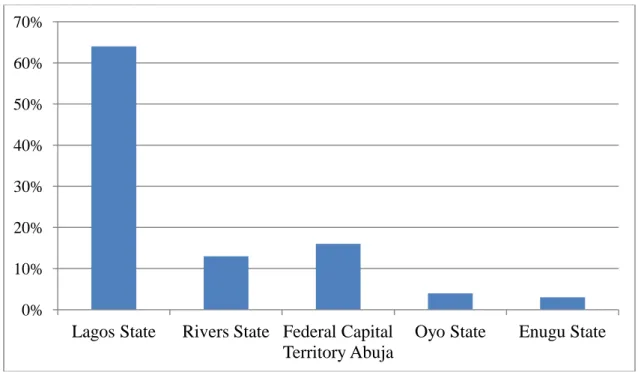
Figure 5.4 Federal Ministry of Environment EIA Procedures 119 Figure 6.1 Previously Registered and Approved EIA in the Country from 1995-2009 137
Figure 6.2 West African Gas Pipeline Project Areas 142
Figure 6.3 The Agbami Floating Production Storage Offloading 148
Figure 6.4 The Agbami Oil Field in OPL 216 148
Figure 6.5 Tank Farm in Apapa, Lagos 149
Figure 6.6 Storage of EIA reports in the FMENV Office, Lagos State 163
X
LIST OF TABLES
Table 2.1 Table 2.1: Summary of Potential Environmental Impacts (offshore) 14 Table 2.2 Towards ‘Sound Practice’ Principles of Impact Scoping Requirements 27 Table 2.3 The Principles for Design and Development of Effective EIA Processes 33 Table 2.4 The Principles for Effective EIA Practice 34 Table 2.5 Previous EIA Research around the European Union 37
Table 2.6 The International Principles for SIA 40
Table 2.7 Key Stakeholders’ Expectations from the EIA Process 40 Table 5.1 Historical Development of Nigerian Oil and Gas Sector from 1908-1999 97 Table 5.2 Nigeria’s Oil and Gas Pipelines Location 100 Table 5.3 Best Estimate of Gas Flaring Trend in Selected Countries in 2000 103 Table 5.4 Major Oil Spillage Events in the Coastal Zone of the Nigerian (1978- 2001) 104 Table 5.5 Summary of the Environmental Impacts of Oil Exploration and Production 106 Table 5.6 Developments that led to EIA Systems in the NMOGS 113 Table 5.7 Project in Category 1 (projects that require EIA under FMENV EIA) 120 Table 5.8 Similarities and Differences between the NMOGS’s EIA and the Egyptian EIA
systems 130
Table 6.1 Previously Registered & Approval EIA in the Country from (1995-2009) 136 Table 6.2 West African Gas Pipeline Specific Mitigation Measures 144
Table 6.3 Regulatory Monitoring Organisational Roles 145
Table 6.4 Summary of WAGP consultation by individual stakeholders 146 Table 6.5 Potential Impacts and Mitigation Measures for Tank Farm 150
XI
LIST OF ACRONYMS
ACF Advocacy Coalition Framework ACM Ambiguity Conflict Model AGIP Azienda Generale Italiana Petroli AI Administrative Implementation BCC Bitumen Corporation Company BCM Billion Cubic Metres
BP BP Public Limited Company BPD Barrels Per-day
BOE Barrels of Oil and Equivalent CBD Convention on Biodiversity CBN Central Bank of Nigeria
CEFAS Centre for Environment, Fisheries and Aquaculture Science CEQA California Environmental Quality Act
DPR Department of Petroleum Resources
DUDE Division of Urban Development and Environment EBRD European Bank for Reconstruction and Development EFFC Economic and Financial Crimes Commission
EGASPIN Environmental Guidelines and Standards for Petroleum Industry in Nigeria EI Experimental Implementation
EIA Environmental Impact Assessment EIS Environmental Impact Statement ENI Ente Nazionale Idrociarburi
XII ERA Environmental Rights Action
FEPA Federal Environmental Protection Agency FERC Federal Energy Regulation Commission FGN Federal Government of Nigeria
FMENV Federal Ministry of Environment
FMPR Federal Ministry of Petroleum Resources FPSO Floating production storage and offloading GDP Gross Domestic Product
GEF Global Environmental Facility
GIAs Government Implementing-Agencies
GTEI Green Thinking Environmental Initiative
IAIA International Association for Impact Assessment ICPC Independent Corrupt Practice Commission ICs International Conventions
IEA International Energy Agency IFC International Finance Corporation IMF International Monetary Fund IMO International Maritime Organisation IOs International Organisations
LASEPA Lagos State Environmental Protection Agency LGAs Local Government Authorities
LSMENV Lagos State Ministry of Environment
MARPOL International Convention for the Prevention of Marine Pollution from Ship MOU Memorandum of Understanding
XIII NATO North Atlantic Treaty Organisation
NDLEA National Drug Law and Enforcement Agency NDRDMP Niger Delta Regional Developments Master Plan
NEEDS National Economic Empowerment and Development Strategic NGC Nigerian Gas Company
NEPA National Environmental Policy Act NEPIs New Environmental Policy Instruments NGOs Non-Governmental Organisations NES Nigerian Environmental Society
NESREA National Environmental Standards Regulations and Enforcement Agency NIMASA Nigerian Maritime Administration and Safety Agency
NISER Nigerian Institute of Social and Economic Research NNPC Nigerian National Petroleum Corporation
NMOGS Nigerian Maritime Oil and Gas Sector NOSCP Nation Oil Spill Contingency Plan
NOSDRA National Oil Spill Detection and Response Agency NPA Nigerian Port Authority
NPE National Policy on Environment
OECD Organisation for Economic Cooperation and Development OPEC Organisation of the Petroleum Exporting Countries
OPRC Oil Pollution Preparation Response and Cooperation PAIR Preliminary Assessment of Impacts report
PI Political Implementation PPPs Policies, plans and programmes
XIV
SAP Structural Adjustment Programme
SEA Strategic Environmental Assessment SERAC Social and Environmental Rights Action SI Symbolic Implementation
SIA Social Impact Assessment SMENV State Ministries of Environment UN United Nations
UNCED United Nations Conference on Environment and Development UNECE United Nations Economic Commission for Europe
UNEP United Nations Environment Programme
USAID United State Agency for International Development WAGP West African Gas Pipeline
WB World Bank
WCED World Commission on Environment and Development WMSN Waste Management Society of Nigeria
- 1 - CHAPTER 1
INTRODUCTION AND BACKGROUND TO THE STUDY
1.1. Introduction
This thesis reviews and evaluates EIA implementation as it relates to the Nigerian Maritime Oil and Gas Sector (NMOGS). EIA has been institutionalised since the 1990s in the NMOGS, remaining the primary means by which potentially adverse environmental impacts can be mitigated via legal requirements and procedures. The thesis explores the effects of the national policy context on the development of environmental regulations within the Nigerian maritime oil and gas sector, while scrutinising the procedural issues associated with the implementation of EIA. It illuminates the components of, as well as the reasons for, organisational ambiguities and conflicts associated with the implementation of EIA in the NMOGS, by using an inter and intra-agency lens.
In a broader sense, the thesis addresses the challenges associated with appraising the impacts of environmental global offshore oil exploration, which has increased at a rapid pace since 1960s (Kaiser, 2007). In addition to demand patterns, the rise of this phenomenon is largely thanks to opportunities in the form of technological innovations (Pinder, 2001), which have helped in identifying viable new fields to exploit and increase oil production rates (BP, 2009; OECD/IEA, 2009). Between 1970 and 2009, however, approximately 5.65 million tonnes of oil was lost to the sea, causing certain marine environments to be heavily polluted (Junfeng and Leping, 2011). As a result, the political importance of environmental policy has grown in recent years (Bond et al., 2010; Tullos, 2009; Jah et al., 2007; Wood, 2003a).
- 2 -
Even though it is becoming increasingly recognised that the environmental impacts of oil and gas operations can be mitigated and prevented via environmental policies and their management options (Bassey, 2010; Steiner, 2008; Goodland, 2005), insufficient attention has been paid to the evolution and implementation of environmental regulatory systems. This is particularly pronounced in developing country settings (Aishuwaikhat, 2005; Wood, 2003b), largely because the implementation of related regulatory systems is embryonic (Ofori, 2005; Wood, 2003b; Sebastiani et al., 2001; Kakonge, 1999, 1997), emergent (Alemagi et al., 2007) and in parts contradictory (Echefu and Akpofure, 2007; Nwafor, 2006; Ogunba, 2004; Olokesusi, 2000, 1998).
A variety of policy implementation approaches for managing environmental issues are currently in operation across the world (Wilson and Piper, 2010). Many of these are ‘consistent with the sixth Environmental Action Programme which refers to horizontal integration measures as including Environmental Impact Assessment (EIA), Strategic Environmental Assessment (SEA), Integrated Coastal Zone Management and vertical measure’ (ibid, p. 66). EIA is one of the most prevalent operating procedures for environmental assessment globally, having become the primary means by which potentially adverse environmental impacts can be assessed and mitigated. In theory, it should provide a variety of mechanisms for stakeholder engagement in the policy process. The remainder of this introductory chapter discusses the rationale for the thesis, as well as its aims, objectives and structure.
- 3 - 1.2. Rationale for, and relevance of, the thesis
In addition to addressing the adverse impacts of resource extraction and exploitation (Song et al., 2011; Borasin et al., 2002), EIA is often used to promote sustainable development (Duncan and Hay, 2007; Morrison-Saunders and Fischer, 2006; Robert, 2004; Petts, 1999d), as well as serving as a planning and management tool more generally (Crabbe and Leroy, 2008; Kakonge, 1998). However, studies of the implementation and evaluation of EIA ‘have been criticised for failing to bring to life not only the everyday working policies or projects, but also the lessons that might be gained from reflecting upon the processes...’ (McKie, 2002, p. 263). This links to a broader issue in social science, where numerous authors have noted that assessments of policy ‘successes’ or ‘failures’ have been largely based on insufficiently robust analytical frameworks (Powell and Maynard, 2007; Mark et al., 2006; Cousins and Shulha, 2006; Anderson, 1995). Dahler-Larsen (2006) maintains that early evaluation studies were criticised for relying solely on quantitative methods and producing statistically complex results that were difficult to interpret. In order to address these issues, I have aimed to create a body of empirical evidence specific to the NMOGS. Mark et al. (2006, p. 17) comment that ‘...with empirical data, the evaluation research could construct...an empirically based assessment of what evaluation looks like, under different conditions’.
In Nigeria, offshore oil and gas activities that range from exploration to production have generated major environmental and social challenges (Bassey, 2010, 2007, 2004; Goodland, 2005). The most noticeable are oil spills and gas flaring, which have become endemic and attained worldwide notoriety (Steiner 2008; Kloff and Wicks, 2004). For example, Luiselli et al. (2006) reported that about 1.3 million barrels of oil was lost in Nigeria due to oil spillage
- 4 -
incidents between 1978 and 2001. Similarly, Bassey (2010, p. 61) maintains that nationally ‘up to 1000 oil spills occur every year although official figure puts this at 300’.
One of the consequences of this high level of domestic environmental pollution is the current civil unrest within and outside the Niger Delta. Considering that a larger proportion of Nigeria’s wealth comes from the Niger Delta, it comes as little surprise that the people of the region have been in conflict with the Federal Government of Nigeria over the control of the petroleum resources as a result of having to bear the brunt of environmental damage caused by oil exploration activities. Currently, domestic activities such oil and gas exploitation in this region are severely constrained due to the negative effects of oil spill and gas flaring problems coupled with lack of social amenities (i.e. infrastructures) (Niger Delta Regional Development Master Plan 2006; Ukwu, 2002).
It should be pointed out that the issue of environmental policy standards and environmental regulation is not new in the African continent (Gray, 2003). The basis of environmental policy in Nigeria is contained in section 20 of the 1999 constitution of the Federal Republic of Nigeria (Makinde and Adegoke, 2008; Adelagan, 2004). Similarly, the Nigerian Government enacted the EIA Act in 1992 with the stated goal of achieving sustainable development (Nwafor, 2006). The Nigerian EIA act stipulates that the public or private sectors of the economy shall not undertake or embark on, or authorise projects or activities without a prior consideration of the effects on the environment (Nwafor, 2006; Ogunba, 2004; Olokesusi, 2000, 1999, 1998). Separate legislation established the Department of Petroleum (DPR), Federal Ministry of Environment (FMENV), State Ministries of Environment (SMENV) and National Oil Spill Detection Response Agency (NOSDRA),
- 5 -
Nigerian Maritime Administration Safety Agency (NIMASA) among other establishments to manage environmental related issues in the NMOGS.
It is also worth noting that there has recently been significant improvement in the environmental regulation of the African oil and gas sector more generally. This is evidenced by the establishment and hosting of the West Africa Regional Search and Rescue Coordination Centre of the International Maritime Organisation (IMO), which was commissioned in 2008. As a result of being a member of the organisation, Nigeria has ratified all IMO environm ental related conventions. Similarly, the Department of Petroleum Resources (DPR) and FMENV run concurrent EIA systems.
Nevertheless, the problem of environmental degradation still prevails within oil producing states. In part, this may be due to the fact that environmental challenges cannot be treated in isolation from other societal issues (Crabbe and Leroy, 2008; Sands, 2008) particularly when achieving sustainable development is involved, and thus the application of a holistic or integrative approach is necessary. Castree et al. (2009, p. 1) comment that ‘...many see
geography as the original integrated environmental science...’ This approach concerns the interrelationships and the interface between formulation of policy and its implementation, which for EIA represents ‘a key element to securing both comprehensiveness and consistency across the programme’ (Wilson and Piper, 2010, p. 89). Integrated Assessment can probably best be described as ‘interdisciplinary and participatory process of combining, interpreting and communicating knowledge to allow a better understanding of complex phenomena’ (Rotmans and Van Asselt, 2002, p. 78). Therefore, applying an integrated approach is needed to assess how national environmental policy objectives have been met (or not).
- 6 -
I have identified three areas where a novel contribution can be made by this study. First, even though previous researchers have explored the extent to which EIA has been translated into practice in Nigeria (See for example, Ameyan, 2008; Nwafor, 2006; Ogunba, 2004; Olokesusi, 2000, 1998), far less attention has been given to the implementation successes related to the NMOGS’s EIA systems and the reasons for such achievements. This is particularly the case in terms of establishing whether the sector’s EIA key implementation stages (mitigation compliance monitoring and public participation) are coherent and integrated in their approach to assessing environmental impacts through political, social and economic factors. Similarly, previous researchers have failed to exhaustively assess the sector’s EIA implementation processes through multinational and national oil company projects. This gives me the opportunity to identify the system that reflects the principle of good practice.
Second, while previous work has established that NMOGS operates two separate EIA systems, with issues of overlap between these systems extensively discussed (See for example, Nwafor, 2006; Ogunba, 2004; Olokesusi, 2000, 1999, 1998, 1997), there has been little consideration of the reasons for this situation. There is a need to examine the ad hoc
state interventions made to resolve the sector’s EIA implementation challenges and explore the stakeholders’ views regarding the operation of the double EIA systems, which has not been previously attempted.
A study by Nwafor (2006) emphasised low level of co-operation between FMENV and State Ministries of Environment. Nonetheless, Nwafor did not consider why some Nigerian states are agitating for their own separate EIA systems (case as is with Lagos and Rivers States). Similarly, the reason why the Federal Ministry of Environment is not permitting the State
- 7 -
Ministries of Environment to have their own EIA has not been investigated. Through this empirical scrutiny, I have sought to demonstrate the dynamic nature of the Nigerian context for implementing EIA, and to show the iterative relation between implementation practice and national setting, confirming Stern’ observation that evaluating practice is ‘a response to the formative contexts that are aimed at changing and reshaping evaluation’ (Stern, 2006, p. 312).
Third, the study focuses on the multiple ways in which EIA can effectively improve the components of its key implementation stages: mitigation compliance monitoring and public participation. By doing so, the aim is to better understand current environmental management procedures in use within government implementing agencies (GIAs) and to identify a road map by which the sector’s EIA goal can be enhanced. Implementation of improved environmental policy standards is essential because ‘it is in implementation that GIAs perfect the promise of innovation... and put ideas and visions to work’ (Russ, 2007, p. 1). In the same manner, analysis of implementation is urgently required in Nigeria, as it is capable of revealing and identifying factors that constitute either policy success or failure (Jordan et al., 1998). Thus, implementation should be seen as what happens between policy expectations and policy results and it should not be viewed as ‘failure but as another check...in a system of government...’ (deLeon, 1999, p. 320). The expectation is that the GIAs and stakeholders should learn from the identified challenges in order to change implementation behaviours (Dahler-Larsen, 2006), and thus contribute to more efficient policy outcomes (Mark et al., 2006). In this way, GIAs and stakeholders in the EIA process mainly will begin to ‘act in ways which do not generate environmental problems or which generate problems with lesser significance than was previously the case’ (Robert, 2004, p. 3).
- 8 -
It is hoped that if regulatory policies on the environment are strictly implemented, civil unrest in the country will be reduced and ecological degradation will be minimised (Adinna and Attah, 2003). By making recommendations for refining and enhancing existing EIA policies, it is further hoped the thesis will therefore enhance institutional, social, environmental and economic growth. The research outcome is of direct relevance to government and learned societies in Nigeria.
1.3. Aims and objectives
In light of the above, the main aim of this research is to review and evaluate domestic environmental standards and regulations with respect to the Nigerian maritime oil and gas sector. In particular, the analysis focuses upon one International policy tool – EIA – which embodies the difficulties associated in finding ‘consensual approaches to change’ (Wilson and Piper 2010, p. 17) when engaging the public and other stakeholders in the treatment of environmental issues.
This research partly embraces summative evaluation in understanding whether policy has achieved its clear goal (Mark et al., 2006; Tilley and Clarke, 2006). As such, it largely takes form of formative evaluation, in terms of seeking to determine the efficiency and effectiveness of EIA arrangements in order to improve and refine national procedures (Mark
et al., 2006; Donaldson and Lipsey, 2006; Rogers and Williams, 2006; Whitmore et al., 2006; Cabinet office, 2004; Hall and Hall, 1996; Patton, 1987). Therefore, the overall purpose of this research is to contribute to identification of areas of policy implementation that require further improvement. In more general terms, the purpose of evaluation includes: programme and organisational improvement; oversight and compliance; assessment of merit and worth;
- 9 -
and knowledge improvement (Chelimsky, 2006; Donaldson and Lipsey, 2006; Moore et al., 2005; Morrison-Saunders and Bailey, 2000).
A novel feature of the thesis is that it focuses on the marine environment, since the impact of marine pollution is large (Junfeng and Leping, 2011; Veil et al., 2004; UNEP, 1993) and contributes a significant threat to the sea environment (Kirby and Law, 2010; IMO, 2008; Camphuysen and Heubeck, 2001). It appears that when oil pollution occurs at the sea, it has capability of entering other regions because water is dynamic, and this might pose threats to the environment by disrupting or destroying marine ecosystems (Orubu et al., 2004).
The research objectives are:
1. To assess the extent to which the NMOGS’s EIA system has been translated into practice through mitigation compliance monitoring and public participation stages, including an examination of their effectiveness via political, social and economic factors.
2. To identify the effects of the national policy context on the development of environmental regulation within the Nigerian maritime oil and gas sector.
3. To examine the reasons for, and components of, the organisational ambiguities and conflicts associated with the implementation of NMOGS’s EIA systems, within an inter- and intra-agency context.
- 10 - 1.4. Structure of the thesis
The thesis addresses the key research objectives as highlighted in section 1.3. The research is carried out in the context of assessing the effectiveness of EIA implementation through nine chapters, as follows:
Chapter 2 outlines the environmental impacts of oil and gas operations, and reviews the role of EIA and its components for example Social Impact Assessment (SIA). It includes the examination of what constitutes a ‘good environmental management system’ and the contribution of previous frameworks applied in evaluating EIA. It also discusses the challenges related to effectiveness of EIA and its components. The concluding section of the chapter critically revisits the identified previous frameworks applied in evaluating EIA.
Chapter 3 emphasises the need for policy theories and in particular the application of theorization of ambiguity and conflict to understand the national policy context for EIA implementation. Its starting point is to elucidate the relationships between policy implementation theories and evaluation research.
Chapter 4 sets out the methodology for the research. It presents the methods of data gathering and how they are analysed, including a description of the study areas, challenges encountered during the fieldwork and techniques adopted to address them.
Chapter 5 outlines the Nigerian national context and national systems of EIA. It discusses the historical development of oil and gas in Nigeria, including the assessment of impacts of oil and gas operations on the environment and social factors. The chapter further describes
- 11 -
the legal frameworks for EIA in the Nigerian maritime oil and gas sector, focusing on the Department of Petroleum Resources and Federal Ministry of Environment systems, while highlighting the role of government implementing agencies in the EIA implementation processes.
Chapter 6 uncovers likely implementation successes in terms of achievements that have been recorded in the sector since EIA became operational. The chapter further examines the extent to which the contents of previous EIA reports and projects (multinational and national oil companies) have been translated into practice through mitigation compliance monitoring and public participation, including an assessment of their effectiveness via political, social and economic factors. This is necessary in order to understand whether the NMOGS’s EIA framework is coherent and integrated in its approach to address the identified environmental challenges and difficulties.
Chapter 7 uses the theoretical frameworks set out in chapter 3 to assess the differences and similarities between the DPR and FMENV EIA systems in order to see how they have influenced the implementation processes. The chapter further explores the reasons for the existence of a double EIA system. It examines why conflict persists in the sector within an inter-agency context, including a discussion of the strategies adopted towards addressing such discrepancies. In addition to this, I explore the stakeholders’ views regarding the sector’s double EIA systems in order to identify the one that is more robust.
Building upon the findings in chapter 7, I explore the FMENV’s EIA implementation style in Chapter 8, in light of the fact that this organisation has a dedicated environmental policy responsibility, and to an extent its EIA system is more robust than the DPR EIA system. The
- 12 -
chapter gives a full account of EIA implementation challenges in an intra-agency context by investigating the levels of involvement, while outlining the reasons why the SMENV (one of the subsidiaries of FMENV) is agitating for their EIA, and why the FMENV is denying it. The remainder of this chapter examines the extent to which financial and human resources have been sufficient in the sector.
Chapter 9 presents the thesis’ contribution to knowledge. Having summarised the empirical results, it revisits the original objectives and makes recommendations for further research and policy.
- 13 - CHAPTER 2
APPRAISING ENVIRONMENTAL IMPACTS: THE ROLE OF EIA
Introduction
The purpose of this chapter is to outline the environmental impacts of maritime oil and gas operations, and the use of EIA for appraising them. It places a particular emphasis on the role of EIA and its components, such as Social Impact Assessment (SIA). The chapter also discusses implementation challenges related to EIA and its elements. It is divided into four sections. Section 2.1 reviews the evidence of environmental impacts of the maritime oil and gas sector, including the extent to which they have been hindering water, fisheries, global climate and human health among others. Section 2.2 elucidates the broader purpose of EIA, while providing examples of best practice in several countries, and including a discussion of its key components: Social Impact Assessment and monitoring systems. Section 2.3 describes the implementation challenges related to EIA and its components. Finally, the conclusion of the chapter (Section 2.4) summarises and critically highlights the main limitations of the main frameworks applied in evaluating EIA.
2.1. Environmental impacts of offshore oil and gas operations
Even though oil and gas exploration and development are fundamentally important to servicing the energy requirements of global capitalism, they also have significant impacts on the environment (O’Rourke and Connolly, 2003; Borasin et al., 2002). Understanding the environmental implications of oil and gas operation is required to assess the cost of the world’s dependence on oil (Borasin et al., 2002). Marine environmental pollution was recognised as a major problem in the maritime oil and gas sector already from the late
- 14 -
nineteenth and early twentieth centuries. For example, one of the earliest surveys of the impact of oil on seabirds was conducted in the 1920s (Camphuysen and Heubeck, 2001).
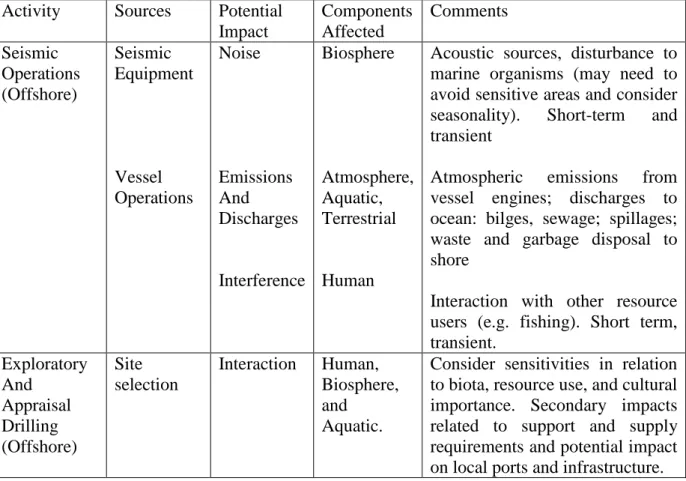
The main offshore oil and gas activities are exploration, drilling and extraction (O’Rourke and Connolly, 2003; E&P Forum/UNEP, 1997). This has the tendency to pollute the environment via drilling waste, associated waste, noise generation, air emissions (flaring of natural gas), leaks and oil spills (Junfeng and Leping, 2011; Song et al. 2011; Streever, 2008; IFC/WB, 2007; Lee, 2005; O’Rourke and Connolly, 2003). Oil spills can occur accidentally or intentionally (Cao et al., 2011; O’Hara and Morandin, 2010). The impacts of these activities vary, as they affect the water, sediment, sea fauna and flora, atmosphere, and have effects on human health (Soderbergh et al., 2010; Kirby and Law, 2010; O’Rourke and Connolly, 2003; UNEP, 1993). They are summarised in Table 2.1.
Table 2.1: summary of potential environmental impacts (offshore)
Activity Sources Potential Impact Components Affected Comments Seismic Operations (Offshore) Seismic Equipment Vessel Operations Noise Emissions And Discharges Interference Biosphere Atmosphere, Aquatic, Terrestrial Human
Acoustic sources, disturbance to marine organisms (may need to avoid sensitive areas and consider seasonality). Short-term and transient
Atmospheric emissions from vessel engines; discharges to ocean: bilges, sewage; spillages; waste and garbage disposal to shore
Interaction with other resource users (e.g. fishing). Short term, transient. Exploratory And Appraisal Drilling (Offshore) Site selection Interaction Human, Biosphere, and Aquatic.
Consider sensitivities in relation to biota, resource use, and cultural importance. Secondary impacts related to support and supply requirements and potential impact on local ports and infrastructure.
- 15 - Operations Discharges Emissions Waste Human, Biosphere, Aquatic and Terrestrial
Discharges to ocean – mud, cuttings, wash water, drainage, sewage, spillages and leakages. Emissions from plant equipment; noise and light; solid waste disposal onshore and impact on infrastructure. Disturbance to benthic and pelagic organisms and marine birds. Emissions and discharges from well test operations, produced water discharges, burning and flare, additional noise and light impact. Effects of vessel helicopter movements on human and wildlife. Development And Production (Offshore) Site selection Operations Interactions Discharges Emissions Waste Socio-economic Cultural Human, Biosphere and Aquatic. Human, Atmosphere, Biosphere, Aquatic and Terrestrial Human
Long-term site selection based upon biological and socio-economic sensitivities and minimum disturbance. Risk of impact to sensitive species, commercially important species, resource conflict and access. Long-term support and supply base requirement and impacts on local infrastructure.
Long-term, chronic effects of discharges on benthic and pelagic biota; sediment and water quality. Impact of drill cuttings and mud discharges, produced water, drainage, spillage and leakage. Emissions from power and process plant and impact on air quality. Noise and light impact from facilities and flaring.
Loss of access and resource use interaction. Local port, harbour and community interactions related to supply and support functions
- 16 - 2.1.1.The impacts on water, fauna and flora
One of the key objectives of Agenda 21 arising from the Rio Earth Summit (1992) was protecting and managing the sea (E&P Forum/UNEP, 1997). Oil that is discharged into the sea passes through different processes: evaporation, spreading, dissolution, biodegradation and emulsification i.e. formation of oil in water and vice versa (Song et al., 2011; Borasin et al., 2002; Mackay and McAuliffe, 1989; Riley et al., 1980). The effects of pollution on sea water include high concentrations of oil (Kirby and Law, 2010; UNEP, 1993), and sources of contamination (Song et al., 2011), which are capable of causing significance adverse effects to sea fauna and flora (sea creatures).
For example, in South America alone, over 40 000 sea creatures have been destroyed due to the impact of oil spills (Camphuysen and Heubeck, 2001). Similarly, in Kuwait only in one year (that is 1991) about 30 000 sea creatures were destroyed as a result of impact of oil spills (UNEP, 1993). A study by O’Hara and Morandin (2010) indicated that even thin oil can impact the microstructure of seabird feathers and their metabolic rate. Another study by the Centre for Environment, Fisheries and Aquaculture Science (CEFAS) in 2011 showed that when the sea is polluted, seabirds’ reproductive capacity is reduced (CEFAS, 2011).
Other than the impacts of oil spills, Trannum et al. (2010) maintain that offshore oil and gas activities for example drill cuttings and the water-based drilling mud (waste waters/produced water) have affected oxygen consumption and penetration in the sea, thus causing sea fauna mortality. However, it has been argued that only oil based drilling and oil cutting could have an increased effect on sea water, while water based drilling has limited effects on sea water environment because its components are not toxic (Veil et al., 2004; E&P Forum/UNEP,
- 17 -
1997). Moreover, a discussion that focuses on the offshore oil and gas environmental impacts cannot be completed without considering the impacts of noise pollution that are arising from offshore installations, which might endanger the life of fauna when proper mitigation measures are not in place from the onset (Streever, 2008; Khan and Islam, 2003; Pinder, 2001). Apart from offshore installations, other oil and gas activities generating noise pollution are seismic operations, drilling and production, and marine traffic (IFC/WB, 2007; Borasin et al., 2002).
2.1.2. The impacts on atmosphere and human health
Emissions from offshore oil and gas operation arise from combustion from power and heat generation, and the use of compressors and pumps (IFC/WB, 2007). Similarly, large oil spills have the capability of producing toxic gases, including those rich in metals (Pandey et al., 2009). Borasin et al. (2002) reported that levels of mercury in the Gulf of Mexico are high, thus contaminating fish, which causes harm to humans in the form of birth defects, heart problems and severe neurological disorders.
Other sources of emissions from offshore oil and gas activities include flaring, venting and purging gases (E&P Forum/UNEP, 1997). Although flaring is necessary in the case of emergency, new technologies should be demonstrated and adopted to ensure that gas is safely disposed (IFC/WB, 2007). It is only when the required technology is not in place, flaring becomes ‘a waste of valuable resource, as well as a significant source of green house emissions’ (P. 3).
- 18 -
The key emission gases from offshore oil and gas activities are carbon dioxide, carbon monoxide, volatile organic carbons, sulphur and methane (Song et al., 2011; IEA, 2008; E&P Forum/UNEP, 1997). Importantly, potential impacts of these emissions vary, it depends upon the nature of the process under the consideration, and more emissions are generated during the production than exploration because the former is associated with intensive activities (E&P Forum/UNEP, 1997). In more general terms, emission gases have the tendency of affecting air quality and causing harm to marine environment and human health.
Among fauna for example, the emission gases have affected fish production causing decline because of changes in temperature (Sheppard et al., 2010). In humans, emission gases have caused nausea, dizziness, headaches and irritation (Song et al., 2011; Pandey et al., 2009; Demayo et al., 1998), and in some cases loss of human life have occurred (BP, 2011). One of the recent examples of emission gases that have resulted in loss of human life is the deepwater horizon accident, which occurred on 20th April 2010 at Gulf of Mexico, where gases were not only emitted into the atmosphere but subsequently explosion that lasted for 36 hours also occurred (BP, 2011). This is not different from the occurrence in Kuwait, where about 613 oil wells were burnt (UNEP, 1993), which remained a potential hazard to human health (UNEP, 1993), as the emissions lasted for several months (Borasin et al., 2002).
Wilson and Piper (2010) established that between year 2000 and 2008, fossil fuel emissions have increased by 29 percent. The energy-related CO2 emissions are projected to increase by
45% between 2006 and 2030, with three-quarters of this increment arising in China, India and the Middle East, and 97% in non-OECD countries as a whole (OECD/IEA, 2009). Notably, since 1973 oil consumption has remained a very substantial source of CO2 emissions (See
- 19 -
because natural gas is a relatively clean fuel with low emissions of greenhouse gases compared with oil (Paltsev et al., 2011). It appears that further reductions of CO2 emissions
are required to mitigate the effect of anthropocentric climate change (Jayanthakumaran et al., 2012).
- 20 -
Figure 2.1: Fuel shares of the world’s CO2 emissions in 1973
Source: OECD/ International Energy Agency, 2009, p. 18
Figure 2.2: Fuel shares of the world’s CO2 emissions in 2007
Source: OECD/International Energy Agency, 2009, p. 18 0.00% 10.00% 20.00% 30.00% 40.00% 50.00% 60.00%
Oil Gas Coal Other
Fuel shares of the world's CO
2emissions in 1973
0.00% 10.00% 20.00% 30.00% 40.00% 50.00% 60.00%
Oil Gas Coal Other
- 21 -
However, addressing the CO2 production impacts in the oil and gas sector by embracing
renewable energy alone could greatly increase unemployment because oil production rates will be reduced (Esteban et al., 2011). As documented by Cavalett and Ortega (2010) the use of these alternative sources of energy for example biodiesel has not proved effective for countries such as Brazil. Similarly, the way out is not even by concentrating largely on response for example oil spill response, as it might contribute additional threats to the sea fauna and flora (CEFAS, 2011). On this note, it seems that prevention is better than cure.
Therefore, mitigation tools that recognise the human dimension and the environment might help in preventing the oil and gas environmental related problems before they occur (Kirby and Law, 2010; Demayo et al., 1998; E&P Forum/UNEP, 1997). In this context, there are several ways by which environmental impacts can be mitigated. However, in light of the research gaps and aims identified in the previous chapter, the next section focuses on the role of EIA, including the contributions of Social Impact Assessment and monitoring systems. While acting as components of EIA positioned to complement EIA, they should also allow for measuring the effectiveness of EIA implementation processes.
2.2. The role of EIA and its components
In the late 1960s, environmental problems became serious political issues in the U.S. leading to enactment of the National Environmental Policy Act (NEPA) in 1970 (Wood, 2003a, 1999, 1995) providing the first comprehensive environmental legislative framework in U.S. history (Bond et al., 2010; Tullos, 2009; Jah et al., 2007). This legislation is described as ‘a decision tool in response to increase eco-centric concerns to mediate between a techno-centric view of continued development and the ability to create growth while overcoming environmental
- 22 -
problems’ (El-fadi and El-fadel, 2004, p. 555). Broadly, similar developments took place in Europe at this time. Thus, according to Tope (1999) the UK was at the forefront of implementing a goal- setting regulatory system. Interestingly, oil-related projects have been in existence in the UK as far back as 1973 (mainly in Scotland) (OECD, 1979). However, the projects were subjected to environmental analysis rather than EIA (Wood, 1995; OECD, 1979). In 1974, the UK produced its first offshore oil and gas Environmental Impact Statement (EIS), which was on an informal basis (Bond and Wathern, 1999).
Moreover, the EIA became prominent in the UK in 1980s and it was officially introduced to Member States of the European Union in July 1988, following the approval of 85/337/EEC (Peterlin et al., 2008; Wood et al., 2006; Barker and Wood, 1999) and later amended in 1997 (97/11/EEC) and 2003 (Wilson and Piper, 2010). In the same context, this EIA Directive aims to ‘ensure that certain public and private projects, likely to have significant effects by virtue of their nature, size, or location are subjected to EIA prior to development consent’ (Wilson and Piper, 2010, p. 143). EIA systems have been institutionalised more in other developed countries such as Canada in 1973, Australia in 1974, West Germany in 1975 and France in 1976 (Ogunba, 2004).
This section discusses EIA together with Social Impact Assessment (SIA) and monitoring systems as integral components of the EIA procedure, including what constitutes ‘good practice’ for EIA systems. As EIA is a policy tool, it is the primary means by which potentially adverse environmental impacts can be prevented and mitigated (Cashmore, 2004; El-fadi and El-fadel, 2004; Petts, 1999b), and in principle, should lead to the rejection of environmentally unacceptable actions (Wood, 2003a, 1995). The objectives of EIA include impact avoidance, public involvement, intergovernmental coordination, and agency
- 23 -
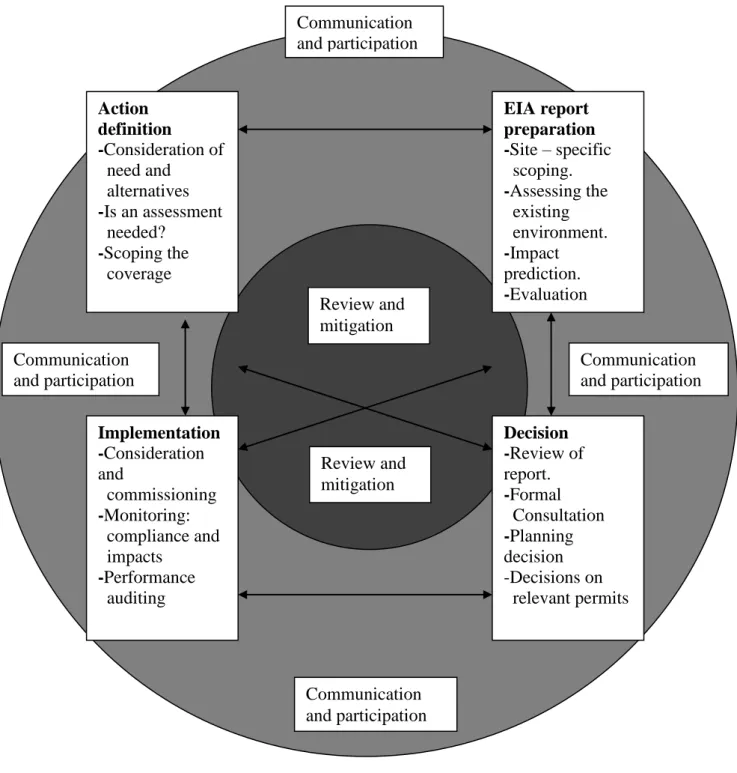
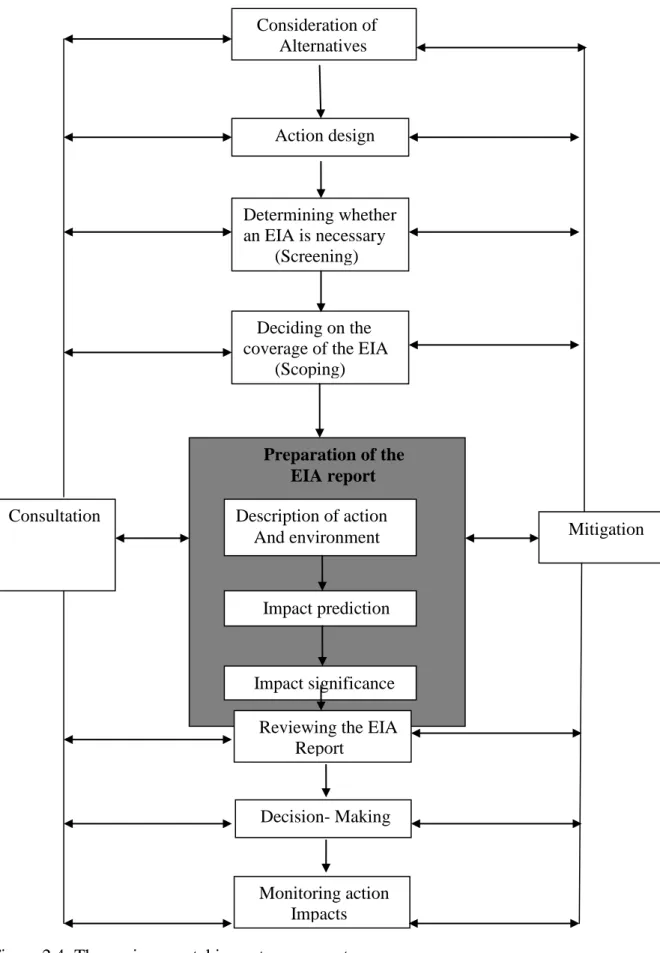
accountability to the public (Bass and Herson, 1999; Clark and Richard, 1999; Kakonge, 1998; Wood, 1995; Ebisemiju, 1993). EIA is further defined as a procedural technique of determining the environmental consequences of a specific project (Coskun and Turker, 2011). This implies that the objectives of EIA have moved beyond mere saying ‘yes’ or ‘no’ to development, towards ensuring that projects are effectively managed (Morrison-Saunders and Bailey, 2009, 2000) and potential problems are addressed as early as possible (Kakonge, 1998). The basic process of EIA contains four comprehensive stages: activity definition, EIA report preparation, decision, and implementation (Petts, 1999a and see Figure 2.3). In more general terms, the EIA process ranges from consideration of alternative to screening, scoping and review of the EIA report, decision-making and monitoring (Wood, 2003a, 1999 and see Figure 2.4).
- 24 -
Figure 2.3: The environmental impact assessment decision-support system Source: Petts, 1999a: 6
Communication and participation EIA report preparation -Site – specific scoping. -Assessing the existing environment. -Impact prediction. -Evaluation significance. -Draft report. Action definition -Consideration of need and alternatives -Is an assessment needed? -Scoping the coverage Review and mitigation Decision -Review of report. -Formal Consultation -Planning decision -Decisions on relevant permits Review and mitigation Implementation -Consideration and commissioning -Monitoring: compliance and impacts -Performance auditing Communication and participation Communication and participation Communication and participation
- 25 -
Figure 2.4: The environmental impact assessment process Source: Wood, 1999 p. 11 Preparation of the EIA report Consideration of Alternatives Action design Determining whether an EIA is necessary (Screening) Deciding on the coverage of the EIA (Scoping)
Description of action And environment
Impact prediction
Impact significance Reviewing the EIA Report Decision- Making Monitoring action Impacts Consultation Mitigation
- 26 -
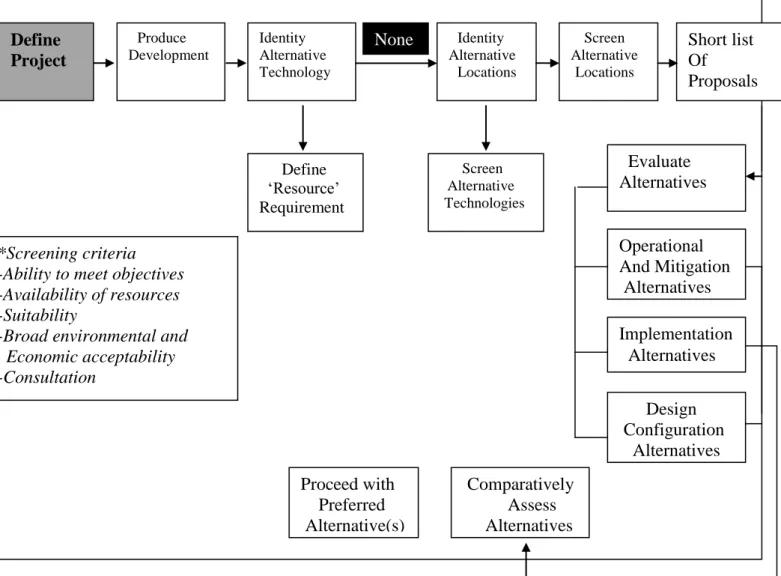
The EIA processes identified in Figure 2.4 are of great importance, because when they are not treated properly in practice the quality of projects might be affected (Wood, 2003a, 1999). These processes should be considered as early as possible when a project is undergoing design and planning (Brookes, 1999). Pinho et al. (2010) describes screening as of the early and essential steps of EIA procedure, aimed at identifying whether or not a project require EIA. Scoping for example has been described as one of the paths towards EIA success (Brookes, 1999), only when it is not influenced negatively by management issues, guidance issues, external influences, internal influences and policy issues (Barnes et al., 2010). The criteria and checklist for an effective and efficient scoping are outlined in Table 2.2, and the stages in the analysis of alternatives in Figure 2.5.
- 27 -
Table 2.2: Towards ‘sound practice’ principles of impact scoping requirements
The responsible authority makes determination of scope i.e. requirements:
Key action and principles
In accordance with EIA laws, provisions and guidelines that apply in a jurisdiction.
Consistent with characteristics of the proposed activity and the condition of the receiving environment and
Taking account of the concerns of those affected by the project.
Pre-identity the possible range of issues and impacts associated with a proposed activity
Fix a ‘reasonable’ time for public review and consultation (i.e. having regard to severity of issues)
Establish, as far as possible, the relative and aggregate significance of impacts, based on technical analysis and public concerns
Draft terms of reference to focus the EIA study on priorities
Begin, confirm or refocus baseline studies and/or monitoring as appropriate
Determine suitable methodologies and methods for next-phase impact analysis and public consultation
Recognise that this process also constitutes a re-scoping exercise, track accordingly and maintain flexibility
Prepare a scoping statement or report with brief updates as necessitated by changes.
- 28 - s
Figure 2.5: Stages in the analysis of alternatives Source: Jones, 1999: 220
In practice, 14 evaluation criteria that centre on procedural issues have been used to examine the effective implementation of EIA (Wood 1999, 2003a). They include legal criteria, impact coverage, consideration of alternatives, screening, scoping, review, mitigation, monitoring, decision, participation, system monitoring, benefits and SEA (See Wood, 1999, pp. 15-19). In addition to these standards, the Canadian Environmental Assessment Research Council identified an additional set of criteria that seek to improve EIA implementation through a Define Project Objectives Produce Development Identity Alternative Technology Identity Alternative Locations Screen Alternative Locations Short list Of Proposals None Define ‘Resource’ Requirement Screen Alternative Technologies Evaluate Alternatives Operational And Mitigation Alternatives Implementation Alternatives Design Configuration Alternatives Comparatively Assess Alternatives Proceed with Preferred Alternative(s) *Screening criteria -Ability to meet objectives -Availability of resources -Suitability
-Broad environmental and Economic acceptability -Consultation
- 29 -
range of indicators and measures (Wood, 1999, p. 14). These have been grouped into three categories, including:
- Effective criteria (information generated in the EIA contributed to decision-making, prediction of the effectiveness of impact management measures were accurate; proposed mitigation and compensation measures achieved approved management objective);
- Efficiency criteria (EIA decisions are timely, and relative to economic and other factors that determine project decisions; costs of conducting EIA and managing inputs during project implementation can be determined and reasonable);
- Fairness criteria (all interested parties (stakeholders) have equal opportunity to influence the decision before it is made; people directly affected by projects have equal access to compensation).
Apart from the application of such criteria frameworks, some researchers have assessed the effectiveness of EIA using broader procedural approaches. For example, four stages of evolution have been proposed by Gibson (2002) to explain EIA systems in Canada. These are summarised as: first, reactive pollution control to address the identified local problems; second, proactive impact identification; third, the integration of broader environmental considerations in project selection; and fourth, integrated planning and decision-making for sustainability (Gibson, 2002). Ogunba (2004) has offered an expansion of this model by proposing two additional stages, which he uses in explaining the EIA situation in Nigeria: first, building-up environmental awareness and second, putting in place national policy statements that might lead to the creation of EIA institutions and formalisation of EIA legislation. Other researchers have suggested adaptation, that is using a framework that has been applied elsewhere (Bailey and Dixon, 1999); some have advocated using assumptions such as issues determine politics and politics determine policy (Christiansen and Kellow,
- 30 -
2002); and in some cases no framework is suggested as long as EIA legislation has been institutionalised (Bartlett, 1997).
However, there is evidence to suggest that a comprehensive and robust EIA system might not be fully guaranteed through the application of evaluation criteria alone. Indeed, the main driving force for ‘best practice’ EIA is likely to address how environmental policy is administered nationally, while assessing the amount of time, and resources needed to prepare the EIA reports, and gauging environmental awareness among the public, NGOs and political expectations (Pinho et al., 2007). Similarly, a ‘good’ EIA must be operative throughout the whole project cycle (Sebastiani et al., 2001). Petts (1999d, p. 8) argues that ‘best practice EIAs should improve the openness, comprehensiveness, transparency and robustness of environmental decision-making’. This should be done in the interest of environment and people (Glasson, 1999), as one of the original intentions of EIA was to improve public involvement in decision-making (Jah et al., 2007; Kvaerner, 2006; Petts, 1999b).
Sadler (1996) suggests that part of the yardsticks to measure the effectiveness of an EIA system should be based on three factors. First is ‘procedural issue (does the process conform to the established provisions and principles?); second is substantive outcome (does the process achieve the objectives set, for example support well-informed decision-making and result in environmental protection?); and third is transactive outcome (does the process deliver tangible outcome that is, is it effective and efficient?)’ (Sadler, 1996 p. 39). In addition to this, effective EIA might be achieved by starting early, identifying priority issues (scoping), establishing clear time lines to decision-making (Terms of Reference), using appropriate methods (impact analysis), ensuring that affected people have a say and their input should be respected, ensure that up-to-date mitigation measures are in place, EIA
- 31 -
reports should be written in a clear language, and it should be reviewed, evaluated and monitored (Sadler 1996).
Apart from preparation of a set of Terms of Reference as mentioned above, Marara et al.
(2011 p. 287) comment that an EIA system might be categorised as sound and effective under the following conditions: (a) ‘a law or written administrative direction, which dictates the EIA process is a necessary condition for viable EIA (b) a transparent government decision-making and approval stages where what is required of proponents and government agencies is made clear to all and (c) adequate administrative support’. Putting in place administrative support is not sufficient but institutional factors that will influence the procedural aspect of EIA system should be encouraged, as they are embedded in ‘legislature, administrative structures, economic and financial arrangement, political structures and processes, and historical and traditional custom and values’ (Morrison-Saunders and Bailey, 2009 p. 285). It is on this note Marara et al. (2011) argue further that the contextual set-up such as the socio-economic and political situation play an important role in achieving an effective EIA system.
Importantly, effective EIA can be achieved in practice when there is cooperation among the policy actors and Government Implementing Agencies in particular, and this is what has been titled as ‘the Partnering Agreement Approach’ (Morrison-Saunders and Bailey, 2009, p. 293), while Polonen et al. (2011 p. 127) see it as ‘communication chains’. Similarly, knowledge management among Government Implementing Agencies is viewed as a pathway towards achieving effective EIA implementation, as knowledge management itself aims at stimulating and enhancing collective organisational skills and competencies (Sanchez and Morrison-Saunders, 2011 p. 2260).
- 32 -
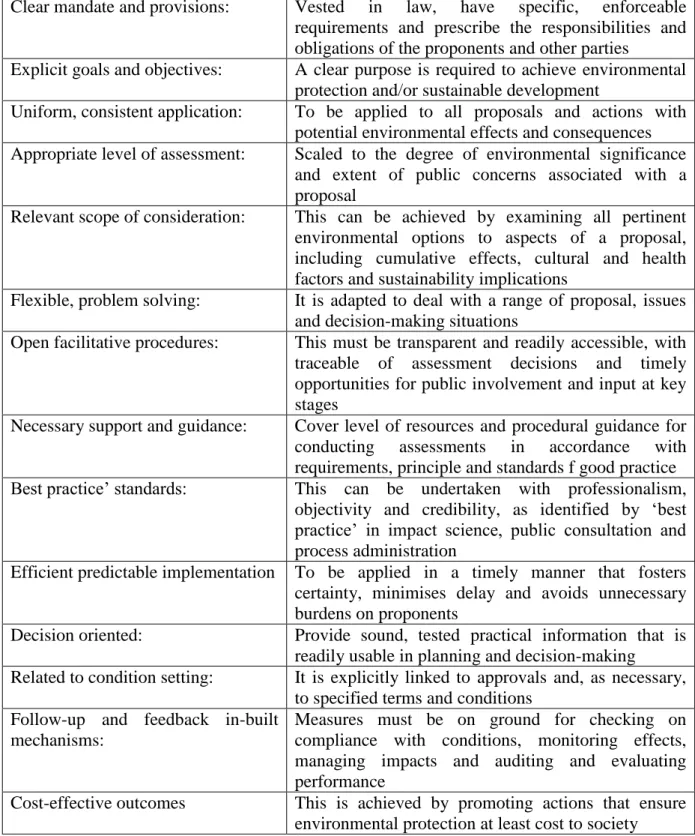
According to Glasson and Bellanger (2003), EIA should also provide answers to basic questions – which development is the best for a given location? How should the development be planned to limit the negative to reduce its impact on the environment and maximise the positive impacts? Based on these questions, the principles for designing and developing effective EIA processes are shown in Table 2.3 and the principles for effective EIA practice in Table 2.4. Table 2.3 outlines the principles associated with clear EIA legislation goals and objectives, a uniformity of approaches towards assessment of environmental problems, and selection of the relevance scope of alternative among other principles of effective EIA processes. Table 2.4 summarises the practical ways of achieving effective EIA; it concentrates on the reasons for the application of EIA and how EIA should be undertaken and addressed among other issues.