Material Science Research India Volume 02, No. (2) 73-78 (2004)
MILLIMETER WAVE PROPAGATION THROUGH LAYERS OF
SAND AND DUST PARTICLES
Mukesh Kumar*
Department of Physics, B. R. A. B. U., Muzaffarpur-842001 * Mailing Address: Trivedi Compound, Mishra Tola, Gannipur,
Muzaffarpur-842001, Ph. No.-(062 I -2244693) (India)
(Received, November 15, 2004)
ABSTRACT
In the present paper theoretical investigation has been carried out to evaluate the effect of the layers of sand, dust particles on the propagation of millimeter wave. For this purpose the layers of sand, silt and clay particles have been considered. The expression for effective propagation constant has been utilized to get the expression for the normalized phase velocity, loss tangent and related attenuation. It has been found that the normalized phase velocity, loss tangent and attenuation, all increase
with increasing frequency for different values of fractional volume.- Further the loss
tangent first increases with increasing fractional volume and then it starts to decrease
with increasing fractional volume. .
Key Words:- dust particles, phase velocity, loss tangent, attenuation.
INTRODUCTION
Recently considerable interest has been devoted to estimate the influence of the layers of dust particles on the propagation characteristics of millimeter wave1-3. It may emphasized that while the millimeter waves are allowed to pass through the medium having such layers the phase and amplitude of wave affected by the dust particles, which ultimately cause the attenuation of the wave. In addition that the normalized phase velocity is also effective. Therefore in present paper an attempt has been confined to obtain the expression for the normalized phase velocity and loss tangent of millimeter wave in terms of fractional volume and particle size. The real and imaginary parts of effective propagation constant have been investigated.
Using the expression for loss tangent
the attenuation constant has also been obtained. The detail of entire investigations have been given in following sections of the paper.
air Z = 0
sand Z = L1
Silt z = L2
clay z = L3
In order to obtain normalized phase velocity (VPh), effective loss tangent (tanδeff) and attenuation constant (α) of millimeter wave from the layers of sand, silt and clay, the profile structure of these constituents in atmosphere must be taken into account, which is shown in fig. 1.
74 Mukesh Kumar, Material Sci. Res. India 02(2) 73-78 (2004)
And
L1 +L2 + L3= L the length of communication line.
For low frequency approximation :
Now, the effective propagation constant for low frequency approximation may be given as
where f = 4πa3
n0/3 is the fractional volume K = 2𝜋l𝜆 is the propagation constant a = radius of spherical particles y = (ϵC-1) / (ϵc + 2)
and n0 is the number of sand dust particles in the unit volume of atmosphere. Now we have
= K [1+(1/2) (3f y/(1-fy)) + (1/2) (i 2f K3 y2 (1-f)4/(1-fy)2 (1 +2f)2]
(4) Separating real and imaginary parts of the propagation constant, one has
KiF = K[1 +(1/2) (3fy/(1-fy))] (5)
KiF = K[((1/2) i2 + K4 y2 (1-f)4)/ (1-fy)2(1 +2f)2]
= fK4y2 (1-f)4)/(1-fy)2(1 +2f)2 (6)
Now the normalized phase velocity VPh is given by
VPh = K / Krf (7)
Similarly the effective loss tangent many be obtained as
tan δeff = 2 KIF/ KrF (8)
Comparing equations (5), (6), (7),*(8) one has
For high frequency approximation :
Mukesh Kumar, Material Sci. Res. India 02(2) 73-78 (2004) 75
where T1 (M)
and T1 (N)
are the coefficient the
amplitude of the field distribution on spherical dust
particles. Further T1(M) and T1(N) are proportional
to the amplitude of magnetic and electric
multipoles, which are induced by incident wave,
then
T1 (M)
= -(i/45)(( ϵc-1)ρ 5
(11)
T1
(N) = -(i/45)(2/3) ((ϵ
0-1 )/( ϵ0 + 2)ρ 3
[(1 +(3ϵc-2)/(5ϵc + 2))ρ2)] (12) Where
p = (2πa/λ)
Now, for small value of ρ and finite ϵc only the first term of equation (12) is important.
T1
(N) = -[-i(2/3) ((ϵ
c-1)/( ϵc + 2))]ρ 3
(13)
Putting the values of T1(M) and T1(N) in eq. (10) one
has
where ϵ
c= ϵ
1-i ϵ
2Putting the value of
ϵc
in equation (15) one hasNow under this approximation, the expression for tan 5etf can be obtained as
Also the normalised phase velocity can be obtained as
Attenuation constant (a) of millimeter wave The value of attenuation constant (a) can be evaluated as per this. Let the propagation constant (y) of wave given by relation
Hence
a
Now the attenuation constant is related to loss tangent by relation
76 Mukesh Kumar, Material Sci. Res. India 02(2) 73-78 (2004)
0.05 0.10 0.15 0.20 0.25 0.30 0.35 0.40
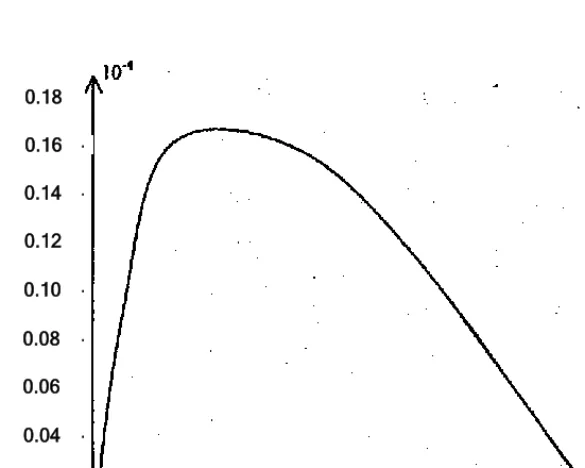
Fig. 2. Variation of normalized phase velocity with fractional volume for different values of frequency.
Fig. 1. Variation of normalized phase velocity with frequency for different values of fractional volume.
0.18
0.16 -
0.14 -
0.12
0.10 -
0.08 -
0.06
0.04 -
0.02 -
Mukesh Kumar, Material Sci. Res. India 02(2) 73-78 (2004) 77
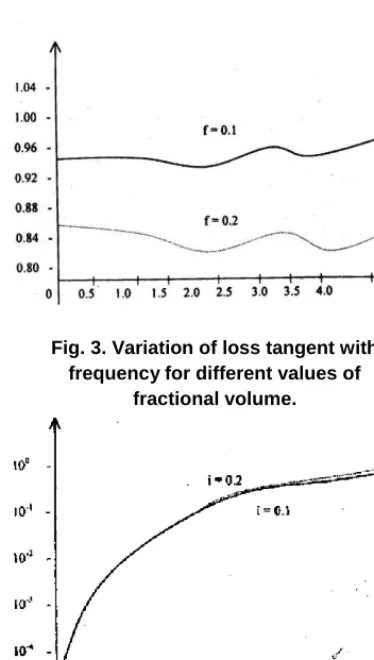
Fig. 3. Variation of loss tangent with frequency for different values of
fractional volume.
0 I 0.5 1.0 1.5 2.0 2.5 3.0 3.5 4.0
Fig. 4. Variation of loss tangent with fractional volume for different values of
frequency.
Putting this value of tan 8eft in equation (13) one has
[K(1-f4) + 3 f4K] dB/km = 8.68 (π/λ)
dB/km Now for the sand particles
α1= AL1dB
Similarly for silt particles
α 2= AL2
α 3= AL3
where
A - 8.68(π/λ) [K3
a3y2f(1-f)4/
[(1-fy)(1 +2f)4][K(1-f4) + 3 f4K] dB/km
Numerical Computation :
In order to obtain the value of normalized phase velocity and effective loss tangent for low frequency and high frequency approximation. The computational work has been done using equations (8), (9), (18) and (19) respectively. Further the value of attenuation constant (a) has also been calculated using equation (20). The graphs have been shown by figs. 1, 2, 3 and 4.
DISCUSSION
Using equations (8), (9), (18), (19), the values of normalized phase velocity, effective loss tangent for low frequency and high frequency approximation have been calculated respectively. The obtained results are shown and plotted in the form of graphs Figures 1 , 2 , 3 and 4.
78 Mukesh Kumar, Materia/ Sci. Res. India 02(2) 73-78 (2004)
shown in figure 3 and 4 respectively. The value of effective loss tangent first increases with increasing fractional volume and then starts to decrease with increasing fractional volume.
It is found from figure 4 that the value of normalized phase velocity decreases with increasing fractional value. This is according to the fact that the increasing value of
Fractional volume increases the number of particles in atmosphere, which ultimately decreases the phase velocity.
Further the variation of attenuation constant with frequency has been shown in fig. 4, where it is found that attenuation constant increasing with increasing frequencies.
REFERENCES
4.
Bashir, S.O. and McEwan, N.J., "Microwave propagation in sand and dust storm a review, JEE Proc. vol. 133 pt, Hno.3, pp.391-397 (1986). Ali, A. A., "Millimeter wave propagation in arid land the effect of rain and sand storms" Int. J. infrared millimeter wave (USA) vol. 7, no.3, pp.323-327 (1986).
Ghobrial, S.J. and Sami M.S., "Microwave attenuation and cross polarization in dust storms", JEEI Trans on Antenna and propagation, vol. Ap 35, no. 4, pp.418-425 (1987).
Shakir A. A., Abdulla H. Al, Rizzo, M. and Mona M.C., "Particles size distribution of Iraqi sand and dust storms and their influence on Micro wave communication", JEEE Trans on Antenna and propagation, vol. Ap 36, pp. 114-126 (1988).
Qinglin, Ma Ishimary, A and Kuga, Y. Scattering and depolarization of waves incident upon a slab of random medium with refractive undex different form that of the surrounding media, Radio Sci. (USA), Vol. 25, no. 4, pp.419-426 (1990).
Al Hafid, H. T., Gupta S. C, Agrawala N. K. and Srinivasan, A., "Effect of sand storms on millimeter electromagnetic wave propagation, ICOMM, pp. 6 0 6 - 6 1 0 (1990).
Kerr D. E. (Ed.), "Propagation of short radio waves" Peter Peregrinus Ltd. on behalf of the Institution of e\ectT\ca\ Engineers (UK) pp.675-676 (1987).
Leung Trang Jin Aukong and Robert, T. S., Theory of microwave remote sensing, John Wiley & Sons, pp.458-461 (1985).
3. 2. 1.