Birhane Alem Berihu, Gebrekidan Gebregzabher Asfeha1, Abadi Leul Welderufael2, Yared Godefa Debeb3, Yibrah Berhe Zelelow2, Hafte Assefa Beyene
Departments of Anatomy and Histology, 1Biochemistry and Molecular Biology and 3Physiology, Institute of Bio-Medical Sciences, College of Health Sciences, Mekelle University, 2Department of Pediatrics and Gynecology, School of Medicine, College of Health Sciences, Mekelle University, Mekelle, Ethiopia
Toxic effect of khat (
Catha edulis
) on memory:
Systematic review and meta‑analysis
Introduction
Khat (Catha edulis) is a psychostimulant plant grows in countries bordering the Red Sea, along the East coast of Africa, and in West Asia. It has been chewed since ancient times in Ethiopia, and its use spread to the East African countries[1] and down to South Africa.[2] It also has been used in Yemen (South of the Arabian Peninsula) since the 6th century.[3] However, recently, its use has spread to various European,[4‑7] Asian,[8] and Australian countries,[9,10] as well as to the United States.[11] The use of khat in these countries usually begins in African
immigrant communities and then spreads to other residents.[12] Khat chewing is a slow‑growing problem in the world, with its use growing, most rapidly in Africa.[13]
The main active substance in khat leaves is cathinone, which has structural similarity to amphetamine and is mainly responsible for most of the psychoactive properties of khat.[14] Similar to amphetamine, cathinone acts by releasing catecholamines from presynaptic storage sites, inhibiting their reuptake, thereby increasing their temporal and spatial presence at the presynaptic receptors.[15] The cathinone has also been associated directly or indirectly with dopamine or serotonin release through action on their transporter functions.[16] The neurotransmitter systems through which cathinone (khat) modulates its mechanistic processes appear to be ABSTRACT
Background: People use khat (Catha edulis) for its pleasant stimulant effect of physical activity, consciousness, motor, and mental functions. Although there are reports assessing the effect of khat on memory, there was no study based on formal systematic review and meta‑analysis. Objective: We have therefore conducted this meta‑analysis to determine the level of evidence for the effect of khat (C. edulis Forsk) on memory discrepancy. Methods: MEDLINE, Cochrane Library, PubMed, Academic Search Complete, SPORTDiscus, ScienceDirect, Scopus, Web of Science, and Google Scholar were searched to retrieve the papers for this review. Keywords utilized across database search were khat, cat, chat, long‑term memory, short‑term memory, memory deficit, randomized control trial, and cross‑sectional survey. The search was limited to studies in humans and rodents; published in English language. Result: Finding of various studies included in our meta‑analysis showed that the effect of acute, and subchronic exposure to khat showed that short‑term memory appears to be affected depending on the duration of exposure. However, does not have any effect on long‑term memory. Conclusion: Although a number of studies regarding the current topic are limited, the evidenced showed that khat (C. edulis) induced memory discrepancy.
Key words: Catha edulis, khat, long‑term memory, Qat, reference memory, short‑term memory, working memory
How to cite this article: Berihu BA, Asfeha GG, Welderufael AL, Debeb YG, Zelelow YB, Beyene HA. Toxic effect of khat (Catha edulis) on memory: Systematic review and meta-analysis. J Neurosci Rural Pract 2017;8:30-7.
This is an open access article distributed under the terms of the Creative Commons Attribution‑NonCommercial‑ShareAlike 3.0 License, which allows others to remix, tweak, and build upon the work non‑commercially, as long as the author is credited and the new creations are licensed under the identical terms.
For reprints contact: [email protected] Access this article online
Quick Response Code:
Website:
www.ruralneuropractice.com
DOI:
10.4103/0976‑3147.193524 Address for correspondence:
Assist. Prof. Birhane Alem Berihu, Department of Anatomy and Histology, Institute of Biomedical Sciences, College of Health Sciences, Mekelle University, Mekelle, Ethiopia.
E‑mail: [email protected]
important pathways for neurobehavioral activities including learning and memory.[17]
Users of khat report feeling as if they are able to think more clearly and more quickly while chewing khat. Moreover, khat users also reported that the acute effects of the khat include increased levels of alertness, enhanced ability to concentrate, friendliness, contentment, and flow of ideas. This is usually followed by excessive tension, anxiety, emotional instability, irritability, and restlessness within 2 h, followed by feelings of low mood, numbness, lack of concentration, sluggishness, and insomnia.[18,19] Studies also reported that the use of khat has been implicated with acute, as well as chronic physio‑neuro‑psychological and mental outcomes.[20] The khat has been used to prevent fatigue, improve concentration and flow of ideas when studying[21,22] and perceived believe in improving memory.[23,24] However, some studies reported that chronic khat use has been implicated with impaired
working memory and mental impairments.[17,25]
Although evidence from both human and animal studies has demonstrated acute and chronic khat’s neurobehavioral effects, there is limited information on its effect on reversal learning and memory. We have therefore conducted this meta‑analysis to determine the level of evidence for the effect of khat (C. edulis Forsk) on memory discrepancy.
Methods
Data sources and search strategy
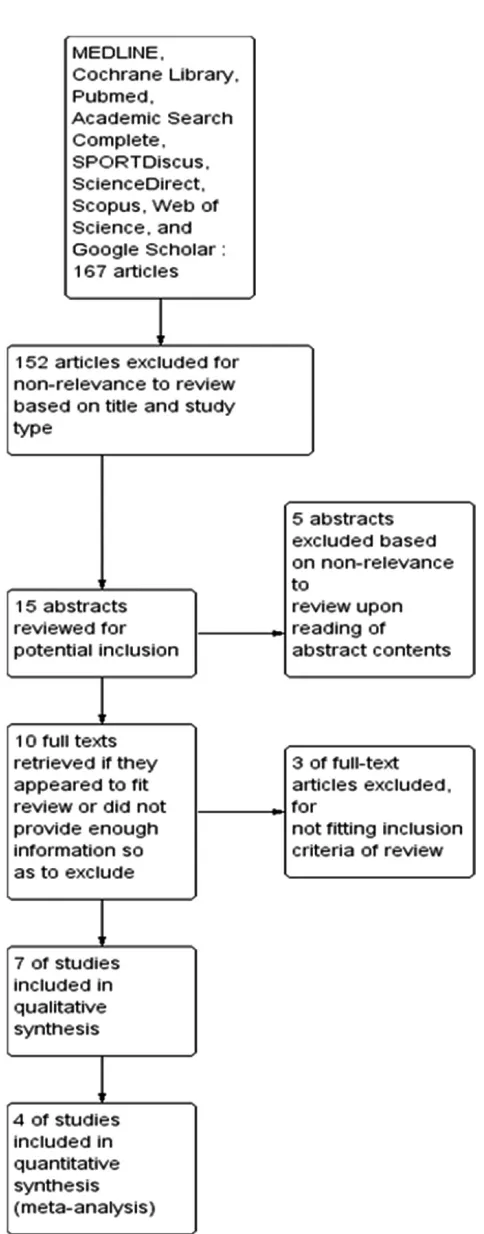
Our systematic review and meta‑analysis study was conducted according to the Cochrane guidelines[26] and has been presented based on the preferred reporting items for systematic reviews and meta‑analyses checklist.[27] MEDLINE, Cochrane Library, PubMed, Academic Search Complete, SPORTDiscus, ScienceDirect, Scopus, Web of Science, and Google Scholar were searched to retrieve the papers for this review. Keywords utilized across database search were khat, cat, chat, long‑term memory, short‑term memory, memory deficit, randomized control trial, and cross‑sectional survey. As subject headings varied between the databases, various combinations of these keywords were used. The search was limited to the studies in humans and rodents, published in English language. A search of bibliographies of acquired studies was also performed. The two reviewers (Birhane Alem Berihu and Gebrekidan Gebregzabher Asfeha) independently conducted the database searches. In addition, seven relevant journals [Figure 1] and
reference lists of included studies and previous systematic reviews were manually searched. The database searching was performed since August 2015.
Types of studies
To retrieve the papers for this review, studies using the randomized controlled trials (RCTs) and cross‑sectional study were included in this study. Only articles published in English language limited to humans and rodent studies were included in this study. For the purpose of the present review, the focus is being about the change in long‑term memory, short‑term memory, and other psychological disorders. Research articles conducted on human and rodents using other drugs in addition to khat were not included. Brief trial reports, abstracts, and proceedings from the conference were excluded from the study.
Intervention
The intervention of interest was the khat effect on the short‑term memory and long‑term memory, such as learning memory, working memory, and other cognitive activities. Studies with khat administration did as the only intervention or with other interventions were included if the same other interventions were applied in the control group. If the exclusive effect of khat administration could not be defined in studies involving multiple interventions, those were excluded from the study.
Comparison
Control groups included no treatment or any form of intervention.
Outcome measures
Assessment of long‑term memory, short‑term memory or working memory, and other psychological disorders were the main outcome measures. Studies showing toxicity as at least one of outcome measures were included.
Data extraction
Two reviewers (Birhane Alem Berihu and Gebrekidan Gebregzabher Asfeha) independently reviewed all articles for eligibility [Figure 1]. For conducting meta‑analysis, outcome data were assessed for eligibility, and scores were extracted from relevant included studies. One reviewer (Birhane Alem Berihu) extracted data from the included studies [Table 1] with the standardized form, and another reviewer (Gebrekidan Gebregzabher Asfeha) checked the data to ensure accuracy. Any disagreements regarding the study inclusion between two reviewers were resolved through discussion. The following were recorded from each trial where available: Intervention characteristics (khat dose, control condition, and additional treatments); participant characteristics (gender, age, and weight); study characteristics (author and publication year); outcomes (time of outcome assessment and unit of outcome assessment); and evaluation of each domain of the Cochrane risk of bias assessment tool (sequence generation, allocation concealment, blinding, incomplete outcome data, and selective outcome reporting).[28] The
Table 1: Characteristics of the included studies
Study Study design Intervention Outcome measure Reported results
Alfadly et al., 2014 Randomizing
control trial Khat (C. edulis) impaired learning and memoryKhat (C. edulis) exposed rats induce in the working memory componentC. edulis fed rats were more effected Colzato et al., 2011 Cross-sectional Khat (C. edulis) Khat (C. edulis) impairs working
memory and cognitive flexibility cognitive flexibilityImpairs working memory and Kimani et al., 2008 Randomized
control trial Khat (and spatial C. edulis) learning and memory
Effects of single daily
khat (C. edulis) extract on spatial learning and memory
in CBA mice
A significant difference was found between the groups
Ismail et al., 2014 Cross-sectional Khat (C. edulis) user and nonusers
Neuropsychological functioning
among chronic khat users neuropsychological decreases in Revealed that khat chewers show learning, motor speed/coordination, and set-shifting/response inhibition functions
Mohammed et al., 2014 Randomized
control trial Khat (C. edulis) Forsk) extract administration Subchronic crude khat (C. edulis produces short-term memory impairment in behavioral tasks without morphological toxicity to the dentate gyrus in mice
Alter short-term memory without any apparent morphological toxicity in neural processes underlying learning and memory
Kimani et al., 2015 Randomized
control trial Khat (C. edulis) khat (Memory deficits associated with C. edulis) use in rodents memory deficits and impair cognitive Chronic khat use may induce flexibility
Mohammed et al., 2014 Randomized
control trial Khat (C. edulis) subchronic administration of crude Evaluations of the effect of khat extract (C. edulis Forsk) on learning and memory in mice
C. edulis fed rats were more effected in the working memory component
outcome was memory deficit, defined as reducing or increasing memory, as measured after certain days of induced memory deficit.
Data analysis
A standard mean difference (SMD) with 95% confidence interval (CI) was an effect measure used for the outcome. A weighted mean difference (WMD) with 95% CI was used to synthesize the status of memory level. The data synthesis was done with an intention to treat basis. The random effect model and a fixed effect model were used throughout the review for calculating WMDs and SMDs. The inconsistency of data was examined by looking at the graphical display of the results and also by using an I2. As recommended, an I2 of 75% or more indicate high inconsistency of data.[28] Meta‑analyses were conducted to examine the effects of khat on memory in comparison with control groups. Publication bias was assessed by graphically examining the symmetry of a funnel plot. Review Manager 5.3 was used for all analyses and generating the funnel plot [Figure 2].
Result
Type of studies and their characteristics
The process of the selecting studies to be included in this meta‑analysis and systematic review is illustrated in Figure 1. Seven articles from a total of the 167
records were included in this systematic review. The characteristics of the included studies are presented in Table 1. Five studies were RCTs, and the two studies were cross‑sectional studies published in English language.
Interventions
Variety in comparison interventions was shown in the present meta‑analysis. These included effects of single daily khat (C.edulis) extract on spatial learning and memory in Albino mice,[29]C. edulis deteriorates spatial working memory in rats but spares reference memory,[30] khat extract administered on acute and subacute basis impaired short‑term memory with no effect on long‑term memory using spatial memory testing battery,[23,24] neuropsychological functioning among chronic khat users in Jazan Region, Saudi Arabia,[31] memory deficits associated with khat (C. edulis) use in rodents,[32] and khat use impairs memory and flexibility.[33]
Primary outcomes
Studies analyzed in this review revealed that khat (C. edulis) shows a significant effect on short‑term memory or working memory but not long‑term memory.
Risk of bias item for each included study
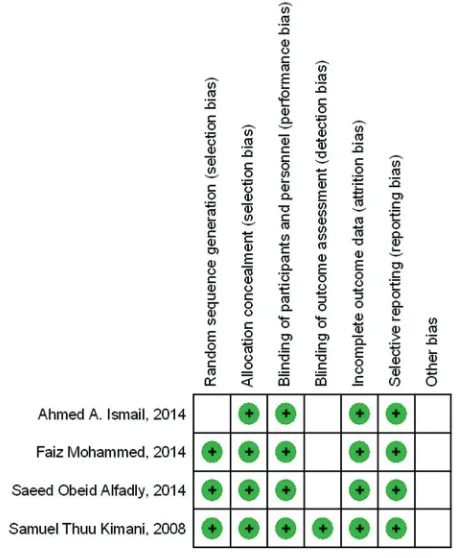
Figure 3 shows the summary of assessing the risk of bias. As studies successfully perform selection bias, allocation concealments, blinding of participants and personnel, attrition bias, and reporting bias, there were low risk of performance bias and detection bias across the included studies.
Publication bias
It was difficult to determine if there was publication bias from the funnel plot because of the small numbers of studies [Figure 2].
Figure 2: Risk of bias summary: Review authors' judgements about
Effect of the khat (Catha edulis) on short- and long-term memory
Of the seven included studies, four studies were suitable for meta‑analysis. As heterogenicity was evidenced in all meta‑analyses (heterogeneity: τ =0.49; χ2 = 9.39, df = 3 (P = 0.02); I² =68%), [Figure 4] the random effect model was used and it generated the weights from inverse variance weighting. In terms of the effects of khat (C. edulis) on short‑term memory in comparison with the control group, four studies were identified.[23,29‑31] The overall estimate of the effect khat on short‑term memory suggested that it is responsible for induction of the short‑term memory deficit. Moreover, of these four studies, three studies were also identified to assess its effect on long‑term memory.[23,30,31] As homogenicity was evidenced in all meta‑analyses (heterogeneity:
χ2 = 0.50, df = 2 [P = 0.78]; I² =0%) [Figure 5], the fixed effect model was used and it generated the weights from inverse variance weighting. The overall estimate of the effect on long‑term memory test for overall effect:
Z = 2.32 (P = 0.02) [Figure 5] suggested that there was no significant difference between khat exposed and control group for the induction of long‑term memory deficit.
Discussion
This systematic review and meta‑analysis was conducted to determine the level of evidence of the effect of khat (C. edulis Forsk) on memory discrepancy. Our meta‑analysis results suggest that there is evidence of the khat (C. edulis Forsk) induced short‑term memory discrepancy. Conversely, the results also suggest that the khat (C. edulis Forsk) does not have any effect on long‑term memory. As the number of studies
included in the analyses is very small, it is reasonable to think that these somewhat conflicting results may represent a lack of research regarding the effects of khat (C. edulis Forsk) on memory discrepancy rather than demonstrating actual effects. Finding of various studies included in our meta‑analysis showed that the effect of acute, subacute, and subchronic exposure to khat (C. edulis Forsk) showed that short‑term memory appears to be affected depending on the duration of exposure. However, it does not have any effect on long‑term memory.[23‑25,30‑32]
Some limited studies and single case reports suggest long‑term effects of khat on behavioral and cognitive functions. These effects range from minor to major psychiatric problems. Minor effects include insomnia, anxiety, irritability, agitation, and aggression. Other documented psychiatric effects include a short‑lived schizophreniform psychotic illness and mania.[33,34] The use of an excessive amount of khat has also been found to significantly increase the risk of psychosis or psychotic‑like episodes,[35] including paranoid delusions and significant mania. These effects are similar to those observed in amphetamine users. Depression has also been frequently reported to be related to long‑term use of khat and seems to be particularly evident during cessation.[36]
A comparative analysis of spatial acquisition, reversal learning, and reference (long‑term) memory in khat (C. edulis Forsk) treated versus control mice is reported. The results showed that reference memory during postacquisition phase was retained across the treatment regimes. However, khat (C. edulis Forsk) extract inhibited both learning and reference memory during
Figure 4: Forest plot of comparison: Meta-analysis on effect of Khat (Catha edulis) on short term memory deficit
the reversal phase in a dose‑dependent manner. These differential effects of the extract on spatial learning and memory may be attributed to short, as well as long‑term deleterious effects of khat on working memory and cognitive flexibility.[17,25] A recent systematic review and meta‑analysis of the neurobehavioral deficits associated with exposure to khat (C. edulis Forsk) showed that the studies conducted on rodents and human implicate a significant effect of khat use on cognitive flexibility, working memory, learning memory, motor activities, and other psychological disorders.[37] Recent findings have also shown that khat extract administered on acute and subacute basis impaired short‑term memory with no effect on long‑term memory using spatial memory testing battery.[23,24] Bearing in mind the similarity in pharmacological components of khat (cathinone and cathine) and amphetamines, the findings analyzed in our meta‑analysis are consistent with previous studies in humans showing impairments in working memory[38‑40] and cognitive flexibility[41] as consequences of long‑term amphetamine and methamphetamine use. Comparable studies of systematic review and meta‑analysis of the neurocognitive deficits associated with users of methamphetamines indicate that the largest (medium to large) effect sizes are seen in the domains of executive functions, learning, and memory.[42] The extract may have also modulated its effect, possibly through structural modification of the brain similar to amphetamines[43] and/or khat (C. edulis Forsk) induced mental impairment.[21,44]
A number of studies have suggested that chronic methamphetamine use is associated with mild to moderate neuropsychological impairment, with one current estimate suggesting that approximately 40% of persons with methamphetamine dependence demonstrate some level of global neuropsychological impairment.[45] Significant deficits in several different cognitive processes dependent on brain frontostriatal and limbic circuits have been observed in studies of chronic methamphetamine users, including deficits in psychomotor functions, complex information processing speed, attention and working memory, episodic memory, and executive functions, including response inhibition and novel problem‑solving.[46‑48] Neural‑behavioral changes seen in amphetamine users have been attributed to altered dopaminergic transmission in the prefrontal cortex and/or striatum[49] in the absence of reduced motivation and impaired cognitive performance.[50] Such neurochemical changes may represent neuro‑adaptive changes developed during repeated psychostimulants exposure. The brain structures known to undergo adaptive changes during repeated amphetamine administration, including the
striatal complex, prefrontal cortices, and limbic areas, have also been implicated in various forms of learning and memory.[51,52] Repeated psychostimulants use and/or abuse, including amphetamine and possibly amphetamine‑like khat, have been implicated with psychopathology resembling acute schizophrenic phenotype resulting from structural, molecular, neurochemical, and neurophysiological changes.[53] Cognitive impairment is a key feature of patients with schizophrenia and an important determinant of the outcome and a target for therapy.[54]
The impairment is attributable to diffuse abnormalities in frontal cortex, hippocampus, and other cognitive modulating structures.[55] Physiologically, the impairments are associated with deficits in glutamatergic, GABAergic, dopaminergic, cholinergic, and serotonergic neurotransmitter systems. The serotonergic neurotransmitter system contributes to the deficit through its influence on dopaminergic, cholinergic, glutamatergic, GABAergic, and growth factors and receptor functions all important in schizophrenia and cognitive status.[22,56] Additional studies are required to determine the specific neural mechanisms responsible for the observed patterns of learning and memory. The different patterns of memory deficits may reflect the differences impact of dose effect, as well as a time‑dependent impairment. Further studies are needed to whether these findings included in our meta‑analysis are as a result of this mechanism remains to be elucidated.
Conclusion
Finding of various studies included in our meta‑analysis showed that the effect of acute and subchronic exposure to khat showed that short‑term memory appears to be affected depending on duration of exposure. However, it shows no effect on long‑term memory. Although a number of studies regarding the current topic are limited, the evidenced showed that khat (C. edulis) induced memory discrepancy.
Acknowledgments
The authors acknowledge the immense help received from the scholars whose articles are cited and included in references of this manuscript. The authors are also grateful to authors/editors/publishers of all those articles, journals, and books from where the literature for this article has been reviewed and discussed.
Conflicts of interest
There are no conflicts of interest.
References
1. Gebissa E. Khat in the Horn of Africa: Historical perspectives and
current trends. J Ethnopharmacol 2010;132:607‑14.
2. Luqman W, Danowski TS. The use of khat (Catha edulis) in Yemen. Social and medical observations. Ann Intern Med 1976;85:246‑9.
3. Dhaifalah I, Santavý J. Khat habit and its health effect. A natural amphetamine. Biomed Pap Med Fac Univ Palacky Olomouc Czech Repub 2004;148:11‑5.
4. Griffiths P, Lopez D, Sedefov R, Gallegos A, Hughes B, Noor A, et al.
Khat use and monitoring drug use in Europe: The current situation and
issues for the future. J Ethnopharmacol 2010;132:578‑83.
5. Pennings EJ, Opperhuizen A, van Amsterdam JG. Risk assessment of khat use in the Netherlands: A review based on adverse health effects, prevalence, criminal involvement and public order. Regul Toxicol Pharmacol 2008;52:199‑207.
6. Al‑Samarraie M, Khiabani HZ, Opdal MS. Khat – A new drug of abuse in Norway. Tidsskr Nor Laegeforen 2007;127:574‑6.
7. Klein A. Khat in the neighbourhood – Local government responses to khat use in a London community. Subst Use Misuse 2008;43:819‑31. 8. Drake PH. Khat‑chewing in the Near East. Lancet 1988;1:532‑3. 9. Stefan J, Mathew B. Khat chewing: An emerging drug concern in
Australia? Aust N Z J Psychiatry 2005;39:842‑3.
10. Douglas H, Pedder M. Legal regulation of the drug khat in Australia. J Law Med 2010;18:284‑301.
11. Kroll J, Yusuf AI, Fujiwara K. Psychoses, PTSD, and depression in Somali refugees in Minnesota. Soc Psychiatry Psychiatr Epidemiol 2011;46:481‑93.
12. Osman FA, Söderbäck M. Perceptions of the use of khat among Somali immigrants living in Swedish society. Scand J Public Health 2011;39:212‑9. 13. United Nations Office on Drugs and Crime (UNODC). World Drug
Report. Vienna: UNODC; 2011.
14. Kalix P. Cathinone, a natural amphetamine. Pharmacol Toxicol 1992;70:77‑86.
15. Safer DJ, Krager JM. A survey of medication treatment for hyperactive/ inattentive students. JAMA 1988;260:2256‑8.
16. Banjaw MY, Mayerhofer A, Schmidt WJ. Anticataleptic activity of cathinone and MDMA (Ecstasy) upon acute and subchronic administration in rat. Synapse 2003;49:232‑8.
17. Hoffman R, al’Absi M. Working memory and speed of information processing in chronic khat users: Preliminary findings. Eur Addict Res 2013;19:1‑6.
18. Cox G, Rampes H. Adverse effects of khat: A review. Adv Psychiatr Treat 2003;9:456‑63.
19. Balint GA, Ghebrekidan H, Balint EE. Catha edulis, an international
socio‑medical problem with considerable pharmacological implications. East Afr Med J 1991;68:555‑61.
20. Brenneisen R, Fisch HU, Koelbing U, Geisshüsler S, Kalix P. Amphetamine‑like effects in humans of the khat alkaloid cathinone. Br J Clin Pharmacol 1990;30:825‑8.
21. Balint EE, Falkay G, Balint GA. Khat – A controversial plant. Wien Klin Wochenschr 2009;121:604‑14.
22. Gray JA, Roth BL. Molecular targets for treating cognitive dysfunction in schizophrenia. Schizophr Bull 2007;33:1100‑19.
23. Mohammed F, Gerbi A, Teffera A, Seyoum G, Nedi T, Engidawork E. Subchronic crude khat (Catha edulis f.) extract administration produces short‑term memory impairment in behavioral tasks without morphological toxicity to the dentate gyrus in mice. Ethiop Pharm J 2014;30:77‑94. 24. Mohammed F, Engidawork E, Nedi T. Evaluations of the effect of
subchronic administration of crude khat extract (Catha edulis f.) on learning and memory in mice. Neurology 2015;84 (14 Suppl). p. 077. 25. Colzato LS, Ruiz MJ, van den Wildenberg WP, Hommel B. Khat use is
associated with impaired working memory and cognitive flexibility. PLoS One 2011;6:e20602.
26. Higgins JPT, Green S (editors). Cochrane Handbook for Systematic Reviews
of Interventions Version 5.1.0. The Cochrane Collaboration, 2011. Available from http://handbook.cochrane.org. [Last updated on 2011 Mar]. 27. Moher D, Liberati A, Tetzlaff J, Altman DG; PRISMA Group. Preferred
reporting items for systematic reviews and meta‑analyses: The PRISMA statement. BMJ 2009;339:b2535.
28. Deeks JJ, Higgins JPT, Altman DG. Analysing data and undertaking meta‑analyses. In: Higgins JPT, Green S, editors. Ch. 9. Cochrane Handbook for Systematic Reviews of Interventions Version 5.1.0. (John Wiley & Sons, Ltd, Chichester, UK). The Cochrane Collaboration; 2011. Available from: www.handbook.cochrane.org. [Last updated on 2011 Mar]. 29. Kimani ST, Nyongesa AW. Effects of single daily khat (Catha edulis)
extract on spatial learning and memory in CBA mice. Behav Brain Res 2008;195:192‑7.
30. Alfadly SO, Batarfi AM, Veetil PK. Catha edulis deteriorates spatial working memory in rats, but spares reference memory. Indian J Physiol Pharmacol 2014;58:240‑50.
31. Ismail AA, El Sanosy RM, Rohlman DS, El‑Setouhy M. Neuropsychological functioning among chronic khat users in Jazan region, Saudi Arabia. Subst Abus 2014;35:235‑44.
32. Kimani ST, Patel NB, Kioy PG. Memory deficits associated with khat (Catha edulis) use in rodents. Metab Brain Dis 2016;31:45‑52. 33. Yousef G, Huq Z, Lambert T. Khat chewing as a cause of psychosis. Br
J Hosp Med 1995;54:322‑6.
34. Odenwald M. Chronic khat use and psychotic disorders: A review of the literature and future prospects. Sucht 2007;53:9‑22.
35. Odenwald M, Hinkel H, Schauer E, Neuner F, Schauer M, Elbert TR,
et al. The consumption of khat and other drugs in Somali combatants: A cross‑sectional study. PLoS Med 2007;4:e341.
36. Odenwald M, Neuner F, Schauer M, Elbert T, Catani C, Lingenfelder B,
et al. Khat use as risk factor for psychotic disorders: A cross‑sectional and case‑control study in Somalia. BMC Med 2005;3:5.
37. Birhane A, Gebrekidan G. Effect of khat (Catha edulis Forsk) on neurobehavioral functions: Systematic review and meta‑analysis. Int J Pharma Sci Res 2015;6:1369‑77.
38. Nordahl TE, Salo R, Leamon M. Neuropsychological effects of chronic
methamphetamine use on neurotransmitters and cognition: A review.
J Neuropsychiatry Clin Neurosci 2003;15:317‑25.
39. Daumann J Jr., Fischermann T, Heekeren K, Thron A, Gouzoulis‑Mayfrank E. Neural mechanisms of working memory in ecstasy (MDMA) users who continue or discontinue ecstasy and
amphetamine use: Evidence from an 18‑month longitudinal functional magnetic resonance imaging study. Biol Psychiatry 2004;56:349‑55. 40. Wagner GC, Preston K, Ricaurte GA, Schuster CR, Seiden LS.
Neurochemical similarities between d, l‑cathinone and d‑amphetamine. Drug Alcohol Depend 1982;9:279‑84.
41. van der Plas EA, Crone EA, van den Wildenberg WP, Tranel D, Bechara A. Executive control deficits in substance‑dependent individuals: A comparison of alcohol, cocaine, and methamphetamine and of men and women. J Clin Exp Neuropsychol 2009;31:706‑19.
42. Scott JC, Woods SP, Matt GE, Meyer RA, Heaton RK, Atkinson JH,
et al. Neurocognitive effects of methamphetamine: A critical review and
meta‑analysis. Neuropsychol Rev 2007;17:275‑97.
43. Yücel M, Lubman DI, Harrison BJ, Fornito A, Allen NB, Wellard RM,
et al. Acombined spectroscopic and functional MRI investigation of the dorsal anterior cingulate region in opiate addiction. Mol Psychiatry 2007;12:611, 691‑702.
44. Odenwald M, Hinkel H, Schauer E, Schauer M, Elbert T, Neuner F, et al.
Use of khat and posttraumatic stress disorder as risk factors for psychotic
symptoms: A study of Somali combatants. Soc Sci Med 2009;69:1040‑8. 45. Rippeth JD, Heaton RK, Carey CL, Marcotte TD, Moore DJ, Gonzalez R,
et al. Methamphetamine dependence increases risk of neuropsychological impairment in HIV infected persons. J Int Neuropsychol Soc 2004;10:1‑14.
46. Sim T, Simon SL, Domier CP, Richardson K, Rawson RA, Ling W. Cognitive deficits among methamphetamine users with attention deficit hyperactivity disorder symptomatology. J Addict Dis 2002;21:75‑89. 47. Simon SL, Domier C, Carnell J, Brethen P, Rawson R, Ling W. Cognitive
impairment in individuals currently using methamphetamine. Am J Addict 2000;9:222‑31.
Carey CL, et al. Deficient strategic control of verbal encoding and retrieval in individuals with methamphetamine dependence. Neuropsychology 2005;19:35‑43.
49. Pezze MA, Feldon J, Murphy CA. Increased conditioned fear response and altered balance of dopamine in the shell and core of the nucleus accumbens during amphetamine withdrawal. Neuropharmacology 2002;42:633‑43. 50. Lin B, Brücher FA, Colgin LL, Lynch G. Long‑term potentiation alters
the modulator pharmacology of AMPA‑type glutamate receptors. J Neurophysiol 2002;87:2790‑800.
51. Robinson TE, Kolb B. Persistent structural modifications in nucleus accumbens and prefrontal cortex neurons produced by previous experience with amphetamine. J Neurosci 1997;17:8491‑7.
52. Berke JD, Hyman SE. Addiction, dopamine, and the molecular mechanisms of memory. Neuron 2000;25:515‑32.
53. Segal DS, Kuczenski R. An escalating dose “binge” model of
amphetamine psychosis: Behavioral and neurochemical characteristics.
J Neurosci 1997;17:2551‑66.
54. Keefe RS, Harvey PD. Cognitive impairment in schizophrenia. Handb Exp Pharmacol 2012;213:11‑37.
55. Meltzer HY, Sumiyoshi T. Does stimulation of 5‑HT(1A) receptors improve cognition in schizophrenia? Behav Brain Res 2008;195:98‑102. 56. Zhou J, Li L, Tang S, Cao X, Li Z, Li W, et al. Effects of serotonin
depletion on the hippocampal GR/MR and BDNF expression during the stress adaptation. Behav Brain Res 2008;195:129‑38.
Staying in touch with the journal
1) Table of Contents (TOC) email alert
Receive an email alert containing the TOC when a new complete issue of the journal is made available online. To register for TOC alerts go to
www.ruralneuropractice.com/signup.asp.
2) RSS feeds
Really Simple Syndication (RSS) helps you to get alerts on new publication right on your desktop without going to the journal’s website. You need a software (e.g. RSSReader, Feed Demon, FeedReader, My Yahoo!, NewsGator and NewzCrawler) to get advantage of this tool. RSS feeds can also be read through FireFox or Microsoft Outlook 2007. Once any of these small (and mostly free) software is installed, add