INFORMATION PAPER APRIL 2013
INFORMATION AND COMMUNICATION TECHNOLOGY
(ICT) IN EDUCATION IN FIVE ARAB STATES
UNESCO
The constitution of the United Nations Educational, Scientific and Cultural Organization (UNESCO) was adopted by 20 countries at the London Conference in November 1945 and entered into effect on 4 November 1946. The Organization currently has 195 Member States and 9 Associate Members.
The main objective of UNESCO is to contribute to peace and security in the world by promoting collaboration among nations through education, science, culture and communication in order to foster universal respect for justice, the rule of law, and the human rights and fundamental freedoms that are affirmed for the peoples of the world, without distinction of race, sex, language or religion, by the Charter of the United Nations.
To fulfil its mandate, UNESCO performs five principal functions: 1) prospective studies on education, science, culture and communication for tomorrow's world; 2) the advancement, transfer and sharing of knowledge through research, training and teaching activities; 3) standard-setting actions for the preparation and adoption of internal instruments and statutory recommendations; 4) expertise through technical co-operation to Member States for their development policies and projects; and 5) the exchange of specialized information.
UNESCO is headquartered in Paris, France.
UNESCO Institute for Statistics
The UNESCO Institute for Statistics (UIS) is the statistical office of UNESCO and is the UN depository for global statistics in the fields of education, science and technology, culture and communication.
The UIS was established in 1999. It was created to improve UNESCO's statistical programme and to develop and deliver the timely, accurate and policy-relevant statistics needed in today’s increasingly complex and rapidly changing social, political and economic environments.
The UIS is based in Montreal, Canada.
Talal Abu-Ghazaleh Organization
The Talal Abu-Ghazaleh Organization (TAG-Org) is the largest global organization for professional services and education; providing service in the fields of accounting; external audit; internal audit; corporate governance; taxation; educational consultancy; economic and strategic studies; management advisory services; professional and technical training; technology transfer project management, human resources and recruitment services; government; e-commerce; e-education; professional interpretation and translation; website arabization; ICT strategic planning; IPR protection and management and legal services. TAG-Org operates out of 80 offices and 180 representative offices worldwide.
With all the educational advancements this era is witnessing and the 21st century global economy becoming more “knowledge-based”, Talal Abu Ghazaleh Educational Consulting (TAG-Education) has taken the initiative and responsibility to support the educational sector with professional consulting services according to the highest standards of excellence by developing dynamic, flexible and quality academic programs which are relevant to the market’s needs and requirements.
This report has been produced through joint sponsorship and support of UNESCO, UIS and TAG-Org.
Published in 2013 by:
UNESCO Institute for Statistics P.O. Box 6128, Succursale Centre-Ville Montreal, Quebec H3C 3J7
Canada
Tel: (1 514) 343-6880
Email: [email protected] http://www.uis.unesco.org
ISBN 978-92-9189-127-6
Ref: UIS/2013/ICT/TD/01/REV.3, updated in January 2016
©UNESCO-UIS 2013
Table of contents
Page
Introduction ... 5
1. ICT in the Arab States ... 5
2. Why do we measure ICT in education? ... 6
3. Current state of the international framework on ICT in education statistics………7
4. Methodology: E-readiness as a framework for quantifying ICT in education ... 7
5. Integrating ICT in education through policy and other formal commitments ... 8
6. ICT in education curriculum ... 9
7. Infrastructure to support the integration of ICT in educational institutions ... 11
Electricity and telecommunication facilities ... 11
Building computer and Internet infrastructure: Access to advanced forms of ICT-assisted instruction ... 12
Allocation of computer resources and overall connectivity ... 14
Types of Internet connectivity in schools ... 18
Computer laboratories, networks and ICT support services ... 19
Institutional-level ICT-assisted instruction ... 21
8. Enrolment in programmes offering ICT by gender ... 24
Radio-assisted instruction (RAI) ... 26
Television-assisted instruction (TAI) ... 27
Computer-assisted instruction (CAI) ... 27
Internet-assisted instruction (IAI) ... 27
9. Teaching and learning and ICT in education ... 28
10. Conclusions ... 32
11. Next steps: Looking forward ... 33
References ... 35
Annex I. Country profiles ... 39
List of boxes
Box 1. WSIS targets on education and related indicators ... 6
Box 2. Differences regarding computer/Internet availability in the public and private sectors ... 17
Box 3. Four types of ICT-assisted instruction ... 23
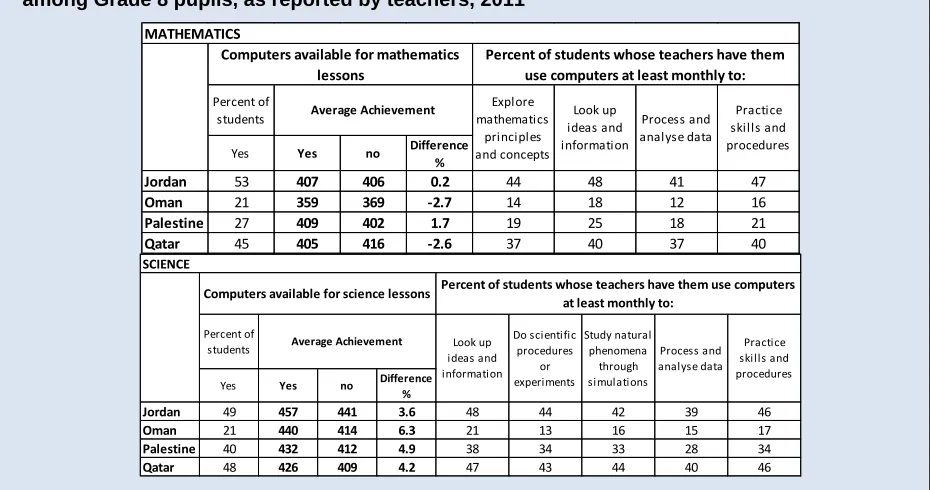
Box 4. ICT usage and learning achievement in mathematics and science: Evidence from the Trends in International Mathematics and Science Study (TIMSS) 2011 ... 31
List of text tables Table 1. Recommendations for ICT-assisted instruction in national curricula, 2011 ... 11
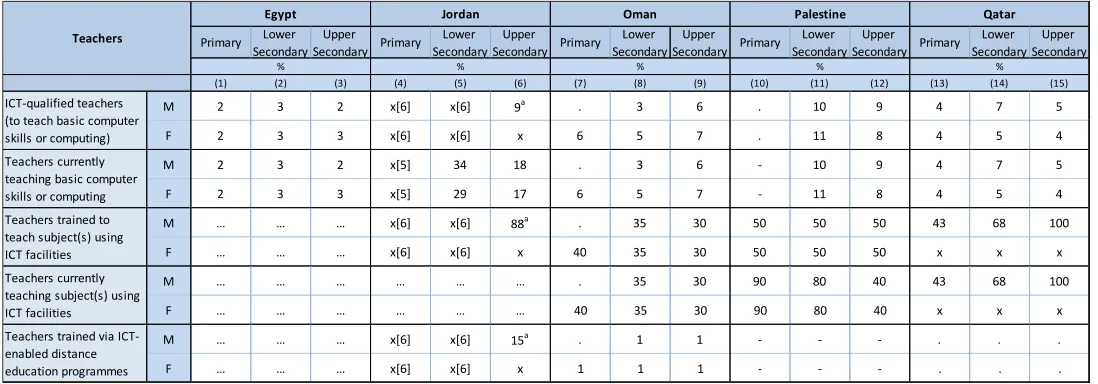
Table 2. Teachers and ICT in education by level of education, 2011 ... 30
Table 3. Computer usage, activities, and student achievement in mathematics and science among Grade 8 pupils, as reported by teachers, 2011 ... 31
List of figures Figure 1. Proportion of educational institutions with basic electrical and telecommunications infrastructure, by level of education, 2011 ... 12
Figure 2. Learner-to-computer ratio (LCR) and learner-to-computer connected to the Internet ratio (LCCIR), by level of education, 2011 ... 14
Figure 3. Computers in educational institutions by allocation and connectivity, by level of education, 2011 ... 15
Figure 4. Proportion of total computers by allocation and connectivity and in ratio to learners, in primary schools, by sector, 2011 ... 17
Figure 5. Proportion of educational institutions with Internet connectivity and with broadband connectivity, by level of education, 2011 ... 18
Figure 6. Computer laboratories, LAN and ICT support services, by level of education, 2011 ... 20
Figure 7. ICT-assisted instruction by type and level of education, 2011 ... 23
Introduction
More than ever, the advent of the knowledge economy and global economic competition compel governments to prioritise educational quality, lifelong learning and the provision of equal opportunities for all. Education policymakers widely accept that improved access to information and communication technology (ICT) in education can help individuals to compete in a global economy by creating a skilled work force and facilitating social mobility. They emphasise that ICT in education has a multiplier effect throughout the education system, by enhancing learning and providing students with new sets of skills; by reaching students with poor or no access (especially those in rural and remote regions); by facilitating and improving the training of teachers; and by minimising costs associated with the delivery of instruction.
Beyond the rhetoric and of equal if not greater importance to policymakers, are basic questions about the role that ICT plays in basic educational outcomes, including retention and learning achievement. There are those that argue that ICTs are merely a delivery mechanism for teaching and learning, while it is the foundational pedagogy which matters (Clark, 1983; 1994). Others, however, contend that computers and other ICTs may possess properties or affordances that can directly change the nature of teaching and learning (Kozma, 1991; 1994; Dede, 1996). For instance, it is believed that ICT can help to bring abstract concepts to life using images, sounds, movement, animations and simulations. In any case, a better understanding of ICTs and their impact on student outcomes are priorities in all countries, regardless of level of economic development.
1. ICT in the Arab States
In the Arab States, national network upgrades, teledensity improvements, enhanced national connectivity, and the gradual introduction of new Internet Provider (IP) delivery technologies are creating a favourable environment for the uptake of ICT. However, much progress remains to be made, and this is truer for some countries more than others. With small populations and high investments in their national networks, some Gulf States have matched international standards in ICT infrastructure, whereas geographically larger countries in the region often remain underserved.
2. Why do we measure ICT in education?
For almost four decades, education policymakers have been formalising all-inclusive ICT policies as part of educational renewal and reform. At the international level, policy for integrating ICT for development was first formulated in the Millennium Development Goals (MDGs) Target 8.F, which states that “in cooperation with the private sector, make available the benefits of new technologies, especially information and communications” (United Nations, 2000; United Nations, 2012).
Furthermore, the World Summit on the Information Society (WSIS), held in 2003 and 2005, resulted in a clear commitment by governments to foster the achievement of an inclusive information society. To this end, the WSIS Plan of Action identified ten targets to be achieved by 2015 – two of which are related to education. These include Target 2: Connecting all primary and secondary schools to ICT, which is a precondition to Target 7: Adapting all primary and secondary school curricula to meet the challenges of the information society (Partnership on Measuring ICT for Development, 2011) (see Box 1). The UNESCO Institute for Statistics (UIS) plays a vital role in helping to benchmark country progress within the WSIS framework by collecting statistics and calculating internationally comparable indicators related to ICT in education.
Lastly, while ICT is not mentioned explicitly in the Education for All goals, it is arguable they play a pivotal role in achieving these goals, including broadening access, eliminating exclusion, and improving quality (UNESCO, 2000).
Box 1. WSIS targets on education and related indicators
Target 2. Connect all secondary schools and primary schools with ICT
1. Proportion of schools with a radio used for educational purposes 2. Proportion of schools with a television used for educational purposes 3. Learner-to-computer ratio
4. Proportion of schools with Internet access, by type of access
Target 7. Adapt all primary and secondary school curricula to meet the challenges of the information society, taking into account national circumstances
1. Proportion of ICT-qualified teachers in schools
2. Proportion of teachers trained to teach subjects using ICT 3. Proportion of schools with computer-assisted instruction (CAI) 4. Proportion of schools with Internet-assisted instruction (IAI) Source: Partnership on Measuring ICT for Development, 2011
3. Current state of the international framework on ICT in education statistics
Despite the growing demand for ICT in education statistics globally, the most well-known international sources of education statistics lack basic information about ICT policies in education. For developed countries, neither the Organisation for Economic Co-operation and Development (OECD) nor the European Commission have a comprehensive set of indicators that include all three components of inputs, processes, and outcomes related to ICT—although they both are increasingly improving the dataset to include, for instance, assessments of student performance in digital skills. In fact, the OECD’s Programme for International Student Assessment (PISA) dataset remains the most reliable source of information on access, use, and outcomes in this domain, despite its limitations in terms of geographical coverage, reliability, and its inadequacy regarding current classroom practices (OECD, 2010; 2011; Scheuermann, Pedró and European Commission, 2009).
For developing countries, the situation is even more challenging. The UIS and UNESCO have recently begun some regional initiatives intended to provide at least a comparative worldwide perspective of access to computers and the Internet in schools, while the World Bank’s System Assessment and Benchmarking for Education Results (SABER) initiative and the Inter-American Development Bank are currently focusing on a compilation of detailed information about technology policies in education, mostly from a qualitative perspective. Unfortunately, neither of these initiatives has yet produced a comprehensive global assessment.
4. Methodology: E-readiness as a framework for quantifying ICT in education
Considerable strides have been made in the last decade to harness the power of ICT to help meet many development-related challenges, including those related to educational reform and development. Nevertheless, many countries in the Arab States continue to lag behind richer countries to fully implement ICT in their education systems.
The UIS has been tasked with benchmarking and monitoring the integration of and access to ICT in education by establishing internationally comparable and policy-relevant indicators. This project has been coordinated by the UNESCO Communication and Information Sector (CI), in close cooperation with the UIS, and with the support of the UNESCO Education Sector. In March 2012, CI conducted a data collection using the UIS questionnaire on ICT in education in the Arab States to support the UIS regional survey rollout strategy. The Talal Abu Ghazaleh Organization (TAG.Org) was a key partner in the realization of this report. The UIS was responsible for data analysis and producing the report, in consultation with CI and the UNESCO Education Sector.
This report assesses ICT integration and e-readiness in education systems of five countries of the Arab States region: Egypt, Jordan, Oman, Palestine1 and Qatar. The results will lay the foundation for conducting a fully comprehensive data collection across the entire region and will serve as a basis for comparison and future planning. These indicators can assist with a country’s ICT advancement and development efforts by identifying areas where additional efforts are needed. For example, minimum levels of infrastructure are needed before ICT-assisted instruction can be implemented. This includes electricity, and in the case of Internet-assisted instruction, a basic Internet connection. Moreover, indicators related to teacher preparedness and capacity to instruct effectively using ICT provides more guidance for planning purposes.
The following analysis generally follows a progressive model for the integration of ICT and the essential infrastructure required for its successful implementation. As such, this report starts by examining the policy and curricular aspects of ICT in education as fundamental to building a culture of ICT use in education. This is followed by an analysis of basic infrastructure required to support ICT-assisted instruction, including electrical and Internet connectivity, numbers of computers, and existence of computer laboratories and ICT support mechanisms. The report then reviews institutional capacity for providing programmes aided by different forms of ICT, including radio, television, computers and the Internet, contrasted with enrolment data in such programmes to measure participation rates of both girls and boys in programmes offering ICT-assisted instruction. Lastly, the report examines teacher preparedness including relevant training for teaching basic computer skills (or computing) and on how to use ICT in the classroom.
The UIS data collection instrument and this report focus on primary and secondary education. Additionally, Country Profiles are annexed to this report (see Annex I), which summarise all publishable data. The survey instrument used during this data collection is also annexed to this report (see Annex II).
5. Integrating ICT in education through policy and other formal commitments
Educational policymakers are in a unique position to bring about change. This is illustrated in a study of 174 ICT-supported innovative classrooms in 28 countries (Kozma, 2003). In 127 cases, there was an explicit connection between the innovation and national policies that promoted the use of ICT (Jones, 2003). But while the introduction of ICT policy is necessary for change, it is not sufficient to result in its implementation or impact (Tyack and Cuban, 1995). Policies can, of course, fail to succeed and this happens when: i) they are viewed as mere symbolic gestures; ii) when teachers actively resist policy-based change that they see as imposed from the outside without their input or participation; iii) when they do not have explicit connections to instructional practice (e.g. focus on hardware rather than their relationship to pedagogy); iv) when they do not provide teachers with an opportunity to learn the policies and their instructional implications; and v) when there is a lack of programme and resource alignment to the policies’ intentions (Cohen and Hill, 2001;Tyack and Cuban, 1995).
1
While some policies may fail, identifying those countries that have current active ICT in education policies and/or other types of formal commitments including plans, regulatory provisions or a regulatory institution or body is important for assessing a country’s effort to embark on educational reform that implements ICT in education. Data show that all five countries possess each of the aforementioned definitions of formal commitments to ICT in education at primary, lower secondary and upper secondary levels of education. In other words, not only have each of these countries written a policy and plan for the integration of ICT into education, but these countries have also created regulatory provisions and regulatory institutions (or bodies) to ensure that ICT-assisted educational reform takes place and advancement toward established objectives is monitored and evaluated.
While some policies are more successful than others, the case of Jordan has been analysed and discussed widely in international literature as it is recognised both in the Arab States and internationally as a leader in developing its ICT infrastructure and promoting ICT as a tool to improve human capital, foster economic development and reduce poverty (UNESCO, 2011a). Policy documents related to ICT in education have continuously evolved and been systematically updated, including the National Education Strategy (2004) and an overall policy framework for 2007-2011, which was recently updated for 2009-2013 (UNESCO, 2011a). Jordan has systematically set in place a regulatory system through the National Centre for Human Resources Development (NCHRD) to monitor all activities in its reform programme – the
Education Reform for the Knowledge Economy (ERfKE) which will be expanded during the next phase scheduled for 2009-2015. This key agency has played an important role in researching ICT applications in basic and secondary education.
In contrast, the implementation of a policy for the use of Open Educational Resources (OER) is lagging behind overall, given that just two out of five countries (i.e. Jordan and Qatar) have declared having national policies for the use of OERs. The term OER was coined at UNESCO’s 2002 Forum on Open Courseware and designates “teaching, learning and research materials in any medium, digital or otherwise, that reside in the public domain or have been released under an open license that permits no-cost access, use, adaptation and redistribution by others with no or limited restrictions (OECD, 2007; UNESCO, 2002; 2012b). While OER is typically perceived by many policymakers as an ICT tool that falls within the realm of post-secondary and tertiary levels of education, it will continue to have policy relevance for the development of primary and secondary education as ICT evolves at an exponential rate, both in terms of technological capacity and coverage, becoming more widespread across regions and education levels. However, while policy in the area of OERs is an important precursor for implementation, the Internet requirements of OER can constrain its implementation in a number of countries.
6. ICT in education curriculum
In the Arab States, the implementation and use of ICT in education often lags behind other social and economic spheres, including communications, employment and commerce. In fact in many countries in the Arab States, children and youth learn more about how to use various ICT tools informally outside of the school system. The example from Egypt whereby youth efficiently used mobile devices and the Internet to communicate during the Arab Spring is an example of mass usage of ICT that surpasses current capacity within the educational system and schools.
support their education throughout secondary, post-secondary and tertiary levels. The early integration of ICT into primary and secondary curricula through formal recommendations is therefore vital and moreover acts as an important lever for ensuring the introduction and implementation of ICT into educational institutions and classrooms.
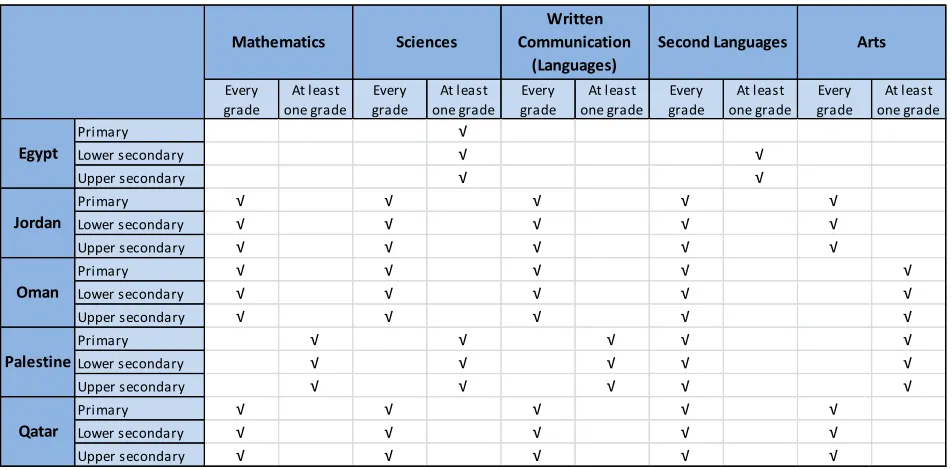
Regarding the inclusion of basic computer skills (or computing) in curricula, Jordan, Oman and Qatar state that they have specific objectives or courses at all three levels of primary, lower secondary and upper secondary education. This policy approach is, however, not the case in Egypt and Palestine, where specific objectives or a course covering basic computer skills or computing are lacking in primary education and begin in lower secondary education continuing at the upper secondary level. While many children in Egypt and Palestine may be learning informally how to use ICT, children who are the most disadvantaged economically or geographically will likely continue to be deprived.
In addition to targeted teaching of basic computer skills (or computing), ICT can also be used to teach other subjects to enhance student learning while providing additional learning opportunities about using ICT tools themselves. National policies and plans may be very explicit about recommendations for ICT-assisted instruction focusing only on certain subjects and/or at certain levels, while other countries may have a more generalised and comprehensive set of recommendations for ICT-assisted instruction to be implemented across the entire national curriculum at all levels of education. Oman, a country that extends the use of ICT in all areas of the curriculum and at all levels, states in its education policy that since meaningful learning takes place within contexts in which students are familiar, it is vital that learning experiences associated with ICT should not be isolated from other studies, but rather, the knowledge, skills and values associated with computer use need to be integrated into all subject areas (Oman, 2008).
The inclusion of recommendations for ICT-assisted instruction in the national curriculum of countries participating in this study appears to be relatively diverse ranging from heavily integrated across subjects in Jordan, Oman and Qatar to relatively infrequent use in Egypt where recommendations specifically target only specific subjects at certain levels. For example, Table 1 shows that Jordan and Qatar include recommendations to use ICT in all subjects for every grade in primary through to upper secondary education (Jordan, 2011; McKinsey and Company, 2005).
Focusing on the integration of e-content and e-learning practices into several subject areas, Jordan’s Education Initiative (JEI) has been a source of innovation in extending ICT across the curriculum for all grade levels (i.e. Grades 1 to 12) (UNESCO, 2011a). The JEI used 100 public schools (called “Discovery Schools”) where JEI products were piloted prior to a national launch by the Ministry of Education. Of equal importance for ICT integration, in 2004 the ministry issued a Curriculum and Learning Assessment Framework, which guided the rewriting of curricula in all subjects for all grades between 2004 and 2008. Alongside the JEI, this framework provided the basis for the development of a broad programme of e-learning content which is now in full application and on-going development.
Meanwhile, Palestine lies between these two groups of countries. The country has recommendations to use ICT in all grades at all levels for the acquisition of second languages. There are also recommendations for at least one grade at all levels of education in mathematics, sciences, written communication (languages) and arts.
Table 1. Recommendations for ICT-assisted instruction in national curricula, 2011
Notes: Data for Egypt reflect the academic year ending in 2010. Data for Palestine reflect the academic year ending in 2012. Data for Palestine reflect only the West Bank.
Source: UIS database.
7. Infrastructure to support the integration of ICT in educational institutions
Electricity and telecommunication facilities
To support teaching and learning processes, as well as to improve overall education management, a variety of ICT-assisted instructional approaches have been implemented over the years, ranging from the use of radio or television to computers, Internet and other technologies. However, whatever the combination, the integration of ICT into schools requires electricity (e.g. grid/main connection, wind, water, solar or fuel-powered generator, etc.) that is regularly and readily available. While this is not always strictly the case for radio, which can be operated using batteries, television, computers and the Internet require a much more stable energy source.
Nonetheless, alternative forms of ICT are currently being introduced to several developing countries with less than adequate electrical infrastructure. For example, the rugged, low-cost XO computers – which are purchased from One Laptop per Child (OLPC) by national governments – use significantly less electricity than standard laptops relying on an array of batteries, solar power panels and human-powered generators to function. Palestine has been a significant participant in the XO project, deploying 4,000 computers in the West Bank and 6,000 in Gaza. Through networking and fundraising, OLPC intends to eventually provide a laptop to all children in Palestine and in schools operated by the United Nations Relief and Works Agency in the Middle East (OLPC, 2013).
Every grade
At least one grade
Every grade
At least one grade
Every grade
At least one grade
Every grade
At least one grade
Every grade
At least one grade
Primary √
Lower secondary √ √
Upper secondary √ √
Primary √ √ √ √ √
Lower secondary √ √ √ √ √
Upper secondary √ √ √ √ √
Primary √ √ √ √ √
Lower secondary √ √ √ √ √
Upper secondary √ √ √ √ √
Primary √ √ √ √ √
Lower secondary √ √ √ √ √
Upper secondary √ √ √ √ √
Primary √ √ √ √ √
Lower secondary √ √ √ √ √
Upper secondary √ √ √ √ √
Egypt
Jordan
Oman
Palestine
Qatar
Mathematics Sciences
Written Communication
(Languages)
In order to gauge national commitment to ICT in education, measuring the share of schools with electricity and a telephone communication facility (defined as a fixed telephone line, cable connection, mobile phone or other sustainable communication technology that connects a school’s terminal equipment (e.g. telephone set or facsimile machine) to the public switched telephone network and which is intended for pedagogical or administrative purposes) provides information on institutional capacity.
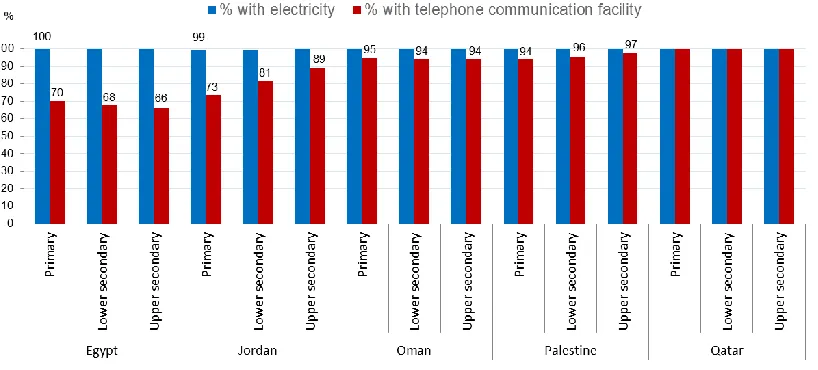
According to Figure 1, electricity is almost universally available in primary and secondary schools in Egypt, Jordan, Oman and Palestine, and in every school in Qatar. This suggests that the basic electrical infrastructure is generally in place to integrate ICT in the classroom; where ICT is lacking, it is not necessarily attributable to the absence of a power supply.
The existence of telecommunication facilities in schools is slightly less frequent. While the majority of schools have a facility in both Oman and Palestine, shares are lower in Egypt and Jordan, which have large rural areas. In Jordan, for example, 73% of primary educational institutions have a telephone communication facility – increasing to 81% and 89% in lower and upper secondary educational institutions, respectively. The share of primary schools in Egypt with a telephone communication facility (70%) is similar to that of Jordan; however, in Egypt the share decreases at the secondary level of education, with 68% and 66% of lower and upper secondary educational institutions, respectively, having the infrastructure. In Qatar, all primary and secondary educational institutions have a telephone communication facility.
Figure 1. Proportion of educational institutions with basic electrical and telecommunications infrastructure by level of education, 2011
Notes: Data for Egypt reflect the academic year ending in 2010. Data for Palestine reflect the academic year ending in 2012. Data for Palestine reflect only the West Bank.
Building computer and Internet infrastructure: Access to advanced forms of ICT-assisted instruction
In order for countries to provide advanced forms of ICT-assisted instruction, including the use of computers and the Internet, adequate resources must be established, keeping pace with demand based on enrolment. The learner-to-computer ratio (LCR) refers to the average number of learners per computer available for pedagogical use and measures the national level of computer access in aggregate education systems. While there is no international target, a high LCR indicates substantially less computer access per learner than a low LCR, since more students are required to share the same computer.
The LCR sheds light on current infrastructure to support the integration of ICT-assisted instruction. It, however, does not provide information on the range of LCRs across regions, schools, or educational sector (see Box 2). For instance, while the LCR may be low in some regions (e.g. urban centres) indicating greater access, it may be much higher in others (e.g. rural and remote areas) indicating scarce resources and minimal access. In Jordan, for example, schools falling under the authority of the United Nations Relief and Works Agency (UNRWA) for Palestine refugees have an LCR of 29:1, compared to the national average of 17:1 (Jordan, 2012).
The LCR also does not take into account the issue of computer obsolescence. For instance, several computers may be outdated or in disrepair. It also does not take into account whether or not computers are even in use. There are cases where newly purchased computers remain in boxes and are not distributed among classrooms or laboratories for pupils to use even though they are captured in national statistics.
While the LCR indicator does not provide information on computer usage, it may be considered as a proxy measure for enabling computer usage since there is a relationship between LCR and individual learner time using a computer. In most schools, there is typically more than a 1:1 ratio between learner and computer, whereby more than one student must share a single computer. Sometimes there are only a small number of learners sharing a computer in school, and group work using computers can have some learning benefit – especially if based on a collaborative or cooperative learning model. In other schools, however, the number of learners sharing a computer is so high that time on task is too limited per learner to allow a meaningful learning experience.
While schools need to acquire computers given the ever-increasing reliance on ICT in several life spheres, the push towards two-way communications between individuals over long distances necessitates computers that are connected to the Internet. The learner-to-computer connected to the Internet ratio (LCCIR) is an indicator that measures the capacity of education systems to support ICT-assisted instruction that uses the World Wide Web.
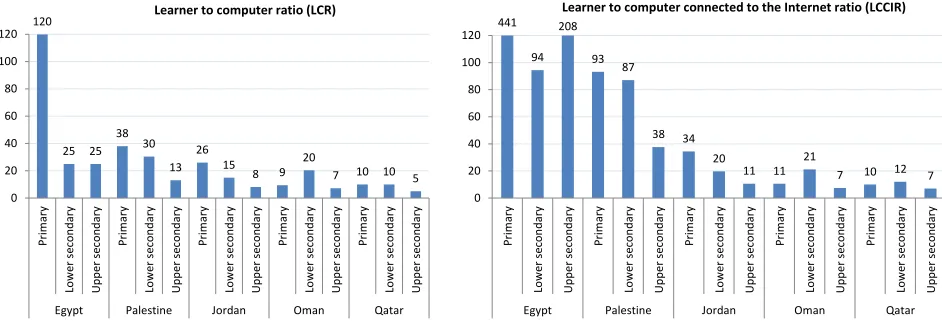
Figure 2 shows the LCRs and LCCIRs for primary, lower secondary and upper secondary education levels. In Egypt, for instance, data show that available computer resources are greatly overstretched since, on average, 120 primary-level pupils nationwide share a single computer2. On the other hand, given the lack of recommendations for integrating ICT across the entire primary education curriculum in Palestine, an LCR of 38:1 may not necessarily represent a situation where computer resources are overstretched. In Jordan and Oman, where there are
2
recommendations for integrating ICT in all grades and most subjects, there are 26 and 20 primary-level learners, respectively, per computer. In almost all cases, the LCR decreases from primary to secondary levels of education indicating greater access at higher levels. Qatar also has recommendations for using ICT in all grades and subjects and has a primary LCR of 14:1; however, this is unevenly distributed between public and private sectors (see Box 2).
Figure 2. Learner-to-computer ratio (LCR) and learner-to-computer connected to the Internet ratio (LCCIR) by level of education, 2011
Notes: Data for Egypt reflect the academic year ending in 2010. Data for Palestine reflect the academic year ending in 2012. Data for Palestine reflect only the West Bank.
The LCCIR is calculated based on all computers, which may include those used for administrative purposes. As such, learner access to the Internet may be somewhat inflated as represented in the LCCIR values shown in Figure 2. These values should be considered as UIS estimates. Source: UIS database.
Among the countries with greater access to computers (e.g. Jordan, Oman and Qatar), the LCCIR is not substantially higher than the LCR. For example, while LCRs are 9:1, 20:1 and 7:1 in Oman for primary, lower secondary and upper secondary education, respectively, LCCIRs are only slightly higher at 11:1, 21:1 and 7:1. In other words, countries with higher levels of computer access are also more likely to have higher levels of Internet connectivity.
In countries where general access to computers is already a challenge, there is a disproportionate shortage of Internet connectivity. In Palestine, primary and lower secondary LCCIRs are more than twice as high – 93:1 and 87:1, respectively – than LCRs of 38:1 and 30:1. At the upper secondary level, the LCCIR (38:1) is almost three times higher than the LCR (13:1).
In Egypt, there are no specific recommendations for a course in basic computer skills at the primary level and ICT tools are poorly integrated in most areas of the curriculum. In addition to the lack of curricular recommendations, poor Internet infrastructure exists where 441 primary-level students on average share a single computer connected to the Internet. Access improves somewhat at the lower secondary level where 94 students share a computer connected to the Internet, but this remains almost four times less than the number of students who have access to a computer in general (i.e. LCR of 25:1).
120 25 25 38 30 13 26 15 8 9 20
7 10 10 5
0 20 40 60 80 100 120 Prim ar y Lo w er se con d ar y U p p e r se co n d ar y Prim ar y Lo w er se con d ar y U p p e r se co n d ar y Prim ar y Lo w er se con d ar y U p p e r se co n d ar y Prim ar y Lo w er se con d ar y U p p e r se co n d ar y Prim ar y Lo w er se con d ar y U p p e r se co n d ar y
Egypt Palestine Jordan Oman Qatar
441 94 208 93 87 38 34 20 11 11 21
7 10 12 7
0 20 40 60 80 100 120 Prim ar y Lo w er se con d ar y U p p e r se co n d ar y Prim ar y Lo w er se con d ar y U p p e r se co n d ar y Prim ar y Lo w er se con d ar y U p p e r se co n d ar y Prim ar y Lo w er se con d ar y U p p e r se co n d ar y Prim ar y Lo w er se con d ar y U p p e r se co n d ar y
Egypt Palestine Jordan Oman Qatar
Allocation of computer resources and overall connectivity
Building infrastructure to support newer forms of ICT-assisted instruction using computers and the Internet requires substantial resources. To ensure that students have access, schools need to maintain adequate numbers of computers, keeping pace with student enrolment and technological change, and ensure that policies support the allocation of sufficient numbers of computers for pedagogical purposes, ensuring Internet connectivity.
Countries provide data on total computers within the education system, including those allocated to learners, teachers, administrative staff, or some combination of these. It is important to report the number of computers allocated to pedagogical purposes in order to have an accurate picture of the general level of access to support learning and teaching. An understanding of computer allocation strategy is also important, since it provides insight into possible redistribution of computers. For instance, in countries where computers are scarce and a high proportion is used for administrative purposes, a redistribution strategy may lead to more equitable sharing among students and/or teachers.
Figure 3 sheds light on the allocation strategy for computers, as well as their associated connectivity level in primary and secondary schools. Egypt, where computer resources are greatly overstretched and there are 120 primary-level pupils on average sharing a single computer, allocates the largest proportion of its computers to pedagogical purposes in primary (91%), lower secondary (96%) and upper secondary (96%) education. However, while Egypt allocates the largest share of its computers to learning, the largely rural country has a low share of computers (regardless of allocation) connected to the Internet, where respectively 25%, 25% and 11% of computers at the primary, lower secondary and upper secondary level are connected. In sum, Egypt is constrained in its efforts to spread a culture of ICT-assisted instruction by a basic lack of devices and Internet connectivity.
Figure 3. Computers in educational institutions by allocation and connectivity, by level of education, 2011
Notes: Figures representing the percentage of computers connected to the Internet include all computers including those used pedagogically and administratively. Therefore, the actual proportion of computers connected to the Internet available for pedagogical purposes may be lower than the figures presented above.
Data for Egypt reflect the academic year ending in 2010. Data for Palestine reflect the academic year ending in 2012. Data for Palestine reflect only the West Bank.
Source: UIS database.
91 96 96 88 89 89
83 85 86
73 78 79 59 51 62 25 25 11 79 86 86
64 64 65
30 27 28 91 80 97 0 10 20 30 40 50 60 70 80 90 100 Prim ar y Lo w er se con d ar y Up p e r sec o n d ary Prim ar y Lo w er se con d ar y Up p e r sec o n d ary Prim ar y Lo w er se con d ar y Up p e r sec o n d ary Prim ar y Lo w er se con d ar y Up p e r sec o n d ary Prim ar y Lo w er se con d ar y Up p e r sec o n d ary
Egypt Oman Jordan Palestine Qatar
Jordan and Oman also allocate a sizeable majority of computers (i.e. approximately three-quarters or more) to pedagogical purposes for all levels of education. Given the lower LCRs and LCCIRs for these two countries, this “balanced” allocation strategy takes into consideration the need for ICT for administrative purposes as well as for pedagogy. In fact, Jordan addresses the allocation of ICT for both pedagogical and administrative purposes in its policy framework by focusing on cost-efficient measures to acquire resources, rather than solely relying on increases to the education budget (UNESCO, 2011a). In addition to allocating the majority of its computers to pedagogical purposes, Oman possesses relatively high capacity levels to support advanced ICT-assisted instruction using both computers and the Internet, given that about 80% or more of computers are also connected to the Internet.
The availability of computers and especially computers connected to the Internet is also overstretched in Palestine given the relatively high national level LCR and LCCIR. However, Palestine, unlike Egypt, practices a more balanced approach in the allocation of computers and connectivity to both administration and pedagogy. Nevertheless, given that approximately one-quarter of computers are used for non-pedagogical purposes, new sharing systems or reallocation of some computers to instruction could be re-examined.
Also in Figure 3, Qatar provides data suggesting that a low share of computers is actually allocated to pedagogy – about 59%, 51% and 62% for primary, lower secondary and upper secondary, respectively. However, this may not represent an obstacle to access in terms of computers in this country, given the relatively lower national-level LCR (see Box 2). Access to the Internet is somewhat uneven in schools in Qatar, which can be attributed to educational sector whereby public schools are much more likely to be connected (see Figure 5).
Box 2. Differences regarding computer/Internet availability in the public and private sectors
The availability of ICT resources is often impacted by the source of funding for educational institutions. For instance, while some private institutions exist to provide alternative educational opportunities to the public sector – frequently of higher quality or meeting religious criteria – others are established to fill gaps left by national education authorities (e.g. in remote regions and funded by communities and parents). As a result, the infrastructure available—not to mention quality—may vary significantly between public and private institutions.
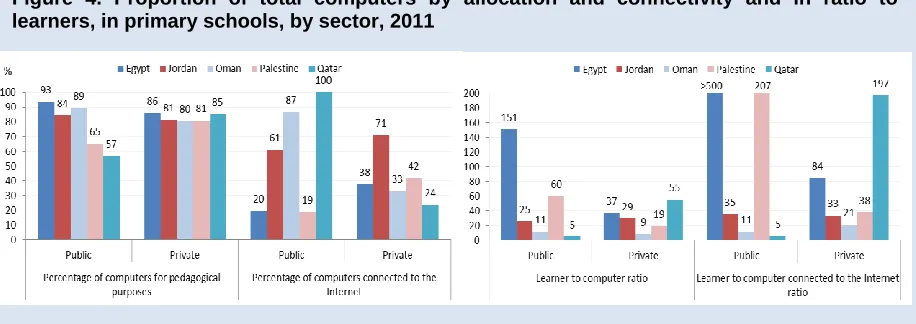
Figure 4 presents the percentage of computers used for pedagogical purposes, the percentage of computers connected to the Internet, as well as the computer ratio (LCR) and learner-to-computer connected to the Internet ratio (LCCIR) in primary education disaggregated by sector. Data show that in Egypt, Jordan, and Oman a higher share of computers are allocated to pedagogical purposes in the public sector than in the private sector – albeit more than 80 per cent are allocated to pedagogy in both sectors. In contrast more than 80 per cent of computers are allocated to pedagogy in private schools in Palestine and Qatar but in public schools, the proportion decreases to 65 per cent and 57 per cent, respectively.
Taking enrolment data into consideration, these trends impact learners’ computer access level
differently—as measured by the learner-to-computer ratio (LCR). For example, Figure 4 shows access to computers is lower in public schools in Egypt and Palestine given that 151 and 60 primary-level pupils share a single computer, respectively, compared to 37 and 19 pupils in private education. In contrast, access to computers in Qatar is substantially greater in public schools (5:1) than in private schools (55:1), while in Jordan and Oman, sector has negligible impact.
Oman, which is mostly located in rural areas. Finally, given connectivity challenges in Qatar’s private sector primary educational institutions, the proportion of the computers connected to the Internet is 24 per cent compared to 100 per cent in the public sector.
Figure 4. Proportion of total computers by allocation and connectivity and in ratio to learners, in primary schools, by sector, 2011
Notes: The share of public enrolment as a percentage of total enrolment is as follows: Egypt (92%), Jordan (74%), Oman
(94%), Palestine (80%) and Qatar (43%). Data are aggregated for total public versus private sectors and therefore may mask substantial differences within the actual range of values representing individual public and/ or private educational institutions. Data for Egypt reflect the academic year ending in 2010. Data for Palestine reflect the academic year ending in 2012. The LCCIR is calculated based on all computers, which may include those used for administrative purposes. As such, learner access to the Internet may be somewhat inflated as represented in the LCCIR values shown. LCCIR values should be considered as UIS estimates. Total values for Qatar also represent UIS estimates.
Source: UIS database.
Taking enrolment data into consideration, trends also impact learners’ access to the Internet
differently as measured by the learner-to-computer connected to the Internet ratio (OCIIR). Given the lack of Internet connectivity in Egypt and Palestine, LCIIRs are relatively high. For example in Egypt, where ICT tools are not integrated into primary-level curricula, pupils in primary private institutions are about nine times (84:1) more likely to have access to a computer connected to the Internet than a pupil in the public system (719:1). In Palestine, 207 pupils in public institutions share a single computer connected to the Internet at the primary level, compared to 38 in the private sector.
In the small Gulf country of Qatar, where there are recommendations for using ICT in all grades and subjects, the type of school is also a significant predictor of access to computers and the Internet. While there are only 5 children sharing a computer with Internet access in public primary schools, there are 197 primary students sharing a computer connected to the Internet in private schools. Based on the analysis, policies that better incorporate sector differences in access to computers and the Internet, taking into consideration regional differences related to infrastructure are needed to ensure more children can access ICT in education.
Types of Internet connectivity in schools
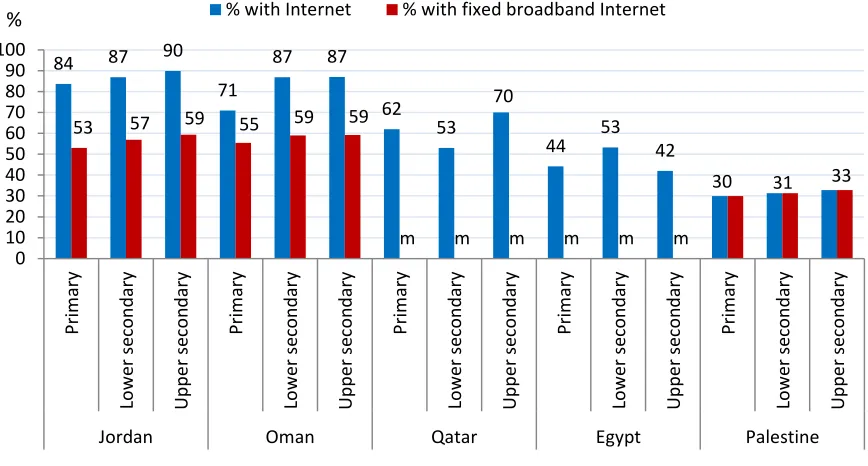
Figure 5 shows the proportion of primary and secondary educational institutions with any type of Internet connection, as well as those with a fixed broadband connection. Less than one-half of educational institutions in Palestine and Egypt have an Internet connection, while more than two-thirds of all educational institutions in Oman and Jordan are connected. In general, secondary educational institutions are given priority, and this is most evident in the case of Oman, where 71%, of primary schools are connected compared to 87% of lower secondary and upper secondary schools, respectively3.
Figure 5. Proportion of educational institutions with Internet connectivity and with broadband connectivity by level of education, 2011
Notes: m = missing data.
Data for Egypt reflect the academic year ending in 2010. Data for Palestine reflect the academic year ending in 2012. Data for Palestine reflect only the West Bank.
Source: UIS database.
In Qatar, where resources are unevenly distributed between the public and private sectors, 62%, 53% and 70% of total primary, lower and upper secondary schools, respectively, are connected to the Internet4(see Box 2).
Fixed broadband connectivity presents a challenge for many countries in the region. However, in Palestine, where about one third of schools have Internet connections, all are via fixed broadband. In Oman and Jordan, where different types of connections coexist, more than one-half of Internet connections are via broadband. Data on fixed broadband Internet are not available for Egypt and Qatar. Similar to the Internet in general, the implementation of fixed broadband connectivity is prioritised for secondary institutions in both Jordan and Oman, rising incrementally by level of education.
3
From a logistical perspective, most countries have fewer secondary level institutions, which may facilitate connecting all secondary schools before primary level institutions can also be connected. 4
In Qatar, all (100%) public educational institutions are connected to the Internet.
84 87 90
71
87 87
62 53
70
44 53 42
30 31 33
53 57 59 55 59 59
m m m m m m
0 10 20 30 40 50 60 70 80 90 100 Prim ar y Lo w er se con d ar y U p p e r se co n d ar y Prim ar y Lo w er se con d ar y U p p e r se co n d ar y Prim ar y Lo w er se con d ar y U p p e r se co n d ar y Prim ar y Lo w er se con d ar y U p p e r se co n d ar y Prim ar y Lo w er se con d ar y U p p e r se co n d ar y
Jordan Oman Qatar Egypt Palestine
% with Internet % with fixed broadband Internet
Computer laboratories, networks and ICT support services
The installation of computer laboratories in schools is a significant upgrade to where a class might have one desktop computer in the back of the room. More recently, however, given the reality of a multitude of both personal and school-owned devices (including laptops, tablets and mobile devices), education technologists argue that computer laboratories are becoming obsolete and may, in fact, provide a disservice in some situations, since they imply that computing is a separate subject and that the use of ICT ought not to be fully integrated into the general curriculum. Others point to an inadequate budget in most schools for one-to-one programmes and that more computer skills classes should be developed, in addition to integrating technology into the rest of the curriculum (Pedro, 2012; UNESCO, 2011a).
While the promotion of One Laptop per Child programmes has as its aim the achievement of learner-to-computer ratios of 1:1, few countries have been able to attain this. Alternative strategies may potentially improve the availability and management of ICT-assisted instruction in schools. For instance, one alternative is the use of multi-seat computers or networked PCs,
where users simultaneously operating from a single CPU and server possess their own individual monitors and keyboards.
As long as ratios of learner-to-devices and the Internet are more than 1:1, computer laboratories may help to fill in this gap by playing an important role in managing and organising how and when children are subject to ICT-assisted instruction. In the past, many have suggested that computer laboratories can facilitate the teachers’ role in structuring learning opportunities more efficiently for a large number of children around computers than having fewer computers in individual classrooms. For this reason, computer laboratories – in addition to classroom-based individualised learning – can effectively support ICT-assisted instruction.
Local Area Networks (LANs), which refer to a network connecting computers within a localised area such as a single building, department or site, also expand potential for ICT-assisted instruction by emphasising interactivity and communication between pupils and/or teachers. They provide the following benefits to learning and teaching: i) increasing resource sharing; ii) flexibility in that information can be accessed from a number of locations in the school setting; iii) network licensing is cheaper than for individual devices allowing for access to a wider segment of children and incurring substantial savings; iv) quick and easy file sharing; v) additional security to computers and information via a central backup and safety system; and vi) devices can be shared by a number of users (including printers, scanners, etc.).
While computer laboratories and LANs can help expand technological capacity, ICT support services are increasingly important in a highly technical environment. ICT support services must ensure the sustainability of ICT facilities (e.g. computer laboratories and LANs), and they are vital in the coordination, maintenance and overall viability of ICT facilities. More specifically, ICT support services typically coordinate the effective use of ICT across the curriculum for both students and teachers to ensure that teachers and students alike understand how to effectively use ICT in their work. Secondly, they monitor how equipment and software are accommodated, acquired, maintained and replaced. Without ICT support services, several challenges may arise, including the possibility that ICT equipment falls into disrepair, is not properly maintained and replaced, leading to obsolescence.
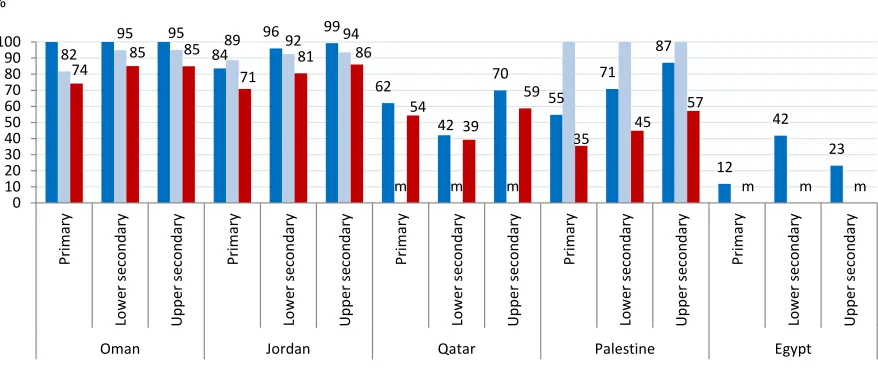
classes (Hamdy, 2007), computer laboratories are relatively scarce in primary (12%), lower secondary (42%), and upper secondary (23%) educational institutions, respectively. In Palestine, which does not integrate the use of ICT into all grades of primary education, computer laboratories are available in only 55% of primary institutions, compared to 71% in lower secondary and 87% in upper secondary institutions where ICT is more heavily integrated into the national curriculum.
Figure 6. Computer laboratories, LAN and ICT support services by level of education, 2011
Notes: m = missing data.
Data for Egypt reflect the academic year ending in 2010. Data for Palestine reflect the academic year ending in 2012. Data for Palestine reflect only the West Bank. While total data on ICT support services are missing for Qatar, they are present in 100% of public institutions. Source: UIS database.
In Jordan, where the Ministry of Education has been making strong efforts to integrate laboratories in all schools, 84%, 96% and 99% of primary, lower secondary and upper secondary educational institutions, respectively, now have functional computer laboratories (Jordan, 2012). In Oman, laboratories are even more common and, in fact, are universally available at all levels of education.
Data on LANs are available for Jordan, Palestine and Oman, where the share of schools with LANs increases according to education level. While the share of schools with both computer laboratories and LANs increases by education level in these three countries, more schools overall have laboratories than LANs. This difference is more marked in Palestine where 55%, 71% and 87% of primary, lower secondary, and upper secondary educational institutions are equipped with a lab, respectively, compared to 35%, 45% and 57% that have a LAN.
For countries with available data on ICT support services, two scenarios are presented. In Palestine, where computer laboratories and LANs are less common, ICT support services are almost universal. This suggests that Palestine is prioritising the effective use of ICT in education, despite challenges in terms of developing and maintaining the infrastructure components related to ICT equipment.
84 96 99 62 42 70 55 71 87 12 42 23 82
95 95 89 92 94
m m m
74 85 85 71 81 86 54 39 59 35 45 57
m m m
0 10 20 30 40 50 60 70 80 90 100 P ri m ary Lo w er se con d ar y U p p e r se co n d ar y P ri m ary Lo w er se con d ar y U p p e r se co n d ar y P ri m ary Lo w er se con d ar y U p p e r se co n d ar y P ri m ary Lo w er se con d ar y U p p e r se co n d ar y P ri m ary Lo w er se con d ar y U p p e r se co n d ar y
Oman Jordan Qatar Palestine Egypt
In contrast, secondary schools in Jordan and all schools in Oman are more likely to have computer laboratories than ICT support services, suggesting a lack of technical or pedagogical support to students and/or teachers in some schools, as well as a lack of support to properly maintain and/or repair ICT tools. In Jordan, for example, an estimated 8,800 computers require maintenance, are damaged, missing parts, or simply need to be installed. Thus, challenges remain which could be addressed through the availability of adequate ICT support services (Jordan, 2012).
In Qatar, data demonstrate a substantial digital divide in relation to infrastructure availability between the public and private sectors (see Box 2). For instance, while 62%, 42% and 70% of all primary, lower and upper secondary schools, respectively, have a computer laboratory, a laboratory exists in the majority of public institutions. Similarly, most public sector schools also have access to a LAN and ICT support services.
Institutional-level ICT-assisted instruction
At the institutional level, ICT-assisted instruction is dependent upon the availability of proper infrastructure, i.e. installation and maintenance of electricity and telephone communication facilities, acquisition and maintenance of computers, and Internet connectivity. However, the instructional strategies and technologies employed by countries are just as influenced by national priorities and policies on the use of ICT in education, in addition to financial resources. Human resources also play an important role since teachers and other educational personnel need to use ICT effectively and impart knowledge and skills to pupils. Implementation plans need to evaluate current needs and future goals and ensure that adequate training and support are provided. The ICT-in-Education Toolkit (http://www.ictinedtoolkit.org/usere/login.php) is an online tool that can help policymakers to plan during various phases of ICT in education initiatives (Haddad et al., 2007).
Of the older forms of ICT-assisted instruction, radio-assisted instruction (RAI) has been used as an educational tool since the 1920s, and television-assisted instruction (TAI) since the 1950s, in order to enrich and expand the reach of education. Experience has shown that both types have been successful in expanding educational opportunities on a large scale and at a low cost by: i) targeting young adults who have left primary or secondary schools before graduation, allowing them to follow curricula from a distance; and ii) providing otherwise unavailable instruction in sparsely settled rural and remote areas (Haddad et al., 2007; Trucano, 2010). Radio has an added advantage in rural areas with little or no electrical infrastructure, since these devices can be operated easily using batteries.
These older forms of ICT-assisted instruction are being challenged, as well as enriched, by computers and the Internet due to their greater capacity. Computer-assisted instruction (CAI) and Internet-assisted instruction (IAI) have evolved and diversified at an exponential rate, increasingly merging with older ICT tools to create new platforms for learning and teaching. In the 1980s, the approach of CAI was based on programmed learning or “drill and practice” software, whereas both the software and hardware have since evolved. Currently, there are many new devices that have been specifically designed or are being adopted into classrooms, such as laptops (regular and low-cost), interactive whiteboards, tablets, e-readers, smart phones, etc.
start-up and maintenance costs are substantially higher than for older technologies. Despite this, it is necessary to consider the gains that CAI and IAI might have in schools, given their potential impact on learning, performance and motivation of both students and teachers, as well as on school management and system-wide organization.
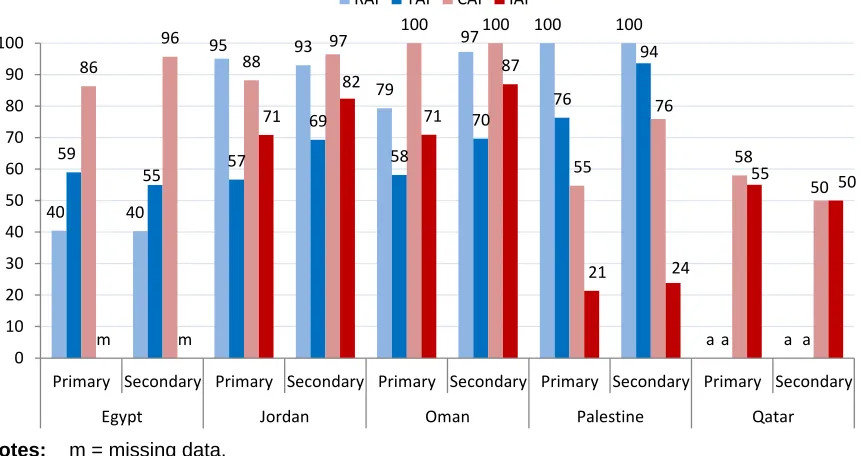
Figure 7 demonstrates the degree to which educational institutions provide different forms of ICT-assisted instruction, ranging from traditional tools, such as RAI and TAI, to more technologically advanced platforms, such as CAI and IAI. The data present the level of access to different ICT-assisted instruction types but do not provide information on usage or the quality of instruction (see Box 3).
According to Figure 7, the five countries in this analysis demonstrate different strategies for integrating ICT-assisted instruction in schools. For example, although the number of computers available in Egypt is not keeping pace with enrolment, and Internet connectivity is lagging behind, the country nonetheless continues to emphasise the integration of CAI. As such, 86% and 96% of primary and secondary educational institutions, respectively, have access to this type of ICT-assisted instruction. However, while CAI is regarded as relatively widespread, actual time on task is limited considering the high LCR and LCCIR in the country.
Older types of ICT-assisted instruction are not a priority in Egypt, even though large populations live in rural or remote areas where they are frequently found to serve a useful function. RAI is available in 40% of primary and secondary schools, while TAI is available in 59% and 55% of primary and secondary schools, respectively, often through the use of mobile technology equipped with transmission receivers to the Egyptian Satellite (Nile Sat) television broadcasts, which air educational programmes for children and general literacy programmes. There is no available data on the provision of IAI at the institutional level in Egypt; however, approximately one-half or fewer of all schools in Egypt have access to the Internet, suggesting that IAI is available in no more than a half of total schools.
Palestine also faces challenges in establishing infrastructure to support CAI and IAI across the entire educational system. Previous evidence shows that many computers were outdated and some laboratories are only used during the technology class, which is 45 minutes per week (Pacetti, 2008). According to Figure 7, slightly more than one-half (55%) of primary schools and approximately three-quarters of secondary schools (76%) have CAI.
Given that less than one-third of all schools have any kind of Internet connection, instruction based on the Internet (i.e. IAI) is even less common, available in just one-fifth of primary (21%) and one-quarter (24%) of secondary educational institutions. In Palestine financing has often been a challenge as the Palestinian Ministry of Education and Higher Education (MoEHE) rarely permits school funds to be used for connecting to the Internet, resulting in a reliance on community donations (Pacetti, 2008).
Figure 7. ICT-assisted instruction by type and level of education, 2011
Notes: m = missing data.
a = category not applicable
Data for Egypt reflect the academic year ending in 2010. Data for Palestine reflect the academic year ending in 2012. Data for Palestine reflect only the West Bank. In Qatar, the categories RAI and TAI are not offered and therefore are not applicable.
Source: UIS database.
Box 3. Four types of ICT-assisted instruction
ICT-assisted instruction refers to teaching methods or models of instruction delivery that employ ICT in supporting, enhancing and enabling course content delivery. It includes any, all or combinations of the following: radio-, television-, computer- and Internet-assisted instruction.
Radio-assisted instruction (RAI) includes both radio broadcast education and interactive radio instruction. Radio broadcast education entails an audio lecture or lesson, with printed material for pupils to follow the lecture. Interactive radio instruction (IRI) turns a typically one-way technology into a tool for active learning inside and outside the classroom. It requires that pupils react to questions and exercises through verbal responses to radio programme contributors, group work, and physical and intellectual activities while the programme is on air.
Television-assisted instruction (TAI) is similar to radio broadcast education, with the additional benefit of video. It helps to bring abstract concepts to life through clips, animations, simulations, visual effects and dramatisation. It can also connect a classroom to the world but shares the same rigid scheduling and lack of interactivity as radio broadcast education.
Computer-assisted instruction (CAI) is an interactive learning method in which a computer is used by teachers and/or pupils to present instructional material, to perform tasks for learning and to help in selecting and accessing additional pedagogical material.
Internet-assisted instruction(IAI) refers to an interactive learning method using content from the World Wide Web for pedagogical purposes.
40 40
95 93
79
97 100 100
a a
59
55 57
69
58
70
76
94
a a
86
96
88
97 100 100
55
76
58
50
m m
71
82
71
87
21 24
55 50
0 10 20 30 40 50 60 70 80 90 100
Primary Secondary Primary Secondary Primary Secondary Primary Secondary Primary Secondary
Egypt Jordan Oman Palestine Qatar
Jordan and Oman both have strong policy orientations towards providing a wide array of ICT-assisted instruction types. CAI is emphasised in Jordan and Oman in both primary and secondary schools. For example, 88% of primary institutions in Jordan provide CAI and it is almost universally available in secondary education (97%), while in Oman CAI is universally available at all levels. Similarly, IAI is relatively common in both Jordan (71%) and Oman (71%) at the primary level but is more frequently available in secondary schools – 82% and 87%, respectively.
RAI continues to be common in Jordan and Oman, readily available in 95% and 79% of primary schools and 93% and 97% of secondary schools, respectively. While emphasised less, TAI is available in just over one-half of primary schools in Jordan (57%) and Oman (58%). It is more common at the secondary level, where approximately two-thirds of schools use televisions for educational purposes in Jordan (69%) and Oman (70%). While broadcast varieties of RAI and TAI were formerly available in Jordan until 2009 and 2002, respectively, current forms of RAI and TAI use existing hardware in schools for instruction. For example, radios/ recorders are used for English language and Islamic education, while televisions are often used to view educational video tapes (Jordan, 2013).
Finally, although Qatar has relatively high rates of access to computers and the Internet as measured by the LCR and the LCCIR, Figure 7 shows that only 58% and 50% of primary and secondary schools offer CAI and 55% and 50% offer IAI. This is due to an uneven distribution of resources between the public sector (where CAI and IAI are universally available in all schools) and the private sector (where computers are relatively scarce precluding access to advanced forms of ICT-assisted instruction). Data from Qatar also show that older forms of ICT-assisted instruction, including RAI and TAI, are not used.
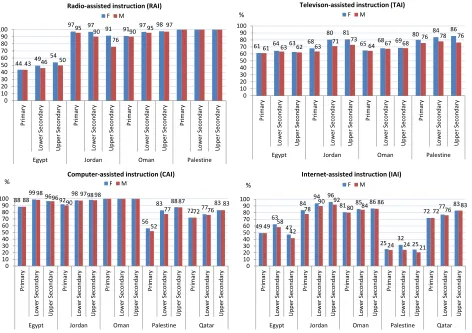
8. Enrolment in programmes offering ICT by gender
There are three aspects to the digital divide in the Arab states: i) the divide between the Arab world as a whole versus other regions; ii) the divide across Arab states (e.g. large, predominantly rural countries versus small, resource-rich countries); and iii) the divide within Arab states according to demographics, including socio-economic status, location (e.g. urban versus rural), culture and ethnicity.
While the integration of ICT in education may help to bridge the digital divide, it may also exacerbate it in some contexts. This can occur, for example, if particular groups tend to be systematically excluded from educational opportunity and if schools are the only place where certain children can readily access and take advantage of the learning provided by ICT.