S
Spprriinngg22001199,,VVooll88,,NNoo22 D
DOOII::1100..2222008888//IIJJMMCCMM..BBUUMMSS..88..22..116622
Association between CYP19A<G rs700518 Polymorphism with
Acne Vulgaris and its Severity: Influence on Sex Hormones Level
Ali Ebrahimi1, Zohreh Rahimi2,3, Zomorod Ghadami1,2, Ebrahim Shakiba2, Ziba Rahimi1, Mona Akbari1, Mehrangiz Shafiei2, Fariborz Bahrehmand1, Asad Vaisi-Raygani4, Rozita Naseri5
1. Department of Dermatology, Medical School, Kermanshah University of Medical Sciences, Kermanshah, Iran.
2. Medical Biology Research Center, Kermanshah University of Medical Sciences, Kermanshah, Iran.
3. Department of Clinical Biochemistry, Medical School, Kermanshah University of Medical Sciences,
Kermanshah, Iran.
4. Fertility and Infertility Research Center, Medical School, Kermanshah University of Medical Sciences,
Kermanshah, Iran.
5. Department of Internal Medicine, Medical School, Kermanshah University of Medical Sciences, Kermanshah,
Iran.
Acne vulgaris (AV) is a common skin disease that causes physical and psychological problems for the affected
individual. In addition to systemic changes in hormone levels, overproduction of local steroids, especially
androgens are associated with AV. Cytochrome (CYP) 19 is involved in the synthesis of estrogens. The aim of
the present study was to investigate the influence of CYP19A <G rs700518 variants on sex hormones level and
the risk of AV. In this case-control study, 181 patients with AV and 144 healthy individuals from Western Iran
were investigated. The CYP19 variants were detected by PCR-RFLP method. The frequency of GG genotype in
all patients (27.1%) was significantly higher than the controls (10.4%, P<0.001), which increased the relative
risk of AV by 1.96 times. Also, the presence of this genotype was associated with 1.5-fold (P=0.005), 1.89-fold
(P=0.011) and 3.33-fold (P=0.019) increased risk of mild, moderate and severe AV, respectively. A significantly
higher serum level of estradiol was observed in women in the presence of AA genotype (107.3±72.1 pg/ml) in
comparison with GG genotype (73.2±58.8 pg/ml) (P=0.009). Our study demonstrated that the GG genotype of
CYP19 rs700518 polymorphism increased the risk of AV and the severity of the disease, and also was associated
with lower levels of estradiol in females. Significantly decreased serum level of sex hormone-binding globulin in
women with AV in comparison with healthy individuals could be related to increasing level of androgen that was
observed in women with AV.
Key words: Acne vulgaris, CYP19, estradiol, SHBG, androgens
Corresponding author: Medical Biology Research Center, Kermanshah University of Medical Sciences, Kermanshah, Iran.
Email: [email protected]
cne vulgaris (AV) is a chronic inflammatory
disease of pilosebaceous unit appearing on
hair follicles and every areas of skin with the most
oil (sebaceous) glands. Acne is common in
A
Submmited 28 January 2019; Accepted 19 July 2019; Published 20 July 2019
adolescents but it can be present in adults and
children. Some of typical features of acne include
seborrhea, papules, inflammation and abnormal
follicular keratinization. In addition, acne may
cause various degrees of scarring that can be
disfiguring lifelong, so it affords negative
psychological effects in patient individuals. There
are various factors like stress, hormonal or genetic
factors, drugs, cosmetics, irritation and potential
dietary factors, which cause inflammation and
formation various types of acne lesions (1, 2).
Cytochromes (CYPs) P450 comprise a
superfamily of microsomal hemoproteins that
catalyze the phase I biotransformation of many
endogenous substrates and xenobiotics. Various
form of CYP enzymes are found in all eukaryotic
organisms, animals, plants, and fungi (3). In human,
CYPs are present in the endoplasmic reticulum
(microsomes) (4). A wide range of metabolic
capacity is provided due to the genetic variations of
cytochrome isoenzymes (5). This family includes
57 genes that encode for enzymes that can have
effect on drugs, arachidonic acid and eicosanoids,
foreign chemicals, cholesterol, and steroids
metabolism (6). Six CYP enzymes take part in
steroidogenesis. When sexual differentiation occurs
in early embryogenesis, the transcription factor
steroid-factor-1 plays an important role in
upregulation of CYP genes involved in steroid
hormone synthesis. These genes include members
of the CYP11, CYP17, CYP19 and CYP21 families
(6). The CYP19A1 is located within the
endoplasmic reticulum and synthesizes estrogen by
aromatization of A ring of the androgenic steroid
substrates. Mutations in this gene can increase or
decrease aromatase activity, sex hormone levels
(estrogen levels) and bone mineral density and
fractures (7).
The CYP19 polymorphism (rs700518) is an
anonymous variation in exon 3 (Val 80 Val), which
can affect the post-transcriptional processing, and
results in changes in gene expression, aromatase
levels, and thereby on estrogen production (8).
According to literature there is no available study to
investigate the role of CYP19 polymorphism
(rs700518) in the pathogenesis of AV and its effect
on the sex hormones level.
The present study aimed to find the
association between the CYP19 variants with sex
hormones level and with the risk of AV in a
population from Western Iran.
Patients and methods
Patients
In this case-control study, 181 individuals
with AV including 154 females and 27 males and
144 healthy individuals (113 females and 41 males)
without systemic and dermatologic disorders were
investigated. All studied individuals were examined
by dermatologist. Among patients with AV there
were 82 with mild AV, 48 with moderate AV and
51 patients with severe AV. The clinical grade of
AV was determined as mild with the presence of
comedones without significant inflammation and a
few or no papules; moderate with the presence of
comedones and significant inflammatory papules
and pustules; and severe with the presence of
comedones, papules and pustules and inflammatory
nodules (9). All studied individuals were from
Kermanshah province in Western Iran. The basic
information of all subjects including age, sex, age
of the disease onset, the severity of AV symptoms,
menstrual pattern and BMI were collected.
Informed written consent was obtained from
each individual before participation in the study.
The study was approved by the Ethics Committee
of Kermanshah University of Medical Sciences and
was in accordance with the principles of the
Declaration of Helsinki II.
Biochemical analyzes
The serum levels of triglycerides (TG), chole-
sterol, fasting blood sugar (FBS), low and
high density lipoprotein-cholesterol (LDL-C and
HDL-C, respectively) were measured using the
Bionic Diagnostic Kits (Iran) by using the Mindrey
BS-480 chemistry analyzer.Serum estradiol in the
mid- follicular phase of the menstrual cycle,
dehydroepiandrosterone (DHEA) and sex hormone
binding globulin (SHBG) levels were measured by
the chemiluminescent method using the Abbott
Architect i1000 (Abbott Laboratory, USA).
Genotyping
Standard method of phenol- chloroform was
used to extract DNA from whole blood of each
individual (2, 10). The CYP19 (rs700518) variants
were determined by polymerase- chain reaction
(PCR) restriction fragment length polymorphism
(RFLP) using the forward primer 5 ′
-AGTAACA-CAGAACAGTTGCA-3 ′ and the reverse primer 5 ′-TCCAGACTCGCATGAATTCTCCGTA-3 ′. The final PCR product in the presence of a DNA ladder
(50 bp) was electrophoresed on 2% agarose gel.
The CYP19 AA genotype was identified by a single
band of 188-bp, a band of 164-bp indicated the GG
genotype and the double bands of 164-bp and
188-bp demonstrated the AG genotype (8).
Statistical analysis
The allelic frequencies were calculated by the
chromosome counting method. The significance of
differences in genotype and allele frequencies of
CYP19 polymorphism between patients and controls were calculated using the χ2 test. The odds ratios (OR) was calculated as the estimates of
relative risk for disease, and 95% confidence
intervals (CI) were obtained by SPSS logistic
regression software. A two-tailed student’s t test
was used to compare quantitative data. The SPSS
(SPSS Inc., Chicago, IL, USA) statistical software
package version 22.0 was used for statistical
analysis.
Results
Demographic and biochemical characteristics
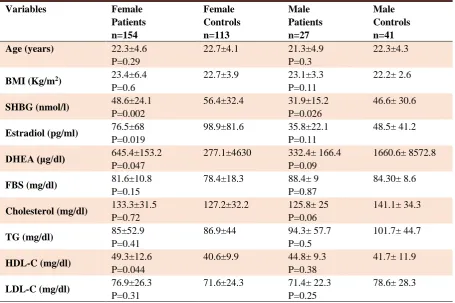
Table 1. Characteristics of patients and controls.
Variables Female
Patients n=154
Female Controls n=113
Male Patients n=27
Male Controls n=41 Age (years) 22.3±4.6
P=0.29
22.7±4.1 21.3±4.9
P=0.3
22.3±4.3
BMI (Kg/m2) 23.4±6.4
P=0.6
22.7±3.9 23.1±3.3
P=0.11
22.2± 2.6
SHBG (nmol/l) 48.6±24.1 P=0.002
56.4±32.4 31.9±15.2 P=0.026
46.6± 30.6
Estradiol (pg/ml) 76.5±68 P=0.019
98.9±81.6 35.8±22.1 P=0.11
48.5± 41.2
DHEA (μg/dl) 645.4±153.2 P=0.047
277.1±4630 332.4± 166.4 P=0.09
1660.6± 8572.8
FBS (mg/dl) 81.6±10.8 P=0.15
78.4±18.3 88.4± 9 P=0.87
84.30± 8.6
Cholesterol (mg/dl) 133.3±31.5 P=0.72
127.2±32.2 125.8± 25 P=0.06
141.1± 34.3
TG (mg/dl) 85±52.9
P=0.41
86.9±44 94.3± 57.7
P=0.5
101.7± 44.7
HDL-C (mg/dl) 49.3±12.6 P=0.044
40.6±9.9 44.8± 9.3 P=0.38
41.7± 11.9
LDL-C (mg/dl) 76.9±26.3 P=0.31
71.6±24.3 71.4± 22.3 P=0.25
78.6± 28.3
BMI: body mass index; DHEA: dehydroepiandrosterone; FBS: fasting blood sugar; HDL-C: high density lipoprotein-cholesterol; LDL-C: low density lipoprotein-cholesterol; SHBG: sex hormone binding globulin; TG: triglycerides.
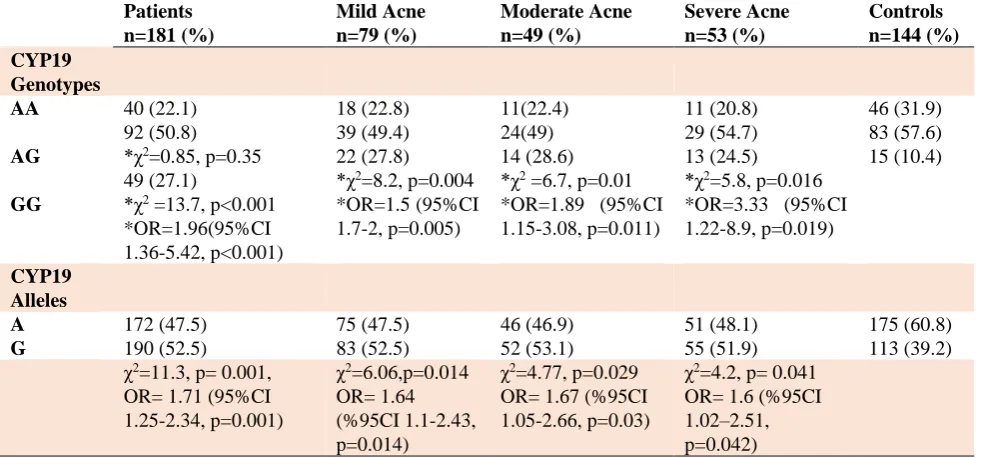
Table 2. Comparison of the frequency of CYP19 rs700518 genotypes and alleles between patients with acne vulgaris and controls. Patients n=181 (%) Mild Acne n=79 (%) Moderate Acne n=49 (%) Severe Acne n=53 (%) Controls n=144 (%) CYP19 Genotypes AA AG GG 40 (22.1) 92 (50.8) *χ2=0.85, p=0.35 49 (27.1)
*χ2 =13.7, p<0.001 *OR=1.96(95%CI 1.36-5.42, p<0.001)
18 (22.8) 39 (49.4) 22 (27.8) *χ2=8.2, p=0.004 *OR=1.5 (95%CI 1.7-2, p=0.005)
11(22.4) 24(49) 14 (28.6) *χ2 =6.7, p=0.01 *OR=1.89 (95%CI 1.15-3.08, p=0.011)
11 (20.8) 29 (54.7) 13 (24.5) *χ2=5.8, p=0.016 *OR=3.33 (95%CI 1.22-8.9, p=0.019) 46 (31.9) 83 (57.6) 15 (10.4) CYP19 Alleles A G 172 (47.5) 190 (52.5) 75 (47.5) 83 (52.5) 46 (46.9) 52 (53.1) 51 (48.1) 55 (51.9) 175 (60.8) 113 (39.2) χ2=11.3, p= 0.001,
OR= 1.71 (95%CI 1.25-2.34, p=0.001)
χ2=6.06,p=0.014 OR= 1.64 (%95CI 1.1-2.43, p=0.014)
χ2=4.77, p=0.029 OR= 1.67 (%95CI 1.05-2.66, p=0.03)
χ2=4.2, p= 0.041 OR= 1.6 (%95CI 1.02–2.51, p=0.042)
Overall,χ2 =14.9, P = 0.001 comparing three genotypes between patients and controls
*Compared to AA genotype between patients and controls.
of women and men (patient and control groups) are
represented in Table 1. In women with AV, the
levels of SHBG (48.6±24.1 nmol/l, P = 0.002) and
estradiol (76.5±68 pg/ml, P = 0.019) were
significantly lower than healthy women
(56.4±32.40 nmol/l, 98.9±81.6 pg/ml, respectively).
Also, significantly higher levels of DHEA (645.4±153.2 μg/dl, = 0.047) and HDL-C (49.30±12.6 mg/dl, P = 0.044) were observed in
women with AV in comparison with controls (277.1±4630.2 μg/dl and 40.6±9.9 mg/dl, respectively) (Table 1).
On the other hand, among men, only serum
concentration of SHBG was significantly higher in
controls (46.6± 30.60 nmol/l, P = 0.026) than
patients (31.9± 15.2 nmol/l) (Table 1).
Comparing different types of AV in
women demonstrated that the level of
SHBG tended to decrease with increasing
AV severity (mild AV=50.8±23.1, moderate
AV=49.4±27.5, and severe AV=44.7±22.1
nmol/l). Also, among women there was the
same trend toward decreasing estradiol level
in mild to severe AV (mild AV=86.5±82.7,
moderate AV=78.6±65, and severe AV=61.2±44.3
pg/ml).
The frequency of CYP19 rs700518 genotypes
and alleles in all patients, patients with mild-,
moderate- and severe- AV and controls are
presented in Table 2. As shown in this table, the
frequency of GG genotype in all patients (27.1%)
was significantly higher than controls (10.4%,
P<0.001), which increased the relative risk of AV
by 1.96 times. Also, the presence of this genotype
was associated with 1.5-fold (P = 0.005), 1.89-fold
(P = 0.011) and 3.33-fold (P = 0.019) increased risk
of mild-, moderate- and severe-AV. Further, the
frequency of G allele in patients (52.5%) was
significantly higher than controls (39.2%, P<0.001).
This allele increased the relative risk for AV by
1.71 times (P = 0.001).
Analysis of all studied women indicated a
significantly higher serum level of estradiol in the
presence of AA genotype (107.3±72.1 pg/ml)
compared to GG genotype (73.2±58.8 pg/ml) (P
=0.009).
Discussion
The present study revealed a lower serum
level of SHBG in men and women affected with
AV in comparison with healthy individuals. Also,
in women with AV the levels of estradiol and
DHEA were significantly lower and higher,
respectively than the healthy women. Comparing
different types of AV in women indicated that the
levels of SHBG and estradiol decreased with
increasing the AV severity.
The real cause of AV is unknown. It has been
suggested that the onset of molecular reactions in
the skin is affected by genetic and hormonal
factors. These factors probably provide suitable
environment for growth and proliferation of acne’s
follicle or affect on inflammatory responses. (11).
The sebaceous glands (or sebum) contain a large
number of receptors for androgens, estrogens,
thyroid stimulating hormone, prostaglandins, and so
on (12). Sebum is an important site for active
androgens formation. Increasing level of androgens,
especially during puberty, can increase the size of
the sebaceous glands and produce abnormal and
excessive sebum inside the gland, as well as
increasing the horny skin. This extra sebum can
lead to the closure of the follicle and the formation
of acne. The role of estrogens including estradiol in
the development of AV is not very clear. Estrogens
may directly oppose the effects of androgens in the
sebaceous glands, inhibit androgen production by
gonadal tissue through a negative feedback
regulation to release the pituitary gonadotropin, or
adjust genes that negatively affect on sebaceous
gland growth or suppressing lipid fatty production
(13).
The level of SHBG in blood was shown to be
dependent on gender, age, testosterone and estrogen
levels, and some diseases such as liver disease,
hypothyroidism, and obesity (14).
It has been reported that increasing DHEA
level is associated with the presence of acne (15).
Moreover, higher levels of total testosterone, free
testosterone and progesterone, cholesterol and
LDL-C and lower levels of SHBG, estradiol and
HDL-C are significantly associated with severe AV.
So, changes in lipid profile and hormone levels can
be considered in treatment of female patients with
moderate to severe AV (16).
The lower serum levels of SHBG and estradiol
and the higher level of DHEA in females with AV
compared to the control group and their association
with the severity of AV in the present study
indicates that decreased level of estradiol and
increased level of androgens are associated with
decreasing SHBG level and also are related to the
risk of AV and its severity. It also appears that
abnormal lipid profile in women could be
associated with AV.
The CYP19 gene encodes the aromatase
enzyme which catalyzes the conversion of androgen
into estrogen, which is related to endometriosis
development (17). Theoretically, any alteration in
CYP activity changes the circulating estradiol level
(7, 18). The specific tissue expression of CYP19
gene is regulated by specific tissue promoters and
by alternative splicing mechanisms (19).
The CYP19 polymorphism (rs700518) is an
A/G base change at Valine 80 on exon 3 and might
be effective on post-transcriptional regulation,
leading to an alteration in gene expression,
aromatase levels, and thereby on estrogen
production (7). It has been reported that the AA
genotype of rs700518 was associated with some
estrogen-dependent diseases such as hypertension,
breast cancer and endometriosis (8). So far, no
study has looked at the association between AV and
CYP19 rs700518. However, Chamaie-Nejad et al.
(20) investigated an association between CYP19 T>
C and AV and reported that the TC genotype
increased the risk of overall AV and mild AV by
2.1 and 3.2 times, respectively.
Our study demostrated that the frequencies of
CYP19 GG genotype and G allele in the patients
group were significantly higher than the control
group, which inceased the risk for AV by 1.94 and
1.71 times, respectively. Also, based on the disease
severity, the presence of GG genotype significantly
increased the risk of severe form more than the
mild form of the disease. Further, in females with
GG genotype the estradiol level was significantly
lower in comparison with those having AA
genotype.
An investigation on 359 Caucasion females
detected significant associations for five SNPs of
CYP19, including rs700518, with the age at
menarche (21). Peter et al. (22) reported a
significant association between variations in the
aromatase gene (CYP19A1) and estradiol and
testosterone levels, and the estradiol to testosterone
ratio in men. In addition, a prospective
observational study on postmenopausal
women with early breast cancer exhibited
association of variants in CYP19A1 with
decreased triglycerides and variable changes in
HDL-C (23). Also, another prospective
observational study in patients with
positive estrogen receptor breast cancer in Italy
showed that patients with AA genotype for
CYP19A1 rs700518 were at risk for aromatase
inhibitor-associated bone loss and deserved close
follow-up during long-term aromatase inhibitors
therapy (7).
In summary, our study demonstrated that the
GG genotype of CYP19 rs700518 increased the risk
of AV and the severity of the disease, and was also
associated with lower levels of estradiol in females.
Also, there was a significant reduced level of
estradiol in women with AV in comparison with
controls. Significant decreased serum levels of
SHBG in women with AV in comparison with
healthy individuals could be related to increasing
levels of androgens that were observed in women
with AV.
Conflict of interest
The authors declare that they have no conflict
of interest.
References
1. Dreno B. What is new in the pathophysiology of acne, an
overview. J Eur Acad Dermatol Venereol 2017;31 Suppl 5:8-12.
2. Saeidi S, Chamaie-Nejad F, Ebrahimi A, et al. PPARgamma
Pro12Ala and C161T polymorphisms in patients with acne
vulgaris: Contribution to lipid and lipoprotein profile. Adv Med
Sci 2018;63:147-51.
3. Venkatakrishnan K, Von Moltke LL, Greenblatt DJ. Human
drug metabolism and the cytochromes P450: application and
relevance of in vitro models. J Clin Pharmacol 2001;41:1149-79.
4. Lin JH, Lu AY. Inhibition and induction of cytochrome P450
and the clinical implications. Clin Pharmacokinet
1998;35:361-90.
5. Lichtenberger R, Simpson MA, Smith C, et al. Genetic
architecture of acne vulgaris. J Eur Acad Dermatol Venereol
2017;31:1978-90.
6. Nebert DW, Russell DW. Clinical importance of the
cytochromes P450. Lancet 2002;360:1155-62.
7. Napoli N, Rastelli A, Ma C, et al. Genetic polymorphism at
Val80 (rs700518) of the CYP19A1 gene is associated with
aromatase inhibitor associated bone loss in women with ER +
breast cancer. Bone 2013;55:309-14.
8. Wang L, Lu X, Wang D, et al. CYP19 gene variant confers
susceptibility to endometriosis-associated infertility in Chinese
women. Exp Mol Med 2014;46:e103.
9. Yang Z, Yu H, Cheng B, et al. Relationship between the CAG
repeat polymorphism in the androgen receptor gene and acne in
the Han ethnic group. Dermatology 2009;218:302-6.
10. Rahimi Z, Felehgari V, Rahimi M, et al. The frequency of
factor V Leiden mutation, ACE gene polymorphism, serum ACE
activity and response to ACE inhibitor and angiotensin II
receptor antagonist drugs in Iranians type II diabetic patients
with microalbuminuria. Mol Biol Rep 2011;38:2117-23.
11. Purdy S, de Berker D. Acne vulgaris. BMJ Clin Evid
2011;2011.
12. Pinkus H. Sebaceous glands and acne vulgaris: unsolved
problems. J Invest Dermatol 1974;62:336-9.
13. Thiboutot D. Hormones and acne: pathophysiology, clinical
evaluation, and therapies. Semin Cutan Med Surg
2001;20:144-53.
14. Lakshmi C. Hormone therapy in acne. Indian J Dermatol
Venereol Leprol 2013;79:322-37.
15. Chen MJ, Chen CD, Yang JH, et al. High serum
dehydroepiandrosterone sulfate is associated with phenotypic
acne and a reduced risk of abdominal obesity in women with
polycystic ovary syndrome. Hum Reprod 2011;26:227-34.
16. Bakry OA, El Shazly RM, El Farargy SM, et al. Role of
hormones and blood lipids in the pathogenesis of acne vulgaris
in non-obese, non-hirsute females. Indian Dermatol Online J
2014;5:S9-S16.
17. Toda K, Terashima M, Kawamoto T, et al. Structural and
functional characterization of human aromatase P-450 gene. Eur
J Biochem 1990;193:559-65.
18. Riancho JA, Sañudo C, Valero C. Association of the
aromatase gene alleles with BMD: Epidemiological and
functional evidence J Bone Miner Res 2009;24:1709-18.
19. Carreau S, Bourguiba S, Lambard S, et al. The promoter(s)
of the aromatase gene in male testicular cells. Reprod Biol
2004;4:23-34.
20. Chamaie-Nejad F, Saeidi S, Najafi F, et al. Association of
the CYP17 MSP AI (T-34C) and CYP19 codon 39 (Trp/Arg)
polymorphisms with susceptibility to acne vulgaris. Clin Exp
Dermatol 2018;43:183-6.
21. Guo Y, Xiong DH, Yang TL, et al. Polymorphisms of
estrogen-biosynthesis genes CYP17 and CYP19 may influence
age at menarche: a genetic association study in Caucasian
females. Hum Mol Genet 2006;15:2401-8.
22. Peter I, Kelley-Hedgepeth A, Fox CS, et al. Variation in
estrogen-related genes associated with cardiovascular
phenotypes and circulating estradiol, testosterone, and
dehydroepiandrosterone sulfate levels. J Clin Endocrinol Metab
2008;93:2779-85.
23. Santa-Maria CA, Blackford A, Nguyen AT, et al.
Association of Variants in Candidate Genes with Lipid Profiles
in Women with Early Breast Cancer on Adjuvant Aromatase
Inhibitor Therapy. Clin Cancer Res 2016;22:1395-402.