ISSN: 2231-5373
http://www.ijmttjournal.org
Page 75
Strongly *- labeling
S. Teresa Arockiamary1, J. Maria Angelin Visithra2
1
Assistant Professor, Department of Mathematics, Stella Maris College, Chennai – 86. 2
Research Scholar, Department of Mathematics, Stella Maris College, Chennai – 86.
Abstract
A graph G =(V,E) is said to be strongly *-graph if there exists a bijection 𝑓: 𝑉 → {1,2, … , 𝑛} in such a way that when an edge, whose end vertices are labeled i and j, is labeled with the value i+j+ij , all edge labels are distinct. In this paper we prove that < 𝐾1,𝑛(1): 𝐾1,𝑛(2)>, < 𝐾1,𝑛(1): 𝐾1,𝑛(2): …: 𝐾1,𝑛(𝑘)>, < 𝐾1,𝑛(1): 𝐾1,𝑛(2)> with cycle and < 𝐾1,𝑛(1): 𝐾1,𝑛(2): …: 𝐾1,𝑛(𝑘)> with cycle are strongly *- graph.
Keywords - Labeling, strongly *- labeling, strongly *- graph, star graph.
I. INTRODUCTION
Graph labeling was first introduced in the 1960’s. Graph labeling is one of the fascinating areas of graph theory with wide range of applications. An enormous body of literature has grown around graph labeling in the last four decades. For more results on graph labeling one may refer to Gallian Survey [5].
Agida and Somashekara [1] have shown that all trees, cycles and grids are strongly *- graphs. Baskar Babujee and Vishnupriya [2] have proved that 𝐶𝑛× 𝑃2, (𝑃2∪ 𝐾 + 𝐾𝑚) , 2 windmills 𝐾3(𝑛) and jelly fish graphs J(m,n) are strongly *- graphs. Baskar Babujee and Beaula [3] proved that cycles and complete bipartite graphs are vertex strongly *- graphs. Baskar Babujee, Kannan and Vishnupriya [4] proved that wheels, paths, fans, crowns, 𝑃2∪
𝑚𝐾1+𝐾2 and umbrellas are vertex strongly *- graphs. Seoud and Mahran [6] give some technical necessary conditions for a graph to be strongly *- graph.
II. MAIN RESULTS
We begin this section with definition of strongly *- labeling.
Definition 2.1.A graph G = (V,E) is said to be strongly *-graph if there exists a bijection 𝑓: 𝑉 → {1,2, … , 𝑛} in such a way that when an edge, whose end vertices are labeled i and j, is labeled with the value i+j+ij , all edge labels are distinct.
Definition 2.2. Consider two stars 𝐾1,𝑛(1) and 𝐾1,𝑛(2) then 𝐺 =< 𝐾1,𝑛(1): 𝐾1,𝑛(2)> is the graph obtained by joining apex vertices of stars to a new vertex x. G has 2n+3 vertices and 2n+2 edges.
Definition 2.3. Consider k copies of stars namely 𝐾1,𝑛(1), 𝐾1,𝑛(2), …, 𝐾1,𝑛(𝑘) then 𝐺 =< 𝐾1,𝑛(1): 𝐾1,𝑛(2): …: 𝐾1,𝑛(𝑘) > is a graph obtained by joining apex vertices of each 𝐾1,𝑛(𝑝−1) and 𝐾1,𝑛(𝑝) to a new vertex 𝑥𝑝−1, where 2 ≤ 𝑝 ≤ 𝑘. G has k(n+2) -1 vertices and k(n+1)+1 edges.
Definition 2.4. Consider two stars 𝐾1,𝑛(1) and 𝐾1,𝑛(2) then 𝐺 =< 𝐾1,𝑛(1): 𝐾1,𝑛(2)> with cycle is the graph obtained by joining apex vertices of stars to two new vertices x and y. G has 2n+4 vertices and 2n+4 edges.
Definition 2.5. Consider k copies of stars namely 𝐾1,𝑛(1), 𝐾1,𝑛(2), …, 𝐾1,𝑛(𝑘) then 𝐺 =< 𝐾1,𝑛(1): 𝐾1,𝑛(2): …: 𝐾1,𝑛(𝑘)> with cycle is a graph obtained by joining apex vertices of each 𝐾1,𝑛(𝑝−1) and 𝐾1,𝑛(𝑝) to two new vertices 𝑥𝑝−1 and 𝑥𝑝−1′ where 2 ≤
𝑝 ≤ 𝑘. G has n(k+1)+1 vertices and n(k+1)+2 edges.
ISSN: 2231-5373
http://www.ijmttjournal.org
Page 76
(a) (b)
(c)
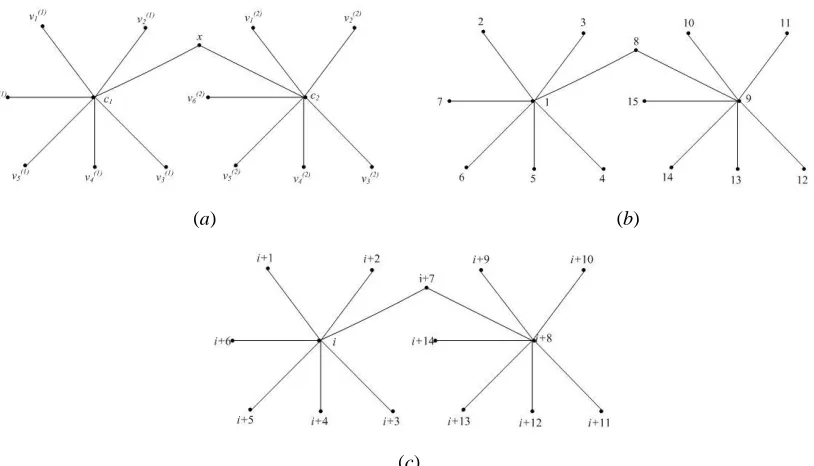
Fig. 1 (a) < 𝐊𝟏,𝟔(𝟏): 𝐊𝟏,𝟔(𝟐)> with vertices defined (b) strongly *- labeling of < 𝐊𝟏,𝟔(𝟏): 𝐊𝟏,𝟔(𝟐)> (c) labeling pattern of <
𝐊𝟏,𝟔(𝟏): 𝐊𝟏,𝟔(𝟐)>.
Proof:
Let 𝑣1(1), 𝑣2(1), … , 𝑣𝑛(1) be the pendant vertices of 𝐾1,𝑛 (1)
and 𝑣1(2), 𝑣2(2), … , 𝑣𝑛(2) be the pendant vertices of 𝐾1,𝑛 (2)
. Let c1 and c2 be the apex vertices of 𝐾1,𝑛(1) and 𝐾1,𝑛(2)respectively and let they be adjacent to a new common vertex x. See Fig. 1(a).
Define 𝑓: 𝑉 𝐺 → 1,2, … ,2𝑛 + 3 as follows:
𝑓 𝑐1 = 1
𝑓 𝑣𝑖(1) = 𝑖 + 1, 1 ≤ 𝑖 ≤ 𝑛 𝑓 𝑥 = 𝑓 𝑣𝑛(1) + 1
𝑓 𝑐2 = 𝑓(𝑥) + 1
𝑓 𝑣𝑖(2) = 𝑖 + 𝑓(𝑐2), 1 ≤ 𝑖 ≤ 𝑛
See Fig. 1(b). Then the edge labels take the value
𝑓 𝑐1, 𝑣𝑖 1 = 𝑓 𝑐1 + 𝑓 𝑣𝑖 1 + 𝑓 𝑐1 𝑓 𝑣𝑖 1 , 1 ≤ 𝑖 ≤ 𝑛
𝑓 𝑐2, 𝑣𝑖 2 = 𝑓 𝑐2 + 𝑓 𝑣𝑖 2 + 𝑓 𝑐2 𝑓 𝑣𝑖 2 , 1 ≤ 𝑖 ≤ 𝑛
𝑓 𝑐1, 𝑥 = 𝑓 𝑐1 + 𝑓 𝑥 + 𝑓 𝑐1 𝑓 𝑥 ,
𝑓 𝑐2, 𝑥 = 𝑓 𝑐2 + 𝑓 𝑥 + 𝑓 𝑐2 𝑓 𝑥 .
From Fig.1(b) it is clear that the edge labels produced are all distinct as the vertices are labeled with consecutive integers. So the labeling pattern defined above satisfies the conditions of strongly *-graph. Hence 𝐺 =<
ISSN: 2231-5373
http://www.ijmttjournal.org
Page 77
Proof of correctness: Consider 𝐺 =< 𝐾1,𝑛(1): 𝐾1,𝑛(2)>. Let (c1, 𝑥) and (c1, 𝑣2(1)) be distinct edges of G. We have c1
adjacent to x and c1 adjacent to 𝑣2(1) then, the label of the edge incident to the vertices c1 and x may be equal to that of the edge incident to the vertices c1 and 𝑣2(1). Using the labeling function, we have 𝑓 𝑣2 1 = 𝑖 + 2, 𝑓 𝑐1 = 𝑖,
𝑓 𝑥 = 𝑖 + 7 as shown in Fig. 1(c). Then the label of the two described edges are (i+2)+ (i) + (i+2)(i) and (i) + (i+7) + (i)(i+7) which gives 4i2+2+i2 and 9i+7+i2 which are not equal. Hence it is clear that the edge labels are distinct. In a similar manner we can check the labels of other edges.
Theorem 2.2.𝐺 =< 𝐾1,𝑛(1): 𝐾1,𝑛(2): …: 𝐾1,𝑛(𝑘)> is a strongly *- graph for 𝑛 ≥ 2 and 𝑘 ≥ 3.
(a)
(b)
(c)
Fig. 2 (a) 𝑮 =< 𝑲𝟏,𝟔(𝟏): 𝑲𝟏,𝟔(𝟐): …: 𝑲𝟏,𝟔(𝒌)> with vertices labeled (b) strongly *- labeling of
𝑮 =< 𝑲𝟏,𝟔(𝟏): 𝑲𝟏,𝟔(𝟐): …: 𝑲𝟏,𝟔(𝒌)> (c) labeling pattern of 𝑮 =< 𝑲𝟏,𝟔(𝟏): 𝑲𝟏,𝟔(𝟐): …: 𝑲𝟏,𝟔(𝒌)>.
Proof: Let 𝐾1,𝑛(𝑘) be k copies of star 𝐾1,𝑛, 𝑣𝑖 (𝑗 )
be the pendant vertices of 𝐾1,𝑛(𝑗 ) and cj be the apex vertex of 𝐾1,𝑛(𝑗 )(Here i = 1, 2, …, n and j = 1, 2, …, k). Let x1, x2, …, xk-1 be the vertices such that cp-1 and cp are adjacent to xp-1 where 2 ≤ 𝑝 ≤ 𝑘. See Fig. 2(a). Define 𝑓: 𝑉 𝐺 → 1,2, … ,3𝑛 + 5 as follows:
𝑓 𝑐1 = 1
𝑓 𝑐2 = 𝑓(𝑥1) + 1
ISSN: 2231-5373
http://www.ijmttjournal.org
Page 78
𝑓 𝑣𝑖 1 = 𝑖 + 1, 1 ≤ 𝑖 ≤ 𝑛
𝑓 𝑣𝑖 2 = 𝑖 + 𝑓(𝑐2), 1 ≤ 𝑖 ≤ 𝑛
𝑓 𝑣𝑖 3 = 𝑖 + 𝑓(𝑐3), 1 ≤ 𝑖 ≤ 𝑛
𝑓 𝑥1 = 𝑓 𝑐1 − 1
𝑓 𝑥2 = 𝑓 𝑐2 − 1
The vertices are labeled in the clockwise direction. See Fig. 2(b). Then the edge labels take the value
𝑓 𝑐1, 𝑣𝑖 1 = 𝑓 𝑐1 + 𝑓 𝑣𝑖 1 + 𝑓 𝑐1 𝑓 𝑣𝑖 1 , 1 ≤ 𝑖 ≤ 𝑛
𝑓 𝑐2, 𝑣𝑖 2 = 𝑓 𝑐2 + 𝑓 𝑣𝑖 2 + 𝑓 𝑐2 𝑓 𝑣𝑖 2 , 1 ≤ 𝑖 ≤ 𝑛
𝑓 𝑐3, 𝑣𝑖 3 = 𝑓 𝑐3 + 𝑓 𝑣𝑖 3 + 𝑓 𝑐3 𝑓 𝑣𝑖 (3)
, 1 ≤ 𝑖 ≤ 𝑛
𝑓 𝑐1𝑥1 = 𝑓 𝑐1 + 𝑓 𝑥1 + 𝑓 𝑐1 𝑓 𝑥1 ,
𝑓 𝑐2𝑥1 = 𝑓 𝑐3 + 𝑓 𝑥1 + 𝑓 𝑐3 𝑓 𝑥1 ,
𝑓 𝑐2𝑥2 = 𝑓 𝑐2 + 𝑓 𝑥2 + 𝑓 𝑐2 𝑓 𝑥2 ,
𝑓 𝑐3𝑥2 = 𝑓 𝑐3 + 𝑓 𝑥2 + 𝑓 𝑐3 𝑓 𝑥2 .
From Fig. 2(b) it is clear that the edge labels produced are all distinct as the vertices are labeled with consecutive integers. So the labeling pattern defined above satisfies the conditions of strongly *-graph. Hence 𝐺 =<
𝐾1,𝑛(1): 𝐾1,𝑛(2): …: 𝐾1,𝑛(𝑘) > admits strongly *- labeling.
Proof of correctness: Consider 𝐺 =< 𝐾1,𝑛(1): 𝐾1,𝑛(2): … ∶ 𝐾1,𝑛(𝑘)>. Let (c1, 𝑣1 (1)
) and (c1, 𝑣6 (1)
) be distinct edges of G. We have c1 adjacent to 𝑣1(1)and c1 adjacent to 𝑣6(1) then, the label of the edge incident to the vertices c1 and 𝑣1(1)may be equal to that of the edge incident to the vertices c1 and 𝑣6
(1)
. Using the labeling function, we have 𝑓 𝑣6 1 = 𝑖 + 6,
𝑓 𝑐1 = 𝑖, 𝑓 𝑣1(1) = 𝑖 + 1 as shown in Fig. 2(c). Then the label of the two described edges are (i+6)+ (i) + (i+6)(i) and (i) + (i+1) + (i)(i+1) which gives 8i+i2+6 and 3i+1+i2 which are not equal. Hence it is clear that the edge labels are distinct. In a similar manner we can check the labels of other edges.
Theorem 2. 3. 𝐺 =< 𝐾1,𝑛(1): 𝐾1,𝑛(2)> with cycle is a strongly *- graph for 𝑛 ≥ 2.
ISSN: 2231-5373
http://www.ijmttjournal.org
Page 79
(c)
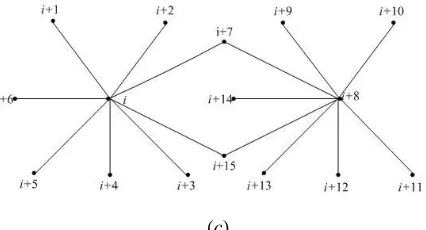
Fig. 3 (a) 𝐆 =< 𝐊𝟏,𝟔(𝟏): 𝐊𝟏,𝟔(𝟐)> with vertices defined (b) strongly *- labeling of 𝐆 =< 𝐊𝟏,𝟔(𝟏): 𝐊𝟏,𝟔(𝟐)> with cycle (c) labeling pattern of 𝐆 =< 𝐊𝟏,𝟔(𝟏): 𝐊𝟏,𝟔(𝟐)>.
Proof: Let 𝑣1(1), 𝑣2(1), … , 𝑣𝑛(1) be the pendant vertices of 𝐾1,𝑛(1) and 𝑣1(2), 𝑣2(2), … , 𝑣𝑛(2) be the pendant vertices of 𝐾1,𝑛(2) . Let c1 and c2 be the apex vertices of 𝐾1,𝑛
(1)
and 𝐾1,𝑛(2)respectively and let they be adjacent to two new vertices x and
y. See Fig. 3(a).
Define 𝑓: 𝑉 𝐺 → 1,2, … ,2𝑛 + 4 as follows:
𝑓 𝑐1 = 1
𝑓 𝑣𝑖(1) = 𝑖 + 1, 1 ≤ 𝑖 ≤ 𝑛
𝑓 𝑥 = 𝑓 𝑣𝑛 1 + 1 𝑓 𝑦 = 𝑓 𝑣𝑛 2 + 1
𝑓 𝑐2 = 𝑓(𝑥) + 1
𝑓 𝑣𝑖(2) = 𝑖 + 𝑓(𝑐2), 1 ≤ 𝑖 ≤ 𝑛
See Fig. 3(b). Then the edge labels take the value
𝑓 𝑐1, 𝑣𝑖 1 = 𝑓 𝑐1 + 𝑓 𝑣𝑖 1 + 𝑓 𝑐1 𝑓 𝑣𝑖 1 , 1 ≤ 𝑖 ≤ 𝑛
𝑓 𝑐2, 𝑣𝑖 2 = 𝑓 𝑐2 + 𝑓 𝑣𝑖 2 + 𝑓 𝑐2 𝑓 𝑣𝑖 2 , 1 ≤ 𝑖 ≤ 𝑛
𝑓 𝑐1𝑥 = 𝑓 𝑐1 + 𝑓 𝑥 + 𝑓 𝑐1 𝑓 𝑥 ,
𝑓 𝑐2𝑥 = 𝑓 𝑐2 + 𝑓 𝑥 + 𝑓 𝑐2 𝑓 𝑥 .
From Fig. 3(b) it is clear that the edge labels produced are all distinct as the vertices are labeled with consecutive integers. So the labeling pattern defined above satisfies the conditions of strongly *-graph. Hence 𝐺 =<
𝐾1,𝑛(1): 𝐾1,𝑛(2)> with cycle admits strongly *- labeling.
Proof of correctness: Consider 𝐺 =< 𝐾1,𝑛(1): 𝐾1,𝑛(2)> with cycle. Let (c1, 𝑣3(1)) and (c1, 𝑣4(1)) be distinct edges of G. We have c1 adjacent to 𝑣3(1) and c1 adjacent to 𝑣4(1) then, the label of the edge incident to the vertices c1 and 𝑣3(1)may be equal to that of the edge incident to the vertices c1 and 𝑣4(1). Using the labeling function, we have 𝑓 𝑣4 1 = 𝑖 +
ISSN: 2231-5373
http://www.ijmttjournal.org
Page 80
Theorem 2.4. 𝐺 =< 𝐾1,𝑛(1): 𝐾1,𝑛(2): …: 𝐾1,𝑛(𝑘)> with cycle is a strongly *-graph for 𝑛 ≥ 2 and 𝑘 ≥ 3.
(a)
(b)
(c)
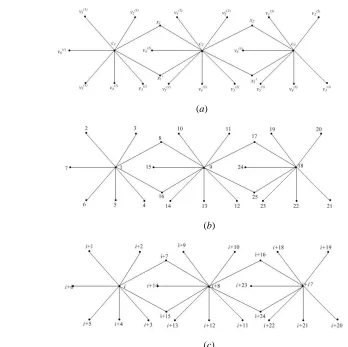
Fig. 4 (a) 𝑮 =< 𝑲𝟏,𝟔(𝟏): 𝑲𝟏,𝟔(𝟐): …: 𝑲𝟏,𝟔(𝒌)> with cycle vertices labeled (b) strongly *- labeling of 𝑮 =<
𝑲𝟏,𝟔(𝟏): 𝑲𝟏,𝟔(𝟐): …: 𝑲𝟏,𝟔(𝒌)> with cycle (c) labeling pattern of 𝑮 =< 𝑲𝟏,𝟔(𝟏): 𝑲𝟏,𝟔(𝟐): …: 𝑲𝟏,𝟔(𝒌)>.
Proof: Let 𝐾1,𝑛(𝑘) be k copies of star 𝐾1,𝑛, 𝑣𝑖(𝑗 ) be the pendant vertices of 𝐾1,𝑛(𝑖) and cj be the apex vertex of 𝐾1,𝑛(𝑗 )(Here i = 1, 2, …, n and j = 1, 2, …, k). Let x1, x2, …, xk-1 be the vertices such that cp-1 and cp are adjacent to xp-1 where 2 ≤ 𝑝 ≤ 𝑘. Let x1’, x2’, …, xk-1’ be vertices such that cp-1 and cp are adjacent to xp-1 where 2 ≤ 𝑝 ≤ 𝑘.See Fig. 4(a).Define 𝑓: 𝑉 𝐺 → 1,2, … ,4𝑛 + 1 as follows:
𝑓 𝑐1 = 1
𝑓 𝑐2 = 𝑓(𝑥1) + 1
𝑓 𝑐3 = 𝑓(𝑥2) + 1
𝑓 𝑣𝑖 1 = 𝑖 + 1, 1 ≤ 𝑖 ≤ 𝑛
𝑓 𝑣𝑖 2 = 𝑖 + 𝑓(𝑐2), 1 ≤ 𝑖 ≤ 𝑛
𝑓 𝑣𝑖 3 = 𝑖 + 𝑓(𝑐3), 1 ≤ 𝑖 ≤ 𝑛
ISSN: 2231-5373
http://www.ijmttjournal.org
Page 81
𝑓 𝑥2 = 𝑓 𝑐2 − 1
𝑓 𝑥1′ = 𝑓 𝑣𝑛(1) + 1
𝑓 𝑥2′ = 𝑓 𝑣𝑛(2) + 1
The vertices are labeled in the clockwise direction. See Fig. 4(b).Then the edge labels take the value
𝑓 𝑐1, 𝑣𝑖 1 = 𝑓 𝑐1 + 𝑓 𝑣𝑖 1 + 𝑓 𝑐1 𝑓 𝑣𝑖 1 , 1 ≤ 𝑖 ≤ 𝑛
𝑓 𝑐2, 𝑣𝑖 2 = 𝑓 𝑐2 + 𝑓 𝑣𝑖 2 + 𝑓 𝑐2 𝑓 𝑣𝑖 2 , 1 ≤ 𝑖 ≤ 𝑛
𝑓 𝑐3, 𝑣𝑖 3 = 𝑓 𝑐3 + 𝑓 𝑣𝑖 3 + 𝑓 𝑐3 𝑓 𝑣𝑖 (3)
, 1 ≤ 𝑖 ≤ 𝑛
𝑓 𝑐1𝑥1 = 𝑓 𝑐1 + 𝑓 𝑥1 + 𝑓 𝑐1 𝑓 𝑥1 ,
𝑓 𝑐2𝑥1 = 𝑓 𝑐3 + 𝑓 𝑥1 + 𝑓 𝑐3 𝑓 𝑥1 ,
𝑓 𝑐2𝑥2 = 𝑓 𝑐2 + 𝑓 𝑥2 + 𝑓 𝑐2 𝑓 𝑥2 ,
𝑓 𝑐3𝑥2 = 𝑓 𝑐3 + 𝑓 𝑥2 + 𝑓 𝑐3 𝑓 𝑥2 .
From Fig. 4(b) it is clear that the edge labels produced are all distinct as the vertices are labeled with consecutive integers. So the labeling pattern defined above satisfies the conditions of strongly *-graph. Hence 𝐺 =<
𝐾1,𝑛(1): 𝐾1,𝑛(2): …: 𝐾1,𝑛(𝑘) > with cycle admits strongly *- labeling.
Proof of correctness: Consider 𝐺 =< 𝐾1,𝑛(1): 𝐾1,𝑛(2): …: 𝐾1,𝑛(𝑘) > with cycle. Let (c2, x1) and (c2, 𝑣1(2)) be distinct edges of G. We have c2 adjacent to x1 and c2 adjacent to 𝑣1
(2)
then, the label of the edge incident to the vertices c1 and x1 may be equal to that of the edge incident to the vertices c1 and 𝑣1
(2)
. Using the labeling function, we have 𝑓 𝑣1 2 =
𝑖 + 9, 𝑓 𝑐2 = 𝑖 + 8, 𝑓 𝑥1 = 𝑖 + 7 as shown in Fig. 4(c). Then the label of the two described edges are (i+9)+ (i+8) + (i+9)(i+8) and (i+8) + (i+7) + (i+8)(i+7) which gives 19i+89+i2 and 17i+71+i2 which are not equal. Hence it is clear that the edge labels are distinct. In a similar way we can check for other distinct edges.
III. CONCLUSION
In this paper we prove that < 𝐾1,𝑛(1): 𝐾1,𝑛(2)>, < 𝐾1,𝑛(1): 𝐾1,𝑛(2): …: 𝐾1,𝑛(𝑘)>, < 𝐾1,𝑛(1): 𝐾1,𝑛(2)> with cycle and
< 𝐾1,𝑛(1): 𝐾1,𝑛(2): …: 𝐾1,𝑛(𝑘)> with cycle admits strongly *- labeling. Further our study of strongly *- graph of Interconnection networks is under investigation.
REFERENCES
[1] C. Adiga and D. Somashekara, Strongly *-graphs, Math. Forum, Volume 13, 31-36, 1999/2000.
[2] J. Baskar Babujee and V. Vishnupriya, Permutation labelings for some trees, Internat. J. Math. Comput. Sci., Volume 3, 31-38, 2008. [3] J. Baskar Babujee and C. Beaula, On vertex strongly *-graph, Proced. Internat. Conf. Math. and Comput. Sci., 25-26, July 2008. [4] J. Baskar Babujee, K. Kannan and V. Vishnupriya, Vertex Strongly *-graphs, Internat. J. Analyzing Components and Combin. Biology
in Math., Volume 2, 19-25.
[5] Gallian J.A, A Dynamic Survey of graph labeling, The Electronic Journal of Combinatorics, 20th edition, (2017).