A Thesis Submitted for the Degree of Doctor of Philosophy at
Harper Adams University
Copyright and moral rights for this thesis and, where applicable, any accompanying
data are retained by the author and/or other copyright owners. A copy can be
downloaded for personal non-commercial research or study, without prior permission
or charge.
This thesis and the accompanying data cannot be reproduced or quoted extensively
from without first obtaining permission in writing from the copyright holder/s. The
content of the thesis and accompanying research data (where applicable) must not be
changed in any way or sold commercially in any format or medium without the formal
permission of the copyright holder/s.
Evaluation of physically effective fibre in forages and its
interaction with concentrate supplementation on rumen
function, performance and health of UK dairy cows
Usama Tayyab
DVM, MPhil Animal Nutrition (University of Veterinary & Animal Sciences Lahore Pakistan)
MSc Animal Nutrition and Feeding (Aarhus University Denmark, University of Debrecen Hungary)
Department of Animal Production, Welfare and Veterinary Sciences, Harper Adams
University, Edgmond, Newport, Shropshire, TF10 8NB, UK
Thesis submitted in partial fulfilment of the requirements for the degree of Doctor of
Philosophy
i
Preface
And in cattle there is a lesson for you, We give you drink, from their bellies digested food and blood, pure liquid milk for those who drink.”
َ نيِّب ِّر َّٰ شلِّ لَاًغِّئٓاَ سَاًصِّلا خَاًن ب لٍَم د وٍَث ْر فَِّنْي بَ ۢنِّمَۦِّهِّنوُطُبَىِّفَا مِّ مَمُكيِّقْسُّنًََۖة رْبِّع لَ ِّمَّٰ عْن ْلْٱَىِّفَْمُك لَ نِّإ و
ii
Declaration
I declare that this thesis has been written and composed by the author and all the
work that has been reported is original. Any work reported in this thesis has never been
submitted previously to attain an academic qualification. It contains work that has been
published by the author at peer-reviewed journals and international conferences.
Usama Tayyab
iii
Acknowledgments
Foremost, I want to acknowledge AHDB Dairy (Agriculture and Horticulture
Development Board) for funding this thesis. I would like to express my sincere gratitude
to my supervisors Professor Liam A. Sinclair, Doctor Robert G. Wilkinson and Professor
Christopher K. Reynolds for the continuous support of my research, for their patience,
motivation, enthusiasm, and immense knowledge. Especially Liam, whose guidance
helped me throughout my research and academic writing.
I would like to thank Sarah Parsons and Giles Vince for helping in the modification of
Penn State Particle Separator and undergrad students Andrew Harrison, Ella Forrest,
Eliot Greenfield, Matt Holmes and Laura Rowland for their support in collecting the data.
Special thanks are due to the farm technicians Sarah Williams, Claire Cianchi and Carrie
Gauld for their support during the animal trials. I also want to mention Dr. Dave
Humphries, Colin Green, Debbie Cockman, Paul Kirton, Chris Fawdry and all technical
staff at the Centre for Dairy Research (CEDAR; Arborfield, UK) for their support during
the study at University of Reading.
In the end, I would like to acknowledge my beloved father Prof. Dr. Maqsood Ahmad and
my great lovely mother Mrs. Kausar for letting me go away to chase my dreams. My two
younger sisters Laiba and Afaf are always a source of prayers for me. My beautiful wife
Dr. Aysha, who sacrificed for a three-year long period, and always encouraged me with
her positive influence and attitude, sound advice and valuable suggestions, which helped
me greatly in completing my research. I want to apologies to my son Muaz Tayyab for
leaving him alone and not being around in his early childhood. Dear son, I’ll try to make
up this for rest of my life. I want to thank Almighty for blessing me with Saad, who brought
more joy to my life.
iv
List of publications:
Chapter 3:
Tayyab U, Wilkinson RG, Reynolds CK and Sinclair LA 2018. Particle size distribution of
forages and mixed rations, and their influence on ration variability and performance of
UK dairy herds. Livest. Sci., 217, 108-115.
Tayyab U, Wilkinson RG, Reynolds CK and Sinclair LA 2017. Particle size and physically
effective fibre (peNDF) distribution in a range of grass silage, maize silage and total mixed rations on UK dairy herds. Advances in Animal Biosciences8, 73. (Abstract)
Harrison A, Tayyab U, and Sinclair LA 2017. Associations between ration formulation,
feeding management practices and herd characteristics on the level of sorting of total or
partial mixed rations on UK dairy farms. British Society of Animal Science. (Abstract)
Tayyab U, Wilkinson RG, Reynolds CK and Sinclair LA 2017. Forage particle size
distribution, efficacy of mixing and extent of diet selection on UK dairy farms. Society of Feed Technologist - Ruminant conference 6th April 2017, Coventry CV5 9AL, UK.
Chapter 4a and 4b:
Tayyab, U., R. G. Wilkinson, G. L. Charlton, C. K. Reynolds, L. A. Sinclair. 2019. Grass
silage particle size when fed with or without maize silage alters performance, reticular pH
and metabolism of Holstein-Friesian dairy cows. Animal13, 524-532.
Tayyab U, Wilkinson RG, Reynolds CK and Sinclair LA 2018. Grass silage particle length
and grass to maize silage ratio effects on production and reticulo-rumen pH in dairy cows.
Advances in Animal Biosciences9, 159. (Abstract)
Tayyab U, Wilkinson RG, Reynolds CK and Sinclair LA 2018. Grass silage chop length
when fed alone, or with corn silage, affects performance and milk quality of dairy cows. J Dairy Sci, 101 (Supplement 2), 350. (Abstract no 341)
Tayyab U, Forrest EL, Charlton GL, Wilkinson RG, Reynolds CK and Sinclair LA 2018.
Effect of grass silage chop length when fed alone or with corn silage, on eating behaviour
v
Tayyab U, Wilkinson RG, Reynolds CK and Sinclair LA 2018. Effect of grass silage chop
length when fed alone, or with corn silage, on digestion and metabolism in dairy cows. J Animal Sci, 96 (Supplement 3), 394.(Abstract no 64)
Chapter 5:
Kliem KE, Hincapie Londono H, Tayyab U, Humphries DJ, Reynolds CK and Sinclair LA
2019. Effect of fibre:starch ratio in dairy cow diets differing in maize:grass silage ratio, on
milk fatty acid profile and its relationship with rumen hydrogen ion concentration.
vi
List of Abbreviations
ADF Acid detergent fibre
ADL Acid detergent lignin
AIA Acid insoluble ash
CL Chop length
CP Crude protein
DM Dry matter
DMI Dry matter intake
EE Ether extract or crude fat
GS Grass silage
MS Maize silage
MR Mixed ration
NDF Neutral detergent fibre
OM Organic matter
pef Physical effectiveness factor
peNDF Physically effective neutral detergent fibre PMR Partial mixed ration
PS Particle size
PSD Particle size distribution
PSPS Penn state particle separator
SARA Subacute ruminal acidosis
TMR Total mixed ration
vii
Table of contents
Abstract ... 1
CHAPTER 1: Literature review ... 3
1.1. Introduction... 3
1.2. Fibre, definition, characteristics and classification ... 4
1.3. Anatomy and physiology of the ruminant digestive system ... 7
1.3.1. Rumen physiology ... 8
1.3.2. Omasum physiology ... 11
1.3.3. Abomasum physiology ... 11
1.3.4. Volatile fatty acids production and absorption ... 11
1.3.5. Saliva composition and production ... 12
1.3.6. Rumen motility and rumination process ... 13
1.3.7. Control of reticulo-rumen motility ... 15
1.3.8. Development of the rumen ... 17
1.4. Carbohydrates digestion and kinetics in the rumen ... 19
1.4.1. Fibre degradation... 20
1.4.2. Starch degradation ... 23
1.4.3. Soluble carbohydrates degradation ... 25
1.5. Physically effective fibre concept ... 26
1.6. Methods to measure peNDF ... 28
1.7. Importance of particle size and its effect on animal production performance ... 31
1.7.1. Effect of particle size on intake ... 31
1.7.2. Effect of particle size on chewing and rumination ... 32
1.7.3. Effect of particle size on rumen fermentation ... 33
1.7.4. Effect of particle size on fibre digestibility and digesta passage rate ... 34
1.7.5. Effect of particle size on milk yield and composition ... 35
1.8. Effect of mixing and mixer wagons on particle size ... 37
viii
1.10. Systemic inflammatory response of sub-acute rumen acidosis ... 37
1.11. Knowledge gap ... 38
CHAPTER 2: General materials and methods ... 40
2.1. Dry matter (DM) ... 40
2.2. Crude protein (CP) ... 40
2.3. Ash and organic matter (OM) ... 40
2.4. Ether extract (EE) ... 41
2.5. Neutral detergent fiber (NDF) ... 41
2.6. Acid detergent fibre (ADF) ... 42
2.7. Acid detergent lignin (ADL) ... 43
2.8. Acid insoluble ash (AIA)... 43
2.9. Starch Analysis ... 44
2.10. Blood metabolites ... 44
2.11. Milk composition analysis ... 44
2.12. Fatty acids analysis ... 45
2.13. Rumen passage rate ... 45
2.14. Rumen volatile fatty acid analysis ... 46
2.15. Chromium analysis ... 46
2.16. Modifications to the Penn State Particle Separator ... 47
2.17. Determination of the particle size distribution of forages and mixed rations ... 47
2.18. Grass and maize silage sampling ... 47
CHAPTER 3: Particle size distribution of forages and mixed rations, and their relationship with ration variability and performance of UK dairy herds ... 48
3.1. Introduction... 48
3.2. Materials and methods ... 49
3.2.1. Herd characteristics ... 49
3.2.2. Determination of particle size and physically effective fibre distribution of forages and mixed rations ... 51
3.2.3. Chemical analysis ... 51
ix
3.3. Results ... 53
3.3.1. Forage proximate and physical characteristics ... 53
3.3.2. Mixed ration proximate and physical characteristics ... 53
3.3.3. Variability in mixed ration mixing ... 56
3.3.4. Particle size distribution of mixed rations post-feeding and diet selection ... 57
3.3.5. Association between particle size and production ... 58
3.3.6. Fresh vs dried particle size distribution ... 58
3.4. Discussion ... 60
3.4.1. Herd characteristics and proximate analysis ... 60
3.4.2. Ration physical characteristics ... 61
3.4.3. Variability in ration mixing ... 62
3.4.4. Herd level diet selection ... 63
3.4.5. Associative effects of particle size and production ... 63
3.4.6. Comparison of fresh and dry separation ... 63
3.5. Conclusions ... 64
CHAPTER 4a: Grass silage particle size when fed with or without maize silage alters performance, reticular pH and metabolism of Holstein-Friesian dairy cows ... 65
4a.1. Introduction ... 65
4a.2. Materials and Methods ... 66
4a.2.1. Animals, housing, forages, diets and experimental routine ... 66
4a.2.2. Reticular pH and blood collection ... 68
4a.2.3. Particle size distribution and eating behaviour ... 68
4a.2.4. Chemical analysis ... 69
4a.3. Results ... 70
4a.3.1. Forage and feed composition... 70
4a.3.2. Production performance ... 70
4a.3.3. Estimated whole tract digestibility ... 72
4a.3.4. Reticular pH and eating behaviour ... 74
4a.3.5. Milk fatty acids and blood metabolites ... 75
x
4a.4.1. Nutrient composition and particle length ... 79
4a.4.2. Animal performance ... 79
4a.4.3. Reticular pH and eating behaviour ... 80
4a.4.4. Metabolism and milk fatty acids ... 81
4a.5. Conclusions ... 82
CHAPTER 4b: The particle size of ryegrass silage when fed with or without maize silage influences eating behaviour and activity of Holstein-Friesian dairy cows ... 83
4b.1. Introduction ... 83
4b.2. Material and methods ... 84
4b.2.1. Animal, diets and experimental routine ... 84
4b.2.2. Behaviour observation, sorting activity ... 85
4b.2.3. Statistical analysis ... 85
4b.3. Results ... 86
4b.3.1. Cow position and movement ... 87
4b.3.2. Eating and ruminating behaviour ... 88
4b.3.3. Sorting activity ... 88
4b.4. Discussion ... 90
4b.4.1. Cow positioning and movement ... 90
4b.4.2. Eating and ruminating behaviour ... 91
4b.4.3. Sorting activity ... 92
4b.5. Conclusions ... 92
CHAPTER 5: Effects of dietary ratios of neutral detergent fibre to starch and grass silage to maize silage on milk production, rumen function, digestion and serum haptoglobin in dairy cows ... 93
5.1. Introduction... 93
5.2. Materials and methods ... 94
5.2.1. Forages and diets ... 94
5.2.2. Animals, feeding and experimental routine ... 95
5.2.3. Intake and milk yield and composition ... 96
5.2.4. Rumen degradability and passage kinetics ... 96
xi
5.2.6. Particle size determination and sorting activity ... 97
5.2.7. Diet digestion and nitrogen excretion ... 97
5.2.8. Rumen pH, ammonia and volatile fatty acids ... 97
5.2.9. Blood sampling ... 98
5.2.10. Chemical analysis ... 98
5.2.11. Statistical analysis ... 99
5.3. Results ... 100
5.3.1. Forages, diet’s chemical and physical composition ... 100
5.3.2. Intake, production and milk composition ... 100
5.3.3. Diet digestibility and grass fibre degradation and passage kinetics ... 102
5.3.4. Nitrogen balance ... 104
5.3.5. Rumen pH, ammonia, volatile fatty acids and serum haptoglobin . 105 5.3.6. Dietary behaviour and sorting activity ... 109
5.4. Discussion ... 110
5.4.1. Forages and diet composition ... 110
5.4.2. Production performance... 111
5.4.3. Digestibility, nitrogen excretion, rumen degradation and passage kinetics ... 111
5.4.4. Rumen pH, volatile fatty acids, ammonia and serum haptoglobin . 112 5.4.5. Dietary behaviour and sorting activity ... 113
5.5. Conclusions ... 114
CHAPTER 6: General discussion and conclusions ... 115
6.1. General discussion ... 115
6.2. General conclusions ... 123
6.3. Future prospects ... 123
6.4. Proposed particle size distribution guidelines ... 124
xii
List of Tables
No. Title Page No.
1.1 Plant fibre classification based on solubility 5
1.2 The mean nutrient composition of rations used on commercial dairy farms in Canada
7
1.3 Major rumen bacterial species found in adult dairy cow 10
1.4 Salivary glands of cow and type of secretion 13
1.5 Chemical composition of saliva of an adult dairy cow 13
1.6 Effect of diet type and size on eating time and saliva production in an adult dairy cow
13
1.7 Methods to measure the particle separation reported in literature 29
1.8 Summary of the literature on particle size and its effect on dairy cow performance
36
2.1 Details of additional larger screen sizes used to modify PSPS 47
3.1 Herd and feeding characteristics on 50 UK dairy herds 50
3.2 Mean chemical and physical characteristics of grass and maize silage on 50 dairy herds
54
3.3 Mean chemical composition and physical characteristics of mixed rations on 50 dairy herds
55
3.4 Particle size distribution of mixed rations at feed out containing grass silage and mixtures of grass and maize silage on 50 herds
56
3.5 Particle size distribution of rations fed as TMR or PMR on 50 dairy herds
56
3.6 Within farm standard deviation and coefficient of variation of particle fractions of mixed ration at 5 points along feed face on 50 dairy herds
57
3.7 Group level sorting on 50 dairy herds 57
3.8 Comparative particle size distribution of MR, grass silage and maize silage analysed by fresh and dry shaking on 50 dairy herds
59
3.9 The particle size distribution of North American rations 60
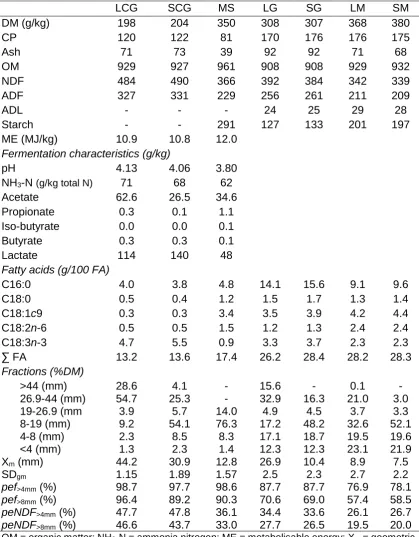
4a.1 Dietary inclusion and predicted nutrient composition for diets that contained long chop grass silage (LG); short chop grass silage (SG); long chop grass and maize silages (LM), or short chop grass and maize silages (SM)
67
4a.2 Nutrient composition, fatty acid profile and particle size of grass silage (long chop, LCG and short chop, SCG), maize silage (MS) and diets that contained long chop grass silage (LG); short chop grass silage (SG); long chop grass and maize silages (LM), or short chop grass and maize silages (SM)
71
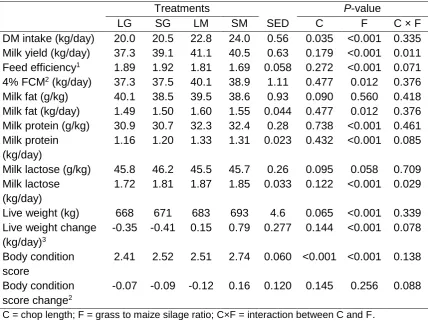
4a.3 Intake and performance of dairy cows fed diets that contained long chop grass silage (LG); short chop grass silage (SG); long chop grass and maize silages (LM), or short chop grass and maize silages (SM)
72
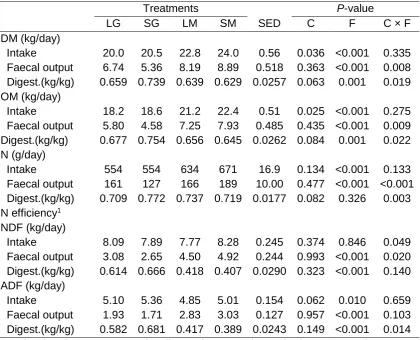
4a.4 Digestibility in dairy cows fed diets that contained long chop grass silage (LG); short chop grass silage (SG); long chop grass and maize silages (LM), or short chop grass and maize silages (SM)
73
4a.5 Reticular pH and eating behaviour of dairy cows fed diets that contained long chop grass silage (LG); short chop grass silage (SG); long chop grass and maize silages (LM), or short chop grass and maize silages (SM)
xiii
4a.6 Particle size distribution of diets that contained long chop grass silage (LG); short chop grass silage (SG); long chop grass and maize silages (LM), or short chop grass and maize silages (SM) at 0, 4, 8 and 24h post feeding
76
4a.7 Milk fatty acids content in cows fed diets that contained long chop grass silage (LG); short chop grass silage (SG); long chop grass and maize silages (LM), or short chop grass and maize silages (SM)
77
4b.1 Nutrient composition (g/kg DM) of dietary fractions of diets fed to cows that contained long chop grass silage (LG); short chop grass silage (SG); long chop grass and maize silages (LM), or short chop grass and maize silages (SM)
86
4b.2 Intake (kg/d) and performance of dairy cows fed diets that contained long chop grass silage (LG); short chop grass silage (SG); long chop grass and maize silages (LM), or short chop grass and maize silages (SM)
87
4b.3 Hourly cow position and activity in the shed (time expressed as h/d) when fed diets that contained long chop grass silage (LG); short chop grass silage (SG); long chop grass and maize silages (LM), or short chop grass and maize silages (SM)
87
4b.4 Eating and ruminating behaviour of cows fed diets that contained long chop grass silage (LG); short chop grass silage (SG); long chop grass and maize silages (LM), or short chop grass and maize silages (SM)
89
5.1 Dietary formulation and predicted composition of diets containing a high grass:maize silage ratio (82:18) with a high NDF content (GF), high grass:maize silage ratio (82:18) with a high starch content (GS), low grass:maize silage ratio (18:82) with a high NDF content (GF) or a low grass:maize silage ratio (18:82) with a high starch content (MS)
95
5.2 Chemical and physical composition diets containing a high grass:maize silage ratio (82:18) with a high NDF content (GF), high grass:maize silage ratio (82:18) with a high starch content (GS), low grass:maize silage ratio (18:82) with a high NDF content (GF) or a low grass:maize silage ratio (18:82) with a high starch content (MS)
101
5.3 Production performance of cows when fed diets containing a high grass:maize silage ratio (82:18) with a high NDF content (GF), high grass:maize silage ratio (82:18) with a high starch content (GS), low grass:maize silage ratio (18:82) with a high NDF content (GF) or a low grass:maize silage ratio (18:82) with a high starch content (MS)
102
5.4 Diet digestion in cows when fed diets containing a high grass:maize silage ratio (82:18) with a high NDF content (GF), high grass:maize silage ratio (82:18) with a high starch content (GS), low grass:maize silage ratio (18:82) with a high NDF content (GF) or a low grass:maize silage ratio (18:82) with a high starch content (MS)
103
5.5 In situ rumen degradation and passage kinetics of grass silage NDF in cows when fed diets containing a high grass:maize silage ratio (82:18) with a high NDF content (GF), high grass:maize silage ratio (82:18) with a high starch content (GS), low grass:maize silage ratio (18:82) with a high NDF content (GF) or a low grass:maize silage ratio (18:82) with a high starch content (MS)
104
5.6 Nitrogen balance in cows when fed diets containing a high grass:maize silage ratio (82:18) with a high NDF content (GF),
xiv
high grass:maize silage ratio (82:18) with a high starch content (GS), low grass:maize silage ratio (18:82) with a high NDF content (GF) or a low grass:maize silage ratio (18:82) with a high starch content (MS)
5.7 Rumen pH of cows when fed diets containing a high grass:maize silage ratio (82:18) with a high NDF content (GF), high grass:maize silage ratio (82:18) with a high starch content (GS), low grass:maize silage ratio (18:82) with a high NDF content (GF) or a low grass:maize silage ratio (18:82) with a high starch content (MS)
106
5.8 Rumen volatile fatty acid content in cows when fed diets containing a high grass:maize silage ratio (82:18) with a high NDF content (GF), high grass:maize silage ratio (82:18) with a high starch content (GS), low grass:maize silage ratio (18:82) with a high NDF content (GF) or a low grass:maize silage ratio (18:82) with a high starch content (MS)
108
5.9 Eating behaviour of cows when fed diets containing a high grass:maize silage ratio (82:18) with a high NDF content (GF), high grass:maize silage ratio (82:18) with a high starch content (GS), low grass:maize silage ratio (18:82) with a high NDF content (GF) or a low grass:maize silage ratio (18:82) with a high starch content (MS)
110
5.10 Diet sorting in cows fed diets containing high grass:maize silage ratio (82:18) with high NDF content (GF), high grass:maize silage ratio (82:18) with high starch content (GS), low grass:maize silage ratio (18:82) with high NDF content (GF) and low grass:maize silage ratio (18:82) with high starch content (MS).
110
6.1 Guidelines for particle size distribution, mean particle size and physically effective fibre of TMR or PMR.
xv
List of Figures
No. Title Page No.
1.1 Different fractions of plant carbohydrates 5
1.2 Digestive system of dairy cow 9
1.3 Stratification of ingesta in the rumen, rumen gross anatomy, movement of ingesta inside of rumen
14
1.4 Transition of stomach compartments in ruminants in relation to age
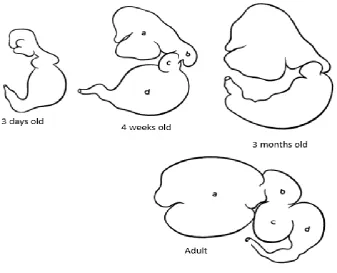
18
1.5 Relative size of bovine stomach compartments at various ages, a) rumen, b) reticulum, c) omasum, d) abomasum
18
1.6 Passage rate of liquid, protein and starch in forages, protein and starch in concentrates, NDF in concentrates and NDF in forages at different DM intakes
20
1.7 Microbes adhered to forage fibre 21
1.8 Effect of VFA concentration on rumen pH 21
1.9 Relationship between soluble carbohydrates and starch intake and rumen degradability of NDF
22
1.10 Relationship between level of NDF intake and rumen degradability of NDF
23
1.11 Relationship between starch intake and rumen degradability of starch
24
1.12 Rate of rumen fermentation and hydrolysis of glucose, sucrose and lactose
25
1.13 Effect of different levels of sucrose intake on rumen pH 26
1.14 Relationship between physically effective fibre, rumen pH and dry matter intake
33
3.1 Relationship between mean particle size of mixed ration and milk fat across 50 herds
58
3.2 Relationship between mean particle size of mixed ration and energy corrected milk across 50 herds
59
4a.1 Hourly reticular pH in cows fed diets containing long chop grass silage (LG); short chop grass silage (SG); long chop grass and maize silages (LM), or short chop grass and maize silages (SM)
74
4a.2 Plasma glucose, plasma 3-OHB and plasma urea concentrations in cows fed diets containing long chop grass silage (LG); short chop grass silage (SG); long chop grass and maize silages (LM), or short chop grass and maize silages (SM)
78
4b.1 Group level sorting activity of cows fed diets containing long chop grass silage (100:0 grass silage, LG); short chop grass silage (100:0 grass silage, SG); 40:60 long chop grass: maize silage (LM) and 40:60 short chop grass: maize silage (SM)
90
5.1 Faeces and urine collection by using a harness and chute fitted on cow
98
5.2 Hourly rumen pH of cows when fed diets containing a high grass:maize silage ratio (82:18) with a high NDF content (GSF), high grass:maize silage ratio (82:18) with a high starch content (GSS), low grass:maize silage ratio (18:82) with a high NDF content (MSF) or a low grass:maize silage ratio (18:82) with a high starch content (MSS)
xvi
5.3 Rumen fluid pH for manual samples in cows when fed diets containing a high grass:maize silage ratio (82:18) with a high NDF content (GSF), high grass:maize silage ratio (82:18) with a high starch content (GSS), low grass:maize silage ratio (18:82) with a high NDF content (MSF) or a low grass:maize silage ratio (18:82) with a high starch content (MSS)
107
5.4 Rumen ammonia concentrations in cows when fed diets containing a high grass:maize silage ratio (82:18) with a high NDF content (GSF), high grass:maize silage ratio (82:18) with a high starch content (GSS), low grass:maize silage ratio (18:82) with a high NDF content (MSF) or a low grass:maize silage ratio (18:82) with a high starch content (MSS)
107
5.5 Concentrations of serum haptoglobin (HP) of cows when fed diets containing a high grass:maize silage ratio (82:18) with a high NDF content (GSF), high grass:maize silage ratio (82:18) with a high starch content (GSS), low grass:maize silage ratio (18:82) with a high NDF content (MSF) or a low grass:maize silage ratio (18:82) with a high starch content (MSS)
109
6.1 Relationship between mean particle size of TMR and energy corrected milk
119
6.2 Relationship between physically effective fibre (peNDF>4) of TMR and energy corrected milk
119
6.3 Relationship between physically effective fibre (peNDF>8) of TMR and energy corrected milk
120
6.4 Relationship between geometric mean particle size or physically effective fibre (peNDF>8) of the TMR and dry matter intake
120
6.5 Relationship between mean particle size of TMR and milk fat 121
6.6 Relationship between physically effective fibre or mean particle size of the TMR and rumen pH or reticulo-rumen pH
1
Abstract
It is important to feed lactating dairy cows a diet with the correct particle size
distribution: too long a particle length can reduce milk yield and increase diet selection
whereas too short a particle length can reduce milk fat content and possibly lead to
sub-clinical acidosis. In order to characterise the particle distribution of UK rations in study 1,
the Penn State Particle Separator was modified to include an additional 26.9 mm hole
sieve. The majority (58%) of UK dairy farms were found to have sub-optimal or poorly
mixed rations. This resulted in a different diet being available along the feed face, which
could affect the performance and/or health of individual cows. There was also significant
diet selection on many (66%) of herds, with cows selecting for shorter material on some
farms and longer material on others. There was little evidence of an effect of mixer wagon
type on particle size distribution, but there was considerable variation between farms in
mixing protocol. In study 2, a short and long chop length grass silage was fed alone or
mixed with maize silage (40:60 DM basis) to 16 cows in 4 periods of 28 days duration. A
short chop length (31 mm) grass silage increased the intake of early lactating cows on
grass or grass/maize silage-based diets compared to a longer chop grass silage (44
mm). A short chop length grass silage also increased milk production in cows fed grass
silage as the sole forage, and improved body condition score and live weight gain in
cows when fed as a mixed grass/maize silage-based diet. A short chop length grass
silage also decreased DM digestibility and reduced milk fat concentration, but milk fat
yield was unaffected. Chop length had little effect on reticulo-rumen pH, whereas the
inclusion of maize silage reduced mean and minimum reticulo-rumen pH, although
minimum values were above those considered to represent sub-acute ruminal acidosis.
Intake, milk production, milk protein concentration and live weight gain were higher when
cows were fed diets that contained a mixture of grass and maize silage than grass silage
alone. In study 3, feeding cows a high maize silage based diet increased intake, milk
yield, nitrogen efficiency, and acute phase proteins but decreased milk fat concentration,
rumen passage rate and fibre digestibility compared to when fed a high grass based diet
(with 23.6 mm mean particle size). The use of a high starch supplement increased the
milk fat concentration compared to a high fibre supplementation in grass and maize
silage based diets. The source of concentrate had little effect on intake, milk yield and
composition, rumen pH, rumen passage kinetics, nitrogen balance and eating behaviour.
In conclusion, the current particle size of UK dairy rations based on grass silage/maize
silage on commercial dairy farms in the UK in longer than North American
recommendations and will reduce intake and could promote diet sorting. A short chop
2
and milk production and cow performance can benefit from replacing a proportion of
grass silage with maize silage, irrespective of the chop length of the grass silage that
had a minimal effect on rumen pH. Feeding a high starch diet tends to reduce the length
of time ruminating but has no effect on rumen pH and no detrimental short-term effect
on the immune response associated with rumen epithelial damage. Consistency of diet
mixing, and reduce diet selection may have more of an impact on rumen fermentation
3
CHAPTER 1: Literature review
1.1. Introduction
The United Nations have predicted that the current world population will increase
by 76 million people per year, reaching 9.1 billion by 2050 (Steinfeld et al., 2006). The
demand for meat and dairy products will therefore increase. The largest demand for
animal products is dairy products, followed by swine (FAO, 2011). It has been predicted
that the demand for dairy products will increase to over a billion tonnes consumed per
year by 2050 (FAO, 2011). This level of production cannot be maintained sustainably or
economically using current farming practices (van Bruchem et al., 1999). Farming has
had to intensify to support the current population’s demand for food, however options to
increase land area for crop production in order to provide animal feed have been
restricted (Wirsenius and Berndes, 2010). Indeed, it is no longer environmentally
sustainable to increase the area of land used for farming, as doing so will further
aggravate changes contributing to climate change, and with an increasing population,
arable land is restricted (Steinfeld et al., 2006). In order to support the needs of the
world’s population, farming will have to intensify so that more products are produced
more rapidly from the same amount of land, while still being affordable for all (FAO,
2011).
The increased milk production of dairy cows in many Western countries such as the
United Kingdom has required an increase in the level of concentrate supplementation
and the production of high-quality forages, with a trend towards lower dietary fibre levels
(March et al., 2014). The consequences of these dietary changes include an increased
risk of metabolic disorders such as sub-acute ruminal acidosis (SARA), displaced
abomasum, milk fat depression, reduced fibre digestion and laminitis (NRC, 2001;
Plaizier et al., 2008). The particle size of the diet has been proposed as a key factor,
along with forage fibre and non-forage carbohydrate concentration to ensure a healthy
rumen function and maintain animal performance (Zebeli et al., 2012a). A shorter forage
particle size is associated with improved compaction in the clamp and can result in
reduced aerobic spoilage at feed out (McDonald et al., 1991) and may increase DM
intake, due to reduced rumen fill and increased fibre digestibility (Thomson et al., 2017).
However, too short a forage particle length can increase the rate of volatile fatty acid
(VFA) production in the rumen, reduce rumination time, and decrease the production of
saliva (Tafaj et al., 2007), with the consequence of inhibiting cellulolytic bacteria activity
and increasing the risk of SARA (Tafaj et al., 2007). In contrast, a longer particle size
4
sorting, resulting in some cows receiving excess concentrates and others insufficient
(Kononoff and Heinrichs, 2003ab).
Numerous studies have evaluated the particle size of lucerne and maize silage (MS) on
performance, rumen function and behaviour in dairy cows, but there is less research on
perennial ryegrass silage (Kononoff et al., 2003; Yang and Beauchemin, 2006; Yang and
Beauchemin, 2007). The current guidelines for feed particle distribution are primarily
based on North American rations that consist of MS and lucerne haylage (Eastridge,
2006), and may therefore not be suitable for the typically wetter (e.g. less than 30% DM)
MS and GS commonly fed in Northern Europe (Møller et al., 2000).
1.2. Fibre, definition, characteristics and classification
The carbohydrates (saccharides) are hydrated carbon molecules comprised of carbon,
hydrogen and oxygen (Pommerville, 2012). Based on their molecular weight,
carbohydrates are classified into four groups, monosaccharides, disaccharides,
oligosaccharides and polysaccharides (Sharon and Lis, 1993). The mono and
disaccharides, due to low molecular weight, are often referred to as sugars (Nelson et
al., 2008). The carbohydrates are often referred to as a group of sugars, starch and
cellulose (Sharon and Lis, 1993). In plants, carbohydrates are the main plant structure
after water, and can be divided into intra-cellular/cell-contents and cell wall
carbohydrates (Pommerville, 2012; Figure 1.1).
Fibre, a polysaccharide, can be described as the structural polymer present in plant cell
wall (Keegstra et al., 1973). It contains polysaccharides (hemicellulose, cellulose,
galactans, pectin, gums and mucilage), lignified nitrogenous substances, minerals and
polyphenols (Dhingra et al., 2012). The different fractions of fibre can be classified into
5
Figure 1.1. Different fractions of plant carbohydrates (Hall et al., 1999). NDSC; neutral detergent soluble carbohydrates, NDFS; neutral detergent soluble fibre, Lignin is part of NDF (neutral detergent fibre) and ADF (acid detergent fibre) is not shown here.
Table 1.1. Plant fibre classification based on solubility (Dhingra et al., 2012)
Water solubility
Component of fibre
Description Feedstuff
source Soluble Pectin Primary cell wall component,
composed of D-galacturonic acid
Legumes, sugar beet Gums Secreted by plants after injury Guar,
seaweeds Mucilage Protect seed endosperm from
desiccation
Plant extract
Fructans Grasses
Insoluble Cellulose Long chain cell wall polysaccharide, composed of glucose molecule with β 1-4 glucosidic linkage
Forages
Hemicellulose Cell wall component, short chain polysaccharide composed of glucose, xylose, mannose and galactose molecules with β 1-4 glucosidic linkage
Cereal grains
Lignin Complex cross-linked polymer of phenyl propane, non-carbohydrate part of cell wall
Mature plants
Cellulose, the main structural component of the cell wall, is made up of long chains of
6
1973). The β 1-4 linkage is resistant to the animal’s digestive enzymes but can be
hydrolysed by ruminal cellulolytic bacteria (Van Soest, 1994). Hemicellulose is a
polysaccharide, formed by polymers comprised of xylose, galactose and mannose (Van
Soest, 1994). Pectin is composed of galacturonic acid that is highly digestible by
mammalian’s enzymes. Lignin, a phenyl-propanoid polymer, is completely indigestible in
animals and its concentration in plants varies from 2 to 12% of the DM, and this
concentration increases as plants mature (Van Soest, 1994). The lignified proteins
present in the cell wall ensure structural integrity, along cell wall fibre and their
concentration in plants can reach up to 15% (Nelson et al., 2008). These lignified proteins
are divided into four main groups: proline, glycine, proteoglycans and hydroxyproline
(Dhingra et al., 2012). Calcium carbonate and silica are the main minerals linked to the
cell wall (Van Soest, 1994). All these above-mentioned components of fibre provide
rigidity and fragility to the plants (Sharon and Lis, 1993).
According to Keegstra et al. (1973) and NRC (2001) the most important components of
fibre found in plants are cellulose (40-45% of the cell wall, 15-40% of total plant DM) and
hemicellulose (12-25% of total plant DM). However, the concentration of cellulose and
hemicellulose is species specific, and depends upon the age of the plant (Van Soest,
1994). The nutrient quality of plants decreases as they mature (Nelson et al., 2008).
However, the decline of plant nutrients is different for legumes and grasses, the two main
plant families. The nutrient decline due to maturity within different parts of the same plant
also varies (Van Soest, 1994). The stems of legumes provide structural support, and are
generally more lignified than the leaves (Dhingra et al., 2012; Van Soest, 1994). With
aging, stems become more lignified than leaves. On the other hand, the leaves of
grasses have both functions of support and metabolism, and with maturity both stem and
leaves become more lignified (Nelson et al., 2008).
The proximate analysis (also called Weende analysis) was developed by Henneberg and
Stohmann in 1860 to quantify the macronutrients in the feed (Van Soest, 1994). The
crude fibre analysis in Weende’s system had many shortcomings e.g. fat free samples
are required for analysis, fibre fraction is not completely disintegrated from other feed
components, hence resulted in significant errors in the fibre estimation of the feedstuffs
(Van Soest et al., 1991). Goering and Van Soest (1970) proposed another method for
quantitative evaluation of various fibre fractions of the cell wall, that was widely accepted
and still in use. This method characterises fibre into three fractions, the neutral detergent
fibre (NDF), acid detergent fibre (ADF), and acid detergent lignin (ADL) content of the
7
Van Soest et al. (1991) was further improved by Mertens (2002) using heat stable
enzymes for starch removal and sodium sulphite for protein disintegration from cell wall,
and fibre content was expressed exclusive of residual ash.
The neutral detergent fibre is a collective measurement of the total cellulose,
hemicelluloses, lignin and cutin contents (McDonald et al., 2011). It is determined by
submitting the feed to a treatment with detergent solution and a chelating agent at neutral
pH (Van Soest et al., 1991). The acid detergent fibre is composed of mainly cellulose,
lignin, and cutin and is determined by treating the feed with a diluted acidic solution
(sulphuric acid) and chelating agents (Van Soest et al., 1991). The acid detergent lignin
accounts for lignin and cutin content and is determined by treating the feed with a
concentrated solution of sulphuric acid (Van Soest et al., 1991).
1.3. Anatomy and physiology of the ruminant digestive system
Fibre forms a major portion of livestock feed which, due to its physio-chemical
nature, is indigestible in the small intestine but is digested through fermentation in the
rumen and hindgut to yield energy (VFA) (Table 1.2; Van Soest, 1994). By symbiosis
with specific microflora (bacteria, protozoa and fungi), ruminants are capable of digesting
fibre using beta glucanases secreted by microbes and releasing the energy contained in
plant cell walls (Van Soest, 1994). Plant cell walls are the main components of the
ruminant’s diet, and not only serve as a nutrient and energy source, but also a regulatory
factor determining feed intake and ensuring healthy rumen function (Forbes, 2007).
Table 1.2. The mean nutrient composition of rations used on commercial dairy farms in Canada (Sova et al., 2013).
Nutrient Amount (g/kg DM)
Organic matter 921
Ash 79
Crude protein 165
Neutral detergent fibre 313
Acid detergent fibre 205
Non-forage carbohydrates 412
Net energy (Mcal/kg) 1.7
Based on their feeding habits, ruminants are divided into two groups, browsers or
concentrate selectors (goats) and grass roughage consumers (buffalo and cow) while
sheep are placed as intermediate between the two types (Fisher, 2002). Ruminants
8
sugar), protein and fat (Van Soest, 1994). The major task of feeding the ruminant is to
find the correct balance of these feed components to promote rumen health and to
maximise feed energy intake and gain economic advantage by using a larger amount of
forages and fibrous by-product feedstuffs (Vandehaar, 1998). To be successful, a
maximum level of energy intake must be maintained in order to provide for maximum
production (Forbes, 2007).
1.3.1. Rumen physiology
The ruminant’s digestive system begins at the mouth (buccal cavity with salivary
glands including parotid, mandibular, and sublingual glands secreting saliva), followed
by the oesophagus, a stomach comprised of four compartments (the rumen, reticulum,
omasum and abomasum), and the small intestines, caecum, and ending up with the large
spiral colon and rectum (Hungate, 1966; Figure 1.2). The whole complex stomach
occupies 75% of the total abdominal cavity space in mature ruminants (Van Soest,
1994). The reticulum and rumen are often considered as one single chamber and
referred to as the reticulo-rumen, which contains 73% of the total stomach volume in
adult dairy cattle (Van Soest, 1994). The reticulo-rumen is also considered as a
fermentation vat and absorption chamber, and the ingesta can move freely between the
two compartments (Van Soest, 1994). Approximately 50% of all feed digestion occurs in
the rumen (Hogan and Weston, 1967). The rumen wall is comprised of small finger like
projections called papillae, which enhances the nutrient absorption process by inflating
the surface area (Squires, 2010; Van Soest, 1994). The reticulo-omasal orifice acts as a
valve that controls the digesta flow from reticulo-rumen to the omasum, and this selective
retention and sorting is a main function of the ridges of the reticular wall (Squires, 2010;
Van Soest, 1994). All absorbed nutrients are removed from reticulo-rumen blood
capillaries by three major veins; reticular, right ruminal and left ruminal vein (Krehbiel,
2014).
The rumen possesses a large population of microbes, which help in feed digestion. For
example, rumen fluid contains 1010-1011/ml bacteria, 109/ml archaea and 104-106/ mL
eukaryotes including both protozoa and fungi (Hungate, 1966; Gedek, 1991). The rumen
bacterial species are usually grouped according to the substrate they ferment (Table 1.3;
Cunningham, 2007). The main function of rumen microorganisms is the fermentation of
plant polymers (such as cellulose, hemicellulose) and the conversion of non-protein
nitrogen into microbial amino acids (Gedek, 1991). Through this process, microbes in
the rumen provide nutrients, such as VFA, amino acids and vitamins which are important
9
Figure 1.2. Digestive system of dairy cow (Lee et al., 1998).
The VFA (product of anaerobic fermentation) are predominately produced by microbial
fermentation of carbohydrates and protein (Dijkstra et al., 1993). The ruminal
concentration of VFAs is maintained by their production and absorption rates. Volatile
fatty acid absorption depends upon the pH difference and concentration gradient
between blood and the rumen (Dijkstra et al., 1993). According to Van Soest (1994), VFA
are absorbed in a free form against the alkaline pH of blood (pH of 7.4), and active
transport and diffusion are not involved in their absorption. Rumen fermentation
produces considerable amounts of hydrogen ions (more than 60,000 mEq/day) which
decreases rumen pH (Allen, 1997). A decrease in pH (<5.8) negatively affects fibre
digesting microbes (cellulolytic bacteria) and hence fibre digestibility can be reduced
(Zebeli et al., 2012), which can decrease intake and animal performance. Therefore, the
maintenance of an appropriate rumen pH is necessary for the optimal performance of
10
Table 1.3. Major rumen bacterial species found in adult dairy cow (Cunningham, 2007; González et al., 2014; Janssen and Kirs, 2008).
Substrate fermented Species Main fermentation products
Cellulose Bacteroides succinogens Fibrobacter succinogenes Ruminococcus albus Ruminococcus flavefaciens Butyrivibrio fibrisolvens Clostridium lochheadii Succinate, Acetate, Formate. Succinate, Acetate, Formate.
Acetate, Formate, CO2, H2. Acetate, Formate, Butyrate, Lactate, CO2, H2.
Acetate, Formate, Lactate, Butyrate, CO2, H2.
Acetate, Formate, Butyrate, CO2, H2.
Hemicellulose Ruminococcus species
Butyrivibrio fibrisolvens
Bacteroides ruminocola
Acetate, Formate, CO2, H2 Succinate. Butyrate, Acetate, Formate, Lactate, Butyrate, CO2, H2.
Acetate, CO2, Formate, Succinate.
Pectin Butyrivibrio fibrisolvens
Bacteriodes ruminocola
Lachnospira multiparus
Treponema bryantii
Streptococcus bovis
Acetate, Formate, Lactate, Butyrate, CO2, H2.
Acetate, CO2, Formate, Succinate.
Acetate, Formate, Lactate, CO2, H2.
Succinate, Acetate, Formate.
Lactate.
Amylose Bacteroides maylophilus
Streptococcus bovis Succinimonas amylolytica
Acetate, CO2, Formate, Succinate.
Lactate.
Succinate, Acetate.
Methane producing Methanobrevibacter ruminantium Methanobacterium formicicum Methanobacterium mobile Methane. Methane. Methane.
Sugars Treponema bryantii
Lactobacillus vitulinus Lactobaccilus ruminis Butyrivibrio fibrisolvens Bacteriodes ruminocola Succinate, Acetate, Formate.
Lactate, Acetate, Ethanol, CO2, Formate.
Propionate. Propionate.
Acid Selenomonas ruminantium
Megasphaera elsdenii
Lactate.
11
Table 1.3. Cont’
Substrate fermented Species Main fermentation products
Protein Bacteriodes amylophilus
Bacteriodes ruminocola
Streptococcus bovis
Acetate, CO2, Formate, Succinate.
Acetate, CO2, Formate, Succinate.
Lactate.
Lipids Anaerovibrio lipolytica Eubacterium species
Propionate, Succinate. Acetate, Lactate.
1.3.2. Omasum physiology
The reticulum connects with the third chamber, the omasum, a large and more
functional organ (than reticulum) with a high surface area in cattle and buffalo (Fisher,
2002; Van Soest, 1994). The reticulo-omasal valve is sensitive to mechanical stimuli and
controls the rumen digesta passage rate that ultimately controls the voluntary feed intake
and rumination (Forbes, 1995). The omasum is the main absorption site in cattle for
30-60% of total water, 40-69% of total VFAs absorption and most bicarbonate ions
(Cunningham, 2007; Van Soest, 1994).
1.3.3. Abomasum physiology
The abomasum in ruminants is often referred to as the true stomach and
functions like a monogastric stomach (McDonald et al., 2011). The abomasum produces
gastric juice, comprising of pepsin, hydrochloric acid and mucous, with an extremely low
pH (<2.0) which is lethal for ruminal microbes and vital for protein digestion (Banerjee,
1991). Dietary proteins and microbial proteins that escapes from the rumen are partially
digested here, and most protein digestion takes place in small intestine (NRC, 2001).
1.3.4. Volatile fatty acids production and absorption
Through anaerobic microbial fermentation of carbohydrates and proteins, VFA
are produced in the rumen. Acetic acid, propionic acid and butyric acid are the three
major VFA found in the ruminal fluid, and their production and relative amount depend
on diet composition and feed intake level (Murphy et al., 1982; Sutton, 1985). According
to Sutton (1985), VFA are the major energy source in ruminants and provide
approximately 70% of the total energy supply.
12
and other fibre digesting bacteria in the rumen (Dijkstra, 1994). Acetate is the main
energy yielding source that is oxidized in most tissues of the ruminant’s body. Acetate
provides acetyl CoA, a precursor needed in lipid synthesis and is essential for milk fat
production (Van Houtert, 1993).
Propionic acid (propionate) is produced via concentrate (starchy diet) fermentation and
is metabolised almost completely in the liver (Van Houtert, 1993). Propionate is a major
source of carbon for lactose synthesis through gluconeogenesis in ruminants (Dijkstra,
1994;).
Butyric acid (butyrate) is largely converted to the ketone beta hydroxybutyrate (3-OHB)
and mostly utilized as an energy source by ruminant’s tissue, and used for lipid synthesis
(Dijkstra, 1994; Van Houtert, 1993). Lactic acid is typically formed only when rumen pH
level decreases further below pH 6 (Dijkstra, 1994).
Branched chain fatty acids including iso-valerate and iso-butyrate are collectively called
iso-acids, and along with n-valerate, are produced by fermentation of proteins (amino
acids) in the rumen (Andries et al., 1982). Iso-acids provide essential amino acids supply
to fibre degrading bacteria and also have a positive influence on microbial fermentation
(Andries et al., 1982).
A small quantity of VFA escapes the non-enzymatic chambers of the fore stomach and
passes through the abomasum to the small intestine where they are absorbed (Noble,
1978). Two different kind of chemoreceptor are found in the duodenum of ruminants, one
is sensitive to potassium chloride concentration and the second sensitive to VFA
(Forbes, 1995), and are only sensitive to the molecular weights of VFAs. The small
intestine also possesses tiny finger like projections called villi, which helps in nutrient
absorption by increasing the surface area (Banerjee, 1991).
1.3.5. Saliva composition and production
There are three main salivary glands present in the buccal cavity of the dairy cow;
parotid, mandibular, and sub-lingual (Table 1.4). The secretions of all these four glands
is collectively called saliva, and an adult cow secretes approximately 110-180 L saliva in
a day after 6-8 hours of chewing (Bailey and Balch, 1961). The production of saliva
depends upon diet intake, fibre content and effective fibre of the diet that stimulates more
chewing resulting in more saliva production (Bailey and Balch, 1961; Krause and Oetzel,
13
Table 1.4. Salivary glands of cow and type of secretion (Cunningham, 2007).
Gland Type of secretion Parotid Serous watery
Mandibular Serous and mucus mixed Sub-lingual Mucus
Saliva is rich in minerals especially sodium, bicarbonate and phosphate, which act as
the main buffering agent in the rumen for helping to maintain a ruminal pH between 6.2
and 6.8 (Bailey and Balch, 1961). Typical composition of bovine saliva is presented in
Table 1.5.
Table 1.5. Chemical composition of saliva of an adult dairy cow (Bailey and Balch, 1961)
Component Quantity (mEq/L)
DM (%) 1.7
Ash (%) 0.8
Sodium (Na) 126
Potassium (K) 6
Phosphate (PO3-) 26
Chloride (Cl) 7
Bicarbonate (HCO3-) 126
pH 8.6
The physical form of the diet also affects saliva production, with longer chop length diet
particles stimulating more saliva through more chewing (Bailey, 1958). Cows eating
un-chopped hay produce six time more saliva than cows eating pelleted diet (Table 1.6).
Table 1.6. Effect of diet type and size on eating time and saliva production in an adult dairy cow (Bailey, 1958; Bailey and Balch, 1961).
Feed Eating rate (g/min) Saliva production (ml/min)
Saliva production (ml/g
of diet)
Pelleted 356.7 241 0.68
Fresh grass 250.4 274 1.11
Silage 247.2 273 1.12
Hay 66.1 255 4.13
1.3.6. Rumen motility and rumination process
Rumination is the process of bringing food back from the rumen to the buccal
cavity for further mastication, and this cyclic activity is composed of four distinct phases;
a) re-gurgitation, b) re-mastication, c) re-salivation, and d) re-deglutition (Reece, 2009).
14
system supply that helps in coordinated digesta motility (Cunningham, 2007). The
selective retention of digesta and release of indigestible residue is achieved by the
reticulo-rumen motility (Cunningham, 2007). There are four distinct zones in the rumen
based on the ingesta consistency and specific gravity; gas, solid, slurry and liquid (Figure
1.2a). The gas zone is created by fermentation gases, and the solid zone made up of
intertwined particles of forages, often referred to as the rumen mat. The rumen mat
usually floats due to buoyancy generated by gas bubbles which are produced by bacteria
adhered to the mat and also air trapped in ingesta (Cunningham, 2007; Reece, 2009).
The bottom of the rumen is referred to as the liquid zone, and between the liquid and
solid zone there is a slurry zone, a mixture of both solid and liquid phases (Cunningham,
2007; Reece, 2009). The reticulo-rumen has various divisions or sacs, e.g. dorsal,
ventral, cranial, caudo-dorsal blind and caudo-ventral blind sac (Figure 1.3b). These
divisions are produced by the projection of muscular pillars into the lumen of the
reticulo-rumen that aid in mixing of digesta. These muscular pillars relax and elevate during
reticulo-rumen contractions and a healthy adult cow has 1-2 reticulo-rumen
contractions/min (Cunningham, 2007; Waghorn and Reid, 1983). There are two patterns
of reticulo-rumen motility described by Cunningham (2007); primary or mixing
contractions, and secondary or eructation contractions. Primary motility starts with
biphasic reticular contractions, first the size of reticulum reduces to half and in second
phase the contractions are strong, nearly pumping the reticular lumen (Cunningham,
2007).
15
Then, the caudal peristaltic contraction of the dorsal sac starts, that is followed by caudal
contraction of ventral sac. The primary contraction completes with cranial peristaltic
movements of the ventral sac (Cunningham, 2007). The main functions of primary
contractions are to mix ingesta and aiding in separation of large and small particles
(Cunningham, 2007; Waghorn and Reid, 1983). Secondary contractions start with cranial
movements of the caudo-dorsal blind sac and dorsal sac (Figure 1.3c). With the cranial
contractions, gases (CO2, CH4) move towards the cardia, the cranial sac relaxes, and
the cranial pillar elevates which allows ingesta to move away from cardia, so gases can
enter into the oesophagus for eructation (Cunningham, 2007; Waghorn and Reid, 1983).
The reticulo-rumen contractions occur during eating and ruminating, and type of diet and
intake level can influence the rate and strength of contractions (Waghorn and Reid,
1983). Cows eating a grass-based diet had 1.92 contractions/min in comparison to 1.77
contractions/min after eating chopped grass (Waghorn and Reid, 1983).
The process of rumination starts with an extra contraction of the reticulum, the cardia
relaxes and there is an inspiratory excursion of ribs with the glottis closed (Cunningham,
2007). This contraction produces a negative pressure in the thoracic cavity that results
in movement of ingesta into oesophagus from the rumen (Waghorn and Reid, 1983).
Unlike monogastric animals, the oesophagus in ruminants is capable of antiperistalsis
(Sisson, 1921). As ingesta reaches the buccal cavity the excess water is swallowed and
re-mastication of ingesta starts (Cunningham, 2007). The duration of mastication and
chewing depends upon diet type. Cows eating a 38% NDF diet spent significantly more
time on rumination in comparison to cows eating a 26% NDF diet (Beauchemin et al.,
2003; Moon et al., 2004). The ingesta regurgitated usually comes from the slurry zone
(Figure 1.3a), which is partially digested by microbes of the solid zone. The coarse
material of the solid zone first softens through soaking and undergoes microbial digestion
in order to reach the slurry zone, and by rumination the partially fermented ingesta is
further broken down and additional substrate is exposed for further fermentation
(Cunningham, 2007). The rumination process helps in separation of smaller particles
from the slurry phase ingesta, and water and fine particles are squeezed from the bolus
and re-swallowed prior to mastication (Cunningham, 2007).
1.3.7. Control of reticulo-rumen motility
The reticulo-rumen motility in controlled by the central nervous system and there
is a motility centre located in the brainstem that communicates with the forestomach
16
innervated by the enteric nervous system, but mainly the reticulo-rumen motility is
controlled by the vagus nerve (Sisson, 1921). The lumen of the reticulo-rumen monitors
the ruminal distention, ingesta consistency, VFA concentration, pH, osmolality, and
sends numerous signals to the brain (Cunningham, 2007; Reece, 2009). There are
stretch receptors present in the reticulo-rumen wall (pillars) that monitor the physical
distention (Cunningham, 2007). Any moderate increase in distention stimulates the
organ motility and rumination that results in a reduction in particle size of ingesta
(Cunningham, 2007). The consistency of the ingesta, which is based on type of diet, also
affects the reticulo-rumen motility. Short chopped forage, grains and dry milled diets
results in a lower proportion of material in the solid zone (rumen mat) and watery ingesta
does not resist the reticulo-rumen pillars movement, thus relatively little force is exerted
by the reticulo-rumen musculature to mix the ingesta (Cunningham, 2007). High fluid
ruminal ingesta decreases the reticulo-rumen motility (Cunningham, 2007; Reece,
2009). An excess of dry, long chopped forages in the rumen, results in larger interwoven
solid phase ingesta and stimulates the stretch receptors that result in a positive feedback
on motility (Cunningham, 2007). Hence, diets with longer particle size stimulate motility
and rumination. The reticulo-rumen motility rate is directly influenced by rate of particle
breakdown, and this mechanism appears to be self-regulatory (Cunningham, 2007;
Reece, 2009). Any increase in VFA concentration or decrease in the pH suppresses the
reticulo-rumen motility (Forbes, 1995). The normal rumen pH range is pH 5.5 to 6.8, but
this depends upon type of diet (Mertens, 1997). Osmolality has less effect on rumen
motility, and normal ruminal osmolality is 280 milliosmoles, which rises during the
fermentation process (Cunningham, 2007).
Concentrate rich diets are quickly fermented in the rumen and produce high
concentrations of VFA (resulting in a low rumen pH) that can reduce the reticulo-rumen
motility (Forbes, 1995). A high VFA concentration negatively affects fibre digestibility,
and can have a negative influence on rumination that ultimately affects particle size
reduction and decreases passage rate and rumen emptying (Forbes, 1995; Van Soest,
1994).
Feed particles do not leave the rumen before they are broken down into smaller size and
suspended in the liquid phase (Forbes, 1995). Therefore, longer fibre particles are
retained for a longer time in the rumen in comparison to chopped fibre. According to
Oshita et al. (2004) the particles leaving the rumen of a high producing dairy cow are in
the range of <4 mm. The particle size reduction is accomplished by re-mastication and
reticulo-17
rumen increases motility which increases the ingesta flow out of the rumen and
potentially increases feed intake (Forbes, 1995). The increase in rumen motility starts
with the reticulo-rumen contractions that push the ingesta back into mouth for re-chewing
and re-mastication that results in particle size reduction, increased passage rate and
increased feed intake (Forbes, 1995).
The ingesta, after sufficient fermentation and particle size reduction, enters the omasum
during reticular contractions (Cunningham, 2007). The reticulo-omasal orifice enlarges
during the second phase of reticulo-rumen contractions and closes shortly after
cessation of contractions (Cunningham, 2007). Then, ingesta is moved to the abomasum
by omasal contractions (Forbes, 1995).
1.3.8. Development of the rumen
The relative size and movement of stomach compartments in neonatal and adult
ruminants are different, and with increasing age, the relative proportion of rumen,
omasum and abomasum changes (Johnson et al., 1996; Figure 1.4 and 1.5). The
digestive system in young bovines is both physically and functionally different to that of
an adult cow. At birth, the digestive system of the calf functions like a mono-stomach
animal despite having a four-compartment stomach, and this is due to the presence of
an oesophageal groove that help diets to bypass the rumen, reticulum and omasum
(Church, 1988; Longenbach and Heinrichs, 1998). The oesophageal groove allows
calves to digest and metabolise milk-based diets efficiently via enzymatic digestion in the
stomach i.e. abomasum and small intestine (Longenbach and 1998). Milk is a precious
commodity and the high cost of feeding calves demands a rapid transition from the
mono-stomach to ruminant animal (Gabler et al., 2000). Rumen transition is largely
influenced by the type of diet e.g. dry and forage-based diets stimulate muscular
development through rumen fill, and VFA stimulate rumen development, thus cereals
18
Figure 1.4. Transition of stomach compartments (% total stomach weight) in ruminants in relation to age (Warner and Flatt, 1965).
Figure 1.5. Relative size of bovine stomach compartments at various ages, a) rumen, b) reticulum, c) omasum, d) abomasum (Reece, 2009).
The size and number of rumen papillae increase with age, and at birth the rumen volume
is lower, and the rumen wall is fine and transparent with limit muscle fibres development
and blood vessels (Warner et al., 1956). The rumen wall is lined with squamous epithelial
0 10 20 30 40 50 60 70 80
0 4 8 12 16 20-25 34-38
Age in weeks
P
erc
en
tag
e
w
ei
gh
t
19
cells and according to Church (1988), the growth in size and number of squamous
epithelial cells results in an increase in length and width of papillae and rumen wall
thickness. Both rumen papillae and wall collectively form the ruminal absorptive surface
that absorbs the fermentation end-products, especially VFA (Khan et al., 2016; Warner
et al., 1956). The fermentation end products such as VFA stimulate rumen transition and
also maintain papilla growth and papilla function (Warner et al., 1956). However, the
effect of different volatile fatty acids (acetate, propionate and butyrate) on rumen papillae
is not consistent; butyrate is most stimulatory followed by propionate (Baldwin and
McLeod, 2000). Consequently, different types of diet e.g. milk, forages and concentrate
have varying effect on rumen papillae growth.
The provision of a forage diet with a high physical effective fibre has a significant effect
on rumen volume and muscularization (Harrison et al., 1960). Similar to the adult rumen,
rumen motility is simulated by particle size and physically effective fibre in the young calf
(Beauchemin and Rode, 1997). The different physical forms of feed also affect rumen
capacity and transition, e.g. coarse diets have been shown to increase rumen volume
more than finely chopped diets (Greenwood et al., 1997).
1.4. Carbohydrates digestion and kinetics in the rumen
The rate of digestion of feedstuff in the rumen is the consequence of two
competitive processes; degradation and passage rate (Mertens, 2005). The passage
rate determines the amount of time feed is retained in the rumen, and the potential extent
and rate of degradation determines the digestion that can occur during the retention time
(Forbes, 1995). The passage of digesta through the digestive tract of ruminants is a
complicated process that includes selective retention, mixing, separation and escape of
short particles and liquid from the rumen before they pass through to the abomasum,
small and large intestines (Dijkstra et al., 2005). The rate of passage of feedstuffs
through the reticulo-rumen, small and large intestine varies, and type and size of feed
particles have a great influence (Forbes, 1995). When discussing carbohydrate
degradation, three distinctly different types of carbohydrates are distinguished: starch,
fibre and soluble carbohydrate (Dijkstra et al., 2005). Soluble carbohydrate is a fraction
defined by organic matter minus crude fat, crude protein, starch and fibre, and is highly
heterogeneous (McDonalds et al., 2011). As discussed in Section 1.3.7, soluble feed
components and fine particles escape from the rumen at a higher rate, while long
particles are retained for longer a period of time. Ground forages and concentrates pass