VOLUME 38, ARTICLE 12, PAGES 287
,
308
PUBLISHED 19 JANUARY 2018
http://www.demographic-research.org/Volumes/Vol38/12/ DOI: 10.4054/DemRes.2018.38.12
Research Article
Factors explaining the North–South differentials
in contraceptive use in Nigeria: A nonlinear
decomposition analysis
Stella Babalola
Olamide Oyenubi
© 2018 Stella Babalola & Olamide Oyenubi.
This open-access work is published under the terms of the Creative Commons Attribution 3.0 Germany (CC BY 3.0 DE), which permits use, reproduction, and distribution in any medium, provided the original author(s) and source are given credit.
1 Introduction 288
2 Method 291
2.1 Data 291
2.2 Variables 291
2.3 Analytic methods 293
3 Results 294
3.1 North–South differences in explanatory variables 294
3.2 Nonlinear decomposition 296
4 Discussion 298
5 Conclusion 301
Factors explaining the North–South differentials in contraceptive
use in Nigeria: A nonlinear decomposition analysis
Stella Babalola1
Olamide Oyenubi2
Abstract
BACKGROUND
Northern Nigeria has some of the worst reproductive health indicators worldwide. Conspicuous North–South variations exist in contraceptive use; not much is known about the drivers of contraceptive use disparities in the North compared to the South.
OBJECTIVE
In this study, we examine the relative weights of the factors that contribute to this North–South gap in contraceptive prevalence.
METHODS
Using the women’s 2013 Demographic Health Survey dataset, we applied a nonlinear decomposition technique to determine the contribution of sociodemographic and socioeconomic characteristics, conjugal relationship dynamics, intimate partner violence, ideational variables, and Islamic culture to the North–South disparities in contraceptive use.
RESULTS
There was a gap of 12.4 percentage points in contraceptive prevalence between the north and south of Nigeria (5.2% vs 17.6%). The largest contributors to the gap were ideational characteristics (explaining 42.0% of the gap) and socio-economic profiles (explaining 42.6%). Patterns of conjugal relationship dynamics (11.1%), socio-demographic characteristics (‒11.0%), Islamic religious culture (7.6%), and exposure to family planning messaging (6.1%) were also significant contributors.
CONCLUSIONS
Effective interventions to increase contraceptive use in northern Nigeria should aim at addressing socioeconomic disadvantage in the North, impacting ideational
1 Bloomberg School of Public Health, Johns Hopkins University, Baltimore, USA.
Email:[email protected].
characteristics and specifically targeting poor women and those with low levels of education. Working with Islamic religious leaders is also critical to bridging the gap.
CONTRIBUTION
This paper broadens the knowledge on the determinants of contraceptive use in Nigeria by identifying contextual factors that operate differently in the North compared to the South.
1. Introduction
In spite of being a middle-income country, Nigeria remains one of the countries with the poorest reproductive health outcomes in the world. Recent statistics show a maternal mortality ratio of 814 per 100,000 births in 2015. With an estimated 58,000 maternal deaths in 2015, Nigeria accounts for about one-fifth of all maternal deaths worldwide (World Health Organization et al. 2015). Furthermore, there is no conclusive evidence that maternal mortality has decreased significantly in Nigeria over the last decade (Alkema et al. 2016). According to the Demographic and Health Survey (DHS) (2013), fertility is high at an average of 5.5 children per woman and about two-thirds of women aged 15–49 years had a live birth in the five years preceding the survey (National Population Commission and ICF International 2014). The majority of these births were not delivered in a health facility, and only 38% of the deliveries were attended by a skilled birth attendant.
and southerners Christian. Studies have reported poorer health care facilities in the North with fewer highly skilled medical personnel possibly because of the unattractiveness of the environment due to the prevailing conflicts compared to the South (Oyekale 2017; National HIV/AIDS Division 2014). Even so, Eboreime, Abimbola, and Bozzani (2015) did not find any obvious differences in the accessibility of immunization services in the North compared to the South of Nigeria to account for the lower immunization coverage in the North (Eboreime, Abimbola, and Bozzani 2015). By and large, the prevailing sociopolitical, economic, cultural, and religious differences have translated to varying health care seeking behaviors and demand for health care services in the North and South of Nigeria. The consequence is that maternal and child health indicators are worse off in the northern states compared to the southern states (Adebayo et al. 2013; National Population Commission and ICF International 2014; Adebowale, Yusuf, and Fagbamigbe 2012; Bankole et al. 2009).
The use of family planning has been shown to be a cost-effective intervention to improve maternal, child, and socioeconomic indices globally. However, despite the substantial investment of the Nigerian government and major international donors in family planning service provision in Nigeria, modern contraceptive use remains low most especially in northern Nigeria (Adebayo et al. 2013). Overall, only about 10% of in-union women of reproductive age were using a modern method in 2013, and contraceptive prevalence has not meaningfully changed since 2003 (National Population Commission and ICF International 2014). Moreover, regional contraceptive prevalence estimates vary widely. According to the 2013 Nigerian Demographic and Health Survey, modern contraceptive prevalence was between 2.7% and 12.4% in the northern zones compared to between 11.4% and 24.9% in the southern zones. Northern states like Yobe, Jigawa, and Sokoto had modern contraceptive prevalence rates of 0.5, 0.6, and 0.7% respectively (National Population Commission and ICF International 2014).
related to contraceptive use, spousal communication about family size and contraceptive use, perceived social approval of contraception, ideal family size, and misconceptions about contraceptives and family planning (Okigbo et al. 2017; Babalola et al. 2015; Babalola 2017; Gueye et al. 2015; Ankomah, Anyanti, and Oladosu 2011; Avidime et al. 2010; Tumlinson et al. 2013). Studies have also found male partners’ characteristics to be associated with contraceptive use, including age, education, and family size desires (Ejembi et al. 2015; Oyediran, Ishola, and Feyisetan 2002; Ibisomi 2014). Furthermore, women’s autonomy and decision-making agency have been positively linked with contraceptive use (James-Hawkins et al. 2016). In general, the more agency a woman has, the more likely it is that she will be using a modern contraceptive method.
In Nigeria, contextual factors may help explain the North–South discrepancy in contraceptive use (Ejembi et al. 2015). In the predominantly Muslim northern Nigeria, pronatalist beliefs probably contribute a fair amount of the differences we see in the use of contraceptive methods compared to the South. There is widespread belief that having many children is a way of preserving the community and a religious duty. Against that background, contraceptive use is often believed to be contrary to the teachings of Islam (Izugbara and Ezeh 2010; Duze and Mohammed 2006). Moreover, polygyny, which is permitted by Islam, encourages higher fertility rates and lower contraceptive use (Baschieri et al. 2013; Audu et al. 2008). Furthermore, the value system of purdah, which restricts women’s autonomy and movement out of the family home, impedes their access to family planning and other reproductive health services (Konje and Ladipo 1999). Other factors that play a part in the lower contraceptive utilization rates and reproductive health care in northern Nigeria include mistrust for family planning programs, gendered incentives to keep having children, and poor access to family planning messaging (Renne 1996; Izugbara et al. 2010; Ajaero et al. 2016).
The North–South differences in socioeconomic, ideational, and cultural factors, although significant, are not novel. However, there is a dearth of data on the relative importance of the various factors that explain the North–South gap in contraceptive use in Nigeria. A better understanding of the potentially modifiable factors contributing to the disparities will add to the body of information on factors that can be influenced to improve contraceptive use in Nigeria and provide a basis for developing interventions geared at improving the uptake of contraceptives in northern Nigeria.
partner violence, and culture to the differences in contraceptive use between the North and South of Nigeria.
2. Methods
2.1 Data
For the analyses reported in this manuscript, we used nationally representative data from the 2013 DHS. Participants in the DHS were selected through a multistage sampling process that involves first sampling clusters with probability proportional to size and then households within the selected clusters (National Population Commission and ICF International 2014). During the survey, information was collected from a total of 38,948 women aged 15–49 years. Of these, 27,274 were currently married or cohabiting. Furthermore, we excluded from the analysis women who were not asked the questions on intimate partner violence and those who declared themselves infecund, leaving us with a sample of 18,523 women.
2.2 Variables
The dependent variable assessed in this manuscript is current use of modern methods of contraception. Modern contraceptive use is defined as the use of one or more of the following methods: pill, injectable, intrauterine device, implant, diaphragm, male condom, female condom, vasectomy, and tubal ligation.
We assessed the predictive value of 16 explanatory variables, divided into six categories, viz.:
∂ Sociodemographic characteristics:
ƒ Current age in years. We also included the square of age to assess if there exists a curvilinear association with age; and,
ƒ Parity defined as the number of children ever born.
∂ Socioeconomic characteristics:
ƒ Education level defined as none, primary, secondary, or higher;
ƒ Household wealth quintile: an asset-based measure that is used to divide the women into five categories;
ƒ Employment status; and ƒ Urban residence.
ƒ Exposure to family planning information on the radio in the last 12 months; ƒ Exposure to family planning information on television in the last 12 months;
and
ƒ Exposure to family planning information in newspapers/magazines in the last 12 months.
∂ Ideational variables:
ƒ Awareness of modern contraceptive methods, defined as the number of modern methods recalled spontaneously or after prompting;
ƒ Ideal number of children, defined as the number of children that the woman desired to have;
ƒ Belief that a wife is justified to ask the husband to use condoms; and
ƒ Perceived self-efficacy to ask the husband to use condoms: the woman’s perception of her ability to ask her husband to use a condom.
∂ Conjugal relationship dynamics:
ƒ Age difference between partners. We compared women whose husbands were at least ten years older to women whose husbands were less than ten years older;
ƒ Difference in education between partners. We distinguished between women whose husbands had a level of education higher by at least five years than theirs and those whose husbands had a level of education less than five years higher than theirs.
ƒ Participation in household/health decisions. We assessed women’s participation (either along or jointly with the partner) in the following decisions: health care for the woman, large household purchases, and visits to family and friends. We distinguished between those who participated in at least one of these decisions and those who participated in none;
ƒ Husband’s desired family size compared to that of the woman; and
ƒ Women who expressed fear of their husband/partner most or some of the time versus never afraid.
∂ Experience of intimate partner violence: This component was operationalized through the woman’s reported experience of any form of physical violence (severe or non-severe) from the husband/partner.
2.3 Analytic methods
We first calculated unadjusted weighted prevalence of contraceptive use for the North and the South separately. We then ran a stepwise multivariable logistic regression to identify the variables that were significantly associated with contraceptive use in Nigeria. The variables that were significantly associated with the outcome at p < 0.2 were retained for use in the next stages of the analyses. We had included 26 variables in the stepwise regression. Based on the results, we excluded five variables from the next stages of the analyses, including polygamous marriage, experience of emotional violence, experience of sexual violence, experience of controlling behaviors from the husband, and perceived self-efficacy to refuse sex. Subsequently, we assessed North– South differences in the distribution of the explanatory variables.
For our main analytic method, nonlinear decomposition, we followed Fairlie (2005, 1999) to define the gap in contraceptive use between northern and southern Nigeria as:
S
Y -
Y =
Ni=1 S N
F(
X
iSS
ˆ
α
)
S
N
-
i=1N
N
F(
X
iN Sˆ
α
)
NN
+
i=1N
N
F(
X
iN Sˆ
α
)
N
N
-
i=1N
N
F(
X
iN Nˆ
α
)
NN
,
Endowment (compositional) effect Coefficient (behavioral) effect
where
Y
SandY
N are the predicted contraceptive use for the South and the North, respectively; NS and NN are the sample size for married women in the South and theNorth; and are the vector of coefficient estimates; and F is the cumulative distribution function from the logistic distribution. The first component of the equation is the endowment effect. It represents the portion of the contraceptive use gap that is due to North–South differences in the distribution of the explanatory variables included in the model. In essence, it denotes the portion of the gap that will be eliminated if northern women have similar characteristics to southern women. The second component is the behavioral effect, and it is the portion of the contraceptive use gap that is due to fundamental differences in contraceptive behavior between the North and the South. This second component also represents the portion of the gap that is due to unobservable factors not included in the model.
between the two evaluated. This process is repeated over several subsamples (replications), and the results averaged to obtain the final predicted gap. Because the numbers of southern and northern women are unequal (7,194 versus 11,329), we used the coefficients from the pooled sample to estimate the probabilities, as suggested by Fairlie (2005). Path dependence (that is, the sensitivity of the decomposition results to the order in which the explanatory variables are introduced into the model) is a concern in nonlinear decomposition technique. To address this concern, we estimated the model by randomly ordering the explanatory variables across replications as suggested by Fairlie (1999). We implemented the procedure using 1,000 replications. We applied sample weights to adjust for the complex sampling strategy used in the DHS. The model was estimated using thefairlie command in Stata 14.
3. Results
The unadjusted results show that contraceptive prevalence is significantly lower in the North (5.0%; 95% CI: 4.6, 5.3) compared to the South (17.8%; 95% CI: 16.8, 18.7), a difference of 12.8 percentage points.
3.1 North–South differences in explanatory variables
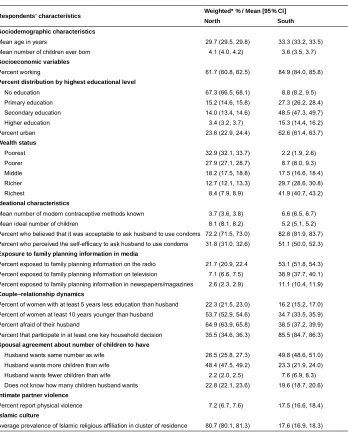
Table 1: Socio, demographic, ideational, and behavioral characteristics of study participants
Respondents’ characteristics Weighted* % / Mean [95% CI]
North South
Sociodemographic characteristics
Mean age in years 29.7 (29.5, 29.8) 33.3 (33.2, 33.5) Mean number of children ever born 4.1 (4.0, 4.2) 3.6 (3.5, 3.7)
Socioeconomic variables
Percent working 61.7 (60.8, 62.5) 84.9 (84.0, 85.8)
Percent distribution by highest educational level
No education 67.3 (66.5, 68.1) 8.8 (8.2, 9.5)
Primary education 15.2 (14.6, 15.8) 27.3 (26.2, 28.4) Secondary education 14.0 (13.4, 14.6) 48.5 (47.3, 49.7)
Higher education 3.4 (3.2, 3.7) 15.3 (14.4, 16.2)
Percent urban 23.6 (22.9, 24.4) 62.6 (61.4, 63.7)
Wealth status
Poorest 32.9 (32.1, 33.7) 2.2 (1.9, 2.6)
Poorer 27.9 (27.1, 28.7) 8.7 (8.0, 9.3)
Middle 18.2 (17.5, 18.8) 17.5 (16.6, 18.4)
Richer 12.7 (12.1, 13.3) 29.7 (28.6, 30.8)
Richest 8.4 (7.9, 8.9) 41.9 (40.7, 43.2)
Ideational characteristics
Mean number of modern contraceptive methods known 3.7 (3.6, 3.8) 6.6 (6.5, 6.7) Mean ideal number of children 8.1 (8.1, 8.2) 5.2 (5.1, 5.2) Percent who believed that it was acceptable to ask husband to use condoms 72.2 (71.5, 73.0) 82.8 (81.9, 83.7) Percent who perceived the self-efficacy to ask husband to use condoms 31.8 (31.0, 32.6) 51.1 (50.0, 52.3)
Exposure to family planning information in media
Percent exposed to family planning information on the radio 21.7 (20.9, 22.4 53.1 (51.8, 54.3) Percent exposed to family planning information on television 7.1 (6.6, 7.5) 38.9 (37.7, 40.1) Percent exposed to family planning information in newspapers/magazines 2.6 (2.3, 2.9) 11.1 (10.4, 11.9)
Couple–relationship dynamics
Percent of women with at least 5 years less education than husband 22.3 (21.5, 23.0) 16.2 (15.2, 17.0) Percent of women at least 10 years younger than husband 53.7 (52.9, 54.6) 34.7 (33.5, 35.9) Percent afraid of their husband 64.9 (63.9, 65.8) 38.5 (37.2, 39.9) Percent that participate in at least one key household decision 35.5 (34.6, 36.3) 85.5 (84.7, 86.3)
Spousal agreement about number of children to have
Husband wants same number as wife 26.5 (25.8, 27.3) 49.8 (48.6, 51.0) Husband wants more children than wife 48.4 (47.5, 49.2) 23.3 (21.9, 24.0) Husband wants fewer children than wife 2.2 (2.0, 2.5) 7.6 (6.9, 8.3) Does not know how many children husband wants 22.8 (22.1, 23.6) 19.6 (18.7, 20.6)
Intimate partner violence
Percent report physical violence 7.2 (6.7, 7.6) 17.5 (16.6, 18.4)
Islamic culture
Average prevalence of Islamic religious affiliation in cluster of residence 80.7 (80.1, 81.3) 17.6 (16.9, 18.3)
Differences by exposure to family planning in media are equally substantial. There are also considerable North–South variations in ideational variables. The average ideal number of children is significantly higher in the North compared to the South. Northern women are less likely than their southern peers to display other relevant ideational characteristics, including contraceptive awareness, the belief that asking a partner to use a condom was acceptable, and the perceived self-efficacy to ask the partner to use a condom.
As for couple–relationship dynamics, there are again clear differences between the North and the South. Proportionally more women in the North compared to the South have a level of education lower by at least five years than their husbands’. Similarly, proportionally more northern women compared with their counterparts the South are at least ten years younger than their husband/partner. About two-thirds of northern women compared to about two-fifths of their southern peers report being afraid of their husband/partner. Southern women are more likely than their peers in the North to participate in key household decisions. Moreover, proportionally more women in the South than in the North want the same number of children as their husband/partner.
The data further shows that intimate partner violence is significantly more common in the South than in the North. Finally, the prevalence of Muslims in the cluster of residence is higher in the North compared to the South.
3.2 Nonlinear decomposition
Results of the nonlinear decomposition show that modern contraceptive prevalence predicted by the explanatiory variables included in the estimated model is 17.6% in the South and 5.2% in the North, a gap of 12.4 percentage points. The variables included in the model explain more than 100% of the North–South gap in contraceptive use. The interpretation of this finding is that the gap is mainly due to the endowments – intergroup differences in observable characteristics of study participants. The finding further indicates that fundamental differences in contraceptive behaviors between the two regions (behavioral effect) make a negligeable negative contribution (–1.5 percentage points) to the North–South gap.
southern women, the gap would have been smaller by 5.9 percentage points. The bulk of this contribution came from North–South differences in secondary education and the highest wealth quintile (Annex 1). For example, if northern women included the same proportion of women in the highest wealth quintile as southern women, the gap would have been 4.3 percentage points smaller. Variations in ideational characteristics between the North and the South are equally responsible for a substantial portion of the North–South divide, accounting for 42.0% of the explained gap. The data shows that if northern women had similar ideational profiles as southern women, the North–South gap would have been 5.8 percentage points smaller. A breakdown of the contribution of the individual ideational variables (Annex 1) reveals that ideal family size is the largest ideational contributor to the gap (contributing 3.4 percentage points) followed by awareness of contraceptive methods (1.4 percentage points).
Table 2: Nonlinear decomposition of North–South gap in contraceptive use in Nigeria, 2013
Predicted prevalence of contraceptive use: South (n = 7,194) 0.176 Predicted prevalence of contraceptive use: North (n = 11,329) 0.052
North–South gap 0.124
Explained (Endowments effect) 0.139
Percent explained 100.00%1
Explanatory factors Contribution to
explained gap Std. error Percent contributed
Sociodemographic characteristicsa –0.01533*** 0.00296 –11.0
Socioeconomic characteristicsb 0.05924*** 0.00476 42.6
Exposure to FP information in mediac 0.00854** 0.00269 6.1
Ideational characteristicsd 0.05844*** 0.00423 42.0
Conjugal relationships dynamicse 0.01540*** 0.00396 11.1
Intimate partner violencef 0.00229** 0.00072 1.6
Cultureg 0.01057** 0.00409 7.6
1The model explains 100% of the gap; the rest is noise due to the fact that the unexplained portion is negative. aSociodemographic characteristics: Age and total number of children.
bSocioeconomic characteristics: Educational attainment, employment status, wealth index, and urban residence. cExposure to FP information in media: Exposed to family planning through the radio, television, and newspapers.
d Ideational characteristics: Number of modern methods known, ideal number of children, belief that it is acceptable to ask husband
to use a condom, and perceived self-efficacy to ask husband to use a condom.
eConjugal relationship dynamics: Wife reportedly afraid of husband, husband’s level of education of 5 years or more than wife,
husband’s age 10 years or more than wife, spousal agreement on how many children to have, and high participation in household decisions.
fIntimate partner violence: Ever experienced any form of physical violence perpetrated by husband/partner. g Culture: Proportion of Muslims in the cluster of residence.
the gap would have been 1.5 percentage points larger. The contribution of exposure to family planning information in media is small but significant.
Couple–relationship dynamics play a strong and positive role, accounting for 11.1% of the explained gap. Participation in household decisions is the largest contributor in this category (Annex 1). The contribution of intimate partner violence is significant but small, accounting for only 1.6% of the explained gap. Finally, differences in the prevalence of Islamic religious affiliation between the North and the South also explains a significant portion (7.6%) of the gap.
4. Discussion
This manuscript uses a nonlinear decomposition method to assess North–South inequalities in contraceptive use in Nigeria. Northern and southern women differ conspicuously with regard to sociodemographic characteristics, socioeconomic profiles, ideational attributes, partner relationships, intimate partner violence, and the prevalence of Islamic religious affiliation. These differences are reflected in the huge inequality in modern contraceptive use between the two regions: 12.4 percentage points to the advantage of the South. The explanatory variables jointly account for more than 100% of the gap, indicating that differences in contraceptive behaviors (unexplained gap) between the North and the South make a negative albeit negligeable contribution to the gap. The negative unexplained gap suggests that some individuals in the North are slightly more inclined to use contraception than identical individuals in the South. Nonetheless, the population of the North is dominated by groups that are very unlikely to use contraception. If these people lived in the South, they would probably be even more unlikely to use contraception; however, there are comparatively fewer of them living in the South.
association of contraceptive use with education and wealth found (Ankomah, Anyanti, and Oladosu 2011; Ejembi et al. 2015; Odewale, Oiadosun, and Amoo 2016; Sekoni and Oladoyin 2016; Palamuleni 2013).
The negative contribution of sociodemographic differences between the North and the South to the explained gap implies that northern women generally have sociodemographic characteristics that favor contraceptive use, particularly higher parity. Indeed, many studies have linked higher parity with contraceptive use in Nigeria and other African countries (Palamuleni 2013; Ogbe and Okezie 2010). Conjugal relationship dynamics also make a significant contribution to the explained gap. Fear of the husband and participation in household decisions are the key contributors in this category of variables. While only a few studies have explored the role of fear of the husband (partner phobia) in relation to contraceptive use, the evidence suggests that this variable might be a hindrance to contraceptive use or other reproductive health behaviors (Ankomah et al. 2013; Agadjanian and Hayford 2009). Our finding on the importance of women’s participation in household decisions in explaining the North– South differences in contraceptive use is consistent with the wealth of empirical evidence on the positive association of women’s decision-making agency with contraceptive use (Do and Kurimoto 2012; Nketiah-Amponsah, Arthur, and Abuosi 2012; Blackstone 2016).
Not surprisingly, differences in access to FP information in media contribute significantly, albeit modestly, to the North–South gap. The positive link between mass media communication on family planning and contraceptive use has been documented in many studies in Africa and elsewhere (Babalola and Vondrasek 2005; Kincaid 2000; Speizer et al. 2014; Hutchinson and Meekers 2012). North–South differences in the prevalence of intimate partner violence also make a small but significant contribution to the gap in contraceptive use. Research on the link between intimate partner violence and contraceptive use has yielded mixed results. Indeed, many studies have found a significant negative association between the two outcomes (Pearson et al. 2017; Peasant et al. 2017), whereas some have documented a positive association (McCloskey, Doran, and Gerber 2017; Tsai, Cappa, and Petrowski 2016), and others have found no significant association at all (Kwagala and Wandera 2016; Adjiwanou and N’Bouke 2015).
sociodemographic, socioeconomic, ideational, media exposure, religion, and couple– relationship variables indicate that separate health communication strategies should be developed for promoting contraceptive use in the two regions. For example, communication efforts specifically targeting low-literate and high-parity groups are more relevant in the North than in the South. Similarly, efforts to reach men and promote spousal communication are critical in the North.
The distinct importance of ideational variables in explaining the North–South gap in contraceptive use suggests that an approach based on the ideation framework (Kincaid 2000) might be successful in bridging the gap. Furthermore, North–South differentials in access to FP information in media is a significant contributor to the gap. Taken together, these findings suggest that a comprehensive health communication campaign targeting northern women and using multiple strategies (mass media, interpersonal communication, community mobilization, etc.) and data-informed, culturally appropriate messages to promote contraceptive knowledge, small family norm, and women’s self-efficacy to negotiate contraceptive use with their spouses might go a long way to increase contraceptive use in the North. Of note is the need for such a comprehensive approach to use culturally appropriate channels and content to address pronatalist attitudes in the North.
5. Conclusion
Inequities exist in the use of contraception between northern and southern Nigeria. These disparities are mainly due to north-south differences in socio-economic variables, ideation, socio-demographic characteristics, conjugal relationships, exposure to family planning messaging, and community compositional characteristics.
References
Adebayo, S.B., Gayawan, E., Ujuju, C., and Ankomah, A. (2013). Modelling geographical variations and determinants of use of modern family planning methods among women of reproductive age in Nigeria. Journal of Biosocial Science 45(1): 57–77.doi:10.1017/S0021932012000326.
Adebowale, A.S., Yusuf, B.O., and Fagbamigbe, A.F. (2012). Survival probability and predictors for woman experience childhood death in Nigeria: Analysis of North– South differentials.BMC Public Health 12(430): 1–12. doi:10.1186/1471-2458-12-430.
Adjiwanou, V. and N’Bouke, A. (2015). Exploring the paradox of intimate partner violence and increased contraceptive use in sub-Saharan Africa. Studies in Family Planning 46(2): 127–142.doi:10.1111/j.1728-4465.2015.00020.x. Agadjanian, V. and Hayford, S.R. (2009). PMTCT, HAART, and childbearing in
Mozambique: An institutional perspective. AIDS and Behavior 13(Suppl. 1): 103–112.doi:10.1007/s10461-009-9535-0.
Ajaero, C.K., Odimegwu, C., Ajaero, I.D., and Nwachukwu, C.A. (2016). Access to mass media messages, and use of family planning in Nigeria: A spatio-demographic analysis from the 2013 DHS. BMC Public Health 16(427): 1–10.
doi:10.1186/s12889-016-2979-z.
Alkema, L., Chou, D., Hogan, D., Zhang, S., Moller, A.-B., Gemmill, A., Fat, D.M., Boerma, T., Temmerman, M., and Mathers, C. (2016). Global, regional, and national levels and trends in maternal mortality between 1990 and 2015, with scenario-based projections to 2030: A systematic analysis by the UN Maternal Mortality Estimation Inter-Agency Group. The Lancet 387(10017): 462–474.
doi:10.1016/S0140-6736(15)00838-7.
Ankomah, A., Anyanti, J., Adebayo, S., and Giwa, A. (2013). Barriers to contraceptive use among married young adults in Nigeria: A qualitative study. International Journal of Tropical Disease and Health 3(3): 267–282. doi:10.9734/IJTDH/ 2013/4573.
Audu, B., Yahya, S., Geidam, A., Abdussalam, H., Takai, I., and Kyari, O. (2008). Polygamy and the use of contraceptives. International Journal of Gynecology and Obstetrics 101(1): 88–92.doi:10.1016/j.ijgo.2007.09.036.
Avidime, S., Aku-Akai, L., Mohammed, A.Z., Adaji, S., Shittu, O., and Ejembi, C. (2010). Fertility intentions, contraceptive awareness and contraceptive use among women in three communities in northern Nigeria. African Journal of Reproductive Health 14(3): 65–70.
Babalola, S. (2017). Changes in ideational profiles of women of reproductive age in urban Nigeria: The role of health communication. Health Education and Behavior 44(6): 907–917.doi:10.1177/1090198117699510.
Babalola, S. and Vondrasek, C. (2005). Communication, ideation and contraceptive use in Burkina Faso: An application of the propensity score matching method.
Journal of Family Planning and Reproductive Health Care 31(3): 207–212.
doi:10.1783/1471189054484022.
Babalola, S., John, N., Ajao, B., and Speizer, I. (2015). Ideation and intention to use contraceptives in Kenya and Nigeria. Demographic Research 33(8): 211–238.
doi:10.4054/DemRes.2015.33.8.
Bankole, A., Sedgh, G., Okonofua, F., Imarhiagbe, C., Hussain, R., and Wulf, D. (2009). Barriers to safe motherhood in Nigeria. New York: Guttmacher Institute.
Baschieri, A., Cleland, J., Floyd, S., Dube, A., Msona, A., Molesworth, A., Glynn, J., and French, N. (2013). Reproductive preferences and contraceptive use: A comparison of monogamous and polygamous couples in northern Malawi.
Journal of Biosocial Science45(2): 145.doi:10.1017/S0021932012000569. Blackstone, S.R. (2016). Women’s empowerment, household status and contraception
use in Ghana.Journal of Biosocial Science 49(4): 423–434.doi:10.1017/S0021 932016000377.
Do, M. and Kurimoto, N. (2012). Women’s empowerment and choice of contraceptive methods in selected African countries.International Perspectives on Sexual and Reproductive Health 38(1): 23–33.doi:10.1363/3802312.
Duze, M.C. and Mohammed, I.Z. (2006). Male knowledge, attitude, and family planning practices in Northern Nigeria. African Journal of Reproductive Health
Eboreime, E., Abimbola, S., and Bozzani, F. (2015). Access to routine immunization: A comparative analysis of supply-side disparities between northern and southern Nigeria.PloS One 10(12): e0144876.doi:10.1371/journal.pone.0144876. Ejembi, C.L., Dahiru, T., and Aliyu, A. (2015). Contextual factors influencing modern
contraceptive use in Nigeria. Rockville: ICF International (DHS Working Papers 120).
Fairlie, R.W. (1999). The absence of the African-American owned business: An analysis of the dynamics of self-employment. Journal of Labor Economics
17(1): 80–108.doi:10.1086/209914.
Fairlie, R.W. (2005). An extension of the Blinder–Oaxaca decomposition technique to logit and probit models. Journal of Economic and Social Measurement 30: 305– 316.
Gueye, A., Speizer, I.S., Corroon, M., and Okigbo, C.C. (2015). Belief in family planning myths at the individual and community levels and modern contraceptive use in urban Africa. International Perspectives on Sexual and Reproductive Health 41(4): 191–199.doi:10.1363/intsexrephea.41.4.0191.
Hutchinson, P.L. and Meekers, D. (2012). Estimating causal effects from family planning health communication campaigns using panel data: The ‘your health, your wealth’ campaign in Egypt.PloS One 7: e46138.doi:10.1371/journal.pone. 0046138.
Ibisomi, L. (2014). Is age difference between partners associated with contraceptive use among married couples in Nigeria? International Perspectives on Sexual and Reproductive Health 40: 39–45.doi:10.1363/4003914.
Izugbara, C., Ibisomi, L., Ezeh, A.C., and Mandara, M. (2010). Gendered interests and poor spousal contraceptive communication in Islamic northern Nigeria.Journal of Family Planning and Reproductive Health Care 36(4): 219–224.doi:10.1783/ 147118910793048494.
Izugbara, C.O. and Ezeh, A.C. (2010). Women and high fertility in Islamic northern Nigeria. Studies in Family Planning 41(3): 193–204. doi:10.1111/j.1728-4465. 2010.00243.x.
Kincaid, D.L. (2000). Mass media, ideation, and behavior: A longitudinal analysis of contraceptive change in the Philippines. Communication Research 27(6): 723– 763.doi:10.1177/009365000027006003.
Konje, J.C. and Ladipo, O.A. (1999). Barriers to uptake and use of modern methods of contraception in developing countries. International Journal of Gynecology and Obstetrics 65(3): 287–294.doi:10.1016/S0020-7292(99)00052-1.
Kwagala, B. and Wandera, S.O. (2016)Intimate partner violence, empowerment, and modern contraceptive use among women in union in Uganda. Paper presented at the Annual Meeting of the Population Association of America, Washington, D.C., March 28–April 2, 2016.
McCloskey, L.A., Doran, K.A., and Gerber, M.R. (2017). Intimate partner violence is associated with voluntary sterilization in women. Journal of Women’s Health
26(1): 64–70.doi:10.1089/jwh.2015.5595.
National HIV/AIDS Division (2014). Federal Ministry of Health (FMoH) [Nigeria] and MEASURE evaluation: Assessment of primary health care facilities for decentralization of HIV/AIDS services in Nigeria 2012. Abuja: Federal Ministry of Health.
National Population Commission and ICF International (2014).Nigeria Demographic and Health Survey 2013. Abuja and Rockville: NPC and ICF International. Nigerian Federal Ministry Of Health (2014).Nigeria family planning blueprint:
Scale-up plan. Abuja: Federal Government of Nigeria.
Nketiah-Amponsah, E., Arthur, E., and Abuosi, A. (2012). Correlates of contraceptive use among Ghanaian women of reproductive age (15–49 years).African Journal of Reproductive Health 16(3): 154–169.
Odewale, B.J., Oiadosun, M., and Amoo, E.O. (2016). Fertility desire and contraceptive use among women in Nigeria [electronic resource]. Ota: Convenant University. http://eprints.covenantuniversity.edu.ng/6708/1/icadi16pp577-581. pdf.
Ogbe, C.O.A. and Okezie, C. (2010). Socio-economic determinants of contraceptive use among rural women in Ikwuano local government area of Abia State, Nigeria.International NGO Journal 5(4): 74–77.
Okigbo, C., Speizer, I., Domino, M., and Curtis, S. (2017). A multilevel logit estimation of factors associated with modern contraception in urban Nigeria. World Medical and Health Policy 9(1): 65–88.doi:10.1002/wmh3.215.
Oyediran, K.A., Ishola, G.P., and Feyisetan, B.J. (2002). Factors affecting ever-married men’s contraceptive knowledge and use in Nigeria.Journal of Biosocial Science
34(4): 497–510.doi:10.1017/S0021932002004972.
Oyekale, A.S. (2017). Assessment of primary health care facilities’ service readiness in Nigeria. BMC Health Services Research 17(172): 1–12. doi:10.1186/s12913-017-2112-8.
Palamuleni, M.E. (2013). Socio-economic and demographic factors affecting contraceptive use in Malawi.African Journal of Reproductive Health 17(3): 91– 104.
Pearson, E., Biswas, K.K., Andersen, K.L., Moreau, C., Chowdhury, R., Sultana, S., Shahidullah, S., Surkan, P.J., and Decker, M.R. (2017). Correlates of contraceptive use 4 months postabortion: Findings from a prospective study in Bangladesh. Contraception 95(3): 279–287. doi:10.1016/j.contraception.2016. 10.002.
Peasant, C., Sullivan, T.P., Ritchwood, T.D., Parra, G.R., Weiss, N.H., Meyer, J.P., and Murphy, J.G. (2017). Words can hurt: The effects of physical and psychological partner violence on condom negotiation and condom use among young women [online first].Women and Health: 1–15.doi:10.1080/03630242.2017.1316345. Rahayu, R., Utomo, I., and McDonald, P. (2009) Contraceptive use pattern among
married women in Indonesia. Paper presented at the International Conference on Family Planning, Kampala, Uganda, November 15–18, 2009.
Renne, E.P. (1996). Perceptions of population policy, development, and family planning programs in northern Nigeria. Studies in Family Planning 27(3): 127– 136.doi:10.2307/2137918.
Roudi-Fahimi, F. (2004). Islam and family planning. Washington, D.C.: Population Reference Bureau.
Sekoni, O. and Oladoyin, V. (2016). Determinants of family planning uptake among men in Ibadan, Nigeria. Journal of Community Medicine and Primary Health Care 28(1): 38–44.
Speizer, I.S., Corroon, M., Calhoun, L., Lance, P., Montana, L., Nanda, P., and Guilkey, D. (2014). Demand generation activities and modern contraceptive use in urban areas of four countries: A longitudinal evaluation. Global Health: Science and Practice 2(4): 410–426.doi:10.9745/GHSP-D-14-00109.
Tsai, L.C., Cappa, C., and Petrowski, N. (2016). The relationship between intimate partner violence and family planning among girls and young women in the Philippines. Global Journal of Health Science 8(9): 121. doi:10.5539/gjhs. v8n9p121.
Tumlinson, K., Speizer, I.S., Davis, J.T., Fotso, J.C., Kuria, P., and Archer, L.H. (2013). Partner communication, discordant fertility goals, and contraceptive use in urban Kenya.African Journal of Reproductive Health 17(3): 79–90.
Underwood, C. (2000). Islamic precepts and family planning: The perceptions of Jordanian religious leaders and their constituents.International Family Planning Perspectives 26(3): 110–136.doi:10.2307/2648299.
World Bank (2014).Nigeria economic report.Washington, D.C.: World Bank Group. World Health Organization, UNICEF, UNFPA, and the World Bank (2015).Trends in