Geschke Center
Doctor of Nursing Practice (DNP) Projects Theses, Dissertations, Capstones and Projects
Fall 12-18-2015
Designing A Care Delivery System Through
Interprofessional Coordinated Care In A Medical
Neighborhood Setting
Diane P. Kelly
University of San Francisco, [email protected]
Follow this and additional works at:https://repository.usfca.edu/dnp
Part of theMedicine and Health Sciences Commons
This Project is brought to you for free and open access by the Theses, Dissertations, Capstones and Projects at USF Scholarship: a digital repository @ Gleeson Library | Geschke Center. It has been accepted for inclusion in Doctor of Nursing Practice (DNP) Projects by an authorized administrator of USF Scholarship: a digital repository @ Gleeson Library | Geschke Center. For more information, please [email protected].
Recommended Citation
Kelly, Diane P., "Designing A Care Delivery System Through Interprofessional Coordinated Care In A Medical Neighborhood Setting" (2015).Doctor of Nursing Practice (DNP) Projects. 57.
Designing A Care Delivery System Through Interprofessional Coordinated Care In a Medical
Neighborhood Setting
Diane P. Kelly, DNP (c), MBA, RN, CENP
University of San Francisco
Committee Members
K.T. Waxman, DNP, MBA, RN, CNL, CENP
M. Bittner, DNP, MPA, RN, CENP
Acknowledgments
I wish to take this opportunity to thank the people that without their support the work
represented in this paper would not have been possible. I am grateful for the professional
expertise and guidance provided to me by my review committee, lead by Dr. K.T. Waxman, also
included are Dr. Mary Bittner, and Dr. Mark Pettus. Both their clinical and leadership support
was essential to the completion of this project, which is having a positive impact on the health of
a population.
It has been a privilege and honor to lead the effort of opening the Neighborhood for
Health. The project has been an accumulation of support and experiences offered to me by the
CEO & President, David Phelps and The Board of Trustees of Berkshire Health Systems. I have
been given the unique opportunity and support to attend the University of San Francisco to
obtain a Doctorate in Nursing Practice, while maintaining my position as the chief operating
officer of Berkshire Medical Center.
All of this support is greatly appreciated, however the person who has had the most
influence on both my professional and personal accomplishments is my loving husband of 31
years, John F. Kelly. Over the past three decades he has always believed in me , and encouraged
me to continue to pursue my dreams. As we raised three wonderful young men, Andrew,
Mathew, and Patrick my pursuits of higher education often required him do more than his share
of what is required to raise and provide for our family. There are no words for me to express my
Table of Contents
Section I. Title and Abstract
Title ... 1
Acknowledgments ... 2
Abstract ... 6
Section II. Introduction Background ... 7
Local Problem ... 9
Intended Improvement ... 11
Review of the Evidence ... 13
Theoretical Framework ... 22
Section III. Methods Setting ... 26
Planning the Intervention ... 26
Planning the Study and Methods of Evaluation ... 31
Analysis ... 33
Financial ... 34
Ethical Concerns ... 35
Implementation of the Intervention ... 37
Communication ... 39
Table of Contents (cont.)
Section V. Discussion
Relation to Other Evidence ... 43
Barrier to Implementation / Limitations ... 43
Interpretation ... 44
Conclusion ... 44
Section VI. Other Information Funding ... 45
Section VII. References ... 46
Section VIII. Appendices Appendix A ... 53
Appendix B ... 54
Appendix C ... 58
Appendix D ……… .. 60
Appendix E. ... 61
Appendix F... 62
Appendix G. ……… 63
Appendix H. ……… 64
Appendix I……… 65
Appendix J ………...………... 66
Appendix K ... 67
Appendix L ... 68
Table of Contents (cont.)
Appendix N ... 70
Appendix O ... 71
Appendix P ... 72
Appendix Q ... 73
Appendix Q ... 74
Appendix R ... 75
Appendix S ... 76
Appendix T ... 77
Appendix U ... 78
Appendix V ... 79
Appendix W ... 80
Appendix X ... 81
Appendix Y --- 82
Appendix Z --- 83
Appendix AA ... 84
Abstract
The Patient Protection and Affordable Care Act (2010) has two significant aims: to
improve the quality of healthcare and in doing so, to lower the cost of healthcare. The Centers
for Disease Control and Prevention (CDC) reports that chronic health conditions, such as
diabetes, hypertension, cardiovascular disease, and mental health, which in 2005 affected nearly
one of every two Americans, continues to increase (CDC, 2010). Chronic health conditions and
lack of access to care are both national and local concerns.
These challenges will require the exploration of new models for the delivery of care, as
needs shift over time and as the healthcare industry moves from the traditional acute care focus
to one of community-based population health focus. The Institute for Healthcare Improvement
(IHI) developed the Triple Aim to simultaneously improve population health, improve the
patient experience of care, and reduce per-capita cost, as a goal for all healthcare organizations
(Stiefel & Nolan, 2012). The position statement released by both the American Organization of
Nurse Executive (AONE) and the American Associate of Ambulatory Care Nurses (AAACN)
emphasizes the need for nurse leaders to take a lead role in both care coordination and transition
management as a substantial way toward the achievement of the Triple Aim (AONE, 2015). The
concepts of care coordination, which includes an enhanced plan at discharge, will be embedded
into a medical neighborhood setting. Patients will receive comprehensive out-patient medical
care assembled under one roof, as well as the social and community services needed to regain
and maintain health.
Key Words: care coordination, care navigation, medical neighborhood, chronic
Section II. Introduction
Background
The Patient Protection and Affordable Care Act (2010) has two significant aims: to
improve the quality of healthcare and in doing so, to lower the cost of healthcare. Experts in
Washington have recently claimed that there will be a decrease in federal health spending in the
future. This confidence is the result of the Congressional Budget Office’s (CBO) reduction of its
projection of federal health spending for the next 15 years by 15%, from 9.6% of the gross
domestic product (GDP) to 8% of GDP (Schulman, 2014). Medicare, the majority of the federal
health spending, represents the trend of spending on healthcare in the United States. Currently,
54 million people in the United States are enrolled in Medicare Part A; the program is expected
to grow to 70 million enrollees by 2023. Medicare spending is over $600 billion, with the
federal contribution to the Medicaid programs of over $200 billion dollars (Schulman, 2014).
The Patient Protection and Affordable Care Act (ACA) includes steps to improve the
quality of healthcare by focusing on avoiding costly mistakes and readmissions, keeping
individuals healthy, rewarding quality instead of quantity, and creating the health information
technology infrastructure that enables new payment and delivery models to work. Early results
have shown that the 30-day, all-cause readmission rate is estimated to have dropped in October
of 2012 to 17.8%, after averaging 19% for the past five years. This translates to about 70,000
fewer readmissions in 2012 (Centers for Medicaid and Medicare Services [CMS], 2014).
Keeping people healthy and improving the overall experience and access to care of those living
with chronic conditions will support the goals of the Affordable Care Act. In 2012, the Centers
hypertension, cardiovascular disease, and mental health, which in 2005 affected nearly one of
every two Americans, continues to increase (CDC, 2010). Moreover, chronic conditions are
more prevalent in an aging population. The CMS 2012 publication, Chronic Condition
Chartbook, which focuses on the prevalence of chronic disease in the United States, reports the
prevalence and cost associated with chronic conditions has worsened. The proportion of all
Americans with two or more chronic conditions has increased, rising from 24% in 2001 to 28%
in 2006. Almost half of all people living with a chronic condition suffer from more than one
condition. People with chronic conditions, particular those with multiple chronic conditions, are
the heaviest users of healthcare services. In 1998, 78% of healthcare dollars was spent treating
those with chronic conditions, with an increase to 84% in 2008 (CMS, 2012). The presence of
more than one chronic condition has specific implications to both financial and quality
considerations. If this trend is going to be reversed, improvements need to occur with how care
is delivered, focusing on coordinated care to individuals based on their individual goals, opposed
to diagnostic-specific goals (The Robert Wood Johnson Foundation [RWJF], 2014).
The ACA established clear provisions for the coordination of care and improved
transition management from one clinical service to another. Both coordination of care and
transitions management will support the goal of providing safe, high quality care to at risk
populations, such as patients with multiple chronic conditions and patients with limited access to
care. Care provided through interprofessional teams, which include physicians, registered nurses
(RNs), advanced practice registered nurses (APRNs), and social workers, will realize improved
outcomes (Haas & Swan, 2014). Coordination of care is not new to the nursing profession; care
coordination is a core professional standard and competency for RNs and APRNs (American
creation of greater access to healthcare, which is also central to the ACA goal. Mostly recently,
the American Organization of Nurse Executives (AONE) and the American Academy of
Ambulatory Care Nursing (AAACN) released a joint statement: The Role of the Nurse Leader in
Care Coordination and Transition Management across the Health Care Continuum (AONE,
2015). This will require the exploration of new models for the delivery of care, as needs are
shifting over time as the healthcare industry moves from the traditional acute care focus to one of
community-based population health focus. The Institute for Healthcare Improvement (IHI)
developed the Triple Aim, defined as simultaneously improving population health, improving the
patient experience of care, and reducing per-capita cost as a goal for all healthcare organizations
(Stiefel & Nolan, 2012). The position statement released by both AONE and AAACN
emphasizes the need for nurse leaders to take a lead role in both care coordination and transition
management as a substantial way toward the achievement of the Triple Aim (AONE, 2015).
Local Problem
The national healthcare challenge of providing high quality care, improving the health of
a population, and avoiding high cost is played out daily on a local level throughout the country;
in order to achieve solutions, explicit needs of the regions needs to be considered. The specific
area addressed in this body of work is based on the needs of a rural area located in Western
Massachusetts. The identified area is Berkshire County; it is a largely rural area located at the
far western end of Massachusetts, adjacent to New York to the west, Vermont to the north, and
Connecticut to the south. Comprising roughly 15% of the landmass of Massachusetts, its
approximately 130,000 residents account for 2% of the population of the commonwealth. The
32 communities of Berkshire County cover almost 950 square miles and have an overall
the commonwealth. The towns in the northern tier of the county, commonly referred to as
Northern Berkshire, are comprised of approximately 231 square miles and are home to just under
37,000 people, making for an area population of 174 persons per square mile. The age
stratification of the county (including Northern Berkshire) is older compared to state and national
distributions. On a percentage basis, Berkshire County has fewer children, a smaller proportion
of young adults (20 to 44 years of age), and larger proportions of older adults (45 to 64 years of
age) and elderly (65+ years of age), with approximately one-third more individuals above the age
of 65 than in the commonwealth as a whole (Massachusetts Executive Office of Health and
Human Services [EOHHS], 2014). Like the rest of the county, Northern Berkshire is a largely
rural area with small urban, agricultural, and post-industrial towns and cities. The healthcare
delivery system in Northern Berkshire County of the Commonwealth of Massachusetts has been
fragile and severely stressed for years, suffering from a serious shortage of providers. After
years of financial difficulty, the Northern Berkshire community hospital closed its doors.
Several of the towns that relied on the closed healthcare system and its affiliates are very
small, with fewer than 1,000 people in remote rural locations. Because of the remote rural
location and limited access to public transportation, many residents report having difficulty
accessing healthcare at all, but especially outside of the Northern Berkshire area. Economically,
Northern Berkshire, like Berkshire County as a whole, has lagged behind state benchmarks. The
median household income in Berkshire County is 31% below the State average (EOHHS, 2014).
According to the RWJF’s 2013 County Health Rankings & Roadmaps, Berkshire County,
despite ranking near the top among Massachusetts counties for the quality of healthcare services
and exceeding the state’s rate of diabetic screening of young adults, ranks only 11th out of the 14
out of the 14 counties in health factors. This is principally due to health behaviors and social and
economic factors (RWJF, 2014). These factors include rates of adult smoking (Berkshire County
18%, state 16%) and physical inactivity (Berkshire County 23%, state 22%), with obesity rates
equal to the state (22%) (RWJF, 2014). Northern Berkshire is fully reflected in these statistics.
These health status challenges are coupled with a severe shortage of primary care services in the
county, most particularly in Northern Berkshire County. In 2013, the Massachusetts Medical
Society (MMS) Physician Workforce Study demonstrated that the physician shortage and
recruitment challenges in Berkshire County are substantially worse than the experience
elsewhere in the state. Based on a customized report from Sg2 Demand Forecast, a
healthcare-consulting firm based in Skokie, Illinois, Northern Berkshire needs more than 12 additional adult
primary care physicians to meet current health needs.
Intended Improvement
The opportunity is to implement a new model of care delivery and approaches to chronic
conditions that will meet the needs of a high-risk population of Northern Berkshire County. The
vision of this work is to establish accessible and affordable care in the community based on a
model of care that is a multi-dimensional health program that will coordinate multiple aspects of
care and to include services that address clinical, social, and behavioral health and substance
abuse needs in a unique setting based on the concepts of coordination of care in a medical
neighborhood. This work was facilitated utilizing an interprofessional team approach that
focused on laying a foundation of services co-located in one physical space. Co-location
supports the concept of a hub, which has shown to improve overall communication amongst
multiple care givers (Brown, Peikes, Peterson, Schore, & Razafindrakoto, 2012). Moreover,
is documented and tracked both within the neighborhood and outside of the neighborhood, as
community services will be included in the delivery of care. This will enhance the ability to
share resources and more importantly, to foster communication with members of the care team to
enhance communication to benefit the individual participants. The models of community and
primary care are based on the need to deliver additional care in the community and the need for
seamless, coordinated care (Institute of Medicine [IOM], 2011). The joint principles of the
Patient Centered Medical Home and Accountable Care Organizations will guide the services
offered in the neighborhood (Greenburg, Barnett, Spinks, Dudley, & Frolkis, 2014). Both of
these models recognize the key role of the interprofessional team in meeting the challenge of
caring for those with chronic conditions.
Reducing readmissions will be achieved by offering community-based coordinated care
to the targeted population that will bridge the transition from an inpatient acute admission into
the newly created medical neighborhood setting. This effort required establishing effective
partnerships with community-based social services, inpatient care providers, and primary care
providers in the defined targeted location. The care navigation model will support keeping
individuals in the community by coordinating care with appropriate clinical follow up, linking
individuals and families with social services, and maintaining ongoing communication with the
primary care clinician. All activity will be documented on a goal directed, individualized care
plan that will provide a consistent and comprehensive tool used to communicate with the
individual’s primary care provider and other members of the team.
The aim of establishing an infrastructure to coordinate primary and secondary services to
a patient population in a rural area will result in a 10% reduction in 30-day readmission rates by
Review of the Evidence
The project focus is to improve outcomes for a population that experiences chronic
conditions and behavioral health and substance abuse conditions in an area with limited access to
care. These areas were the focus of the evidence and literature reviews.
Evidence Supporting Improved Outcomes
The medical neighborhood is a relatively new concept that offers a place to provide
coordinated care to those requiring coordinated specialty, primary, and social supports. The
focus is to improve outcomes while being mindful of the need to be cost efficient. An
interprofessional team provides the delivery of services. Establishing the viability of this
concept is important and required a systematic review and rigorous search methodology. A
system review was completed using the process outlined by Bettany-Saltikov (2010).
An evidence question was formulated using the population, intervention, comparative
intervention, outcomes components, and time (PICOT) (Melnyk & Fineout-Overholt, 2015, p.
28). The PICOT was as follows:
P – General population
I – Medical neighborhood
C – Enhancing access to care
O – Improve Health
T – 2008-2015
The search question: What makes up a medical neighborhood, and what are the benefits
of coordinated care when provided in a medical neighborhood? A search was conducted using
CINAHL, Fusion, and Cochrane library, Med Par, and Google Scholarly. Limiters were English,
which was narrowed down to 44, and resulted in seven articles relevant to this topic. The seven
articles were critically appraised using Johns Hopkins Evidence-Based Practice Research
Appraisal (JHEBPRA) (White & Poe, 2010) and then entered into an evidence table (see
Appendices A and B).
The model of care is based on a multi-dimensional health program that will coordinate
multiple aspects of care in unique settings based on the concepts of a medical neighborhood.
The goal of patient-centered medical homes is to provide a coordinated system involving all
providers that delivers care efficiently and effectively, with an alternative for smaller health
systems to provide similar coordinated medical care in a neighborhood that is accessible by
many primary care providers for their patients (Spatz, Bricker, & Gabbay, 2014). Given the
relatively small population of approximately 37,000 in the targeted population and the serious
shortage of physicians in the area, concepts of the medical neighborhood and care coordination
will be used to model this new delivery of care service. The goal of the model will be to expand
access to care and improve overall health.
The medical neighborhood is a relatively new delivery of care model that expands on the
patient-centered medical home concept, with the patient at the center of care that expands out to
include specialty care, primary care, hospitals, and social services (Huang & Rosenthal, 2014).
The goal of a medical neighborhood is a coordinated system that includes all providers. Studies
have been conducted analyzing care coordination in other settings, which have identified settings
and systems that either have improved or had not resulted in improvement with quality and cost.
Brown et al. (2012) made use of data from 15 program randomized control trials (CMS’s
Medicare Coordinated Care Demonstration) to address critical questions of what actions have
four sites had made a significant impact on quality and cost for CMS beneficiaries. The main
element present in the successful sites were the amount of face-to-face contact between
coordinators and patients, which increased when members of the care coordination team were
located in the community in close proximity to the primary care providers. Other key features in
successful sites were when the care coordination team served as a communication hub, making
sure all providers and social support providers could access this hub; the use of evidenced-based
education and interventions for patients; and the timeliness and availability of the coordinator to
see a patient while in the hospital were also consistent themes with successful programs. The
successful program reduced hospitalization by 13% and 15 % of the control group mean; p
<0.10; the program with the widest confidence interval reduced hospitalization by 33%; p = .02.
Having a centrally-located facility that acts as hub and can facilitate frequent face-to-face
contacts supports the overall concept of a medical neighborhood, opposed to having services
limited to one office practice.
Peikes, Chen, Schore, and Brown (2009) conducted a similar study utilizing the same
database from the CMS study. The study identified only two of the 15 programs having an
impact on reducing hospitalization (17% and 19 %). The key factor noted by Peikes et al. was
having a strong transitional care component that included relying on face-to-face interactions,
opposed to telephone contact, and having the ability to link the care coordination activity that
starts in the hospital with a patient-centered outpatient setting. Care that is managed by the
primary care provider, opposed to a specific specialist, has a 33% lower cost of healthcare and
19% less mortality (Spatz et al., 2014). The increased prevalence of people with one or more
chronic conditions increases the use of specialists, which increases the amount of patients
an additional specialist. When the primary care provider is managing the care, the evidence
supports that a lack of communication amongst all providers is a significant barrier to providing
quality and efficient care. Spatz et al. (2014) report that the use of electronically shared
information will improve the exchange of information, not just from the primary care provider
and specialist but, from hospitals and emergency rooms, as well. In a fragmented care system,
the transition of care from acute care back into the community remains a high-risk episode for
the patient (Spatz et al., 2014).
Tuot et al. (2015) conducted a study to determine the usefulness of an electronic referral
system between primary care and specialty care. The goal of improving communication between
primary care and specialty care is to promote coordinated care, which is the foundation of the
patient-centered medical neighborhood. Between June 2011 and May 2012, 586 primary care
providers (PCP) rated the helpfulness and educational value of 2,189 specialist reviewer
communications for patients that did not have a face-to-face appointment with the specialist.
Overall, the PCP considered 71% of baseline specialist communications of high value (Tuot et
al., 2015). Improving access to specialty care and linking care back to the primary care
providers is essential. When there is a shortage of both primary care and specialty care, the
focus should be on care coordination, so both specialist and primary providers are well informed
about the on-going status of the patient. Care coordination was identified from the managed care
era when most of the control was given to the primary care providers and therefore, lacked
engagement by the specialist (Huang & Rosenthal, 2014).
In addition to the communication between primary providers and specialty providers,
another key factor that can be addressed by the medical neighborhood concept and the use of
Stieglitz, and Amarasingham (2014) conducted a study on the need for improved communication
between clinical and social support providers. The study was done because of the growing body
of evidence, supporting the concept that social need, such as housing, food, and employment, has
a direct correlation on an individual’s health. In person interviews with 50 healthcare and social
service providers were conducted to determine the feasibility of social service information
exchange. The analysis of the interviews supported the need to have better linkage between
healthcare and social service. The concept to increase the linkage of clinical and social providers
to establish the framework of a medical neighborhood is supported by Pham (2009). Pham
discussed the composition of a medical neighborhood that includes non-medical providers and
facilities, such as hospitals, homecare agencies, and social service agencies, which would
provide counseling and contribute to a successful neighborhood (Pham, 2009).
A second evidence question was formulated around the concept of care coordination.
Effective care coordination can, improve the need to balance the information that all healthcare
providers need, in addition to incorporating the social needs of the individual. Care coordination
is considered an essential component to accomplishing the Triple Aim of the CMS. A literature
search was also conducted on the topic. The PICOT was as follows:
P – Populations with chronic conditions, behavioral health, and substance abuse
I – Coordinated care
C – Managing chronic condition, behavioral health conditions, and substance abuse in a
medical neighborhood
O – Improved quality, decreasing hospitalizations
The search question was: How has coordinated care improved the outcomes of a
population experiencing chronic conditions, behavioral health, and substance abuse conditions?
The search was conducted using Fusion CINAHL, Cochran library, Med Par, and Google
Scholarly. The search resulted in 1,262 articles, with 64 articles identified from the abstract
description. Of the 64 articles 11 relevant resources were identified and are listed in the
evidence-based table (Appendix C).
The coordination of care by a team is an essential component to the model of care
outlined in this work. According to the National Quality Forum (NQF), care coordination is
foundational to quality health services (ANA, 2012). Several care delivery models, including
nurse-led models, have been evaluated in relation to improved clinical and financial outcomes.
In general, care coordination results in better care at a lower cost, particularly for populations
with multiple health and social needs (Craig, Eby, & Whittington, 2011). This is further
supported by the IOM’s (2011) recommendation regarding the need to decrease medical error
and costs of care by increasing collaboration and teamwork and having professionals work to the
highest level of their education and licensure.
A review of the literature, primarily focused on care within the primary care medical
home model, suggests that the ideal framework for the care coordination process, particularly
among patients with complex chronic conditions, includes a multidisciplinary team. This model
showed the primary benefits were realized in reductions in emergency department visits and
hospitalization and re-hospitalization (Agency for Healthcare Research and Quality [AHRQ],
2011). Care coordination has been linked to improving patient safety. Forster, Murff, Peterson,
Gandhi, and Bates (2003) reviewed 400 consecutive patients discharged home from a medical
weeks of discharge. The majority (66%) of these events were adverse drug events. System
problems contributed to all of the preventable and ameliorable adverse events. The most
common problem was in the discharge process when communication to primary care providers
or patients was poor at the time of discharge. The data showed that one in five patients
experienced an adverse event during the time of transition from discharge to home, with
one-third of these events deemed preventable (Forster et al., 2003).
Manderson, McMurray, Piraino, and Stolee (2011) completed a systematic literature
review to describe existing navigator models relevant to chronic disease management; this
review included 15 articles documenting nine discrete studies. In summary of the nine studies
identified, five reported positive economic outcomes, two reported higher satisfaction with care
for providers and patients, and five reported increased patient quality of life or functionality
(Manderson et al., 2011).
As previously stated, one in every two Americans is affected by mental health conditions.
Care coordination has demonstrated value in removing barriers to effective management of
mental health conditions. Christensen et al. (2008) reviewed 55 randomized and controlled
research trials in databases that focused on adults and which also included depression outcome
measures. The review found four key elements that were associated with improved outcomes for
patients with depression. The first review found that care coordination and tracking were
associated with improved outcomes. This included having the care coordinator communicate
directly to the physician about the patient. The second key finding was that the monitoring and
delivery of treatment was best done by health professionals with a mental health background,
this includes the management of care with tracking and monitoring by RNs, including a process
finding was the significant association between patient preferences and positive patient
outcomes. The fourth finding was that additional training provided to the general practitioners in
depression care and the provision of practice guidelines were not associated significantly with
improved outcomes (Christensen et al., 2008).
Team-based approach to care in the medical neighborhood has shown promising results
to those with diabetes. The complexity of these patients supports the need for more than the
medical home concept. According to Spatz et al. (2014), in order to improve quality and manage
cost, patients with diabetes will benefit from coordinated care that includes physicians, mental
health professionals, diabetic educators, pharmacist, and dieticians. These services are the
medical neighborhood that will link the patient-centered medical home with other specialized
services and supports (Spatz & Gabbay, 2014). The presence of a registered dietician in the
medical neighborhood will not only support those with diabetes, but can have a positive impact
on many individuals suffering from other chronic conditions. Jortberg and Fleming (2014)
support the medical neighborhood as an important part of patient-centered care. The team base
care approach to providing services for the individual should also include registered dieticians
and social service providers for optimal outcomes (Jortberg & Fleming, 2014).
Another discipline utilized in the coordination of care concepts is the use of the
community health worker (CHW). The role of the CHW was evaluated by Burns, Galbraith,
Ross-Degnan, and Balaban (2014) by conducting pilot test feasibility and preliminary effect of
CHW interventions to reduce hospital readmissions. The study was conducted within a 200-bed
academic medical center safety-net hospital. High-risk patients with chronic conditions, such as
congestive heart failure (CHF), chronic obstructive pulmonary disease (COPD), or pneumonia
526 patients were enrolled once admitted to the hospital. A random selection was made for those
patients receiving services from a CHW and those who were not receiving services. The
findings showed that patients having a CHW as part of their team had a 15.4% 30-day
readmission rate, compared to the control group, with a 17.9% 30-day readmission rate (Burns et
al., 2014).
Kangovi et al. (2014) conducted qualitative interviews with 65 low-income, recently
hospitalized patients, exploring their perceptions of what would improve their overall health
once discharged from the hospital. The qualitative study conducted in-depth semi-structured
interviews to explore perceptions of hospitalization and discharge, barriers to recovery, and ideas
for improving post-hospital transitions. The transcripts were analyzed using a constant
comparison method. Following the analysis of the data, a three-step mapping process was used
to translate the results into recommendations. The study team found three overarching themes
identified by the participants. The first theme was the feeling of being disconnected from the
caregivers. Patients felt they had little in common with the caregivers and felt the clinicians
could not relate to their individual concerns. This confirmed the hypotheses the team had about
the use of a CHW who was capable of providing empathetic support to this group of patients.
Second, patients felt they were being set up to fail when the team discharged the patient with
goals that were confusing, at times in conflict with the patient’s own goals or unrealistic due to
financial constraints. The team agreed that the goals needed to be important to the patient. The
third finding was the patient’s lack of primary care available to them after leaving the hospital.
This resulted in the recommendation that all patients have an appointment prior to leaving the
As the percent of individuals who live with more than one chronic condition increases, as
does the complexity of their care and the concerns the individual has with how their care is being
coordinated. Maeng, Martsolf, Scanlon, and Christianson (2012) conducted a random
digital-dial telephone survey of adults with chronic conditions. The survey measured respondent’s
self-report of care coordination problems and level of patient participation using the Patient
Activation Measure (PAM-13). Logistic regression was used to assess association between
respondent’s self-report of care coordination problems and a set of patient characteristics. The
conclusion was that the patient activation and complexity of care chronic illnesses are strongly
associated with patients’ self-report of care coordination problems (Maeng et al., 2012).
Theoretical Framework
The overall theoretical framework used to guide the implementation of a new delivery of
care system is based on Leading Change, by John Kotter where he uses a eight step change
process that supports leaders to bring about fundamental change. The steps are establishing a
sense of urgency, creating the guiding coalition, developing a vision and strategy,
communicating the change vision, empowering a broad base of people to take action, generating
short-term wins, consolidating gains and producing even more change, and institutionalizing new
approaches in the culture (Kotter, 1996). The urgency was clearly identified as a result of a local
disruption in the delivery of care to a community. As each phase of the work was considered the
framework outlined by Kotter was used to guide the steps in order for this new model of care to
be accepted by both care givers and the community.
The theoretical frameworks followed for the planning and measuring this project are from
the Institute of Healthcare Improvement (IHI). The first framework used for planning followed
those with multiple needs and facilitating coordination of services that will assist with improved
health and supporting individuals to meet their goals. The key areas identified in the framework
are patient identification, defining the program aim, and key innovations (Craig et al., 2011).
Framework I: IHI Care Coordination Model
Patient Identification
The first step is to identify those who would benefit most from care coordination and
enhanced services. Craig et al. (2011) suggest the best way to identify this group is to determine
who has required hospitalization. This can be considered a failure of the ability to access
primary care and other supports in the community. An assessment should be completed to gain
more information about some of the broad needs that will be needed to begin to form a plan.
The population was identified by the limited access to care of a defined geographic
region known as Northern Berkshire. To better understand the needs of the targeted population,
the overall use of inpatient services and readmission data was reviewed and evaluated by running
a report based on zip codes for 12 consecutive months, October 2013 through September 2014.
The overall inpatient encounters for this time frame was 2,298. Further analysis was completed
by running a 30-day readmission rate for the same time frame and targeted population. The
baseline readmission rate for the 12-month average was 15.62 %. The 12 months of data that
identified the number of readmissions were then stratified by the primary and secondary
diagnoses that were present at the time of readmission.
The care coordinator is the care provider who begins the process of working with the
individual to identify the health goals and to assist the individual to meet those goals. Based on
with most prominent needs with medical complexity will benefit from a registered nurse care
coordinator, individuals with behavioral health and or substance abuse will be best served by
working with a social worker care coordinator, and individuals with social instability or lack of
social support may be best served by a social worker or community health worker (Craig et al.,
2011).
Care coordination will begin once the individual from the targeted population has been
identified by their zip code upon admission to the acute care facility. The care coordination team
is made up of a RN and social worker. The primary reason for admission will determine which
member of the team will establish contact and begin the assessment work. The RN care
coordinator will see individuals with multiple chronic conditions admitted to the medical surgical
units. Individuals admitted to behavioral health and the substance abuse unit will be seen by the
social worker care coordinator. At this time either the RN or social worker care coordinator will
see all of the patients for the initial assessment. The care coordinator will have expertise in
self-management and patient advocacy. This will require formal education and competency-based
certification.
Defining the Program Aim.
Reducing readmissions will be achieved by offering community-based coordinated care
in a medical neighborhood to the targeted population. This will require establishing partnerships
with community based-social services. The aim of establishing an infrastructure to coordinate
primary and secondary services to a patient population in a rural area will result in a 10%
reduction in 30-day readmission rates by January of 2016.
All individuals need to have a care plan that accurately reflects the goals of the
individuals. The care plans need to be shared and agreed upon with the primary care provider.
The care coordinator is responsible for assessing the needs and working with the individual to
create the beginnings of this plan. The care team should be based in the community to support
integrated care (Craig et al., 2011).
The care coordinator is the care provider responsible for assessing and identifying whole
person needs and health goals and provides the linkage to the appropriate resources in both the
community and the medical neighborhood. Given the needs of the individual, the care
coordinator will be either a RN care coordinator or social worker. In addition to this two-person
team that is located in the acute care setting, there is an interprofessional team located in the
medical neighborhood.
Framework 2: IHI’s Guide to Measuring the Triple Aim for Population Health
The second framework followed is the IHI’s guide to measuring the Triple Aim for
population health with the following key components: (a) the need for a defined population,
specifically a population denominator, which can be either a total or subtotal of a population; (b)
the need to track data over time, which will allow for the ability to identify a special variance and
the rate of change in the process; (c) the need to distinguish both the outcome and process
measures; and (d) the use of benchmarks or comparison data, which will allow for the
comparison with other organizations. The use of benchmarks is important to have clear
definition that is consistent with the compare group selected. The most reliable method to
achieve the correct benchmark and definition is to use measures that are available to the public
of care was underway. The data elements will come from the original clinical document that is
entered into the documentation system. Understanding the data elements that need to be tracked
Section III. Methods
Setting
The entry point into this model of care begins in the acute care inpatient setting. Once
individuals are admitted, the process of care coordination begins. Admissions are defined as
medical / surgical admission, behavioral health admission, or substance abuse admission. Once
participation is established, follow-up appointments are made for care to continue in the medical
neighborhood. The neighborhood is located in the town that is the center of the zip codes
identified as the target population. All services are co-located in the facility that was once the
community hospital for this population. This will enable the use of shared support resources,
such as registration and reception. More importantly, the co-location concept is a core part for
providers to easily communicate and collaborate with the patient and multiple caregivers to
support a patient-centered care plan. It should be noted, the location of the “neighborhood” is
not restricted to the brick and mortar of the facility. The staffing plan includes a community
health worker (CHW) who will spend the majority of her time in the community connecting
patients to existing community supports.
Planning the Intervention
The plan required a detailed project plan that was broken out into key areas: clinical
care, informational technology, finance, and communication. Weekly team meetings were held
utilizing the project plan to drive agendas and document progress (see Appendix D). The plan
served as a clear documentation tool to support both the planning effort, as well as the
implementation actions required. Interprofessional collaboration was achieved by identifying the
key stakeholders to be part of the planning and implementation. The team was lead by the chief
director of population health, chairman of psychiatry, chief nursing officer, integrated care vice
president, chief information technology officer, senior vice president of community and wellness
programs, and the chief financial officer. This group participated in a weekly agenda driven
meeting in order to adhere to agreed task and timelines. An initial overall assessment and
strategic review was facilitated to explore the current status based on the strengths, weaknesses,
opportunities, and threats (SWOT) that existed pertaining to the implementation of this clinical
care design improvement project (see Appendix E). Each component identified during this
exercise was addressed throughout the planning and implementation phase of the project.
The first action required in the planning phase was to understand the needs of the targeted
population and identify what specific actions would have the most impact. This was facilitated
by a review of data obtained from the inpatient electronic health record database, which was
filtered to include only the zip codes identified in the targeted population and a date range of
October 2013 to September 2014. The overall inpatient encounters for this time frame was
2,298. Further analysis was completed by running a 30-day readmission rate for the same time
frame and targeted population. The baseline readmission rate for the 12-month average was
15.62% (see Appendix E). The overall readmission rate increased after the closing of the
community hospital in February 2014 (see Appendix F). The readmission rate was then
stratified by primary and secondary diagnosis; the top four primary or secondary diagnoses were
diabetes, congestive heart failure, chronic obstructive pulmonary disease, and behavioral health
(see Appendix G). Review of the data began the effort of exploring evidenced-based
Clinical and Social Care
A driver diagram was used to support the planning process. Driver diagrams are a type
of logic chart with three or more levels. This includes the goal/aim of the project, the high level
factors that are needed to influence in order to achieve the goal called primary drivers, and the
specific activities that will act upon these factors. This theory of change tool best supports these
efforts due to the complex nature of the problem and the required interventions. The driver
diagram (see Appendix I) helped to explore the factors the group believed would have the
greatest change toward improving the goal. The diagram also effectively showed the
connections of the individual interventions, as well as assisted in communicating the
interventions that supported the aim (Bennett & Provost, 2015).
The clinical and social supports that coordinate, navigate, and deliver care from the acute
care setting to the patient-centered medical neighborhood include a hospital-based care
coordination team made up of a RN care coordinator and a social worker care coordinator.
Based at the medical neighborhood is an APRN for general medical follow up, an APRN
specializing in CHF, certified diabetic educator, masters prepared social worker care navigator,
community health worker, behavioral health care manager, psychiatric APRN, and a psychiatrist
that specializes in substance abuse and alcohol detoxification. In addition to this core staff, an
arrangement has been made with the local substance abuse and counseling center to facilitate a
day treatment program for substance abuse. This program will be located in the medical
neighborhood, and all services will be available to individuals attending the program.
The use of flowcharts supported the planning effort. The first clinical phase of the plan is
documented on the general flow chart that is broken up into three sections – inpatient, medical
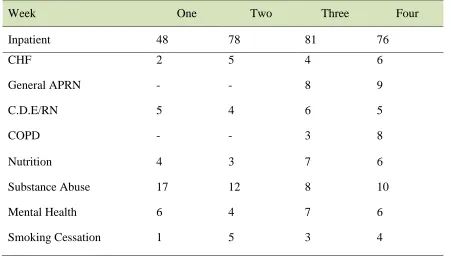
with the inpatient admission. The initial identification of a patient in the target group is
facilitated by a customized report that populates all patients in the electronic health record with
the target group zip code. As admissions occur, a report is generated for the care coordination
team located at the acute care facility. Either the RN care coordinator (who primarily initiates
the visit to individuals on the medical or surgical floor), or the social worker care coordinator,
(who will see individuals on the behavioral health units), makes the initial face-to-face
connection and begins to establish a relationship. Once initial contact has been made, the
assessment for services is made and the care plan begins. The initial assessment is documented
in the electronic tool with a general assessment to establish priorities and discuss interventions
available. As part of the communication strategy, an easy to read brochure was created so that
patients could learn about the services offered well before discharge (see Appendix K). Once the
care coordinator and the patient agree on the desired interventions, appointments are made with
the medical neighborhood staff and documented in the electronic plan. As previously stated in
the evidence appointments made prior to the inpatient discharge have a greater impact on the
positive impact of care coordination (Manderson et al., 2011) therefore all appointments are
made prior to discharge.
Each specialty area followed the same process by flowcharting how the individual moves
through the neighborhood, and at the same time, how each interaction will be documented. This
allowed for building the documentation tool that would not only improve communication
amongst the care team, but also provide needed data to drive improvements. The individual
entries are pulled together in a way that supports populating a patient-centered care plan. There
is an APRN on site at the medical neighborhood to see patients that may need an assessment
to monitor their self care plan. The CHF services (see Appendix L) will be staffed by an APRN
who has experience working in both the inpatient and ambulatory CHF clinics. The goal is that
all patients requiring this service will be seen in the medical neighborhood within 48 hours of
discharge, providing both individual and group education sessions. The diabetic care services
are provided by a certified diabetic educator / RN. These interventions include diabetic
education and coaching, this will include patients, families, and caregivers. Blood sugar
assessment, treatment change facilitation, and medication adjustment via protocol will occur (see
Appendix M). A registered dietician nutritionist will offer nutrition counseling services. Both
individual and group sessions are being facilitated (see Appendix N). The behavioral health
supports are structured to support both mental health and substance abuse, with a psychiatric
APRN and a psychiatrist (see Appendix O). A master’s prepared social worker and the
community health worker will provide the overall navigation of care between the neighborhood
and the community. All members of the neighborhood will see the community health worker in
order to assess any potential risks and opportunities for support within the community. The
CHW will link individuals with community social supports and track their participation. A
comprehensive review of all services has been made in order to bring the community into the
neighborhood. It is important to note that the neighborhood is built around the needs of the
patient and their family being at the center of care, with all services available to, all members of
the neighborhood (see Appendix P).
Planning the Study and Methods of Evaluation
Information Technology
All interactions, assessment, and goals will be documented in the care navigation
content expert to work with an information technology analyst to build the assessment and
documentation in a way that would populate one individualized care plan to be shared with the
primary care providers. Subsequently, the information entered into Care Director was required
to be structured in a way that supported a retrieval method that could be easily formatted for
reporting, which is essential for converting discrete data into actionable aggregate data. The
process of clearly defining the definition of the denominator is a critical component to measuring
population health (Stiefel & Nolan, 2012). Each intervention has been assigned a clear definition
for both the numerator and the denominator. These measures are considered the process
measures, or how often something is occurring. There are 12 clearly designed process measures
(see Appendix Q) that are used to monitor the interventions and to understand if the utilization
will affect the outcome, which is the 30-day readmission rate. The tool has been built to easily
update information, which then documents either the creation or the progress of a goal (see
Appendix R).
An important aspect of effective communication is the ability to share information from
the social service community and caregivers (Nguyen et al., 2014). This goal was accomplished
by working with the vendor to customize the view of what the social agencies could see, while
ensuring their ability to enter information as individuals are using community-based services.
This did, however, create the need to work with the legal counsel of the organization to create a
specific informed consent document that specifically states providers outside of the health
system will be documenting in the Care Navigator tool (see Appendix S).
Monitoring
Monitoring the interventions will consist of both process and outcome measures. As
Director tool. As the processes for documentation were being built, attention was given to the
need to be able to determine what services were offered, how timely were they offered, what
services did individuals utilize, and how often; these are referred to as the program specific
measures. The definition for each program measure is shared and agreed upon by the entire
team. The process of documenting activity in the neighborhood is one of the data collection acts
of the Plan Do Study Act (PDSA) process that is used continuously in order to affect change in
time for the overall outcome to be effected.
For the first phase of this project, the PDSA process will be followed at the end of each
day to ensure rapid identification of concerns and that they are brought forward, actions
identified and implemented, followed by the review of the data to understand if the realization of
the intended action has occurred. An example of an effective PDSA was noted early in the
process. At the end of the third day, the entire team reviewed the data. It showed that a total of
13 patients were identified in the target population. Of those patients, only nine had a
face-to-face meeting on the day of admission, and of those, four patients were not seen on day one and
two patients were discharged without having been assessed. A review of the process determined
the number of patients admitted to the medical surgical units far outweighed the number of
patients seen in behavioral health. It was also noted that the two patients who left prior to being
seen were admitted to a medical unit for alcohol withdrawal. This particular diagnosis had two
key comments – both medical and behavioral health. As previously stated, the literature supports
improved outcomes for patients seen for care coordination that have a behavioral health
background (Christensen et al., 2008). The decision was made that patients admitted for
substance abuse withdrawal on the medical surgical units would now be seen by the social
number of patients each coordinator assessed had evened out. Furthermore they are now better
aligned with expertise to support the appropriate patient, and there have been no further patients
discharged without first being seen by a member of the team. Because the data are entered as the
care team is delivering care, the data are readily available at the end of each day. The plan going
forward is that this review will move to a once-a-week check in meeting to review the process
data.
The next phase of reviewing the data will be reviewing the outcome data, in this case, the
30-day readmission rate. The outcome is reviewed in a control chart, which will allow for the
overall metric to be displayed demonstrating change over time has occurred. In addition, it will
provide information to determine unusual occurrences, which will trigger an investigation into
cause of variation from the standard process. In summary, the process metrics will be reviewed
weekly, with the intent to change processes if people are not getting the services needed and will
also identify the need for any scheduling changes based on the utilization of each services.
Monthly outcome metric reviews will be held. Looking at both of these indicators quarterly will
inform the group of whether utilization in a specific area is having a reduction in a subgroup’s
readmission rate.
Analysis
The raw data representing the number of times a person has been readmitted within 30
days of discharge from the hospital will be taken out of the main electronic health record of the
inpatient facility. The raw data will be entered into an Excel QI Macro spreadsheet, which will
then be analyzed using a statistical process control (SPC) program. The SPC chart will support
display and analysis of the changes in the process overtime and determine if the aim has been
for variable data ,that is measured, that can conceivably be of any value, as long as it is
continuous, and will also provide use in determining the variation in the process (Nelson,
Batalden, & Godfrey, 2007, p. 351). This ability to signal special cause variation will be
important over time to support identifying times of needed additional data analysis. To date
readmissions dropped from the baseline of 15.6% to 12.3 % (see Appendix Y).
Financial
An equally important part of the planning phase is preparing the financial plan. Financial
planning began with preparing the actual cost of the services identified. The expense budget is
detailed in Appendix T. The majority of the expenses are in salary and fringe benefit dollars.
The positions detailed in the planning process total 10.45 full time equivalent positions. Based
on current salary and benefits structures this totals $1.1 million. The second significant expense
is the purchase and implementation of the electronic care navigation product; the initial purchase
and start-up costs were $140,000 (this was considered a capital expense). A variety of other
initial investments of $340,000 brought the total first year expenses to $1,442,731. These funds
are covered by a $3 million two-year grant. The purpose of the grant is to redesign care that will
have a positive impact on the health of a population, while decreasing the overall expense of
medical care. The current payment system for this population continues to be structured under
fee-for-service for both CMS and private payers, with minimal reimbursements targeted to
prevention and care coordination. It is important to take into consideration that quality
improvement efforts do not always initially reduce expenses based on the additional resources
that may be required. However, economics will dictate the sustainability without increasing the
overall cost, and should be achieved over time when an improvement has reached a production
program will allow for a transition period, with careful attention focused on expanding the
utilization to decrease the cost per unit, at the same time gaining evidence that will be used with
payers to enhance the payment for these services based on the cost savings associated with
reducing the inpatient care.
The grant funding offers a bridge over the chasm between fee-for-service and
value-based reimbursement. The target of value-value-based reimbursement focuses on reducing the overall
cost of care and improving quality. Consequently, there are financial impacts that will benefit
the overall cost of healthcare while improving health. The first potential opportunity is the
overall reduction of the use of inpatient services. The goal of reducing readmissions by 10%
equates to avoiding 36 admissions, which currently have a cost of $15,000 per admission,
totaling $562,500. This is a conservative target given the amount of resources allocated to this
program. A stretch target of reducing readmissions by 20% would yield an annual savings of
healthcare dollars spent by $1,125,000. The potential return on investment is detailed in
Appendix U.
Avoiding cost of penalties can, in part, contribute to the sustainability of this program.
Currently CMS has sponsored a program called Value Based Purchasing (VBP), which penalizes
acute care providers for patients readmitted within 30 days of discharge. The readmission rate
and penalty are believed to increase substantially. At present, the readmission penalties are
based on specific chronic conditions. This policy is typical of how quality and cost efforts are
rolled out with CMS. They often start with a small sample group and then expand the program
throughout to cover all beneficiaries. If the Value Based Purchasing readmission penalty were
applied to all of Medicare patients at the sponsoring organization, the cost would be significantly
limited diagnosis included. However, if you apply the estimated, annual Medicare, acute in
patient discharges (close to 6,400) it extrapolates out to $1.9 million.
Lastly, in January 2015, CMS passed the CPT-99490 for care coordination for
beneficiaries with multiple chronic conditions. This will apply to those that are currently being
reimbursed in a fee-for-service program. This additional payment is recognition that CMS
recognized care management as one of the essential components that contributes to better health
for those with multiple chronic conditions (CMS, 2015). This is a positive step; however, there
are still limiting factors that will prevent these additional payments to offset the expenses
previously discussed. The medical neighborhood is designed so that any primary care practice
can utilize the services to assist in the management and coordination of the patient. As
previously mentioned, additional resources for each practice would be needed to meet the
requirements. The current rule for the additional code is structured that only the primary care
office can bill for this service. Physicians and non-physicians, including certified nurse
midwives, clinical nurse specialist, nurse practitioners, and physician assistants, are all eligible to
bill within a primary care office. There are also several requirements the office needs to meet to
be eligible for the $40.39 (as of June 2015 this is increased by 0.5%) reimbursement per
beneficiary per calendar month. One of the several requirements is the use of a patient-centered
plan based on physical, mental, psychosocial, environmental, and an inventory of resources. The
plan of care must be available electronically (CMS educations). The medical neighborhood will
have a plan with these elements, and the primary care office is an integral part of the plan. The
current strategy is to offer this plan to be jointly located in the primary care office and the
medical neighborhood in order to assist the offices with this requirement while providing a true
Ethical Concerns
The closing of a community health system is a tragic event for any community. One
could deliberate the closing of a hospital as the opportunity to “right size” the care available to a
community and a natural response to the demand of the system. The ethical question raised in
the community has been is it ethical to not re-open an inpatient hospital. Many public officials
have claimed, though there is no direct evidence to support the contention, that access is
disrupted or that patients suffer when a hospital is closed (Bindman, Kean, & Lurie, 1990). In an
era of healthcare reform, healthcare delivery across the country is in a state of transition.
Research suggests that less efficient institutions are more likely to close and that surrounding
hospitals are able to increase efficiency as a result, of scale of economies (Capps, Dranvone, &
Lindrooth, 2010).
There is also the quality of care question to be considered. The majority of hospitals that
have closed in the United States over the past decade have been small hospitals with fewer than
70 licensed beds. Many studies confirm that volume in a particular medical condition matters for
value. Providers with significant experience in treating a given condition have better outcomes,
and costs improve, as well (Porter & Lee, 2013). These points are important to take into
consideration, as healthcare is in a time of crisis, and we must begin to look at how to build
sustainable care for all, which is the foundation of the Patient Protection and Affordable Care
Act (2010).
The challenge and the ethical principle that binds the governing board of the existing
would be to stabilize care emergently, while simultaneously begin to plan for the future to
provide care that will be sustainable given the volatile environment of the delivery of healthcare
services in rural areas. Taking the time to recognize the concepts of what opportunities can be
gained by the closing did present opportunities for solutions going forward toward sustainability
and access. While these questions are creating ethical questions at a global level, the recent
closing of a community hospital requires the same questions to be considered at the local level of
Berkshire County in the Western Massachusetts.
As the now sole community provider of care, the existing provider of care’s governing
board and executives must consider the challenges of reestablishing services that a community is
asking for, while balancing the fiduciary responsibility to the system they are charged with
overseeing. A significant function of effective governance is preserving the community assets
while setting strategic direction, build community relationships, and establish ethical standards
(Arnwine, 2002).
Implementation of the Intervention
The project was implemented after running several real patient scenarios through the
patient flow charts that were created during the planning phase. During this phase, all
documentation was completed in the test version of the electronic Care Navigator. In the last
quarter of the planning phase, key milestones were agreed upon that needed to be reached in
order to keep the date of August to see the first patient. The areas that required hard stop yes or
no decisions about the go-live date were in the areas of hiring and orienting staff, enabling
technology, and scheduling (see Appendix V). All key milestones were met, and the leadership
Communication
The communication plan was a significant part of the planning and implementation
process. A detailed plan (see Appendix W) started with identifying key stakeholders and then
planning what kind of communication would be required for each individual groups.
The North County patient advisory group serves as the voice of the consumer; this group
will be the ongoing patient advisory group. Devising an ongoing patient representative group is
just one aspect that will work toward ensuring patient and family engagement (AHRQ, 2011).
The plan also included individual meetings with the community primary care providers to ensure
they understood the basic concepts and had an opportunity to voice concerns and/or offer
suggestions. In order to facilitate positive collaboration and communication with the
community-based providers, a monthly meeting has been scheduled. The meeting may move to
quarterly once all agree that the processes and communications are optimal.
The community was notified of the official opening by advertisements and notifications
sent to the primary care offices. Communication included a clear description of the services and
concepts, which were made into talking points to ensure a consistent message is being delivered