Geschke Center
Doctor of Nursing Practice (DNP) Projects Theses, Dissertations, Capstones and Projects
Fall 12-12-2014
Narrowing the QSEN Competency Gap in New
Graduate Registered Nurses
Marty Mayhew [email protected]
Follow this and additional works at:https://repository.usfca.edu/dnp Part of theOther Nursing Commons
This Project is brought to you for free and open access by the Theses, Dissertations, Capstones and Projects at USF Scholarship: a digital repository @ Gleeson Library | Geschke Center. It has been accepted for inclusion in Doctor of Nursing Practice (DNP) Projects by an authorized administrator of USF Scholarship: a digital repository @ Gleeson Library | Geschke Center. For more information, please [email protected].
Recommended Citation
Mayhew, Marty, "Narrowing the QSEN Competency Gap in New Graduate Registered Nurses" (2014).Doctor of Nursing Practice (DNP) Projects. 35.
Narrowing the QSEN Competency Gap in New Graduate Registered Nurses
Marty Mayhew DNP(c), MSEd, RN, CNE
Table of Contents
SECTION I Title and Abstract
Title ...1
Table of Contents ...2
Abstract ...5
SECTION II Introduction Background Knowledge...7
Local Problem ...10
Intended Improvement and Purpose of Change ...12
Review of the Evidence ...14
Conceptual/Theoretical Framework ...21
SECTION III Methods Ethical Issues ...25
Setting ...27
Planning the Intervention ...29
Implementation of the Project ...35
Planning the Study of the Intervention ...36
Methods of Evaluation ...39
Analysis...42
SECTION V Discussion
Summary ...48
Relation to Other Evidence ...51
Barrier to Implementation/Limitations ...53
Interpretation ...54
Conclusions ...56
SECTION VI Other Information Funding ...57
SECTION VII References ...58
SECTION VIII Appendices A: Tucson Medical Center: Mission, Vision and Values ...66
B: Tucson Medical Center: Nursing Strategic Plan 2014-2016 ...67
C: Evidence Table of Published Research Relevant to QSEN ...68
D: Benner’s Domain of Nursing Practice and Competencies ...73
E: Malcolm Knowles’ Adult Teaching and Learning Principles ...75
F: USF Student Project Approval: Statement of Determination ...76
G: Tucson Medical Center, Letter of Support ...79
H: Tucson Medical Center, Permission to Use Name ...80
I: Plan-Do-Study-Act Model ...81
J: Nursing Quality and Safety Self-Inventory© (NQSSI©)...82
K: Authors’ Permission to Use NQSSI© ...89
L: QSEN Competency Definitions and KSAs ...90
M: Project Budget ...98
N: Cost-Benefit Tables ...99
P: Project Communication Plan ...101
Q: Gantt Charts ...102
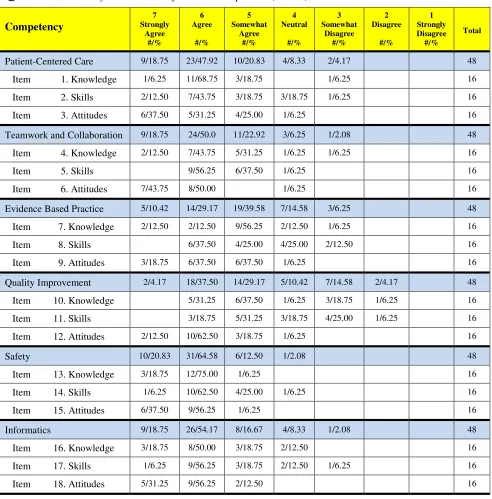
R: NQSSI© -Initial Survey Tables ...104
S: Evidence Based Practice and Quality Improvement Activities ...107
T: Example of EBP Activity - PowerPoint Presentation ...109
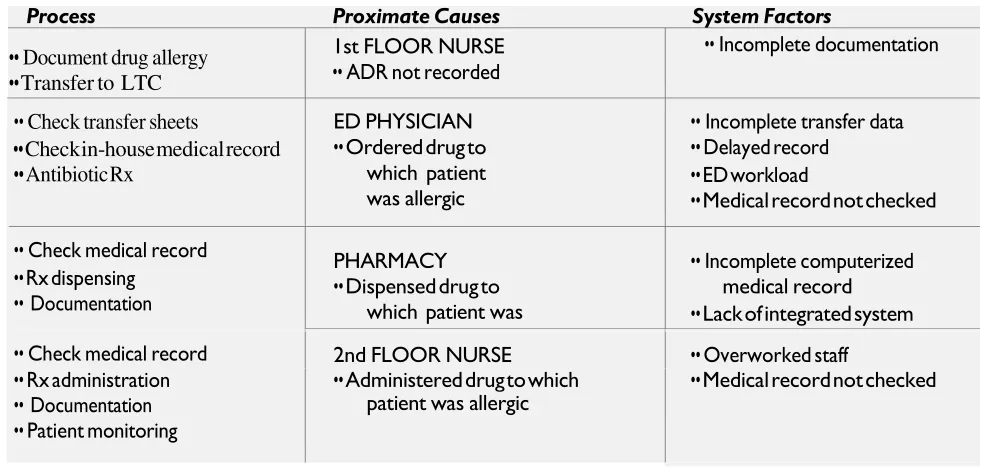
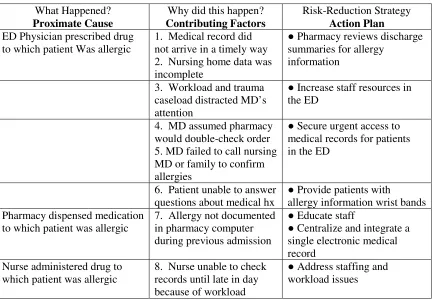
U: Example of Quality Improvement Activity - Root Cause Analysis Basics ...122
V: Example of Quality Improvement Activity - Patient Safety ...126
W: Example of Quality Improvement Activity - RCA/Action Plan Framework ...130
X: NQSSI© -Resurvey Tables ...132
Y: NQSSI© - Survey/Resurvey Comparison Tables ...135
Z: Tucson Medical Center: Course Evaluation ...143
Abstract
This intervention is an evidence based, change of practice, quality improvement project that
evaluates achievement of the six Quality and Safety Education for Nurses (QSEN) competencies
of new registered nurse graduates. No intervention with a similar focus was found in an
extensive review of the literature. The participants included 16 new graduate registered nurse
hires enrolled in a new graduate RN residency program at Tucson Medical Center located in
southern Arizona. The Nursing Quality and Safety Self Inventory© (NQSSI©) was used to
identify practice gaps perceived by the new RN graduates related to the six QSEN competencies.
Once QSEN gaps were identified, the knowledge, attitudes and skills where the greatest gaps
existed were analyzed. The emphasis of this project were two QSEN competency gaps that have
a significant impact on nursing quality and safe practice; evidence based practice and quality
improvement. Evidence based teaching/learning strategies were developed and implemented. A
resurvey of the participants was accomplished using the same NQSSI© survey tool as with the initial survey. Data revealed the new graduate RN scores improved by the largest percentage in
those QSEN competencies where the evidence based teaching/learning interventions had been
focused. Even though a small sample size was involved, the results indicate that the attainment
of QSEN core competencies by new graduate RNs can be accelerated with targeted intervention
and ultimately improve new graduate RN competence and confidence, job satisfaction, retention,
and patient safety and quality patient care.
Key Words: Quality and Safety Education for Nurses, quality improvement, nurse
Narrowing the QSEN Competency Gap in New Graduate Registered Nurses
In this section, the motivation behind the project, evidentiary constructs as well as the
theoretical foundation will be discussed. Portions of this section include background knowledge,
the local problem, intended improvement/purpose of change, review of the evidence and the
conceptual/theoretical framework.
The Institute of Medicine (IOM) has published a series of major reports emphasizing the
need for a comprehensive approach to healthcare reform, including changes in healthcare
professions education. The work of the IOM has significant implications for nursing education
and practice. A direct connection can be made between the IOM’s recommendations to improve
healthcare and the American Nurses Association’s (ANA) Guide to the Code of Ethics for
Nurses: Interpretation and Application (ANA, 2010a), Nursing’s Social Policy Statement: The
Essence of the Profession (ANA 2010b) and Nursing:Scope and Standards of Practice (ANA,
2010c). Uniting the nursing profession’s code of ethics and standards with the IOM’s
recommendations for inculcating quality improvement into the nation’s healthcare system, and
the core competencies required for that improvement, provides a solid foundation on which to
develop nursing professionals (Finkelman & Kenner, 2012). The nursing profession has the
capacity and potential to make far-reaching contributions to the redesign and improvement of
care processes across the healthcare delivery continuum.
This project was an evidence based, change of practice, quality improvement project that
evaluated achievement of the six Quality and Safety Education for Nurses (QSEN) competencies
of new graduate registered nurses. The intervention was conducted from April 8, 2014 through
August 13, 2014. The study group included 16 newly hired graduate registered nurses enrolled in
medical center in located in southern Arizona. The Nursing Quality and Safety Self Inventory© (NQSSI©)was used to identify areas of practice gaps perceived by the new graduate RNs related
to the six QSEN competencies. Within each of the QSEN competencies, the NQSSI©contains an
item to assess the knowledge, skills and attitude (KSA) aspects of that competency.
Once QSEN gaps were identified, the knowledge, skills and attitudes where the greatest
gaps existed were analyzed. The emphasis of this intervention were two QSEN competency gaps
that have a significant impact on nursing quality and safe practice; quality improvement (QI) and
evidence based practice.
The project focuses on (a) examining all relevant literature related to QSEN and
theory-practice gaps, (b) using Malcolm Knowles’ “Adult Learning Theory” and Patricia Benner’s
“Novice to Expert” theory to provide the structure to guide the teaching-learning process for
learner remediation, (c) developing evidenced-based solutions for closing the gaps, (d) revising
TMC’s current new graduate RN residency program to incorporate new evidenced-based
teaching/learning strategies aimed at narrowing the identified QSEN gaps and (e) evaluating the
efficacy of the revised new graduate RN residency program. This project uses the PDSA test
retest method for quality improvement.
Background Knowledge
New graduate registered nurses (RNs) are the primary employment resource for acute
care hospitals. Hospitals employ approximately 83% of recently graduated nurses. Regrettably,
more than 50% of those graduates surveyed responded that they had changed employment or
planned to leave their current position within three years (U. S. Department of Health and
Human Services, 2010). A recent survey conducted by the National Council of State Boards of
79% of RNs younger than age 30 worked in hospitals. This percentage declined with age, where
46% of RNs 55 and older work in hospitals (Budden, Zhong, Moulton and Cimiotti, 2013).
Despite the preparation they receive during their nursing education, new RN graduates
often find the work environment challenging. They are faced with transitioning from a student
nurse to a newly licensed nurse with high performance expectations and an increased level of
accountability. This, coupled with caring for high acuity patients with complex needs and the
exponential growth of technology, has led many new graduates to feel unprepared for the role of
a novice professional nurse. There are limits to the knowledge about improving QSEN core
competencies in new graduate RNs because little research has been conducted about the cause
and effect of interventions aimed at accelerating the attainment of these competencies.
One of the primary objectives of nurse administrators is to develop new graduate RN
residency programs that increase nurse satisfaction and retention, enhance work readiness and
improve patient outcomes while limiting the cost of the program. Nurse leaders seek to find the
most efficient, high-quality yet cost-effective transition support programs available. New
graduate RN residency programs should not be considered a cost, but rather an investment in the
future of the organization (Trepanier, Early, Ulrich and Cherry, 2012).
The setting for this project was a large, locally governed, non-profit medical center
located in southern Arizona, but the care problem which this intervention addresses could occur
at any healthcare organization that hires new graduate RNs. TMC employs 1,200 RNs and hires
approximately 50-60 new graduate RNs per year. These new graduates are products of Associate
Degree Nursing (ADN) programs as well as Bachelor of Science in Nursing (BSN) programs.
healthcare professionals. RNs spend the most direct time with the patients, thus their role in
producing positive health outcomes is critical.
Initiatives by the IOM provided guidelines and direction for improvement in the quality
of healthcare and the education of healthcare professionals in order to improve overall patient
care and safety. As a result of the IOM (2003) report, Health ProfessionsEducation: A Bridge to
Quality, the Robert Wood Johnson Foundation (RWJF) funded a Quality and Safety Education
for Nurses (QSEN) initiative. This initiative identified six core quality and safety competencies
essential for nursing practice: patient-centered care, teamwork and collaboration, evidence based
practice, quality improvement, safety and informatics. According to Smith, Cronenwett and
Sherwood (2007), the six QSEN competencies were developed broadly so as to be foundational
for educational programs, licensure and certification for all registered nurses. The Arizona State
Board of Nursing Nurse Practice Act (2014) requires pre-licensure educational institution
curricula to include didactic and supervised clinical experiences that address the six QSEN
competencies. Recommendations from the IOM reports (1999, 2001, 2003) and the QSEN
Initiative are incorporated in TMC’s Mission, Vision and Values and Nursing Strategic Plan
2014-2016 (see Appendices A and B).
In 2012, the Arizona Action Coalition Education-Practice Collaborative, composed of
nurse educators, clinical practice nurses, and other stakeholders throughout Arizona was formed.
It includes members from TMC as well as the educational institutions that produce nurses that
TMC was hiring. Evidence of TMC’s knowledge of the Arizona Action Coalition's initiatives
and the IOM’s call for transforming nursing education is found in the organization’s 2012
creation of a new graduate RN residency program to assist new graduates’ transition into nursing
The advantage to the local setting was that the project manager and the institution’s
administration had open dialogue and had worked closely together for the previous seven years
addressing numerous educational and practice issues. This collaborative relationship facilitated
DNP Comprehensive Project approval, support and execution at TMC.
Local Problem
New graduate RN residency programs that address the new graduates’ transition into
practice vary widely from institution to institution. Many of these programs have been developed
internally over a period of years, while other organizations utilize expensive, industry-developed
new graduate RN residency programs. After review of the acute care facilities’ new graduate RN
residency programs in southern Arizona, there were no facilities that evaluated the new graduate
RN hire to determine the achievement level of the six QSEN competencies.
TMC, as with most healthcare organizations, faces its stiffest challenges from tight
hospital budgets, limited resources, the necessity to reduce costs and the demand for improved
patient outcomes. Over the past three years (2011- 2013), TMC experienced an average of 3,600
Patient Safety Events reported by RNs per year (G. O’Neill, personal communication, September
17, 2014). A Patient Safety Event is defined by the organization as an event or circumstance that
is not in keeping with the routine, normal operations of the hospital, or routine patient care which
results in a loss or damage to property, or personal injury. Patient Safety Events are untoward,
undesirable and usually unanticipated events. While these events range in severity and the level
of internal investigation they receive, every event has a resource impact on the hospital and
patient care. Evidence supports that effective transition-to-practice programs can lower the
incidence of practice errors and enhance positive patient outcomes (Elfering, Semmer and
Act (2010), healthcare organizations are under continuous scrutiny and evaluation to improve the
quality of patient care, reduce readmissions and increase operating efficiencies.
Today’s healthcare environment is complex and demands that the registered nurse be
competent, confident, think critically and deliver safe care when caring for patients and families
in multiple care settings. Pre-licensure nursing education alone cannot meet the requirements of
the newly licensed nurse as they transition into the professional role. An assumption of the
American Organization of Nurse Executives (AONE), Guiding Principles For the Newly
Licensed Nurse’s Transition Into Practice (2010)states “an expected gap exists between
knowledge, skills and perceptions of the newly licensed nurse and those required of a competent
registered nurse” (p. 1). The AONE goes on to recommend that “A structured transition into
practice occur in all settings and for all levels of academic preparation. A continuous focus on
evidence-based techniques and outcomes that foster patient safety and quality is evident
throughout the transition process” (p. 2). It is the responsibility of the nursing profession, along
with healthcare organizations, to develop a learning and supportive environment that will place
the new graduate RN in a position for success.
Healthcare facilities that hire new graduate RNs cannot afford to neglect the QSEN
competencies and the role the organization plays in enhancing those essential competencies to
ensure successful transition into practice. Attrition of dissatisfied registered nurses can have a
considerable financial impact on an organization. According to the Arizona Nurses Association
(2009), the cost of hiring and orienting a new graduate nurse is estimated to be between $42,000
and $64,000. The Associate Administrator of Clinical Practice at TMC stated that the cost of
replacing an RN is $85,000.00, which includes recruitment, marketing and a 12-month new
Identifying QSEN practice gaps in new graduate RN hires and modifying nurse residency
programs to address these gaps will preparenewnurses with the knowledge, skills and attitudes
to continuously improve the quality and safety of the healthcare systems in which they work.
A new graduate hire can more quickly assimilate into the full role of the professional
registered nurse if during their new graduate RN residency program they are afforded
opportunities to internalize the knowledge, skills and attitudes of the QSEN competencies. Well
planned, specific new graduate RN residency program revisions that are grounded in evidence
may effectively narrow the identified QSEN practice gaps. The risks associated with allowing
these practice gaps to persist could jeopardize patient safety and facility reputation, increase
hospital costs, cause the facility to incur expensive reimbursement sanctions and result in
increased attrition of new graduate RN employees.
Intended Improvement/Purpose of Change
It is internationally recognized that evidence based practice (EBP) is the key to delivering
the highest quality of healthcare and ensuring the best patient outcomes. EBP is a
problem-solving approach to clinical practice that integrates the conscientious use of best practice in
combination with a clinician’s expertise, as well as patient preferences and values, to make
decisions about the type of care that is provided (Melnyk & Fineout-Overholt, 2011).
The first step in the search for best evidence for this project was to establish the following
PICOT question:
Population = New graduate RNs enrolled in a new graduate RN residency program.
Issue of Interest = Using evidence based teaching/learning strategies to enhance QSEN
competencies.
Outcome = Increased new graduate RN competence and confidence → improved
patient outcomes and increased new graduate RN retention (staying
more than 1 year after hire).
Time = After 6 months of interventions, it will be determined if QSEN
competencies were improved. Nurse retention and improved patient
outcomes will take an additional 1-5 years to measure desired
outcomes.
AIM statement.
This quality improvement test of change project will redesign TMC’s current new
graduate RN residency program to target and remediate identified QSEN competency
deficiencies in new graduate RN hires. The ultimate goal is to facilitate new graduate registered
nurses’ assimilation into the professional nursing role at TMC through the elimination of
identified QSEN competency gaps in order to reduce new nurse attrition, costly practice errors
and poor patient satisfaction. This goal will be accomplished by raising NQSSI© mean scores of
QSEN competencies from the pre-intervention levels through focused, evidence based
teaching/learning strategies. It is expected that improvement of NQSSI© scores will occur within the first 6 months of the new hire RNs entering TMC’s new graduate RN residency program.
TMC will know if it has achieved improvement by monitoring the following measure within its
population of new graduate RNs:
- At the six month point of the new graduate RN residency program, achieve at least a
10% improvement in NQSSI© resurveymean scores (post intervention) above the initial NQSSI© survey scores in the targeted QSEN competencies.
10% improvement in NQSSI© mean scores (post-intervention) above the initial NQSSI© survey scores in the individual knowledge and skills items of the targeted QSEN
competencies.
Review of the Evidence
While recent investigations of best practices to transition new graduate RNs into their
professional practice roles have been published, research studies that measured and analyzed the
achievement of QSEN competencies in new graduate RNs were not found in the literature.
Available evidence to support the project was found in the literature that examined
institutional/professional recognition of a lack of new graduate readiness, the need for redesign
of health education programs to narrow education-practice gaps, the development of QSEN
competencies, factors that affect pre-licensure attainment of nursing competencies, best practices
for supporting new graduate nurses and the institutional benefits of effective new graduate
residency programs (see Appendix C).
Discussion is on-going about the readiness of new graduates for practice, notwithstanding
noteworthy advancements in the pre-licensure preparation for nurses (Wolff, Regan, Pesut and
Black, 2010). The healthcare environment today is complex and requires nurses to think
critically, work collaboratively, be technologically astute and practice effectively and efficiently.
Pre-licensure education alone cannot meet the demands for the new graduate RN to be competent
and confident as they transition into the role of the professional nurse. It then follows that the
nursing profession and the organization must put strategies into practice that establish a
continuing educational structure and an environment conducive to professional growth for the
they have neither the competence nor confidence to safely deliver patient care in a high-acuity,
fast-paced environment (Duchscher, 2008; Romyn et al., 2009).
According to Benner, Sutphen, Leonard and Day (2010), a significant gap exists between
today’s nursing practice and the education for that practice. A major concern expressed by
healthcare facilities regarding recruitment and retention has been new graduate nurses’ transition
into practice. Evidence of theory-practice gaps has been cited as a recurring issue (Maben, Latter
and Clark, 2006). According to research conducted by the Nursing Executive Center (2008),
nearly 90% of academic leaders expressed full confidence in their graduates’ ability to provide
safe and effective care compared to just 10% satisfaction by hospital and health system nurse
executives. Studies of practice competence show that a marked and problematic developmental
lag exists between being a nursing student and entering the workplace as a safe and competent
nurse (Wolff, Pesut & Regan, 2010). This developmental lag can result in a high rate of new
nurse attrition, practice errors and poor patient satisfaction. Attrition of dissatisfied registered
nurses can have a considerable financial impact on an organization. Studies have found that new
graduate RNs are more likely to leave their jobs than experienced nurses and between 13% to
75% of newly licensed RNs had changed principal jobs after one year (Kovner et al., 2007;
Trepanier et al., 2012; Welding, 2011). TMC in southern Arizona currently has an 11% turnover
rate of new RN hires (P. MacMacken, personal communication, September 10, 2014). The
hospital instituted a new graduate RN residency program in 2012.
Recognition of education-practice gaps demands that there be a redesign of health
education programs with the goal of eliminating these gaps. High new graduate RN turnover
rates and the ineffective process of assimilating newly licensed RNs into practice are cited in two
Foundation for the Advancement of Teaching, a complete revision of nursing curriculum that
addresses professional readiness of new graduate RNs is prescribed (Benner et al., 2010). In that
same year, The Institute of Medicine (2010), recommended that nursing education, practice and
programs that assimilate new graduate RNs into practice be fundamentally revised. The focus of
this author’s project was specifically on the redesign of a current new graduate RN residency
program at a large acute care facility; it did not address possible revision to pre-licensure
educational programs.
Recent studies have shown that the cost of teaching and orienting a new graduate nurse to
be competent in one year is estimated to be between $42,000 and $97,000 (Arizona Nurses
Association, 2009; Arnold, 2012; Pittman, Herrera, Bass and Thompson, 2013). The
consequence of practice errors can be multi-million dollar lawsuits, economic sanctions from the
Centers for Medicare and Medicaid Services (CMS) and loss of hospital reputation. According to
Landrigan, Parry, Bones, Goldman, and Sharek (2010), preventable medication errors cost the
U.S. approximately $17 billion each year. With the implementation of the Patient Protection and
Affordable Care Act of 2010, patient satisfaction became a metric for measuring hospital quality
performance. An outcome of poor patient satisfaction could be a significant funding loss. The
Institute of Medicine (2003) report on errors and system failures has called for formalized quality
improvement and safety education within all healthcare disciplines. Since 2005, healthcare
organizations that receive federal funding are now required to publically report patient outcome
metrics that measure quality of care performance (Agency for Healthcare Research and Quality,
2012). Given the national concern about shortcomings of the healthcare systems in the U.S.,
some methods and metrics were needed to quantify these shortcomings and in so doing, offer a
Over a 5-year period the Institute of Medicine (IOM) released four seminal reports that
have become defining publications for developing and improving healthcare systems and the
healthcare professional for the 21st century. The IOM (1999) released a report titled, To Err is
Human: Building a Safer Health System. This report was the first to present evidence on the
depth and breadth of quality and safety issues in hospitals across the nation. Two years later the
IOM (2001) published another report titled, Crossing the Quality Chasm: A New Health System
for the 21st Century. This report called for sweeping reform of the American healthcare system to
assure that patient care is safe, timely, effective, efficient, equitable and patient-centered. The
IOM (2003) released a third report titled, Health Professions Education: A Bridge to Quality. In
this report, education was deemed the bridge to quality. Five competencies were identified as
essential for healthcare professionals: patient-centered care, teamwork and collaboration,
evidence based practice, quality improvement (and safety) and informatics. Two years later, the
IOM (2004) published, Keeping Patients Safe: Transforming the Work Environment of Nurses.
This report linked patient safety to nurses and their work environment. The findings clearly
establish the connection between the nurses’ role in patient care quality and safety. A repeated
theme in the IOM reports is an emphasis on the need for improved instruction of healthcare
professionals related to safety and quality improvement (Barton, Armstrong, Preheim, Gelmon,
and Andrus, 2009).
Following the release of the 2003 IOM report, the Robert Wood Johnson Foundation
(RWJF) funded a grant in 2005 that established the Quality and Safety Education for Nurses
(QSEN) initiative. The initiative was launched to “put meat” on the skeleton of the competency
definitions outlined in the 2003 IOM report and to bridge the gap between formal nursing
et al., 2007). The KSAs outlined in the QSEN initiative included the competency definitions of
patient-centered care, teamwork and collaboration, evidence based practice, quality
improvement, safety and informatics (QSEN Institute, Pre-Licensure KSAs, 2014). These six
competencies should be fundamental and integrated into formal, pre-licensure education
(Cronenwett et al., 2007).
Results of the QSEN initiative stimulated changes in educational standards and have been
integrated with national credentialing standards for advanced practice nurses. The project
outcomes are responsible for revisions in formal nursing education and practice settings and have
contributed to focusing nurses’ efforts to improve patient care (Sherwood, 2011). The QSEN
competencies are recognized nationally as a standard for safe nursing care by educational
institutions, nursing practice, state regulatory boards and national accrediting agencies. For this
reason, the author chose the QSEN competencies and their related KSAs for the TMC project.
Though QSEN competencies have been well documented in nursing education and
nursing practice literature since 2007, there are many factors that affect new graduate RN
attainment of these six essential competencies. A survey of 595 graduating students reported that
quality and safety knowledge and skills were included in their nursing curriculum, although there
were marked differences in their level of coverage (Sherwood, 2011). A national Delphi with 18
participants was conducted to determine whether there was consensus on the developmental
progression of the QSEN KSAs within the curriculum. The participants validated the need for
the development of curricular threads to guide students’ sequential attainment of the QSEN
competencies (Barton et al., 2009). Other studies found gaps between faculty beliefs and current
practice regarding the inclusion of QSEN competencies in nursing curricula (Sullivan, Hirst and
the areas of informatics, quality improvement and evidence based practice was limited.
According to Ironside (2009), the majority of faculty are in agreement on the critical need to
include QSEN competencies in nursing education, but revising complex nursing curriculum can
be over-whelming and labor intensive. These widespread faculty perspectives and a lack of
standardized pre-licensure curricula that integrate and stress the QSEN competencies throughout
the program predispose the new graduate RN to arrive unprepared to perform at a safe and
competent level.
Turning from the concerns about the QSEN competency deficiencies that have been
attributed to formal pre-licensure nursing education, the literature identifies strategies, in the
form of new graduate residency programs, to remediate and strengthen nursing core
competencies. These strategies result in measurable benefits to patients, the new graduates and
the healthcare organization.
There are numerous new graduate RN orientation programs that vary widely in their
duration, focus and depth. Bevelacque (2012) summarized the difference between the traditional
8-16 week programs and the 12-18 month residency programs. Traditional nurse orientation
programs focus on the speed of transition, not the quality, and are constrained by cost. The new
graduate residency programs emphasize improving work readiness and nurse confidence by
presenting evidence based didactic content with case studies, peer support opportunities,
mentored clinical immersion and long-term organizational support (Kowalski & Cross, 2010;
Rush, Adamack, Gordon, Lilly and Janke, 2012).
In a study done by the Carnegie Foundation for the Advancement of Teaching, the
authors recommend a 12-month residency program that targets a single area of clinical
2010). Furthermore, the IOM (2010) report titled, The Future of Nursing: Leading Change,
Advancing Health recommended the widespread adoption of nurse residency programs. NCSBN
has authored an evidenced based Transition to Practice Model. The goal of this program is to
promote patient safety by supporting newly licensed nurses during their critical entry period and
progression into practice (NCSBN, 2008). The NCSBN expressed the hope that the Transition to
Practice Model becomes a regulatory requirement nationwide.
In the review of literature, there is preponderance of studies that promote a 12-month
new graduate residency programs that include a comprehensive support system for the new
nurse. According to a 2011 study conducted by Pittman et al. (2013), only 36.9% of the 214
participating hospitals offered residency programs. Healthcare organizations are challenged to
develop an effective, efficient new graduate residency programs that maximize the new nurses’
potential while improving the safety and quality of patient care. Although nurse residency
programs are admittedly expensive, there are many benefits for the patients, new nurses and the
organization.
Evidence shows that when nurses lack familiarity with their patients, there is an increased
incidence of errors or near misses (NCSBN, 2009). Conversely, well-developed transition
programs reduce practice errors and enhance patient outcomes (Elfering et al., 2006; NCSBN,
2007).
The benefit of new graduate residency programs to the new nurse is a marked increase in
competence, confidence and retention which will lead to increased quality of patient care (Park
& Jones, 2010; Trepanier et al., 2012; Ulrich et al., 2010). According to Phillips, Kenny,
Esterman and Smith (2013), a new graduate residency program enhances job satisfaction and is a
The benefits of offering a new graduate residency program to the healthcare organization
involve patient safety and cost containment. The current healthcare reform in the U.S. is centered
on improving patient outcomes. Healthcare errors cost the system between $17B and $29B each
year (Sherwood & Barnsteiner, 2012). As mentioned earlier, the cost to the organization when a
new nurse leaves can reach up to $97,000 per nurse. In a study conducted by Trepanier et al.
(2012), a new graduate residency program was associated with a decrease in 12-month turnover
rate from 38.1% to 6.4%. Organizations that have new graduate residency programs have higher
new graduate nurse retention and recruitment.
Concepts/Theoretical Framework
Teaching and learning are dynamic and complex processes. In the nursing profession
there has been a paradigm shift away from the emphasis on teacher and teaching to learner and
learning. Bevis (1989) defined teaching as an art and science in which the content is structured
and the processes used enable student learning. Learning is considered a relatively permanent
change in a person that has been caused by experience (Slavin, 1988). Learning occurs when an
individual’s behavior, knowledge and attitudes change as a result of experiences. In the learning
paradigm, the teaching-learning process is a personal interactive relationship that extends beyond
the subject matter (Billings & Halstead, 2009). The roles of the teacher are that of facilitator,
guide, coach and mentor working in partnership with the students.
The reason for the change in the role of the educator is a change in the majority of
students of today. A great deal of research describes the phenomenon of millennial learners.
Chambers, Milton and Leaf (2009) state that the millennial generation, also known as Generation
Y, were those born between 1980 and 2000. Millennials not only have a high aptitude for
group-oriented optimists. Traditional, teacher-centered lecture methods are not effective on these
millennial learners. Raised with and immersed in technology, millennial learners require active,
student-centered teaching methods to keep them engaged in the class, improve comprehension
and retention and show them and their instructors their level of understanding. Chambers et al.
(2009) contend that this group has indicated a significant interest in nursing as a career.
The millennial learners’ tendency to multi-task, be tied to electronics and the requirement
to receive almost instantaneous feedback often confounds and frustrates educators and
challenges traditional methods of teaching. Multitasking often results in their having difficulty
staying focused on one activity. Pardue and Morgan (2008) noted that millennial learners prefer
active, participatory activities as opposed to lectures or other instructor-centered methods that are
still widely used today. Meedzan and Fisher (2009) reported that learners in a passive teaching
environment can only maintain attention on a lecturer for 10-18 minutes. Pardue and Morgan’s
(2008) research showed that, given the correct environment, millennial learners were often
willing to accept established rules and authority in a classroom which gave them the structure in
which they were brought up but which they themselves have not yet developed on their own.
Millennial learners see educators best as facilitating their learning and not just imparting
knowledge, which does not mirror current traditional higher education pedagogies. Cain, Black
and Rohr (2009) found that educators were reporting that numerous students, very early in their
courses, were not understanding much of the lecture content that was being delivered through
projected slides accompanied by printed PowerPoint handouts. The students became lost in the
details and were not able to capture the big picture. Eventually student attendance decreased by
rather than working on their own and they are not comfortable with open, direct criticism or class
confrontation with faculty.
Learning theories and conceptual frameworks/philosophies provide the structure that
guides the teaching-learning process. As nursing education shifts the emphasis from teaching to
learning, educational theories must be used to develop and enhance the faculty-facilitated
learning environment (Barr & Tagg, 1995). A combination of theories can be used to derive
teaching strategies and develop curriculum that employ sound theories and clear rationale.
Malcolm S. Knowles’ Adult Education Theory and Patricia Benner’s Novice to Expert
Nurses Theory were utilized to provide structure that guided the improvement of
faculty-centered instructional strategies and student-faculty-centered learning activities for the project. A brief
description of the selected learning theories, a discussion of how these two educational theories
support the project, how the two theories interrelate and how these theories will guide
implementation and evaluation of the project will be presented.
Description of Malcolm S. Knowles Adult Learning Theory.
Andragogy is the term used to refer to the education of adults, whereas pedagogy is the
term used for the education of children. Knowles (1988) defined andragogy as the “art and
science of helping adults learn”. The author goes on to use these terms as he distinguishes the
different types of teaching and learning characteristics of the Adult Learning Theory.
As learners mature, their motivation for learning changes. According to Knowles, Holton
and Swanson (2011), there are six critical assumptions of Adult Learning Theory whose learner
characteristics change from child to adult. The following are the six assumptions of adult
learners: (a) adult learners need a reason for learning something before they begin, (b) adult
resist learning that is imposed on them, (c) adult learners bring a large quantity and quality of life
experience into the learning activity, (d) adult learners enter the learning activity ready to learn
new knowledge to solve real-life problems, (e) adult learners better acquire knowledge that is
contextualized to their life experiences and situations, and (f) adult learners are more highly
motivated to learn by internal pressures rather than external pressures.
Description of Patricia Benner’s From Novice to Expert Nurses Theory.
The complexity and accountability of nursing practice today requires life-long
professional learning. This demands acknowledgement that throughout careers, nurse learners
are at different levels ranging from novice to expert. Dr. Benner adapted the five-stage Dreyfus
model of Directed Skill Acquisition (Dreyfus & Dreyfus, 1980) to the acquisition of nursing
skills. A recognition of the different levels of nursing expertise gives rise to the need to develop
specific educational programs to address the needs of learners at each skill level.
Benner (1982, 1984) identified five levels of competency: (a) novice - beginner with no
experience. Actions are uncontextualized and the nurse is purely task oriented and guided solely
by rules, (b) advanced beginner - performs at a marginally acceptable level. Limited experience
provides recognition of recurring meaningful guide to actions, (c) competent - two to three years
of experience in the same job or same area with similar situations. Becoming aware of long-term
patient goals and increasingly able to achieve greater efficiency, (d) proficient - has a global
perspective of situations, which improves decision making. Anticipates situations and has ability
to respond to changing conditions, and (e) expert - rather than relying on principles and rules,
background and experience provides an intuitive grasp of dynamic situations. Benner (1984) also
Theprojectexplored a student-centered learning approach to nursing education utilizing
the works of Malcolm Knowles and Patricia Benner as theoretical guides. In the early phases of
the innovation project, when all of the subjects are new graduate registered nurse hires, all
learners will be at Benner’s novice level. Activities will be designed to build knowledge and
experience in the QSEN competency areas identified as deficient on the NQSSI©. The goal of a
new graduate RN residency program is to facilitate the assimilation of the new graduate into the
professional role of an RN and move them from Benner’s “novice” level” to the “advanced
beginner” level of competency. The learning environment will integrate Knowles’ six
characteristics of adult learners and Knowles’ Adult Teaching and Learning Principles (see
Appendix E). Knowles’ and Benner’s theories interrelate in a number of ways. Both recognize
differences in learners and the need to tailor the student-centered learning arena, the learning
content, teaching styles and attitudes and evaluation methods to meet the needs of the adult
learners. Activities used in the learning environment take into account the characteristics of adult
learners to improve the effectiveness of the innovation and evaluation processes.
Methods
In this section, the project’s methods will be discussed. Portions of this section include
ethical issues, setting, planning the intervention, implementation of the project, planning the
study of the intervention, methods of evaluation and analyses.
Ethical Issues
The Plan-Do-Study-Act (PDSA) project was initiated by the author to complete a DNP
academic requirement. The NQSSI© survey used to collect new graduate RN data was developed so that student anonymity was maintained. Participants were instructed to complete the pre and
hospital contained no identifiable participant information. The TMC PDSA project was
conducted in such a way that the participants’ well-being was not at risk. The project was
approved as a quality improvement project by the DNP Department Faculty on March 24, 2014
(see Appendix F).
At no time did the project manager (author) have financial or employment interests or
concerns that could have influenced the conduct or the outcomes of the project. While the TMC
project was conducted as an academic endeavor, there were many professional and
organizational ethical aspects motivating the project manager to complete this particular project.
According to the latest Gallup Poll (Gallup, 2013), the nursing profession is ranked, once
again, as the most honest and ethical profession out of 22 listed professions. Although highest on
the list of honest and ethical professions, nursing still faces a multitude of ethical challenges in
the midst of a complex healthcare environment.
Beauchamp and Childress (2001)have proposed four principles that can assist policy
makers to clearly describe the organization’s moral values relevant to clinical ethics. These four
principles of moral concern when considering an ethical problem are, autonomy (independent
actions-choices should not be constrained), non-maleficence (do no harm), beneficence (doing
good), and distributive justice (benefits and burdens are equally distributed).
In considering these four principles, Winkler (2005), proposes four roles that policy
makers should satisfy. These roles include: to care with compassion, to treat employees with
respect, to act in a community spirit, and to allocate resources responsibly.
In analysis, one realizes that an evaluation of the ethics of an action may depend upon
where you are in a community or organizational structure. Ethics can be situation or organization
political and social pressures. Membership in an organization often requires that the right thing
to do is what the organization says is right thing to do. According to Grace (2014), the goals of
healthcare professionals are beneficent. They are inherently for the patients’ good, and more
broadly to further societal health. Beneficence underlies all of the actions of the professional
while engaging in role-related activity.
Grace (2014) notes that healthcare professional-patient relationships are based on trust.
Recognition of the trust nature of the practice relationship requires the nurse to reflect on daily
practice in an ongoing manner to avoid becoming numb to recurrent, challenging policies that
not only may fail to achieve the best positive outcomes but may even result in damage or injury
to the patients. A major professional responsibility of nursing leadership is to address immediate
practice concerns in addition to the more entrenched organizational or societal barriers to
practice.
The alternative path for nursing leadership is something that Grace (2014) describes as
happening at increasing rates. Nurses are leaving the profession because of what they feel is
blindness to unethical nursing practice and searching for organizations that ascribe to the
principles fundamental to healthcare professionals.
Setting
TMC was selected because it is one of the largest medical centers in southern Arizona
with a recurring large pool of new graduate RN hires and a 12-month, new graduate RN
residency program. TMC is staffed with nearly 1,200 experienced (more than 2 years of nursing
practice) registered nurses. Nursing leadership anticipates that many of these nurses will be
economic conditions in the area. These nurses will be taking their knowledge and experience
with them, leaving vacancies to be filled by inexperienced, new graduate RNs.
TMC is a stand-alone hospital licensed for 607 adult, pediatric and hospice beds. It has
been licensed for 70 years. The hospital is a locally governed, non-profit system. The corporate
entity includes TMC and Saguaro Physicians. The hospital serves approximately 30,000
inpatients, 122,000 outpatients and 6,000 births annually. The medical staff is largely
independent physicians with offices within the community. The hospital has had an operating
income for 7 consecutive years that has provided stability, new opportunities and new strategies.
TMC has identified its “True North”. Much like a compass, the hospital’s True North guides the
organization and maintains a focus on keeping the hospital stable. TMC’s four True Norths are
(a) patient experience, (b) quality and safety, (c) profitability and (d) people. The hospital is
governed by a 13-member Board of Trustees that care and contribute (Tucson Medical Center,
2014).
The hospitals’ habits and traditions stem from their subscribing to the “Lean”
management principles. These principles include: eliminate waste (eliminating non value-added
activities, keeping inventory low and embracing technology), value employees (develop people)
and improve continually (focus on root causes) (Becker’s Hospital Review, n.d.).
The hospital has a well-staffed, well-equipped and well-funded Nursing Education
Department. In 2012, the nursing education staff redesigned their new hire nursing orientation
program from a traditional 16-week model to a 12-month, new graduate RN residency model.
There is an organizational priority to promote evidence based practice, patient safety,
professionalism, nursing excellence and life-long learning that is reflected in the hospital’s
A and B). The hospital’s president and chief executive officer is a registered nurse. The
organization partners with several local pre-licensure nursing programs providing scholarships
for their employees to advance in the nursing profession.
The nursing education staff and hospital nursing executives were intimately familiar with
the six QSEN competencies, offered their complete support of the project, were actively
involved in the project process and enthusiastically anticipated the project outcomes. Hospital
administration was committed to supporting the project, implementing recommended evidence
based changes to the new graduate RN residency program curriculum and sustaining the project
as an iterative means of assuring continuous quality improvement (see Appendix G). TMC also
gave permission to use its name in the project report (see Appendix H).
Planning the Intervention
The project plan is based on the test of change technique of a Plan-Do-Study-Act (PDSA)
cycle (Shomaker, 2009). The PDSA cycle can be used when developing or improving design of a
process, product or service. The PDSA cycleconsists of four steps (see Appendix I). These four
PDSA steps will be discussed in detail in the appropriate sections of this paper. In this section,
the “plan” step is presented.
The “Plan” step recognizes opportunities and plans a change.The TMC project
opportunity is to facilitate new graduate registered nurses’ assimilation into the professional
nursing role at TMC through the elimination of identified QSEN competency gaps in order to
reduce new nurse attrition, costly practice errors, negative patient outcomes and poor patient
satisfaction. Having thoroughly researched the literature and identified two theoretical
frameworks for the project, the project manager met with the Director of Nursing to explain the
approval to conduct the project (see Appendix G). Strong and on-going support by the hospital
leadership provided institutional emphasis that afforded the project manager the essential
resources and access to staff personnel and new graduate RN employees.
This study was an evidence based, change of practice, quality improvement project that
evaluated achievement of the six QSEN competencies of new graduate registered nurses. The
project included a study group of 16 newly graduated registered nurse hires enrolled in a new
graduate RN residency program at TMC, TMC’s nursing education staff, hospital executives and
project manager (the author).
The Nursing Quality and Safety Self Inventory© (NQSSI©) was selected to identify areas of practice gaps perceived by the new graduate RNs related to the six QSEN competencies (see
Appendix J). The NQSSI© tool was chosen following an extensive review of the literature and a telephone conversation with a member of the QSEN Initiative staff. Although the NQSSI© was originally developed to be administered to pre-licensure nursing students, it was considered the
best measurement tool because these new graduate RNs had just completed their pre-licensure
education programs and had not yet practiced as an RN.
The project manager, in collaboration with the other QI Committee members, chose the
NQSSI© because it was a valid and reliable method to quantitatively assess QSEN competency in newly graduated RN hires. Permission to utilize the tool was requested from and granted by the
creators of the NQSSI© (see Appendix K).
Oral instructions and a written instruction packet that gave the definitions for each of the
six QSEN competencies and their respective KSAs were included during survey administration
cohort of the new graduate RN residency program at TMC to complete the NQSSI© survey at a meeting with the project manager at the beginning of their new graduate RN residency program.
The project manager would collect the completed surveys and compile and analyze the
data to determine which QSEN competencies had the lowest scores on the survey. The two
competencies with the lowest scores would be the focus of the project’s evidence based practice
teaching/learning interventions. The teaching/learning interventions were planned to take place
at the scheduled monthly meetings of the new graduate RN residency program. At the end of the
final teaching/learning intervention session, the project manager would re-administer the
NQSSI© survey and compile and analyze the results. Based on the results of the re-survey, the project manager would meet with the QI Committee to discuss what further interventions, if any,
should be considered. If the results were satisfactory, the revised new graduate RN residency
program curriculum that included new evidence based teaching/learning strategies would be
applied permanently to ensure institutionalization of these quality improvements. The
sustainability aspect envisioned this process being accomplished with each subsequent new
graduate RN cohort.
No project should be started without first determining whether the benefits to the
institution outweigh the costs. A cost-benefit analysis (CBA) is critical to any project and is one
method used to determine the advantages and disadvantages of decisions (Finkler, Jones and
Kovner, 2013). A (CBA) is a systematic process that calculates and compares the benefits and
costs of a project, providing a basis for the comparison of projects and an overall determination
Options presented in the decision brief contain cost-benefit information so that the
organization understands the impact and the potential costs of choosing one option over the
other, or developing a hybrid of the two options. Below are the two options for this project:
Option #1- Make no change in the current new graduate RN residency programs to close
QSEN competency practice gaps at healthcare facilities. Poor job satisfaction, high attrition and
a lack of work readiness will continue among new graduate RN hires. Costly medication and
safety errors will remain or possible worsen. Patient satisfaction and hospital reputation will
continue to decrease, which could result in a loss of patient census and revenue.
Option #2 - The preferred solution. Implement proposed solution to close the QSEN gaps
identified by the NQSSI© survey administered to new graduate RNs in the healthcare facility’s
new graduate RN residency programs. Accelerate new RN graduates’ transition into practice
through the internalization of QSEN KSAs by utilizing a revised teaching/learning curriculum
that targets the specific QSEN deficiencies. Re-survey new graduate RNs at the completion of
the revised curriculum to ensure QSEN gap reduction. Evaluate and revise curriculum as needed
for continuous quality improvement. Promote reduced new graduate RN attrition, reduced
practice errors and reduced patient dissatisfaction as a result of more competent and confident
RNs.
The costs of this project were minimal to the institution. All costs to the organization
were already included in the allocated resources for the hospital’s new graduate RN residency
program. The project manager incurred a number of non-remunerated costs related to hours
invested in research, design of evidence based interventions, intervention delivery time, survey
the project manager included administrative costs, secretarial support, office supplies, class
materials, food for participants, transportation and miscellaneous costs (see Appendix M).
As a result of the project’s intervention, TMC experienced (a) an analysis of the
organization’s new registered nurse employees’ QSEN core competencies, (b) evidenced based
revisions to current new graduate RN residency program, and (c) reduced QSEN gaps in the core
nursing competencies of their new graduate RN employees. Tangible benefits to the organization
stem from the above intervention centering around a core of new graduate RNs that are now
more competent and confident. There is a plethora of evidence that supports efforts to make
nurses more competent and confident. These improvement initiatives lead to: increased new
graduate retention, work readiness and job satisfaction; reduced errors; enhanced patient safety
and quality of care and improved patient satisfaction (Elfering et al., 2006; Kowalski & Cross,
2010; Park & Jones, 2010; Phillips et al., 2013; Rush et al., 2012; Trepanier et al., 2012; Urlich
et al., 2010; Wolff et al., 2010).
Inevitably, estimates of a project’s benefit are subjective, and there is always a degree of
uncertainty associated with the anticipated revenue increase. The revenue that might be
generated by this project can be very hard to predict and the value that people place on tangible
benefits can be very subjective. The following assumptions were made by the project manager
in order to have a means of describing benefits to the organization:
1. As a result of the intervention, at least one new graduate RN will decide to remain
with TMC beyond their first year of employment. In a study conducted by Trepanier et al.
(2012), a new graduate residency program was associated with a decrease in 12-month turnover
rate from 38.1% to 6.4%. TMC’s current RN turnover rate of new graduate RN hires is 11%. If
benefit would be a savings of $85,000 (P. MacMacken, personal communication, September 10,
2014).
2. According to the IOM report (2007), Preventing Medication Errors: A Quality Chasm
Series, each adverse drug event, in 2006 dollars, cost healthcare institutions $5,857.00. An
increase in competence, confidence and retention will lead to increased quality of care (Park &
Jones, 2010; Trepanier et al., 2012; Ulrich et al., 2010). If the hospital experiences two fewer
adverse drug events related to improved nurse competence, the benefit would be a savings of
$11,714.
3. To determine if the project is financially worthwhile, a discounted cash flow model
called net present value (NPV) was used. A bank discount rate (DR) of 10%/year was used to
determine profitability. The project earned a positive NPV (8.24) because its earnings were
greater than the costs of the project plus the 10% DR. Therefore, the project’s financial benefits
to the institution easily outweigh its costs of $11,734.25 (See Appendix N).
To understand the process of any project, a Responsibility Matrix and a project
Communication Plan are often helpful. The Responsibility Matrix lists all of the major activities
of the project and describes the responsibilities and authorities of the project participants
(Larson, & Grey, 2011). The Responsibility Matrix for this project was reviewed and agreed
upon by the QI Committee before any project activities occurred (see Appendix O).
In order to keep all project participants informed in a timely manner, the project manager
developed a Project Communication Plan. This Project Communication Plan was developed
early in the planning phase of the project. The plan identified the different types of
communications, the frequency of the communications and the appropriate recipients (see
Appendix P).
Implementation of the Project
The “Do” component of PDSA is designed to test the proposed change on a small scale.
The project initiated its first PDSA cycle in April, 2014 with a cohort of 16 new graduate RNs
who had just begun their new graduate RN residency program. Prior to meeting with the cohort
of new graduate RNs, a QI Committee was formed. This committee was composed of the
hospital’s Associate Administrator of Clinical Practice, two registered nurses from the Nursing
Education Department and the project manager. Several meetings were held to discuss the
conduct of the project, roles and responsibilities of the committee members, a timeline for
completion of the project and project deliverables (see Appendix Q, Table 1).
The project completed the following activities previously identified by the QI
Committee: (a) using the NQSSI©, evaluated the new graduate RN hires currently enrolled in
new graduate RN residency program to determine QSEN competency gaps. Students were given
oral and written instructions prior to completing the survey. The responses to the survey were
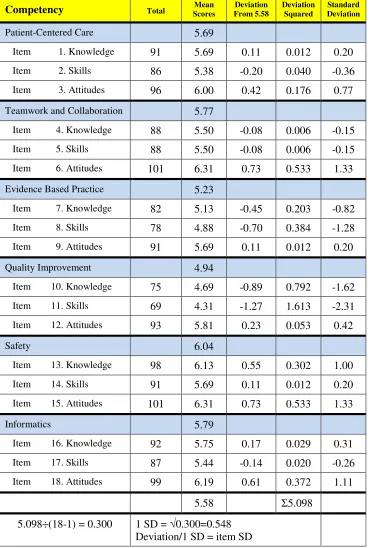
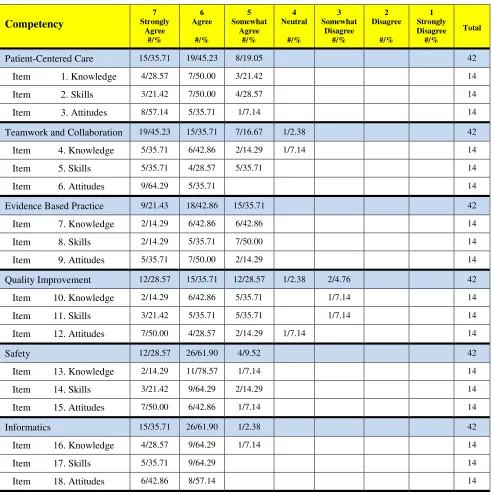
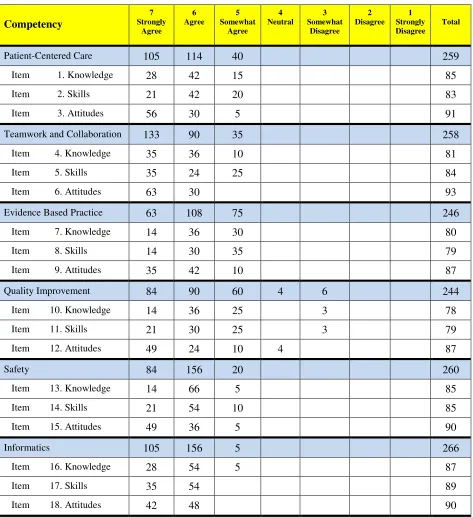
tabulated and analyzed. Raw data were collected, weighted values for the responses were
calculated and a mean and a standard deviation were calculated for each of the 18 items as well
as the six core competencies (see Appendix R), (b) from the analysis of the data, the project QI
Committee determined that evidence based practice and quality improvement were the two
QSEN competencies that scored the lowest on the survey. The QI Committee met to discuss the
best approach to remediating the two competencies. A list of items to be introduced was agreed
upon by the committee (see Appendix S). It was determined that the project manager would
teaching/learning strategies to improve the new graduate nurses’ understanding of topics related
to evidence based practice and quality improvement. These presentation were accomplished
using best practices for teaching adult learners that are novice beginner nurses (Benner, 1982,
1984; Knowles, 1988, 2011) (see Appendices T, U, V and W), (c) at the end of the final
teaching/learning intervention sessions, the NQSSI© survey was re-administered following the
same steps used for the initial survey. Data were compiled and analyzed in the same manner as in
the initial survey (see Appendix X). Then, the initial survey and re-survey data sets were
com-pared to determine if the two QSEN competency gaps had been remediated (see Appendix Y).
Planning the Study of the Intervention
The “Study” component is to review the teaching plan, analyze the results and identify
what has been learned. The plan for assessing how effectively the intervention was implemented
will require comparing the initial NQSSI© survey data, which will provide the baseline data prior to the implementation of the project, to the NQSSI© resurvey data. This comparison will
determine whether the targeted QSEN competency gaps were reduced or eliminated.
The intervention component that was expected to cause changes was the evidence based
teaching/learning sessions targeting the two QSEN competencies with the lowest scores on the
initial NQSSI© survey. Quality improvement of the design has two methods. The first will
involve analyzing the NQSSI© resurvey data. If the targeted QSEN core competency gaps are not
reduced to an acceptable level, as defined by the institution, additional teaching/learning
strategies will be developed and proposed to the QI Committee. If approved, those teaching/
Participants will be asked to complete an evaluation and make suggestions for improvement at
the end of every monthly session. The evaluation for the new graduate residency program was
developed by the staff nurse educators. There are 5 quantitative items on the evaluation. Each
quantitative item will be rated on a 5-point Likert scale ranging from 5 (strongly agree) to 1
(strongly disagree), and a neutral choice. The quantitative questions are followed by a question
asking the students to rate the information presented as “too basic”, “just right” or “too
advanced”. Following this question, there are 3 qualitative items. These evaluations will be
reviewed to assess participants’ satisfaction, gain recommendations for making needed changes
to the program and ensure continuous quality improvement (see Appendix Z).
In an effort to maximize internal validity, all participants will be required to attend all
teaching/learning sessions. No information will be given to the students regarding which QSEN
competencies will be targeted for gap reduction. To maximize external validity, the project
manager will conduct on-going review of emerging research that addresses improvement of
QSEN core competencies for new graduate RNs and incorporate these techniques to accelerate
the achievement of QSEN core competencies in the new graduate RN residency program. The
cycle will be completed by re-evaluating using PDSA methodology.
The gap analysis completed prior to the start of project implementation was based upon
initial completion of the NQSSI© survey by the new graduate RNs. This survey was administered
before any new graduate RN residency program revisions occurred. The participants’ self-
assessment of the 6 QSEN competencies revealed that while competency gaps existed in all 6
competencies, the greatest gaps were found in the competencies of “evidence based practice” and
To guide project activities, a Gantt chart was developed identifying critical milestones to
ensure smooth flow of the project and the accomplishment of the milestones at the appropriate
times. The Gantt chart was reviewed by the QI Committee to gain buy-in by all committee
members and confirm that all key activities and process had been included in the project design
The Gantt chart depicts the detailed operations plan for project development, deployment and
evaluation (see Appendix Q, Table 1).
Precise details of the initial strategy for improving QSEN core competencies included
forming a QI Committee, determining the current state of the QSEN competencies of the new
graduate RNs, deciding where, when and how program improvement activities would take place
and establishing how the committee would determine project success and future interventions.
The hospital members of the QI Committee became curious about the QSEN competency gap
situation during the initial briefing where the project manager’s PICOT statement and review of
the relevant, current literature were discussed. The hospital’s True North principle of “quality
and safety” and the long-term collegial relationship between the project manager and the hospital
made the local setting conducive to addressing the problem of new graduate RN QSEN
competency gaps. TMC enthusiastically provided all of the necessary resources to facilitate the
learning and testing of change project. These resources included continuous organizational
support, hospital staff resources and access to the new graduate RNs in the facility’s new
graduate RN residency program.
QI Committee leadership was provided by the project manager, who had experience in
leading change as an Associate Degree Nursing Program dean, department chair and lead faculty
for the previous 16.5 years. Two other members of the QI Committee were experienced hospital