University of New Orleans University of New Orleans
ScholarWorks@UNO
ScholarWorks@UNO
University of New Orleans Theses and
Dissertations Dissertations and Theses
Spring 5-16-2014
Professional School Counselors and Relational Aggression:
Professional School Counselors and Relational Aggression:
Training, Perceptions, Barriers, and Interventions
Training, Perceptions, Barriers, and Interventions
Catherine G. McDermott
University of New Orleans, [email protected]
Follow this and additional works at: https://scholarworks.uno.edu/td Part of the Counseling Commons
Recommended Citation Recommended Citation
McDermott, Catherine G., "Professional School Counselors and Relational Aggression: Training, Perceptions, Barriers, and Interventions" (2014). University of New Orleans Theses and Dissertations. 1824.
https://scholarworks.uno.edu/td/1824
This Dissertation is protected by copyright and/or related rights. It has been brought to you by ScholarWorks@UNO with permission from the rights-holder(s). You are free to use this Dissertation in any way that is permitted by the copyright and related rights legislation that applies to your use. For other uses you need to obtain permission from the rights-holder(s) directly, unless additional rights are indicated by a Creative Commons license in the record and/ or on the work itself.
Professional School Counselors and Relational Aggression: Training, Perceptions, Barriers, and Interventions
A Dissertation
Submitted to the Graduate Faculty of the University of New Orleans in partial fulfillment of the Requirements for the degree of
Doctor of Philosophy in
Counselor Education
By
Catherine Geoghegan McDermott
B.A. Samford University, 2006
M.S. Loyola University of New Orleans, 2009
DEDICATION
ACKNOWLEDGEMENTS
To Bryan. Thank you for all the times you listened to me complain, fed, bathed, and put the baby to sleep when I was at class, supported my decision to get my doctorate, and never let me give up. You are my rock. And to June, you are the coolest little girl I’ve ever met. I love you!
To my mom—Gigi, thank you for filling in the holes and making it possible for me to get to class on time. Thank you for watching June so I could work on my dissertation, and seeing me through all these life changes. And to the rest of my family, Dad, Sara Beth, Eddie, and David thank you for your support and belief in me.
To Kellie. I would not, could not have done this without you. Thank you for never letting me give up, for reminding me of deadlines, for setting an example, and for pushing me to be a better student. I’m so lucky that I got to go through this with you!
To Dr. Watson, thank you for your thoughtful help through the process of writing my dissertation and your belief in the importance of this subject. I am grateful for your presence on my committee.
To Dr. Ebrhaim, thank you for seeing potential in me and encouraging me to do
something I didn’t think I could. Thank you for listening to me, helping me walk through grad school, my professional life, and this dissertation.
To Dr. Bonis, thank you for serving as my methodologist. It meant so much to me that you didn’t mind me bringing June to meetings, especially when she tore your office apart. And thank you for your thoughtful feedback and help throughout the process.
Table of Contents
LIST OF TABLES ... viii
ABSTRACT ...x
CHAPTER ONE ...1
INTRODUCTION ...1
Background ...1
The Professional School Counselor and School Counseling ...3
Purpose of the Study ...6
Significance of the Study ...7
Research Questions ...7
Assumptions of the Study ...8
Limitations and Delimitations of Study ...9
Definition of Terms...9
CHAPTER TWO ...13
REVIEW OF THE LITERATURE ...13
Relational Aggression ...14
A History of Relational Aggression Research ...14
Relational Aggression Defined ...15
Multicultural Aspects of Relational Aggression ...17
Gender ...17
Popularity Status ...18
Culture/Ethnicity ...19
Developmental Issues ...20
Relational Aggression as a Social Justice Issue ...21
Effects of Relational Aggression Victimization ...22
Effects of Relational Aggression Bullying ...23
Effects of Relational Aggression Bullying/Victimization ...24
The School Counseling Profession ...25
School Counseling History ...25
The Role of the Professional School Counselor ...26
Leadership ...27
Advocacy ...27
Collaboration...29
Systematic Change ...29
School Counselor Perceptions of Relational Aggression ...30
School Counselor Training ...32
School Counselor Graduate Education ...32
Continuing Education ...34
Relational Aggression Barriers and Interventions ...34
Barriers to Relational Aggression Intervention ...35
Relational Aggression Interventions ...36
Ethical Considerations ...39
CHAPTER THREE ...43
METHODOLOGY ...43
Purpose of the Study ...43
Survey Design ...43
Variables ...44
Research Questions ...44
Participants ...45
Characteristics of the Sample...45
Instrument Development ...58
Expert Panel ...62
Data Collection Procedures...64
Data Analysis ...66
CHAPTER FOUR ...70
RESULTS ...70
Purpose of the Study ...70
Survey Design ...70
Instrumentation ...70
Analysis of the Research Questions ...70
Research Question 1 ...71
Research Question 2 ...74
Research Question 3 ...75
Research Question 4 ...76
Research Question 5 ...81
Research Question 6 ...82
Research Question 7 ...85
Research Question 8 ...87
Research Question 9 ...90
Research Question 10 ...97
Additional Comments ...108
Summary of Findings ...110
CHAPTER FIVE ...116
DISCUSSION ...116
Overview of the Study ...116
Discussion of Findings ...116
RA as a Problem with Serious Consequences ...116
Differences by Training, Gender, and School Type ...118
Training ...118
Gender ...119
School Type ...120
School Level ...121
Barriers to RA Identification and Intervention ...122
Interventions for RA ...123
Limitations ...126
Implications for the Study ...126
Professional School Counselors ...126
Counselor Educators ...127
Recommendations for Future Research ...127
Conclusion ...130
REFERENCES ...131
APPENDIX A: School Counselor Perceptions of Relational Aggression...142
APPENDIX B: First Electronic Letter ...156
APPENDIX C: Second Electronic Letter ...158
APPENDIX D: Final Electronic Letter...160
APPENDIX E: IRB Approval Letter ...163
APPENDIX F: List of Other Certifications and Licenses ...165
APPENDIX G: List of Other Professional Affiliations ...168
List of Tables
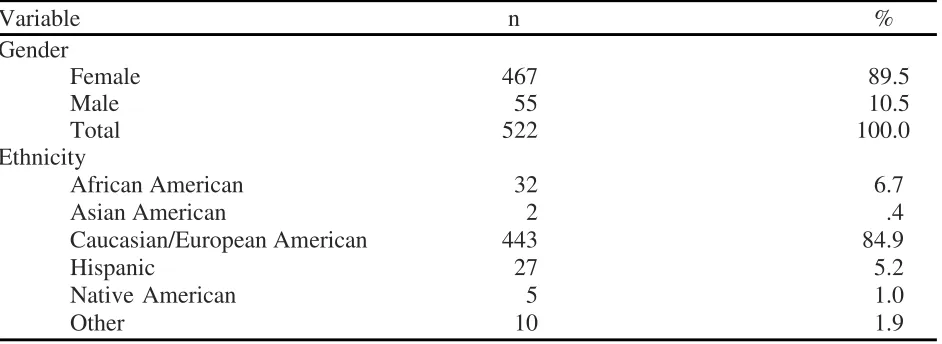
Table 1 Frequency Distribution of Respondents by Gender and Ethnicity ...48
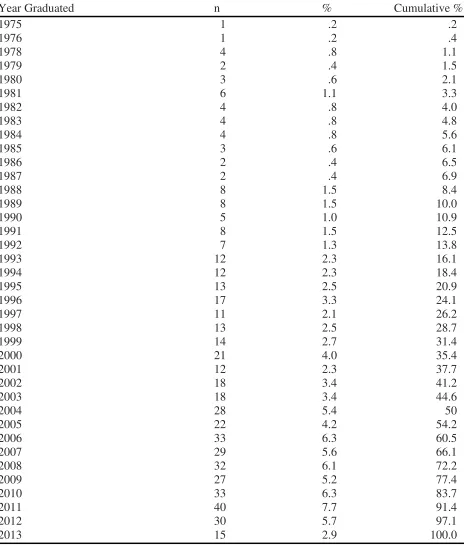
Table 2 Frequency Distribution of Respondents by Year Graduated ...49
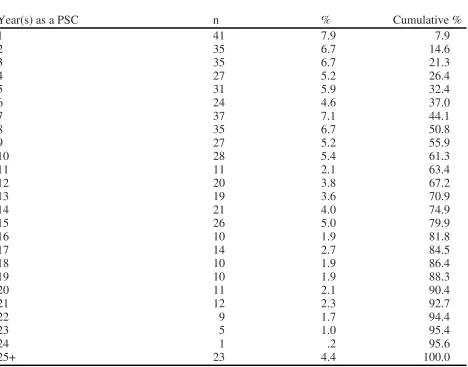
Table 3 Frequency Distribution of Respondents by Years as a PSC ...50
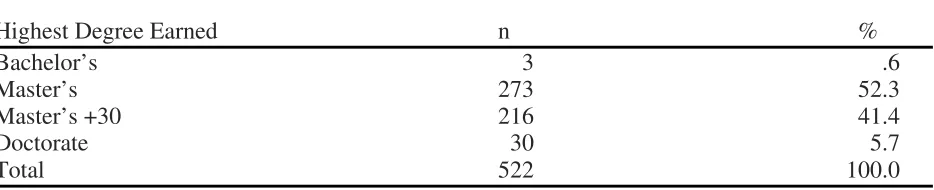
Table 4 Frequency Distribution of Respondents by Highest Degree Earned ...51
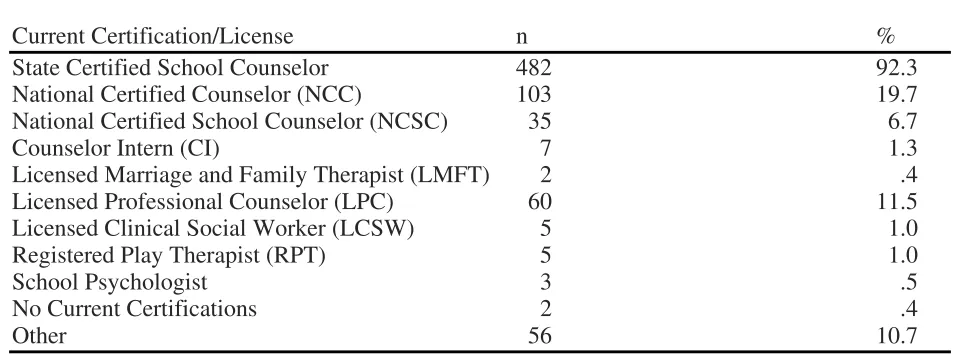
Table 5 Frequency Distribution of Respondents by Current Certifications and Licenses ... ...52
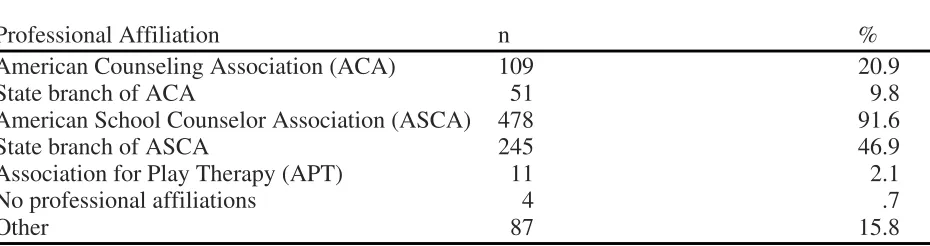
Table 6 Frequency Distribution of Respondents by Professional Affiliations ...53
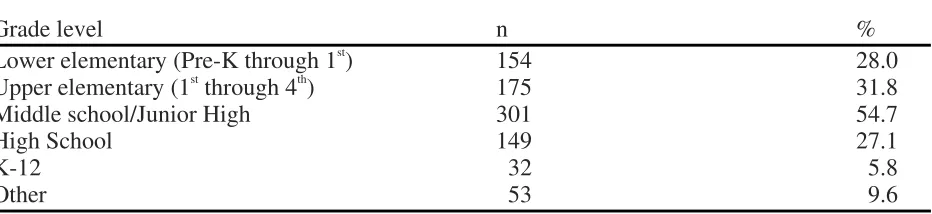
Table 7 Frequency Distribution of Respondents by Grade Level...54
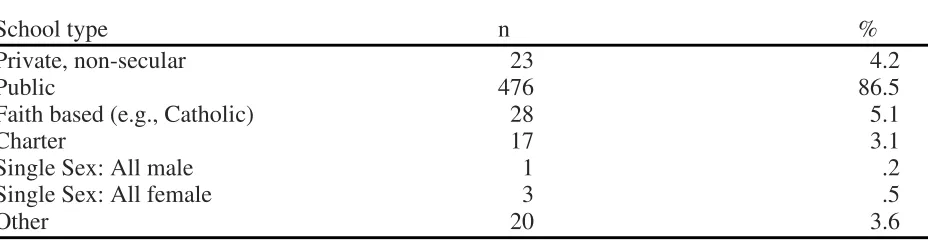
Table 8 Frequency Distribution of Respondents by Type of School ...55
Table 9 Frequency Distribution of Respondents by Number of Students ...55
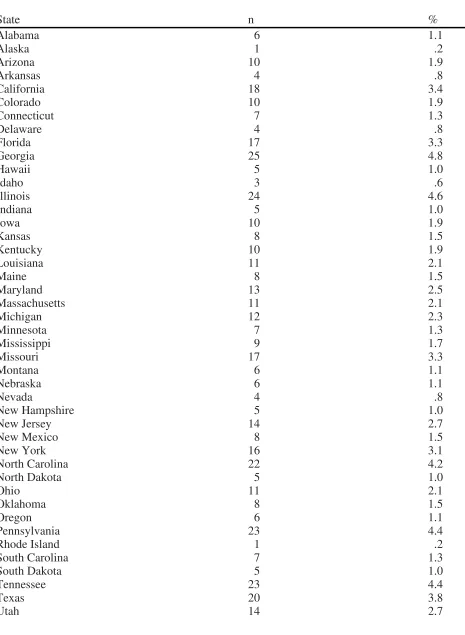
Table 10 Frequency Distribution of Respondents by State ...57
Table 11 Instrument Development- School Counselor Perceptions of Relational Aggression ...61
Table 12 Frequency Distribution of Respondents for SCPRA Items 18-21...73
Table 13 Means and Standard Deviations for SCPRA Items 18-21...74
Table 14 Frequency Distributions for SCPRA Items 23 and 24 ...75
Table 15 Means and Standard Deviations for SCPRA Items 23 and 24 ...75
Table 16 Frequency Distribution for SCPRA Item 25 ...76
Table 17 Means and Standard Deviations for SCPRA Items 12 and 13 ...78
Table 18 Means and Standard Deviations for SCPRA Items 15-17...78
Table 19 Spearman Correlations Matrix for SCPRA Items 18-21 with Items 12-17...81
Table 20 Spearman Correlations for Gender with SCPRA Items 18-22 ...81
Table 22 Kruskal-Wallis Test Ranks for SCPRA Item 18 ...85
Table 23 Spearman Correlations for SCPRA Item 8 with Items 18-21 ...87
Table 24 Frequency Distributions for SCPRA Items 15-17 ...89
Table 25 Means and Standard Deviations for SCPRA Items 15-17...90
Table 26 Means and Standard Deviations for SCPRA Items 27-37...92
Table 27 Model 1 Significant Barriers...93
Table 28 Model 3 Significant Barriers...94
Table 29 Means and Standard Deviations for SCPRA Items 39-52...100
Table 30 Model 1 Significant Interventions ...102
Table 31 Model 2 Significant Interventions ...103
Table 32 Model 3 Significant Interventions ...104
Abstract
Relational aggression (RA) is a type of bullying in which the relationship is used as the
agent of harm (Crick & Grotpeter, 1995). RA behaviors are intended to impair or ruin
reputations, friendships, and feelings of inclusion in a peer group (Putallaz et al., 2007).
Professional School Counselors (PSCs) are charged to be social justice advocates for students;
RA is a social justice issue because the effects of RA bullying, victimization, and
bullying/victimization lead to poor academic achievement. Recent literature suggests that PSCs
do not perceive the effects of RA to be as serious as the effects of physical and verbal bullying;
however, training can increase RA sensitivity and willingness to intervene (Jacobsen & Bauman,
2007). No studies have explored PSC training, PSC perceptions regarding RA, PSC perceived
barriers to RA intervention, and PSC intervention strategies.
The purpose of this study was to examine PSC training for RA, PSC perceptions of RA
as an issue with serious consequences for students, PSC perceived barriers to RA care, and the
interventions PSCs currently use for RA. This study also examined if sex differences, grade
level with which PSC worked, and school type in which PSC worked existed in PSC perceptions
of RA as an issue with serious consequences for students. A substantial amount of PSCs
surveyed strongly agreed (24.5%), agreed (39.8%) and somewhat agreed (26.8%; a cumulative
of 91.2% of participants) that RA was an issue with serious consequences for students with
whom they work. RA was recognized by PSCs as an issue with serious consequences for
students with no significant differences by training, gender, and school type at which the PSC
worked. Significant differences were found by school level with which the PSC worked.
Several barriers to RA care were identified including lack of time, parents, issues with students
interventions were identified including individual counseling with the victim and/or bully, using
outside resources, group counseling, and focusing on school wide bullying interventions.
Implications for PSC practice and training were given in addition to implications for
future research.
Keywords: relational aggression, bullying, relational aggression intervention, barriers to
CHAPTER ONE
INTRODUCTION
In this chapter, an overview of the study is presented. Relational aggression (RA), the
professional school counselor (PSC) and the school counseling profession, barriers to RA
intervention, and RA interventions are discussed. The purpose and significance of the study are
presented, as well as research questions, assumptions of the study, and delimitations of the study.
The chapter ends with a list of terms that have been defined.
Background
Bullying and bullying intervention have become relevant topics in schools and in the
media in recent years, partially due to a series of bully-related adolescent suicides (Bullying
Statistics, 2009). Suicide is the third leading cause of death for adolescents between the ages of
10 and 24, with 4,600 deaths each year (Centers for Disease Control and Prevention, 2012).
Participation in bullying activities has been found to increase the risk of suicidal ideation and/or
behaviors in adolescents (Kim & Leventhal, 2008). Beyond the risk of suicide, “depression,
anxiety, substance abuse, trouble with the law, poor performance in school and work, and lack of
involvement in socially accepted activities” (Austin, Reynolds, & Barnes, 2012 p. 288) are some
of the other issues that result from bullying. Up to 160,000 students stay home on any school
day due to fear of being bullied (Austin et al., 2012). As a result, strict anti-bullying policies
have been created in schools, and legislation that directly addresses bullying has been passed in
at least 45 states (Austin et al., 2012; Walker, 2010).
According to Mason (2013), bullying is defined as unwanted, aggressive behavior among
school aged children that involves a real or perceived power imbalance where a child who bullies
intends to cause fear, distress, and/or harm to the victim’s body, feelings, self-esteem, or
aggression (RA) is a type of bullying in which the relationship is used as the agent of harm.
Crick and Grotpeter (1996) defined RA as “harming others through purposeful manipulation and
damage of their peer relationships” (p. 711). Relationally aggressive behaviors are intended to
impair or ruin reputations, friendships, and feelings of inclusion in a peer group (Putallaz et al.,
2007). Relational victimization occurs when a student is bullied through relational means
(Crick, 1996).
It is impossible to know exactly how many students RA affects because secrecy is a
hallmark of RA. In 2011, the U.S. Department of Education conducted a study of 11,561
students in the third through eighth grades in Oregon schools regarding relational and overt
aggression; the researchers found that between 41.4% and 48.1% of girls and 30.6% and 41.7%
of boys reported experiencing relational victimization (Nishioka, Coe, Burke, Hanita, & Sprague,
2011). Additionally, between 20.7% and 27.9% of girls, and 20.3% and 24.2% of boys reported
engaging in RA bullying behaviors (Nishioka et al., 2011). O’Brennan, Bradshaw, and Sawyer
(2009) found that 41% of students surveyed in their study were frequently involved in bullying:
23% as victims, 8% as bullies, and 9% as bullies who also victimized others (bully/victims).
RA in the school is an issue of social justice because the harm experienced by RA bullies,
victims, and bully/victims may create barriers to academic, personal/social, and ultimately career
success (ASCA, 2012; Crick, 1996; Goldstein, Young, & Boyd, 2008; O’Brennan et al., 2009).
RA victims have reported experiencing depression, loneliness, social anxiety, peer rejection, low
self-esteem, and intense anger or retaliatory feelings as a result of aversive RA experiences
(Crick, 1996; Crick & Bigbee, 1998; Putallaz et al., 2007; Rose & Swenson, 2009; Yoon, Barton,
& Taiariol, 2004). RA bullies were found to be disliked more by peers, have issues with
externalization, lack prosocial behaviors, have high levels of depressions, use substances, and
Esposito, & Affuso, 2009; Crick & Grotpeter, 1995; Goldstein et al., 2008; Prinstein, Boegers, &
Vernberg, 2001; Yoon et al., 2004). RA bully/victims experience both the negative effects of
being the bully and the negative effects of being the victim (O’Brennan et al., 2009), reporting
high levels of depression and anxiety; they have difficulty coping when other peers are
aggressive because of their lack of interpersonal resources (O’Brennan et al., 2009). RA bullies,
victims, and bully/victims all perceive the school environment to be unsafe and they disengage
from school, which leads to poor academic achievement (Buhs, Ladd, & Herald, 2006;
Goldstein, et al., 2008; O’Brennan et al., 2009).
Researchers have advised that the development of different coping skills in victims,
bullies, and bully/victims could help break the cycle of RA. Crick and Bigbee (1998) suggested
that “peer victims may need help coping with difficult feelings, making friends among their
peers, and changing some of the ways that they interact with their peers (e.g., becoming more
assertive or changing their own reactions to peers so that they do not reward aggressors and
invite future attacks” (p. 346). Putallaz et al. (2007) proposed that students involved with RA
work on improving conflict resolution, prosocial skills, and inclusive behaviors.
The Professional School Counselor and School Counseling
The PSC is the most appropriate school professional to help RA bullies, victims, and
bully/victims. The focus of school counseling, according to the American School Counselor
Association (ASCA), is to remove barriers to student academic achievement (ASCA, 2012c).
Dahir (2009) reported that “Twenty-first-century school counselors are social justice advocates
who ensure that academic, career, and interpersonal success is woven into the fabric of education
for every student” (p. 87). Therefore, the PSC has both a preventative and responsive role with
students, especially in regards to RA (Jacobsen & Bauman, 2007). The school setting is an ideal
harassment and victimization” (Walker, 2010, p. 598). Unfortunately, very little literature exists
to describe PSCs’ perceptions about RA, PSC training for RA, barriers to RA intervention, and
RA interventions.
Jacobsen and Bauman’s (2007) study represents one of the few studies that examined
PSC perceptions towards RA severity. PSCs in the study reported perceiving physical and
verbal bullying was more severe than RA bullying (Jacobsen & Bauman, 2007). PSCs also
reported feeling more empathy towards victims of physical and verbal bullying than towards
victims of relational bullying (Jacobsen & Bauman, 2007). Many PSCs recommended stronger
interventions for physical and verbal bullying than for RA (Jacobsen & Bauman, 2007).
Jacobsen and Bauman (2007) also took into account RA training and found that RA training was
positively associated with increased RA sensitivity in PSCs. Based on their findings, the
researchers proposed that RA training in graduate school and continuing education
post-graduation could increase PSC sensitivity towards RA victimization (Jacobsen & Bauman,
2007).
An essential element to PSC success in responding effectively to RA is graduate
education. Paisley (1999) suggested that PSCs are not adequately prepared to meet the
educational needs of today’s youth (as cited in Coker & Schrader, 2004). Bemak (2000)
proposed that current training has resulted in “school counselors who are frequently out-of-step
with current educational policies and practices, and essentially unprepared for the rigors of
today’s schools.” Coker and Schrader (2004) asserted that school counselors are not learning
skills of coordination, collaboration, evaluation, and advocacy in the classroom or field
experience. Jacobsen and Bauman (2007) warned that, without “bullying prevention and
deal with all forms of bullying. Jacobsen and Bauman (2007) explained that the RA training
school counselors “are currently receiving is not having the optimal effects” (p. 7).
Even when PSCs are well trained to deal with RA and bullying, they still encounter
significant barriers to job efficacy, as well as obstacles to relational aggression intervention.
Some of the major barriers school counselors experience include the lack of training, time to
work with students, support from administration and faculty, resources, supervision, and space
(Ebrahim, Steen, & Paradise, 2012). Some other identified barriers included differing
administration priorities such as the push for PSCs to perform interventions with measurable
behavior outcomes and to primarily focus on academics (Ebrahim et al., 2012). Additionally, the
student to PSC ratio, competing with teachers for time to see students, and rocky relationships
with administration are also potential barriers to RA intervention (Brown & Trusty, 2005).
Interventions for RA are abundant in the literature. Interventions include supporting RA
victims through comforting, encouraging, and helping to identify and develop positive coping
techniques (Putallaz et al., 2007). PSCs can also discuss conflict management and better ways to
deal with aggression with RA bullies (Putallaz et al., 2007). Informing the parents or caregivers
of both victims and bullies in addition to the school authorities can help to end the cycle of RA
(Jacobsen & Bauman, 2007). Also, collaboration with parents/caregivers, teachers, and
administration at the school to address specific issues of RA and bullying can be effective (Crick
& Bigbee, 1998; Jacobsen & Bauman, 2007). In order to deal with bullying on a school wide
level, many researchers advocate the creation of a bullying task force that includes students,
parents, administration, teachers, and other community stakeholders (Austin et al., 2012).
Educating students, parents, and teachers about RA identification and intervention is also an
school counselors are called to advocate for victims of RA at the legislative level (ASCA,
2012b).
According to Remley and Herlihy (2014), school counselors are ethically bound to
prevent bullying of any kind. The preamble to the ASCA code of ethics explicitly states, “Each
person has the right to feel safe in school environments that school counselor help create, free
from abuse, bullying, neglect, harassment or other forms of violence” (ASCA, 2010). The
American School Counselor Association (ASCA) code of ethics calls for PSCs to support the
best interests of students and work against factors that may interfere with student achievement
(ASCA, 2010). Dahir (2009) proposed “when school counselors embrace the ethical and moral
obligation to reduce and eliminate the institutional and/or social barriers that may stand in the
way of every student’s academic, career, or personal-social development…they advance the
moral dimensions of school to include a strong social justice agenda to ‘close the gap’”(p. 4).
Purpose of the Study
The primary purpose of this study was to examine professional school counselors’ (PSC)
training for relational aggression (RA), PSC perceptions of RA as a problem with serious
consequences for students, the barriers that PSCs encounter in dealing with RA, and the methods
they use to intervene in RA. A second purpose was to determine how school counselor gender,
school level (elementary, middle, secondary/high school, and K-12), and school type (private,
public, faith-based, charter, and other) are related to PSC perceptions of the problem. To gather
data, I surveyed PSCs who are members of ASCA to assess their training and preparedness to
deal with RA, beliefs regarding RA, perceived barriers to relational aggression intervention, and
intervention strategies.
There is a breadth of literature and research available on bullying and relational
aggression among students; however, the current research and literature offers very little about
school counselors and their relational aggression beliefs and training (Jacobsen & Bauman,
2007). The results of this exploratory study helped to establish a baseline of information
regarding PSC beliefs about relational aggression, training and preparedness for dealing with
RA, barriers to intervention, and intervention strategies.
Students are being bullied through RA and would benefit from help. School counselors
can provide that help if they are trained to identify and intervene effectively. The results of this
study help to identify the extent to which school counselors believe they are trained in relational
aggression and resulted in suggestions for counselor educators of school counseling students.
This study also helped to identify PSCs’ perception of the seriousness of RA consequences, and
resulted in suggestions for counselor educators of school counseling students as well as PSCs
who may present at conferences. The results of this study helped to identify PSC perceived
barriers to RA intervention, which may result in PSC advocacy for barrier removal. Finally, this
study helped to identify interventions PSCs most commonly use to deal with RA.
Research Questions
This research questions for the study are:
1. To what extent do professional school counselors (PSCs) believe that relational
aggression (RA) is a problem with serious consequences for students?
2. What do PSCs perceive to be their role in dealing with RA?
3. How frequently do PSCs encounter instances of RA in their work?
4. Is there a significant relationship between school counselors’ training (courses with RA
content, workshops/institutes) and their perceptions of the seriousness of consequences of
5. Are there significant differences between male and female PSCs in their perceptions of
the seriousness of consequences of relational aggression?
6. Are there significant differences by school level (elementary, middle, secondary/high
school, and K-12) in PSCs’ perceptions of the seriousness of consequences of relational
aggression?
7. Are there significant differences by school type (private, public, faith based, charter, and
other) in PSCs’ perceptions of the seriousness of consequences of relational aggression?
8. To what extent do PSCs perceive themselves as being prepared to deal with instances of
RA?
9. What barriers to relational aggression intervention do PSCs experience?
10.What interventions do PSCs use in responding to relational aggression?
Assumptions of the Study
It was assumed that the instrument, the School Counselor Perceptions of Relational
Aggression [SCPRA] was valid and accurately measured PSCs’ beliefs about RA as a problem
with serious consequences for students, barriers to intervening in RA, and methods for RA
counseling interventions. Additionally, it was assumed that the PSC participants answered
survey questions honestly, candidly and willingly. A final assumption was that the sample was
representative of the population of ASCA members.
Limitations and Delimitations of the Study
Limitations and delimitations applied to this study. A potential limitation was that the
SCPRA, due to its construction, did not adequately or accurately measure PSC perceptions of the
seriousness of the consequences of RA, PSC training regarding RA, PSC perceived barriers to
RA, or interventions used for RA. Additionally, data from the SCPRA rely on the responses of
may not be representative of all PSCs because the survey may only have been answered by PSCs
who were interested in and had professional experience with RA; PSCs who were not interested
in and did not have much professional experience with RA could have been underrepresented.
This study was delimited to ASCA members. ASCA’s membership is over 31,000
school counselors; however, 105,000 school counselors were employed in the 2010-2011 school
year (ASCA, 2012e); therefore, ASCA members are not inclusive of the entire population of
school counselors. Ultimately, this study is generalizable only to PSCs who are members of
ASCA.
Definitions of Terms
Aggression: A goal oriented sequence of behaviors that intend to inflict pain (Feshbach, 1969).
American Counseling Association: A non-profit, educational, and professional organization
whose focus is to enhance on counselor growth and the counseling profession (American
Counseling Association, 2013).
American School Counselor Association (ASCA): The school counseling division of ACA,
which is made up of more than 31,000 professionals. ASCA provides professional development
opportunities to its members, attempts to define and enhance school counseling programs, and
researchers school counseling practice (ASCA, 2012a).
Bullying: Bullying is unwanted, aggressive behavior among school aged children that involves a
real or perceived power imbalance where a child who bullies intends to cause fear, distress,
and/or harm to the victim’s body, feelings, self-esteem, or reputation. The behavior is repeated,
or has the potential to be repeated, over time (Mason, 2013).
Charter School: A public school that is autonomous that was “created by a contract between a
sponsor, as a local school district or corporation, and an organizer, as a group of teachers or a
Counseling: The collaborative effort between a counselor and client wherein the counselor uses
mental health, human development, and psychological principals to define client goals, discuss
potential solutions to emotionally charged problems; communication, coping skills, and self
esteem are potentially improved, and an overall attempt to promote behavior changes is made
(American Counseling Association, 2013).
Counsel for the Accreditation of Counseling Related and Educational Programs
(CACREP): An independent agency that provides accreditation for masters degree programs in
addiction counseling, career counseling, clinical mental health counseling, marriage, couple, and
family counseling, school counseling, and student affairs and college counseling. CACREP also
provides accreditation for doctoral programs in counselor education and supervision (Council for
the Accreditation of Counseling and Related Educational Programs, 2013).
High School: School grades 9 through 12.
K-12: School grades Kindergarten through 12.
Lower Elementary: Grades consisting of Pre-Kindergarten through 1.
Middle School/Junior High: Grades consisting of 5 through 8.
Perceived Popularity: A type of popularity that is associated with high levels of aggression, in
addition to high levels of prosocial behaviors; students with high perceived popularity are not
always well liked (Puckett, Aikins, & Cillessen, 2008).
Private School: A school that is maintained by a private group rather than the government that
usually charges tuition for students to attend (Dictionary.com, 2013b).
Professional School Counselor (PSC): The “certified/licensed educators with a minimum of a
master’s degree in school counseling” (ASCA, 2012e, para. 1) who assists students in the school
setting with academic achievement, career development, and social/personal development in
Professional School Counselor Role: “All of those tasks and activities [school counselors]
engage in as they work to enhance the functioning of students, their school, and their program”
(Brown & Trusty, 2005, p. 152)
Public School: A school in the United States that is free for students of the community to attend
and maintained through public expense (Dictionary.com, 2013c).
Relational Aggression (RA): “Harming others through purposeful manipulation and damage of
their peer relationships” (Crick & Grotpeter, 1995, p. 711), with the intention to impair or ruin
reputations, friendships, and feelings of inclusion in a peer group (Putallaz et al., 2007).
Examples of RA include rumor spreading, gossiping, purposeful exclusion of a peer, and
non-verbal gesturing (Simmons, 2002).
Relational Aggression Bully: A student (male or female) who participates in unwanted,
aggressive behavior among school aged children that involves a real or perceived power
imbalance where a child who bullies intends to cause fear, distress, and/or harm to the victim’s
body, feelings, self-esteem, or reputation. The behavior is repeated, or has the potential to be
repeated, over time (Mason, 2013), through relationally aggressive means.
Relational Aggression Victim: A student (male or female) who is the target of unwanted,
aggressive behavior among that involves a real or perceived power imbalance (Mason, 2013)
through relational means (Crick, 1996).
Relational Aggression Bully/Victim: A student (male or female) who is “highly disliked by
some peers and highly liked by other peers” (Crick & Grotpeter, 1995, p. 720) who experiences
both the negative effects of being the bully and the negative effects of being the victim
(O’Brennan et al., 2009).
Religious/Faith Based School: A school created and run by a religious organization (e.g., the
Social Justice Issue: Issues that create inequity, oppression, and injustices for clients (ACA,
2013c). Social justice issues in schools create barriers to academic, relational, and future career
success (ASCA, 2012c).
Sociometric Status: A type of popularity associated with low aggression and high prosocial
behaviors; students with high sociometric status are generally well liked and emulated by peers
(Puckett et al., 2008).
Stakeholders: Stakeholders in the school community include parents, teachers, administrators,
board members, community leaders, and anyone who has a vested interest in student success.
CHAPTER TWO
REVIEW OF THE LITERATURE
In this chapter, the literature and research related to relational aggression (RA),
professional school counselor (PSC) perceptions regarding RA, PSC training, barriers to RA
intervention, and different types of RA interventions are presented. The school counseling
profession, school counselor role, and school counselor training are described to provide the
context for the study of PSC perceptions, training, barriers, and interventions with respect to RA.
The chapter is organized into four sections. The first section begins with a brief history of RA
research and RA is defined. Then multicultural aspects of RA including gender, popularity
status, and culture/ethnicity are examined, as are developmental differences. Finally, RA is
established as a social justice issue, through an understanding of the effects of RA victimization,
RA bullying, and RA bully/victimization.
The focus of the second section is the school counseling profession; the section begins
with a discussion of the history of school counseling. The current role of the PSC as a social
justice advocate is addressed. The role of the PSC is defined by ASCA’s National Model
(2012c) themes of leadership, advocacy, collaboration, and systemic change. The final topic
addressed in this section is current PSC perceptions of RA found in research.
The third section of this chapter focuses on school counselor training, both at the
graduate level and post-graduate continuing education levels. The Council for Accreditation of
Counseling and Related Education Programs (CACREP) Standards (2009) and American
Counseling Association (ACA) school counselor competencies (2003) are discussed in regards to
graduate level education. PSC continuing education is discussed.
The fourth section addresses the common barriers PSCs experience that interfere with
RA and bullying research. Finally, this chapter ends with an examination of ethical
considerations related to RA and PSC.
Relational Aggression
History of Relational Aggression Research
The concept of RA has been researched for over a century; originally, investigations were
tied to gender (Feshbach, 1969). Feshbach (1969) researched aggression differences between
boys and girls, citing earlier research that found boys to be more aggressive than girls. In her
work on indirect aggression, Feshbach (1969) concluded that girls used indirect aggression more
than boys.
In 1995, Crick and Grotpeter published their seminal work on gender differences in
aggression. Before this work, researchers believed that boys were generally more aggressive than
girls (Crick & Grotpeter, 1995). Crick and Grotpeter (1995) hypothesized that girls used RA to
damage social relationships, whereas boys used physical aggression to obtain dominance over
one another (Crick & Grotpeter, 1995). The researchers reported that girls were significantly
more relationally aggressive than boys, whereas boys were significantly more physically and
overtly aggressive than girls (Crick & Grotpeter, 1995).
Underwood (2003) noted that not all researchers agree on the term relational aggression.
Other researchers have used the terms social aggression and indirect aggression. Social
aggression, defined by Cairns, Cairns, Neckerman, Ferguson, et al. (1989), is when students use
“alienation, ostracism, or character defamation” to manipulate peer group acceptance (p. 323).
Galen and Underwood (1997) defined social aggression as intent to damage the self-esteem and
social status of another through the use of direct aggression (e.g., negative facial expressions)
and indirect aggression (e.g,. gossip). Feshbach (1969) described indirect aggression as “social
perpetrator of indirect aggression is often unidentified, and thereby avoids retaliation. A great
deal of overlap exists among all three definitions of aggression (Underwood, 2003). Young et al.
(2006) noted that the similarities among the three terms far outweigh the differences. RA is the
term chosen term for use in this study because RA research is vast and encompassing (Leff,
Waasdorp, & Crick, 2010).
Relational Aggression Defined
Olweus (1993) defined bullying as the repeated exposure to negative actions by one or
more students. Smith and Sharp (1994) added that a systematic abuse of power usually exists
between the bully and the victim. More recently, Mason (2013) defined bullying as unwanted,
aggressive behavior among school aged children that involves a real or perceived power
imbalance where a child who bullies intends to cause fear, distress, and/or harm to the victim’s
body, feelings, self-esteem, or reputation. The behavior is repeated, or has the potential to be
repeated, over time (Mason, 2013). Crick and Grotpeter (1995) defined RA as “harming others
through purposeful manipulation and damage of their peer relationships” (p. 711). RA
victimization occurs when a student is bullied through relational means (Crick, 1996).
Relationally aggressive behaviors are intended to impair or ruin reputations, friendships, and
feelings of inclusion in a peer group (Putallaz et al., 2007). Examples of RA include rumor
spreading, gossiping, purposeful exclusion of a peer, and non-verbal gesturing (Simmons, 2002).
French, Jansen, and Pidada (2002) suggested that RA behaviors mainly occur in three
forms: social ostracism, relational manipulation, and malicious rumor spreading. Social
ostracism prevents a person from feeling included, such as when one student is intentionally not
invited to a party (French et al., 2002). Relational manipulation occurs when an aggressor
manipulates the peer relationship for gain (French et al., 2002); for example, one student
to damage reputations through rumors and gossip (French et al., 2002; Simmons, 2002), which
can spread quickly and on a much larger scale than was true in previous decades due to the
availability of social media. RA behaviors can encompass other types of bullying behaviors such
as cyber bullying. In first world countries, particularly, where students spend a large portion of
their time online, RA often occurs through the use of electronic devices such as cell phones and
computers (Snell & Englander, 2010). RA can occur at times in normal adolescent friendships
(Chesney-Lind, Morash, & Irwin, 2007; Crick, & Nelson, 2002) and can happen once or
repeatedly over time, either escalating or staying at the same intensity level (Chesney-Lind et al.,
2007; O’Brennan et al., 2009).
Unlike physical or verbal aggression, RA is difficult to identify (Young et al., 2006).
Young et al. (2006) provided this example: “Students who instigate relational aggression can
easily say, ‘I didn’t do anything. Is it a crime to not talk to someone?’” (p. 299). RA is covert,
and happens most frequently during adolescence when peer relationships are very important
(Leff, Waasdorp, & Crick, 2010). Adolescents often will tolerate a large degree of abuse in
order to remain accepted rather than tell an adult (Leff, Waasdorp, & Crick, 2010). Older
adolescents are often distrustful of adults and reticent to disclose incidents of RA because they
think adults will not help, and that adult intervention may make the bullying worse (Mishna,
2004).
RA actions can be direct or indirect (Leff, Waasdorp, & Crick, 2010). An example of
direct RA is the statement, ”I don’t want to be your friend.” Direct RA is often utilized by
younger students, and is easier for adults to identify than indirect RA (Leff, Waasdorp, & Crick,
2010). Indirect RA is when a student uses covert means to circuitously harm a person, such as in
2006). As students get older and more socially complex, instances of relational aggression
become more indirect and difficult to identify (Leff, Waasdorp, & Crick, 2010).
According to Young et al. (2006), RA can either be instrumental or reactive. Instrumental
RA is manipulation for gain; for example, when one child tells another, “I won’t be your friend
unless you do things my way.” Reactive RA happens as a response to feeling angry or
threatened by another (Young et al., 2006). The distinction between instrumental or reactive RA
is important to understand because it illustrates that the motivation behind RA varies, which may
influence adult intervention (Young et al., 2006).
It is impossible to know exactly how many students are affected by RA. The U.S.
Department of Education conducted a study of 11,561 students in grades 3-8 in Oregon schools
regarding relational and overt aggression and found that between 41.4% and 48.1% of girls and
30.6% and 41.7% of boys reported experiencing relational victimization (Nishioka et al., 2011).
Additionally, between 20.7% and 27.9% of girls, and 20.3% and 24.2% of boys engaged in RA
behaviors. In a different study, O’Brennan et al. (2009) found that 41% of students surveyed
were frequently involved in bullying; 23% as victims, 8% as bullies, and 9% as bullies who also
victimized others (bully/victims).
Multicultural Aspects of Relational Aggression
Gender
Current research suggests that both boys and girls use RA to manipulate relationships;
however, girls typically use RA exclusively, whereas boys tend to use RA in tandem with
physical aggression (Archer, 2004; Crick & Bigbee, 1998; Leff, Waasdorp, & Crick, 2010;
Putallaz et al., 2007; Radliff & Joseph, 2011). Some girls use relational aggression to maintain
and keep friendships as well as to retaliate when they feel threatened (Simmons, 2002).
higher physiological response (e.g. systolic blood pressure) to RA. Girls also stand to gain more
social benefits (e.g., higher popularity status) from the use of RA than boys (Rose, Swenson, &
Waller, 2004). However, Crick (1996) found that RA related negatively to future friendship
acceptance for girls. Elsaesser, Gorman-Smith, and Henry (2013) found that girls reported
supporting beliefs about RA as appropriate conflict management more than boys.
Several researchers have found that boys use RA and physical aggression in equal
proportions (Crick, 1996; Crick, & Bigbee, 1998; Putallaz et al., 2007). Crick (1996) discovered
that boys reported less emotional pain in response to relational victimization than girls. Putallaz
et al. (2007) found that boys who relied on RA were likely to use physical aggression. Exposure
to high levels of RA was a predictor for boys bringing a weapon to school in some cases (Leff,
Waasdorp, Paskewich et al., 2009).
Popularity status
RA is an adaptive social strategy that many students utilize to gain the common social
goal of popularity (Puckett et al., 2008; Rose et al., 2004). Dijkstra, Berger, and Lindenberg
(2011) perceived popularity to be one of the most significant determinants of friendship selection
for students. Salmivalli, Kaukiainen, and Lagerspetz (2000) suggested the use of RA requires a
certain degree of social intelligence and an average popularity status among peers. Puckett et al.
(2008) added that RA bullies must understand social behavior and have the ability to “operate
within a social network” (p. 564) to effectively utilize RA.
According to Puckett et al. (2008), two types of popularity exist: sociometric popularity
and perceived popularity. Sociometric popularity is associated with low aggression and high
prosocial behaviors; students with high sociometric status are generally well liked and emulated
by peers (Puckett et al., 2008). Perceived popularity is associated with high levels of aggression,
always well liked (Puckett et al., 2008). Students with high perceived popularity are more likely
to use RA (Rose & Swenson, 2009). Perceived popular students often use RA to gain and
maintain social status (Rose, & Swenson, 2009; Rose et al., 2004). These students may exert
significant social influence in their peer groups (Puckett et al., 2008). RA victims are more
likely to forgive perceived popular RA aggressors in order to gain sociometric status (Rose &
Swenson, 2009). Perceived popular students may experience positive emotional responses for
RA use; therefore, they often continue to victimize other students (Leff et al., 2010; Rose &
Swenson, 2009). In a longitudinal analysis, Rose et al. (2004) found “initial perceived popularity
predicted increased relational aggression” (p. 385) for boys and girls in fifth through ninth grade.
Rose et al. (2004) suggested that “perceived popularity may lead to even greater relational
aggression among girls as they attempt to enhance their status further” (p. 385), thus creating a
cyclical pattern of relational victimization.
Culture/Ethnicity
Literature related to culture/ethnicity and RA is still in development and not yet
conclusive (Young et al., 2006). U.S. cultural/ethnic RA research is somewhat flawed because
U.S. researchers have used non-representative samples of mostly White, middle class subjects
(Putallaz et al., 2007). According to Putallaz et al. (2007), another problem is that
socioeconomic status is often not controlled for, which is a significant confounding problem for
exploration of race/ethnicity. Leff, Waasdorp, and Crick (2010) suggested that more research is
needed on both racial and ethnic use of RA so that interventions for RA may be more culturally
sensitive.
Most of the literature that addresses culture/ethnicity in RA originated in countries
outside of the US; RA has been studied in Italy, Australia, Austria, India, Indonesia, China, and
2008; Swit & McMaugh, 2012). Research results suggested that a strong cultural identity and
multicultural focus can buffer the effects of RA. Flanagan et al. (2011) examined how Canadian
Aboriginal cultural identity acted as a protective factor against physical aggression and RA. The
findings showed that students with strong cultural identities experienced fewer incidents of RA
(Flanagan et al., 2011). Kawabata and Crick (2011) studied the protective factors of
cross-racial/ethnic friendships in classrooms, finding that students who formed cross cross-
racial/ethnic-friendships in classrooms were less likely to experience RA victimization (Kawabata & Crick,
2011). Therefore, strong cultural and ethnic identity can buffer the effects of RA.
Developmental Issues
In one sense, RA is a developmental issue that peaks in the middle school years (Leff,
Waasdorp, & Crick, 2010; Swit & McMaugh, 2012). However, RA manifests at other
developmental stages, as well. Instances of RA are apparent in children as young as three
(Ostrov, Woods, Jansen, Casas, & Crick, 2004). Leff, Waasdorp, and Crick (2010) reported
observing preschoolers engaging in simple, more direct forms of RA such as covering their ears
to indicate they were ignoring a peer. However, preschool students were observed by Ostrov et
al. (2004) in a different study using sophisticated and subtle forms of RA such as telling secrets
and gossiping.
RA behaviors become more complex and intense as students enter middle school (Leff,
Waasdorp, & Crick, 2010; Swit & McMaugh, 2012). Peer relationships and reputations gain in
importance during early middle school, making this a pivotal time for intervention (Leff,
Waasdorp, & Crick, 2010). Goldstein et al. (2008) found that middle school students reported
RA more frequently than high school students. Archer (2004) found girls reported RA incidents
school students’ use of RA, so it is unknown how often high school students engage in RA
behaviors.
Archer (2004) suggested that RA is an issue with which people deal throughout their
lives in varying degrees of frequency (Archer, 2004). This is contrary to the long-held
assumption that RA is strictly a developmental phase (Young et al., 2006). RA changes in
appearance and frequency with development (Leff, Waasdorp, & Crick, 2010). Rose et al.
(2004) explained that the “ability to aggress strategically in ways that are socially dominant, that
display superiority, and that result in perceived popularity likely requires advanced interpersonal
skills that may develop with age” (p. 2385), implying that RA may not disappear after
adolescence, but may actually become more sophisticated and harder for an outsider to witness.
Relational Aggression as a Social Justice Issue
The American Counseling Association (ACA, 2013) defines social justice issues as those
that create inequity, oppression, and injustices for clients. Social justice issues in schools create
barriers to academic, relational, and future career success for students (ASCA, 2012c). RA is a
social justice issue because it causes major obstacles for student academic, social, and career
achievement.
RA is damaging to its bullies, victims, and bully/victims, and predicts future social
maladjustment (Crick, 1996; Goldstein et al., 2008; O’Brennan et al., 2009). RA is stable over
time (Young et al, 2006; Crick, 1996; Crick & Bigbee, 1998). Elsaesser et al. (2013) found
“interpersonal school climate and school safety were related to both relational aggression and
perpetration and victimization” (p. 244). A common issue for RA bullies, victims, and
bully/victims is that they feel unsafe at school; therefore, they may not achieve academically or
socially (Baker, 1998). Psychological and physical perceptions of safety precede academic
Effects of Relational Aggression Victimization
RA victims experience serious adjustment issues (Crick & Bigbee, 1998; Rose &
Swenson, 2009). Putallaz et al. (2007) correlated RA victimization with depression, loneliness,
social anxiety, and peer rejection. RA victims often have low self-esteem and come to believe
they deserve RA victimization (Crick, 1996; Crick & Bigbee, 1998; Putallaz et al., 2007; Rose &
Swenson, 2009; Yoon et al., 2004). Putallaz et al. (2007) reported that RA victims reported
avoiding social situations and worried about negative evaluation.
Crick and Bigbee (1998) found that RA victimization led to high levels of internalizing
problems; these researchers proposed that exhibiting emotional difficulties could make victims
an easy target for additional abuse. They also found that victims reported issues with
self-restraint such as “more difficulty inhibiting anger and greater impulsivity” (Crick & Bigbee,
1998, p. 346). Crick and Bigbee (1998) suggested that restraint issues might contribute to further
victimization by provoking aggressive peers. Victimized children may experience intense anger
or retaliatory feelings as a result of the aversive experiences of RA (Crick & Bigbee, 1998).
Victimized students were found to be “significantly more submissive than their peers” (Crick &
Bigbee, 1998, p. 346); the researchers suggested that submissiveness may be “a hallmark of
victimization” (p. 346). Finally, Crick and Bigbee (1998) noted “victims were significantly more
maladjusted than nonvictims” (p. 346).
Buhs et al. (2006) found chronic peer exclusion for children in kindergarten through 5th
grade led to disengagement from school and poor academic achievement. Victims reported
feeling less safe at school, which has been found to lead to bad sleep habits, alcohol use, bringing
weapons to school, and retaliatory bullying behaviors (Elsaesser et al., 2013; Goldstein et al,,
2008).
The effects of RA bullying are far reaching. Crick (1996) found RA behaviors were
stable over 1-month and 6-month periods for 3rd -6th
grade students and concluded that RA
students would likely remain aggressive over time without intervention. RA related negatively
to future peer acceptance for girls (Crick, 1996). Crick and Grotpeter (1995) found RA bullies
were “significantly more disliked than other children” (p. 719). Prinstein et al. (2001) reported
that RA bullies had problems with externalizing issues, and that in some cases peer aggression
was related to oppositional defiant disorder and conduct disorder. In a study by Werner and
Crick (1999), RA was found to be significantly associated with borderline personality disorder
features and the development of bulimia for college aged females. RA bullies often report high
levels of depression and substance use (Crick & Grotpeter, 1995; Goldstein et al., 2008; Yoon et
al., 2004). Talbot, Celinska, Simpson, and Coe (2002) suggested that RA can lead to the use of
physical forms of aggression.
RA bullies reported feeling unsafe at school and had negative overall social school
experiences (Goldstein et al., 2008). According to Bacchini et al. (2009), RA bullies often had
conflicted and negative relationships with teachers. Stipek and Miles (2008) conducted a
longitudinal study that followed 300 children from kindergarten through fifth grade, assessing
aggression and achievement. They found that increases in student aggression predicted increases
in teacher-student conflict, which then predicted changes in how engaged the student was in
learning, finally predicting student achievement. The results of this study suggest that
aggression promotes poor academic achievement (Stipek & Miles, 2008).
Effects of Relational Aggression Bullying/Victimization
Crick and Grotpeter (1995) defined RA bully/victims as students who are “highly
disliked by some peers and highly liked by other peers” (p. 720). RA bully/victims may have the
of being the bully and the negative effects of being the victim (O’Brennan et al., 2009).
According to O’Brennan et al. (2009), bully/victims often provoke negative social interactions
with their peers, are socially avoidant, and are perceived by others as outcasts. Bully/victims
report high levels of depression and anxiety; they have difficulty coping when other peers are
aggressive because of their lack of interpersonal resources (O’Brennan et al., 2009). At school,
bully/victims retaliate quickly, often when retaliation is unwarranted (Austin et al., 2012;
O’Brennan et al., 2009). Schwartz (2000) suggested that bully/victims “were characterized by
poorly modulated affect and behavior” (p. 189). Teachers rated bully/victims highly for
emotional dis-regulation, hyperactivity, and impulsive behavior (Schwartz, 2000). Schwartz
hypothesized that this “overly reactive behavior…might be one important reason that they
emerge as persistent targets of bullying” (p. 189) as they reward other aggressors with displays
of excessive anger and distress. O’Brennan et al. (2009) found that bully/victims perceived the
school environment as unsafe and felt disconnected from school. As bully/victims disconnect
from school, their ability to achieve academically also suffers.
The School Counseling Profession
The PSC is a social justice advocate for students who addresses inequity, inequality, and
the achievement gap in the United States (Dahir, 2009). Students affected by RA can benefit
from a PSC to help them learn to cope while simultaneously advocating for school wide change.
However, PSCs and PSC training are largely missing from the literature regarding RA (Jacobsen
& Bauman, 2007).
School Counseling History
The school counseling profession began over 100 years ago, with the purpose of
providing vocational guidance to students (ASCA, 2012c). Administrators and/or teachers
(ASCA, 2012c). During the twentieth century, the position evolved in response to research, new
organization structures, and the passage of national legislation (ASCA, 2012c). Yet, the nature,
function, and purpose of the PSC still needed a unified purpose and strong governing body; the
profession lacked cohesion, focus, and a unified mission (ASCA, 2013; Dahir, 2004). As a
result, PSCs were often undervalued and spent their time doing administrative and clerical tasks
(Dahir, 2004).
The American School Counselor Association (ASCA) was formed in 1952 to help focus
school counseling (ASCA, 2012c). The education reform of the 1990s initiated substantial
professional changes (Dahir, 2001) with legislation such as the No Child Left Behind Act of
2001 and the Individuals with Disabilities Education Act, which placed responsibility for student
achievement on schools and teachers (Dollarhide & Lemberger, 2006). PSCs were missing
entirely from the reform agenda, prompting PSCs to unify and advocate for their profession in
order to remain relevant (Dahir, 2001).
ASCA created the National Model in 2003 to provide “a framework of components that
all school counseling programs should exhibit” (ASCA, 2012c, p. x). The National Model
established accountability for PSCs to “help every student improve academic achievement,
navigate personal and social development and plan for successful careers after graduation”
(ASCA, 2012c, p. x). The National Model standardized school counseling programs nationwide,
and provided credibility to the profession (ASCA, 2012c). The National Model and ASCA
helped PSCs to be recognized as an “integral to academic achievement and overall student
success” (ASCA, 2012c, p. xi).
The focus of school counseling, according to the National Model (ASCA, 2012c) is to
remove barriers to student academic, personal/social, and career achievement. The National
provided by state credentialed school counselors, and attempts to close the academic
achievement gap by valuing the diversity in each individual (ASCA, 2012c). Dahir (2009)
reported that “Twenty-first-century school counselors are social justice advocates who ensure
that academic, career, and interpersonal success is woven into the fabric of education for every
student” (p. 87).
The Role of the Professional School Counselor
The National Model notes: “the objective of school counseling is to help students
overcome barriers to learning” (ASCA, 2012c, p. xi). According to Dahir (2009), the vision of
the National Model has become common practice for PSCs nationwide. The PSC has both a
preventative and responsive role with students, especially in regards to RA (Jacobsen & Bauman,
2007). To that end, the National Model discusses leadership, advocacy, collaboration, and
systemic change to help define the PSC’s role.
Leadership
An effective PSC must be a solid leader; there are four contexts in which PSC leadership
can be understood: structural, human resource, political, and symbolic leadership (Dollarhide,
2003). Structural leadership includes building the foundation for an operational, effective
school counseling program (Dollarhide, 2003). Duties for structural leadership include defining
the focus for the school counseling program, evaluating PSC competency, and providing
opportunities for PSC growth in areas of deficiency (Dollarhide, 2003). Human resource
leadership relates to the empowerment of others; for PSCs, this means they believe in students’
potential for academic, personal/social and career achievement. PSCs must be able to
communicate that belief and empower students to succeed (Dollarhide, 2003). Political
leadership relates to the PSC’s understanding of the political power within the organization of
use that power to advocate for students with education stakeholders (ASCA, 2012c; Dollarhide,
2003). Stakeholders in the school community include parents, teachers, administrators, board
members, community leaders, and anyone who has a vested interest in student success. Finally, a
PSC with symbolic leadership skills is able to create a vision for how the school community
must change to become safe for all students (Dollarhide, 2003). Symbolic leadership begins with
a strong vision for the school that the PSC communicates with both students and stakeholders.
Advocacy
The ASCA National Model states that “advocating for the academic achievement of
every student is a key role of PSCs and places them at the forefront of efforts to promote school
reform” (2012c, p. 4). The twenty-first century PSC is a strong social justice advocate (Dahir,
2009) who addresses issues that impede student achievement (ASCA, 2012c). According to
Ratts, DeKruyf, and Chen-Hayes (2007), “social justice advocacy is warranted to right injustices,
increase access, and improve educational outcomes for all students” (para. 2). Dixon, Tucker,
and Clark (2010) submitted that PSCs are perfectly positioned to be “social justice leaders in the
schools” (p. 103), advocating not only for individuals but also for groups of students, parents,
and even teachers.
According to the ACA school counselor Advocacy Competencies (ACA, 2003), PSCs act
with students to empower them to overcome barriers through school counseling curriculum,
individual student planning, and responsive services (ASCA, 2012c). PSC competencies needed
to empower students include the abilities to identify student strengths and resources; identify
different social, political, cultural and economic factors that impact the student; and “recognize
the signs indicating that an individual’s behavior and concerns reflect responses to systematic or
The PSC also advocates on behalf of students (ACA, 2003). Student advocacy occurs
when the PSC becomes “aware of external factors that act as barriers to an individual’s
development” (ACA, 2003), such as RA victimization. Student advocacy may include referrals
to outside counseling, consulting with other professionals, collaborating with teachers or parents,
and using a student’s data profile (e.g., grades and attendance records) to help the student
(ASCA, 2012c). Competencies for student advocacy include helping students gain access to
resources, the abilities to identify institutional barriers and establish and carry out a plan of
action, and the ability to identify allies to help overcome the barriers (ACA, 2003).
Collaboration
PSCs collaborate with students, parents, teachers, administrators, and other school
stakeholders towards “the common goal of equity, access and academic success for every
student” (ASCA, 2012c, p. 6). PSCs experience four types of collaborations that directly relate
to RA: youth-centered collaborations, parent-centered collaborations, intra-organizational
collaborations, and community collaborations (Lawson, 2003). Youth-centered collaborations
involve PSCs viewing their students as partners in counseling (ASCA, 2012c). Parent-centered
collaboration involves PSCs viewing parents as experts, important parts of student support
systems, and partners in the counseling process (ASCA, 2012c). Intra-organizational
collaboration takes place between the PSC and individuals in the school organization including
teachers, school professionals, cafeteria workers, and school custodians (ASCA, 2012c). Finally,
community collaboration takes place between the community stakeholders and the PSC who
“secures the engagement, mutual accountability and coproduction capacities of all the legitimate
stakeholders in a workable geographic area” (ASCA, 2012c, p. 7). The PSC should know who
stakeholders are in the geographic area around the school and find ways to connect them with
Systemic Change
The final theme of the ASCA National Model is systemic change; wherein PSCs are
encouraged to view the school as a system (ASCA, 2012c). However, sometimes the barriers to
academic, social, and career success exist on different levels ranging from the school classroom
procedures to national and state legislatures (ASCA, 2012c). The PSC is “uniquely positioned to
identify systemic barriers to student achievement” (ASCA, 2012c, p. 8) due to access to student
data. The PSC must use data such as grades, attendance, and behavioral issues to understand the
needs of the students and tailor the school counseling program in the direction of those needs
(ASCA, 2012c).
According to the ACA Advocacy Competency Domains (2003), the process for changing
the systemic status quo requires “vision, persistence, leadership, collaboration, systems analysis,
and strong data” (p. 2). The PSC must be able to identify environmental factors that cause
impediments to growth before addressing systemic change (ACA, 2003). The PSC should
“awaken the general public to macro-systemic issues regarding human dignity” (ACA, 2003, p.
3). The PSC can provide ethical and developmentally appropriate psychoeducation regarding
RA to students and stakeholders (ACA, 2003). The ACA (2003) recommends the PSC
“disseminate information through a variety of media,” (p.3) for example, through newsletters, the
school website, general assemblies, and RA related podcasts. Beyond psychoeducation, the PSC
may find it necessary to advocate for students on a political level through lobbying legislators
and policy makers (ACA, 2003). Ratts et al. (2007) suggested that the moral and ethical duty of
a PSC is to advocate for political and systemic change in schools.
School Counselor Perceptions of Relational Aggression
Jacobsen and Bauman (2007) addressed PSC perceptions of RA severity by surveying