
Redox-Active Metal-Organic Nanostructure Polymers
and Their Remarkable Electrochemical Behavior
M. Najafi, A. Abbasi*, A. Badiei
School of Chemistry, College of Science, University of Tehran, Tehran, Iran
Abstract
A number of redox-active coordination polymers (CPs) or metal-organic frameworks (MOFs) have been successfully synthesized using transition metals and bridging ligands. This article aims to deal with gathering the aforementioned disperse issues regarding the electroactive CPs. It also goes towards illustrating the effects of various factors on the electrochemical behavior of CPs including nature of the ligand and its substitutes, metal centers, nanoporous coordination cages, coordinating atoms, solvent and temperature. Electrochemical investigations of CPs could bring insights into metal interactions and electronic communications caused by π-conjugated backbone insights into metal interactions and electronic communications caused by π-conjugated backbone of the bridging ligand. Furthermore, some fundamental aspects of electrochemistry and a few interesting applications of CPs will be addressed in this paper.
2012 JNS All rights reserved
Article history: Received 10/2/2012 Accepted 23/5/2012 Published online 1/6/2012 Keywords:
Metal‐organic Polymer Nanostructure
Electrochemical behavior Cyclic voltammetry
*Corresponding author: E-mail address:
[email protected] Phone: +982161113644 Fax: +982166495291
1. Introduction
Electrochemistry is the study of chemical changes and flows of electrons typically between an electrode and a conductive solution known as electrolyte. Electrochemical processes have various applications in sensors, molecular electronics and both physical and chemical mechanisms. It is well established that many important reactions such as nucleophilic substitutions, metal hydride reductions, and
cycloadditions can be based on electron transfer processes [1].
86 A. Abbasi al./ JNS 2 (2012) 85-100
The bonding, anti-bonding or non-bonding character of the frontier orbitals of the molecules influences the structural alteration caused by electron exchanges [2].
On passing from mononuclear to polynuclear transition metal complexes, one can find properties related to not only metal-based components but also structure and composition of the whole array. A proper selection of the mononuclear building blocks and bridging ligands as well as an appropriate design of the structure can afford the occurrence of fascinating and potentially worthwhile processes such as energy transfer along predetermined pathways, photo-induced charge separation, and multi-electron exchanges at a particular potential. The metal-ligand coordination bonds have been vastly utilized to organize molecular building blocks into diverse supramolecular structures making use of directionality related to metal ions [3, 4]. The non-molecular compounds consisting of metal ions and inorganic ligands which their assembly leads to one-, two-, and three-dimensional networks are commonly known as coordination polymers (CPs) [5]. Recently, we investigated tetrapyridophenazine ligand and its novel
1-D metal-organic wave-like CP of Ni(II) ion as well as a 2-D zinc metal-organic framework (MOF) (Fig. 1) [6, 7]. Apart from metal-ligand coordination bonds, there are some weak interactions such as hydrogen bonding, π…π or CH…π stackings, van der waals contacts or their combinations that influence the design of
Fig. 1. Scanning electron micrograph (SEM) of [Ni2(µ2-tpphz)(µ2-tp)(H2O)6]n.(tp).3.65(H2O) and schematic representation of nano-sized 1-D crystal fragments[6].
CPs [8, 9]. For instance, we have so far studied the structures and bonding for a number of salts of metal (III) ions solvated by dimethyl sulfoxide ligands [10-14]. Moreover, we have reported two novel thermodynamically stable pseudo-polymorph [cis-RhCl4(DMSO-κS)2K]n , and [cis-RhCl4(DMSO-κS)2K.3H2O]n, and
compound [trans-RhCl4
(DMSO-κS)2K.0.25H2O]n, showing 1D or 2D networks mediated by K-Cl non-covalent bonding. The 2-D network with nano-layered sheets for the last compound was also confirmed by means of TEM images and presented in Fig. 2 [15].
Fig. 2. TEM image of [trans- RhCl4(DMSO-κS)2K.0.25H2O]n[15].
appealed to many researchers due to their ability to encapsulate small molecules in their nanosized coordination cages [16, 17]. The final structures of MOFs can be influenced by multiple factors such as coordination geometry of the metals, solvent system, nature of the ligands, metal-to-ligand ratio, pH value, counter ions and temperature [18-21].
Among the numerous properties offered by nanoporous MOFs, redox activity has recently deserved special attention. Indeed, mixed valence compounds can show high electronic conduction [22-25], whereas solids stable upon redox reactions [26-27] can improve hydrogen sorption [28-31] or can be used as anode electrodes for lithium ion batteries [32-34]or for sensing through guest-network charge-transfer interactions [35, 36]. Moreover, many chemists devoted their attention to magnetism, luminescent, and electrochromism properties of non-porous CPs [37, 38].
A wealth of information can be obtained from electrochemical investigations of CPs. If the ligand is redox active, a combination of the redox properties of the ligand and the metal is considered to provide a multi redox system. Knowing electrochemical behavior of CPs helps chemists to understand whether redox process is centered on the metal or polytopic ligands. It also assesses electrochemical interactions between vicinal metallic ions and reversibility of redox-active species [39].
The knowledge on the redox properties of CPs is rapidly accumulating, but it is
disperse in a great number of journals. We have made an attempt to collect some of the available results, and we present them together with some fundamental introductory concepts and a few interesting applications.
2. Cyclic voltammetry (CV)
A. Ab Co illus poly show volta poly elec As rises depe mate the equa in th Fig. carb By that occu fram [2, 4 In volta [AgL
bbasi al./ JNS
onsider the strates two s ymeric nick wn in fig. age curve ymer is depic
trochemical s the potent s to a peak a ends on the erials to the
electron tran al to -0.8V th he dianionic
3. (a) Redox on working el
y quasi-rever some imp urred during mework does 47]. this co ammogram L]n (HL
2 (2012)
following separate redo kel bis(dithio 3a [48]. A (voltammo cted in fig. 3
behavior of tial is scann and then dec
movement surface of th nsfer reactio he polymer c state and th
process of po lectrode in a 0
rsible, electr portant stru g the redox s not underg
onnection, of coordin = 1H-1,2 100 example ox processes olene) com cyclic curr ogram) of
3b to clarify the polymer ned the cur ays. The cur of electroac he electrode on. At poten
complex rem hen exhibits
lymeric nicke 0.1 M TBAClO
rochemists m uctural chan process but go fragmenta electrochem nation poly 2,4- triazol that s for mplex rent-the y the . rrent rrent ctive and ntials mains two el bis(dithiolen O4/DMF solut mean nges t the ation mical ymer le-1-redox proce +0.19V (v anodically. reversible a peak-to-peak process, res these redox reversible monoanion Redox coup apart with characterize
ne) (b) cyclic tion [48].
methylene-1 in water con one pair correspondin Ag(II)/Ag(I) = 0.162 V a the averag (Epa+Epc)/2]
esses at E1/2 s. Ag wir These tw as evident by k separatio spectively. R
processes w oxidation and finally ples whose h increasin ed as quasi-re
voltammogram
1H-benzimid ntaining 0.05 of oxidatio ng to the ) [49]. Peak and Epc = 0.0 ge formal
was 0.0935
2= -0.71V a re) while s wo process y the 60 an on seen fo Referring to were attribute
of dian to the neutr
peaks shift g scan ra eversible.
m for the poly
dazole-1-acet 5 molL-1 KCl on–reduction redox co k potentials w 025 V (vs. Ag
potential V, the peak
88
nd E1/2= scanning ses are nd 75mV
or each fig. 3a, ed to the
ion to ral state. ft farther
ate are
ymer on a
tic acid) l showed n peaks
uple of were Epa g/AgCl),
separation between the anodic and cathodic peaks (∆Ep) was 0.137 V and the ratio of the peak currents (ipc/ipa) was 1.66. These features are indicative of a quasi-reversible electrode process. There are some cases in which the peaks are so widely separated that no parts of the two peaks overlap on the potential axis at all. These are generally known as totally “irreversible” systems. These reactions yield the products that can’t be recycled electrochemically to give back the original reactants [47].
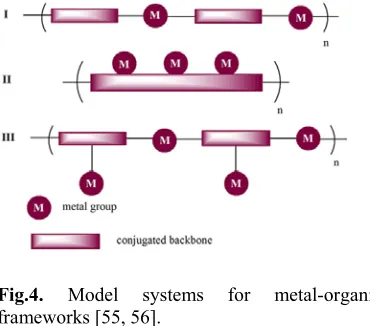
Fig.4. Model systems for metal-organic frameworks [55, 56].
3. Electroactive coordination polymers
Polymeric nanostructures and molecules with π-conjugated systems that possess redox active properties have attracted a widespread interest. A distinctive feature of these conjugated materials is electronic communication via transition metals’
interactions through π-conjugated backbone [50-53]. Redox properties of both electroactive ligands and the metals are extremely important to develop a multi-redox system [54]. Metal-contained conjugated oligomers and polymers have been previously reviewed by Wolf Mo.[55] and Moonhyun Oh.[56]. As it is evident in fig. 4, in the case of both metals and ligands possessing two coordination sites, these compounds are arrayed alternatively to give the corresponding MOF with linear structure (type I). Another designed system is produced by a π-conjugated ligand with multiple-coordination sites giving a multi-nuclear compound (type II). Appropriate organanometallic π-complexes are also able to function as linkers or spacers to afford metal-organometallic coordination networks (type III). From the viewpoint mentioned above, some of the redox-active π -conjugated ligands are listed in table 1.
90 A. Abbasi al./ JNS 2 (2012) 85-100
Table 1. Redox states of some π-conjugated bridge ligands
Redox states Refrences
54
57
54
58
59
60
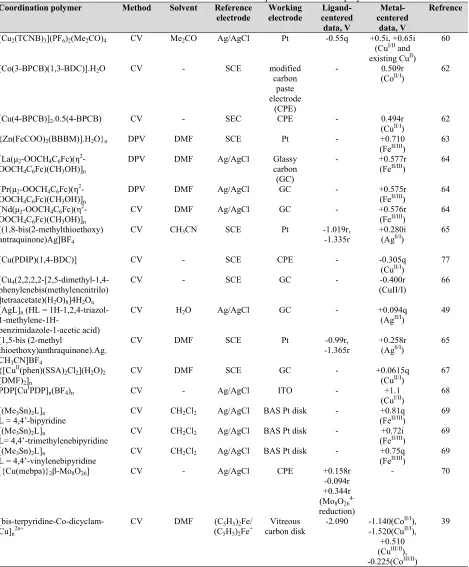
Table 2 presents electrochemical data for some reported CPs. The abbreviations used for the ligands, solvents, etc. are shown in section 6.
nanoporous coordination cages, coordinating atoms, solvent and temperature. In this paper, we will briefly discuss the effect of these factors on the electrochemical properties of CPs.
3.1. Ligand’s influence on the redox properties
A survey of electroactive coordination polymers revealed that the size of nanopores, nature of the substitutes on ligands, σ-donor effects, and π-back bonding interactions influence their redox behavior [68, 71-73]. For instance, Megumu Munakata [60] prepared polymeric
coordination compound [Cu2(TCNB)3](PF6)2(Me2CO)4], using
[Cu(CH3CN)4]PF6 and 1,2,4,5-tetracyanobenzene (TCNB). Solutions of acetone were employed for cyclic voltammetric measurenments vs. Ag/AgCl. The polymer exhibited a quasi-reversible one-electron reduction corresponding to the electron transfer from Cu(I) to the electron acceptor ligand.
Electron transfer from Cu(I) to TCNB ligand has been confirmed by the presence of an EPR signal for this polymer. The reduction potential of -0.55V is close to that of noncoordinated TCNB (-0.49V), suggesting that the π-back bonding interactions almost thoroughly compensate the σ donor effect of the ligand.
C.-Y. Cao et al.[71] have made use of the bidentate ferrocenyl sandwich molecule
N,N’-bis-3-pyridylmethyl-1,1’-ferrocenedicarboxamide (3-BPMFA) as an organometallic coordination ligand in the reaction with CdBr2 to construct coordination polymers. They prepared the solvated polymer [Cd(µ-3-BPMAF)2Br2]n.nMeOH from methanol and unsolvated one [Cd(3-BPMFA) (µ-Br)2] from DMF-Et2O. The electrochemical behavior of 3-BPMFA ligand and the polymers was investigated in DMF by differential pulse voltammetry. Iron redox peak of 3-BPMFA (Ep=0.784V) corresponds to a single ferrocene/ferrocenium redox (Fc/Fc+) couple. In comparasion with unsubstituted ferrocene (Ep=0.456V), this redox peak shifted towards more positive values. This can be related to the electron-withdrawing substituted groups of ferrocene that decrease the density of cyclopantadienyl ring and make the ferrocene unit more difficult to oxidize. By employing oligo-α -pyridylamino ligands (scheme 1), a series of extended metal atom chains (EMACs) have been synthesized. H. H Ismayilov[72] made great efforts to use the variety of metals and extend lengths of the EMACs. They included pyrazine instead of pyridine rings in oligo-α-pyridylamino ligand.
92 A. Abbasi al./ JNS 2 (2012) 85-100
Table 2. Electrochemical data for some of the reported coordination polymers.a
Coordination polymer Method Solvent Reference electrode
Working electrode
Ligand-centered
data, V
Metal-centered
data, V
Refrence
[Cu2(TCNB)3](PF6)2(Me2CO)4 CV Me2CO Ag/AgCl Pt -0.55q +0.5i, +0.65i (CuI/II and existing CuII)
60
[Co(3-BPCB)(1,3-BDC)].H2O CV - SCE modified carbon
paste electrode
(CPE)
- 0.509r (CoII/I) 62
[Cu(4-BPCB)]2.0.5(4-BPCB) CV - SEC CPE - 0.494r (CuII/I) 62 {Zn(FcCOO)2(BBBM)].H2O}n DPV DMF SCE Pt - +0.710
(FeII/III) 63 [La(µ2-OOCH4C6Fc)(η2
-OOCH4C6Fc)(CH3OH)]n
DPV DMF Ag/AgCl Glassy carbon
(GC)
- +0.577r (FeII/III) 64
[Pr(µ2-OOCH4C6Fc)(η2 -OOCH4C6Fc)(CH3OH)]n
DPV DMF Ag/AgCl GC - +0.575r
(FeII/III) 64 [Nd(µ2-OOCH4C6Fc)(η2
-OOCH4C6Fc)(CH3OH)]n
CV DMF Ag/AgCl GC - +0.576r
(FeII/III) 64 [(1,8-bis(2-methylthioethoxy)
antraquinone)Ag]BF4
CV CH3CN SCE Pt -1.019r,
-1.335r +0.280i (Ag0/I) 65
[Cu(PDIP)(1,4-BDC)] CV - SCE CPE - -0.305q
(CuII/I) 77 [Cu4
(2,2,2,2-[2,5-dimethyl-1,4-phenylenebis(methylenenitrilo) ]tetraacetate)(H2O)8]4H2On
CV - SCE GC - -0.400r (CuII/I) 66
[AgL]n (HL = 1H-1,2,4-triazol-
1-methylene-1H-benzimidazole-1-acetic acid)
CV H2O Ag/AgCl GC - +0.094q (AgII/I) 49
[1,5-bis (2-methyl
thioethoxy)anthraquinone).Ag. CH3CN]BF4
CV DMF SCE Pt -0.99r,
-1.365r +0.258r (Ag0/I) 65
{[CuII(phen)(SSA)
2Cl2](H2O)2 (DMF)2]n
CV DMF SCE GC - +0.0615q
(CuII/I) 67 PDP[CuIPDP]
n(BF4)n CV - Ag/AgCl ITO - +1.1
(CuI/II) 68 [(Me3Sn)2L]n
L = 4,4’-bipyridine CV CH2Cl2 Ag/AgCl BAS Pt disk - (Fe+0.81q II/III) 69 [(Me3Sn)2L]n
L= 4,4’-trimethylenebipyridine CV CH2Cl2 Ag/AgCl BAS Pt disk - (Fe+0.72i II/III) 69 [(Me3Sn)2L]n
L = 4,4’-vinylenebipyridine CV CH2Cl2 Ag/AgCl BAS Pt disk - (Fe+0.75q II/III) 69 [{Cu(mebpa)}2β-Mo8O26] CV - Ag/AgCl CPE +0.158r
-0.094r +0.344r (Mo8O26 4-reduction)
- 70
[bis-terpyridine-Co-dicyclam-Cu]n2n+
CV DMF (C5H5)2Fe/ (C5H5)2Fe+
Vitreous
carbon disk -2.090 -1.140(Co II/I), -1.520(CuII/I),
+0.510 (CuIII/II), -0.225(CoIII/II)
39
The introduction of one or more of the nitrogen-rich aromatic rings such as pyrazine to the ligand revealed very different redox properties. For instance, electrochemical studies in trinuclear extended metal atom chains of [Cr3(µ3 -dpza)4Cl2] and [Cr3(µ3-dpa)4Cl2 showed that existence of the pyrazine rings in the
complex facilitated reduction and retarded oxidation. This observation is sensible in the view of the fact that pirazine ring with two nitrogen atoms is more electronegative than the pyridine ring.
Scheme 2. Organo-tin coordination compound [69].
Redox potentials of MOFs have been affected by coordinating atoms. Let’s consider electrochemistry of the CPs reported by V.Chandrasekhar and R.Thirumoorthi [69]. First they obtained a molecular dinuclear organotincarboxylate ((ph3Sn)2L) (2) in the condensation reaction between LH2 (1) and bis(triphenyltin) oxide. They took advantage of unsaturated coordination site in complex (2) to prepare one-dimensional polymeric compounds 1-3 in the presence of ditopic ligands (scheme 2). Electrochemical studies of these ferrocene-tin hybrid systems were carried out in CH2Cl2 containing [n-Bu4N][PF6] at a
scan rate of 100mV/s (vs. Ag/AgCl). The main characteristic of these compounds was their electrochemical stability even after 6 cycles. Compounds 1 and 3 revealed a single quasi-reversible peak due to an oxidation at +0.81 and +0.75V, respectively while compound 2 showed a single irreversible peak at +0.72V. These polymers are easier to oxidize than the parent compound 2 because of the coordination of the nitrogen atom to tin center.
94 A. Abbasi al./ JNS 2 (2012) 85-100
multilayers of Pd(II) using six kinds of multidentate ligands as linkers. Electrochemical studies were performed using Pt wire as the auxiliary and Ag/AgCl as the reference electrode. The ITO electrode coated with the CPs and used as the working electrode in KCl electrolyte containing K3[Fe(CN)6]. Different current intensity was observed depending on the penetration of electroactive Fe(CN)63-/4- molecules through CP multilayers. The results showed significant decrease of the current peak for the CPs with small nanoporous coordination cages.
3.2. Metal centers and electrochemical properties
The nature of the ligand, the distance between metal centers and the dn electron configuration determine the redox potential of the polymeric system. As a typical example Gasnier et al. [39] described the preparation of homo- and heterometallic CPs containing dioxocyclam ligand
(dioxocyclam=1,4,8,11-tetraazacyclo-tetradecane-5,7-dione) and transition metal cations (M2+= Cu+2, Fe2+, Co2+ and Ni2+ ions). The ligand and the structure of its coordination polymer are shown in fig. 5. Electrochemical characterization of the polymer was performed by cyclic voltammetry in DMF containing tetra-n-butylammonium perchlorate (TBAP, 0.1M) electrolyte. In the case of M2+ = Co2+, oxidation and reduction potentials were close to nonpolymeric complex of dioxocyclam ligand with Cu2+ and Co2+.
Fig. 5. Schematic preparation of polymer species 1CuM (M = Fe, Co, Ni or Cu) [39].
These data confirmed that the redox active units in the polymer chain behave as if they are almost independent and there are none or only very weak electrochemical interactions between two vicinal metallic ions because of non-conjugated nature of the ligand.
prepared a series of m-ferrocenylbenzoate [m-NaOOCH4C6Fc, Fc=(η5-C5H5)Fe(η5 -C5H4)] lanthanide CPs by slowly diffusing a methanol solution of m-ferrocenylbenzoate sodium into a water solution of Ln(NO3)3.nH2O. They found that lanthanide ions, the phenyl ring and carboxylate groups influenced the oxidation potentials of the polymers. CV and DPV voltammograms revealed that E1/2 potentials of the CPs were slightly more positive than that of
m-HOOCH4C6Fc. It is evident that the electron-withdrawing nature of the coordinated lanthanide ions in the polymers causes the oxidation of the ferrocenyl moieties to be difficult. However, the minor change in the potential in the presence of lanthanide ions implied that the ions have a small influence on the oxidation of the ferrocenyl moieties in the polymers because of relatively long charge-transfer distance
Fig. 6. Schematic representation of Zinc (II)-containing metallopolymers [74].
between the lanthanide ions and FeII ion by carboxylate group, phenyl ring and cyclopentadienyle.
3. 3. Effect of temperature on the potential
Separation between potentials of the forward and reverse peaks (peak-to-peak separation), ∆Ep, is related to the electrochemical reversibility of an electrode reaction, namely the rate of the electron transfer. According to the equation (1) ∆Ep=2.3RT/nF (1)
∆Ep is equal to 59/n mV at 25°C and n is the number of electron exchanged per molecule of oxidant [2].
Regarding this, the electrochemical properties of C2Co2 cluster-bridged bipyridine ligand
96 A. Abbasi al./ JNS 2 (2012) 85-100
1.36V is attributed to the one-electron reduction of the cluster unit C2Co2(CO)6 and production of the corresponding radical anion which is fairly unstable and may decompose on the surface of an electrode to produce the Co(CO)4- monoanion with an irreversible one-electron oxidation process at -0.23V. However the irreversible reduction peak at -1.36V displayed at room temperature becomes reversible and the irreversible oxidation process at -0.23V disappears at low temperature, both indicating that the radical anion of the ligand becomes stable at such a low temperature.
3. 4. Scan rate effects
The rate of an electron transfer can be influenced by the rate with which the electrode is supplied with reagents and cleared from the electrogenerated products. Movements of electroactive species from the bulk of solution to the electrode surface are governed by three physical mechanisms: convection, diffusion, and migration. Diffusion occurs when there is a gradient of concentration in solution, migration is caused by a gradient of an electrical potential and convection induced by a mechanical force. Investigation of redox processes controlled only by diffusion is advantageous because the laws are thoroughly known to chemists [2]. Diffusion-controlled processes typically exhibit a peak current (ip) that is linearly dependent on the square root of the san rate (ν1/2), while surface-confined species exhibit ip dependent on the san rate (ν).
To further illustrate the role of the scan rate consider, for example, polymeric nickel
bis(dithiolene) compound mentioned in section 2 (Fig. 3). The observed linear dependence of ip on ν1/2 for both anodic and cathodic current between 40 and 200 mVs-1 showed that the polymer does not deposit on the electrode surface at cathodic potentials of +0.5V. This redox behavior was in agreement with none polymeric nickel bis(dithiolene) complexes [76] showing that the metal center approaches the electrode surface close enough for electron transfer although the metal complexes are contained in the polymer network [48].
While nickel bis(dithiolene) polymer showed linear dependence of ip on ν1/2, polymeric compound [Cu(PDIP)(1,4-bdc)] revealed dependence of ip on the scan rate [77]. The polymer bulk-modified carbon paste electrode was fabricated as the working electrode. CV voltammogram in 0.1 M aqueous solution of acetate buffer (pH=3.3) showed a quasi-reversible reduction for Cu2+/Cu+ at E
1/2 = -305 mV in the scan rate of 60 mVs-1. When the scan rate was increased from 60 to 450 mVs-1, the peak current showed dependence to ν, therefore the redox process was surface-controlled; and the peak potentials changed gradually: the cathodic peak potentials shifted to negative direction and the corresponding anodic peak potentials shifted to positive direction while increasing the scan rate.
4. Applications of redox-active coordination polymers
intraligand excitation, or visible region electronic transitions, they can be used as electrochromic materials. One of the main uses of electrochromic materials is in smart windows for cars and buildings. Fabrication of solid-state electrochromic devices generally requires polymeric systems although it is possible to make solution-phase devices with mononuclear transition metal compounds.
Electrochromism refers to the generation of different visible-region electronic absorption bands caused by switching between different redox states. In this case, the electrochemistry of PDP[CuIPDP]
n (BF4)n polymer (PDP=phenenthroline-dodecane-phenanthroline) is characterized by a Cu(I)/Cu(II) redox process at a formal potential value of 1.1V vs. Ag/AgCl [68]. The polymer showed the absorption peak at 455 nm that is related to an MLCT transition in the compound. Spectral changes of the polymer film on an ITO electrode were investigated by applying potentials of 0 or 1.4V vs. Ag/AgCl in 0.1M LiClO4 in ethanol-water. The disappearance of the absorption peak at 455 nm upon stepping the potential from 0 to 1.4V indicates the complete oxidation of the Cu(I) cluster to Cu(II) and disappearance of the absorption in the visible region. The authors have also pointed out that TPP[FeIITPT]
n(PF6)2n and CTPCT[FeIICTPCT]
n(PF6)2n exhibited a considerably enhanced switching rate.
Nguyen et al. [57] prepared three-dimensional porous CPs formulated as M2(TTF-TC)H2 (TTF-TC=tetrathiafulvalene tetracarboxylic acide, M=K, Rb, Cs). As shown in table 1, tetrathiafulvalene (TTF)
derivatives are sulfur-rich π-electron donors and can partially oxidize to form organic molecular conducting salts. Thus the authors took advantage of the redox activity of the organic linker as alternative electrode materials in lithium-ion batteries.
X.-L. Wang et al. [62] prepared MOF of [Cu(4-bpcb)(1,3-BDC)]2.0.5(4-bpcb), using N,N-bis (3-pyridinecarboxamide)-1,4-benzene(3-bpcb) and 1,3-benzedicarboxylate ligands. The polymer possesses potential applications in the field of electrochemistry. The polymer carbon paste electrode (CPE) was fabricated as the working electrode due to insolubility of the compound in water and common organic solvents. The mean peak potential for the polymer-CPE was 494 mV (100mV/s) that was related to the redox couple of CuII/CuI. The electrocatalytic reduction of nitrite was performed at both a bare CPE and the polymer CPE containing 1M solution of H2SO4. There was no redox peak at the bare CPE in the presence of nitrite. By increasing nitrite concentrations, the reduction peak currents increase noticeably and the corresponding oxidation peak currents decrease remarkably at the polymer-CPE. The results indicate that the polymer possesses good electrocatalytic activity toward the reduction of nitrite.
5. Conclusions and perspectives
98 A. Abbasi al./ JNS 2 (2012) 85-100
structures of assembled products are greatly affected by a variety of conditions, such as temperature, pH value, molar ratio of reactants and solvent system. Electroactive metal-contained conjugated polymers such as those described in this article exhibit interesting redox properties due to metal interactions and electronic communications provided by the π-conjugated backbone of the spacer ligand. The electronic exchange can be affected by the nature of the spacers and metals. Redox-active coordination polymers are excellent candidates for potential functional solid states materials and the development in this field will be strictly connected with a more use of modeling of structural designs and properties.
Acknowledgement
The authors are grateful for a grant from University of Tehran.
References
[1] A. Houmam, Chem. Rev. 108 (2008) 2180-2237.
[2] P. Zanello, Inorganic electrochemistry: theory, practice and application, RSC, 2003. [3] L. Brunsveld, B. J. B. Folmer, E. W. Meijer, R. P. Sijbesma, Chem. Rev. 101 (2001) 4071−4097.
[4] V. Balzani, A. Juris, M. Venturi, Chem. Rev. 96 (1996) 759−833.
[5] W. L. Leong, J. J. Vittal, Chem. Rev. 111 (2011) 688–764.
[6] A. Abbasi, S. Geranmayeh, V. Saniee, N. Modanlou Juibari, A. Badiei, Zeitschrift für Kristallographie, (2012) DOI: 10.1524/zkri.2012.1518.
[7] S. Geranmayeh, A. Abbasi, M. Skripkin and A. Badiei, Polyhedron, submitted
[8] Q. Ma, M. Zhu, C. Yuan, S. Feng, L. Lu, Q. Wang, Cryst. Growth Des. 10 (2010) 1706-1714.
[9] H. An, Z. Han, T. Xu, Inorg. Chem. 49 (2010) 11403-11414.
[10] G. Ma, A. Molla-Abbassi, M. Kritikos, A. Ilyukhin, F. Jalilehvand, V. Kessler, M. Skripkin, M. Sandström, J. Glaser, J. Näslund and I. Persson, Inorg. Chem. 40 (2001) 6432-6438.
[11] M. Skripkin, P. Lindqvist-Reis, A. Abbasi, J. Mink, I. Persson and M. Sandström, Dalton Trans. (2004) 4038-4049.
[12] A. Molla-Abbassi, M. Skripkin, M. Kritikos, I. Persson, J. Mink and M. Sandström, Dalton Trans. (2003) 1746-1753. [13] A. Abbasi, E. Damian Risberg, L. Eriksson, J. Mink, I. Persson, M. Sandström, Y. V. Sidorov, M. Yu. Skripkin and A-S. Ullström, Inorg. Chem. 46 (2007) 7731-7741. [14] A. Abbasi, M. Skripkin, L. Eriksson and N. Torapava, Dalton Trans. 40 (2011) 1111-1118.
[15] A. Abbasi, S. Geranmayeh, M. Skripkin and L. Eriksson, Dalton Trans. 41 (2012) 850-859.
[16] A. H. Khoshaman, B. Bahreyni, Sens. Actuator B, 162 (2012) 114-119.
[17] S. Shimomura, M. Higuchi, R. Matsuda, K. Yoneda, Y. Hijikata, Y. Kubota, Y. Mita, J. Kim, M. Takata, S.Kitagawa, Nat. Chem. 2 (2010) 633-637.
[18] H.-Y. Liu, H. Wu, J. Yang, Y.-Y. Liu, B. Liu, Y.-Y. Liu, J.-F. Ma, Cryst. Growth Des. 11 (2011) 2920–2927.
[20] G. Dong, P. Ke-liang, D. Chun-ying, H. Cheng, M. Qing-jin, Inorg. Chem. 41 (2002) 5978-5985.
[21] O. R. Evans, W. Lin, Chem. Mater. 13 (2001) 2705-2712.
[22] S. Takaishi, M. Hosoda, T. Kajiwara, H. Miyasaka, M. Yamashita, Y. Nakanishi, Y. Kitagawa, K. Yamaguchi, A. Kobayashi, H. Kitagawa, Inorg. Chem. 48 (2009) 9048–9050. [23] Y. Fuma, M. Ebihara, S. Kutsumizu, T. Kawamura, J. Am. Chem. Soc. 126 (2004) 12238-12239.
[24] H. Miyasaka, N. Motokawa, S. Matsunaga, M. Yamashita, K. Sugimoto, T. Mori, N. Toyota, K. R. Dunbar, J. Am. Chem. Soc. 132 (2010) 1532–1544.
[25] M.-H. Zeng, Q.-X. Wang, Y.-X. Tan, S. Hu, H.-X. Zhao, L.-S. Long, M. Kurmoo, J. Am. Chem. Soc. 132 (2010) 2561–2563. [26] H. J. Choi, M. P. Suh, J. Am. Chem. Soc. 126 (2004) 15844-15851.
[27] C. Ritchie, C. Streb, J. Thiel, S. G. Mitchell, H. N. Miras, D.-L. Long, T. Boyd, R. D. Peacock, T. McGlone, L. Cronin, Angew. Chem. Int. Ed. 47 (2008) 6881 –6884. [28] Y. E. Cheon, M. P. Suh, Angew. Chem. Int. Ed. 48 (2009) 2899 –2903.
[29] K. L. Mulfort, J. T. Hupp, J. Am. Chem. Soc. 129 (2007) 9604-9605.
[30] P. Dalach, H. Frost, R. Q. Snurr, D. E. Ellis, J. Phys. Chem. C 112 (2008) 9278– 9284.
[21] K. L. Mulfort, T. M. Wilson, M. R. Wasielewski, J. T. Hupp, Langmuir, 25 (2009) 503-508.
[32] G. Férey, F. Millange, M. Morcrette, C. Serre, M.-L. Doublet, J.-M. Grenèche, J.-M. Tarascon, Angew. Chem. Int. Ed. 46 (2007) 3259 –3263.
[33] M. Armand, S. Grugeon, H. Vezin, S. Laruelle, P. Ribière, P. Poizot, J.-M. Tarascon, Nat. Mater. 8 (2009) 120-125.
[34] J. Xiang, C. Chang, M. Li, S. Wu, L. Yuan, J. Sun, Cryst. Growth Des. 8 (2008) 280-282.
[35] S. Shimomura, R. Matsuda, T. Tsujino, T. Kawamura, S. Kitagawa, J. Am. Chem. Soc. 128 (2006) 6416-16417.
[36] S. Shimomura, S. Horike, R. Matsuda, S. Kitagawa, J. Am. Chem. Soc. 129 (2007) 10990-10991.
[37] A. Morsalia, M. Y. Masoomi, Coord. Chem. Rev. 253 (2009) 1882–1905.
[38] K. Akhbari, A. Morsali, Coord. Chem. Rev. 254 (2010) 1977–2006.
[39] A. Gasnier, J.-M. Barbe, C. Bucher, C. Duboc, J.-C. Moutet, E. Saint-Aman, P. Terech, G. Royal, Inorg. Chem. 49 (2010) 2592–2599.
[40] S.R. Annapoorna, M. P. Rao, B. Sethuram, J. Electroanal. Chem. 490 (2000) 93–97.
[41] L. J. Núñez-Vergara, D. Farias, S. Bollo, J.A. Squella, Bioelectrochemistry 53 (2000) 103–110.
[42] V. K. Gupta, A.K. Singh, B. Gupta, Anal. Chim. Acta 575 (2006) 198-204.
[43] G. Anguloa, A. Kapturkiewicz, A. Palmaerts, L. Lutsenc, T. J. Cleij, Dirk Vanderzande, Electrochim. Acta 54 (2009) 1584–1588.
[44] R. N. Goyal, V. K. Gupta, S. Chatterjee, Anal. Chim. Acta 657 (2010) 147–153. [45] S. M. Sabry, M. H. Barary, M. H. Abdel-Hay, T. S. Belal, J. Pharm. Biomed. Anal. 34 (2004) 509–516.
100 A. Abbasi al./ JNS 2 (2012) 85-100
[47] Gary A. Mabboil, J. Chem. Educ. 60 (1983) 697-702.
[48] F. Wang, J. R. Reynolds, Macromolecules 23 (1990) 3219-3225.
[49] J.-C. Liu, J, Cao, W.-T. Deng, B.-H. Chen, J. Chem. Crystallogr 41 (2011) 806– 810.
[50] T. Amaya, T. Ueda, T. Hirao, Tetrahedron Lett. 51 (2010) 3376–3379.
[51] F. Du, H. Wang, Y. Bao, B. Liu, H. Zheng, R. Bai, J. Mater. Chem. 21 (2011) 10859-10864.
[52] S.-M. Fang, M. Hu, Q. Zhang, M. Du, C.-S. Liu, Dalton Trans. 40 (2011) 4527-4541. [53] I. Welterlich, B. Tieke, Macromolecules 44 (2011) 4194–4203.
[54] T. Hirao, Coord. Chem. Rev. 226 (2002) 81–91.
[55] M. O. Wolf, J. Inorg. Organomet. Polym. Mater. 16 (2006) 189-199.
[56] M. Oh, G. B. Carpenter, D. A. Sweigart, Acc. Chem. Res. 37 (2004) 1-11.
[57] T. L. A. Nguyen, R. Demir-Cakan, T. Devic, M. Morcrette, T. Ahnfeldt, P. Auban-Senzier, N. Stock, A.-M. Goncalves, Y. Filinchuk, J.-M. Tarascon, G. Férey, Inorg. Chem. 49 (2010) 7135–7143.
[58] A. L. Smith, L. A. Clapp, K. I. Hardcastle, J. D. Soper, Polyhedron 29 (2010) 164–169.
[59] D. W. Shaffer, S. A. Ryken, R. A. Zarkesh, A. F. Heyduk, Inorg. Chem. 50 (2011) 13–21.
[60] M. Munakata, G. L. Ning, T. Kuroda-Sowa, M. Maekawa, Y. Suenaga, T. Horino, Inorg. Chem. 37 (1998) 5651-5656.
[61] M. Yıldırım, İ. Kaya, Polymer 50 (2009) 5653–5660.
[62] X.-L. Wang, B. Mu, H.-Y. Lin, G.-C. Liu, J. Organometal. Chem. 696 (2011) 2313-2321.
[63] G. Li, Z. Li, H. Hou, X. Meng, Y. Fan, W. Chen, J. Molecular Struc. 694 (2004) 179– 183.
[64] B.-Q. Liu, P.-F. Yana, J.-W. Zhang, P. Chen, G.-M. Li, J. Organometal. Chem. 695 (2010) 2441-2446.
[65] K. Mariappan, P. N. Basa, Inorg. Chim. Acta 366 (2011) 344–349.
[66] J.-X. Ma, X.-Q. Song, W. Dou, X.-F. Huang,W.-S. Liu, Synth. React. Inorg. Met.-Org. Nano-Met. Chem. 38 (2008) 721–726. [67] Z.-X. Du, J.-X. Li, R.-Q. Han, J. Chem. Crystallogr 41 (2011) 34–38.
[68] S. Bernhard, J. I. Goldsmith, K. Takada, H. D. Abruña, Inorg. Chem. 42 (2003) 4389-4393.
[69] V. Chandrasekhar, R. Thirumoorthi, Dalton Trans. 39 (2010) 2684–2691.
[70] Y. Zhao, W. You, L. Dai, L. Zhang, D. Song, Q. Du, Z. Anorg. Allg. Chem. 634 (2008) 2639-2642.
[71] C.-Y. Cao, K.-J. Wei, J. Ni, Y. Liu, Inorg. Chem. Commun. 13 (2010) 19–21.
[72] R. H. Ismayilov, W.-Z. Wang, G.-H. Lee, R.-R. Wang, I. P.-C. Liu, C.-Y. Yeh, S.-M. Peng, Dalton Trans. (2007) 2898–2907. [73] K. M. Thomas, Dalton Trans. (2009) 1487-1505.
[74] F. Schlutter, A. Wild, A. Winter, M. D. Hager, A. Baumgaertel, C. Friebe, U. S. Schubert, Macromolecules 43 (2010) 2759– 2771.
[75] L.-C. Song, G.-X. Jin, L.-Q. Zhao, H.-T. Wang, W.-X. Zhang, Q.-M. Hu, Eur. J. Inorg. Chem. 419 (2009) 419–428.
![Fig. 1. Scanning electron micrograph (SEM) of schematic representation of nano-sized 1-D crystal fragments[Ni2(µ2-tpphz)(µ2-tp)(H2O)6]n.(tp).3.65(H2O) and [6]](https://thumb-us.123doks.com/thumbv2/123dok_us/8956735.1866103/2.595.315.508.546.676/scanning-electron-micrograph-schematic-representation-sized-crystal-fragments.webp)
![Fig. carb 3. (a) Redox on working elprocess of polectrode in a 0lymeric nicke0.1 M TBAClOel bis(dithiolenO4/DMF solutne) (b) cyclic tion [48]](https://thumb-us.123doks.com/thumbv2/123dok_us/8956735.1866103/4.595.91.511.336.565/redox-working-elprocess-polectrode-lymeric-tbacloel-dithioleno-solutne.webp)

![Fig. 5. Schematic preparation of polymer species 1CuM (M = Fe, Co, Ni or Cu) [39].](https://thumb-us.123doks.com/thumbv2/123dok_us/8956735.1866103/10.595.315.518.88.332/fig-schematic-preparation-polymer-species-cum-fe-ni.webp)
![Fig. 6. Schematic representation of Zinc (II)-containing metallopolymers [74]. ∆Eis equal to 59/n mV at 25°C and n is the](https://thumb-us.123doks.com/thumbv2/123dok_us/8956735.1866103/11.595.141.454.285.473/fig-schematic-representation-zinc-containing-metallopolymers-eis-equal.webp)
