1 Intestinal Failure in Adults: Recommendations from the ESPEN Expert Groups
1 2 3
Loris Pironi1, Olivier Corcos2, Alastair Forbes3, Mette Holst4, Francisca Joly5, Cora Jonkers6, 4
Stanislaw Klek7, Simon Lal8, Annika Reintam Blaser9, Katie E. Rollins10, Anna S. Sasdelli1, Jon 5
Schaffer8, Andre Van Gossum11, Geert Wanten12, Chiara Zanfi13, Dileep N Lobo10 on behalf of the 6
ESPEN Acute and Chronic Intestinal Failure Special Interest Groups* 7
8
1 Center for Chronic Intestinal Failure, Department of Digestive System, St. Orsola Hospital, 9
University of Bologna, Italy 10
11
2 Intestinal Stroke Center (SURVI)/ Gastroenterology, IBD and Nutrition Support Department, 12
Beaujon Hospital, and Laboratory for Vascular Translational Science UMR 1148, University Paris 13
VII, France 14
15
3 Norwich Medical School, University of East Anglia, Bob Champion Building, Norwich Research 16
Park, Norwich, NR4 7UQ, UK 17
18
4 Center for Nutrition and Bowel Disease, Department of Gastroenterology, Aalborg University 19
Hospital and Department of Clinical Medicine, Aalborg University, Denmark 20
21
5 Gastroenterology, IBD and Nutrition Support Department, Beaujon Hospital, and 22
Gastrointestinal and Metabolic Dysfunctions in Nutritional Pathologies UMR 1149, University Paris 23
VII, France 24
25
6 Amsterdam University Medical Center, location AMC, Amsterdam, The Netherlands 26
27
7 Stanley Dudrick’s Memorial Hospital, General Surgery Unit with Intestinal Failure Center, 28
Skawina, Poland 29
30
8 Intestinal Failure Unit, Salford Royal & Manchester University, Manchester, U.K. 31
32
9 Department of Anaesthesiology and Intensive Care, University of Tartu, Tartu, Estonia and 33
Department of Intensive Care Medicine, Lucerne Cantonal Hospital, Lucerne, Switzerland 34
35
10 Gastrointestinal Surgery, Nottingham Digestive Diseases Centre, National Institute for Health 36
Research (NIHR) Nottingham Biomedical Research Centre, Nottingham University Hospitals and 37
University of Nottingham, Queen’s Medical Centre, Nottingham NG7 2UH, UK 38
39
11 Clinic of Intestinal Diseases and Nutritional Support, Hopital Erasme, Free University of 40
Brussels, Brussels, Belgium. 41
42
12 Intestinal Failure Unit, Department of Gastroenterology and Hepatology. Radboud university 43
medical center, Nijmegen, The Netherlands 44
*Manuscript
2 45
13 Department of Organ Failure and Transplantation, Sant'Orsola Hospital, University of Bologna, 46
Italy. 47
48 49 50
*ESPEN Acute and Chronic Intestinal Failure Special Interest Groups 51
The following members of the ESPEN Acute and Chronic Intestinal Failure Special Interest Groups 52
participated in the workshop as discussants and chairman: Rosa Burgos Pelaez, Cristina Cuerda, 53
Simon Gabe, Luca Gianotti, Oivind Irtun, Darlene Kelly, Marina Panisic, Henrik Rasmussen, 54
Stephane Schneider, Kinga Szczapanek, Michael Staun, Ronan Thibault 55
56 57 58
Correspondence to: 59
60
Professor Loris Pironi 61
Center for Chronic Intestinal Failure, 62
Department of Digestive System, 63
St. Orsola Hospital, 64
University of Bologna, Italy 65
Tel and fax: +39 051 6363073 66
E-mail: [email protected] 67
68
List of abbreviations: 69
ACS abdominal compartment syndrome; AGI acute gastrointestinal Iinjury; AIF acute intestinal 70
failure; AGIRS autologous gastrointestinal reconstructive surgery; BAPEN British Association of 71
Parenteral and Enteral Nutrition; BSPGHAN British Society of Paediatric Gastroenterology and 72
Nutrition; CIF chronic Intestinal failure (CIF); CRBSI catheter related bloodstream infection; CVC 73
central venous catheter; ESICM European Society of Intensive Care Medicine (ESICM); ESPEN 74
European Society for Clinical Nutrition and Metabolism; GLP glucagon-like peptide; HAN home 75
artificial nutrition; HPN home parenteral nutrition; i3 intestinal ischaemic injury; ICD International 76
Classification of Disease; IF intestinal failure; IFALD intestinal failure associated liver disease; IFU 77
intestinal failure unit; ITx intestinal transplantation; IVS intravenous supplementation; LILT 78
longitudinal intestinal lengthening; MDT multi-disciplinary teams; MODS multiple organ 79
dysfunction syndrome; NST nutrition support team; PYY peptide YY; SBS short bowel syndrome; 80
SCFA short chain fatty acids; SILT spiral intestinal lengthening and tailoring; SIRS systemic 81
inflammatory response syndrome; STEP serial transverse enteroplasty; TNP topical negative 82
pressure; WGAP Working Group on Abdominal Problems 83
3 Abstract
90 91
Background and aims. Intestinal failure (IF) is defined as “the reduction of gut function below the 92
minimum necessary for the absorption of macronutrients and/or water and electrolytes, such that 93
intravenous supplementation is required to maintain health and/or growth”. Functionally, it may 94
be classified as type I acute intestinal failure (AIF), type II prolonged AIF and type III chronic 95
intestinal failure (CIF) The ESPEN Workshop on IF was held in Bologna, Italy, on 15-16 October 96
2017 and the aims of this document were to highlight the current state of the art and future 97
directions for research in IF. 98
Methods. This paper represents the opinion of experts in the field, based on current evidence. It is 99
not a formal review, but encompasses the current evidence, with emphasis on epidemiology, 100
classification, diagnosis and management. 101
Results. IF is the rarest form of organ failure and can result from a variety of conditions that affect 102
gastrointestinal anatomy and function adversely. Assessment, diagnosis, and short and long-term 103
management involves a multidisciplinary team with diverse expertise in the field that aims to 104
reduce complications, increase life expectancy and improve quality of life in patients. 105
Conclusions. Both AIF and CIF are relatively rare conditions and most of the published work 106
presents evidence from small, single-centre studies. Much remains to be investigated to improve 107
the diagnosis and management of IF and future studies should rely on multidisciplinary, 108
multicentre and multinational collaborations that gather data from large cohorts of patients. 109
Emphasis should also be placed on partnership with patients, carers and government agencies in 110
order to improve the quality of research that focuses on patient-centred outcomes that will help 111
to improve both outcomes and quality of life in patients with this devastating condition. 112
113
Key words: intestinal failure; short bowel syndrome; definitions; management; acute; chronic; 114
4 Contents
117
1. Introduction 118
2. Epidemiology of intestinal failure 119
3. Identification of intestinal failure 120
4. Multidisciplinary management of intestinal failure 121
5. Acute intestinal failure 122
5.1Assessment of type II prolonged-acute intestinal failure 123
5.2Intestinal ischemic injury as a cause of acute intestinal failure 124
5.3Nutrition therapy and fluid and electrolyte balance 125
5.4Stoma and wound care 126
5.5Prevention and management of sepsis 127
6. Chronic intestinal failure 128
6.1Short bowel syndrome: spontaneous and induced post-resection intestinal adaptation 129
6.2Short bowel syndrome: enhanced post-resection intestinal adaptation 130
6.3Outcome on home parenteral nutrition 131
6.4Prevention and treatment of catheter-related bloodstream infection 132
6.5Prevention and treatment of intestinal failure associated liver disease 133
6.6Non-transplant surgery and intestinal transplantation 134
6.7Transition from childhood to adulthood of chronic intestinal failure patients 135
6.8The economic and social burden of chronic intestinal failure 136
7. Conclusions and future view for clinical and research networking 137
Conflict of interest 138
Acknowledgment 139
References 140
5 1. Introduction
142
Intestinal failure (IF) is defined as “the reduction of gut function below the minimum 143
necessary for the absorption of macronutrients and/or water and electrolytes, such that 144
intravenous supplementation (IVS) is required to maintain health and/or growth”[1]. According to 145
functional criteria it is classified as type I acute intestinal failure (AIF), type II prolonged AIF and 146
type III chronic intestinal failure (CIF)[1]. It may be due to one or more of five major 147
pathophysiological mechanisms that may originate from various gastrointestinal or systemic, 148
congenital or acquired, benign or malignant diseases. A clinical classification of CIF has been 149
devised on the basis of the IVS requirements[1] (BOX 1). The ESPEN Workshop on IF was held in 150
Bologna, Italy, on 15-16 October 2017 focused on IF due to benign disease. 151
152
2. Epidemiology 153
The only available data on the type II-prolonged AIF were provided by a British study in 154
2006, which estimated an annual incidence of 9 patients per million population[2]. Surgical 155
complications (32%), Crohn's disease (21%), motility disorders (14%), intestinal ischaemia (13%) 156
and malignancy (8%) were the main underlying causes[2]. 157
The epidemiology of CIF is based on the data from home parenteral nutrition (HPN) which 158
often include patients with either benign or malignant diseases. In Europe, the prevalence of HPN 159
for CIF has been estimated to range from 5 to 80 per million population, with the incidence 160
ranging from 7.7 to 15 IF/HPN patients/million inhabitants/year[1, 3-5]. Around 10% of patients 161
were in the paediatric age group[1, 3-5]. 162
The 2015 data collection for the ESPEN “CIF Action Day” database, included 2919 adult 163
patients with benign CIF from 65 HPN centers from 22 countries and gave an updated picture of 164
6 frequent pathophysiological mechanism of CIF (64.3%): 36.8% had an end jejunostomy and the 166
remaining had part (19.9%) or all of the colon (5.9%) in continuity. Intestinal dysmotility was 167
present in 17.5% of cases, intestinal fistulae in 7.0%, mechanical obstruction in 4.4% and extensive 168
mucosal disease in 6.8%. The most frequent underlying disease was Crohn's disease (22.4%), 169
followed by mesenteric ischaemia (17.7%), surgical complications (15.8%), primary chronic 170
intestinal pseudo-obstruction (9.7%) and radiation enteritis (7.3%). Furthermore, the data 171
indicated that IVS reflects loss of intestinal function better than energy requirements and allowed 172
formulation of the simplified revision of the formerly proposed 16-category clinical classification of 173
CIF[6]. Strategies to have constantly updated data on incidence and prevalence of AIF and CIF are 174
required to allow adequate allocation of resources from the healthcare systems. 175
176
3. Identification of intestinal failure 177
IF is the rarest type of organ failure. Although publications on “intestinal failure” appear in 178
PubMed from 1980, IF is not yet included in the list of MeSH terms[7]. In 2013, CIF due to benign 179
disease has been included in the ORPHANET list of rare disease (ORPHA:294422)[8]. In addition, 180
CIF is not yet recognized in the International Classification of Disease (ICD) and is not supported 181
uniformly by national health care services[9]. Strategies to identify IF are warranted to allow 182
national healthcare systems to devise appropriate regulations and structures (i.e.: hospital units, 183
multiprofessional teams) for the management of IF. 184
185
4. Multidisciplinary management of intestinal failure 186
The aims of management of patients with IF are to provide IVS, to reduce the severity of IF, 187
to prevent and treat complications, including those related to the underlying disease, IF itself or its 188
7 Multi-disciplinary teams (MDT) are the key to successful management of IF. This was 190
proposed by Nehme[11] in 1980, after finding that patients requiring IVS who were organised, 191
supported and managed by a nutrition support team (NST) were less likely to develop catheter 192
related bloodstream infection (CRBSI) at 24 months than those managed by a variety of physicians 193
(1.3% versus 26.2%). 194
The earliest establishment of HPN was as an extension of hospital care provided by the 195
team that cared for the patient whilst in hospital. This was not universal, was frequently driven by 196
a limited number of people and required thorough succession planning to ensure longevity[12]. 197
In the USA, intestinal care centres were established to provide intestinal rehabilitation, but 198
these were mostly focused upon CIF for weaning off HPN, reducing complications and preparing 199
patients for intestinal transplantation (ITx)[13]. 200
The concept of AIF, however, is a more recent one, which has brought with it the idea of a 201
specialised intestinal failure unit (IFU) where specialist care is focused in one particular ward or 202
area[2, 14]. The main aims of these IFUs are to provide consistency of expert care for safe IVS and 203
catheter care to minimise rates of CRBSI, maintain accurate fluid balance, provide stoma and 204
wound care, distal feeding (enteroclysis) and psychological care, all from highly trained and 205
specialised nurses. A full range of specialists should be available at these IFUs, including constant 206
‘expert’ medical and surgical care, dieticians, pharmacists, psychologists/psychiatrists and 207
interventional radiologists, with admission of patients for purely IF-related issues. There is 208
evidence that such specialised IFUs, providing a skilled MDT, reduce complication rates and 209
mortality[2, 12]. 210
211
5. Acute intestinal failure 212
8 The ESPEN classification of AIF is based primarily on duration and does not comprise any 214
severity categorization. As organ dysfunction in critical illness is commonly graded according to 215
severity, the Working Group on Abdominal Problems (WGAP) of the European Society of Intensive 216
Care Medicine (ESICM), proposed four grades of Acute Gastrointestinal Injury (AGI), based on 217
motility disorders leading to intolerance of enteral nutrition and progressing to gastrointestinal 218
injury[15]. The ESPEN type I-AIF could be associated with AGI grade I due to impaired 219
gastrointestinal motility, whereas the type II-prolonged AIF could be associated with AGI grades II 220
to IV, due to impaired gastrointestinal motility progressing to gastrointestinal mucosal injury, with 221
clear mucosal injury (e.g. bowel ischaemia and necrosis) seen in AGI Grade IV. Evaluation of 222
gastrointestinal function in AIF is mainly based on bedside clinical assessment, which is largely 223
subjective and not well reproducible, whereas searches for specific marker(s) allowing dynamic 224
evaluation are continuing[16]. 225
5.2 Intestinal ischemic injury as a cause of acute intestinal failure 226
Aside from these classifications of AIF, the concept of acute intestinal ischemic injury (i3) 227
has been proposed to standardize and organize a management pathway that can be extended to 228
all AIF, whatever the mechanisms[17]. Acute i3, defined as an acute intestinal injury secondary to 229
a vascular insufficiency, can be present in the type I and type II ESPEN functional classification of 230
AIF, as well as in grades I to IV of AGI. The vascular insufficiency can be occlusive (arterial/venous 231
from thrombosis, embolus, dissection, trauma, tumoral invasion) or non-occlusive (low cardiac 232
output, decreased blood pressure, vasoconstriction, venous stasis). The intestinal injury occurs at 233
different degrees of depth (superficial versus transmural), and at different stages of progression 234
(early/late, reversible/non reversible, necrotic/non-necrotic). Early and superficial i3 can be 235
reversible whereas late, necrotic and transmural i3 are irreversible[17-20]. The loss of the 236
9 deterioration and lead to a local, regional and then systemic inflammatory response syndrome 238
(SIRS) and multiple organ dysfunction syndrome (MODS). 239
A gut and lifesaving multimodal strategy has been proposed[18], including a wide range of 240
specialists for the management of i3 (Box 2). Following the diagnosis of acute i3 a multimodal 241
protocol should be implemented. If the patient is in the early stages of ischaemia then radiological 242
revascularisation is generally recommended, with surgical revascularisation if necessary. In the 243
late and irreversible phases, surgical revascularisation and intestinal resection are the mainstays of 244
management. In a pilot study, patients managed using this multimodal management strategy had 245
a 95% survival at 30 days, with mean lengths of intestinal resection of 30 cm and 207 cm, with or 246
without revascularisation respectively[18]. Recently in the dedicated intestinal stroke center 247
(SURVI) an overall survival of 86% and intestinal resection rates of 27 % have been reported[21]. 248
249
5.3 Nutrition therapy and fluid and electrolyte balance 250
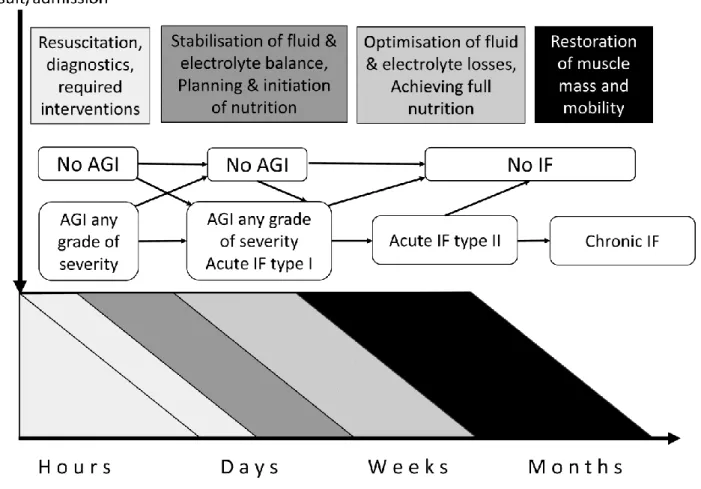
In the management of AIF, there exist different phases, directed to achievement of 251
different goals (Figure 1). Throughout the course, both hypo- and hyper-volaemia should be 252
avoided. In the initial unstable and acute phase of illness capillary leak is observed which leads to 253
hypovolaemia and resultant tissue oedema. There are no clear surrogate markers to quantify the 254
magnitude of the fluid shift, whereas prolonged hypovolaemia is known to aggravate capillary 255
leak. Excessive fluid infusion and hypervolaemia result in bowel oedema, which is more 256
pronounced in injured bowel. This hampers local transport of oxygen and nutrients and impairs 257
anastomotic healing[22-24]. A number of mechanisms influence the occurrence of bowel oedema: 258
capillary leak precipitated by inflammation; increased hydrostatic pressure from hypervolaemia; 259
increased mesenteric venous pressure due to mechanical ventilation, increased intra-abdominal 260
10 intestinal lymph flow due to impaired bowel motility, increased intra-abdominal pressure and 262
mechanical ventilation. 263
Initial fluid administration aims to achieve haemodynamic, tissue perfusion and oxygen 264
delivery goals. Severe hypovolaemia should be avoided as this leads to severe vasoconstriction 265
and activation of the pro-inflammatory cascade. Once hypovolaemia has been corrected, 266
vasodilation commonly occurs and should be treated with vasopressors rather than additional 267
fluids. At the same time, treating severe hypovolaemia with vasopressors is harmful and achieved 268
normal blood pressure does not indicate adequate tissue perfusion. Balanced crystalloids should 269
be used in initial resuscitation. Synthetic colloids may expand the intravascular volume more 270
effectively, but have been associated with renal dysfunction[25]. Replacement of fluids in a later 271
stable phase can usually be guided by measured fluid losses and aim for normal distribution of 272
body water, not only expansion of plasma volume. 273
In terms of nutritional support, the preferred hierarchy generally ranges from oral intake to 274
gastric then jejunal nutrition to parenteral nutrition. Oral intake is not adequate in most critically 275
ill patients and may carry the risk of aspiration. In the acute phase, early nutrition aiming to meet 276
the patient’s full caloric requirements is harmful, but the optimal amount of calories and protein 277
necessary in this early stage is not well established. Parenteral nutrition should be considered if 278
enteral nutrition is not established within one week. Feeding via the enteral route is preferable as 279
it may prevent mucosal atrophy and help preserve the microbiome, but it is difficult to monitor 280
malabsorption in this setting. A combined feeding strategy such as oral and enteral or enteral and 281
parenteral nutrition is, however, known to increase the risk of overfeeding[26]. Contraindications 282
to enteral feeding are summarized elsewhere[27]. In patients with high output fistulae or stoma 283
11 Electrolyte balance is also crucial in the management of AIF, particularly as low 285
concentrations of potassium, magnesium and phosphate are associated with impaired bowel 286
motility[29] and development of the refeeding syndrome[30]. In case of ileus, high-normal 287
concentrations of these electrolytes could be beneficial, but evidence proving such benefit is 288
lacking. Electrolyte concentrations should be monitored closely, particularly in the setting of 289
insulin administration, which may shift potassium, magnesium and phosphate from the 290
extracellular to the intracellular compartment, and lead to overt refeeding syndrome. Losses are 291
frequently unpredictable in AIF, and an intimate understanding of the site of absorption of fluids, 292
electrolytes and nutrients is the key enable anticipation of the impact of resection or bypassed 293
areas of the gastrointestinal tract. 294
5.4 Stoma and wound care 295
High output stomas including enterocutaneous fistulae and complex ostomies as related to 296
type II-prolonged AIF are associated with negative outcomes[31]. Protocols exist for the 297
management of high output stomas, including detection and treatment of the underlying cause, 298
reduction of fluid and electrolyte losses, optimisation with anti-secretory and anti-diarrhoeal 299
medication and ongoing evaluation of efficacy or additional treatment if the high output 300
continues[32-34]. 301
It is particularly important that patients who require monitoring are identified correctly, 302
and that the fluid balance charts are completed accurately, including drain(s) and stoma outputs. 303
Explaining to the patient the reasoning behind fluid restriction has also been shown to improve 304
compliance. Careful observation is recommended, including a measure of size, appearance, 305
function and separation between the stoma and skin surrounding the stoma. A range of 306
appliances is available for expert management of complex stoma and fistulae to maintain skin 307
12 Laparotomy wounds require an individualised treatment plan describing the surface of the 309
wound, including: length, width, depth, eventual undermining or granulation and surrounding 310
skin. Stomas and wounds must be separated, in order to secure proper healing and reduce 311
infections. As for stomas, a variety of appliances for wound management exist. The stoma and 312
wound care nurse specialist must stock a variety of the necessary products and be familiar with 313
their use. Topical negative pressure (TNP) may be used for large wounds or when undermining is 314
more than 5 cm. It may also be used, when drainage of the wound is desired, and where the 315
wound healing is not progressing. TNP is contraindicated in wounds with necrotic tissue, and in 316
those with visible blood vessels[35]. 317
Fluid restriction carries a risk of oral cavity problems such as mouth sores, xerostomia, 318
thick saliva and fungal infection. Evidence-based oral care, in the form of chlorhexidine 319
mouthwash, glycerol products, crushed ice, and lip care, may reduce the risk of aspiration 320
pneumonia[36]. 321
322
5.5 Prevention and management of sepsis 323
Sepsis is the leading cause of death in AIF. Sepsis may originate from the abdominal cavity, 324
be caused by bacterial translocation (e.g. in case of severe bowel distension, subacute bowel 325
ischemia without perforation, etc.), a CRBSI or extraabdominal causes (such as pneumonia or 326
urinary tract infection). Sepsis can present with a wide spectrum of symptoms/signs including 327
impairment of gastrointestinal or hepatic function, fluid retention and oedema, fever, increased 328
metabolic demand and impaired fuel utilisation, insulin resistance and failure to thrive[2]. 329
Abnormal laboratory parameters include elevated C-reactive protein and leucocyte counts, 330
hypoalbuminemia, hyponatraemia and abnormalities in liver function tests. However, clinical signs 331
13 modalities include CT scanning which has an accuracy exceeding 95% and may provide a 333
therapeutic as well as diagnostic opportunity, ultrasound, MRI, radionucleotide studies and 334
fluoroscopy. These imaging modalities should be supported by cultures from peripheral veins and 335
any indwelling lines, urine and wound swabs, chest imaging, and a thorough search should be 336
made to identify a source of sepsis[2, 14]. In the setting of a proven intra-abdominal collection, a 337
minimally invasive approach is recommended in an expedient manner, in the form of either CT or 338
ultrasound-guided drainage, via percutaneous or alternative routes (e.g. gastric, trans-339
gluteal, trans-rectal or trans-vaginal. This should be supplemented by antibiotic therapy which 340
should be guided by microbiological review of cultures. Should a minimally invasive route not be 341
an option, surgical drainage is indicated. 342
Control of sepsis is the primary objective in the management of AIF and some centers use 343
acronyms such as SOWATS (sepsis control, optimisation of nutritional status, wound care, 344
anatomy of the bowel and the fistula, timing of surgery, surgical planning)[37] and SNAP (Sepsis-345
Nutrition-Anatomy-Plan)[14] which help navigate treatment pathways. 346
347
6. Chronic intestinal failure 348
6.1 Short bowel syndrome:spontaneous and induced intestinal adaptation after resection 349
Short bowel syndrome is the most frequent pathophysiological mechanism of CIF in 350
adults[6]. A functional small bowel <200 cm affords an accepted anatomical definition of short 351
bowel in adults, but some authors prefer to limit the term to patients with <150 cm[1]. The 352
incidence of SBS is about 2 per million per year and the prevalence about 20 per million[38], 353
however, the exact epidemiology is not known. 354
SBS is categorized into three types: a) end-jejunostomy (SBS-J); b) jejunocolic anastomosis, 355
14 JC); c) jejuno-ileal anastomosis with ileo-caecal valve and the intact colon in continuity (SBS-357
JIC)[38,39]. 358
Pathophysiologically, SBS can be classified into two subgroups, those with intact colon or 359
part of it in continuity and those without colon in continuity[38-40]. These subgroups differ in 360
three key characteristics: intestinal water and sodium absorption, gastrointestinal hormone 361
secretion and energy absorption from short chain fatty acid (SCFA) produced by the colon 362
microbiota. 363
Gastrointestinal secretion is about 9 liters/day, with water and electrolyte absorption 364
occurring predominantly in the distal small bowel and colon. Furthermore, in the jejunum, the 365
intracellular tight junctions are relatively weak, and sodium absorption is coupled with the 366
absorption of glucose (solvent drag) and occurs only against a concentration gradient. These 367
mechanisms ensure rapid iso-osmolarity of the jejunal contents: hypertonic fluids cause the 368
passage of water and hypotonic-low sodium fluids determine the secretion of sodium and water 369
into the lumen. SBS-J patients often lose more fluid and sodium than ingested (net secretors), 370
whereas in SBS-J and SBS-JIC there is usually sufficient distal bowel to permit fluid and electrolyte 371
balance (net absorbers). The absorption of sodium and water in the colon are normally around 372
200 mmol and 2 L/day in healthy adults and can increase up to 800 mmol and 6 L/day in SBS when 373
the colon is in continuity[38-40]. 374
Many gastrointestinal hormones and neuromodulators, which play a key role in the control 375
of gastrointestinal secretions, motility and intestinal growth, are produced by the endocrine L-cells 376
of the small intestinal and colonic mucosa. Peptide YY (PYY), glucagon-like peptide-1 (GLP-1) and 377
GLP-2 are secreted in the distal ileum and the proximal colon after a meal, regulate motility by 378
slowing gastric empting and small bowel transit (ileal brake) and exert a trophic effect on the 379
15 enhanced in SBS-JC and SBS-JIC and is reduced/absent in SBS-J. This translates to less or absent 381
structural and functional adaptation after resection, and in accelerated gastric empting, especially 382
for liquids in SBS-J[38, 41, 42]. The colon can contribute to the absorption of energy, as SCFAs, 383
following the fermentation of non-absorbed carbohydrates by luminal bacteria. This mechanism 384
can yield up to 1000 kcal/day (4 MJ) in patients with SBS and colon in continuity[43]. 385
Spontaneous physiological intestinal adaptation after massive small bowel resection occurs 386
during the following two to three years, and improves intestinal absorption through intestinal 387
mucosa hyperplasia, slowing of gastrointestinal transit, modified gastrointestinal hormonal 388
secretion (GLP-1, GLP-2 and PYY)[38, 41, 43], development of hyperphagia[44] primarily 389
stimulated by an increased secretion of the orexinogenic gut hormone, ghrelin[45], and alteration 390
of the gut microbiota with a higher prevalence of Lactobacillus and a fewer anaerobes (Clostridium 391
leptum and Bacteroides spp.)[46] and an accumulation of faecal d/l-lactate in some patients[47]. 392
These changes are stimulated by intraluminal nutrients and pancreatico-biliary secretions and are 393
highly variable and unique to each patient. 394
The ESPEN guidelines additionally describe induced intestinal adaptation based on dietary 395
counseling, oral rehydration solution and drugs to slow gastrointestinal transit and decrease 396
intestinal secretion, as well as antibiotics to treat intestinal bacterial overgrowth, when this 397
occurs[12]. Patients are advised a hypercaloric diet, divided into 5-6 meals. Simple sugars should 398
always be limited, lipids limited when colon is in continuity, and fibre limited when there is an end 399
jejunostomy. Hypo-osmolar low-sodium fluids should be avoided because they increase intestinal 400
losses. The consumption of 500-1000 ml/day of oral rehydration solution according to the World 401
Health Organization formula may favour intestinal absorption of water and electrolytes. Proton 402
pump inhibitors at full dosage can reduce intestinal fluid losses by decreasing gastric secretion. 403
16 gastrointestinal secretion and slows gastrointestinal motility, and can be useful in individual 405
patients for a short time. This “conventional” therapy for SBS is, however, supported by very few 406
studies[12]. 407
The probability of weaning a patient from HPN with the combination of spontaneous 408
intestinal adaptation, dietary counselling and conventional therapy depends on the length, 409
integrity and anatomy of the residual bowel in continuity. The minimum small bowel length for 410
independence from PN has been reported to be 35 cm in SBS-JIC, 60 cm in SBS-JC and 115 cm in 411
SBS-J[48], provided that the remnant bowel is healthy, but CIF and HPN dependence may occur 412
when longer remnants (e.g. >200 cm) are diseased and sometimes without overt pathology, a 413
condition termed functional SBS[1, 12]. 414
415
6.2 Short bowel syndrome: enhanced post-resection intestinal adaptation 416
In the last two decades, gastrointestinal hormonal factors have been investigated and used 417
for intestinal rehabilitation of patients with SBS, with the aim of maximizing absorption in the 418
remnant bowel, decreasing intestinal losses, and reducing the need for intravenous 419
supplements[49]. At present, the only one approved by the FDA and EMA for clinical use is the 420
GLP-2 analogue, teduglutide[50]. Randomized clinical trials have demonstrated its efficacy in 421
reducing intravenous supplements in around two-thirds of patients treated so far, a small number 422
having been able to be weaned off HPN[51, 52]. However, long-term benefits and risks still need 423
to be elucidated and, therefore, regular and expert follow-up is strongly advisable. Furthermore, 424
this treatment is costly, and the cost-efficacy as well as the risk-benefit ratio need to be evaluated. 425
A few open-label studies investigated the usefulness of GLP-1 analogues, liraglutide[53, 54] 426
and exenatide[55]. Encouraging results have been observed, but have to be validated by 427
17 429
6.3 Outcome on home parenteral nutrition 430
Patients on HPN for CIF may develop central venous catheter (CVC) or metabolic 431
complications due to factors related to HPN and/or the underlying disease, that may eventually 432
cause death[12, 56]. Patients also suffer commonly from psychological problems and an impaired 433
quality of life as a result of their underlying disease and the burden of HPN[56]. A review of 11 434
published series demonstrated that 53% of patients with benign CIF requiring HPN died as a result 435
of their underlying disease with only 14% dying because of HPN-related complications; of the 436
latter, 8% occurred as a result of catheter-related bloodstream infection (CRBSI), 4% from intestinal 437
failure associated liver disease (IFALD) and 2% from CVC-related venous thrombosis[57]. 438
439
6.4 Prevention and treatment of catheter-related bloodstream infection 440
Older[58, 59], as well as recent[12], international guidelines advise that the diagnosis of 441
CRBSI should be based upon quantitative and qualitative assessment of CVC and peripheral blood 442
cultures. Quantitative blood cultures – counting colony forming units - are the most accurate test 443
for the definitive diagnosis of CRBSI[59]. However, not all IFUs follow such guidance. Indeed, a 444
recent study noted that basing the diagnosis of CRBSI on clinical assessment only, rather than 445
following ESPEN guidance, may lead to over diagnosis of CRBSIs by 46%, which can, in turn, lead to 446
inappropriate antibiotics and increased risk related to repeated CVC re-insertion[58]. Further work 447
is required to address the barriers to units adopting standardised, internationally agreed, 448
protocols to define CRBSIs in patients needing HPN, not least because of the importance placed on 449
CRBSI rate as a quality assurance measure[60]. Furthermore, the role of new diagnostic 450
approaches, such as real-time polymerase chain reaction, aimed at improving diagnostic sensitivity 451
18 Once infected, CVC salvage is paramount to preserving long term venous access[12]. Two 453
recent and large retrospective series from England[61] and the USA[62] demonstrated that 454
successful salvage can be achieved following CRBSI in patients with CIF using standardised 455
protocols involving systemic and local antibiotic therapy. Apparent differences between these 456
studies highlighted that there remain a number of debated issues relating to CVC salvage, 457
including a consensus on salvaging specific microbial isolates, the duration of salvage therapy and 458
the definition of successful salvage. CRBSI rates vary greatly between institutions both nationally 459
and internationally, with reported occurrences between from 0.14 to 1.09 episodes per catheter 460
year[12]. Although ESPEN guidelines are clear on standard approaches to prevention of CRBSI – 461
including education of staff, implementation of handwashing policies, hub disinfection, use of 462
tunneled single lumen catheters – it is clear that there is limited evidence for novel approaches 463
such as antimicrobial lock therapy[12]. There is good evidence that ethanol locks should not be 464
recommended due to the risk of catheter occlusion and damage[12], while a recent multicenter 465
randomised study showed the efficacy of taurolidine lock to reduce the risk of CRBSI significantly 466
in new implanted CVC[63]. 467
468
6.5 Prevention and treatment of intestinal failure associated liver disease 469
Liver injury in CIF can occur as a result of nutrient and non-nutrient factors. The former 470
may include calorie overfeeding and/or nutrient deficiencies, including choline, taurine and 471
carnitine. Non-nutrient factors include recurrent episodes of sepsis, bacterial overgrowth, SBS, 472
hepatotoxic medications and underlying parenchymal liver disease[12, 56]. Retrospective series 473
reveal a significant variation in the reported incidence of advanced liver disease from 0-85%[64-474
67]. Although such variation may have related to the amount of soybean-based lipid administered 475
19 required to allow comparison between individual centres and series. To-date, most studies on 477
IFALD relied on biochemical abnormalities rather than histological information; for example, 478
chronic cholestasis has been defined as the persistent elevation greater than 1.5 times the upper 479
limit of the normal range for more than 6 months of two of the biochemical parameters: alkaline 480
phosphatase, gamma-glutamyl transferase and conjugated bilirubin[64-66]. However, since liver 481
function tests may not correlate with the severity of underlying liver disease, a consensus 482
approach to the diagnosis and categorisation of IFALD is required that synthesises clinical, 483
biochemical, radiological and histological parameters. Indeed, since deterioration of liver disease 484
may not be reflected by changes in standard biochemical parameters, serial liver biopsy is still the 485
gold standard for assessing IFALD[68]; this is, of course, of paramount importance in patients 486
considered for isolated small bowel vs. multivisceral transplantation[12]. The role of alternative, 487
non-invasive approaches to liver biopsy, including transient elastography, MR spectroscopy and 488
quantitative ultrasound has been considered[12]. A multicentre study demonstrated that transient 489
elastography values correlated with the serum bilirubin concentration, the severity of histologic 490
cholestasis, the AST to platelet ratio and the FIB-4 score, but not to the histologic fibrosis 491
stage[69]. Further work is required to evaluate the role of these imaging techniques, in tandem 492
with further assessment of the efficacy of specific serological markers of hepatic fibrosis. 493
Long-established approaches to prevent and/or treat IFALD are agreed: including cycling 494
PN, maintaining oral or enteral intake and preserving small bowel length (wherever possible), 495
avoiding PN overfeeding, limiting the dose of soybean-based lipid to less than 1 g/kg/day and 496
minimising recurrent episodes of sepsis[12]. ESPEN guidelines recommend that the lipid profile of 497
the PN admixture is modified to decrease the omega-6/omega-3 polyunsaturated fatty acid ratio; 498
however, the evidence base for this recommendation is limited[12]. A 4-week randomised 499
20 soybean/MCT/olive oil/fish oil emulsion was associated with lower concentrations of bilirubin and 501
transaminases within the normal reference range compared to soybean-based lipid alone[71]. 502
However, more data are required to evaluate the long-term efficacy, tolerance and safety of these 503
and other novel combination lipids. Current evidence does not support the use of choline, taurine 504
or carnitine to treat IFALD in adults, while limited data are available on the usefulness of 505
ursodeoxycholic acid and of oral antibiotics to treat bacterial translocation[12]. A recent ESPEN 506
position paper has focused on the definition and management of IFALD in adults with CIF. 507
508
6.6 Non-transplant surgery and intestinal transplantation 509
Alternative surgical treatments for CIF are ITx and autologous gastrointestinal 510
reconstructive surgery (AGIRS)[72, 73]. The AGIRS may aim to improve intestinal motility in case of 511
a dilated bowel, to slow intestinal transit in the absence of bowel dilatation or to increase mucosal 512
surface area. When AGIRS is indicated, the first option should be restoration of small bowel 513
continuity in case of unused intestinal segments[12]. The most widely accepted timing for 514
restoration of bowel continuity is at 3-6 months after the acute event, even though period as short 515
as 7-10 days could be considered in the “non-hostile” abdomen[12, 73]. The AGIR procedures for 516
SBS are categorized as tapering enteroplasty or plication, reversed intestinal segments (adult 517
patients), colonic interposition (rarely performed nowadays), intussusception valve (in paediatric 518
population to induce bowel dilation) and the lengthening procedures, which are the most 519
frequently performed in patients with SBS[72, 73]. 520
Lengthening procedures are of choice in case of a rapid intestinal transit and bowel dilation 521
(up to 5 cm). In the absence of bowel dilation, reversed segment[74, 75], colonic interposition[76] 522
or neovalve procedures are used[77], the last one to obtain sequential dilatation and then use the 523
21 lengthening (LILT) or Bianchi’s procedure[78], serial transverse enteroplasty (STEP), first described 525
in 2003[79], the Kimura’s technique (no more used today)[80] and the spiral intestinal lengthening 526
and tailoring (SILT) procedure, firstly described in 2011[81]. 527
Most of the published data are on pediatric patient cohorts. The LILT procedure is a very 528
complex type of surgery, where the dilated bowel is divided longitudinally. Each half longitudinal 529
portion is tubularised and the two new segments are anastomosed end-to-end[78]. In the STEP 530
surgery, serial transverse surgical stapler is applied on the dilated bowel and the new elongated 531
intestinal channel has a zig-zag appearance[79]. In the SILT procedure, the bowel is incised along 532
spiral lines and stretched to a uniformly longer tube of narrower diameter and the bowel is 533
sutured along the incision line[81]. While no data comparing SILT with the other lengthening 534
procedures are available, LILT and STEP have been compared, with a greater worldwide 535
experience for STEP[72]. Surgical complexity is higher with LILT, that requires significantly more 536
mesenteric handling. The LILT procedure cannot be performed in the duodenum and needs a 537
residual bowel length of at least 20-40 cm. The STEP procedure can be performed with any length 538
of bowel and even in the duodenum and is therefore of choice for ultra-short SB (<20 cm). The 539
STEP can be repeated in the same patient and can also be performed in those who have already 540
undergone LILT (which cannot be repeated). Furthermore, STEP has been demonstrated to be 541
successful in the treatment of intestinal bacterial overgrowth and the associated D-lactic acidosis. 542
Complications such as intestinal bleeding, obstruction and leakage have been described with both 543
the procedures, whereas intestinal necrosis, perforation, fistula and abscess have been reported 544
only after LILT. The results indicate a trend toward a higher percentage of intestinal lengthening 545
with STEP (up to 69%) than with LILT (up to 55%), lower need of ITx after STEP (5-6% compared 546
with 10-26% after LILT), whereas the two procedures showed similar percentages of PN 547
22 Intestinal rehabilitation programmes based on medical treatment and AGIRS can improve 549
intestinal function and allow weaning off HPN. Patients with irreversible CIF are destined to life-550
long HPN or ITx. On the basis of data on safety and efficacy, HPN is considered the primary 551
treatment for CIF, whereas ITx is reserved for those patients at risk of death because of life-552
threatening complications related to HPN or the underlying gastrointestinal disease[12]. Published 553
cohorts showed mean 5 and 10-year survival rates on HPN of 70% and 55% in adults, and 89% and 554
81% in children[57]. HPN complications were the cause of 14% of deaths in adults and of up to 555
70% of deaths in babies <1 year[57]. The 2013 International Transplant Registry report showed a 556
5-year patient survival rate of 40-60% in adults and 50-70% in children, depending on the type of 557
transplant with the best results after isolated small bowel ITx. Almost all the deaths after ITx were 558
related to the treatment[82]. 559
The indications for ITx were firstly developed by expert consensus in 2001 and could be 560
categorized as HPN failure (liver failure due to IFALD; CRBSI, CVC-related vein thrombosis and 561
chronic dehydration), high risk of death due to the underlying disease (invasive intra-abdominal 562
desmoids, congenital mucosal disease, ultra SBS) or very poor quality of life (intestinal failure with 563
high morbidity or low acceptance of parenteral nutrition)[39, 83]. Those indications were 564
challenged by a 5-year prospective survey carried out by the HAN&CIF group ESPEN. The results 565
allowed to define that only intra-abdominal desmoids and IFALD-liver failure were associated with 566
an increased risk of death on HPN[84-86]. Therefore, the ESPEN guidelines recommend that those 567
conditions should be considered indications for straight referral for a life-saving ITx. The early 568
referral of patients with CIF to intestinal rehabilitation centers with expertise in both medical and 569
surgical treatment for CIF is recommended to maximize the opportunity of weaning off HPN, to 570
prevent HPN failure, and to ensure timely assessment of candidacy for ITx[12]. Indeed, the 571
23 declined steadily, due to improvement in HPN management and to advances in intestinal 573
rehabilitation[82, 87, 88]. 574
575
6.7 Transition from childhood to adulthood of CIF patients 576
Transition describes the process by which medical care for adolescents with chronic 577
disorders is handed over from the pediatric to the adult team. Patients deals this process with a 578
mix of emotional feelings that range from anxiety generated by leaving the familiar environment 579
of the pediatric centers to the enthusiastic dreams for a successful or at least as normal as 580
possible life. Furthermore, the process from childhood to adulthood involves a lot of physiological, 581
psychological, cognitive, social and economic changes. 582
The transition from pediatric to adult CIF/HPN centers represents one of the major clinical 583
challenge of the current era of CIF. The major issues for patients could be taking on the 584
responsibility of administering the PN as well as other medications by themselves and of attending 585
medical appointments and moving from personalized care in a family centred paediatric unit to a 586
large, possibly more impersonal, centre. The paediatric and the adult centres are required to 587
collaborate in order to clarify any confusion around care routines and psychological problems and 588
to educate the young persons about their illness, helping the patient to understand the condition 589
and its management and to realise the serious implications of non-compliance with medical 590
advice. This seems to be a key issue because patient underestimating or psychologically denying 591
the severity of the illness may favor the occurrence of major HPN/underlying disease 592
complications, representing a major risk factor for death during the transition period. 593
No guidelines have yet been provided about this process. The British Association of 594
Parenteral and Enteral Nutrition (BAPEN) and the British Society of Paediatric Gastroenterology 595
24 members[89]. The main findings are summarized in BOX 3. It was concluded that transition 597
pathway and service standards for adolescents on home PN should be developed, consideration 598
should be given to checklists for practical aspects (e.g. pumps), key worker and psychology input 599
to enhance emotional resilience of the young people and careers. 600
601
6.8 The economic and social burden 602
CIF may result in a lifelong dependence upon HPN, which carries a high complication rate 603
and may impact upon overall patient survival. The provision of HPN is directly related to the 604
national economic status and is particularly controversial in the setting of end-stage malignancy 605
where the HPN-complication rate is higher. 606
The ESPEN guidelines for CIF[12] recommend that a HPN programme includes the 607
“provision of evidence-based therapy, prevention of HPN-related complications… and ensure 608
quality of life is maximised”. A recently published international retrospective study[90] of 472 609
patients with severe chronic and benign IF who commenced HPN in 2000 demonstrated a survival 610
probability of 88%, 74% and 64% at 1, 3, and 5 years, with survival inversely associated with 611
increasing age, the presence of Crohn’s disease or chronic idiopathic pseudo-obstruction. At 5-612
year follow up, 39% were alive on HPN with a mean age of 55 years, 36% had been weaned from 613
HPN with a mean age of 52 years, 22% had died on HPN with a mean age of 60 years, 2% were 614
alive following intestinal transplant with a mean age of 42 years and 1% had died following 615
intestinal transplant with a mean age of 36 years. The probability of HPN dependency at 5 years is 616
variable depending on the cause of the original HPN requirement, with a significantly increased 617
risk of remaining on HPN at 5 years in those with SBS versus a much lower risk in those with an 618
intestinal fistula. When 1,2, and 5-year survival in patients with CIF is compared between 619
25 80%, and 62 vs. 64%). The underlying disease process remains responsible for 65% of deaths 621
within this cohort. 622
In the United Kingdom the cost of HPN is estimated at £30,000-40,000 per year if the 623
patient is self-caring, and £55,000-65,000 if they require nursing support, whereas ITx is estimated 624
to cost £80,000 in the first year then £5,000 per year after, thus making this intervention cost-625
effective after two years[91]. The story is similar in the Netherlands where HPN is estimated at 626
€63,000 per year and ITx at €73,000 per year[92], thus the economic burden of IF is huge. 627
Infectious complications related to HPN also carry a significant economic burden, with CRBSI 628
accounting for 0.4-3 incidences per 1,000 catheter days and 70% of HPN-related hospital 629
admissions. Each CRBSI is estimated to cost around €6,480 per admission[93]. 630
The social implications of IF are wide ranging, including disruption from pre-IF social and 631
work life, uncertainty arising from HPN-related problems which frequently occur on an emergency 632
basis and a changed perspective upon life. Depression is estimated at a rate of 65% in this 633
population, and severe fatigue at 63%[94]. A study of 110 Dutch adult HPN patients found that 634
76% had one or more episodes of CRBSI during their treatment[95], and this was strongly 635
associated with psychosocial complaints and decreased quality of life[96]. This emphasised the 636
lack of focus on the early recognition and treatment of psychosocial factors in patients on HPN. 637
638
7. Conclusions and future view for clinical and research networking 639
Both AIF and CIF are relatively rare conditions and most of the published work presents 640
evidence from small, single-centre studies. Much remains to be investigated to improve the 641
diagnosis and management of IF and future studies should rely on multidisciplinary, multicentre 642
and multinational collaborations that gather data from large cohorts of patients. Some of the 643
26 patients, carers and government agencies in order to improve the quality of research that focuses 645
on patient-centred outcomes that will help to improve both outcomes and quality of life in 646
patients with this devastating condition. 647
27 Box 1 Definition and classification of intestinal failure[1, 6]
649
Definition 650
Intestinal failure: the reduction of gut function below the minimum necessary for the absorption of 651
macronutrients and/or water and electrolytes, such that intravenous supplementation (IVS) is required to 652
maintain health and/or growth. 653
Intestinal insufficiency or deficiency: the reduction of gut absorptive function that doesn't require
654
intravenous supplementation to maintain health and/or growth, can be considered as “intestinal 655
insufficiency” 656
657
Functional classification of intestinal failure 658
Based on onset, metabolic and expected outcome criteria: 659
▪ Type I - acute, short-term and usually self-limiting condition; this is a common feature, occurring in the 660
perioperative setting after abdominal surgery and/or in association with critical illnesses; it recedes when 661
those illnesses subside; IVS is required over a period of days or a few weeks 662
▪ Type II - prolonged acute condition, often in metabolically unstable patients, requiring complex multi-663
disciplinary care and IVS over periods of weeks or months. 664
▪ Type III - chronic condition, in metabolically stable patients, requiring IVS over months or years; it 665
represents the chronic intestinal failure (CIF), that may be reversible or irreversible. 666
667
Pathophysiological classification 668
Five major pathophysiological conditions, which may originate from various diseases: 669
▪ short bowel 670
▪ intestinal fistula 671
▪ intestinal dysmotility 672
▪ mechanical obstruction 673
▪ extensive small bowel mucosal disease 674
675
Clinical classification of chronic intestinal failure 676
On the basis of the requirements for energy and the volume of the IVS, CIF was firstly categorized into 16 677
subtypes. An international multicenter survey carried out by the CIF Action Day database allowed to 678
simplify it in 8 categories[6]: 679
Volume of the IVS (mL/day)*
Type of the IVS ≤ 1000
1
1001 - 2000 2
2001 - 3000 3
> 3000 4
Fluids and electrolytes (FE) FE 1 FE 2 FE 3 FE 4
Parenteral nutrition (PN) PN 1 PN 2 PN 3 PN 4
680
* calculated as daily mean of the total volume infused per week = volume per day of infusion x number of 681
infusions per week / 7 682
FE = Fluids and Electrolytes alone 683
PN = Parenteral Nutrition Admixture containing also macronutrients 684
28 Box 2: Multimodal management strategy for acute mesenteric ischemia[18]
687
Assessment of Intestinal vascular perfusion which consists in a CT scan angiography at the 3 phases 688
(non injected, arterial and portal phase) and the evaluation and control of cardiac and hemodynamic 689
conditions. 690
Assessment of intestinal injury, by a combination of clinico-bio-scanographic features. In acute i3 the 691
onset of organ failure and/or elevated blood lactates is highly predictive of intestinal transmural 692
ischemic necrosis[6]. Non-specific clinical and biological manifestations can attest of intestinal injury: 693
oral intolerance and motility disorders, blood losses, abdominal pain, diarrhea, persistent inflammatory 694
syndrome, SIRS, altered liver function tests, anaemia, protein losing enteropathy, inflammation, 695
hypoalbuminaemia. At CT-scan angiography intestinal injury features are mainly dilation, increase or 696
decrease of mucosal enhancement, thickening/thinning, faeces signs, fat stranding mesentery, fluid 697
collections. 698
Assessment of length of remnant small bowel, length, site, number of excluded segments, length and 699
integrity of colon/rectum, stoma, drainages, presence/absence of the gallbladder. All these features 700
should be indicated by the surgeon. 701
Assessment, identification and treatment of underlying and associated comorbidities at the origin of 702
AIF. In case of acute i3 it can correspond to ischaemic and/or embolic and/or rhythmic and/or valvular 703
cardiopathy. Predisposing thrombophilia should be explored. 704
Search for sepsis or fungal/bacterial colonisation or luminal bacterial overload especially in case of 705
persistent inflammatory syndrome, high stoma output, oral intolerance, altered cognitive functions, 706
persistent malnutrition. Physicians should detect and treat infection by repeated sampling of 707
collections, abscesses, urine, lung (if symptoms), blood stream, scars and wall, catheters, swabs. 708
Optimisation and equilibration of the following parameters: 1) urine and stoma output with 709
water/electrolytes balance, 2) nutrition (parenteral nutrition, enteral nutrition, distal enteral nutrition) 710
and daily work-up of energy output/expenditure/input, 3) digestive functions with oral intake, 711
29 anticoagulant therapy, 6) control of beverages, 7) wound care, 8) accesses (catheter, stoma), 9) 713
psychology, nursing and social cares 714
Consideration at each stage of AIF of the question of the need for surgery: second look, emergency 715
surgery, vascular rehabilitation, digestive rehabilitation. The criteria for surgery should always be 716
discussed and planned a priori. 717
Evaluation and determination of the timing for each step of the strategy: closure of stoma, 718
rehabilitation after nutritional recovery, cholecystectomy, surgical technics that promote intestinal 719
adaptation (STEPS, segmental reversal of the small bowel), wound cares, home return and home 720
parenteral nutrition. 721
Anticipation and prevention of complications of AIF: recurrence or complication of underlying disease, 722
refeeding syndrome, hypernutrition, liver disease, respiratory complications, lines infections, stroke, 723
anticoagulants. 724
725
30 Box 3. Results of the BAPEN/BSPGHAN survey on transition of care from paediatric age group to
727
adulthood[89] 728
729
1) Transition can take as long as two years and is greatly facilitated by the appointment of an 730
identified key worker for the young person. 731
2) Psychological issues need to be addressed prior to transition. 732
3) Written information can ensure clarity about all aspects of care. 733
4) Communication between the paediatric and adult centre is facilitated with at least one patient 734
consultation where a professional from each centre is present. 735
5) Aim to keep the same infusion pump after transition. 736
737
31 Box 4. Areas for future investigation
739
Identification, epidemiology and management of intestinal failure 740
Strategies to make AIF and CIF recognized at institutional, clinical and research levels 741
Studies to update incidence and prevalence of AIF type I and type II and CIF 742
Studies to demonstrate the positive cost-benefit ratio of the MDT in AIF and CIF management. 743
Strategies to increase the awareness of medical professionals on AIF type II and CIF 744
Acknowledgement of the role of nursing experts in IF with HOS and CO 745
Strategies to minimise the socioeconomic burden of CIF and HPN and to improve the patients’ 746
quality of life 747
Strategies to homogenize HPN management (i.e., such as dialysis for chronic renal failure) in order 748
to allow patient to receive the same high level of care, independently of the HPN center 749
Structured protocols for a successful transition from childhood to adulthood of patients with CIF 750
751
Acute intestinal failure 752
Risk factors and outcome of AIF type I and II 753
Recognition, diagnosis and management of acute intestinal ischaemic injury (i3) 754
Biomarkers of acute intestinal ischaemic injury (i3), intestinal viability, mucosal perfusion and 755
mucosal barrier integrity 756
Impact of type 1-2 IF on the onset and course of type 3 757
Markers of nutritional status and of hydration status in ICU patients 758
Medications to foster intestinal adaptation 759
Early prokinetics and laxatives in patients at risk for AIF type II 760
Early postpyloric EN vs. early PN in AIF type I patients with gastroparesis 761
Trophic EN vs PN in patients with AIF type I and at risk of AIF type II 762
Early liberal vs. conservative fluid strategy in abdominal surgical patients at risk for AIF type II 763
Electrolyte balance and GI motility in AIF type I and II 764
Early mobilization in AIF type II 765
Strategies to avoid post-operative fistula formation or encourage healing 766
Surgical and radiological techniques (including plugs and implants) to promote fistula closure 767
Impact of chyme reinfusion in ECF; 768
PPIs and fistula output 769
Role of bile salt signaling on the onset of liver test abnormalities in AIF type I and II 770
771
Chronic intestinal failure 772
Short bowel syndrome 773
Safety and efficacy of intestinal growth factors in the very long term 774
Criteria to predict efficacy or failure of treatment with intestinal growth factors 775
Development of new intestinal growth factors 776
Safety and efficacy of high doses and prolonged use of opioids 777
Safety and efficacy of high doses and prolonged use of PPIs 778
Alternatives to WHO oral rehydration solution mixtures and the polysaccharide mixes which 779
might be predicted to be better tolerated and more effective 780
Role of microbiota in post-surgical adaptation and metabolic complications 781
Intestinal stem cells transplantation to treat patients with intestinal failure 782
Parenteral nutrition admixture: 783
32 o Sugars, alternative to glucose
785
o Amino acid profiles, better parallels with physiological and pathophysiological needs 786
Safety and efficacy of new oral anticoagulants 787
788
Catheter related bloodstream infection (CRBSI) 789
Evaluating and addressing the barriers to adopting a standardised approach for diagnosing 790
CRBSI between IF centres 791
Role of future technologies (e.g. real time PCR) in diagnosing CRBSI 792
Clinical & cost effectiveness of CVC salvage vs. replacement in risk-stratified CRBSI cases 793
Consensus on CVC salvage methodology 794
Role of antimicrobial locks in primary prophylaxis of CRBSI 795
796
Intestinal failure associated liver disease 797
Novel methods for diagnosis and monitoring (e.g. MR spectroscopy, serum markers). 798
Evidence for current preventative strategies (e.g. long-term efficacy & safety of second/third 799
generation lipids) 800
Novel therapeutic targets 801
802
Non-transplant surgery 803
Studies to clarify, compare, and standardize the timing and type of lengthening procedure 804
33 Figure 1. Phases of intestinal failure evolution
806 807
34 Authorship contributions
810
All the authors were speakers of the 5th ESPEN Workshop on Intestinal Failure in Adults, held in 811
Bologna, Italy, 15-16 October 2017, contributed in the manuscript writing, revised and approved 812
the final version of the manuscript. 813
814
Declaration of Interests: 815
MH, SK, CJ, AVG, KR, CZ GW and ASS have nothing to disclose. 816
DNL reports grants and personal fees from BBraun, personal fees from Fresenius Kabi, personal 817
fees from Baxter Healthcare, outside the submitted work; AF reports personal fees from Baxter, 818
personal fees from Fresenius Kabi, personal fees from B Braun, personal fees from NPS Pharma, 819
outside the submitted work; JS reports personal fees from baxter healthcare, personal fees from 820
fresenius kabi, outside the submitted work;FJ reports personal fees from Shire, personal fees 821
from Shire, personal fees from Baxter, personal fees from Aguettant, outside the submitted work; 822
LP reports personal fees from Shire, personal fees from Fresenius Kabi, personal fees from Baxter, 823
personal fees from BBraun, outside the submitted work; ARB reports speaker fees from Nestlé, 824
Fresenius and Nutricia, and a grant from Fresenius, all outside the submitted work. SL reports 825
grants from Shire, grants from Fresenius Kabi, personal fees from BBraun, personal fees from 826
Baxter, personal fees and non-financial support from Shire, personal fees and non-financial 827
support from Fresenius, outside the submitted work; OC reports grants from MSDAvenir, personal 828
fees from Shire, during the conduct oft he study. 829
830
Funding: 831
The Workshop was supported in part by the European Society for Clinical Nutrition and 832
Metabolism (ESPEN) 833