Original Article
Combination therapy with lenalidomide
and dexamethasone for multiple myeloma: a
meta-analysis of phase III randomized controlled trials
Yuanyuan Kong1*, Liangning Hu1*, Gege Chen1*, Houcai Wang1, Guang Yang1, Minjie Gao1, Xiaosong Wu1, Yiwen Zhang1, Fenghuang Zhan2, Bojie Dai3, Jumei Shi1
1Department of Hematology, Shanghai Tenth People’s Hospital, Tongji University School of Medicine, Shanghai,
China; 2Department of Internal Medicine, University of Iowa, Carver College of Medicine, Iowa, USA; 3College of
Life Science and Technology, Tongji University, Shanghai, China. *Equal contributors.
Received December 3, 2015; Accepted March 2, 2016; Epub June 15, 2016; Published June 30, 2016
Abstract: Novel oral immunomodulatory drug lenalidomide has been proven to have significant clinical activity in multiple myeloma (MM). However, it is unclear whether patients with MM will benefit more from lenalidomide plus dexamethasone (LD) therapeutic strategy. Herein, our meta-analysis aims to evaluate the efficiency and safety of LD regimens for multiple myeloma. We searched PubMed, EMBASE, and the Cochrane Library using the terms “(le-nalidomide or revlimid) AND dexamethasone AND multiple myeloma.” Four trials with 1969 patients were identified in total. LD regimens significantly improved complete response (CR) (OR = 5.38, 95% CI: 1.77 to 16.38), overall response rates (ORR) (OR = 3.75, 95% CI: 1.95 to 7.23), progression-free survival (PFS) (HR = 0.50, 95% CI: 0.25 to 0.97) as well as overall survival (OS) (HR = 0.73, 95% CI: 0.62 to 0.86). Most expected adverse effects of LD regi-mens, including hematologic (neutropenia, thrombocytopenia, anemia), nonhematologic (deep-venous thrombosis, infections, muscle weakness), were associated with an increased risk. However, several side effects such as fatigue and dyspnea were comparable in both groups. These results indicated that LD regimens might be a promising pros-pect in the frontline for patients with MM.
Keywords: Lenalidomide, dexamethasone, multiple myeloma, meta-analysis
Introduction
Multiple myeloma (MM) is a malignant disease characterized by proliferation of clonal plasma cells in the bone marrow and typically accom-panied by the secretion of monoclonal immuno-globulins that are detectable in the serum or urine [1]. It is often associated with extensive skeletal destruction, infections, anemia, hyper-calcemia, and renal failure [2]. Although MM remains incurable with a high incidence rate in the aged, the clinical outcomes have consider-ably improved as a result of novel achievable therapies in treatment. Together with high dose chemotherapy and autologous stem-cell trans-plantation, the use of novel drugs such as pro-teasome inhibitors and immunomodulators has increased the survival expectations of patients with MM substantially over the past decades [3-6]. Meanwhile, the introduction of new drugs
(thalidomide, bortezomib and lenalidomide) has made it possible to attain high response rates and very good quality responses with survival times and long-term disease control [6, 7]. Different kinds of therapeutic strategies and treatment combinations also have been applied to manage patients with MM. Nevertheless, the choice of optimal strategy remains an impor-tant challenge, which should be based on the evaluation of benefits and risks [8]. Therefore, it is urgent to shape the future of treatments for MM management.
remain problematic [14]. Since most patients who receive these novel drugs or other chemo-therapy still relapse, continuous studies on the most efficient combinations and the novel mechanisms of these drugs are needed. Lenalidomide (Revlimid) is a derivative of thalidomide that has demonstrated to be sig-nificantly less toxic and more potent com- pared with thalidomide in the treatment of patients with MM. In patients with relapsed and refractory MM alone, lenalidomide can overcome drug resistance and is well tolerated, and in combination with dexamethasone results in fewer nonhematologic side effects than either agent alone in refractory MM [15, 16]. Therefore, several investigators studied on the combination of various novel regimens, i.e. lenalidomide and dexamethasone, which show different pharmacological effects. These preclinical/early clinical investigations have shown the promising results that lenalido- mide plus dexamethasone induced significantly higher response rates, delayed time to progres-sion and overall survival (OS) [15-17].
Based on the positive preliminary findings, some large, multicenter, randomized phase III clinical trials compared lenalidomide plus dexa-methasone (LD) with other regimens treat-ments. In order to better understand the effi-cacy and safety of this combination therapy, we performed a meta-analysis of the currently available literature in which patients with MM received lenalidomide and dexamethasone as initial or salvage therapy.
Materials and methods
Literature search strategy
[image:2.612.96.375.75.271.2]We searched databases in- cluding PubMed, EMBASE, and the Cochrane central register of controlled trials, using the terms “(lenalido-mide or revlimid) AND de- xamethasone AND multiple myeloma”. Further, we attem- pted to identify other poten-tially relevant literature by searching the reference sec-tions of pertinent articles for this review on-line and manu-ally. No language restrictions
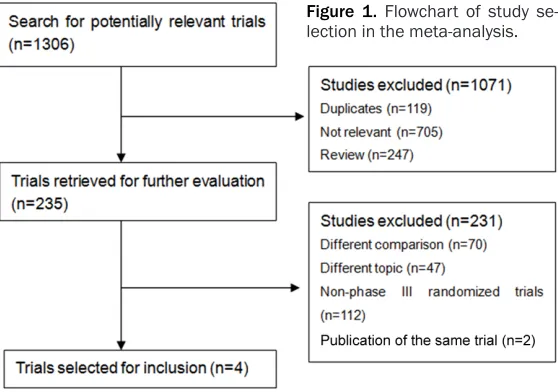
Figure 1. Flowchart of study se-lection in the meta-analysis.
were applied. The last search was performed in March 2015.
Study selection
To be included in this review, studies were required to be phase III randomized, controlled clinical trials evaluating the therapeutic out-comes of lenalidomide plus dexamethasone for the treatment of patients with multiple myelo-ma. Studies were also required to definitely pro-vide sufficient information including the treat-ment methods, and the definition and evalua-tion of therapeutic outcomes of interest regard-less of publication date, status and language. Data extraction and analysis were performed by two independent investigators (LG and MJG). Outcomes assessments
The primary endpoint was overall survival (OS). The secondary endpoints included progression-free survival (PFS), response rate and toxicity. The response of patients to treatment was defined according to the European Group for Blood and Marrow Transplantation Criteria in two trials (from Weber and Dimopoulos) [18] and the International Myeloma Working Group Uniform Response Criteria [19] in the other two trials (from Zonder and Benboubker). Adverse events were graded and recorded according to the National Cancer Institute’s Common Terminology Criteria for Adverse Events.
Statistical analysis
Table 1. Characteristics of included trials
Author [Year] Inclusion criteria No. of patients (% of male) Age, mean (range) Follow-up(months) Interventiona Weber [2007] Patients who had
received at least one previous therapy for MM
Expt: 177 (59.9)
Ctrl: 176 (59.1) Expt: 64 (36-86)Ctrl: 62 (37-85) 17.6 Expt: L 25 mg on d 1-21 of a 28-d cycle + D 40 mg on d 1-4, 9-12, 17-20 for 4 cycles, Then D 40 mg only on d 1-4 Ctrl: D the same with that in LD arm
Dimopoulos [2007] RRMM, received at least
one previous therapy Expt: 176 (59.1)Ctrl: 175 (58.9) Expt: 63 (33-84)Ctrl: 64 (40-82) 16.4 Expt: L 25 mg on d 1-21 of a 28-d cycle + D 40 mg on d 1-4, 9-12, 17-20 for 4 cycles, Then D 40 mg only on d 1-4 Ctrl: D the same with that in LD arm
Zonder [2010] Untreated multiple
myeloma patients Expt: 97 (55)Ctrl: 95 (58) ≥ 65 years oldExpt: 49%/Ctrl: 47% 47.2 Expt: Induction: L 25 mg/d for 28 days + D 40 mg/d on d 1-4, 9-12, 17-20 for 35-day cycle. Maintenance: L 25 mg/d for 21 days + D 40 mg/d on d 1-4, 15-18
Ctrl: D the same with that in LD arm Benboubker [2014] Patients with newly
diagnosed MM ineligible for transplantation
Expt: 535 (55)
Ctrl: 547 (52) Expt: 73 (44-91)Ctrl: 73 (51-92) 37.0 Expt: L 25 mg on d 1-21 of a 28-d cycle + D 40 mg on d 1, 8, 15, 22 Ctrl: M 0.25 mg/kg on d 1-4 + P 2 mg/kg on d 1-4 + T 200 mg in 42-day cycles
MM: multiple myeloma; RRMM: relapsed or refractory multiple myeloma; L: lenalidomide; D: dexamethasone; M: melphalan; P: prednisone; T: thalidomide; aMedian follow-up time
(months).
Table 2. Methodological quality assessment of included trials
Author [Year] Location Multi-center Allocation generation Allocation concealment Blind analysis Drop-outData Weber [2007] United States, Canada Yes Computer generated Adequate Double blinded ITT N/A Dimopoulos [2007] Europe, Israel, Australia Yes Unclear Unclear Double blinded ITT N/A
Zonder [2010] United States Yes Unclear Unclear Open-label ITT 1.0% not entered in
ad-verse event assessment Benboubker [2014] Europe, North America,
[image:3.792.88.713.330.430.2]ratios (HR) was used for effect sizes of survival data (PFS, OS), and the odd risk (OR) was used for effect of treatment for dichotomous out-comes (CR, ORR, PR of AEs). When each study was identified to have adequate clinical and statistical similarity, data for trials were only
pooled. Forest plots, graphical representations of the analy-sis, were used to describe the effect estimates for each trial as well as 95% confi-dence intervals (CIs). In addi-tion, heterogeneity was con-sidered statistically signifi- cant when P < 0.1 or I2 > 50%. If significant heteroge-neity existed, a randomized effect model was employed to incorporate the variability of data among studies. By contrast, a fixed effect model was employed without obvi-ous heterogeneity. Statistical significance was indicated by P < 0.05.
Results
Characteristics of the trials
Our initial search generated 1306 potentially relevant arti-cles, leaving a total of four tri-als identified in our study [20-23]. Our flowchart for selec-tion of the trials is shown in Figure 1. The study re- sults were published between 2007 and 2014, and 1969 patients were enrolled in total. All four trials reported overall response rates, com-plete rates, progression-free survival, overall survival as well as toxicity. As is shown in Table 1, three trials compared LD with placebo plus dexamethasone (PD) treatment, while the other trials compared LD with melphalan-prednisone-thalid-omide (MPT) treatment. Con- trol group patients in the trial reported by Zonder et al. [22]
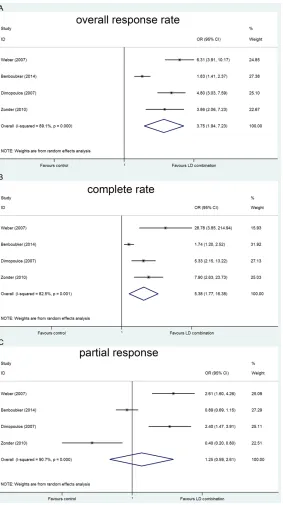
Figure 2. Forest plot displaying the results of the meta-analysis on individual trials and pooled odd ratios for response rates (A) overall response rate(B) complete response(C) partial response (OR = Odds ratio; CI = 95% confi-dence interval).
[image:4.612.95.378.69.574.2]con-trol arm could not meet the inclusion criteria that patients continued to accept the assigned drug regimen until disease progression. Methodological quality of the trials
The methodological quality of the trials is described in Table 2. Four trials were multi-cen-ter RCTs, of which two trials were double blind-ed [20, 21] as well as the other two trials were open-labeled [22, 23]. Three studies clearly described an intention-to-treat (ITT) analysis [20-22]. Only one trial reported allocation con-cealment [20]. Drop-out description was avail-able in two trials [22, 23]. Two trials reported methods of allocation randomization [20, 23]. Response rates
All trials reported response rate with LD thera-py. We extracted data from these trials in our analysis. In short, response rate was signifi-cantly advanced by the lenalidomide plus dexa-methasone regimens in the treatment of patients with myeloma. The weighted OR for ORR (Figure 2A) and CR (Figure 2B) were 3.75
(95% CI: 1.95 to 7.23) and 5.38 (95% CI: 1.77 to 16.38), respectively, both in favor of LD regimens. There were no statistically significant effects of treatment in the partial response (Figure 2C) (OR = 1.25, 95% CI: 0.60 to 2.61). However, there was signifi-cant heterogeneity during the trials for complete response (I2 = 82.5%, P = 0.001), over-all response rates (I2 = 89.1%, P = 0.000), and partial response (I2 = 90.7%, P = 0.000).
PFS and OS
As initial therapy for MM, Zonder et al. [22] reported that the superiority of lenalid-omide plus dexamethasone over the control arm signifi-cantly improved one-year PFS (78% vs. 52%, P = 0.002) as well as three-year PFS (52% vs. 32%, P < 0.05). Meanwhile, this trial also reported that lenalidomide plus
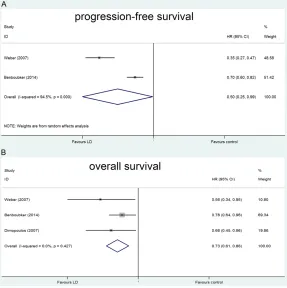
dexameth-Figure 3. Forest plot displaying the results of the meta-analysis on individual trials and pooled hazard ratios for progression-free survival (A) and overall survival (B) in the comparison of LD and PD/MPT regimens (Hazard ratios are presented with 95% confidence intervals).
asone was associated with no improvement over the overall survival rate compared with the control arm. Dimopoulos et al. [21] reported that the time to progression was significantly improved in the lenalidomide plus dexametha-sone group (11.3 vs. 4.7 months with control, P < 0.001).
We extracted data obtained from these trials in our analysis [20, 21, 23]. A random-effects sta-tistical model revealed that the pooled HR for PFS (Figure 3A) was 0.50 (95% CI: 0.25 to 0.99), in favor of LD. There was evidence of statistically significant heterogeneity between the trials (I2 = 94.5%, P = 0.000). LD regimens showed significant improvement over the con-trol regimens using by a fix-effects statistical model for the analysis of OS (Figure 3B) (HR = 0.73, 95% CI: 0.62 to 0.86). There was no sig-nificant heterogeneity among the trials (I2 = 0, P = 0.427).
Adverse outcomes
[image:5.612.91.378.73.361.2][23] reported that the toxicity of the treatment group, continuous LD and the control arm (MPT). The control arm melphalan-prednisone-thalidomide (MPT) of study design is different from other trials that compared lenalidomide plus dexamethasone with placebo plus dexa-methasone treatment. MPT regimen itself also has greater toxic effects than the PD regimen. Therefore, data of adverse outcomes from this trial was excluded.
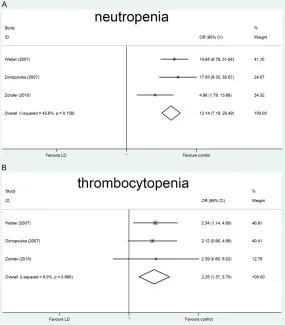
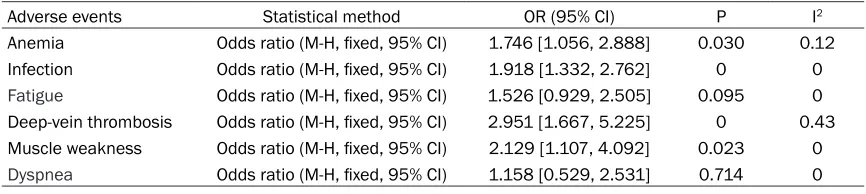
We analyzed two common adverse effects and found significant differences between the two groups, with more patients in the lenalidomide plus dexamethasone group experiencing neu-tropenia (OR = 12.14; 95% CI: 7.19 to 20.49), thrombocytopenia (OR = 2.26; 95% CI: 1.37 to 3.70), respectively (Figure 4A and 4B). Some other main adverse events were exhibited in Table 3. Lenalidomide plus dexamethasone regimen was associated with an increased risk
of grade 3 or 4 anemia, infec-tion, deep-vein thrombosis and muscle weakness. Our analysis also demonstrated that no significant effects of lenalidomide plus dexa-methasone on the incidence of fatigue and dyspnea were observed.
Discussion
[image:6.612.92.377.73.398.2]Our meta-analysis has re- vealed that lenalidomide plus dexamethasone had significant clinical activity in patients with MM, including response rate (both overall and complete responses), progression-free survival and overall survival. Several ad- verse events (i.e., neutrope-nia, thrombocytopeneutrope-nia, ane-mia, infection, deep-vein thrombosis and muscle weakness) were more com-mon in the lenalidomide plus dexamethasone group than in the control group. Recently, preliminary data from early phase I/II trials showed that novel drug combination regimens based
Figure 4. Forest plot displaying the results of the meta-analysis on individual trials and pooled odd ratios for the incidence of grade 3 or higher neutro-penia (A) and thrombocytoneutro-penia (B) in the comparison of LD and PD/MPT regimens (OR = Odds ratio; CI = 95% confidence interval).
retrospec-tively studied 290 patients from 12 Italian hae-matogical institutions to evaluate the efficacy and toxicity of this combination as salvage ther-apy for the treatment of relapsed/refractory MM patients. This retrospective multicenter analysis reported that patients receiving lenalidomide plus dexamethasone have a sig-nificantly longer overall survival, time to best response and duration of response. Further research is needed to explore optimal lenalido-mide doses and therapeutic strategies individ-ualized in terms of patients’ characteristics. In addition to efficacy, toxicity should also be taken into account. Our study showed that lenalidomide plus dexamethasone increases the incidence of adverse events (i.e., neutrope-nia, thrombocytopeneutrope-nia, anemia, infection and deep-vein thrombosis). Neutropenia is a com-mon adverse event with lenalidomide therapy. Dose adjustments and/or the administration of granulocyte colony-stimulating factor (G-CSF) are warranted during treatment in patients [20, 21, 26]. Sometimes prophylactic use of G-CSF is recommended in several cases [26]. Similarly, dose adjustments should also be taken into consideration on grade 3-4 thrombocytopenia, if necessary, platelet transfusion can be per-formed. Infections are at an increased risk as well. Prophylaxis with G-CSF and/or with bacte-rial antibiotics may be warranted [20, 26]. In our analysis, patients with MM have an increased incidence of grade 3 or 4 thrombo-embolic events. A recent retrospective study on sixty-two cases confirmed that ambulatory patients with MM who are considered for immu-nomodulatory drug therapy should be placed on pharmacologic thromboprophylaxis based on individual venous thromboembolism and bleeding risk factors [27]. In addition, alterna-tive ways to prevent venous thromboembolism are needed, such as prophylaxis with either low-molecular weight heparin (LMWH) [22] or
low-dose acetylsalicylic acid when patients re- ceive antiangiogenesis agents. Erythropoietin, associated with the tumor mass, can generally improve with response to treatment. One trial from Weber [20], however, reported that con-comitant erythropoietic agents are avoided due to the higher incidence of thromboembolic events in patients. In light of this, we suggest that further studies are needed to balance EPO benefits as well as reduce the risks of occur-rence of thromboembolic events in myeloma. Furthermore, a recent study from Rajkumar revealed that low-dose dexamethasone in com-bination with lenalidomide has lower toxicity than high-dose dexamethasone plus lenalido-mide, especially in deep-vein thrombosis and infections [28]. Based on these results, opti-mized dexamethasone dosage can be manage-able when this drug is combined with lenalido-mide, at the same time, adequate recognition and management will contribute to improved treatment efficacy on the whole [26].
There were significant heterogeneities with respect to patient population and treatment regimen in some analysis. First, individualized treatment on account of patient characteristics (age, comorbidities), and biological characteris-tics of the disease, probably affect the out-comes. Second, the dosage and schedule of therapeutic strategies were relatively different across the trials in our analysis. Third, clinical practice in heavily pre-treated patients and clinical factors without uniform standards could have contributed to the heterogeneity.
[image:7.612.89.522.84.181.2]Besides significant heterogeneities occurred in this review, there are also some limitations. First, the small number of trials met the inclu-sion criteria. Second, our work was limited based on aggregate study due to lacking ade-quate individual patient data. Third, our analy-sis is also limited by the methodological quality of the included trials (Table 2). Only two trials Table 3. Main Grade 3 or 4 adverse events
Adverse events Statistical method OR (95% CI) P I2
Anemia Odds ratio (M-H, fixed, 95% CI) 1.746 [1.056, 2.888] 0.030 0.12 Infection Odds ratio (M-H, fixed, 95% CI) 1.918 [1.332, 2.762] 0 0
Fatigue Odds ratio (M-H, fixed, 95% CI) 1.526 [0.929, 2.505] 0.095 0 Deep-vein thrombosis Odds ratio (M-H, fixed, 95% CI) 2.951 [1.667, 5.225] 0 0.43 Muscle weakness Odds ratio (M-H, fixed, 95% CI) 2.129 [1.107, 4.092] 0.023 0
reported an adequate technique for random-ized allocation [20, 23] and one trial reported an adequate technique for allocation conceal-ment [20]. Finally, the early unblinded treat-ment allocation and crossover therapy before study closure included in the Zonder et al, which may also be associated with the statisti-cal power of therapeutic outcomes.
In summary, our findings indicated that treat-ment with lenalidomide plus dexamethasone significantly improves the response rate, pro-gression-free survival and overall survival. However, several adverse events (neutropenia, thrombocytopenia, anemia, infection and deep-vein thrombosis) are associated with greater incidence with this combination. Therefore, these adverse events should be closely moni-tored and, if necessary, prophylactic treatment and/or dose adjustments may be administered. This meta-analysis provides a better compre-hensive overview of the efficiency and safety of LD regimens in the patients with MM, which helps to further optimize therapeutic strategies individualized for MM patients in the future. Acknowledgements
This study was supported by Grants from the National Natural Science Foundation of China (No. 81372391, 81570190 and 31271496). Disclosure of conflict of interest
None.
Address correspondence to: Dr. Jumei Shi, De- partment of Hematology, Shanghai Tenth People’s Hospital, Tongji University School of Medicine, 301 Yanchang Road, Shanghai 200072, China. Tel: +86-21-66306764; Fax: +86-21-66301362; E-mail: [email protected]; Dr. Bojie Dai, College of Life Science and Technology, Tongji University, 1239 Siping Road, Shanghai 200092, China. Tel: +86- 21-65988653; Fax: +86-21-66301362; E-mail: [email protected]
References
[1] Rollig C, Knop S and Bornhauser M. Multiple myeloma. Lancet 2015; 385: 2197-208. [2] Mehta GR, Suhail F, Haddad RY, Zalzaleh G
and Lerma EV. Multiple myeloma. Dis Mon 2014; 60: 483-488.
[3] Garcia IN. Role of Hematopoietic Stem Cell Transplantation in Multiple Myeloma. Clin Lymphoma Myeloma Leuk 2015; 15: 86-91.
[4] Brenner H, Gondos A and Pulte D. Expected long-term survival of patients diagnosed with multiple myeloma in 2006-2010. Hae- matologica 2009; 94: 270-275.
[5] Kastritis E, Zervas K, Symeonidis A, Terpos E, Delimbassi S, Anagnostopoulos N, Michali E, Zomas A, Katodritou E, Gika D, Pouli A, Christoulas D, Roussou M, Kartasis Z, Economopoulos T and Dimopoulos MA. Improved survival of patients with multiple my-eloma after the introduction of novel agents and the applicability of the International Staging System (ISS): an analysis of the Greek Myeloma Study Group (GMSG). Leukemia 2009; 23: 1152-1157.
[6] Kumar SK, Rajkumar SV, Dispenzieri A, Lacy MQ, Hayman SR, Buadi FK, Zeldenrust SR, Dingli D, Russell SJ, Lust JA, Greipp PR, Kyle RA and Gertz MA. Improved survival in multiple myeloma and the impact of novel therapies. Blood 2008; 111: 2516-2520.
[7] Palumbo A and Anderson K. Multiple myeloma. N Engl J Med 2011; 364: 1046-1060. [8] Rajkumar SV, Gahrton G and Bergsagel PL.
Approach to the treatment of multiple myelo-ma: a clash of philosophies. Blood 2011; 118: 3205-3211.
[9] Correction: Antitumor Activity of Thalidomide in Refractory Multiple Myeloma. N Engl J Med 2000; 342: 364.
[10] Singhal S, Mehta J, Desikan R, Ayers D, Roberson P, Eddlemon P, Munshi N, Anaissie E, Wilson C, Dhodapkar M, Zeddis J and Barlogie B. Antitumor activity of thalidomide in refractory multiple myeloma. N Engl J Med 1999; 341: 1565-1571.
[11] Rajkumar SV, Hayman S, Gertz MA, Dispenzieri A, Lacy MQ, Greipp PR, Geyer S, Iturria N, Fonseca R, Lust JA, Kyle RA and Witzig TE. Combination therapy with thalidomide plus dexamethasone for newly diagnosed myelo-ma. J Clin Oncol 2002; 20: 4319-4323. [12] Weber D, Rankin K, Gavino M, Delasalle K and
Alexanian R. Thalidomide alone or with dexa-methasone for previously untreated multiple myeloma. J Clin Oncol 2003; 21: 16-19. [13] Garcia-Sanz R, Gonzalez-Porras JR, Hernandez
JM, Polo-Zarzuela M, Sureda A, Barrenetxea C, Palomera L, Lopez R, Grande-Garcia C, Alegre A, Vargas-Pabon M, Gutierrez ON, Rodriguez JA and San Miguel JF. The oral combination of thalidomide, cyclophosphamide and dexa-methasone (ThaCyDex) is effective in re-lapsed/refractory multiple myeloma. Leukemia 2004; 18: 856-863.
[15] Richardson PG, Blood E, Mitsiades CS, Jagannath S, Zeldenrust SR, Alsina M, Schlossman RL, Rajkumar SV, Desikan KR, Hideshima T, Munshi NC, Kelly-Colson K, Doss D, McKenney ML, Gorelik S, Warren D, Freeman A, Rich R, Wu A, Olesnyckyj M, Wride K, Dalton WS, Zeldis J, Knight R, Weller E and Anderson KC. A randomized phase 2 study of lenalidomide therapy for patients with re-lapsed or rere-lapsed and refractory multiple my-eloma. Blood 2006; 108: 3458-3464.
[16] Richardson PG, Schlossman RL, Weller E, Hideshima T, Mitsiades C, Davies F, LeBlanc R, Catley LP, Doss D, Kelly K, McKenney M, Mechlowicz J, Freeman A, Deocampo R, Rich R, Ryoo JJ, Chauhan D, Balinski K, Zeldis J and Anderson KC. Immunomodulatory drug CC-5013 overcomes drug resistance and is well tolerated in patients with relapsed multiple my-eloma. Blood 2002; 100: 3063-3067.
[17] Wang M, Dimopoulos MA, Chen C, Cibeira MT, Attal M, Spencer A, Rajkumar SV, Yu Z, Olesnyckyj M, Zeldis JB, Knight RD and Weber DM. Lenalidomide plus dexamethasone is more effective than dexamethasone alone in patients with relapsed or refractory multiple myeloma regardless of prior thalidomide expo-sure. Blood 2008; 112: 4445-4451.
[18] Blade J, Samson D, Reece D, Apperley J, Bjorkstrand B, Gahrton G, Gertz M, Giralt S, Jagannath S and Vesole D. Criteria for evaluat-ing disease response and progression in pa-tients with multiple myeloma treated by high-dose therapy and haemopoietic stem cell transplantation. Myeloma Subcommittee of the EBMT. European Group for Blood and Marrow Transplant. Br J Haematol 1998; 102: 1115-1123.
[19] Durie BG, Harousseau JL, Miguel JS, Blade J, Barlogie B, Anderson K, Gertz M, Dimopoulos M, Westin J, Sonneveld P, Ludwig H, Gahrton G, Beksac M, Crowley J, Belch A, Boccadaro M, Cavo M, Turesson I, Joshua D, Vesole D, Kyle R, Alexanian R, Tricot G, Attal M, Merlini G, Powles R, Richardson P, Shimizu K, Tosi P, Morgan G and Rajkumar SV. International uniform re-sponse criteria for multiple myeloma. Leukemia 2006; 20: 1467-1473.
[20] Weber DM, Chen C, Niesvizky R, Wang M, Belch A, Stadtmauer EA, Siegel D, Borrello I, Rajkumar SV, Chanan-Khan AA, Lonial S, Yu Z, Patin J, Olesnyckyj M, Zeldis JB and Knight RD. Lenalidomide plus dexamethasone for re-lapsed multiple myeloma in North America. N Engl J Med 2007; 357: 2133-2142.
[21] Dimopoulos M, Spencer A, Attal M, Prince HM, Harousseau JL, Dmoszynska A, San Miguel J, Hellmann A, Facon T, Foa R, Corso A, Masliak Z, Olesnyckyj M, Yu Z, Patin J, Zeldis JB and
Knight RD. Lenalidomide plus dexamethasone for relapsed or refractory multiple myeloma. N Engl J Med 2007; 357: 2123-2132.
[22] Zonder JA, Crowley J, Hussein MA, Bolejack V, Moore DF Sr, Whittenberger BF, Abidi MH, Durie BG and Barlogie B. Lenalidomide and high-dose dexamethasone compared with dexamethasone as initial therapy for multiple myeloma: a randomized Southwest Oncology Group trial (S0232). Blood 2010; 116: 5838-5841.
[23] Benboubker L, Dimopoulos MA, Dispenzieri A, Catalano J, Belch AR, Cavo M, Pinto A, Weisel K, Ludwig H, Bahlis N, Banos A, Tiab M, Delforge M, Cavenagh J, Geraldes C, Lee JJ, Chen C, Oriol A, de la Rubia J, Qiu L, White DJ, Binder D, Anderson K, Fermand JP, Moreau P, Attal M, Knight R, Chen G, Van Oostendorp J, Jacques C, Ervin-Haynes A, Avet-Loiseau H, Hulin C and Facon T. Lenalidomide and dexa-methasone in transplant-ineligible patients with myeloma. N Engl J Med 2014; 371: 906-917.
[24] Rajkumar SV, Hayman SR, Lacy MQ, Dispenzieri A, Geyer SM, Kabat B, Zeldenrust SR, Kumar S, Greipp PR, Fonseca R, Lust JA, Russell SJ, Kyle RA, Witzig TE and Gertz MA. Combination ther-apy with lenalidomide plus dexamethasone (Rev/Dex) for newly diagnosed myeloma. Blood 2005; 106: 4050-4053.
[25] Mele G, Melpignano A, Quarta G, Palumbo G, Capalbo S, Falcone A, Cascavilla N, Palazzo G, Mazza P, Iannitto E, Curci P, Rizzi R, Specchia G, Rossini B, Pavone V, Ria R, Vacca A, Buquicchio C, Tarantini G, Minoia C, Guarini A, Ditonno P, Polimeno G, Reddiconto G and Di Renzo N. “Real world” outcome of lenalido-mide plus dexamethasone in the setting of re-current and refractory multiple myeloma: Extended follow-up of a retrospective multi-center study by the “rete ematologica pug-liese”. Leuk Res 2015; 39: 279-283.
[26] Gonzalez Rodriguez AP. Management of the adverse effects of lenalidomide in multiple my-eloma. Adv Ther 2011; 28 Suppl 1: 1-10. [27] Dede RJ and Pruemer JM. Comparing venous
thromboembolism prophylactic strategies for ambulatory multiple myeloma patients on im-munomodulatory drug therapy. J Oncol Pharm Pract 2016; 22: 248-55.