
774
©IJRASET: All Rights are Reserved
Dynamic Background Modeling and Subtraction
using Modified Space and time Local Binary Pattern
Kuldeep B. Vayadande1, Nikhil D. Karande2, Surendra Yadav3
1
Research Scholar, School of Engineering and Technology, Career Point University, Kota Rajasthan
2
Associate Professor, Department of Computer Science and Engineering, SVERI, Solhapur University, Solhapur, Maharashtra
3
Professor, Department of Computer Science and Engineering, Career Point University, Kota Rajasthan
Abstract: Conventional background modeling and subtraction techniques have a hypothesis that the views are not of dynamic edifices with restricted disorder. These procedures will perform inadequately in dynamic scenes. In this paper, we present a resolution to this difficulty. We first extend the local binary patterns from the space domain to the spatiotemporal domain and give a distinct dynamic texture extraction operator, named modified spatiotemporal local binary patterns (Modified Space and Time Local Binary Pattern). We present an innovative and practical method for dynamic background modeling and subtraction using Modified Space and Time Local Binary Pattern. In this proposed method, each pixel is represented as a group of Space and Time Local Binary Pattern to dynamic texture histograms which connect spatial texture and temporal motion knowledge together. The histograms collected are processed to get normalized histogram which is the inadequacy of existing Space and time local binary pattern method. Compared with traditional methods, empirical results show that this method accommodates swiftly to the changes in the dynamic background. It gets correct detection of moving objects and succeeds most of the false detections for dynamic changes of natural scenes.
Keywords: Background, Dynamic, Texture, Histogram, Binary pattern
I. INTRODUCTION
775
©IJRASET: All Rights are Reserved
II. LBPAPPROACH
A. Ordinary Local Binary Patterns
[image:2.612.83.502.196.430.2]Local Binary Pattern (LBP) is very easy yet very well-organized texture operator in which the pixels of an image by thresholding the quarter of every pixel and believes that the result as a binary sequence. Due to its discriminative capability and analytical integrity, the LBP texture operator has to turn out to be a popular approach in diverse applications. It can be seen as a distinguished method to the traditionally divergent statistical and basic models of texture analysis. Reasonably the most vital feature of the LBP operator in real-world applications is its fault tolerance to monotonic grey-scale distortions caused, for e.g., by lighting variations. One more indispensable feature is its mathematical simplicity, which makes it possible to examine images in tricky real-time environments.
Figure 1 Local Binary Pattern and Histogram Construction
III.MODIFIEDSPACEANDTIMELOCALBINARYPATTERNAPPROACH
A. Steps in Modified Space And Time Local Binary Pattern Method [1]
1) Let ft is the current frame at time t, ft-1 be the previous frame at time t – 1 and ft-2 is the 2nd previous frame
2) Assume frame ft and central pixel is (xt,c, yt,c) with grey value gt,c.
3) Consider P evenly spaced neighbouring pixel S(xt,0, yt,0), . . . , (xt,P−1 yt,P−1) with grey values gt,0, . . . , gt,P−1 on a circle of radius
RLBP in ft are defined to be the spatial neighbouring pixels of (xt,c, yt,c).
4) In the ft−1, the equivalent position pixels of P spatial neighbouring pixels is (xt,−1,0, yt−1,0), . . . , (xt,−1,P−1, yt−1,P−1) which are
defined to be the P temporal neighbouring pixels of (xt,c, yt,c) with grey values gt-1,0, . . . , gt-1,P−1.
5) In the ft−2, the equivalent position pixels of P spatial neighbouring pixels is (xt,−2,0, yt−2,0), . . . , (xt,−2,P−1, yt−2,P−1) which are
defined to be the P temporal neighbouring pixels of (xt,c, yt,c) with grey values gt-2,0, . . . , gt-2,P−1.
6) The middle pixel and its spatial and temporal neighbouring pixels are presented in Fig. 2. Using these neighbouring grey values,
we can find two P-bit LBP codes for central pixel (xt,c, yt,c) as follows:
B. LBP at Time t[1]
………. [1]
C. LBP at Time t-1[1]
776
©IJRASET: All Rights are Reserved
D. LBP at Time t-2
[image:3.612.55.564.93.286.2]…..[3]
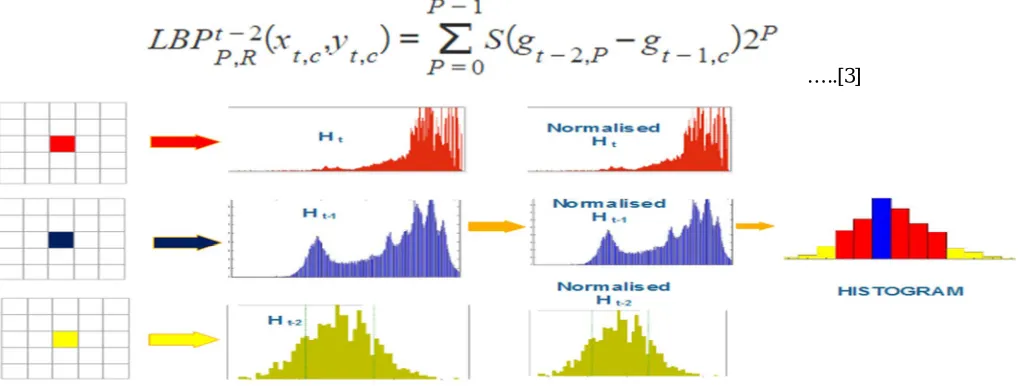
Figure 2 Histogram for LBP at time t, t-1 and t-2
1) LBP(t) and LBP(t-1), LBP(t-2) are called spatial and temporal local binary patterns of the pixel (xt,c, yt,c), respectively.
2) The first extracts the spatial texture features and the second extract the motion information of neighbouring two frames.
3) Consider R be a circular region of radius Rregion centred on the pixel (xt,c, yt,c) in the frame ft, we can compute three histograms
Ht , Ht−1and Ht-2 over this region as follows
……[4]
….. [5]
……[6]
Normalized histograms are constructed for every LBP. These Normalized Histograms are labelled as Ht , Ht-1and Ht-2 at ith bin.
1
(
)
0
I
A
if A is true else …….[7]
…… [8]
Where Hi is the histogram value at ith bin of H. Parameter ‘ω’ is the spatiotemporal rate. Figure 2 shows the histograms of the
modified Space And Time Local Binary Pattern.
9. Finally modified Space And Time Local Binary Pattern finds H is the dynamic texture explanation of the central pixel of the region R which merges spatial texture and temporal motion information with each other.
777
©IJRASET: All Rights are Reserved
IV.EXAMPLEOFFINDINGLBPBYCONSIDERING3X3NEIGHBOURHOOD
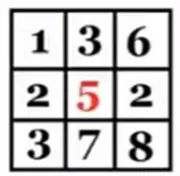
1) Consider a neighbourhood of size 3X3 as follows
Figure 3 In each 3x3 block compare central pixel with 8 neighbours
2) Select the central pixel value you want to replace.
a) If the value is greater than equal to centre pixel value then put 0 for it
b) If the value is less than the centre pixel value then put 1 for it
[image:4.612.260.350.108.196.2]This can be done as follows
Figure 4 Selection of centre pixel and replacing binary values
3) Obtain the bit string by scanning 3x3 neighbourhoods. Select values as per direction is shown in figure 3. 4. Covert the bit
string obtained by scanning 3x3 neighbourhoods to the decimal number. After converting 00101100 to decimal we get 44 decimal value.
4) Replace this number by centre value pixel.
Figure 5 Replacing centre value
5) Construct a histogram for final neighbourhood
[image:4.612.248.366.282.355.2]V. HISTOGRAMCONSTRUCTION(LBP)
[image:4.612.57.556.584.718.2]778
©IJRASET: All Rights are Reserved
Consider the neighbourhood shown in figure 5 of size 4x4. The values in each block render the pixel depth of every pixel. The histogram of the neighbourhood can be observed in figure 6. Normalized Histogram can also be noticed in figure 7 which was not constructed in [1].
A. Modified Space And Time Local Binary Pattern Features Have Three Benefits
1) It is fault tolerance to monotonic to changes
2) It is efficient and very quick
3) It can obtain spatial texture and temporal motion data of a pixel.
[image:5.612.75.547.195.376.2]VI.EXPERIMENTALRESULTS
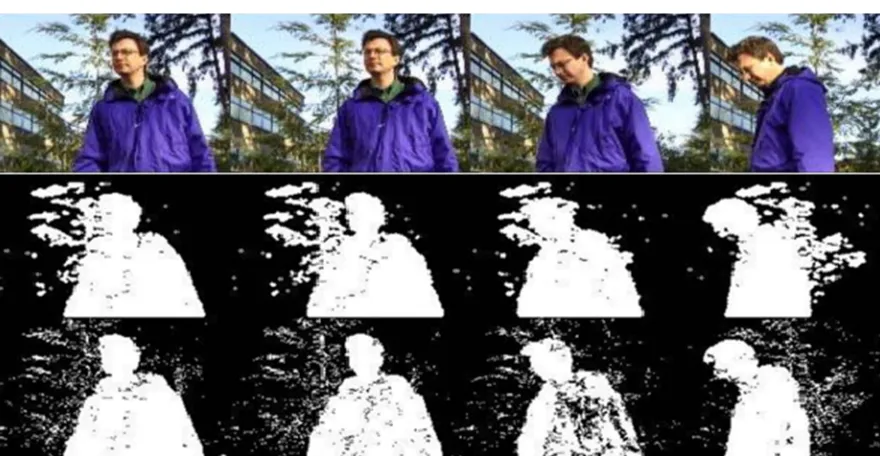
Figure 10 Comparison results on waving tree sequence, top row is the original frame sequence of 21st ,25th and 45th frame. The first
row indicates original frames and the second row indicates ground truth frames using MSTLBP
Method 21st 25th 45th
MSTLBP False Positive 7 0 13
[image:5.612.91.531.478.706.2]False Negative 32 14 21
Table 1 False positive and False Negative rates using MSTLBP
Figure 11[1]- Comparison results on waving tree sequence, top row is the original frame sequence of 152nd ,210th, 235th and 270th
779
©IJRASET: All Rights are Reserved
Method 152nd 210th 235th 270th
KDE False Positive 1635 2012 655 1984
False Negative 79 128 220 230
MoG False Positive 872 923 540 1021
False Negative 182 321 1120 223
Table 2[1] False positive and False Negative rates using KDE and MoG
To check the performance of the proposed method for dynamic scenes, [1] conducted operations using frame series. Two widely-used methods, Mixture of Gaussians (MoG) [2] and Kernel Density Estimation (KDE) [7] are widely-used to control with the recommended method (MSTLBP). Regular pixel based MoG and KDE methods cannot accurately detect moving objects in dynamic scenes. They label large amounts of moving background pixels as foreground and also output an enormous amount of false negatives on the interior areas of the moving object. But, the MSTLBP method can precisely discriminate moving background pixels and actual moving objects. Table [1] shows the result achieved by MSLTBP and Table [2] shows the false positive and negative rates on MoG and KDE[7].
VII. CONCLUSION
In this paper, we have applied the usual local binary originals of the spatial domain to the spatiotemporal field and proposed a new dynamic texture extraction operator, identified modified spatiotemporal local binary patterns (Space And Time Local Binary Pattern) to give normalised histogram for better precision of object detection in dynamic scenes. It is powerful and very fast to estimate. The proposed dynamic modeling and subtraction method is based on space and time local binary pattern. Normalised histograms are very robust to dynamic change in natural scenes such as waving trees and flowing water. It gets detection of moving objects with high precision and reduces most of the false detections by traditional methods. The proposed method can be used in various surveillance applications.
REFERENCES
[1] Shengping Zhang, Hongxun Yao, Shaohui Liu, “Dynamic background modeling and subtraction and Subtraction using Spatio-Temporal Local Binary Pattern", ICIP 2008.
[2] A. AZarbayejani, C.R. Wren, T. Darrell, and A.P. Pent-land, “Pfinder: Real-time Tracking of the Human body”, IEEE Trans. Pattern Analysis and Machine Intelligence, vol. 19, pp. 780–785, July 1997.
[3] W.E.L. Grimson and C. Stauffer, “Adaptive Background Mixture Models for Real-Time Tracking,” Proc. IEEE Conf. Computer Vision and Pattern Recognition, 1999, vol. 2, pp. 246–252.
[4] J.J. Hull, D.S. Lee, and B. Erol “A Bayesian Framework for Gaussian Mixture Background Modeling,” Proc. IEEE Conf. Image Processing, 2003, vol. 3, pp. 973– 976.
[5] O. Tuzel and F. Porikli “, Human Body Tracking by Adaptive Background Models and Mean-Shift Analysis,” Proc. IEEE Workshop on Performance Evaluation of Tracking and Surveillance, 2003.
[6] M. Heikkila, M. Pietikainen, and J. Heikkila, “A Texture-based Method for Detecting Moving Objects,” Proc. British Machine Vision Conf., 2004, vol. 1, pp. 187– 196.
[image:6.612.173.445.76.150.2]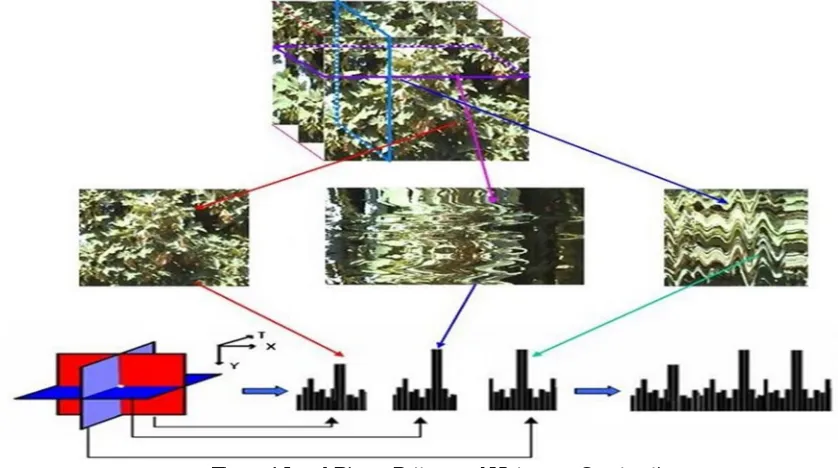
![Table 2[1] False positive and False Negative rates using KDE and MoG](https://thumb-us.123doks.com/thumbv2/123dok_us/1244065.650664/6.612.173.445.76.150/table-false-positive-false-negative-rates-using-kde.webp)
