University of Warwick institutional repository: http://go.warwick.ac.uk/wrap
A Thesis Submitted for the Degree of PhD at the University of Warwick
http://go.warwick.ac.uk/wrap/50272
This thesis is made available online and is protected by original copyright. Please scroll down to view the document itself.
Evaluating Lean in
Healthcare
(Volume I of II)
by
Nicola Jane Burgess
A thesis submitted in partial fulfilment of the requirements
for the degree of Doctor of Philosophy in Business.
University of Warwick, Warwick Business School
1
Contents
Volume I: Evaluating Lean implementation in Healthcare
Chapter 1: Lean and the NHS p.24
1.0 Background: Lean and the English NHS p.25
1.1 Genesis of the Research p.25
1.1.1 Background to Lean
1.1.2 Overarching Aim
p.26
p.26
1.2 Overview of the Thesis p.27
Chapter 2: Exploring Lean p.29
2.0 Chapter summary p.29
Part One: Exploring Lean Phenomena p.31
2.1 Operations and Process Management Perspective p.31
2.1.1 A Process Perspective
2.1.2 The contribution of Lean to Operations
Management
2.1.3 From Mass Production to Lean Production
2.1.4 From Push to Pull – towards an elimination of
inventory
2.1.5 Understanding Waste
2.1.6 The many tools of Lean
2.1.7 A new management orthodoxy?
2.1.8 Is Lean an improvement fad?
2.1.9 How does Lean differ from other approaches?
2.1.10 Summary and Implications for research
p.31
p.33
p.33
p.34
p.35
p.36
p.38
p.39
p.40
p.42
2.2 Exploring the context of Lean p.42
2.2.1 From the Toyota Production System to Lean – a
voyage of ‘industrial tourism’
2.2.2 Manufacturing: from craft to science
2.2.3 History of the Toyota Production System (TPS)
p.42
p.43
2
2.2.4 Learning from the West
2.2.5 Training in Quality
2.2.6 Summary and implications for research
p.47
p.48
p.49
2.3 The Codification of Lean p.50
2.3.1 The Two Pillars of the TPS: Jidoka and Just in
Time
2.3.2 Principles and Rules
2.3.3 Summary and Implications for research
p.50
p.52
p.55
2.4 What is Lean? p.56
2.4.1 Lean as a concept
2.4.2 Soft and Hard sides of Toyota
2.4.3 Discernible approaches to Lean
p.57
p.59
p.60
Section 2.5 Summary of Part One and implications for
research
p.63
Part Two: Implementing Lean in the Public Sector and in Healthcare
p.66
Section 2.6 Lean and the Public Sector p.66
2.6.1 The case for Lean in the Public Sector
2.6.2 Transferring Lean from the Private to the Public
Sector
2.6.2.1 Difficulty identifying the customer
2.6.3 Summary and implications for research
p.67
p.68
p.69
p.70
Section 2.7 Implementing Lean in the Public Sector p.71
2.7.1 Implementing Lean in Government and Local
Government
2.7.2 Challenges of implementing Lean at HMRC
2.7.3 Summary and implications for research
p.71
p.74
p.76
Section 2.8 Lean and Healthcare p.77
2.8.1 The rise of Lean in healthcare
2.8.2 Designing for Excellence
2.8.3 The case for Lean in healthcare: Quality and
Safety
2.8.4 Reported Impact of Lean implementation in
p.78
p.78
p.79
3
hospitals – a critical review
2.9 Implementing Lean in healthcare p.84
2.9.1 Discussion and comparison of three experiences
of Lean implementation in hospitals in America,
Australia and the UK
2.9.2 Summary and implications for research
p.88
p.91
Part Three: Summary of evidence and implications for research p.93
2.10 Recurring Themes p.93
2.10.1 What is Lean?
2.10.1.1 Lean in healthcare
2.10.2 Lean and performance
2.10.3 Lean and context
p.93
p.94
p.95
p.95
2.11 Research Questions p.97
Chapter 3: Knowledge Paradigms and Research Communities p.98
3.0 Chapter Summary p.98
Part 1: The Knowledge paradigm debate p.99
3.1 Background to the knowledge paradigm debate p.99
3.2 Positivism/Post-Positivism p.100
3.3 Constructivism/ Social Constructivism/ Interpretivism p.101
3.4 Taking a middle road: The ‘Third Methodological
Movement’
p.102
3.4.1 All research is interpretive! p.103
Part Two: Developing a Research Strategy aligned to Research Aim p.104
3.5 Defining a Mixed Methods approach p.104
3.6 Designing a Mixed Methods approach p.105
3.6.1 A ‘sequential’ mixed methods approach to
research
3.6.2 Research Methods
p.106
p.107
3.7 Lean implementation and ‘changing’ p.108
3.8 An analytical framework p.111
Part Three: Methods of Data Collection and Analysis p.113
4
3.9.1 Document Analysis
3.9.1.1 Document analysis: revealing the steps
3.9.1.2 Cross referencing to other documents and
the inclusion of qualitative data
3.9.1.3 External media, SHA’s and other sources
of information
3.9.2 Phase 2: Quantitative analysis of the influence
of Lean upon organisational performance of English
hospital Trusts
3.9.2.1 Care Quality Commission performance
data
3.9.2.2 Quantitative analysis of Lean and
Performance
3.9.2.3 Hypothesis testing
3.9.2.4 Conducting the K-W test
3.9.3 Phase 3: Case study analysis
3.9.3.1 The role of the case study
3.9.3.2 Case Selection and Sampling
3.9.3.3 Conducting the research
3.9.3.4 Data analysis
3.9.3.5 Researcher Bias
p.113 p.114 p.127 p.127 p.128 p.129 p.130 p.131 p.132 p.135 p.136 p.136 p.137 p.138 p.138
3.10 Summary of Chapter 3 p.140
Chapter 4: Document Analysis p.142
4.0 Chapter summary p.142
4.1 Lean implementation in English hospitals
4.1.1 Identification of Divergent approaches
4.1.1.1 Tentative Lean
4.1.1.2 Productive Ward only
4.1.1.3 Few Projects
4.1.1.4 Programme
4.1.1.5 A Systemic approach
p.142 p.143 p.143 p.144 p.145 p.145 p.146
5
Trusts
4.3 Trajectory of Lean implementation in English hospitals p.149
4.4 The influence of context and the implementation of Lean
4.4.1 Synopsis of ‘context’: University Hospital of
South Manchester NHS Foundation Trust (UHSM)
4.4.2 Synopsis of ‘context’: Countess of Chester NHS
Foundation Trust
p.150
p.151
p.151
4.5 Limitations of document analysis p.152
4.6 Summary of Document Analysis p.153
Chapter 5: Quantitative Analysis p.153
5.0 Chapter summary p.155
5.1 Hypothesis: Lean implementation and Trust performance
are related
p.155
5.2 Hypothesis Testing
5.2.1 Summary of findings: Is there a relationship
between a Trust’s performance score T1 and the
approach to Lean implementation T1?
p.156
p.163
5.3 Summary of quantitative analysis p.166
Chapter 6: Case Study Analysis p.167
6.0 Chapter Summary p.167
6.1 Overview of case studies p.167
6.2 Presentation of Case Studies p.170
6.3 University Hospitals Coventry and Warwickshire (UHCW)
6.3.1 Background and Overview of Lean implementation
in the Trust
6.3.1.1 Interviews
6.3.2 The Context of Lean implementation
6.3.2.1 Understanding Lean: ‘what is Lean?’
6.3.2.2 Drivers of Lean implementation
6.3.3 The Process of Lean implementation
6.3.3.1 A Programme approach
6.3.3.2 Training in Lean
6.3.3.3 Observation of Lean Implementation
6
6.3.4 The Content of Lean implementation
6.3.4.1 Description of Impact and outcomes
6.3.4.2 Sustaining improvements
6.3.5 Complexities of Lean implementation
6.3.5.1 Engagement of middle managers and
medical consultants
6.3.5.2 Key people leading change
6.3.5.3 Financial Tensions
6.3.5.4 Accountability, monitoring and metrics
6.3.5.5 Mixed approaches to improvement
6.3.6 Summary of case study findings (UHCW)
p.177 p.178 p.178 p.183 p.183 p.184 p.185 p.186 p.188 p.188
6.4 East Lancashire Hospitals NHS Trust (ELHT)
6.4.1 Background and Overview of Lean implementation
in the Trust
6.4.1.1 Interviews
6.4.2 The Context of Lean implementation
6.4.2.1 Understanding Lean: ‘what is Lean?’
6.4.2.2 Drivers of Lean implementation
6.4.3 The Process of Lean implementation
6.4.3.1 A Programme approach? (T1)
6.4.3.2 Training in Lean
6.4.4 The Content of Lean implementation
6.4.4.1 Description of Impact and outcomes
6.4.5 Complexities of Lean implementation
6.4.5.1 Engagement of middle managers and
medical consultants
6.4.5.2 Financial tensions
6.4.5.3 Culture of the Trust
6.4.5.4 Accountability, Monitoring and Metrics
6.4.5.5 Mixed approaches to improvement
6.4.6 Summary of case study findings (ELHT)
p.190 p.190 p.190 p.191 p.191 p.192 p.193 p.193 p.194 p.195 p.195 p.199 p.199 p.200 p.201 p.201 p.203 p.203
6.5 Royal Bolton NHS Foundation Trust (RBH)
6.5.1 Background and Overview of Lean implementation
p.205
7
in the Trust
6.5.1.1 Interviews
6.5.2 The Context of Lean implementation
6.5.2.1 Understanding Lean: ‘what is Lean?’
6.5.2.2 Drivers of Lean implementation
6.5.3 The Process of Lean implementation
6.5.3.1 A Systemic Approach
6.3.5.2 The implementation journey
6.3.5.3 Key Features of BICS
6.5.4 The Content of Lean implementation
6.5.4.1 Description of Impact and outcomes
6.5.4.2 Cultural change
6.5.4.3 Improved organisational performance
6.5.5 Complexities of Lean implementation
6.5.5.1 Ownership/Permission to change
6.5.5.2 Engagement of middle managers and
medical consultants
6.5.5.3 Accountability, monitoring and metrics
6.5.5.4 Sustaining Lean
6.5.6 Summary of case study findings (RBH)
p.205 p.206 p.206 p.207 p.211 p.211 p.211 p.214 p.222 p.222 p.225 p.225 p.226 p.226 p.227 p.228 p.229 p.229
6.6 St Helens and Knowsley Teaching Hospitals NHS Trust
(SHK)
6.6.1 Background and overview of Lean implementation
the Trust
6.6.1.1 Interviews
6.6.2 The Context of Lean implementation
6.6.2.1 Understanding Lean: ‘what is Lean?’
6.6.2.2 Drivers of Lean Implementation
6.6.3 The Process of Lean implementation
6.6.3.1 ‘Few projects’ approach
6.6.3.2 Productive Ward
6.6.3.3 Training
6.6.3.4 Observation of Lean implementation
8
6.6.4 The Content of Lean implementation
6.6.4.1 Description of Impact and outcomes
6.6.5 Complexities of Lean implementation
6.6.5.1 Culture
6.6.5.2 Engagement of middle managers and
medical consultants
6.6.5.3 Accountability, monitoring and metrics
6.6 6 Summary of case study findings (SHK)
p.237 p.237 p.238 p.238 p.240 p.241 p.241
6.7 Summary of case study analysis p.242
Chapter 7: Evaluating Lean implementation in the English NHS – Discussion of findings
p.243
7.0 Chapter Summary p.243
7.1 Can different approaches to Lean implementation be
characterised in English hospitals?
7.1.1 Distinguishing one approach from another
7.1.2 Distribution of approaches to Lean implementation
by English hospital Trusts
7.1.3 Trajectory of Lean implementation
7.1.4 Validation of approaches to Lean implementation
7.1.4.1 The ‘process’ of Lean implementation
7.1.5 Summary and implications for research and
practice p.244 p.245 p.247 p.248 p.249 p.250 p.254
7.2 Is there any quantitative support for the impact of Lean
implementation upon improved hospital performance at an
organisational reporting level?
7.2.1 Summary and implications for research and
practice
p.256
p.258
7.3 Is there a relationship between the context of the hospital
Trust and (the approach to) Lean implementation?
7.3.1 Cross case analysis of the drivers of Lean
implementation
7.3.2 Evaluating Lean implementation in relation to
‘crisis’ and leadership
p.260
p.261
9
7.3.3 Cross case analysis of the emergent complexities
to Lean implementation leading to research propositions
that signal the influence of contextual factors upon Lean
implementation in hospital Trusts
7.3.3.1.1 Finance, finance, finance
7.3.3.1.2 Key people leading change
7.3.3.1.3 Accountability Monitoring and
Metrics
7.3.3.1.4 Resistance to change by Managers
and Medical Consultants
7.3.3.1.5 Culture
7.3.3.1.6 Mixed approaches to change
p.265 p.265 p.267 p.268 p.270 p.271 p.272
7.4 Comparison of contingencies of context related to Lean
implementation with Pettigrew et al’s (1992) receptive contexts for shaping strategic change in the NHS in the 1980’s
p.273
7.5 Summary and implications for research p.277
Chapter 8: Conclusions p.281
8.0 Chapter Summary p.281
8.1 Introduction p.281
8.2 Contributions to knowledge
8.2.1 A typology of approaches to Lean implementation
8.2.2 Validation of Typology of approaches to Lean
implementation
8.2.1.1 Implications for research
8.2.1.2 Limitations of research
8.2.3 Quantitative analysis and discussion of the
potential link between Lean implementation and
increased performance
8.2.3.1 Implications for research and practice
8.2.3.2 Limitations of research
8.2.4 A set of propositions that provide a narrative and
logic to explain the influence of context upon the process
of Lean implementation
10
8.2.4.1 Implications for practice and research
8.2.4.2 Limitations of research
p.293
p.293
8.3 Further research p.294
8.4 Research Summary p.295
References p.296
Appendix 1: Interview protocol p.310
List of Tables
Table 1.1 Structure of Thesis p.28
Table 2.1 Contrasting perspectives of old and new orthodoxies
adapted from Oliver, (2008)
p.34
Table 2.2 Some common tools associated with Lean p.37
Table 2.3 Lean characteristics (Source: Pettersen, 2009) p.58
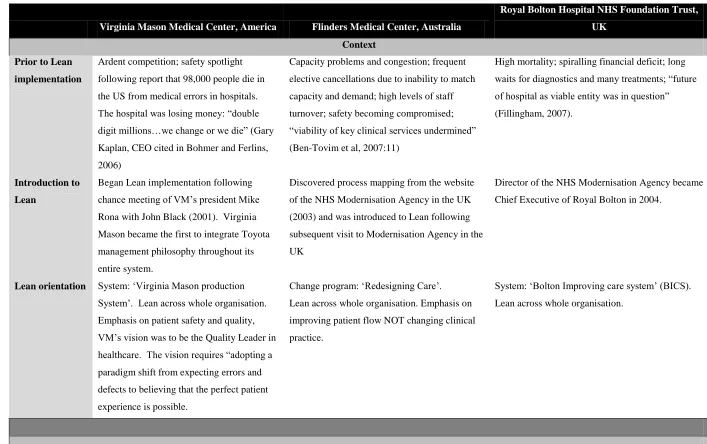
Table 2.4 Comparison of Lean implementation in hospitals in
America, Australia and the UK
p.85
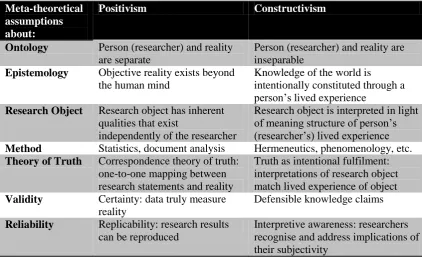
Table 3.1 Contrasting Positivism with Constructivism (Source:
Weber, 2004)
p.103
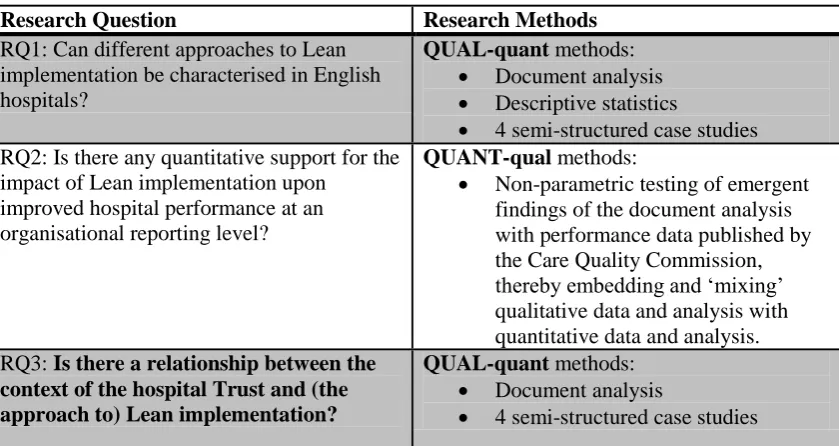
Table 3.2 Application of a Sequential Mixed Methods research
design for this research
p.107
Table 3.3 Summary of data collection techniques aligned to
Pettigrew et al (1991)
p.110
Table 3.4 Summary of data collected and attributed to each
dimension of Pettigrew and Whipp’s framework of strategic change
p.115
Table 3.5a An example of data collected under the ‘context’
dimension of strategic change for Northern Lincolnshire and Goole
Hospitals NHS Foundation Trust
p.123
Table 3.5b An example of data collected under the ‘process’
dimension of strategic change for Northern Lincolnshire and Goole
Hospitals NHS Foundation Trust
p.124
Table 3.5c An example of data collected under the ‘content’
dimension of strategic change for Northern Lincolnshire and Goole
11 Hospitals NHS Foundation Trust
Table 5.1 Is there a relationship between a Trust’s performance
score T1 and the approach to Lean implementation T1 (H1)
p.163
Table 5.2 Is there a relationship between a Trust’s performance
score T2 and the approach to Lean implementation T2 (H2)
p.164
Table 5.3 Testing for a relationship between a Trust’s performance
score T1 and the approach to Lean implementation T2
p.165
Table 6.1 An overview of the four case studies p.169
Table 6.2 List of respondent job titles (UHCW) p.172
Table 6.3 List of respondent job titles (ELHT) p.191
Table 6.4 List of respondent job titles (RBH) p.206
Table 6.5 List of respondent job titles (SHK) p.232
Table 7.1 Summary and comparison of the process of Lean
implementation across four case study Trusts.
p.250
Table 7.2 The ‘Content’ of Lean implementation p.257
Table 7.3: Summary and comparison of the drivers of Lean
implementation
p.261
Table 7.4 Trusts facing ‘crisis’ in T1 and/or T2 p.263
Table 7.5 Cross case analysis of contingencies of context p.265
Table 7.6 Evaluating the applicability of Pettigrew et al’s (1992)
findings with the emergent research findings
12 List of Figures
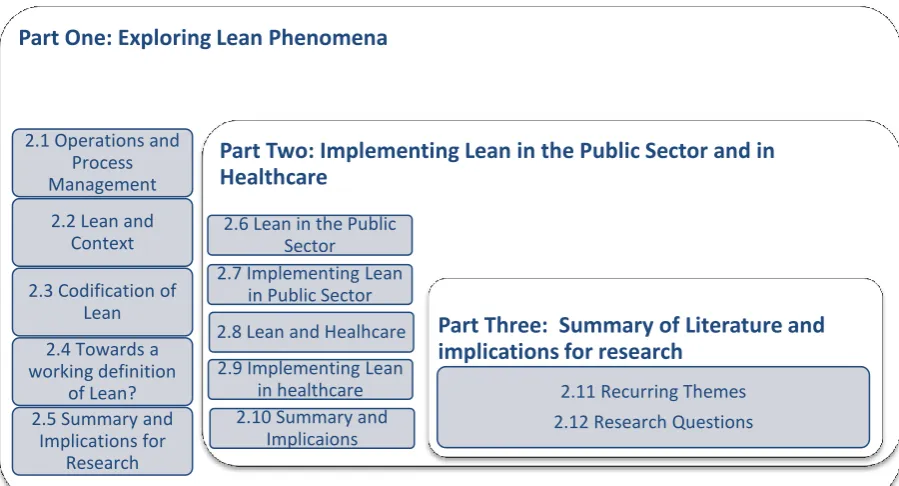
Figure 2.1 Structure of the literature review chapter: Exploring Lean p.30
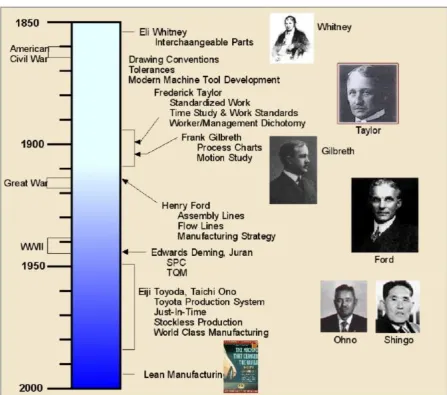
Figure 2.2 Historical Timeline of Lean Manufacturing1. p.45
Figure 2.3 Deming’s famous Fig 1 diagram: Production viewed as a
system
p.48
Figure 2.4 Toyota Advertisement (Source: The Times newspaper,
July 2010)
p.51
Figure 2.5 The TPS Concept. Source: Toyota Company website2 p.52
Figure 2.6 Characterisation of approaches to Lean (Source: Pettersen,
2009)
p.61
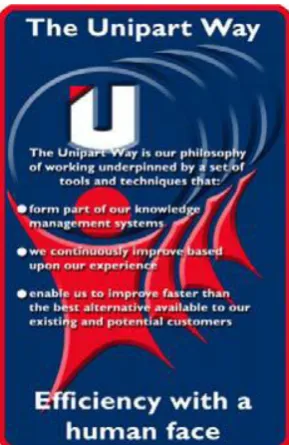
Figure 2.7a The Unipart Way (Source: Radnor 2010b:414-415)
Figure 2.7b Unipart Lean implementation model (Source: Radnor
2010b:414-415)
p.73
p.73
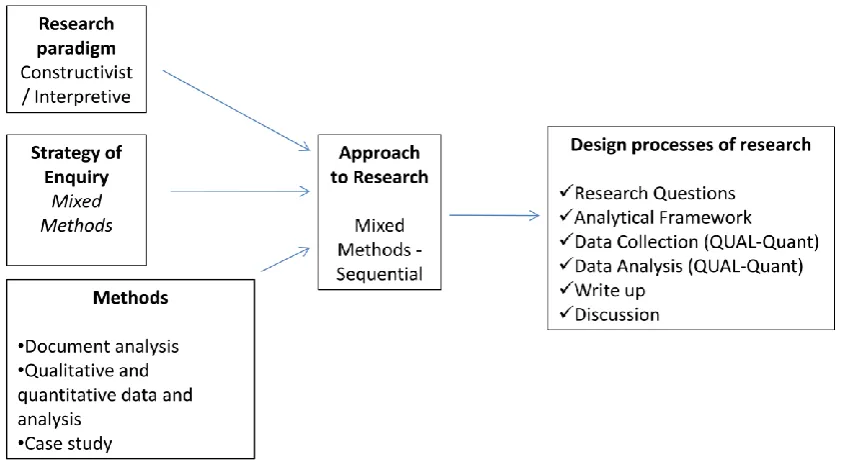
Figure 3.1 Exploring Lean: A framework of the research design
(Source: adapted from Creswell, 2003)
p.106
Figure 3.2 Adapted from Pettigrew and Whipp (1991) to reflect this
research
p.112
Figure 3.3 Guidance for Annual Report structure and content p.116
Figure 3.4 Screenshot of data analysis using Nvivo software p.139
Figure 4.1 Typology of approaches to Lean implementation p.147
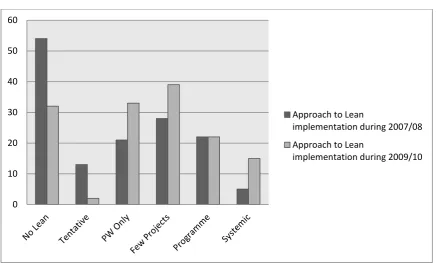
Figure 4.2 Lean Implementation in English hospital Trusts p.148
Figure 4.3 Approach to Lean implementation during T1 and T2 p.149
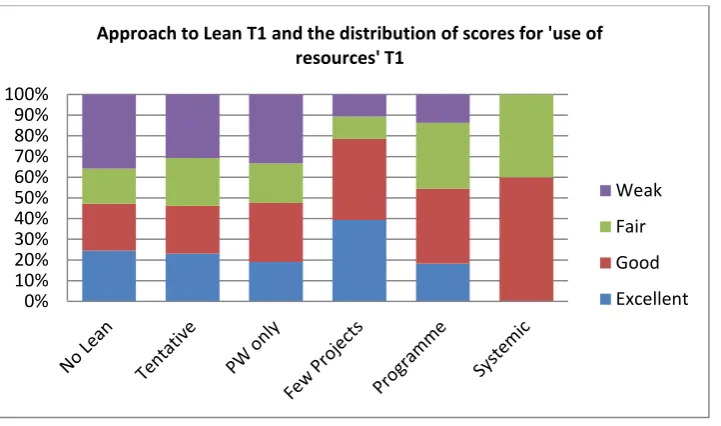
Figure 5.1 Approach to Lean T1 and the distribution of scores for
'use of resources' T1
p.157
Figure 5.2 Cumulative distribution graph of the approach to Lean T1
by English hospitals and the scores for ‘use of resources’ T1.
p.158
Figure 5.3 Stacked bar graph showing the distribution of performance
scores for 'use of resources' T1 across categories of the approach to
Lean T1
p.159
1
Source: http://www.strategosinc.com/lean_manufacturing_history.htm, accessed 26th April 2010.
13
Figure 5.4 Cumulative distribution graph of the approach to Lean T1
by English hospitals and the scores for ‘use of resources’ T1.
p.159
Figure 5.5 Approach to Lean T1 and the distribution of scores for
‘Quality of Services' T1
p.160
Figure 5.6 Cumulative distribution graph of the approach to Lean T1
by English hospitals and the scores for ‘Quality of Services’ T1.
p.161
Figure 5.7 Stacked bar graph showing the distribution of performance
scores for ‘quality of services’ T1 across categories of the approach to
Lean T1
p.162
Figure 5.8 Cumulative distribution graph of the approach to Lean T1
by English hospitals and the scores for ‘use of resources’ T1.
p.162
Figure 6.3 Photo of the policy deployment wall p.222
Figure 6.4a Photo of visual management board to coordinate work in
stroke therapies
p.224
Figure 6.4b Close up of patient tasks (red magnets = still to do, green
= complete)
p.224
Figure 7.1: Typology of approaches to Lean implementation p.245
Figure 7.2 Characterisation of approaches to Lean (adapted from
Pettersen, 2009)
p.246
Figure 7.3 Approaches to Lean by English hospital Trusts p.248
Figure 7.4 Approach to Lean implementation during T1 and T2 p.249
Figure 8.1 Typology of approaches to Lean implementation p.283
Figure 8.2 Approaches to Lean by English hospital Trusts p.284
Figure 8.3 Receptive contexts for strategic change the case of the
NHS in the 1980s (Pettigrew et al, 1992)
p.292
List of Boxes
Box 1 Five Principles of Lean Source: Womack and Jones (1996,
2003)
p.53
Box 2 The Four Rules that make up the DNA of Toyota (Source:
Spear and Bowen, 1999)
p.54
14
CONTENTS: Volume II Case
Number
SHA Trust Name Page number
1 London Barnet and Chase Farm Hospitals NHS Trust 8
2 London Barts and the London NHS Trust 11
3 London Chelsea and Westminister Hospital NHS Foundation
Trust
13
4 London Croydon health Services NHS Trust 15
5 London Ealing Hospital NHS Trust 17
6 London Epsom and St Helier University Hospitals NHS Trust 19
7 London Guys and ST Thomas NHS Foundation Trust 21
8 London Hillingdon Hospital NHS Trust 24
9 London Homerton University Hospital NHS Foundation Trust 26
10 London Imperial College Healthcare NHS Trust 28
11 London Kings College Hospital NHS Foundation Trust 30
12 London Kingston Hospital NHS Trust 33
13 London Lewisham Hospital NHS Trust 35
14 London Newham University Hospital NHS Trust 37
15 London North Middlesex University Hospital NHS Trust 39
16 London North West London Hospitals NHS Trust 41
17 London Royal Free Hampstead NHS Trust 42
18 London South London Healthcare Trust 44
19 London St George's Healthcare NHS Trust 46
20 London University College London Hospital NHS Foundation
Trust
48
21 London West Middlesex University Hospital NHS Trust 51
22 London Whipps Cross University Hospital NHS Trust 53
23 London Whittington Hospital NHS Trust 55
24 North East City Hospitals Sunderland NHS Foundation Trust 57
15
26 North East Gateshead Health NHS Foundation Trust 62
27 North East North Tees and Hartlepool NHS Foundation Trust 65
28 North East Northumbria Health Care NHS Foundation Trust 67
29 North East South Tees Hospital NHS Trust 69
30 North East South Tyneside NHS Foundation Trust 72
31 North East The Newcastle-upon Tyne Hospitals NHS Foundation
Trust
75
32 North West Aintree University Hospitals NHS Foundation Trust 77
33 North West Blackpool, Fylde and Wyre Hospitals NHS Trust 79
34 North West Countess of Chester Hospital NHS Foundation Trust 81
35 North West East Cheshire NHS Trust 83
36 North West East Lancashire Hospitals NHS Trust 85
37 North West Lancashire Teaching Hospitals NHS Foundation Trust 88
38 North West North Cumbria Acute Hospitals NHS Trust 90
39 North West Pennine Acute Hospitals NHS Trust 92
40 North West Royal Bolton Hospitals NHS Trust 94
41 North West Royal Liverpool and Broadgreen University Hospitals NHS Trust
98
42 North West Salford Royal NHS Foundation Trust 100
43 North West Southport and Ormskirk Hospital NHS Trust 102
44 North West St Helens and Knowsley Hospitals NHS Trust 104
45 North West Stockport NHS Foundation Trust 106
46 North West Tameside Hospital NHS Foundation Trust 108
47 North West The Mid Cheshire Hospitals NHS Trust 110
48 North West Trafford Healthcare NHS Trust 112
49 North West University Hospital Of South Manchester NHS
Foundation Trust
114
50 North West University Hospitals Of Morecambe Bay NHS Trust 116
51 North West Warrington and Halton Hospitals NHS Trust 118
52 North West Wirral University Teaching Hospital NHS Foundation Trust
16
53 North West Wrightington, Wigan and Leigh NHS Trust 122
54 South Central Basingstoke and North Hampshire NHS Foundation Trust
125
55 South Central Buckinghamshire Hospitals NHS Trust 127
56 South Central Heatherwood and Wexham Park Hospitals NHS
Foundation Trust
130
57 South Central Milton Keynes Hospital NHS Foundation Trust 132
58 South Central Oxford Radcliffe Hospitals 135
59 South Central Portsmouth Hospitals NHS Trust 137
60 South Central Royal Berkshire NHS Foundation Trust 139
61 South Central Southampton University Hospitals NHS Trust 141
62 South Central Winchester and Eastleigh Healthcare NHS Trust 143
63 South East Ashford and St Peter's Hospitals NHS Trust 145
64 South East Brighton and Sussex University Hospitals NHS Trust 148
65 South East Dartford and Gravesham NHS Trust 150
66 South East East Kent Hospitals NHS Trust 152
67 South East East Sussex Hospitals NHS Trust 155
68 South East Frimley Park NHS Foundation Trust 157
69 South East Maidstone and Tunbridge Wells NHS Trust 159
70 South East Royal Surrey County Hospital NHS Trust 161
71 South East Royal West Sussex NHS Trust 164
72 South East Surrey and Sussex Healthcare NHS Trust 167
73 South East The Medway NHS Foundation Trust 169
74 South West Dorset County Hospital NHS Foundation Trust 172
75 South West Gloucester Hospitals NHS Foundation Trust 175
76 South West North West Bristol NHS Trust 178
77 South West Northern Devon Healthcare NHS Trust 181
78 South West Plymouth Hospitals NHS Trust 183
79 South West Poole Hospital NHS Trust 185
17
81 South West Royal Cornwall NHS Trust 190
82 South West Royal Devon & Exeter NHS Foundation Trust 192
83 South West Royal United Hospital NHS Trust Bath 195
84 South West Salisbury NHS Foundation Trust 197
85 South West South Devon Healthcare NHS Foundation Trust 199
86 South West Taunton & Somerset NHS Trust 202
87 South West The Great Western Hospitals NHS Foundation Trust 205
88 South West University Hospitals Bristol NHS Foundation Trust 207
89 South West Weston Area Health NHS Trust 209
90 South West Yeovil District Hospital NHS Foundation Trust 211
91 East Midlands Chesterfield Royal Hospital NHS Foundation Trust 213
92 East Midlands Derby Hospitals NHS Foundation Trust 215
93 East Midlands Kettering General Hospital NHS Foundation Trust 217
94 East Midlands Northampton General Hospital NHS Trust 218
95 East Midlands Nottingham University Hospitals Trust 220
96 East Midlands Sherwood Forest Hospitals NHS Foundation Trust 222
97 East Midlands United Lincolnshire Hospitals NHS Trust 224
98 West Midlands Burton Hospitals NHS Trust 226
99 West Midlands Dudley Group of Hospitals NHS Trust 228
100 West Midlands George Eliot Hospital NHS Trust 230
101 West Midlands Heart of England NHS Foundation Trust 232
102 West Midlands Hereford Hospitals NHS Trust 235
103 West Midlands Mid Staffordshire NHS Foundation Trust 237
104 West Midlands Sandwell and West Birmingham NHS Trust 240
105 West Midlands Shrewsbury & Telford Hospital NHS Trust 242
106 West Midlands South Warwickshire General Hospitals NHS Trust 245
107 West Midlands The Royal Wolverhampton Hospitals NHS Trust 247
108 West Midlands University Hospitals Coventry & Warwickshire NHS Trust
18
109 West Midlands University Hospital Birmingham NHS Foundation Trust 251
110 West Midlands University Hospital North Staffordshire NHS Trust 253
111 West Midlands Walsall Hospital NHS Trust 256
112 West Midlands Worcestershire Acute Hospitals NHS Trust 258
113 Yorkshire and
the Humber
Airedale NHS Trust 260
114 Yorkshire and
the Humber
Barnsley Hospital NHS Foundation Trust 265
115 Yorkshire and
the Humber
Bradford Teaching Hospitals NHS Foundation Trust 267
116 Yorkshire and
the Humber
Calderdale and Huddersfield NHS Foundation Trust 269
117 Yorkshire and
the Humber
Doncaster and Bassetlaw Hospitals NHS Foundation Trust
271
118 Yorkshire and
the Humber
Harrogate and District NHS Foundation Trust 273
119 Yorkshire and
the Humber
Hull and East Yorkshire Hospitals NHS Trust 276
120 Yorkshire and
the Humber
Leeds Teaching Hospitals NHS Trust 278
121 Yorkshire and
the Humber
Mid Yorkshire Hospitals NHS Trust 280
122 Yorkshire and
the Humber
Northern Lincolnshire and Goole Hospitals NHS Foundation Trust
283
123 Yorkshire and
the Humber
Rotherham NHS Foundation Trust 286
124 Yorkshire and
the Humber
Scarborough and North East Yorkshire Healthcare NHS Trust
289
125 Yorkshire and
the Humber
Sheffield Teaching Hospitals NHS Foundation Trust 291
126 Yorkshire and
the Humber
York Hospitals NHS Foundation Trust 294
127 East of England Basildon & Thurrock University Hospitals NHS Foundation Trust
297
19
129 East of England Cambridge University Hospital Foundation Trust 301
130 East of England Colchester University Hospital Foundation Trust 303
131 East of England East and North Hertfordshire NHS Trust 306
132 East of England Hinchingbrooke Healthcare NHS Trust 308
133 East of England Ipswich hospital NHS 311
134 East of England James Paget NHS Foundation Trust 313
135 East of England Luton and Dunstable NHS Foundation Trust 315
136 East of England Mid Essex NHS Trust 317
137 East of England Norfolk and Norwich University NHS Foundation Trust 319
138 East of England Peterborough and Stamford NHS Foundation Trust 321
139 East of England Princess Alexandra Hospital NHS Trust 324
140 East of England Queen Elizabeth Kings Lynn NHS Foundation Trust 326
141 East of England Southend University Hospital Foundation Trust 328
142 East of England West Hertfordshire NHS Trust 330
20
Acknowledgements
This is the section I have been looking forward to writing ever since I began this eternal journey. I call it an eternal journey, not because it took me forever (well it did, but that’s not the point), it is eternal because the learning I take from this research will stand me in good stead both now and in the future. The experience and discipline of writing a PhD is an investment in my future as a researcher, teacher and colleague, but also in my other roles in life as a mother, wife and friend and so thanks must go first and foremost to the people who supported me through this process. To my supervisors Professors Zoe Radnor and Stewart Robinson, thank you for supporting me across the last three years, your advice was always constructive and continuously pushed me to develop and craft my ideas further. I am privileged to have worked with you both on research projects and I sincerely hope we have the chance to work together on many more projects over the years. To my husband and two beautiful girls, thank you for giving me the time and space to think and write, hopefully now we can enjoy some holidays away without any PhD based distractions that leads me to work some strange hours and in some pretty strange places! Thanks also to my parents who always gave me quiet encouragement but never questioned why it took so long! Thanks should go to the OM group at Warwick Business School. Since I arrived at WBS in 2007 the OM group have offered continuous support, encouragement and mentorship that have helped me to develop and grow as an academic, I should mention in particular Professor Nigel Slack and Professor Bob Johnston who always provided friendly encouragement and advice, and Dr Nicholas Wake, our chats provided invaluable support in the early days of this thesis. Thanks should also go to Professor Ruth Davies who originally helped me to develop my research ideas as my second supervisor before a sudden illness forced an early retirement; your influence is contained within this thesis as your advice (amongst lots of other advice) was: “make sure it’s something you are passionate about”, and that I did. Thanks should also go to the late Professor Robert Lowson, you set me on this path many moons ago and I will always remember your passion for research and writing.
21
Publications
Journal Articles:
Burgess, N. J and Radnor, Z. (In press) ‘Evaluating Lean in healthcare: a typology’ International Journal of Health Care Quality Assurance.
Burgess, N. J and Radnor, Z. (In press) 'Service Improvement in the English
National Health Service (NHS): Complexities and Tensions’, Journal of
Management Organization.
Burgess, N. (2011) ‘A Lean Presence’, Lean Management Journal, February, pp. 26-29.
Radnor, Z., Davies, R. and Burgess, N. (2009) How much Lean are English Hospitals implementing? National Health Executive, pp. 60-62.
Conference Papers
Burgess, N., Furnival, J., Radnor, Z., Doherty, L., Schenck, A. (2012) ‘Bolton Improving Care System: A framework for systemic Lean implementation at Bolton NHS Foundation Trust’, Eco-System for Sustainable Healthcare: An International Exploration, Working conference, May 13th – 15th, Como, Italy.
Burgess, N. and Radnor, Z. (2011) ‘Trajectory of Lean implementation: the case of English hospitals’, 18th International Annual EurOMA Conference: Exploring Interfaces, Judge Business School, Cambridge.
Burgess, N., and Radnor, Z. (2011) ‘Implementing Change in Healthcare: Moving from Pragmatism to Transition’, IRSPM 15 2011: Value Innovation and Partnership. Trinity College, Dublin, 2011.
Burgess, N. and Radnor, Z. (2010) ‘Lean Paradox: Lean paradox: can lean influence healthcare? 17th International Annual EurOMA Conference: Managing Operations in Service Economies. Porto, Portugal, 2010.
Burgess, N. and Radnor Z. (2010) ‘Lean implementation in healthcare: complexities and tensions’. The 14th Annual International Research Society for Public Management (IRSPM) Conference - The Crisis: Challenges for Public Management. Berne, Switzerland, 2010.
22
23
Abstract
The overarching aim of this thesis is to evaluate Lean implementation in the English NHS. Against a background of financial austerity measures and the ostensible widespread adoption of Lean in the UK public sector, and particularly by healthcare organisations, the objective is to understand how Lean is being implemented by NHS hospital Trusts, and whether there is any quantitative evidence that Lean implementation is improving hospital performance. Adopting Pettigrew and Whipp’s (1991) framework of strategic change, this thesis aims to present theoretically sound and practically useful research through an exploration of the context, process and content of Lean implementation by English hospital Trusts. In order to achieve this, the research employs a mixed methods research design incorporating document analysis3, quantitative analysis and case study analysis to afford an insight into the implementation of Lean from multiple viewpoints and facilitate the development of new insights relating to the phenomena of Lean implementation in English hospital Trusts.
The research provides a contribution to knowledge in three key areas: firstly through the identification and validation of a typology of approaches to Lean implementation by English hospital Trusts i.e. a characterisation of the method of Lean implementation; secondly through quantitative analysis and discussion of the potential link between Lean implementation and increased performance; and thirdly a set of propositions that provide a narrative and logic to explain the influence of contextual factors upon the process of Lean implementation in English hospitals.
3 The author has adopted the term ‘document analysis’ to refer to the research method ‘content
24
Chapter 1: Lean and the NHS
1.0Background: Lean and the English NHS
Due to the challenging economic conditions in the UK, the need for efficiency
savings in the NHS alongside other public services are now greater than ever
(Operating Framework for the NHS 2010/11). Reports highlighting the need for
efficiency savings in the public sector such as the Government’s Independent
Review of Public Sector Efficiency (Gershon, 2004) have been identified as key
drivers of Lean implementation in the public sector as a whole (Radnor, 2010a).
The Operational Efficiency Programme report (Treasury, 2009) highlights the
success of the efficiency agenda in delivering £26.5 billion pounds of efficiencies
against a target of £21.5 billion set by the Gershon (2004) review. The OEP
(Treasury, 2009) is explicit in its recommendation of the use of continuous
improvement methods such as Lean, systematically throughout the public sector,
commending the approach as ‘effective, sustainable and comparably inexpensive’
(p.83). Today, a continued emphasis upon ‘efficiency’ is evidenced through the
coalition government’s declaration that the NHS is to operate in the context of ‘severe constraint on spending’ coupled with the requirement of the NHS to
deliver £10bn of savings by 2012/13 (NHS Operating Framework, 2010/11:1).
Against this background, there is growing evidence that Lean is becoming
progressively widespread. A recent literature review of ‘Business Process
Improvement Methodologies’ carried out on behalf of the National Audit Office (Radnor, 2010a), finds that 51% of the publications sourced focus on ‘Lean’ and
35% of those were in the Health Services. Further evidence of the prevalence of
Lean implementation in healthcare is proffered by a sudden and sharp rise of
reports in the academic and practitioner literature (Brandao de Souza, 2009) and
‘grey literature’ (Young and McClean, 2008). Historically however, the success
rate of transformation is poor (Kotter, 1995; Lucey et al, 2005); Bhasin asserts
that less than 10% of Lean implementations in UK organisations are thought to
25
In healthcare there is significant evidence that Lean is becoming widespread,
however many authors regard this implementation as pragmatic and disjointed
(Proudlove et al, 2008; Young and McClean, 2008). This perceived pragmatic
and fragmented approach resonates with a similar trajectory of Lean
implementation in other sectors (Hines et al, 2004). However, there appears to be
a dearth of empirical literature to evidence how Lean implementation is
operationalized in healthcare besides a few isolated case studies that often
describe a successful, but isolated project (see for example: Lodge and Bamford,
2008; Wojtys et al, 2009; Grove et al, 2010). Aside from these isolated case
studies there is also a lack of evidence that supports the view that Lean can work
in a hospital context and improve organisational performance (Young and
McClean, 2008; Holden, 2011).
This research adopts Pettigrew and Whipp’s (1991) framework of strategic change
in order to explore and evaluate the phenomena of Lean and its implementation in
a healthcare context, specifically English hospitals.
1.1 Genesis of Research
The genesis for this research is borne out of a desire to empirically evaluate the
implementation of Lean in the NHS to provide a more detailed explanation of
why Lean implementation has been inconsistent (Boyle et al, 2011) and provide a
narrative and logic for understanding the process of Lean implementation in
English hospitals. Historically, Lean as derived from the Toyota Production
System (TPS) has been poorly understood. Described by Taiichi Ohno (1988) as
a ‘management system’, many authors purport that organisations in the West fail
in their implementation as they often try to copy the hard side (manufacturing
excellence) with disregard for the soft (cultural) aspects of Lean (see for example
Bhasin, 2008; Emiliani, 2008; Holweg, 2007; Schönberger, 2007; Womack and
26
1.1.1 Background to Lean
The first published use of the term Lean was in 1988 by John Krafcik to describe
observations by a team of researchers as part of the International Motor Vehicle
Program (IMVP). The IMVP was established in America to investigate the
reasons why Japan was outperforming the West in terms of quality. The
observations and effects of Toyota’s methods in terms of superior performance
gained were recounted by IMVP researchers John Krafcik (Krafcik, 1988) and
Michael Cusamano (Cusamano, 1988) and acquired worldwide attention in 1990
through the book ‘The Machine that Changed the World’ by James P. Womack,
Daniel Jones and Daniel Roos (1990). Reflecting on the success of the book,
Holweg (2007) explains that the book and the research reported in Krafcik (1988)
and Cusumano (1988) finally blew the myth that the superior performance of
Japanese production was intrinsically related to Japanese culture.
The success of The Machine... was followed in 1996 and 2003 by Lean Thinking:
Banish Waste and Create Wealth in Your Corporation by James P. Womack and
Daniel T. Jones. The book proposed: “a sort of North Star…a dependable guide
to action to help managers transcend the day to-day chaos of mass production’
(Womack and Jones, 2003:10)”. The authors outline five principles of Lean,
which some consider to be the most widely cited in the academic literature
(Radnor, 2010a). The authors also assert that through understanding these
principles and tying them all together, organisations can stay on course towards
Lean operations. Despite this however, many commentators continue to refer to
Lean as ‘mysterious’ (Osono, 2008; Taylor and Taylor, 2009), defying
codification (Seddon et al, 2009).
1.1.2 Overarching Aim
The overarching aim of this thesis is to evaluate Lean implementation in the
English NHS. The objective is to understand how Lean is implemented by
English hospitals, explore the impact of Lean implementation upon performance
and understand the influence of context upon the implementation of Lean in
27
narrative and logic for understanding the implementation of Lean in healthcare,
and provide an explanation for the variation in successful Lean implementation
amongst hospital trusts.
1.2 Overview of the Thesis
The thesis begins with an exploration of Lean (chapter two) that charts the
phenomena from its origins at Toyota Motor Corporation in Japan in the 1950’s and its transfer to the West during the 1970’s onwards; the objective is to build a clear understanding of ‘what is Lean’ (part one), prior to consideration of how it
has been applied in public sector organisations and specifically in healthcare (part
two), in order to shape and guide the thesis. Part three of chapter two concludes
with a summary of the research gaps leading to a statement of the research
questions that will guide the thesis towards its overarching objective: to evaluate
Lean implementation in the English NHS.
Chapter three outlines the knowledge paradigm debate and the researcher’s
adoption of a constructivist knowledge paradigm (part 1). The chapter also
outlines a mixed method research strategy as appropriate for addressing the
research questions explaining in detail the methods employed. The benefit of
using a mixed method research design is in overcoming the biases and limitations
of any single method (Creswell, 2009). However this research aligns with the
premise that a mixed methods approach goes beyond the initial goal of
triangulation (confirmation of results using different methods or data sets), in
actually using multiple methods to also gain a better understanding
(comprehension) of results, discover new perspectives, or develop new
measurement tools (Tashakkori and Teddlie, 1998). The explicit research design
is detailed in chapter 3 (part 2) and includes document analysis, non-parametric
testing of hypotheses and case study analysis.
Chapters four, five and six present the findings from document analysis,
non-parametric testing and case study analysis respectively followed by a discussion
of the findings in chapter seven. Chapter seven blends together analysis from the
28
questions; the chapter concludes with a set of research propositions that the
researcher believes will provide a first step towards a narrative and logic for
understanding how contextual factors influence the implementation of Lean in
healthcare organisations. Chapter eight concludes the thesis with an overview of
the research findings, a discussion of the limitations of the research and
implications for research and practice.
The structure of the thesis is summarised in Table 1.1.
Table 1.1 Structure of Thesis
Chapter 1: Introduction Provides a background to Lean in the NHS and a background to the origins of Lean in manufacturing; also introduces the genesis for the research and a description of the document structure.
Chapter 2: Exploring Lean
Provides a review of relevant literature across three parts: part one is based on deciphering ‘what is lean’; and part two considers how Lean applies to the public sector and, specifically how has it been applied in healthcare; part three summarises the extant literature discussed in parts one and two to establish the research questions that guide this research.
Chapter 3: Knowledge Paradigms and Research Communities
Discusses competing research paradigms and details the approach taken to the research, identifying a mixed methods research strategy and detailing their operationalization.
Chapter 4: Document analysis
Presents the findings of document analysis.
Chapter 5: Quantitative analysis
Presents the findings of quantitative analysis.
Chapter 6: Case Study Analysis
Presents the findings of four case studies.
Chapter 7: Evaluating Lean implementation in the English NHS – Discussion of findings
Combines the findings from the mixed methods approach to data collection, (document analysis, quantitative analysis and case study analysis) and discuss them in the light of emergent patterns and themes, relating these findings back to the literature presented in Chapter 2, Exploring Lean.
Chapter 8: Conclusions Presents the conclusions of this research study to make clear the overall contribution to knowledge made by this research; to provide a summary of the
limitations of this study; and to provide
29
Chapter 2: Exploring Lean
2.0 Chapter summary
This chapter traces the phenomena of Lean from its origins in the automotive
industry in Japan to its translation and adoption in the West. The aim is to provide
a review of the literature pertaining to Lean as a concept and its application and
implementation in the public sector with a particular emphasis on healthcare. The
objective of this chapter is to build a clear understanding of ‘what is Lean’ prior to
consideration of how it has been applied in public sector organisations and
specifically healthcare in order to shape and guide the thesis.
The chapter is split into three parts to establish: what is lean (part one); how Lean
applies to the public sector and, specifically how has it been applied in healthcare
(part two); finally part three summarises the extant literature discussed in parts
one and two with a view to highlighting gaps in the extant literature leading to a
statement of the research questions.
Part one is organised as follows: section 2.1 begins by outlining the important
contribution of Lean to the field of Operations Management, and discusses the
similarities and differences between Lean and other approaches to improvement.
The second section of part one (section 2.2) takes a historical perspective of the
development of Lean in the context of the Toyota Motor Company in Japan
during the 1950’s. Starting with an overview of the early introduction of how
Lean methodology was first introduced and interpreted in the Western world, this
section considers the influence of context upon the development of the Toyota
Production System (TPS) in Japan. Section two concludes with a representation
of Lean as part of evolutionary development in the history of manufacturing
practice. The third section of Part one (section 2.3) considers the codification of
Lean as represented by Toyota and interpreted by academic observers. Section
2.4 seeks to assemble an overview of Lean, depicting discernible approaches and
culminating in an articulation of what is Lean. Finally, section 2.5 presents a
30
Part Two considers the universality of Lean, looking at Lean implementation in
other sectors and paying particular attention to the context of the Public Sector
(section 2.6). The second section of part two (section 2.7) presents examples of
the implementation of Lean in the public sector and the third section of part two
(section 2.8), looks specifically at Lean implementation in healthcare. Section 2.8
highlights the nature of this literature as predominantly anecdotal, presenting
isolated examples of the application of Lean tools and methods rather than
demonstrating how Lean can be applied to processes across the whole
organisation. In view of this limitation, section 2.9 develops a focus upon three
prominent examples of hospitals implementing Lean across their organisations as
examples of how Lean can be implemented across a whole hospital. To conclude,
part three summarises parts one and two with respect to the gaps in literature as
revealed by the literature review and presents the research questions. Figure 2.1
[image:32.595.120.570.467.710.2]presents an outline of the structure of the literature review chapter.
Figure 2.1: Structure of the literature review chapter: Exploring Lean
Part One: Exploring Lean Phenomena
2.1 Operations and Process Management
2.2 Lean and Context
2.3 Codification of Lean
2.4 Towards a working definition
of Lean? 2.5 Summary and
Implications for Research
Part Two: Implementing Lean in the Public Sector and in Healthcare
2.6 Lean in the Public Sector
2.7 Implementing Lean in Public Sector
2.8 Lean and Healhcare
2.9 Implementing Lean in healthcare 2.10 Summary and
Implicaions
Part Three: Summary of Literature and implications for research
31
Part One: Exploring Lean
Phenomena
2.1 Operations and Process Management Perspective
The concept of operations management has been described as being ‘about the
way organisations produce goods and services’ (Slack et al, 2001:3). The concept has recently been expanded from ‘operations management’ to ‘operations and process management’ to denote the extension of the subject to the whole
organisation, to include processes that are non-operations functions such as
finance, purchasing and after sales (Slack et al, 2006). Operations and process
management is central to all sectors: manufacturing, service, private, public and
the voluntary sector all produce goods and/or services. In this vein, all
organisations can be conceptualised as a transformation process whereby
operations and processes take in a set of resources which are then used to
transform something into outputs or goods or services to satisfy customer needs.
In brief, the fundamental principle of OM is to ensure that the organisation has
sufficient input resources to meet the level of demand today, tomorrow and in the
future, and to identify areas of service improvement (Nwabueze, 2000; Slack et al,
2006; Slack and Lewis, 2008).
2.1.1 A Process Perspective
Organisations are made up of a set of processes, which represent smaller
operations (Slack et al 2006). A process refers to a linked set of activities that
have a specific ordering of work and space, with a beginning and an end, and
clearly defined inputs and outputs (Davenport, 1993). Processes can traverse and
interlock with other sub processes, or form the beginning/end of another process.
Taking a process perspective thereby implies adopting the customer’s point of
view (Davenport, 1993). McNulty (2003) explains: “a process perspective is
more concerned with value creation rather than merely control of the value
32
Adam Smith is credited with the first conceptualisation of a business process in
his famous (1776) example of a pin factory (Wikepedia4). Smith describes the
making of a pin as a set of activities that collectively make up a process. The
entire process to create a pin can be conducted by one person from end to end or
divided into specialist tasks and undertaken by a number of people or latterly, by
machines. Ultimately, the design of a process is critical to ensure that the
operation has the capability of creating the product or service the organisation sets
out to achieve. Furthermore, the design of processes directly influences the
operations performance objectives of speed, quality, cost, flexibility and
dependability to produce an outcome of customer satisfaction (Slack et al, 2006).
In service delivery in particular, the so called ‘missing product phenomenon’
(Gronroos, 2000) means that quality and thereby satisfaction is determined solely
by the effectiveness of the process (Osbourne, 2010). Despite this notion, and
despite the customer orientation of the process perspective, Denison (1997:7)
argues that the ‘process perspective’ is contrary to the traditional principles of
functional organising that have been adhered to for ‘almost a century’, (McNulty,
2003 and McNulty and Ferlie, 2004). This functional perspective and its
limitations and consequences for our early understanding of Japanese
management practices are exemplified in the following excerpt from Taylor and
Taylor (2008) citing Schonberger (2007):
“Schönberger notes the irony of the “planeloads of study missions” to Japan in
the 1980s to examine firsthand the Japanese Management practices [JMP], but
instead of “seeing” JMP as a holistic concept consisting of a mutually
reinforcing set of best practices, most Western observers were blinded by their
operations management (OM) mind-set of functional separation and silo
mentality. Thus, what they observed led to three, largely separate, strains of JMP
centring upon employee involvement, quality and lean production, respectively.”
(Taylor and Taylor, 2008:481)
33
2.1.2 The contribution of Lean to Operations Management
Slack et al, (2006) hail Lean as the most important contribution to operations
management in over 50 years. The contribution of Lean to operations
management is encapsulated in Slack and Lewis (2008), where the authors explain
how prior to the emergence of Lean, operations management was a relatively
loose collection of ideas from the scientific management era; what Lean achieved
was an understanding of how: “inventory, throughput time, value-added, waste
elimination, utilisation and flexibility all related to each other” (p.277).
The term Lean production was arrived at through the initial observations by John
Krafcik to describe the operation at Toyota Motor Company:
‘It uses less of everything… half the human effort in the factory, half the
manufacturing space, half the investment in tools, half the engineering hours to
develop a product in half the time. Also it requires keeping far less of half the
needed inventory on site, results in many fewer defects and produces a greater
and ever growing variety of products.’ (Womack et al, 1990:13)
2.1.3 From Mass Production to Lean Production
Lean can be viewed as an alternative method to mass production and batch
processing. Where mass production is geared towards large scale production
ahead of customer demand in order to keep unit costs low and productivity high,
the starting point of Lean is to minimise batch size as far as possible (Oliver,
2008). Lean is geared towards continuous one-piece-flow production to keep
production in pace with demand, thereby achieving the twin objectives of low unit
costs and high quality levels. Thus the principles of Lean run counter to the
principles of traditional manufacturing and echo the principles of craft
manufacture where production will only commence when an order has been
received (Oliver, 2008; Dahlgaard and Dahlgaard-Park, 2006; Holweg, 2007).
Table 2.1 demonstrates the contrasting perspectives of traditional manufacturing
34
Table 2.1: Contrasting perspectives of old and new orthodoxies adapted from Oliver, (2008)
2.1.4 From Push to Pull – towards an elimination of inventory
Mass production is a high volume form of batch production. Batched production
is often used when there is some known and reasonably predictable variety in a
process (Slack et al, 2006). Batching will only allow work to proceed to the next
step when the entire batch has been processed, thus a considerable amount of
waiting occurs in a batch processing system leading to poor cycle and throughput
times. Swank (2003:3) describes the impact of batching in a service operation:
“At any given time, most of a batch in a traditional system is sitting waiting to be
processed—in other words, it is costly excess inventory. And errors cannot be
caught or addressed quickly, because if they occur, they tend to occur on a large
scale.”
A batching process, like mass production is a form of ‘push’ control where inputs
are moved to the next stage of the transformation process regardless of whether a
demand for that input exists. Thus whether a process is designed to manufacture
cars in an assembly plant, process a benefits claim form in local government or
treat patients in a hospital, a push process will nearly always create high levels of
Work in Progress (WIP) and thus inventory (e.g. in the form of component parts,
forms or people) is amassed in storage areas waiting to be processed (Swank,
35
2003). In a manufacturing environment, the elimination of inventory means that
there are no buffers between the stages in a process and thereby should an error
occur the whole process stops immediately. This has the benefit of forcing
employees to address the problem immediately and reducing the risk that a defect
will reach the customer (Slack et al, 2006). Dahlgaard and Dahlgaard-Park (2006)
consider this a calculated move by Toyota’s chief engineer Taichi Ohno: “He
wanted that every member of the entire production system paid attention to the
prevention of potential problems and in this way reduced muda” (Dahlgaard and
Dahlgaard-Park, 2006:265). The emphasis of the Toyota Production System is
thought by many to focus upon eliminating non-value adding activities known
collectively as ‘waste’ or ‘muda,’ in order to increase the percentage of
value-added activity in any process (Hines et al, 2004). Thus Lean is essentially about
improving the quality of the process through the elimination of waste.
2.1.5 Understanding Waste
The elimination of all waste was strongly advocated by Industrial Engineers
Shigeo Shingo and Taichi Ohno. In particular, Shingo is particularly renowned
for his depiction of waste, defining waste as ‘any activity that does not contribute
to operations, such as waiting, accumulating semi-processed parts, reloading,
passing materials from one hand to the other and the like…’ to which the author
adds: “without work improvements, however, they cannot be eliminated entirely’
(Shingo, 1989:76). Thus, affirming the necessity of understanding the process in
order to remove waste combined with recognition that this is a continuous
process. Shingo goes further in his definition of waste through the identification
of seven wastes typically found in manufacturing that should be eliminated
(Shingo, 1989:191), alongside a brief description.
1. Over-production – producing more than is required by the customer;
2. Delay – any kind of ‘waiting’ impedes the flow of the product to the end
customer;
3. Transport – movement from one place to another that does not add any
36
4. Over - Processing – more work is done to a product/process than is
required by the customer;
5. Inventory – presents a capital expenditure which has not yet produced any
income;
6. Wasted motions – refers to the motions of the workers and equipment,
excess motion wastes time and can cause injury/damage;
7. Defects – when defects occur, extra costs and delays ensue.
Hines et al (2008) present a further conceptualisation of waste as falling into three
categories: muda (the seven wastes identified by Shingo, 1989), mura (waste from
variability of demand) and muri (waste from over-burden). The authors argue that
organisations that implement, but often fail to sustain Lean systems, usually only
concentrate on muda.
2.1.6 The many tools of Lean
There are a multitude of ‘tools’ that are associated with Lean. Whilst many
commentators caution that Lean should not be seen as a set of tools (Bhasin,
2008; Emmiliani, 2008; Schönberger, 2007; Holweg, 2007; Womack and Jones,
2006; Liker, 2006; Roth 2006; Spear 2004), tools do have a place in helping us to
identify waste and assess whether and how it can be eliminated when they are
used correctly and built on strong foundations that consist of leadership,
alignment with strategy, learning and training, and engagement of staff (Bicheno,
2004; Hines et al, 2008; Radnor 2010b). In linking Lean tools to the five
principles of Lean proposed by Womack and Jones (2006), Bicheno (2004)
differentiates between tools that identify ‘value’, tools that prepare for ‘flow’,
tools for mapping and analysis, tools for ensuring quality (reducing defects) and
tools continuous improvement. Table 2.2 lists some of the most commonly cited
37
Table 2.2: Some common tools associated with Lean
Tools for identifying value
Kano model A method for identifying ‘basic’ factors (what the
customer expects to be there – eg. clean sheets in a hotel), ‘performance’ factors (features such as speed of service delivery or ease of use), and ‘delighter’ factors, these are what the customer does not expect but their presence causes delight e.g. a bottle of wine awaiting guests in a hotel room (Bicheno, 2004).
Pareto analysis Pareto analysis uses the Pareto principle which is
the idea that 80% of problems are caused by 20% of sources. Pareto analysis is a tool that helps organizations identify and prioritize problem solving.
Tools that prepare for ‘flow’
Takt time Where the pace of production is set to the pace of
demand. For example, if your customer demand is for 7 vehicles per day and you have 7 hours available time then the Takt time is 1 vehicle per hour.
5S A structured approach to standardisation, akin to
‘housekeeping’ it has the objective of keeping everything in order to reduce time wasted looking for things and to improve visibility at a glance. 5S consists of: sort, straighten, sweep, standardise and sustain.
Standard Work All work should be standardized and unambiguous.
It is this standardization of work that provides a platform for continuous improvement (Spear and Bowen, 1999)
Total Productive Maintenance (TPM)
TPM goes beyond breakdown maintenance and focuses on prevention of breakdown through predictive and planned maintenance of machinery and equipment to extend the lifetime of equipment and reduce downtime due to machine breakdown and failure.
Changeover reduction Originates from Shingo’s SMED (Single Minute
Exchange of Die), the concept refers to the reduction of set up time to the absolute minimum. To quote a popular saying of Shigeo Shingo: “it is only the last turn of the bolt that tightens it – the rest is just movement”.
Small machines The use of small machines usually means the capital
outlay is smaller and they are easier to move so that the process layout can be arranged to reduce waste in the form of excess transport.