A TALE OF TWO TRAILS: EXPLORING DIFFERENT PATHS TO SUCCESS
by
JENNIFER GILCHRIST WALKER
A Master’s Project submitted to the faculty of the University of North Carolina at Chapel Hill
in partial fulfillment of the requirements for the degree of Master of Regional Planning in the Department of City and Regional Planning.
Chapel Hill
2008
Approved by:
_________________________ ______________________
ABSTRACT
JENNIFER GILCHRIST WALKER: A tail of two trails: Exploring different paths to success (Under the direction of Philip Bors, MPH and Daniel A. Rodriguez, Ph.D.)
This comparative case study investigates two successful trail development initiatives, using the Active Living by Design Community (ALbD) Action Model as an analytical framework. The model includes five strategies: preparation, promotion, programs, policy, and physical projects. Key stakeholders at each site participated in interviews (N = 14). Data were analyzed for content using AtlasTi. Trail traffic counts were conducted to augment qualitative data. Both communities demonstrated robust trail development strategies, but minimal integration with trail use encouragement strategies. Strengths and weaknesses varied depending upon the role of local government. Communities with different levels of
ACKNOWLEDGEMENTS
I would like to thank my advisors, Dr. Daniel Rodriguez and Phil Bors, MPH, for the opportunity to work with them on my thesis. I appreciated their invaluable guidance and insight throughout the process of writing this paper.
I would also like to thank Dr. Kelly Evenson and the North Carolina Physical Activity Policy Research Network for the opportunity to work on the Policy Influences on Community Trail Development study, and for their help in conceptualizing this project. Many thanks go to Dr. Jeff Davis at the Citadel in Charleston, South Carolina, for his willingness to collaborate and share data for this thesis, and to the key stakeholders in Durham and Georgetown County who gave their time for this project. I appreciate the assistance for Amanda Henley, GIS Librarian at UNC, for helping me with maps and spatial data. I am also thankful for support of colleagues at Active Living by Design, who provided me with the opportunity learn and grow as a part of their team over the past several years.
Most importantly, I am grateful to my family and friends, especially my husband Marc Walker and my parents, Michael and Nancy Gilchrist, for their abundant
TABLE OF CONTENTS
LIST OF TABLES ...vii
LIST OF FIGURES ...viii
Chapter I. INTRODUCTION ...1
II. LITERATURE REVIEW ...3
Approaches to increasing population physical activity ...3
Emerging multidisciplinary perspectives in physical activity promotion...5
Trails and greenways as places for physical activity ...8
Associations between trails and physical activity...8
Implementation of trail initiatives...15
Trail implementation frameworks: A missing link...17
III. CONCEPTUAL FRAMEWORK ...19
The Active Living by Design “5P Model” ...19
5P Model summary ...30
IV. METHODS ...32
Study design...32
Case selection...33
Qualitative data collection and analysis...39
Quantitative data collection and analysis...41
V. RESULTS ...45
Preparation ...45
Promotions ...50
Programs ...53
Policy ...55
Physical Projects ...62
VI. DISCUSSION ...73
Emerging lessons to inform future trail initiatives ...73
Implications for trails’ influence on physical activity ...79
Examining the 5P Model as an implementation framework for future trail initiatives...82
Study limitations ...84
VII. CONCULSION...87
VIII. APPENDICES ...88
Appendix A: Trail characteristics in Durham, NC and Georgetown County, SC...88
Appendix B: Demographic characteristics of census blocks within 1 mile of trails in Durham, NC and Georgetown County, SC ...89
Appendix C: Description and location of key stakeholders interviewed for community trail initiatives in Durham, NC and Georgetown County, SC ...90
Appendix D: Participant recruitment script in Durham, NC ...91
Appendix E: Participant fact sheet in Durham, NC...92
Appendix G: Trail Count Locations on American Tobacco Trail
and North-South Corridor in Durham, NC ...97 Appendix H: Trail count locations on Waccamaw Neck Bikeway
in Georgetown County, SC ...98 Appendix I: Sample comparison of manual counts versus infrared
LIST OF TABLES Table
1. Population rates of physical inactivity, 1996 – 2005 ...3 2. Population rates of overweight and obesity, 1999 – 2005 ...4 3. Summary of preparation strategies in Durham, NC and
Georgetown County, SC trail initiatives...50 4. Summary of promotions strategies in Durham, NC and
Georgetown County, SC trail initiatives...53 5. Summary of program strategies in Durham, NC and
Georgetown County, SC trail initiatives...55 6. Summary of policy strategies in Durham, NC and
Georgetown County, SC trail initiatives...62 7. Summary of physical project strategies in Durham, NC
and Georgetown County, SC trail initiatives ...68 8. Average trail use by location and day, Durham, NC ...70 9. Average trail use by location and day,
LIST OF FIGURES Figures
1. The Active Living by Design Community Action Model ...20
2. Study design logic model...33
3. North-South Corridor and American Tobacco Trail, Durham, NC...34
4. Waccamaw Neck Bikeway, Georgetown County, SC ...35
5. Average trail use by location and day, Durham, NC ...70
INTRODUCTION
The need to increase physical activity across the population is a well-established public health objective (U.S. Department of Health and Human Services [USDHHS], 1999), and trends in physical activity promotion now place a greater emphasis on the creation of environments that support active lifestyles (Hoehner, Brennen, Brownson, Handy & Killingsworth, 2003). Correspondingly, multi-use trails have generated considerable attention as a means to encourage physical activity, given their potential to stimulate
recreational as well as utilitarian walking and bicycling (Eyler et al., 2008). Such advantages make trail initiatives relevant to public health and urban planning professional alike. Despite recent research efforts to study the process and impacts of trail building, the relationship between trails and physical activity remains unclear. Research has yet to specify the best practices and circumstances in which trails likely increase physical activity, and the field also lacks implementation models to guide initiatives towards such objectives (Dunn & Blair, 2002).
“Preparation,” “Promotions,” “Programs,” “Policy,” and “Physical Projects.” The comparative analysis addresses the following exploratory research questions:
1. What key lessons can inform future trail initiatives? 2. How might trail initiatives influence physical activity?
LITERATURE REVIEW Approaches to Increasing Population Physical Activity
The pervasiveness of physical inactivity and its links to obesity and a host of chronic diseases are well established in the United States. Physical activity decreases the risks of overweight and obesity, heart disease, diabetes, certain cancers, hypertension, and enhances mental health (USDHHS, 1996). Yet, public health surveillance data indicate that a majority of individuals do not meet the U.S. Surgeon General’s recommendation of 30 minutes of moderate physical activity 5 or more days per week, or 20 minutes of vigorous physical activity for 3 or more days per week. In 1996 and 2000, for example, surveys showed insufficient activity among 80% of the population (using only the former criteria of 30+ minutes for 5+ days per week). Subsequent modification to surveillance survey questions also captured those who met physical activity requirements through vigorous activity, but still found over half of the adult population insufficiently active to accrue the health benefits associated with physical activity (Table 1, below) (Centers for Disease Control and
Prevention, Behavioral Risk Factor Surveillance System [CDC, BRFSS]). In addition to high population levels of physical inactivity, persistent disparities exist among vulnerable
populations, including individuals of low socioeconomic status and ethnic minorities (Kruger & Kohl, 2007). The data show the importance of increasing the rates of physical activity across all segments of the population as an important public health objective.
Table 1
Population Rates of Physical Inactivity, 1996 – 2005
1999 2000 2001 2005
Insufficient PA (post-2000 definition) 54% 51.3% (CDC, BRFSS)
The national public health agenda has included physical activity promotion for some time, but population-based obesity trends have captured significant attention due to increases in recent decades. In 1996, 35% and 17% of the population was overweight and obese, respectively. These numbers rose to 37% and 24% in 2005 (Table 2) (CDC, BRFSS). Clinical measurements provide more troubling statistics, indicating that at least 64 and 31% of adults are overweight and obese, respectively (Flegal, Carroll, Ogden, & Johnson, 2002). These numbers represent a dramatic population increase since the mid nineteen-seventies, when obesity rates were estimated at only 15% (CDC, n.d.). The modern “obesity epidemic” has further spurred the public health field to identify and address the root causes of physical inactivity.
Table 2
Population Rates of Overweight and Obesity, 1996 – 2005
1996 2000 2001 2005
Percent Overweight 35.4% 36.7% 37.2% 36.7%
Percent Obese 16.8% 20.1% 21.1% 24.4%
Total percent overweight + obese 52.2% 56.8% 58.3% 61.1% (CDC, BRFSS)
significant health benefits from frequent bouts of moderate physical activity (i.e., 30 minutes, 5 times per week) (Pate, Pratt, & Blair, 1995; USDHHS, 1996). This stood in contrast to a previous body of research and cultural thinking around physical activity that emphasized the importance of less frequent intervals of intense exercise (i.e., 20 minutes, 3 times per week) (USDHHS, 1999). The report generated momentum to shift attention towards walking and bicycling, both common and popular forms of physical activity for the majority of the
population (Eyler, Brownson, Bacak & Housemann, 2003; Pucher & Renne, 2003; League of American Bicyclists, 2008).
Public health efforts to increase physical activity traditionally encouraged individuals to meet activity recommendations though leisure-time pursuits, but ignored many broader influences on behavior. Common efforts included awareness campaigns and structured opportunities to engage in group physical activity (Kahn et al., 2002). Studies confirmed that structured routine opportunities, such as pedometer walking programs, increase participants’ physical activity levels but failed to address long-term sustainability of behavioral change (Ogilvie et al., 2007; Richardson et al., 2008). Such evidence fueled the realization that physical activity promotion extends beyond leisure-time activities or even the public health field. Other disciplines, especially transportation and land use planning and parks and recreation, also sought to encourage walking and bicycling. Through the urban planning perspective, utilitarian activity provided additional opportunities to pursue physical activity encouragement.
Emerging Multidisciplinary Perspectives in Physical Activity Promotion
2003; Saelens, Sallis & Frank, 2003). Although 41% of trips originate within a bikeable 2 miles of their destinations, and 28% fall within a walkable 1 mile, 89 and 66% of these trips, respectively, occur via automobile. (Pucher & Renne, 2003). Destinations may also impact mode choice. Recent National Personal Transportation Survey (NPTS) estimates indicate that walking and bicycling occur most frequently on trips to school and church, and for recreation and socialization, rather than to places of employment or retail shopping. Such evidence demonstrates the latent potential to increase active travel mode shares (Pucher & Renne, 2003).
Broad factors, including land use and transportation policies that support automobile travel almost exclusively, may influence the lack of progress in increasing non-motorized trips (Duany, Plater-Zyberk, & Speck, 2000). The lack of feasible non-motorized
transportation routes may stem from policies that require separation of housing from civic and commercial destinations and robust support for interstate and road system for motor vehicles. As a result, community and regional walking and bicycling trips are often unsafe, unattractive or inconvenient due to long distances between destinations (Duany et al., 2000; Frank, Engelke, & Schmid, 2003). Design characteristics at the neighborhood level may also influence active travel, since infrastructure often excludes facilities like sidewalks, bicycle lanes or trails that make walking and bicycling safe and inviting (Saelens et al., 2003; Addy et al., 2004). Indeed, those who bicycle in the U.S. face much greater risk of death or injury compared to cyclists in several European countries with more a bicycle-friendly
Research supports the presence of a relationship between physical activity and
supportive policies and environments, although most studies are cross-sectional in nature and unable to establish a causal link (Committee on Physical Activity, Health, Transportation, and Land Use, 2005). Literature reviews of interventions to promote physical activity provide additional support for environmental and policy change as a means to increase physical activity (Task Force on Community Preventive Services, 2002; Brownson, Haire-Joshu, & Luke, 2006). The CDC’s Community Guide to Preventive Services now strongly
recommends interventions that provide access to places for physical activity in combination with informational outreach, in addition to those that address street-scale and community-wide land use policies to facilitate activity-friendly environments (Centers for Disease Control [CDC], 2008). Evidence is insufficient to recommend interventions that support policies related to transportation and travel, the topic is identified as a critical area for future research. Overall, such research supports the notion that collaborative efforts between public health, planning, and related disciplines may bring about policies and environments that facilitate more physically active, less auto-dependent lifestyles.
National initiatives encourage practitioners, particularly in public health, to address the policy and environmental determinants of physical activity. The Centers for Disease Control (CDC) developed the “Active Community Environments” (ACES) initiative to disseminate information and encourage communities to implement policy and environmental interventions to promote physical activity (Aytur, Rodriguez, Evenson, Catellier, &
both physical activity and healthy eating (Isaacs & Colby, 2008; W.K. Kellogg Foundation (n.d.). Such initiatives have further prioritized policy and environmental change among research and community demonstration projects that aim to foster healthy lifestyles. Trails and Greenways as Places for Physical Activity
Multi-use trails provide access to recreational and utilitarian physical activity in a variety of settings and have therefore been suggested as a means to increase physical activity (Brownson et al., 2006). Greenways and trails have historically been thought to enhance quality of life within communities, and their origins lie within the Olmsteadian planning tradition and the City Beautiful movement (Little, 1995). Olmstead himself may have dubbed them “linear parkways,” and conceived of greenways as vital connections between parks, neighborhoods, and other parks, even before the advent of the mass-produced automobile (Little, 1995). The modern greenway movement started in response to the need to protect environmental systems, especially watersheds. They may also foster social equity in access to recreation and transportation facilities and contribute to local economies (Lindsay, 2003). Greenways are often viewed as a public good to not only meet communities’ needs for both recreation and alternative transportation, but also promote balanced patterns of growth
(Connie et al., 2004). The potential therefore exists to include a diverse group of stakeholders with interests in activities such as trail and greenway advocacy, policy and promotion. Associations Between Trails and Physical Activity
following trail construction. In the UK, for example, after the implementation of an extensive national trail system, data from a large sample (n=7300) indicated subsequent increases in physical activity among trail users. Forty-two percent reported a “large” increase as a result of the trail network, while 28% reported a “small” increase (Lawlor et al., 2003). Similarly, in Indiana, 70 to 87% of trail users across six different statewide trail systems reported increased levels of physical activity as a result of their local trail’s presence (Eppley Institute for Parks and Public Lands, 2001). Brownson and colleagues (2000) conducted a telephone survey in a rural Missouri study area, and found that of the 38.8% of respondents that had used trails for walking, 55.2% of those had increased their level of physical activity since they began using the trail. Moreover, more self-identified non-regular walkers reported that the trail had led to increased walking compared to those who were already regular walkers. The authors speculated that even though trails may not lead regular walkers to increase their levels of physical activity, the presence of trails may spur inactive individuals into higher levels of activity.
Other cross-sectional studies also indicate a connection between residential proximity to community trails and engaging in physical activity. A multi-county population survey regarding leisure-time physical activity among North Carolina adults found greater likelihood of meeting physical activity recommendations among residents living near a neighborhood trail or a place for physical activity. Thirty-one percent of those living near a trail met the recommended level of physical activity, versus 24% of those not living near a trail, a statistically significant difference even after adjusting for sociodemographic and
2001), while Powell, Martin and Chowdhury (2003) found that individuals within a 10 minute walk to a specific walking place (walking trails among the places reported) were more likely to report being physically active.
Although trails may encourage physical activity, several studies found relatively low community member awareness of trails’ existence. Only 24.5% of residents knew about nearby trails in a Missouri study (Brownson et al., 2000), while 56% of residents in a South Carolina county with an “abundance of recreational trails” were actually aware of the trails’ existence (Reed, Ainsworth, Wilson, Mixon, & Cook, 2004, p. 906). About one-third of those who were aware of the trails reported using them. As with other cross-sectional studies, self-reported trail users were more likely to be physically active than non-trail users, leading the authors to recommend more marketing campaigns to help increase residents’ awareness of community trails (Reed et al., 2004).
While the above results support a link between trails and physical activity, the cross-section design inhibits the ability to make causal inferences about the relationship.
One recent prospective study of a new bicycle path adjacent to a bus way in Los Angeles indicates that new trail facilities generate use. The trail connected to an existing trail in one neighborhood, and in a higher-density, mixed use location three miles away, it
upgraded an existing bicycle lane (a painted lane to separate bicycles from cars on the road). Post-implementation observations in the two aforementioned locations showed a 38% increase in pedestrian and bicycle activity. Results varied by trail and neighborhood characteristics, however. Walking and bicycling increased during commuting hours rather than weekends, indicating an increase in utilitarian activity along the bus way. Secondly, increases in walking versus bicycling varied by location. Bicycling increases occurred near first location where the trail increased connectivity, while walking increases occurred in the dense, mixed-use location. Although the study detects promising increases in physical activity and confirms evidence about environments that support walking and bicycling, researchers did not measure total trail use counts via electronic devices, nor did they conduct population-based surveys to determine if rates of physical activity had increased in the community after installation of the bicycle trail (Cohen et al., 2008).
Population samples of physical activity near new trails show less-compelling
evidence for the link between trails and physical activity. In one study, researchers examined self-reported measures of physical activity before and after installation of a new trail segment in Durham, North Carolina. They found no differences in leisure time, vigorous, or
the study, the authors noted that the new segment was a continuation of an existing trail, and that a greater percentage of residents reported the presence of existing places to be active (i.e., sidewalks and trails) compared to statewide measures. The authors recommend that additional prospective studies continue to measure the impacts of trails in a diverse range of settings (Evenson, Herring, & Huston, 2005).
Two prospective studies have examined physical activity outcomes of promotional activities associated with newly-opened trails. These results showed some increases trail use, but like Evenson and colleagues (2005), found little support for population-level increases in physical activity. Researchers studying a trail in Australia saw increases in the prevalence of bicycling counts following the opening of a trail and a concurrent media promotional
campaign. A telephone survey 3 months after the campaign revealed that only cyclists who lived near the trail reported increased trail awareness and time spent walking or cycling. Moreover, the study found no population increases in average time spent walking and biking (Merom, Bauman, Vita, & Close, 2003). Brownson and colleagues (2004) found that walking increased after trail construction in six rural Missouri communities compared to six similar comparison communities without trails, but again, detected no population-wide increases in physical activity. The authors noted that time and budget constraints limited implementation of a trail promotion intervention, which may have limited trail awareness and use.
activity over time, after the trail is established in the community. Additionally,
methodological improvements in measuring physical activity may strengthen the evidence base, given the current reliance on self-reported physical activity to detect trail use or population increases in physical activity (Evenson et al., 2005). Even though most studies used reliable and validated self-report measurement scales, few cross-sectional or prospective studies used objective measurement of physical activity levels. Measurement devices such as accelerometers or motion sensors may improve future studies, but increased time and
expense often prevents their use (Evenson et al., 2005).
Researchers and practitioners are cautioned, however, against using methodological improvements as the sole means to advance trails and physical activity research. Bauman (2005) notes that more sophisticated measures may simply confirm cross sectional studies rather than identify and test promising interventions. Research may never detect changes in physical activity, she argues, without broader, “whole community” changes that shape systems and attitudes related to active community environments. The limited changes in population-wide physical activity found by prospective studies may indicate a ceiling effect whereby trails only shift the location of physical activity among previously active
In terms of demographic influences, trail use was associated with being younger, more educated, and having higher income (Lindsey, Han, Wilson, & Yang, 2006; Troped et al., 2001; Reed et al., 2004; Brownson et al, 2000), although Brownson and colleagues (2000) found that women and individuals of lower socioeconomic status were more likely to increase their levels of physical activity due to trail use. Gender varied in its influence, however. Females were more likely than males to use walking trails, particularly in studies of rural areas (Brownson et al, 2000; Reed et al., 2003), but males were more likely to use bicycle-oriented trails (Troped et al. 2001; Lawlor et al., 2003; Merom et al., 2003). On the other hand, trails may encourage female bicyclists. One study showed that female commuter cyclists greatly preferred off-road paths compared to roads without bicycle facilities
(Garrard, Rose & Lo, 2008).
Neighborhood context influenced trail use in several studies. Trail use was associated with neighborhood income, population density, amount of neighborhood commercial use, and mean street length in one study (Lindsey et al., 2006). Similarly, residents in
Massachusetts who described their community as only “residential” were half as likely to use the bikeway compared to those who identified their community as “mixed
residential/commercial,” or “commercial” (Troped et al, 2001). In the same study, residents who reported having to cross a busy street or intersection were less likely to use the
community bikeway.
associated with physical activity (Lindsey, Wilson, Yang, & Alexa, 2008). Similarly, Lindsey and colleagues (2006) found a positive association between trail use and the health of plant life surrounding an urban trail, while Brownson and colleagues (2000) found a link between scenic beauty and trail use. Trail design may also address environmental barriers to trail use. Longer block length was associated with increase trail use, indicating that fewer street crossings may make trails more inviting (Lindsey et al., 2008). Trail surface material also impacted trail use. Asphalt trails generated more use compared to trails constructed of other surface materials, such as gravel (Brownson et al., 2000). Finally, Troped and
colleagues (2001) found an inverse association between trail use and distance from the trail as well as presence of steep hills, leading the authors to conclude that such barriers on or around trails should be considered during trail design.
Trail Initiative Implementation
Despite the potential benefits of building community trails, relatively little research in the public health or community planning literature examines the process of trail planning and implementation as a means to increase physical activity. An analysis of six trails identified significant policy factors that influenced the process of successful trail development (Eyler et al., 2008), while an analysis of six trails in rural Missouri communities examined key lessons in trail building and trail use encouragement (Wiggs, Brownson, & Baker, 2006). In addition, Flink, Olka, and Searns’ (2001) text provides normative guidance on the process of
Trail development takes long-term commitment and persistence, since the projects are complex and often last for years. For this reason, local “champions” and key stakeholders groups often led successful trail initiatives, allowing the formation of common interests and goals among diverse groups. Additionally, community engagement and needs assessment contributed to trail development. Focus groups among key stakeholders and community members uncovered the need to provide more local places for physical activity and generated a constituency of support for trails (Eyler et al., 2008; Wiggs et al., 2006).
The stakeholder engagement emerged as an important preliminary step in helping communities to navigate the technical and political complexities of trail development (Flink et al., 2001). Wiggs and colleagues (2006) noted the importance of taking time to engage stakeholders in a process of identifying their common goals in order to facilitate productive partnerships and promote community “ownership” over critical future processes such as trail maintenance. Eyler and colleagues (2008) also noted that strong collaborative partnerships could help communities to overcome policy barriers such as trail design standards, safety standards, environmental protection practices, operational policies (e.g., trail maintenance), and funding policies that often causes extended negotiations and delays.
A variety of local policies also helped communities to ensure successful trail
Finally, Wiggs and colleagues (2006) addressed trail promotion processes in their study. The authors described communication and social support efforts associated with the trail (e.g., newsletters, walking clubs, and community-wide events), and found that
promotional activities augmented the impact of the trail on physical activity. Flink and colleagues (2001) also described several methods for trail promotion, including emphasis of a trail’s unique local features, publicizing the trail before completion, holding “name the trail” contests, trail workdays, opening day “kick off” events, on-going walking or bicycling events, and working with local media.
Trail implementation frameworks: a missing link
Although findings from studies of trails and physical activity demonstrate the need for more evidence to determine how, when, and why multi-use trails affect physical activity, contextual and demographic influences associated with trail use already help to inform trail initiatives. Still absent, however, is a unifying framework, or implementation model, that practitioners could use in order to apply the best known practices to each local situation. The lack of implementation models may limit the effectiveness of trail initiatives and other policy and environmental efforts to increase physical activity. Dunn and Blair (2002) pointedly comment that “the models to guide translation of the recommended physical activity interventions from research to practices are not as well-defined as models for basic and applied research” (p. 8). Advocates for improved environmental support for physical activity note that the state of research will likely not advance until more practice-based evidence is brought to bear on future interventions (Bauman, 2005). Yet, the lack of a solid
CONCEPTUAL FRAMEWORK The Active Living by Design “5P Model”
To bridge the gap between research and practice, the Active Living by Design “5P Community Action Model” may provide an effective implementation model for policy and environmentally-focused initiatives and encourage integration among other socioecologic influences. A recent study used the 5P model as a framework to evaluate the implementation of Active Transport to School initiatives at two different North Carolina schools, and found that differences in the presence and quality of the P strategies helped to explain different levels of success between the two sites (Fesperman, Evenson, Rodriguez, & Salvesen, 2008). Although the current study deems both trails successful by the fact each has been
constructed, it also looks at differences in the strengths and weaknesses in the P strategies to uncover key lessons that could inform future trail initiatives. This case comparison also examines the suitability of the 5P model as an implementation framework for other community trail projects.
Increased awareness of multi-level interventions to counteract inactivity and obesity corresponds with the rise of the previously-described Active Living movement. Active Living represents a paradigm shift in national and community leaders’ approaches to addressing physical inactivity. Active Living by Design, a national program of the Robert Wood Johnson Foundation, works with community demonstration projects to increase routine physical activity through community design (Isaacs & Colby, 2008).
Colleagues at Active Living by Design developed the “5P Model” to aid communities in their work. Supported by the socioecological framework, the model specifies five
“Programs,” “Policy” and “Physical Projects.” The 5P Model hypothesizes that the Ps are more effective in promoting physical activity when the strategies are integrated, or used together, rather than in isolation, to target a particular location or population (Active Living by Design [ALbD], n.d.). The “Active Living by Design Community Action Model”
encompasses the 5P model itself, shown in Figure 1, below, and followed by a discussion of each of the “P” strategies. When “upstream” supports in the community, such as community resources and key stakeholders apply the 5P strategies to a particular project or issue, the model hypothesizes that positive “downstream” changes will occur. Used together, the 5P strategies may produce conditions in which a community can be active, ultimately addressing behavioral and health outcomes (ALbD).
Figure 1. The Active Living by Design Community Action Model. The “5P” strategies are
shown in the second column from the left.
Preparation.
physical activity, training local staff and advocates, and securing resources to support and sustain a local initiative (ALbD, n.d.). The increasingly multidisciplinary nature of policy and environmental interventions requires stakeholder collaboration in ways that often differ from previous experiences, making preparation strategies critical throughout an initiative
(Corburn, 2004; Fenton, 2005; Henderson et al., 2001; Hoehner et al., 2003; Litman, 2003). A key element of preparation involves the coordination of diverse partners. In the study of six community trails, local government and/or community or advocacy groups often led trail projects and coordinated the efforts of diverse community partners and outside agencies – for example, by working with state agencies or coordinating federal funding mechanisms. Local trail “champions,” or highly supportive and engaged individuals, often played key roles in successful preparation. Partners often included stakeholders from community or governmental organizations. Leaders not only brought partners together, but also used consensus-building communication to help stakeholders focus on common interests in order to maintain collaboration and mitigate conflict (Eyler et al., 2008).
Proactive communication and stakeholder engagement may also prevent conflicts and thereby improve intervention outcomes. In the study that compared two ‘active transport to school’ initiatives, the school that initially engaged key stakeholders gained buy-in from groups essential to the project’s success, especially parents and teachers. With the
cooperation and support of such constituencies, the school addressed barriers and concerns, ultimately encouraging more parents and children to walk and bicycle to school (Fesperman et al., 2008).
barriers and potential solutions that would increase their likelihood of using a community trail (Kelly, Baker, Brownson, & Schootman, 2007). The community forum uncovered differences in safety perceptions among different groups: women and upper-income users expressed a greater likelihood of trail use if they knew their neighborhoods and knew that others were looking out for them, while adults of lower income reported a lack of trust for law enforcement officers. By listening to potential trail users, implementers learned that increased police presence would not necessarily increase trail use. Community members themselves identified potential solutions to address their safety concerns, such as
communication and trust-building activities between law enforcement and community groups. These differences, while subtle, reinforce the importance of engaging in assessments and proactive communication with target audiences in order to maximize the potential of any project to affect behavior change.
Promotions.
Promotional messages and materials can increase awareness of the benefits of physical activity and encourage individuals to meet recommended levels of activity. Promotions should also support the other P strategies. They often raise awareness about places in which to be active or structured physical activity programs. Effectively targeted promotions can also educate and build support for initiatives that involve policy and environmental change among a community’s key stakeholders, and can be particularly helpful in efforts to advocate for active community environments (ALbD, n.d.).
other similar techniques that are also combined with other types of intervention components such as programs, policies, or environmental change (Kahn et al., 2002). Similarly, walking trail promotions seem to increase trail use, but studies note the need to use tailored messages in order to increase awareness among different target audiences (Brownson et al., 2005; Reed et al., 2004; Merom et al., 2003).
Similarly, the social marketing field emphasizes the effectiveness of tailored messages in prompting behavior change. Sophisticated promotions segment audiences according to salient characteristics (e.g., gender, age, ethnic group, etc.), increasing the likelihood that messages will resonate with particular audiences and produce the desired outcomes (Andreasen, 1995). Regarding trail use, several studies identify barriers that vary by demographic groups (Kelly et al., 2007; Troped et al., 2001; Reed et al., 2004; Brownson et al, 2000; Lindsey et al., 2006). Effective promotions would likely take such information into account and tailor communication efforts to reach particular target audiences.
Additionally, communications that aim only to raise awareness of trails may be insufficient to generate trail use among many. Health promotion practice emphasizes the importance of connecting health behavior change with underlying motivations, factors often related to quality-of-life rather than health (Green & Kreuter, 2005). For instance, one study of trail users identified multiple determinants of trail use, including trail amenities (e.g., local history, physical amenities, and scenery), intrinsic benefits (e.g., enjoyment of nature or a sense of autonomy), and values (e.g., fulfilling a sense of excitement, accomplishment or belonging) (Frauman & Cunningham, 2001). Understanding and tapping into individuals’ deeper motivations can powerfully impact promotional strategies.
Health-related programs involve structured, on-going activities that directly or
indirectly involve individuals in physical activity, for example, pedometer programs, walking and bicycling clubs, support groups, or educational sessions. An incentive component is commonly used to keep participants motivated to reach certain levels of physical activity (ALbD, n.d.). The Task Force on Community Preventive Services’ (2002) review found strong evidence to support individually-adapted behavior change programs that build skills and increase social support for physical activity.
As with promotional activities, several studies have found that structured programs can heighten the use of a trail (Bjärås, Klinge Härberg, Sydhoff, & Ostenson, 1999;
Brownson et al., 2005; Brownson et al., 2000). Individually-oriented programs are also critiqued, however, because there is insufficient evidence to show that programs lead to sustainable long-term increases in physical activity (Ogilvie et al., 2007; Richardson et al., 2008). For this reason, programmatic elements of an initiative may be more effective when combined with environmental supports. Indeed, evidence shows that programmatic and environmental project elements can work synergistically, since most of the evidence in support of the effectiveness of creating “access to places for physical activity” is based on studies of interventions that also combined programmatic and promotional elements (Task Force on Community Preventive Services, 2002).
compared to the control group. According to the researchers, a physical transportation network that supported walkers (i.e., via sidewalks), but not bicyclists (i.e., lack of
greenways and bicycle lanes) contributed to the observed differences between walkers and bicyclists in the intervention (Mutrie et al., 2002).
Policy.
Policies offer mechanisms by which to influence institutional and organizational standards of practice through supportive regulations and guidelines, often involving public processes. Crucial steps in the policy-making process include educating and building
relationships with key decision-makers and building grassroots support (ALbD, n.d.). Policy change underlies some of the most effective public health interventions in prompting
widespread impact of behavioral and cultural norms; for example, with sweeping indoor air and tobacco tax policies to curtail tobacco use, and safety belt laws to prevent unnecessary injury and death in automobile accidents (Brownson, Royer, Ewing, & McBride, 2006). For this reason, policy change likely holds promise as a means to address physical activity and obesity.
The power of policy lies in its predicted ability to shape physical or social
recent study found that neighborhood characteristics, rather than individual levels of income, better predicted physical activity. Those who lived with higher rates of poverty, lower levels of education, and higher proportion of women-headed households were less likely to be physical active regardless of individual income (Wen, Browning, & Cagney, 2007). Findings from this study also suggested that strategies to increase perceptions of trust among
neighbors and decrease perceptions of violence could improve physical activity levels, particularly among women. Finally, the built and social environments may be linked, as indicated by findings that residents of walkable neighborhoods had higher levels of social capital – social interactions leading to trust and reciprocity among community members – compared to residents of automobile-oriented communities (Leyden, 2003, pg. 1546). For these reasons, policy may make impact multiple, interconnected determinants of physical activity.
In addition to formal policies that facilitate activity-friendly environments, organizational behaviors and practices are critically important in shaping the success of policy change. Local practitioners’ abilities to understand, work within, and ultimately shape their communities’ organizational structures facilitate policy change (Librett et al., 2003). In other words, policies must be implemented, not just adopted, in order to impact the
community. Salvesen and colleagues (2008) examined factors that contributed to successful implementation of physical activity-related policies. These included knowledge and
sidewalks or greenway accommodations in a development site plan; institutionalized
mechanisms for intergovernmental coordination, for example, allowing all relevant agencies to comment on plans for development; and finally, navigating conflicts that often arise from interactions between agencies with varying objectives and organizational cultures.
Despite an emerging understanding of the policy determinants suspected to impact physical activity, little research informs policy makers about the most effective or impactful policy changes to increase physical activity (Librett et al., 2003). Indeed, researchers
typically fear that connecting their findings to policy implications or recommendations may exceed the scope of their work or even compromise scientific objectivity (Brownson et al., 2006). For this reason, perhaps, a much greater body of research focuses on the built
environment elements that impact physical activity rather than policy change (Schmidt, Pratt, & Witmer, 2006).
Exploratory examinations of physical activity-related policies provide insight into the process of crafting effective policies within various settings and contexts. Some evidence indicates that policy change may be more effective when it influences or is influenced by other P strategies besides simply built environment factors. Fesperman and colleagues’ (2008) comparison of two active transport to school initiatives provides an apt example of integration between policy and promotions or communication strategies. The authors identified the need to communicate policy changes with key stakeholders ahead of
policy angered parents, who saw it as a take-away. Rather than encourage their children to walk to school, parents fought to have bus service reinstated.
Another case study found that community visioning forums facilitated policy change. In this study, a community health center aimed not only to provide healthcare to individuals, but also work alongside community members to facilitate a healthier environment.
Community members in this economically distressed, predominantly Latino neighborhood were concerned with the lack of quality jobs and poor environmental quality as a major barrier to physical activity and health. Many spent a great deal of time commuting to distant jobs. The visioning exercise resulted in a well-designed, walkable new development that would be placed on an industrial brownfield site. The initiative also resulted in the
development of new sustainable design guidelines to help shape future growth in the rapidly-changing area, hopefully moving away from sprawling development that is suspected to hinder physical activity (McAvoy, Driscoll, & Gramling, 2004). Examples such as these illustrate the power of policy change when combined with community involvement and non-traditional partnerships; policy change can facilitate widespread changes in community development patterns in ways that can positively impact physical activity as well as other health determinants.
Physical Projects.
low-walkable neighborhoods found that on average, residents of high-low-walkable communities made twice as many walking trips (recreational and utilitarian) compared to those in low-walkable communities. Highly-low-walkable neighborhoods were defined as those with high population density, mixed land use, high connectivity, and adequate design features for walking and bicycling (Saelens et al., 2003).
Humpel and colleagues (2004) argue the importance of studying specific behavior outcomes of interest within the context of a socioecological intervention to promote physical activity. To that end, walking for transportation or utility is associated with different
determinants than walking for recreation or leisure (Lee & Moudon, 2006). Their findings suggest that attention must be given to both sets of determinants when planning physical projects such as trails, since they have the greatest potential for success when used for both recreation and transportation purposes. Their study, conducted in an urban area, found that objectively measured residential density was the only variable associated with walking for both recreation and transportation. Presence of objectively measured utilitarian destinations (e.g., a grocery story, restaurant, post office, or bank) was positively associated and hills were negatively associated with walking for transportation, above the effects of
community context by conducting local assessments with different groups in order to determine the primary determinants of physical activity within a particular community. 5P Model Summary
The CDC (2008) Community Guide to Preventive Services calls for more research to determine if environmental change alone is enough to facilitate behavioral change. Many of the interventions studied by the Community Task Force (2002), however, were combined with community campaigns or social support programs, so it was not possible to isolate the effects of the environment. Such evidence supports the underlying notion of the 5P
framework, which suggests that environmental and policy change, when combined with individual behavior change strategies, produces more successful outcomes compared to use of any strategy in isolation.
Despite the potential value of the 5P model as an implementation framework, it also presents limitations. First, the model’s depiction is not entirely consistent with its
Using the 5P Model to evaluate the process of trail development may guide future multi-use trail projects. The framework may help communities to maximize the potential for success in a) constructing trails, a complex and lengthy process; and b) maximizing trail use and impact on population rates of physical activity. A useful implementation model may help practitioners coordinate best practices across ecological determinants, professional
METHODS Study Design
The study used a mixed-methods design, with a primary focus on qualitative data analysis, to compare two successfully-built greenway trails in the Southeastern United States. The North-South Corridor / American Tobacco Trail is located in Durham, a medium-sized city (population 209,009) in central North Carolina in the midst of a growing metropolitan region known as the Research Triangle area (US Census, 2006). Nearby cities include Raleigh, Cary, and Chapel Hill. The Waccamaw Neck Bikeway multi-use trail is located in small but rapidly growing costal Georgetown County, South Carolina (population 60,860). The community lies approximately 1 hour north of Charleston and 1 hour south of Myrtle Beach (US Census, 2006). Appendices A and B compare descriptive characteristics
regarding each trail. This study was conducted under the approval of the Institutional Review Board at the University of North Carolina at Chapel Hill, North Carolina.
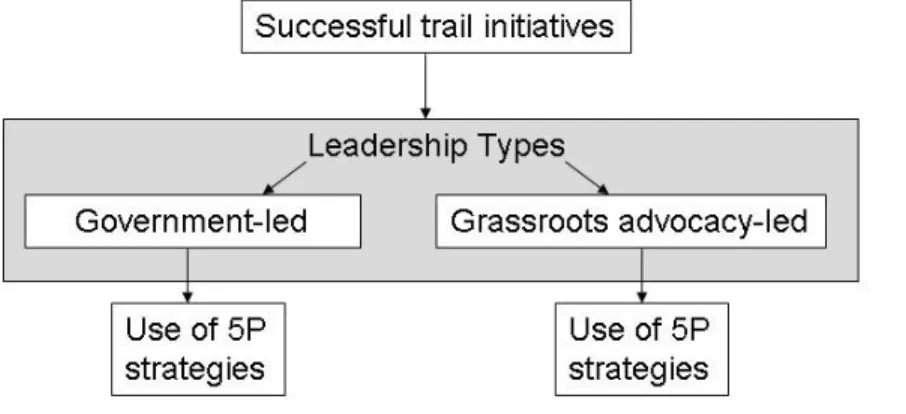
The trails in Durham and Georgetown County were both deemed successful because they have been built, well embraced by their communities, and supported by plans for continued expansion in accordance with community-approved master plans. Different levels of local government support characterized each site. In Durham, the local government
administration fully supported and spearheaded efforts to build a trail system. In Georgetown County, the greenway system was conceptualized and coordinated through local grassroots efforts due to local government’s inability to fund trail projects. Differences in local
Figure 2. Study design logic model.
Case Selection
Site selection was based upon the compelling contrast of local government support for the trail initiative, as well as specific core similarities that allowed a comparison between the two trails. Core similarities in each case included:
• Presence of public-private collaboration
• Implementation of all of the 5P’s from the ALbD Community Action Model
• Presence of a continuous, off-road trail with some connections provided by alternate
facilities (e.g., sidewalks, bicycle lanes, share-the-road)
• Accommodations for both transportation and recreational trail users
Figure 3. North-South Corridor and American Tobacco Trail, Durham, NC. Select
Despite the compelling comparisons between the two community’s trail initiatives, several noteworthy differences characterize the sites. The trail in Durham exists in a largely developed urban area. The master plan for the entire greenway system is large – over 118 miles of trail have been identified, reflecting the more dense urban location and the need to equitably serve all parts of the community. Moreover, the percentage of young and employed population is slightly above the national average (US Census, 2000). By contrast, the
Georgetown County is a more suburban, tourist-oriented setting that is rapidly developing but still has large swaths of undeveloped land. Because of the geographic boundaries in the area, smaller population size and less-dense development, the entire trail master plan is much smaller, a total of 27 miles. The population also exceeds the national average of older and retiree population (US Census, 2000).
Overview of Community Trail Initiatives
North-South Corridor / American Tobacco Trail in Durham, North Carolina.
and practices. Since the initiative began in 1985, approximately 20 total miles of the trail system have been constructed. The emergence of Durham’s urban trails initiative also reflected the influence of local environmental advocacy groups that aimed to preserve urban wetlands and stream buffers. For this reason, much of Durham’s existing and planned trail system occurs near stream corridors and floodplains; other sections incorporate former rail corridors.
The trail study site in Durham extends for 13 miles, encompassing portions of the city’s North-South Corridor and American Tobacco Trail (ATT). The North-South Corridor emerged as DOST’s top priority for the greenway system because of the desire to connect the northern and southern portions of the community and connect dense residential areas with parks and recreational facilities. The first segments of the North-South Corridor were
constructed in 1985, and expanded upon incrementally. The corridor merges with the ATT, a rail-trail facility, in Downtown Durham.
Waccamaw Neck Bikeway in Georgetown County, South Carolina.
By contrast to the government-initiated trail system in Durham, two local residents became “champions,” or advocates, for a trail system in Georgetown County. The residents, Lynne Reed* and Susan Landon,* saw the need for safe non-motorized transportation options for its residents and visitors. Geographically, the area referred to as “The Neck” lies on a relatively narrow stretch of land between the Atlantic Ocean to the East and the Waccamaw River’s expansive tidal wetlands to the west. Highway 17, a busy state highway, provides the main connection among neighborhoods, towns, and places of interest such as beaches, parks, and local commercial centers. With the area’s flat terrain, tourism industry, pockets of
income population who lack access to automobiles, and several past fatal pedestrian and bicycle accidents along Highway 17, many residents wanted a trail to connect the area.
The trail champions leveraged several important advantages to build grassroots momentum in support of the Waccamaw Neck Bikeway. Lynne Reed, through a professional background in planning and community development finance, understood how to implement such a project. Susan Landon was a well-established and respected business owner with many connections in the community. They began to host meetings with community members who had expressed an interest in greenways and bicycling, and eventually developed a grassroots organization in support trail development which came to be called “Bike the Neck.” The group also connected with planning experts to formulate an initial strategy. They then approached the County Administrator, who liked the idea of a greenway but stressed the local government’s inability to support such a system financially. In order to bring a
greenway to the area, the County Administrator insisted that Bike the Neck take responsibility all aspects of trail development.
the three conditions. Bike the Neck was then able to amass the support, technical assistance, and funding to implement the Waccamaw Neck Bikeway.
The trail study side in Georgetown County extends for 15 miles and currently links the small seaside towns of Murrells Inlet, North Litchfield, Litchfield Beach, and Pawleys Island. In Murrells Inlet, a 3-mile bicycle lane extends south on Business Highway 17, providing bicycle access to local residential and retail areas and a community park. The bicycle lanes connect to Huntington Beach State Park, a trail section dubbed Waccamaw Neck’s “Crown Jewel” due to the surrounding beauty of the area. The route continues south on quiet residential roads marked with wayfinding signage, and links to the trail adjacent to a golf resort. The path crosses Highway 17 at a stop light, and continues until to the edge of the golf resort property. A share-the-road segment, with visible signage, provides the link to Pawley’s Island, although the share-the-road will soon be replaced with an off-road trail facility. The final existing off-road segment in Pawley’s Island is characterized by many commercial and retail establishments and multiple driveway conflicts.
Qualitative Data Collection and Analysis
Qualitative data sources.
interviewers conducted all interviews (interviews at each site were conducted by the same interviewer). Interviewees included individuals such as city/county staff in planning and parks and recreation departments, partnership group members, and pedestrian/bicycle advocates. Appendix C provides a general description of all interview participants.
Confidentiality of study participants has been maintained by omitting interviewees’ specific roles or titles and changing the names of individual “champions” associated with trail development.
Participant recruitment.
Participants were recruited to participate voluntarily in previous studies due to their involvement with the process of trail development, and were initially identified by publicly available information (e.g., local government websites). A standard recruitment script was used to communicate with potential participants (Appendix D). All study participants were provided an IRB-approved fact sheet describing the research (Appendix E). Each gave verbal informed consent, rather than via a signed document, in order to ensure confidentiality. Participants were also asked to identify additional key informants who could be contacted for in-depth interviews.
Data analysis.
and then creating a matrix of key themes for further examination. Finally, interpretation of the reduced data set was conducted by examining the themes in the context of the ALbD 5P Community Action Model (Ulin et al., 2005). Additional reference materials (local planning documents) were not coded, but were used to triangulate interview data during the data interpretation process and further ensure the dependability of the findings.
Quantitative Data Collection and Analysis
Quantitative trail count data were collected for this study at both sites in collaboration with a researcher at the Citadel in Charleston, SC, in order to augment the qualitative data analysis with several objective observational measures. These measures were envisioned as a way to uncover more nuanced comparison among the different sections of the trails for the “Physical Project” component of the ALbD 5P Model. The following section was provided by Jeff Davis (2008) and is included as background.
Trail traffic count methodology.
However, meaningful insight to trail use within each trail is evident from the data collection and tabulations developed for the various count periods.
Traditional vehicular traffic engineering techniques were applied to trail user data collection methods: hourly, daily and average day totals were determined over a duration extending between one to two month periods. Traditional vehicular traffic data collection emphasizes an understanding of typical traffic conditions which reoccur on a daily weekday basis during morning and afternoon peak travel periods. Developing reasonable estimates is relatively straight forward because patterns generally account for home-to-work trips and do not vary dramatically. Conversely, trail user trips have a considerable recreational
component. These trips vary widely based on weather, daylight and other social issues, making typical daily trail use more difficult to determine. Despite the challenges in
estimating trail use patterns, meaningful tabulations can be developed with the use of specific methodologies for collecting trail user volumes, described as follows.
First, inventories of the physical trail networks in each location identified the surrounding built/natural environment and physical characteristics of each trail. Distinct segments were identified for data collection purposes based on criteria outlined in the Path Environment Audit Tool (PEAT), a reliable and validated instrument that used to assess physical characteristics of trails (Troped et al., 2006).
In Durham, PEAT criteria identified eleven segments, and four representative
produce the largest possible sample size. Count locations are identified in Appendix G, and include the following trail segments:
1. ATT at Dunhill Drive (southern most 2.3-mile segment of 6.4-mile rails-to-trails section, nearest to a parking lot and shopping center)
2. ATT at Riddle Road (middle 2.2-mile segment of 6.4-mile rails-to-trails section) 3. ATT at Blackburn Street (northern most 1.9-mile segment of 6.4-mile rails-to-trails
section)
4. North-South Corridor at West Knox Street (0.8-mile trail segment)
In Georgetown County, PEAT criteria identified nine segments for data collection purposes. Because of limitations in time and availability of only two available infrared scanners in Gerogetown County, two representative segments were identified for collection of user count data. The selected locations are also based on constraints in the ability to place the infrared scanners. Count locations are identified in Appendix H and include the following trail segments:
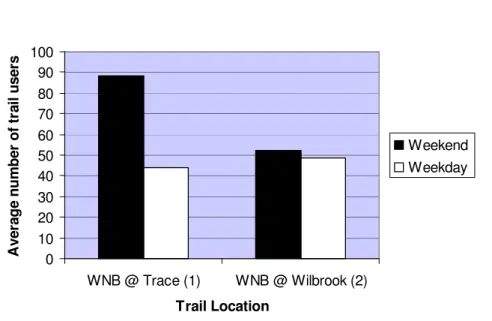
1. WNB at Trace Dr. (southern most point of 2.9.-mi trail segment through the woods inside Huntington Beach State Park)
2. WNB along Wilbrook Blvd. (mid point of 1.4-mi. trail segment within road right-of-way along Litchfield golf resort)
Infrared scanners were placed in discrete locations adjacent to the trail as per the manufacturer’s specifications, typically affixed to a utility pole and near an intersection; where fast moving trail users, such as cyclists, would slow in speed, enhancing the likelihood of detection by the automated device. Problems with infrared counters have been well
systematic observations, infrared scanners proved inaccurate in detecting fast moving trail users, trail users in pairs or groups, slender or small trail users, or those on the opposite side of the trail of from the counter location.
RESULTS
The results section is organized by “P” strategy, and provides a comparative description of the ways in which Durham and Georgetown County’s trail initiatives used each strategy. Additionally, the ‘Physical Projects’ section describes the trail use counts observed across different segments of each trail.
Preparation
Preparation provides the basis for action in a community-based initiative by bringing together key professionals, citizens, and organizations, securing sufficient funding, and understanding the current needs and conditions in a community to ensure that the actions succeed within the local context. The complexity, expense, and long-term nature of greenway implementation necessitated sophisticated preparation strategies, which were crucial to the success of both initiatives. As a stakeholder in Durham stated,
“A lot of people don’t realize that building greenways is like a small road…any time you do a linear project it automatically becomes more complex than…building on one piece of property.”
Robust preparation activities characterized the physical development and upkeep of trails in both Durham and Georgetown County, likely due to the complex tasks involved in the trails’ physical implementation. Key trail development steps included greenway master planning, route identification, land acquisition, funding acquisition, trail design and planning for maintenance. The implementation process required coordination and cooperation among multiple stakeholders and agencies, but the approach used by each partnership differed due to the government- versus grassroots-led nature of each community’s initiative. Each
In the City of Durham, the Durham Open Space and Trails Commission (DOST) guided and led trail development. Created by City Council as an official advisory board to local government, DOST was granted legal authority to operate based on an interlocal
agreement. The group meets monthly, hosting formal meetings in hearing rooms at City Hall. Commission members are directly involved in identifying trail priorities and facilitating the development process. They walk potential trail corridors to identify appropriate routes, meet with neighbors to talk about trails, and support the role of the local government agencies that devote professional time greenway system development. Local government departments and staff serve in an implementation role. The planning and parks and recreation departments, in particular, accomplish the technical tasks necessary to implement a greenway plan. Besides the construction of the North-South/ATT Corridor, DOST and city staff also oversee implementation of the city’s entire 105-mile Greenway Masterplan as well as a separate Open Space Master Plan.
The Waccamaw Neck Bikeway in Georgetown County was initiated by two
contributing significant amounts of unpaid time to accomplish important tasks such as writing grants, working with property owners to acquire land, and holding fundraisers. To accomplish the technical tasks that in Durham’s case were accomplished by city department staff, Bike the Neck received significant in-kind assistance from local and regional experts.
Community champions.
The role of individual champion(s) was a key difference between the two
communities’ trail development processes. In particular, interviewees in Georgetown County reiterated the critical role played by champion Lynne Reed, who spearheaded and
coordinated nearly every aspect of trail development. Together, the two champions leveraged prior education and experience in the planning process, as well as connections and
relationships with key leaders in the local government and tourism industry. It was clear from the interviews that Lynne Reed made possible the success of the 13-year Bike the Neck initiative.
“Lynne Reed was such a convincer. She was really good…She was doing everything, she was doing the plans, she was doing the match, you know, she would go out and raise the match so that the County had no commitment at all in the funding.” – Key Stakeholder in Georgetown County.
In Durham, perhaps because DOST holds joint leadership of urban greenspace
initiatives, no prominent community champions emerged as a driving force behind Durham’s trail system. Although DOST was initiated by two local elected officials interested in
creating a local trail system (a city council person and a mayor), these individual champions no longer play a prominent on-going role in the group.
Partnership coordination and shared responsibility.
for the trail initiative in Durham were shared mainly among official city departments. Parks and Recreation and City/County Planning undertook most of the work associated with Durham’s trail system. In particular, Parks and Recreation was heavily tasked with trail implementation duties, bearing responsibility for land acquisition negotiations, the trail construction process (i.e., design, environmental permitting, and overseeing the competitive bidding process), securing outside resources for trail construction via annual city budget and outside resources (e.g., grants), coordinating trail maintenance, and promoting trail use.
In contrast, Bike the Neck obtained more technical assistance for trail development from agencies outside local government. Three different partners shared the same
responsibilities associated with Durham’s Parks and Recreation Department. The local USDA Natural Resource Conservation Service budgeted staff time to manage the time-consuming trail design and construction process, while Bike the Neck and Lynne Reed completely oversaw the process of amassing funds (e.g., advocating to the Council of Governments to support the trail, writing grants, etc.) and acquiring land by speaking individually with trail neighbors. Georgetown County’s Parks and Recreation Department simply coordinates trail maintenance, requiring less time and resources relative to Durham’s Parks and Recreation Department.
Fundraising and leveraging resources.
Durham’s local government plays a visible role in funding greenway development. The city contributes annual budget allocations, voter-approved bond issues (three separate multi-million dollar bonds have been issued in the 1992, 1996, and 2005), and supports trail development via development impact fee revenue. Durham also allocates staff resources to implement trails. Departmental staff succeeded in gaining grant funding to benefit the North-South/ATT Corridor. Despite the local government commitment to fund Durham’s trail system, key stakeholders indicated that available funding does not always meet trail development and maintenance needs:
“…there have been so many other priorities within the community…And often, you know, [trails are] one of the first things cut because it’s not considered essential,” ~ Key Stakeholder in Durham.
“One reason it’s taken us so long for the North-South Greenway is [because] in between the big chunks of money we didn’t have money to do any acquisition.” ~ Key Stakeholder in Durham.
donations from property owners since land purchase would have been too great an expense. Their grassroots fundraising efforts were successful enough to entirely fund the first several trail segments.
Table 3.
Summary of Preparation Strategies in Durham and Georgetown County Trail Initiatives
Preparation Strategy City of Durham Georgetown County Impetus and leadership Government-led process. Grassroots-led process. Community champion
led trail development
No Yes
Partnership coordination and sharing of
responsibility
Most implementation tasks accomplished by local government staff; fewer shared responsibilities.
Implementation tasks coordinated among multiple agencies; more shared responsibilities. Fundraising and
leveraging resources
Local government provided and coordinated most trail funding. Insufficient funding emerged as a barrier to trail progress.
Grassroots advocacy group sought and coordinated most trail funding. Insufficient funding did not emerge as a barrier to trail progress.
Promotions
Trail studies emphasize the importance of promotions in order to generate community awareness and use of trails (Brownson et al., 2005; Reed et al., 2004; Merom et al., 2003). Durham and Georgetown County each engaged in trail promotions, primarily with
community-wide communications to inform the public of the trail’s presence. The