Abstract
College enrollment for 18-24 year olds is generally lower in rural areas than it is in non-rural areas. If non-rural high school students pursue postsecondary education, it is likely that they had access to fewer higher level courses while in high school than their non-rural peers.
First-generation undergraduate students at the University of the Southeast participated in a voluntary survey and in-person interview with the researcher about their high school and college
Table of Contents
Abstract………2
Chapter 1: Introduction………5
Chapter 2: Survey of the Literature……….8
Purpose of Study………13
Chapter 3: Research Methodology……….14
Research Design……….14
Survey Participants and Setting……….14
Interview Participants and Setting ………...…….15
Obtaining Institutional Review Board Approval………...16
Data Collection………...…...17
Data Coding………...17
Chapter 4: Results………..19
Survey Results………...……….…………...19
Comparisons of Survey Results by Locale……….……...……22
Interview Results………...……….…………...24
Theme I………..26
Theme II……….27
Theme III………...……….………...28
Theme IV………...29
Summary………31
Chapter 5: Discussion………...……….…………33
Strengths and Limitations……….………….37
Implications for Further Research……….…………38
Conclusion…....……….39
References………..40
Appendix A……….………...42
Appendix B………47
Chapter 1: Introduction
I have a cousin, David, who is currently a senior at Furman University in Greenville, South Carolina. Due to our age proximity, we grew up quite close, and remain so today.
Although we are in similar places in our lives now, David grew up in rural Emory, Virginia and I was born and raised minutes from the heart of downtown Charlotte, North Carolina. We were both involved in similar school and extracurricular musical activities, including high school marching, jazz, and honors bands, as well as church choirs. Both of us planned to attend college after graduating from high school, but the educational journeys that brought us to where we are now are quite different. I graduated in a class of 642 students, and he graduated with just less than 100 high school seniors. Of the students that I graduated with, several went on to pursue postsecondary education of some sort. Of David’s graduating class, a much smaller proportion went on to college and the majority entered the workforce immediately after graduation. Where my high school offered a plethora of rigorous Advanced Placement as well as International Baccalaureate courses, my cousin’s had only a select few Advanced Placement courses that were offered on a rotating schedule. While we both built up strong rapports with our high school band directors, he had connections and relationships with several other teachers in his high school including those who had not taught him, while it was quite uncommon for me to know or interact with teachers who had not taught me in their classes. We were both provided with different opportunities, but that hardly means that one of our educations was better or worse than the other.
Rural areas often have a strong sense of community and take pride in education, but rural students may not have the same opportunities as their non-rural peers to learn about
able to experience some of this firsthand while volunteering with the College Glimpse program through the University of the Southeast’s Visitor’s Center. The College Glimpse program is designed for upper elementary- and middle school-aged students and the structure includes discussions about the importance of college, ways to pay for college, and mini-“class” sessions to give students an introduction to college life, from academics and athletics to student life and campus living. The program concludes with a campus tour that is designed to show students how college is different from their own school and give them an accurate depiction of what exactly college education and life is like. While College Glimpse is not exclusive to students from rural areas, it has been my experience that often teachers in more rural schools will choose to bring their upper-elementary and middle school students to allow them to learn more about college. Some of the students who visit are on a college campus for the very first time and simply have not been exposed to the idea of college in their upbringing.
Researchers found a difference in the number of students from rural and non-rural areas who pursue postsecondary education. The National Center for Education Statistics’ (NCES) Education Longitudinal Study of 2002 (ELS) is a longitudinal, multi-level survey that initially surveyed more than 15,000 high school sophomores from 750 public and private American schools. In addition to the students who were surveyed, administrators, teachers, and other school personnel were also included. The first surveys were completed in 2002, when the students were high school sophomores, and a second round of surveys were administered in 2004, when the students were high school seniors. Successive surveys were administered in 2006 as these students entered postsecondary education and/or the workforce. The 2002 ELS data indicated that 93.4% of urban high school sophomores, 92% of suburban high school
education after graduation (Chen, Wu & Tasoff, 2010b). However, 2004 ELS data shows that only 69.5% of urban students, 68.3% of suburban students, and 66.64% of rural students applied to at least one postsecondary institution in their senior year (Chen, Wu & Tasoff, 2010a). The ELS statistics alone do not indicate a large difference in the postsecondary aspirations of rural and non-rural students; however, fewer rural students show an indication of pursuing
postsecondary education than their non-rural peers. What the ELS statistics do not show are the various complex influences that students, regardless of location, encounter on their educational journey. School funding, student commitment to place and location, exposures to various career paths, and familial variables are all among the influences that must be considered when
examining a student’s motivations to pursue postsecondary education (Griffin et al., 2011). This study examined the differences in postsecondary aspirations and goals of rural and non-rural high school students and answered the following questions: Are students from rural high schools less likely to pursue postsecondary education upon graduating from high school? If they do choose to pursue postsecondary education, do rural students find themselves less
Chapter 2: Survey of the Literature
The literature reviewed as part of this research about the postsecondary aspirations of high school students falls mainly into two categories: comparisons of rural and non-rural students and examinations of the contexts of strictly rural settings.
Haller and Virkler (1993) analyzed the High School and Beyond longitudinal data collected by the National Center for Education Statistics (NCES). Their findings indicated that while different assessment measures of this data yielded varying results of the differences in student aspirations, the rural respondents to this survey were more likely than their non-rural counterparts to aspire to pursue a technical job requiring less postsecondary education. The data, which was comprised of survey responses from more than 20,000 high school students,
demonstrated an equal aspiration between rural and non-rural students to be schoolteachers, and it is hypothesized that this is a profession that all students have been exposed to, regardless of location. Rural students were more likely to indicate a desire to pursue blue collar jobs, whereas urban students were likely to aspire to white collar jobs. Haller and Virkler linked these findings to the basic concepts that rural students are more exposed to agricultural, service, and manual labor jobs, which require less education than the technical and managerial jobs to which their non-rural peers have been exposed. The researchers suggested that this difference in rural and rural aspirations was likely due to socioeconomic status differences between rural and non-rural areas. Among the researchers’ conclusions was that teachers have the opportunity to expose students to a wider array of occupational options in order to combat this difference (Haller & Virkler, 1993).
their family structures. Much like Haller and Virkler’s (1993) findings, Hansen and McIntire also discovered a significant relationship between occupational aspirations and socioeconomic status: high occupational expectations were linked to a higher socioeconomic status, just as lower occupational expectations were linked to a lower socioeconomic status. These researchers also found a correlation between the number of children in a family and the likelihood to aspire to postsecondary education: children with more siblings were more likely to expect to complete only a high school education, yet children with fewer siblings were more likely to expect to complete at least a Bachelor’s degree. Parental expectations for students, which have a direct influence on student expectations for themselves, were higher in urban areas than in rural areas. Researchers concluded that there is a direct link between family structure, location, and the occupational and educational aspirations of students: “youth are, in the significant arena of their expectations for their quality of life, captives of family and social history” (Hansen & McIntire, 1989, p. 48).
While Hansen and McIntire’s (1989) research did not extensively study the differences between rural and urban students, it did provide evidence that the family structures and
socioeconomic status of students are strong influences on students’ educational aspirations. Given that rural students often come from lower socioeconomic levels and tighter-knit
communities than their non-rural counterparts, the implications of their research extend to the differences between rural and urban education.
Reeves and Bylund (2005) examined and compared the quality of rural and urban
according to test scores, student attendance, retention and dropout rates, and rates of successful transition to adulthood. They examined five-year data from 1,111 Kentucky schools, and classified each school as metro, adjacent to a city, large town, small town, or rural, rather than just urban and rural. Although the school classification was an attempt to define schools more distinctly than just urban and rural, the study showed that school location determined a very small percentage in differences in school performance. This classification did show, however, that rural and small town area schools improve at a 30% faster yearly rate than urban schools. Reeves and Bylund were quick to clarify, however, that there is no easy method to determining if rural schools are inferior to urban schools, and suggested that education reform could benefit rural schools by raising educational expectations to match those of urban schools (Reeves & Bylund, 2005).
newly acquired college skills and make a change, indicating a sense of belonging in their hometown and a strong sense of place (Wright, 2012).
Chenoweth and Galliher (2004) examined the influences, both direct and indirect, of environmental factors upon the academic goals of rural West Virginian youth. After surveying 247 high school seniors about their college plans, they found that 69% of those surveyed planned to go to college within two years of graduating. Realistically, however, approximately one-third of the surveyed population actually ended up in college (Spohn, Crowther, & Lykins, 1992). Males who were not planning to attend college were likely to have fathers who were either unemployed or employed in unskilled or semiskilled manual labor jobs. Unimportance of college and a desire to remain in the community were reasons cited by males not to attend college. Females, however, stated that barriers, such as the financial burden, prevented them from attending college. Overall, the study results showed a similar percentage of young men and women planned to attend college, but each gender cited different reasons for their decision to do so. A relationship was found between the decision of male students to attend college and the decision of their primary friend to attend college, but there was not a similar significant relationship for female students. If both parents of a student attended college, the student was more likely to attend than a peer whose parents had not attended college. Moreover, if any extended family member attended college, the student was more likely to attend themselves (Chenoweth & Galliher, 2004).
Rural first-generation college students are a unique subset of first-generation college students. Schultz (2004) interviewed first-generation college students from rural areas while they were completing their first semester in college. The majority of the interview participants
cited financial struggles and low levels of familial financial support for attending college. Participants’ families were largely unaware of the financial component of attending college. Finally, participants indicated that they struggled somewhat adjusting to the academic rigor of college and the overwhelming size of campus. (Schultz, 2004)
Pascarella, Pierson, Wolniak, and Terenzini (2004) analyzed data from the federally funded, longitudinal National Survey of Student Learning in order to compare the postsecondary experiences of first-generation college students with other college students. They found that the educational level of parents influenced the selectivity of the institution the student selected to attend. Once these first-generation students enrolled in college, they took fewer credit hours per semester and worked more hours per week than peers whose parents had completed some or all of a bachelor’s degree. Additionally, first-generation students had lower levels of extracurricular involvement and fewer peer interactions that were unrelated to coursework. Despite their finding that first-generation students were significantly less likely to be involved in extracurricular activities, their research also indicated that first-generation students benefitted more from extracurricular involvement than other students. The researchers reported that first-generation students stand to gain more social capital from peer connections and extracurricular involvement than other students. (Pascarella et al., 2004)
educational attainment in their journey to college as well as their experiences while in college. There has not been much research, however, into the college readiness of first-generation college students from rural areas as compared to their non-rural counterparts.
With the exception of the Wright (2012), Schultz (2004), and Pascarella et al. (2004) studies, prior research is now dated. Rural communities have undergone significant social and economic changes in the last two decades (Griffin et al., 2011). Additionally, within the last decade, new educational policies have emphasized the important of high school graduation, college readiness, and college completion. However, few studies have examined the preparation of rural youth for the transition to college (Griffin et al., 2011). This study examines questions left unanswered by prior research.
Purpose of Study
Chapter 3: Research Methodology Research Design
The purpose of this study was to examine differences, if any, in the postsecondary aspirations and perceived preparedness of rural and non-rural students. University of the Southeast undergraduates completed an online survey about their high school experiences and their perceived preparedness upon arriving to college. At the end of the online survey, first-generation college students were given the opportunity to indicate their willingness to meet with the researcher for an in-person follow-up interview. These follow-up interviews allowed further examination of the processes and influences that lead rural and non-rural students to pursue postsecondary education.
Survey Participants and Setting
The sampled population consisted of undergraduate students attending The University of the Southeast. While the survey was open to all University of the Southeast undergraduates, only survey data from first-generation college students was reported and only first-generation college students were interviewed. For the purposes of this research, respondents were classified as first-generation college students if they were the first student on either side of their family to attend college. Participation in both the survey and the interview was entirely voluntary and there were no rewards or incentives given to any participants.
school characteristics and experiences as well as their assessment of their own preparedness for college upon arriving at University of the Southeast. Respondents were asked to list their high school’s school district and to classify the locale of their high school from the National Center for Educational Statistics’ (NCES) urban-centric locale codes. The four main categories, urban, suburban, town, and rural, each include three sub-categories, resulting in a total of twelve locale categories. One hundred and sixty eight students began the initial survey and 117 students completed the survey in full. A full copy of the survey can be found in Appendix A.
Eighty-two first-generation undergraduate students completed the initial survey. None of the survey questions required answers before moving on in the survey, so not all of the
respondents answered each question. Twenty-six percent (21) of the respondents were men and 74% (59) were women. The majority of the respondents were first year students (62%, or 48 students), 10% (8) were sophomores, 19% (19) were juniors, and 9% (7) were seniors.
Respondents were given a list from which to select ways that they are paying for college. The majority of the respondents (82%, or 67 students) answered that scholarships and grants were part of the way they were paying for college. Thirty-eight percent (31) of the respondents were paying using loans, 35% (29) of the respondents’ parents were paying, and 27% (22) were paying for it themselves.
Interview Participants and Setting
name of their high school. A full copy of the interview questions can be found in Appendix B. Of the 168 respondents who began the initial survey, 32 completed the second survey indicating their willingness to be interviewed. After eliminating any of the interview candidates whom the researcher knew personally, the remaining 21 respondents were emailed asking if they were still willing to be interviewed. The researcher received eight responses from students who were still willing to participate in the interview. The eight responses included three men and five women. The eight participants represented each of the major NCES locale categories: urban, suburban, town, and rural. There were two participants who fell into each category.
First-generation college students who agreed to be interviewed met with the researcher in a private study room in University of the Southeast’s Undergraduate Library to ensure that the location was secure and the interview could not be overheard by third parties. Interviewees were informed at the start of the interview that they could stop the interview at any time they wished. Interview responses that were used in the reports were de-identified so that they could not be traced back to the interviewee. The de-identified names were determined by the locale code of the interviewee’s high school. For example: urban student 1 and urban student 2 were used for the two interviewees from urban locales.
Obtaining Institutional Review Board Approval
This study was approved by the School of Education on May 18, 2013. It was ruled exempt by the non-biomedical University of the Southeast Institutional Review Board (IRB) on June 26, 2013. The IRB number is 13-1553. Both the faculty advisor and the researcher
recordings were stored on the researcher’s password-protected personal computer in compliance with the IRB’s data security requirements.
Data Collection Procedures
Data from both the initial and secondary surveys were collected through the use of online surveys created using Qualtrics survey software. Interviews were recorded and then transcribed. Both the survey and the interview questions were designed in alignment with the original research questions. The survey asked respondents if they felt that their high school adequately prepared them for the rigors of college, as well as whether or not they planned to return to their hometown upon graduating from college.
Data Coding Procedures
The survey data was coded, sorted, and examined quantitatively based on the
classification of respondents’ high school as rural or non-rural. The sample size was too small to conduct a Chi-squared test to determine if survey responses differed significantly based on the hometown locale of respondents. One-way ANOVAs were conducted at the p < .05 significance level and did not reveal that any of the survey responses differed significantly based on the hometown locale of the respondent.
First-generation college students who completed the survey were invited to voluntarily participate in a face-to-face interview about their high school experiences and desires to pursue postsecondary education, as well as their experiences at University of the Southeast as they relate to their families, their high schools, and their hometown locale. Interviews were transcribed, then responses were coded and common themes were recorded. Interview results were compared with the published research to see if they aligned with current literature on this topic.
Chapter 4: Results Survey Results
A survey was emailed to a listserv of first-generation undergraduates at the University of the Southeast to explore differences, if any, in the postsecondary aspirations and perceived preparedness of rural and non-rural first-generation college students. The survey was also posted on the researcher’s personal Facebook page. At the end of the survey, participants were given the opportunity to indicate their willingness to meet with the researcher for an in-person interview to examine their perspectives on their high school experiences as they relate to preparation for college.
Eighty-two first-generation undergraduate students completed the initial survey. None of the survey questions required answers before moving on in the survey, so not all of the
respondents answered each question. Twenty-one (26%) of the respondents were male and 59 (74%) were female. The majority of the respondents were first year students (62%, or 48 students), 10% (8) were sophomores, 19% (19) were juniors, and 9% (7) were seniors.
Respondents were given a list from which to select ways that they are paying for college. The majority of the respondents (82%) answered that scholarships and grants were part of the way they are paying for college. Thirty-eight percent (38%) of the respondents are paying using loans, 35% of the respondents’ parents are paying, and 27% are paying for it themselves.
Table 4.1
How likely is it that you will return to your hometown to pursue a career (for longer than a one-year period) at some point after your graduation from college?
Very Unlikely
(1)
Unlikely (2)
Somewhat Unlikely
(3)
Undecided (4)
Somewhat Likely
(5)
Likely (6)
Very Likely
(7)
Number of
Responses: 24 17 5 14 9 5 8
Percentage: 29% 21% 6% 17% 11% 6% 10%
n = 82, Mean = 3.17, Variance = 4.12, Standard Deviation = 2.03
Survey respondents were also asked to “Reflect on your high school experience (courses taken, extracurricular involvement, teachers’ efforts to prepare students for postsecondary education). How effectively do you think that your high school experience prepared you for success in your first year at the University of the Southeast?” Sixty-six percent (84 students) of respondents reported that their high school experience was somewhat effective, effective, or very effective in preparing them for their first year of college. Twelve percent (10) of respondents reported that their high school experience was neither effective nor ineffective in preparing them for college, and 22% (18) reported that their experience in high school was somewhat
Table 4.2
Reflect on your high school experience (courses taken, extracurricular involvement, teachers’ efforts to prepare students for postsecondary education). How effectively do you think that your high school experience prepared you for success in your first year at the University of the Southeast? Very Ineffective (1) Ineffective (2) Somewhat Ineffective (3) Neither Effective nor Ineffective (4) Somewhat Effective (5) Effective (6) Very Effective (7) Number of
Responses: 6 5 7 10 20 21 13
Percentage 7% 6% 9% 12% 24% 26% 16%
n = 82, Mean = 4.8, Variance = 3.07, Standard Deviation = 1.75
When asked about how often they discussed college with their parents or primary
caretaker during high school, a large majority (69%, or 56 students) of respondents reported that they had these college-focused conversations at least 2-3 times a month to daily. Thirteen percent (11) reported that these conversations happened less than once a month, and 9% (7) reported never having these conversations with their parents or primary caretaker. See Table 4.3. Table 4.3
While you were in high school, how often did you discuss college with your parents/primary caretaker? Never (1) Less than Once a Month (2) Once a Month (3) 2-3 Times a Month (4) Once a Week (5) 2-3 Times a Week (6) Daily (7) Number of
Responses: 7 11 8 18 16 15 7
Percentage 9% 13% 10% 22% 20% 18% 9%
Comparison of Survey Results by Locale. Survey results were compared according to respondents’ locales. The sample size was too small to complete a Chi-Square test for
independence, so a one-way ANOVA was used to test for differences in survey responses between locales. Figure 1 shows survey respondents’ likelihood to return to their hometown separated by their hometown locale. A one-way ANOVA was used to test for differences in respondents’ likelihoods among the four locales. Likelihood differences did not differ significantly across the four locales, F (3, 78) = 1.299, p = .281. While the ANOVA did not reveal that responses differed significantly across the four locales, an examination of the frequency of responses by locale shows that 16 (75%) of the rural respondents indicated they were unlikely to return to their hometown upon graduation from college.
Figure 1. Respondents’ likelihood to return to hometown. Numbers in parentheses indicate the total number of respondents in each category.
16
10
8
12 2
2 6
4 2
7
7
6
0 5 10 15 20 25
Rural (20) Town (19) Suburb (21) City (22)
Figure 2 shows survey respondents’ rating of how effectively their high school prepared them for college. A one-way ANOVA was used to test for differences in respondents’ ratings of their high schools’ effectiveness among the four locales. Effectiveness ratings did not differ significantly across the four locales, F (3, 78) = 2.645, p = .055. While the ANOVA did not indicate that survey responses were significantly different based on respondents’ locales, a higher percentage of rural students (35%, or 7 students) than each of the other locales indicated that their high school was ineffective in preparing them for college.
Figure 2. Respondents’ ratings of their high school’s effectiveness in preparing them for college. Numbers in parentheses indicate the total number of respondents in each category.
Figure 3 shows the frequency of college related discussions between respondents and their parents/primary caretaker for respondents of each locale. A one-way ANOVA was used to test for differences in the frequencies of college related discussions among each locale.
7
4
2
5 2
3
1
4 11
12
18
13
0 5 10 15 20 25
Rural (20) Town (19) Suburb (21) City (22)
Discussion frequencies did not differ significantly across the four locales, F (3, 78) = .532, p = .662. Responses were fairly consistent across locales.
Figure 3. Frequency of college related discussions between respondents and their parents/primary caretaker. Numbers in parentheses indicate the total number of respondents in each category.
Interview Results
All students who completed the initial survey were given the option, at the end of the survey, to indicate their willingness to be interviewed by the researcher. Of the 82 first-generation respondents, 32 indicated their willingness to be interviewed. The researcher
eliminated any potential participants that were missing contact information or that the researcher knew personally, which left 21 potential participants. All 21 potential participants were contacted by the researcher via email and of those, eight participants responded confirming their
5 5
3
5 8
6
8 4
7
8
10
13
0 5 10 15 20 25
Rural (20) Town (19) Suburb (21) City (22)
willingness to meet with the researcher and be interviewed. Participant numbers and characteristics are listed in Table 4.4.
Table 4.4
Demographic Characteristics of Interview Participants, n=8
Participant Identifier
Age Sex Year in College
High School Classification Major(s) and Minors CF1 18 F First-year City, Midsize Biology and Hispanic
Literature & Culture
CF2 18 F First-year City, Large Communications
SF1 18 F First-year Suburb, Large Psychology
SM2 24 M Junior
transfer
Suburb, Large English Literature
TM1 18 M First-year Town, Distant Biology
TM2 18 M First-year Town, Fringe Chemistry, Chinese
Minor
RF1 18 F First-year Rural, Fringe Sociology
RF2 18 F First-year Rural, Fringe Business
An interpretative analysis of interview transcripts revealed four common themes found in participants’ responses. These themes are not independent of one another, rather they are interrelated and intertwined.
I. Adults in participants’ schools portrayed postsecondary education in a positive light. II. Students who were enrolled in advanced courses reported frequent mentions of
college in their classes.
III. Interactions with and encouragement from specific adults were vital to the college process.
IV. The college application process was very difficult for first-generation college students.
high school’s geographic classification as well as their gender. For example, SM2 corresponds to suburb male student #2.
Theme I: Adults in participants’ schools portrayed postsecondary education in a positive light. Seven of the eight interview participants, when asked if adults at their high school portrayed postsecondary education in a positive or a negative light, responded that adults at their school portrayed postsecondary education in a positive fashion. While the majority of
participants did state that adults at their school portrayed postsecondary education positively, there were variations present in their responses. They recalled instances when teachers talked about the importance of college and why they needed to pursue education after high school.
“All of them portrayed [college] in a positive light. [They would say] “You are not anybody, you have to be somebody and to do that you have to go to college or to graduate school. You can’t just stay at the high school level, you have to go beyond.” (CF1)
A participant who attended a college preparatory high school in a large city had similar feelings about the portrayal of college at her school:
“Very positive, definitely. I felt like we had some of the best teachers in the world. A lot of our teachers were highly qualified…they were there because they want you to go to college” (CF2)
For some interview participants, this positive portrayal of college was not specific to certain types of classes but was common across the board:
“In my experience, every single teacher…, even for like marketing courses and lower-level classes, they emphasized the importance of college. They would always say, ‘In college, it’ll be like this which is why I’m doing this’, pretty much every teacher I had would say that.” (TM1)
“My high school experience might not be the same as everyone [else’s at my high school]…my core classes were mostly honors and AP, so I think if you were in those classes you were expected to go to college. And the teachers kinda picked up on that, so by senior year, my English teacher would give us tips of things we’d need in college and my statistics teacher would say, ‘oh, you’ll need to know this in college’” (SF1)
While interview participants did experience positive portrayals of postsecondary education, some of them recognized that not all of their peers had this same experience. One participant even mentioned that students in higher level classes were assumed to have goals of attending college. In contrast to other interviewees, this participant shared that adults at his school assumed that students not in not in these types of classes were more likely to enter the workforce right after high school:
“It was mostly assumed that honors kids would go to college and the others would go work in the factories.” (TM2)
Only one interview participant shared that postsecondary education was not portrayed positively at his high school:
“For me specifically, [the way adults portrayed postsecondary education was] negative. I was told to drop out multiple times. Teachers told us we’d be lucky to graduate” (SM2) Although the general portrayal of college for this participant was negative, he stated that there was one specific teacher who did encourage him to attend college. Overall, this participant had a unique high school experience that was quite different from the other seven interviewees.
Theme II: Students who were enrolled in advanced courses reported frequent
“[I heard that] a lot, especially in the AP classes I took my senior year. Because everyone in there was basically seniors and preparing to go to college. I think it was less so in my freshman and sophomore years because they’re trying to get you adjusted to high school, but definitely more so in my junior and senior year.” (SF1)
One participant even noted that she feels that her teachers’ discussions of college
preparations during her freshman and sophomore years are part of the reason she decided to go to college:
“I heard that frequently with my history teachers, especially during the college
application period, they would talk to us about being prepared for the assignments and how in college it would be a whole different ballgame. I think it did help to hear it so much because honestly, when I was a freshman, I just wanted to go to high school and I didn’t really have any thoughts about what I was going to do beyond high school and hearing it again and again, the message got stuck in my head.” (CF1)
For another participant, however, the experience reported was the opposite of SF1: “It was more frequent in the standardized classes, because our foods class and apparel weren’t honors, but in those classes [teachers were] like, ‘This is why you’re doing it, [so you can be prepared for college.]’ But in the AP classes there was more of and
understood, ‘you decided to be here so you obviously want to be a little more prepared [for college.]’” (RF2)
Participant RF2 had a unique experience from the other interviewees in that her teachers mentioned college preparation more frequently in lower-level classes, whereas most other
interviewees reported that their teachers mentioned college preparation more frequently in higher level classes.
Theme III: Interactions with and encouragement from specific adults are vital to the college process. The importance of adults in participants’ journeys to college was not limited to
positive college portrayals and preparations for college. All eight of the interview participants mentioned, by name, specific adult(s) who encouraged them to attend college. When asked what adults at his school encouraged him to attend college, one participant responded with:
They helped me do recommendations for scholarships and they reviewed my essays.” (TM1)
Another participant was particularly appreciative of a teacher’s mentions of her own college experiences:
“Ms. C, she taught me Foods 2, she went to [both a big college and a small college in the state] so she had the big school and the small school [perspective] so if you had questions you could go to her. Then we had a counselor, Mr. G, you could ask him about anything, he was also another one.” (RF2)
One participant attended college preparation high school that required that all students take a college application class in their senior year. When discussing this class, she spoke of the attention that teacher paid to each of her students:
“[My teacher] sat down with each of us individually and said, ‘Let’s look at the schools that you got accepted to and the ones you want to apply to anyways and see what fits for you.’” (CF2)
Although participant CF2’s experience is unique due to the specific type of high school she attended, she is not unique in that she mentioned a specific adult who encouraged her to attend college.
Theme IV: The college application process was very difficult for first-generation college students. While their families were supportive and encouraging, they often lacked the background information to be helpful in the college application process. Despite the consistent support of teachers and adults in their high schools, all eight interview participants mentioned that they felt being a first-generation college student made the college application process particularly difficult. One participant summarized it quite well:
“Since no one in my immediate family has gone through that process, luckily I had my college advisor to help me go smoothly through [the college application] process because it’s pretty overwhelming.” (RF2)
achieving that goal was unclear and difficult:
“It was definitely a little overwhelming because you have that goal of going to college and you don’t really know how to get it. My counselor was really helpful in that aspect because I came to him [and said], “I want to go to college”, and he would walk me through how to use the College Board website and the FAFSA and the CSS, but I had to do the individual research on colleges I wanted to go to.” (SF1)
That same participant reported that while her family supported her decision to pursue college, they did not have an accurate perception of what the college application process entailed:
“My mom doesn’t really have a clear idea of how the whole process works. She’s like, ‘Oh, my baby’s smart, she’s gonna go to college’, but there are applications and scholarship applications.” (SF1)
One participant, whose parents are immigrants, revealed that his parents had misconceptions about what all was required to get in to college:
“Since neither of my parents speak fluent English I never was able to explain to them what the process consisted of. As far as they were concerned, grades were all that mattered for college.” (TM1)
Participants frequently mentioned that the college application process was so difficult for them as first-generation college students because their parents were unable to be resources for them:
“It was difficult for my mother and me because she didn’t [apply to college] so sometimes we would bump heads…you wanna hurry up and get it done but you can’t because you don’t really know what you’re doing. I think it was mainly just me and my mom that had that problem because that’s who I lived with so it was only us doing it. Sometimes I’d have to call my guidance counselor or email her to ask for clarification because maybe she would know.” (RF1)
This participant was not alone in her lack of knowledge and resources about the application process:
it was difficult to know what to do. But if it wasn’t for that tool I would have no idea what the heck I was doing.” (CF1)
Participant SM2, who cited very different high school experiences from the other seven interviewees, struggled with the college application process:
“If it wasn’t for my best friend I never would’ve done that. [The college application process] was like algebra to me. I have several first-generation friends and we helped each other get through this because it was so incredibly overwhelming.” (SM2)
Even the participant who attended a specific college-preparatory high school (and took a college application class) felt that the application process was very difficult due to the fact that she is a first-generation college student:
“It’s hard because you don’t have anyone to reach out to that’s been to college, like in your family or anything. Even the parts [of applications] that they told us to do at home with our parents I would just bring it back to school, because it was so stressful. My mom is glad she didn’t have to do the whole thing with me. She would just get frustrated and say ‘No, take it back to school.’” (CF2)
Participant responses show that when applying to college, first-generation college students often lack the knowledge base of their non-first-generation peers and their parents lack the knowledge base to assist, which makes the college application process very difficult for them.
Summary
Chapter 5: Discussion
The purpose of this research was to examine the differences, if any in the postsecondary aspirations of rural and non-rural students. Previous research indicated that students from rural areas encounter key barriers when making plans for their future, including level of parental education, financial concerns, and academic readiness for college. However, few studies have examined how rural students prepare for their transition to college. There were two main research questions: Are students from rural high schools less likely to pursue postsecondary education upon graduating from high school? If they do choose to pursue postsecondary education, do rural students find themselves less prepared than their non-rural counterparts?
Overall, the results of the survey and interviews were consistent with the literature reviewed. However, there were some inconsistencies as well as new findings that emerged. While the literature indicated that rural students feel a strong sense of attachment to their hometown and therefor a desire to return after college, most of the rural students who were surveyed in this study indicated they were unlikely to return to their hometown upon graduation from college. While the literature regarding first-generation college students did discuss the unique obstacles that first-generation college students face because of their families’ lack of experience with college, none of the literature reviewed specifically mentioned the difficulties experienced by first-generation college students face as they relate specifically to the college application process. This was a finding present in each of the eight interviews that were conducted in this study.
responses for participants from each locale category differed beyond what is considered to be normal. The ANOVAs revealed that none of the differences in survey responses for each locale were significant at a p < .05 level.
Eight of the surveyed students participated in a follow-up face-to-face interview to collect more qualitative data about the high school and college experiences of rural and non-rural
students. Interviews were transcribed and coded for common themes. The coding revealed four themes that consistently appeared in the interviews: adults in participants’ schools portrayed postsecondary education in a positive light, students who were enrolled in advanced courses reported frequent mentions of college in their classes, interactions with and encouragement from specific adults were vital to the college process, and the college application process was very difficult for first-generation college students.
Discussion of Survey and Interview Results
Although early research suggested that rural youth were less likely to aspire to college than their urban peers, recent studies indicate that this pattern no longer holds. The NCES’s 2004 research using the ELS indicates that similar proportions of rural, suburban, and urban high school seniors aspired to a four-year college degree (Ingles, Planty, & Bozick, 2005). Results of this study support the trend found in recent ELS results. A majority of the youth surveyed and interviewed as part of this research expected to attend a four-year college. This shift in the educational aspiration gap between rural and non-rural youth could be due to the decline in the number of career opportunities available in rural areas, which in turn leads youth to pursue options beyond their hometown.
feel a strong connection and attachment to their hometown when considering their
post-secondary plans. Rural youth who were interviewed in this study expressed gratitude for the role that their hometown had played in shaping who they have become, but simultaneously expressed mixed emotions about returning to their hometown because of the lack of opportunities they felt it had to offer them. This sentiment was also shared by interviewed students from non-rural areas, which indicates that non-rural students may also feel an attachment to place.
Chenoweth and Galliher’s research indicated that rural students are more likely than their non-rural peers to have a desire to return to their hometown upon graduation from college and that rural students feel a strong sense of connectedness to their home (2004). While the results of the survey question that asked students about their plans to return to their hometown have a sample size too small to examine the results for statistical significance, more rural students than urban students indicated that they were unlikely to return to their hometown upon graduating from college. Just as some of the interviewed students expressed a hesitance to return to their hometown because of a lack of opportunities provided there, it is possible that a desire to leave their hometown and pursue new opportunities is one of the reasons that youth are aspiring to college.
Interview participants from this study had similar experiences in their college application process to those reported by Schultz (2004). Each of the eight interviewees shared that the college application process was particularly overwhelming for them because their family was unable to be a resource. Much like Schultz’s report, interview participants in this study reported that their families were largely unaware of what it took to complete college applications. While their families supported and encouraged their decision to go to college, they lacked the
There were several unexpected findings. Prior research by Hansen and McIntire indicated that parental expectations for students to pursue postsecondary education were higher in urban areas than in rural areas (1989). However, this study indicated that regardless of students’ hometown locations, their family members expected them to pursue college. Eighty-eight percent (71 students) of the survey respondents indicated that their parents/primary
caretaker expected them to go to college. Furthermore, 99% (80) of survey respondents indicated that their parents/primary caretaker supported their decision to go to college. These results indicate that for the sampled population, family members both expected them to pursue college and support their enrollment in college.
Each of the eight interview participants had slightly varied responses when asked about their family’s views and support of postsecondary education, but the overall consensus was the same: seven of the eight participants reported that their families supported their desire to attend college and placed a high importance on education. However, the participant who shared that his family did not expect him to attend college or support his decision to go to college also shared that now that he is in college, his family supports his decision to be here, even if they did not support it originally.
These survey and interview results do not align with Hansen and McIntire’s findings, which could be due to various factors. It is possible that rural students whose parents did not expect them to attend college did not, in fact, end up attending college, which would mean that they were not included in this sample. It is also possible that in the nearly quarter century that has elapsed since their research was conducted, the pattern has shifted and rural and urban parents have more similar expectations for their children.
attendance. Each of the eight students who were interviewed cited, by name, specific adults from their high school who encouraged them to attend college. Similar to the research of Griffin et al. (2010), the adults mentioned by these students were mostly teachers, and not necessarily
guidance or college counselors. This is indicative of the integral role that high school teachers can play in encouraging students to pursue post-secondary education. This finding has important implications for teacher preparation programs, as pre-service high school teachers should be made aware of the role they can play in shaping students’ futures.
Although teachers serve as important resources for youth preparing for college, some barriers remain. Primarily, there is the previously mentioned difficulty that first-generation college students face when completing college applications. This obstacle is particularly problematic as it may limit access to college for first-generation students even when they have high educational aspirations. Even if they do enroll in college, first-generation college students may find themselves overwhelmed and unprepared to face the academic rigor and demands of college.
Strengths and Limitations
rural schools to large urban schools with specific college preparatory programs. There were five female and three male interviewees.
This survey was conducted at a large, prominent, public Research I institution of higher education and as such, the survey and interview results cannot be generalized beyond the setting in which they took place. If the same study were to be conducted at a smaller institution that is located closer to rural communities, different results could emerge. For example, the results from this study are not necessarily indicative of the experiences of all rural students, but results from a study conducted closer to the hometowns of rural students could be more indicative of the high school and college experiences of rural students. This is a select sample, as survey and interview respondents featured in this research are only a small subgroup of first-generation college
students. Additionally, the voluntary nature of the survey contributes some selection bias.
Finally, the small sample size resulted in an inability to conduct basic statistical tests on the data, so it cannot be determined if the results are significant or not.
Implications for Further Research
There are several implications for further research in this field. While there are often programs on college campuses that are targeted at first-generation college students, there do not appear to be similar programs in place in high schools. It should be examined whether or not programs specifically geared towards high school students that would be first-generation college students have an impact on students’ decisions to pursue postsecondary education.
students. For example, this could include locations such as community and junior colleges or participants who are attending college through the GI Bill or as part of military service. Conclusion
This research should be replicated at additional settings because an examination of the various factors that influence students’ decisions to pursue postsecondary education will allow educators at all levels to have a deeper understanding of their students and the factors that shape their decisions about postsecondary education. If further research indicates that there are
References
Chen, X., Wu, J., & Tasoff, S. (2010a). The high school senior class of 2003-04: Steps toward postsecondary enrollment. Washington, D.C.: U.S. Department of Education. National Center for Education Statistics, Institute of Educational Sciences. Retrieved from: http://nces.ed.gov/pubs2010/2010203.pdf
Chen, X., Wu, J., & Tasoff, S. (2010b). Postsecondary expectations and plans for the high school senior class of 2003-2004. Washington, D.C.: U.S. Department of Education. National Center for Education Statistics, Institute of Educational Sciences. Retrieved from: http://nces.ed.gov/pubs2010/2010170rev.pdf
Chenoweth, E., & Galliher, R.V. (2004). Factors influencing college aspirations of rural West Virginia high school students. Journal of Research in Rural Education, 19(2). Retrieved from http://jrre.psu.edu/articles/19-2.pdf
Griffin, D., Hutchins, B.C., & Meece, J.L. (2011). Where do rural high school students go to find information about their futures?. Journal of Counseling & Development, 89, 172-181. doi: 10.1002/j.1556-6678.2011.tb00075.x
Haller, E.J., & Virkler, S.J. (1993). Another look at rural-nonrural differences in students’ educational aspirations. Journal of Research in Rural Education, 9(3), 170-178. Retrieved from: http://www.jrre.psu.edu/articles/v9,n3,p170-178,Haller.pdf
Hansen, T.D., & McIntire, W.G. (1989). Family structure variables as predictors of educational and vocational aspirations of high school seniors. Journal of Research in Rural
Ingels, S.J., Planty, M., and Bozick, R. (2005). A Profile of the American High School Senior in 2004: A First Look—Initial Results from the First Follow-up of the Education
Longitudinal Study of 2002 (ELS:2002) (NCES 2006–348). U.S. Department of Education, National Center for Education Statistics. Washington, DC: U.S. Government Printing Office.
Pascarella, E.T., Pierson, C.T., Wolniak, G. C., & Terenzini, P. T. (2004). First-generation college students: Additional evidence on college experiences and outcomes. The Journal of Higher Education, 75, 249-284.
Reeves, E.B., & Bylund, R.A. (2005). Are rural schools inferior to urban schools? A multilevel analysis of school accountability trends in Kentucky. Rural Sociology, 70, 360-386. doi: 10.1526/0036011054831215
Schultz, P.F. (2004). Upon entering college: First semester experiences of first-generation rural students from agricultural families. The Rural Educator, 26(1), 48-51. Retrieved from http://www.ruraleducator.net/archive/26-1/26-1_Schultz.pdf
Spohn, K., Crowther, T., & Lykins, C.D. (1992). Appalachian access and success: A research project of the Ohio Board of Regents and a consortium of two- and four-year colleges and universities in Appalachian Ohio. Portsmouth, OH: Shawnee State University. Wright, C.J. (2012). Becoming to remain: community college students and postsecondary
Appendix A Postsecondary Aspirations Survey
Statement of Research
A person who is to participate in the research must give his or her informed consent to such participation. This consent must be based on an understanding of the nature and risks of the research. This page provides information that is important for this understanding. Research projects include only subjects who choose to take part. Please take your time in making your decision as to whether to participate. If you have questions at any time, please ask.
What is the purpose of this study?
You are invited to be in a research study about the postsecondary goals of rural and non-rural students because you are an undergraduate student at the University of the Southeast. The purpose of this research study is to compare the postsecondary goals and plans of rural and non-rural students by surveying and interviewing University of the Southeast undergrads from both rural and non-rural areas.
How long will I be in this study?
This study consists of an online survey and, if you are a first-generation college student who wishes to participate, a face-to-face interview with the researcher. The survey will take approximately 15 minutes to complete, and the interview will take approximately 1 hour. How many people will participate?
Approximately 50 undergrads will take part in the online survey and 8 first-generation college students will take part in the face-to-face interview.
What will happen during the study?
University of the Southeast undergraduates will voluntarily choose to participate in an online survey about their high school location, experiences, and experiences since they have been at the University of the Southeast. You are free to skip any questions they prefer not to answer. At the end of the study, participants who are first-generation college students will be asked if they are interested in participating in a face-to-face interview to further discuss their postsecondary goals when they were in high school.
What are the risks of this study?
There are no anticipated risks accompanying this study, however, if you are upset or made uncomfortable by any question, you may stop at any time or choose not to answer a question.
What are the benefits of this study?
You will not benefit personally from being in this study. However, we hope that in the future, other people might benefit from this study because it will seek to examine differences in students’ postsecondary goals as they relate to their hometown locales and determine
Will it cost me anything to be in this study?
You will not have any costs for being in this research study. Will I be paid for participating?
You will not be paid for being in this research study. Confidentiality
The records of this study will be kept private to the extent permitted by law. In any report about this study that might be published, you will not be identified. Your study record may be reviewed by Government agencies and/or the University of the Southeast Institutional Review Board. Any information that is obtained in this study and that can be identified with you will remain confidential and will be disclosed only with your permission or as required by law. Confidentiality will be maintained by means of coding participant responses based on the locale of their high school, then sorting responses and analyzing trends in the data. If we write a report or article about this study, we will describe the study results in a summarized manner so that you cannot be identified. Your responses will be coded based on the locale of your high school and your name will not be used at any point in this study. Should you volunteer and in turn, be selected to participate in the face-to-face interview, your responses will be audio recorded and then transcribed for reporting purposes. Pseudonyms will be used for your name, your town name, your high school name, and any other relevant identifying information. Audio recordings will be deleted after the written transcription of the interview has been completed.
Is this study voluntary?
Your participation is voluntary. You may choose not to participate or you may discontinue your participation at any time without penalty or loss of benefits to which you are otherwise entitled. Your decision whether or not to participate will not affect your current or future relations with the University of the Southeast.
If you wish to participate in this research, please certify that you have read this Informed Consent Document by clicking below and then clicking the right arrow button. If you do not wish to participate, simply close this window.
o I have read the statement of informed consent and agree to participate in this research. (The respondent may not proceed to the following survey questions without agreeing to
statement of the informed consent.)
Q1 Are you an undergraduate student at the University of the Southeast?
o Yes (1)
o No (2)
Q2 Are you a first-generation college student? (For the purposes of this research, you are
a 2-year college program but your father only has a high school diploma, you would be considered a first-generation college student.)
o Yes (1)
o No (2)
Q3 Please list the name and state of your high school's school district.
Q4 How would you classify the area where your high school is located? (definitions of these categories, taken from the National Center for Education Statistics’ Common Core of Data, can be found at nces.ed.gov/ccd/rural_locales.asp#defs under the heading “New Urban-Centric Locale Codes”)
o City, Large (1)
o City, Midsize (2)
o City, Small (3)
o Suburb, Large (4)
o Suburb, Midsize (5)
o Suburb, Small (6)
o Town, Fringe (7)
o Town, Distant (8)
o Town, Remote (9)
o Rural, Fringe (10)
o Rural, Distant (11)
o Rural, Remote (12)
Q5 How are you paying for college? (please check all that apply) V. Scholarships/Grants (1)
VI. Loans (2)
VII. My parents are paying. (3) VIII. I'm paying for it myself. (4)
IX. other (please specify) (5) ____________________ X. I would rather not share. (6)
Q6 How likely is it that you will return to your hometown to pursue a career (for longer than a one-year period) at some point after your graduation from college?
Very Unlikely (1) Unlikely (2) Somewhat Unlikely (3) Undecided (4) Somewhat Likely (5) Likely (6) Very Likely (7)
Likelihood that you will return to your hometown at some
point after graduation (1)
Q7 Please elaborate on any of your survey responses thus far if you feel it is necessary.
Q8 Reflect on your high school experience (courses taken, extracurricular involvement, teachers' efforts to prepare students for postsecondary education). How effectively do you think that your high school experience prepared you for success in your first year at the University of the Southeast? Very Ineffective (1) Ineffective (2) Somewhat Ineffective (3) Neither Effective nor Ineffective (4) Somewhat
Effective (5) Effective (6)
Very Effective (7)
Rating of your high school's effectiveness in preparing
you for the University of the Southeast
(1)
o o o o o o o
Q9 Did your parents/primary caretaker expect for you to pursue postsecondary education after completing high school?
o Yes (1)
o No (2)
o Other (please specify): (3) ____________________
Q10 While you were in high school, how often did you discuss college with your parents/primary caretaker? Never (1) Less than Once a Month (2) Once a Month (3)
2-3 Times a Month (4)
Once a Week (5)
2-3 Times a
Week (6) Daily (7)
Frequency of college related
discussions (1)
o o o o o o o
Q11 Do they (your parents/primary caretaker) support your decision to go to college?
o Yes (1)
o No (2)
o Other (please specify): (3) ____________________
Q12 In your opinion, how many students from your graduating class planned to pursue some sort of postsecondary education (4-year, 2-year, or community college)?
o Most of them (1)
o Some of them (2)
o Only a few of them (3)
Q14 Please select your gender:
o Male (1)
o Female (2)
o Other (3)
Q15 Please select your year in school:
o First year (class of 2017) (1)
o Sophomore (class of 2016) (2)
o Junior (class of 2015) (3)
o Senior (class of 2014) (4)
Q16 What is your cumulative GPA? (optional) Q17 Please list your major(s) and minor(s)
Major: (1)
Optional Second Major: (2) Minor: (3)
Optional Second Minor: (4)
Q18 If you are a first-generation college student, would you be willing to participate in an in-person interview to assist my research for an undergraduate honors thesis? It would take
approximately 30 minutes of your time, and I would want to discuss more in-depth these survey questions, as well as your high school experience, decision to go to college, and experiences while here at the University of the Southeast (as they relate to your hometown).
o Yes (1)
o No (2)
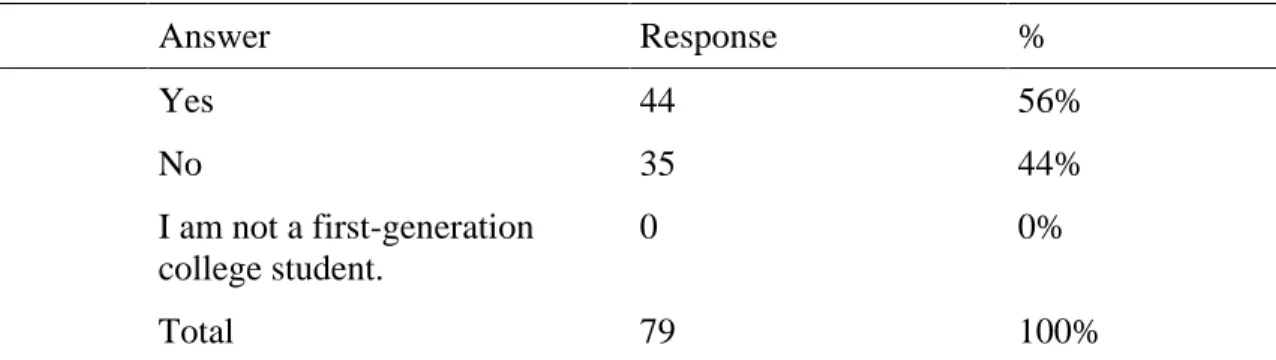
o I am not a first-generation college student. (3)
(If the respondent answers ‘yes’ to the question above, a separate window will open that allows them to input their contact information.)
Appendix B
Interview Protocol: Postsecondary Aspirations of Rural and Urban High School Students Thank you so much for agreeing to meet with me today. As you may know, I am interested in learning about how students’ hometown locations and high school experiences affect their postsecondary goals. Your insight as a first-generation college student is really important. As a reminder, everything you tell me is confidential and if any of the information is shared in my thesis paper, it will be done so in a way that cannot be linked back to your identity. The interview will last about an hour. You may stop at any point. Let’s get started.
2. What year are you at the University of the Southeast? 3. What’s your major?
4. State the name of your high school, hometown, and county of your hometown.
Now for the main interview questions. Where did your desire to attend college originate? I’d like to discuss your high school experience, including academic coursework and availability of rigorous courses, extracurricular (both school-related and otherwise) involvement.
1. What type of classes did your high school offer?
2. Did your high school offer honors classes? In what subject areas? How often? Were these large or small classes?
3. Did your high school offer AP classes? In what subject areas? How often? Were these large or small classes?
4. Did your high school offer different vocational tracks or classes (such as auto tech, masonry, woodshop) ? How often? Were these large or small classes?
5. Did your high school offer college preparatory tracks? Were these large or small classes? 6. What extracurricular activities, if any, were you involved in at your high school?
7. Were you involved in any extracurricular activities that were not sponsored by your high school?
8. How/why did you get involved?
Now I’d like to learn about how postsecondary education is viewed at your high school and how frequently it was discussed.
1. Did adults at your school (teachers, counselors, coaches, administrators, etc) portray postsecondary education in a positive or negative light?
2. In general, what was the image of college presented by adults at your school? 3. What adults, if any, at your school encouraged you to attend college?
4. Did your guidance counselors encourage you to attend college?
5. Did your teachers encourage you to attend college? If so, how many? Who were these teachers?
6. Did any coaches or club supervisors encourage you to attend college? Who were they? 7. Which one of these adults you just mentioned encouraged you to attend college the most?
Why did you think that is?
8. How often did your teachers cite “college preparation” as a reason for having you complete an assignment or a justification for the rigor of their course?
Now, I’d like to talk about how your family and home community perceived college. 1. How does your immediate family view postsecondary education?
2. In your opinion, do you think your family thinks college is important or unimportant? Why or why not?
4. What value do you think your community places on postsecondary education? Why do you think that? Can you give specific examples?
5. Do you feel that attending college was encouraged or discouraged? How so? By whom? Can you give specific examples?
6. Do you have a desire to return to your hometown at any point after graduation from the University of the Southeast? If not, do you have a desire to be near your hometown when choosing a place to live?
7. To what extent did your upbringing impact this decision?
Finally, I’d like to discuss your transition to life at the University of the Southeast. 1. How does the University of the Southeast compare to your hometown?
2. What were some aspects of your life in which you had to make an adjustment, if any? What was the hardest change to make?
3. How do you feel your experience as a first-generation college student has affected your time at the University of the Southeast?
4. Have you kept in touch with any peers from high school? If so, what are these people currently doing?
5. Did any of them choose to attend college upon graduating? If so, how many? Where are they attending college? Are they at in-state or out-of-state schools, large schools, small schools, public schools, or small schools?
6. How connected to you feel to your friends from high school who did not choose to attend college? Why?
7. How did you choose your major? What influenced your choice of major?
8. Where do you hope to work when you graduate from the University of the Southeast? Why? We’re just about done with the interview. Is there anything else you would like to add about postsecondary goals of rural and non-rural students or that you think might be helpful in my research?
Appendix C Postsecondary Aspirations Survey Responses
2. Are you an undergraduate student at the University of the Southeast? Table C1
# Answer Response %
1 Yes 82 100%
2 No 0 0%
Total 82 100%
Table C2
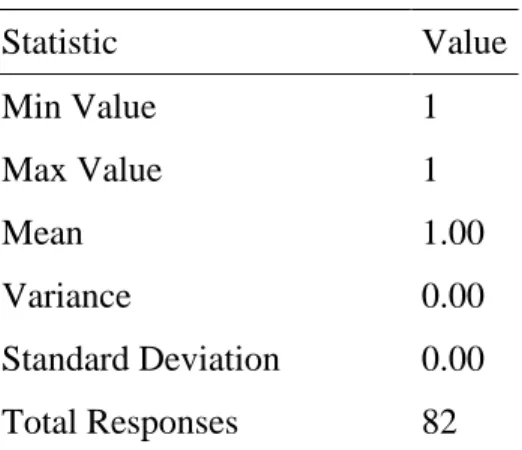
Statistic Value
Min Value 1
Max Value 1
Mean 1.00
Variance 0.00
Standard Deviation 0.00
Total Responses 82
3. Are you a first-generation college student? (For the purposes of this research, you are
classified as a first-generation college student if you are in the first student on either side of your family who has attended a four-year college or university. For example, if your mother attended a 2-year college program but your father only has a high school diploma, you would be
considered a first-generation college student.) Table C3
# Answer Response %
1 Yes 82 100%
2 No 0 0%