TIME TO TREATMENT IN NON-SMALL CELL LUNG CANCER
Jordan Alexander Holmes
A Master’s paper submitted to the faculty at the University of North Carolina at Chapel Hill in partial fulfillment of the requirements for the degree of Master of Public Health in the Public
Health Leadership Program in the Gillings School of Global Public Health
Chapel Hill 2017
Approved by
Date
TABLE OF CONTENTS
Master's PaperAbstract...3
Treatment Delay in Non-Small Cell Lung Cancer: A Systematic Review...4
Introduction...5
Methods...7
Results...8
Discussion...17
Conclusions...19
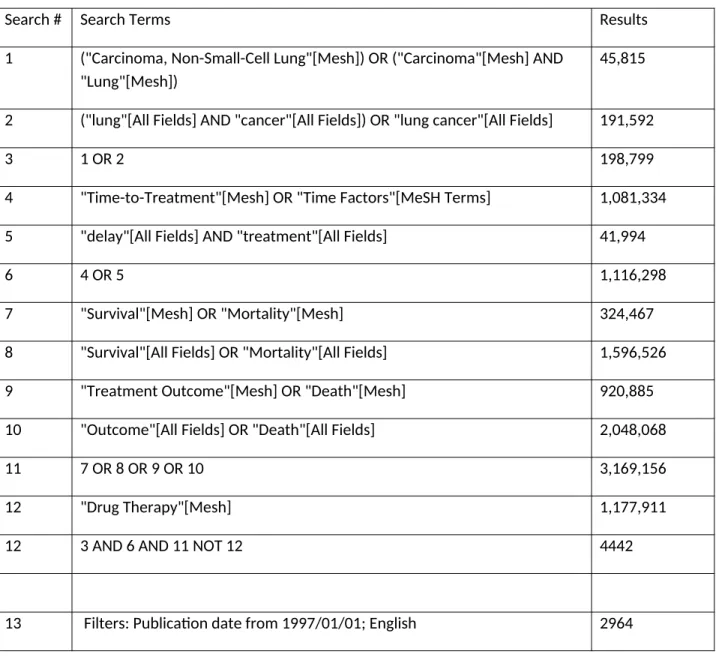
Table 1: Search Terms...20
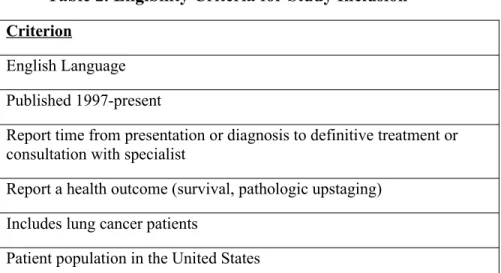
Table 2. Eligibility Criteria for Study Inclusion...21
Table 4: Description of Included Studies...23
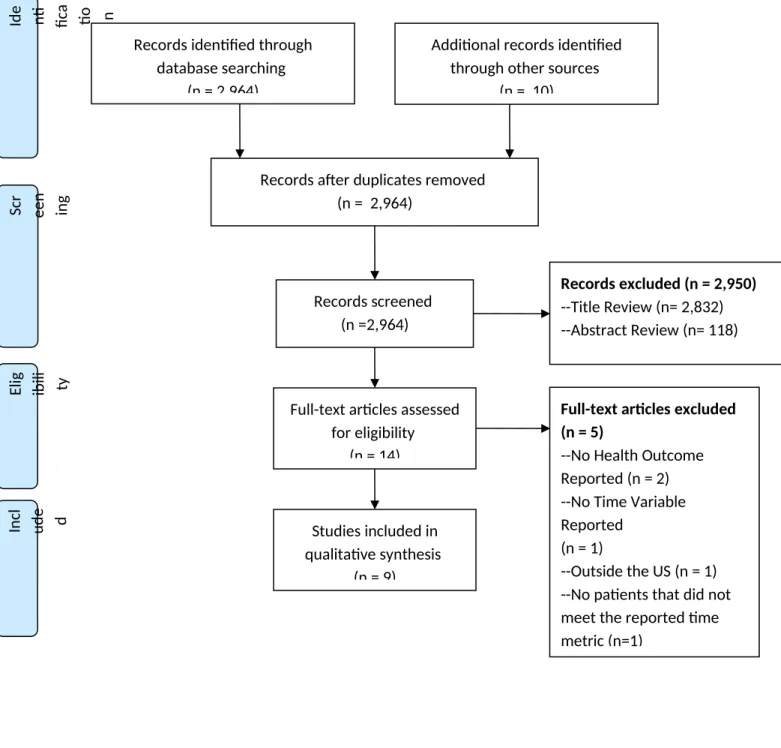
Figure 1: PRISMA Diagram...27
Racial Disparities in Time from Diagnosis to Treatment for Stage I Non-Small Cell Lung Cancer...32
Abstract...33
Introduction:...35
Methods...36
Results...38
Discussion...38
Table 1: Patient characteristics...42
Table 2: Time to treatment in days overall and by treatment category...44
Table 3: Multivariable linear regression model of time to treatment in daysa...45
Figure 1: Distribution of time to treatment in days separated by race. Vertical lines represent median time to treatment for white (green) and black (black) patients...47
Abstract
Treatment Delay in Non-Small Cell Lung Cancer: A Systematic Review
Introduction
Lung cancer is the leading cause of cancer death in both men and women in the United States, and an estimated 220,000 people will be diagnosed with lung cancer in 20171. Outcomes for lung cancer vary widely based on disease extent at presentation, histology (small cell vs small cell) and in more recent years on the presence of targetable mutations. Cure rates for non-small cell lung cancer (NSCLC) range from over 80% for early stage disease to <5% for locally advanced cancers2-5. Unfortunately most patients diagnosed with NSCLC are found to have locally advanced or metastatic disease at presentation, and the long term outcomes for these patients are very poor, with 5 year overall survival (OS) on the order of 10% with the most aggressive treatments.
Surgery and/or radiation therapy form the backbone of local treatment for potentially curable lung cancers, with chemotherapy often administered concurrently or adjuvantly after local therapy. For a patient to undergo surgical resection they must be physically well enough to tolerate the anatomic consequences of the proposed surgery (e.g. loss of an entire lung or lobe of a lung). The process of clearing patients for surgical resection frequently involved pulmonary function testing, visits with other specialist such as cardiologist, smoking cessation counseling, and in this heavily smoking patient population can include pulmonary rehab to improve
addition, surgery requires scheduling operating room time for complex resections that can add further time from diagnosis to surgery.
Similarly, radiation therapy requires several steps before initiation of treatment. Radiation oncology is a referral specialty; therefore patients have to first see a surgeon for diagnosis, and then coordinate an appointment with radiation oncology. After consultation patients have to return for “simulation” (the radiation planning process).Then there is time necessary to actually design the radiation plan and verify the safety and deliverability of the plan. Many patients are treated with radiation and chemotherapy concurrently, and this requires a second layer of referral for consultation and coordination of start date. In addition some forms of radiation require placement of fiducial markers which is a separate procedure that must be coordinated. As with surgery, frequently advanced imaging and invasive staging must be completed before starting therapy. All of these steps can cumulatively sum to a significant amount of time from pathologic or clinical diagnosis and initiation of therapy.
US is the only such nation to not have universal health coverage. This makes extrapolating recommendations from other countries troublesome.
The purpose of this systematic review is to answer the following question: Does a
prolonged time from diagnosis to treatment adversely affect patient health outcomes in NSCLC patients in the US?
Methods
To evaluate the above questions we conducted a systematic review of the published literature. We systematically searched for and screened randomized data, prospective cohorts, and retrospective reviews that investigated time to treatment for NSCLC.
Data Sources and Search Strategy
Two electronic databases were searched (PubMed and EMBASE). Searches were
conducted using MESH terms and keywords related to NSCLC and time to treatment or delay in treatment. The detailed PubMed search strategy is outlined in Table 1. The Embase search strategy used similar terms. Search results were limited to English language and publications from the last 20 years (1997-March 2017). Reference lists from included studies were screened and manual searches were performed to identify additional articles. Previous reviews were identified through our search strategy and Clinicaltrials.gov was searched for ongoing trials investigating survivorship plans.
Study Selection
that reported a patient outcome. Studies reporting time from presentation/diagnosis to treatment included only retrospective and/or descriptive publications after exclusions. Patient populations, treatment, time interval measured and outcomes assessed were varied and are described in the data tables. Review articles were excluded from inclusion, but their citations were screened for additional publications of interest.
Titles from the initial search were screened for inclusion, followed by screening of abstracts by a single reviewer (JH). Full text review of articles marked for potential inclusion was performed by a single reviewer (JH) using the inclusion criteria described in Table 2.
Data Collection
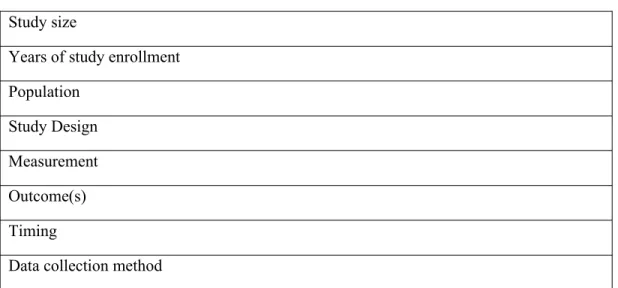
For studies included after full text review data extraction was performed by a single author (JH) using the data extraction form outlined in Table 3. For descriptive studies the study design, population, and outcomes were extracted.
Results
Study Selection
Study Characteristics
The characteristics of the included studies are outlined in Table 4 in chronological order. All of the included studies were from the contemporary time period (2008-2016) and included patients treated only in the United States. There were no randomized trials that reported time to diagnosis or treatment or were designed to test interventions involving time to diagnosis or treatment. All of the included studies were retrospective in nature with 4 studies using data from single institutions and 5 studies using national cancer databases. Seven of the included studies reported overall survival, one reported pathologic upstaging and one reported only lung cancer specific survival.
Results of Individual Studies
Details of the individual studies included are outlined in table 4. Bryant, et al. 2008 J Thorac Oncol12
Bryant et al report the outcomes of 930 patients in a nested case control study. African American (AA) patients were matched 1:4 with Caucasian (CA) patients from a prospective database of patients treated by a single physician between 1997-2007. Patients were matched on gender, age, health performance status, and treatment. The primary outcome of the study was overall survival stratified by race. Time from abnormal imaging to presentation to
pulmonologist, oncologist or thoracic surgeon was extracted from clinical records. Multivariable analysis using cox proportional hazards was performed to adjust for socioeconomic and patient characteristics that were not used for matching.
from imaging to specialist had a significantly worse overall survival (p=0.002). The hazard ratio for this finding was not reported. On stage specific analysis only stage I and II patients had an overall survival detriment with longer time from imaging to specialist after adjustment.
However, the adjusted variables were not specified, the hazard ratio was not reported and the p-value was not reported.
Bryant et al. 2008 Ann Thorac Surg13
Bryant et al reported a similar study in the same year stratifying patients by age. They used a nested case control design to match older patients 2:1 with patients <45 years of age from a prospective database of patients treated by a single physician from 1999-2006. All included patients had complete clinical staging, had received no neoadjuvant therapy, had pathologic proven NSCLC and underwent complete resection and nodal dissection. Matching was
performed based on stage, sex, performance status, and type of resection. The primary end point was overall survival stratified by age (<45 vs ≥45 years of age). Time from imaging to
presentation to the thoracic surgeon was recorded as a secondary endpoint from medical record review.
Wang et al reported on 237 consecutive patients with stage III NSCLC who were treated with radiotherapy at the University of Michigan and the associated VA hospitals. Patients were treated from 1992-2004 and had complete clinical staging. Patients previously treated with surgery were excluded but those receiving concurrent or sequential chemotherapy were included. Of note patients receiving palliative radiation were included in this study. Time to treatment was defined as the interval from first radiographic abnormality to commencement of treatment (chemotherapy or radiation) and the primary endpoint of the study was overall survival.
On univariate analysis time to treatment was not associated with overall survival (HR 0.998, 95% CI 0.995-1.00, p=0.093). In a subset analysis of patients who survived >5 years, there was a significant negative association between time to treatment as a continuous variable and survival (HR 1.029, 95% CI 1.003-1.012, p=0.002). This association did not hold using a cut off of 2 years of survival or 3 years of survival.
Yorio et al, 2009 J Thorac Oncol15
Yorio et al performed a retrospective analysis of 482 patients treated from 2000-2005 at the University of Texas Southwestern Medical Center affiliated hospitals. All patients had newly diagnosed stage I-III NSLCL. Clinical and demographic data were extracted from the
institutional cancer databases and augmented with further chart review and death data from the social security death index where appropriate. Time from first suspicious imaging to diagnosis, from diagnosis to treatment, and from imaging to treatment were extracted from patient charts. The primary endpoint was time until diagnosis, treatment and death each in a separate model.
interval and overall survival (p=0.19). The association between imaging to treatment interval and survival was also evaluated by dichotomizing the cohort into groups based on previously
published recommended time intervals (42 days and 56 days respectively from the Swedish Lung Cancer Study Group and the RAND corporation) and found no significant associations with overall survival.
Bott et al, 2015 Ann Thorac Surg16
Using data from the National Cancer Database (NCDB) Bott et all reported on 55,653 patients diagnosed with stage I NSCLC from 1998-2010 who underwent surgical resection. Time from diagnosis to treatment initiation was calculated using the time of histologic or time of clinical diagnosis if pathologic diagnosis was not available. Time from diagnosis to treatment was dichotomized as >8 weeks or ≤8 weeks. The primary endpoint was the rate of pathologic upstaging at the time of surgery.
Overall 17% of patients were pathologically upstaged at the time of surgery mostly based on nodal upstaging (74%). On univariate analysis time from diagnosis to treatment >8 weeks was significantly associated with pathologic upstaging (p=0.003). On multivariable analysis adjusted for age, gender, tumor characteristics, and treatment variables time to treatment >8 weeks
remained statistically significantly associated with pathologic upstaging (OR 1.10, 95% CI: 1.03-1.16, p=0.002)
Gomez et al, 2015 Radiother Oncol17
database, and staging studies and treatment were identified using Medicare charges. The primary endpoint of the study was treatment delay >35 days. A secondary outcome was the effect of treatment delay >35 days on overall survival.
On multivariable analysis starting treatment within 35 days of diagnosis was associated with improved overall survival after adjustment for age, sex, ethnicity, income, location, education, comorbidity, region, and densities of hospital beds and physicians. However, when stratified by localized, regional and distant disease this association was only true for patients with localized disease (HR0.86, 95% CI 0.80-0.91, p<0.001).
Nadpara et al. 2015 Cancer Epidemiol18
A similar study was performed by Nadpara et al. using SEER-Medicare data from 2002-2007. They identified patients ≥66 years of age diagnosed from 2003-2006 with any histologic subtype of lung cancer of any stage. Patients were included if they had complete initial staging, and continuous Medicare coverage for one year before and after diagnosis. The primary endpoint was receipt of timely care as defined by the British Thoracic Society and RAND Corporation consensus statements (4-8 weeks and 7 weeks respectively). Secondary endpoints included overall survival stratified by timely care, and lung cancer specific mortality stratified by timely care.
race, urban/rural, comorbidity and census tract education and income. Further stratified analysis suggest that this observed detriment in overall and lung cancer specific survival was likely largely driven by patients with advanced/metastatic disease.
Samson et al 2015 Ann Thorac Surg19
Samson et al. reported on outcomes of 39,995 patients in the NCDB with incident lung cancer from 1998-2010. Patients were included if they had stage I NSCLC and underwent surgical resection. The median time to treatment was determined for the entire cohort and found to be 8 weeks. Propensity score matching was then used to create two matched cohorts of patients (<8 weeks from diagnosis to resection and ≥8 weeks from diagnosis to resection). Propensity scores were calculated using age, gender, race, income, facility type, comorbidity, tumor size, t stage, margin status and type of surgery. Propensity score matching resulted in 13,511 matched patients. The primary endpoints were pathologic upstaging, length of inpatient stay and overall survival.
In the matched cohorts univariate analysis found delayed patients to be significantly more likely to be upstaged (18.3% vs 16.6 %, p=0.002), have a longer hospital stay (7.72 vs 7.33 days, p<0.001), and increased mortality (median survival 57.7 vs 69.2 weeks, p<0.001).
Shi et al2016 Anticancer Res20
Shi et al reported outcomes for 299,914 patients diagnoses with stage I/II NSCLC from 1998-2011 in the NCDB file. The primary endpoint of this study was overall survival stratified by insurance payer status (uninsured, private, Medicaid, Medicare, unknown). Adjusted analysis was performed using Cox Proportional Hazards modeling to adjust for sex, age, race,
On univariate analysis patients with earlier intervention had significantly better median overall survival compared to those with longer time to treatment (0-7 days: 5.79 yrs; 8-30 days: 3.70 years; ≥31 days: 3.55 years, p<0.001). On multivariable cox regression time to treatment remained significantly associated with improved overall survival (0-7 days HR of death 0.92, 95% CI 0.90-0.93, p<0.001; 8-30 days HR 0.94, 95% CI 0.92-0.95, p<0.001).
Synthesis of Results
As would be expected there is no randomized controlled trial data on time to treatment for NSCLC as randomizing patients to an intentional delay in treatment would be unethical. All of the included studies are therefore retrospective cohort studies. The first difficulty with
synthesizing the available data is the heterogeneity of time measures with some studies using a dichotomous cut off of 35 days, 8 weeks, or the median time for the cohort and others using the time to treatment as a continuous variable. Because of these differences in measures, combining outcomes in any quantitative way is not possible.
The second difficulty in synthesizing these studies is that they are largely conflicting. For example in the studies by Wang, Yorio and Nadpara time to initiation of treatment was not associated with improved survival, and in two instances was associated with worse overall survival. In the remaining studies shorter time to treatment was associated with better health outcomes. In the negative or detrimental studies the overall harm was hypothesized to be due to a large proportion of patients with locally advanced or metastatic disease in whom starting
In patients with early stage disease (stage I/II or localized) there is general consensus among the included studies that early initiation of treatment improves patient outcomes including survival and rate of pathologic upstaging. In the Bott study patients with stage I NSCLC with a treatment delay over 8 weeks had 1.1 times the odds of being pathologically upstaged. Similarly Gomez, Samson and Shi reported improved overall survival with “timely” initiations of
treatment for patients with localized or stage I/II disease, and in one study the magnitude of this difference was a potentially clinically meaningful 10 month difference in median survival.
Risk of Bias and Quality of Studies
An overall assessment of study quality and risk of bias for each of the included studies is outlined in table 5. Overall all of the included studies were rated as fair or poor due to the overwhelming risk of selection bias and unmeasured confounding.
The major risk of bias in all of the included studies is unmeasured confounding. Healthy patients with early stage disease are much more likely to both quickly start treatment, and have a better overall survival than sick patients based solely on their overall health. When compared to sick patients who are both more likely to have a delay for medical clearance, and have a worse overall survival due to their poor overall health there is significant risk of unmeasured
confounding. While all of the included studies attempted to adjust for this bias using crude measures of performance status, comorbidity or only selecting patients that were ultimately healthy enough to undergo surgery, there remains significant risk of confounding. It is
impossible to capture the complex decision making that goes into deeming a patient eligible for surgery or radiation using a simple measure of comorbidity or performance status.
the intricacies of patient access. Differences in patient level access, education and socioeconomic status have been shown to correlate with worse overall and cancer specific survival in several other disease sites21, 22. There is a high likelihood that longer time to diagnosis or treatment is correlated with access to care and socioeconomic status, and therefore a high risk of survival results being biased towards the group of patients who received early diagnosis and treatment.
The studies by Bott and Gomez are worth specifically mentioning because they are the only studies to not use overall survival as the endpoint and instead used the intermediate outcome of pathologic upstaging. While this endpoint is not a patient specific outcome, it does directly affect prognosis and treatment. Because the patient’s overall health status (unmeasured confounding) is much less likely to directly correlate with their risk of having pathologic upstaging, presumably due to delay in treatment, this reduces potential confounding and might provide a more clear understanding of the relationship between treatment delay and disease behavior.
Finally none of the included studies were prospective randomized trials, and therefore there is risk of confounding and bias due to patient selection, preferential reporting and as mentioned above unmeasured confounding.
Discussion
Summary of Evidence
The evidence of benefit for early intervention is not strong, but one could make an ethical argument that early treatment should be strived for in all patients. However, there is potential harm in using arbitrary time intervals as quality metrics without strong patient outcome centered data. For example, if physician performance was measured using the proposed 35 day time from diagnosis to treatment, a practitioner might push a patient to surgery or to start radiation without completing the ideal staging work up. The added clinical information that can be obtained with advanced imaging such as PET/CT scans could also be lost if patients have a hard deadline to start treatment as obtaining these imaging studies has been associated with delays >35 days in starting treatment17. There are also inherent timing issues with sicker patients who might benefit from more extensive cardiac and pulmonary workup and rehabilitation before starting treatment. There is a significant need to better understand treatment delays in cancer patients before quality and ultimately reimbursement are tied to arbitrary time points. However, given the ethical complexity of time to treatment it is unlikely that we will ever have substantially better quality data than the highly confounded retrospective studies that have been published to date.
Limitations
This review is limited in that is excludes studies from other countries where health care logistics, payment, referral patterns and patient populations could be significantly different. However it is instructive to briefly review some date from other countries as the study quality, retrospective nature and general results are congruent with the US. In a study from Spain
results from varied developed countries reflects the same study design limitations highlighted in the current review.
Another limitation is that there is not and will likely never be high quality prospective data regarding time to initiation of treatment in NSCLC due to the ethical constraints of randomizing patients to a potentially harmful intentional delay in treatment. Even in the absence of high quality data to support decreasing diagnosis to treatment interval, it is likely that trying to minimize treatment delays as much as reasonably possible is simply the right thing to do for patients
Conclusions
Table 1: Search Terms
Search # Search Terms Results
1 ("Carcinoma, Non-Small-Cell Lung"[Mesh]) OR ("Carcinoma"[Mesh] AND "Lung"[Mesh])
45,815
2 ("lung"[All Fields] AND "cancer"[All Fields]) OR "lung cancer"[All Fields] 191,592
3 1 OR 2 198,799
4 "Time-to-Treatment"[Mesh] OR "Time Factors"[MeSH Terms] 1,081,334 5 "delay"[All Fields] AND "treatment"[All Fields] 41,994
6 4 OR 5 1,116,298
7 "Survival"[Mesh] OR "Mortality"[Mesh] 324,467 8 "Survival"[All Fields] OR "Mortality"[All Fields] 1,596,526 9 "Treatment Outcome"[Mesh] OR "Death"[Mesh] 920,885 10 "Outcome"[All Fields] OR "Death"[All Fields] 2,048,068
11 7 OR 8 OR 9 OR 10 3,169,156
12 "Drug Therapy"[Mesh] 1,177,911
12 3 AND 6 AND 11 NOT 12 4442
Table 2. Eligibility Criteria for Study Inclusion Criterion
English Language Published 1997-present
Report time from presentation or diagnosis to definitive treatment or consultation with specialist
Report a health outcome (survival, pathologic upstaging) Includes lung cancer patients
Table 3: Data Extraction Form: Study size
Years of study enrollment Population
Study Design Measurement Outcome(s) Timing
Table 4: Description of Included Studies
Study, size Years of
enrollment Population Study Design Measurement Outcome(s) Data collection method Significant Results
Bryant,
200812
n=930
1997-2007 1813 consecutive patients
with NSCLC treated by a single physician. 186 AA and 1,627 Caucasian. 930 patients included after matching
Nested case control study in a prospective cohort. 4:1 matching of CA to AA patients based on age, gender, performance status and treatment
Number of days from first abnormal imaging to consultation with pulmonologist, oncologist or surgeon. Continuous variable
Overall survival Patient reported
demographics; chart review for time to specialist; chart review, tumor registry, death index, correspondences for death and cancer outcomes
MVA longer time to treatment had significantly worse OS (p=0.002) Bryant, 200813 n=762
1999-2006 Consecutive patients
treated by a single physician. Pts had pretreatment CT and PET scan for staging and biopsy proven NSCLC. No neoadjuvant therapy allowed. All pts underwent complete resection and pathologic nodal staging. 762 pts included after matching
Nested case control study in a prospective cohort. 2:1 matching of older pts to younger pts (<45 years) based on stage, sex, performance status and type of resection
Number of days from first abnormal imaging or symptoms to consultation with thoracic surgeon, continuous variable
Overall survival Not stated Univariate analysis
time to treatment significantly impacted OS (p=0.023). On MVA this was not
significant
Wang
200914
N=237
1992-2004 Stage III NSCLC treated
with RT at two
institutions. Excluded if recurrent or had surgery. Sequential or concurrent chemo allowed
Retrospective review Number of days from
radiographic diagnosis and commencement of treatment Overall survival (pathologic diagnosis to death) All measures extracted from medical records
Time to treatment not associated with OS.
Yorio
200915
N=482
2000-2005 All pts diagnosed with
stage I-III NSCLC at three hospitals in a single network
Retrospective review Number of days from
imaging to diagnosis, diagnosis to
treatment, image to treatment, diagnosis to death
Overall survival (start of treatment to death)
Tumor and treatment details from medical records,
demographics from zip code,
On MVA no significant
association between time to treatment and OS (p=0.19)
Bott
resection initiation of
treatment medical records. Mortality data
augmented with SS death data.
upstaging (p<0.05)
Gomez
201517
N=28,732
2004-2007 Patients ≥66 years old
with histologically confirmed NSCLC, continuous Medicare coverage who started treatment within 4 months of diagnosis
SEER-Medicare
database Time from pathologic diagnosis
to initiation of treatment
Overall survival State cancer registry
data collection, Medicare claims
On MVA time to treatment <35 days associated with improved OS (p<0.001) Nadpara 201518 N=48,850
2002-2007 Patients ≥66 years old
with histologically confirmed NSCLC, continuous Medicare coverage who started treatment within 1 year of diagnosis
SEER-Medicare
database Time from imaging to specialist visit,
diagnosis to treatment
Lung cancer specific survival, overall survival
State cancer registry data collection, Medicare claims
On MVA ‘timely care” associated with worse lung cancer specific survival (p<0.05)
Samson
201519
N= 39,995
1998-2010 Patients diagnosed with
clinical stage I NSCLC who underwent resection at accredited cancer centers
Nested cohort study, 1:1 propensity score matching adjusted for age, gender, race, income, facility type, comorbidity, tumor size, T stage, surgical margin, and type resection
Time from pathologic
(preferred) or clinical diagnosis to
initiation of treatment,
dichotomized as <8 weeks or ≥8 weeks from diagnosis to surgery
Overall survival Trained research
staff at nationwide cancer centers extract data from medical records. Mortality data augmented with SS death data.
In matched cohort delayed pts significantly more likely to be upstaged (p-0.002), longer hospital stay
(p<0.001), worse OS (p<0.001)
Shi
201620
N=299,91 4
1998-2011 Patients diagnosed with
NSCLC at accredited cancer centers
Cohort study Time from
pathologic
(preferred) or clinical diagnosis to initiation of treatment Overall survival (diagnosis to death) Trained research staff at nationwide cancer centers extract data from medical records. Mortality data augmented with SS death data.
Table 5: Quality Assessment of Studies Included in this Systematic Review.
Study Selection Bias Measurement Bias Confounding Internal Validity External Validity Overall Score
Bryant
200812
n=930
+++
Single institution, single thoracic surgeon. Excludes pts not evaluated for surgery, who saw other providers,
+
Overall survival, time from imaging to consultation standardized
+++
Matching on several covariates, significant risk of unmeasured confounding
Fair
OS endpoint, matching to reduce measured
confounding
Poor
Single institution, significant selection bias and likely unmeasured confounding
Poor
Significant risk of unmeasured confounding, single institution Bryant 200813 n=762 +++
Single institution, single thoracic surgeon. Excludes pts not evaluated for surgery, who saw other providers, or who did not undergo surgery
+
Overall survival, time from imaging to consultation standardized
+++
Matching on several covariates, significant risk of unmeasured confounding
Fair
OS endpoint, matching to reduce measured
confounding
Poor
Highly selected pts from a single
institution, significant risk of unmeasured confounding
Poor
Significant risk of unmeasured confounding, single institution Wang 200914 N=237 +++
Single institution, only pts who received RT
+
Overall survival, time from imaging to treatment standardized
+++
Significant risk of unmeasured confounding, no matching or adjustments made
Poor
OS endpoint, No adjustment for treatment, disease variables
Poor
Highly selected patients from a single
institution, no
adjustment for disease and tx characteristics
Poor
No adjustment for patient or disease characteristics, single institution
Yorio
200915
N=482
++
Single network, but includes community, private and academic centers
+
Overall survival, imaging to treatment standardized
+++
MVA for stage, histology, age; significant risk of unmeasured confounding
Fair
OS endpoint, MVA adjustment
Fair
Single system, but good diversity of pts in several clinical settings
Fair
Adjusted analysis with broad pt population, risk of confounding
Bott
201516
N=55,653 ++
Only pts that underwent surgical resection, national database captures broad spectrum of pts
+
Pathologic upstaging, standardized time from diagnosis to treatment inititation
++
MVA, less risk of bias due to unmeasured confounding using upstaging as end point
Fair
MVA adjustment for measured variables, some selection bias for surgical patients
Good
National database that captures majority of incident cancers in US, limited to those who can undergo surgery
Fair
National pt cohort, selection bias for surgical patients
Gomez
201517
N=28,732 ++
National database, only >65 years of age with continuous insurance coverage
+
Overall survival endpoint, time to treatment limited by claims data
++
MVA, better control for comorbid disease with claims data, still likely unmeasured confounding Fair MVA adjustment for measured variable Fair
Limited to Medicare enrollees >65 years of age.
Fair
N=48,850 >65 years of age with continuous insurance coverage. Includes pts with small cell lung cancer
also report lung cancer specific survival, less strong; time to treatment limited by claims data
comorbid disease with claims data, still likely unmeasured
confounding
for measured variables, large portion of pts with metastatic or advanced disease
enrollees >65 years of
age towards locally advanced or metastatic pts
Samson
201519
N= 39,995 ++
Only pts that underwent surgical resection, national database captures broad spectrum of pts
+
OS, pathologic upstaging, hospital length of stay all strong endpoints
++/+++ High risk of unmeasured
confounding for OS and hospital stay, less risk for upstaging
Fair
Matching to reduce confounding, some selection bias for surgical patients
Good
National database that captures majority of incident cancers in US, limited to those who can undergo surgery
Fair
National pt cohort, matching for confounding, still concern for
unmeasured confounding for OS Shi 201620 N=299,914 ++
National database captures most incident cases in US, limited to stage I/II
+
OS strong endpoint, insurance status
validated in this database +++
MVA, however significant risk for unmeasured confounding of OS endpoint
Fair
MVA to reduce confounding
Good
National database that captures majority of incident cancers in US
Fair
National pt cohort, MVA adjustment, high likelihood of unmeasured
confounding
Figure 1: PRISMA Diagram
Records excluded (n = 2,950) --Title Review (n= 2,832) --Abstract Review (n= 118)
Full-text articles excluded (n = 5)
--No Health Outcome Reported (n = 2) --No Time Variable Reported
(n = 1)
--Outside the US (n = 1) --No patients that did not meet the reported time metric (n=1) Id e n ti fi
ca tio n
In cl u d e d El ig ib ili ty Sc r e e n in g
Studies included in qualitative synthesis
(n = 9)
Full-text articles assessed for eligibility
(n = 14) Records screened
(n =2,964)
Records after duplicates removed (n = 2,964)
Additional records identified through other sources
(n = 10) Records identified through
1. Siegel RL, Miller KD, Jemal A. Cancer Statistics, 2017. CA Cancer J Clin. 2017;67: 7-30. 2. Auperin A, Le Pechoux C, Rolland E, et al. Meta-analysis of concomitant versus sequential radiochemotherapy in locally advanced non-small-cell lung cancer. J Clin Oncol. 2010;28: 2181-2190.
3. Curran WJ, Jr., Paulus R, Langer CJ, et al. Sequential vs. concurrent chemoradiation for stage III non-small cell lung cancer: randomized phase III trial RTOG 9410. J Natl Cancer Inst. 2011;103: 1452-1460.
4. Kelsey CR, Marks LB, Hollis D, et al. Local recurrence after surgery for early stage lung cancer: an 11-year experience with 975 patients. Cancer. 2009;115: 5218-5227.
5. Su S, Scott WJ, Allen MS, et al. Patterns of survival and recurrence after surgical treatment of early stage non-small cell lung carcinoma in the ACOSOG Z0030 (ALLIANCE) trial. J Thorac Cardiovasc Surg. 2014;147: 747-752: Discussion 752-743.
6. Brunelli A, Charloux A, Bolliger CT, et al. ERS/ESTS clinical guidelines on fitness for radical therapy in lung cancer patients (surgery and chemo-radiotherapy). Eur Respir J. 2009;34: 17-41. 7. Brunelli A, Kim AW, Berger KI, Addrizzo-Harris DJ. Physiologic evaluation of the patient with lung cancer being considered for resectional surgery: Diagnosis and management of lung cancer, 3rd ed: American College of Chest Physicians evidence-based clinical practice
guidelines. Chest. 2013;143: e166S-190S.
9. Asch SM, Eve A. Kerr, Eric G. Hamilton, Jennifer L. Reifel and Elizabeth A. McGlynn. Quality of Care for Oncologic Conditions and HIV: A Review of the Literature and Quality Indicators.: RAND Corporation, 2000.
10. Alberts WM, Bepler G, Hazelton T, Ruckdeschel JC, Williams JH, Jr. Lung cancer. Practice organization. Chest. 2003;123: 332s-337s.
11. Lennes IT, Lynch TJ. Quality indicators in cancer care: development and implementation for improved health outcomes in non-small-cell lung cancer. Clin Lung Cancer. 2009;10: 341-346. 12. Bryant AS, Cerfolio RJ. Impact of race on outcomes of patients with non-small cell lung cancer. J Thorac Oncol. 2008;3: 711-715.
13. Bryant AS, Cerfolio RJ. Differences in outcomes between younger and older patients with non-small cell lung cancer. Ann Thorac Surg. 2008;85: 1735-1739; discussion 1739.
14. Wang L, Correa CR, Hayman JA, et al. Time to treatment in patients with stage III non-small cell lung cancer. Int J Radiat Oncol Biol Phys. 2009;74: 790-795.
15. Yorio JT, Xie Y, Yan J, Gerber DE. Lung cancer diagnostic and treatment intervals in the United States: a health care disparity? J Thorac Oncol. 2009;4: 1322-1330.
16. Bott MJ, Patel AP, Crabtree TD, et al. Pathologic Upstaging in Patients Undergoing Resection for Stage I Non-Small Cell Lung Cancer: Are There Modifiable Predictors? Ann Thorac Surg. 2015;100: 2048-2053.
19. Samson P, Patel A, Garrett T, et al. Effects of Delayed Surgical Resection on Short-Term and Long-Term Outcomes in Clinical Stage I Non-Small Cell Lung Cancer. Ann Thorac Surg. 2015;99: 1906-1912; discussion 1913.
20. Shi R, Diaz R, Shi Z, Duvall E, Mills G. The Effect of Payer Status on Survival of Patients with Stage I/II Non-small Cell Lung Cancer: NCDB 1998-2011. Anticancer Res. 2016;36: 319-326.
21. Newman LA, Kaljee LM. Health Disparities and Triple-Negative Breast Cancer in African American Women: A Review. JAMA Surg. 2017.
22. Reames BN, Birkmeyer NJ, Dimick JB, Ghaferi AA. Socioeconomic disparities in mortality after cancer surgery: failure to rescue. JAMA Surg. 2014;149: 475-481.
23. Gonzalez-Barcala FJ, Garcia-Prim JM, Alvarez-Dobano JM, et al. Effect of delays on survival in patients with lung cancer. Clin Transl Oncol. 2010;12: 836-842.
24. Diaconescu R, Lafond C, Whittom R. Treatment delays in non-small cell lung cancer and their prognostic implications. J Thorac Oncol. 2011;6: 1254-1259.
25. Comber H, Cronin DP, Deady S, Lorcain PO, Riordan P. Delays in treatment in the cancer services: impact on cancer stage and survival. Ir Med J. 2005;98: 238-239.
26. Aragoneses FG, Moreno N, Leon P, Fontan EG, Folque E. Influence of delays on survival in the surgical treatment of bronchogenic carcinoma. Lung Cancer. 2002;36: 59-63.
27. Bozcuk H, Martin C. Does treatment delay affect survival in non-small cell lung cancer? A retrospective analysis from a single UK centre. Lung Cancer. 2001;34: 243-252.
Racial Disparities in Time from Diagnosis to Treatment for Stage I Non-Small Cell Lung Cancer
Abstract
Purpose/Objective(s):
Delay in lung cancer treatment is associated with worse survival outcomes. We examined whether there are racial disparities in time from diagnosis to treatment initiation for stage IA NSCLC using data from the National Cancer Data Base, which includes ~70% of incident cancer patients across the US.
Materials/Methods:
We analyzed 95,787 patients who were diagnosed with stage IA NSCLC from 2008-2013. Median time (in days) from diagnosis to treatment initiation for external beam radiation (EBRT), stereotactic body radiotherapy (SBRT) and surgery (including wedge resection, lobectomy and pneumonectomy) were calculated separately, and compared among White vs. Black patients. A multivariable linear regression model assessed racial differences in time to treatment while adjusting for age, sex, Charlson comorbidity, insurance, regional sociodemographic factors and treatment facility type.
Results:
Black patients had a significantly longer median time to treatment overall and for all three treatment modalities: EBRT 54 days (Black) vs 48 days (White, p<0.001); SBRT 66 days vs 55 days (p<0.001); surgery 46 vs 37 days (p<0.001). On multivariable analysis adjusted for
treatment modality, age, sex, facility type and Charlson score race was associated with a 10.2 day delay in initiation of treatment (95% CI 9.2-11.2, p<0.001).
Conclusions:
Introduction:
Lung cancer is the second most common cancer in both men and women, and the leading cause of cancer death in both sexes in the United States.1While most patients are diagnosed at an advanced stage, in 2016 an estimated 39,000 patients presented with localized disease which is potentially curable. With increased use of low dose computed tomography (CT) screening for lung cancer in high risk populations, the incidence of early, stage I lung cancer diagnosis is expected to rise.
Racial disparities in lung cancer mortality are well-documented2-4. Potential explanations for this disparity include increased incidence, delayed diagnosis/more advanced stage and disparities in treatment received5-8. In addition, delay from diagnosis to treatment could also contribute to this survival disparity. Treatment for stage I lung cancer can provide excellent local control in patients who receive timely diagnosis and treatment. Surgical resection and
stereotactic radiation therapy are curative options for stage I lung cancer with local control rates >90%9-13. However, there is evidence that delay in treatment can lead to more surgical upstaging and worse overall survival. Samson et al used data from 2000-2012 in the National Cancer Database NCDB to conduct a retrospective analysis of patients with newly diagnosed stage I NSCLC who underwent curative intent surgery. They used propensity score matching to create matched cohorts of patients who underwent resection <8 weeks or ≥8 weeks from diagnosis. Patients with delayed resection were significantly more likely to be upstaged (18.3% vs 16.6 %, p=0.002) and have increased mortality (median survival 57.7 vs 69.2 weeks, p<0.001) 14.
Therefore, the purpose of this study is to describe racial differences in time to treatment for stage I NSCLC in a contemporary nationwide cohort of patients. We specifically chose to study stage I patients because they represent the most curable NSCLC patient population, and those most likely to benefit from timely treatment.
Methods
Data Source
Data for this study was obtained from the National Cancer Data Base (NCDB), the largest cancer registry in the US that captures approximately 70% of incident cancer patients in the United States. The database is jointly maintained by the American College of Surgeons and the American Cancer Society. The NCDB contains medical information including disease specific variables such as clinical and pathologic TNM staging and baseline Charlson-Deyo comorbidity score. The NCDB additionally contains patient level demographic information including age, sex, race, and insurance status, and regional (census level) demographic information including household income by quartile. The NCDB is unique in that it contains details about first course of treatment including time from diagnosis to initiation of treatment, and details about total dose and number of fractions for patients treated with radiation. Treatment facility is classified as academic, comprehensive community (stand-alone center, >500 cancer cases per year), community (stand-alone center, 100-500 cancer cases per year), and integrated network (integrated multi-facility cancer network). Use of NCDB data for this study was granted institutional IRB-waiver.
Patient Cohort
T2aN0) diagnosed between 2008 and 2013. Patients were excluded if they had missing information on clinical stage, treatment or self-reported race. Additionally patients were excluded if they did not start treatment within 1 year of diagnosis. The time to initiation of treatment variable was used for all patients who underwent potentially curative treatment, and patients were excluded if time to treatment was missing. Treatments were classified as surgery, stereotactic body radiotherapy (SBRT) and conventional external beam radiation therapy (RT). Patients were classified as receiving SBRT if they received radiation as first course of treatment, the radiation was targeted at the chest or lungs, <10 treatments were delivered and the radiation modality was coded as stereotactic radiation. All patients who were treated with external beam radiation as the first course of treatment that did not meet the above criteria were coded as receiving conventional external beam radiation.
Statistical Analysis
Descriptive statistics were used to report baseline patient characteristics and chi-square and t-test were used to report between race group differences. T-test was used to report differences in time to treatment by race overall and by treatment group. A multivariable linear regression model was created to examine difference in time to treatment by race controlling for sex, age, insurance status, regional income, Charlson-Deyo comorbidity score, region and facility type. All statistics were performed using Stata/IC 13.1 (StataCorp LP, College Station, Texas). For all the statistical analyses 2-sided P values were used with a level < 0.05 considered statistically significant.
Multivariable linear regression sensitivity analysis was conducted including patients with a time to treatment of 0 days and controlling for the above mentioned covariates.
Results
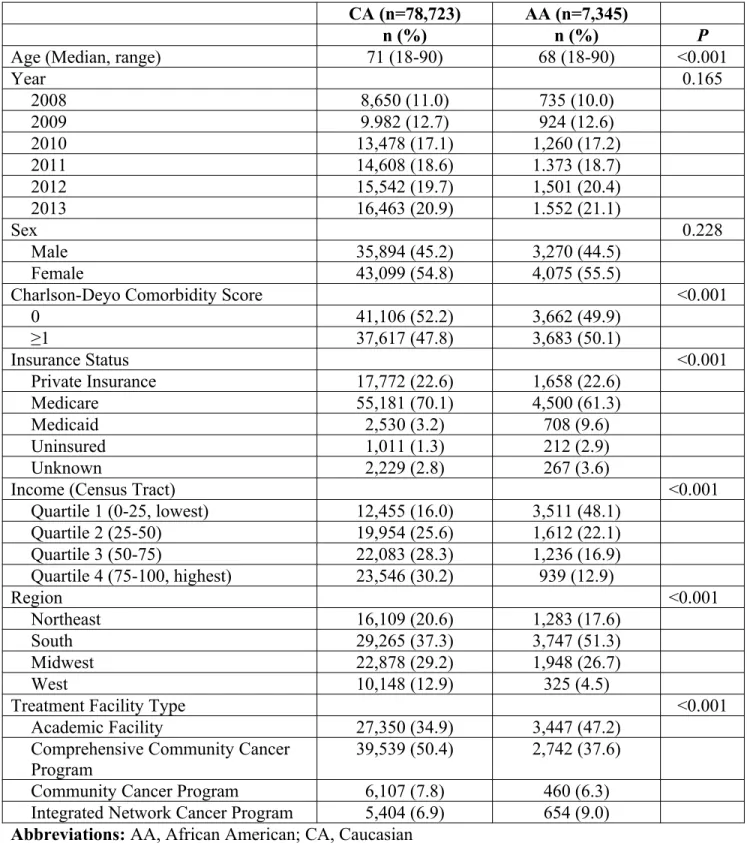
The final patient cohort consisted of 86,068 patients. Patient characteristics of the Caucasian American (CA) and African American (AA) cohorts are outlined in Table 1. AA patients were younger (median age 68 vs 71 years), had higher Charlson Deyo comorbidity scores, and were more likely to be on Medicaid or uninsured. AA patients were more likely to be from the south, and to be treated at an academic medical center.
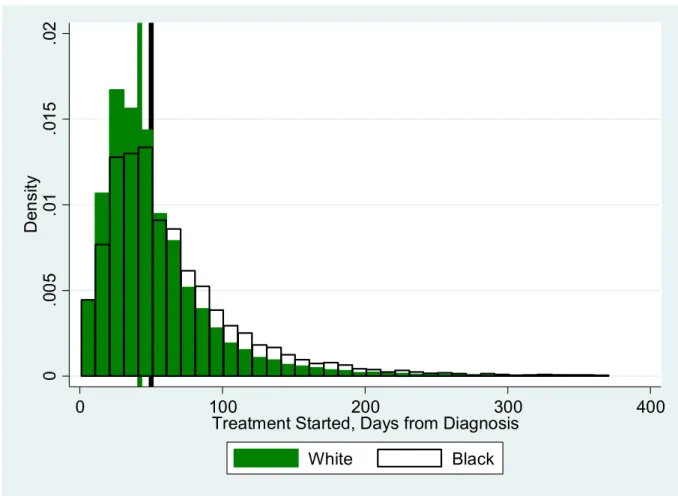
Time to treatment stratified by treatment and race is reported in Table 2 and illustrated graphically in Figure 1. On univariate analysis AA patients had a longer time to treatment than CA patients (50 vs 42 days, p<0.001). When stratified by treatment, AAs consistently had a longer time to treatment for surgery, SBRT and external beam RT (p<0.001 for all comparisons).
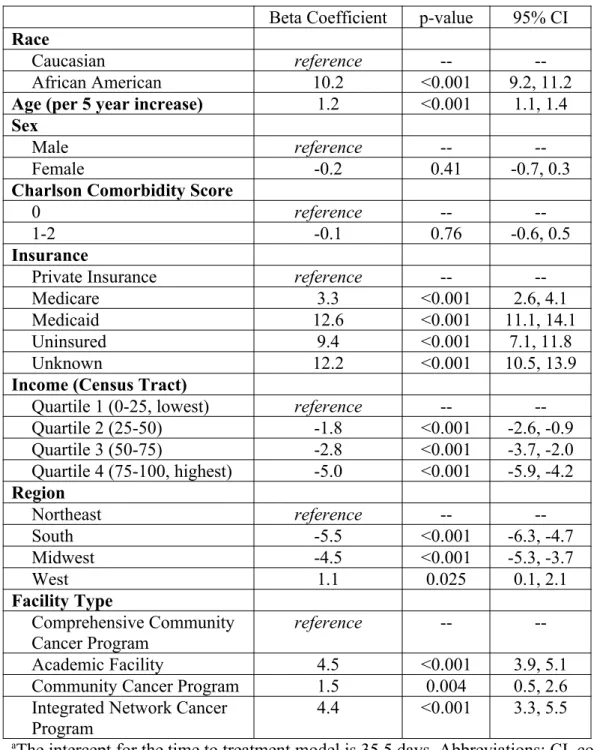
On multivariable analysis AA patients had an average of a 10.2 day delay compared to CA patients (95% CI 9.2-11.2, p<0.001). Patients were found to have a 1.2 day delay per 5 year increase in age (95% CI 1.1-1.4, p<0.001), and patients with Medicare, Medicaid, or who were uninsured had significant delays compared to privately insured patients (3.3, 12.6 and 9.4 days respectively, p<0.001 for all comparisons). Sensitivity analysis including patients with time to treatment of 0 days did not significantly differ (10.2 day delay for AA patients, 95% CI 9.2-11.2, p<0.001).
Discussion
Stage I lung cancer is a highly curable disease with timely treatment; however delays are associated with worse outcomes. This is the first contemporary study to describe racial
which includes ~70% of all incident cancers in the US, we found a modest but statistically significant 10 day delay in initiation of treatment for AA patients.
Delay in initiation of treatment for lung cancer is associated with worse outcomes, specifically in patients with early stage or localized disease. In a NCDB analysis Samson et al. reported outcomes from a propensity score matched cohort of 13,511 patients who underwent surgical resection <8 weeks or ≥8 weeks from diagnosis. They found more pathologic upstaging, longer hospital stays, and worse survival for patients who experienced a ≥8 week delay14. In a similar study published by Bott et al. patients with stage I or II lung cancer who underwent resection were categorized as undergoing surgical resection <8 weeks or ≥8 weeks from diagnosis. Using multivariable analysis adjusted for age, gender, tumor characteristics, and treatment variables time to treatment >8 weeks remained statistically significantly associated with pathologic upstaging (OR 1.10, 95% CI: 1.03-1.16, p=0.002). There have been subset analysis of similar studies conducted using SEER-Medicare and single institution data that also showed a significant association between time to treatment and overall survival15, 16. In the current study AA patients experience a significant delay compared to CA patients.
Gomez et al. published a study identifying predictors of clinical delay in treatment >35 days for patients with newly diagnosed NSCLC in the SEER-Medicare database from 2004-200715. They included all stages of NSCLC, and only patients ≥66 years of age were included. They found that on MVA adjusted for age, sex, ethnicity, income, location, education,
comorbidity, region, and densities of hospital beds and physicians that AA patients had 1.18 times the odds of experiencing a delay of >35 days from diagnosis to treatment (OR 1.18, 95% CI 1.06-1.31, p=0.003). In a nested cohort study from a decade long experience from a single surgeon, Bryant et al. reported that AA patients had a statistically significant 2 week delay in presentation to a thoracic surgeon compared to CA patients (P=0.023)16. However these studies did not specifically focus on early stage NSCLC where time to diagnosis has been best correlated with survival, and are limited in their applicability outside of the elderly or pts treated at a single institution. To the best of our knowledge the current study represents the first report to
specifically describe racial differences in time to treatment in early stage lung cancer using a nationally representative data set.
This study has potential limitations. The first limitation of the current study is that a numerical measure of time to treatment does not fully capture the complex patient, provider and health care system variations that contribute to the process of moving from diagnosis to
treatment. Additionally we chose to exclude patients with a time to treatment of zero in order to provide a more fair comparison in the median time to treatment between surgery and radiation, and this admittedly artificially inflates the reported median time to surgery. However our sensitivity analysis found that while the median changed with inclusion of these patients, the overall treatment delay remained exactly the same.
Table 1: Patient characteristics
CA (n=78,723) AA (n=7,345)
n (%) n (%) P
Age (Median, range) 71 (18-90) 68 (18-90) <0.001
Year 0.165
2008 8,650 (11.0) 735 (10.0)
2009 9.982 (12.7) 924 (12.6)
2010 13,478 (17.1) 1,260 (17.2)
2011 14,608 (18.6) 1.373 (18.7)
2012 15,542 (19.7) 1,501 (20.4)
2013 16,463 (20.9) 1.552 (21.1)
Sex 0.228
Male 35,894 (45.2) 3,270 (44.5)
Female 43,099 (54.8) 4,075 (55.5)
Charlson-Deyo Comorbidity Score <0.001
0 41,106 (52.2) 3,662 (49.9)
≥1 37,617 (47.8) 3,683 (50.1)
Insurance Status <0.001
Private Insurance 17,772 (22.6) 1,658 (22.6)
Medicare 55,181 (70.1) 4,500 (61.3)
Medicaid 2,530 (3.2) 708 (9.6)
Uninsured 1,011 (1.3) 212 (2.9)
Unknown 2,229 (2.8) 267 (3.6)
Income (Census Tract) <0.001
Quartile 1 (0-25, lowest) 12,455 (16.0) 3,511 (48.1)
Quartile 2 (25-50) 19,954 (25.6) 1,612 (22.1)
Quartile 3 (50-75) 22,083 (28.3) 1,236 (16.9)
Quartile 4 (75-100, highest) 23,546 (30.2) 939 (12.9)
Region <0.001
Northeast 16,109 (20.6) 1,283 (17.6)
South 29,265 (37.3) 3,747 (51.3)
Midwest 22,878 (29.2) 1,948 (26.7)
West 10,148 (12.9) 325 (4.5)
Treatment Facility Type <0.001
Academic Facility 27,350 (34.9) 3,447 (47.2)
Comprehensive Community Cancer
Program 39,539 (50.4) 2,742 (37.6)
Community Cancer Program 6,107 (7.8) 460 (6.3)
Integrated Network Cancer Program 5,404 (6.9) 654 (9.0)
Table 2: Time to treatment in days overall and by treatment category
Time to treatment
(median, IQR) Bivariate p-value
Overall 42 (27-66) P<0.001
Caucasian 42 (27-64)
African American 50 (31-80)
Surgery 38 (24-58) P<0.001
Caucasian 37 (24-57)
African American 46 (28-72)
Stereotactic body RT 56 (38-83) P<0.001
Caucasian 55 (37-82)
African American 66 (42-98)
External beam RT 48 (31-75) P<0.001
Caucasian 48 (31-72)
African American 54 (33-89)
Table 3: Multivariable linear regression model of time to treatment in daysa Beta Coefficient p-value 95% CI
Race
Caucasian reference --
--African American 10.2 <0.001 9.2, 11.2
Age (per 5 year increase) 1.2 <0.001 1.1, 1.4
Sex
Male reference --
--Female -0.2 0.41 -0.7, 0.3
Charlson Comorbidity Score
0 reference --
--1-2 -0.1 0.76 -0.6, 0.5
Insurance
Private Insurance reference --
--Medicare 3.3 <0.001 2.6, 4.1
Medicaid 12.6 <0.001 11.1, 14.1
Uninsured 9.4 <0.001 7.1, 11.8
Unknown 12.2 <0.001 10.5, 13.9
Income (Census Tract)
Quartile 1 (0-25, lowest) reference --
--Quartile 2 (25-50) -1.8 <0.001 -2.6, -0.9
Quartile 3 (50-75) -2.8 <0.001 -3.7, -2.0
Quartile 4 (75-100, highest) -5.0 <0.001 -5.9, -4.2
Region
Northeast reference --
--South -5.5 <0.001 -6.3, -4.7
Midwest -4.5 <0.001 -5.3, -3.7
West 1.1 0.025 0.1, 2.1
Facility Type
Comprehensive Community Cancer Program
reference --
--Academic Facility 4.5 <0.001 3.9, 5.1
Community Cancer Program 1.5 0.004 0.5, 2.6
Integrated Network Cancer Program
4.4 <0.001 3.3, 5.5
aThe intercept for the time to treatment model is 35.5 days. Abbreviations: CI, confidence interval; CA, Caucasian; AA, African American.
Sample calculation for a 60 year old male, Medicare patient, census tract highest quartile income, south region, treated at an academic facility:
Caucasian: 35.5 + 0 + (60years/5)*1.2 + 3.3 – 5.0 – 5.5 + 4.5 = 47.2 days
Figure 1: Distribution of time to treatment in days separated by race. Vertical lines represent median time to treatment for white (green) and black (black) patients
0
.0
0
5
.0
1
.0
1
5
.0
2
D
en
si
ty
0 100 200 300 400
Treatment Started, Days from Diagnosis
References
1. Siegel RL, Miller KD, Jemal A. Cancer statistics, 2016. CA Cancer J Clin. 2016;66: 7-30. 2. Williams CD, Salama JK, Moghanaki D, Karas TZ, Kelley MJ. Impact of Race on Treatment and Survival among U.S. Veterans with Early-Stage Lung Cancer. J Thorac Oncol. 2016;11: 1672-1681.
3. Hunt B, Balachandran B. Black:White disparities in lung cancer mortality in the 50 largest cities in the United States. Cancer Epidemiol. 2015;39: 908-916.
4. DeSantis CE, Siegel RL, Sauer AG, et al. Cancer statistics for African Americans, 2016: Progress and opportunities in reducing racial disparities. CA Cancer J Clin. 2016;66: 290-308. 5. Corso CD, Park HS, Kim AW, Yu JB, Husain Z, Decker RH. Racial disparities in the use of SBRT for treating early-stage lung cancer. Lung Cancer. 2015;89: 133-138.
6. Harrison MA, Hegarty SE, Keith SW, Cowan SW, Evans NR, 3rd. Racial disparity in in-hospital mortality after lobectomy for lung cancer. Am J Surg. 2015;209: 652-658.
7. Williams CD, Stechuchak KM, Zullig LL, Provenzale D, Kelley MJ. Influence of comorbidity on racial differences in receipt of surgery among US veterans with early-stage non-small-cell lung cancer. J Clin Oncol. 2013;31: 475-481.
8. Yang R, Cheung MC, Byrne MM, et al. Do racial or socioeconomic disparities exist in lung cancer treatment? Cancer. 2010;116: 2437-2447.
9. Kelsey CR, Marks LB, Hollis D, et al. Local recurrence after surgery for early stage lung cancer: an 11-year experience with 975 patients. Cancer. 2009;115: 5218-5227.
11. Timmerman R, Paulus R, Galvin J, et al. Stereotactic body radiation therapy for inoperable early stage lung cancer. Jama. 2010;303: 1070-1076.
12. Senthi S, Lagerwaard FJ, Haasbeek CJ, Slotman BJ, Senan S. Patterns of disease recurrence after stereotactic ablative radiotherapy for early stage non-small-cell lung cancer: a retrospective analysis. Lancet Oncol. 2012;13: 802-809.
13. Baumann P, Nyman J, Hoyer M, et al. Outcome in a prospective phase II trial of medically inoperable stage I non-small-cell lung cancer patients treated with stereotactic body radiotherapy. J Clin Oncol. 2009;27: 3290-3296.
14. Samson P, Patel A, Garrett T, et al. Effects of Delayed Surgical Resection on Short-Term and Long-Term Outcomes in Clinical Stage I Non-Small Cell Lung Cancer. Ann Thorac Surg. 2015;99: 1906-1912; discussion 1913.
15. Gomez DR, Liao KP, Swisher SG, et al. Time to treatment as a quality metric in lung cancer: Staging studies, time to treatment, and patient survival. Radiother Oncol. 2015;115: 257-263. 16. Bryant AS, Cerfolio RJ. Impact of race on outcomes of patients with non-small cell lung cancer. J Thorac Oncol. 2008;3: 711-715.
17. Bleicher RJ, Ruth K, Sigurdson ER, et al. Preoperative delays in the US Medicare population with breast cancer. J Clin Oncol. 2012;30: 4485-4492.
18. Stokes WA, Hendrix LH, Royce TJ, et al. Racial differences in time from prostate cancer diagnosis to treatment initiation: a population-based study. Cancer. 2013;119: 2486-2493. 19. Fedewa SA, Ward EM, Stewart AK, Edge SB. Delays in adjuvant chemotherapy treatment among patients with breast cancer are more likely in African American and Hispanic
20. Smith EC, Ziogas A, Anton-Culver H. Delay in surgical treatment and survival after breast cancer diagnosis in young women by race/ethnicity. JAMA Surg. 2013;148: 516-523.