assessment and management of risk to self and
others in mental health services
Document prepared for the
National Mental Health Risk Management Programme
June 2007
title Best Practice in Managing Risk
author Department of Health, National Risk Management Programme
Publication Date 14 June 2007
Target Audience PCT CEs, SHA CEs, Care Trust CEs, Foundation Trust CEs, Directors of PH, Local Authority CEs, Directors of Adult SSs, Allied Health Professionals, GPs, Directors of Children’s SSs
Circulation list Voluntary Organisations/NDPBs
Description This framework is a guide for mental health professionals working with service users to assess risk. It underpins risk assessment with principles of good practice for all mental health settings and provides a list of tools offering structure to risk management.
Cross reference Reviewing the Care Programme Approach 2006
Superseded document N/A
action required None
timing None
Contact details Dawn Fleming
National Risk Management Programme London Development Centre
11-13 Cavendish Square, London W1G 0AN
0207 307 2431
www.nimhe.csip.org.uk/risktools
Foreword by the National Director for Mental Health, Professor Louis Appleby 3
Executive summary 4
16 best practice points for effective risk management 5
Introduction 7
Fundamentals 9
Basic ideas in risk management 13
Working with service users and carers 21
Individual practice and team working 25
Appendix 1: Tools for supporting best practice 30
Preamble 30
Overview 32
Multiple risks 33
CRMT: Clinical Risk Management Tool/Working with Risk 33 FACE: Functional Analysis of Care Environments 34
GRiST: Galatean Risk Screening Tool 35
RAMAS: Risk Assessment Management and Audit Systems 36 GIRAFFE: Generic Integrated Risk Assessment for Forensic Environments 37 START: Short-term Assessment of Risk and Treatability 38 Risk of violence or sexual violence, and antisocial or offending behaviour 39
HCR-20: Historical Clinical Risk-20 39
PCL-R: Psychopathy Checklist-Revised 40
PCL: SV: Psychopathy Checklist: Screening Version 41
STATIC-99 42
SVR-20: Sexual Violence Risk-20 43
Risk of suicide or self-harm 45 ASIST: Applied Suicide Intervention Skills Training 45
BHS: Beck Hopelessness Scale 46
SADPERSONS 47
SIS: Suicidal Intent Scale 48
SSI: Scale for Suicide Ideation 49
STORM: Skills-based Training on Risk Management 50
Appendix 2: Risk factors for violence and suicide 51 Appendix 3: 12 points to a safer service 54 Appendix 4: Glossary 56 Appendix 5: Methods used to develop this framework 59 Appendix 6: Acknowledgements 62
Safety is at the centre of all good healthcare. This is particularly important in mental health but it is also more sensitive and challenging. Patient autonomy has to be considered alongside public safety. A good therapeutic relationship must include both sympathetic support and objective assessment of risk.
In producing this practical best practice advice, we want to support services in adopting a more systematic approach to risk assessment and management – at individual practitioner, team and organisational level. The aim is to embed risk management in day-to-day practice, in particular as part of the Care Programme Approach (CPA).
We know that an unacceptable number of patients who die by suicide or commit homicide have not been subject to enhanced CPA, despite indications of risk. We also know that staff sometimes feel unable to intervene to reduce risk, feeling that tragedies are inevitable.
This document offers guidance on what can be done. It is unrealistic to expect services to prevent all deaths, but the clinical management of risk can be strengthened.
At the moment we are updating the Mental Health Act to bring it in line with community-based practice. A new power – supervised community treatment – will be introduced to help to ensure that high-risk and vulnerable patients receive the treatment that they need after hospital discharge. It is as important to have the right legal powers as it is to have the best clinical practice: both are part of the vital task of improving safety.
This framework document is intended to guide mental health practitioners who work with service users to manage the risk of harm. It sets out a framework of principles that should underpin best practice across all mental health settings, and provides a list of tools that can be used to structure the often complex risk management process. The philosophy underpinning this framework is one that balances care needs against risk needs, and that emphasises:
•
positive risk management;•
collaboration with the service user and others involved in care;•
the importance of recognising and building on the service user’s strengths; and•
the organisation’s role in risk management alongside the individual practitioner’s.Organisations, care teams and individual practitioners should benchmark their current practice against the principles set out here, and consider ways of moving towards embedding these principles in daily practice. They should also examine the list of tools given here and consider how their practice could be improved by incorporating one or more of the tools into their risk assessment and risk management practice.
Summary
Introduction
1. Best practice involves making decisions based on knowledge of the research
evidence, knowledge of the individual service user and their social context, knowledge of the service user’s own experience, and clinical judgement.
Fundamentals
2. Positive risk management as part of a carefully constructed plan is a required
competence for all mental health practitioners.
3. Risk management should be conducted in a spirit of collaboration and based
on a relationship between the service user and their carers that is as trusting as possible.
4. Risk management must be built on a recognition of the service user’s
strengths and should emphasise recovery.
5. Risk management requires an organisational strategy as well as efforts by the
individual practitioner.
Basic ideas in risk management
6. Risk management involves developing flexible strategies aimed at preventing
any negative event from occurring or, if this is not possible, minimising the harm caused.
7. Risk management should take into account that risk can be both general and
specific, and that good management can reduce and prevent harm.
8. Knowledge and understanding of mental health legislation is an important
component of risk management.
9. The risk management plan should include a summary of all risks identified,
formulations of the situations in which identified risks may occur, and actions to be taken by practitioners and the service user in response to crisis.
10. Where suitable tools are available, risk management should be based on
assessment using the structured clinical judgement approach.
11. Risk assessment is integral to deciding on the most appropriate level of risk
management and the right kind of intervention for a service user.
Working with service users and carers
12. All staff involved in risk management must be capable of demonstrating
sensitivity and competence in relation to diversity in race, faith, age, gender, disability and sexual orientation.
13. Risk management must always be based on awareness of the capacity for
the service user’s risk level to change over time, and a recognition that each service user requires a consistent and individualised approach.
Individual practice and team working
14. Risk management plans should be developed by multidisciplinary and
multi-agency teams operating in an open, democratic and transparent culture that embraces reflective practice.
15. All staff involved in risk management should receive relevant training, which
should be updated at least every three years.
16. A risk management plan is only as good as the time and effort put into
Introduction
Risk management is a core component of mental healthcare and the Care Programme Approach. Effective care includes an awareness of a person’s overall needs as well as an awareness of the degree of risk that they may present to themselves or others. Many practitioners make decisions every day about how to help a service user to manage their potential for violence, self-harm, suicide or self-neglect. This framework document is intended to guide mental health practitioners in making these decisions and also to guide the organisations that employ them. The framework is based on the principle that modern risk assessment should be structured, evidence-based and as consistent as possible across settings and across service providers.1,2,3 This consistency is essential for
good communication between agencies and practitioners. A consistent approach to risk and its management will enable better communication and will contribute to improved care. All service providers should have in place a set of policies and procedures relating to the management of risk,4,5 and this framework document
should be used to inform these policies.
This framework relates to three main areas of risk: violence (including antisocial and offending behaviour), self-harm/suicide, and self-neglect. It aims to answer this question: what is best practice for conducting risk management in these areas? Best practice involves combining the highest quality evidence with professional judgement about the person who is being assessed. The main principles of best practice are set out here and Appendix 1 contains detailed information on some tools that can guide risk decision-making. These tools are described below in order to help practitioners to decide which of them are best suited to the situation faced by the service users with whom they work.
Best practice point 1: Best practice involves making decisions based on
knowledge of the research evidence, knowledge of the individual service user and their social context, knowledge of the service user’s own experience, and clinical judgement.
The principles set out here are applicable in all mental healthcare settings – from community-based care, including crisis intervention, assertive outreach and early intervention services, through to high-security care. Guidance about tools, though, is more complex. Some of the tools listed here are designed for specialist (e.g. forensic) services and others for general services. Some are deliberately designed to predict risk – often in specific groups – while others are designed to aid the clinical judgement of practitioners who are trying to gain an overall view of the issues.
It is vital to note that both types of tool can only contribute one element to a broader overall view of the risks presented by a particular individual: they should only be used as part of a general clinical assessment conducted with the service user. And the findings of tool-based assessments must always be combined with information on many other aspects of the service user’s life and current situation. The tools are listed here because they will support effective and consistent risk management decision-making. They are an aid to clinical decision-making, not a substitute for it.
Care teams should consider how their risk management procedures could be improved by integrating the principles here and one or more of the tools into their overall approach. By effectively combining research evidence with clinical expertise in a collaborative approach, case teams will be implementing the highest standards of evidence-based practice.6
Fundamentals
Positive risk management
Decisions about risk management involve improving the service user’s quality of life and plans for recovery, while remaining aware of the safety needs of the service user, their carer and the public.7 Positive risk management as part
of a carefully constructed plan is a desirable competence for all mental health practitioners, and will make risk management more effective.8,9 Positive risk
management can be developed by using a collaborative approach.10
Over-defensive practice is bad practice. Avoiding all possible risks is not good for the service user or society in the long term, and can be counterproductive, creating more problems than it solves. Any risk-related decision is likely to be acceptable if:
•
it conforms with relevant guidelines;•
it is based on the best information available;•
it is documented; and•
the relevant people are informed.11As long as a decision is based on the best evidence, information and clinical judgement available, it will be the best decision that can be made at the time.
Safety first
Given the nature of severe mental illness, there will always be circumstances in which decisions about the care plan are going to be dominated by immediate concerns about the safety of the service user and others. Lack of insight and
non-adherence to treatment plans that have been put in place to reduce psychopathological symptoms are particularly challenging aspects of the relationship between the service user and the practitioner. Psychopathological symptoms can seriously impact on a service user’s ability to critically assess the implications of some of their actions, and this can result in unpredictable and potentially dangerous behaviour. In these situations, practitioners have to take decisions on behalf of a service user with their best interests in mind. The use of the Mental Health Act may well be part of the most appropriate risk management strategy here. A collaborative approach based on the principles of positive risk management is still the aim, but clearly this will require special efforts in these situations.
Best practice point 2: Positive risk management as part of a carefully
Box 1: What is positive risk management?
Positive risk management means being aware that risk can never be completely eliminated, and aware that management plans inevitably have to include decisions that carry some risk. This should be explicit in the decision-making process and should be discussed openly with the service user.
Positive risk management includes:
•
working with the service user to identify what is likely to work;•
paying attention to the views of carers and others around the service user when deciding a plan of action;•
weighing up the potential benefits and harms of choosing one action over another;•
being willing to take a decision that involves an element of risk because the potential positive benefits outweigh the risk;•
being clear to all involved about the potential benefits and the potential risks;•
developing plans and actions that support the positive potentials and priorities stated by the service user, and minimise the risks to the service user or others;•
ensuring that the service user, carer and others who might be affected are fully informed of the decision, the reasons for it and the associated plans; and•
using available resources and support to achieve a balance between a focus on achieving the desired outcomes and minimising the potential harmful outcome.Another way of thinking about good decision-making is to see it as supported decision-making. Independence, choice and risk12 has this to say:
“The governing principle behind good approaches to choice and risk is that people have the right to live their lives to the full as long as that does not stop others from doing the same. Fear of supporting people to take reasonable risks in their daily lives can prevent them from doing the things that most people take for granted. What needs to be considered is the consequence of an action and the likelihood of any harm from it. By taking account of the benefits in terms of independence, well-being and choice, it should be possible for a person to have a support plan which enables them to manage identified risks and to live their lives in ways which best suit them.”
A collaborative approach to risk management
As with all aspects of mental healthcare, the key to effective risk management is a good relationship between the service user and all those involved in providing their care. A three-way collaboration between the service user, carers and the care team can often be established, and this relationship should be based on warmth, empathy and a sense of trust – with the aim of involving the service user in a collaborative approach to planning care.Full engagement is sometimes not possible, but the potential for it should always be considered. This means that the process of risk management should be explained to everybody involved at the earliest opportunity. The development of the risk management plan itself should be carried out in an atmosphere of openness and transparency. If, for whatever reason, the service user is not involved in some element of risk management, this should be documented.
Best practice point 3: Risk management should be conducted in a spirit of collaboration and based on a relationship between the service user and their carers that is as trusting as possible.
Recognising strengths and protective features
Risk management works best when a service user’s strengths are recognised alongside the possible problems that they might encounter and with which they might present.13 Every time a problem is identified, a strategy should be suggested
and discussed, building on the positive skills of the service user. The emphasis should always be on a recovery approach and on the next stage in developing the service user’s ability to cope when they are feeling vulnerable or having difficult demands placed on them.
Best practice point 4: Risk management must be built on a recognition of the service user’s strengths and should emphasise recovery.
Risk management at the organisational level
Risk management is not just the responsibility of individual practitioners.
Organisations must adopt an integrated risk management approach in which risks are systematically identified, managed and reduced. The framework given in Seven Steps to Patient Safety should guide the development of a safety culture that learns from negative events and builds good practice.5 The seven steps are to:
•
build a safety culture;•
lead and support your staff;•
integrate your risk management activity;•
involve and communicate with service users and the public;•
learn from and share safety lessons; and•
implement solutions to prevent harm.Services for people at risk of suicide and self-harm should also be designed with the ‘12 Points to a safer service’ recommendations in mind.14,15 These points are
listed in Appendix 3.
Best practice point 5: Risk management requires an organisational strategy as well as efforts by the individual practitioner.
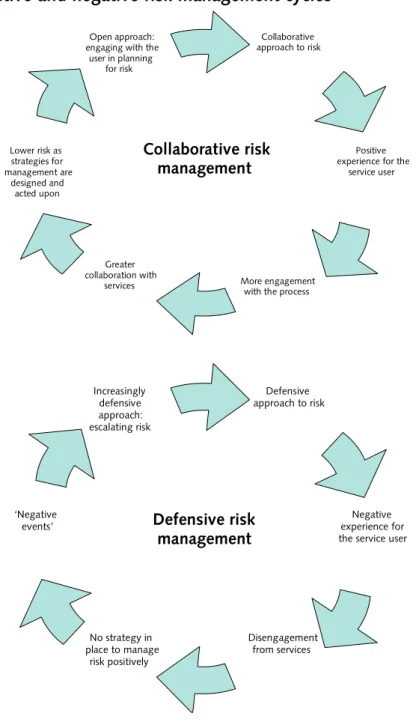
Figure 1: Positive and negative risk management cycles16
Defensive approach to risk ‘Negative events’ Increasingly defensive approach: escalating risk Negative experience for the service user
Disengagement from services No strategy in place to manage risk positively Defensive risk management Collaborative approach to risk Lower risk as strategies for management are designed and acted upon Open approach: engaging with the
user in planning for risk
Positive experience for the
service user
More engagement with the process Greater
collaboration with services
Collaborative risk management
Basic ideas in risk management
Defining risk and risk management
It is important to be clear about the basic ideas underpinning the notion of risk. Risk relates to a negative event (i.e. violence, self-harm/suicide or self-neglect) and covers a number of aspects.
•
How likely it is that the event will occur.•
How soon it is expected to occur.•
How severe the outcome will be if it does occur.Risk assessment involves working with the service user to help estimate each of these aspects. Information about the service user’s history of violence, self-harm or self-neglect, their relationships and any recent losses or problems, employment and any recent difficulties, housing issues, their family and the support that’s available, and their more general social contacts could all be relevant. Risk management then involves developing one or more flexible strategies aimed at preventing the negative event from occurring or, if this is not possible, minimising the harm caused. Risk management must include a set of action plans, the allocation of each aspect of the plan to an identified profession and a date for review.
Best practice point 6: Risk management involves developing flexible strategies aimed at preventing any negative event from occurring or, if this is not possible, minimising the harm caused.
Defining risk factors
A risk factor is a personal characteristic or circumstance that is linked to a negative event and that either causes or facilitates the event to occur. Risk factors can be categorised in a number of ways.17
•
Static factors are unchangeable, e.g. a history of child abuse or suicide attempts.•
Dynamic factors are those that change over time, e.g. misuse of alcohol. Dynamic factors can be aspects of the individual or aspects of their environment and social context, such as the attitudes of their carers or social deprivation. Because they are changeable, these factors are more amenable to management.•
Dynamic risk factors that are quite stable and change only slowly are called stable or chronic risk factors.•
Those factors that tend to change rapidly are known as acute factors ortriggers and, as they do change rapidly, their influence on the level of risk may be short-lived. The key risk factors identified through research for violence and suicide are given in Appendix 2.
Particular sensitivity should be exercised when discussing historical factors from earlier in the life of the service user. The relevance and accuracy of these may need to be explained to the service user, and it is possible that carers may be unaware of these historical events or of their significance so many years on.
The purpose of risk management
The aim of risk management is first to assess the likelihood of risk events and then to work with the service user to identify ways of reducing the likelihood of them occurring. Risk management should be based on a plan to reduce the risk of harm occurring and increase the potential for a positive outcome. It is important that care teams and the service user have a clear idea about what risk they are assessing and why they are carrying out a risk assessment.18 Risk
assessment should be used to identify the circumstances in which a particular harmful behaviour could possibly take place, and this information can then be used to focus efforts and expertise on dealing with the most relevant triggers. A risk management plan includes an awareness of the potential for changes in the level of risk over time. This requires a particular emphasis on the dynamic factors outlined above, as well as attention to regularly review risks and their management.
Best practice point 7: Risk management should take into account that risk can be both general and specific, and that good management can reduce and prevent harm.
Risk management and the Care Programme Approach
Risk management is part of the Care Programme Approach (CPA) and should be aligned closely with it.19 The CPA involves identifying specific interventions based
on an individual’s support needs, taking into account safety and risk issues. Care plans should be drawn up to meet all of the service user’s needs, including those needs relating to risk. This creates a recorded management plan for the elements of risk to both self and others.20 The outcome of the risk assessment should also
feed back into overall clinical management, since Enhanced CPA (rather than Standard) should be applied in cases where there is an increased risk related to mental health problems of harming oneself or others. These steps help to support the continuity of care, which is essential for effective risk management.
Risk management and the Mental Health Act
Given the nature of mental health problems, there are occasions where services have to intervene without the user’s consent: the Mental Health Act is used regularly to manage a risk of harm to self and others. It should always be seen as a last resort and it is important that service users who need to be treated under conditions of compulsion get the help that they need. Using the Act does not remove the need for discussion with the service user – it is still necessary to maximise the service user’s autonomy as much as possible within the
restrictions. A good knowledge of the Act – and its associated Code of Practice and Memorandum – is essential to good risk management in mental health. The Government is currently updating the Mental Health Act and proposals include introducing supervised community treatment with the aim of improving safety for patients living in the community, and abolishing the treatability test with the aim that patients with personality disorder receive appropriate risk management.
Best practice point 8: Knowledge and understanding of mental health legislation is an important component of risk management.
Screening and prioritising cases
Service users will vary in the degree to which they need a formal risk management plan. Screening for risk and needs should be part of a routine mental health
assessment, but is not an end in itself and should, where necessary, lead to
further action. Some service users will be identified as a priority for more in-depth assessment and intervention as a result of this routine screening, or will identify themselves as in need. General and forensic services have different degrees of experience of working with violence, and so they should work together to ensure that the right level of assessment is conducted in all cases. A second opinion
should be sought from specialist services when appropriate, for instance if a service user has a history of serious violence.
Duty of care to those who present a risk and others
As a basic principle, all mental health professionals recognise that reducing the risk of self-harm, suicide and self-neglect is part of the practitioner’s fundamental duty to try to improve a service user’s quality of life and recovery. There is also a clear professional duty of care to a service user who presents a high risk of harm to others when this risk is due to a mental health problem – this duty may include tackling stigma and discrimination. There is also a duty of care to other service users, other professionals and wider society. In many cases, improving a service user’s quality of life may have wider benefits for others, such as reducing the risk to vulnerable groups of potential victims, including children. These goals are most
likely to be achieved in the context of a good relationship between the service user and those providing their care.
Box 2: Supplementary NICE guidance on the short-term management of self-harm21
Respect, understanding and choice
People who have self-harmed should be treated with the same care, respect and privacy as any patient. In addition, healthcare professionals should take full account of the likely distress associated with self-harm.
Triage
All people who have self-harmed should be offered a preliminary psychosocial assessment at triage (or at the initial assessment in primary or community settings) following an act of self-harm. Assessment should determine a person’s mental capacity, their willingness to remain for further psychosocial assessment, their level of distress and the possible presence of mental illness.
Assessment of risk
All people who have self-harmed should be assessed for risk. This assessment should include identification of the main clinical and demographic features known to be associated with the risk of further self-harm and/or suicide, and identification of the key psychological characteristics associated with risk – in particular depression, hopelessness – and continuing suicidal intent.
Psychological, psychosocial, and pharmacological interventions
Following psychosocial assessment for people who have self-harmed, the decision about referral for further treatment and help should be based upon a comprehensive psychiatric, psychological, and social assessment, including an assessment of risk, and should not be determined solely on the basis of having self-harmed.
This guidance is available from: www.nice.org.uk/guidance/CG16/ quickrefguide/pdf/English
Planning risk management
Risk assessment only has a purpose if it enables the care team and the service user to develop a plan of action in specific areas to manage the risks identified. This plan should be developed with the service user and their carer, and should be regularly reviewed.
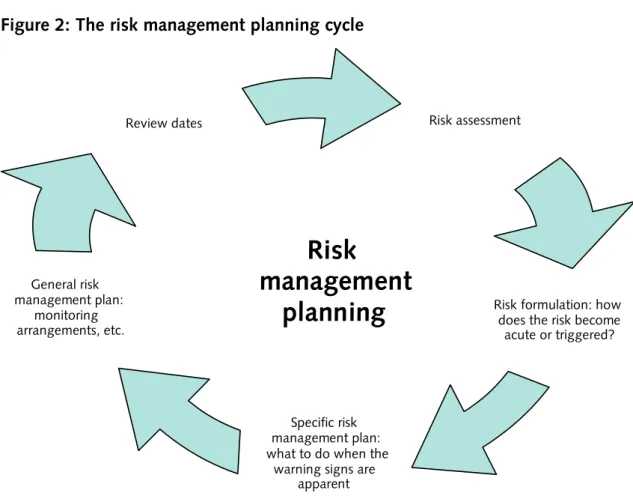
Risk formulation
Risk formulation is a process in which the practitioner decides how the risk might become acute or triggered.22 It identifies and describes predisposing, precipitating,
perpetuating and protective factors, and also how these interact to produce risk. This formulation should be agreed with the service user and others involved in their care in advance, and should lead to an individualised risk management plan. Every risk formulation should have attached to it a plan for what to do when the warning signs become apparent. The plan should also include more general aspects of management, such as monitoring arrangements, therapeutic interventions, appropriate placements and employment needs.
Best practice point 9: The risk management plan should include a summary of all risks identified, formulations of the situations in which identified risks may occur, and actions to be taken by practitioners and the service user in response to crisis.
Figure 2: The risk management planning cycle
Risk assessment
Risk formulation: how does the risk become acute or triggered?
Specific risk management plan: what to do when the
warning signs are apparent Review dates General risk management plan: monitoring arrangements, etc.
Risk
management
planning
Types of risk assessment
There are three main approaches to risk assessment.
•
In the past, risk assessment was anecdotal and inconsistent. It was based only on a largely unstructured clinical approach where information obtained in the course of an ongoing clinical assessment was considered. This information was not gathered systematically, and any information considered relevant was not entered into the formulation of risk in a consistent and standardised way.•
The actuarial approach to risk assessment focuses on static risk factors that have been shown to be statistically associated with increased risk in large samples of people. A formulaic approach is usually used: an overall score is calculated as an indicator of presumed risk over a specific time period, generally measured in years. This approach should be used with caution with individual patients in clinical practice. Errors are likely to occur if tools based on this approach are used to predict risk rather than to manage it. They should only be used as one part of an overall risk assessment.•
Structured clinical (or professional) judgement is the approach that offers the most potential where violence risk management is the objective. This approach involves the practitioner making a judgement about risk on the basis of combining:– an assessment of clearly defined factors derived from research; – clinical experience and knowledge of the service user; and – the service user’s own view of their experience.
Best practice point 10: Where suitable tools are available, risk management should be based on assessment usingthe structured clinical judgement approach.
All tool-based assessments should be conducted as one part of a thorough and systematic overall clinical assessment. This is particularly important when assessing the risk of suicide and self-harm, as there is currently no instrument with a
Structured risk assessment
Risk management in mental healthcare should be structured and consistent.1
It should be explicit to the service user and should involve the service user’s own priorities. It should also include the structured clinical judgement outlined above. Decisions about care and security should not be based simply on the largely unstructured clinical approach, which could be subject to personal biases about the service user and may miss important factors such as the service user’s strengths and resources or the views of the carer. These biases could lead to poor judgements where the risk is either overestimated or underestimated if key factors are missed. This is especially true if the judgements are made by an individual practitioner alone rather than by a clinical team working together. If it is not clear to the service user that their risk is being assessed, the principle of engagement is broken.
Providing care proportionate to risk
A fundamental principle of mental healthcare is that the level of security to which a service user is subjected should be as non-restrictive as possible and should be proportionate to the degree of risk that they actually present at the time.20
Risk assessment can be integral to deciding on the right level of intervention and support for a service user. When it is done properly – using the principles of involvement, working together and individualised support – risk management is empowering rather than disempowering for the service user23 and can be a vital
part of recovery.
Best practice point 11: Risk assessment is integral to deciding on the most appropriate level of risk management and the right kind of intervention for a service user.
Embedding risk management in everyday practice
The information that informs a risk management plan can be based on special interviews or reports, but risk management is also based on routine practices in mental healthcare. These routine practices include enhanced observation and preventing absconding where this is appropriate.19 Thinking about and recording
risk management decisions is not an ‘add-on’ to practice, but should produce a structured and documented version of the clinical judgements that practitioners make everyday. This formal version of everyday practice should increase the confidence of practitioners when making decisions, especially if they are working collaboratively.
Box 3: A brief critique of three approaches to risk assessment
Unstructured clinical approach
Since this is not a structured approach, important factors may be missed. While this unstructured approach sometimes provides vital information, it is not a feature of best practice in planned and formal risk management.
Actuarial approach
This approach has a number of limitations. First, it tends to ignore risk factors which do not occur commonly. Second, the capacity of the actuarial tool to make ‘predictions’ only applies when the service user being assessed comes from the population for which the tool was developed. Third, an emphasis on risk prediction rather than risk management is less useful for practitioners tasked with planning care. Finally, the emphasis on unchangeable static risk factors in this approach severely limits the usefulness of developing risk management strategies that are robust yet flexible. Some of the tools listed in Appendix 1 are actuarial, and these limitations must be borne in mind when considering whether to use them in practice. They do not provide a measure of risk in an individual service user and should never be used as the only way of evaluating the risks posed by an individual service user. Actuarial tools used on their own also contradict the principles of diversity and individualised working.
Structured clinical judgement
Based on practice-based evidence, this is the most effective approach to
violence risk management. Although, like the actuarial tools, these instruments are derived from research evidence, the clinician’s discretion is seen as a vital element – especially in relation to formulating the assessment of risk and preparing risk management plans based on the risk factors identified. The
effectiveness of these tools can be hard to test, given their range of applications and the difficulty of measuring the prevented harm. Given their research focus, they may also exclude issues that the individual service user considers important – although most structured clinical judgement tools offer practitioners the opportunity to add extra risk factors and considerations as required.
Structured assessment is important in assessing suicide risk, but there are no instruments with a satisfactory evidence base. In this case, structured assessment means a systematic assessment of key risk factors and mental state leading to an informed clinical judgement.
Working with service users and carers
Sharing decision-making
Each step in the process of developing a risk management plan should be based on discussions between the service user and those involved in their care. The service user should be offered the opportunity to take a lead role in identifying the risks from their point of view, drawing up plans for dealing with difficult situations, and indicating the sort of support that they would prefer: service users and carers are often in the best position to comment on the robustness and practicality of the plan. The plan should include negotiated and individualised advance decisions on early warning signs of a relapse, as well as preferred early interventions at times of crisis.3,4
“Risk management can increase a user’s awareness of their own behaviour and of how others view them. This can enable them to manage their lives and relationships more effectively.”
A user’s view
Collaborative work with carers
Where there is a carer involved, they are a vital source of support for the service user and may also be a key person in helping to manage the risks identified.24
Practitioners should be sensitive to the relationship between the service user and the carer, as there may be risks within this relationship and different points of view about the best actions to be taken. If the carer is at risk, they should be seen individually so that the risks can be explored and actions can be agreed. The carer should receive enough information in a comprehensible format to enable them to provide the necessary care.24 The carer’s worries about the service user
should always be taken seriously, even if the care team is less concerned.2 The
carer should be offered an assessment and should be helped to develop a plan for meeting their own specific needs.
Confidentiality and disclosure
Agencies should have in place clear agreed policies on information-sharing, which advise on the ‘need to know’. If someone other than the service user is at risk, advice must be sought from the police public protection team or multi-agency public protection arrangements (MAPPA) so that an appropriate public protection plan can be activated. The rationale for any disclosure without consent, e.g. to prevent harm, should be clearly documented.
Avoiding exclusion on the basis of negative risk
Social inclusion should be one of the goals of any risk management plan, and strategies to support the service user in achieving this should be identified. Service users are likely to be aware of their own risk and to want help, but may find it difficult to talk about this in case it increases stigma.9 Any risks identified should
not be overstated or needlessly used to exclude the service user from services or contact with people; this contributes to myths about mental health problems, stigma and discrimination. Unnecessary exclusion can be avoided by carefully linking risk assessment to risk management. Regular reassessment can provide opportunities for information-sharing with the service user and their carer, and can establish a forum in which risk-related issues can be openly discussed.
“A trusting relationship between the user and their care co-ordinator is the best foundation for successful risk management.”
A user’s view
Diversity
Clinical judgement is based on perceptions that can be biased without the practitioner being aware. Therefore all staff involved in risk assessment must be capable of demonstrating an appropriate level of cultural sensitivity and competence.3,4,25 This competence applies to diversity in terms of race, faith,
age, gender, disability and sexual orientation. Assumptions about any of these aspects may influence perceptions of risk. The practitioner should reflect on their assumptions about people from diverse groups within society and think about any judgements of risk that they are making about people from these groups.Some authorities have argued that assumptions about race can have an influence on judgements of risk.25
Assumptions about gender can also frame the way that risk is assessed in women and men. It is essential to stay open-minded about the potential for violence and self-harm or suicide – regardless of race and gender – and not to expect service users to conform to basic stereotypes.4,26 Other social groups are sometimes
stigmatised as ‘always’ difficult in some way (e.g. service users with a personality disorder diagnosis or substance use problem). Structured assessment approaches and an awareness of relevant research on the use of different instruments with different groups will help with this aim. Practitioners should draw upon their own knowledge of equality issues and on the equality and diversity resources within their organisation for guidance; this will help to set the context for fair and respectful judgements of risk. Reflective practice, clinical supervision and a team approach are also crucial.
Best practice point 12: All staff involved in risk assessment must be capable of demonstrating sensitivity and competence in relation to diversity in race, faith, age, gender, disability and sexual orientation.
Recognising the fluidity of risk
Risk can change – sometimes over very short timescales. By definition, dynamic factors fluctuate in their contribution to the overall risk. Given the fluidity of risk, only the tools based on structured professional judgement are useful in monitoring change and engagement with the service user and carer. So there should be an established procedure to formally review the assessment of risk at regular intervals. However these reviews should not be rigidly limited to these time points.
It is important that the procedure has some flexibility so that, in particular circumstances, an earlier or more timely formal review can be undertaken. This also guards against a ‘tick box’ mentality in completing risk assessment forms. All practitioners working with the service user need to be familiar with previous risk assessments so that they can be alert to changes in the level of risk. Particular attention should be paid to the relationship between substance misuse and changes in the risk of harm to self or others.27 It is crucial that service users and
carers have access to someone whom they can contact in a crisis if the need arises, and that they are taken seriously if this occurs.
Regular review
While remaining flexible, risk management plans should include scheduled dates for reassessment, so that they are not simply amended as a reaction to a crisis or other events. These review requirements should be part of the risk management plan and not separate from it, and the service user and all those involved in their care should be involved in this review. Risk management plans should also include a clear statement of responsibility for carrying out specified tasks in the plan, as well as for reviewing them. From discussion with the service user, it is essential to anticipate what circumstances would trigger a review outside the normal timetable, as well as which times of year are particularly difficult. There should be scope for the service user or carer to requesta review. In addition, the risk management plan should be revisited before and during time periods that are recognised to be associated with increased risk, for instance prior to leave, on return from leave and around the time of discharge.19
Box 4: Supplementary NICE guidance on the short-term management of violence3
Prediction
Measures to reduce disturbed or violent behaviour need to be based on
comprehensive risk assessment and risk management. Therefore mental health service providers should ensure that there is a full risk management strategy for all their services.
Working with service users
Service users identified to be at risk of disturbed or violent behaviour should be given the opportunity to have their needs and wishes recorded in the form of an advanced decision. This should fit within the context of their overall care and should clearly state what intervention(s) they would and would not wish to receive. This document should be subject to periodic review.
Risk assessment
Risk assessment should include a structured and sensitive interview with the service user and, where appropriate, with carers. Efforts should be made to ascertain the service user’s own views about their trigger factors, early warning signs of disturbed or violent behaviour and other vulnerabilities, and the
management of these. Sensitive and timely feedback should complete this process.
Care plans
Risk assessment should be used to establish whether a care plan should include specific interventions for the short-term management of disturbed or violent behaviour.
Tools
Actuarial tools and structured clinical judgement should be used in a consistent way to assist risk assessment, although no ‘gold standard’ tool can be recommended. This guidance is available from: www.nice.org.uk/guidance/CG25/niceguidance/pdf/ English
Recognising the individuality of risk
Each service user behaves differently when they begin to need support. It is important for care teams to prioritise their relationship with the service user so that personal signs and triggers (‘signatures’) can be identified by those involved in their care as well as by the service user her or himself. These signs and triggers will often be very individual to each service user. When they have been noted and their relevance to risk has been understood, they should lead to intervention as early as possible and should never be ignored.2 Advanced decisions are an
Best practice point 13: Risk management must always be based on awareness of the capacity for the service user’s risk level to change over time, and a recognition that each service user requires a consistent and individualised approach.
First contact with services
When the service user has a first crisis episode and has not had contact with mental health services before, the family’s – and in particular the main carer’s – contribution to information-gathering is critical. In this situation, the carer has the most knowledge about the service user and is a vital source of both information and support. But this will be a particularly difficult time for the carer as well as for the service user, and practitioners must acknowledge this when working with carers at this time.
“There is often a defensiveness from staff towards carers.”
A carer’s view
Individual practice and team working
What should trusts be doing to manage risk?
There are many practical steps that trusts should be considering in the area of risk management. These steps include:
•
keeping the physical environment under regular review;•
conductinginvestigations as recommended by Department of Health guidance;•
learning from inquiries and reports by the National Patient Safety Agency and the Healthcare Commission; and•
appointing senior staff to oversee clinical risk management.Who should be doing risk management?
Risk management is everyone’s business – including the service user’s. The carer and the practitioner with whom the service user works are in the best position to make the most important and relevant contribution to risk management planning, but all of those involved in providing care have a role to play. Anybody involved in tool-based risk assessment must know their own strengths in terms of their personal competencies and skills. Newly qualified staff should be allocated less
complex cases and closely supervised. The more formal the risk assessment, the higher the degree of personal competency required. All staff should receive supervision – regardless of their skills, competency or experience. Some of the instruments listed in Appendix 1 require special training or specific qualifications as a condition of using them, however risk management is much more than just the use of tools.
“If a positive and open relationship exists between the user and their key worker, risk management can be a positive process and a vital step towards recovery.”
A user’s view
Sources of information
A variety of sources should be used for getting hold of information on which to base the assessment and management plan. These sources must include interviews with the service user and carer, but can also draw on reports, case notes and the relevant tools listed in Appendix 1.23
Effective team work and partnerships
The practitioner may sometimes be working alone, but in most situations the best risk assessments and the most effective decisions are made by a team of experienced practitioners in consultation with the service user and carer. Decisions and assessments should also be based on collaboration between health and social care agencies in hospitals and in the community.1,20 In some cases they should be
based on collaboration between general and specialist services. The judgements made in a risk assessment should be made in collaboration with others in the multidisciplinary team and with the service user and carer. In instances where the risk seems high, the involvement of senior colleagues to advise and support may be helpful.
Care teams should think about the way that they operate and communicate: effective decision-making is more likely in an atmosphere of openness and transparency, where all views are welcomed and responsibility is shared. Teams should consider the best way for them to resolve disagreements about a decision, to ensure that the best decisions are made and that team cohesion is preserved. Teams should also be alert to group processes such as the pressure to conform and the potential for groups to recommend more risky courses of action than an individual would. When working across agencies, a common understanding and language should be established for the issues that will be addressed.23
Best practice point 14: Risk management plans should be developed by
multidisciplinary and multi-agency teams operating in an open, democratic and transparent culture that embraces reflective practice.
Meetings
There should be a clear discussion about the risk management plan at a formal meeting, which the service user and their carer should be enabled to attend this multidisciplinary meeting. The issue of risk needs to be discussed with sensitivity at this meeting and, since the service user or carer may feel inhibited in a large group, they should be given an opportunity to meet with key clinicians both before and after the main meeting. They should also be able to have meetings separately from each other.
“There is nothing worse than tokenism, and we can smell it a mile off.”
A carer’s view
Training
All practitioners involved in risk management should receive relevant training, and this should be updated at least every three years. This training does not have to be classroom-based but should include attention to:
•
the indicators of risk;•
the importance of identifying high-risk periods;•
options for flexible and robust risk management;•
ways of maximising involvement;•
communication and therapeutic relationships; and•
relevant aspects of the Mental Health Act.Service users and carers should be involved in delivering training to practitioners. The training should include an emphasis on an awareness of long-term clinical and social needs, as well as knowledge of the person’s current mental condition and an awareness of how risk changes as the service user’s level of care changes (e.g. following discharge or when on leave).14
Best practice point 15: All staff involved in risk management should receive relevant training, which should be updated at least every three years.
Recording information
All significant risk-related decisions should be recorded, signed and dated in suitable documentation. Also, whenever it is not possible to follow an important principle of best practice, the reason for this should be documented, signed and dated. The service user and all those involved in their care should have the opportunity to contribute to this documentation and should be provided with copies. This information can be used collaboratively to plan future care.
Negative and judgemental labels must be avoided, as they are a barrier to collaboration. A written record of the risk management plan allows practitioners to track changes in the level of risk and to note factors that have previously been considered important. This is particularly important when people have complex needs and are in contact with several agencies. Documentation also helps to protect practitioners in the event of a review.
Standardised documentation
The tools listed in Appendix 1 may assist in the development of a standardised approach to documentation within a trust or service. Local risk assessment
proformas should be designed with evidence-based principles in mind, stating clear and verifiable risk indicators and providing free text space for individual opinions.28
When harm has occurred, the details should be recorded as precisely as possible:
•
What happened?•
What were the circumstances?•
What were the consequences?•
How does what happened relate to mental illness?Service users’ views on these issues, risk and its future management should be included in the documentation.9 All relevant information should also be recorded
in the appropriate local format (e.g. CPA documentation) and stored confidentially. The process of documentation should not become a bureaucratic end in itself and should not be aimed at self-protection. Written documentation must be managed in accordance with the relevant legal statutes (e.g. the Data Protection Act and the Freedom of Information Act). Ultimately, local risk information will be stored electronically in the national Connecting for Health system that is currently under construction.
Communication
Once a risk management plan has been developed or reviewed, it must become a live document and be communicated to the service user and all of those involved in providing their care: the risk management plan has no purpose if it is not shared
between the relevant parties and used as a basis for joint action. The service user’s consent for sharing information in this way should be sought, although the duty of confidentiality can be overridden if there is a clear risk of harm. The local policy on information-sharing should govern this process.
Best practice point 16: A risk management plan is only as good as the time and effort put into communicating its findings to others.
Decision-making in the real world
Decision-making by professionals involved in risk assessment and risk management is complex and is affected by many factors that are specific to the practitioner making the decision, such as their personal values, their own attitude towards risk, their workload and the time that they have available to address the matters in hand. It is important for professionals to be aware of and reflect on the factors that influence their decision-making, to ensure that their values are enhancing the process rather than distorting it. Again, effective team working, individual supervision and good communication with others will all support these processes. Feedback from the service user on this aspect of practice is a useful part of reflective practice.
Learning from adverse incidents
Things can go wrong even when best practice has been used. If things do go wrong or do not go according to plan it is important to learn why, including identifying any mistakes that were made.29 Learning from ‘near misses’ is vital to
improving services,5 although not all lessons learned will require changes in practice
– they may not necessarily lead to better outcomes. The culture of an organisation can make all the difference in ensuring that staff feel able to be honest about the decisions that they have taken, the basis on which they made their decisions, and how things might have been done differently and better: lessons can be learned and, where necessary, practices can bechanged for the better. Training could also be improved as a result. It is important to remember that any decision is likely to be acceptable if it conformed to relevant guidelines, it was based on the best information available, it was documented and the relevant people were informed.11
Learning from good practice
Most of our learning in risk management is based on looking back at adverse incidents. It is vitally important, though, to acknowledge that dealing with risk and making decisions is part of everyday practice, and practitioners make the right decision most of the time. Every right decision helps to prevent an adverse incident, so mental health organisations should set up systems for systematically learning from good practice as well. This should include sharing experiences among practitioners and encouraging multidisciplinary and peer review of clinical practice.
Preamble
Best practice in this area relies, in part, on a consistent approach to the assessment of risk when working with an individual service user. This consistent approach can be improved by using tools and other packages that have been developed for this purpose and which have been tested in some way in real mental healthcare settings. In this appendix information is provided about a selection of structured approaches that can be used as part of an overall risk management plan and which have been tested, at least to some extent, in this way. Most of these
structured approaches are risk assessment tools or guides to clinical judgement, but some broader approaches, such as training programmes, have also been included. They have been selected and evaluated through a process combining systematic review of the research literature and extensive consultation with experts in this area.
When thinking about risk assessment tools, two key warnings must be borne in mind.
Risk assessment tools must be used with caution.
A tool can only contribute one part of an overall view of the risk presented by a particular individual at a particular time. Tools should only ever be used as part of a general clinical assessment conducted with a service user. The results of the tool-based assessment must always be combined with other information on many aspects of the service user’s life and current situation.
Figure 3: Risk assessment tools as one part of the overall clinical assessment process
The risk
assessment tool
Many other
aspects of the
service user’s
life
The current
situation
Clinical
assessment
Choosing the right tool for the job is a complex task.
The tools listed here have been designed with a variety of purposes and with a variety of service users in mind. Some are actuarial and others provide structure for clinical judgements. Some have been through a rigorous process of scientific development while others have been tested with regard to their utility and
acceptability to practitioners. Both approaches have advantages and disadvantages when underpinning good practice. Some tools have built-in prompts for thinking about the management of any risks that are identified while others do not. The choice of a particular tool by a care team must be based on a consideration of all the relevant factors and how they relate to the range of risks encountered by the team in practice.
Some of the structure for this section is adapted from the Scottish Risk Management Authority’s Risk Assessment Tools Evaluation Directory. This
directory30 provides information on a wider range of violence instruments relating
to court proceedings and should be consulted if further information is needed in this area.
Overview
Page Violence Sexual
violence
Antisocial
and
offending
behaviour Self-harm/suicide Self-neglect/vulnerability
Multiple risks CRMT 33 •
•
•
FACE 34•
•
•
GRiST 35•
•
•
•
•
RAMAS 36•
•
•
•
•
GIRAFFE 37•
•
•
•
•
START 38•
•
•
Risk of violence, sexual violence, antisocial or offending behaviour
HCR-20 39
•
PCL-R 40•
PCL:SV 41•
STATIC-99 42•
SVR-20 43•
VRAG 44•
Risk of self-harm or suicide
ASIST 45
•
BHS 46•
SADPERSONS 47•
SIS 48•
SSI 49•
STORM 50•
Multiple risks
CRMT: Clinical Risk Management Tool/Working with Risk
Violence Sexual violence Antisocial and offending behaviour Self-harm/ suicide Self-neglect/ vulnerability
•
•
•
Description The CRMT is a structured template checklist of relevant risk and contextual factors. The tool includes a structured assessment of suicide, neglect, violence and other risks (rated as ‘present’ or ‘absent’) and free text boxes (three pages) for descriptions of the context of risk factors, positive resources, risk management considerations, opportunities for risk prevention, and risk management options (short- and long-term). A modified version (MST) is available with two levels (screening and comprehensive), and this version is embedded within a ‘Working with Risk’ training package which emphasises positive risk management.
Depth Screening and in-depth.
Setting All mental health service settings. Practitioners All levels.
Risk
management
There is an emphasis on considering effective management once risks are identified. Guidance on positive risk management is provided in the manual and dedicated training workshops on ‘Working with Risk’.
Training A Trainer’s Manual and a Practitioner’s Manual, with optional consultant training and development from Practice Based Evidence .
Cost Trainer’s Manual for £179 and additional copies of the Practitioner Manual for £29.
Manual Available from Pavilion Publishing (01273 623222 or www.pavpub.com). Evidence There is no published evidence on tool development in terms of reliability or
validity because the emphasis has been on the clinical utility of the tool. It has been constructed and developed in response to feedback from large numbers of practitioners attending training workshops and practice development projects. In one published study, the modified version of this tool was the preferred risk assessment tool when compared against three others. Origin UK
Formats Paper only
Contact Steve Morgan, Practice Based Evidence Phone 07733 105264
Email [email protected] Website www.practicebasedevidence.com
FACE: Functional Analysis of Care Environments
Violence Sexual violence Antisocial and offending behaviour Self-harm/ suicide Self-neglect/ vulnerability
•
•
•
Description FACE is a portfolio of assessment tools designed for adult and older people’s mental health settings. It includes both screening and in-depth levels of assessment and contains specialist forms applicable to areas such as substance use, mental capacity, perinatal services and forensic services. The tools meet both CPA and Health of the Nation Outcome Scales requirements. Risk is assessed using the FACE Risk Profile. This may be used either as a standalone tool or in conjunction with other FACE or local tools. Five sets of risk indicators are coded as present or absent and then a judgement of risk status (0–4) in seven areas (including violence, self-harm and self-neglect) is made. Scope for service user and carer collaboration is built into the system through tailored forms, including feedback on services (e.g. relationship with psychiatrist). Depth Screening and in-depth.
Setting All general and forensic mental health settings.
Practitioners Any mental health practitioner who has attended FACE training. Risk
management
The FACE Risk Profile specifically prompts recording of actions recommended or required as a result of the assessment. Training One day’s training is required.
Cost Outright purchase of the full system currently costs approximately £4,000 per annum. For a medium-sized trust, the cost of the Risk Profile only is 40% of this.
Manual A detailed training guide is available, including standardised vignettes, prompts and guidance.
Evidence The tool has been developed with a UK mental health sample. There is evidence that the risk indicator sets are internally consistent and that raters agree when completing them independently. There is also evidence of good validity.
Origin UK
Formats Electronic and paper formats are available, including an enterprise database implementation with alerts, plans, incident records, aggregation systems/ benchmarking facilities and interfacing capabilities with other systems. Contact Intermation Ltd, Nottingham
Phone 0115 983 8788 Email [email protected] Website www.facecode.com
GRiST: Galatean Risk Screening Tool
Violence Sexual violence Antisocial and offending behaviour Self-harm/ suicide Self-neglect/ vulnerability
•
•
•
•
•
Description GRiST is a decision support system, based on the expertise of multidisciplinary mental health practitioners, that identifies detailed information about all risks. When fully developed, it will be a web-based program for collecting information and generating risk quantifications, with full explanations of how these assessments were derived. The current version (May 2007) organises questions with rapid screening ones first, which direct the assessor to more in-depth ones if required. However, the underlying representation of risk knowledge makes it easy for the information to be customised to particular clinical requirements. Free-text entry is allowed for each overall risk domain, and the electronic version enables it to be recorded for any piece of risk data. Depth Screening and in-depth.
Setting All mental health service settings.
Practitioners All levels – versions tailored for various levels of practitioner expertise are under development.
Risk
management
There is a free text prompt to consider action to be taken, but otherwise there is no guidance on risk management.
Training Not required, but reference to information on the website is advised. Cost Free to service providers, subject to acknowledgement and internal use only. Manual Not available, but information is available on the website.
Evidence The mental health expertise underlying GRiST has been derived from extensive interviews, focus groups and individual validation over a period of four years. The rigorous method of data collection and analysis has been described and there is evidence of good face validity. The tool is designed to make risk predictions, but there is no published evidence as yet on its reliability or validity.
Origin UK
Formats Web-based and paper
Contact Dr Christopher Buckingham, Aston University Phone 0121 204 3450
Email [email protected] Website www.galassify.org/grist