Customer Experience Management
MOTOR VEHICLE AGENCIES
IMPROVING CUSTOMER EXPERIENCE AND OPERATIONAL EFFICIENCIES
IMPROVING CUSTOMER EXPERIENCE AND OPERATIONAL EFFICIENCY
A QMATIC WHITEPAPER
©2013 Q-MATIC AB. All rights reserved. Version 1.0Abstract
The nature of customer service in Department of Motor Vehicle (DMV) offices is changing rapidly. Even during the best of economic times, government DMV offices often face budgetary limits, staff shortages, reduced office hours and branch closings that adversely affect customer service. These challenges can mean congested offices, longer wait times, and often, frustrated customers and staff. State and County residents needing permits, driver’s licenses, car titles or
registration must often wait hours at crowded branches for a transaction that may need only a few minutes to process.
Finding ways to optimize the customer experience with the best use of resources, centrally set targets and low costs are all important challenges.
This white paper describes these challenges from a customer perspective and offers possible solutions.
As the world’s largest queue management company, Qmatic has been improving customer experiences and helping government agencies enhance organizational processes for more than 30 years. Improving customer experiences and
operational efficiency with Qmatic’s Customer Flow Management (CFM) solutions, systems and know-how have been applied to the Public sector all over the world. Customer Experience Management (CEM) solutions and Customer Flow
Management (CFM) methodologies help organizations worldwide to reduce costs while offering better service.
Introduction
Serving the motoring public in the most convenient and efficient manner is a constant goal of DMV offices. The private sector has raised the bar for customer service, and citizens expect the same from government institutions. For DMVs, budget cuts present a real challenge, one that can be met through efficient service delivery and effective service design. Offices in the public sector have the added pressure of politics and public demand for better, quicker and cheaper service. Restoring citizens’ confidence in public institutions means demonstrating competence in providing better value for their hard-earned tax money.
Design and management of the complete customer journey is needed to meet these challenges. Individual touch points are not enough.
If the complete customer journey is in place, measurement of progress and results can drive continuous performance improvements, which can be dramatically easier to facilitate.
The CFM methodology fits very well with new governance models in the public sector that put citizens at the center. DMVs that integrate CFM technologies benefit from a better configuration to ensure improved service for their customers.
Public Challenges
Even though customers of public services seem to have limited choices of how, when and where they receive DMV service today, they are still demanding customers. They want the best possible service for their tax dollars.
Not surprisingly, governments are focusing on the quality of service delivery and cost reductions at the same time.
From our involvement in the public sector, we’ve identified four main challenges: (1) Improving efficiency
(2) Improving the customer experience (3) Increasing staff satisfaction
(4) Driving business improvements through data and analytics
So, how can Customer Experience Management (CEM) and Customer Flow
Management (CFM) methodologies turn these challenges into opportunities so that benefits are gained by staff and customers alike?
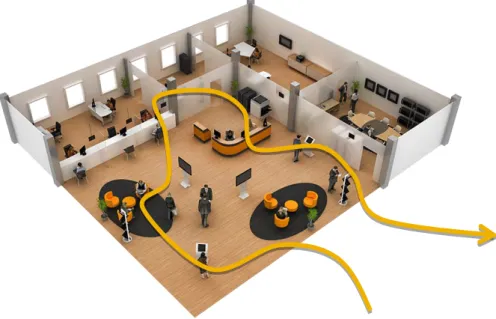
Fig 1. Understanding and managing the customer journey is key in delivering improved customer experience in the public sector.
Meeting the challenges
CHALLENGE 1: IMPROVING EFFICIENCY
Being able to handle more customers with limited resources and tighter budgets without compromising the quality of service is no small task. By applying CFM methodology,
organizations can increase processing capacity while reducing costs and improving service levels.
In effect, using time effectively results in a more positive customer
experience with staff motivated by a calm and orderly workplace.
Shrink the “gap” between customers
Having to tell a customer they have been waiting in the wrong line is stressful for both DMV staff and customers alike. Fortunately, there are many ways CFM methodology helps eliminate confusion and reduces wasted time between
transactions. For example, digital signage placed in lobby waiting areas can inform and entertain customers while they wait. CFM information such as called ticket numbers keep customers informed of their position for service while other types of media entertains them. CFM solutions also direct customers to the right service point at the right time, streamlining the customer flow. Staff can even transfer customers between service offerings or departments while the Qmatic system continues to track CFM information throughout the entire process.
With the right CFM solution you can organize linear queues for short transaction services. You can also track customers throughout the customer process. Knowing where every individual is in the customer management process simplifies
coordination while clear signage helps reduce reaction and walking time.
Speed up the right service
The more you know about a customer before serving them, the more likely you are to provide the right service in less time. Improving the efficiency of each
transaction allows staff members to take care of more customers, or spend more time with customers who have special or complex needs.
To reduce transaction time without sacrificing quality of service, a CFM solution can inform staff about the customer’s objectives before the customer reaches the counter. This ability enables staff to prepare while waiting for the approaching customer. By making it possible to identify the customer’s service needs early on, organizations can better match customer needs with the right competence, which
Using a self-service
check-in solution
empowers the customer
and provides the means
for better matchmaking.
also saves time. In addition, a CFM solution provides staff with information about the workload ahead so that they can plan and prepare accordingly.
Spend more time with customers
Every customer is different. Sometimes a customer is looking for a quick answer to a simple question. Other times, the right service means being able to spend more time with a customer. With vastly different customer needs, varying types of service with appropriately trained staff should also be available.
A CFM solution gives organizations flexibility and efficiency so that the amount of time spent with a customer is proportionate to the need. For example,
organizations can identify the customer’s service needs upon arrival so that simple service requests can be addressed without the customer having to go to the main service desk. This process allows organizations to increase the number of simple inquiries or service transactions handled at welcome stations. For more complex customer requirements or needs, organizations have the benefit of channel migration to support the most effective service models.
A CFM solution also eliminates the time and effort needed to manually collect and compile various wait times and customer flow data by providing automatically updated reports. This capability helps free up staff from peripheral tasks so that they can provide the best possible service for every customer.
Make best use of staff and space
Waiting is a waste of time. Having personnel ready to serve every customer that might turn up is a waste of resources. Creating a situation with long waiting times for taxpaying citizens with increased demand for better service builds frustration and potential political issues when citizens exercise their right to speak up. It is especially crucial for DMVs, therefore, to offer efficient customer service in a timely manner for its citizens.
DMV offices see peak customer flows at specific times of day, such as during the lunch hour or on Mondays and Fridays. These peak work times require different staff levels than at quieter times. With a CFM solution, organizations can optimise workforce requirements by steering customers to less busy hours. DMV branches can spread out the service workload evenly throughout the day. Organizations can also look forward to real-time monitoring and resource planning of staff. Managers are notified when service-level targets are not achieved so that they can take proactive steps. In addition, it is possible to integrate the customer flow environment with Workforce Management (WFM) systems.
With a CFM solution it is possible to use limited floor space in a more efficient way. Instead of having several local waiting areas, you can combine them into one larger, centralized waiting area. The CFM solution is then used to guide customers, informing them when it is their turn and where to go.
CHALLENGE 2: IMPROVING THE CUSTOMER
EXPERIENCE
Chances are your customers are not coming by for the fun of it. They have an important reason for visiting. Perhaps it is an urgent, stressful matter. No matter the reason, customers are people who deserve the most positive customer experience possible. This is where our CFM methodology comes into play.
Boost service quality
At the heart of the customer experience is quality of service. So why not welcome customers with a meet and greet solution? Our CFM solution can also improve service quality by appropriately matching customers and staff based on the customer’s need and staff competence, or “skill-based routing.” In addition, employees are in a stronger position to meet specific customer needs since they have access to the customer’s service history
and can prepare accordingly.
Yet, when it comes to service quality there is always room for improvement. It is a continuous effort. With our customer survey model, you can poll customers to get their first-hand opinion on the service level experienced, helping to identify improvement opportunities.
Reduce actual waiting time
Waiting to be served can be frustrating and stressful for customers. Significant wait time also says a lot about the efficiency and commitment of an organization. CFM methodology greatly reduces wait times by providing more efficient use of staff, reduced costs and customer empowerment and satisfaction. The solution also provides means for verification of the arriving customers, matching service requirements with the right process, staff interaction and follow-up.
In addition to streamlining the customer flow and making it more efficient, our CFM solution can reduce the actual wait time for customers by steering them to less busy hours such as with an efficient calendar booking system. Our solution also provides real-time monitoring and resource planning of staff. Managers are alerted when service-level targets are not achieved so that they can work proactively.
Reduce perceived waiting time
The longest wait is the one you cannot control. For customers, it is often the perceived waiting time that matters most. Our CFM solution can reduce the perceived waiting time by using media solutions in the waiting area to present information and entertainment, for example. This solution also contributes to a more efficient process and reduces actual waiting times, since the information presented can help customers to better prepare before service. We call this active waiting, and it makes time fly.
Fig 2. Qmatic Customer Journey gives control of all the surfaces in the branch and not just the big screens on the wall as with typical Digital Signage suppliers.
Promote a sense of calm, order and respect
Nobody wants to be treated like cattle. Fortunately, a calm and orderly waiting area is also a more efficient and productive one. A CFM solution removes the mystery and worry from the wait by guiding and updating customers about where to go, where to wait and approximate waiting times. Simply put, with CFM, customers know that they are in-process and are not forgotten.
By implementing virtual queuing, which removes the need for a physical waiting line, the waiting experience can be made more pleasant. The customer’s place in the virtual queue is secured with an identifier, such as a number printed on a customer service receipt or sent to their phone as a text message. More frequently, mobile apps on smartphones are being implemented. This solution also helps fulfil the customer’s privacy requirements. When applied correctly, virtual queuing is both fair and welcoming.
CHALLENGE 3: INCREASE STAFF SATISFACTION
Attracting and keeping qualified employees is essential for any organization. And it is not always easy. What is more, an employee that appreciates his or her tasks and the workplace is more likely to take care of customers in an efficient and positive way.
CFM methodology can increase staff satisfaction by streamlining the customer flow and making it more efficient. This process, in turn, creates a more orderly and relaxed environment for staff and customers alike. Satisfied customers are usually friendlier towards employees, contributing to a positive workday.
competence with customer needs. Staff can take pride in knowing that they are informed and ready to meet customer requirements and provide the best possible service. In addition, employees are supported by real-time monitoring and resource planning that alerts managers when service-level targets are not being achieved so that they can take actions accordingly.
CHALLENGE 4: DRIVING BUSINESS IMPROVEMENTS
THROUGH DATA AND ANALYTICS
When it comes to the operational efficiency and the customer experience, there is always room for improvement. The challenge is where and how. A CFM solution can supply management with historical and real-time statistical data that can help drive improvement. The data is automatically captured by the system at every step in the process. This process gives organizations a highly efficient and effective way to gather data, compared to manual data collection.
Enhancing
performance
With CFM solutions, DMV administrators have access to information for all branches in their organization right at their fingertips. With tools to determine and analyze data such as customer throughput per hour, waiting time per customer and cost per transaction, management can focus on areas with high improvement potential. In this manner, staff members are able to initiate
the right operational improvement activities based on the data and knowledge offered by the system.
CFM processes result in benefits such as improved efficiency, shortened waiting times and reduced costs. By collecting data on service delivery outcomes, for instance, a CFM solution supports performance management of staff. With real-time, actionable data, managers can take immediate actions to use staff more efficiently and reduce waiting times. Moreover, a CFM solution opens up innovative benchmarking opportunities based on historical data to help organizations continuously improve customer service. CFM solutions also allow DMV
stakeholders to view trends, staff performance, resource optimization and ad-hoc reporting, providing a true 360 degree view of customer-facing activities.
By gathering statistical data at each step of the customer journey, CFM system data provides vital information to schedule staff appropriately during busy traffic times, review employee productivity and improve overall customer flow.
Results
CFM systems are ideal solutions for DMVs of all sizes. Over the last 30 years, Qmatic has worked with many world-leading organizations in the public and private sectors, from governments to FTSE100 and Fortune 500 companies. Qmatic offers complete solutions that are geared towards creating a streamlined, easy to understand environment that customers can easily navigate from entrance to exit. Employees benefit from a user friendly system that evenly distributes the workload and organizes what has traditionally been a chaotic experience. Administrators have the power to measure every aspect of their organization at every counter and every office under their control. All aspects of the CFM process can be addressed to improve future customer service flow.
Below are benefits our clients receive when they implement CFM solutions:
• Reduced perceived and actual wait times • Categorize and prioritize customers • Measure employee performance
• Increase staff productivity and workflow efficiencies
• Maximize customer flow through all locations/branches
• Generate comprehensive statistical reports based on defined KPI’s
If you want to know more about what your business can achieve with our solutions, contact us. We will be happy to prepare an ROI model based on your business reality and customer needs.
About Qmatic
Qmatic’s vision is to realize the full potential of every meeting. We help our clients engage and interact with their customers from the very first touch point. We gather information around the customer journey and help create brand value from improved customer experiences. By creating a seamless customer journey from online channels through to face-to-face meetings, we improve customer experiences and strengthen our clients’ brands.
Qmatic holds a market-leading position in the public sector as well as in financial services, retail, and healthcare industries. It is estimated that more than a quarter of the world’s population passes through a Qmatic system every year.
Qmatic has a truly global footprint and operates in over 120 countries through subsidiaries and partner networks. The Qmatic Group has a turnover of EUR 60 million and employs some 300 people. The company’s main owners are Altor Fund II GP Limited and ICG.
Qmatic is Distributed By: IdentiSys Inc.
7630 Commerce Way. Eden Prairie, MN 55344
Want to talk to us?
http://www.identisys.com/contact-us Phone: (877) 213.8180
Mail: [email protected] Web: www.identisys.com
Disclaimer
This document is provided for information purposes only and the contents hereof are subject to change without notice. This document is not warranted to be error-free, nor subject to any other warranties or conditions, whether expressed orally or implied in law, including implied warranties and conditions of merchantability or fitness for a particular purpose. We specifically disclaim any liability with respect to this document and no contractual obligations are formed either directly or indirectly by this document. This document may not be reproduced or transmitted in any form or by any means, electronic or mechanical, for any purpose, without our prior written permission. Qmatic is a registered trademark of Q-Matic AB. Other names may be trademarks of their respective owners.