Use of Electronic Health
Records by Nurse
Practitioners and Nurse
Midwives
Prepared for:
The California Medicaid Research Institute for the California Department of Health Care Services’ Office of Health Information Technology
Prepared by:
Joanne Spetz, PhD, FAAN Dennis Keane, MPH
Janet M. Coffman, MA, MPP, PhD Lela Chu
Philip R. Lee Institute for Health Policy Studies & School of Nursing
University of California, San Francisco
2
About the Authors
Joanne Spetz, PhD, FAAN, is a Professor at the Philip R. Lee Institute for Health Policy Studies, and the Departments of Family and Community Medicine, Social & Behavioral Sciences, and Community Health Systems at the University of California, San Francisco. She also is a faculty researcher at the Center for the Health Professions.
Dennis Keane, MPH, is a Survey Manager at the Philip R. Lee Institute for Health Policy Studies at the University of California, San Francisco.
Janet M. Coffman, MA, MPP, PhD is Associate Professor at the Philip R. Lee Institute for Health Policy Studies and Department of Family and Community Medicine at the University of California, San Francisco.
Lela Chu is a Research Analyst at the Philip R. Lee Institute for Health Policy Studies at the University of California, San Francisco.
Acknowledgements
This research was supported by the Office of Health Information Technology of the California Department of Health Care Services and the California Health Care Foundation. We are grateful for the guidance from Dr. Larry Dickey and Raul Ramirez over the course of the project, and for support by our partners at the California Medicaid Research Institute. We also wish to thank Jessica Lin and Patrick Madigan for their research assistance.
3
Contents
Executive Summary ... 7
Findings for All Respondents ... 7
Prevalence ... 7
System functionality ... 8
Factors Associated with EHR Use at Main Practice Location ... 8
NPs’ and CNMs’ Plans Regarding EHR Incentive Payments ... 8
Findings for Respondents Who Appear Eligible for Medi-Cal EHR Incentive Payments ... 8
Number of Eligible Physicians ... 8
Characteristics of Eligible NPs and CNMs ... 9
Summary ... 9
Recommendations ... 9
Introduction ... 10
Background ... 10
Meaningful use... 11
Eligibility Requirements...………....……….13
Results ... 12
Characteristics of Respondents ... 13
Findings for All Respondents ... 14
Availability and Use ... 14
Satisfaction ... 23
Factors Associated with EHR Use ... 25
Practice Type ... 25
Urban vs. Rural Practice ... 27
Intentions Regarding EHR Incentive Payments ... 28
Findings for Respondents Who Appear Eligible for Medi-Cal EHR Incentive Payments ... 30
Number and Percentage Eligible. ... 30
Characteristics ... 30
4
Thematic Analysis of Nurses’ Comments ... 32
Theme 1: Respondents’ Experiences with HIT Systems ... 33
Positive Experiences with HIT Systems: ... 33
Mixed Experiences with HIT Systems ... 33
Negative Experiences with HIT Systems ... 33
Theme 2: Challenges of Learning to Use HIT System ... 34
Need for Training ... 34
Theme 3: Systems Currently in Use ... 35
Lack of Input on Selecting Systems ... 35
System Features ... 35
Continuity Problems ... 36
Stability ... 36
Benefits of the Systems ... 36
Thematic Summary ... 37
Discussion ... 37
Limitations ... 38
Implications... 39
Appendix A. Methodology ... 40
Questionnaire Development... 40
Sample... 40
Survey Process ... 41
Data Analysis ... 43
Identification of Physicians Who Have EHRs ... 43
Identification of Characteristics Associated with Having an EHR ... 44
Estimation of the Percentage of NPs and CNMs Who May Be Eligible for Medi-Cal EHR Incentive Payments ... 45
Appendix B. Survey Instrument ... 46
5
Tables
Table 1. Response Rate ... 13
Table 2. Residence and Employment of Respondents ... 14
Table 3. CMS Meaningful Use Objectives Measured ... 15
Table 4. Availability of Functions to Fulfill Core and Menu Meaningful Use Objectives Among NPs and CNMs who Have an EHR ... 19
Table 5. Availability of Functions to Fulfill Core and Menu Meaningful Use Objectives Among NPs who Are Not Dual-Certified and Have an EHR ... 20
Table 6. Availability of Functions to Fulfill Core and Menu Meaningful Use Objectives Among CNMs who Are Not Dual-Certified and Have an EHR ... 21
Table 7. Availability of Other EHR Functions Among NPs and CNMs Who Have an EHR ... 22
Table 8. Availability of Other EHR Functions Among NPs Who Are Not Dual-Certified and Have an EHR ... 22
Table 9. Availability of Other EHR Functions Among CNMs Who Are Not Dual-Certified and Have an EHR ... 23
Table 10. NP and CNM Satisfaction with EHRs, by Ability to Meet All 12 Meaningful Use Criteria ... 24
Table 11. EHR Availability and Meaningful Use Objectives, Urban vs. Rural NPs and CNMs . 28 Table 12. Plans Regarding EHR Incentive Payments, by Eligibility ... 29
Table 13. Number and Percent of NPs and CNMs Eligible for Medi-Cal Incentive Payments, by Type of Practice ... 31
Table 14. EHR Availability Among NPs and CNMs Who Appear Eligible vs. Not Eligible for Medi-Cal EHR Incentive Payments ... 31
Table 15. Physicians Eligible for Medi-Cal Incentive Payments, EHR Availability by Practice Type* ... 32
Table A1. Regions of California Used for Sampling ... 41
Table A2. Total Population, Survey Sample, and Sampling Rate ... 42
6
Figures
Figure 1. NPs, CNMs, and Dual-Certified Advanced Practice Nurses with Any EHR at Their
Practice* ... 16
Figure 2. NPs and CNMs with EHRs that Meet the 12 Meaningful Use Objectives ... 17
Figure 3. NP and CNM Satisfaction with EHRs... 24
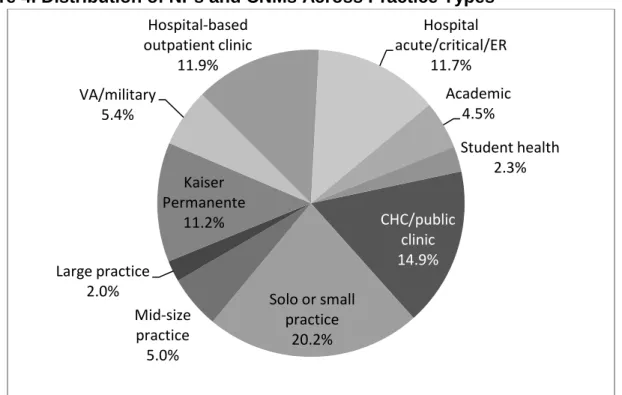
Figure 4. Distribution of NPs and CNMs Across Practice Types... 25
Figure 5. EHR Availability by Practice Type, All NPs and CNMs ... 26
Figure 6. EHRs Meeting Meaningful Use Objectives by Practice Type, All NPs and CNMs ... 27
7
Executive Summary
The use of electronic health records (EHRs) shows promise to improve the coordination of care, provider efficiency, and care quality. However, the purchase and implementation of EHR systems requires a significant investment of time and money, and often demands redesign of care practices and workflow. To encourage the use of EHRs, the federal government created an incentive program for providers who demonstrate meaningful use of EHR technology. The Health Information Technology for Economic and Clinical Health (HITECH) Act, part of the American Recovery and Reinvestment Act of 2009, authorizes Medicare and Medicaid (Medi-Cal in (Medi-California) to make “incentive payments” to clinicians and hospitals for EHR use in order to improve health care delivery. HITECH incentive payments will total up to $27 billion over 10 years, with $2 to $3 billion going to California hospitals and providers.1 In order to implement this program, the California Department of Health Care Services (DHCS) needs to establish baseline use of EHRs, and identify California physicians, nurse practitioners, nurse midwives, and other eligible providers who might receive incentive payments. In 2011, faculty at the University of California, San Francisco, working on behalf of the California Medicaid Research Institute, developed and conducted two surveys to measure baseline use of EHRs. A survey of physicians was conducted in summer 2011, and a survey of nurse practitioners (NPs) and nurse midwives (CNMs) was conducted in fall 2011.
A questionnaire was sent on October 21, 2011, to 5,000 NPs and CNMs with active California certificates. The questionnaire asked NPs and CNMs about their work in advanced practice nursing, whether they had an EHR at their main practice location, and assessed the attainment of 12 objectives CMS established for meaningful use of EHRs.
Findings for All Respondents
Employment in advanced practice roles
• NPs and CNMs are also licensed as registered nurses (RNs) and can choose to work in an RN role rather than an advanced practice NP or CNM role. They are not eligible for Medicaid incentive payments if they are not working in an advanced practice role. • 24.6 percent of California’s NPs and CNMs do not work in advanced practice.
Prevalence
• 78.3 percent of all NPs and CNMs report having an EHR at their main practice location. • Only 26.1 percent have an EHR at their main practice location that can achieve all 12 of
the meaningful use objectives measured in this survey.
• EHR systems vary in terms of availability of functions meeting the CMS meaningful use objectives. Rates at which specific functions were available when EHRs were present
8
range from a low of 59 percent for providing patients with access to their own electronic records to a high of 94.9 percent for generating lists of medication allergies.
• NPs and CNMs are more likely to use functions that give them information they can access during patient encounters than functions associated with assessing quality of care or exchanging information electronically with patients or other providers.
System functionality
• Only 19.3 percent of NPs and CNMs think all of their EHR systems function well. • NPs and CNMs who indicated that their EHRs can meet the 12 meaningful use objectives
were more likely to report that their systems functioned well, compared to those who use EHRs that cannot meet all of those objectives. This may reflect user comfort with more-developed EHRs as opposed to fundamental problems in less-complete EHRs.
Factors associated with EHR use at main practice location
• Practice type is a strong predictor of EHR availability. NPs and CNMs who practice in large organizations, including Kaiser Permanente, are much more likely to have an EHR at their main practice location than those in solo or small practices, or community health centers and public clinics.
• Kaiser Permanente providers are more likely to have an EHR that can meet the 12 meaningful use objectives measured than non-Kaiser providers.
• Urban NPs and CNMs are more likely to have EHRs than those in rural settings. NPs’ and CNMs’ plans regarding EHR incentive payments
• 58.5 percent of NPs and CNMs do not know if their practice setting will apply for incentive payments.
• 27.1 percent of NPs and CNMs say they or their practice plans to apply for either Medicaid or Medicare incentive payments for meaningful use of EHRs.
NPs’ and CNMs’ comments about EHRs and health information technology • NPs and CNMs noted that EHR implementation has increased accuracy of charting and
efficiency, and many think there have been improvements in the quality of patient care. • Dissatisfaction with EHRs is largely focused on the time required to use them effectively,
and with the lack of continuity of EHR data across care settings.
• Some NPs and CNMs commented that the transition process to using an EHR is
challenging. They want to be included in decisions about which system to purchase, and well-designed training programs are needed.
Findings for Respondents Who Appear Eligible for Medicaid EHR Incentive Payments
Number of eligible nurse practitioners and nurse midwives
• Findings from this survey suggest that 2,506 NPs and CNMs with active California certificates (21.8%) could be eligible for Medicaid EHR incentive payments based on their payer mix, practice setting, and practice type. This number could increase if the
9
expansion of Medicaid under the Patient Protection and Affordable Care Act is implemented in 2014 as planned.
Characteristics of eligible NPs and CNMs
• NPs and CNMs who practice in community health centers and public health clinics are much more likely to be eligible for incentive payments (65.8%) than are those who practice in other settings such as private practices and Kaiser Permanente.
• Compared with NPs and CNMs who appear to be ineligible based on their practice location and their patients’ enrollment in Medi-Cal, NPs and CNMs who could be eligible for Medicaid incentive payments are somewhat less likely to report having any sort of EHR (68.7% vs. 81%) or an EHR that can meet the 12 meaningful use objectives measured (13.8% vs. 29.5%).
Summary
• Nearly one-quarter of California NPs and CNMs do not work in advanced practice roles. • EHRs are widely available in California NPs’ and CNMs’ practices, for all types of
practice locations, but many of these EHRs are not currently configured to meet CMS objectives for meaningful use.
• The Medicaid incentive payments are well-targeted to increase meaningful use of EHRs. The majority of respondents who appear eligible for the incentive payments do not currently have EHRs that can meet all 12 of the meaningful use objectives measured in the survey. Twenty-two percent of respondents do not have any sort of EHR. However, many respondents are not familiar with the rules governing eligibility for Medicaid incentive payment.
• A substantial percentage of respondents do not know whether their organizations will apply for meaningful use incentive payments. Some of those who appear to be eligible for Medicaid incentive payments believe that they are not eligible, do not plan to apply, or need further information before deciding to apply. Conversely, a large percentage of respondents who plan to apply do not appear to be eligible.
Recommendations
• Ongoing efforts are needed to educate NPs and CNMs about the eligibility criteria for Medicaid incentive payments and to encourage those who are eligible to apply. • A high priority should be placed on outreach to providers in community/public clinics
and small group practices because these providers are the least likely to have EHRs or to have EHRs that meet meaningful use objectives.
• Expanding meaningful use among eligible providers will require outreach to providers whose EHRs now lack the capacity to meet all of the CMS meaningful use objectives.
10
Introduction
Electronic health records (EHRs) provide a mechanism to electronically record and retrieve information about the health of and health care services received by individual patients over time. EHRs can facilitate improvement in coordination of care, patient safety, quality
management, outcomes reporting, and provider efficiency. Despite these benefits, EHR adoption has been slow in ambulatory care settings, due to the high costs of implementation and
maintenance, concerns about interoperability of systems, a lack of standardization, and concerns about the privacy of EHRs.2
With the goal of improving health care delivery, the Health Information Technology for
Economic and Clinical Health (HITECH) Act, part of the American Recovery and Reinvestment Act of 2009, is promoting the use of EHRs by clinicians and hospitals through an incentive program. HITECH incentive payments could total up to $27 billion over 10 years, or as much as $63,750 from Medicaid per clinician.3
Each state is tasked by the Centers for Medicare and Medicaid Services (CMS) to identify health care providers who are eligible to receive Medicaid EHR incentive payments, including
physicians, nurse practitioners, and nurse midwives. In 2011, faculty at the University of California, San Francisco, working on behalf of the California Medicaid Research Institute, developed and conducted two surveys to measure baseline use of EHRs. A survey of physicians was conducted in summer 2011,4 and a survey of nurse practitioners (NPs) and nurse midwives (CNMs) was conducted in fall 2011. These surveys were designed to learn the current
availability and use of EHRs, as well as to estimate the numbers of providers who would be eligible for Medicaid incentive payments. This report provides the findings for NPs and CNMs, and offers the most detailed information available to date on California NPs’ and CNMs’
experiences with EHRs.
The NP/CNM survey was fielded shortly after hospitals were permitted to register for the Medicaid incentive program on October 3, 2011, and immediately prior to registration opening for clinics and groups on November 15, 2011. While a few respondents indicated that their organization had already registered, these data can be considered baseline data on EHR availability and use prior to implementation of the incentive payments.
Background
Recent research shows measurable benefits from the adoption of health information technology such as EHRs.5 Health information technology (HIT) can improve quality by enhancing
coordination of care, reducing medical errors and omissions of care, increasing prevention and early diagnosis of disease, and facilitating chronic disease management.6,7,8,9,10,11 EHRs increase the efficiency of care delivery by eliminating duplicative tests and procedures, as well as through evidence-based decision support and real-time access to medical histories.12,13,14,15 Integration of
11
systems and sharing of health record data can facilitate proactive, coordinated care approaches such as the patient-centered medical home model.
The potential for HIT and EHRs to improve the quality and accessibility of health care services has led to national efforts to ensure that health care providers use these systems.16 However, HIT adoption remains limited, with only about 34 percent of ambulatory care providers estimated as using basic HIT functionalities.17 Implementation of EHRs involves significant investment in equipment, software, personnel training, and changes in workflow.18 To accelerate the adoption and use of EHRs, the federal government now provides incentive payments to hospitals and providers through the Medicare and Medicaid programs. This program, established through the HITECH Act as part of the American Recovery and Reinvestment Act of 2009, links the incentive payments to the achievement of “meaningful use” of EHR technology as defined by federal regulations.19,20
Meaningful Use
There are 25 EHR meaningful use objectives for health care providers, and 24 for hospitals. These objectives are grouped into three categories: core objectives, menu objectives, and electronic reporting on the quality of care. In the first year of the Medicaid incentive payment program, providers need to demonstrate that they have adopted, implemented, or upgraded certified EHR technology in order to qualify for payment. In the second through sixth years of the program, providers must demonstrate meaningful use by satisfying 20 of the 25 objectives. Of these, all 15 core objectives must be satisfied, and 5 of 10 menu objectives must be satisfied. To qualify for Medicare incentive payments, physicians must demonstrate meaningful use for each year they participate in the program.21
The core objectives are comprised of 15 basic functions, including collection of basic medical information, including vital signs, demographics, medications, allergies, up-to-date lists of current and past medical diagnoses, and smoking status. Other core objectives focus on functions that help clinicians make better clinical decisions and avoid preventable errors.
The ten menu objectives include more advanced EHR functions such as conducting drug
formulary checks, incorporating clinical laboratory tests into EHRs as structured data, generating lists of patients by conditions to reduce disparities and improve quality, submitting electronic immunization data, and submitting electronic surveillance data.
The third component of meaningful EHR use is a requirement for electronic reporting of quality of care data. In 2011 and 2012, clinicians are required to report three core quality measures: blood pressure level, tobacco status, and adult weight status, as well as three additional clinical quality measures of the clinician’s choice.
Eligibility Requirements
Provider eligibility for incentive payments differs between the Medicare and Medicaid programs. Potentially eligible providers for Medicaid payments include physicians, residents and fellows with medical licenses, dentists, nurse midwives, nurse practitioners, and physician assistants. Eligible providers must spend less than 90 percent of their patient care hours in inpatient or emergency department settings, because hospitals also can apply for incentive payments and the
12
program seeks to avoid duplication of payments. Providers may accept either the Medicaid or Medicare incentives, but not both in the same year. They may switch once between programs.22 Nurse practitioners and nurse midwives are not eligible for Medicare incentive payments. In general, the Medicaid incentives are larger and have less stringent requirements than the
Medicare incentives, so it is expected that providers who qualify for both will take the Medicaid incentives.
To be eligible for the Medicaid incentives, health care providers must have at least one encounter with a Medicaid patient per representative 90-day period and have a minimum of 30 percent of their patients enrolled in Medicaid. For pediatricians, the minimum Medicaid patient volume is 20 percent, but this lower rate does not apply to pediatric nurse practitioners. Providers who practice mainly in a Federally Qualified Health Center or a Rural Health Clinic and who have a minimum of 30 percent of their patient volume comprised of needy individuals (those receiving Medicaid or Children’s Health Insurance Program benefits, or who are uninsured), and at least one Medicaid encounter during the year that contains the 90-day representative period, also qualify. Providers who qualify for payments may receive them individually or reassign the payment to the clinic or practice in which they work.
Results
Surveys were developed in collaboration with the Department of Health Care Services to learn the extent of current EHR use among NPs and CNMs, and to align with a previous survey of California physicians.23 The Board of Registered Nursing’s records indicated that 15,143 NPs and CNMs had active certificates and California addresses. The surveys were distributed by mail to 5,000 NPs and CNMs who were systematically sampled to ensure adequate numbers of each type of respondent (NP, CNM, and dual-certified) in each region of California to permit analyses by type of certificate and, for NPs, by region. A total of 2,624 surveys were returned, and 138 of those sampled were determined to be ineligible due to them being unreachable, their certificates having expired after the sample was selected, or them explicitly refusing to complete the survey. The response rate of those eligible for the survey was 54 percent (Table 1). All statistics
presented in this report are weighted to represent the full population of NPs and CNMs with California addresses.
13
Table 1. Sample Numbers and Response Rate
Total NPs
CNMs & Dual-Certified
Number of NPs and CNMs in license file residing in California 15,143 14,120 1,023 Number of NPs and CNMs sampled for the survey 5,000 4,325 675
Sampling rate 33.0% 30.6% 36.9%
Number unreachable, ineligible, and refused to complete
survey 138 110 28
Number eligible for survey 4,862 4,215 647
Number of NPs and CNMs who completed the survey 2,624 2,247 377 Percentage of total population represented by respondents 17.3% 15.9% 36.9% Percentage of eligible respondents who completed the survey 54.0% 53.3% 58.3%
Characteristics of Respondents
After survey data were checked for completeness and entered into a database for analysis, the demographic and employment characteristics of respondents were examined. Seventeen respondents indicated that they resided outside California when they completed the survey, and these respondents were not included in the analysis. The remaining California-resident NP and CNM population is thus estimated as being 15,064.
Many NPs and CNMs do not work in advanced practice positions. The most common fields of work for those not in advanced practice roles were public health nursing, academic instruction, and general registered nursing. Overall, 24.6 percent of California’s NPs and CNMs do not work in advanced practice. CNMs are somewhat more likely to work in advanced practice, with 77.2 percent having an advanced practice role, compared with 76.4 percent of NPs and 74.1 percent of those with dual certificates (Table 2).
The shares of NPs and CNMs who are potentially eligible for Medicaid incentive payments were estimated from respondents’ reports of their practice locations and patient populations. The questionnaire, which was based on previous surveys of the NP and CNM population, asked respondents whether 26 percent or more of their patients were enrolled in Medi-Cal. These respondents were coded as eligible for Medicaid incentive payments, which does not perfectly align with CMS’s requirement that 30 percent or more of their patients be enrolled in Medi-Cal. Based on this approximation, a minority of NPs and CNMs employed in advanced practice roles are potentially eligible for Medicaid incentive payments based on their practice location and patient population.
A lower share of NPs is potentially eligible for Medicaid incentive payments as compared with CNMs and those who are dual-certified (p=0.052). More than one-fourth of NPs are potentially eligible (21.8%) as compared with 28.2 percent of CNMs and 26.7 percent of dual-certified APRNs. This is likely because a large share of CNMs provide care in the area of women’s health in public clinics and settings such as Planned Parenthood.
14
Table 2. Residence and Employment of NPs and CNMs
Total NPs CNMs Dual-Certified
APRNs residing in California 15,064 14,056 526 482
Total (%) employed in advanced practice
11,503 76.4%
10,735 76.4%
406 77.2%
362 75.1% Total potentially eligible for
Medicaid incentive payments
2,506 (21.8%)
2,295 (21.4%)
114 (28.2%)
97 (26.7%) *Note: 2,001 respondents were included in these calculations. Differences across APRN types are marginally significant (p=0.052).
Findings for All Respondents
Availability and Use
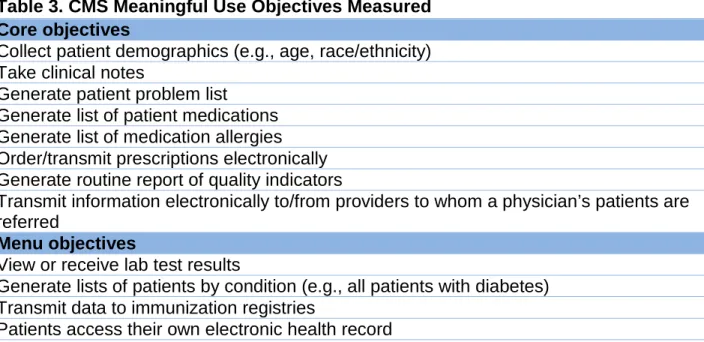
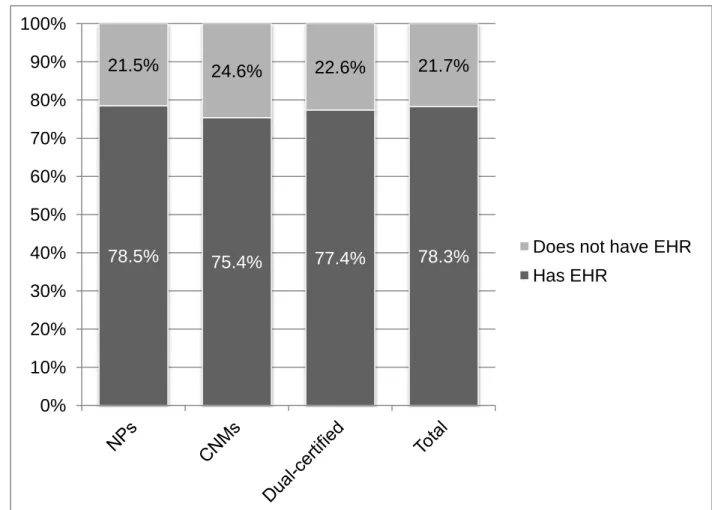
The majority of NPs and CNMs (78.3%) across all practice settings report having some form of EHR at their main practice location (Figure 1). EHRs can offer a variety of functions that enable health care providers to record and share information, and to support health care decisions. CMS has defined specific functions that are necessary to achieve meaningful use of EHRs. The survey asked about the availability of functions needed to achieve 8 of the 15 core meaningful use objectives and 4 of the 10 menu objectives established by CMS. The objectives measured are listed in Table 3. The survey also asked about the availability of 4 features not specifically enumerated among the CMS core or menu meaningful use objectives: electronic ordering of laboratory tests, electronic ordering of imaging tests, viewing written records of imaging tests, and viewing images from imaging tests.
The core objectives not included in the survey were (1) checking drug-drug and drug-allergy interactions, (2) recording and charting vital signs, (3) recording smoking status, (4)
implementing one clinical decision support rule, (5) providing patients with an electronic copy of their health records, (6) providing clinical summaries for patients at each office visit, and (7) protecting EHR data through appropriate security systems. The menu objectives not included were (1) implementing drug formulary checks, (2) sending patient reminders based on patient preference for preventive and follow-up care, (3) identifying patient-specific education
resources, (4) medication reconciliation, (5) providing summary care records for transitions of care and referrals, and (6) submitting syndromic surveillance data to public health agencies. The survey did not ask if the EHR had been certified by the Office of the National Coordinator because at the time of the survey the certification program was new and thus very few EHR systems had been certified.
15
Table 3. CMS Meaningful Use Objectives Measured Core objectives
Collect patient demographics (e.g., age, race/ethnicity) Take clinical notes
Generate patient problem list
Generate list of patient medications Generate list of medication allergies Order/transmit prescriptions electronically Generate routine report of quality indicators
Transmit information electronically to/from providers to whom a physician’s patients are referred
Menu objectives
View or receive lab test results
Generate lists of patients by condition (e.g., all patients with diabetes) Transmit data to immunization registries
16
Figure 1. NPs, CNMs, and Dual-Certified Advanced Practice Nurses with Any EHR at Their Practice*
*Note: 1,988 observations use d in calculations. Percentages do not sum to 100% due to rounding. Differences across type of APRN are not statistically significant (p=0.647).
The survey question regarding lab test results is phrased more broadly than the meaningful use standard set forth by CMS. The question asked respondents whether their EHRs have features that permit “viewing or receiving laboratory test results.” The CMS objective calls for
incorporation of clinical laboratory test results into EHRs as structured data.24 Thus, this survey may overestimate the percentage of respondents who meet the CMS meaningful use objective with regard to laboratory test results.
78.5% 75.4% 77.4% 78.3%
21.5% 24.6% 22.6% 21.7%
0% 10% 20% 30% 40% 50% 60% 70% 80% 90% 100%
Does not have EHR Has EHR
17
A minority of NPs and CNMs have EHRs that offer all 12 meaningful use objectives measured in the survey (Figure 2). Only 26.1 percent meet all 12 objectives, as compared with 30 percent of physicians surveyed earlier the same year. Over half (52.3%) of NPs and CNMs have fewer than 12 and 21.7 percent have no EHR. Advanced practice nurses who hold both NP and CNM certificates are somewhat more likely to have EHRs that meet the 12 meaningful use objectives (30.2%), although this different is not statistically significant (p=0.630).
Figure 2. NPs and CNMs with EHRs that Meet the 12 Meaningful Use Objectives
*Notes: 1,988 observations used in calculations. Percentages do not sum to 100% due to rounding. Differences across APRN types are not statistically significant (p=0.630).
25.9% 25.8% 30.2% 26.1%
52.6% 49.6%
47.1% 52.3%
21.5% 24.6%
22.6% 21.7%
0% 20% 40% 60% 80% 100% NPs
CNMs Dual-certified Total
Has an EHR that meets the 12 meaningful use objectives measured Has an EHR that does not meet the 12 meaningful use objectives
18
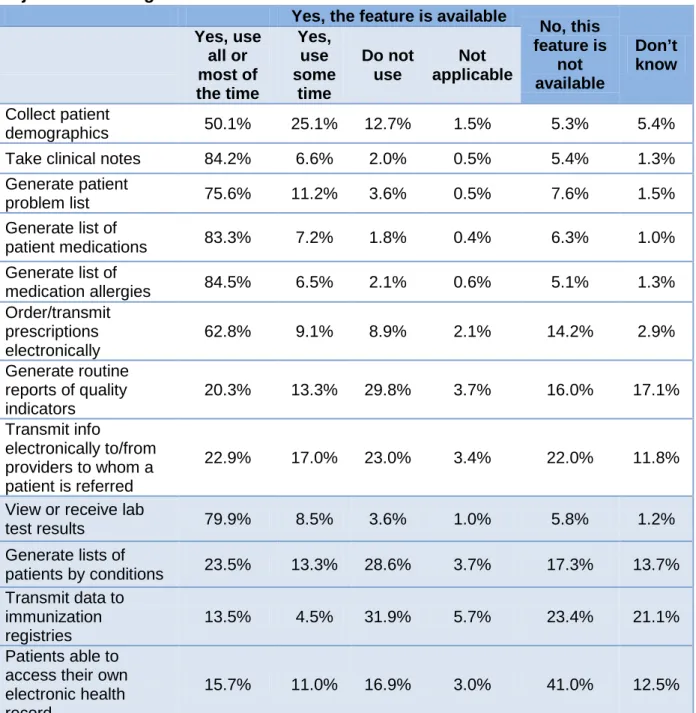
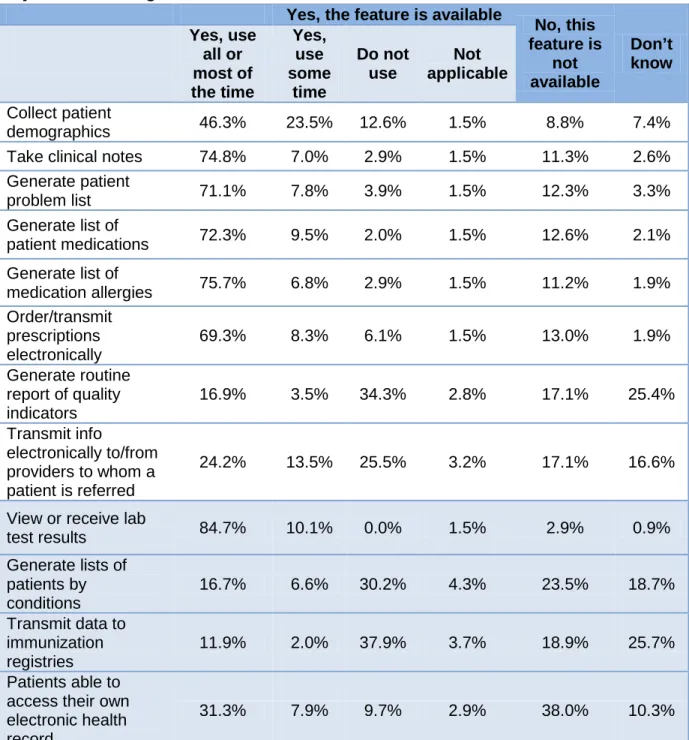
Table 4 presents NPs’ and CNMs’ reports of the extent to which they use EHR functions that fulfill core and menu meaningful use objectives; the top panel (no shading) lists core functions while the lower panel (shaded) lists menu functions. In general, NPs and CNMs are highly likely to report that they often use EHR functions that are used in patient encounters, including taking clinical notes (84.2%), generating lists of patients’ medications (83.3%) and medication allergies (84.5%), and viewing or receiving laboratory test results (79.9%). They less frequently used features that allow them to collect patient demographic data (50.1%) and order or transmit prescriptions electronically (62.8%). Fourteen percent report that their EHR does not allow them to order or transmit prescriptions electronically. A large share do not use functions that allow then to generate routine reports of quality indicators even when the feature is available (29.8%), and 16 percent do not have this function available. Twenty-two percent cannot transmit
information electronically to or from other providers when patients are referred, and 23 percent do not use this function even when it is available. Other menu meaningful use objectives are typically not available or not used by NPs and CNMs. For example, only 46.6 percent of respondents have EHRs that provide patients with access to their own health records and only 15.7 percent use this function all or most of the time.
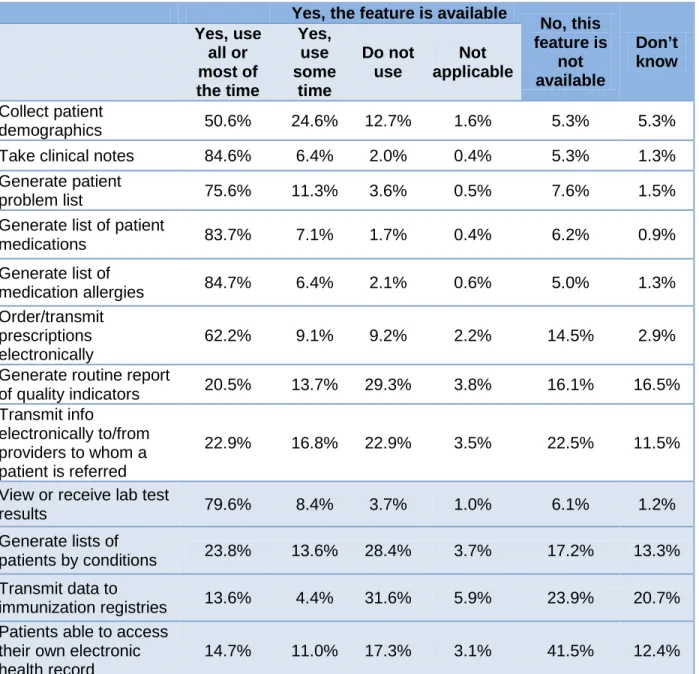
Similar patterns of EHR availability and use are found among NPs who are not dual-certified (Table 5). CNMs are less likely to frequently use most EHR functions, although that they more frequently indicate they order or transmit prescriptions most or all of the time (69.3%) (Table 6). The survey also assessed the availability of other EHR functions that may be helpful for
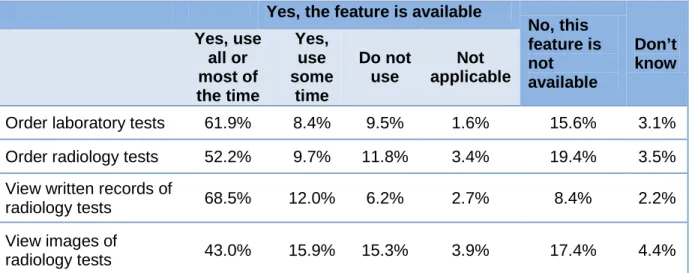
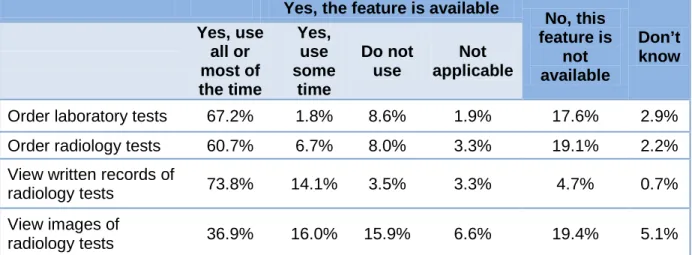
providing patient care (Tables 7-9). These functions were generally more widely available than functions associated with menu meaningful use objectives but less widely available than functions associated with core meaningful use objectives.
As may be true with physician use of EHR functions, these data do not necessarily mean that EHR functions for monitoring quality of care or exchanging information are not being used. In large practices, it is possible that other personnel, such as registered nurses and medical
assistants, are using EHRs to assess the health of patients with specific conditions or to monitor the practice’s compliance with quality indicator monitoring and reporting. Other personnel also may be exchanging information with other providers, although the feasibility of doing so depends largely on the interoperability of EHRs across health care providers.
19
Table 4. Availability of Functions to Fulfill Core and Menu Meaningful Use Objectives Among NPs and CNMs who Have an EHR
Yes, the feature is available
No, this feature is
not available
Don’t know Yes, use
all or most of the time
Yes, use some
time
Do not use
Not applicable
Collect patient
demographics 50.1% 25.1% 12.7% 1.5% 5.3% 5.4%
Take clinical notes 84.2% 6.6% 2.0% 0.5% 5.4% 1.3%
Generate patient
problem list 75.6% 11.2% 3.6% 0.5% 7.6% 1.5%
Generate list of
patient medications 83.3% 7.2% 1.8% 0.4% 6.3% 1.0%
Generate list of
medication allergies 84.5% 6.5% 2.1% 0.6% 5.1% 1.3%
Order/transmit prescriptions electronically
62.8% 9.1% 8.9% 2.1% 14.2% 2.9%
Generate routine reports of quality indicators
20.3% 13.3% 29.8% 3.7% 16.0% 17.1%
Transmit info
electronically to/from providers to whom a patient is referred
22.9% 17.0% 23.0% 3.4% 22.0% 11.8%
View or receive lab
test results 79.9% 8.5% 3.6% 1.0% 5.8% 1.2%
Generate lists of
patients by conditions 23.5% 13.3% 28.6% 3.7% 17.3% 13.7%
Transmit data to immunization registries
13.5% 4.5% 31.9% 5.7% 23.4% 21.1%
Patients able to access their own electronic health record
15.7% 11.0% 16.9% 3.0% 41.0% 12.5%
20
Table 5. Availability of Functions to Fulfill Core and Menu Meaningful Use Objectives Among NPs who Are Not Dual-Certified and Have an EHR
Yes, the feature is available
No, this feature is
not available
Don’t know Yes, use
all or most of the time
Yes, use some
time
Do not use
Not applicable
Collect patient
demographics 50.6% 24.6% 12.7% 1.6% 5.3% 5.3%
Take clinical notes 84.6% 6.4% 2.0% 0.4% 5.3% 1.3%
Generate patient
problem list 75.6% 11.3% 3.6% 0.5% 7.6% 1.5%
Generate list of patient
medications 83.7% 7.1% 1.7% 0.4% 6.2% 0.9%
Generate list of
medication allergies 84.7% 6.4% 2.1% 0.6% 5.0% 1.3%
Order/transmit prescriptions electronically
62.2% 9.1% 9.2% 2.2% 14.5% 2.9%
Generate routine report
of quality indicators 20.5% 13.7% 29.3% 3.8% 16.1% 16.5%
Transmit info
electronically to/from providers to whom a patient is referred
22.9% 16.8% 22.9% 3.5% 22.5% 11.5%
View or receive lab test
results 79.6% 8.4% 3.7% 1.0% 6.1% 1.2%
Generate lists of
patients by conditions 23.8% 13.6% 28.4% 3.7% 17.2% 13.3%
Transmit data to
immunization registries 13.6% 4.4% 31.6% 5.9% 23.9% 20.7%
Patients able to access their own electronic health record
14.7% 11.0% 17.3% 3.1% 41.5% 12.4%
21
Table 6. Availability of Functions to Fulfill Core and Menu Meaningful Use Objectives Among CNMs who Are Not Dual-Certified and Have an EHR
Yes, the feature is available
No, this feature is not available Don’t know Yes, use all or most of the time Yes, use some time Do not use Not applicable Collect patient
demographics 46.3% 23.5% 12.6% 1.5% 8.8% 7.4%
Take clinical notes 74.8% 7.0% 2.9% 1.5% 11.3% 2.6%
Generate patient
problem list 71.1% 7.8% 3.9% 1.5% 12.3% 3.3%
Generate list of
patient medications 72.3% 9.5% 2.0% 1.5% 12.6% 2.1%
Generate list of
medication allergies 75.7% 6.8% 2.9% 1.5% 11.2% 1.9%
Order/transmit prescriptions electronically
69.3% 8.3% 6.1% 1.5% 13.0% 1.9%
Generate routine report of quality indicators
16.9% 3.5% 34.3% 2.8% 17.1% 25.4%
Transmit info
electronically to/from providers to whom a patient is referred
24.2% 13.5% 25.5% 3.2% 17.1% 16.6%
View or receive lab
test results 84.7% 10.1% 0.0% 1.5% 2.9% 0.9%
Generate lists of patients by conditions
16.7% 6.6% 30.2% 4.3% 23.5% 18.7%
Transmit data to immunization registries
11.9% 2.0% 37.9% 3.7% 18.9% 25.7%
Patients able to access their own electronic health record
31.3% 7.9% 9.7% 2.9% 38.0% 10.3%
22
Table 7. Availability of Other EHR Functions Among NPs and CNMs Who Have an EHR
Yes, the feature is available
No, this feature is not available
Don’t know Yes, use
all or most of the time
Yes, use some
time
Do not use
Not applicable
Order laboratory tests 61.9% 8.4% 9.5% 1.6% 15.6% 3.1%
Order radiology tests 52.2% 9.7% 11.8% 3.4% 19.4% 3.5%
View written records of
radiology tests 68.5% 12.0% 6.2% 2.7% 8.4% 2.2%
View images of
radiology tests 43.0% 15.9% 15.3% 3.9% 17.4% 4.4%
*Notes: 1,552 observations used in calculations. Percentages do not sum to 100% due to rounding.
Table 8. Availability of Other EHR Functions Among NPs Who Are Not Dual-Certified and Have an EHR
Yes, the feature is available
No, this feature is
not available
Don’t know Yes, use
all or most of the time
Yes, use some
time
Do not use
Not applicable
Order laboratory tests 61.2% 8.7% 9.5% 1.7% 15.9% 3.0%
Order radiology tests 51.5% 9.6% 12.1% 3.5% 19.8% 3.5%
View written records of
radiology tests 68.4% 11.8% 6.4% 2.8% 8.5% 2.3%
View images of
radiology tests 43.5% 15.4% 15.3% 3.9% 17.4% 4.4%
23
Table 9. Availability of Other EHR Functions Among CNMs Who Are Not Dual-Certified and Have an EHR
Yes, the feature is available
No, this feature is
not available
Don’t know Yes, use
all or most of the time
Yes, use some
time
Do not use
Not applicable
Order laboratory tests 67.2% 1.8% 8.6% 1.9% 17.6% 2.9%
Order radiology tests 60.7% 6.7% 8.0% 3.3% 19.1% 2.2%
View written records of
radiology tests 73.8% 14.1% 3.5% 3.3% 4.7% 0.7%
View images of
radiology tests 36.9% 16.0% 15.9% 6.6% 19.4% 5.1%
*Notes: 121 observations used in calculations. Percentages do not sum to 100% due to rounding.
Satisfaction with and perceived functionality of EHR systems
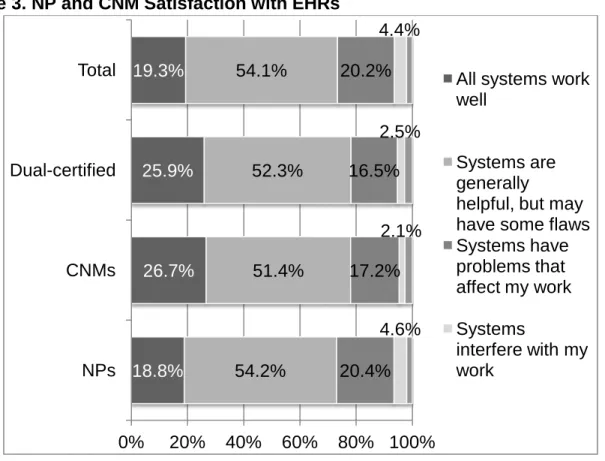
NPs and CNMs were asked about their experience with their EHR; specifically, they were asked whether their EHR worked well, or interfered with their work. As seen in Figure 3, only 19.3 percent reported that all EHR systems worked well. NPs were less likely to report that all systems worked well (18.8%) than CNMs (26.7%), but this difference was not statistically significant. Small shares indicated that their EHR systems interfered with their work (4.4% overall), but 20.2 percent indicated that their system had problems that affected their work. NPs were more likely to report problems than were CNMs (20.4% vs. 17.2%), but this difference was not statistically significant (p=0.205).
NPs and CNMs who use EHR systems that meet the 12 meaningful use objectives identified in the survey were significantly more likely to be satisfied than those whose systems did not meet the 12 objectives (p<0.001) (Table 10). Of those whose systems meet the 12 objectives, 30.7 percent reported that all their HIT systems worked well, in contrast to 13.9 percent of those whose systems did not meet all 12 objectives. Those whose systems did not meet the 12
objectives were more likely to indicate their systems had problems that affect their work (23.8% vs. 13.5%) or interfere with their work (5.5% vs. 2.3%). These differences in perceived
functionality may reflect both user comfort with more-developed EHRs as well as fundamental problems in less-complete EHRs
24
Figure 3. NP and CNM Satisfaction with EHRs
*Notes: 1,557 observations used in calculations. Percentages do not sum to 100% due to rounding. Differences across types of APRNs are not statistically significant (p=0.205).
Table 10. NP and CNM Satisfaction with EHRs, by Ability to Meet All 12 Meaningful Use Criteria
Experience with EHR
NPs and CNMs with EHRs that do not meet the 12 meaningful use objectives
NPs and CNMs with EHRs that meet the 12
meaningful use objectives
All systems work well 13.9% 30.7%
Systems are generally helpful, but
may have some flaws 55.5% 53.4%
Systems have problems that affect
my work 23.8% 13.5%
Systems interfere with my work 5.5% 2.3%
*Notes: 1,551 observations used in calculations. Percentages do not sum to 100% due to rounding. Differences by meeting meaningful use objectives were statistically significant (p<0.001).
18.8% 26.7% 25.9% 19.3%
54.2% 51.4% 52.3% 54.1%
20.4% 17.2% 16.5% 20.2%
4.6% 2.1% 2.5% 4.4%
0% 20% 40% 60% 80% 100% NPs
CNMs Dual-certified
Total All systems work
well
Systems are generally
helpful, but may have some flaws Systems have problems that affect my work Systems
interfere with my work
25
Factors Associated with EHR Use
The survey responses were analyzed to understand the association between NPs’ and CNMs’ practice settings, roles, and EHR use.
Practice Type
Advanced practice nurses work in a variety of settings. Figure 4 presents the distribution of NPs and CNMs across settings. The largest share of NPs and CNMs – 20.2 percent – works in
practices with fewer than 10 providers. Nearly 15 percent work in community health centers or other public clinics. Hospital-based outpatient clinics and hospital-based acute, critical care, and emergency room units each employ about 12 percent of NPs and CNMs. Kaiser Permanente is the reported principal practice location of 11.2 percent.
Figure 4. Distribution of NPs and CNMs Across Practice Types
*Notes: 1,995 observations used in the calculations.
The type of organization in which a NP or CNM practices is a strong predictor of whether he or she has an EHR of any sort at the main practice location. As Figure 5 illustrates, NPs and CNMs who work in the Kaiser Permanente system have the highest rate of EHR availability (100%). Those who are employed by the Department of Veterans Affairs (VA) or the military also report very high rates of EHR availability (96.8%), as do those in large group practices (93.2%). These findings reflect the substantial investments that the military, VA, and Kaiser Permanente have made in EHRs over the past decade. The lowest rates of EHR availability are among NPs and
CHC/public clinic 14.9%
Solo or small practice
20.2% Mid-size
practice 5.0% Large practice
2.0%
Kaiser Permanente
11.2% VA/military
5.4%
Hospital-based outpatient clinic
11.9%
Hospital acute/critical/ER
11.7% Academic
4.5%
Student health 2.3%
26
CNMs in solo or small practices (59.6%), student health centers (65.2%), and community/public health clinics (70.1%).
Figure 5. EHR Availability by Practice Type, All NPs and CNMs
*Notes: 1,985 observations used in the calculations.
NPs and CNMs who work in Kaiser Permanente and large group practices are more likely to have an EHR that meets the 12 meaningful use objectives measured than those working in other settings (Figure 6). Nearly two-thirds of Kaiser Permanente NPs and CNMs report having EHRs that can meet the 12 meaningful use criteria. In contrast, 14 percent of NPs and CNMs in
community health centers and public clinics, 14.1 percent in student health centers, and 14.6 percent in solo or small group practices report having EHRs that meet the 12 meaningful use criteria. These differences across settings are statistically significant (p<0.001).
78.3%
70.1%
59.6%
77.6%
93.2%
100.0%
96.8%
82.5% 87.1% 80.3%
65.2%
0% 10% 20% 30% 40% 50% 60% 70% 80% 90% 100%
27
Figure 6. EHRs Meeting Meaningful Use Objectives by Practice Type, All NPs and CNMs
*Notes: 1,985 observations used in the calculations. Differences across settings are statistically significant (p<0.001).
Urban vs. Rural Practice
EHR availability does not differ substantially between NPs and CNMs who practice in urban areas versus rural areas (Table 11). Of the NPs and CNMs in the sample, 88.2 percent practice in an urban setting and 11.8 practice in a rural setting. (The criteria used to determine whether providers’ practices in an urban or a rural area are described in Appendix A.) Urban NPs and CNMs are slightly more likely to have an EHR at their main practice site than those who practice in rural settings (78.6% vs. 73.9%), but this difference is not statistically significant (p=0.062).
26.1%
14.0% 14.6%
26.7%
57.5% 66.2%
41.7%
21.1% 19.6% 27.1% 14.1% 52.2%
56.1%
45.1%
50.9%
35.7%
33.8%
55.2%
61.4% 67.5% 53.2%
51.1%
21.7%
29.9%
40.3%
22.4%
6.8%
0.0% 3.2%
17.6% 12.9% 19.7%
34.8%
0% 10% 20% 30% 40% 50% 60% 70% 80% 90% 100%
28
Table 11. EHR Availability and Meaningful Use Objectives, Urban vs. Rural NPs and CNMs
Geographic area
Has an EHR that meets meaningful use
objectives
Has an EHR that does not meet meaningful use
objectives
Does not have an EHR
Urban 26.0% 52.6% 21.4%
Rural 22.6% 51.3% 26.1%
*Notes: 1,891 observations used in calculations. Differences by urban/rural location are not statistically significant (p=0.062).
Intentions Regarding EHR Incentive Payments
NPs and CNMs were asked to indicate their plans to apply for Medicaid or Medicare incentive payments for EHR use (Figure 7). Note that NPs and CNMs are not individually eligible to apply for Medicare incentive payments, but their practice group or organization may apply. The
majority of respondents (55.1%) indicated that they did not know if their practice group intended to apply, and many wrote in the comment section of the survey that they were not in a position to have input into the decision or know what the decision would be. More than one-fourth (27.1%) intend to apply to either the Medicaid or Medicare incentive payment programs. Fifteen percent intend to apply but are not certain whether their group will apply for Medicare or Medicaid incentive payments. Eight percent intend to apply for Medicare incentive payments, and 3.6 percent plan to apply for Medicaid incentive payments.
The responses to the survey suggest that many NPs and CNMs were not familiar with the eligibility rules for Medicaid and Medicare EHR incentive payments at the time they completed the survey (Table 12). About 3 percent of NPs and CNMs who could be eligible for Medicaid incentive payments based on their payer mix, practice setting, and practice type do not believe they are eligible, and 8.2 percent do not plan to apply or need more information. Conversely, 1.9 percent of respondents who do not appear to be eligible for Medicaid incentive payments plan to apply for them. These findings suggest that ongoing efforts are needed to educate NPs and CNMs about the eligibility criteria for incentive payments and to encourage potentially eligible NPs and CNMs to apply.
29
Figure 7. Plans Regarding EHR Incentive Payments
*Notes: 1.588 observations used in calculations. Differences across APRN types are statistically significant (p=0.006).
Table 12. Plans Regarding EHR Incentive Payments, by Eligibility
Plans regarding EHR incentive payments Medicaid incentive payment eligibility
Eligible Not eligible Intends to apply but uncertain which 28.8% 12.1%
Intends to apply to Medicare 2.6% 9.5%
Intends to apply to Medicaid 10.5% 1.9%
Do not plan to apply/ need more information 8.2% 8.6%
Ineligible 3.1% 10.7%
Do not know 46.8% 57.1%
*Notes: 1,588 observations used in calculations. Differences by incentive payment eligibility are statistically significant (p<0.001).
55.1% 54.7% 63.1% 58.5%
8.5% 8.4%
4.9% 17.7%
9.2% 9.3% 6.7%
7.4% 15.4% 15.5% 15.0%
11.5%
8.1% 8.6% 2.4% 0.0%
3.6% 3.4%
7.9% 4.9%
0% 10% 20% 30% 40% 50% 60% 70% 80% 90% 100%
Intends to apply to Medi-Cal
Intends to apply to Medicare
Intends to apply but uncertain which Ineligible
Do not plan to apply/ need more information Do not know
30
Findings for Respondents Who Appear Eligible for Medicaid EHR Incentive Payments
Number and Percent Eligible.
One goal of this project was to estimate the number of NPs and CNMs with active California licenses who may be eligible for Medicaid EHR incentive payments.As discussed in the Introduction, eligibility for Medicaid incentive payments is determined by the health care provider setting and the percentage of the provider’s patients enrolled in Medi-Cal. To estimate the number and percentage of California NPs and CNMs who could be eligible for Medicaid EHR incentive payments, respondents who spend less than 90 percent of their patient care hours in hospital settings were identified. They were considered potentially eligible for Medicaid incentive payments if a minimum of 25 percent of their patients are enrolled in Medi-Cal. NPs and CNMs also were considered eligible if they practiced mainly in a Federally Qualified Health Center or a Rural Health Clinic and served a minimum of 25 percent of patients who are
uninsured, enrolled in Healthy Families, and/or enrolled in Medi-Cal.
According to this survey, 2,506 NPs and CNMs could be eligible for Medicaid EHR incentive payments based on payer mix, practice setting, and practice type. These NPs and CNMs constitute approximately 21.8 percent of the 11,497 NPs and CNMs who were employed in advanced practice in California.
Characteristics
NPs and CNMs who could be eligible for Medicaid incentive payments based on payer mix, practice setting, and practice type differ from the general sample in several important respects: most notably, the distribution of NPs and CNMs across practice types varies. As illustrated in Table 13, NPs and CNMs who appear eligible for Medicaid EHR incentive payments are much more likely to practice in community/public clinics (65.8% being eligible) as compared with the next highest share of fewer than 25 percent in student health centers. None practice in Kaiser Permanente’s medical group, which has few Medi-Cal enrollees. The high percentage of NPs and CNMs eligible for Medicaid incentive payments who work in community health centers and public clinics is likely due to the mission of these clinics. These clinics serve low-income
individuals including those who are uninsured or enrolled in Medi-Cal, Healthy Families, or other public programs.
NPs and CNMs who could be eligible for Medicaid EHR incentive payments are also more likely to practice in rural areas than those who do not appear to be eligible (32.9% versus 20.2%, p<0.001). This finding may stem from differences in Medi-Cal enrollment in rural and urban areas of California. Many rural areas within the state have higher rates of enrollment in Medi-Cal than urban and suburban areas, which may lead providers in those rural areas to provide care to greater numbers of Medi-Cal enrollees than their providers in urban areas.
31
Table 13. Number and Percentage of NPs and CNMs Eligible for Medicaid Incentive Payments, by Type of Practice
Practice type
Number eligible for Medicaid Incentive
Payments
Percent eligible for Medicaid incentive
payments
Community health ctr/ public clinic 1,131 65.8%
Solo or small practice 420 18.1%
Mid-sized practice 77 13.4%
Large group practice 33 14.4%
Kaiser Permanente 32 2.5%
Hospital-based outpatient clinic 0 0.0%
Student health center 66 24.3%
*Notes: 1,995 observations used in calculations. Percentages do not sum to 100% for respondents eligible for Medicaid incentive payments due to rounding. Differences across setting types are statistically significant (p<0.001).
EHR Availability
Table 14 compares EHR availability of NPs and CNMs who could be eligible for Medicaid EHR incentive payments based on payer mix, practice setting, and practice type to that of NPs and CNMs who do not appear to be eligible. Differences between the two groups are notable and statistically significant (p<0.001). NPs and CNMs who could be eligible for Medicaid incentive payments are less likely to have an EHR at their main practice sites than those who do not appear to be eligible (68.7% vs. 81.0%). They are also somewhat less likely to have EHRs that meet all 12 of the meaningful use objectives measured (13.8% vs. 29.5%).
Table 14. EHR Availability Among NPs and CNMs Who Appear Eligible vs. Not Eligible for Medicaid EHR Incentive Payments
EHR availability at main practice location
Respondents eligible for Medicaid EHR incentive
payments
Respondents not eligible for Medicaid EHR incentive payments
Any EHR 68.7% 81.0%
EHR that can meet 12
meaningful use objectives± 13.8% 29.5%
*Notes: 1,988 responses used in calculations. Differences by eligibility status are statistically significant (p<0.001).
32
Rates of EHR availability among NPs and CNMs who could be eligible for Medicaid EHR incentive payments vary across practice settings. As Table 15 illustrates, NPs and CNMs who could be eligible for Medicaid incentive payments and work for large group practices are more likely to have some sort of EHR at their main practice location than those in other settings. Of the NPs and CNMs who are eligible for Medicaid EHR incentive payments, 12.5 percent of those in community health centers and public clinics have an EHR that can meet the 12 meaningful use criteria, while 52.4 percent of those in other large group practices do.
Table 15. EHR Availability by Practice Type, Among Providers Eligible for Medicaid Incentive Payments*
Practice type Any EHR at main
practice location
EHR at main practice location that can meet
meaningful use criteria
Community health center/
public clinic 68.7% 12.5%
Solo or small practice 49.6% 8.0%
Mid-sized practice 59.4% 11.3%
Large group practice 100% 52.4%
*Notes: 468 responses used in calculations. Sample sizes too small to report for other practice settings.
Thematic Analysis of Nurses’ Comments
Narrative responses were invited in the comments section at the end of the 2011 Advanced Practice Registered Nurses & Health Information Technology Survey. It should be kept in mind that the comments made by respondents may not reflect the opinions of the whole sample of surveyed APRN nurses, let alone the whole of California’s advanced nursing
workforce. Nonetheless, the fact that the expressed issues, opinions and concerns were shared by a considerable number of the sampled nurses suggests that these are important concerns and issues about the health information systems.
This analysis utilizes a set of themes identified from the range of comments provided by the respondents: (1) respondents’ experiences with health information technology systems, (2) the challenges of learning to use these systems, (3) opinions on the types of systems currently in use, and (4) suggestions on how the health information technology systems might be improved upon.
33
Theme 1: Respondents’ Experiences with HIT Systems
A common theme among the narrative comments was the impact of implementing new HIT and EHR systems, and nurses’ different reactions to the change.
Positive Experiences with EHRs
Many of the respondents responded positively to the implementation of EHRs in their workplace. Positive responses were linked with increased accuracy of charting, ease of use, efficiency and an improvement in the quality of patient care. Note that some respondents refer to EHRs as “electronic medical records” or EMRs.
I’ve come to appreciate the accuracy and ease of use. Remembering issues with reading handwriting, missing charts - I see that EMR are great for patient safety. I am able to legibly document my visit with patient. And more importantly am able to read the previous MD/NP/PA notes! Kudos to EMR!
Have been using electronic medical records exclusively for 3 years and although I am not a “computer person” feel that the quality of patient care has increased significantly with follow up appointments. There is no lag time between being seen for example in the ER [emergency room] and having the ER document available during follow up Primary Care or specialist visit.
Mixed Experiences with EHRs
Not all of the respondents had completely positive opinions of the EHR systems though they acknowledged the benefits of EHR systems. Some respondents noted an increase in stress associated with the having to learn how to use the EHRs, as well as an increase in the amount of time necessary to use the EHR.
EMR has been absolutely the best thing we could do for our patients. It allows for me to manage pts much better than paper charts. However the pt accessibility to me via email has been overwhelming as pts send multiple emails per day.
It was stressful learning a new application when first started electronic medical records/charting but now so beneficial to our patients care. Kaiser did a great job in supporting our training.
While it has been challenging learning our computer medical record system it has made taking care of my patients so much easier and better!
The number of items requiring documentation every encounter is HUGE, and some are quite peripheral to the focus of the encounter; this plus HIPPA, takes more time than paper charts. There are positives - can read handwriting, but still long way to go to be reasonable & help us see the # of pts we need to see!
Negative Experiences with EHRs
Just as many expressed their support for their EHR, many respondents also expressed their dissatisfaction with the EHR, which they felt inhibited their ability to provide quality care, led to
34
problems with continuity between departments and institutions, and required more time to use than traditional paper systems.
Very time consuming and many steps to order anything: labs, xrays, medications. Before electronic records I always had a lunch. Now with electronic records, I work thru lunch and an hour before work hours.
I developed carpal tunnel syndrome with 4 mo’s of using the electronic medical record. The primary advantage is billing. Our system decreases communication and slows me down. It’s difficult for PCP’s and the admitting teams to understand what happened in the ER visit due to the format. The medical staff looks at the computer instead of working as a team to formulate treatment plans.
Current EMR system impairs productivity, adds to medication errors especially with corporate pharmacies, wastes paper, reduces accuracy of
subjective/objective data due to preworded point and click boxes, and does not coordinate with other practices’ EMR systems.
EHR ‘s were supposed to make us go “paperless” - it’s not true and EHR’s are slower and more cumbersome than paper!! I dislike our system immensely!!
Among those respondents who were displeased with EHRs, many noted that the system distanced them from their patients, and prevented them from providing patients with their full attention.
I feel I lose the “pts [patients] voice”, sometimes don’t list in a check box. It can be a barrier between me and my pt.
I retired 3 years ago due to the way in which computerized medical records interfered with the patient contact.
Most of my work time is spent on charting rather than patients, although I am a floor nurse. I often feel my patents’ care is compromised by the amount of computer charting.
Theme 2: Challenges of Learning to Use HIT System
Many of the respondents commented on the challenges of switching from paper charting to an electronic system. Suggestions from the survey respondents regarding this transition period included the need for training and HIT support to help nurses adjust to the new systems. Need for Training
The narrative responses from the Survey strongly expressed the need to provide nurses with strong HIT training in order to effectively use the EHR. Many respondents noted experiencing stress and dissatisfaction because of lack of training.
As an older provider I do have some concerns about changing to EHR but the county is setting up training programs and will decrease our pt #s on the schedule during the transition to EHR.
35
This is a difficult transition but will work eventually. Unfortunately, it seems insufficient though often invested at the outset of the process - for example: Not enough time dedicated to checking out EMR systems to find a quality product suitable to OB [obstetrics] - our system very buggy when they tried to customize it. Insufficient training time! - Leads to frustration, increase time wasted.
We need more training on how to utilize the EMR to its max potential that is why it takes longer to chart and search dx, etc. However we also need more funding for this training which is difficult to come by in a non-profit clinic.
Theme 3: Systems Currently in Use
There were many comments from the respondents on the systems they were currently using. Comments covered a wide range of issues including the lack of input on selecting HIT systems, problematic system features, continuity issues across systems, stability complaints, and benefits of the systems.
Lack of Input on Selecting Systems
Many respondents indicated displeasure at having been excluded from the decision-making process for selecting HIT systems. As a result, comments on this topic were focused on how systems failed to meet their needs.
Management chose system, not physician - owners. Management bought laptops that are not compatible so system at workstation only, which is cumbersome. I am in favor of EHR however the program that our organization chose was selected because of its “meaningful use” built into the system. It is very
disorganized, dysfunctional & contributes additional stress to the job. NOT user friendly, it is cumbersome to use & was certainly not designed by clinicians. Should be designed with the complete involvement of the users, RN, NP, MD. Should always include the help of the practitioner and their ability to
communicate specific and unique assessments of the chart to improve communication with other practitioners.
System Features
Contributing to the frustration of nurses were problematic system features that prevented nurses from efficiently and effectively using the EHR.
Medical information systems when not well-designed interfere with effective nursing practice.
Notes too long - and not true (pre made templates). Lots of copy and paste. Often documentation never really mapped.
Although the theory is good, meanful (sic, meaningful) use is horrible. I spend more time charting pure crap so that we can fulfill meaningful use than I care to admit ie - 80 y/o that has never smoked, to “encourage them to continue to not
36
smoke” vs. spending that same time educating that 70 y/o about the risks of falls & accidents & how to prevent that!
Continuity Problems
Respondents noted continuity problems associated with either having multiple systems in place within one organization, and/or different systems between organizations.
Greatly simplifies patient record transfers from area to area; but not yet able to instantly obtain records not generated in So. CA; still rely on faxes…
Electronic system for charting. Many systems do not interface or talk to each other. Problematic when each hospital is doing something different. Most programs have limitations & problems. Gross restrictions for students and teaching.
Multiple electronic charting systems used w/in depts. of hospital - need major work to coordinate these systems to talk to one another easily.
Stability
Many noted the crucial need for strong IT support in order to combat the stability issues that greatly interfered with the nurses’ ability to effectively use the EHR.
We don’t typically keep a paper record, so when the system crashed we are compromised. We need to print out office visits and health care summaries and file in paper chart.
Takes too long. Too many bugs still to work out, hard to read vs. paper. When network is down - problem!!
Our computers “freeze” and it incapacitates our ability to safely treat our
patients - without a chart sometimes we are unaware of allergies or past medical history that is vital to our treatment.
Despite advances in technology, there is fragmentation due to incompatible, non-interphased, costly system upgrades & systems that don’t speak to each other & then you have down times & crashes - all these make it difficult to provide fluid, seamless care.
We need robust EMR & IT to provide adequate care for pts!
Ongoing tech support 24 hr, 7d/week very necessary for EMR to work safely. After 2-3 years since initiating it, I love it. I love our EMR system - needed: nationwide ability to coordinate EMRs.
Benefits of the Systems
Despite the dissatisfaction that some felt towards their EHR, some respondents also voiced their support for EHRs, pointing specifically to the increased accuracy, integration and patient care coordination that resulted.