International Journal of Marketing and Management Research Vol. 6, Issue 3, March 2015, Impact Factor: 3.544 ISSN: (2229-6883)
www.skirec.org Email Id: [email protected]
A CRITICAL EVALUATION OF CHALLENGES & PROBLEMS FACED BY RETAILING IN INDIA
REKHA CHOUDHARY1, DR. PARVEEN KUKKAR2
Department of Commerce
1,2
OPJS University, Churu (Rajasthan), India
ABSTRACT
The retail area has assumed a phenomenal part throughout the world in increasing productivity of
customer goods and administrations. The retail business in India has approached as a standout amongst
the most dynamic and quick paced industries with several players entering the market. The Indian retail
industry is the biggest among every one of the industries, representing more than 10 per cent of the
country’s GDP and around 8 per cent of the employment. The principle challenge facing the sorted out
division is the competition from unorganized segment. The composed retail fragment is for the most part
dominated by the apparel and material portion took after by the nourishment, grocery and refreshments
sections. The changing consumption design is releasing open doors for retailing development in Indian
urban range. This must be come to the Indian country for a practical retailing in India. This paper gives
point by point data about the development of retailing industry in India. It likewise highlights the
difficulties faced by the business in not so distant future.
KEYWORDS: Retailing, Entrepreneur, Foreign Direct Investment, Gross Domestic Product, Domestic
Drivers.
1. INTRODUCTION
The retail sector has assumed a phenomenal
part throughout the world in increasing
productivity of customer merchandise and
enterprises. The retail business in India has
approached as a standout amongst the most
dynamic and quick paced industries with a few
players entering the market. It is likewise the
second biggest industry in US as far as number
of employees and establishments. The Indian
retail industry is the biggest among every one of
the industries, representing more than 10 per
cent of the country’s GDP and around 8 per
cent of the work. As per a gauge unorganized
retailing sector has 97 per cent nearness, while,
composed retailing accounts just three per
cent. The principle challenge facing the
composed sector is the competition from
unorganized sector. Unorganized retailing has
been there in India for quite a long time, these
are named as mother pop stores. The
fundamental advantage in unorganized retailing
is customer nature that keeps running from
generation to generation. It is a minimal effort
structure; they are generally worked by owners,
have low land and work costs and have low
expenses to pay.
International Journal of Marketing and Management Research Vol. 6, Issue 3, March 2015, Impact Factor: 3.544 ISSN: (2229-6883)
www.skirec.org Email Id: [email protected]
The specific objectives of this paper are: to
understand the consumption of retail client, to
think about the emerging patterns in Indian
retailing and to look at the difficulties and
opportunities for sorted out retailing in India.
3. RESEARCH METHODOLOGY
This paper is the result of a theoretical report
on retailing in India with special reference to
composed retailing in India. To complete this,
different books, journals and periodicals have
been counseled, reports of different
organizations like A.T. Kearney Report, Ernst
and Young, Indian Council for Research on
International Economic Relations (ICRIER), KSA
Technophobe have been considered. Internet
looking has likewise been improved the
situation the purpose.
4. RETAIL IN INDIA – HISTORICAL PERSPECTIVE
The Indian retail industry is isolated into sorted
out and unorganized sectors. Sorted out
retailing alludes to trading activities undertaken
by authorized retailers, that is, the individuals
who are enrolled for deals charge, salary assess,
etc. These incorporate the corporate-upheld
hypermarkets and retail chains, and
furthermore the privately possessed vast retail
businesses. Unorganized retailing, then again,
alludes to the traditional organizations of
minimal effort retailing, for example, the
nearby kirana shops, proprietor kept an eye on
general stores, paan/beedi shops, convenience
stores, pushcart and asphalt vendors, etc.
In the beginning there were just kirana stores
called Mom and Pop Stores, the Friendly
neighborhood stores offering each day needs.
In the 1980s manufacturer’s retail chains like
DCM, Gwalior Suiting’s, Bombay Dying, Calico,
Titan and so forth began showing up in metros
and residential communities. Multi brand
retailers came into the picture in the 1990s. In
the nourishment and FMCG segments retailers
like Food world, Nilgris are a portion of the
examples. In music section Planet M, Music
world and in books Crossword and
Fountainhead are some others. Malls started to
be established from 1995 onwards. A unique
case was the foundation of edge free markets in
Kerala. The 21st century saw the emergence of
general stores and hyper markets. Enormous
players like Reliance, Bharti, Tatas, HLL, and ITC
and so on are going into the composed retail
section. The international retail fat cats are
waiting in the wings as the present FDI
guidelines don't enable them to claim retail
outlets in the country.
The retail area has gradually undergone
considerable changes in its shape since 1991.
The significant move has been the emergence
of an organized part inside the retail industry.
Numerous Indian entrepreneurs have taken an
unmistakable fascination in retailing in the
course of the most recent decade and have
International Journal of Marketing and Management Research Vol. 6, Issue 3, March 2015, Impact Factor: 3.544 ISSN: (2229-6883)
www.skirec.org Email Id: [email protected]
Alongside these domestic advancements, there
has been a simultaneous consideration being
given to the Indian retail showcase by
international retail mammoths, for the most
part in view of the sheer size of the market. The
most imperative improvement in this context
has been the tie up of Wal-bazaar, America’s
largest retail chain with Bharti, the Indian
telecom monster which is probably going to be
concertized in June, 2009 India’s modern retail
business at present records for just around 5 for
every penny of the country’s yearly retail
business. The modern retail business will make
around 1.6 million occupations in the following
five years Modern retailers won't just make
business openings yet in addition would help
raise India’s general economic productivity and
could likewise result in lowering prices of goods.
According to CPAS ponder the unorganized
retail division of little and medium retailers
utilize more than 40 million. There are 11 retail
outlets for each 1000 people in India. This
reality proposes a considerable component of
“forced employment” in this area. Just 4 per
cent of India’s 11 million retail outlets have
floor territories in abundance of 500 sq ft. This
ought to dissipate any picture of any
preponderance of substantial scale retailing we
may have inferred to the measure of the old
established downtown retail outlets and in the
new rural shopping centers. Retail in India is for
the most part the millions of little shops with
puce and semi-puce premises, and millions
more on pushcarts and asphalts.
Opening entryways for FDI in retailing, the
changing consumer needs, ascend in youthful
generation population and working women
population are the essential quality verticals of
India’s organized retail fragment. These are
come about, in the Indian financial framework
with an exponential increment of atomic
families searching for a comfortable way of life
.IT and ITES blast alongside the spread of BPO in
level II urban areas of India has significantly
inspired the phenomena called experience
promoting. Organized retail came to fruition in
India through different stages, the segment was
required to perform gloriously being financial
prosperity has encouraged numerous Indian
and Foreign players to combine.
5. IMPACT OF ORGANIZED RETAILING ON THE
UNORGANIZED SECTOR
According to an examination on impact of
organized retailing on the unorganized part, the
genuine GDP is expected to develop at 8-10 for
every penny for each annum in the following
five years. Subsequently, the consuming class
with yearly family unit earnings above Rs.
90,000 is expected to ascend from around 370
million out of 2006-07 to 620 million of every
2011-12. Thus, the retail business in India is
estimated to develop at 13 for every penny
International Journal of Marketing and Management Research Vol. 6, Issue 3, March 2015, Impact Factor: 3.544 ISSN: (2229-6883)
www.skirec.org Email Id: [email protected]
The unorganized retail area is expected to
develop at around 10 for every penny for
every annum.
Given the relatively powerless financial
condition of unorganized retailers, and the
physical space limitations on their extension
prospects, this segment alone won't have
the capacity to take care of the developing
demand for retail.
Henceforth, organized retail which now
constitutes a little four per cent of
aggregate retail division is probably going to
develop at a substantially speedier pace of
45-50 for every penny for each annum and
quadruple its offer in complete retail
exchange to 16 for every penny by 2011-12.
This represents a positive aggregate
amusement in which both unorganized and
organized retail coincide as well as develop
substantially in estimate.
The majority of unorganized retailers
surveyed in this investigation,
demonstrated their preference to proceed
in the business and contend instead of exit.
In view of the discoveries of AT Kearney
investigate retail in India: Getting organized
to drive growth, there are 10 larger issues
that most retailers see as significant
obstacles to growth and the associated
escalation in "consumerism". These issues
are:
Underdeveloped Supply Chain Capabilities
Lacking Utilities
IT Infrastructure Hurdles
Supply Base (Vendor) Hurdles
Lacking Human Resources
Limited Consumer Insights
Tax assessment Challenges
Land Hurdles
Insufficient Government Incentives
Approach Related Hurdles
India’s GDP remains at the trillion dollar stamp,
and with a sustained growth rate of more than
8 per cent, it is confidently ready to be the main
focal point of global economy by 2020. Gross
domestic product of India is expected to be
around US$ 1.1 trillion by 2010 and would
achieve a stunning US$ 37 trillion by 2050 which
would make it the third largest economy on the
planet. This would imply that India’s GDP will
expand near US$ 1 trillion on an average
year-on-year throughout the following 40 years. This
quick GDP growth is driving towards Indian
consumerism. Indian buyers today are more
certain and willing to overdo it inferable from
increased pay levels. India's customer market
will be the world's fifth largest (from twelfth) by
2025 and India's middle class will swell by more
than ten times from its present size of 50
million to 583 million people by 2025.
The high sustained growth of Indian economy in
International Journal of Marketing and Management Research Vol. 6, Issue 3, March 2015, Impact Factor: 3.544 ISSN: (2229-6883)
www.skirec.org Email Id: [email protected]
the retail division. The division is on a high
growth direction and is expected to develop by
more than 27 per cent throughout the following
5 years.
6. TRENDS IN INDIAN ORGANIZED RETAILING
The present estimation of the Indian retail
advertise is estimated at $300 billion and the
yearly development rate is 5.7 per cent .The
organized retail fragment is for the most part
overwhelmed by the attire and material section
took after by the sustenance, basic need and
beverages portions. The sustenance, basic need
and beverages section rules the whole retail
showcase (both organized and unorganized),
however its penetration in the organized retail
side is relatively low. The emergence of
different sections like home stylistic theme and
furnishing, footwear, gem dealer, consumer
sturdy and electronics and wellbeing,
magnificence and pharmaceuticals to give some
examples, has been the highlight of this decade.
7. TARGET MARKET OF THE ORGANIZED
RETAILER
In 2008, India’s working population (in the age
gathering of 15-49 years) constituted around
53 per cent of the population as contrasted
and 48.6 per cent in UK, 49 for every penny in
US, and 53 for every penny in Russia. In
addition, this population is more powerful than
the past generations in light of the fact that
their consumption is driven by needs as
opposed to needs. Subsequently, the
organized retailing, which flourishes with
lifestyle products, is required to get a lift in
view of the young population by 2020. The
overview led by D&B uncovered that a
majority of the companies take into account
age gathering of 25-40, trailed by 41 per cent
of the companies catering to the age gathering
of 18-25.
8. GROWTH DRIVERS OF INDIAN ORGANIZED
RETAILING
When we carefully take a gander at the
development of retailing in India, this whole
credit of establishment wound up plainly
conceivable because of the substantial bring
up in propensity to devour. This occurred over
a time of two decades by the Indian urban
white collar class families. Expansion of credit
offices by the saving money foundations,
unprecedented development registered in
Telecommunication, Communication and
broadcasting industry and a transition
condition of the economy from developing
state to the quickly and consistently
developing economy has significantly
contributed towards. He growth of different
cross segment types of retailing. Be that as it
may, this has not fully achieved the far-flung
rural territories of Indian economy.
9. GROWTH DRIVERS IN INDIA FOR RETAIL
International Journal of Marketing and Management Research Vol. 6, Issue 3, March 2015, Impact Factor: 3.544 ISSN: (2229-6883)
www.skirec.org Email Id: [email protected]
Rising incomes and improvements in
infrastructure are enlarging consumer
markets and enlarging the merging of
consumer tastes.
Liberalization of the Indian economy.
Increase in spending per capital Income.
Approach of double income families
likewise helps in the development of retail
segment.
Move in consumer request to foreign
brands like McDonalds, Sony, Panasonic,
and so on.
Consumer inclination for shopping in new
environs.
The Internet revolution is making the
Indian consumer more accessible to the
developing impacts of domestic and
foreign retail chains. Reach of satellite T.V.
directs is helping in making mindfulness
about global items for neighborhood
markets.
Around 47 for every penny of India's
population is younger than 20; and this will
increase to 55 for every penny by 2015.
This youthful population, which is
technology-savvy, observe more than 50
TV satellite stations, and show the most
astounding affinity to spend, will
tremendously contribute to the
development of the retail division in the
country.
Accessibility of value land and shopping
center management practices.
Foreign companies' attraction to India is
the billion or more population.
10. A CHALLENGING OPPORTUNITY OF
RETAILING IN RURAL INDIA
Rural India accounts for about 70 for every
penny of the population. Very nearly 6, 27,000
villages are home to 790 million Indians today.
At introduce 85 per cent of the organized
retailing happens in India’s urban zones. In any
case, the good thing is that the retail center
has already moved to the rural regions. The
Indian rural market with its tremendous size
and request base offers extraordinary
opportunities to advertisers. 66% of country’s
consumers live in rural territories and half of
the national pay is generated here.15 for every
penny of rural population lives in 20,000 huge
"non urban" zones with population more than
5,000 people. 63 for every penny of rural
population live in villages of 1000 to 5000
people. Remaining 3, 90,000 villages have less
than 1000 people accounting for 22 for every
penny of the population.
According to retail and consumer products
division, E&Y India, fundamental
infrastructure, generation of work guarantee
plans, better data administrations and access
to financing are additionally bringing success
International Journal of Marketing and Management Research Vol. 6, Issue 3, March 2015, Impact Factor: 3.544 ISSN: (2229-6883)
www.skirec.org Email Id: [email protected]
configuration should go past thoughts like
littler sizes, (for example, single utilize sachets)
to make genuinely new products, according to
Ramesh Srinivas, National Industry Director
(consumer markets), KPMG India. Given the
span of the rural population and the
agricultural wage growth in rural India, the
rural market is unquestionably an opportunity
for retailers with an innovative retail
proposition. A reasonable indicator of this
potential is the offer of the rural market
crosswise over most categories of
consumption.
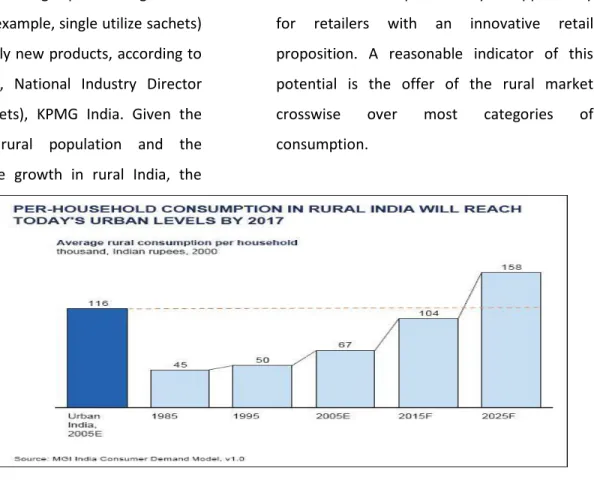
Figure 1: Consumer Demand in Rural India
As per MGI forecast country market will about
triple till 2025 making a huge potential of $577
billion. With the increase in wage provincial
population will spend increasingly on different
products at that point spending on food.
11. CHALLENGES IN THE RURAL RETAILING
Absence of literacy and awareness
Low per capital income
Wide geographic spread
Holes in street and Telecommunications
availability
Absence of reliable electricity and water
supply
Constrained Distribution organize for
instance chilly storage
Competition from neighborhood players
12. WAYS TO OVERCOME THE CHALLENGES
Integration of rural initiatives into business
demonstrates like ITC.
Corporate should supplement government
endeavors and resources (foundation
improvement, education framework,
storage).
Creating retail locations which ought to be
rural in nature so the rural masses
International Journal of Marketing and Management Research Vol. 6, Issue 3, March 2015, Impact Factor: 3.544 ISSN: (2229-6883)
www.skirec.org Email Id: [email protected]
Creative and Exciting Initiatives, for example,
Village BPO ought to be offered impetus to
tap the talent in the rural India.
13. CONCLUSION
Indian retailing industry is significantly
contributing towards the GDP and
employment generation. Unorganized retailing
has a predominant lump of retailing in India.
Sorted out retailing has its development as a
result of the inclination to devour conduct of
Indian white collar class segment. In any case,
this was influenced by the worldwide financial
meltdown. In spite of this retailing in India will
have a tremendous future, if retail players
concentrate on Indian country segment, having
huge and undiscovered potential? For this, the
technique ought to be not the same as that of
urban to turn challenge as an opportunity.
REFERENCES
1.A Confederation of Indian Industry – A.T.
Kearney Report, Retail in India: Getting
organized to drive growth, 2006, New
Delhi, pp. ix, 3, www.atkearney.com
2.Anil Sasi “Indian Retail Most Fragmented”,
The Hindu Business Line, Aug 18, 2000
3.Business Standard, November 13, 2008
4.David Gilbert, Retail Marketing
Management, New Delhi, Pearson
Education Ltd, 2003.
5.Dhanabhakyam M and Shanthi A. Indian
Retail Industry – It‟s growth, challenges
and opportunities, www.fibre2fashion.com
6.Ernst &Young. “The Great Indian Retail
Story”, A Report on Indian Retail Sector,
2003.
7.www.retailjunction.goelji.com
8.Levy, Michel; and Weitz, Barton A, Retailing
Management. New Delhi, Tata
McGraw-Hill Publishing Company Ltd, 2002
9.Lakshmi Prabha G. and Amatul Baseer,
Emerging Retail Trends in India, Indian
Journal of Marketing, 2007, pp.23-27
10. Mathew Joseph, Nirupama Soundararajan,
Manisha Gupta and Sanghamitra Sahu,
Impact of Organized Retailing on the
Unorganized Sector, Indian Council for
Research on International Economic
Relations (ICRIER), New Delhi, 2008,
pp.vi-viii.
11. Mohan Guruswamy and Kamal Sharma,
FDI in Retail – II Inviting more Trouble?,
centre for Policy Alternatives, New Delhi,
www.cpasind.com
12. Retail Industry in India, A report on Indian