©
F
IELD
G
UIDE TO
C
OMPOST
U
SE
©
Table
of Contents
FIELD GUIDE TO COMPOST USE...1
Table of Contents ...2
Acknowledgements ...4
Introduction ...5
1: Benefits of Compost and its Effect on Growing Systems ...6
2: Compost Use Guidelines...11
Compost Use Guidelines ...12
LANDSCAPING/TURF MANAGEMENT...12
Planting Bed Establishment With Compost ... 13
Compost as a Landscape Mulch ... 16
Compost as a Backfill Mix Component ... 20
Turf Establishment With Compost ... 23
Upgrading Marginal Soils with Compost... 26
Compost as a Blended Topsoil Component ... 30
NURSERY...12
Compost as a Growing Media Component... 34
Field Nursery Production With Compost ... 38
Nursery Bed Production With Compost... 42
OTHER...12
Vegetable Production With Compost... 46
Compost as a Soil Mulch For Erosion Control... 50
Silvicultural Crop Establishment With Compost ... 54
Compost as Sod Production Media ... 57
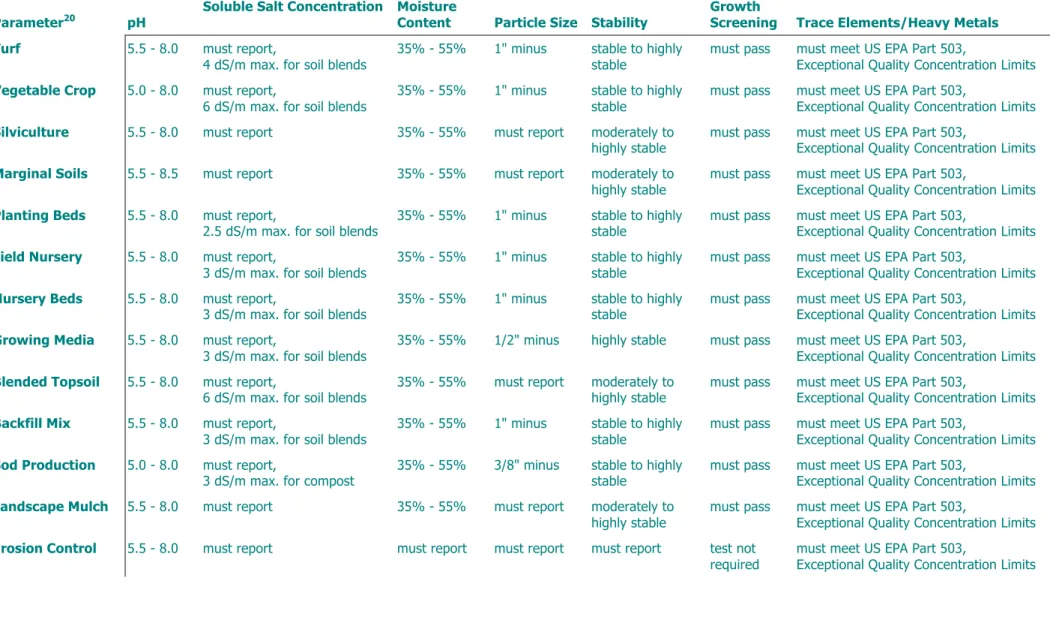
TABLE 2.1 Compost Use Guidelines – Preferred Parameters Summary Charts... 60
3: Compost Source Materials (feedstocks)...61
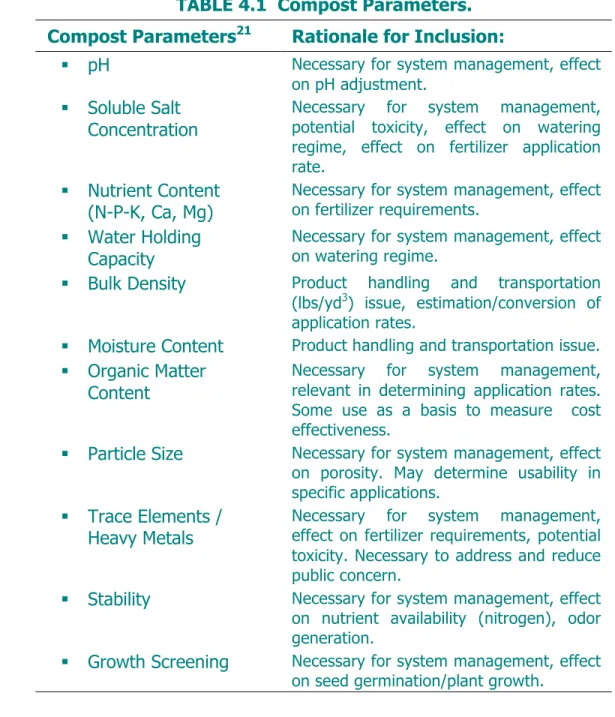
4: Compost Characteristics/Parameters ...63
TABLE 4.1 Compost Parameters. ... 64
Quantified Parameters... 65
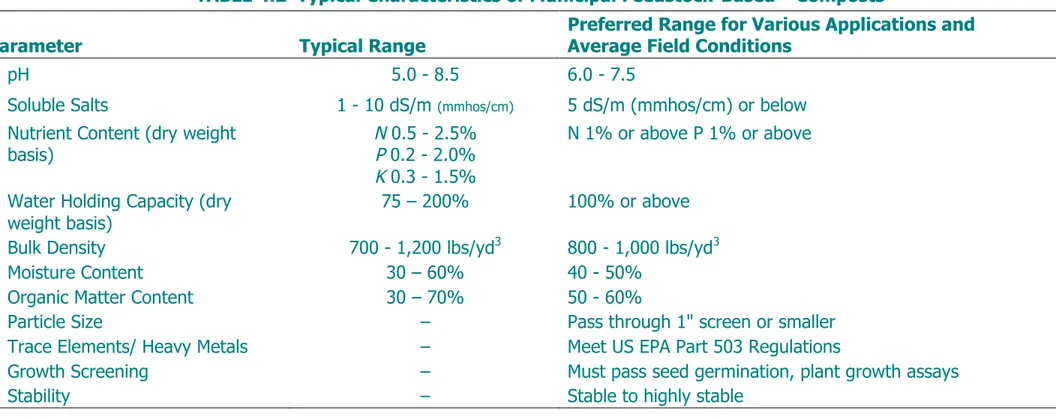
Qualified Parameters ... 68
TABLE 4.2 Typical Characteristics of Municipal Feedstock-Based Composts... 68
©
Other... 71
5: Compost Selection...72
THE COMPOST SUPPLIER...73
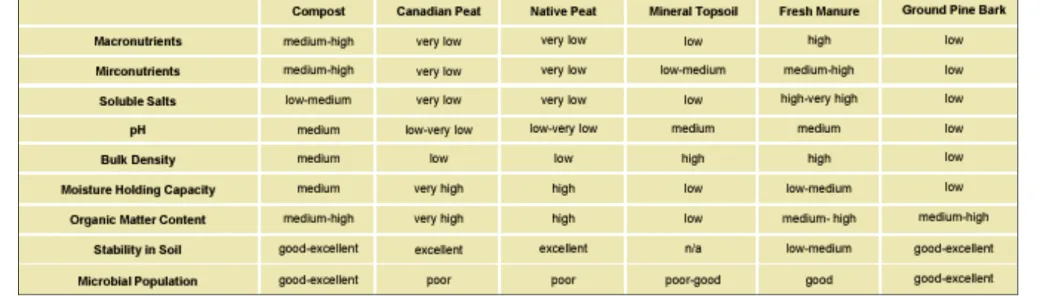
6: Comparing Compost to Other Horticultural/Agricultural Products ...74
TABLE 6.1 General Comparison of Compost to Other Horticultural/ Agricultural Products ... 76
TABLE 6.2 Actual Comparison of Compost to Other Horticultural/ Agricultural Products ... 76
7: Compost Use Estimator ...77
TABLE 7.1 Cubic Yards of Compost Required to Cover Specific Areas ... 77
TABLE 7.2 Approximate Number of Pots Filled by One Cubic Yard of Compost Amended Media ... 77
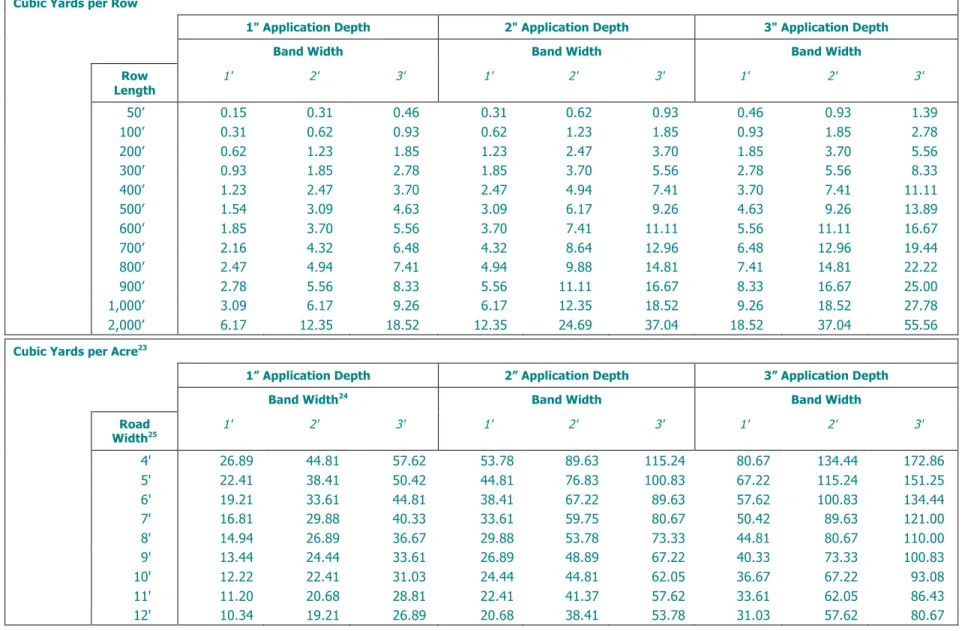
TABLE 7.3 Suggested amounts of compost for band applications. ... 78
8: Soil/Media Testing ...79
9: Compost Application ...80
10: Fertilizer Application ...81
11: Nutrient Loading Estimator ...83
12: pH Adjustment ...87
13: Health/Environmental Issues ...89
14: Literature Cited / References...92
Literature Cited ... 92
Suggested Reading/Resources ... 92
15: Appendix ...93
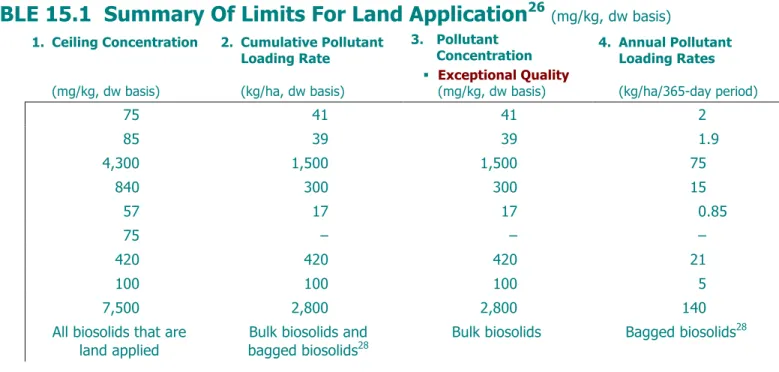
Part 503 Sewage Sludge (Biosolids) Regulations...93
Definitions:...93
©
Acknowledgements
Many people and organizations have made this publication possible. Thanks to the University of Hawaii, via USDA-CSREES Grant No. 91-COOP-1-6159, for providing funds for the development of the Field Guide to Compost Use, as well as James Hollyer, Project Administrator. Thanks also to the Composting Council, its staff, Marketing Committee members, and the Compost Use Guideline Subcommittee members for providing input, direction, and review of this document. Nerrisa Wu and Clarita Bishop also deserve our thanks for their Spanish translation work. Appreciation is also extended to the many individuals who provided input and technical data used in this guide, as well as the Composting Council, the Florida Department of Agriculture and Consumer Services, and the Clean Washington Center for funding the development of previous Compost Use Guidelines.
Project completed by:
E&A Environmental Consultants, Inc. Ron Alexander, Project Manager 1130 Kildaire Farm Road, Suite 200 Cary, North Carolina 27511
(919) 460-6266 In conjunction with:
The US Composting Council
http://www.compostingcouncil.org
Layout and Graphics completed by:
Hakoda Design
95-1144 Leolani Street Mililani, Hawaii 96789 (808) 625-9876
Electronic format prepared by:
Wayne H. Thompson Edaphos International
http://www.edaphos.com Technical input provided by:
Ron Alexander, Product Marketing Specialist R. Alexander Associates, Inc.
1212 Eastham Drive; Apex, NC 27502 (919) 367-8350 [email protected]
The US Composting Council
Established in 1990, the US Composting Council is a diverse trade association supporting the needs of the composting industry. Members of the Council include compost producers, marketers, equipment manufacturers, academic institutions, public agencies, nonprofit groups, and consulting/engineering firms. The US Composting Council's mission is to achieve maximum conversion, composting, and utilization of organic materials in an environmentally and economically sustainable manner.
©
Introduction
This Field Guide to Compost Use provides compost use instructions that have been verified through research
and field experience. It condenses and simplifies 13 currently available, technically-based, compost use
guidelines, providing a step-by-step description of compost use in specific applications. Our goal is to
promote the proper use of compost products, thereby improving field results and user confidence. This
guide also provides important information about the characteristics and benefits of using compost.
What is Compost?
Compost is the product resulting from the controlled biological decomposition of organic material that
has been sanitized through the generation of heat and stabilized to the point that it is beneficial to
plant growth. Compost bears little physical resemblance to the raw material from which it originated.
Compost is an organic matter resource that has the unique ability to improve the chemical, physical,
and biological characteristics of soils or growing media. It contains plant nutrients but is typically not
characterized as a fertilizer.
How is Compost Produced?
Compost is produced through the activity of aerobic (oxygen-requiring) microorganisms. These
microbes require oxygen, moisture, and food in order to grow and multiply. When these resources are
maintained at optimal levels, the natural decomposition process is greatly accelerated. The microbes
generate heat, water vapor, and carbon dioxide as they transform raw materials into a stable soil
conditioner. Active composting is typically characterized by a high-temperature phase, that sanitizes
the product and allows a high rate of decomposition, followed by a lower-temperature phase, that
allows the product to stabilize while still decomposing at a lower rate. Compost can be produced from
many feedstocks. State and federal regulations exist to ensure that only safe and environmentally
beneficial composts are marketed.
©
1: Benefits of Compost and its Effect on Growing
Systems
As more and more compost is produced and utilized and as the body of end-use related research grows, the benefits of using compost have become more evident and measurable. Because of its many attributes, compost is extremely versatile and beneficial in many applications. Compost has the unique ability to improve the properties of soils and growing media physically (structurally), chemically (nutritionally), and biologically. Although many equate the benefit of compost use to lush green growth, caused by the plant-available nitrogen, the real benefits of using compost are long-term and related to its content of living-organic matter.
TABLE 1.1 Benefits of Using Compost
1. Improves the soil structure, porosity, and density, thus creating a better plant root environment.
2. Increases infiltration and permeability of heavy soils, thus reducing erosion and runoff.
3. Improves water holding capacity, thus reducing water loss and leaching in sandy soils.
4. Supplies a variety of macro and micronutrients.
5. May control or suppress certain soil-borne plant pathogens. 6. Supplies significant quantities of organic matter.
7. Improves cation exchange capacity (CEC) of soils and growing media, thus improving their ability to hold nutrients for plant use.
8. Supplies beneficial microorganisms to soils and growing media. 9. Improves and stabilizes soil pH.
©
Physical Benefits
Improved Structure
Compost can greatly enhance the physical structure of soil. In fine-textured (clay, clay loam) soils, the addition of compost will reduce bulk density, improve friability (workability) and porosity, and increase its gas and water permeability, thus reducing erosion. When used in sufficient quantities, the addition of compost has both an immediate and long-term positive impact on soil structure. It resists compaction in fine-textured soils and increases water holding capacity and improves soil aggregation in coarse-textured (sandy) soils. The soil-binding properties of compost are due to its humus content. Humus is a stable residue resulting from a high degree of organic matter decomposition. The constituents of the humus act as a soil ‘glue,’ holding soil particles together, making them more resistant to erosion and improving the soil’s ability to hold moisture.
Moisture Management
The addition of compost may provide greater drought resistance and more efficient water utilization. Therefore, the frequency and intensity of irrigation may be reduced. Recent research also suggests that the addition of compost in sandy soils can facilitate moisture dispersion by allowing water to more readily move laterally from its point of application.
©
Chemical Benefits
Modifies and Stabilizes pH
The addition of compost to soil may modify the pH of the final mix. Depending on the pH of the compost and of the native soil, compost addition may raise or lower the soil/compost blend’s pH. Therefore, the addition of a neutral to slightly alkaline compost to an acidic soil will increase soil pH if added in appropriate quantities. In specific conditions, compost has been found to affect soil pH even when applied at quantities as low as 10-20 tons per acre. The incorporation of compost also has the ability to buffer or stabilize soil pH, whereby it will more effectively resist pH change.
Increases Cation Exchange Capacity
Compost will also improve the cation exchange capacity of soils, enabling them to retain nutrients longer. It will also allow crops to more effectively utilize nutrients, while reducing nutrient loss by leaching. For this reason, the fertility of soils is often tied to their organic matter content. Improving the cation exchange capacity of sandy soils by adding compost can greatly improve the retention of plant nutrients in the root zone.
Provides Nutrients
Compost products contain a considerable variety of macro and micronutrients. Although often seen as a good source of nitrogen, phosphorous, and potassium, compost also contains micronutrients essential for plant growth. Since compost contains relatively stable sources of organic matter, these nutrients are supplied in a slow-release form. On a pound-by-pound basis, large quantities of nutrients are not typically found in compost in comparison to most commercial fertilizers. However, compost is usually applied at much greater rates; therefore, it can have a significant cumulative effect on nutrient availability. The addition of compost can affect both fertilizer and pH adjustment (lime/sulfur addition). Compost not only provides some nutrition, but often makes current fertilizer programs more effective.
©
Biological Benefits
Provides Soil Biota
The activity of soil organisms is essential in productive soils and for healthy plants. Their activity is largely based on the presence of organic matter. Soil microorganisms include bacteria, protozoa, actinomycetes, and fungi. They are not only found within compost, but proliferate within soil media. Microorganisms play an important role in organic matter decomposition which, in turn, leads to humus formation and nutrient availability. Microorganisms can also promote root activity as specific fungi work symbiotically with plant roots, assisting them in the extraction of nutrients from soils. Sufficient levels of organic matter also encourage the growth of earthworms, which through tunneling, increase water infiltration and aeration.
Suppresses Plant Diseases
Disease incidence on many plants may be influenced by the level and type of organic matter and microorganisms present in soils. Research has shown that increased population of certain microorganisms may suppress specific plant diseases such as pythium and fusarium as well as nematodes. Efforts are being made to optimize the composting process in order to increase the population of these beneficial microbes.
©
Additional Benefits of Compost
Some additional benefits of compost have been identified, and has led to new uses for it. These benefits
and uses are described below.
Binds Contaminants
Compost has the ability to bind heavy metals and other contaminants, reducing both their leachability and absorption by plants. Therefore, sites contaminated with various pollutants may often be improved by amending the native soil with compost. The same binding affect allows compost to be used as a filter media for storm water treatment and has been shown to minimize leaching of pesticides in soil systems.
Degrades Compounds
The microbes found in compost are also able to degrade some toxic organic compounds, including petroleum (hydrocarbons). This is one of the reasons why compost is being used in bioremediation of petroleum contaminated soils.
Wetland Restoration
Compost has also been used for the restoration of native wetlands. Rich in organic matter and microbial population, compost and soil/compost blends can closely simulate the characteristics of wetland soils, thereby encouraging the re-establishment of native plant species.
Erosion Control
Coarser composts have been used with great success as a mulch for erosion control and have been successfully used on sites where conventional erosion control methods have not performed well. In Europe, fine compost has been mixed with water and sprayed onto slopes to control erosion.
Weed Control
Immature composts or ones which possess substances detrimental to plant growth (phytotoxins), are also being tested as an alternative to plastic mulches for vegetable and fruit production. While aiding in moisture conservation and moderating soil temperatures, immature composts also act as mild herbicides.
©
2: Compost Use Guidelines
The following Compost Use Guidelines provide detailed instructional data regarding compost use in a specific application. They also include basic specifications for compost products used in that application. The Compost Use Guidelines were developed using documented research from throughout the United States and has been supplemented with practical field experience.
The Compost Use Guidelines (section 13) are condensed versions of more extensive and technically-oriented guidelines published through The Composting Council. A bibliography for each of the guidelines is not included in this Field Guide, but may be obtained from The US Composting Council (see section 14: Literature Cited / References).
Important points regarding the Compost Use Guidelines:
1. The Compost Use Guidelines were written to be generic in terms of compost feedstock. However, comments that are provided specific to particular feedstocks have been included where they are relevant. For instance, specific comments are often made regarding biosolids compost because significant published research is available relevant to its use. Comments should not be considered an endorsement.
2. Each guideline possesses a Preferred Compost Characteristics chart which more specifically describes the desired compost for that particular application. Using a compost that resembles the characteristics outlined on the chart is critical when compost is applied at application rates described in the guidelines. When compost is used at far below recommended application rates, meeting these narrower product specifications is less critical.
3. The term “may vary but must be reported” in the Preferred Compost Characteristics chart found in each guideline refers to your ability to use a compost with a wide range of values relevant to that particular characteristic. For instance, the organic matter content of a compost used as a planting bed amendment may vary widely, but its actual value (e.g., 55%) should be known and reported to you.
4. In the Preferred Compost Characteristics chart found in each guideline, the preferred soluble salt concentration of the soil/compost blend is the maximum suggested soluble salt concentration for the particular group of plants being discussed. However, only lower levels of soluble salts will be tolerated by certain species within each plant group. For instance, the preferred soluble salt concentration in the Compost Use Guideline for vegetable production is 6 dS/m or less. However, although salt-tolerant vegetable species, such as broccoli, can tolerate a salinity level of 6 dS/m, most other vegetable crops cannot. Therefore, it is important to know the soluble salt concentration of your soil/compost blend and the levels that can be tolerated by the crops you intend to grow.
©
Compost Use Guidelines
Landscaping/Turf Management
SOIL AMENDMENT FOR PLANTING BED ESTABLISHMENT
LANDSCAPE MULCH
BACKFILL MIX COMPONENT
TURF ESTABLISHMENT/RENOVATION
UPGRADING MARGINAL SOILS
BLENDED TOPSOIL
Nursery
GROWING MEDIA COMPONENT
FIELD NURSERY PRODUCTION
NURSERY BED PRODUCTION
Other
VEGETABLE PRODUCTION
SOIL MULCH FOR EROSION CONTROL
SILVICULTURAL CROP ESTABLISHMENT
SOD PRODUCTION MEDIA
©
Planting Bed Establishment With Compost
Soil Amendment for the Establishment of Planting Beds (seed, seedlings, or woody plants)
One of the most popular uses for compost products by horticultural professionals and homeowners is amending planting beds for the establishment of various ornamental plants. Plant growth benefits are typically substantial when using compost because existing soils around homes and commercial sites are typically of poor quality due to the practice of soil stripping before construction. The addition of compost improves the physical structure of the soil, which in turn, promotes root development and heightens a plant’s resistance to stress. Compost also adds organic matter, beneficial microbes, and vital nutrients, all of which store and maintain soil fertility.
Preferred Compost Characteristics* Planting Bed Establishment
Parameter Value Range
pH ... 5.5 - 8.0 Moisture Content ... 35% - 55%
Particle Size... Pass through 1-inch screen or smaller.
Stability ... Stable to highly stable, thereby providing nutrients for plant growth
Maturity/Growth ... Must pass maturity tests or demonstrate its ability to enhance plant growth
Soluble Salt ... May vary but must be reported; 2.5 dS/m (mmhos/cm) or less is the preferred salt content for the soil/compost blend
Other Important Characteristics Include:
Nutrient content, water-holding capacity, bulk density, and organic matter content. Their actual values may vary but should be reported. Compost should also be weed free, contain only minimal natural or man-made materials, and meet federal and state health and safety regulations.
* More in-depth information regarding compost characteristics/parameters can be found in Section 4.
What has field experience with compost shown us?
Lower application rates can be used when composts possessing higher organic matter contents are used or where soil quality is moderate. Excessively coarse-textured (sandy) or fine-textured (clay, clay loam) soils will require higher application rates. Soil test results are helpful in establishing application rates.
Lower compost application rates may be necessary for salt-sensitive crops such as geraniums or where composts with higher salt levels are used. The soluble salt concentration of the amended soil should not exceed approximately 1.25 dS/m where seeds, young seedlings, or salt-sensitive crops are to be planted. Although salt-related injury is not common, thorough watering at the time of planting can further reduce potential problems. Care should be given when using composts possessing a high pH near acid-loving species.
©
Instructions for Compost Used as a Soil Amendment for:
Planting Bed Establishment
Step 1: Step 2: Step 3:
Evenly apply compost at a rate of 135-270 cubic yards per acre (1-2 inch layer) or 3-6 cubic yards per 1,000 square feet. Rates range from 90-400 cubic yard (2/3-3 inch layer) or 2-9 cubic yards per 1,000 square feet. Application rates will vary depending upon soil conditions, climate, compost characteristics, and plant species to be established.1
Apply compost by hand, using rakes or shovels, or mechanically with a front-end loader, grading blade, manure spreader, York rake, or other appropriate equipment.
Incorporate the compost to a depth of 6-8 inches by hand or mechanically using a rototiller or other appropriate equipment until the compost is uniformly mixed.
1 Compost and fertilizer application rates and pH adjustment requirements are influenced by plant selection, soil/media and site characteristics, compost quality and feedstock, and
other factors. For best results, before planting have your compost, soil, and soil/compost blend tested by a reputable laboratory and discuss the results of the tests with a trained professional.
©
Step 4: Step 5: Step 6:
Establish a smooth planting bed by raking
or dragging the soil surface. amended soil and firm them in place. Seeds Plant transplants or woody plants into the should be applied and lightly incorporated into the soil surface using a rake.
Water to assure proper establishment and fertilize as necessary
(see Section 10 Fertilizer Application).2
Photos: DK Recycling Systems, Inc., Lake Bluff, IL
2 Compost and fertilizer application rates and pH adjustment requirements are influenced by plant selection, soil/media and site characteristics, compost quality and feedstock, and
other factors. For best results, before planting have your compost, soil, and soil/compost blend tested by a reputable laboratory and discuss the results of the tests with a trained agricultural professional.
©
Compost as a Landscape Mulch
Mulch for Garden Beds & Tree and Shrub PlantingDepending on a particular compost’s physical properties, it may be a good alternative to standard organic mulch products such as fir, pine, shredded hardwood, cypress bark, pine straw, etc. Yard trimmings and biosolids derived composts are commonly used as mulches by landscape professionals and homeowners. Aside from fulfilling the cultural functions of a mulch, compost also has the ability to provide plant nutrients.
Preferred Compost Characteristics* Landscape
Parameter Value Range
pH ... 5.5 - 8.0 Moisture Content ... 35% - 55%
Particle Size... May vary but must be reported; acceptable size is based on customer preference and mulching objectives
Stability ... Moderately to highly stable, thereby providing nutrients for plant growth Maturity/Growth ... Must pass maturity tests or demonstrate its ability to enhance plant growth Soluble Salt ... May vary but must be reported
Other Important Characteristics Include:
Nutrient content, water-holding capacity, bulk density, and organic matter content. Their actual values may vary but should be reported. Compost must also be weed free, contain only minimal natural or man-made materials, and meet federal and state health and safety regulations.
* More in-depth information regarding compost characteristics/parameters can be found in Section 4.
What has field experience with compost shown us?
For most, the aesthetic characteristics, i.e., texture and color, or “look” of a mulch is the most important feature. Since this feature is very subjective, it is important to understand customer preferences and regional trends. Typically, aesthetically acceptable mulches are consistent in appearance, contain no man-made materials (e.g., rocks, trash), and have minimal odor.
Coarser-textured compost mulches may be more effective in reducing weed growth and preventing wind erosion, compared to finer products. The stability of the compost used may vary widely, as everything from fine, well-composted bark products to uncomposted wood chips are used as mulch. Although not verified by research at this time, some believe that the use of unstable or raw wood mulches may compete with plants for nitrogen, potentially causing plant stunting and chlorotic foliage.
Composts containing high salt levels, high ammonium levels, or other phytotoxins should not be used if crops exist on the site or are to be established on the site soon after application. However, composts possessing these characteristics may be ideal on sites where plant establishment is not planned immediately, or where the mulch is specifically used for weed suppression. Composts possessing a high soluble
©
salt concentration can be detrimental to salt-sensitive species. Thorough irrigation may help to leach excess salts. Where soluble salt levels of the soil are problematic, repeat applications of biosolids compost should not exceed one inch per year. Care should be given when using composts possessing a high pH near acid-loving species.
©
Instructions for Compost Used as a:
Landscape Mulch
Step 1: Step 2: Step 3:
Evenly apply compost at a rate of 135-400 cubic yards per acre (1-3 inch layer) or 3-9 cubic yards per 1,000 square feet. Generally, biosolids composts should not be applied at a depth greater than 2 inches, while most yard trimmings composts can be applied to a depth of 3 inches. Salt sensitive species, however, may react negatively to application rates greater than 1 inch.3
Compost can be spread from a wheel-barrow or dump truck. For small projects, the use of bagged compost may be more convenient.
Carefully apply the compost around the base of trees, shrubs, and other plant materials using a shovel, rake, or blower unit. Avoid placing mulch against the plant’s trunk or stem to avoid potential disease and insect damage.
Step 4: Step 5: Step 6:
Smooth and further distribute compost
with a rake or by hand to create a solid typically applied from near its trunk or stem For singular trees and shrubs, mulch is to help keep it in place. To improve weed Once applied, the mulch may be watered
3 Compost and fertilizer application rates and pH adjustment requirements are influenced by plant selection, soil/media and site characteristics, compost quality and feedstock, and
other factors. For best results, before planting have your compost, soil, and soil/compost blend tested by a reputable laboratory and discuss the results of the tests with a trained agricultural professional.
©
mulch layer. to the drip line. A soil rim or berm may be formed around the tree trunk before mulching to help capture water.
control, plastic mulches, landscape fabric, newspaper, or herbicides may be applied prior to mulching.
The use of stable, nutrient rich compost may reduce or eliminate the need for fertilizer application during the first twelve months following compost application.‡ This effect may occur in annual beds after one application, whereas the effects may only occur after repeat application for
woody, deep rooting plants. Additional nutrients and nitrogen, in particular, may be necessary where less stable or woody composts are used. On annual beds, at the end of the season, the compost mulch layer can be incorporated into the bed. In perennial beds or around trees and shrubs, where the compost mulch has not been incorporated, use a rake or shovel to break up the existing layer of mulch, ensuring that a crust layer has not formed before applying new mulch.
©
Compost as a Backfill Mix Component
Component to Backfill Mixes for the Establishment or Planting of Various Trees and Shrubs
The use of compost and other organic amendments as a component to backfill mixes is a popular practice even though there is little quantifiable data showing its long-term benefit. Research has shown, however, that early improved root growth (proliferation) can be attributed to backfill amendment. Some researchers believe that juvenile plants benefit from backfill amendment more than mature plants. Other researchers and industry professionals believe that amending the backfill mix encourages plant establishment and survivability, and may even reduce soil-borne disease damage. All agree that plants transplanted in poor soils benefit from using quality organic amendments.
Preferred Compost Characteristics* Backfill Mix Component
Parameter Value Range
pH ... 5.5 - 8.0 Moisture Content ... 35% - 55%
Particle Size... Pass through 1-inch screen or smaller
Stability ... Stable to highly stable, thereby providing nutrients for plant growth
Maturity/Growth ... Must pass maturity tests or demonstrate its ability to enhance plant growth
Soluble Salt ... May vary but must be reported; 3.0 dS/m (mmhos/cm) or less is the preferred salt content for the soil/compost blend
Other Important Characteristics Include:
Nutrient content, water-holding capacity, bulk density, and organic matter content. Their actual values may vary but should be reported. Compost should also be weed free, contain only minimal natural or man-made materials, and meet federal and state health and safety regulations.
* More in-depth information regarding compost characteristics/parameters can be found in Section 4.
What has field experience with compost shown us?
Nutrient, and specifically, nitrogen-rich composts are preferred, while the use of unstable or immature compost is discouraged. Care should be given when using composts possessing a high pH near acid-loving species.
Although soluble salt related plant injury should not be a significant problem with most woody ornamentals, or in most soil conditions, care should be given when bare root or salt-sensitive species such as ericaceous crops (e.g., rhododendrons, azaleas), specific conifers (e.g., narrowleaf species), and dogwoods are planted. The soluble salt concentration of the amended soil must be compatible with the plant’s maximum tolerance levels.
©
Instructions for Compost Used as a:
Backfill Mix Component
Step 1: Step 2: Step 3:
Compost can be used at an inclusion rate of 25%-50%, blended with native soils, with the most common inclusion rate being 33%.4 Inclusion rates will vary depending
upon soil conditions, climate, compost characteristics, and plant species to be established.
Dig a planting hole slightly shallower than the rootball and two to four times its width. In dense or poor draining soils, the planting hole can be dug only 2/3 the depth of the rootball. The sides of the planting hole should be “roughed up” with a shovel to encourage root penetration.
Place the plant in the planting hole and blend the stockpiled soil with the compost until uniform.
4 Compost and fertilizer application rates and pH adjustment requirements are influenced by plant selection, soil/media and site characteristics, compost quality and feedstock, and
other factors. For best results, before planting have your compost, soil, and soil/compost blend tested by a reputable laboratory and discuss the results of the tests with a trained agricultural professional.
©
Step 4:
Apply the amended soil around the rootball, firming it occasionally to remove air pockets and to assure a firm footing. Tamping or watering may be used to firm the plant.
Step 5:
Larger trees should be anchored or supported.
Step 6:
Construct a soil berm circling the root ball to help capture and hold water. Water the plant well, then mulch around the plant and bermed area. Irrigate with one-inch of water per week until established.
Fertilizer and pH adjusting agents (e.g., lime and sulfur) should be applied after planting, if necessary. The use of stable, nutrient rich composts may eliminate initial fertilizer application. If fertilizer application is made at planting, only slow-release forms should be used. Where salt-sensitive ornamental crops are planted, apply half the recommended fertilizer rate.5
Photos: Ronald Alexander, Cary, NC
5 Compost and fertilizer application rates and pH adjustment requirements are influenced by plant selection, soil/media and site characteristics, compost quality and feedstock, and
other factors. For best results, before planting have your compost, soil, and soil/compost blend tested by a reputable laboratory and discuss the results of the tests with a trained agricultural professional.
©
Turf Establishment With Compost
Soil Amendment for the Establishment of Turfgrass (seed, sod, or sprig)
Composts of various feedstocks have been used successfully in turf establishment and renovation. Soils that are low in organic matter, or possess low nutrient or water holding capacity will greatly benefit from the addition of compost. Recent research has even shown that the use of quality compost, at proper rates, can degrade commonly applied turf pesticides over time, making them less likely to impact water quality. Quality compost may also suppress specific soil-borne diseases and plant pathogens.
Preferred Compost Characteristics* Turf Establishment
Parameter Value Range
pH ... 5.5 - 8.0 Moisture Content ... 35% - 55%
Particle Size... Pass through 1-inch screen or smaller
Stability ... Stable to highly stable, thereby providing nutrients for plant growth
Maturity/Growth ... Must pass maturity tests or demonstrate its ability to enhance plant growth Soluble Salt ... May vary but must be reported; 4 dS/m (mmhos/cm) or less is the preferred salt
content for the soil/compost blend
Other Important Characteristics Include:
Nutrient content, water-holding capacity, bulk density, and organic matter content. Their actual values may vary but should be reported. Compost should also be weed free, contain only minimal natural or man-made materials, and meet federal and state health and safety standards.
* More in-depth information regarding compost characteristics parameters can be found in Section 4.
What has field experience with compost shown us?
Lower application rates can be used when composts possessing higher organic matter contents are used or where soil quality is moderate. Excessively coarse-textured (sandy) or fine-textured (clay, clay loam) soils will require higher application rates. Soil test results are helpful in establishing application rates.
The use of coarse composts in turf establishment may be problematic if substantial amounts of coarse particles are left on the soil surface; as they will impede seed-to-soil contact. Acceptable compost particle size depends on the quality of turf to be established, (e.g., utility vs. sports turf).
©
Instructions for Compost Used as a Soil Amendment for:
Turf Establishment
Step 1: Step 2: Step 3:
Evenly apply compost at a rate of 135-270 cubic yards per acre (1-2 inch layer) or 3-6 cubic yards per 1,000 square feet.6
Application rates will vary depending upon soil conditions, climate, compost characteristics, and turf species to be established.
Apply compost with a front-end loader, grading blade, manure spreader, York rake, or other appropriate equipment.
Incorporate the compost to a depth of 5-7 inches, resulting in a compost inclusion rate of 20%-30% by volume, using a rototiller, rotovator, or disc until the compost is uniformly mixed. Compost application rates should be adjusted depending upon the anticipated tillage depth.
Pre-plant fertilizers and pH adjusting agents (e.g., lime and sulfur) may be applied before compost incorporation, as necessary. The use of stable, nutrient rich composts may reduce or eliminate pre-plant fertilizer application.
6 Compost and fertilizer application rates and pH adjustment requirements are influenced by plant selection, soil/media and site characteristics, compost quality and feedstock, and
other factors. For best results, before planting have your compost, soil, and soil/compost blend tested by a reputable laboratory and discuss the results of the tests with a trained agricultural professional.
©
Step 4: Step 5:
Establish a smooth seed bed by raking or
dragging the soil surface; roll if necessary. Rake to remove any clumps of soil/vegetation, larger rocks, or debris.
Seed may be applied using a hydroseeder, culti-pack seeder, or it may be broadcast over the soil surface, then lightly incorporated using a drag mat or rake.
Vegetation may also be established by sprigging into or sodding onto the modified soil, followed by rolling as necessary.
Apply a starter fertilizer as necessary and water to assure proper turf establishment.7
Photos: Dr. William Mitchell, West Lebanon, NH
7 Compost and fertilizer application rates and pH adjustment requirements are influenced by plant selection, soil/media and site characteristics, compost quality and feedstock, and
other factors. For best results, before planting have your compost, soil, and soil/compost blend tested by a reputable laboratory and discuss the results of the tests with a trained agricultural professional.
©
Upgrading Marginal Soils with Compost
Upgrading Compacted, Disturbed, Unirrigated, Low-Maintenance Sites, or Marginal Soils for the Establishment of Various Crop SpeciesIn all areas of the country, there are sites where the soils are of such poor quality that it is extremely difficult to establish most plant or crop species. Some sites may be void of nutrition or organic matter, compacted, lacking any actual topsoil, or simply under-maintained. On these sites, practical experience and research has shown that the addition of quality organic matter, in sufficient quantities, can make marginal soils productive. The addition of compost to such soils supplies both beneficial microbes and nutrition, allowing for an on-going nutrient cycle to be established.
Preferred Compost Characteristics* Upgrading Marginal Soils
Parameter Value Range
pH ... 5.5 - 8.0 Moisture Content ... 35% - 55%
Particle Size... May vary but must be reported
Stability ... Moderately to highly stable. Less stable composts may be used if planting is delayed
Maturity/Growth ... Must pass maturity tests or demonstrate its ability to enhance plant growth Soluble Salt ... May vary but must be reported; will be highly dependent upon the crop to be
established
Other Important Characteristics Include:
Nutrient content, water-holding capacity, bulk density, and organic matter content. Their actual values may vary but should be reported. Compost should also be weed free, contain only minimal natural or man-made materials, and meet federal and state health and safety standards.
* More in-depth information regarding compost characteristics/parameters can be found in Section 4.
What has field experience with compost shown us?
Lower application rates can be used when composts possessing higher organic matter contents are used or where soil quality is moderate. Excessively coarse-textured (sandy) or fine-textured (clay, clay loam) soils will require higher application rates. Soil test results are helpful in establishing application rates.
Various amounts of compost have been used successfully in upgrading marginal soils. Research has shown that inclusion rates as low as 4%-17% have been beneficial in specific circumstances, when applied along with fertilizer for 2-3 consecutive years. Marginal soils have even been transformed into productive agricultural soils using compost. Some sites may benefit from deep cultivation prior to compost application.
©
Since marginal sites may possess a very high or very low pH, pH adjustment must be carefully considered along with compost addition. In soils possessing a pH of 7.0 or higher, where compost having an elevated ammonium level (has an ammonia scent) is used, delay seeding or planting for 1-2 weeks. This is because ammonium will be converted to ammonia under these circumstances and ammonia can be toxic to young plants and seedlings.
©
Instructions for Compost Used as a Soil Amendment for:
Upgrading Marginal Soils
Step 1: Step 2: Step 3:
Evenly apply compost at a rate of 135-400 cubic yards per acre (1-3 inch layer).8
Application rate will vary depending upon soil conditions, climate, compost characteristics, and crop species to be established.
Apply compost with a front-end loader, bulldozer, grading blade, manure spreader, York rake, blower, or other appropriate equipment.
Incorporate compost to a depth of approximately 6 inches, resulting in a compost inclusion rate of 20%-50% by volume, using a rototiller, rotovator, plow, or disc until the compost is uniformly mixed. Compost application rates should be altered depending on the anticipated tillage depth.
Pre-plant fertilizers or pH adjusting agents (e.g., lime or sulfur) may be applied before compost incorporation, as necessary. The use of stable, nutrient rich composts may reduce or eliminate pre-plant fertilization.
8 Compost and fertilizer application rates and pH adjustment requirements are influenced by plant selection, soil/media and site characteristics, compost quality and feedstock, and
other factors. For best results, before planting have your compost, soil, and soil/compost blend tested by a reputable laboratory and discuss the results of the tests with a trained agricultural professional.
©
Step 4: Step 5: Step 6:
Establish an appropriate seed or planting bed by raking or dragging the amended soil surface, as necessary.
Seed may be applied using a hydroseeder, culti-pack seeder, or it may be broadcast over the soil surface, then lightly incorporated using a drag mat or rake. Turf sprigs or sod, other ornamental and forest species, and agricultural crops may also be planted, based on the intended use of the soil.
Apply a starter fertilizer as necessary and water to assure proper crop establishment.9
Photos: Compost America, Doylestown, PA
9 Compost and fertilizer application rates and pH adjustment requirements are influenced by plant selection, soil/media and site characteristics, compost quality and feedstock, and
other factors. For best results, before planting have your compost, soil, and soil/compost blend tested by a reputable laboratory and discuss the results of the tests with a trained agricultural professional.
©
Compost as a Blended Topsoil Component
Component to Blended or Manufactured Topsoil for the Establishment of Various Crops
The production and sale of blended or manufactured topsoils is on the rise as more people are finding it difficult to obtain quality topsoil. Many buyers realize that much of the material sold as topsoil is actually subsoil or sand that is deficient nutritionally, organically, and structurally. Some buyers prefer a soil rich in organic matter for specific planting projects, or desire a soil darker in color. For these reasons, more topsoil dealers are using compost to create organic soil blends, while others are creating products equivalent or superior to native topsoil using subsoil or sand and compost.
Preferred Compost Characteristics* Blended Topsoil Component
Parameter Value Range
pH ... 5.5 - 8.0 Moisture Content ... 35% - 55%
Particle Size... May vary but must be reported; particle size is based on the producers ability to screen and specific use of the soil blend
Stability ... Moderately to highly stable. Less stable composts may be used if at low inclusion rates or if the topsoil blend is aged
Maturity/Growth ... Must pass maturity tests or demonstrate its ability to enhance plant growth Soluble Salt ... May vary but must be reported; 6 dS/m (mmhos/cm) or less is the preferred salt
content for the media blend
Other Important Characteristics Include:
Nutrient content, water-holding capacity, bulk density, and organic matter content. Their actual values may vary but should be reported. Compost should also be weed free, contain only minimal natural or man-made materials, and meet federal and state health and safety regulations.
* More in-depth information regarding compost characteristics/parameters can be found in Section 4.
What has field experience with compost shown us?
Lower application rates can be used when composts possessing higher organic matter content are used or where soil quality is moderate. Excessively coarse-textured (sandy) or fine-textured (clay, clay loam) soils will require higher application rates. Soil test results are helpful in establishing application rates.
Different types of soils will benefit from different types of compost. Therefore, a variety of compost types are used in topsoil blending in order to match the varying soil characteristics. Also, since finer-textured soils, those containing more silt and clay, generally possess a higher cation
©
exchange and buffering capacity, they can better accept composts with a wide range of characteristics. Although not typically a concern, composts containing large quantities of very fine particles (less than one millimeter) may reduce soil porosity.
Salt related plant injury is unlikely in most compost amended soils, but it is important to understand that all crops have maximum salt tolerance levels. Maximum salt tolerance for most vegetables and fruits is 6 dS/m, 4 dS/m for most turf species, and 3 dS/m for many ornamental species. Within all of these crop groups, there are salt sensitive species that may only tolerate 1 dS/m. Therefore, when blending custom soil blends, it is helpful to test all components for soluble salt concentration, then test the finished blend. The pH of the finished blend must also be compatible with the plant species to be established.
©
Instructions for Compost Used as a:
Blended Topsoil Component
Step 1: Step 2: Step 3:
Determine blended topsoil components and inclusion rates. A common soil test or a more in-depth physical/chemical analysis of the components may be beneficial.
Aside from the compost and soil, peat, bark, sand, and other materials may be used as topsoil components. Product combinations are based on their function within the blend, such as water and nutrient retention, pH, aeration and drainage. A compost inclusion rate of 20%-30% is recommended, although extremely poor soils, subsoils, or soil-like aggregate by-products may benefit from higher rates. Inclusion rates of 10%-50% compost are commonly used in the industry.10
Mix the soil blend components using rotating drum-type mixer, front-end loader, auger, or soil shredder. Various other amendments or additives may also be added at the time of blending. Where soil shredders are used, pre-mixing the blend components to some degree before shredding will allow for more thorough mixing.
Screen the soil blend, where appropriate, to meet customer requirements using standard screening units or a soil shredder.
10 Compost and fertilizer application rates and pH adjustment requirements are influenced by plant selection, soil/media and site characteristics, compost quality and feedstock, and
other factors. For best results, before planting have your compost, soil, and soil/compost blend tested by a reputable laboratory and discuss the results of the tests with a trained agricultural professional.
©
Step 4:
Stockpile or load the finished product.
©
Compost as a Growing Media Component
Component of Growing Media (horticultural substrate) for the Production of Various Containerized Crops
The use of compost as a commercial growing media component is one of the most researched areas of compost utilization. Aside from industry staples such as composted bark products, biosolids-based composts have probably been the most studied and used composts on a commercial basis in the United States. The use of compost as a growing media component has, in general, been shown to reduce fertilizer and liming requirements, improve crop vigor, increase the number of flowers per plant, reduce the need for fungicidal drenches, and improve root growth.
Compost is usually used as part of the organic fraction of growing media; however, products possessing a coarser fraction will also improve media drainage.
Preferred Compost Characteristics* Growing Media Component
Parameter Value Range
pH ... 5.5 - 8.0 Moisture Content ... 35% - 55%
Particle Size... Pass through 1/2-inch screen or smaller, acceptable particle size is based on pot/container size
Stability ... Stable to highly stable, thereby providing nutrients for plant growth and assuring no substantial shrinkage
Maturity/Growth ... Must pass maturity tests or demonstrate its ability to enhance seed germination and plant growth
Soluble Salt ... May vary but must be reported; 3 dS/m (mmhos/cm) or less is the preferred salt content for the media blend
Other Important Characteristics Include:
Nutrient content, water-holding capacity, bulk density, and organic matter content. Actual values may vary but should be reported. Compost should also be weed free, contain only minimal natural or man-made materials, and meet federal and state health and safety standards.
* More in-depth information regarding compost characteristics/parameters can be found in Section 4.
What has field experience with compost shown us?
Due to the cash value of ornamental crops, small test plots should be established before full-scale compost usage is initiated. The inclusion rate of compost in a growing media is based largely upon compost characteristics and the crop to be grown. Less compost should be used on more sensitive crops, such as bedding plants.
©
Compost used in nursery applications must be consistent, stable, and low in salts. The preferred soluble salt concentration of the finished media blend should be less than 3.0 dS/m (mmhos/cm). The majority of greenhouse and container crops can be grown in a media possessing a soluble salt level of 2.5 dS/m or under. Elevated soluble salts can be reduced through leaching and dilution. Since the media pH must be adjusted to meet crop requirements, typically 6.2-6.8, or 5.0-5.8 for acid tolerant species, composts produced using liming agents (e.g., hydrated lime, ash) should only be used with specific crops. It is important to know the calcium level of the compost due to its effect on buffering pH and binding phosphorous. Although rarely a concern, the content of trace metals, especially ones known to be phytotoxic, such as boron and manganese, should also be low.
Research and field experience has shown that the typical factors limiting the inclusion rate of compost are its pH, soluble salt concentration, maturity and stability levels, and particle size. Research on the use of MSW and yard trimmings-based composts as a potting media component is currently limited.
©
Instructions for Compost Used as a:
Growing Media Component
Step 1:
Determine media components and inclusion rates.
Aside from compost, peat, bark and sawdust, vermiculite, perlite, styrofoam, sand, and other materials may be used as components. Product combinations are based on their function within the media, such as water retention, aeration, nutrient retention, pH, etc. MSW compost has been used successfully at inclusion rates of 20%-50%, biosolids composts at 20%-33%, and yard trimmings composts at 33%-47%.11
Successful crop production has also been achieved using rates greater than those specified.
Step 2: Blend the media components using a rotating drum-type mixer, flail-type manure spreader, front-end loader, or by hand. Do not use a mixer that tends to grind the compost, especially those composts containing wood or brush remnants. This may cause the compost to re-heat. Do not add water to the media before blending, as it may increase the physical breakdown of the wood remnants. pH adjusting agents, surfactants, and fertilizer may be added before blending.
Step 3:
Fill containers/pots with growing media by hand or mechanically with a potting machine.
11 Compost and fertilizer application rates and pH adjustment requirements are influenced by plant selection, soil/media and site characteristics, compost quality and feedstock, and
other factors. For best results, before planting have your compost, soil, and soil/compost blend tested by a reputable laboratory and discuss the results of the tests with a trained agricultural professional.
©
Step 4: Plant the individual plant, firming around
its base to provide physical support. Step 5: Step 6:
Fertilizer may be applied after blending, in a topdressing application, if not applied earlier. If using a stable biosolids or manure compost, nitrogen fertilizers should not be applied during the first two to three weeks of plant growth. Stable composts produced from feedstocks other than biosolids or manure, typically need no nitrogen fertilizer during the first week or two following potting. Most composts will supply adequate amounts of micronutrients when used at recommended rates. Media containing composts that are less stable, regardless of feedstock, will need supplemental nutrition, especially nitrogen and phosphorus, immediately following potting.
Thoroughly water the plants soon after planting. Fungicidal drenches can often be eliminated when compost is used. Water and fertilize as necessary to assure proper growth. Supplemental fertilizer applications may be applied through the irrigation system or as a topdress using slow-release fertilizers.12
Photos: E&A Environmental Consultants, Inc., Cary, NC
12 Compost and fertilizer application rates and pH adjustment requirements are influenced by plant selection, soil/media and site characteristics, compost quality and feedstock, and
other factors. For best results, before planting have your compost, soil, and soil/compost blend tested by a reputable laboratory and discuss the results of the tests with a trained agricultural professional.
©
Field Nursery Production With Compost
Soil Amendment for the Field Production of Various Ornamental CropsSince larger trees and shrubs are frequently used by the landscape industry, nurserymen undertake the lengthy process of field production. The process allows a younger or smaller plant to be grown until it reaches the proper size. Often, nursery soils are enhanced over time through the growth and incorporation of cover crops. However, in the short-term, this method allows for only a modest addition of organic matter and can be employed only if nursery acreage is taken out of production. Alternately, compost can be applied following harvest or before planting making it virtually unnecessary to take fields out of production. Research has shown that by amending nursery fields with compost, higher quality plants can often be produced in a shorter length of time.
Preferred Compost Characteristics* Field Nursery Production
Parameter Value Range
pH ... 5.5 - 8.0 Moisture Content ... 35% - 55%
Particle Size ... Pass through 1-inch screen or smaller.
Stability ... Stable to highly stable. Less stable composts may be used if planting is delayed Maturity/Growth ... Must pass maturity tests or demonstrate its ability to enhance plant growth Soluble Salt ... May vary but must be reported; 3 dS/m (mmhos/cm) or less is the preferred salt
content for the soil/compost blend
Other Important Characteristics Include:
Nutrient content, water-holding capacity, bulk density, and organic matter content. Their actual values may vary but should be reported. Compost should also be weed free, contain only minimal natural or man-made materials, and meet federal and state health and safety standards.
* More in-depth information regarding compost characteristics/parameters can be found in Section 4.
What has field experience with compost shown us?
Only stable compost should be used if immediate planting is to follow compost incorporation. Less stable composts have been used successfully where aging in the field was allowed before planting. Although salt-related damage is unlikely, lower compost application rates are recommended for salt-sensitive species. Higher application rates are possible where early incorporation or leaching practices are utilized.
Lime dewatered biosolids compost should not be used on salt sensitive crops, such as dogwoods, specific conifers (e.g., narrowleaf evergreens) and ericaceous crops. Lime dewatered biosolids should only be used to grow crops with a preferred pH range of 6.5 and above, or if the native soil pH is very low (pH of 5.0 or below) and in need of upward adjustment. Maximum salt tolerance levels are crop and species dependent. Salt damage is not likely to occur on most woody trees and shrubs, however, salt sensitive species should be closely monitored to avoid potential
©
damage. Salt damage to crops is more likely to occur in sandy soils with a low organic matter content and low cation exchange capacity. Young seedlings/liners and bare root plants are also more susceptible to salts, ammonia, and other phytotoxic compounds. Delay planting salt-sensitive species until rainfall or irrigation can thoroughly leach the soil and reduce the salt concentration to acceptable levels. Deeper incorporation of the compost may be used to reduce soluble salt concentrations through dilution.
©
Instructions for Compost Used as a Soil Amendment for:
Field Nursery Production
Step 1: Step 2: Step 3: Incorporate compost to a depth of 6-10 inches, with deeper tillage necessary for high application rates, using a plow, disc, or other appropriate equipment. For application rates greater than 100 tons per acre, an incorporation depth of 12-14 inches is suggested.
Evenly apply compost at a rate of 135-270 cubic yards per acre (1-2 inch layer) or 50-100 tons per acre over the entire field.13
Successful application rates have ranged from approximately 25-250 tons per acre (1/2-4 inch layer). Biosolids compost application should not exceed 100 tons per acre (1-2 inch layer), while yard trimmings compost has been applied at rates as high as 250 tons per acre (2-4 inch layer). Higher rates have been applied in split applications, for instance 100 tons two years in a row, to condition poor soils before planting a new field. Limited research has been completed on MSW compost. However, application rates of 50-100 tons per acre appear to be acceptable for many plants.
Deep tillage and rough discing of the field soil prior to initial compost application is recommended.
Apply compost throughout the field or in the row where the plants are to be established using a manure spreader, grading blade, York rake, or other appropriate equipment. If applied only in the planting rows (band applications), the volume of compost needed to treat each acre will be substantially reduced (refer to Section 8.0, Compost Use Estimator).
13 Compost and fertilizer application rates and pH adjustment requirements are influenced by plant selection, soil/media and site characteristics, compost quality and feedstock, and
other factors. For best results, before planting have your compost, soil, and soil/compost blend tested by a reputable laboratory and discuss the results of the tests with a trained agricultural professional.
©
Step 4: Step 5: Step 6: Fertilize and water as necessary to assure proper growth. With the use of stable biosolids composts, additional fertilizer application should not be required during the first year of production. Other nutrient rich composts may yield the same results. Only apply half the recommended fertilizer rate if growing salt-sensitive crops.14
Prepare soil for planting and establish the
planting rows. planting row following normal planting Plant young trees and shrubs in the procedures.
Photos: Klyn Nurseries, Perry, OH
14 Compost and fertilizer application rates and pH adjustment requirements are influenced by plant selection, soil/media and site characteristics, compost quality and feedstock, and
other factors. For best results, before planting have your compost, soil, and soil/compost blend tested by a reputable laboratory and discuss the results of the tests with a trained agricultural professional.
©
Nursery Bed Production With Compost
Soil Amendment for the Production of Various Ornamental Crops in Raised or Ground Nursery Beds
Compost can be used in the production of various shrubs, herbaceous perennials, and ornamental grasses in nursery beds. Whether production takes place in a raised bed or ground (liner) bed, research and field experience have shown that amending the bed with compost results in higher quality plants and often in a shorter period of time. Typically, the plants possess an enhanced root system and more intense color. Current use of compost in this application is limited, but it is increasing.
Preferred Compost Characteristics* Nursery Bed Production
Parameter Value Range
pH ... 5.5 - 8.0 Moisture Content ... 35% - 55%
Particle Size... Pass through 1-inch screen or smaller
Stability ... Stable to highly stable, thereby providing nutrients for plant growth
Maturity/Growth ... Must pass maturity tests or demonstrate its ability to enhance plant growth Soluble Salt ... May vary but must be reported; 3 dS/m (mmhos/cm) or less is the preferred salt
content for the soil/compost blend
Other Important Characteristics Include:
Nutrient content, water-holding capacity, bulk density, and organic matter content. Their actual values may vary but should be reported. Compost must be weed free, contain only minimal natural or man-made materials, and meet federal and state health and safety standards.
* More in-depth information regarding compost characteristics/parameters can be found in Section 4.
What has field experience with compost shown us?
Although salt-related damage is not likely, lower compost application rates are recommended for salt-sensitive species. Higher compost application rates are possible where early incorporation or leaching practices are utilized. Higher compost application rates have been used successfully in the Northwestern region of the United States. This is likely due to the high rainfall and heavy soils being able to compensate for any excess soluble salts. Only light applications of biosolids compost should be used in the production of conifer seedlings.
Only stable composts should be used if immediate planting is to follow compost incorporation. Lime dewatered biosolids compost should only be used to grow crops with a preferred pH range of 6.5 and above, or if the inherent soil pH is very low (pH of 5.0 or below) and in need of upward adjustment. Lime dewatered biosolids compost should not be used on salt sensitive crops, such as dogwoods, specific conifers (e.g., narrowleaf evergreens) and ericaceous crops. A soluble salt concentration of 3 dS/m (mmhos/cm) or less for the compost amended soil is preferred where transplants or seedlings/liners are to be established, and approximately half that level where seeds are to be planted.
©
Maximum salt tolerance levels are species dependent. Salt damage is not likely to occur on most woody trees and shrubs, however, salt sensitive species should be closely monitored to avoid potential damage. Young seedlings, liners, bare root plants, and seeds are more susceptible to salts, ammonia, and other phytotoxic compounds. Delay planting salt-sensitive species until rainfall or irrigation can thoroughly leach the soil and reduce the salt content to acceptable levels.
©
Instructions for Compost Used as a Soil Amendment for:
Nursery Bed Production
Step 1:
Evenly apply compost at a rate of 135-270 cubic yards per acre (1-2 inch layer) or 50-100 tons per acre over the entire field.15
Successful application rates have ranged from approximately 30-200 tons per acre (1/2-3 inch layer). Biosolids compost application should not exceed 100 tons per acre, while yard trimmings compost has been applied at rates as high as 200 tons per acre. Little experience exists at this time with the use of MSW compost in nursery bed production.
Step 2: Apply compost throughout the field or in the row where the nursery bed will be created using grading blade, manure spreader, York rake, or other appropriate equipment. If applied only in the bed area, the volume of compost needed to treat each acre will be substantially reduced (refer to Section 8.0, Compost Use Estimator).
Step 3: Incorporate the compost to a depth of
6-10 inches, with deeper tillage necessary for high application rates, using a plow, disc, or other appropriate equipment.
Incorporation of biosolids compost into conifer seed beds prior to sowing may result in reduced seedling populations. However, applying stable and mature biosolids compost at a 1 inch rate as a mulch after the seedlings are 2-3 inches tall has been successfully demonstrated. This technique has been effective as a means to reduce moisture loss, supply slow-release nutrients, and moderate soil temperatures, which tends to cause heaving of seedling crops during winter months. Once the young plants are harvested, typically in 1-3 years, the compost mulch is incorporated into the soil, and new beds are established and mulched again.
15 Compost and fertilizer application rates and pH adjustment requirements are influenced by plant selection, soil/media and site characteristics, compost quality and feedstock, and
other factors. For best results, before planting have your compost, soil, and soil/compost blend tested by a reputable laboratory and discuss the results of the tests with a trained agricultural professional.