28 TERRORISM, RED CHEMISTRY, AND THREATS TO
THE ENVIRONMENT
This chapter on terrorism is from Stanley Manahan, Environmental Chemistry, 8th ed,, Taylor & Francis/CRC Press, 2004. This material was omitted from the 9th edition of Environmental Chemistry (2010) and incorporated throughout the body of the text. It is posted on the Environmental Chemistry website as a convenience for users who prefer a separate chapter on the topic.
28.1 INTRODUCTION
The September 11, 2001 attacks on the World Trade Center and the Pentagon in the U.S. followed by delivery of anthrax spores through the postal system resulting in several fatal anthrax infections signaled a new and frightening era that has come to be known as the war on terrorism. These incidents illustrated the vulnerability of modern technology-based systems to disruptions by outside forces. Highly efficient infrastructure systems were shown to be vulnerable to attack and subject to catastrophic failure.
Terrorism has been defined as attack on innocent people, outside the context of organized armed conflict, with the objective of spreading fear and intimidation.1 The term mass trauma
refers to the injuries, death, disability, and emotional stress caused by a catastrophic event including terrorist attack. Terrorism goes beyond actual physical damage by causing disruption and chaos due to fear and intimidation. The anthrax attacks in 2001, though killing relatively few people, caused major disruption due to fear and the need to close down important segments of the postal system as well as some office buildings.
Terrorism is an international problem potentially affecting all nations and their inhabitants and is strongly tied with environmental issues. Large sums of money can be involved in illicit activities with potential ties to terrorism. For example, it has been estimated that crime syndicates bring in $20–30 billion per year trafficking in hazardous wastes, illegal ozone-depleting chlorofluorocarbons, and endangered species. In an effort to combat these activities, the United Nations has launched a Green Customs Project to help customs officials to combat trade in illegal environmental commodities.2 International treaties such as the Montreal Protocol
on Substances that Deplete the Ozone Layer and the Basel Convention on the Control of Transboundary Movements of Hazardous Wastes and Their Disposal are also designed to diminish such activities.
Chemistry is an important consideration in terrorism. The terrorists’ favorite weapons, explosives, act by means of very rapid chemical reactions that release large amounts of energy and heat very rapidly. Another potentially deadly terrorist tool consists of toxic substances made by chemists. Some of these, such as hydrogen cyanide, are used industrially. Others, such as deadly nerve gases, are made specifically for military poisons. But chemistry also works to thwart terrorism, for example, by the use of very sensitive analytical techniques that can detect threats, such as explosives or toxic chemicals.
Currently, industrial systems, energy facilities, transportation systems, and all other aspects of the infrastructure that support modern societies are very sophisticated, efficient, and productive. However, such sophistication comes at a cost of vulnerability to disruption and especially attack from groups that would do harm. Such threats have become a particular problem given the pervasive nature of computerized control systems. An important aspect of modern infrastructure is supervisory control and data acquisition, SCADA, which consists of computerized process control in areas such as telecommunications, transportation, pipeline operation, petroleum refining, water supply, and wastewater treatment. Through SCADA, data are obtained from remote locations in real time and processed to control equipment and conditions. Sensors and computer hardware acquire data continuously and feed it to a computer where it is processed, recorded, and analyzed to send signals to modify and control operational parameters and sound alarms of hazardous conditions or operational anomalies. SCADA systems have become pervasive in modern industrialized societies and work very well in general. However, as computerized systems, they are vulnerable to the cyber crime that afflicts computerized systems. Furthermore, the radio-frequency and microwave wireless systems used to convey information and control instructions to remotely operated facilities are susceptible to intrusion from the outside.
Environmental Chemistry, Green Chemistry, and Terrorism
It has been stated that there are “two eternal facets” of the chemical industry: Its products are essential but often hazardous.3 These two principles apply to chemistry as a whole.
Chemistry has its good and essential side, which is most fully developed in the area of green chemistry. But chemistry can be misused; perhaps chemistry applied to malevolent ends should be called red chemistry.
Environmental chemistry certainly has a strong connection to understanding and combatting terroism. It is no great exaggeration to consider widespread environmental harm, such as that inflicted by the mis-use of chemicals and chemical processes, as a form of terrorism. It takes no great stretch of the imagination to believe that a crowded urban area afflicted with smoke, gasoline fumes, nitrogen oxides, and ozone is under a form of terrorist attack. Some of the great environmental castastrophes, such as the release of methyl isocyanate in Bhopal, India, in 1984 that killed 3,500 people, or the catastrophic explosion and fire of the Chernobyl nuclear power plant in the former Soviet Union in 1986, have resembled terrorist attacks in their development and effects. So did a release of natural gas containing deadly hydrogen sulfide and accompanying fire from a natural gas well in China in December, 2003, killing almost 200 people. Such attacks can take the form of environmental damage to water supplies or soil. The study of unfortunate environmental catastrophes of the past can provide guidance in dealing with terrorist attacks in the future.
The practice of green chemistry, though not specifically designed to combat terrorism, can substantially reduce threats from toxic or reactive substances. That is because one of the fundamental goals of green chemistry is to reduce or eliminate the generation and use of toxic substances or to reduce to a bare minimum the quantities of such substances made or used. Ideally, through the practice of green chemistry, no particularly dangerous substances are used as raw material or generated in processing. Since this worthy goal is often not possible in a practical sense, processes can be modified in which such substances are generated “just-in-time,” and in
the smallest possible amounts, thereby minimizing exposure. Furthermore, green chemistry attempts to minimize the severity of conditions, particularly those of temperature and pressure, under which chemical processing is carried out. This can have the effect of greatly reducing damage that would occur through damage to chemical reactors and other processing equipment. The role of green chemistry in resisting terrorism is discussed further in Section 28.14.
28.2 THE VULNERABLE INFRASTRUCTURE
Infrastructure refers to all of the utilities, services, and other basic facilities that populations depend upon in common. Infrastructure includes systems for water purification and delivery, electric power distribution systems, fuel distribution systems, communications systems, highways, railroads, and other components that are absolutely essential for the smooth functioning of a modern urbanized society. Infrastructure may be located on the surface (highways), elevated above ground (electrical distribution lines), and below ground in facilities such as subways and water mains and pipes.
Almost any part of the infrastructure is vulnerable to attack and disruption. In the modern era an action that disables a segment of infrastructure may cause severe disruptions throughout the system. This is because of vulnerability due to interconnectivity, which is a characteristic of modern electrical, transportation, communications, and other infrastructure systems, the components of which are interconnected and mutually dependent to an extreme degree.4 This
was illustrated dramatically on August 14, 2003, when electrical power was abruptly terminated to tens of millions of people in the Northeastern U.S. and Ontario including major cities of New York City, Detroit, Cleveland, and Toronto. About 100 power lines, an astounding 68,100 megawatts of generating capacity, and dozens of transmission lines were shut down. All of these facilities stopped operations within about 5 minutes, although the core of the actual event probably occurred within only about 10 seconds, after which the shut-down was irreversible.
The incident that caused the great blackout of August, 2003, was so minor that even 2 days later experts were not certain of the actual precipitating event. Although asserted almost immediately that it was not a deliberate incident of terrorism or sabotage, it well could have been, and besides, how could they have known before the actual cause was established? This power failure was an illustration of cascading failures on complex networks.5 In the case of
electrical power, hundreds of generating plants are interconnected by power lines and the load is continually redistributed to meet fluctuating demand. This enables provision of electrical power with much less total capacity and hence lower cost than would be the case if individual power plants had to have extra capacity to provide for fluctuating demand. The computer Internet works by means of many interconnected computing facilities. Routers on the internet are programmed to redirect traffic around malfunctioning routers. Modern manufacturing operations depend upon “just-in-time” delivery of dozens of components. Occasional power outages, internet failures, and assembly line shut downs due to lack of an essential part serve as reminders of the vulerability of such networks to cascading failures and the ever-present possibility of sabotage in causing such failures.
As the complexity of urban infrastructure systems has grown, so has the importance of emergency operations centers charged with dealing with the damage to the infrastructure that can result in disruption. Historically, these centers have dealt with natural disasters such as tornadoes, floods, and earthquakes and they have also handled major fires, explosions, and building
collapses caused by human errors and design flaws. With increased terrorist threats, however, emergency operations centers have had to become equipped to deal with attacks. The first line of defense consists of first responders—the police, firefighters, and emergency medical service personnel who must make the initial response to an emergency. They face many challenges, not the least of which is to determine as quickly as possible the nature and extent of an emergency. Terrorist attacks that may entail highly toxic chemicals, pathogens, or nuclear materials present a special challenge to first responders, who may be put in serious personal danger due to the event.
Fortunately, fire and other emergency personnel have long been trained to handle spills and releases of toxic and otherwise hazardous substances. Toxic vapors are almost always associated with fires so that fire-fighting personnel possess protective and breathing gear that would protect them in case of a chemical attack. Military personnel have been trained to respond to attack with military poisons and have appropriate gear to protect from such attack.
The various essential parts of the infrastructure, such as water systems and systems for supplying energy are discussed in separate sections elsewhere in this chapter. It should be stressed at this point, however, that various elements of the infrastructure are highly connected and interdependent. Perhaps no component is more central to the correct functioning of the other elements of the infrastructure than is the electrical supply. Without electricity water pumping systems fail and water may become unavailable for fighting fires. Larger cities with subway systems depend upon electricity for moving subway trains. Traffic light systems require electricity and without them traffic in urban areas quickly disintegrates into chaos and gridlock. Electricity is required to run elevators in large buildings.
Buildings can also be regarded as part of the essential infrastructure. And buildings are vulnerable as illustrated most vividly by the September 11th, 2001, attack on the World Trade Center in which two huge buildings were collapsed by fires from the fuel of impacting aircraft. Other examples illustrating the vulnerability of buildings to attack include the 1995 attack on the Murrah Federal Building in Oklahoma City, attacks on U.S. embassies in Africa, and attacks on buildings in Iraq in 2003 all of which killed many people.
Chemistry certainly has a role to play in protecting infrastructure. Materials that resist attack, such as flame resistant building structural materials, can greatly reduce damage from attack. In general those design characteristics that are consistent with the best practice of environmental chemistry and green chemistry likewise increase the resistance of elements of the infrastructure to attack. Sensitive, portable instruments for the detection of toxic substances and explosives can reduce the hazards of these materials to the infrastructure.
28.3 PROTECTING THE FOOD SUPPLY
As the basic provider of food that all humans need for their existence, the agricultural system is clearly of utmost importance and requires maximum protection from attack. In modern industrialized countries such as the U.S., agriculture is highly specialized and now lacks the diversity which would otherwise protect it from, for example, infestation with pathogens to which widely grown varieties of crops are susceptible. Past disease outbreaks, such as the hoof and mouth disease infestation of livestock in England in 2001, serve as reminders of the vulnerability of the agricultural sector. Even a single incident, such as the finding of a cow with mad cow disease in Washington state in December, 2003, can cause great anxiety and have significant economic repercussions.
Although chemical attack on agricultural systems is plausible, it is hard to imagine such an attack on a scale that would cause great damage. It is possible that crops could be sprayed with toxic chemicals before harvest, and, if these materials got into the food supply, could cause some anxiety and economic disruption. However, it would be difficult to mount such an attack in secrecy and on a scale required to do significant harm.
Infestation by crop-destroying insects could cause enormous loss and has done so throughout history. Huge swarms of locusts that devored all plant material in their paths are described in the Bible and still devastate agricultural areas. The boll weevil nearly wiped out the U.S. cotton crop during 1800s. Some of the most damaging insect infestations have come from exotic insect species introduced to areas where they previously were not found. This has been the case with beetle species that have killed millions of trees in U.S. forests.
Microbial diseases pose a significant threat to agriculture and could be used as attack agents. Insofar as plants are concerned, the greatest microbial threats are from fungi. Fungi are notorious for forming huge numbers of very durable spores that could be readily spread. Microorganisms pose an even greater threat to livestock. The outbreak of hoof and mouth disease in England that required destruction of tens of thousands of animals was mentioned above. Animals are subject to a number of viral and bacterial diseases. Perhaps the most notorious of these is anthrax, which can be spread to humans as well.
28.4 PROTECTING THE WATER SUPPLY
The fact that drinking water is distributed centrally to large numbers of people makes water systems a concern to terrotist threats. History abounds with examples of large populations devastated by contaminated water supplies that caused diseases such as cholera and typhoid. In modern times, contaminated water in developing countries causes outbreaks of debilitating and often fatal dysentery, a leading cause of mortality in infants and children in some areas. Even in industrialized countries in modern times, drinking water contamination can cause illness and even fatalities. For example, in 1993 contamination of the Milwaukee water system by the protozoan Cryptosporidium parvum caused illness in over 400,000 people, more than 50 of whom died as a result.
Deliberate chemical contamination of an entire water system is an unlikely, but not impossible, event. Incidents have been recorded in which terrorist groups attempted to obtain cyanide salts, presumably with the objective of poisoning water supplies. Toxins from microorganisms are likely weapons of groups wishing to poison water. The most toxic of these is the botulinus toxin, an astoundingly poisonous substance produced by Botulinus bacteria. Direct contamination by bacteria is possible. The most likely candidates are Bacillus anthracis, Shigella dysenteriae, Vibrio cholerae, and Yersinia pestis. Waterborne strains of Escherichia coli bacteria that produce the shiga toxin (the toxin produced by Shigella dysenteriae) continue to cause fatal infections in the U.S. from time to time. Shiga-producing E. coli in the municipal water supply of Walkerton, Ontario, Canada, caused approximately 3000 people to become ill and seven to die in May, 2000. In an incident suggestive of the potential for terrorist attack, 12 staff of a laboratory of a large medical center developed acute diarrheal illness requiring hospitalization of 4 of the victims due to infection by Shigella dysenteriae. Cultures taken from the victims were found to be identical to those found on doughnuts or muffins that they had eaten in the facility break room and to a culture of Shigella dysenteriae maintained in the laboratory, a portion of which was
missing. This led to the conclusion that the contamination was deliberate.6
Fortunately, water supplies are not particularly vulnerable to attack. It would be rather difficult to infiltrate a water treatment system, and injecting a toxic substance into the water distribution system beyond the treatment plant is unlikely. Vulnerability to infectious microbial agents is greatly reduced by maintaining a disinfectant chlorine residual in the system. Some of the likely chemical agents hydrolyze in water or are destroyed by the action of chlorine, and their effects are reduced by the great dilution provided by water systems that distribute huge quantities of water. Even in the event of contamination of a water supply, provision of relatively small quantities of bottled water for drinking would reduce the hazard to very low levels. Prudence dictates that water supply, treatment, and distribution systems be maintained in a secure state and monitored for likely agents of attack, but water systems need not be the subject of undue concern.
28.5 PROTECTING THE ENERGY SUPPLY
Arguably the most vulnerable part of the infrastructure is the energy segment. Manufacturing, home heating, and transportation segments of the economy, along with many others, are totally dependent upon a reliable and safe supply of energy. The energy portion of the infrastructure contains many components. These include oil wells, coal mines, electrical generating plants, and the means of transporting, processing, and storing their outputs. Temporary interruptions in petroleum supply since the first energy crisis of 1973 have shown how important and prone to disruption energy supplies are.
No segment of the energy infrastructure is more vulnerable to attack than is the electrical system. Essentially all homes, factories, and commercial enterprises are absolutely dependent upon electricity that is often delivered over great distances. The electrical generating and distribution system is now highly automated and with lines often going through remote areas where a terrorist attack might be easy to carry out. Among the vulnerable components of a modern electrical distribution system are the transmission towers and cables and substation facilities, usually located outdoors and, in the case of transmission towers, almost never surrounded by enclosing fences. In addition to physical damage to facilities, electrical distribution systems are vulnerable to a cyber attack by infiltration of the computer systems through which they are controlled.
Application of the principles of industrial ecology and green chemistry can reduce the vulnerability of electrical power systems. One way in which this can be done is by decentralizing electrical generating facilities. For example, in farming areas, electrical power plants could be fuelled by agricultural byproducts such as wheat straw and cornstalks. Such small installations located near the source of their fuel supply and near their markets would reduce the possibility of interruption compared to electricity transported long distance. Fuel cell installations generating electricity where needed using hydrogen delivered by pipeline would also be relatively resistant to attack.
Petroleum and natural gas are essential components of modern industrialized economies. These sources provide just slightly less than two-thirds of U.S. Energy supplies. Petroleum products constitute almost 97% of the energy used in the U.S. transportation sector. The U.S. has hundreds of thousands of kilometers of pipelines that collect and distribute natural gas and petroleum and their products, as well as 161 petroleum refineries and more than 700 gas
processing plants. In addition, there are tens of thousands of petroleum and gas wells along with underground storage facilities, and liquified natural gas facilities. These facilities are now largely controlled by computerized SCADA systems.
The complexity of the natural gas and petroleum energy supply system makes it very susceptible to sabotage. The most obvious threat is from explosives that could be used to destroy key facilities. Disruption of computerized control systems and the use of radio-frequency devices to disrupt control signals are also plausible means of attack. An attack that resulted in rupture of a high-pressure petroleum or natural gas pipeline, particularly in an urban area, could cause widespread destruction by fire and numerous fatalities along with of disruption of crucial energy supplies. Petroleum refineries are complex facilities that are susceptible to attack with potentially damaging results. However, they are in concentrated areas and are continuously staffed making it easier to protect them from attack compared to, for example, pipelines.
28.6 PROTECTING TRANSPORTATION SYSTEMS
Modern systems of transportation by air, water, and land are obviously essential to the functioning of societies. Transportation systems in modern industrialized nations are vast. In the U.S., alone, there are almost 4 million miles of paved highways, 600,000 bridges, 300,000 miles of freight rail lines and 500 commercial airports. Account must be taken of these facilities in any consideration of terrorism for at least three important reasons. The first of these is the essential nature of modern transportation systems which means that any significant disruption may have a devastating effect upon society. A second reason is that transportation systems provide a potential conduit for the movement of terrorist weapons and terrorists, themselves. One of the major nightmare scenarios of terrorism is the undetected movement of nuclear weapons into seaports in containerized shipping. The third reason for concern over transportation systems is that they normally entail large concentrations of people moving at high speeds (such as in commercial airliners) and as a consequence are very susceptible to attack with potentially catastrophic results.
The chemical and associated industries as they are now constituted contribute substantially to the threat posed by transportation systems. This is because of the movement of hazardous materials by rail, truck, or barge. From time to time there are transportation accidents involving hazardous substances that cause damage, widespread disruption, and even loss of life. Such accidents have occurred, for example, with the transport of toxic liquid chlorine to sites where it is used in chemical synthesis. The very disruptive effects of such accidents, often involving the evacuation of large numbers of people, serve as reminders of the potential for terrorist attacks to upset transportation systems.
28.7 THE CHEMICAL INDUSTRY AND NATIONAL SECURITY
The chemical industry is a key component of any national security program for several reasons. One of the more obvious of these is the chemical industry’s potential vulnerability to attack and the damage that could result from fire, explosions and release of toxic substances. On the positive side, the chemical industry is a key, vital enterprise in any modern industrialized economy. In the U.S., alone it is a $450 billion per year industry with $80 billion in annual exports, 10% of the U.S. total. It employs one million U.S. workers who make on average 1/3
more in wages than do workers in the average industry. So it is a key component of the economy and any disruption of the chemical industry would have bad effects on the economy.
The chemical industry produces a variety of products that are essential for homeland defense. Prominent among these are the following:
• Protective clothing including bullet-resistant vests used to protect public safety personnel • Impact-resistant glass and advanced alloys that increase the resistance of aircraft to
hostile fire
• Flame-resistant fabrics used in protective clothing by firefighters
• Disinfectants such as chlorine and chlorine dioxide used to kill pathogens in the event of biological attack
There are several specific products that may be mentioned for their important protective qualities. DSM produces an ultrastrong fiber called Dyneema that is used in bullet-resistant clothing and aircraft cockpit doors; Dupont’s Kevlar is another extraordinarily strong fiber. Dupont produces Surlyn ionomer resin and Solutia makes polyvinyl butyral, both used as antishatter glass interlayer material. Dupont’s Nomex is a fire-resistant fiber.
Starting in the 1980s, the U.S. American Chemical Council developed a Responsible Care
initiative that applies to the manufacturing, handling, transporting, and handling of chemicals.7
Responsible Care is an international undertaking with efforts by bodies such as the European Chemical Industry Council and the International Council of Chemical Associations. Although responsible care initiatives predated the more recent intense concern with respect to terrorism, by reducing the hazards presented by chemicals, terrorist threats are automatically reduced as well. The major aspects of Responsible Care are the following:
• Solicit public input regarding products and operations of the chemical industry
• Provide chemicals that can be synthesized, transported, used, and disposed of as safely as possible
• For all new and existing products and processes, make health, safety, the environment, and resource conservation priority considerations
• Provide information about risks to health and the environment and pursue protective measures for employees and the public
• Promote safe use, transport, and disposal of chemicals by working closely with carriers, customers, suppliers, distributors, and contractors.
• Operate facilities with environment and health and safety of employees and the public as top priorites
• Support education and research on the health, safety, and environmental effects of products and processes in order to facilitate safe use, transport, and disposal of chemicals • Work to resolve past problems with handling and disposal
• Assist in the development of responsible laws, regulations, and standards that protect the workplace, community, and environment
• Encourage and assist others to adhere to the principles and practices of responsible care
28.8 TOXIC CHEMICAL AGENTS
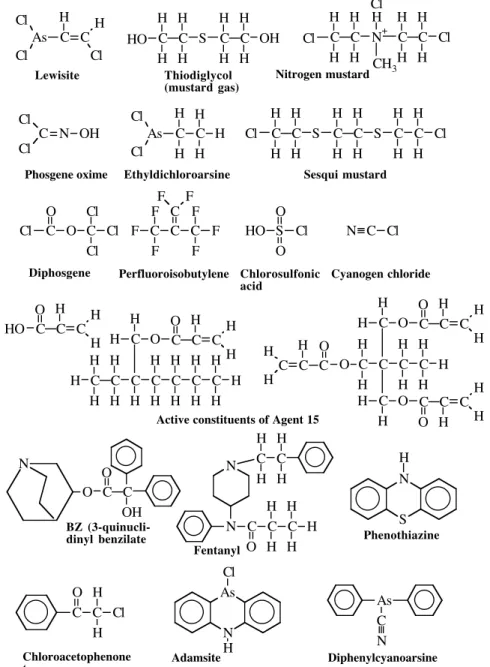
Toxic chemical agents have the potential to be used as terrorist weapons by direct application to humans through skin contact or inhalation. These are considered separately from a wide variety of toxic substances that might be placed in food or drinking water. Chemical agents that can kill or incapacitate by direct application or inhalation can be divided into the categories of vesicants (blister-inducing substances), respiration inhibitors (utilization of O2), respiratory system agents that cause choking or damage to the pulmonary tract or lung, agents that affect blood, incapacitating agents, riot control or tear gas agents; substances that cause vomiting, and nerve agents.8 These are listed in Table 28.1.
Table 28.1. Chemical Agents that can be Used for Direct Attack on Humans
Effect, body system
affected or use of agents Agents
Vesicants Distilled mustard, Lewisite,1 mustard gas,1 nitrogen mustard, 1
phosgene oxime,1 ethyldichloroarsine,1 methyl-dichloroarsine,
phenodichloroarsine, sesqui mustard1
Respiration inhibitors2 Hydrogen cyanide (HCN), hydrogen sulfide (H
2S) Respiratory system Chlorine (Cl2), diphosgene,1 nitrogen dioxide (NO
2), perfluoro-butylene,1 phosgene, red phosphorous, trioxide-chlorosulfonic
acid,1 perflurorisobutylene,1 titanium tetrachloride, zinc oxide
Blood Arsine (AsH3), cyanogen chloride,1 hydrogen chloride, hydrogen
cyanide
Incapacitation Agent 15,1 BZ,1 canniboids, fentanyls,1 LSD, phenothiazines, 1
nitrous oxide (N2O)
Riot control or tear gas Bromobenzylcyanide (BA), chloroacetophenone (CN),1
chloropicrin (PS), 1-bromo-2-propanone (BA), 2-chloro-benzalmalononitrile (CS), dibenz[b,f][1,4]oxazepine (CR) Vomiting agents Adamsite,1 diphenylchloroarsine, diphenylcyanoarsine1
Nerve agents Sarin,3 Cyclohexyl Sarin, Soman,3 Tabun,3
Diisopropyl-phosphofluoridate,3 GE, VE, VG, V-Gas, VM, VX3
1 Formula shown in Figure 28.1.
2 Inhibits metabolic process by which O
2 is utilized.
3 Formula shown in Figure 28.2.
Military Poisons
From their first use in World War I various military poisons have been developed for the specific purpose of attacking humans. Most of these are toxic and designed to kill. Nonlethal agents capable of disabling people have been developed as well. Numerous diabolical ways have
been developed for delivering such poisons including shells, bombs, and sprays. Terrorist access to crop duster aircraft that might be used to deliver sprays of military poisons has been of major concern.
Military poisons have a variety of effects. The first one of these that was commonly used was elemental chlorine, which is a choking gas that can cause irreversible damage to the linings of the lung. Phosgene,
Phosgene oxime As
Cl
Cl
C CH Cl H Lewisite C C H HO H H H S H H H H C C OH Thiodiglycol (mustard gas)
Nitrogen mustard N+ H H H Cl H C C CH3 Cl C C H H H H H Cl -C Cl Cl N OH Ethyldichloroarsine As Cl Cl C H C H H H H Sesqui mustard C C H H H H S H H H H C C S
Cl C C Cl
H H
H H
Cyanogen chloride N C Cl
Diphosgene C O O Cl C Cl Cl Cl Perfluoroisobutylene C C C C F F F F F F F F Chlorosulfonic acid S Cl O HO O C C O HO C H H H H H H H H C H H H H H H C C C C C C H H H H C H H O H H H C O C C O H H H C O C C C H O H H C C C H O H H C C O C H H H O H H C H H
C C C C H H
H H
Active constituents of Agent 15
BZ (3-quinucli-dinyl benzilate N OH C C O O Fentanyl H H C H H C H H H H H C C O C N N Phenothiazine S N H Chloroacetophenone tear gas
C C Cl H H O N As Cl H
Adamsite Diphenylcyanoarsine As C N
Figure 28.1. Common chemical agents listed in Table 28.1 that could be used in terrorist attacks. Nerve agents are shown separately in Figure 28.2.
C Cl O
Cl Phosgene
is also a choking gas. Mustard gas is a blistering agent. Hydrogen cyanide stops respiration, the process by which the body utilizes oxygen; its toxicity is clearly illustrated by its formerly widespread use as an agent for criminal execution.
Tear gases are agents that act upon mucus membranes in the respiratory tract, eyes, and skin through direct contact and inhalation. These substances incapacitate their victims by causing profuse tearing and sneezing and can damage lung tissue causing buildup of liquid in the lungs (pulmonary edema). The first of these substances to be used was chloropicrin, initially synthesized in 1848 and used as one of the first chemical warfare agents in World War I. It is the most lethal of the “nonlethal” tear gases, which has curtailed its use for applications such as crowd control, but increases its attractiveness to terrorists. By World War II, the favored tear gas agent was chloroacetophenone, a relatively mild agent that primarily acts as an eye irritant. After World War II, 2-chlorobenzalmalononitrile became a favored tear gas agent with a variety of incapacitating effects including severe burning and copious tearing of the eyes, severe burning of the nose causing the victim to breathe through the mouth, extreme burning of the throat, coughing, and even nausea and vomiting. Despite these severe symptoms, the antidote to this agent is fresh air, and the victim generally recovers rapidly and completely. Both chloroacetophenone and 2-chlorobenzalmalononitrile are solids and are commonly dispersed in aerosol form from burning pyrotechnic candles. They are also used as solutions sprayed in the form of a material with the trade name of MACE.
The search for more effective killing agents than those mentioned above led to the development of the nerve gases, organic phosphates that bind with acetylcholinesterase enzyme required for nerve function and kill by paralyzing the muscles needed to inhale air. The most common of these agents in generally decreasing order of toxicity are Tabun, Soman, Sarin, and VX. Formulas of military poisons are shown in figure 28.2.
28.9 Biotoxins
The most notorious toxin produced by bacteria outside the body is botulinum toxin produced by Clostridium botulinum bacteria. This kind of bacteria grows naturally in soil and on vegetable material. Under anaerobic or slightly aerobic conditions it synthesizes an almost unbelievably toxic product. The conditions for generating this toxin most commonly occur as the result of the improper canning of food, particularly vegetables. Botulinum toxin binds irreversibly to nerve terminals, preventing the release of acetylcholine; the affected muscle acts as though the nerve were disconnected. The toxin actually consists of several polypeptides in the range of 200,000 to 400,000 molecular mass. Fortunately, these proteins are inactivated by heating for a sufficient time at 80–100˚ C. Botulinum poisoning symptoms appear within 12–36 hours after ingestion, beginning with gastrointestinal tract disorders and progressing through neurologic symptoms, paralysis of the respiratory muscles, and death by respiratory failure. Because of its extraordinarily high toxicity, botulinum toxin is definitely a potential terrorist agent that could be put in food or water.
Ricin is a proteinaceous toxin that is a byproduct from processing castor beans (Ricinus
communis). It is a very stable substance that resists extreme conditions of temperature and humidity. Ricin is especially toxic when injected, with an estimated fatal dose by this route of only about 0.5 mg, a quantity about the size of the head of a pin. In 1978, injection of a small quantity of ricin with an umbrella with a tip rigged to inject the poison was used to assassinate Georgi Markov, a Bulgarian writer and journalist who was living in London. Although a mass attack with booby-trapped umbrellas is unlikely, ricin can be placed in the form of powder, mist, or pellet dissolved in water and could conceivably be delivered to human victims in one of these
forms. It is believed that fatal doses by inhalation or ingestion would be much higher than those by injection.
H C P F O H H O C C C H H
H H H H H
Sarin Soman Tabun
C H H H O H H H H H H H H H H H H H H H H H C C O P S C C
H C H
H
C
C C C H
C N H H P C O N N H H C H H H H C O H C C
H H H H C H
H H C H
H H H C C H H H H H C O C H H H O F P C H
VX Diisopropylphosphofluoridate
H H
H H
H C C C H
H O O P F
O H C C H C
H
H H
H H
Figure 28.2. Organophosphate military poisons commonly known as nerve gases.
Ricin acts by inhibiting synthesis of essential proteins in cells. Victims injected with ricin develop failure of the liver, kidneys, and spleen followed by massive bleeding from the stomach and intestines. Death occurs within 36 to 48 hours of exposure as the result of multiple organ failure. There is no known antidote.
28.10 INFECTIOUS AGENTS
A number of infectious agents that can cause disease are of concern for their potential for terrorist attack. Those of greatest concern have been classified by the U.S. Centers for Disease Control and Prevention (CDC) as Category A Diseases. These agents meet the following criteria:
• They can be easily disseminated or transmitted from person to person
• They are likely to result in high mortality rates and have the potential for major public health impact
• They might cause public panic and social disruption • They require special action for public health preparedness. The infectious agents in this category include the following:
• Anthrax (Bacillus anthracis) • Plague (Yersinia pestis)
• Smallpox (variola major) • Tularemia (Francisella tularensis)
• Viral hemorrhagic fevers (filoviruses including Ebola and Marburg and arenaviruses including Lassa and Machupo
The CDC has compiled a list of Category B Diseases that are considered to be a danger, but not to the extent of those in Category A. These are the following:
• Brucellosis (Brucella species) • Glanders (Burkholderia mallei) • Psittacosis (Chlamydia psittaci) • Q fever (Coxiella burnetii) • Melioidosis (Burkholderia pseudomallei)
• Staphylococcal enterotoxin B • Typhus fever (Rickettsia prowazekii)
• Viral encephalitis (alphaviruses including Venezuelan equine encephalitis, eastern equine encephalitis, western equine encephalitis)
• Food safety threats (Salmonella species, Escherichia coli O157:H7, Shigella) • Water safety threats (Vibrio cholerae, Cryptosporidium parvum)
Category C diseases are considered to be “emerging” health threats and include Nipah virus and hantavirus.
The disease caused by the bacterium Yersinia pestis and commonly known as plague killed tens of millions of people in Europe during the Middle Ages and must therefore be respected as an agent for terrorist attack. The Yersinia pestis bacterium infects rodents and their fleas and is fairly widespread in these organisms in parts of the Southwestern U.S. The most common form is bubonic plague, which is spread by bites of infected fleas and is not transmitted from person to person. It gets its name from the swollen, tender lymph glands called buboes that are its most characteristic symptoms. Other symptoms are fever, headache, chills, and weakness. Septicemic plague occurs when Yersinia pestis bacteria infect the blood. It does not cause buboes, but victims are afflicted with fever, chills, prostration, abdominal pain, shock, and bleeding into skin and other organs. It is not spread from person to person. Pneumonic plague results from Yersinia pestis in the lungs and spreads from person to person through the air. Initial symptoms of fever, headache, and weakness are followed by rapidly developing pneumonia accompanied by shortness of breath, chest pain, cough, and often bloody or watery sputum. Since it can be spread by aerosolized Yersinia pestis, pneumonic plague is of particular concern for terrorist attack. It is relatively readily cured by administration of appropriate antibiotics within 24 hours of the first symptoms. Antibiotics that are effective include streptomycin, gentamicin, the tetracyclines, and chloramphenicol.
Anthrax, an infectious disease caused by the spore-forming bacterium Bacillus anthracis,
was used in an attack on the U.S. Postal Service in late 2001 and early 2002 and is arguably the infectious agent most likely to be used in a massive terrorist attack. Most commonly occurring in hoofed mammals, it can afflict humans in the forms of inhalation anthrax, cutaneous anthrax, and intestinal anthrax. Inhalation anthrax, the most dangerous of these forms, is manifested by initial symptoms similar to those of the common cold progressing to severe breathing problems, shock, and death. A vaccine for anthrax is now available and military personnel facing possible bioweapons attack are commonly inoculated. Begun early enough in the course of the disease, anthrax is readily cured with appropriate antibiotics including doxycycline, fluoroquinolones, and penicillin.
Incredibly stable anthrax bacterial spores are readily weaponized as fine powders or
aerosols. Huge amounts of the spores can be produced in large fermentors. For these reasons combined with the high mortality rate of the inhalation form, anthrax is an especially likely candidate for bioterror attacks.
Malaria is a protozoal disease carried by the Anopheles mosquito that has been a historical
scourge of humankind. There are approximately 300 million cases of malaria annually, and the disease kills at least one million people each year. People from populations not normally exposed to malaria are especially vulnerable. In 2003, 50 of 225 U.S. service personnel deployed to Liberia were afflicted with malaria, and it was second only to war injuries as a cause of hospitalization of U.S. troops during the Vietnam war. The disease has become increasingly resistant to therapeutic agents and the Anopheles mosquito continues to develop resistance to pesticides. Indigenous populations in tropical areas are relatively more resistant to malaria so that troops from other countries are at a disadvantage intervening is such areas.
Designer Diseases
A matter of some concern with respect to the potential use of infectious agents for bioterrorism is the possibility of making designer pathogens using genetic materials. In July, 2002, researchers with the State University of New York at Stony Brook working on a biowarfare countermeasures program announced that they had created live polio virus using commercially available DNA. Viruses consist of RNA or DNA surrounded by a coat of protein and propagate by taking control of existing cells in humans and other organisms and directing them to reproduce the virus. The polio virus is one of the most amenable to artificial synthesis because it has only about 7,500 base units. In comparison, the deadly smallpox virus has almost 200,000 bases and would be much more difficult to synthesize from genetic material. Although it is unlikely, the possibility of designing an entirely new kind of infectious virus using techniques such as those employed in creating a polio virus is a disturbing possibility as humans become more proficient in manipulating DNA.
28.11 REACTIVE, FLAMMABLE, AND EXPLOSIVE SUBSTANCES
A wide variety of substances used in everyday commerce or made specifically for their destructive or toxic effects have a high potential for use in terrorist attacks.9 Such substances can
be distributed through a number of conduits including air, food, drinking water, and pharmaceuticals. they are especially effective against concentrated groups of people, such as those gathered in shopping malls, theaters, or transportation facilities. In part because they are readily dispersed to nonhazardous levels by wind and air currents, chemical agents are of less concern for attacks on dispersed populations out of doors than are biological agents or nuclear weapons. The quantities of chemical agents required for effective attack vary widely from less than a kilogram of nerve gas to hundreds of kilograms of ammonia or chlorine. Because of chemophobic concerns of the general public, even a relatively harmless chemical attack could cause widespread panic to exposed individuals. One can imagine the consternation that could be caused by an ominous looking, but largely harmless, fog of ammonium chloride produced by simultaneous release of ammonia and hydrogen chloride gas in a crowded area.
Hazardous chemicals that have the potential for use in terrorist attacks include the following:
1. Toxic and otherwise hazardous industrial chemicals 2. Military poisons
3. Combustible substances and oxidizers 4. Corrosive substances
5. Highly reactive substances including explosives
The use of relatively large quantities of hazardous industrial chemicals is a characteristic of all modern industrialized societies. The potential hazards posed by such chemicals are exemplified by the catastrophic Bhopal, India, incident of 1984 which killed 3500 people when methyl isocyanate was accidentally released. Elemental chlorine and phosgene are widely used and were among the first military poisons employed in World War I. A more recent example of large-scale poisoning by a hazardous chemical occurred in the Chuandongbei natural gas field of southwestern China in December, 2003, when a drill penetrated a highly pressurized pocket of natural gas containing a high level of toxic hydrogen sulfide, H2S. Toxic gas spewing from the well killed at least 191 people including a high proportion of the population of Xiaoyang village, the community closest to the well. Approximately 600 people in the town of Zhonghe were treated for poisoning and thousands of people were evacuated. To prevent additional poisoning, the gas was ignited, creating a huge fire and converting the hydrogen sulfide to noxious, but much less toxic sulfur dioxide.
Industrial chemicals are very well controlled inside plant walls and incidents of harm from this source of chemicals are relatively rare. A greater hazard is posed by the transport of such chemicals by rail, truck, or other means. Major transportation accidents in which hazardous chemicals are released occur relatively frequently. Rail cars and trucks transporting such chemicals are vulnerable to terrorist attack and even hijacking that could result in exposure of human populations. In this respect the practices of industrial ecology and green chemistry offer enormous potential for reducing the hazards. In many cases, hazardous chemical intermediates can be produced on site as needed and by just-in-time production thereby eliminating the need to transport large quantities of such chemicals and preventing their accumulation in quantities that might pose hazards.
Substances that burn and oxidizers required for combustion are in widespread use and must be transported from sources to users. The potential of flammable substances to cause death and destruction was tragically illustrated by the 2001 attack on the New York World Trade Center in which the destructive agent was flammable jet fuel. Flammable substances include gases and volatile liquids that can spread some distance from their source through conduits such as a subway tunnels and sewers. Pipelines through which large quantities of flammable substances are transported are vulnerable to terrorist attack. Mixed with air, flammable vapors can cause devastating explosions.
Oxidizers can greatly accelerate the burning of flammable materials. This was illustrated tragically in the 1997 crash of a Valujet airliner in the Florida Everglades in which sodium chlorate used for aircraft oxygen generators was placed in the luggage hold and provided an oxidizer that burned tires and other flammable materials resulting in the crash.
Corrosive substances that attack materials and flesh can be used in terrorist attacks. Acidic, dehydrating sulfuric acid has been used to blind people in criminal attacks. Acids and other corrosive substances can be used to attack infrastructure, such as communications equipment.
Explosives are the substances most widely used in terrorist attacks. Blasts from relatively small amounts of explosives can bring down aircraft. Much larger quantities have been used in some of the more prominent recent terrorist attacks including the 1995 bombing of the Murrah Federal Building in Oklahoma City and the bombing of the U.S. Embassy in Kenya.
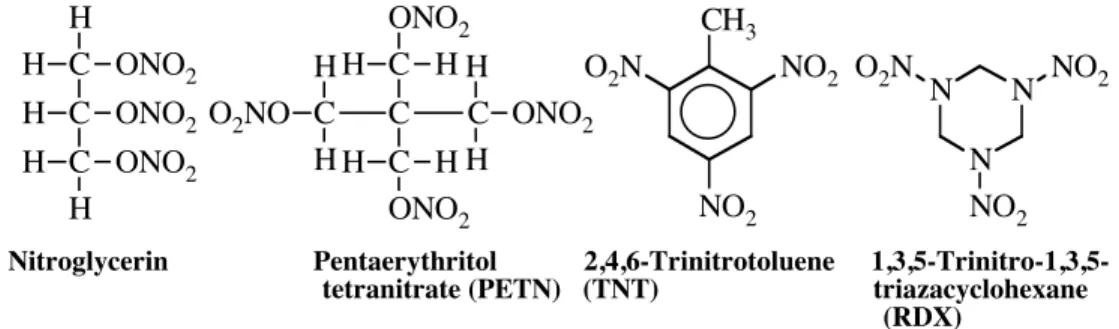
Many kinds of explosives have been developed that can be used for illegal purposes. These include gunpowder, nitroglycerin (the explosive in dynamite) TNT (2,4,6-trinitrotoluene), RDX (1,3,5-trinitro-1,3,5-triazacyclohexane), PETN (pentaerythritol tetranitrate). Structural formulas of several dangerous explosives are shown in Figure 28.3. Explosives can be made from readily available materials, especially a mixture of ammonium nitrate fertilizer with fuel oil, which was used in the destruction of the Murrah federal building in Oklahoma City.
Detection of Hazardous Substances
The detection of explosives and other hazardous substances is extremely important in combatting terrorist threats. Metal detectors and X-ray imaging, which have been the standard means for finding weapons and bombs on airline passengers and in their luggage, are of limited use in detecting hazardous substances. Stationary ion mobility spectrometers and chemiluminescence sensors can be used to detect residues of explosives such as RDX, PETN, or TNT. Typically, sampling is done by swabbing luggage; careful cleaning of luggage can reduce chances of detection. Other technologies that hold promise for explosives detection include X-ray diffraction, microwave/millimeter wave scanners, and nuclear quadrupole resonance.
Nitroglycerin Pentaerythritol 2,4,6-Trinitrotoluene tetranitrate (PETN) (TNT) triazacyclohexane (RDX)
C C C H
H
H H
H
ONO2 ONO2 ONO2
C H H C
H H
H H
ONO2 H
ONO2 H
C C C
ONO2 O2NO
CH3 NO2
NO2 O2N
N
N
N NO2
NO2 O2N
Figure 28.3. Common military explosives.
Nuclear quadrupole resonance (NQR) is an especially promising explosives detection technique because of its specificity for the detection of nitrogen found in all common explosives and because of its ability to detect explosives in containers and even land mines. It produces a signal from the nuclei of atoms of 14N, which constitute 99.6% of naturally occurring nitrogen.
A pulse of radiofrequency radiation from a transmitter coil excites the 14N spins to higher
quantized energy levels and measurement of the particular precession frequency that is followed as the nuclear spins return to their equilibrium positions provides the identities and abundance of nitrogen-containing functional groups. This information correlates with specific kinds of explosives enabling their detection.
One of the most sensitive means for detecting hazardous chemical substances that might be involved in attacks is sometimes called “canine olfactory detection.” It consists of the use of dogs to sniff odors of substances at very low levels. This detection system makes use of the dogs’ approximately 220 million mucus-coated olfactory receptors (about 40 times as many as humans) by which they detect odors and is more sophisticated than any yet developed by
humans. (However, for various reasons, including the desire to get rewards, dogs sometime exhibit the temperamental and unpredictable nature often attributed to modern computerized instruments. According to one authoritative source quoting an expert in canine olfaction , “Dogs lie. We know they do.”)10
Removing Hazardous Agents
An important aspect of resisting the effects of attacks by some hazardous substances is their removal, such as from contaminated air, or decontamination, such as from contaminated surfaces. Filters of various kinds can be employed to remove particles from both air and water. Adsorbents including activated carbon and molecular sieves can be used to sequester molecular contaminants. Liquids and solutions that can absorb contaminants or even react with them chemically can be used in scrubbers and packed sorbent reaction beds.
A common problem in decontamination is that the materials used for this purpose may be incompatible with contaminated apparatus such as the electronic equipment. Although water sprayed as a fine mist into an atmosphere contaminated with chlorine, hydrogen fluoride, hydrogen sulfide, and other water-soluble materials can be an effective removal agent, it is hardly compatible with sensitive computer equipment. Reactive foams might be somewhat more preferable in some cases.
Robots offer some significant potential for counterterrorism such as in assessing attack sites, performing some types of search and rescue operations, inspecting containers, performing routine surveillance, and doing some of the labor-intensive and tedious work of decontamination. In this respect robots are most likely to function as assistants to humans rather than substitutes for them. Although the idea of robots functioning entirely on their own in complex tasks such as decontamination remains a distant dream, continued advances in computerized control and artificial intelligence will undoubtedly increase the role of robots in counterterrorism activities of the future.
28.12 NUCLEAR AND RADIATION HAZARDS
Nuclear Explosives
Nuclear and radiation hazards include nuclear weapons and sources of radioactivity.11 The
greatest threat is from explosion of a nuclear device, an “atomic bomb,” which could cause enormous material damage and casualties from radiation produced directly by the blast and from radioactive byproducts. Potentially, severe radiation hazards could result from spreading of radioactive materials without a nuclear explosion, such as by detonation of “dirty bombs.”
There is a remote possibility that an explosive nuclear device could be obtained directly from stockpiles of nations possessing such weapons. A major concern following the collapse of the former Soviet Union was that of weapons stockpiles in Russia and other nations that once composed that union. Over several decades of weapons development, bombs with enormous destructive force were developed that were small in physical size and readily transported. International efforts have been made to prevent such weapons from falling into the wrong hands, so the threat from this source is not very high.
It is also possible that fissionable nuclear material could be obtained by terrorists and
fabricated into a nuclear explosive device. This could be done with plutonium or with highly enriched uranium (enriched in the fissionable 235U isotope). As of 2002, it was believed that as
much as 150 metric tons of plutonium and 1,200 metric tons of highly enriched uranium were stored in Russia. It would not be easy for a terrorist group to fashion these materials into a nuclear weapon, but the possibility is of some concern.
Fissionable nuclear material is somewhat radioactive and can be detected by the radiation emitted. Plutonium, either as 239Pu or 240Pu, can be detected from the gamma radiation or
neutrons emitted from its spontaneous fission. Highly enriched uranium has a low spontaneous fission rate and the gamma radiation emitted from it is of low energy, so it is more difficult to detect. Highly enriched uranium can be detected when it is subjected to neutrons from a neutron generator accompanied by monitoring radioactive emissions from the nuclear events caused by neutron absorption.
Dispersion of Radioactive Substances: Dirty Bombs
A more likely scenario than an actual nuclear bomb is a “dirty bomb” that uses conventional explosives to spread radioactive material around. Such devices are called radiological dispersion devices. The greatest potential source of such material consists of spent fuel from civilian power generating reactors. More than 40,000 metric tons of this material is currently stored under water at the site of civilian power plants. In addition, there are about 3000 metric tons of spent fuel stored in dry casks on concrete pads at nuclear power plant sites. Spent fuel is highly radioactive containing an abundance of fission products. Its high radioactivity actually makes it relatively safe from being used in weapons because any attempt to produce a readily dispersed, weaponized form would almost certainly be fatal to those attempting to do so. A direct attack on a storage facility, such as by a suicidal aircraft mission would probably not result in much dispersal of radioactive materials, but is still a matter of potential concern.
Large amounts of radioisotopes are used in research, natural resource exploration, radiation therapy, and industrial radiography. Alpha particle emitters, especially radium-226 and americium-241, are particularly dangerous to humans when inhaled. Commonly used gamma emitters include iridium-192, cobalt-60, and cesium-137. Strontium-90 is a common beta particle emitter. Any of these radioisotopes would be candidates for radiological dispersion weapons.
It would be a formidable challenge to construct and successfully deploy an effective radiological dispersion device that would spread inhalable particles over a large area. However, it is likely that great panic would ensue from deployment of any weapon that dispersed even minimal quantities of radioactive materials. Therefore, there is reason for concern about the possibility of terrorists using dirty bombs.
28.13 DETECTING THREATS
Rapid detection of chemical and biological agents is essential in diminishing the threats posed by these agents. The challenges posed to detection methods are formidable. Detection must be very rapid, especially for fast-acting chemical agents. It must be accomplished without the need for many steps typical of more common laboratory analyses. It has to be simple, sensitive, and rapid. Most commonly, detection of agents must occur in ambient air, although water, soil, and even biological samples may be involved.
The type of detection and analysis systems for chemical and biological agents depend upon the nature of the agent, the medium, and the available technology. Most such systems that are proposed fall into one or more of the following categories:12
1. Immunological methods
2. Biochemical and nucleic acid-based methods 3. Cell culture and tissue-based methods
4. Stand-alone detectors 5.Purely instrumental methods
Immunological methods (see Section 27.8) are based upon powerful and specific immune
responses of animals toward foreign agents. Such methods are the most advanced for detection of microbial cells and spores, viruses, and toxins, but have been developed for chemical agents as well. Biological agents and large molecules, such as proteinaceous toxins, can serve directly as antigens to cause animals to produce the antibodies used in detection. Smaller molecules can act as haptens when attached to large molecules and injected into animals to induce the production of antibodies used in detection. Enzymatic reactions induced by the interaction of foreign substances with antibodies for them are commonly employed in the detection process.
Nucleic acid detection involving the production of multiple copies of DNA from biological
agents can be very sensitive and specific for detecting infectious agents such as
Bacillusanthracis. An obvious disadvantage is the time required for replication and assay of the DNA.
Highly sensitive and specific detection of biological agents may be possible by using electrochemical detection on microelectrodes to which nucleic acid fragments have been covalently attached. Binding of these fragments to nucleic acid or protein fragments characteristic of the organism to be sensed can be detected with extreme sensitivity by electrochemical means. The system has been described for the detection of heat shock proteins released by viable oocysts of Cryptosporidium parvum, an organism that contaminates water causing diarrheal disease.13 It is reputed to kill about 5 million children annually from diarrheal
disease in Asia, Africa, and Latin America, and would certainly be of concern as a biological weapon.
Culture and counting techniques have long been used to quantify bacteria, such as fecal
coliform bacteria in water. These techniques combined with biochemical, microscopy, and staining can be used to reliably identify bacteria. Again, the time required is a disadvantage.
Mass spectrometry (Section 24.6) is the most well established and suitable of the purely instrumental techniques. Mass spectra are very useful in identifying specific chemical species, such as those used in chemical attacks. Continued advances in instrumentation have led to small, rugged, portable mass spectrometers that have the potential to be used as detection devices in the field.
The detection of chemical and biological agents is crucial in defending against them. It remains a high priority in efforts to combat terrorism.
28.14 THE ROLE OF GREEN CHEMISTRY AND ENGINEERING
The single best way that chemical science can avoid terrorist threats is to follow the precepts of green chemistry. This is so because green chemistry is safe chemistry and sustainable chemistry. Safe chemistry avoids the hazards that might be turned to malevolent ends. Sustainable chemistry means that the chemical industry and other enterprises that depend upon it are resistant to disruptive incidents such as those that could cause problems with supplies of essential raw materials.
Green chemistry avoids the use or generation of substances that pose hazards to humans and the environment. When such substances are not made or used, they are simply unavailable for theft or diversion by criminal elements. Green chemical products are as effective as possible for their designated purpose, but with minimum toxicity. Chemical products that do what they are supposed to do when used in minimum quantities reduce the hazards posed by potential mis-use. Green chemistry minimizes or avoids the use of auxiliary substances. Such substances, such as flammable solvents, may be hazardous, so reducing or minimizing their use can increase safety. Green chemistry avoids the use or generation of substances that are likely to react violently, burn, build up excessive pressures, or otherwise cause unforeseen incidents in the manufacturing process; the safety aspects of avoiding such substances are obvious.
The practice of green chemistry minimizes energy consumption. One way in which this is done is to use biological processes, which, because of the conditions under which organisms grow, must occur at moderate temperatures and in the absence of toxic substances enhancing safety. Any measures that reduce dependence on potentially hostile foreign sources of energy indirectly reduce vulnerability to terrorism. The same principle applies to reduced use of critical raw materials by the application of green chemistry.
The successful practice of green chemistry requires real-time, in-process monitoring techniques coupled with process control. Such control is consistent with minimizing hazards including those caused by sabotage. It should be noted that passive systems of safety should be employed that will work by default if intricate control systems fail or are damaged (for example passive cooling of nuclear reactors by water flowing under gravity in the event of cooling system malfunction).
It should be noted that the chemical industry and related enterprises are taking steps to implement the practice of green chemistry to reduce vulnerabilities to attack. As one example, a DuPont facility in Texas ceased storing highly toxic methyl isocyanate, the agent of the catastrophic 1984 Bhopal, India, disaster and started making this material on demand as needed at the plant. In 2001, the Blue Plains Waste Water Treatment Plant near Washington, DC, phased out the use of reactive, toxic liquid chlorine disinfectant, stored under pressure in 90-ton rail cars located on site, and replaced it with much safer solid sodium hypochlorite.14
Sustainable Prosperity for a Safer World
In general, terrorism feeds upon poverty and human misery. Although elimination of these human conditions cannot guarantee a world free of war and violence, it is reasonable to assume that people whose material needs are satisfied and who have the opportunity to lead interesting and fulfilling lives will be much less prone to wreak violence on their neighbors. The practice of green chemistry can go far in providing for essential human needs in a sustainable manner, thus
helping to make the world safer for all humankind.
In the past, prosperity, as it has commonly been defined, was attained at a high cost of resource consumption and environmental degradation. As Elsa Reichmanis stated as President of the American Chemical Society, “We are past the days when we can trade environmental contamination for economic prosperity; that is only a temporary bargain, and the cost of pollution both economically and on human health is too high.”15
The foundation upon which any scheme to provide an adequate material standard of living for Earth’s people must rest is a sustainable and relatively inexpensive source of energy; with enough such energy all things are possible. Disputes over energy supplies have precipitated wars in the past and crucial petroleum supplies in countries that are breeding grounds for terrorists complicate the current world situation. Figure 28.4 illustrates the key role of abundant, sustainable energy sources in providing the kind of material well-being that is conducive to more peaceful, less violence-prone societies. Energy enables production of fertilizers, land cultivation practices, and irrigation that can provide adequate food. With readily available energy, housing materials may be fabricated for dwelling construction and dwellings can be properly heated and air conditioned to keep people comfortable in their dwellings. Energy is required to pump, purify, and desalinate water. Adequate food, housing, water, and the other amenities such as good transporation systems possible with judicious use of abundant, sustainable energy enable the kind of living standard conducive to peaceful and productive societies. Such conditions do not automatically
Energy
Safe, Sustainable, Environmentally Friendly, Readily Available, Secure, Food
Abundant, Safe, Nutritious, Inexpensive
Housing Abundant, Comfortable,
Inexpensive
Water Abundant, Reliable,
Safe, Inexpensive High Living Standard, Comfort, Health
Less Terrorism, Fewer Wars
Figure 28.4. Abundant, sustainable energy is the base of a pyramid through which greater human well-being combined with suitable political and social systems leads to less conflict and terrorism.
guarantee societies free of terrorism — sensible governments, social systems, and religious institutions are also essential — but they can go far in alleviating conditions under which