Emerging City Report - Toronto (2014)
Sample Report
[email protected]
+1-408-469-4380
+91-80-6134-1500
www.researchfox.com
www.emergingcitiez.com
ResearchFox Consulting is an Indian market research
and consulting firm based in Bangalore. We strive to
provide our clients with research data and reports
which they can trust and analyze. Insights gleaned from
our detailed and comprehensive research reports helps
our clients stay ahead of trends. ResearchFox serves
clients with services from data collection to analysis
and reports. ResearchFox has extensive sector
expertise and its consultants are abreast of global
trends and issues across industries. Our areas of
expertise include Manufacturing, IT-BPM, FMCG,
Healthcare, Automotive, Government Sector and NGO,
BFSI and Retail.
Disclaimer :
This report is furnished to the recipient for information
purposes only. Each recipient should conduct their own
investigation and analysis of any such information
contained in this report. No recipient is entitled to rely on
the work of ResearchFox Consulting Pvt.Ltd. contained in
this report for any purpose. ResearchFox Consulting Pvt.
Ltd. makes no representations or warranties regarding the
accuracy or completeness of such information and
expressly disclaims any and all liabilities based on such
information or on omissions there from. The recipient
must not reproduce, disclose or distribute the information
contained herein without the express prior written consent
of ResearchFox Consulting Pvt.Ltd.
Table
of Contents
5. Talent Ecosystem - Education
5.1. Upcoming Talent Pool 5.2. College Analysis
5.3. Talent Pool Growths & Trends 5.4. Training Ecosystem
5.5. University Ecosystem 5.6. Placement Ecosystem
6. Industry Connect Ecosystem
6.1. IT-BPM Parks 6.2. SEZ
6.3. Industrial Collaboration
7. Macro & Micro Parameters
7.1. Quality of Life
7.2. Healthcare Ecosystem 7.3. Recreation and Culture 7.4. Government & Politics 7.5. Business Continuity & Risks 7.6. Connectivity
7.7. Investment Policies
8. Cost Analysis
8.1. Cost of Living 8.2. Utility Cost Analysis 8.3. Infrastructure Analysis
9. List of Tables 10. List of Charts 1. Introduction
1.1. Research Overview 1.2. Objective and Scope 1.3. Research Methodology 1.4. Executive Summary 1.5. Key Takeaways 1.6. Key Definitions 2. City - At a Glance 2.1. Demographic Overview 2.2. Govt. & Industry Highlights 2.3. Market Highlights
3. IT-BPM Talent Overview
3.1. IT-BPM Evolution 3.2. Workforce Analysis 3.3. IT-BPM Ecosystem
3.4. IT-BPM Talent Pool Insights
4. Talent Ecosystem - Industry
4.1. Installed Talent Pool 4.2. Company Analysis 4.3. C&B Analysis
4.4. Contract Staffing Analysis 4.5. Diversity Analysis
List of Tables
Table 1: Objective and ScopeTable 2: Research Modeling
Table 3: Interviews Conducted
Table 4: Demographics Overview
Table 5: Sector wise contribution of GDP (%)
Table 6: IT-BPM Evolution
Table 7: Industry Presence
Table 8: Education Ecosystem
Table 9: Human Resource
Table 10: Infrastructure
Table 11: IT-BPM Parks
Table 12: SEZ
Table 13: Industrial Collaboration
Table 14: Air Connectivity Domestic
Table 15: Air Connectivity IT-BPM Parks
Table 16: Air Connectivity Vicinity
Table 17: Air Connectivity Global
Table 18: Details of Index
List of Charts
Chart 1: Workforce AnalysisChart 2: Installed Talent Pool
Chart 3: Distribution of IT/Technology companies by type
Chart 4: Distribution of IT/Technology companies by Business Area
Chart 5: C&B Analysis
Chart 6: Contract Staffing Analysis by Company Type
Chart 7: Diversity Analysis by Company Type
Chart 8: Upcoming Talent Pool Analysis
Chart 9: Distribution of Colleges
Chart 10: Distribution of Colleges by Utilization % Range
Chart 11: Talent Pool Growths & Trends
Chart 12: Course wise Training institute
Chart 13: Analysis of Training Institutes by type
Chart 14: University Ecosystem
Chart 15: Placement Analysis
Chart 16: Average Salary Packages offered during Placement
dfgfd dfgfdh dfgfh dfhgf
1. Introduction
1.1. Research Overview
Companies all around the world are dealing with a well-known problem: where to locate their headquarters, new branches, R&D centers and operations for maximizing their geographical advantage. IT-BPM companies are exploring new emerging locations globally for expansion and growth in order to remain competitive. Companies are trying to leverage their expansion plans by reducing operational costs and improving the bottom line. Talent and infrastructure have always been the key operational costs and point of competitive differentiation in the IT-BPM industry. The trend is to increase location feasibility and to frequently evaluate emerging cities for the skills, capacity and cost which are the key aspects in a continuous process of transformation. It's in this context that Toronto affords excellent growth opportunities.
This report explores and analyzes potential of Toronto for following parameters:
Demand and supply of talent (Lateral and Fresher/Upcoming) Cost reduction factors
IT-BPM Industry and Business Ecosystem Infrastructural ecosystem
1.2. Objective and Scope
Objective of the Research:
The objective of this research is to conduct in-depth talent pool and location analysis of Toronto across identified technology functions which can provide a current view of this emerging location and opportunities for growth
Scope of the Research:
The scope of the research explores following parameters in details:
Talent
Talent Pool Analysis
a. Upcoming/fresher Talent pool from educational institutions
b. Installed/Lateral Talent pool from the industry Compensation Analysis (C&B Analysis)
Training Institutions Ecosystem Industry/Association tie-ups
Infrastructure:
Facilities/Infrastructure Availability Accessibility and Connectivity
Quality of life, Culture and cultural compatibility Economic Growth factors
Government Supports and initiatives Ease of doing business
Cost:
Infrastructure Costs Utility costs
Commercial and Real Estate Cost Tax Structure (Policies and Benefits)
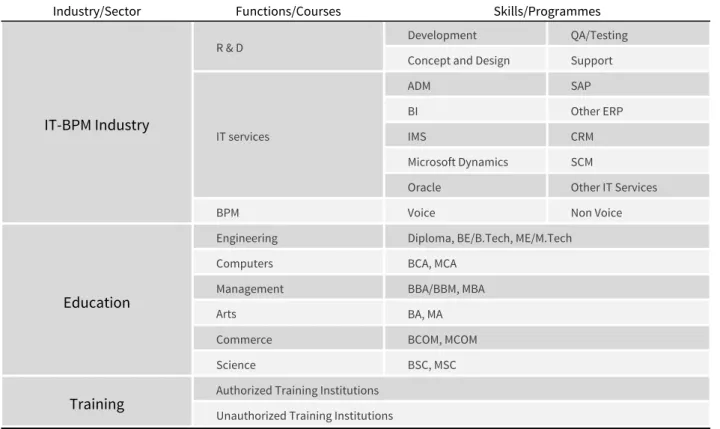
Table 1: The study encompasses the following Industries, service Lines/technologies skills & courses with respect to Talent, Infrastructure & Cost
Industry/Sector Functions/Courses Skills/Programmes
IT-BPM Industry
R & D Development QA/Testing Concept and Design Support
IT services
ADM SAP BI Other ERP IMS CRM Microsoft Dynamics SCM
Oracle Other IT Services BPM Voice Non Voice
Education
Engineering Diploma, BE/B.Tech, ME/M.Tech Computers BCA, MCA
Management BBA/BBM, MBA Arts BA, MA Commerce BCOM, MCOM Science BSC, MSC
Training Authorized Training Institutions
1.3. Research Methodology
To benchmark Toronto, we conducted a detailed location analysis and perception survey. The survey focused on understanding Fresher/Upcoming talent ecosystem, Lateral talent ecosystem and Training Institutions ecosystem. We conducted an in-depth analysis of the talent parameters which are currently available in Toronto taking into consideration priorities, growth prospects and needs. Using proprietary talent pool assessment and analysis framework, we identified the talent suitable for the IT-BPM industry with particular skills, overall maturity and prior experience in similar industries.
Research Modeling
Table 2: Research ModelingType of Research Quantitative/Qualitative Research
Sample Size 200 Industry Participants
Target Geographies Global Emerging Cities (Tier II and Tier III cities)
Target Group Placement Coordinators, HR and Training Heads * The margin of errors for a sample of 200 surveys is 5% with 95% confidence level.
Interviews Conducted
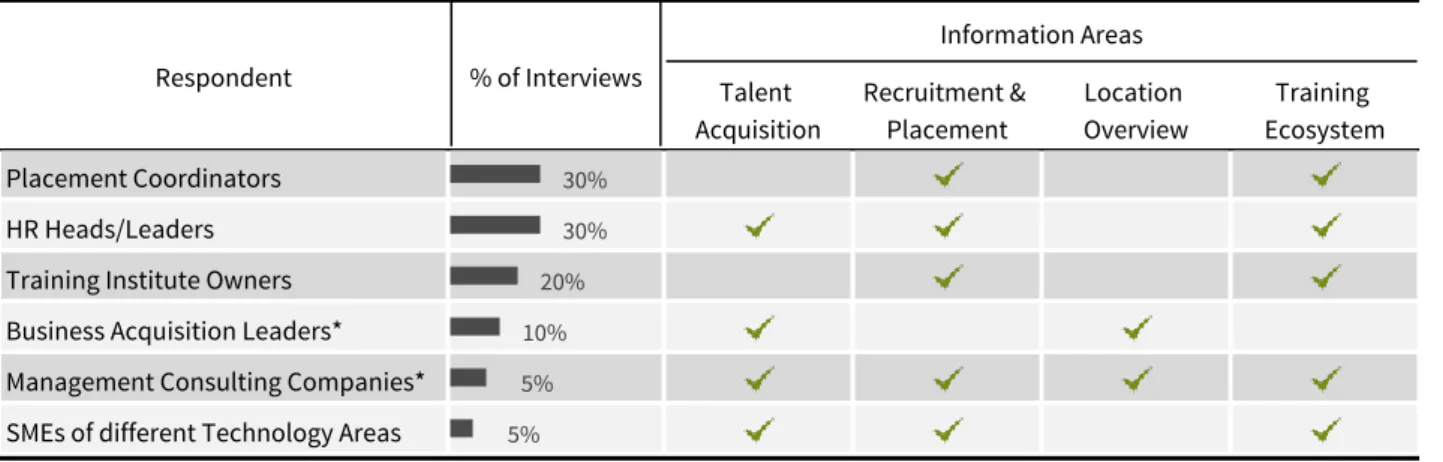
Table 3: A total of 200 surveys was completed as follows
Respondent % of Interviews Information Areas Talent Acquisition Recruitment & Placement Location Overview Training Ecosystem Placement Coordinators 30% HR Heads/Leaders 30%
Training Institute Owners 20%
Business Acquisition Leaders* 10%
Management Consulting Companies* 5%
SMEs of different Technology Areas 5% * Face to Face Interviews
Analysis and Triangulation
Data collected through these approaches was analyzed and compared to identify trends, divergences and patterns. Findings and issues from different methodological approaches were triangulated and further analyzed to corroborate the evidence.
The Triangulation Methodology used
Documentation review and analysis Interviews (Telephonic + Face to Face)
1.4. Executive Summary
Background to the Report
IT-BPM companies are exploring new locations for expansion and growth. Organizations are trying to leverage their expansion plans for reducing operational costs and improving their bottom line. Talent has always been the one significant factor that is cost-intensive and the point of competitive differentiation for IT-BPM industry. This has forced hiring managers to be on a relentless pursuit of quality talent. As the conventional locations for talent, i.e. the metros and Tier I cities get saturated, the hiring managers have started looking beyond the metros and Tier I locations. Such trends have enabled the rise of the Tier II cities. Owing to such importance of Tier II cities, ResearchFox decided to closely follow the talent trends for around 100 such cities across the Globe. This is the first in a series of reports published by ResearchFox. The following section delves into factors driving the importance and growth of Tier II cities across the Globe.
Enterprises seeking growth beyond Metros and Tier I cities
The last few years have seen global economies becoming increasingly volatile. Global enterprises operating from metropolitan and Tier I cities have struggled to keep up with this instability. At the same time, Globe is witnessing tremendous growth opportunities from Tier II cities. These cities have relatively cheap infrastructure, progressive local governments, a number of educational institutions and an abundant supply of skilled workforce. Shared Services and BPM are the two industries which have started to show keen interest in Tier II cities
Proactive local governments of Tier II cities
Local governments of Tier II cities have taken several proactive steps to fuel business activity in their respective regions. For instance, a few local governments have set up dedicated Software/IT parks and SEZs for IT-BPM industry. Few local governments are also offering free land, subsidies, special incentives etc., to companies
Abundant and Economical Talent availability in Tier II Cities
Some of the Tier II cities have an abundant supply of skilled workforce due to the presence of prominent local educational institutions. In addition, average salaries in Tier II cities are relatively less in comparison with salaries in the Metros and Tier I cities.
1.5. Key Takeaways
Explores opportunities for growth, talent access and/or cost efficiencies. Gives a better understanding of the technical talent available and the entire education ecosystem in Toronto, which will help the users to define skills and capacity to fulfil their requirements and the cost factor involved. Gives clarity on the demand and supply of fresh and lateral talent across the city and optimize training needs with appropriate alliances with training partners and colleges.
Helps in better understanding about the technical training ecosystem, which can help leaders to initiate incubation centers, industrial training centers, associations and tie-ups in Toronto.
Helps HR leaders formulate retention strategy and curb talent mobility.
Provides insights into talent infrastructure and capabilities available in Toronto which can be up skilled to provide high end services.
Provides better understanding on transportation and utilities, which helps identify the best opportunities present in this geography for expansion.
1.6. Key Definitions
Key Terminologies
ADM: ADM is Any custom applications built on programming languages such as C, C++, .Net, Java, HTML, XML, VB, etc. along with its sub skills and it also includes Interactive media and Mobile app development using Android, iPhone, J2ME, Joomla, Ruby, Kony etc.
BI: Business Intelligence includes primarily all data analysis and reporting tools such as Informatica, Cognos, Microstrategy, MSAS- SSIS,SSRS, SSAS, etc.
CRM: CRM (Excluding SAP and Oracle) includes the next closest competitors of SAP and Oracle in CRM applications such as Salesfoce CRM, NetSuite, Infor etc.
IMS: IMS includes Database services (DB2, MS SQL, Pl/QSL, etc), Storage/Data center services (SAN/NAS environment from IBM, HP, EMC, Dell, NetApp, etc), Disaster recovery/back tools from Symantec, CA, IBM etc and Network operation center (NoC)
PES: PES primarily include Software product development (SPD) / testing/ support for ISV or Non- ISV companies across all verticals. It also includes Mechanical Engineering related services (Design & development of physical device/equipment/machine using Catia, Auto Cad, PLM tools, Unigraphics, etc) and Embedded Engineering related services (Design & development of embedded/firmware devices with Embedded C, VLSI, ASIC, FPGA, etc)
SCM: SCM (Excluding SAP and Oracle) includes the next closest competitors of SAP and Oracle in SCM applications.
MICROSOFT DYNAMICS: It includes all Microsoft Dynamics applications such as Dynamics CRM, Axapta, and Navision.
ORACLE: It includes all the Oracle enterprise applications such as Oracle CRM, Oracle ERP, Oracle SCM, Oracle HCM and other Oracle business suites.
SAP: SAP includes all SAP Technical and Functional modules.
ERP (OTHERS): It includes all the next closest competitors of Microsoft Dynamics, SAP & Oracle in ERP applications.
OTHERS (IT SERVICES): Web services, SEO services, website development etc
CONCEPT AND DESIGN: It includes the conceptualizing and designing part of a Product development process, where the core Software R&D companies, Telecom/Networking and Embedded/Semiconductor areas are considered for the study.
DEVELOPMENT: It includes the developing part of a Product development process, where the core Software R&D companies, Telecom/Networking and Embedded/Semiconductor areas are considered for the study.
QA/TESTING: It includes the quality assuring and testing parts of a Product development process, where the core Software R&D companies, Telecom/Networking and Embedded/Semiconductor areas are considered for the study.
SUPPORT: It includes the supporting parts of a Product development process, where the core Software R&D companies, Telecom/Networking and Embedded/Semiconductor areas are considered for the study.
VOICE: It includes any back office process done by calls/voice, both inbound & outbound calls.
NON VOICE: It includes any back office process done through mails, chats & documentations.
Tier I Company: Company with more than 5000 employees worldwide
Tier II Company: Company with range of 501 to 5000 employees worldwide
Tier III Company: Company with less than or equal to 500 employees worldwide
Tier I College: Institute of National Importance, Autonomous Colleges and other Colleges which were established before 1991
Tier II College: Colleges which were established in the year, ranging from 1991 to 2005
Legally Employable Population: The population that comes under the age group of 16 years to 64 years.
Working Population: The entire population employed by the government, state owned enterprises or private sector enterprises.
Non-Working Population: The population, which includes students over the age of 16 years and the unemployed population seeking employment.
National level Associations: Industrial Associations/Bodies that are authorized to operate at National level.
State level Associations: Industrial Associations/Bodies that are authorized to operate at State level.
City level Associations: Industrial Associations/Bodies that are authorized to operate exclusively at City level.
Intake Capacity: Total number of seats a college is authorized to admit in the specific academic year.
Utilization Capacity: Total number of seats being occupied/admitted out of allocated intake capacity of a college, in the specific academic year.
List of Abbreviations
Dev.: Development
QA: Quality Assurance
R&D: Research and Development
BPM: Business Process Management
ERP: Enterprise Resource Planning
PES: Product Engineering Services
ADM: Application Development and Maintenance
IMS: Infrastructure Management Services
BI: Business Intelligence
CRM: Customer Relationship Management
SCM: Supply Chain Management
C&B: Compensation and Benefits
GDP: Growth Domestic Product
FTE: Full time employees
JOC: Job oriented courses
AICTE: All India Council for technical education
CAGR: Compound Annual Growth Rate
NASSCOM: National Association of Software and Services Companies
NAC: NASSCOM Assessment of Competence
EOU: Applicable for Export Oriented Units
SEZ: Special Economic Zone
STPI: Software Technology Park of India
2.1. Sample Table
Company Analysis
No Company Name Head Quarter Offering Brief
1 X Ahmedabad, India X X 2 X Bangalore, India X X 3 X Bangalore, India X X
4 X Mumbai, India X X
5 X San Francisco, USA X X Source: ResearchFox
About ResearchFox
WHAT WE STAND FOR
We strive towards helping our customers take informed decisions by providing different perspectives for business. We don't believe in flashing LOGOs but are proud to mention that we have been helping all sizes of businesses since our inception. We are glad to have contributed in our own little way towards making a business successful. Whether you are a start-up or a large enterprise, we assure equal treatment to all, after all "Customer is King"!
THE TEAM
We are a bunch of 25 people with handful of grey hair between us. Our humble experience of around 75 man years in market research and business consulting has led us to believe that this industry is ripe for disruption. With the advent of enterprise consumerization and rapid digitization across industries, days are numbered for traditional business models of market research and consulting services. We make all efforts to bring different (fresh) perspectives to Market, Competition, and Growth of your business.
Bangalore
# 4 & 5, 1st & 2nd Floor, 1st Cross,
Krishna Reddy Colony, Domlur Layout, Bangalore 560 071, India Phone: +91-80-61-341500 Email: [email protected] [email protected]
Hyderabad
# 104 & 105, 1st Floor, Bhuvana Towers, CMR Building, Sarojini Devi Road, Secunderabad 500 003, India Phone: +91-40-49-084455 Email: [email protected] [email protected]Pune
6th Floor Pentagon P-2, Magarpatta City, Hadapsar, Pune 411 028, India Phone: +91-20-6500-6541 Email: [email protected] [email protected]Philippines
L29 Joy Nostalg Centre, 17 ADB Avenue, Ortigas Center, Pasig City, Manila, Philippines - 1600
Email: [email protected] [email protected]
The information contained here in is of a general nature and is not intended to address the circumstances of any particular individual or entity. Although we endeavor to provide accurate and timely information, there can be no guarantee that such information is accurate as of the date it is received or that it will continue to be accurate in the future. No one should act on such information without appropriate professional advice after a thorough examination of the particular situation.